
A Good Farmer Knows How to Work Smarter, Not Harder
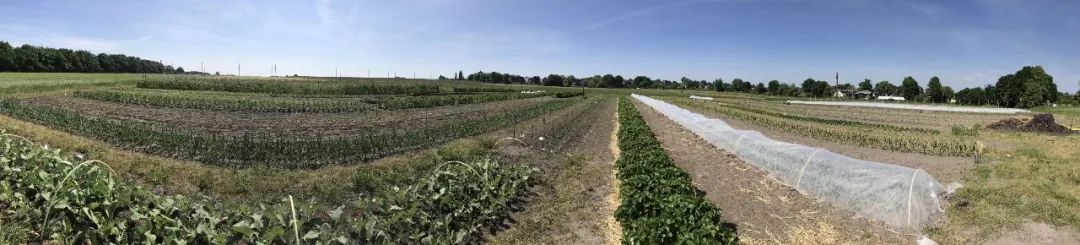
At the start of this year, four years after moving to the Netherlands, my partner and I finally rented a hectare of land in the province of Utrecht to begin cultivating my own farm.
Before deciding to commit to farming, I had interned at several small organic farms across the country. In the summer of 2020, I spent two months interning at Gordons Spoor farm in the east of the Netherlands; although I learned a great deal, the demanding ten to twelve hours of daily labour often left me exhausted.
Consequently, in April last year, I took an internship at ‘Happy Vegetables’, a farm that claimed to make a nine-to-five workday possible for growing produce.
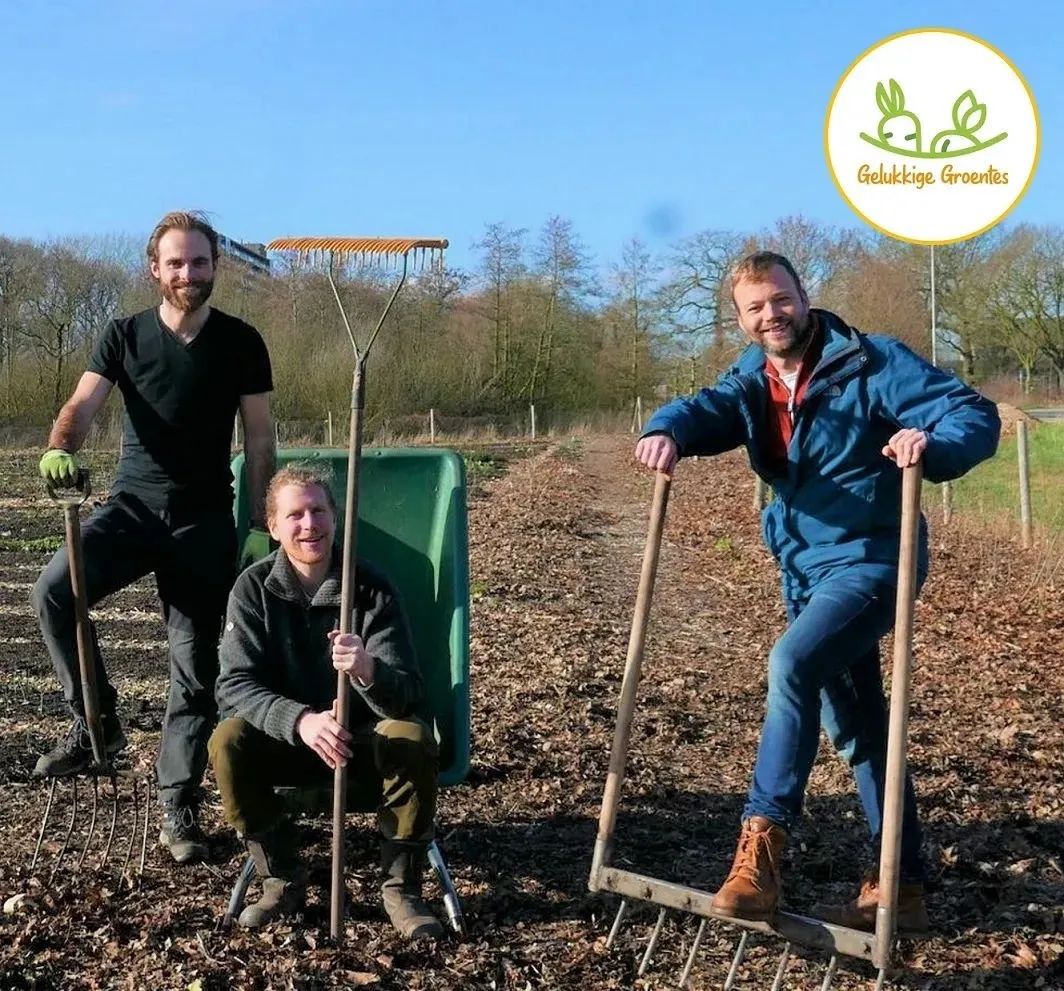
The farm was founded by two optimistic young Dutchmen, Sam and Martin. Neither had a background in agriculture; they met and worked together at a small permaculture farm in the Netherlands.
They gained a wealth of practical experience there and established connections with other nearby small-scale ecological farmers. Having developed a deep understanding of the environmental issues caused by industrial agriculture, they were driven by the ambition to become small-scale ecological farmers and change the status quo.
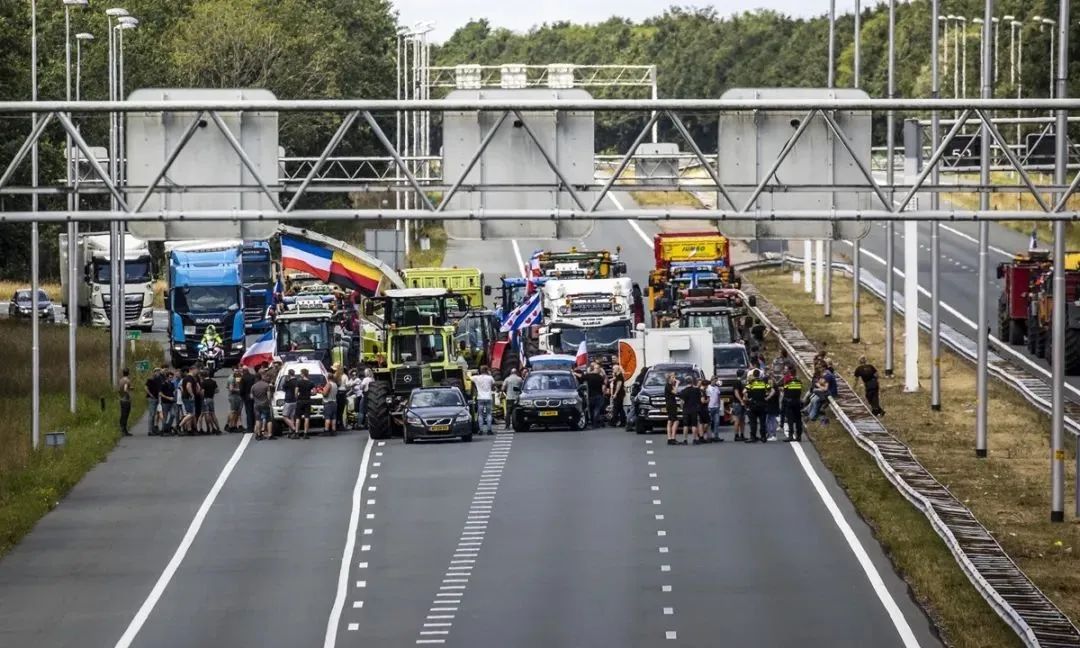
However, small-scale ecological farmers in the Netherlands face numerous challenges, such as start-up financing for new farmers, the exorbitant price of land (in the fourth quarter of 2021, the average price of agricultural land in the Netherlands approached €70,000 per hectare, equivalent to over 35,300 RMB per mu per year), low-price competition from supermarkets, generally excessive working hours and low income, and the “uninspired” food culture of the Netherlands.
1. Building a Farm from Scratch
Furthermore, the CSA business model secured their income. Picking subscribers pay an annual membership fee at the start of the year, effectively providing the pair with a year’s salary upfront. Another advantage is that the picking prices are fixed, removing the impact of seasonal fluctuations in vegetable prices.
I remember Sam saying that they wanted to use the farm to show everyone that:
2) Agriculture can be sustainable and environmentally friendly
3) Farmers can earn a decent living
4) Farms are community-focused, and consumers are valuable members of that community
5) Their operating model can be replicated in other regions of the Netherlands
II. A Good Farmer Knows How to Save Time and Effort
A width of 0.75m also accommodates the row spacing requirements for various vegetables. For those that do not require much space, such as spinach, carrots, onions, and beetroot, 3 to 4 rows can be planted densely; for those requiring more space, such as celeriac, broccoli, and cauliflower, there is still room for at least one row.
As for the 0.25m wide pathway, it is ample for walking without restriction, and allows for the easy use of wheelbarrows and the placement of tools.
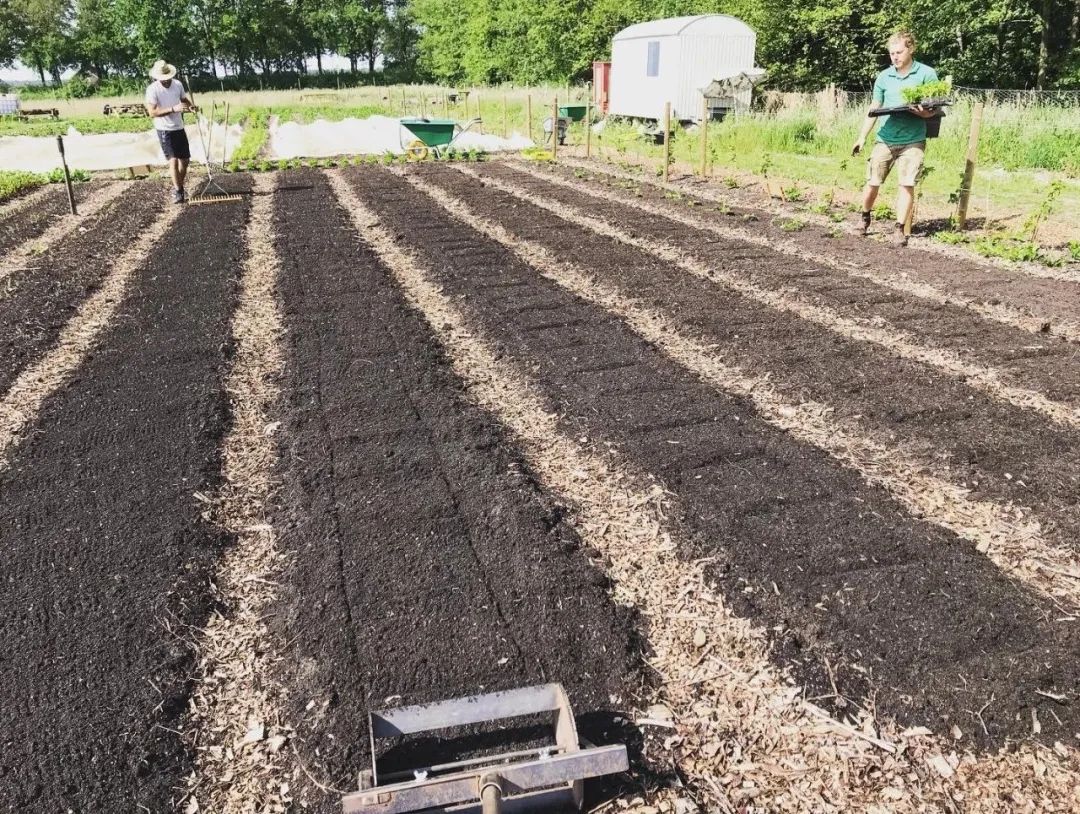
Furthermore, the farm employs small-scale machinery that can be operated by a single person to increase efficiency, with the most ingenious being the paper pot seedling kit and its companion seeder.
The paper bags within the paper pot and drop seeder kit resemble accordion pleats when collapsed. During use, two metal strips spread the bags open from either side to fit them onto a mould plate, creating a structure that looks very much like a honeycomb.
Once these honeycomb-like bags are filled with potting soil, a dibber is pressed down and lifted, creating a series of indentations in the paper cells. Finally, a seed plate of the correct size is used to sow the seeds.

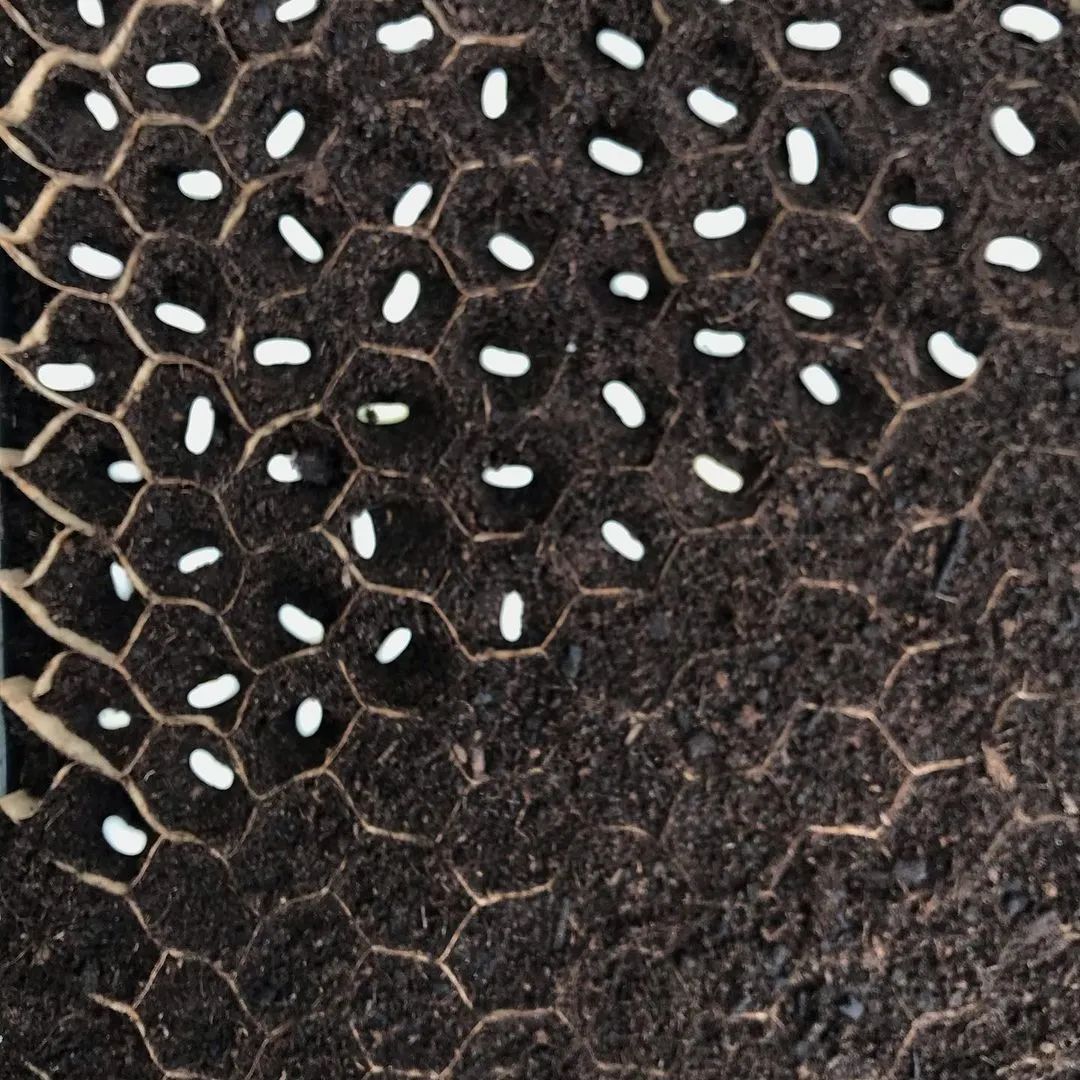
One tray of paper bags with a plant spacing of 10 cm has a total unfolded length of 27 metres. This means that a single tray can sow 270 seedlings at once, fitting perfectly into two rows on a 15-metre seedbed.
As it happens, the seedbeds were designed to be 15 metres long specifically to accommodate the length of the paper bags.
Another widely used tool for direct sowing is the hand-held seeder (Jang Seeder), which can be used in conjunction with the paper bag seedling kit; it is also used for crops that are not suitable for transplanting, such as carrots.
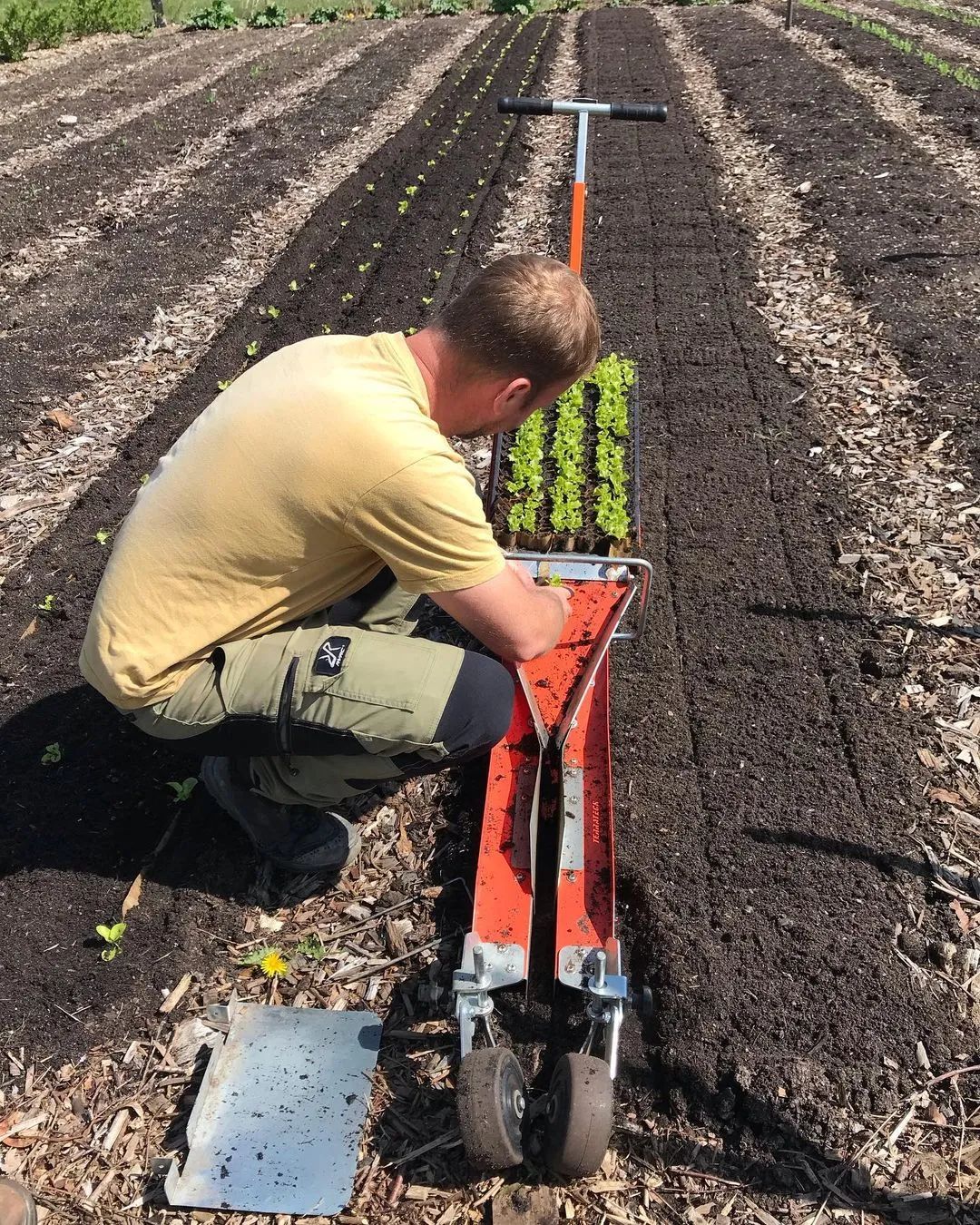
The seeder resembles a push scooter, complete with a frame and front and rear wheels; the most intriguing components, however, are the drive box and the seed box.
Inside the drive box are two gears; by adjusting their size, the spacing between plants can be controlled. The seed box holds the seeds, and at its base is a grooved wheel, with the depth of each groove precisely matched to the size of a single seed. As the wheel rotates, a seed drops from the groove, while the remaining seeds are held within the box.
3. Spray Irrigation, Drip Irrigation and No-Till
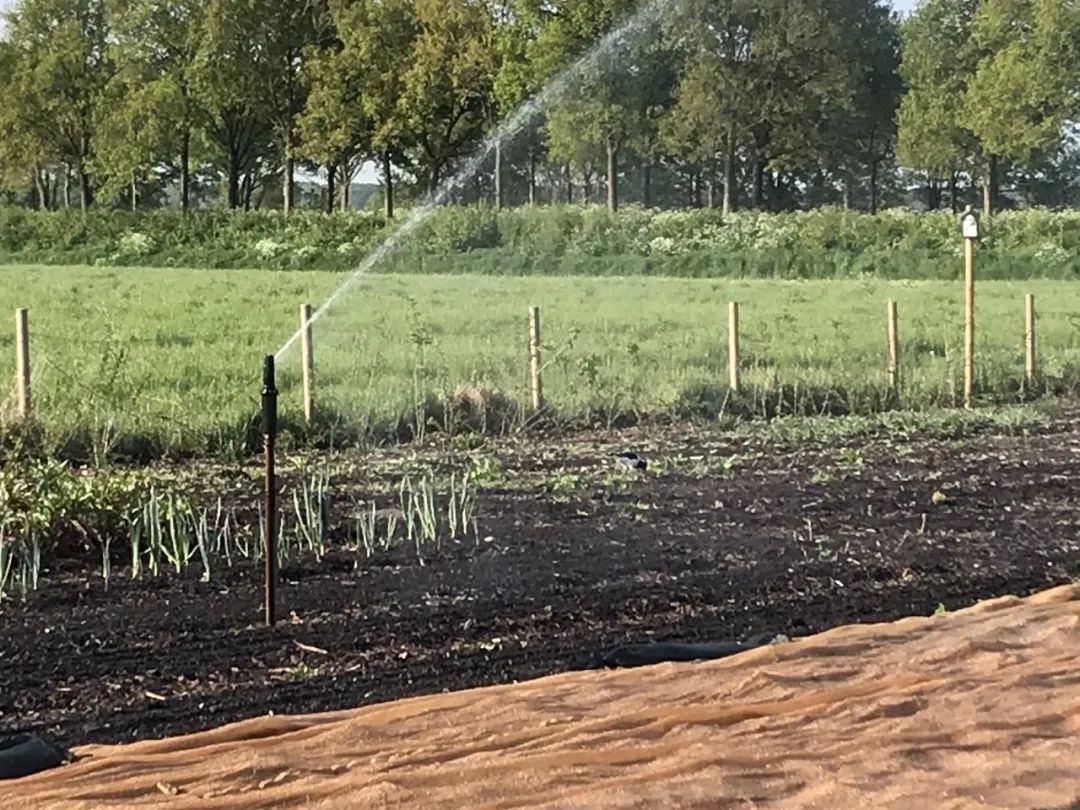
For every newly sown field, sprinklers run for one hour in the early morning for five consecutive days, removing the need for manual supervision. In windless conditions, two sprinklers are just enough to cover one field.
Drip irrigation pipes can also be connected to the sprinklers; tomatoes in the greenhouses are watered this way, which effectively prevents soil-borne diseases such as late blight.
Compared to the days of lugging hoses around at my previous farm, the difference in ease is immense. Most importantly, efficient irrigation saves time.
Finally, the biggest contributor to saving time and effort is no-till farming.
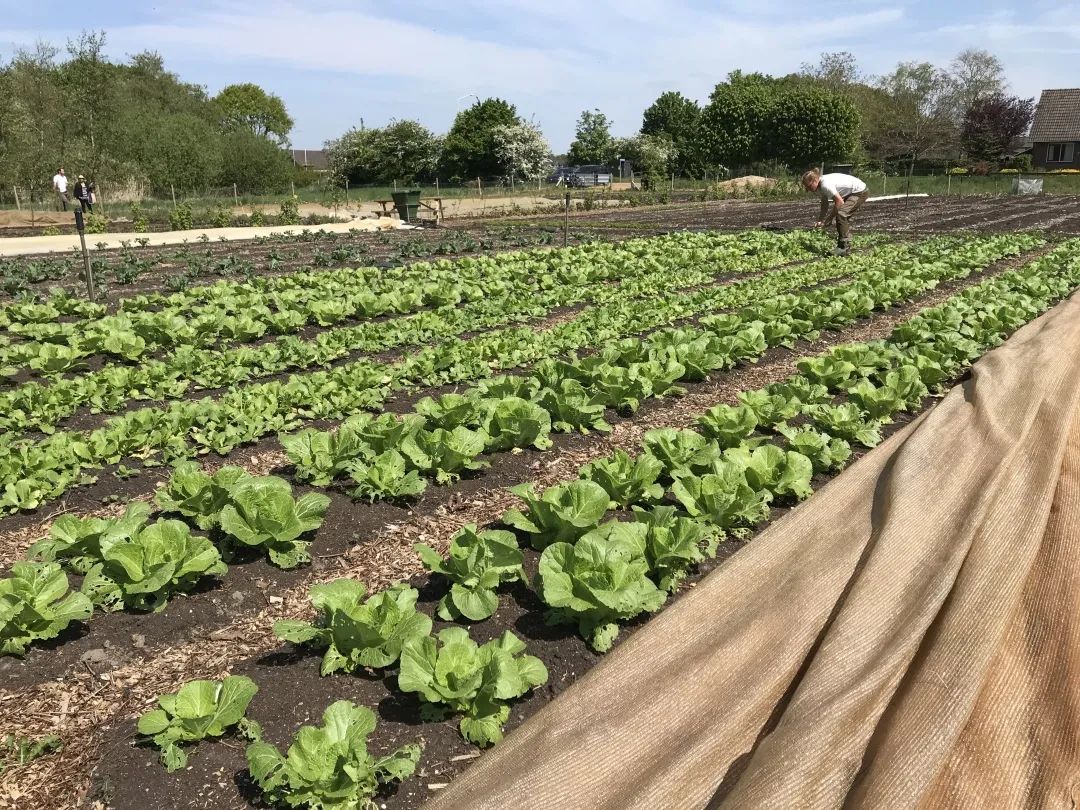
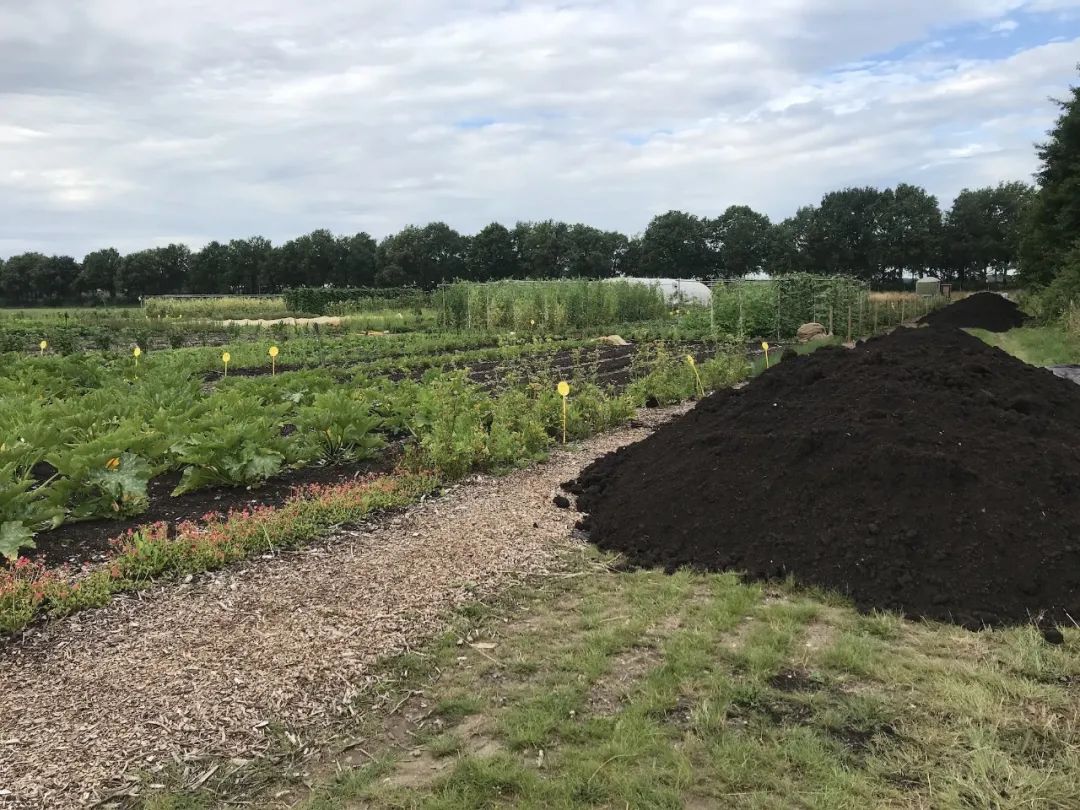
Before the farm started growing vegetables, it was a grassland. To nip weeds in the bud, Martin and Sam covered the grass with black plastic sheeting to block the light. After about two months, once the grass had withered and turned yellow, they applied a thick layer of compost directly on top.
Rich in organic matter, compost is an ideal substrate for growing vegetables. Properly decomposed compost is free from weed seeds and pathogens; regular, long-term application also improves the soil, and healthy soil nurtures healthy, beautiful vegetables. Furthermore, because the soil isn’t tilled, dormant weed seeds are not brought to the surface to germinate.
I have experienced firsthand how tilling affects the amount of weeds; take the example of planting leeks.
When planting leeks in spring, holes about 30cm deep are dug in the seedbeds to bury the seedlings and promote the development of the white stem.
Many local farmers regularly heap soil around the seedlings as they grow. This not only disturbs the soil but also encourages the germination of weed seeds, increasing the workload for weeding.
At “Happy Vegetables”, however, the no-till method has significantly reduced the number of weeds. While some soil from beneath the compost layer is inevitably turned up when digging the holes for seedlings—bringing weed seeds with it—the soft texture of the compost makes weeding relatively easy. Even deep-rooted dandelions can sometimes be pulled out with a gentle tug.
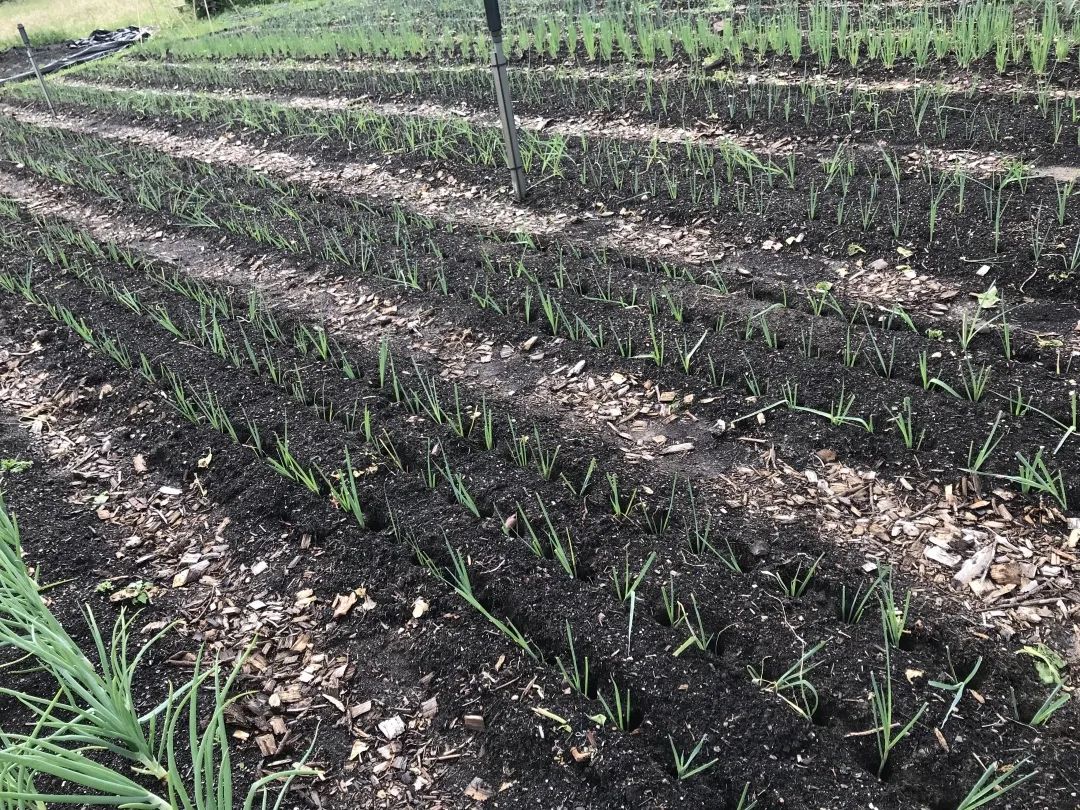
The no-till approach makes the chore of weeding relatively easy; with periodic maintenance, weeds can be kept under control. Happy Vegetables currently has 18 vegetable plots. If 1.5 people spent one hour per working day maintaining four plots, they could get very close to a weed-free state!
I say “close to” because a farm is not a closed environment; wind and animals carry weed seeds onto the land. The farm belongs to us only when we are working it; at all other times, it belongs to nature’s visitors: hares, crows, oystercatchers, voles, moles, slugs, snails, spiders… and those lifeforms invisible to the naked eye.
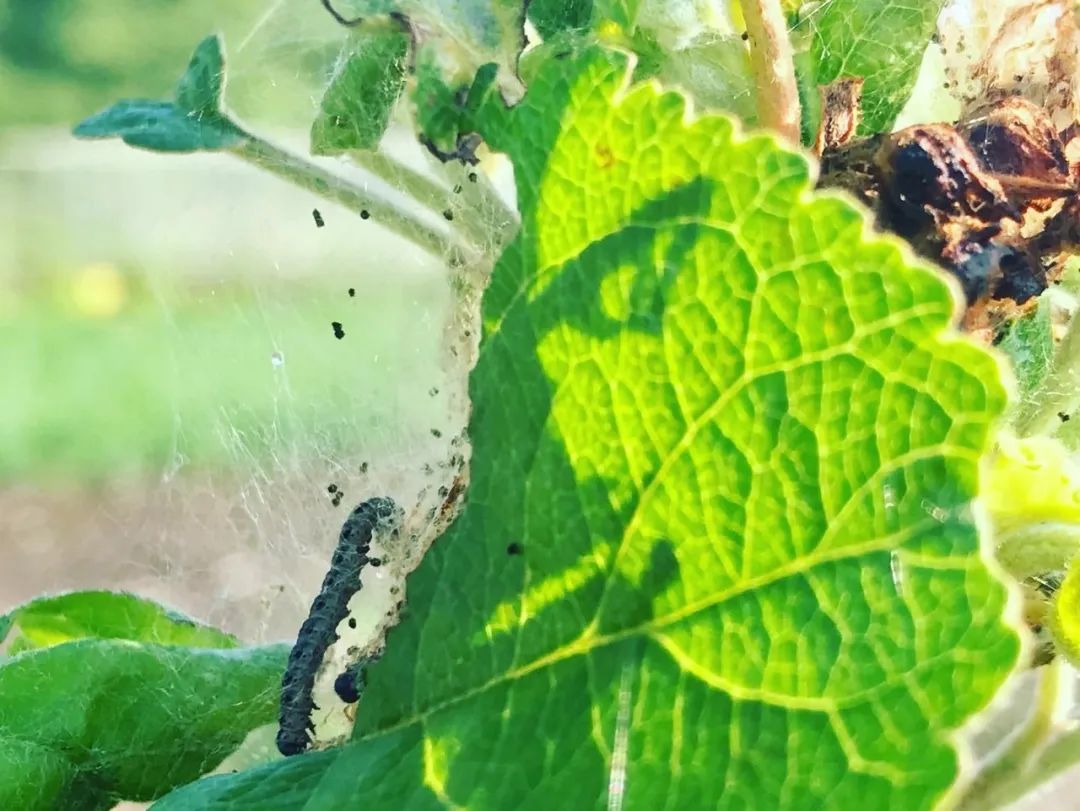
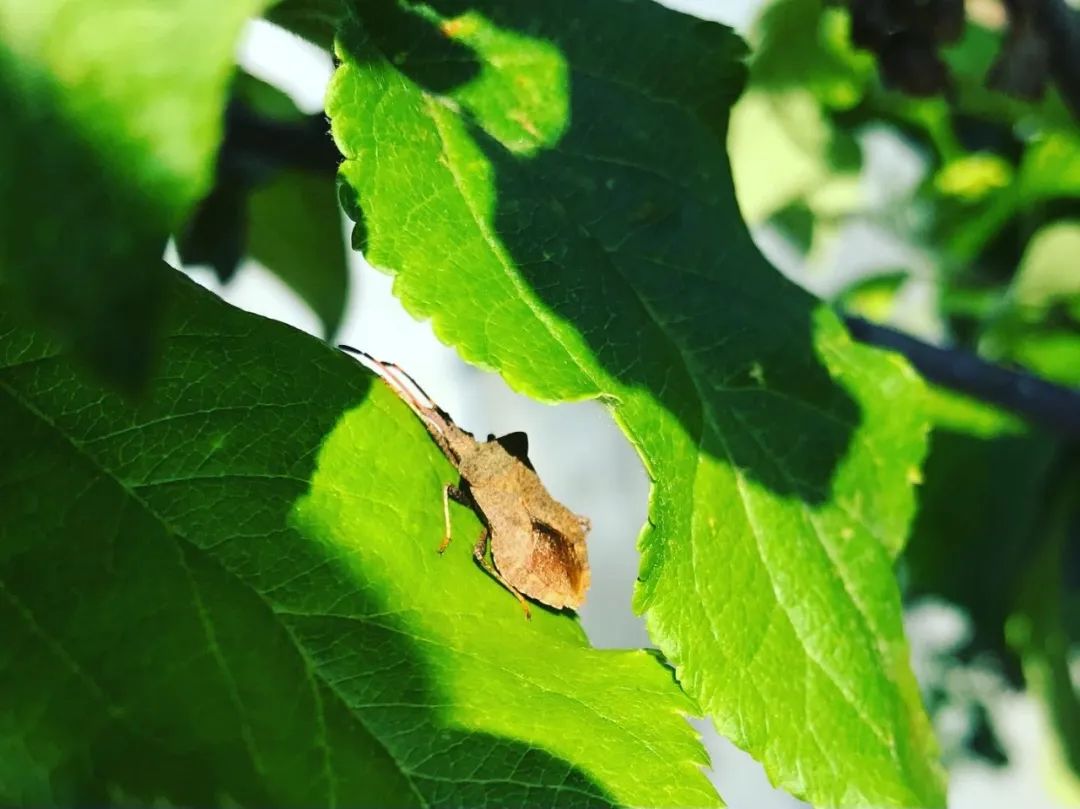

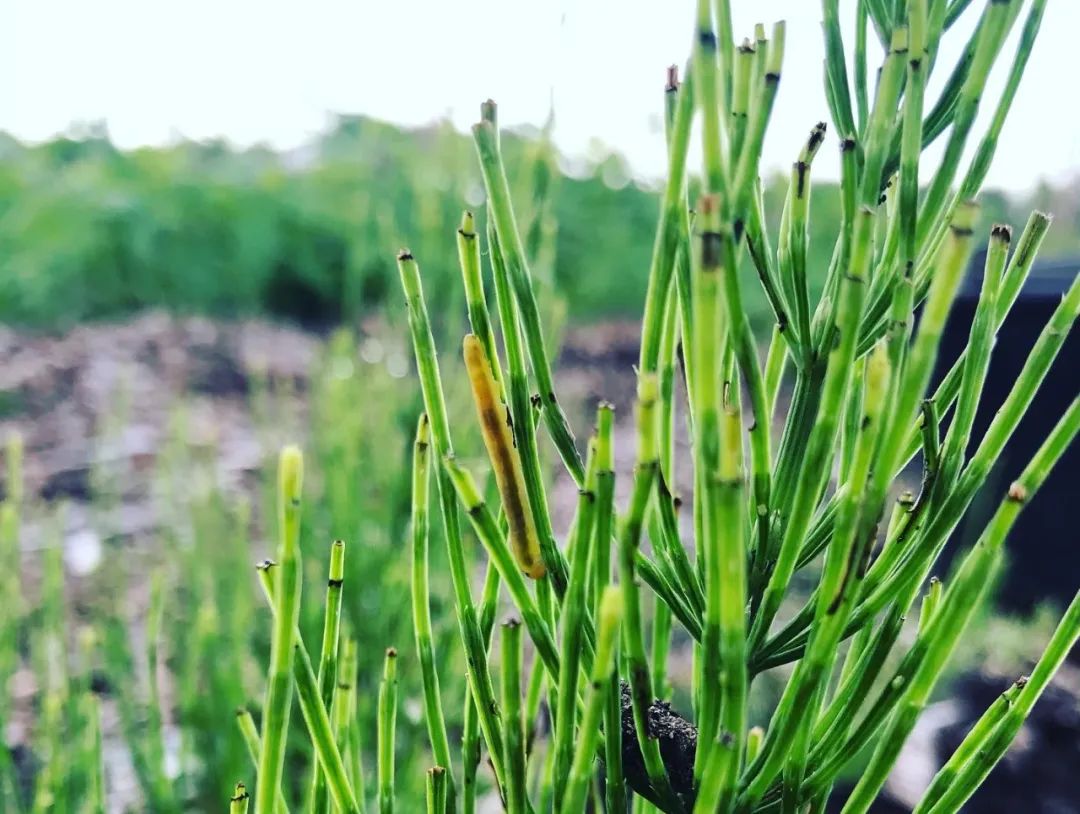
Martin says that if nothing in your fields has been eaten by other animals, then you aren’t yet a part of nature. I suppose that is the true spirit of sharing with nature.
I am now implementing the lessons I learned from “Happy Vegetables” on my own farm. To what extent is their experience replicable? What is the difference between actually running a farm and interning on one? We’ll discuss that next time.
Editor: Ze En