
Flowing Strains, Intertwined Lives: If Our Language Were Kombucha
“People never enjoy fermented drinks alone.”
— *Undercooked: A History of Fermentation and Civilization*
I. Meeting
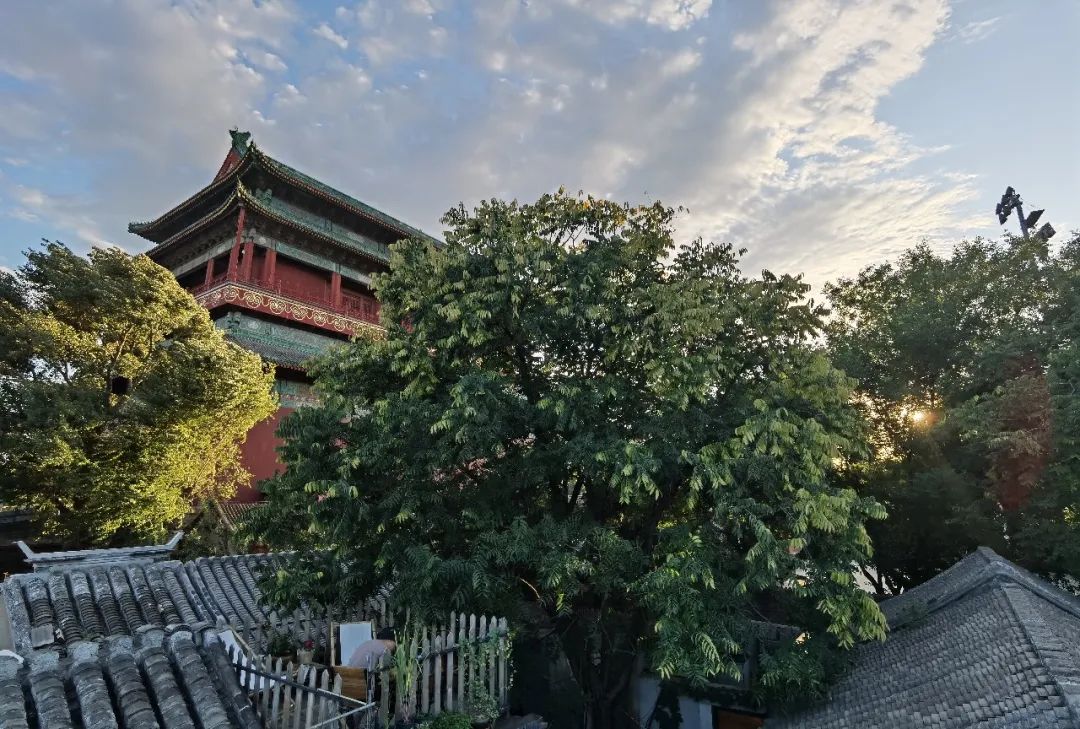
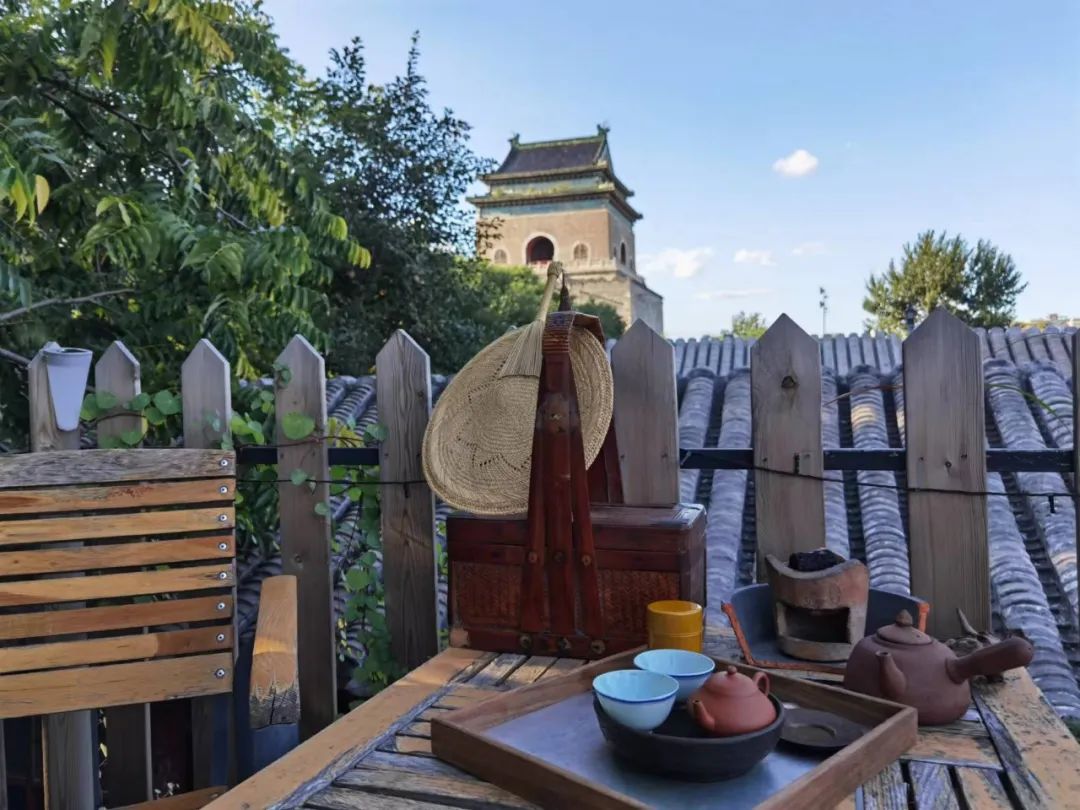
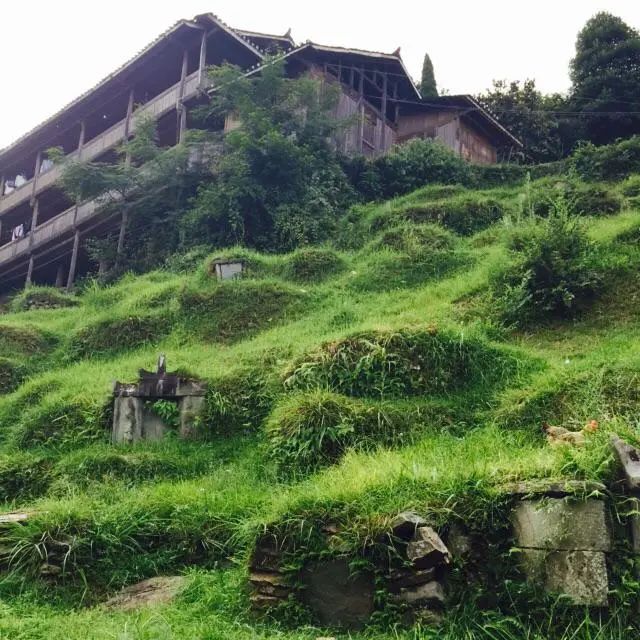
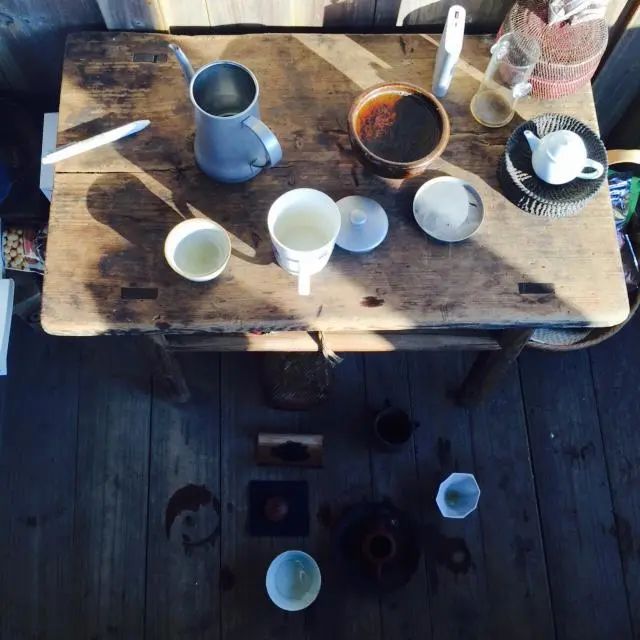
I first met Shuyu in the Qiandongnan region of Guizhou, where we spent a brief period working together in a Dong minority village named Tang’an. At the time, she served as the executive director of the local eco-museum, and we shared living quarters at a field station situated atop a cluster of ancient tombs. It was a traditional stilted wooden house, spartan in its amenities and rarely occupied. Undeterred by the rough conditions, she embraced a life of simple pleasures, transforming a rain-stained, weather-darkened wooden veranda into an intimate space for tea preparation. In between our walks through nearby villages, we would carry thermos flasks up the hillsides in search of natural springs. Shrouded in morning mist and washed by evening rain, we spent our days on that veranda boiling water, brewing tea, and lingering over long, unhurried conversations. The rising steam from our cups banished the persistent damp chill of Guizhou, and through her, I was gently drawn into the habit of drinking tea.
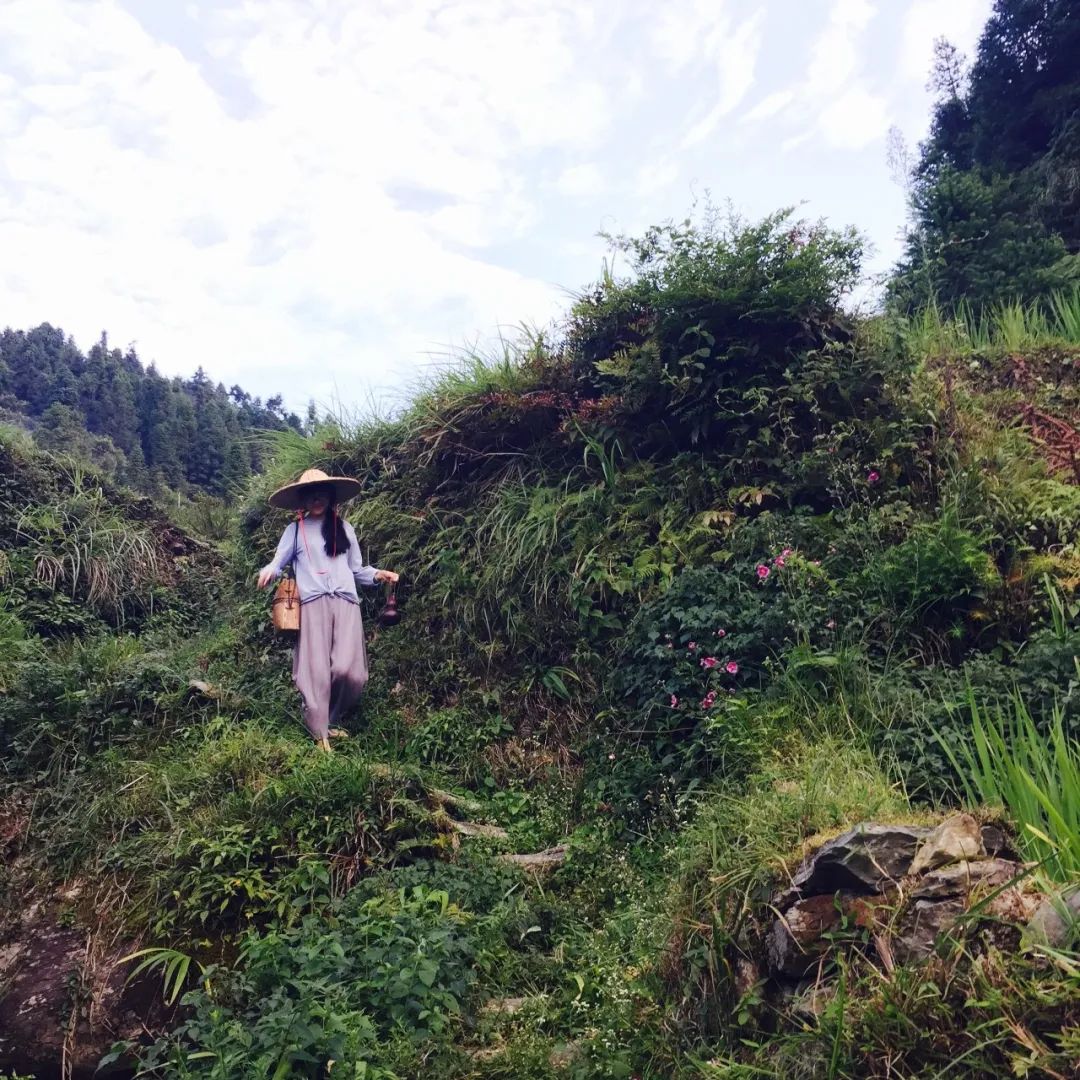
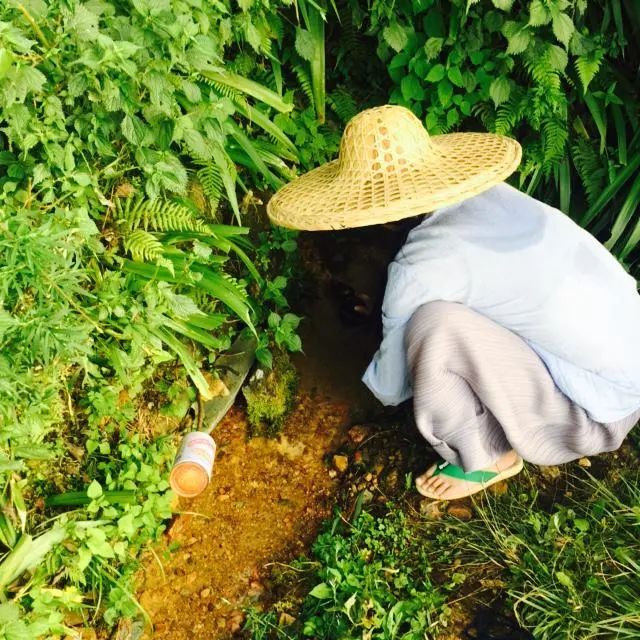
Though we eventually left the mountains, tea became the thread that bound our friendship, and it was also the force that brought Shuyu together with Kiwon. It was an encounter that transcended borders, languages, and cultures—and, in a sense, the very cosmos.
Kiwon is a Korean-American astrophysicist based in the United States. A devotee of Chinese tea, he had cultivated a cross-Pacific exchange of teas through his frequent travels between China and America. What began as a serendipitous connection over tea ultimately took root through it: Kiwon decided to stay in China, joining Shuyu in exploring the cosmos concealed within a teacup.
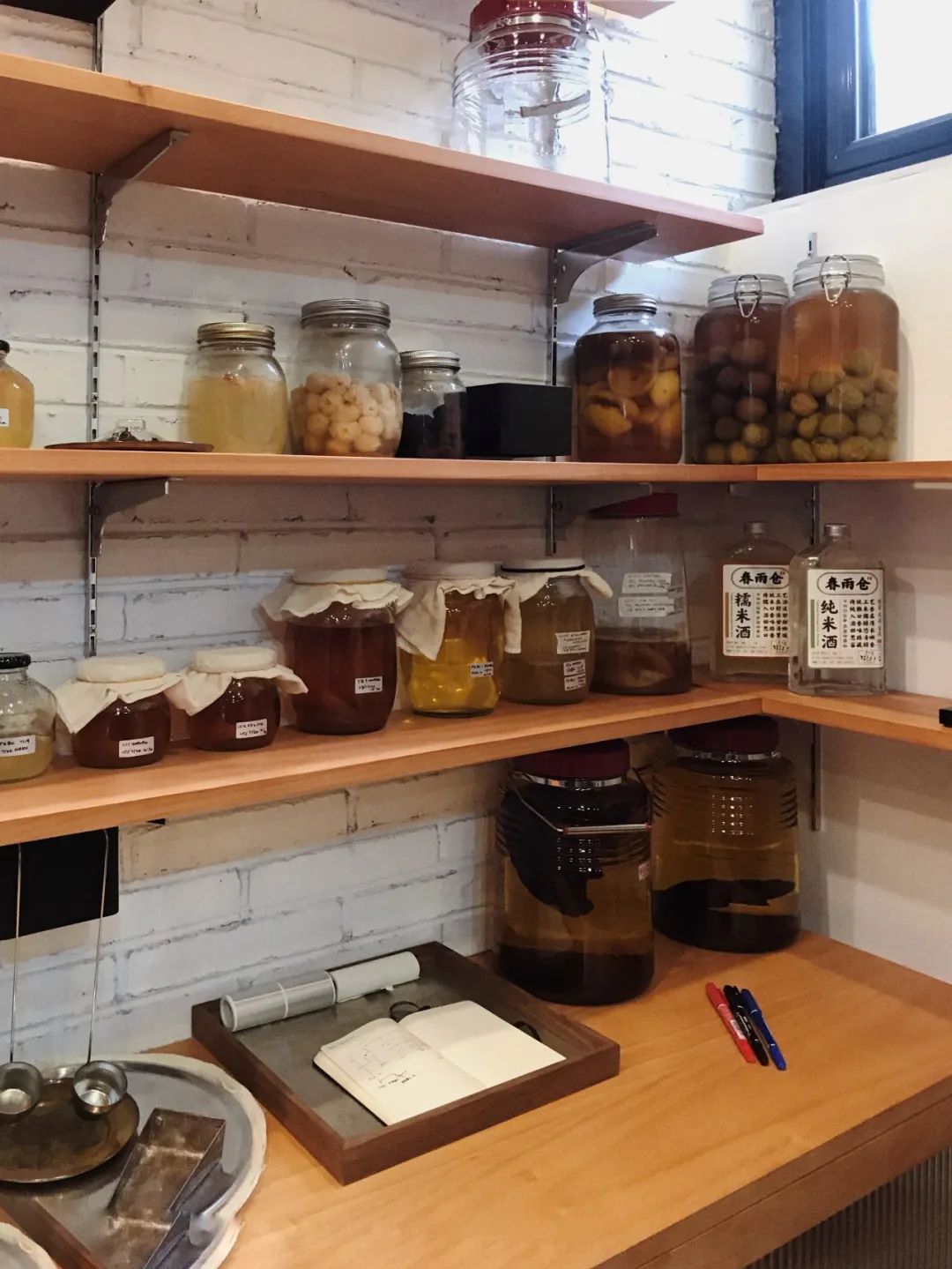
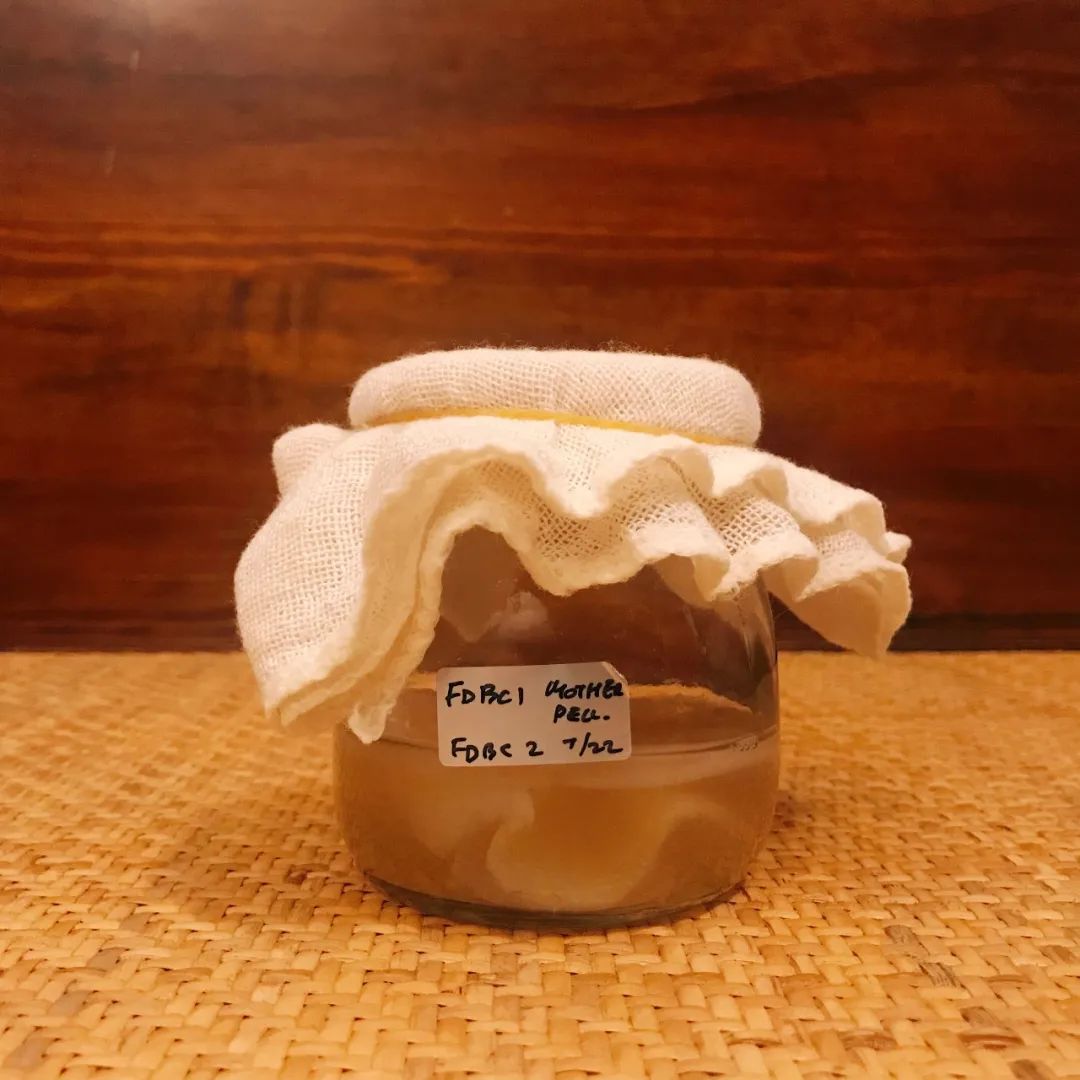
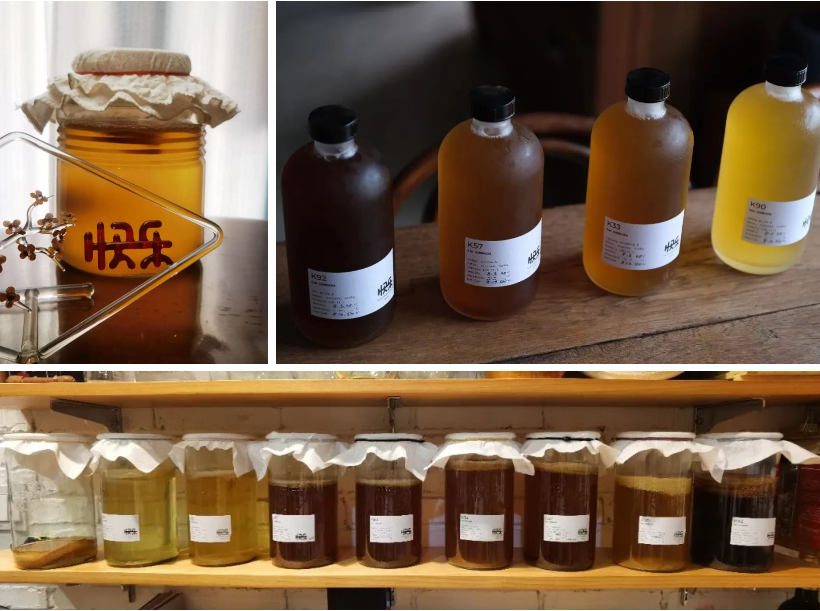
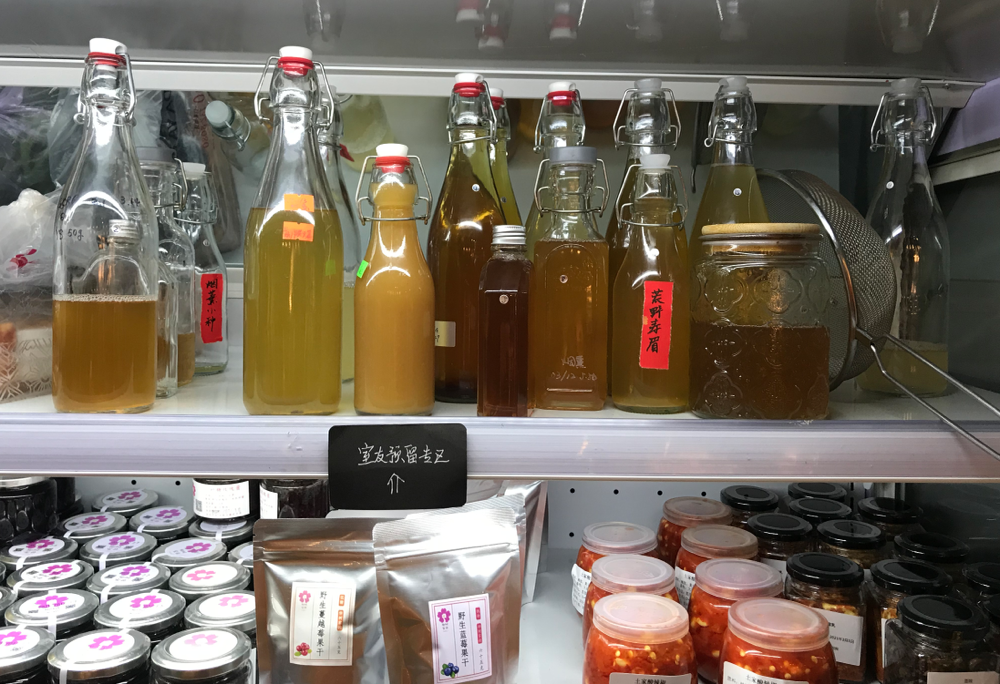
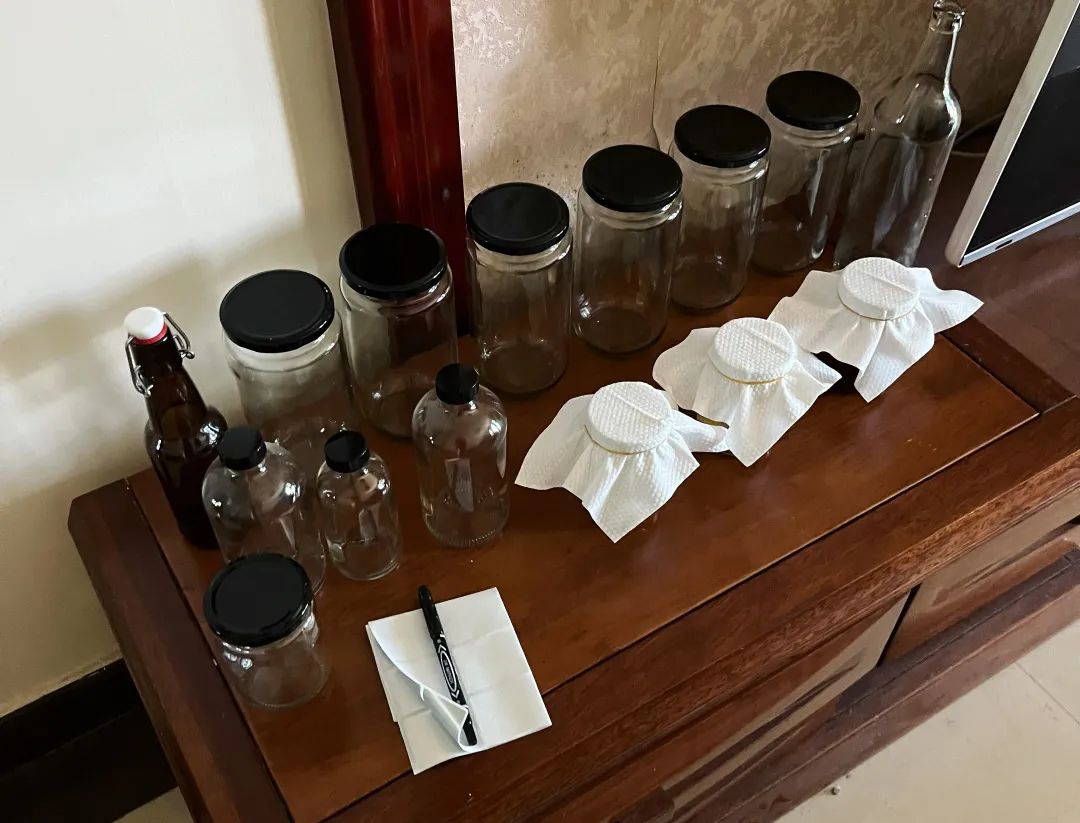
As with our usual get-togethers, we shared good food, fine tea, and caught up on life. After the meal and a round of tea, Shuyu and Kiwon retrieved two glass bottles from the refrigerator. With a touch of mystery and unmistakable excitement, they were ready to introduce a “new friend”. I had already noticed the rows of glass jars arrayed across the shelves at varying heights. The dates and capital-letter abbreviations on their labels hinted at something deliberate; one read “FDBC2 7/22”.
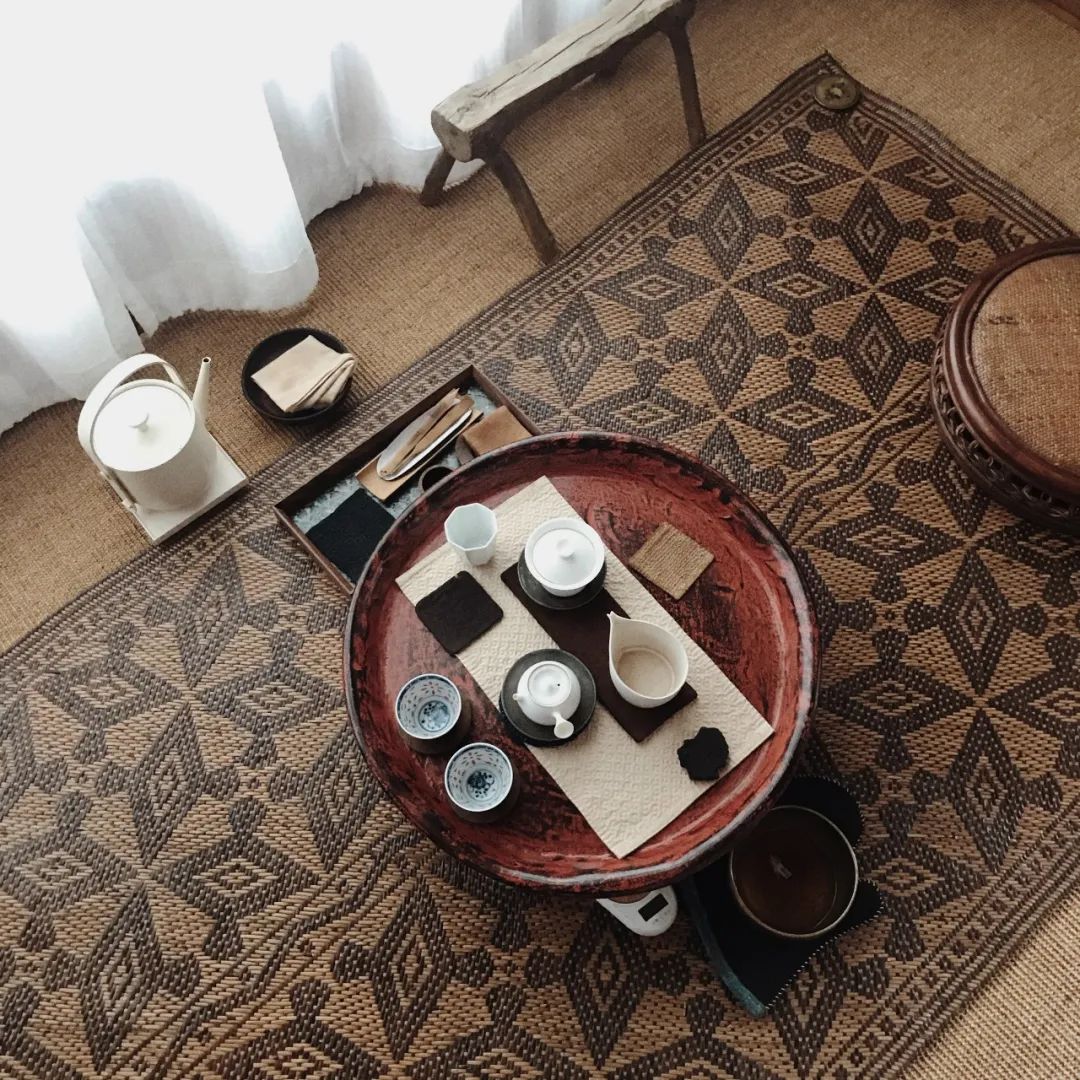
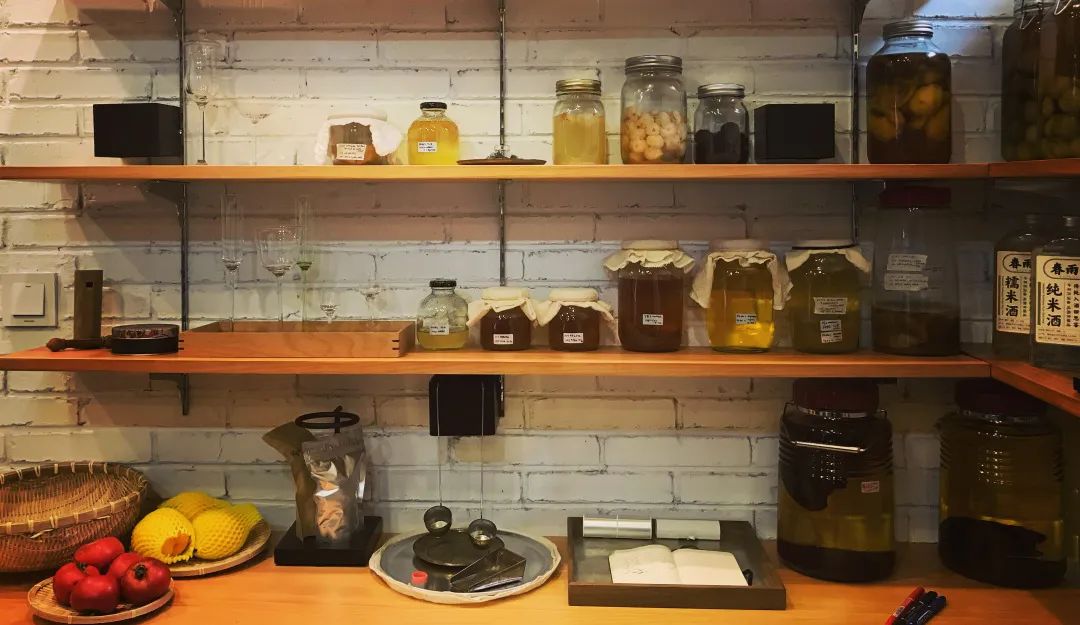
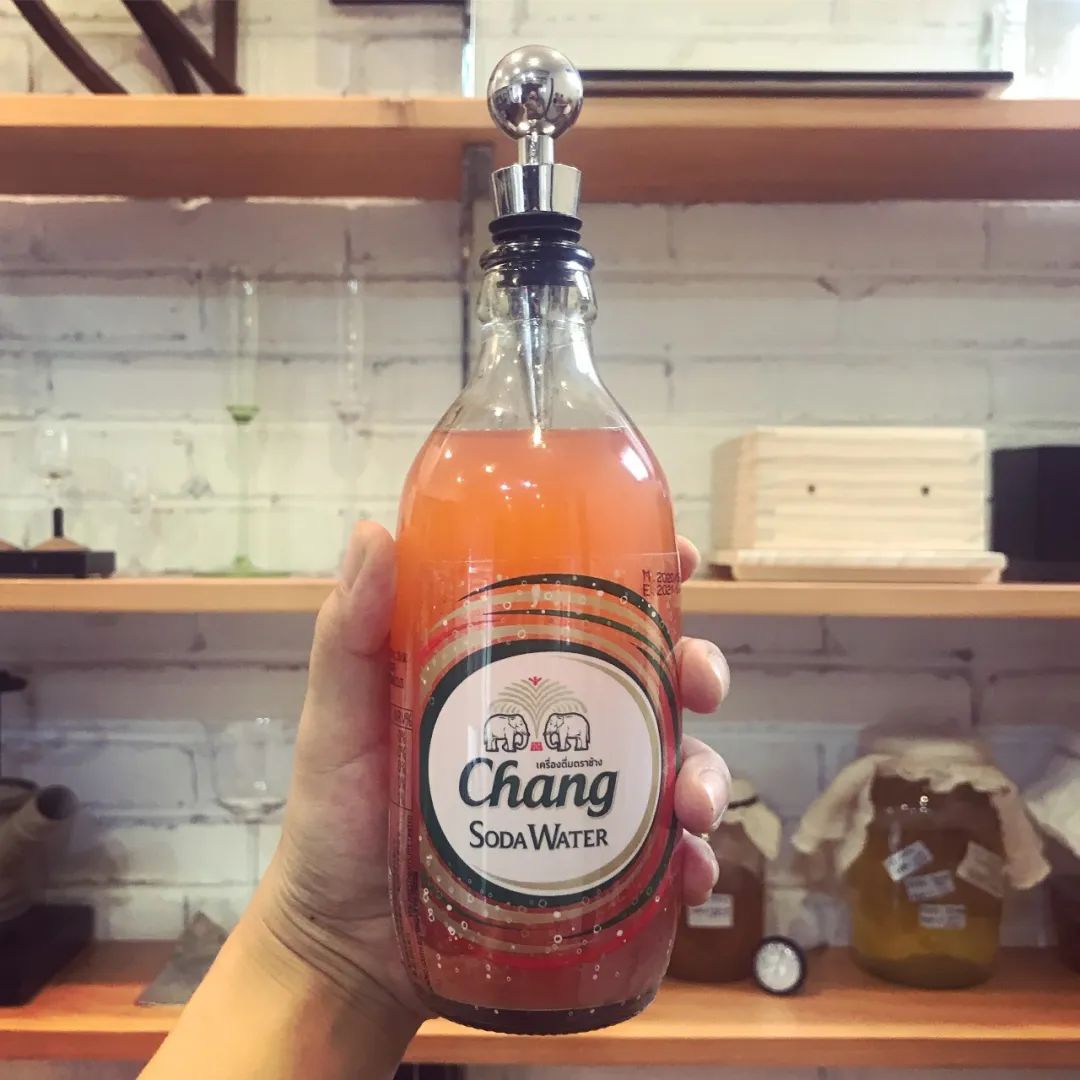
I will never forget that first sip; it was a long-overdue revelation for the palate. The chilled, translucent apricot-hued liquid opened with a bright balance of sweet and sour, as a cascade of fine bubbles fizzed across the tongue. Notes of tea, flower, fruit, and gentle fermentation arrived in rapid succession, leaving little time to register them all. The initial acidity offered a fleeting, brisk astringency, before the characteristic lightness and delicate downy aroma of White Peony—a variety of Fuding white tea—unfolded and lingered across the palate. It was then that “FDBC” revealed its meaning: Fuding Bai Cha.
Clearly pleased with my reaction, they finally lifted the veil: it was kombucha, fermented from a base of tea and sugar, and their chosen leaf was indeed White Peony. The second bottle featured a smoked Lapsang Souchong from Tongmuguan as its foundation, delivering a bright, brisk character that stood in striking contrast to the first.
II. The Re-fermentation of Chinese Tea
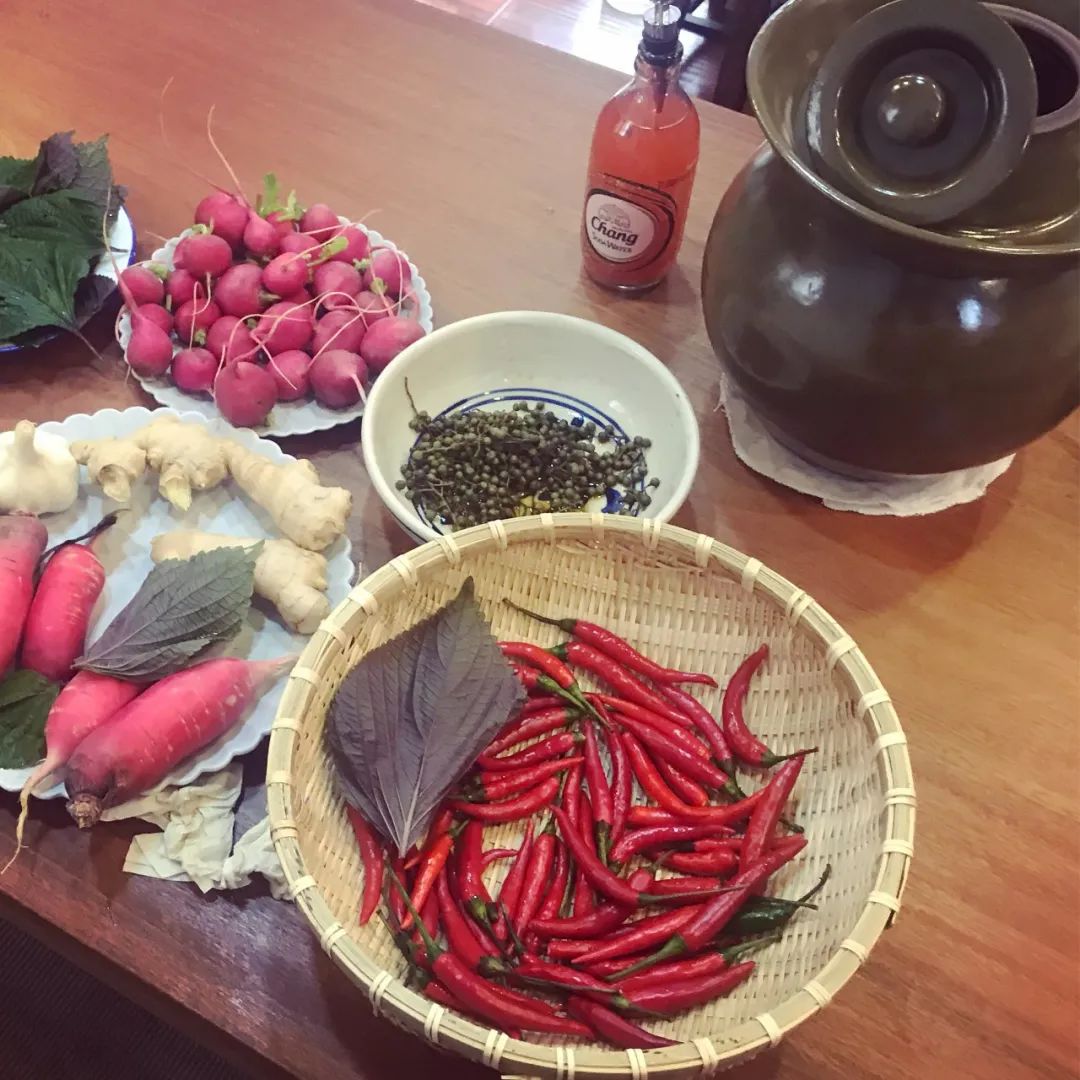
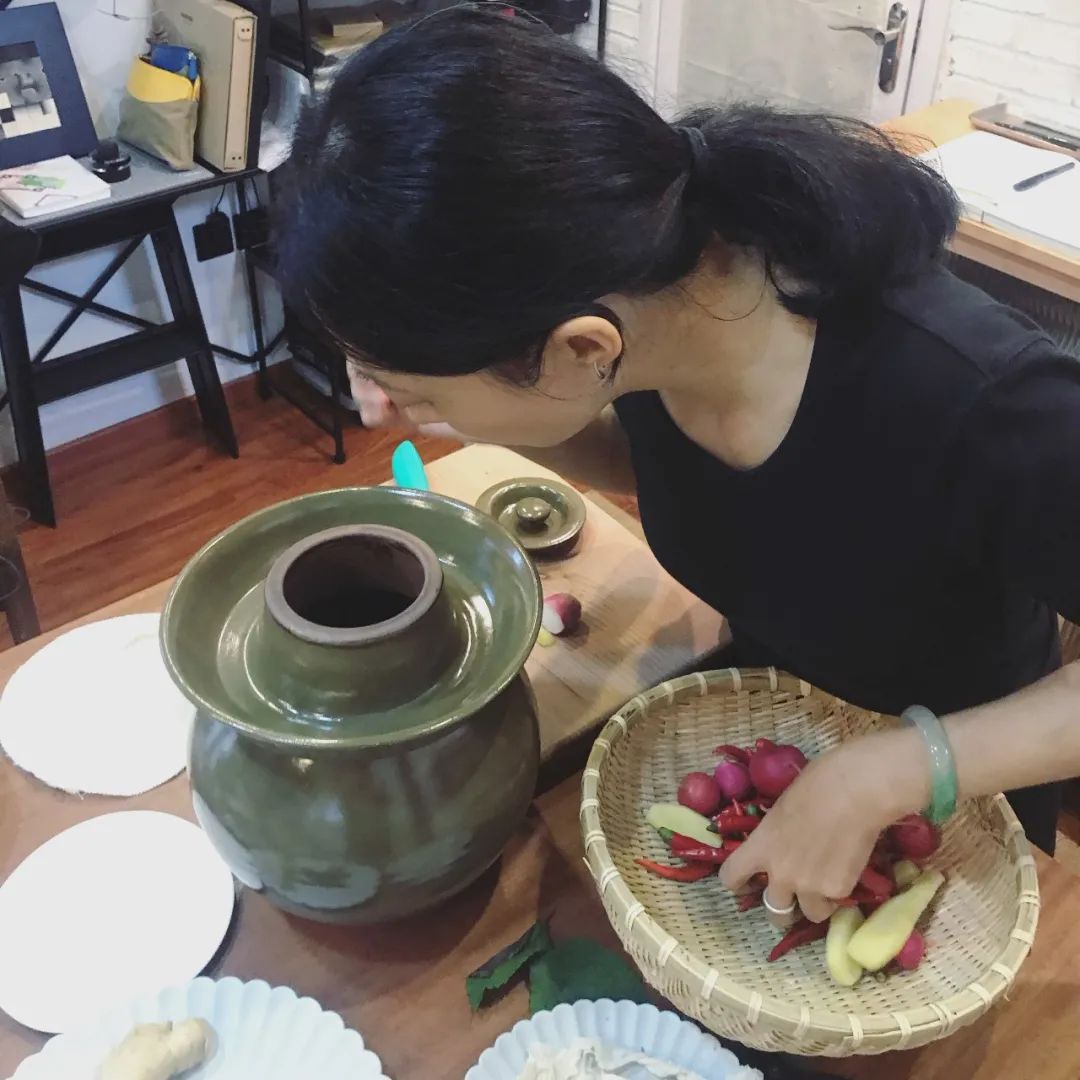
At the time, I was tinkering with traditional crocks for making pickles. Though the oxygen environment differs in that process, the underlying principle resonated immediately. I could not help but marvel, again and again, at how those elusive aromas—usually carried away by the steam of hot drinks—are captured, amplified and preserved through microbial metabolism, unfolding into an entirely new spectrum of fragrance and depth.
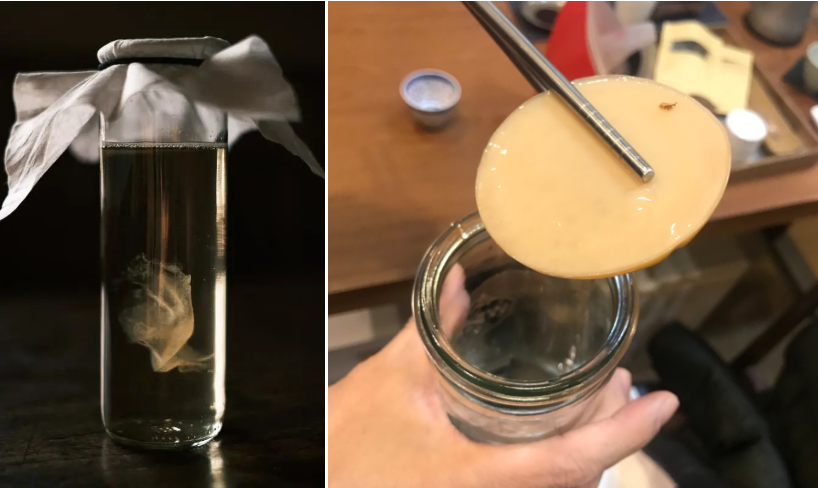
Shuyu’s first encounter with kombucha was in a vegetarian restaurant in the United States. To her, it was simply a pleasantly sweet and tangy drink that sat comfortably in the stomach, aided gut health, and came in a variety of flavours. But when she discovered that the traditional fermentation base was actually tea, her instinct as an enthusiast of Chinese tea kicked in: given how richly nuanced Chinese tea already is, why dilute it further with fruits and spices?
Within modern tea science, ‘tea’ is divided into six categories—green, yellow, white, oolong, black, and dark—according to its degree of fermentation. The character of tea arises from an organic fusion of cultivar, tree age, altitude, terroir, garden management, craftsmanship, and brewing technique. With so many elements and variables, its pathways cross and diverge, harbouring a universe of infinite complexity all its own. By weaving fermentation back into the act of drinking tea, kombucha allows those existing flavour profiles to be stretched and expanded once more.
Guided by their own sensory preferences and a deep affection for China, Shuyu and Kiwon’s kombucha experiments rely exclusively on high-quality tea leaves. They experiment with a wide range of categories and cultivars, deliberately eschewing additional flavourings. Their dedication to uncovering the intrinsic character of tea is driven by a fundamentalist blend of passion and rigour.
Today, kombucha has been absorbed by the mainstream food industry, with North America still leading the charge as major food corporations enter the market. It is no longer merely a fresh, house-made draught found in boutique restaurants; instead, it increasingly occupies supermarket shelves and chillers in a variety of commercial packaging.
Standardised industrial production has rendered the synthesis and manipulation of ‘flavour’ increasingly streamlined and rapid. Though the range of products on the market appears vast, it is, in reality, rather monotonous. To extend shelf life and ensure consistency, some ‘kombucha’ brands undergo pasteurisation, abruptly halting the fermentation process. Carbon dioxide is then injected to artificially replicate the effervescence born of natural fermentation. Stripped of its live cultures, this commercial kombucha cannot be propagated at home by saving the starter culture. Much like proprietary genetically modified seeds, it cannot be saved or replanted; consumers are forced to keep buying. For Shuyu and Kiwon, if they do not brew it themselves, they will never encounter the flavour they cherish. Their journey is a conscious decision and act to reclaim ‘fermentation sovereignty’.
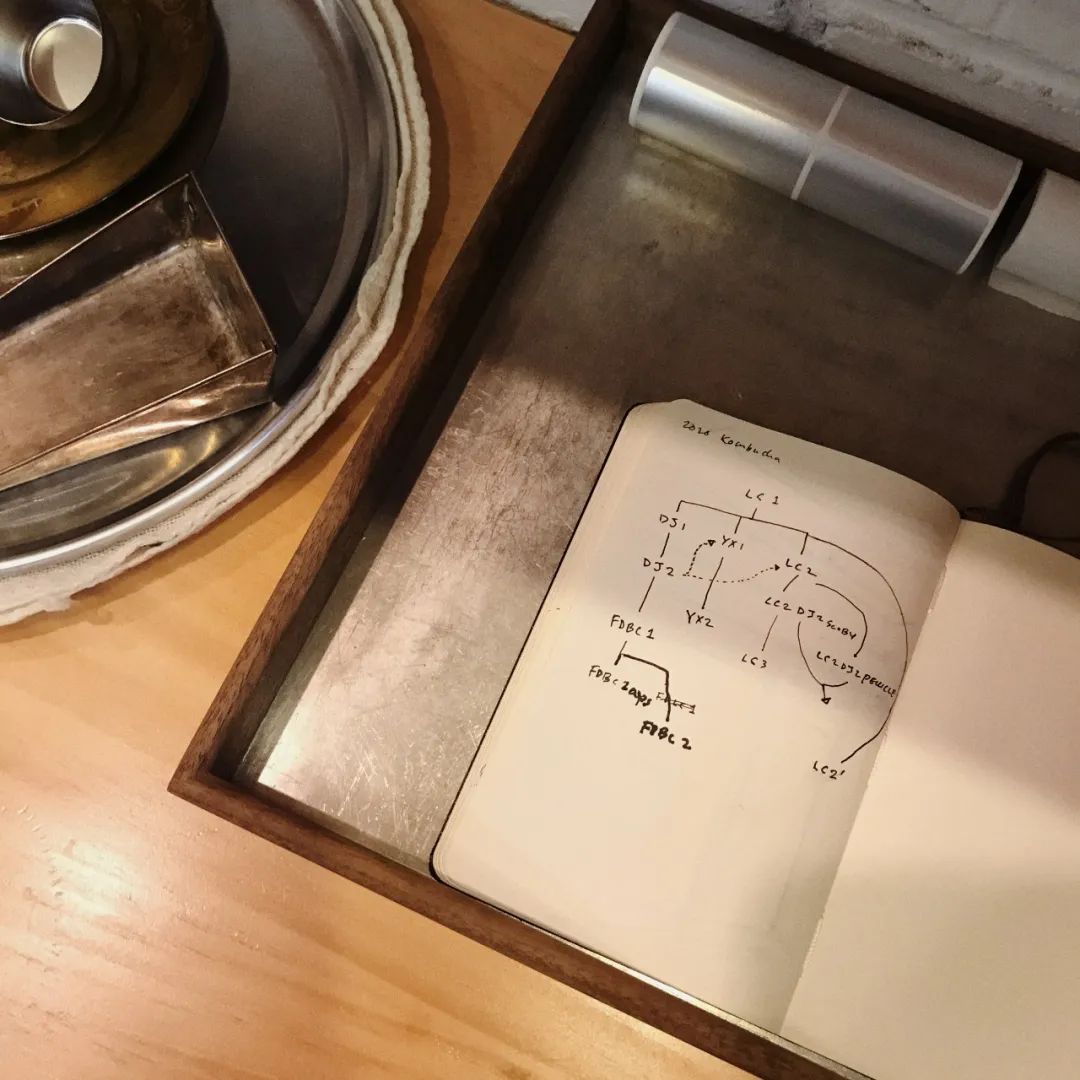
Shuyu says, with a touch of excitement, that kombucha has become their latest ‘endeavour’. She recounts how Kiwon meticulously logs the ratios, timing, and temperature of every batch, growing visibly dispirited when a fermentation fails. Her free-spirited, intuitive approach constantly collides with Kiwon’s relentless thoroughness: where Shuyu embraces instinct and mystery, remaining open and honest with the unknown, Kiwon trusts documentation and analysis, constantly probing for answers. The re-fermentation of the tea is, in many ways, a re-fermentation of their dynamic—and it is indeed a new endeavour of its own.
III. Adoption and Domestication
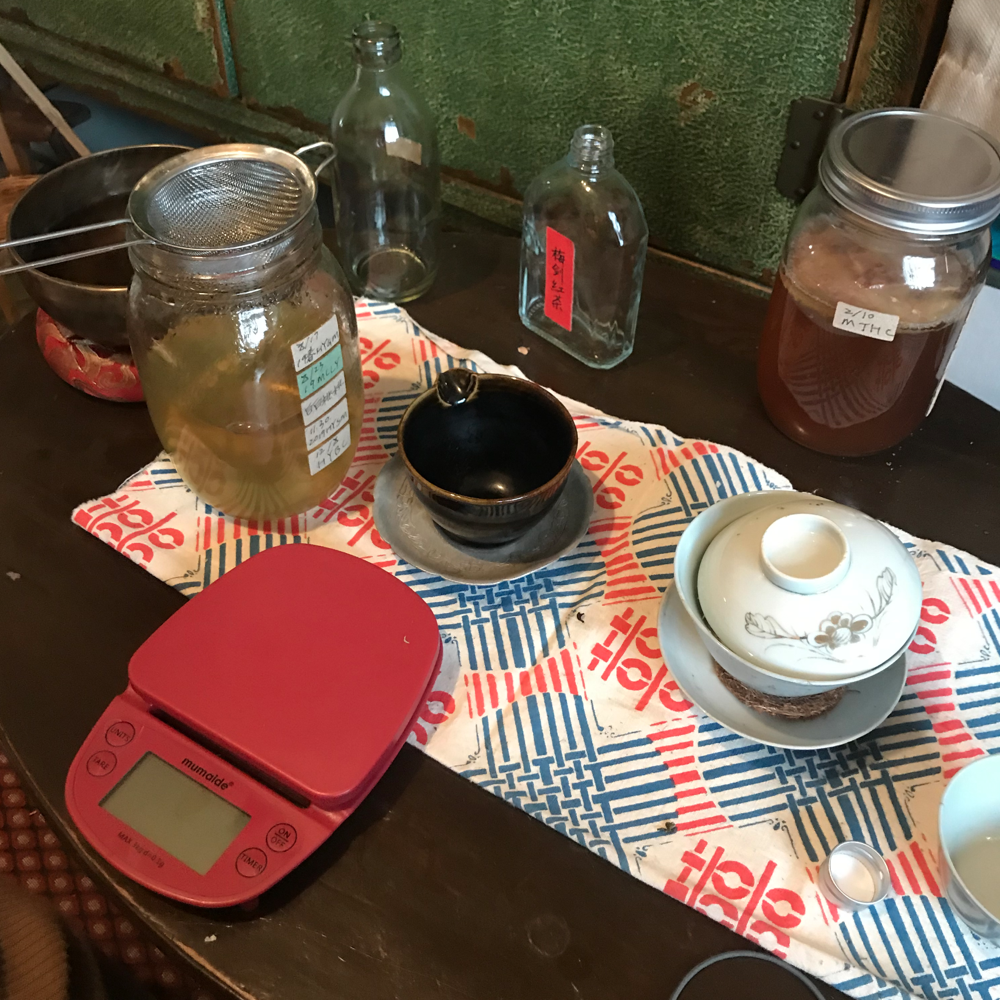
The ratio they recommended for tea, sugar, and water was “1:10:100”. I had grown weary of the vague measures peppered throughout written and spoken recipes—“a pinch,” “to taste,” or “one spoon.” By contrast, “1:10:100” was a precise metric, leaving no room for ambiguity. Amidst variables such as the tea base, water quality, sugar source, temperature, time, humidity, atmospheric pressure, and vessel, it served as a baseline that allowed for flexibility and adjustment. Though hardly a dogmatic rule, it became a golden ratio I came to trust implicitly. It was much like a restaurant a close friend had enthusiastically recommended—a place that eventually settled into my own daily repertoire, one I returned to again and again without ever tiring of it.
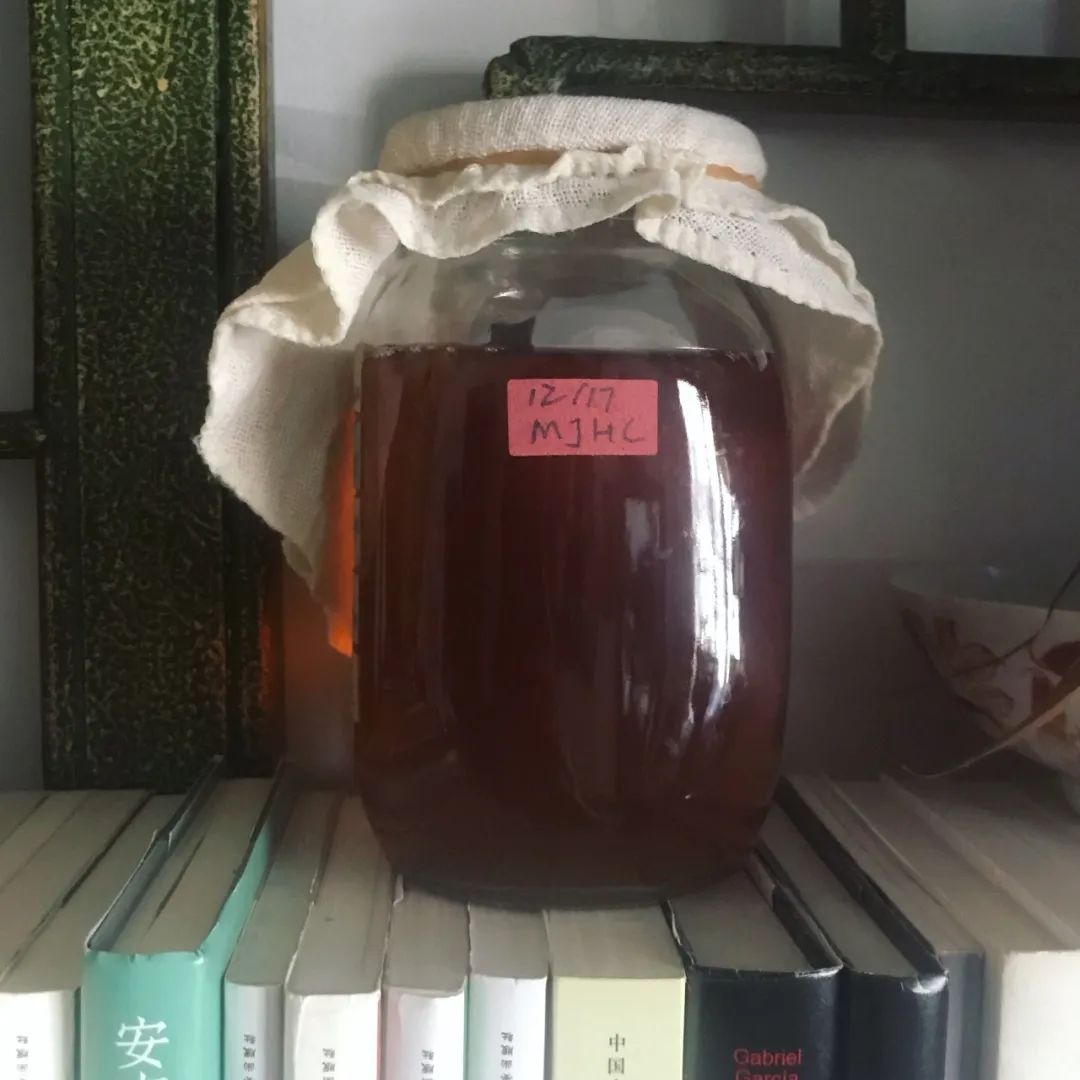
I eagerly set the kombucha fermenting, only to realise that fermentation demands patience. Humans are merely assistants to time and microbes. The adopted culture, introduced into the microclimate of my home, encountered the local microbial life and gradually established a new ecology. We and the microbes existed in the same time and space, adapting to one another, a mutual domestication.
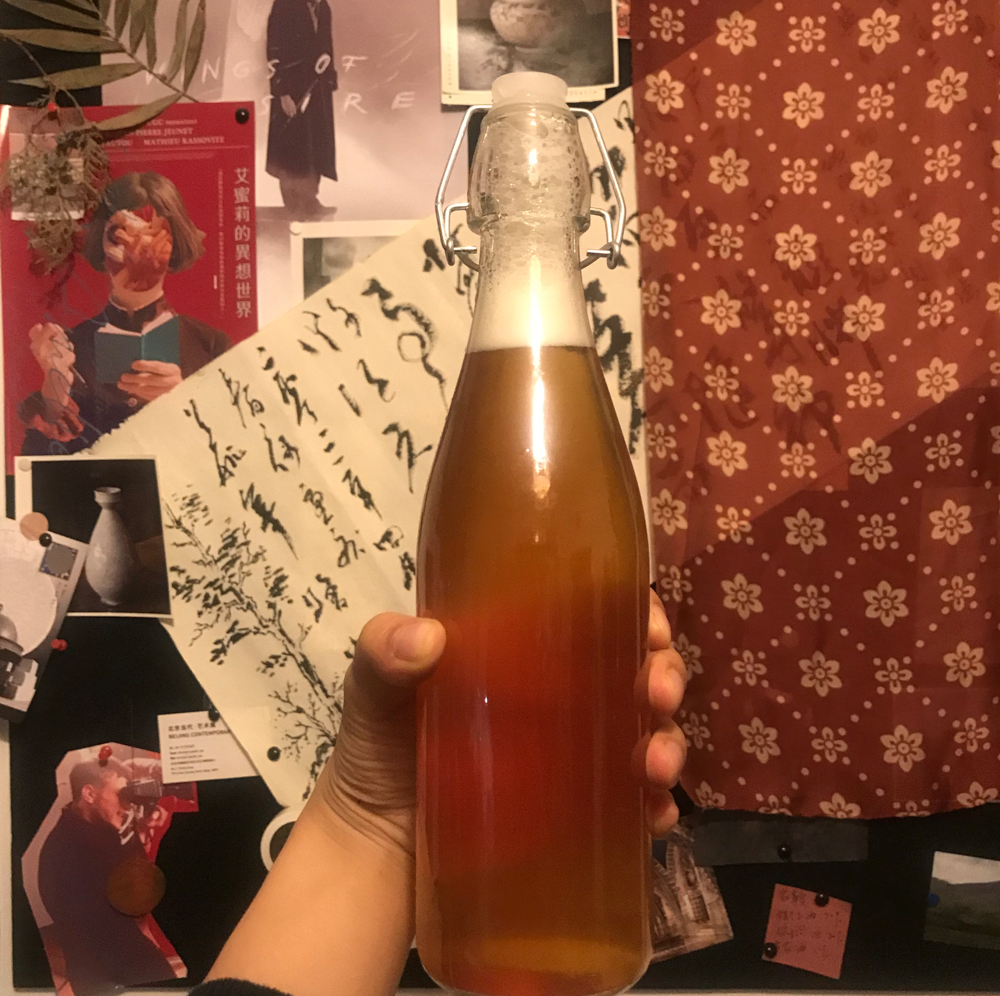
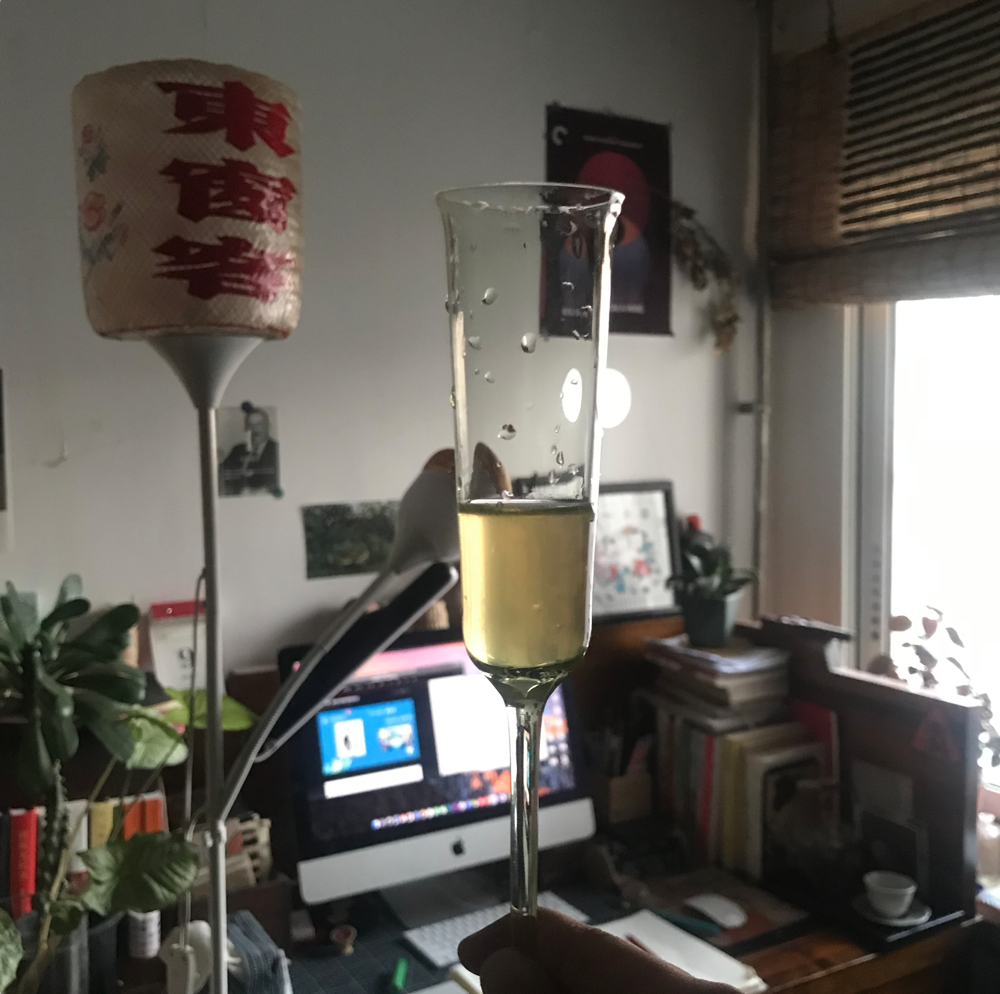
IV. Propagation and Sharing
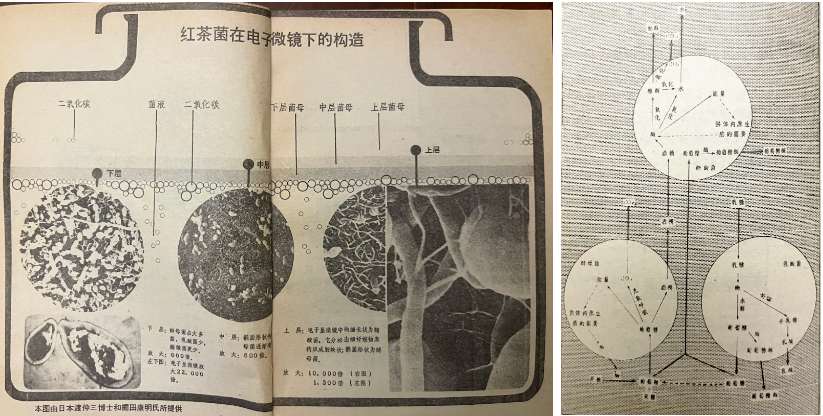
Kombucha is open to the world. Thanks to its aerobic fermentation, it invites both sight and scent. Rather than a vessel holding microbes, it is the microbes that envelop the vessel. It calls to mind Neale Donald Walsch’s words in *Conversations with God*: “the soul is the container for the body.” Scents spill over, joy spills over, and then the cultures spill over.
Just as I originally acquired the culture myself, I began sharing it with others. Produce and reproduce, share and re-share.
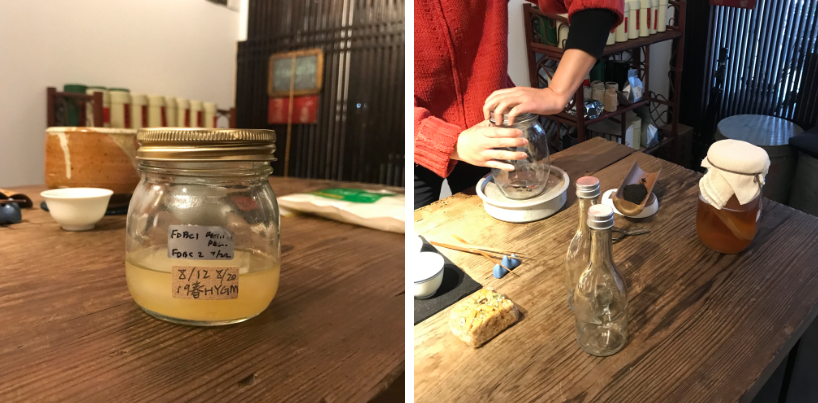
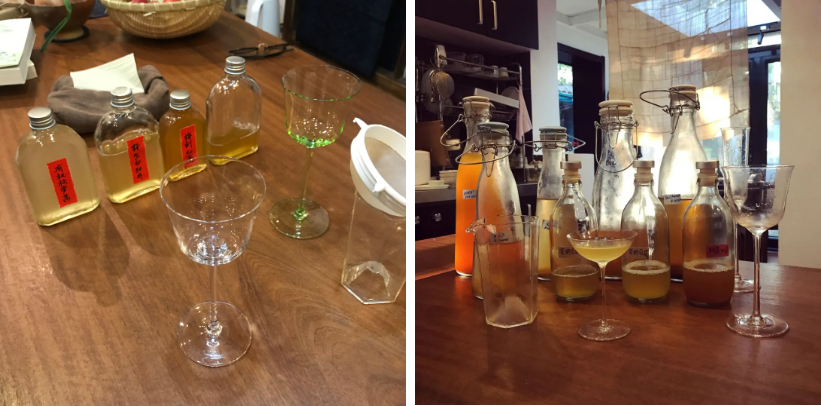
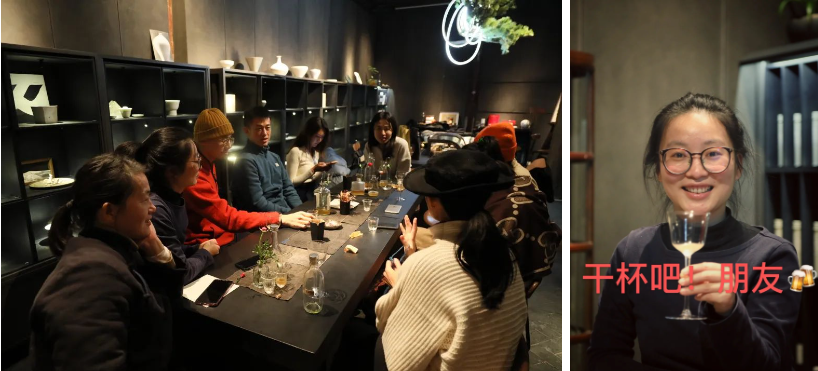
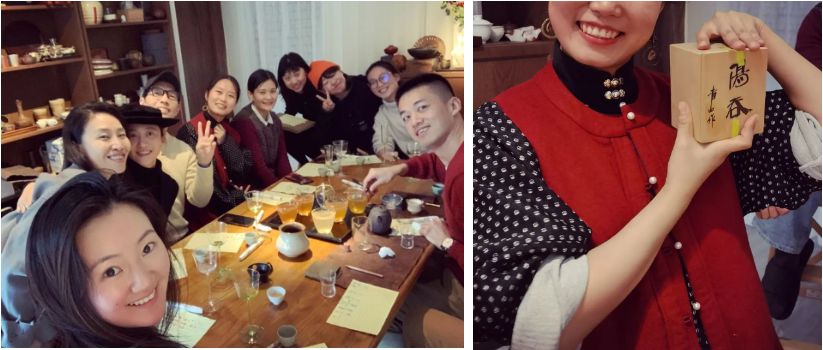
A growing number of friends have joined our kombucha “symbiotic culture,” and we began visiting one another with our homemade brews. Initially, we playfully dubbed Shuyu the “Culture Mother” and Kiwon the “Fermentation Father.” After all, each of our kombucha batches originally stemmed from the cultures they nurtured, complete with a traceable “lineage.” Meanwhile, we were also passing on our own cultures, watching them proliferate, spread, and intertwine. Over time, this evolved into an irregular tasting board game: the kombucha blind-tasting gathering.
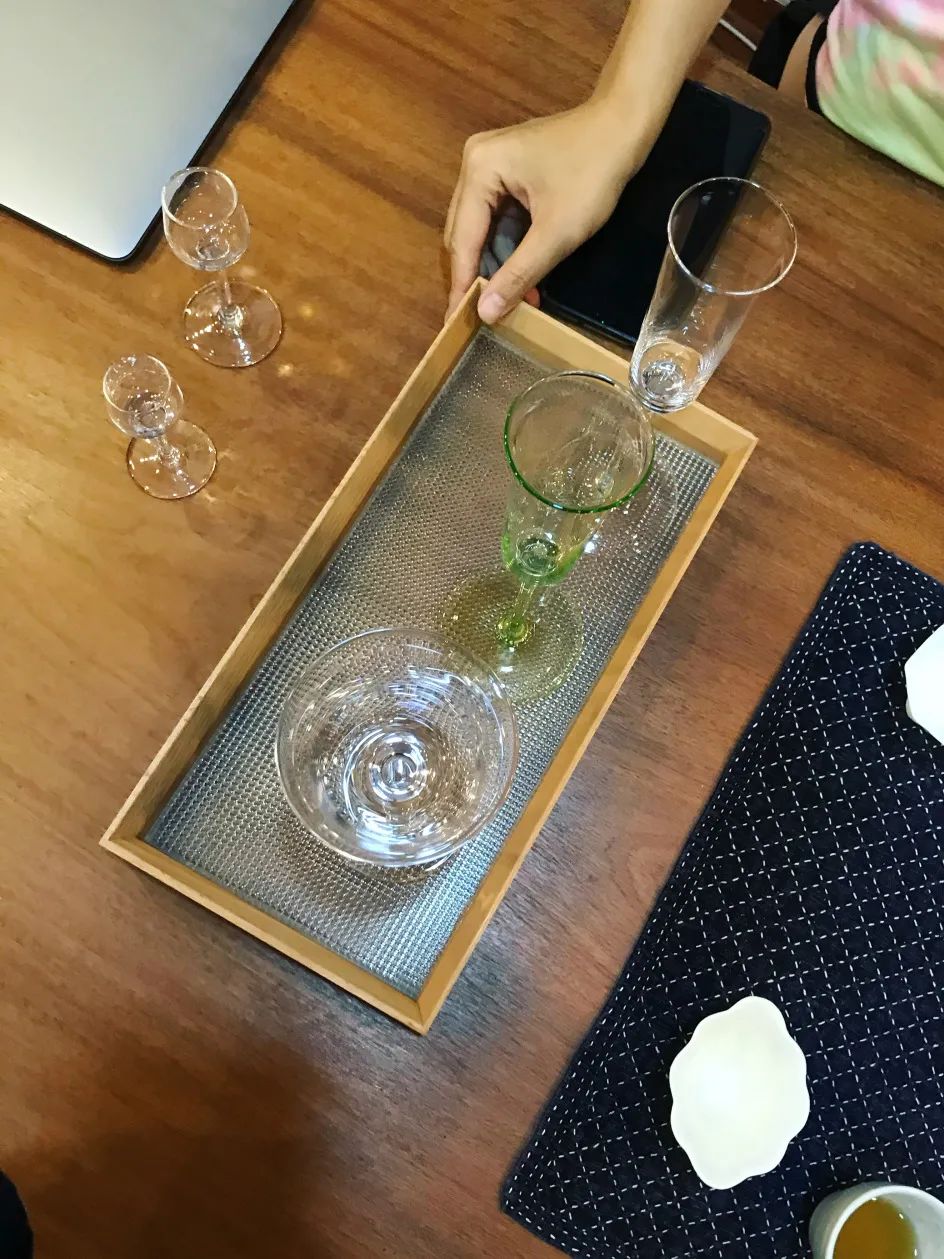
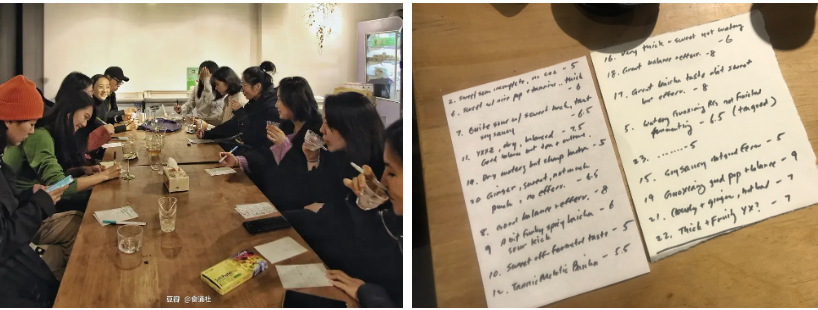
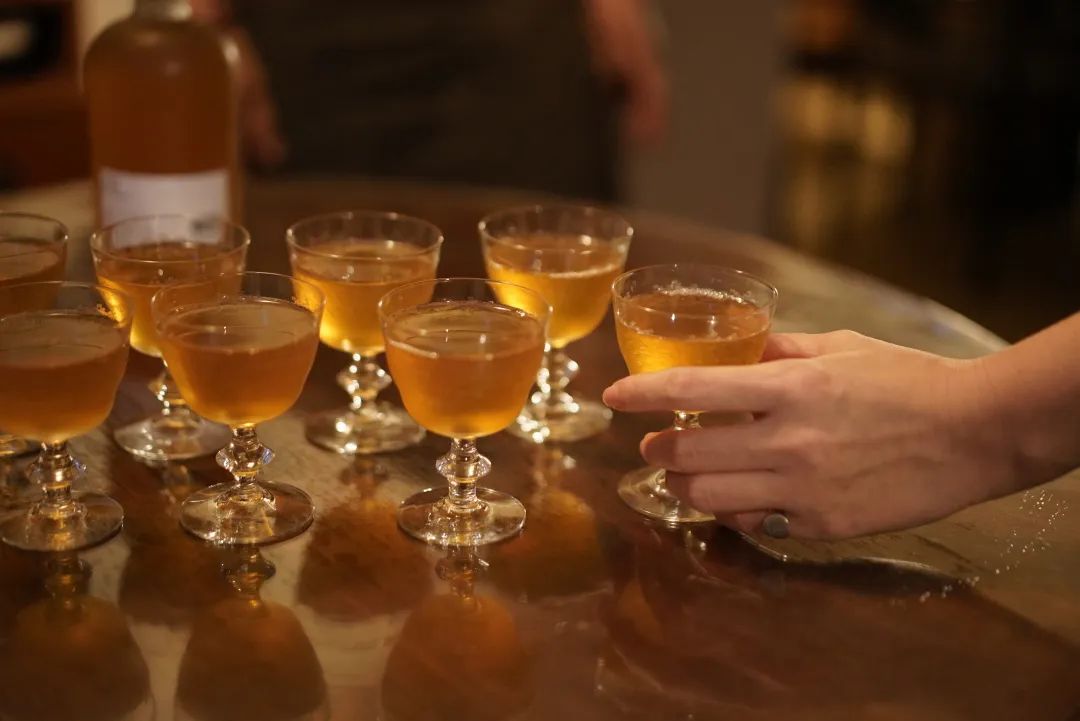
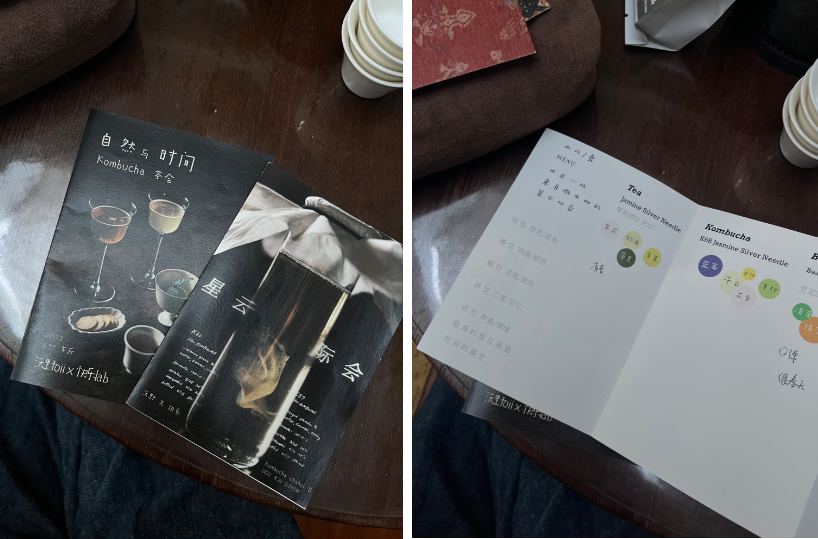
At these gatherings, we numbered each bottle of kombucha brought along, keeping all production details hidden. We poured the samples into a shared tasting decanter and distributed them cup by cup. As we tasted, we noted our impressions and scores on paper, ultimately tallying the results to select a top ten. The host who opened their doors would then present the “champion” brew with a mystery gift.
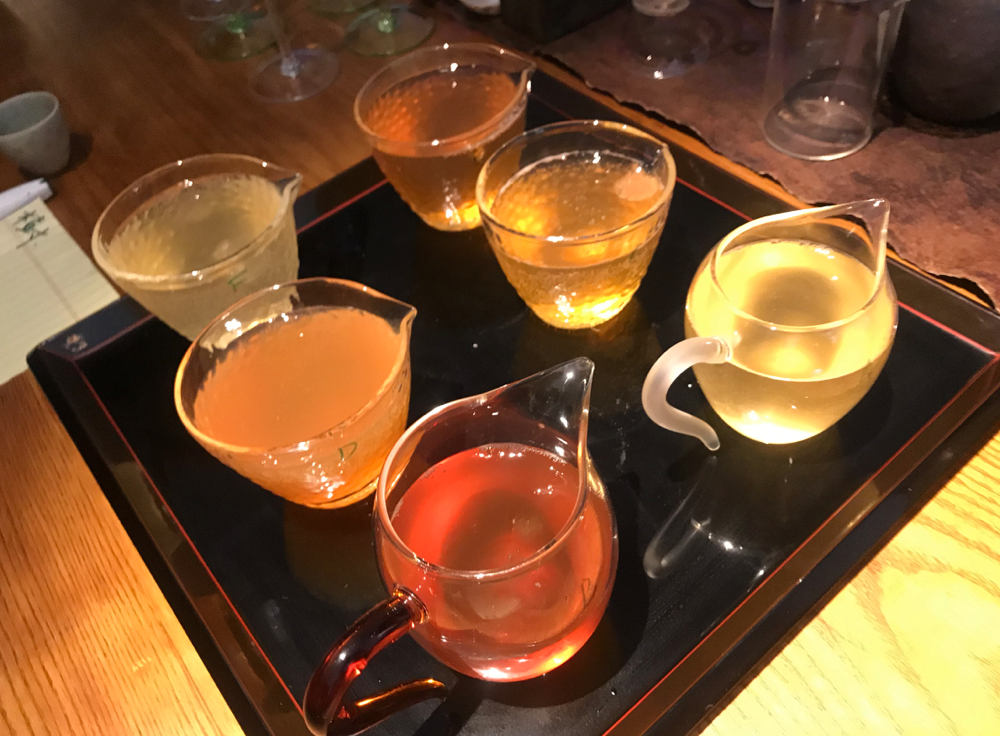
The crowned “winner” stands as our tacit agreement on “seeking common ground while reserving differences”—yes, we still believe in that phrase. In an increasingly polarised and adversarial world, we gather around a single table and, through kombucha, undertake an intellectual practice of “finding common ground amidst our differences”. Through sharing, exchange, and dialogue, this microbial “blockchain” is spawned and proliferates, putting the ideal of “decentralisation” into practice.
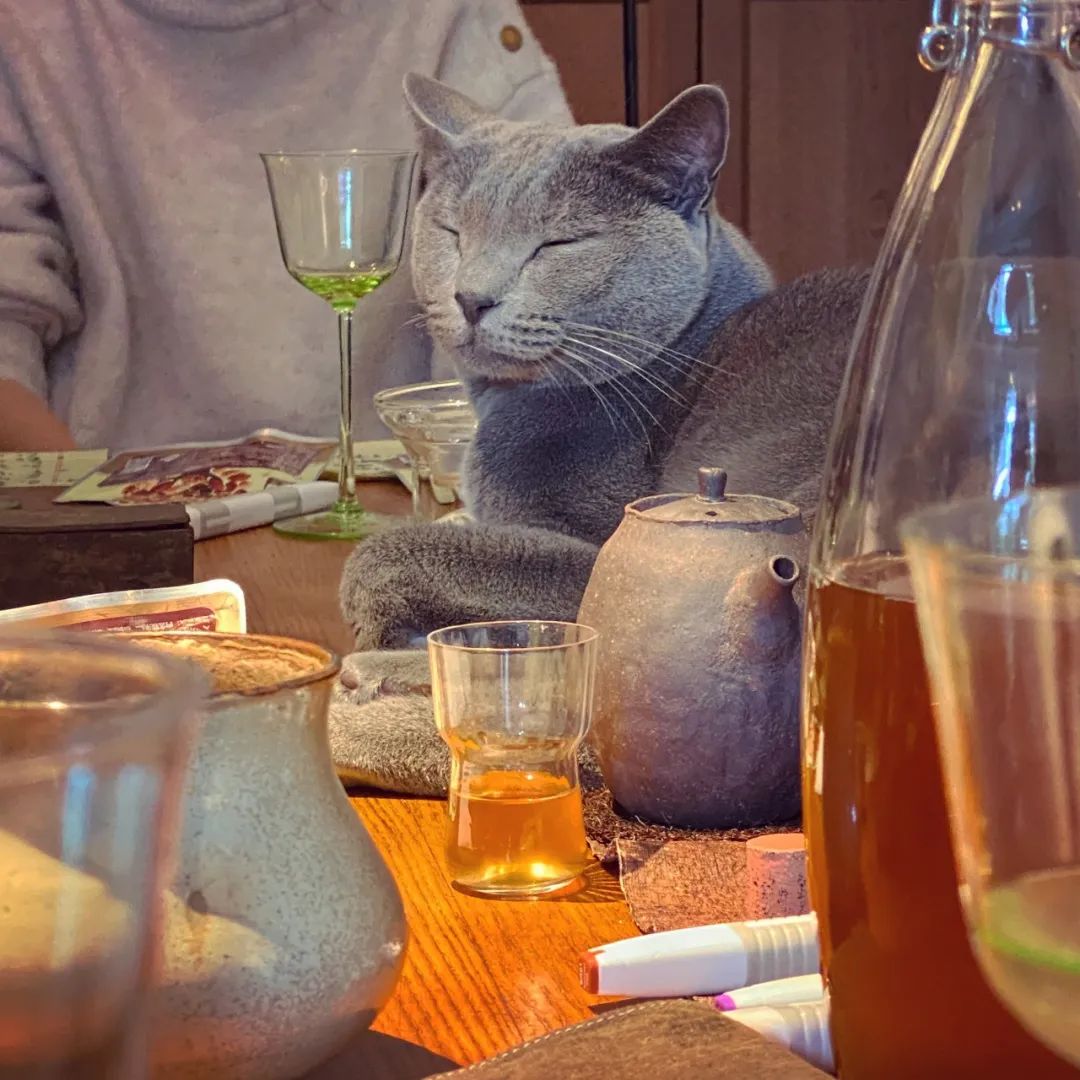
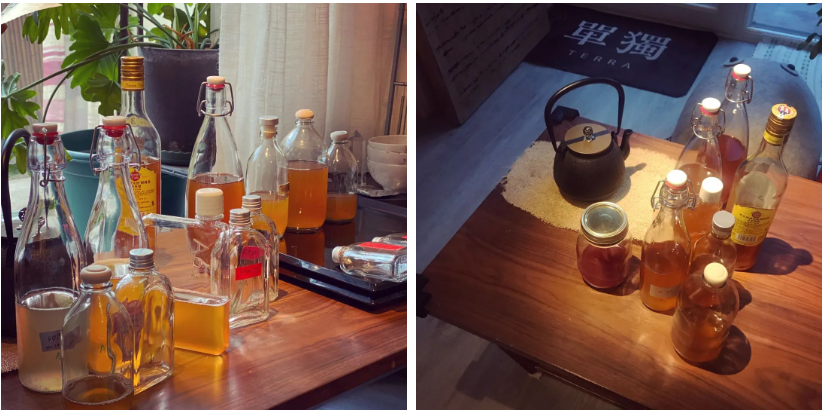
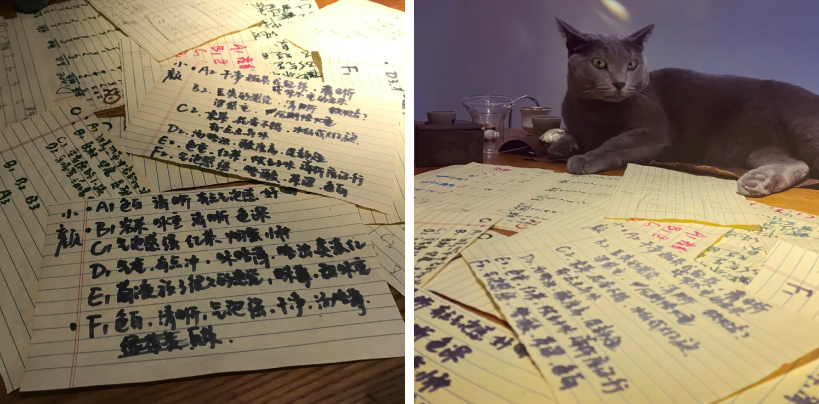
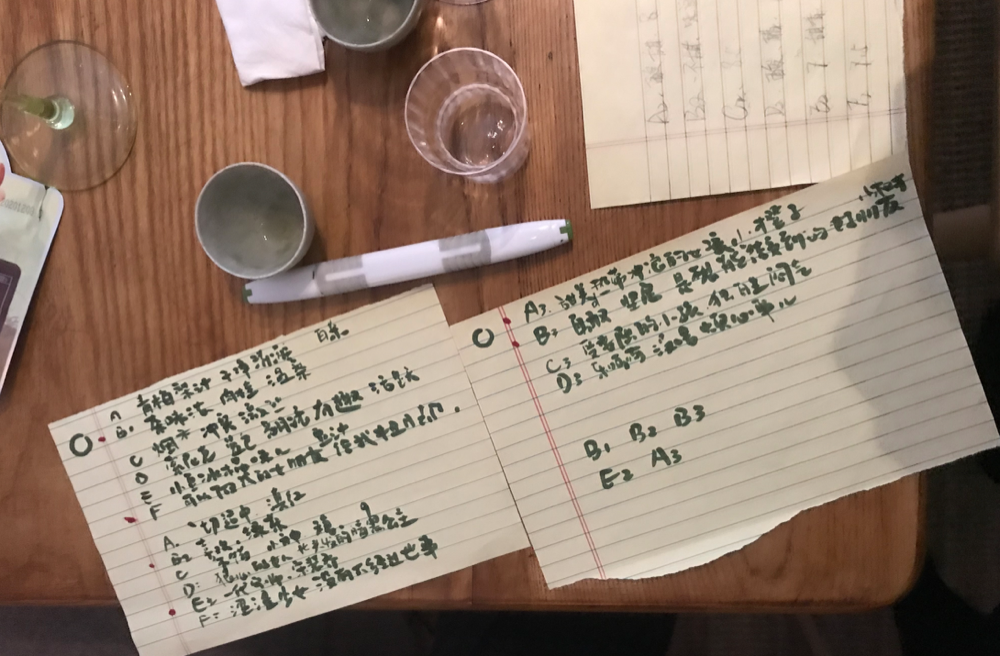
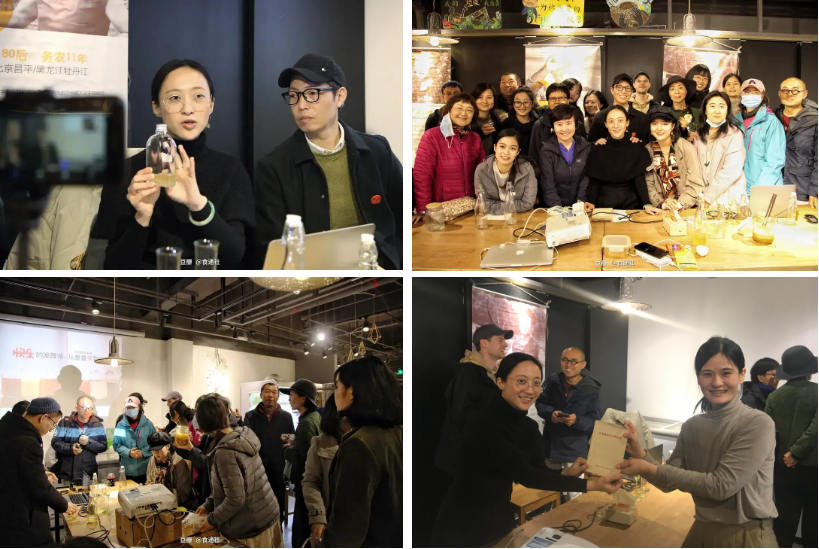
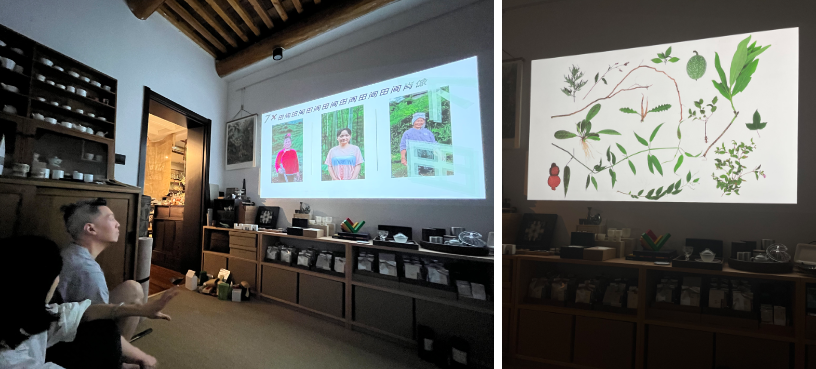
I brought the kombucha to the Foodthink office, where it occasionally appeared as a post-lunch drink. It was also here that colleagues and I began planning a kombucha-themed sharing session, formally inviting Shuyu and Kiwon to share their fermentation stories with the public.
While putting together the event poster, Shuyu casually pointed to a glass ornament on the desk engraved with the word “Happiness” and said: “Let’s just call it the Happy Culture.” Simple, yet perfectly apt. The culture truly brings us sensory, emotional, and social joy. That logo was kept and adopted thereafter, eventually becoming the official name of their fermentation studio.
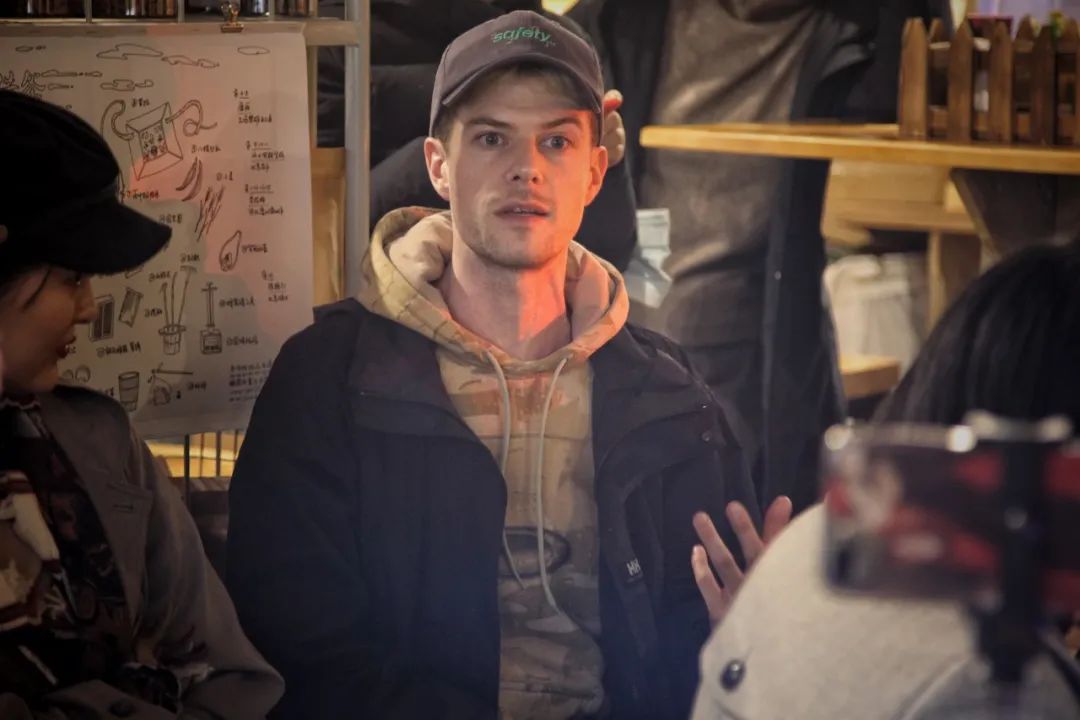
That day, before the sharing session officially began, members of the “Happy Cultures” group arrived with jars and bottles of their latest ferments, kicking things off with a private tasting. On this occasion, Xiao Chao, a novice colleague from Foodthink, claimed the grand prize. In a world of fermentation full of surprises, one can always anticipate the joy of a “wild culture” stepping into the limelight. As for the remaining culture liquid, once the session drew to a close, it was adopted by attendees who had brought their own glass jars to take it home.
V. Scattering and Resurgence
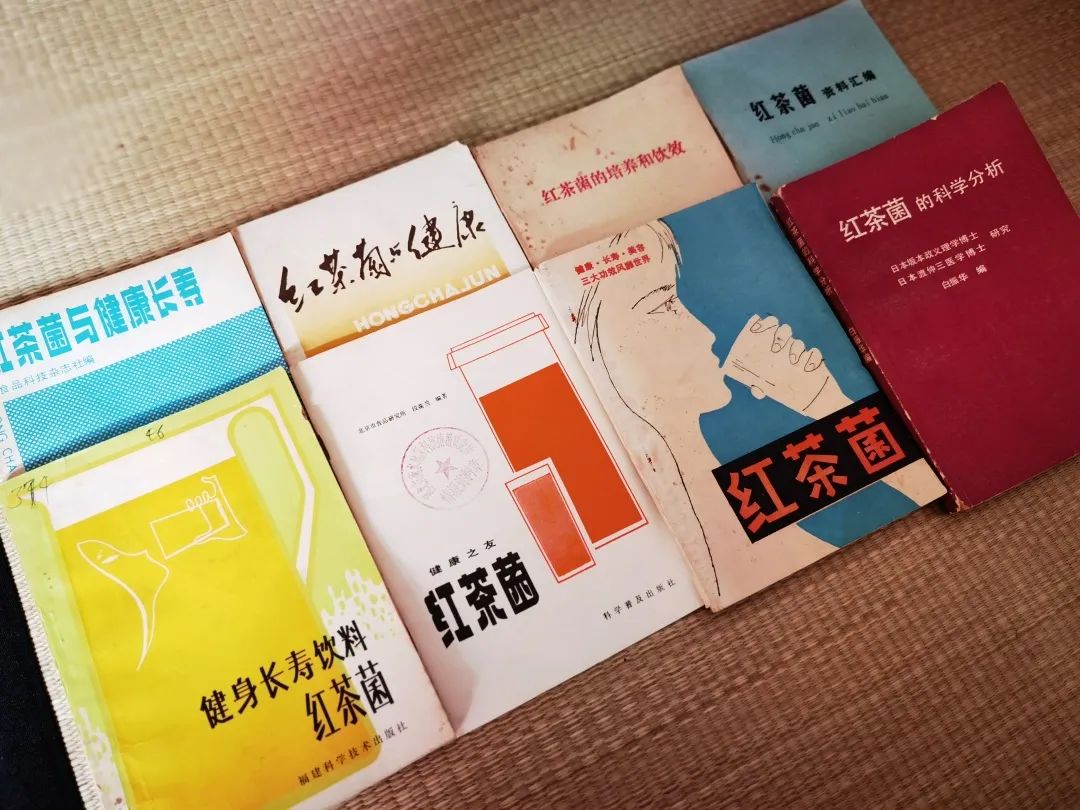
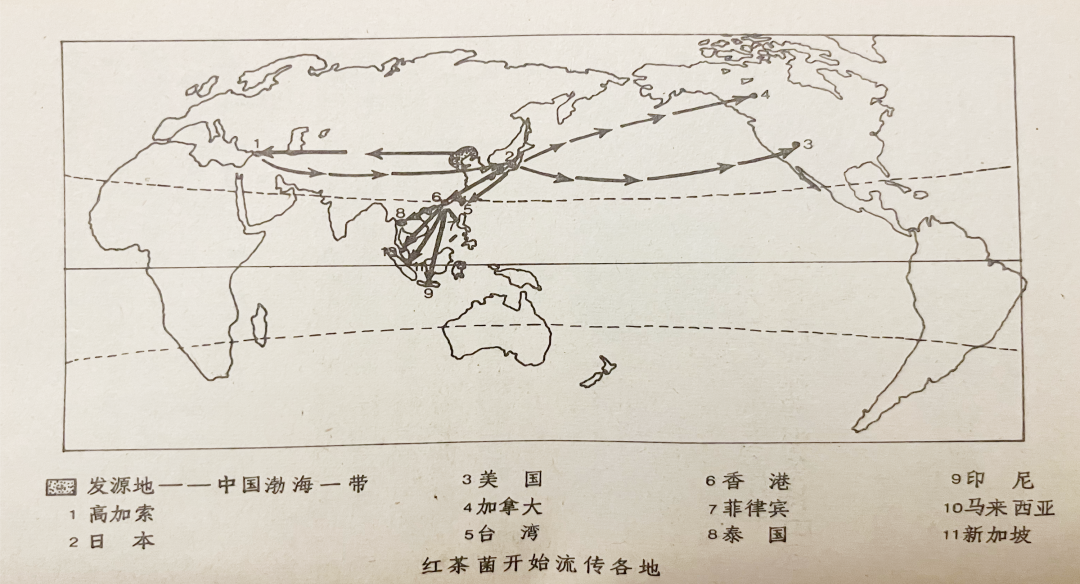
Kombucha has flowed back to the mainland several times. During the 1980s culture-fermenting craze, a series of books were published: demystifying fermentation principles, cataloguing purported benefits, listing folk anecdotes… Passing mentions also allude to its elusive presence in the early Republic of China and the years following the War of Resistance.
How did the “Haibaos” of the 1980s eventually fall out of favour? Perhaps the accelerating spring breeze of Reform and Opening Up bred wealth and fermented consumerism, ushering us into an entirely new mythos. Kombucha in China has risen, been forgotten, returned, and risen again; its losses and triumphs have always ebbed and flowed with the climate of the times.
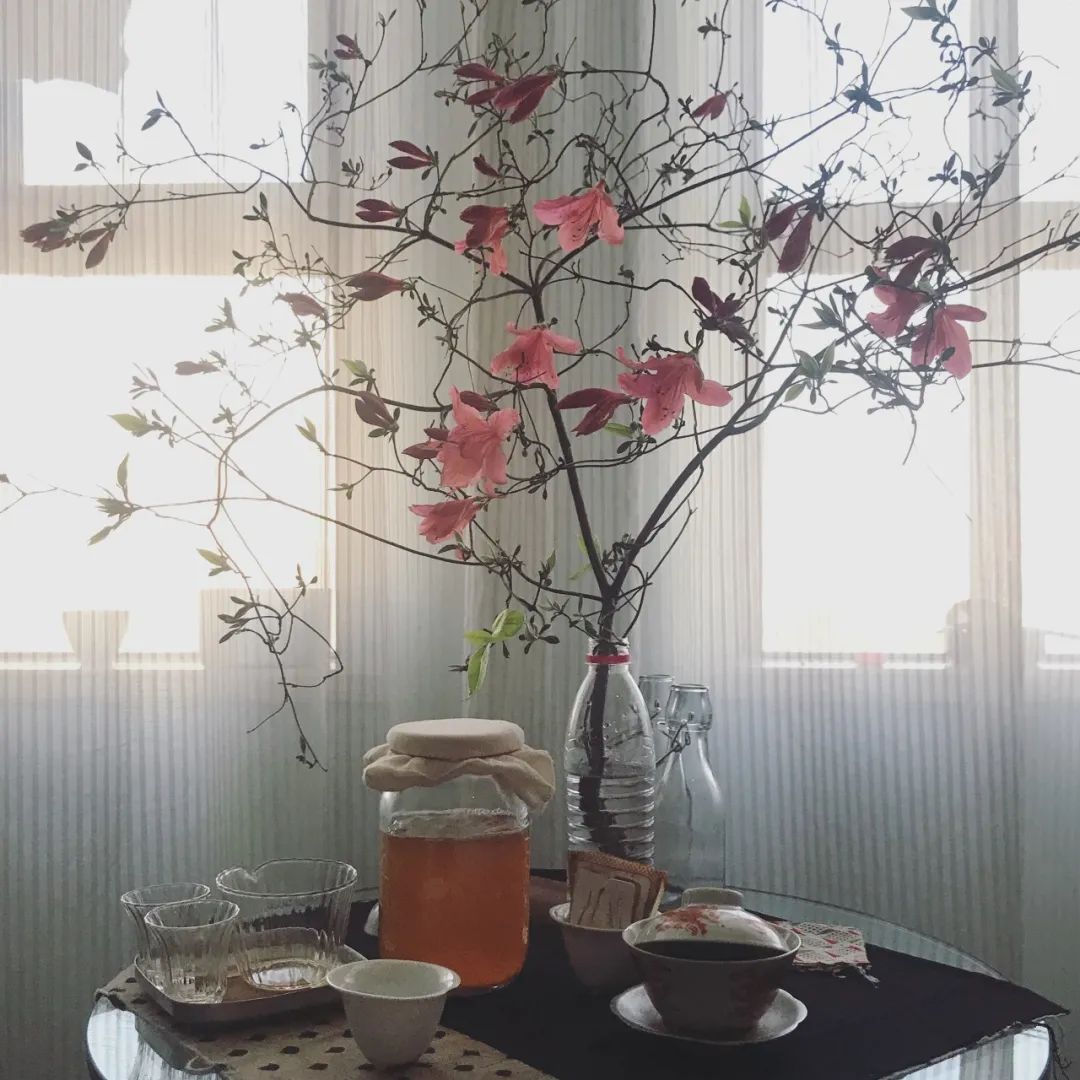
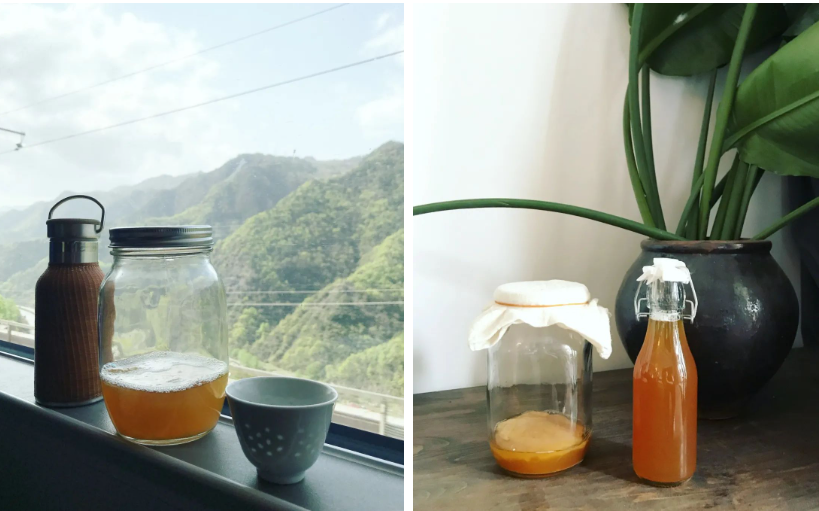
In the spring of 2022, once life in the small town had settled, I took the starter culture I had brought back from Beijing out of the fridge. After such a long hibernation, they were profoundly weakened; the liquid sat clear and quiet, the culture film resting lifeless at the bottom of the jar.
We began a difficult process of mutual adaptation. I faced my own native environment anew, while they, carrying only a thread of vitality, encountered an entirely unfamiliar territory. Fermentation turned hesitant and closed off. The liquid seemed to stagnate, time thickened to a near standstill, and my senses lost connection with the process. Two weeks later, delicate strands finally surfaced in the brew. Bubbles rose slowly, and that familiar tart-sweet scent drifted back into the air. Through successive rounds of refreshing the tea-sugar mixture and tending to it, the colonies revived, reunited, and thickened into a new film.
The first batch ready for drinking matured during the sudden “silence” of April. This time, it was my mother who shared the glass with me. She had foraged for bitter greens and pokeweed from the estate grounds. Through gathering and fermenting, we navigated the chaos and panic of that spring together.
VI. Reunion
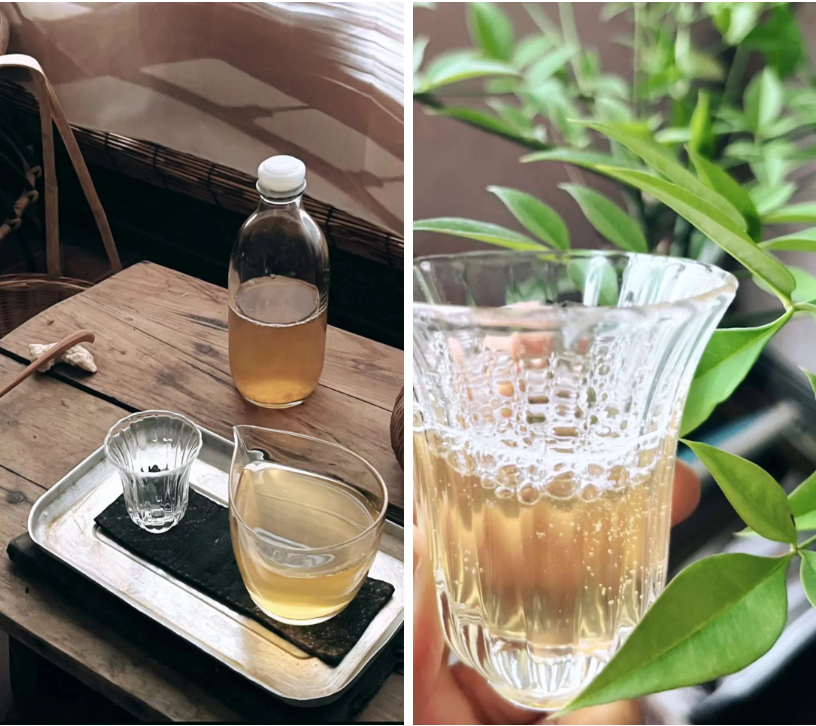
Yet there is no such thing as a quiet desk, nor isolated fermentation. Successive lockdowns led to a loss of microbial control. On one occasion, delays in sourcing glass bottles meant a batch could not be harvested in time, and the kombucha was ultimately poured into a large open fermentation vessel.
The kombucha served after this meal was a recent batch brewed with old-growth ripe Pu-erh. Its mellow, velvety depth offered an entirely new experience and realm of flavour. Kiwon once likened “tea” to a musical score; whether steeping or fermenting, the process is the “performance”, with each practitioner finding their own way of playing. They are clearly maturing into skilled performers. Their patient, meticulous records serve as the identity code and taste memory for every jar, providing a space for calibration and reflection in future fermentations. Just as they had suspected, the vast landscape of Chinese tea holds infinite possibilities. They have carved out their own style and path, and continue to press deeper.
They are my brilliant friends. Amidst the countless uncertainties—inside and outside the jar, across the macro and micro—they hold fast to a confident, unwavering anchor, steadily moving forward.
I often long for life to be like a perfectly fermented jar of kombucha: a harmonious balance of sweet and sour, a rich flavour profile, a fine, persistent fizz, and a lingering finish. But can fermentation ever truly be perfect? Life defies complete control. I cannot grant these microorganisms a stable environment to ferment in, just as I cannot do so for myself. I have experienced my fair share of botched ferments—their bitterness, cloying sweetness, sharp acidity, or the meddling of rogue microbes. Strip it back to the core, and these failures always boil down to fractured microbial colonies and ecological imbalance, where one strain grows dominant while the symbiotic community falls apart. Yet in the end, all it takes is to start a fresh batch. As long as the starter culture remains, so does the potential.
Turning points and new life are quietly taking shape within decay. In life’s moments of loss of control and disarray, we ferment our own substance and direction, continually refining and layering a renewed self through cycles of breakdown and entanglement. Growth, too, is a state of fermentation, with time as its vessel. Complexity and diversity craft the flavour; the pursuit of ideals and truth supplies the nutrients.
The mentors, friends, and loved ones I’ve encountered have kept the living culture alive for me. They have taught me the importance of constant practice, documentation, and reflection. Practice alone sustains vitality. Documentation guards against forgetting. Reflection enables healing and forward movement.
Well, I’ve gone on long enough. What you’ve just read is the record and reflection on kombucha I’ve spent the past three years cultivating. As for the stories of these microorganisms, they will continue to be updated, kept fermenting, and shared openly.
*Scientific Analysis of Kombucha*, researched by Dr Masayoshi Sakamoto and Dr Mitsugu Watanaka, compiled by Bai Zhenhua
When a Stanford astronomer and a university designer make kombucha together – Black Rice Chatroomhttps://www.xiaoyuzhoufm.com/episode/63b8273cda83c49d996a5dcd?s=eyJ1IjogIjYwZDVjMDk5ZTBmNWU3MjNiYmM1ODIyMSJ9
*Research Progress on the Sensory Quality and Related Chemical Components of Kombucha*, by Tian Wenxin, Shen Jingjing, Dang Hui, Bu Xianpan, Tang Dejian, Zhang Baoshan, Zhao Yu, *Science and Technology of Food Industry*, Vol. 43, No. 24, December 2022
Acknowledgements
Shuyu, Kiwon
and all the friends who joined this open colony
Unless otherwise noted
All images in this article were provided by the author
Editor: Wang Hao