
Invisible Labour in Natural Farming
Yet once my internship here began, my perspective started to shift.
The counterintuitive practices of natural farming—such as leaving fruit on the branches, retaining ground cover, and composting—have already been detailed in the article “Counterintuitive Natural Farming”.Maintaining this delicate ecosystem, however, demands a great deal of unseen labour.
I. Production Side: Regenerating the Soil
Transitioning from conventional methods to ecological agriculture takes three to five years to restore a healthy ecosystem. Take Sister Yan Ping’s orchard, for instance. In 2019, she began experimenting with a completely pesticide-, fertiliser-, and herbicide-free approach on six rows of fruit trees. Only once she had confirmed it was viable did she roll out ecological planting across the whole site. Yet during those initial years, she devoted considerable time and capital to learning how to prepare compost and fermented amendments to nourish the soil and the trees. Spreading and applying these preparations also proved intensely labour-intensive.
Moreover, even once the soil has been revitalised, growing short-cycle crops and vegetables still demands ongoing composting and fermentation work. These plants are not naturally dominant species; they require supplemental nutrients just to survive the relentless encroachment of aggressive weeds. Securing a harvest then means competing with wildlife for the yield—an ordeal I came to know well during my placement. Hundreds of sunflowers blossomed, only to be completely stripped bare by rodents in the end.
We experimented with broadcasting seeds among the grass, dropping them into drilled holes, and clearing weeds to dig furrows for sowing. The germination rates for beans and sorghum improved markedly. Yet given the orchard’s rich biodiversity—birds and rodents being particularly plentiful—there remains considerable uncertainty before the harvest is safely stored. Recently, Sister Yan Ping shared the results of her bean and sorghum harvests. They looked fairly promising, and she certainly seemed content. I suspect that such satisfaction is deeply intertwined with her foundational belief in sharing the land’s yield with all creatures.


II. The Sales Side: Additional Labour in Picking, Dispatch, and After-Sales Support
On the sales side, gaining access to ecological sales platforms requires the orchard to pass rigorous audits. Collaborating eco-farmers and consumers likewise need time to build trust in a new farmer and their produce.
Throughout the sales season, a significant portion of the work is dedicated to communication. To maintain a steady flow of orders and avoid either stockpiling produce or facing long dry spells, the farm must stay in constant contact with ecological platforms and fellow farmers. Shipping brings its own headaches: consumers frequently cancel orders at the last minute after the tracking status already reads “shipped”. This forces the orchard to scramble to contact the courier company to amend or recall the parcel.
The direct-fulfilment model means the farm must manage after-sales service for every single order—a massive undertaking. Since each platform operates on different digital systems and requires different document templates, the administrative paperwork is overwhelming. During the Orah mandarin sales season, Yan Ping would often be up in the middle of the night resolving after-sales issues.
Under this direct-fulfilment model, the farm also shoulders the risks of transit. If produce is damaged during shipping, Yan Ping must absorb the loss. This was particularly acute during the pandemic lockdowns, when entire boxes of fruit would rot due to severely delayed or failed deliveries, leaving the farm to bear the majority of the financial hit. It took a long period of trial and error before working with courier companies finally became seamless.
For eco-friendly produce to earn widespread recognition, immense effort must go into industry development, platform building, and consumer education—a considerable share of this labour inevitably falls on the farmers themselves.
For instance, over the course of just a few months, we met a wide array of visitors at the Little Cabin farm: consumers, platform auditors, fellow eco-farmers, and apprentices like ourselves. Coordinating with each group demands a significant investment of the farm owners’ time.
During our internship, we had the chance to accompany Yan Ping to the Nanning Urban Farmers’ Market, the Guigang Hecheng Farmers’ Market, and various other study and networking events. Through these activities, I came to appreciate the strong desire among eco-farmers to learn and connect, and witnessed the crucial role they play in building industry platforms and fostering professional exchange.
Day to day, it is common to hear Yan Ping on WeChat calls with platform representatives, fellow farmers, customers, and learners. These conversations cover everything from the philosophy and techniques of ecological farming to product sales and platform development. At times, she steps into the role of a confidante, offering emotional support and guidance to her collaborators.
I can sense that she occasionally reflects on this with a sigh, realising that this reality diverges from the farming life she once envisioned. The constant demands of external engagements often drain her energy, leaving her wishing for more hours dedicated solely to the orchard. Consequently, finding the right balance remains an ongoing challenge for her.
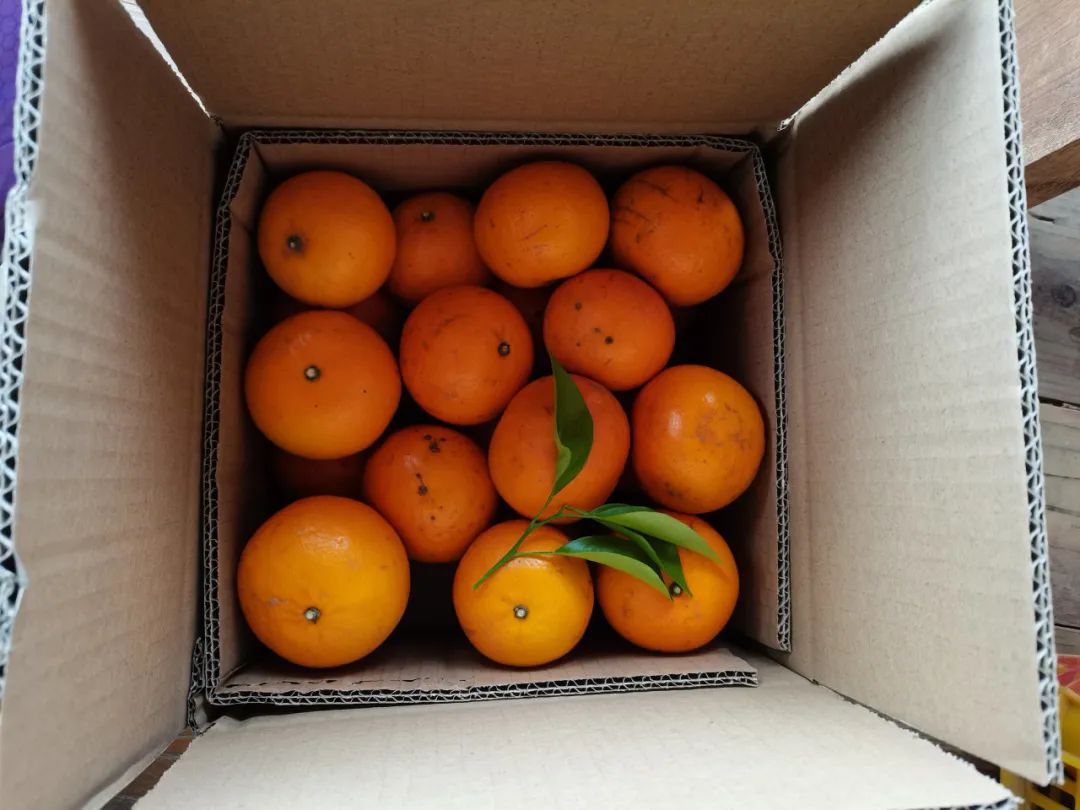
Notably, the design for Yan Ping’s fruit packaging has undergone several iterations. Her goal was to ensure the produce remained secure during transit while completely eliminating plastic. The final solution uses a square, double-walled cardboard box, allowing the Orah mandarins to be packed directly inside with zero plastic materials. This approach is uncommon in the fruit courier sector and speaks volumes about Yan Ping’s commitment to environmental sustainability.
III. Daily Life: The Invisible Labour of Eco-Friendly Practices
Take the parcel packaging design mentioned earlier. The use of double-walled cardboard boxes removes the need for additional cushioning. Apart from the sealing tape—for which a suitable alternative remains elusive—no other plastics are used in the packaging.
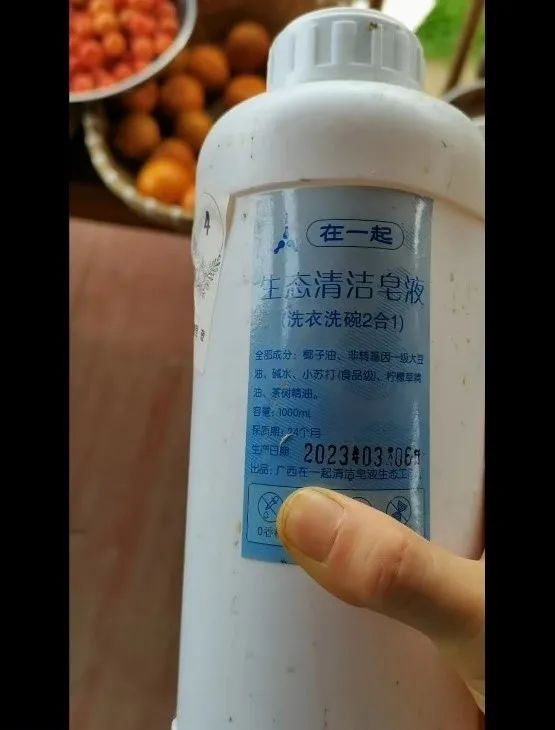
Day to day, the fruit and vegetables on our table come primarily from the orchard’s own harvest. Although most staples, cooking oils, and condiments need to be purchased from outside, Sister Yan Ping is highly particular about our ingredients, sourcing them almost entirely through direct purchases or barter with fellow ecological growers. The same principle applies to household and personal care products. Since domestic wastewater is discharged directly into the orchard, we rely almost exclusively on ecological and organic toiletries and detergents. This naturally comes at a higher cost.
Another form of invisible labour lies in the careful management of domestic waste. As we both live and dine at the orchard, the farm handles all our food scraps and human waste internally. Kitchen waste is collected in buckets, and the toilet is an eco-friendly dry toilet—essentially just a bucket. After each use, sawdust is layered over it, keeping odours to an absolute minimum. Both the food waste and toilet buckets are emptied daily. During my internship, my fellow intern Box and I took turns using a traditional shoulder pole to carry the waste to the composting site.
IV. A Pastoral Idyll
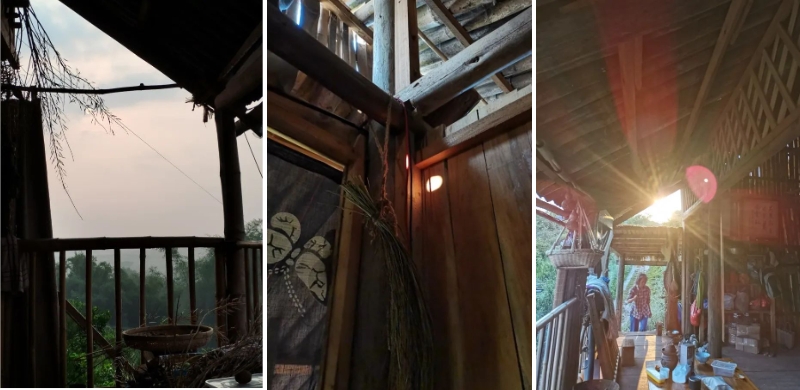
Sharing the cabin with us were all manner of orchard creatures: mice, bullfrogs, spiders, mosquitoes, fleas, ants, cockroaches, and so on. These little visitors initially struck me as frightening and unsettling, but I gradually grew accustomed to their presence. Outside, even more wildlife kept us company, their calls weaving together like a symphony to form the soundtrack to our sleep. Sunlight and moonlight would also filter in at shifting angles, constantly transforming the space.
When the Ougan and Emperor mandarins blossom in spring, the entire orchard is steeped in the distinctive fragrance of citrus flowers. It is easy to forget how marvellous they are when you remain within the orchard, so accustomed do you become. I remember the evening at the end of March when we returned from the Nanning farmers’ market; the moment we opened the car doors, we were enveloped by that familiar floral scent—a feeling quite beyond words. On summer nights, swarms of fireflies would flicker across the orchard. It remains the most romantic sight I have ever witnessed, the fireflies sometimes drifting into the darkened room, their glow wavering in and out. The natural evening breeze also kept the summer nights from growing too stifling.
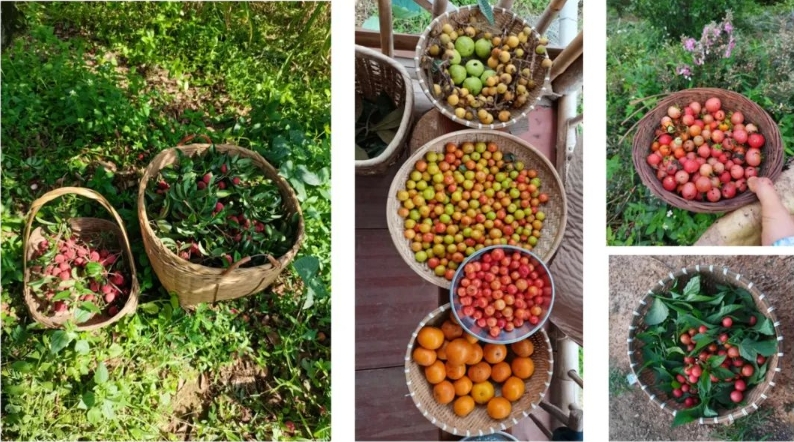
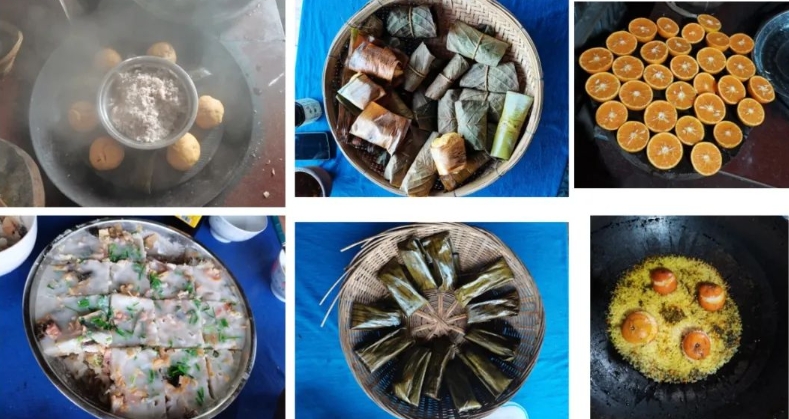
Over these past few months, having come from the north, I was introduced to a wealth of unfamiliar foods and seasonings: cassava, alkaline-water sticky rice dumplings, cauliflower, beggar’s ticks greens, Shiwang mountain wild vegetables, tender bean leaves, young pumpkin shoots, taro stems, Ougan-citrus leavened steamed buns, wild broom greens, hemp seeds, wampee paste, turmeric powder, and Chinese wild cinnamon leaves…
We maintain a vegetarian diet at the orchard. To ensure my colleague Hezi and I received enough protein, Sister Yanping bought free-range eggs from the local sister-in-law. One egg a day each was more than sufficient for a vegetarian like me, but it posed a slight challenge for Hezi, who was accustomed to meat. So, when she craved it, she would occasionally pop over to the sister-in-law’s house for a proper meaty feast. Owing to the sister-in-law’s household, we also unexpectedly found ourselves with an abundance of loquats, lychees, and wampees.
Participating in farm work also reshaped my understanding of certain words, such as “no waste” and “effortless”.
When I first started sorting Orah mandarins, I couldn’t bring myself to be strict. Every fruit seemed so good that tossing them aside for compost felt like a waste. So, with a soft heart, I’d put the ones that looked fine but wouldn’t survive delivery into the second-grade batch. When Da Sao checked the crates, she’d always tease me: “You take the criticism gracefully, but never change your ways.” Then she’d comfort me: “I used to be the same. I always felt guilty discarding these fruits. The boss (how she refers to Yan Ping) would have a word with me, and after hearing it enough, I finally changed.” She had a point. If I hesitate now, customers receive bruised fruit they can’t eat, and the farm ends up paying out compensation. Isn’t that even more wasteful?
I distinctly remember first hearing the term “effortless” at the Baicaoyuan (Hundred Herb Garden) while I was chopping wood for the fire with a machete. Yan Ping told me not to rely on brute force; instead, keep my wrists relaxed and let the natural weight of my arms do the work. She demonstrated, I tried it, and indeed, it was far easier than hacking away with raw strength. While mowing grass, Da Sao also brought up the word, explaining how Yan Ping had repeatedly taught them by word and example how to mow without straining. Afterwards, the practice of this “effortless” wisdom ran throughout every task and moment of our internship at the orchard.
V. Returning to the City
During my four months interning at the orchard, I reread *The One-Straw Revolution* and noticed a shift within myself: my focus moved from being drawn to the techniques to being captivated by the underlying philosophy.
As with my internship, what truly endures after time passes isn’t the fragmented observations and experiences recorded above, but the people I met and the unexpected encounters we shared. The natural farming practised by Mr Fukuoka and Yan Ping cannot be summarised by technical slogans like “no-till, no fertiliser, no pesticides, no weeding.” It is a wisdom that defies easy articulation yet permeates daily work and life. Perhaps, once I truly step onto the path of natural farming, I will more deeply experience what Mr Fukuoka wrote in the poem at the end of his book: “This is a journey through the skies for a wandering body, / And afterwards, it becomes the open plain, becomes the hill.”
Regarding how to begin my journey into ecological agriculture, I’ve mapped out a few scenarios. The ideal approach would be to start with a small experimental plot to condition the soil and hone my skills, then gradually scale up to a moderate size. Ultimately, I hope to establish a system that encompasses cultivation, processing, and an urban community hub or shop.
Alternatively, I might return to the urban workforce for another three to five years to build up capital before launching the project. This would allow me to pursue a “half-farming, half-X” lifestyle while staying connected to the land, even though I’m not yet sure what that X will turn out to be.
To date, two recruitment rounds have been completed, supporting over 40 participants in securing placements at more than ten ecological farms nationwide to undertake internships lasting between two months and one year. The second cohort of interns will “graduate” at the end of 2023, with open recruitment for the third cohort set to launch in January 2024. Please stay tuned to Foodthink’s “Ecological Agriculture Intern” Programme for further updates!
Unless otherwise noted, all photographs in this article were taken by the author.
Editor: Yi Xiong