Leaving the City: Planting the Seeds of a New Life on a Farm
Foodthink Says
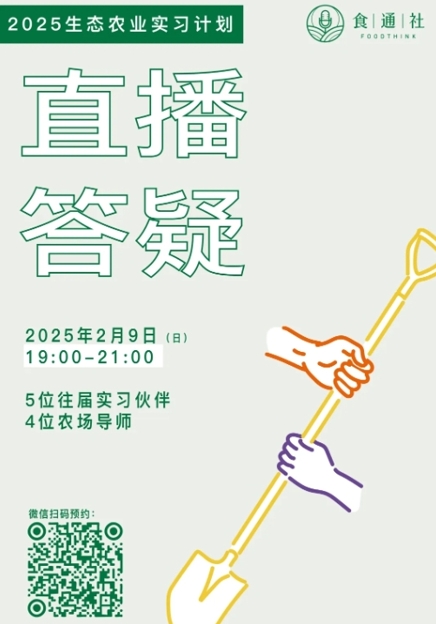
Scan the QR code in the poster to go directly to Foodthink’s video account and book the live stream. For more details, please see “5 Days Left: Give Yourself a Reason to Farm”.
I. Life’s Wanderings Before the Farm
At the time, PDT mainly worked on the consumption side, including organising consumer education in cities and collaborating with restaurants on projects. However, I always felt that, starting from daily life, food production is more marginal and invisible than consumption, which made it more attractive to me.
Driven by a desire to experience being a labourer, I began a period of wandering after leaving PDT. During this experience, two farmers left a profound impression on me.
The first was my godmother in a Dong village.
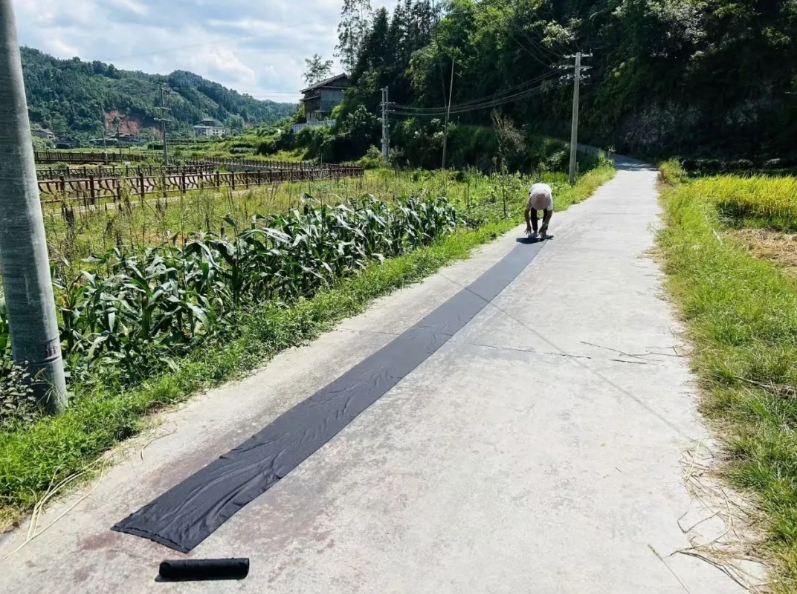
At the time, I was doing a work-exchange at a youth hostel in Kangding—working at the front desk, in the kitchen, and cleaning rooms. On my way back, I visited Guandong Village in Sanjiang Dong Autonomous County, Guangxi. I had collected oral histories there before, but this time I returned as a family member and a participant in agriculture. It happened to be the autumn harvest, so I joined them in harvesting rice, picking tea, and making Dong cloth.
During that period, I tried to make my grandmother the protagonist of a documentary. Since she also came from a rural background, I wanted to know how she viewed the countryside, farmers, and the city.
Once, we walked through a field of rapeseed flowers on the outskirts of town; the beautiful blossoms made me very happy. Seeing my expression, my grandmother said: “Do you know? Even if all these rapeseed seeds are pressed into oil, it would only sell for a little over ten thousand yuan. It’s far less than what one earns by migrating for work.” If you subtract the costs and labour, farmers actually make no profit. What city dwellers perceive as a beautiful sea of flowers is, in the eyes of a farmer, nothing but hard toil.
These two moments planted seeds of doubt and shame in my heart.
After this, I joined Foodthink’s “Agroecology Internship Programme”. On one hand, I wanted to understand the truth about agriculture: what does farming actually entail? What is the current reality for farmers? Can agriculture provide a viable way of life?
At the same time, it was a way to escape my parents’ “pursuit”. Even though I had always wanted to break away from the imagined mainstream life, my parents still felt that I had been “shirking my proper duties” for the past few years. I had already started applying for master’s degrees overseas, but I was unsure why I wanted to study abroad. It felt as though following that path would eventually lead me back into the mainstream framework.
Therefore, becoming an intern on the farm was my final attempt.
II. What the Farm is Like
Brother Qiang, the owner of Guixin-yuan, and several other partners are a group of “Half-Farmer, Half-X” people. Brother Qiang normally works for a foreign company in Shenzhen and only visits the farm on weekends and public holidays.
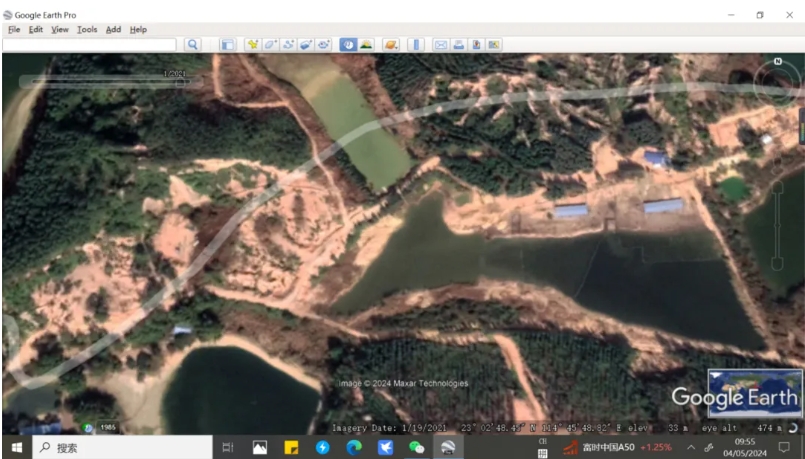
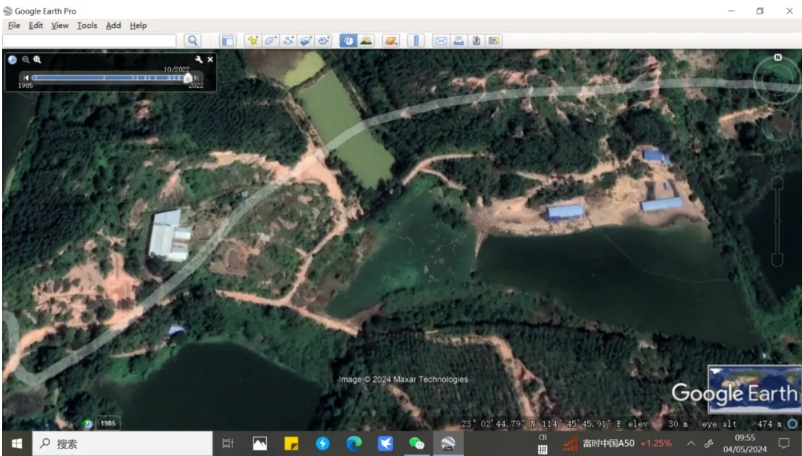
The first keyword regarding Guixin-yuan is “Permaculture”.
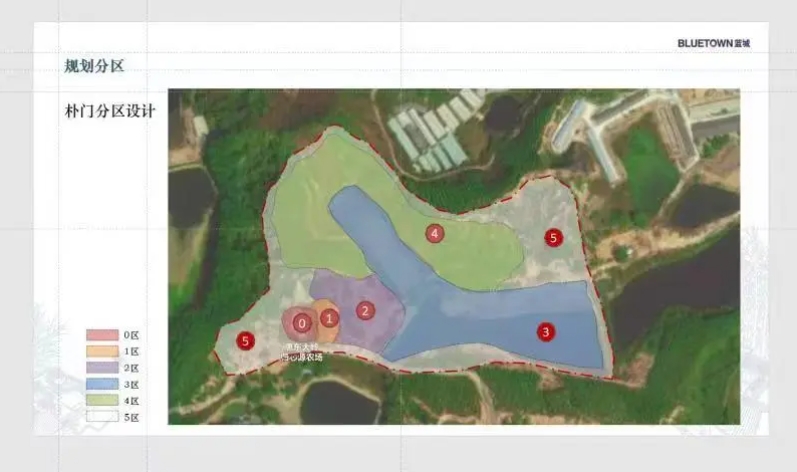
The farm was designed based on permaculture principles: Zone 0 is where people live; Zones 1, 2, and 3 are our agricultural production areas, with nature becoming more dominant the further out you go. Zones 4 and 5 are left for animals and plants to grow freely, and we rarely enter them.
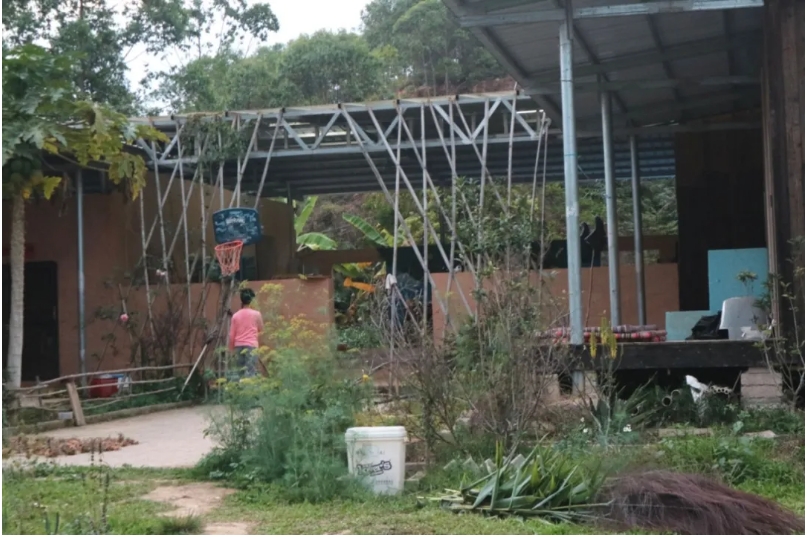
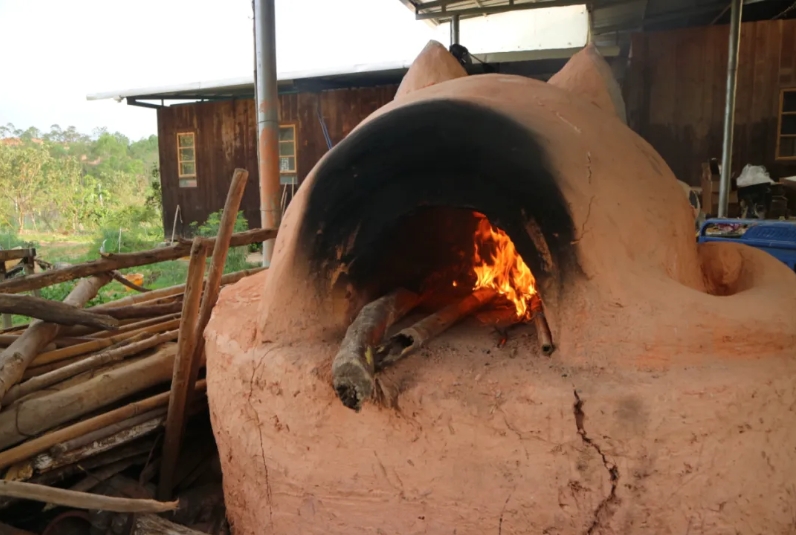
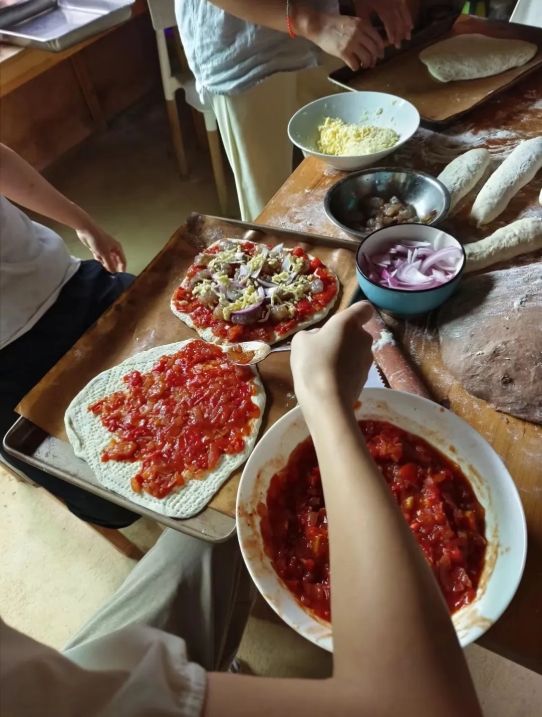
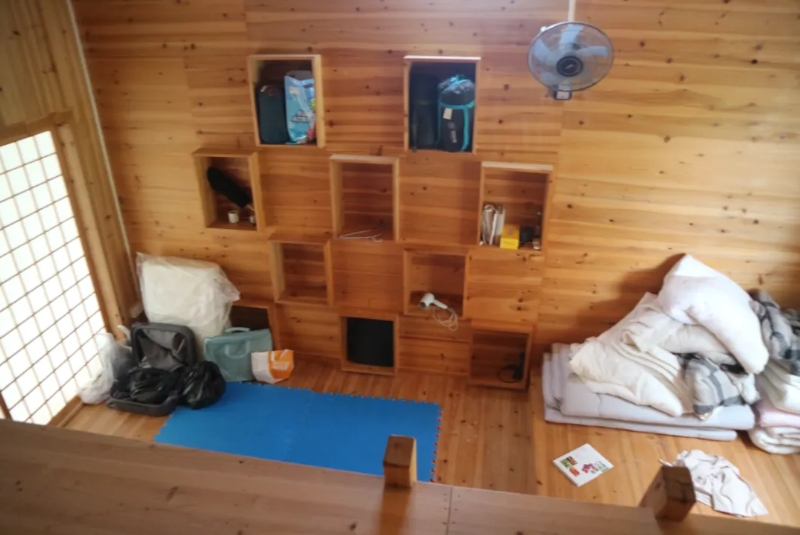
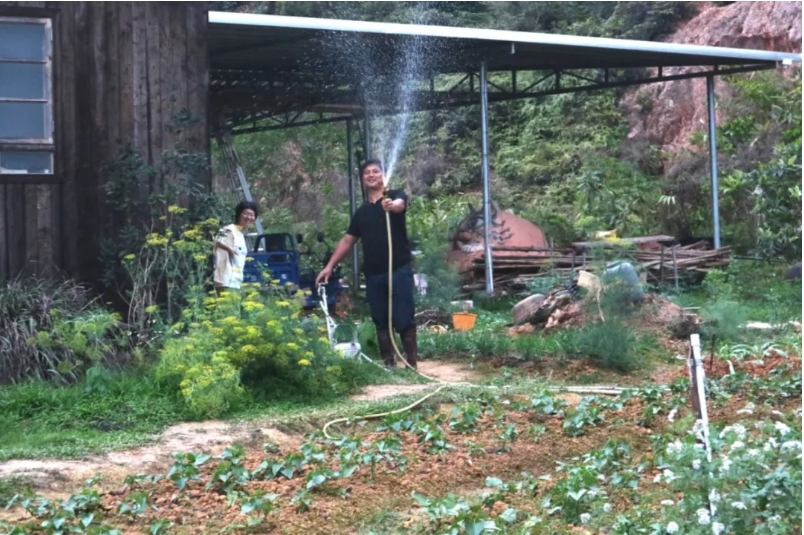
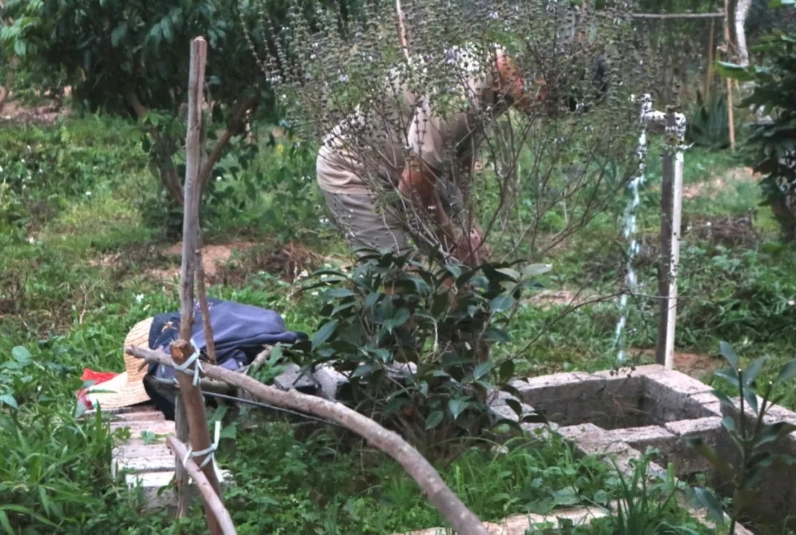
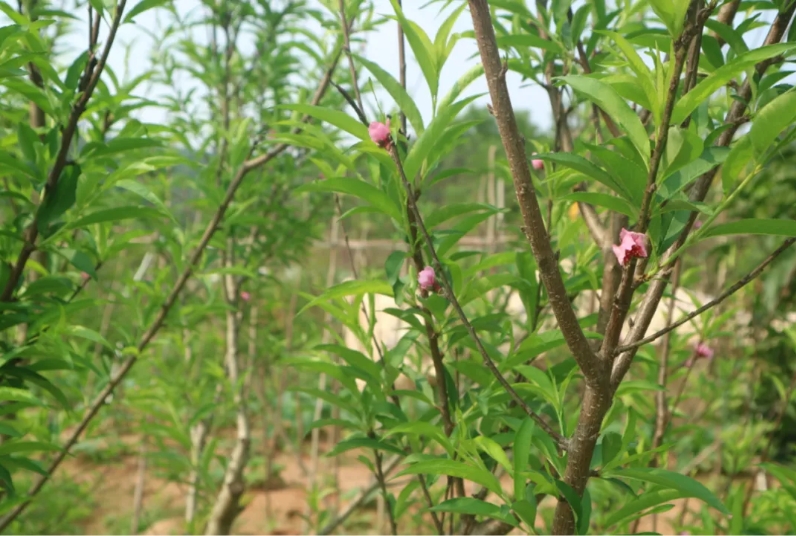
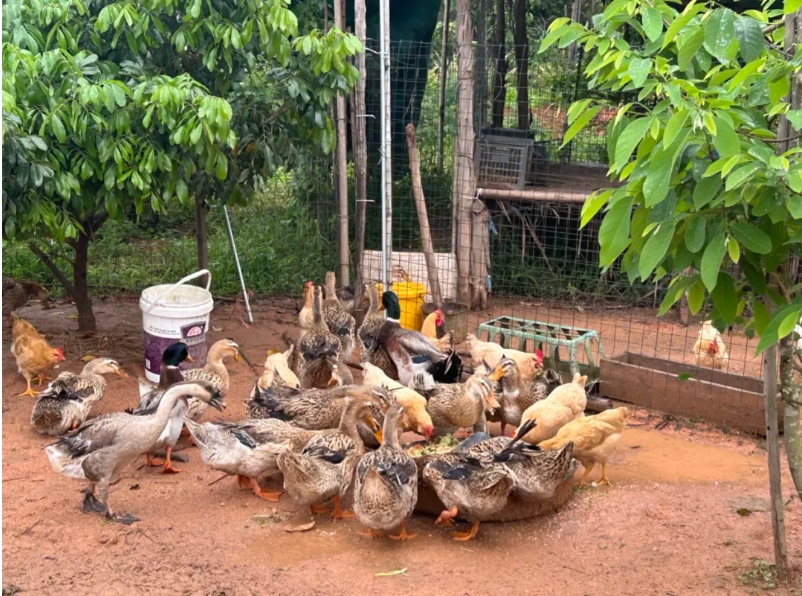
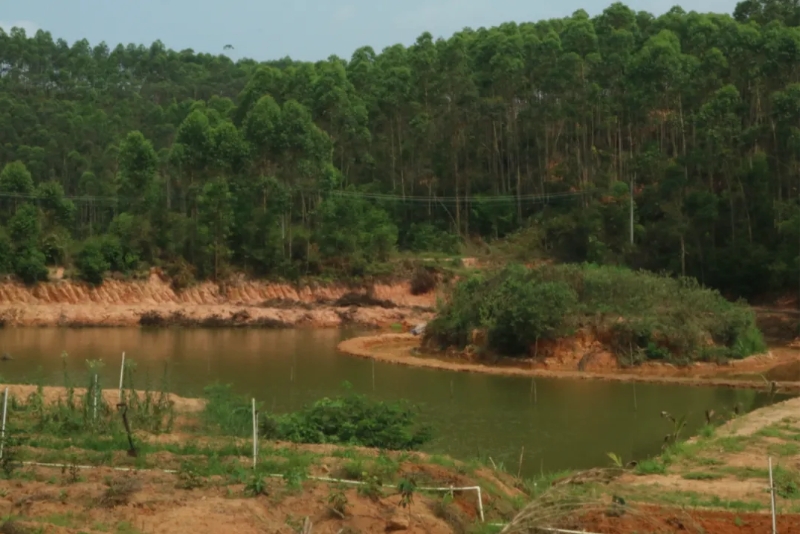
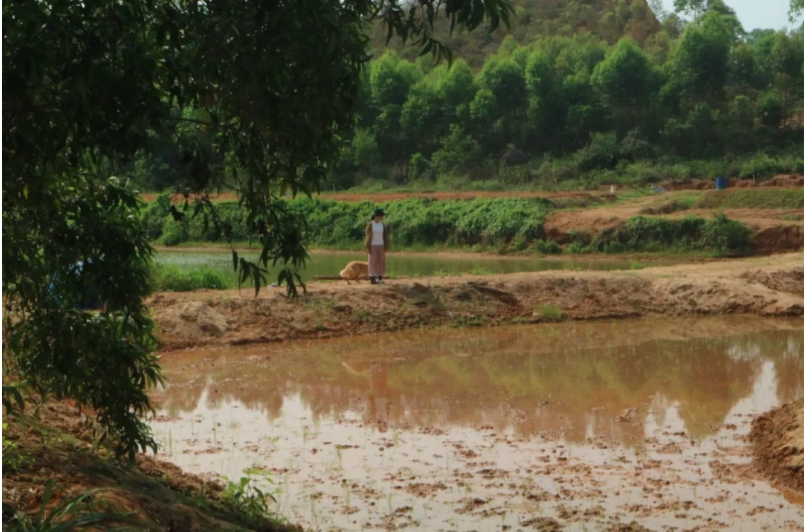
At the same time, the farm hosts guests for visits, accommodation, and dining, and collaborates with schools in Shenzhen on nature education projects. Thanks to these diverse income streams, Gu Xinyuan achieved a break-even point after three years of operation. I’ve learned that an eco-farm needs to be as operationally diverse as possible.
III. Daily Life on the Farm
Afterward, the two Masters assign me my tasks for the day. Since the farm owner, Qiang, isn’t usually on-site, they handle the management, while we interns act as their assistants.
Our most frequent tasks are weeding and mulching.
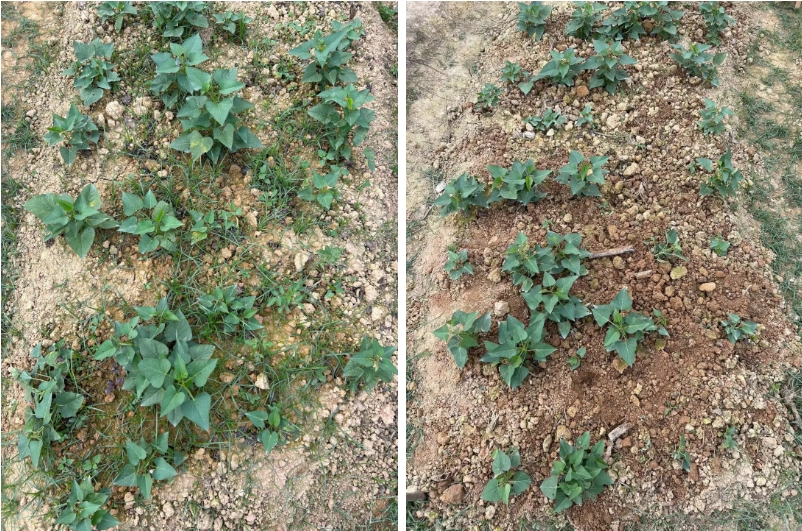
In these two images, the left shows the sweet potato patch before weeding. You can see the soil is darker where the grass is, meaning it retains more moisture. Once the weeds are pulled, the moist soil is brought to the surface; once exposed to the sun, it dries quickly and becomes as compacted as the areas without grass.
Observing how grass protects the soil made me seriously question whether we should be weeding at all.
I later learned that this patch requires weeding because the sweet potato leaves haven’t fully grown, and the grass hinders their development. The weeding must be done early while the grass is still sparse. Once the sweet potato leaves have expanded, the weeds can be left alone.
However, to prevent the soil from being exposed, we use mulch. This suppresses weeds, preserves moisture, and as the plants decay, they form humus, enriching the soil.
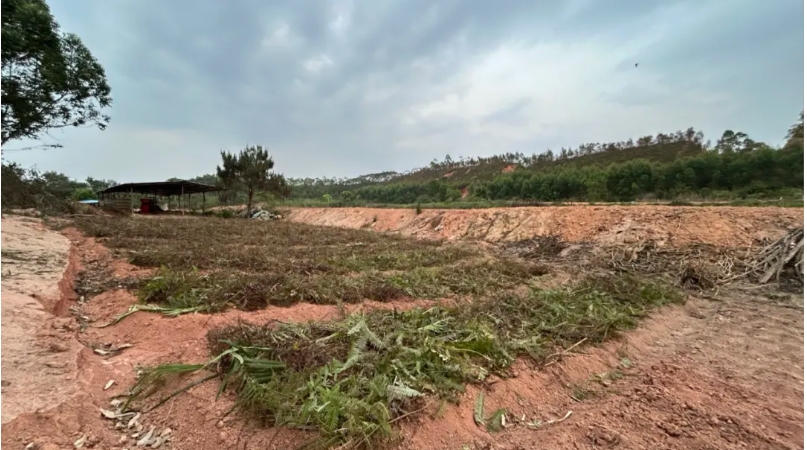
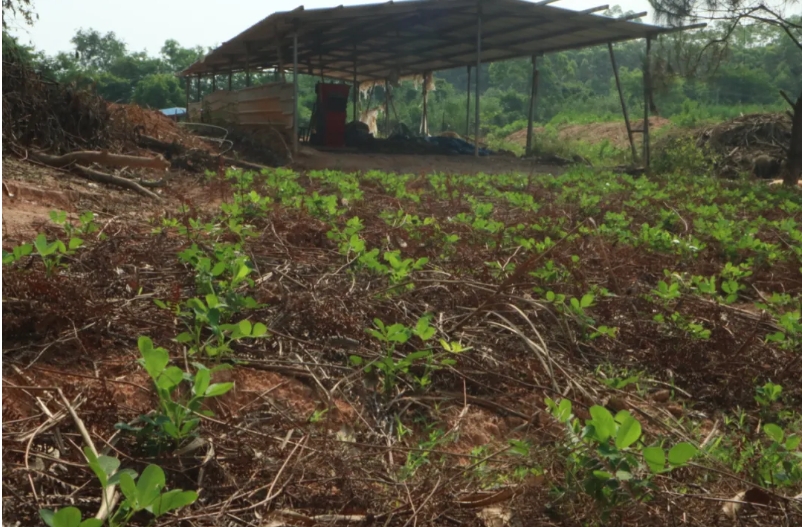
Master Ajian and his colleague know many different mulching techniques.
For example, when weeding the sugarcane fields, he told us to spread the pulled weeds around the base of each sugarcane stalk. To prevent the weeds from rooting again, we overlap the roots of one plant onto the leaves of the previous one; as long as the roots don’t touch the soil, they won’t grow back.
The planting methods used by the two Masters are practical approaches based on experience, differing from the traditional or natural farming methods I had imagined.
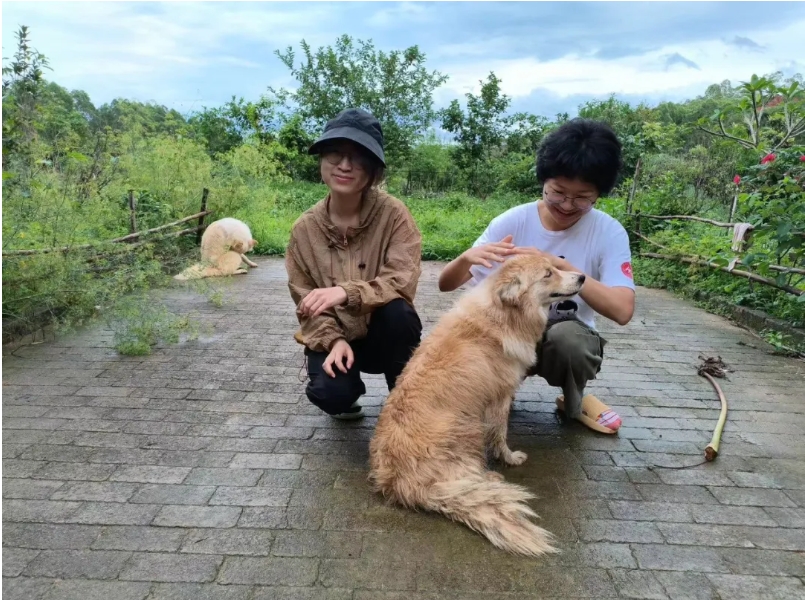
Later, I developed a hobby of studying weeds. Many are actually edible or have medicinal properties. Sometimes when the dog follows us into the fields, I notice it eating different types of grass. Master Ajian told me that dogs are far smarter than humans; when humans get sick, they have to go to a hospital, but a dog can just eat a few blades of grass from the field and cure itself.
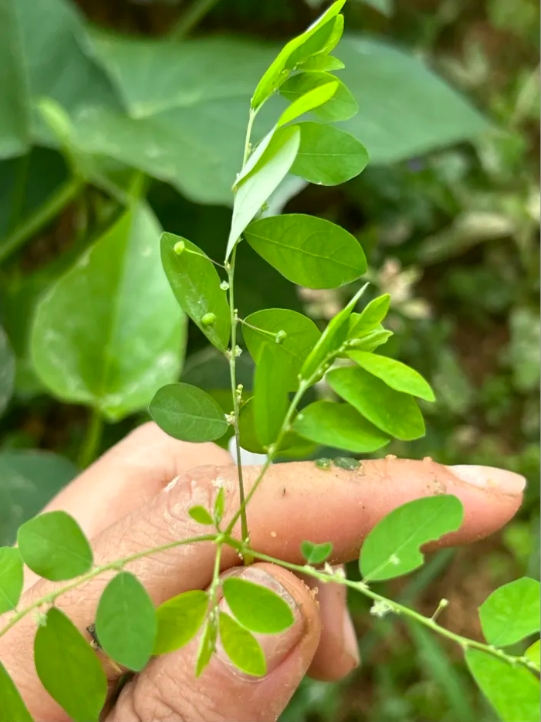
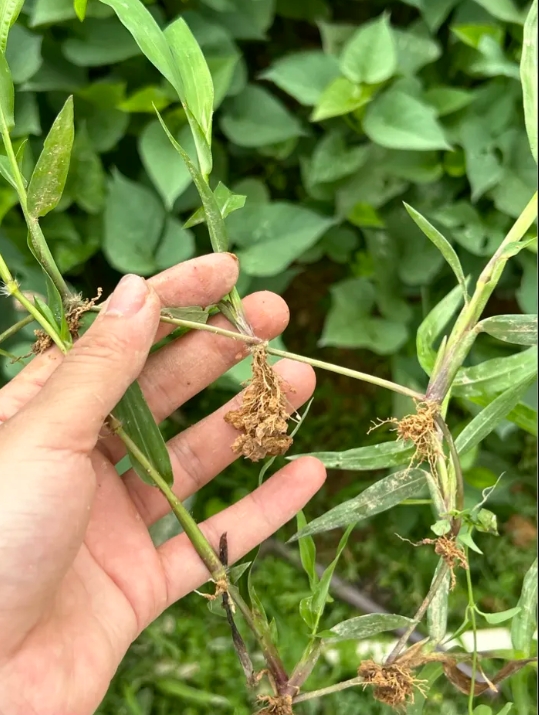


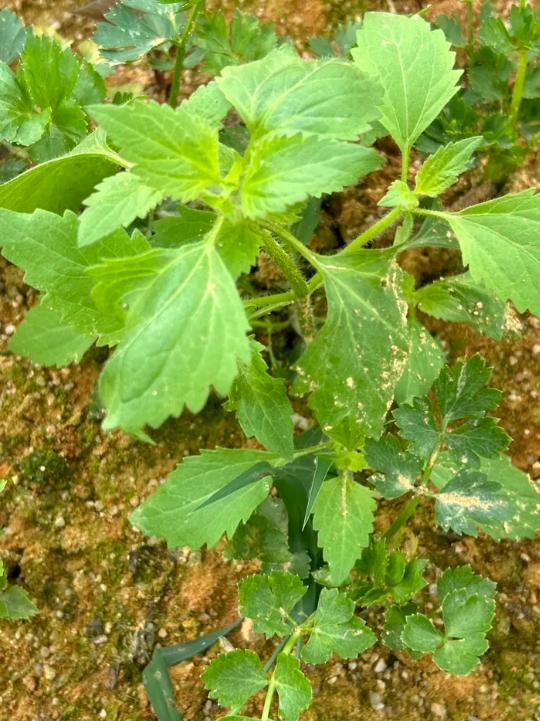
● Some common wild grasses: Phyllanthus niruri; Carpet grass, which has stolons and quickly spreads like a carpet, making it very difficult to pull; Lovegrass, which is edible and can be crushed and applied to mosquito bites to stop the itching; Wild garland chrysanthemum, very common by the water, though Qiang said it’s toxic, so we didn’t dare eat it; Chickweed; and Sigesbeckia orientalis, which has a sophisticated aroma similar to Italian herbs; it’s said to be inedible for humans, but geese and fish love it.
My fellow intern, Cheng Hao, loves studying insects. She often calls me over to see new bugs she’s found, but I’m not as interested—we each have our own specialities.
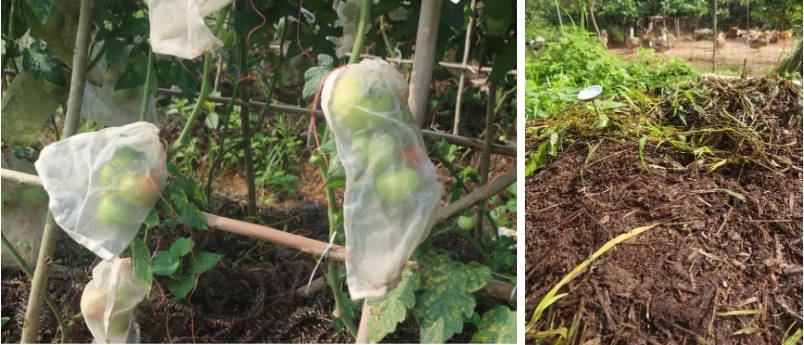
Besides this, we also do bagging, composting, sowing, and other tasks.
IV. Lessons Learned by a Farming Novice
Master Jiang often said: “Plants are actually just like people. You can imagine the root system as being like human veins. If you imagine what a person needs, you can understand what a plant needs.” When it came to the finer details of watering or top-dressing, he sometimes found it difficult to give us a scientific explanation, but he tended to them with that mindset—it was almost intuitive.
In reality, weeds are also part of this natural system. For example, while caring for the peanuts, I noticed many small black bugs perched on the weeds; these were stink bugs. They seemed to prefer the weeds, and as long as the weeds were there, they didn’t eat the peanuts. So, I later left a patch of grass for them. I believe that how you treat weeds is a true reflection of your planting philosophy.
V. Connecting: From Seeing a Single Tree to Seeing the Whole Forest
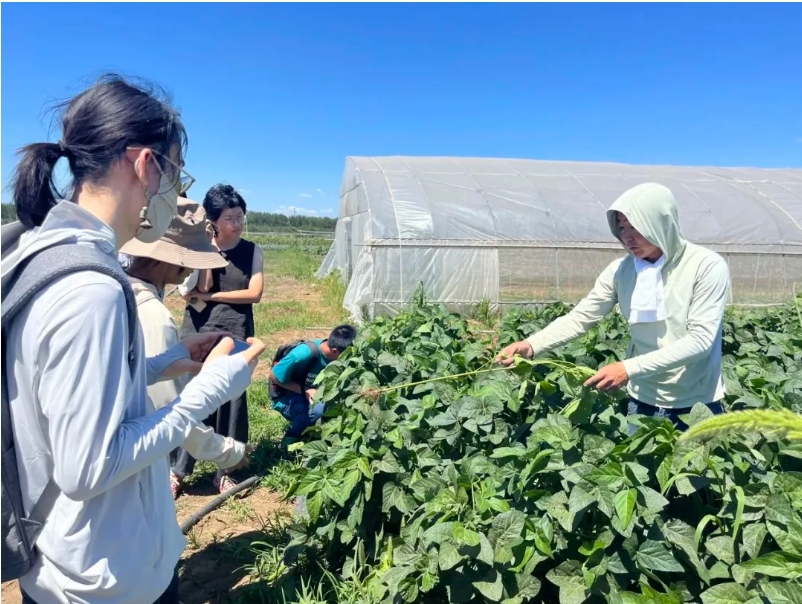
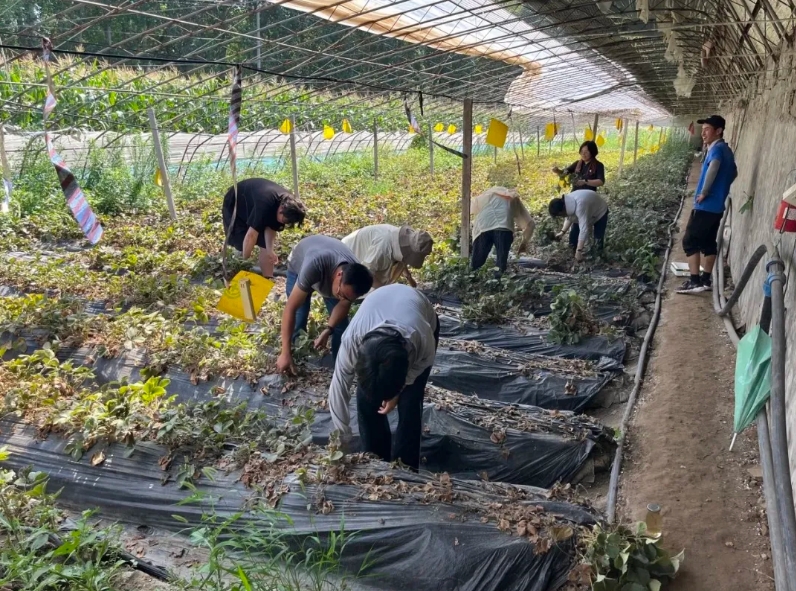
Ultimately, I discovered that there is no standard answer for ecological agriculture; rather, it exists as a spectrum.
A farm can be measured by many indicators: for example, its scale, the degree of its “ecology”—does it use greenhouses? How much fertiliser is used?—and the revenue distribution between primary, secondary, and tertiary industries. Every farm is different, but I believe that as long as they share basic principles, such as respecting nature and avoiding harm to health and the environment, they all fall under ecological agriculture.
While chatting with Brother Liu from Little Willow Tree Farm, he divided farms into those based on interest, skill, and technique. I can view the farms I visited through these lenses:
Interest-based: Whose interest is being satisfied? It could be the farmer’s own, like the vegetable plot grown by Sister Chen Yanhong; or it could be the interest of urban residents, like at Phoenix Commune or Little Donkey, where land is divided into small plots and rented to city dwellers.
Skill-based: Teacher Pengcheng explained to us in the fields how to prune lychees and guavas. Through simple pruning, he can determine how the tree eventually grows and where the fruit hangs. Skill is not limited to farming; for example, Green Me Farm can produce delicious biscuits, and Teacher Ganju Zheng makes rice cakes and rice noodles from her own harvest.
Technique-based: Yinlin Farm has excellent management, with composting layouts and greenhouse crop rotations organised methodically, which also allows young people to gather and work together. In Beijing, there are also standout techniques, such as the agricultural machinery at Little Willow Tree or the soil and planting techniques at Xiqing.
Agriculture can be not only a way of life but also a “way of thinking”.
During my visits to farms in Guangxi, I felt that ecological farmers possess a worldview different from that of urban residents—one closer to the traditional Chinese concept of “the unity of nature and humanity”, with a way of thinking that diverges from modern society. They are also interested in topics such as traditional Chinese medicine, traditional culture, and astronomy and astrology. Along the way, I encountered a diverse array of people with different ideas—the kind of people who are very difficult to meet in the city.
VI. The Future
For the current me, I may lack all three. I have learned so much and seen a vast world, but perhaps I still want to see an even larger one. I still have confusions about this world, and perhaps the process of exploring these confusions is the process of finding my “X”.
It is fair to say that this journey has already sown a seed in my heart. Whether through studying, working, saving funds, or meeting new groups of people, I hope to move towards this ideal step by step. This will also become a new window through which I observe the world and witness more and more farms; I hope these notes can continue to be written for a long time to come.