
Making 20,000 a day selling veg, yet we’re tearfully losing 2,000…
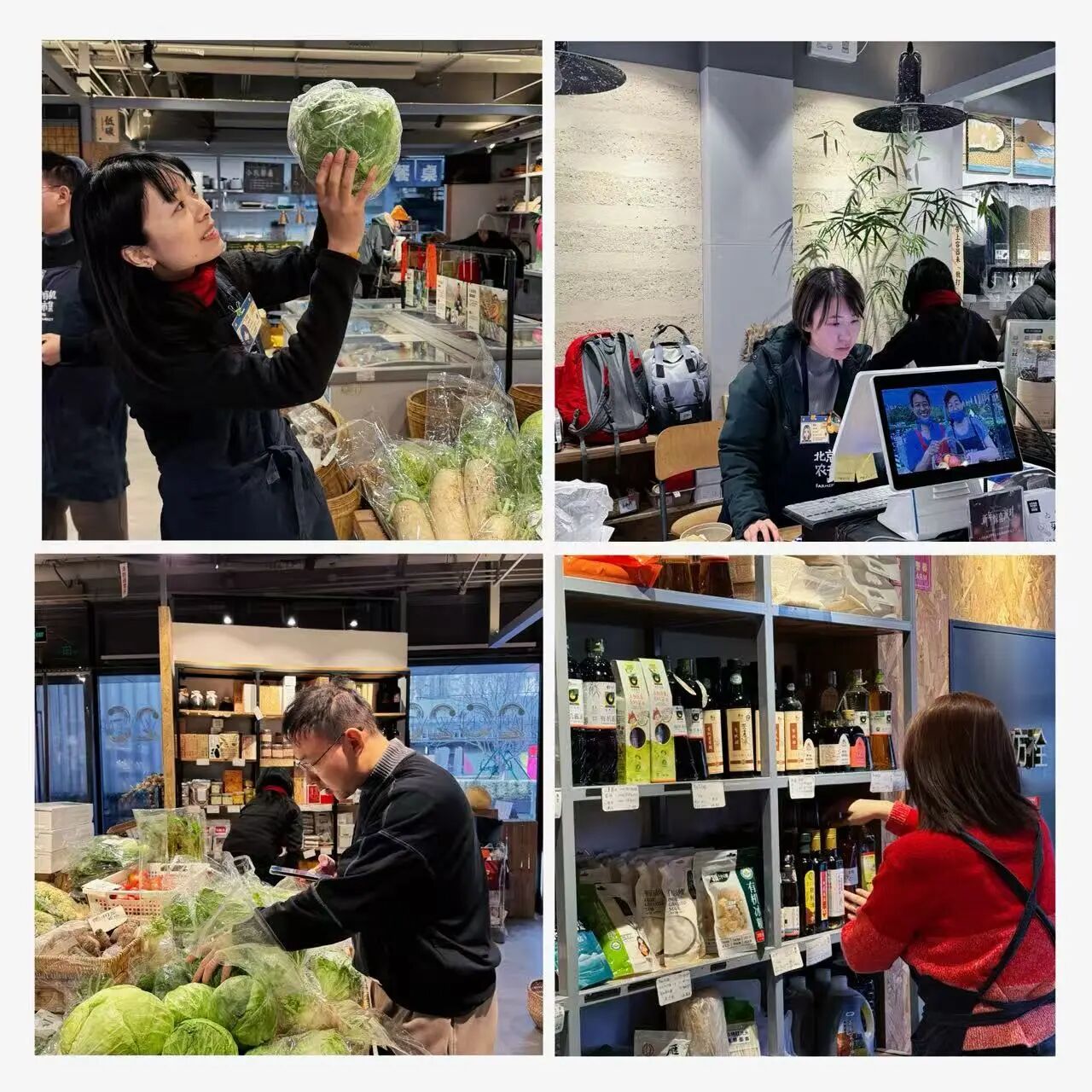
On 7 February 2026, after a two-year hiatus, ‘Market Takeover’ returned, this time upgraded into Foodthink’s annual meeting. Over the course of 12 hours, we used the act of selling vegetables as a way to dive deep into the food and farming system. Eight members of Foodthink transformed from consumers into shop assistants, experiencing a real-life ‘Vegetable Shop Simulator’ as they challenged themselves to hit a single-day sales target of 20,260 yuan.
To mark the occasion, we also organised several themed activities: year-end performance reviews for the editorial team, discussions on the sales side of ecological produce, Foodthink’s first-ever livestream shopping event, and a mutton soup screening. Thank you to everyone who supported us in person and watched online. For those who missed the excitement, please see the event summary and livestream replay below 👇

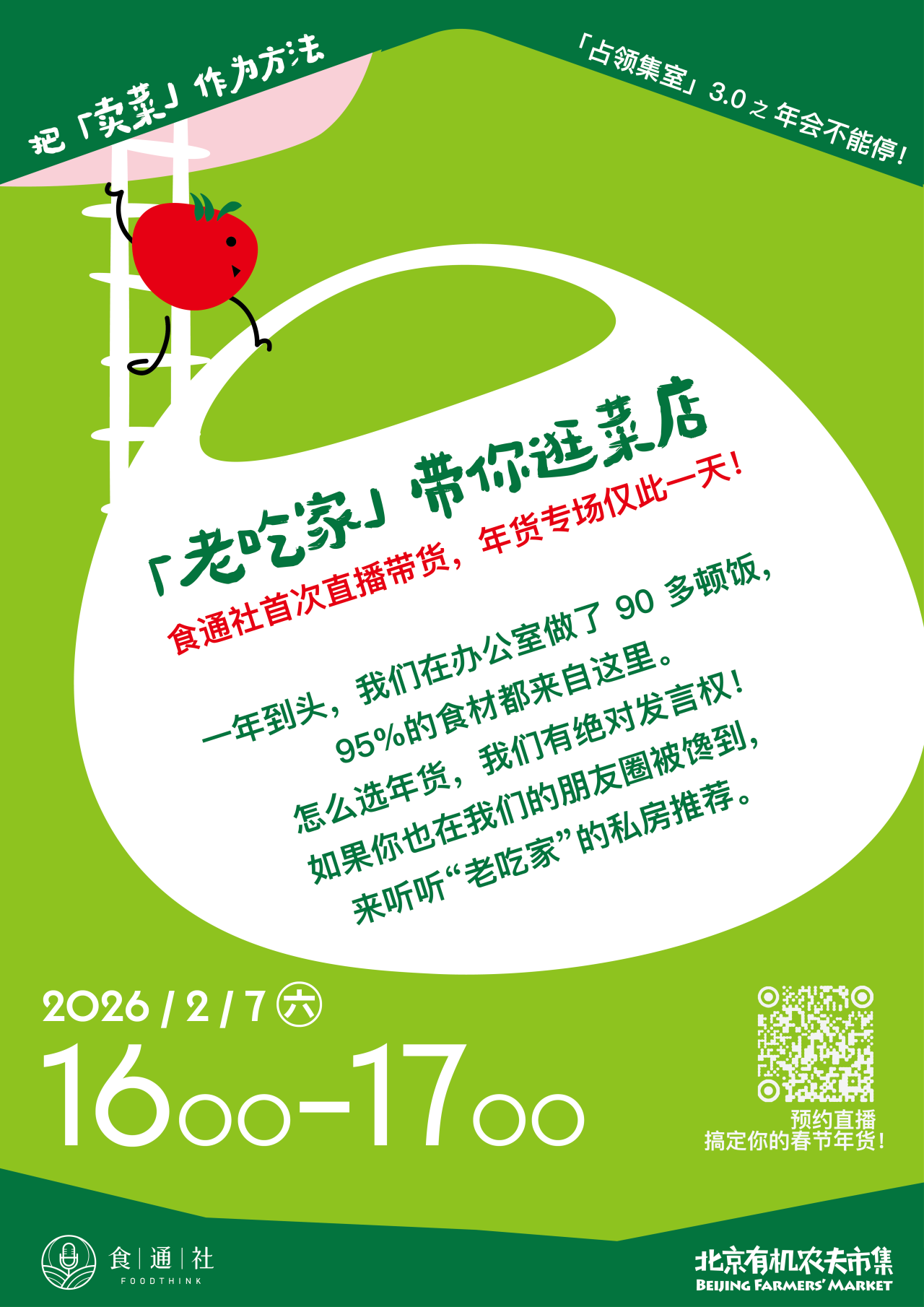

To ensure we could ‘make our debut’ successfully on 7 February, we underwent 48 hours of professional training over the past few months. The takeover has now concluded, but did we hit our targets? What challenges did the team face? What observations and reflections emerged? As we bring things to a close, let’s take a look at the insights gained by these eight ‘trainees’—both new and old—on the art of selling vegetables~
I. Sold 20k, Ate 2k
I always brag about being a professional vegetable seller for XX years (it will be 16 this year!), but since I shifted my focus to Foodthink in 2017, I’ve spent far less time on the front line, whether at markets or in community shops. It was only during the pandemic years, when we organised collective buying to allow our community members to buy vegetables ‘contactlessly’ (what an antiquated term that is now!), that I found myself selling veg a few times a week. Consequently, my skills have grown quite rusty, and every year I rely on Foodthink’s ‘Market Takeover’ to go back to basics and brush up on my technique.

I always brag about being a professional vegetable seller for XX years (it will be 16 this year!), but since I shifted my focus to Foodthink in 2017, I’ve spent far less time on the front line, whether at markets or in community shops. It was only during the pandemic years, when we organised collective buying to allow our community members to buy vegetables ‘contactlessly’ (what an antiquated term that is now!), that I found myself selling veg a few times a week. Consequently, my skills have grown quite rusty, and every year I rely on Foodthink’s ‘Market Takeover’ to go back to basics and brush up on my technique.
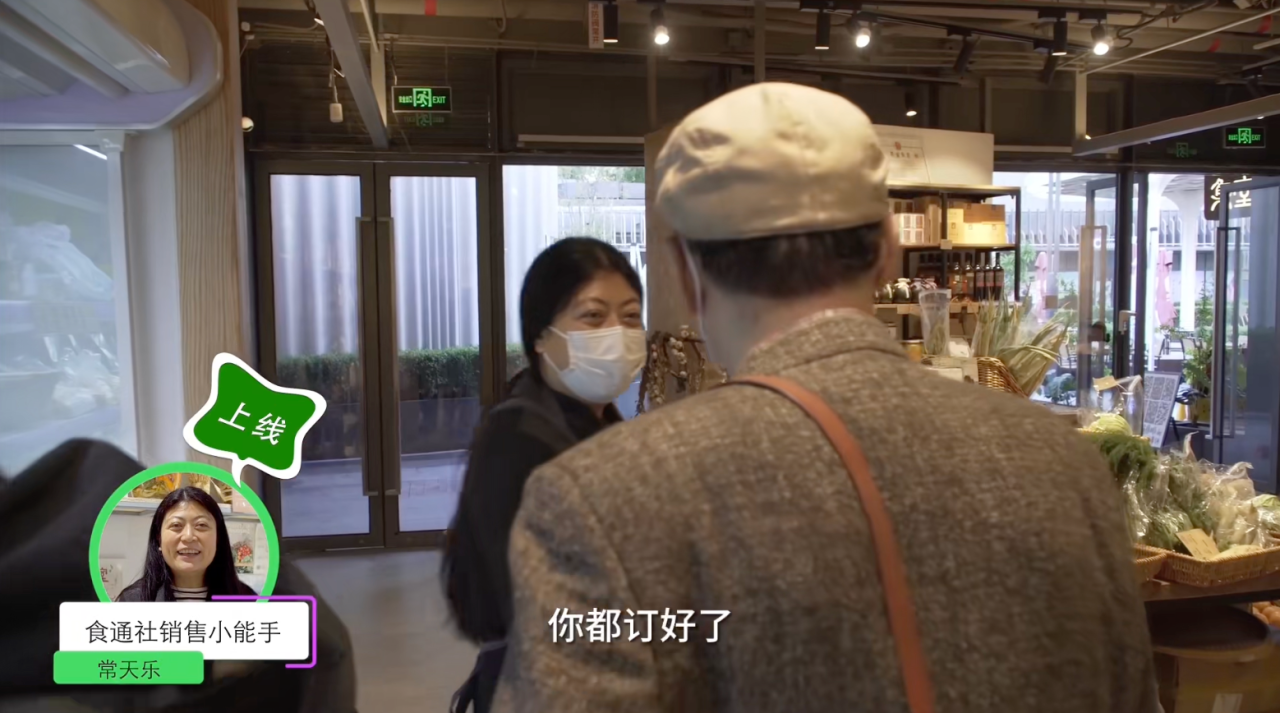
In 2025, Foodthink welcomed a group of new colleagues. None of them had a deep background in food and farming; some didn’t even know what ‘seasonal vegetables’ were when cooking or shopping. Even the only colleague who had spent a few years as an agricultural journalist admitted they didn’t really ‘understand’ food. So, in the three months leading up to ‘Market Takeover’, each colleague began a series of 48-hour dispersed ‘apprenticeships’ at the shop. I hoped that through this experience, they could become familiar with food, meet more farmers, serve consumers, and understand how an ‘alternative’ vegetable shop operates. More importantly, I wanted them to find inspiration for writing, commissions, and research in the real world, rather than just racking their brains in front of a keyboard in the office.
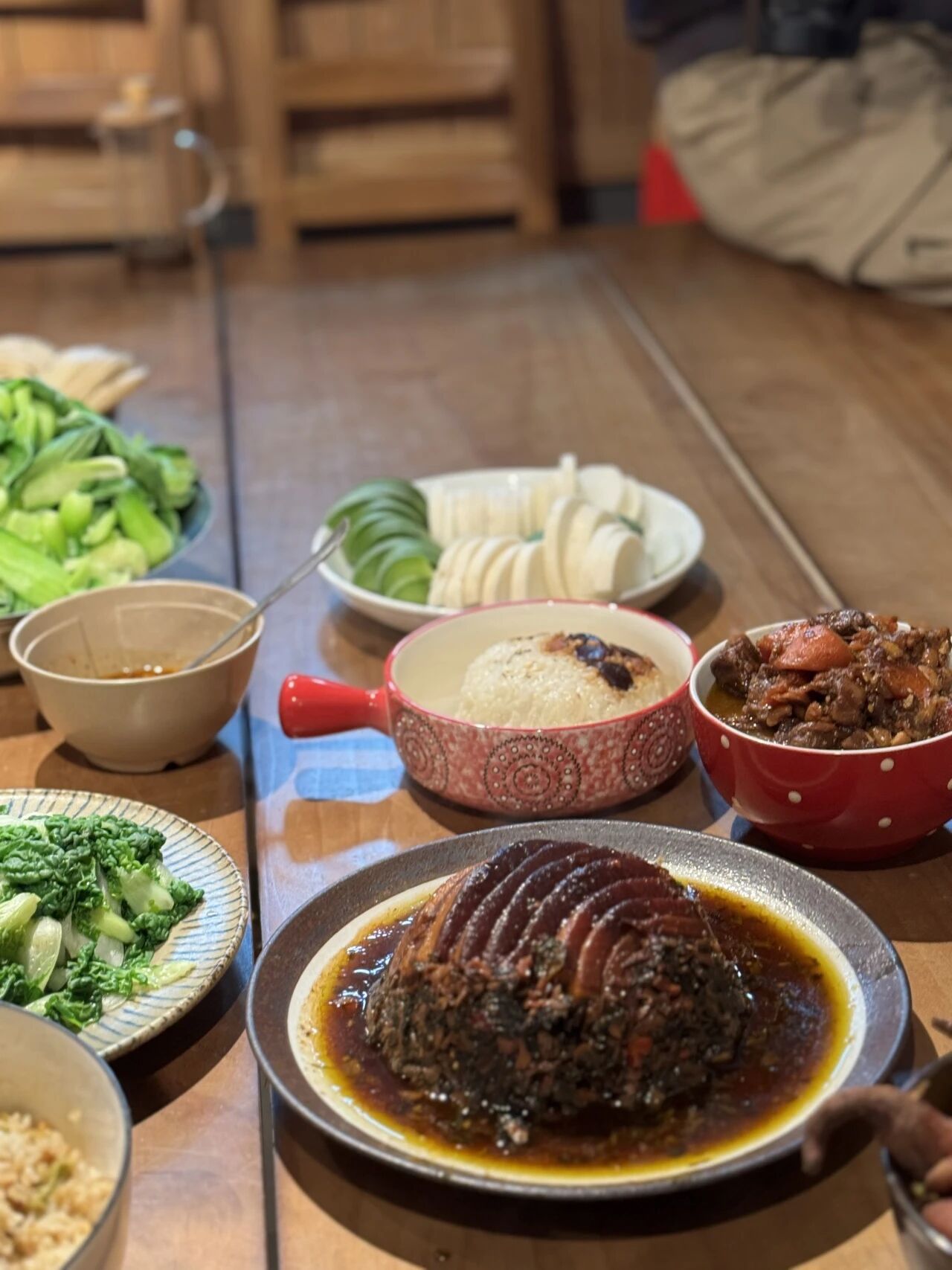
When the day of the takeover finally arrived, I was pleasantly surprised to find that our band of amateur trainee colleagues were actually quite proficient. Although things were occasionally chaotic, every crisis was averted, and they even managed to prepare two lavish feasts—not only feeding themselves but also treating the friends who came to visit and participate in the events. The highlight was discovering, just before closing, that we had not only set a new sales record for the ‘Market Takeover’ but also smashed our own modest target: since it was 2026, we sold over 20,260 yuan worth of produce! However, upon reviewing the books, we realised we spent nearly 2,000 just on food. Well, who can blame us for eating well!
II. The service industry is tough!

I never expected that on the day of the ‘Market Takeover’, the first difficulty I would encounter would be inventory intake.
Inventory intake involves recording newly arrived vegetables and other goods on a stock list, which is then entered into the system by the colleague in charge of the till. I thought that with my previous 48 hours of work experience, I would be well-versed in the process.
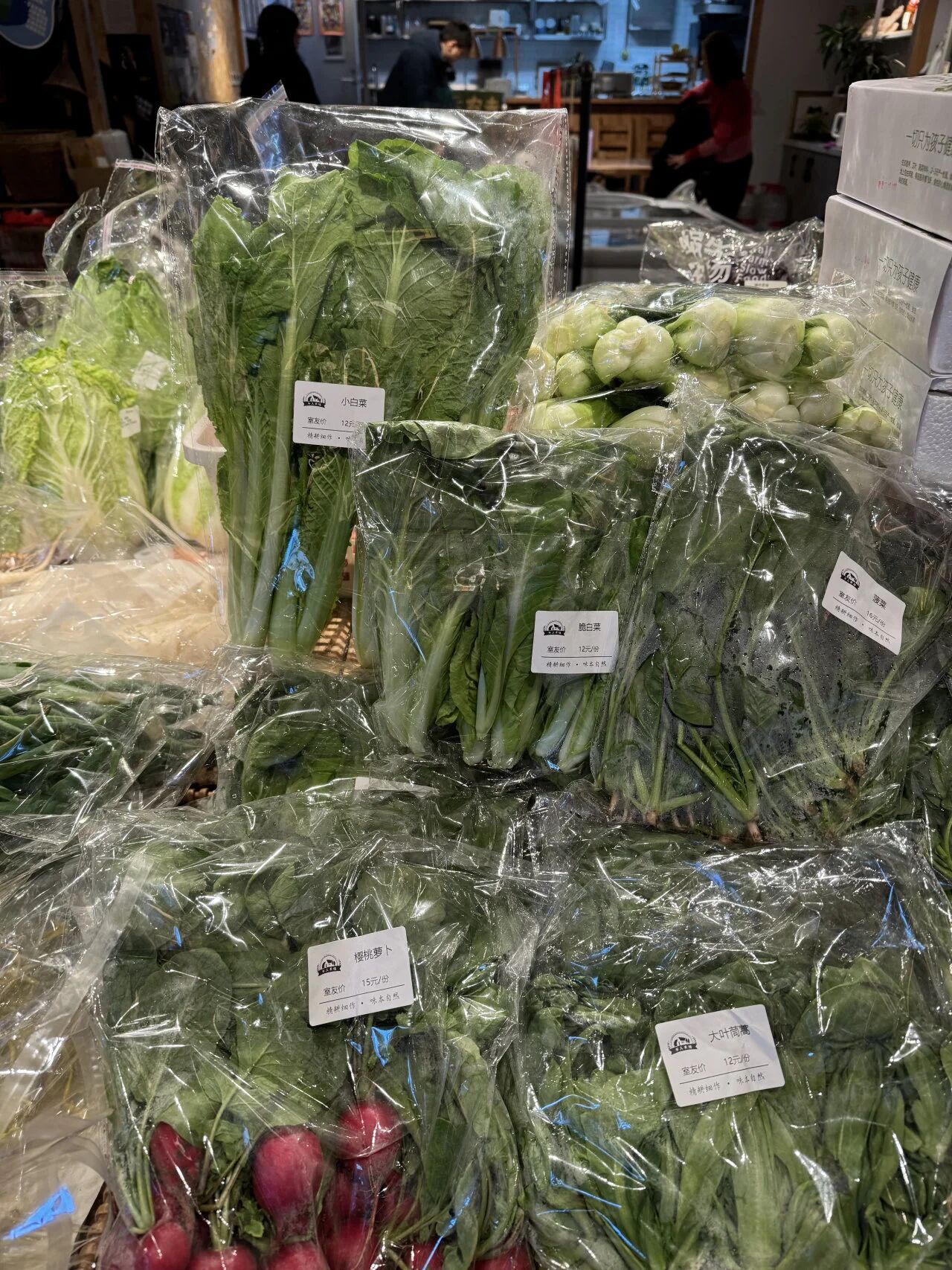
As it happened, the moment I arrived at the shop on 7 February, the vegetables from ‘Little Willow Tree’ were already waiting. Those of us from the North are always at a bit of a natural disadvantage when facing leafy greens… Looking at the vegetables in the bags, I was momentarily stumped: was this spinach, or komatsuna? Fortunately, I caught hold of the shop’s actual manager, Qi. In just two seconds, she identified all the vegetables for me, smoothly resolving the problem.
During my previous stints, customers would often ask which farm the vegetables came from, what the texture was like, or how to cook them. As the person at Foodthink with the least amount of domestic common sense, I found these questions impossible to handle and had to rely on the experienced staff for help. Luckily, on the day of the event, some of those veterans popped in at random, and with my colleagues helping each other out, we managed to scrape by.
Previously, my 48-hour ‘work’ experiences at the shop had been a form of ‘rest’ for me. I could spend six whole hours without looking at my phone or WeChat, focusing entirely on customer service, sorting, and shelving—it was easy to enter a flow state. But this day was different. With the New Year approaching and four consecutive events taking place, the shop was flooded with customers buying groceries and festive goods, as well as readers attending the events. I had never seen so many people in the shop. We were all juggling the sorting and packing of online orders while simultaneously managing the offline crowds… I truly wished I had a dozen hands.
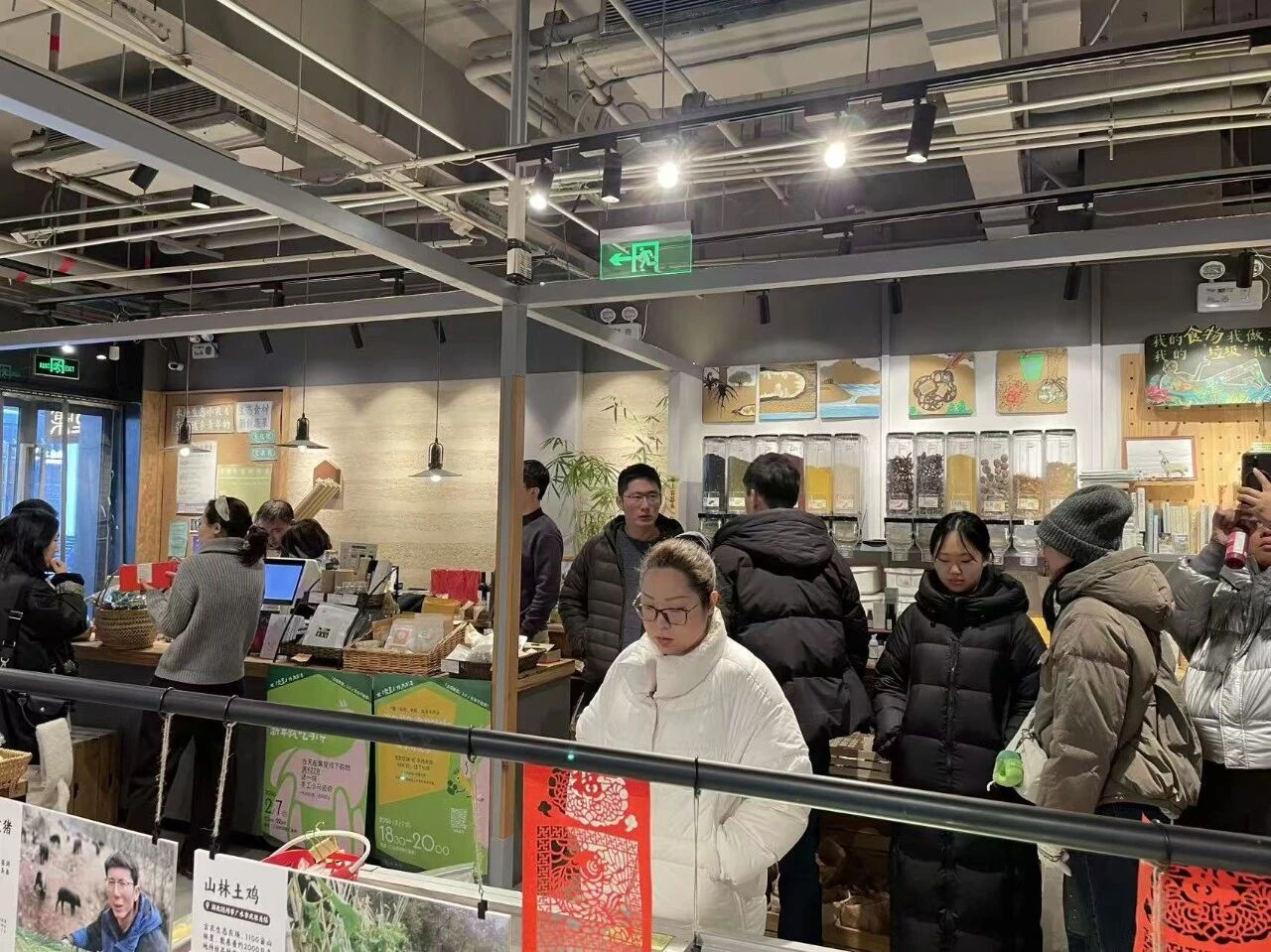
Finally, when a customer asked me not to put his things on the floor, I could hardly stop myself from rolling my eyes… My sincerest apologies to this distinguished customer. I always thought I had a people-pleasing personality, but after today, I need to rethink that. The service industry is truly tough!
III. First Experience with Livestream Shopping

This was my second time “taking over” Jishi. Compared to the chaos of picking vegetables the first time, this time… I was still panicking—because I was doing my first-ever livestream sale. While “selling” sounds quite ambitious, I probably didn’t actually move that much stock 😂. If you bought something based on my recommendation, please raise your hand 🙋🏻♀️~
I spent the whole time enthusiastically promoting Shiitake mushrooms from Fangxian, Hubei, cheeses from Bleu, and my favourite “Sustainability Corner” at Jishi—where you can buy dried goods in bulk, find reusable plastic packaging brought in by customers, and a small bookshelf set up by Foodthink. People coming in for groceries rarely venture over there, but it’s truly my hidden gem.
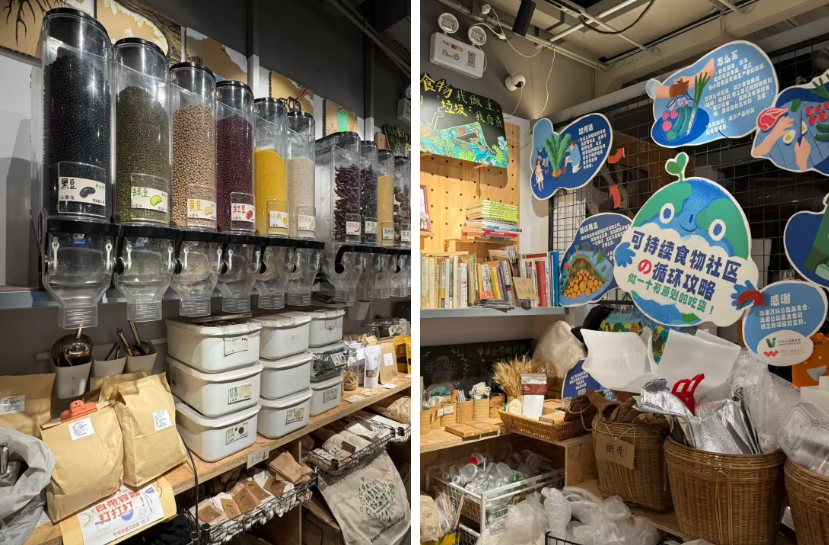
After watching livestreams for years, I finally tried my hand at it. The feedback was pretty good, and I’ve suddenly got a bit of confidence; maybe I could do more in the future. I can’t wait to take over the place again!
IV.A Day of Intensive Prefrontal Cortex Training

This was the day I encountered the most people at Jishi. Over the previous 48 hours, my most common workflow was: receive instructions via WeChat -> grab a basket and start sorting -> use my experience to interpret the customer’s definition of “big and small”, “more and less”, “a bit more floury” or “a bit more watery” -> pack, seal, and send via instant courier. This created a strange sense of satisfaction—the pleasure of single-threaded work, of being alienated into a machine or a worker ant.
While I was enjoying this flow, passers-by were watching my “mental state”: “Hello, is this a ghost vegetable shop?” Some curious people even pushed open the door only to shake their heads and leave: “There’s nobody here, what are those staff members so busy with?”
7 February was different. I was buried in copywriting and livestreaming, and when I looked up, it was a “tsunami”! It probably wouldn’t be any different on a beach in Hawaii at this moment. Actual, flesh-and-blood customers arrived in droves, filling every gap in the shop and brightening every corner. It felt like the scenes of shopping for New Year goods in my childhood—the only thing missing was the bins of rice you could plunge your hands into. For those whose New Year spirit hasn’t been quite thawed by the likes of Andy Lau and “Chinese Doll” this year, it felt at least 30% thawed here.
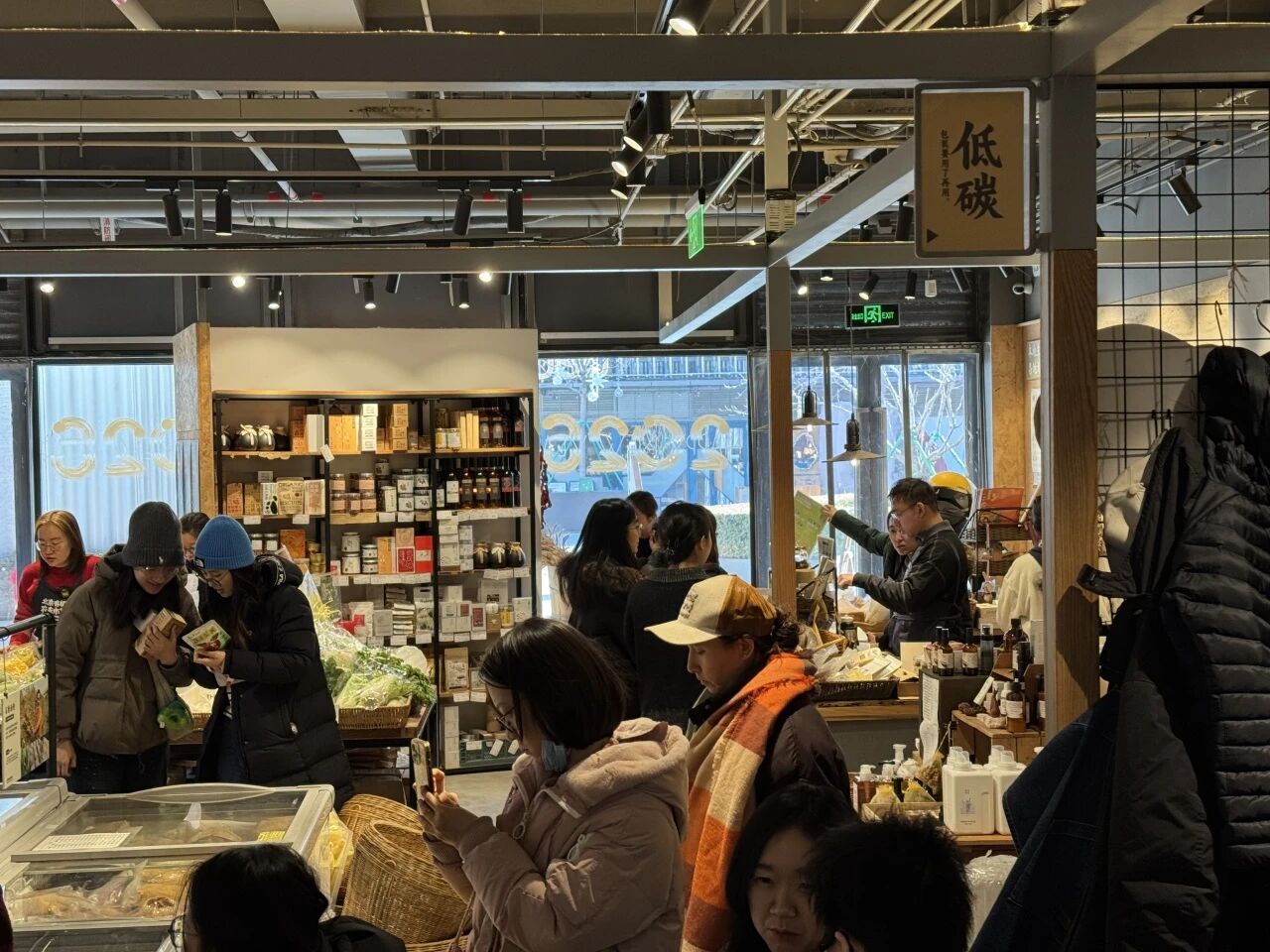
It was also a day of intensive prefrontal cortex training. I was on the events team today—12 hours, 4 events… I just had to tell myself that the day would be over in the blink of an eye. It was a true joy to meet farmers and like-minded people committed to sustainable eating in person; I suppose that’s the point of Foodthink’s public events—constantly meeting comrades who are both in the same industry and walking the same path.
My take-away from my first livestream sale: some money is better left for others to earn (not really)
A makeshift crew is prone to frequent errors, including but not limited to: constant lagging, occasional audio drops, and being unable to link the yellow shopping cart… but the “hosts” were dedicated and excellent. Next time, I’ll definitely study livestreaming techniques properly and ensure a stable connection (if there is a next time)
V.So Busy I Almost Had to Settle for Leftover Soup

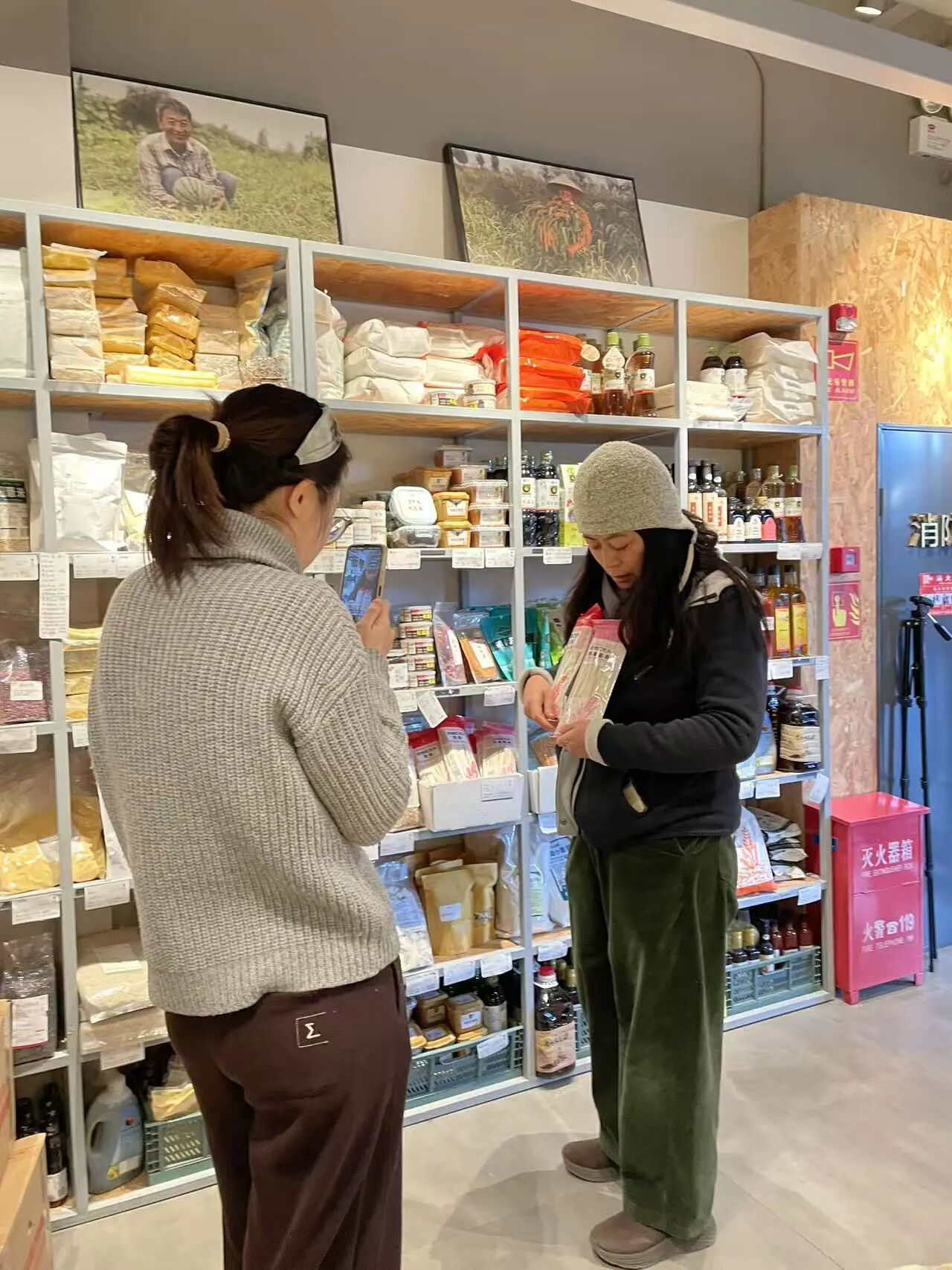
The night before, we were solemnly warned: “Tomorrow will be exhausting; dress warmly, bring power banks, and prepare yourselves mentally.” With four events that day and a stream of new and returning guests, I was tired, but seeing that everyone else was working even harder, I had no complaints.
In the evening, we prepared lamb soup with rice noodles for the ten friends who signed up for the screening. The lamb was very rich, which meant the washing up was exceptionally arduous. In the Foodthink office, the colleague who arrives last is usually responsible for the day’s washing up. Yuyang, an editor who arrived late that day, volunteered: “I’ll do it; it has to be me.” But once everyone had finished, the soup had cooled, leaving white layers of fat floating on top, and some bowls still had clumps of noodles. If Yuyang had to handle all of that alone, it would probably be called workplace bullying.

Thanks to the professional equipment in the collective kitchen (the 3+1 sink system) and Foodthink’s knack for improvisation (insert doge face), these desk-bound workers—accustomed to office chairs and utterly unsuited to hard labour—successfully transformed a daunting individual task into a group team-building exercise. For the full story, please refer to the account by our colleague, ZX. In short, we looked out for one another; at that point, whether it was mutton fat or engine oil, nothing was out of the question.
Of course, to avoid telling a purely “anthropocentric” story, we must also extend our heartfelt gratitude to the tea seed powder, the clear drainage, and the endless supply of hot water. When you factor in the labour, a 68-yuan bowl of mutton rice noodles and a cinema ticket aren’t expensive at all—eating them felt like a genuine bargain!
In reality, however, supply was limited, and the Foodthink members didn’t get to taste the mutton soup. We looked at each other in silence, even considering merging the remaining few bowls of broth and heating them up to share. This would have saved us the effort of washing the bowls while allowing us to taste the delicious soup… but in the end, we couldn’t bring ourselves to do it. Seizing the moment, I—a devoted fan of tomato and egg—volunteered to promote my favourite dish. Using a carton of eggs, six tomatoes, a bag of leftover bean sprouts, some uncooked rice noodles from the night before, and a large bowl of shredded tofu mixed with cabbage, I quickly whipped up an unpretentious working lunch. Using stainless steel cutlery, I truly felt the spirit of those hardworking ladies who cook for construction workers on-site.
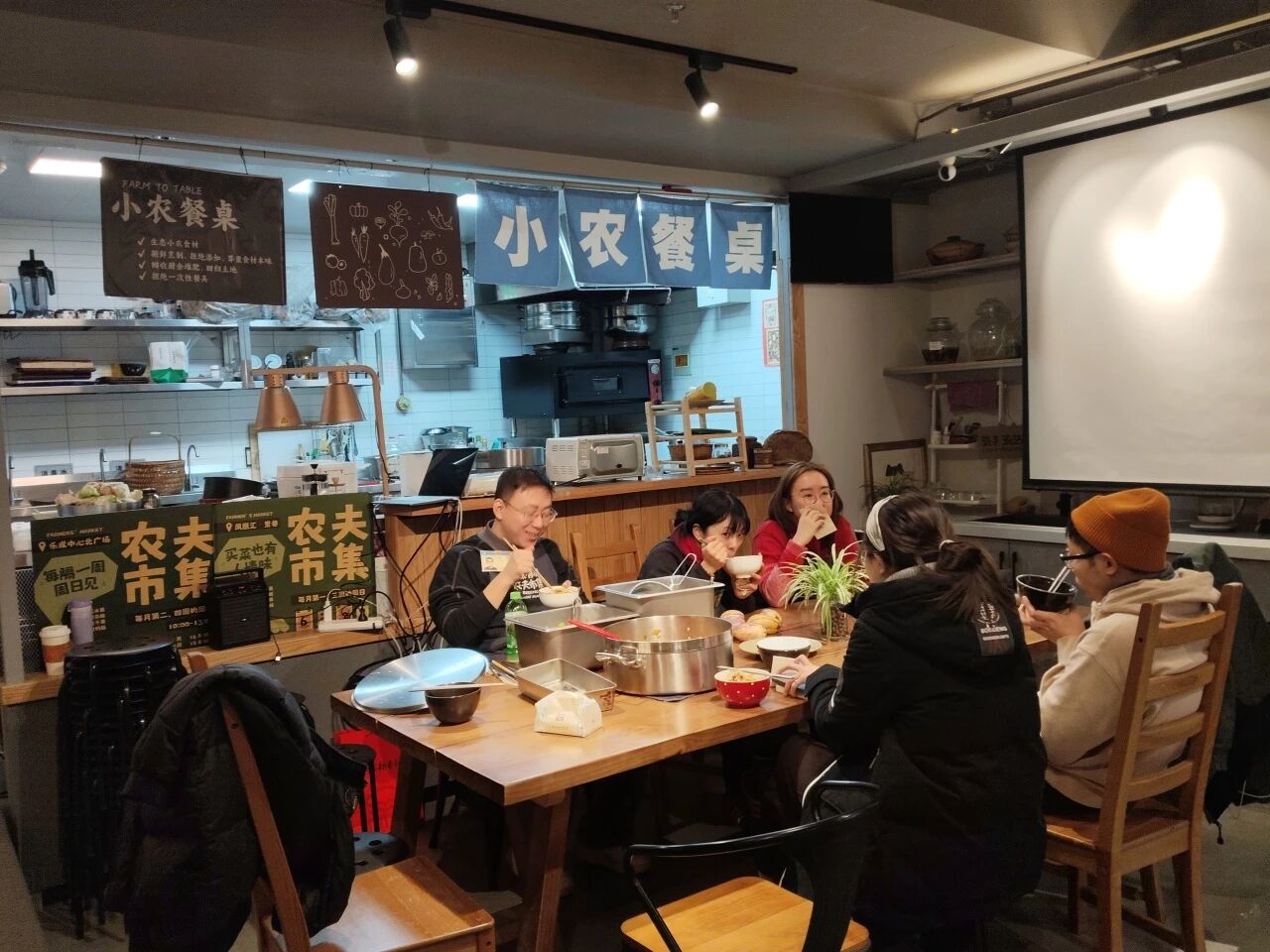
VI. A Guide to Washing Up After a Lunar New Year Feast

That mutton rice noodle soup was so fragrant…😋
Until I saw the sink, overflowing with pots, pans, bowls, and basins, all caked in mutton grease.🥶
These grass-fed, free-roaming sheep from the Hari Gobi grasslands of Inner Mongolia lived a life of luxury; they were plump and healthy, with mutton fat as white as jade and a mouth-watering aroma. The resulting broth shimmered with exquisite oil droplets, offering a pure flavour that lingered on the palate.
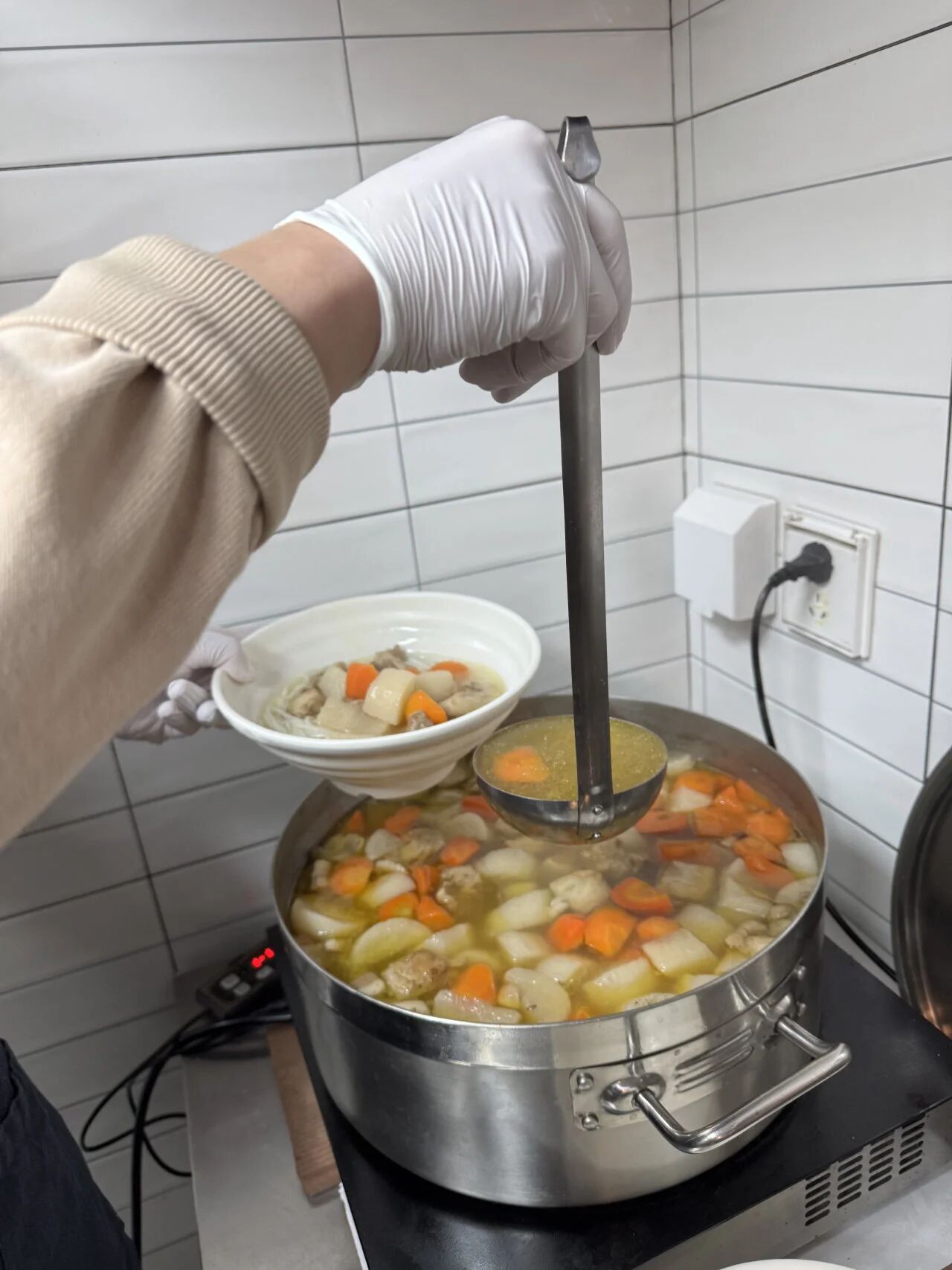
When it’s hot in the bowl, it’s soup; once it cools, it’s a nightmare. As the soup cooled, the congealed mutton fat bound together with vegetable peels, seasoning residue, and broken rice noodles, clinging stubbornly to every bowl, plate, pot, chopstick, and spoon involved. It wouldn’t budge; it wouldn’t wash away.
As the saying goes: the joy of eating mutton soup is fleeting, but the agony of scrubbing the pots is everlasting. There were utensils and cookware for about 20 people! Faced with these mountainous piles, even a veteran member of Foodthink’s (now disbanded) “Dishwashing Department”, who had survived twice-weekly operations, could only sigh in despair at the “sheep”.
One colleague volunteered to try washing a single bowl, only for both the dishcloth and their hand to be instantly defeated by the grease. We couldn’t close the shop until the dishes were done, and we couldn’t go home until the shop was closed. Looking at the row of sinks in the kitchen, we had a flash of inspiration: relying on the strength of numbers, we decided to tackle the problem using an assembly-line method.
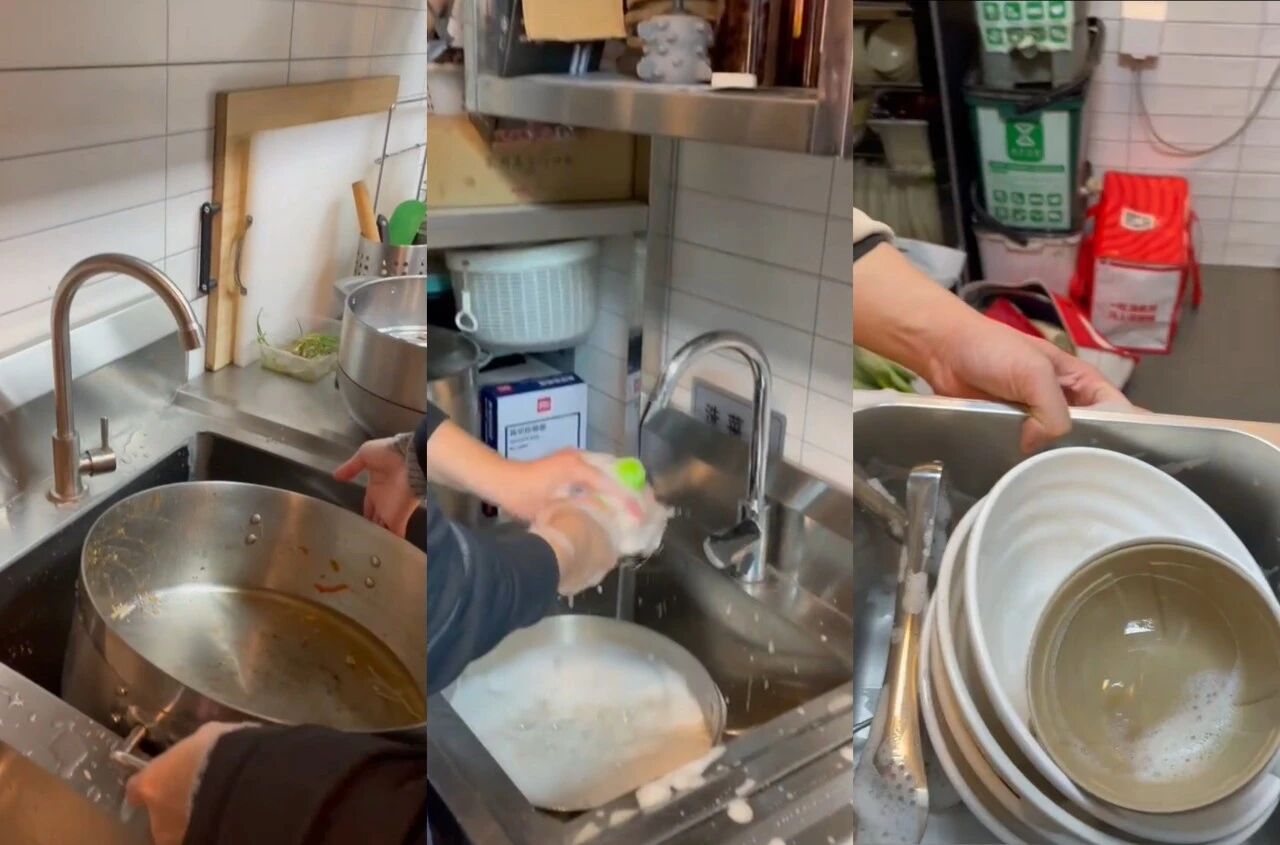
Steps:
1. Collect dirty dishes and rinse away large food scraps like vegetable leaves and rice noodles; 1 person at this station;
2. For items with mutton grease, scrape off as much as possible with paper towels; 1 person at this station;
3. Scrub vigorously using a mixture of hot water, tea seed powder, and dish soap; 1 person at this station;
4. Rinse with clean water and inspect for cleanliness; 1 person at this station;
5. Drain and arrange for storage; 1 person at this station;
Total: 5 stations, 5 people.
Precautions:
– Start with the least dirty items;
– Fill a large pot or sink with hot water; a combined approach using tea seed powder (for degreasing) and dish soap (for deodorising) works best;
– Any item found to be unclean should be sent immediately back to the previous step for rework;
– Do not wear gloves during the inspection step; you must feel the surface with your own hands to check for grease;
– After finishing, use the hot solution from step three to wash the sink and flush the drains;
– Have hand cream ready once the job is done.
Conclusion:
Unity is strength! Everything was sorted in half an hour, leaving everything sparkling clean.✌️
VII.Sensing Climate Change Through Selling Vegetables

Working 60 hours at the collective shop allowed me to experience the food system within the community from several more dimensions.
From the perspective of climate change, cold chains and freezers are significant sources of (fossil) energy consumption within the food system. However, to run an ecological organic food shop and meet consumer demand—ensuring stock is always available for sale—our meat must be cut into portions, sealed, and frozen. The storage of dairy products also relies entirely on freezing and refrigeration technology. Temporality seems to be an intrinsic part of supply chain philosophy, and that time is exactly where carbon emissions originate.
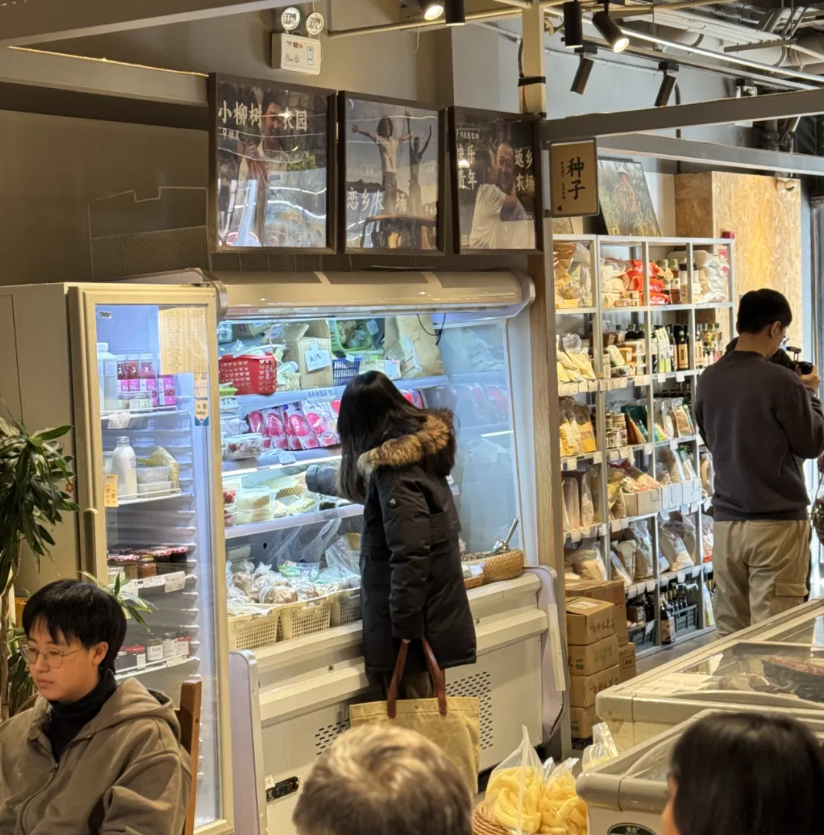
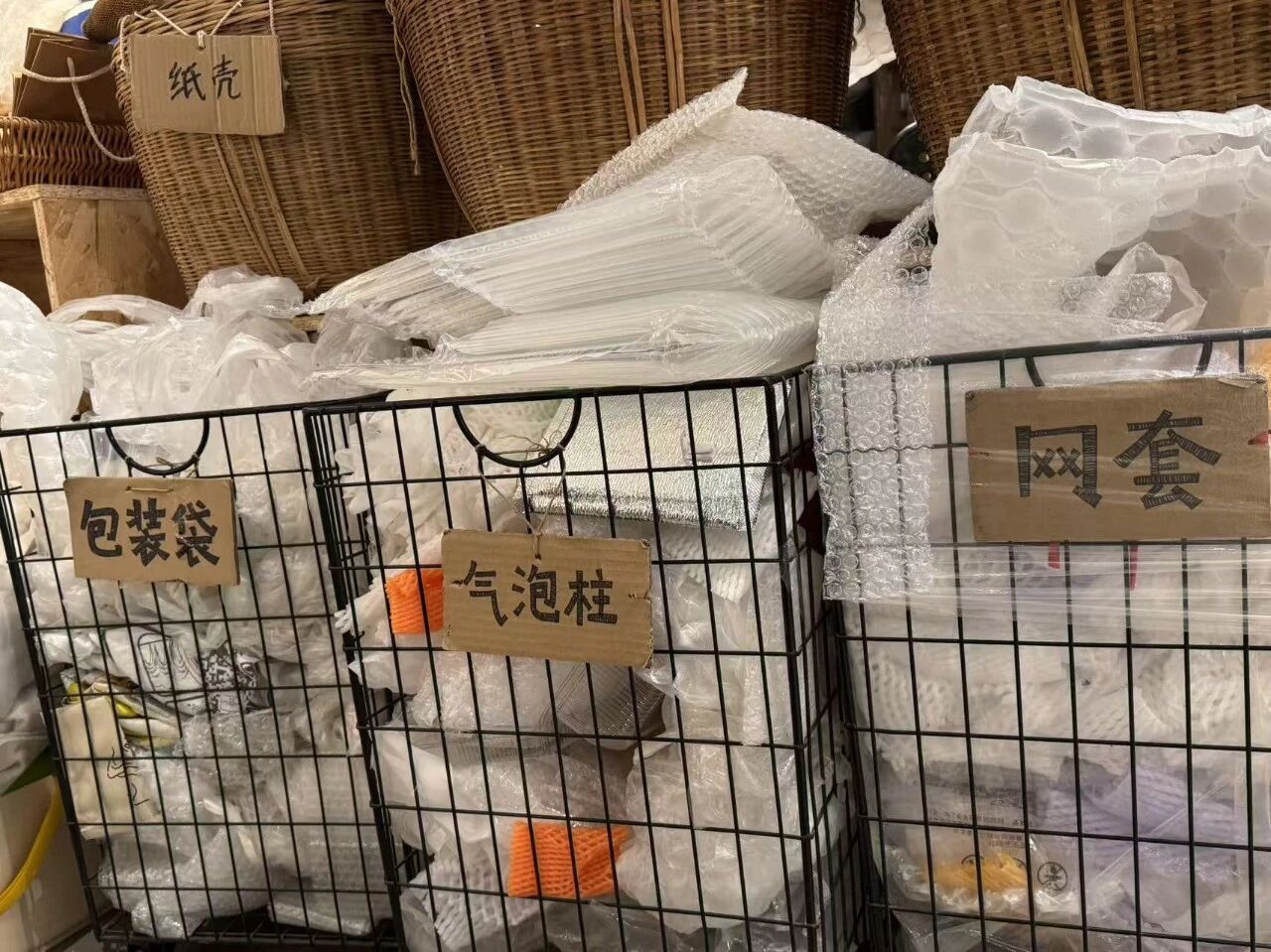
We have to use plastic. This is again a decision based on time and the consumer. In Beijing, if vegetables aren’t divided into plastic bags during transport and while awaiting sale, they dry out, turn yellow, and lose moisture. Could we switch to greaseproof or newspaper? Many on-demand delivery services require food to be sealed, and customers may not accept a delivery where the courier’s hand could have touched the contents. Could they accept such “impurity” or inconvenience? Compared to ordinary supermarkets or e-commerce giants, the amount of plastic we use is relatively small; not only do we avoid over-packaging, but we even reuse various e-commerce and takeaway bags brought in by our customers.
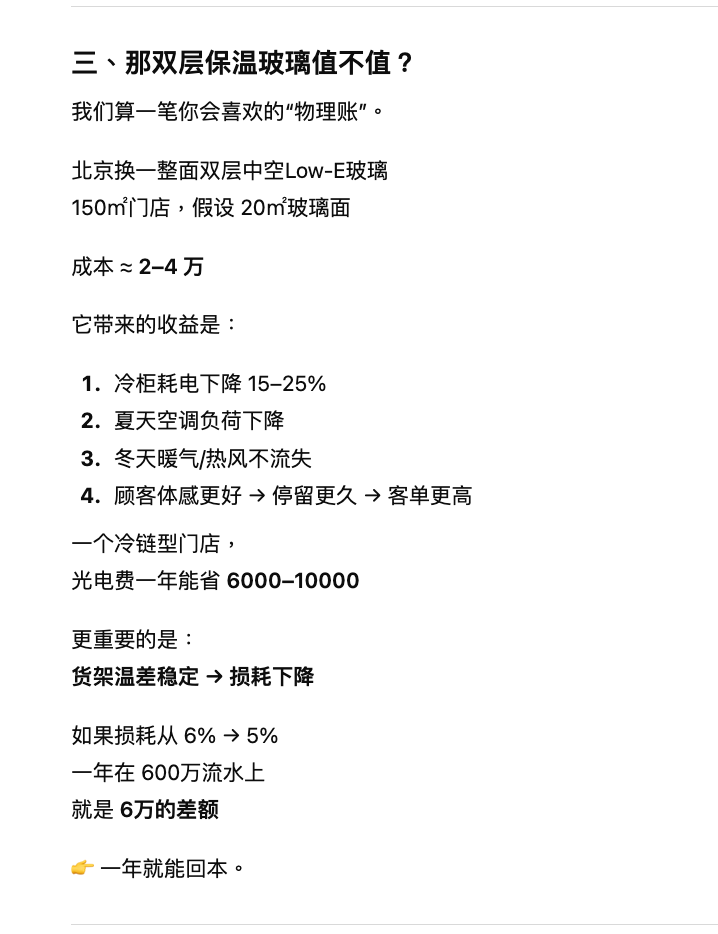
I also observed a lose-lose situation between efficiency and environment, driven by the logic of capital-led rental markets: over the past decade, although Jishi has remained in the Sanyuanqiao area, it has been forced to relocate several times. Even now, the shop’s contract is renewed only on a year-by-year basis. This instability means that an ecological organic shop like ours, with tight cash flow and thin profit margins, has little capacity or incentive to invest in better thermal insulation or double-glazed windows (having done some renovating myself, I have a rough idea of the cost of windows in Beijing).
Consequently, during my 60 hours of work at Jishi—especially on windy nights—my colleagues and I often had to wear down jackets, with several electric heaters huddled behind the checkout counter and in front of the kitchen. Despite this, my fragile health failed me, and I fell ill twice. In the summer, I sometimes found myself fleeing to the neighbouring coffee shop just to catch my breath, while wondering: is the refrigeration in the cabinets sufficient? Will food spoilage increase? —all of which translates to higher energy consumption and carbon emissions!
Of course, from a financial perspective, electricity is cheaper than thermally broken aluminium double-glazing, but that is not the case ecologically. If property managers could provide this hardware to tenants, or allow us to sign multi-year contracts with stable rents, or perhaps negotiate with landlords and succeeding tenants to retain improved hardware when a shop is forced to close rather than demanding a blanket “return to original condition,” could there be a different answer to these problems?
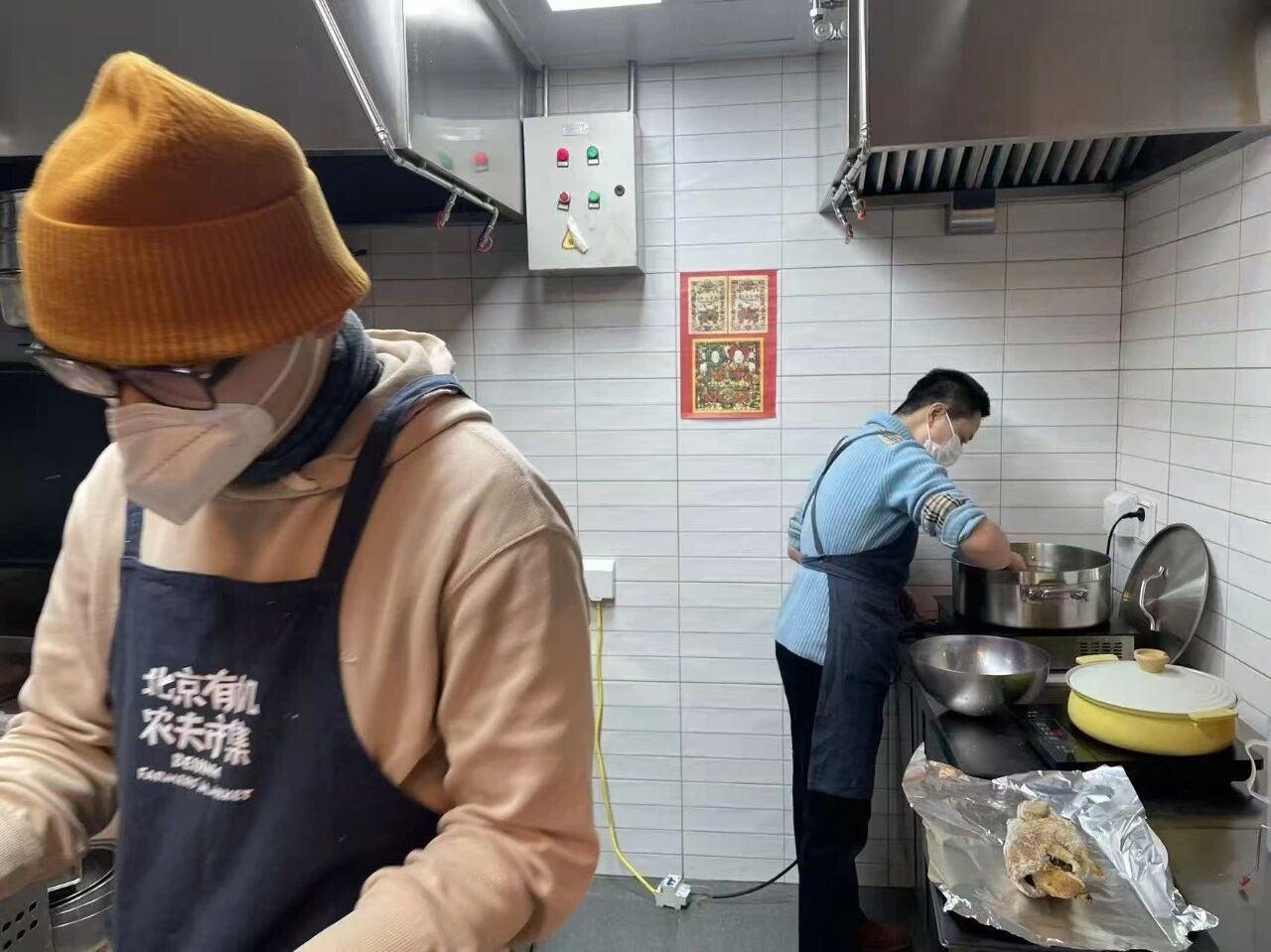
Jishi once had an open kitchen, but the project stalled because they couldn’t find suitable chefs who were willing to work with ecological ingredients. Customers still wander in and look around: “Do you sell prepared meals here? Oh, you’re cooking for yourselves, how lovely (can I have some)?”
After working for 60 hours, my strongest feeling was this: cooking is a tangible form of labour that must be acknowledged and seen. It is not merely the romanticised, beautiful, and inclusive atmosphere of home-cooked warmth and reunion. It is the grueling work of bending over the prep station, frying food while inhaling PM2.5, and the endless cycle of washing and chopping—multiplying the number of family members by N—for every bowl and dish, on top of the daily tasks of inventory, stocking, and packing.
In Chengdu, I experienced the “open community table” at an ecological agricultural shop called “Tianshe,” but they used disposable tableware, which also made instant delivery more convenient. If Jishi were to restart its community table and hire a chef, I suspect they would struggle to hire a part-time dishwasher as well—yet another burden that comes with adhering to one’s principles. I wonder if this volume of work is another reason why chefs are so hard to find.
VIII.NPCs Linked by Labour
When it comes to selling vegetables, we were serious! The “Occupy Jishi” event has come to an end. Whether judging by the turnover or by the genuine feelings of collaboration among colleagues, I feel we delivered a near-perfect performance. At the very least, there were no critical errors like sending orders to the wrong address, haha! (If you know the old joke, you know!)
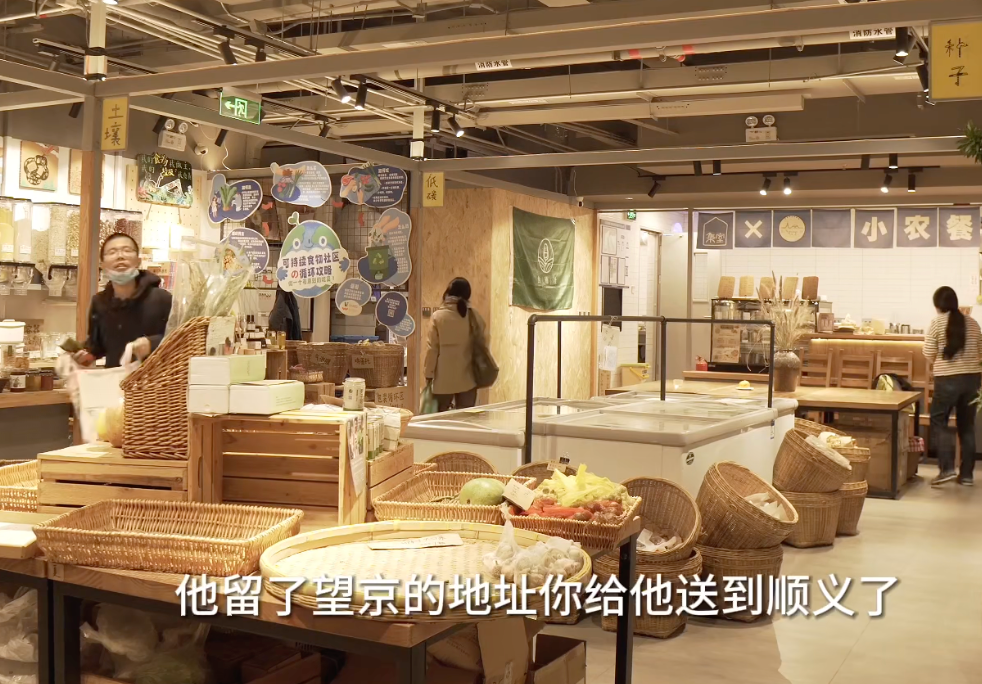
We are not professional vegetable sellers, nor do we make a living from it, yet we still felt a profound sense of responsibility. Even if, to an outsider, it looked more like performance art or a game, I could feel that every single colleague was pure and sincere. So pure that even if it were just a game, we consistently adhered to our assigned roles, diligently handling inventory, intake, restocking, customer service, picking, and after-sales. Even when we encountered trouble or felt frustration, we remained within our roles, processing and digesting everything without ever breaking character.
Naturally, we must all return to our primary jobs and lives, but through 12 hours of non-stop labour, we established a connection and a resonance—one that is hard to describe to outsiders. In the public sphere of the produce shop, customers streamed in all day, and the atmosphere was buzzing with activity as people connected. Yet, there was another connection, hidden subtly within our hurried footsteps and loud shouts, embedded in the physical rhythm of our bodies. Perhaps one day in the future, when I look back on this day, this resonance will remain the feeling I miss most instinctively: labour is the finest medium for connecting human beings.
Editor: Tianle