15 August marks National Ecology Day. When ecology and biodiversity come to mind, we tend to think first of wild animals or the Amazon rainforest; few consider the intricate relationship between agriculture and ecosystems.
In fact, over the past seven decades, the negative impacts of agricultural expansion and intensification on natural ecosystems have been escalating: the IUCN Red List indicates that agricultural activities threaten 24,000 globally threatened species, and between 2000 and 2018, 90% of global deforestation was driven by the expansion of agricultural land.
Zooming in on China, how do agricultural activities shape ecology and biodiversity? In a study published in the *Journal of Applied Ecology* this May, ecology scholar Dr Yi Zou and his team from Xi’an Jiaotong-Liverpool University revealed that land consolidation projects, such as merging small plots into larger ones, lead to a decline in biodiversity within paddy fields.
●Image source: Zou 2024 Basic & Appl Eco
What lies behind these mechanisms? Why is agricultural biodiversity so crucial for ecological conservation? And what does this mean for policymakers, smallholder farmers, and the general public? In advance of the second National Ecology Day, Foodthink sat down with Dr Yi Zou for an exclusive interview. The following is a transcript of our conversation.
Foodthink Author
Yi ZouAssociate Professor and PhD Supervisor in the Department of Health and Environmental Sciences at Xi’an Jiaotong-Liverpool University. He earned his doctorate from University College London and subsequently conducted postdoctoral research at Wageningen University in the Netherlands. His research primarily focuses on agricultural landscape ecology, insect biodiversity, and ecosystem services.
Foodthink: How did you and your team become interested in the relationship between land consolidation and agricultural biodiversity?
Yi Zou: Between 2014 and 2016, while studying agricultural landscapes at Wageningen University, I focused on the relationship between agricultural landscapes and biodiversity in China. At that time, our team selected around twenty to thirty monitoring sites in Jiangxi Province and noticed that several areas were undergoing land consolidation.
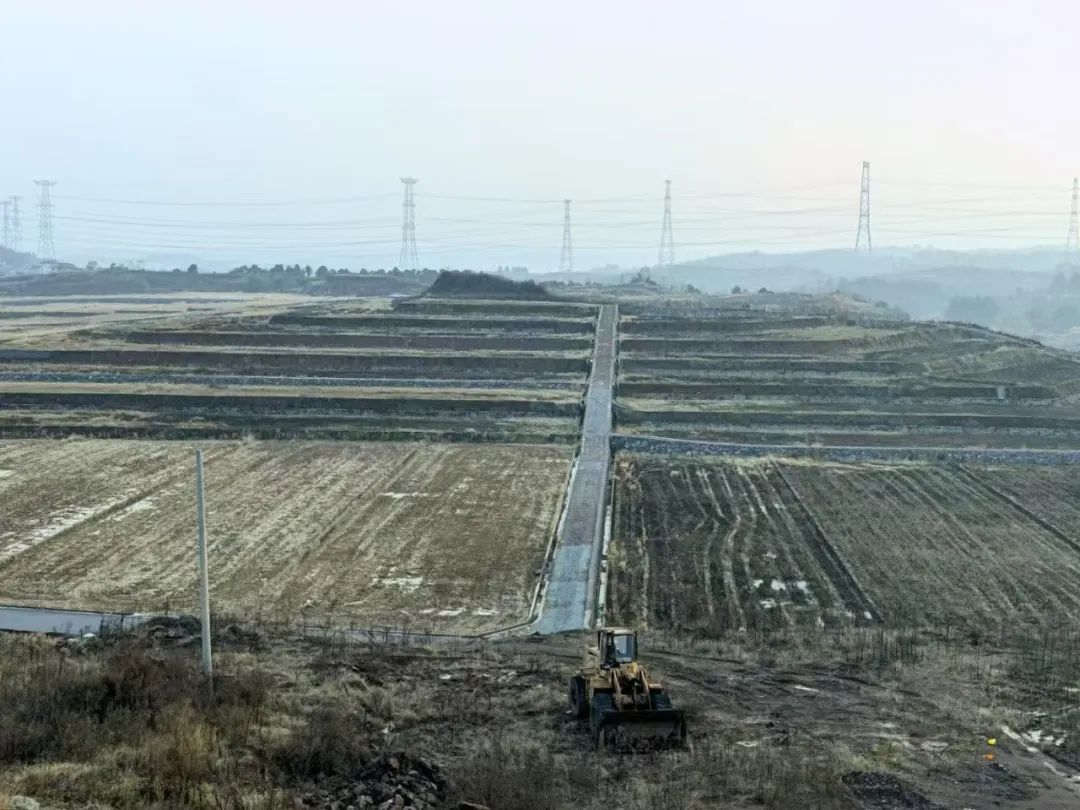
Land consolidation typically takes two forms: merging small plots into larger ones, and regularising field boundaries. Both aim to enhance mechanisation and boost production efficiency. Naturally, this drew our attention to how such consolidation might impact biodiversity.
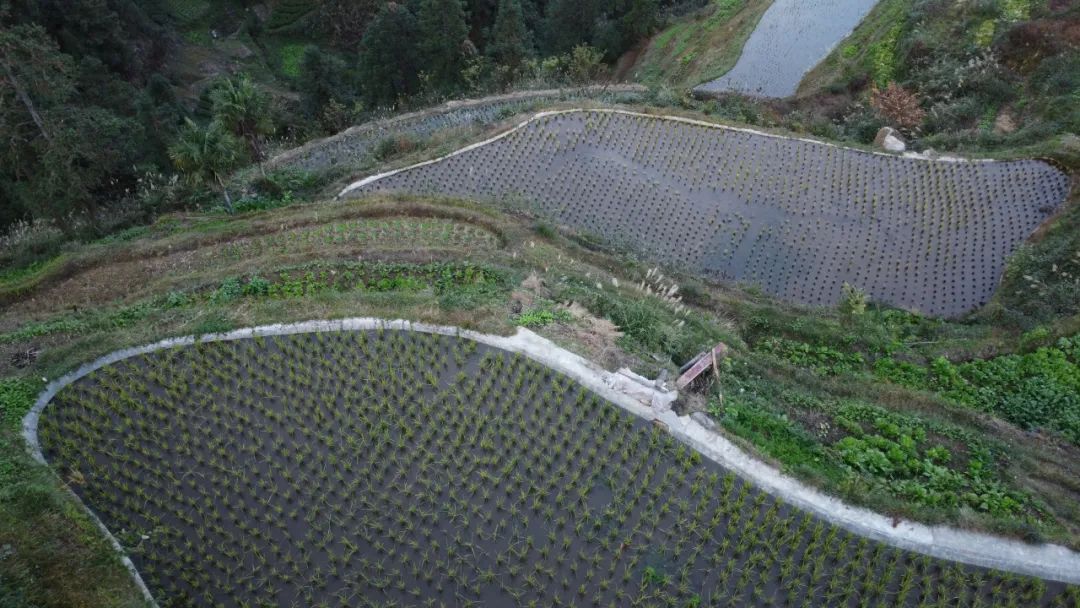
●High-standard farmland in the hilly regions of Zhejiang Province, early 2024. Photograph: Chen Jingjing●An ethnic minority village in the Qiandongnan region of Guizhou Province, 2021. Some terraced fields have already begun the process of cement hardening on the ridges. Photograph: Xiao Shu
Foodthink: Why did you choose to study the impact of land consolidation on insect diversity within agricultural ecosystems, rather than focusing on other groups such as microorganisms, birds, or mammals?
Yi Zou: Firstly, insects are my primary area of expertise. Secondly, acting as an indicator for biodiversity requires a specific spatial scale.
Microorganisms are affected within a very limited scope, sometimes just a square metre of soil, making them unsuitable for indicating the broader impacts of farmland standardisation. Birds, on the other hand, have vast ranges and are more susceptible to macro-level factors like climate change. Arthropods, particularly insects, operate at an intermediate scale, with movement radii mostly under 1.5 kilometres, making their responses to local environmental changes highly indicative.
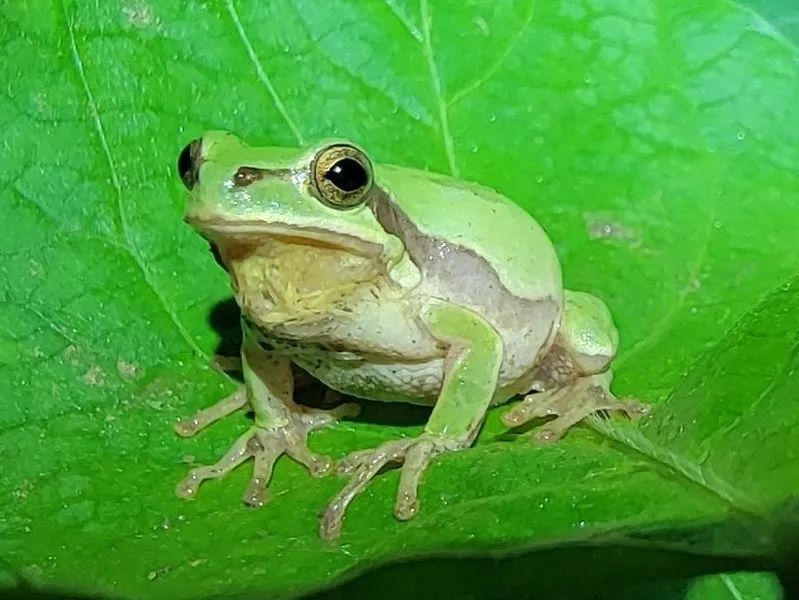
This is not to say that microorganisms, birds, amphibians, and other organisms are unimportant. Each plays a distinct role within the ecosystem and they all interact with one another. Microorganisms, for instance, are vital to soil structure. Furthermore, our 2018 research into the predation of brown planthoppers revealed that birds also prey on them. Amphibians like frogs offer potent biological pest control, yet their contributions are frequently overlooked.
● The Chinese brown frog was once a common species in the paddy fields of East China. However, urban expansion and the rise of chemical-intensive farming have driven the species to critical endangerment. Image credit: Amaël Borzée / Wikimedia CommonsFoodthink: A central finding of your research is that “the species richness of natural pest enemies in consolidated paddy fields is lower than in conventional fields”, which may be explained by a decline in linear habitats. Could you clarify what linear habitats are, and outline the mechanisms through which they influence agricultural biodiversity?
Zou Yi: Let me begin by introducing semi-natural habitats. These can be broadly divided into two categories: larger patches, such as contiguous grasslands or woodlands, and smaller linear habitats.
While there is no rigid definition for linear habitats, they generally refer to non-crop areas such as weeds along field edges, bunds, irrigation ditches, and tree lines. They provide crucial refuges for natural enemies, sheltering them from soil tillage and pesticide applications. Such linear habitats are relatively common across China’s small-scale farmland. However, land consolidation efforts have destroyed many of them, along with the herbaceous vegetation that once thrived along field margins.
● Natural field bunds and smooth-faced concrete bunds at the study site.
In many European farming regions, linear habitats such as wildflower strips are established around fields. Agriculture there operates on a far larger scale and relies much more heavily on monocultures than it does in China, with individual plots often spanning hundreds or thousands of hectares. Under the EU’s Agri-Environment Measures (AEM) scheme, farmers who maintain a designated proportion of linear habitats around their fields to safeguard agricultural biodiversity receive appropriate government subsidies.
● Wildflower strips in large-scale European farmland. Image: The Applied EcologistInterestingly, we anticipated that farmland consolidation might affect both natural enemies and pests alike, yet we found that pest populations remained largely unaffected. A likely explanation is that the local rice pests are migratory species, which are less susceptible to localized land restructuring—rice planthoppers being a prime example.
I recall a massive outbreak of rice planthoppers in Anhui around 2010, which may have been linked to climate change and pest control practices in South-East Asia, as rice planthoppers—particularly brown planthoppers—primarily migrate from that region.
Although we had hoped that conserving natural enemies (such as spiders and ground beetles) would help regulate pest populations, no clear correlation emerged in this experiment. It may simply require longer-term observation to detect such effects.
Foodthink: Numerous studies in Europe and North America have shown that larger patches of semi-natural habitat can mitigate the negative impacts of farmland consolidation on biodiversity. This formed one of the hypotheses in your study, yet it was not borne out. What do you believe accounts for this? Might this suggest that a more complex agricultural landscape fosters greater biodiversity, thereby delivering more robust ecosystem services?
Zou Yi: I believe this is linked to the nature of smallholder agriculture in China.
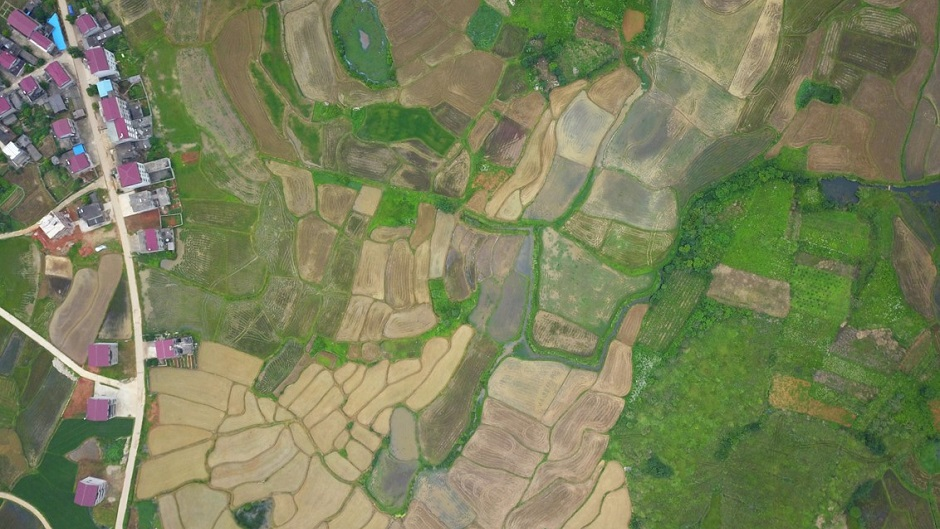
Field sizes in Europe are generally large, whereas farming in southern China remains predominantly small-scale. The plots are small, scattered, and irregular, with a relatively rich network of linear habitats between them. Furthermore, the proportion of semi-natural habitat within our agricultural production areas ranges from 20% to 80%, whereas overseas this figure rarely exceeds 20%.
Our hypothesis is that the relationship between semi-natural habitat and biodiversity is not necessarily linear; it may follow a positive correlation before levelling off. Consequently, in our study in Jiangxi, we did not find a significant impact on biodiversity.
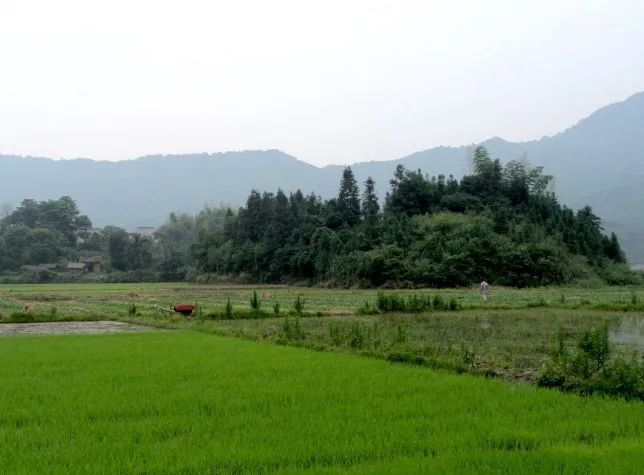
● A typical smallholder farming landscape in south-eastern China.● The farmland in Jiangxi Province shown in the image illustrates a complex agricultural landscape, featuring forest habitats, smaller plots cultivating diverse crops, and field margins covered in various semi-natural habitats.
By comparison, semi-natural habitats in China remain relatively intact, yet the overuse of insecticides cannot be overlooked.
Today, many farmers rely heavily on chemicals primarily to safeguard yields and mitigate risk. However, our 2020 study in Jiangxi revealed that rice paddies grown without insecticides yielded only 12% less than those treated with them, meaning insecticides boosted harvests by just 13.6%. When the costs of pesticides and labour are factored in, farmers are effectively operating at a loss—they simply do not account for their own labour input.
Consequently, when we offered subsidies for pesticide-free farming, the farmers were eager to participate, finding the 12% reduction in yield entirely acceptable. Follow-up visits later confirmed that some households had indeed stopped using chemicals altogether, while those near mountainous areas had significantly reduced their application. They discovered that the local semi-natural habitats provided a degree of natural pest control.
● According to the UN Food and Agriculture Organization (FAO), China is the fifth-largest user of pesticides globally, applying 236,000 tonnes annually. Image credit: FAOTo address your second question: does a more complex farmland landscape necessarily mean greater biodiversity?
First, agricultural landscape complexity is assessed along two dimensions: compositional complexity, referring to the proportion of different patch types within a given area; and configurational complexity, which encompasses patch nesting, adjacency, size, and shape.
As a general rule, complex landscapes can sustain higher biodiversity and deliver more ecosystem services than simpler ones. Yet the relationship between them is not always a straightforward linear one. Research indicates that while landscape complexity can support biological pest control, it does not automatically improve pollinator habitats. Findings often depend on the measurement methods employed, meaning further field studies are required to draw comprehensive conclusions.
Foodthink: What insights does the value of semi-natural habitats offer smallholder farmers in conserving biodiversity, and what implications does it hold for China’s current land consolidation policies?
Zou Yi: Our research revealed considerable differences between individual farmers. Some are well-versed in pests and their natural enemies, and as a result apply pesticides less frequently. Most, however, have a fairly limited understanding; while they recognise common pests, few are familiar with the concept of biological control. Raising farmers’ awareness of biodiversity would significantly help them safeguard their own farms and contribute to broader biodiversity conservation.
Yet conserving agricultural biodiversity cannot be left to farmers alone. Since the beneficiaries are the public at large, the burden should not fall solely on them. First, ecological management requires land and can impact yields. Second, many farming households no longer rely primarily on agricultural output for their livelihoods, which further reduces their incentive to prioritise agricultural biodiversity. But persuading one person to care about this issue is always easier than persuading a thousand.
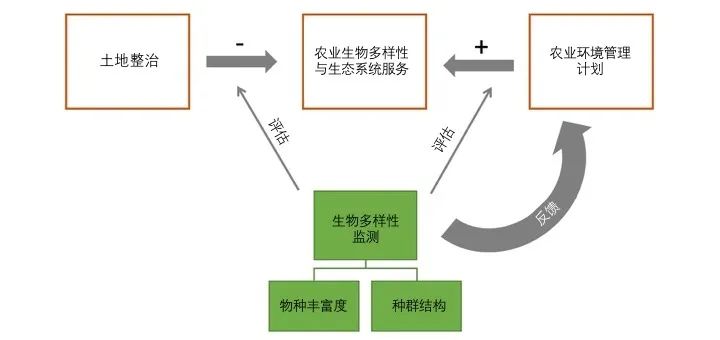
This underscores the need for the government to minimise damage to existing semi-natural habitats whenever consolidating farmland, and to consider reinstating these linear habitats. We need to establish relevant national or industry standards, alongside continuous biodiversity monitoring. Only through monitoring can we evaluate the effectiveness of conservation measures, make necessary adjustments, and establish a robust positive feedback loop.
● Feedback mechanisms from biodiversity monitoring can help assess the impact of land consolidation and the effectiveness of AEM. Figure adapted from Dr Yi Zou’s doctoral thesis.In addition to safeguarding semi-natural habitats and reducing pesticide use, transitioning directly to organic or ecological farming can also significantly enhance agricultural biodiversity, as a substantial body of research has already confirmed. You and your team have also conducted comparative studies on biodiversity between conventional and organic rice cultivation in Jiangsu. Could you share some of your findings with us?
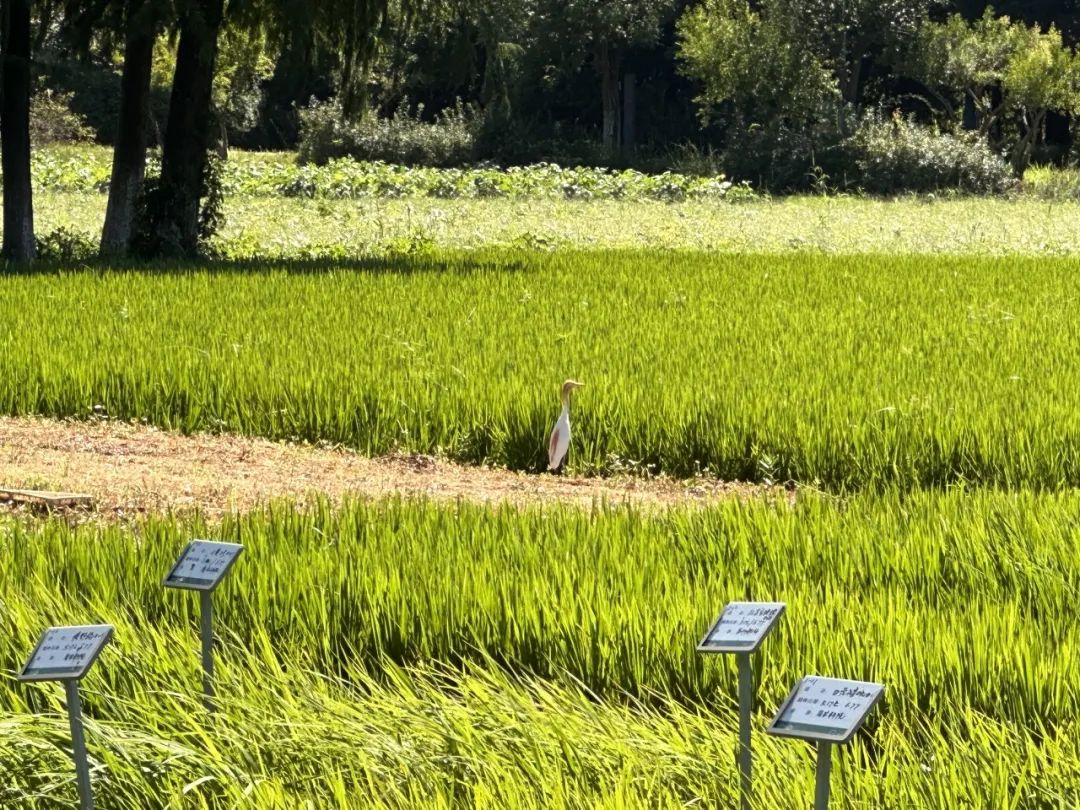
Zou Yi: Our research has found that organic farming significantly increases above-ground biodiversity. Compared with conventional agriculture, above-ground arthropod diversity on organic farms rises by 40%, encompassing both pests and their natural predators. We believe that in organic farming, the gain in above-ground arthropod biodiversity is equivalent to any yield loss, holding the potential to achieve a win-win for both biodiversity enhancement and economic benefit.● The Yuefeng Island organic farm, located in Kunshan, Jiangsu, is the site of research by Dr Zou Yi’s team and spans 230 mu. The farm conserves several heritage rice varieties and has established a robust agricultural ecosystem, with 11 bird species of high ecological value—such as the northern willow warbler and the cattle egret—recorded in its paddies. Yuefeng Island is also one of the partner farms for Foodthink’s ecological agriculture internship programme. Photograph: Maodou / Yuefeng IslandOur research also revealed that changing farming methods did not produce a significant difference in underground microorganisms. The primary reason is likely that subterranean microbes are heavily influenced by factors such as irrigation and tillage, as well as soil texture. Our study found no significant variation in soil elements such as nitrogen, and consequently, no marked shift in microbial communities.
This seems to contradict the common perception that organic farming inherently improves soil. We therefore recommend longer-term monitoring to observe whether any trends emerge over time.
Foodthink: In your view, how can agricultural policy be shifted to better support agricultural biodiversity?
Zou Yi: Within the research community, studies on farmland and agricultural biodiversity in China have grown exponentially. From just one or two papers in the early 1990s to 47 by 2020, the rising number of relevant publications shows that growing attention is being paid to this field. There is also considerable public interest in ecological agriculture.
When national authorities draft relevant standards, our research can provide a scientific foundation. Ideally, scientists would be directly involved in setting these standards. If not, we can draw on years of accumulated research to supply factual evidence, helping policymakers make more informed decisions.
In Europe, public awareness of biodiversity conservation is generally stronger, largely thanks to awareness campaigns. Even small creatures like bees have captured the attention of citizens at large.
● To improve living conditions for pollinating insects, Berlin has launched an urban biodiversity restoration project that keeps hives on the iconic Berlin Cathedral. Image credit: Jen Guyton/The Nature ConservancyI believe public awareness within China is also gradually evolving. Non-profit organisations, serving as a bridge between researchers and the public, hold tremendous influence. For research that impacts the public good, outreach is essential to foster that connection.
Foodthink: What can ordinary people do to help protect agricultural biodiversity?
Zou Yi: Simply nurture a deep love for nature from within. I believe it is vital to cultivate an appreciation for the natural world, particularly in children. Biodiversity is not merely ‘useful’; it is also ‘beautiful’, and it benefits our physical and mental well-being.
Referenceshttps://besjournals.onlinelibrary.wiley.com/doi/abs/10.1111/1365-2664.14671