15 August is National Ecology Day. When we speak of ecology and biodiversity, our thoughts immediately turn to wildlife or the Amazon rainforest; few consider the mutual influence between agriculture and ecosystems.
In fact, over the last 70 years, the expansion and intensification of agriculture have increasingly degraded natural ecosystems. The IUCN Red List indicates that agricultural activities threaten 24,000 endangered species globally; between 2000 and 2018, 90% of global deforestation for agriculture was attributed to the expansion of cropland.
Specifically in China, how do agricultural activities affect ecology and biodiversity? In May this year, a study by ecologist Zou Yi and her team from Xi’an Jiaotong-Liverpool University, published in the *Journal of Applied Ecology*, pointed out that land consolidation projects, such as merging small fields into larger ones, have led to a decline in biodiversity in paddy fields.
●Image source: Zou 2024 Basic & Appl Eco
What are the mechanisms behind this? What is the significance of agricultural biodiversity for ecological conservation? And what implications does this hold for policymakers, smallholders, and the general public? To mark the second National Ecology Day, Foodthink conducted an exclusive interview with Dr Zou Yi; the following is a summary of that conversation.
Foodthink Author
Zou YiAssociate Professor and PhD supervisor in the Department of Health and Environmental Sciences at Xi’an Jiaotong-Liverpool University. She earned her PhD from University College London and subsequently conducted postdoctoral research at Wageningen University in the Netherlands. Her primary research focuses on agricultural landscape ecology, insect biodiversity, and ecosystem services.
Foodthink: How did you and your team first become interested in the relationship between land consolidation and agricultural biodiversity?
Zou Yi: Between 2014 and 2016, while studying agricultural landscapes at Wageningen University, I focused on the relationship between agricultural landscapes and biodiversity in China. At the time, our team selected twenty to thirty monitoring sites in Jiangxi Province and discovered that some of the land was undergoing consolidation.
Land consolidation generally takes two forms: merging small fields into larger ones, or regularising the shape of the fields. Both aim to increase the level of mechanisation and improve production efficiency. Consequently, we naturally began to examine the impact of land consolidation on biodiversity.
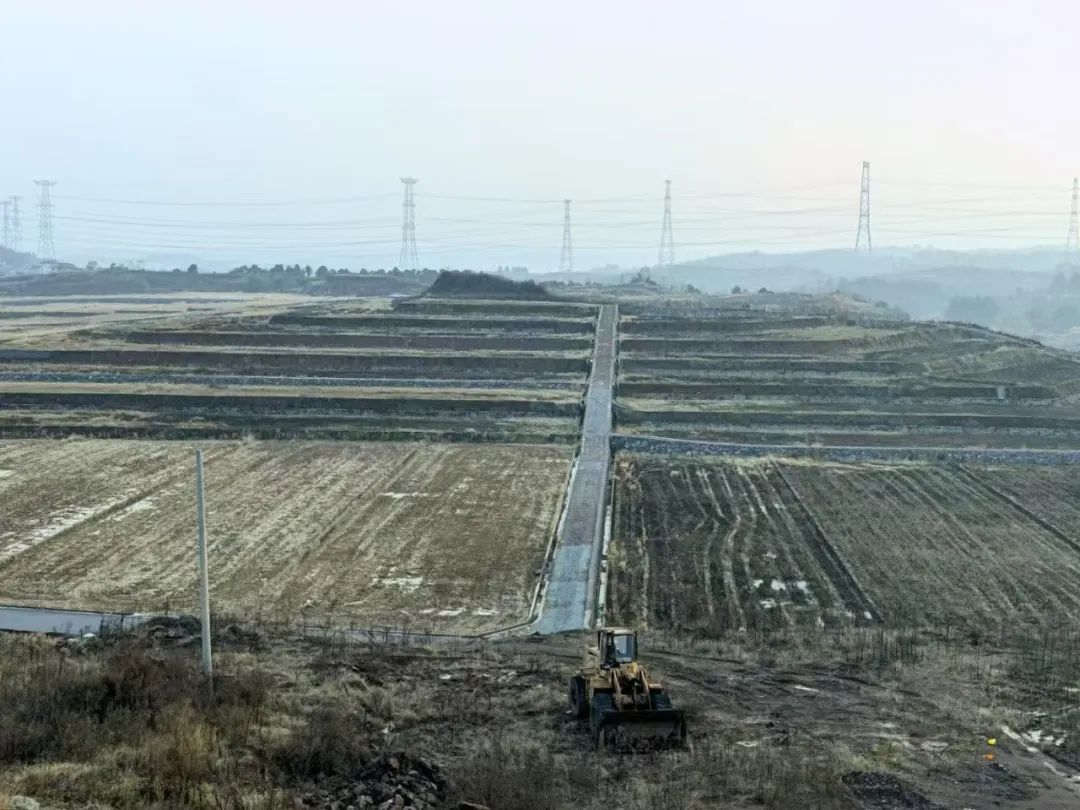
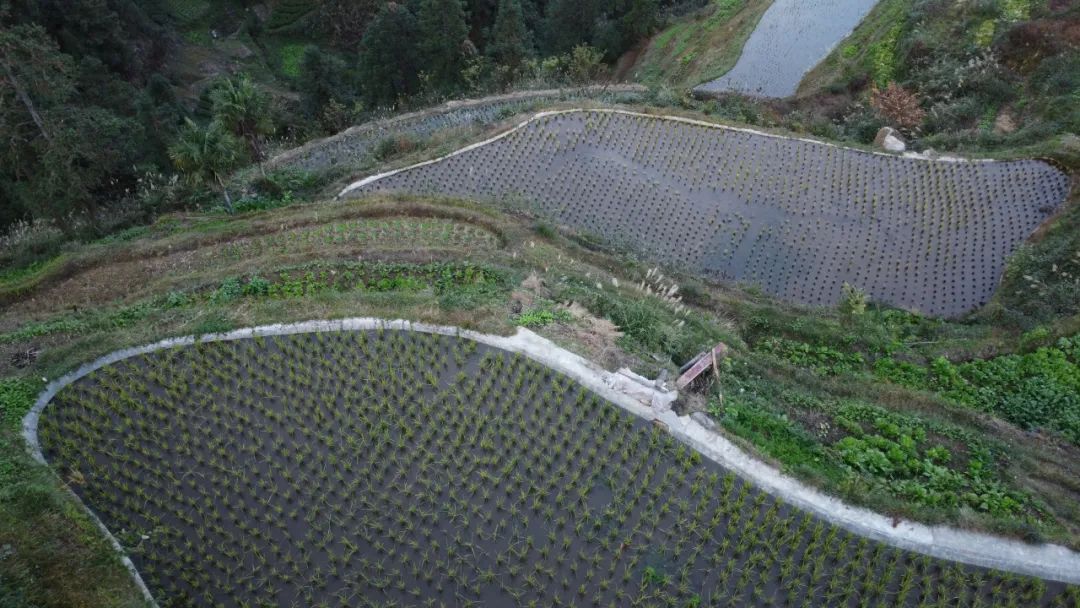
●High-standard farmland in the hilly regions of Zhejiang, early 2024. Photo: Chen Jingjing●An ethnic minority village in Southeast Guizhou, 2021, where some terrace boundaries have been hardened with concrete. Photo: Liao Shu
Foodthink: Why did you choose to study the impact of land consolidation on insect diversity within agricultural ecosystems, rather than other groups such as microbes, birds, or mammals?
Zou Yi: Firstly, insects are my area of professional expertise. Secondly, biodiversity indicators require a specific spatial scale.
Microbes are affected on a very small scale—perhaps only a square metre of soil—which cannot indicate the impacts brought about by farmland standardisation. Birds, on the other hand, have vast ranges and are more susceptible to broader environmental factors such as climate change. Arthropods, particularly insects, have a moderate range—mostly within a 1.5 km radius—making their reactions to local environmental changes the most indicative.
This does not mean that microbes, birds, or amphibians are unimportant; they each play their part in the ecosystem and influence one another. Microbes play a vital role in soil structure. Furthermore, in our 2018 study on the predation of brown planthoppers, we found that birds also prey on them; and amphibians, such as frogs, provide powerful biological pest control, a role that is often overlooked.
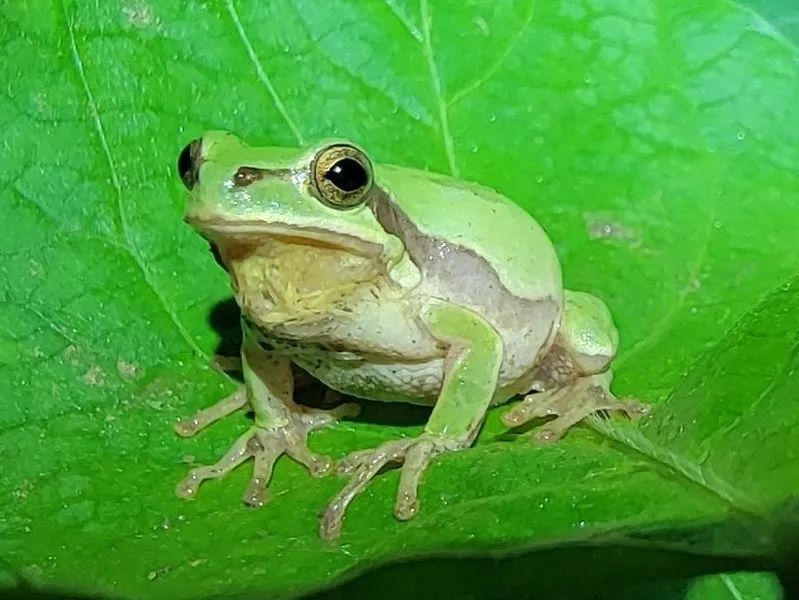
●The unmarked rain frog was once a common species in the paddy fields of East China. However, urbanisation and the rise of chemical agriculture have left the unmarked rain frog critically endangered. Image source: Amaël Borzée/Wikimedia CommonsFoodthink: A core finding of your research is that “the abundance of natural enemies of pests in consolidated paddy fields is lower than in ordinary paddy fields”, which you suggest may be explained by the reduction of linear habitats. Could you explain the concept of linear habitats and the mechanisms by which they influence agricultural biodiversity?
Zou Yi: Let me start with semi-natural habitats. These can be divided into two types: larger patches, such as expansive grasslands or forests, and smaller linear habitats.
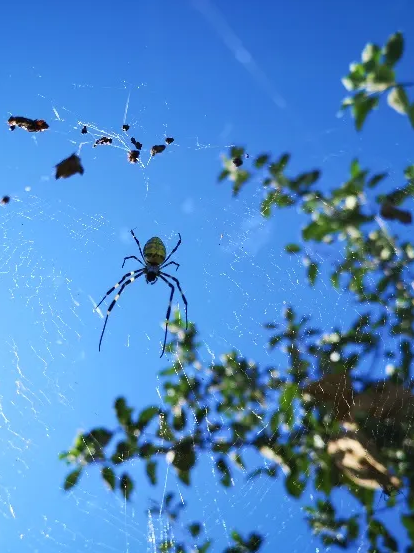
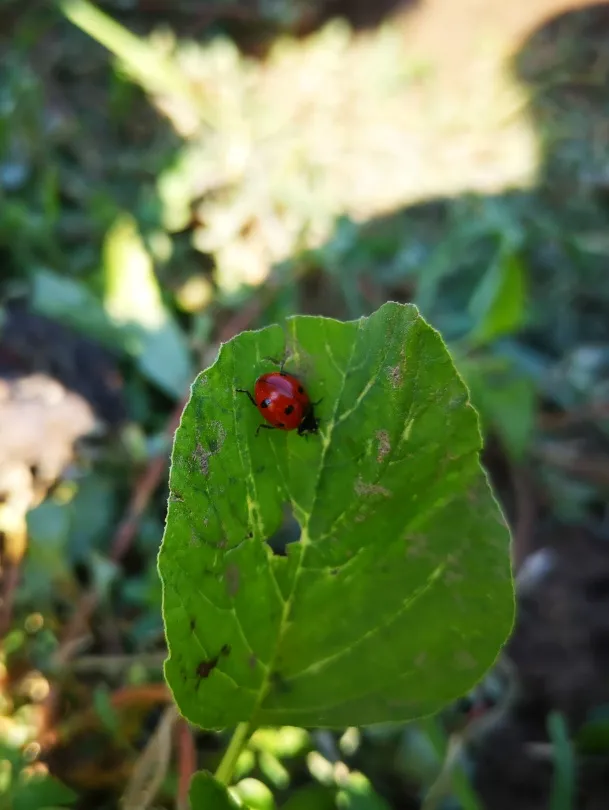
Linear habitats are not strictly defined, but generally refer to non-crop habitats such as roadside weeds, field boundaries, irrigation ditches, and copses. These provide refuges for natural enemies to avoid tilling and pesticide spraying. In China’s small-scale farmlands, these linear habitats are relatively common, but land consolidation has destroyed some of them, as well as the herbaceous vegetation along field edges.
●Natural field boundaries versus smooth-finished concrete boundaries at the research site.
In many European farmlands, linear habitats such as wildflower strips are intentionally created. Their level of scale and monoculture is far higher than in China, with fields often spanning thousands of acres. Under Agri-environment schemes (AEM) in the EU, farmers are given subsidies by the government to maintain a certain proportion of linear habitats around their fields to protect agricultural biodiversity.
●Wildflower strips in large-scale European farmland. Image source: The Applied EcologistInterestingly, our expectation was that land consolidation would affect both natural enemies and pests, but we found that pest populations remained largely unaffected. A possible explanation is that local rice pests, such as planthoppers, are migratory and are therefore less influenced by localised land consolidation.
I recall a massive outbreak of planthoppers in Anhui around 2010, which may have been linked to climate change and pest control measures in Southeast Asia, as planthoppers—particularly brown planthoppers—primarily migrate from that region.
Although we hoped that protecting natural enemies (such as spiders and ground beetles) would control pests, no significant correlation was found in this experiment; longer-term observation may be required.
Foodthink: Many studies in Europe and North America have found that larger patches of semi-natural habitat can mitigate the negative impacts of land consolidation on biodiversity. This was also one of the hypotheses in your study, but it was not confirmed. Why do you think that is? Could it be understood that the more complex the farmland landscape, the richer the biodiversity, which in turn provides more robust ecosystem services?
Zou Yi: I believe this is related to the characteristics of smallholder farming in China.
European fields are large-scale, whereas agriculture in Southern China remains predominantly based on smallholders, with plots that are small, fragmented, and irregular, resulting in a wealth of linear habitats between them. Furthermore, the proportion of semi-natural habitat in Chinese farmland ranges from 20% to 80% of the total production area, whereas in other countries, this figure may only reach 20% at most.
Our theory is that the relationship between semi-natural habitats and biodiversity is not necessarily linear; it may be positively correlated before plateauing. Consequently, in our Jiangxi study, we did not find a significant impact on biodiversity.
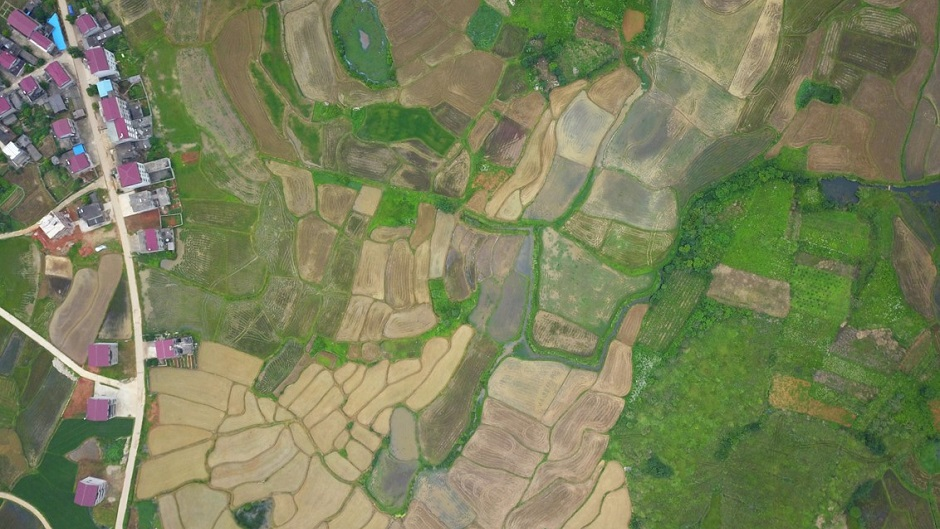
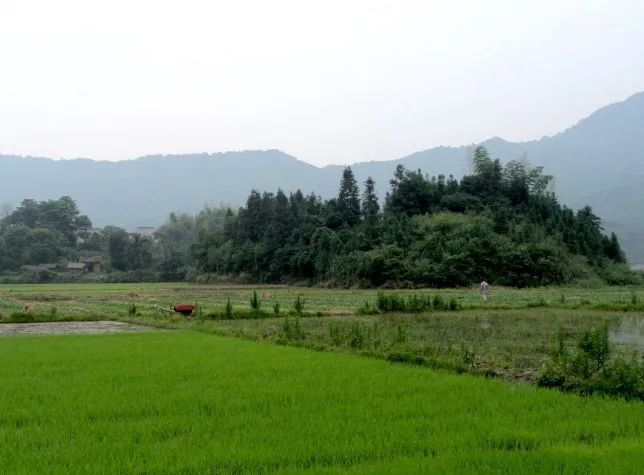
● A typical smallholder landscape in South-East China.● Farmlands in Jiangxi Province show a complex agricultural landscape, including forest habitats, small plots of varying crops, and field edges covered by various semi-natural habitats.
By comparison, semi-natural habitats are better preserved in China, but the excessive use of pesticides remains an issue that cannot be ignored.
Many farmers now use large quantities of pesticides primarily to guarantee yields and mitigate risk. However, our 2020 study in Jiangxi found that rice fields without pesticides had yields only 12% lower than those using pesticides; in other words, pesticides only increased yields by 13.6%. If pesticide and labour costs are taken into account, farmers are actually losing money, but they simply do not calculate their own labour input into the cost.
Consequently, at the time, we provided farmers with subsidies for not using pesticides, and they were very willing to cooperate, feeling that a 12% reduction in yield was acceptable. During subsequent follow-up visits, we found that some farmers indeed stopped using pesticides, and those closer to the mountains also reduced their pesticide use, as they discovered that the semi-natural habitats there provided a certain degree of natural pest control.
● According to the Food and Agriculture Organization (FAO) of the United Nations, China is the world’s fifth-largest user of pesticides, using 236,000 tonnes annually. Source: FAOTo answer your second question: is biodiversity richer when the agricultural landscape is more complex?
First, agricultural landscape complexity is divided into two dimensions: composition complexity, referring to the proportion of different types of patches within a given area; and configuration complexity, which includes the nesting, proximity, size, and shape of these patches.
Generally, complex landscapes can support greater biodiversity and provide more ecosystem services than simple ones. However, the relationship between them is not necessarily linear. Some studies suggest that landscape complexity benefits biological control but may not significantly improve pollination environments. Since results can vary depending on the measurement methods used, more field research is required to reach a more comprehensive conclusion.
Foodthink: What are the implications of the value of semi-natural habitats for smallholder farmers protecting biodiversity, and for China’s current land consolidation policies?
Zou Yi: In our research, we found significant individual differences among farmers. Some farmers are familiar with pests and their natural enemies and thus use relatively fewer pesticides. However, awareness remains limited for most; while they recognise common pests, few have a concept of biological control. Increasing farmers’ awareness of biodiversity would be of great benefit to both their own well-being and the conservation of biodiversity.
However, the protection of agricultural biodiversity cannot rely on farmers alone; since everyone benefits from biodiversity, they should not be the only ones to bear the cost. Firstly, ecological engineering occupies land, which can impact yields. Secondly, many farmers’ livelihoods no longer depend primarily on agricultural output, reducing their incentive to care about agricultural biodiversity. That said, it is always easier to convince one person to care about this issue than to convince a thousand.
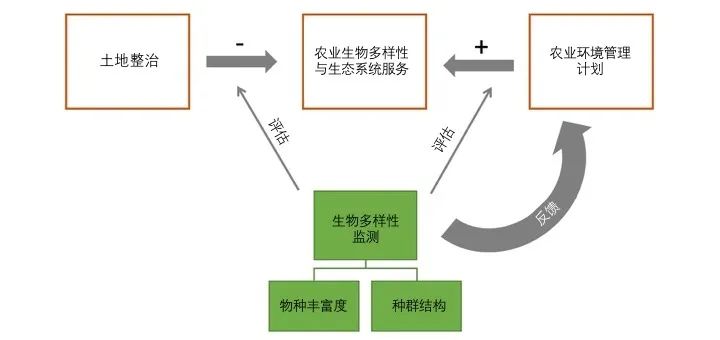
This suggests that when the government undertakes land consolidation, it should minimise the destruction of existing semi-natural habitats and consider restoring these linear habitats. We need to establish certain national or industry standards, accompanied by continuous biodiversity monitoring. Only through monitoring can we evaluate the effectiveness of conservation measures, make improvements, and create an effective positive feedback mechanism.
● A feedback mechanism for biodiversity monitoring can help evaluate the impact of land consolidation and the effectiveness of AEMs. Mapping based on Dr Zou Yi’s thesis.Beyond protecting semi-natural habitats and reducing pesticide use, switching directly to organic or ecological farming can significantly enhance agricultural biodiversity—a fact supported by extensive research. You and your team conducted a comparative study on biodiversity between conventional and organic rice cultivation in Jiangsu; could you share the findings with us?
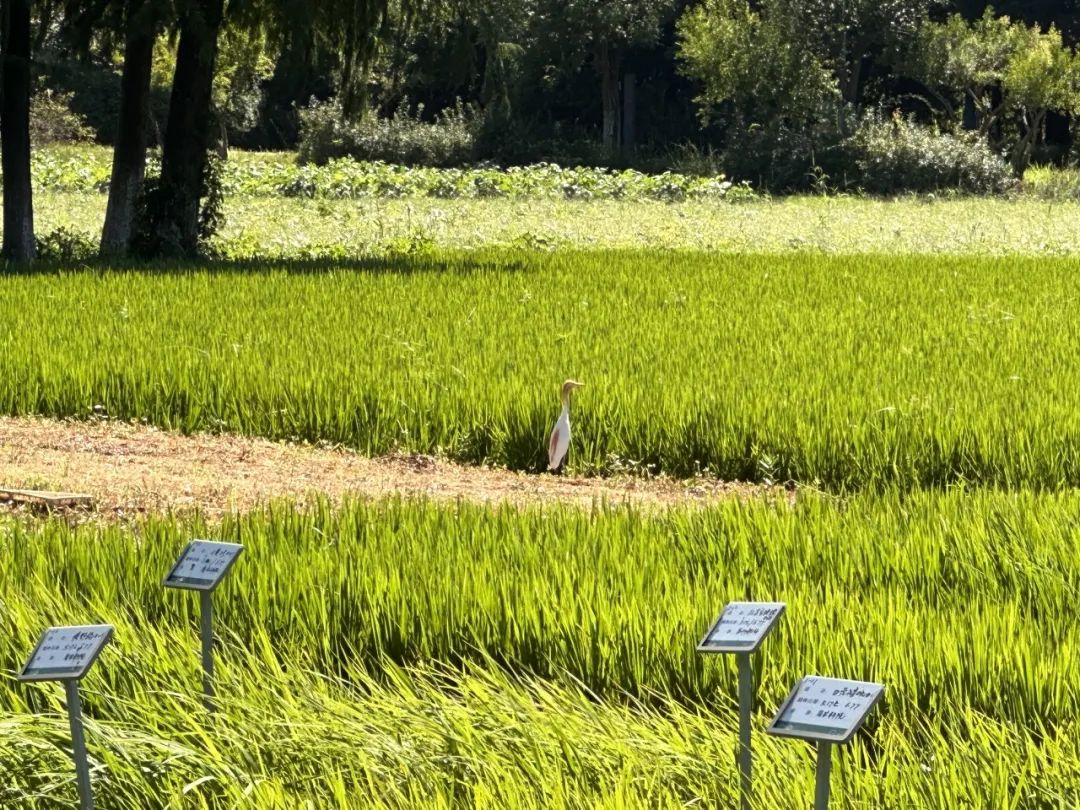
Zou Yi: Our research found that organic farming significantly increased above-ground biodiversity. Compared to conventional farming, the diversity of above-ground arthropods in organic farms increased by 40%, including both pests and their natural enemies. We believe that in organic farming, the increase in above-ground arthropod biodiversity offsets the loss in yield, meaning there is potential to achieve a win-win situation for both biodiversity gains and economic benefits.● The Yuefeng Island organic farm, studied by Dr Zou Yi’s team, is located in Kunshan, Jiangsu, covering 230 mu. The farm preserves several heirloom rice varieties and has built a comprehensive agro-ecosystem; 11 bird species of high ecological value, such as the Arctic Warbler and the Cattle Egret, have been recorded in the rice fields. Yuefeng Island is also one of the partner farms for Foodthink’s ecological agriculture internship programme. Photography: Maodou/Yuefeng Island.Our research also found that changes in cultivation methods did not result in significant differences in underground microorganisms. This is likely because underground microbes are more heavily influenced by factors such as irrigation and tillage, as well as soil texture. Our study found no significant difference in soil elements such as nitrogen, and consequently, the microbial communities showed no obvious change.
This seems to contradict the intuitive impression that organic farming improves soil; therefore, we suggest longer-term observation to see if any trends emerge.
Foodthink: How do you think agricultural policy can be pushed towards a more biodiversity-friendly direction?
Zou Yi: In the field of scientific research, studies on cropland and agricultural biodiversity in China have grown exponentially. From just one or two papers in the early 1990s to 47 in 2020, the number of related research articles is steadily increasing, indicating that more people are focusing on this area. Furthermore, there is significant interest in the topic of ecological agriculture.
Our research can provide a scientific basis when the state formulates relevant standards. It would, of course, be ideal if scientists could participate directly in setting these standards. If not, we can provide empirical evidence based on years of research to support policymakers in making more rational decisions.
In Europe, public awareness of biodiversity conservation is stronger, thanks in part to outreach and campaigning; for example, even the humble bee attracts widespread public concern.
● To improve living conditions for pollinating insects, Berlin, Germany, launched an urban biodiversity restoration project, keeping bees on the landmark Berlin Cathedral. Image source: Jen Guyton/The Nature ConservancyI believe public awareness in China is also gradually developing. Non-profit organisations, acting as a bridge between researchers and the public, possess great influence. Research that concerns the public interest, in particular, requires outreach to create these connections.
Foodthink: What can ordinary people do to protect agricultural biodiversity?
Zou Yi: Keep a deep love for nature in your heart. I believe it is vital to foster an appreciation for the natural world, especially in children. Biodiversity is not only ‘useful’ but also ‘beautiful’, and it is beneficial for both our physical and mental well-being.
Referenceshttps://besjournals.onlinelibrary.wiley.com/doi/abs/10.1111/1365-2664.14671