
The Good Farmer Knows How to Save Time and Effort
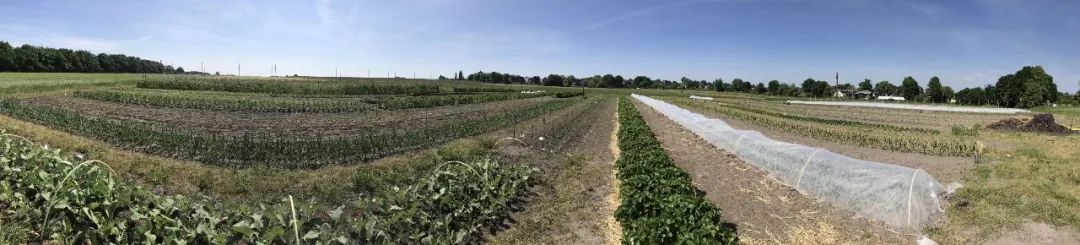
Earlier this year, four years after moving to the Netherlands, my partner and I finally rented a hectare of land in Utrecht province, and I began working on my farm.
Before I decided to set up a farm, I completed placements at several small organic farms in the Netherlands. During the summer of 2020, I completed a work placement at Gordons Spoor farm in the eastern Netherlands for two months. Although I learned a great deal, the grueling ten- to twelve-hour days of heavy labour frequently left me utterly drained.
With this in mind, I took up a placement at “Happy Vegetables” farm last April, which claims to make it possible to grow vegetables on a nine-to-five schedule.
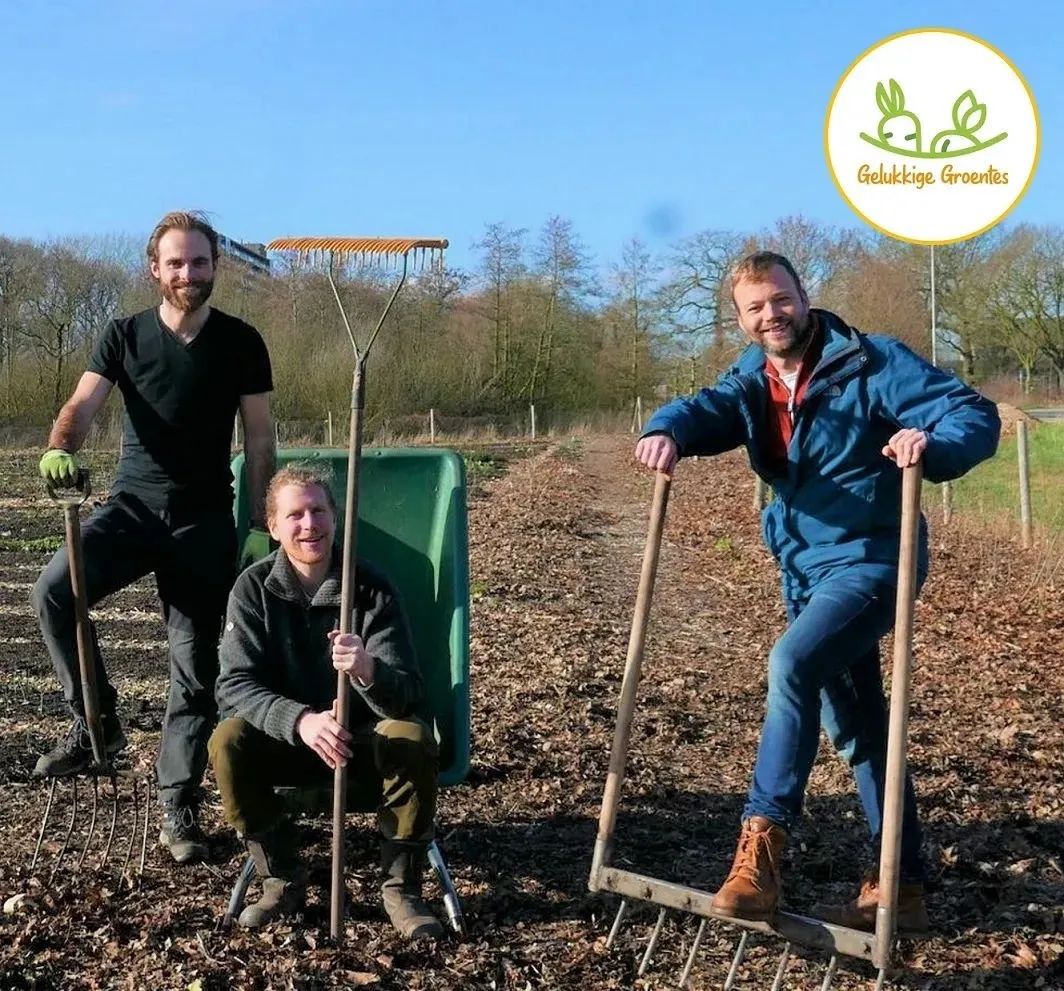
The farm was founded by two optimistic young Dutchmen, Sam and Martin. Neither comes from an agricultural background; they met and worked together at a small permaculture farm in the Netherlands.
There, they built up substantial practical experience, forged connections with neighbouring ecological smallholders, and gained a thorough understanding of the environmental damage caused by industrialised agriculture. This inspired their ambition to ‘become ecological smallholders and change the status quo.’
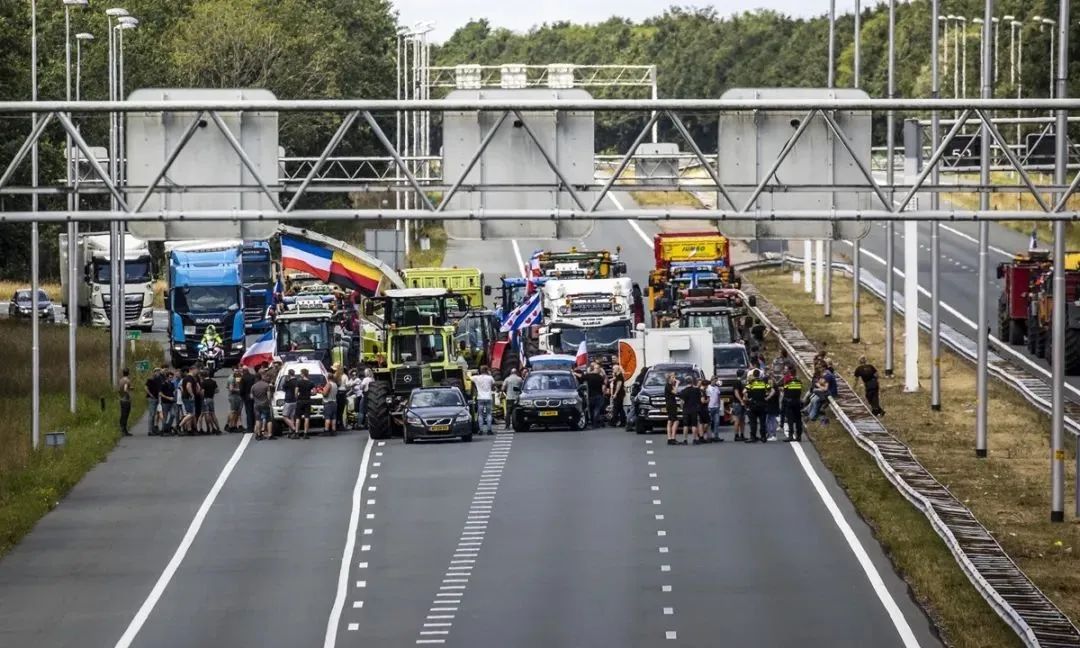
Yet in the Netherlands, ecological smallholders face numerous challenges: difficulties securing start-up finance for new entrants, the country’s exorbitant land prices (in the fourth quarter of 2021, the average price for agricultural land approached €70,000 per hectare, equivalent to over 35,300 yuan per mu per year), low-price competition from supermarkets, the widespread combination of long hours and low wages, and the Netherlands’ so-called ‘barren’ food culture.
1. Building a Farm from Scratch
Thirdly, the CSA model guarantees a steady income. Subscribers pay a full year’s picking fee at the start of the year, effectively providing the pair with a year’s wages upfront. A further benefit is the fixed picking price, which insulates them from seasonal price fluctuations in the vegetable market.
I remember Sam saying that they wanted to show, through their farming practice, that:
2) Agriculture can be sustainable and environmentally friendly.
3) Farmers can earn a decent living.
4) A farm can be community-focused, with consumers acting as valued members of that community.
5) Their farm management model can be replicated across other regions of the Netherlands.
Part Two: A Good Farmer Knows How to Save Time and Effort
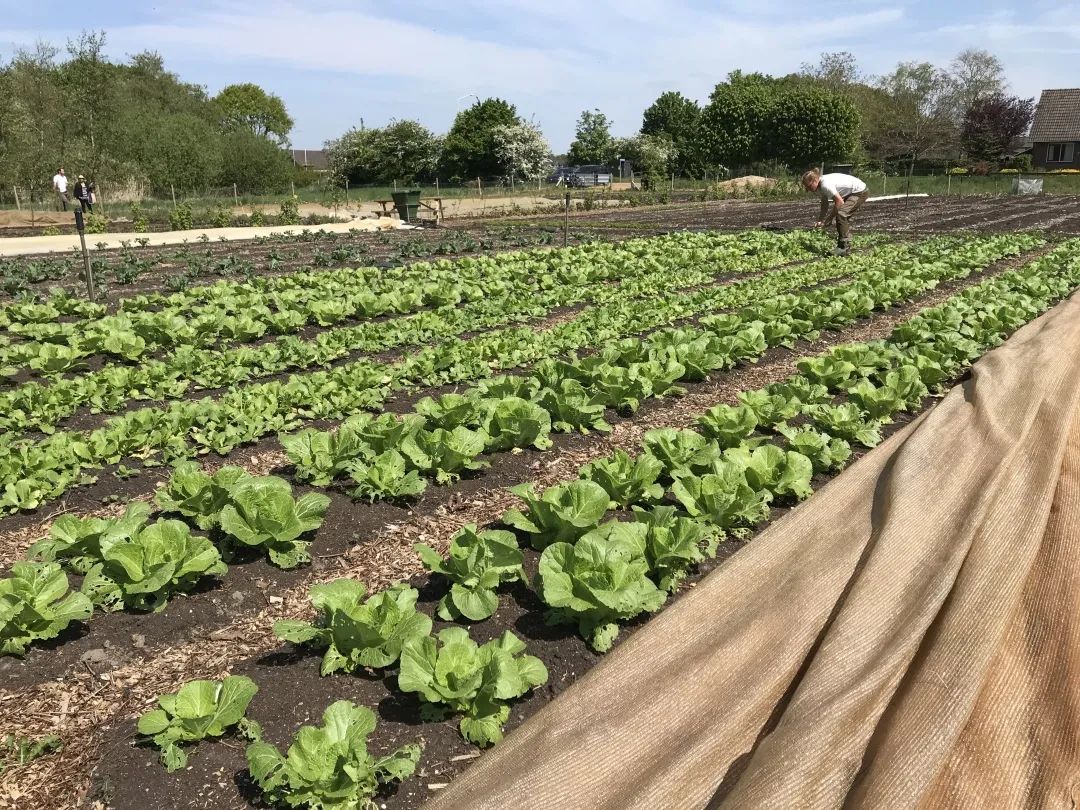
This 0.75-metre width also accommodates the spacing requirements for a wide variety of crops. Vegetables that do not need much space between rows, such as spinach, carrots, onions, and beetroot, can be planted densely in three to four rows. Conversely, for crops requiring wider spacing, like celeriac, broccoli, and cauliflower, the bed can still comfortably fit at least a single row.
As for the 0.25-metre-wide pathways, they offer plenty of room for standing and walking. Manoeuvring a wheelbarrow or laying out tools is entirely hassle-free.
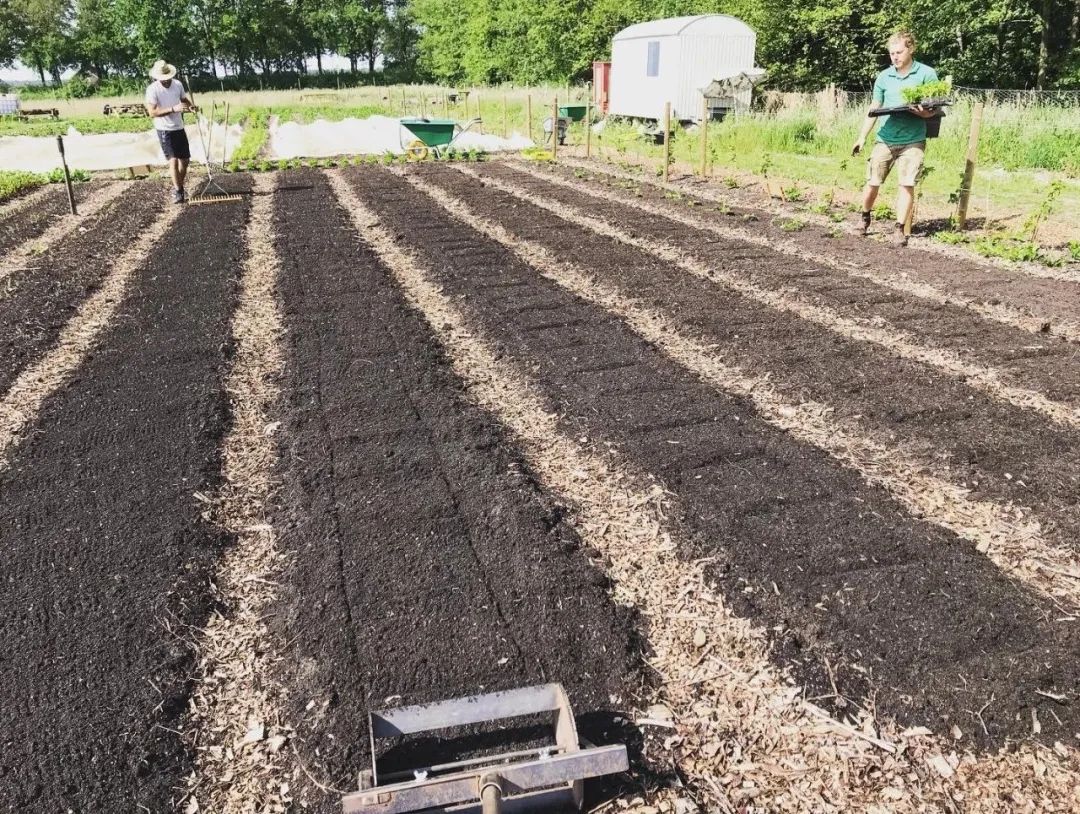
Secondly, the farm employs a range of small-scale machinery that can be operated by a single person to boost efficiency, the most ingenious of which are the paper pot seedling kit and its accompanying seeder.
When folded, the paper pots in the seedling kit (paper pot and drop seeder) resemble the bellows of an accordion. In use, two metal strips hold them open from either side and secure them over a mould board, giving the setup the unmistakable look of a honeycomb.
Once the honeycomb-like cells are filled with growing medium, a drop seeder is pressed down and lifted. This leaves individual indentations in each paper pot cell. To finish, simply fit a seed plate of the appropriate size and sow.

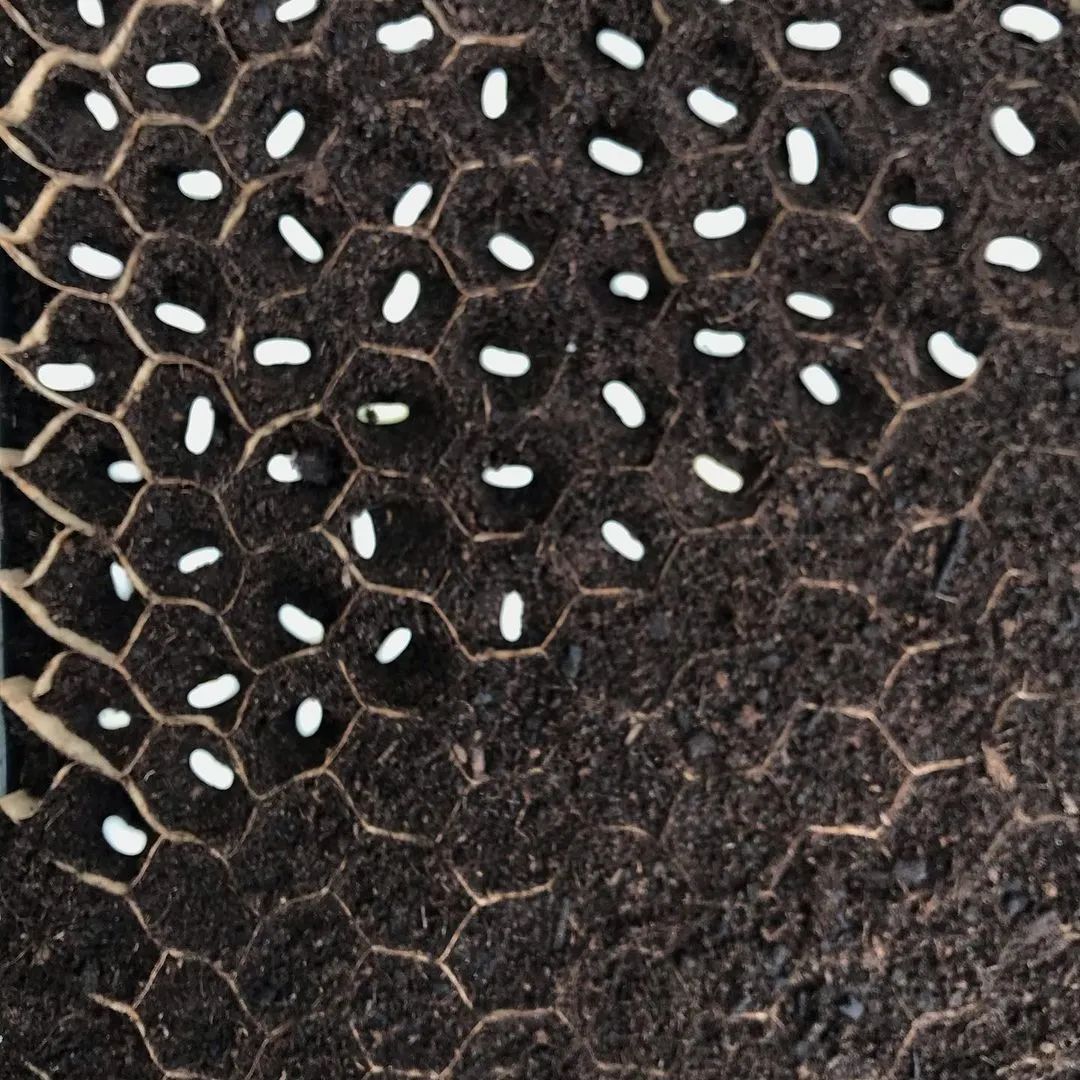
A roll of paper seedling bags with a 10 cm spacing measures 27 metres in total length once unrolled. This means a single roll can plant 270 seedlings at once, fitting precisely into two rows on a 15-metre seedbed.
It turns out that the original decision to design the seedbeds to be 15 metres long was also influenced by the need to accommodate the length of these paper rolls.
Another highly practical tool for direct sowing is the hand-held seeder (Jang Seeder). It works well alongside the paper bag seedling kit and is also the go-to for crops such as carrots, which do not transplant well.
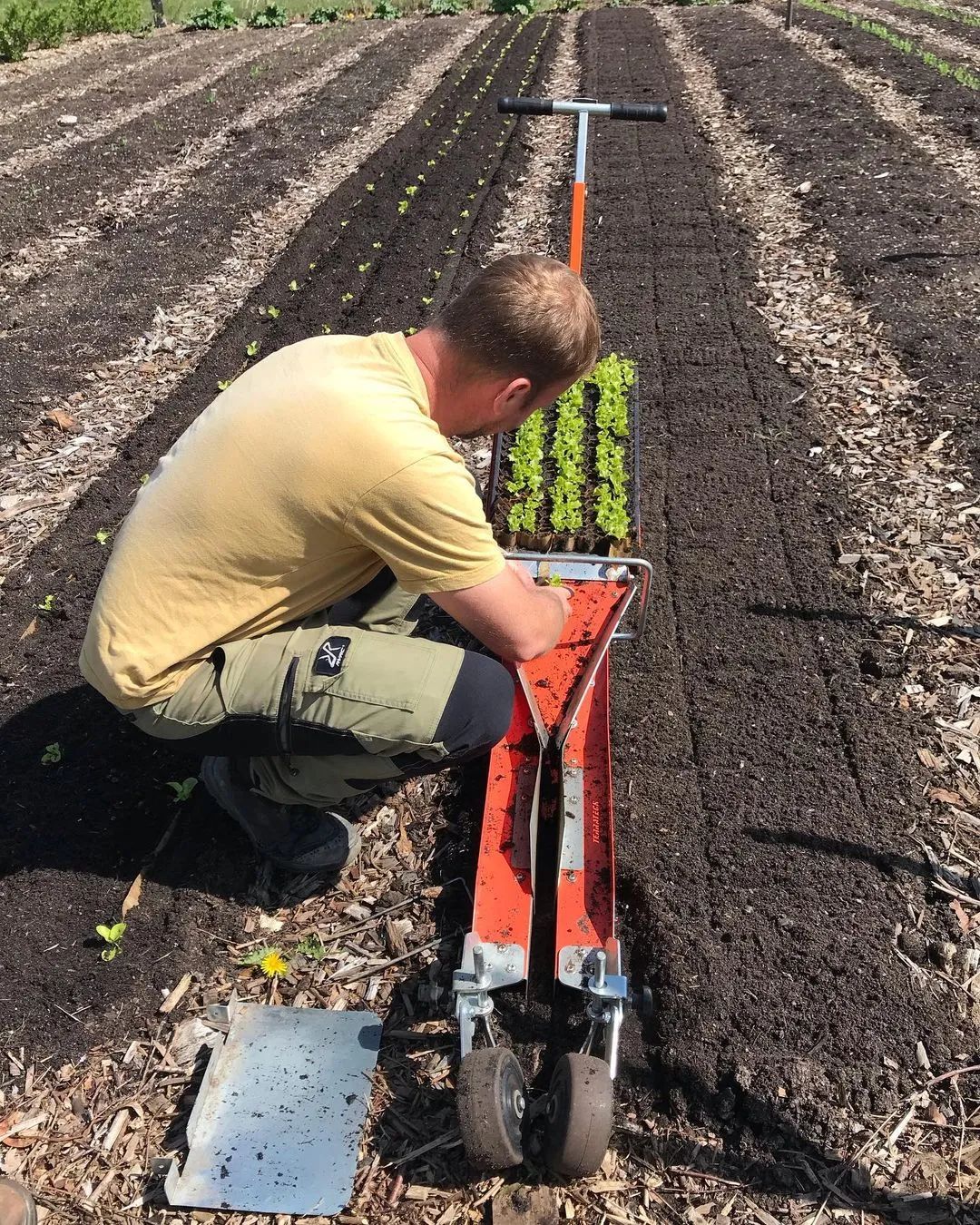
The seed drill looks rather like a push scooter, with a frame and front and rear wheels, though the most intriguing parts are the drive casing and the seed hopper.
Housed within the drive casing are two gears, front and rear; changing the gear combination allows you to adjust the plant spacing. The seed hopper holds the seeds, and at its base sits a fluted metering wheel. Each flute is precisely sized to match a single seed. As the wheel rotates, one seed drops from each flute, while the excess remains in the hopper.
3. Sprinkler Irrigation, Drip Irrigation and No-Till Farming
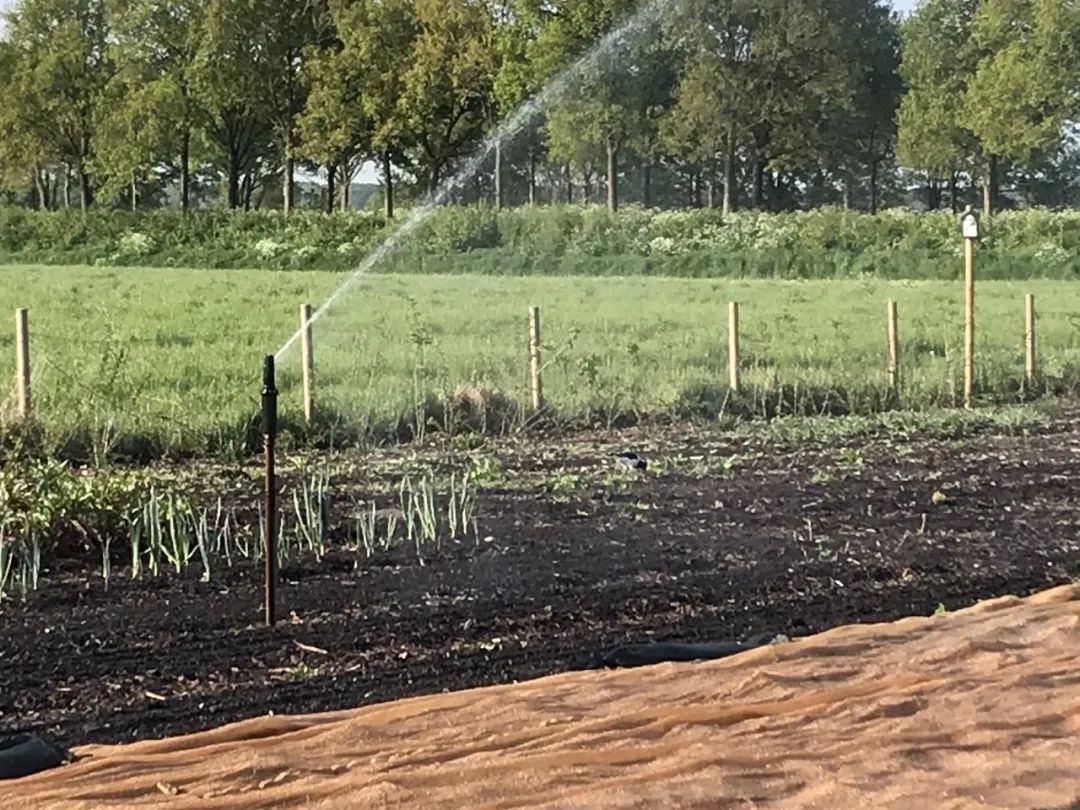
Newly sown beds are set to run for an hour each morning for five consecutive days, requiring no on-site supervision. In calm conditions, two sprinklers provide exactly the right coverage for a single plot.
The sprinkler outlets can also be fitted with drip irrigation lines. The greenhouse tomatoes are watered this way, which effectively prevents soil-borne diseases such as late blight.
Compared with the days of hauling heavy hoses across the fields at my previous farm, life here is infinitely more pleasant. But most importantly, efficient irrigation saves a tremendous amount of time.
Finally, the technique that contributes most to saving time and effort is no-till farming.
Before the vegetable crops went in, the land was previously a pasture. To stifle the weeds before they could even germinate, Martin and Sam smothered the grass under black plastic sheeting to block out the light. After roughly two months, once the grass had dried out, they simply laid down a thick layer of compost.
Rich in organic matter, the compost makes an ideal growing medium. Properly composted material is free from weed seeds and pathogens. Applied regularly over time, it gradually improves the soil structure, and healthy soil in turn produces healthy, vibrant vegetables. Coupled with the no-till approach, dormant weed seeds remain undisturbed in the subsoil and never get a chance to sprout.
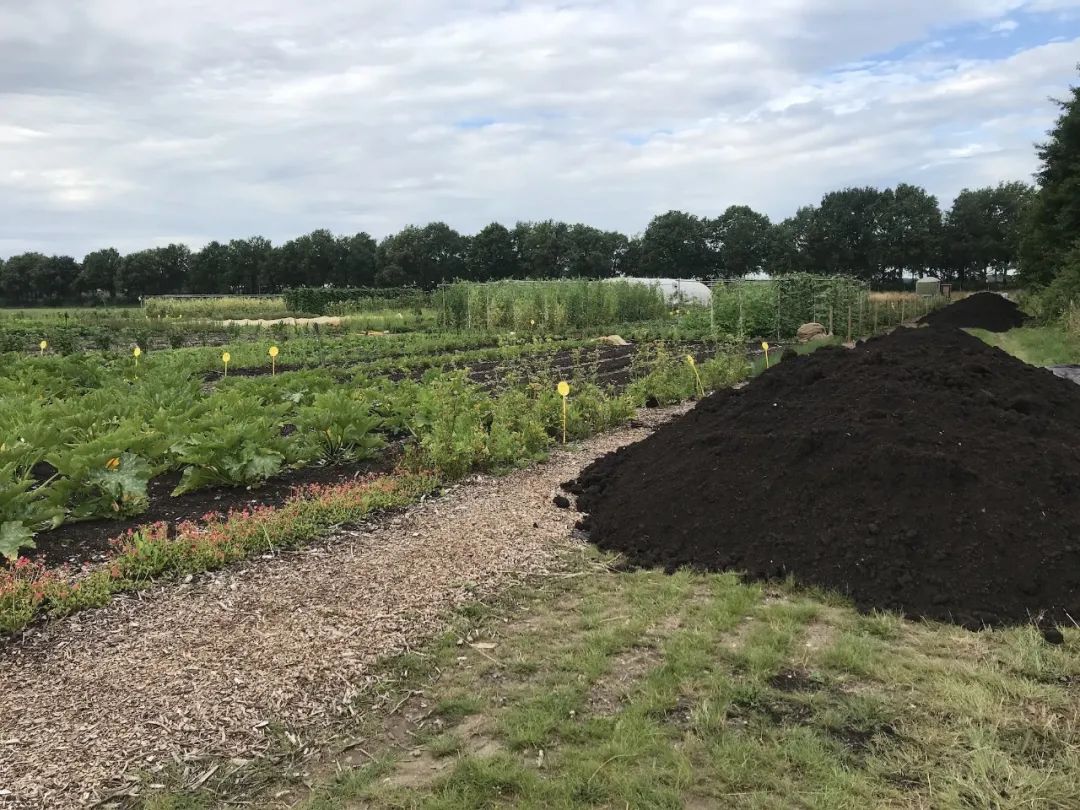
I have felt the impact of tilling versus no-tilling on weed numbers firsthand, and the leek harvest is a perfect example.
Planting leeks in the spring requires digging holes roughly 30 centimetres deep in the beds and planting the seedlings deep to encourage the development of the white stalk.
Many local farmers still hill up soil around the leeks periodically as they grow. While traditional, this practice disturbs the soil, brings dormant weed seeds to the surface where they can germinate, and significantly increases the weeding workload.
At “Happy Vegetables”, the no-till method has noticeably reduced weed pressure. That said, digging the initial planting holes does inevitably bring some subsoil and weed seeds up into the compost layer. However, because the compost is so loose, weeding remains relatively straightforward; even deeply rooted dandelions will sometimes pop out with the lightest tug.
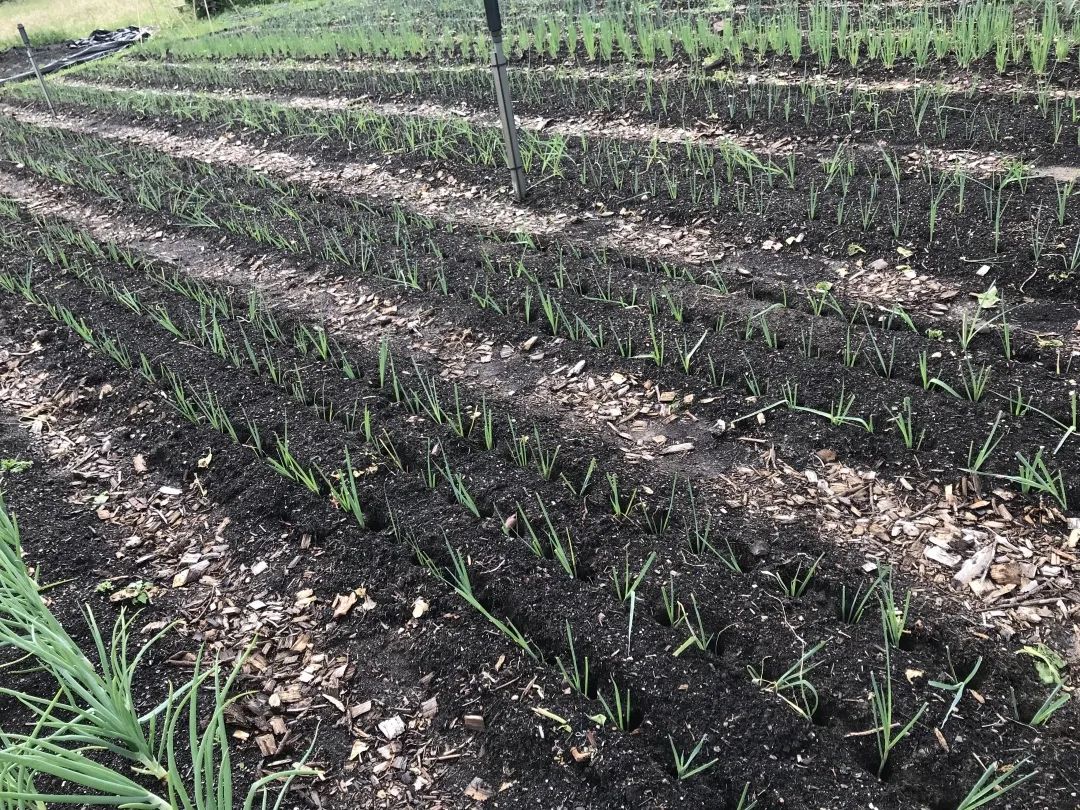
No-till farming makes the chore of weeding considerably easier. With regular, cyclical maintenance, weed pressure can be kept firmly under control. The farm currently has 18 vegetable plots. If we dedicate just 1.5 person-hours per working day to managing weeds across four plots, we could realistically achieve a state that’s virtually weed-free!
“Virtually” is the key word here, because a farm is hardly a sealed environment; the wind and wildlife will constantly carry new weed seeds onto the land. The farm only truly belongs to us while we are working it. The rest of the time, it is home to visitors from the natural world: hares, crows, oystercatchers, voles, moles, slugs, snails, spiders, and all those countless tiny lives beyond our immediate sight.
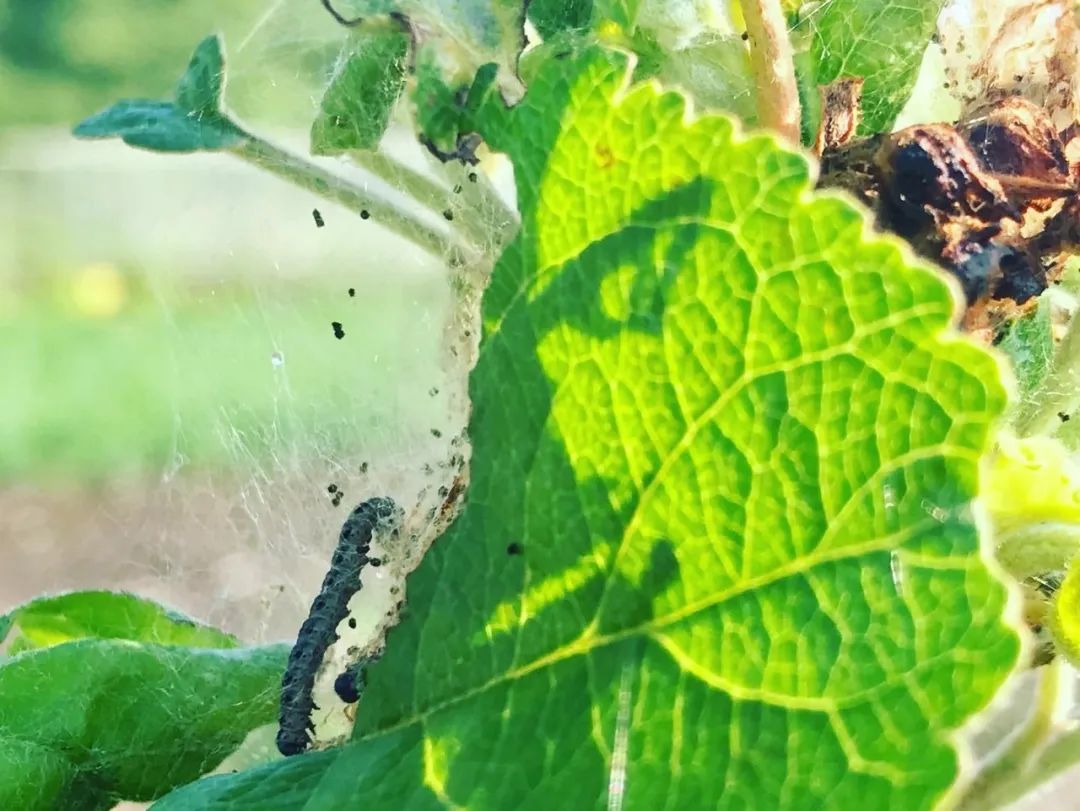
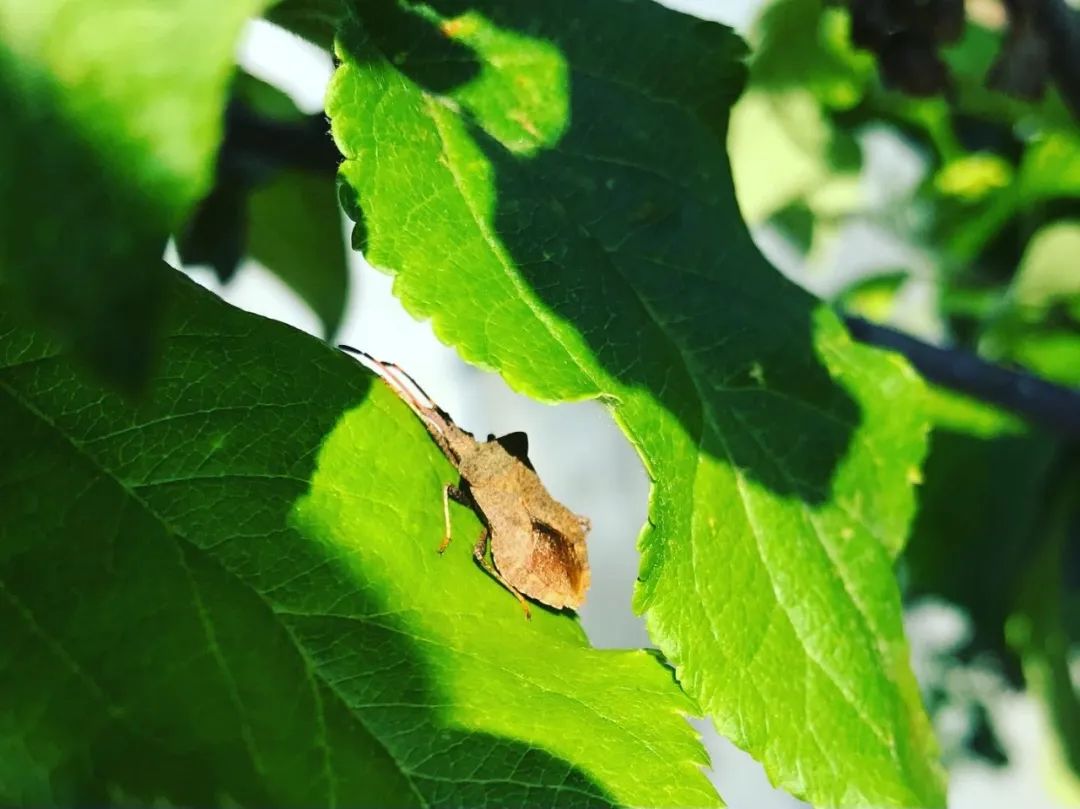

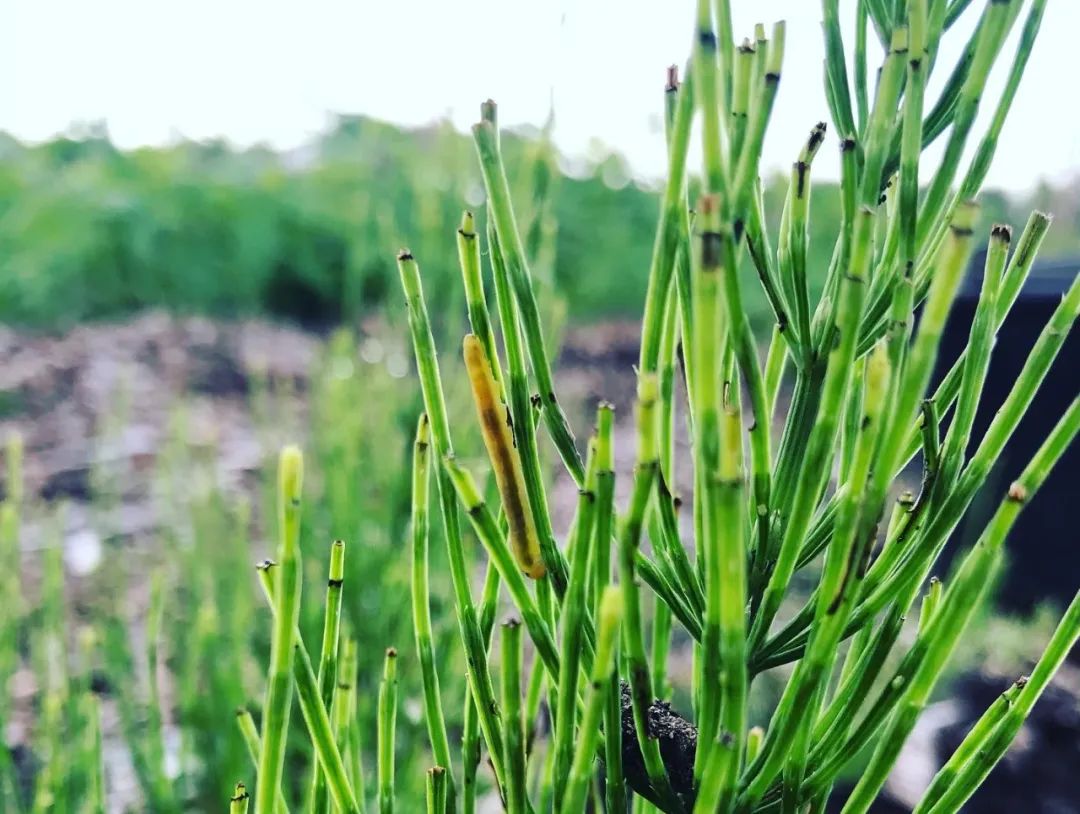
Martin says that if nothing in your fields has yet been eaten by other animals, you are not truly part of nature. This, too, reflects a genuine spirit of sharing with the natural world.
I am now putting the lessons I learned at “Happy Vegetables” into practice on my own farm. Just how replicable are their methods? And how does actually running a farm differ from doing an internship on one? We will explore this in the next instalment.
Editor: Ze’en