
Art May Not Revitalise the Countryside, But Guangdong Aunties Will Revitalise Art
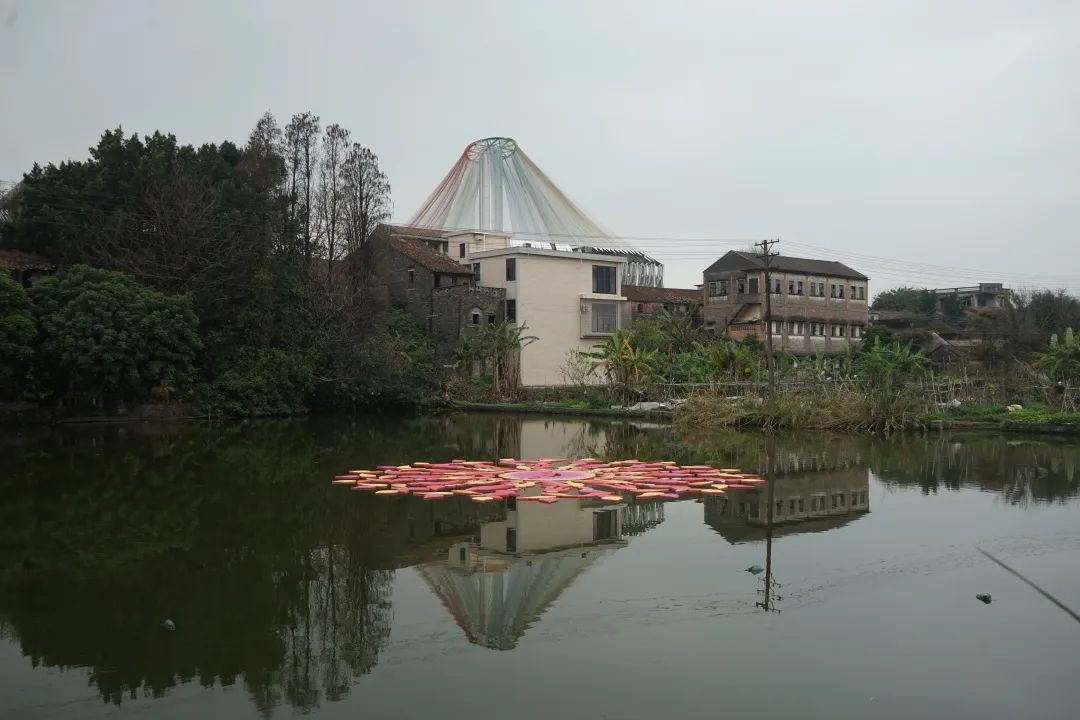
The Nanhai Land Art Festival, currently underway in Foshan, Guangdong, went straight to the source, enlisting Noriyuki Kitakawa—the curator behind Japan’s original iteration—to provide guidance. Several artists who have previously participated in the Japanese editions were also invited, prompting media outlets to exclaim: “So rural revitalisation can actually be approached like this!”
But can rural revitalisation truly be treated as a pastime? When artists and their works arrive in the countryside, what genuine interaction do they spark with the local landscape, communities, and heritage? How exactly are rural residents and farmers supposed to benefit from it all? Driven by these questions, Foodthink travelled to Foshan to examine the festival closely.
Yet after three days of walking the grounds, our doubts only multiplied…
I. Art or Commodity? Revitalisation or Gimmick?
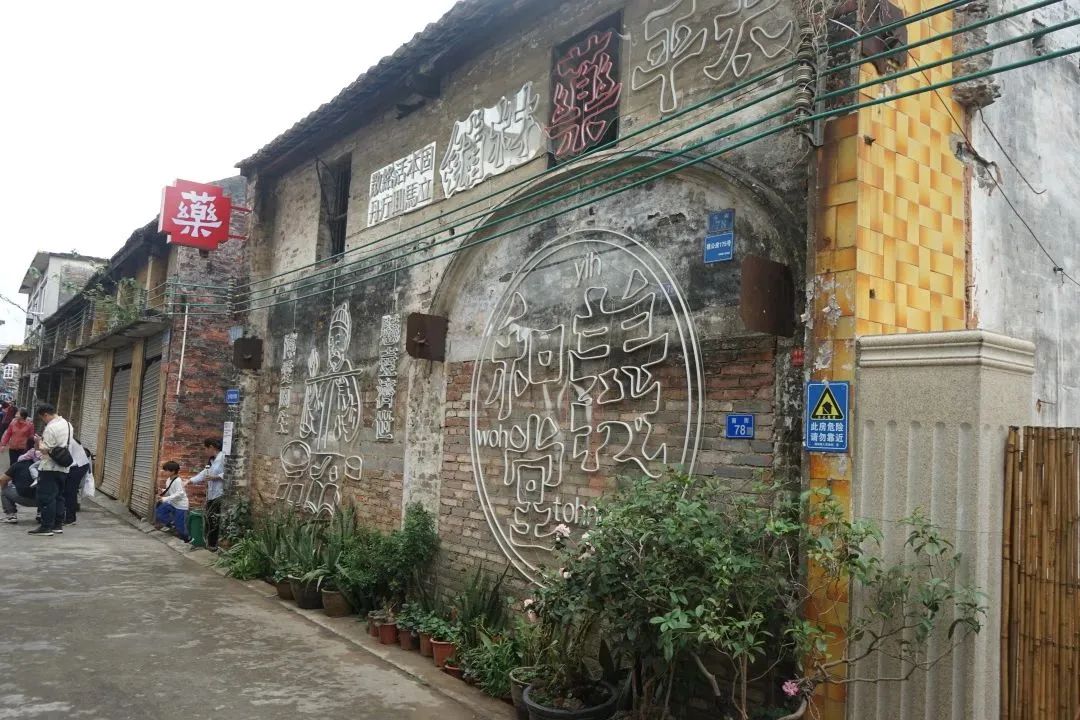
Turning onto the street, we felt as though we had stepped into an abandoned film set. The buildings still stand, yet almost every shopfront is shuttered, save for the spaces reopened specifically for the festival.
Only three businesses were up and running. We stopped at Wuxing Bakery on the corner and sampled every single item on offer (six in total). We bought a bottle of sour plum drink from an eatery whose main draw was instant noodles, but alas, none of the three of us needed a trim that day, so we couldn’t justify visiting the last remaining old-school barbershop.
Any other doors that were open belonged to artists invited by the festival to “revitalise” the precinct through their installations.
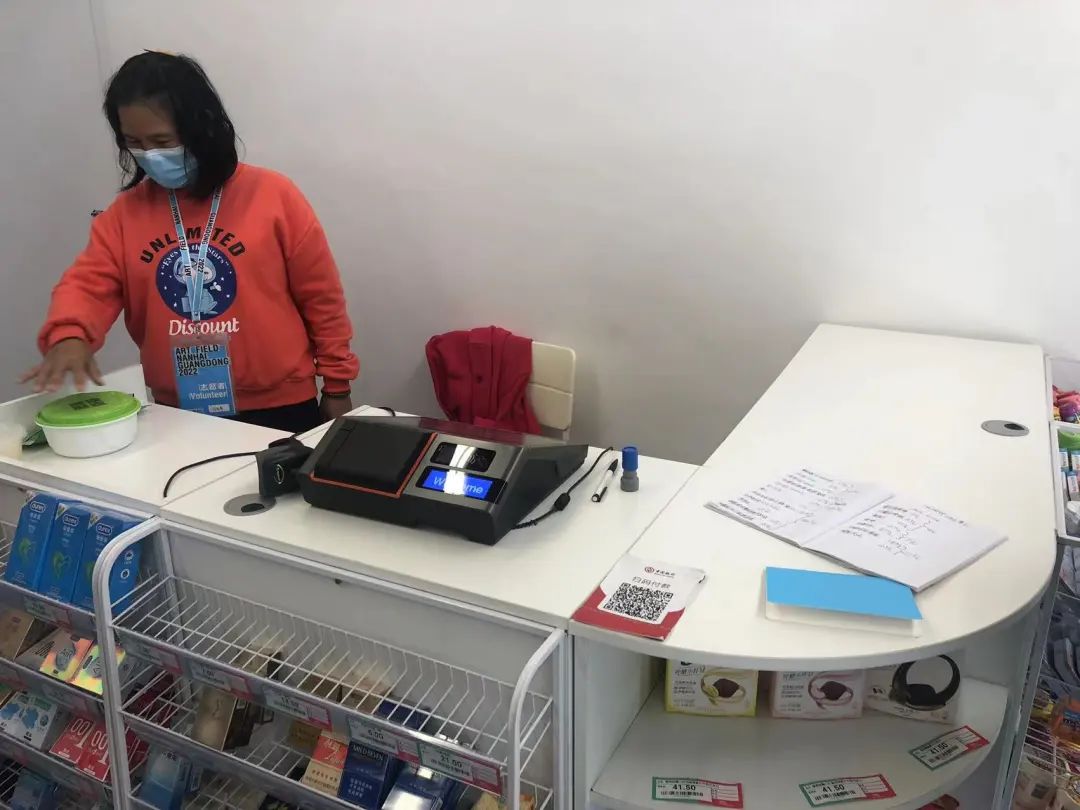
As I was musing on the decline of traditional high streets, I spotted a supermarket with fully stocked shelves. It had to be the famous artwork known as “Fake Supermarket”!
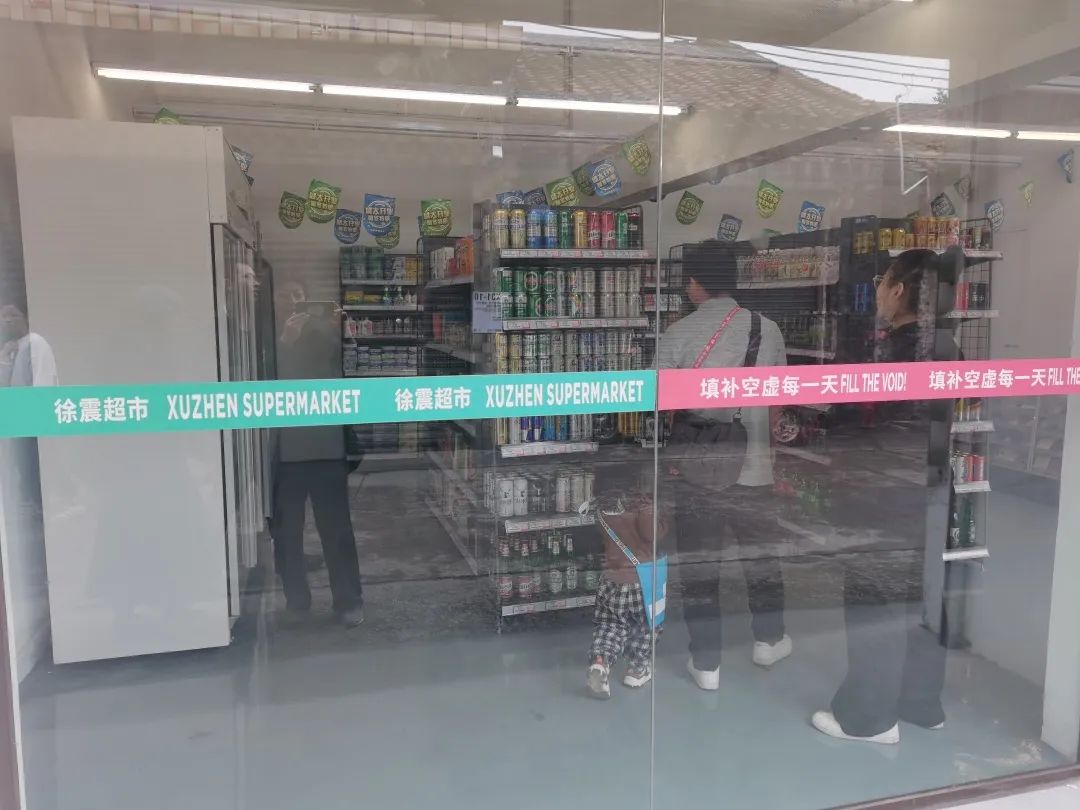

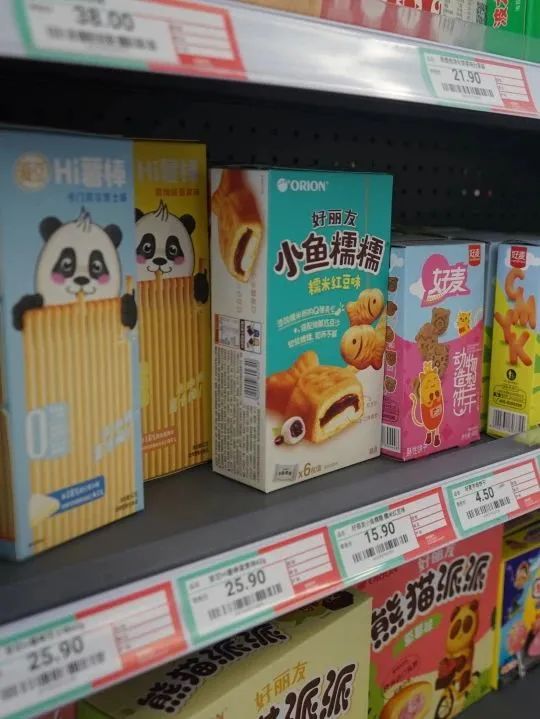
Sure enough, the merchandise was nothing but empty packaging. At the till, a lady armed with the festival’s official stamp cheerfully welcomed visitors: “Why not come and check in here!” When she saw a perplexed tourist picking up one of the hollow props, she duly recited the artist’s statement: “This is a satire on consumerism.”
“Not quite, Auntie. Why do you have a ledger? Can these actually be bought?”
She beamed with pride. “Indeed! We keep a daily record.”
We chatted while flipping through the pages. “Incredible! You’ve already taken over 100 yuan today just from selling empty shells!”
She replied coolly with just three words: “Art pieces.”
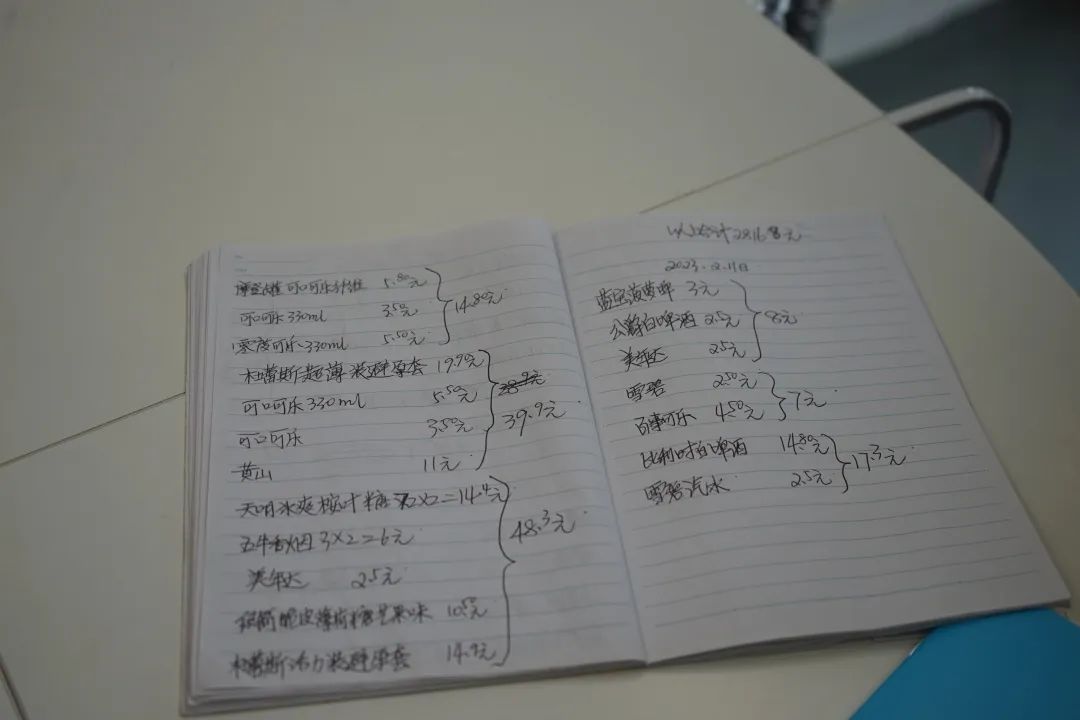
That dry, ironic humour is impossible to put into words, but we were all in stitches anyway: “Auntie, what do you think counts as a work of art?”
“I don’t get it. If everyone could understand it, it would sell a lot. I’ve only made just over 2,000 yuan since the art festival opened, which proves most people don’t understand it either. Art is really hard to grasp!”
We assumed she had fully grasped Xu Zhen’s pithy quote from an interview—”What’s on display is merchandise; what sells is art”—but we were thoroughly mistaken.
We asked her, “So would you buy it yourself?”
“No way. If I brought this thing home, it would just take up space!And look, the lids on these are completely intact. It means all style, no substance—hollow inside. What he’s trying to say is that under today’s consumerism, we’re already over-consuming.”
Well, perhaps the artist himself, who is so busy collaborating with luxury brands, ought to have a conversation with this auntie about consumerism.
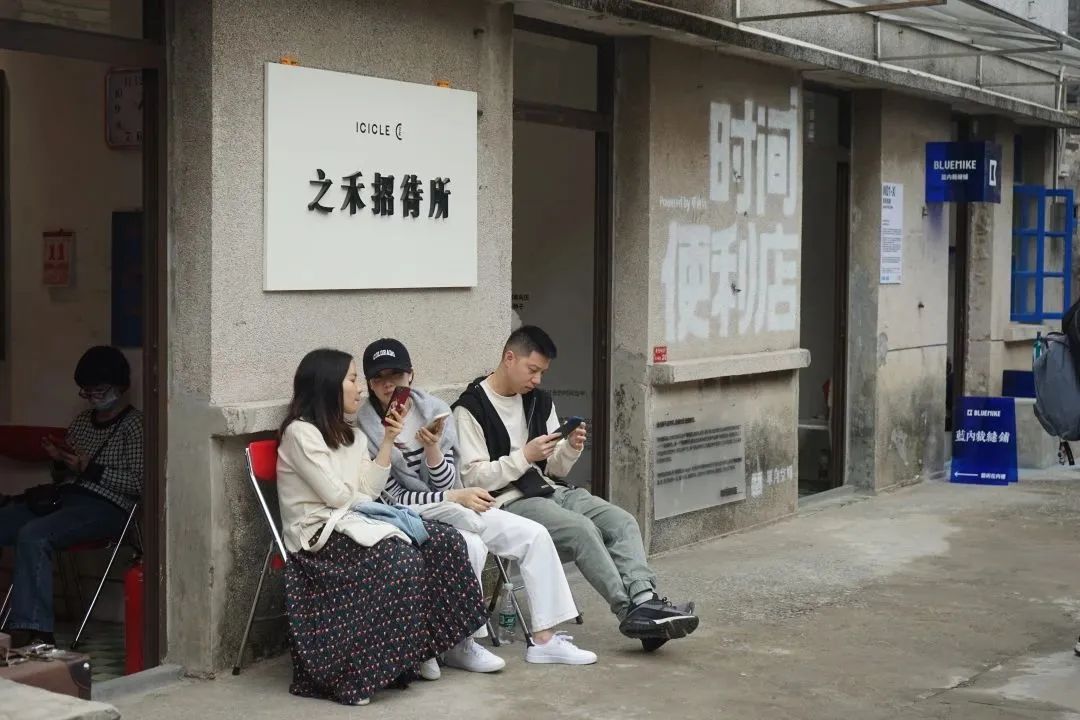
We remain sceptical as to whether local art can truly revitalise the countryside, but there is no doubt that these local aunties and volunteers have brought to life the very works they are ‘interpreting’.
II. Where is the promised ‘sense of place’?
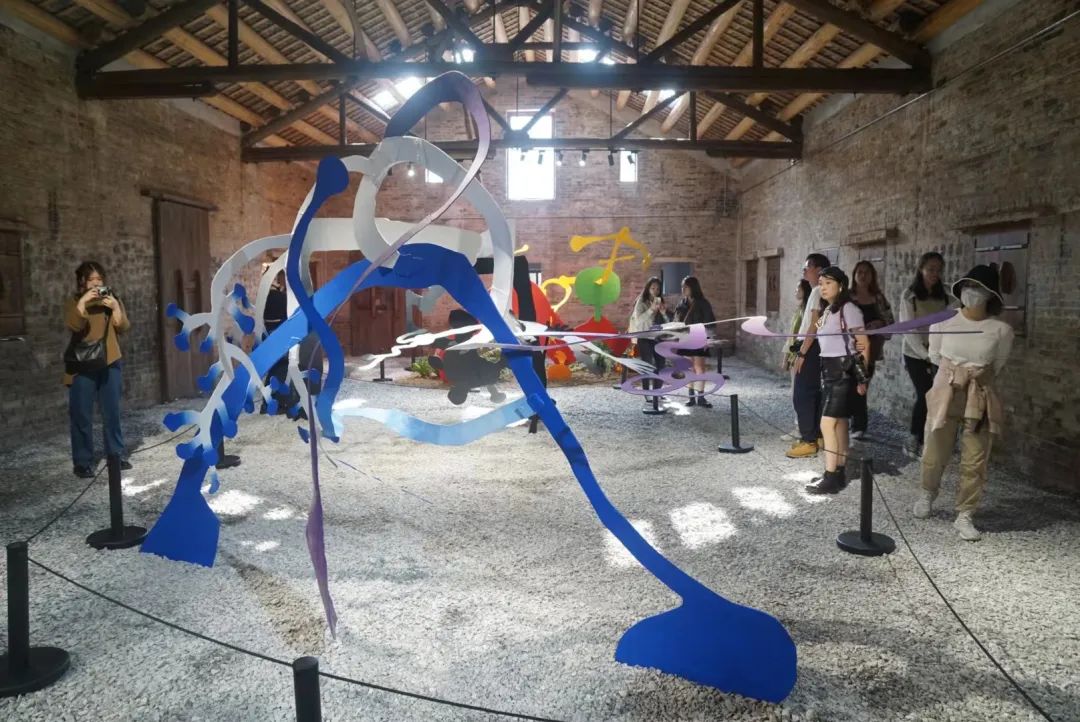
As my eyes kept darting back and forth between the artwork and its placard, the volunteer auntie decided to pitch in again.
“Give it another look and it’ll make sense! This ‘Mycologist’ is straightforward enough – it’s just got a mushroom on top! As for why this one is called the ‘Dreamer’, I couldn’t say. But it’s got black and white, which must stand for day and night. You can only dream at night, after all.” Her breezy delivery was much like a tour guide pointing out the scenery: “Look at that mountain over there – doesn’t it look like a reclining beauty?” The other visitors were likely sharing a knowing smile.
Like us, this auntie – a self-styled master of deconstruction – probably struggled to understand why a piece imported from Japan was on display here. As part of a land art festival, it ought to resonate with the “land” – at the very least, echoing the surrounding social, cultural, and natural environment. This sense of place, or “site-specificity”, was precisely the organisers’ original aim.
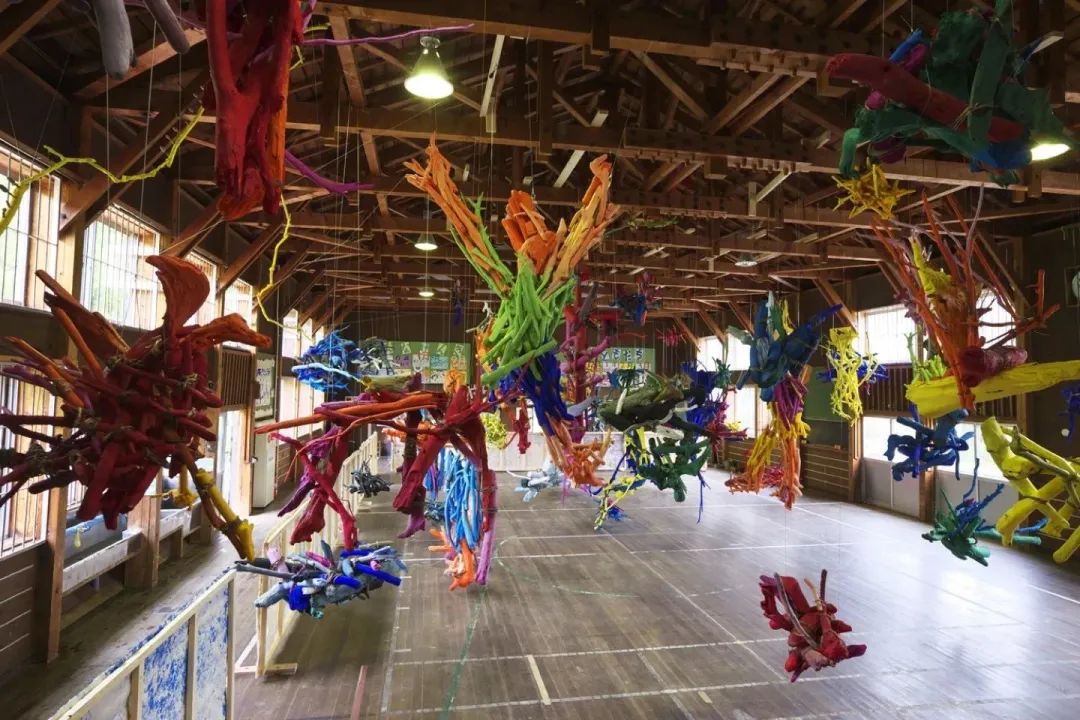
Yet this abstract metalwork did leave us rather bewildered. It is also a recurring flaw with some of the works at this year’s festival: pieces appropriated from elsewhere, set in borrowed venues. Some installations seem designed solely for social media hotspots, offering little artistic merit. With quality proving so hit-and-miss, it’s frankly a shame.

III. Artworks: Whose Meaning?
Because materials are so efficiently recycled within the system (mulberries planted on the dike beds, their leaves fed to silkworms, silkworm droppings used to nourish the fish, fish waste fertilising the ponds, and dredged pond mud enriching the mulberry trees), it is today recognised as a form of circular agriculture devised by ancient practitioners.
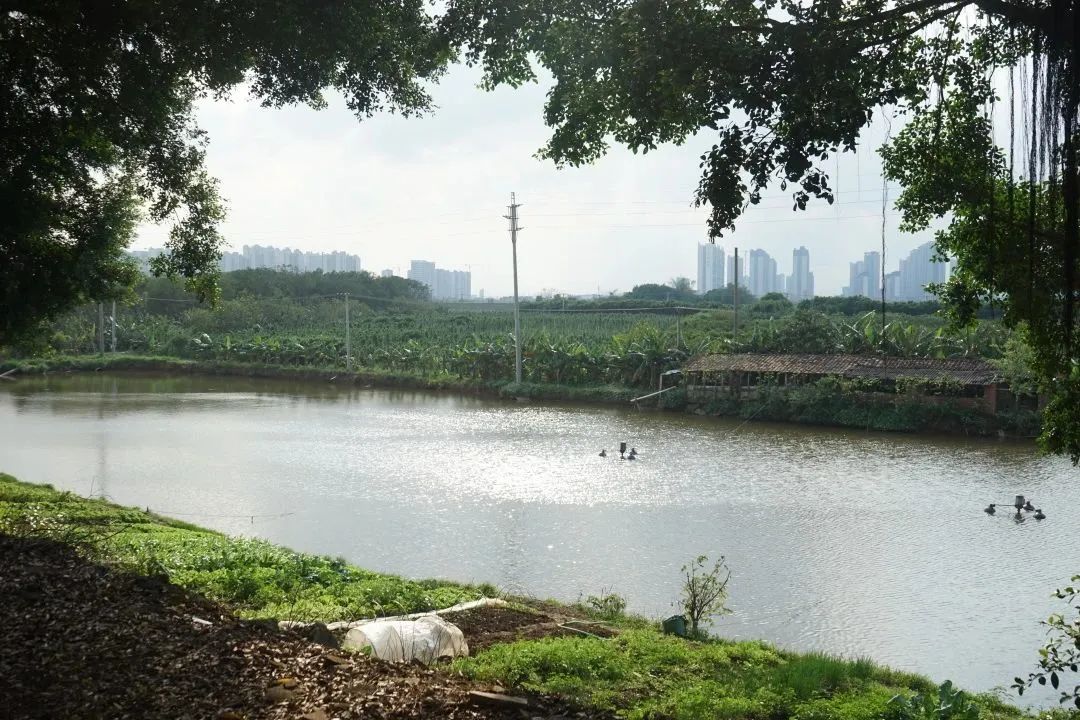
Yet, as locals tell us, farmers have long abandoned this model of production. The only remaining trace is this small patch of fish ponds preserved within the scenic area for agritourism. However, it is currently the agricultural off-season; with neither fish nor silkworms in sight, we were unable to take the opportunity to examine the local agricultural sector firsthand.
Here, however, we met a gem of a volunteer auntie. She had been raising silkworms since childhood, continuing until the local sericulture industry gradually faded after the 1990s. She told us she loved all the silkworm-themed works, particularly *The Book of Trays*.
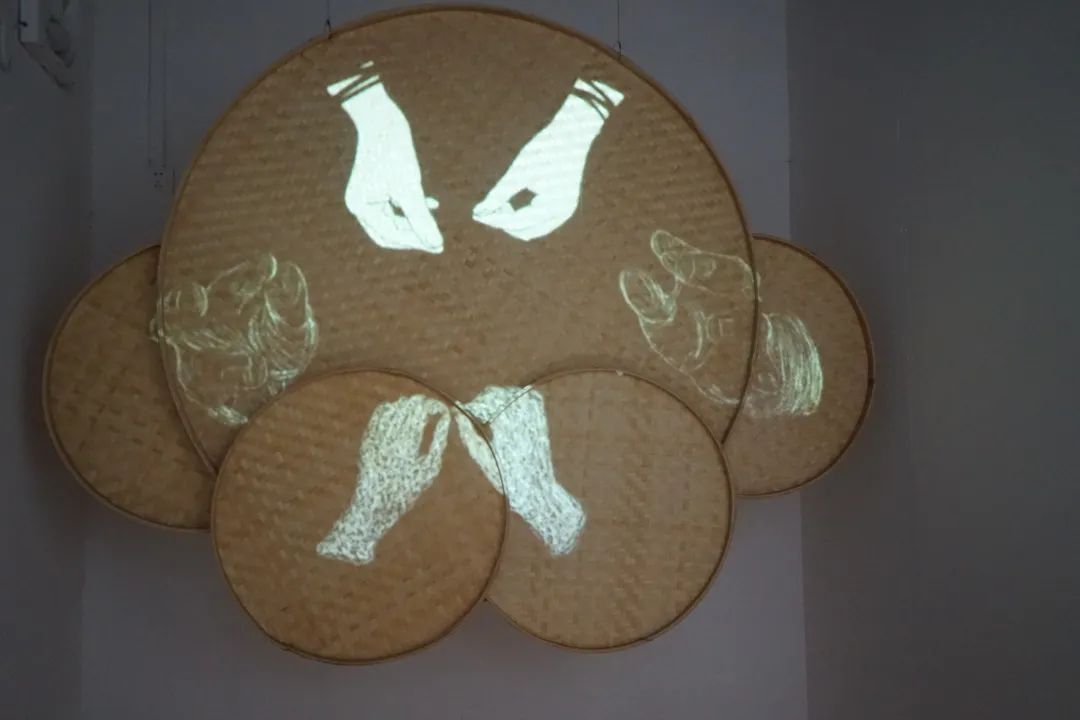
For this piece, the artist incorporates silkworm trays – shallow containers woven from bamboo strips, traditionally used to house silkworms before they spin their cocoons. Hand-drawn animations are projected directly onto the trays.
The auntie explained that even in the era of industrialised sericulture, where many processes could be automated, the silkworm tray remained irreplaceable, just as it was during the traditional days of manual labour.
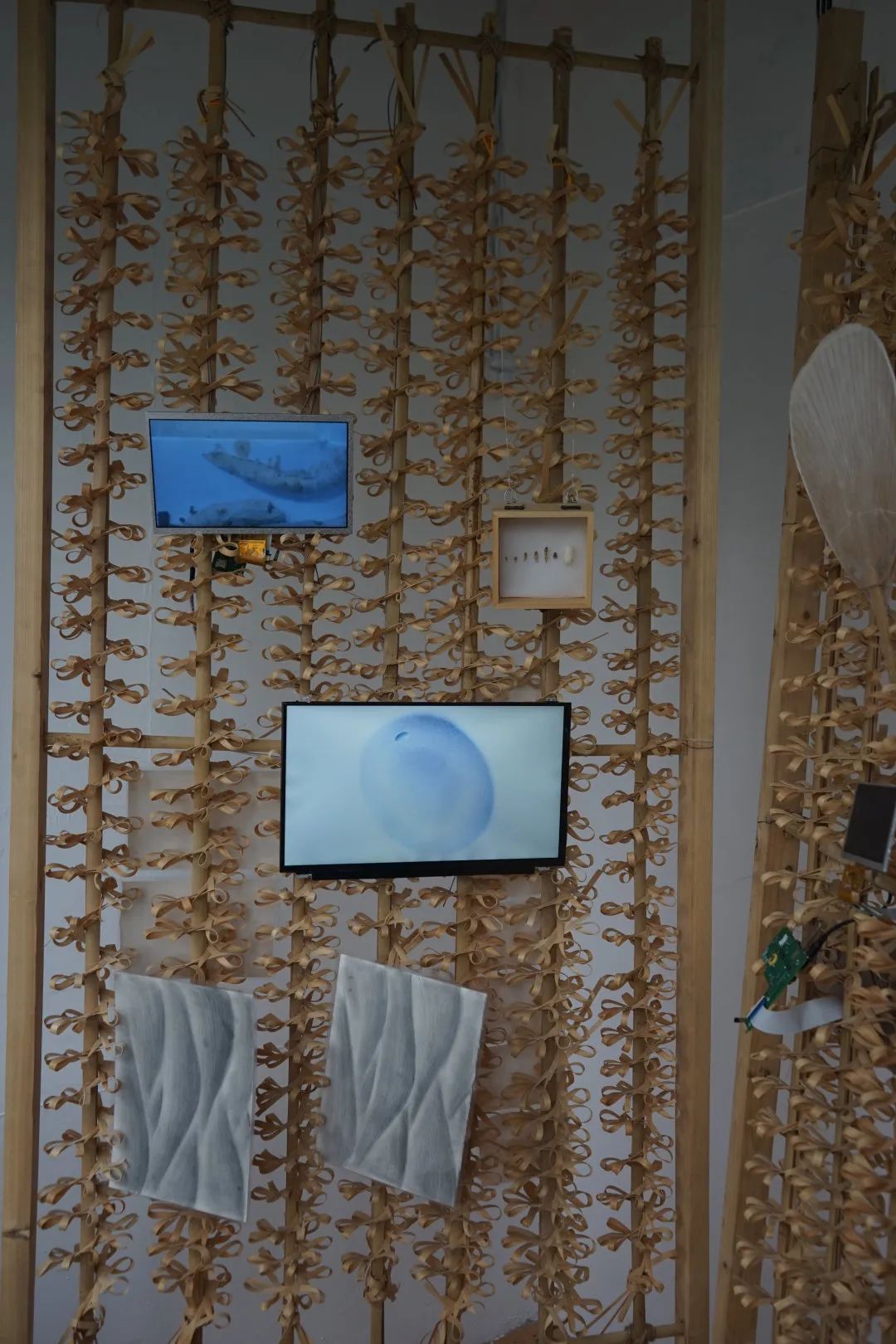
Another piece she particularly admired was *The Silkworm Room Project*, which features silkworm mats – surfaces on which the silkworms spin their cocoons.
She told us she was drawn to both works precisely because she was so familiar with objects like silkworm trays and mats. She added that the mats they used back in the day were even more closely woven than those featured in the artwork.
We asked her whether anyone still raises silkworms today. “It’s a thing of the past,” she replied. “Nobody does it anymore.” A few villagers still work in agriculture, but only the aquaculture component of the traditional mulberry-dike fish-pond system survives; sericulture has all but vanished. Although the nearby Nanhai Silk Factory remains in operation, it now sources its cocoons from other regions.
Other aunties we spoke with confirmed that silkworms require an exceptionally clean environment, or they fall ill easily. Following the industrial boom in the Pearl River Delta after the 1990s, air pollution worsened considerably; nowadays, even farmers keen to revive sericulture would find it nearly impossible.
IV. So What Comes After the Critique?
If art is meant to document cultures and ways of life that have already faded, we want to see genuine reflection and action, not hollow theatrics that trivialise the past.
If art is to contribute to rural revitalisation, we want to see it unearth and nurture the countryside’s inherent strengths and cultural heritage, rather than simply engineering viral tourist attractions to boost local tourism.
We believe that the land itself, and those who till it, possess an inherent artistry. If curators and artists at these festivals detach themselves from that foundation, any claim to genuine local rootedness falls flat, and the event becomes indistinguishable from a conventional gallery exhibition.
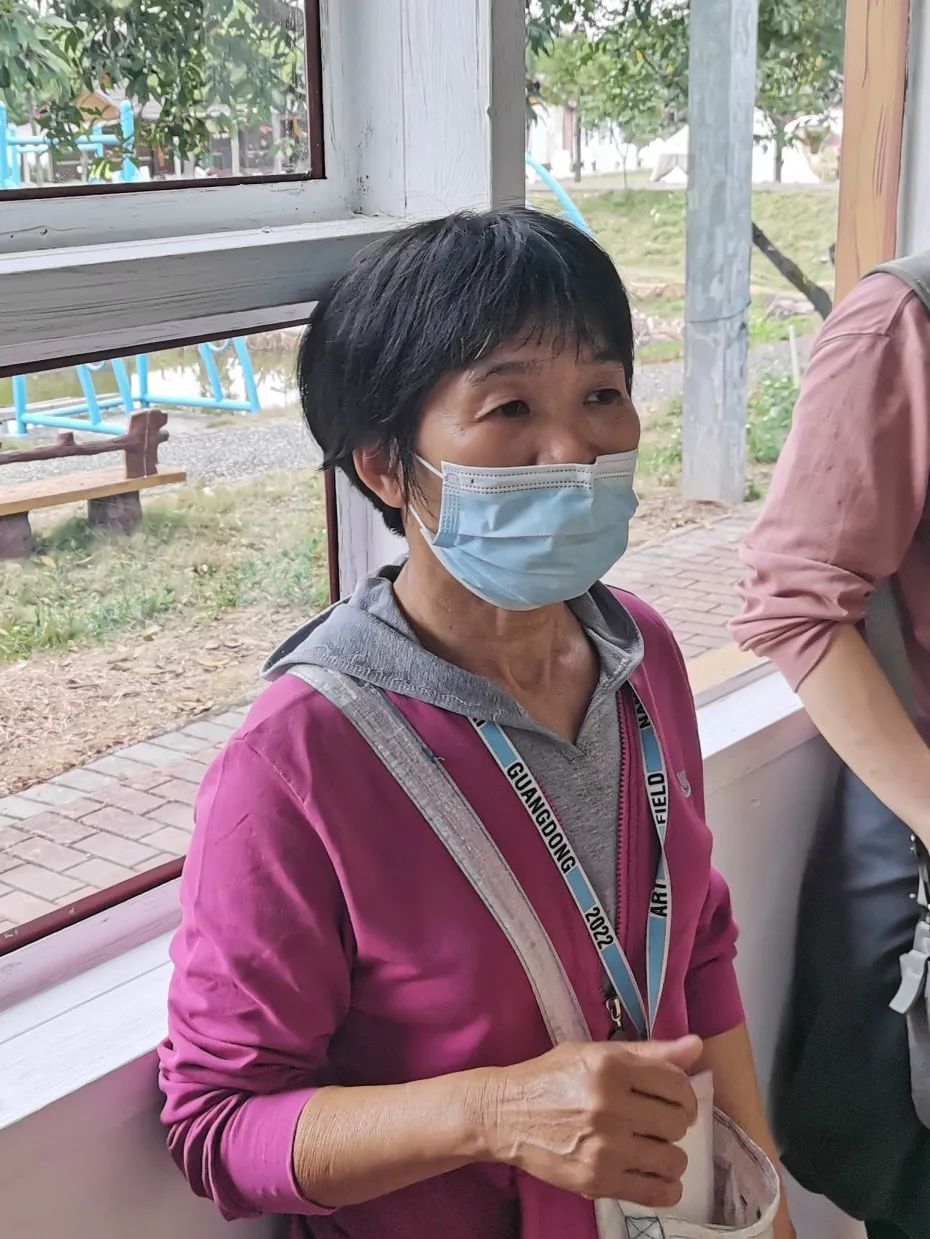
Our thanks go to the local volunteers who hosted us at the festival, particularly the wonderfully warm aunties, who showed us the true vitality and value of rural life beyond the artworks themselves.
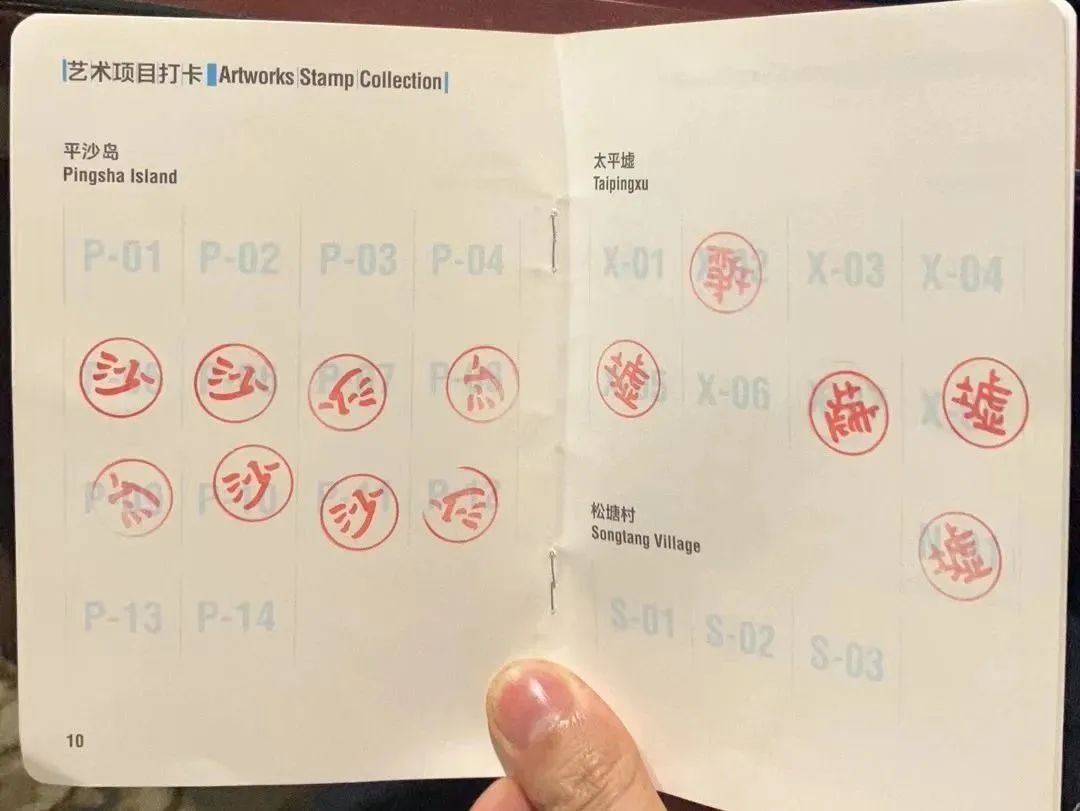
A final note for readers planning to visit: please keep a close eye on your festival ‘passport’.
Unless otherwise noted, all photographs are by Foodthink
Edited by: Foodthink