
Gen Z women learning to farm: ‘We can handle these big machines too’
Foodthink’s Perspective
Yet, even now, gender disparities persist in the world of agriculture. The role of women within agrifood systems is often under-recognised; consequently, the United Nations has declared 2026 as the International Year of the Woman Farmer to raise public awareness and promote the closing of the gender gap and the improvement of livelihoods for women globally.
Tomorrow is International Women’s Day, and we recommend this article by Wu Ting, a woman from Generation Z. Hailing from Anhui, she grew up watching her elders toil upon the land. Amidst the broader trend of agricultural mechanisation, Wu Ting’s father purchased a harvester and became an operator, supporting the family by providing machinery services. Driven by curiosity, Wu Ting recently returned to her hometown and enrolled in agricultural machinery training.
Through this training, she observed not only the urgent need for older operators to upskill and keep pace with the times, but also keenly noted the constraints placed upon women in the agricultural world. What follows are Wu Ting’s records and reflections on gender prejudice within agriculture.

I.Qualifying as a Farm Machinery Operator
Thinking that the more skills one has, the more doors open, I immediately called to sign up. I didn’t have any grand career plans; I simply wanted to get the qualification.
Most machinery operators nowadays are self-employed—mostly people who want to earn a living without working for someone else. Once the rush to harvest in Northern Anhui ends, many operators form small groups and travel to other regions, as close as Shanghai and as far as Jiangxi or even Guangxi.
Operating machinery was how the elders in my family provided for us. In 2009, my father entered the industry as a combine harvester operator. When I was young, I often felt a sense of longing and reluctance whenever I saw my parents leave home.
Their profession taught me that life is not easy. One year, while my parents were away for the harvest rush, summer temperatures frequently soared above 40 degrees. They suffered from heatstroke several times during that month. By the time they returned home, they were visibly changed, looking far more haggard. I only came to understand the true depth of those hardships later on.
Accidents can happen, too. An operator they knew had his vehicle overturn into a ditch during a rice harvest, and the combine harvester crushed him. After his passing, the burden of supporting the family fell to his wife and children, and the children were forced to drop out of school.
Compared to these operators, my previous professional experience was certainly “privileged”—no exposure to the elements, no heavy physical labour on the land, and far less arduous. Yet, the money earned from that “respectability” was barely enough to support myself, and spending my days confined to a cramped office space left me feeling mentally drained.
In contrast, machinery operators work for themselves; the income is higher and the work brings a greater sense of achievement: standing atop their machines, facing the golden crops, their hearts full of the joy of harvest. But it is a far more grueling trade, and one that comes with inherent risks.
Though the forms of labour differ between the two generations, so do the hardships; neither is easy.
II. The Fears of the Female Trainees
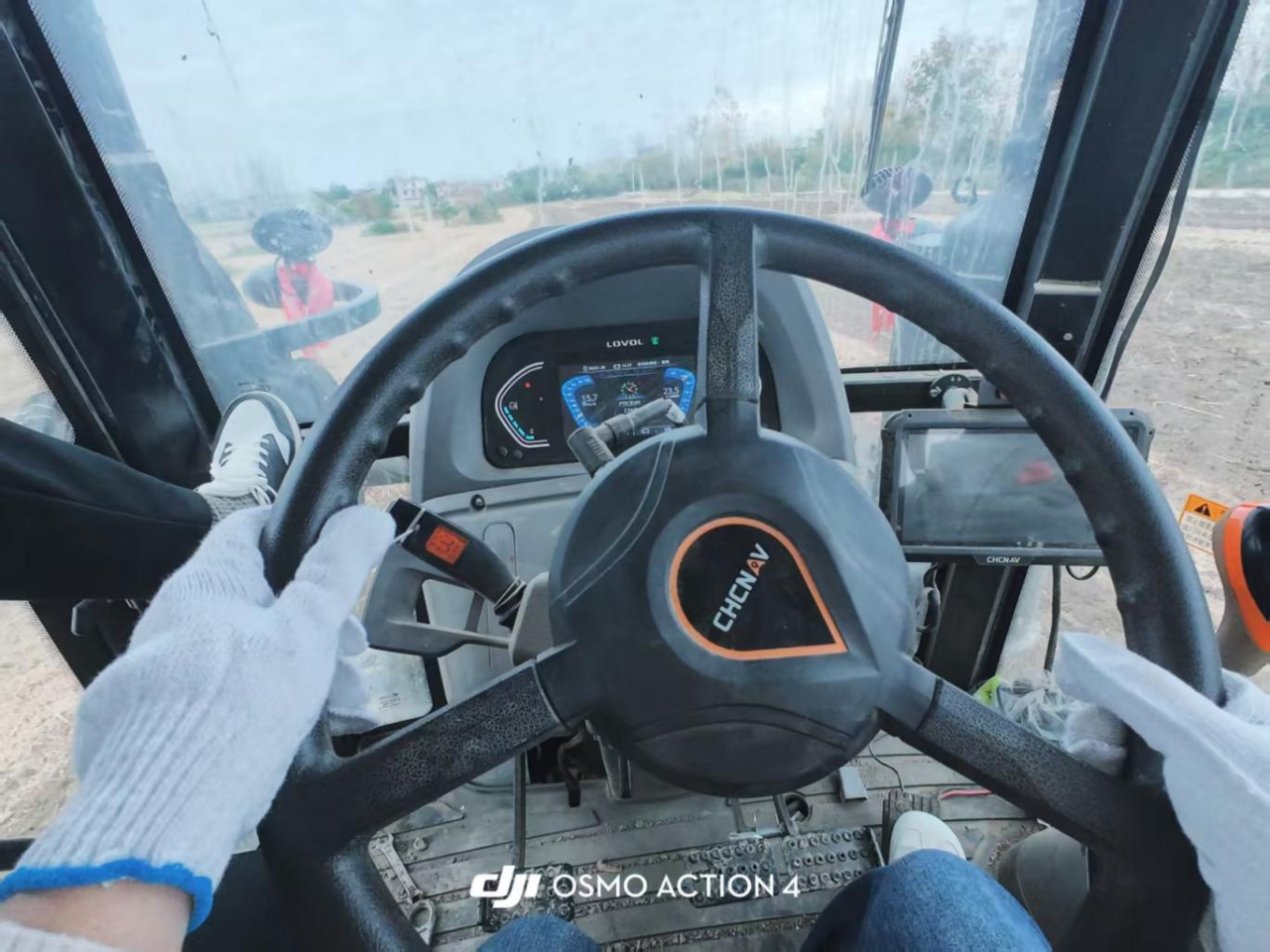
I preferred the practical sessions to the theory. We began by learning to drive tractors with the main group. In the past, I had only ever observed these behemoths from a distance; I never imagined that one day I would be the one in the driver’s seat.
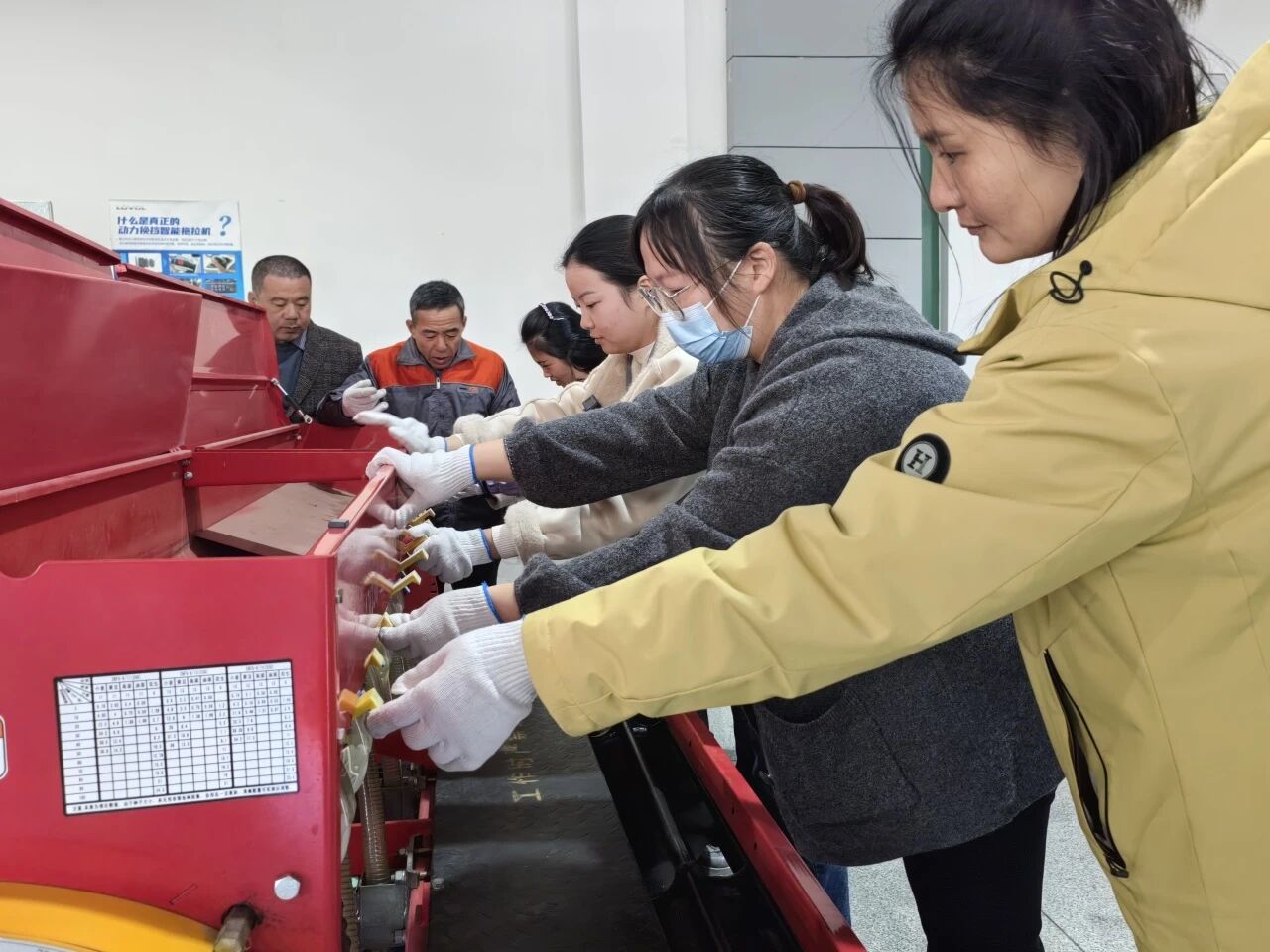
I noticed that **female trainees were rare; in our intake of 50 students, only seven were women. Most were experienced male operators who had driven tractors before.** Most were in their forties or fifties, farmers from the three districts and five counties of Fuyang who doubled as agricultural machinery operators. Tractors had been their ‘old companions’ for years, yet they had almost no experience with drones. They came here to learn the craft of drone operation alongside their ‘old companions’, making it easier to spray pesticides on their own land or to earn extra money spraying for others.
The training was organised by the Anhui Fuyang branch of the Central Agricultural Radio and Television School, which everyone simply called the ‘Nong Guang Xiao‘.
Through this free government training, these students—already rich in production experience—could at least get to grips with the inner workings of this new agricultural machinery, ensuring they wouldn’t be taken advantage of at the dealerships due to a lack of technical knowledge.
Compared to the experienced male students, the female trainees were far more intimidated when facing the tractors. **Just as the stigma surrounding ‘women drivers’ persists to this day, a similar bias exists regarding agricultural machinery, with many subconsciously categorising it as a ‘man’s world’.**
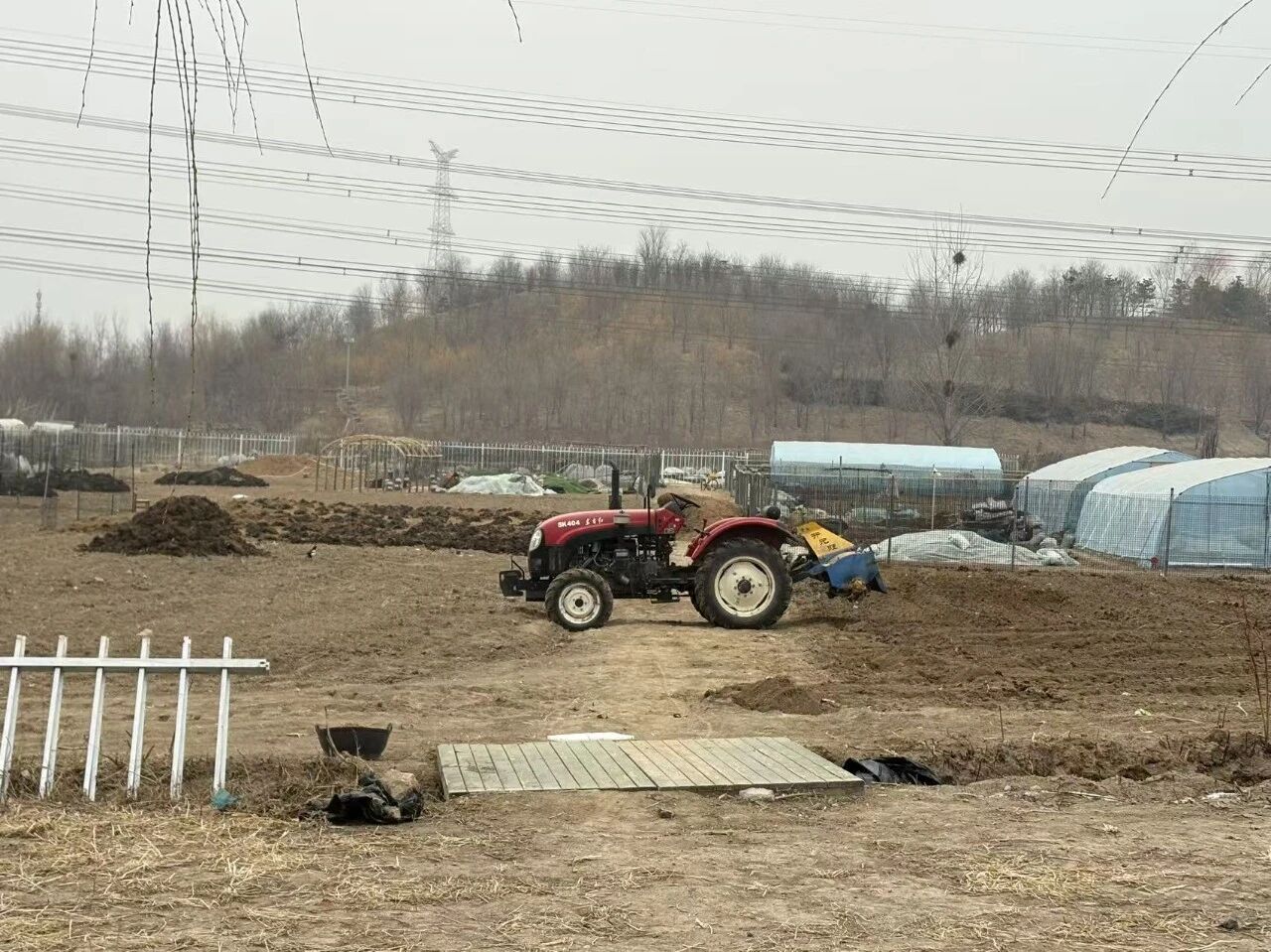
During the practical lesson, before we had even started, the other female students and I began to hesitate. Looking at the ancestral graves not far off in the field, and then at the four tractors lined up before us, we all looked apprehensive. We were worried we wouldn’t drive them well and might accidentally crash into and damage someone’s old graves. The safety officer quickly reassured us: “Just use first gear, go slowly, and remember, a safety officer is on board with you.”
An atmosphere of insecurity continued to spread. “The men are probably better at this; they have the experience. We’re still a bit behind,” said one of the older female students.
Feeling a flicker of defiance, I raised my hand to signal that I wanted to be next. I then stepped over the dirt ditch at the edge of the field and strode towards the tractor.
But stubbornness is one thing; reality is another. At first, I didn’t even know how to open the door to the tractor’s cab. Once I was inside, the safety officer sat to my left and broke down the steps for me one by one: first, turn the key to the start position; to the left of the steering wheel is the forward and reverse lever—push up for forward, press down for reverse; to change gear, first push the lever to the front-left, then shift it to the right into first. Then, he pointed out the positions of the brake, the accelerator, and the clutch.
I was so nervous that my mind went completely blank; the instructions went in one ear and straight out the other, and my palms began to sweat. Just as I finally managed a slow start, another student’s tractor suddenly drove straight towards me. Instinctively, I slammed on the brakes. It took that shock for me to finally distinguish between the brake, the accelerator, and the clutch.
When I reached the end of the field, it was time to turn around. Sitting in the driver’s seat, I saw the open land before me and the wheat just beginning to sprout in the adjacent field, while the roar of the engine filled my ears. It was only then that I realised my palms were drenched in sweat. Fortunately, I was wearing gloves, so the steering wheel didn’t slip.
I forced myself not to be distracted, gripping the steering wheel tightly and keeping my eyes fixed forward, repeating the safety officer’s instructions over and over in my head. When I finally managed to turn around, I let out an unconscious sigh of relief, and the sweat in my palms gradually subsided.
III. We can master these big machines too
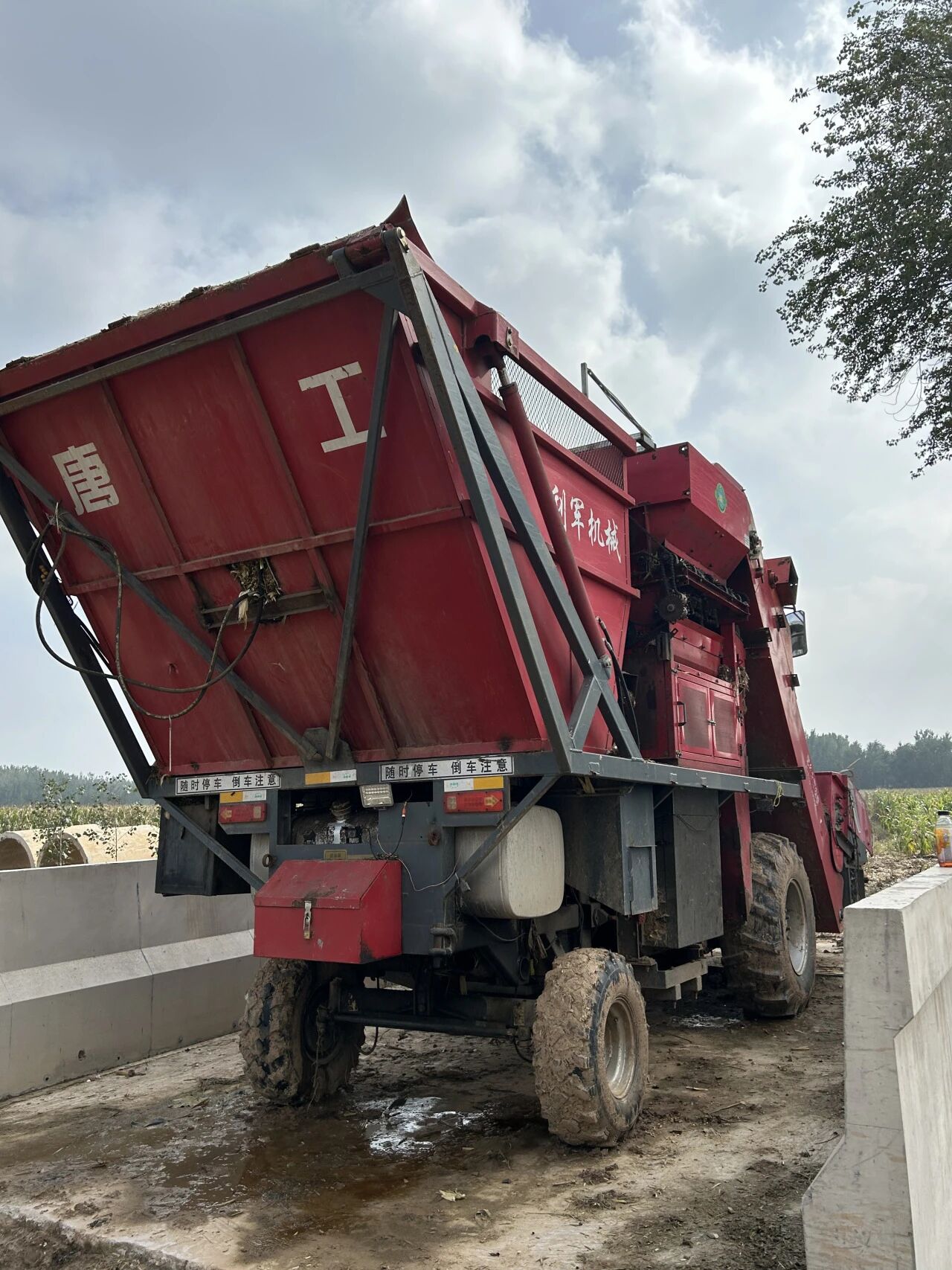
Operating a combine harvester is a world away from driving a car. The one at the training centre had no steering wheel, with just a single seat in the cab. In front of me were two control levers, and beneath my feet was a wide brake pedal; there was no clutch. I inserted the key, pressed a red button, and the engine roared to life. Everything depended on those two levers: push them forward, and it moved ahead; let them be, and it stayed put.
At first, many of the male students struggled, which only shook my confidence further. I kept debating with myself: should I even try? I even found myself wanting to talk others out of it: “It’s too hard, just forget it. We can’t risk overturning it—it’s such a massive machine, we’d never be able to afford the damages if it flipped.”
The other female trainees chimed in: “Even the veteran operators are struggling; there are so many men here, but hardly any of them actually dare to get in.” Another added, “This kind of kit was meant for men anyway. If they can’t manage it, there’s no way we can. Women just aren’t cut out for driving harvesters.”
In truth, the younger women among us felt a surge of defiance, though none of us felt comfortable speaking up right then and there. Then, one of the male students nearly drove the harvester right onto the kerb, and the header almost took down a tree.
This only deepened our hesitation. The woman beside me whispered, “This harvester isn’t even that big; logically, it shouldn’t be that difficult. But I’m just terrified… I have no confidence, yet I still want to try.”
She was a few years older than me, though still in her twenties. Her family had been supportive of her coming to learn. “My father-in-law told me that if I master this, when we buy our own harvester, I’ll be the one to drive it and harvest the rice for the family.”
Later, the instructor from the agricultural college asked, “Do any of the women want to give it a go?” We all shuffled awkwardly, none of us wanting to be the first to volunteer. She hesitated for a moment, then suddenly stepped forward, beating a male student to it and climbing into the cab.
The safety officer showed her how to start the engine and operate the levers. Before long, the harvester began to move forward smoothly under her control, the machine remarkably steady.
I heard an older woman exclaim, “Oh, so they don’t actually have to shake! I saw the men driving them all over the place and thought that was just how it was.”
I filmed her throughout, and seeing her drive so steadily—reversing into the bay without crossing the line and keeping a safe distance from the kerb and the trees—I suddenly felt a glimmer of confidence. Perhaps I could do it too.
It turned out that the belief that “only men can drive” wasn’t rooted in any innate difference. Within that assumption, women find it easier to doubt themselves and other women: the more we hesitate to try, the more it seems that “we simply can’t,” and so the stereotype feeds itself in a vicious cycle.
When it was my turn, things didn’t go quite as smoothly. The moment I sat in the cab and the door clicked shut, my mind went completely blank, and I had to call the safety officer back. The old machine was stubborn; whenever I applied pressure to the levers, it jerked and shuddered. Sweat pooled on my back, and I ended up crossing the line while reversing. But in the end, I made it back to the starting point without hitting any trees or the kerb.
Once the first of us had tried, the others quickly followed. Almost every female trainee had a go, including the older woman from before. She was a bit shaky, but she managed it. As she climbed down, her eyes were wide with disbelief. “My legs were shaking the whole time,” she said, beaming with surprise. “I can’t believe we can actually handle a beast like this!”
IV. The Final Assessment
Shift gear, release the clutch—the tractor moved off smoothly. I did as the instructor had taught me: kept a firm grip on the steering wheel and fixed my eyes on the distant field ridges as a reference point—a technique I had just picked up. As I drove, I suddenly remembered my father’s words from my childhood: “Listen to the engine to know if the ploughing is even. If the sound is muffled, it’s too deep; if it’s airy, it’s too shallow.”
I instinctively slowed down and listened closely. Sure enough, the engine had sounded a bit muffled during the last stretch. I gently lifted the control lever, and listening again, the sound steadied. In the rearview mirror, the overturned soil was a pale yellow, spreading evenly behind me. A damp, earthy scent drifted into the cab—the familiar smell of the land.
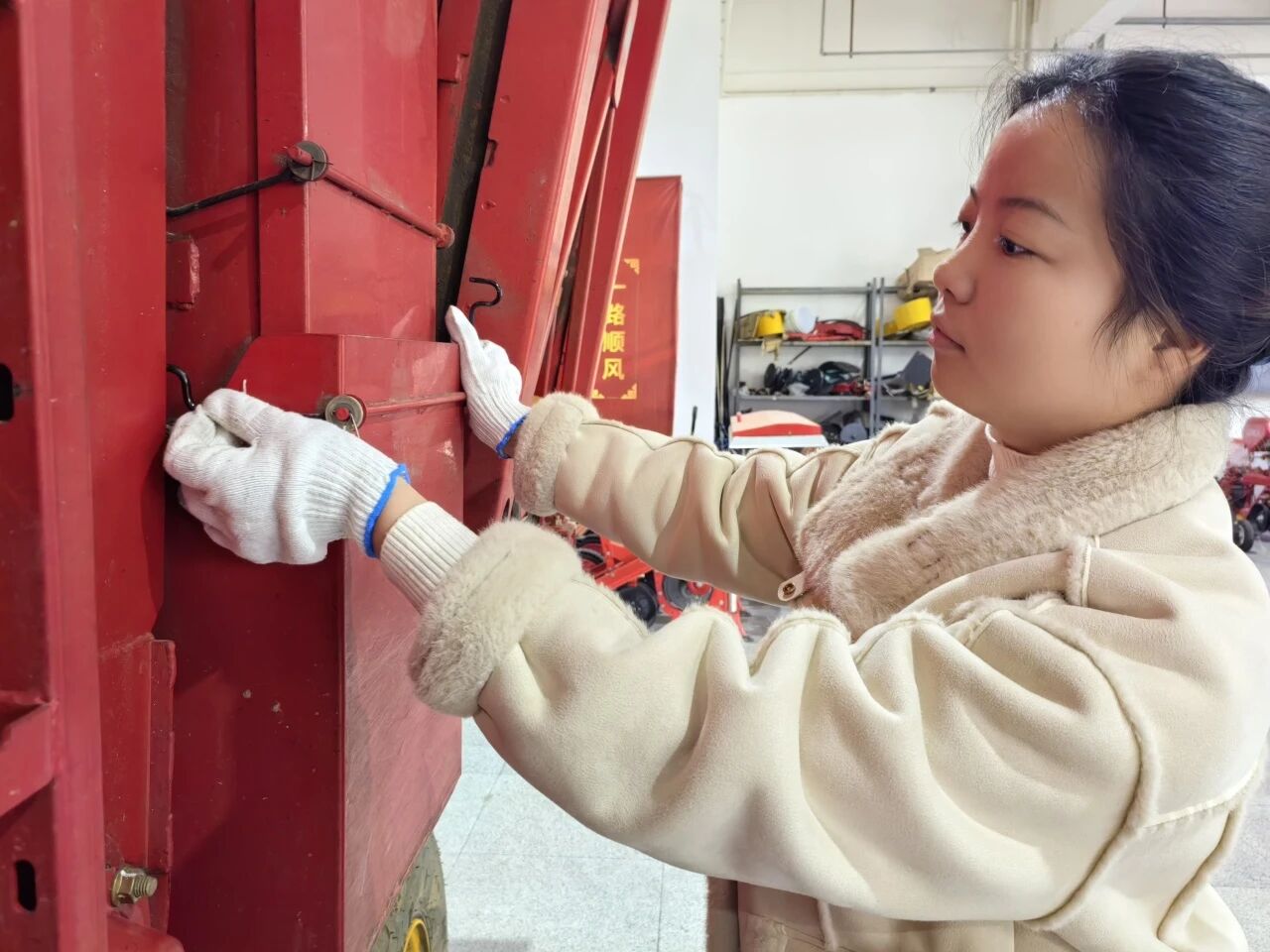
When the assessment ended, I threw my gloves, sodden with sweat, into the training centre’s bin. They had served their purpose, much like the stone rollers in my memory. In the old days, we used stone rollers to flatten the soil and prepare the rice-drying yards. Then came the grain vacuums, the grain turners, and the dryers. The yards were gradually replaced by concrete, and the stone rollers were left under the eaves. Later, those eaves were torn down; the new houses had none, and so the stone rollers had nowhere left to call home.
On the bus back, looking through the window, I saw a drone casting a fine, even white mist of pesticide over the wheat fields in the glow of the setting sun. By the ridge, an old man stood watching with his hands behind his back, his shadow stretching long. The mist from the drone fell gently upon the tender green wheat seedlings just beyond the edge of his shadow.
Before leaving, I said to a woman I had trained with, “Tell your father-in-law to pick out a harvester. You can drive it from now on, and you’ll never have to hire anyone to harvest the rice again.”
Editor: Xiao Dan