
Mechanisation for Whom? Advanced Harvesters and Displaced Farmers
I. Farm Machinery Memories of the Post-2000s Generation
It was not until 2009 that my family bought a harvester. Our first was a Kubota 488. That same year, we also acquired a second-hand green vintage model. That machine was ubiquitous at the time. All the harvesters that came to the village looked much the same, with the green harvester standing out starkly against the golden fields.
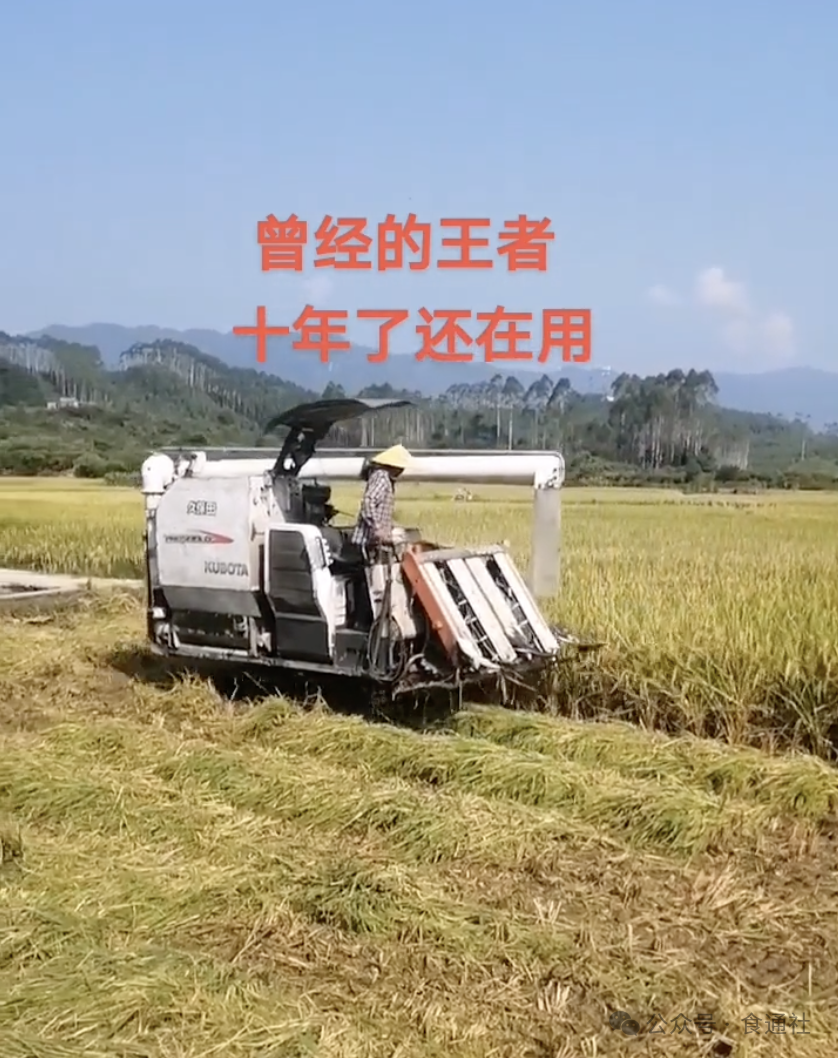
Back then, the work was predominantly taken up by men. Each mu would yield at least 1200 jin (600 kg) of rice, equating to 120 sacks. Given that northern Anhui is largely flat with expansive fields, the workload during the harvest rush was enormous.
At that time, during the harvest season, you would often see a harvester plodding slowly across a vast rice paddy. The driver sat in the cab, thick with dust, while another person managed the sacks, simultaneously operating a device to track the harvested area. The field would be a mix of standing rice and bulging sacks—some the standard yellow urea bags, others the distinctive pink-and-yellow ‘Hong Sifang’ branded ones. Farmers and their three-wheeled cargo vehicles would wait at the edge of the field, ready to collect them.
II. Fourth Uncle’s Unemployment
Fourth Uncle had previously worked on construction sites away from home, but he would always return to the village during the busy seasons to help with the harvest rush. At a time when leasing large plots to establish family farms was not yet common practice, there was a widespread belief among villagers: no matter how far you travelled for work, you could not let your family’s fields lie fallow.
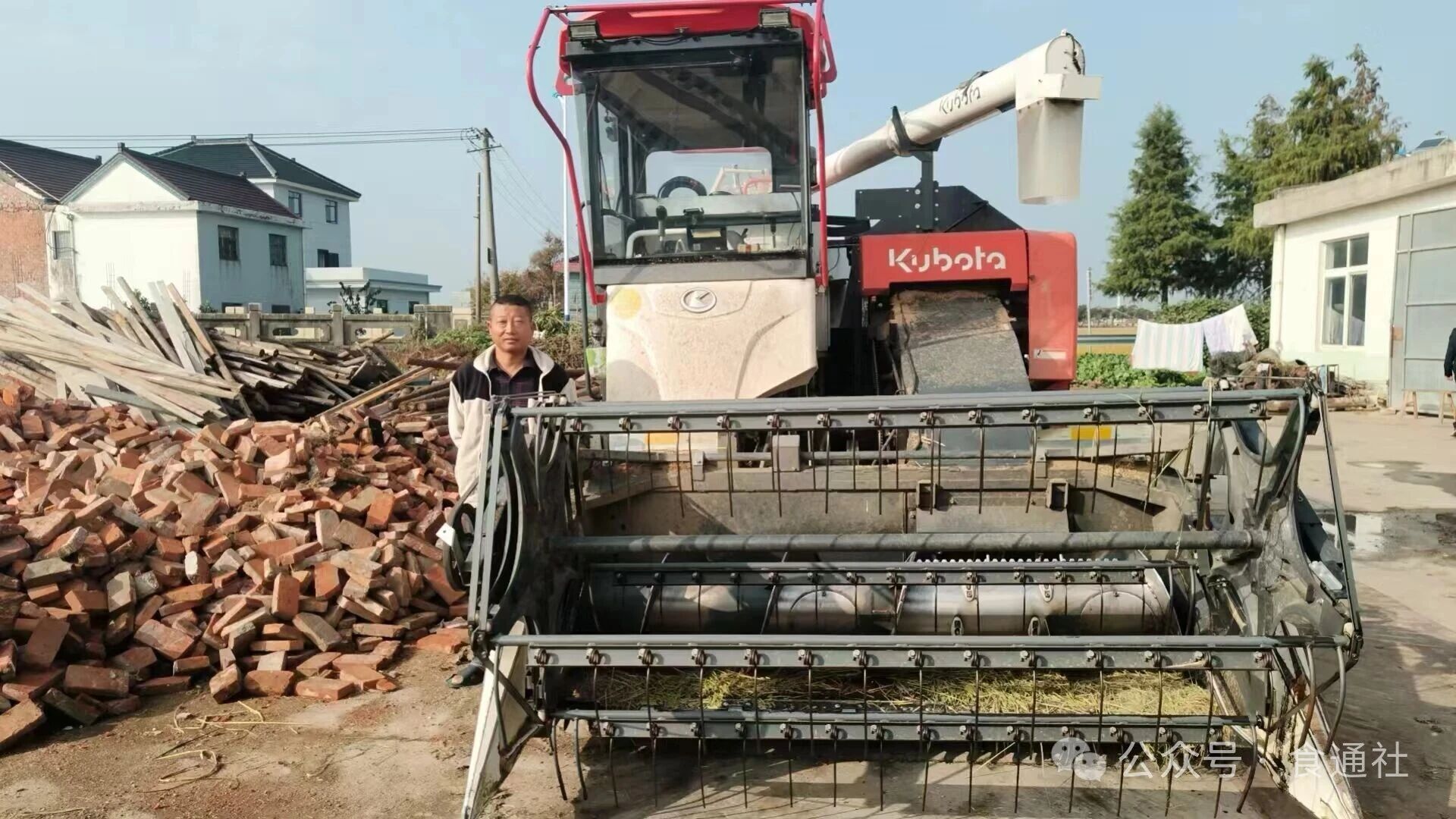
But eventually, Fourth Uncle found himself out of work. Construction sites would no longer hire him due to his age, and the harvest rush no longer required anyone to manage sacks. Modern Kubota harvesters now come equipped with air-conditioned cabs and sealed glass windows that keep dust at bay, effectively preventing dust-related respiratory illnesses. Large grain tanks have also become standard equipment, sparing farmers the back-breaking task of hauling sacks across the fields to transport vehicles. Now, they simply position a three-wheeled cargo truck at the right spot and let the grain flow straight into it once the tank is full.
With the role of ‘bag catcher’ entirely obsolete, Fourth Uncle had little choice but to stay at home, occasionally picking up odd jobs for neighbours—helping them dry grain or do minor building work.
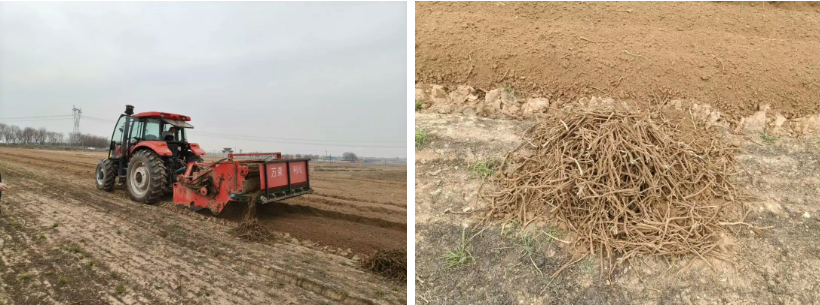
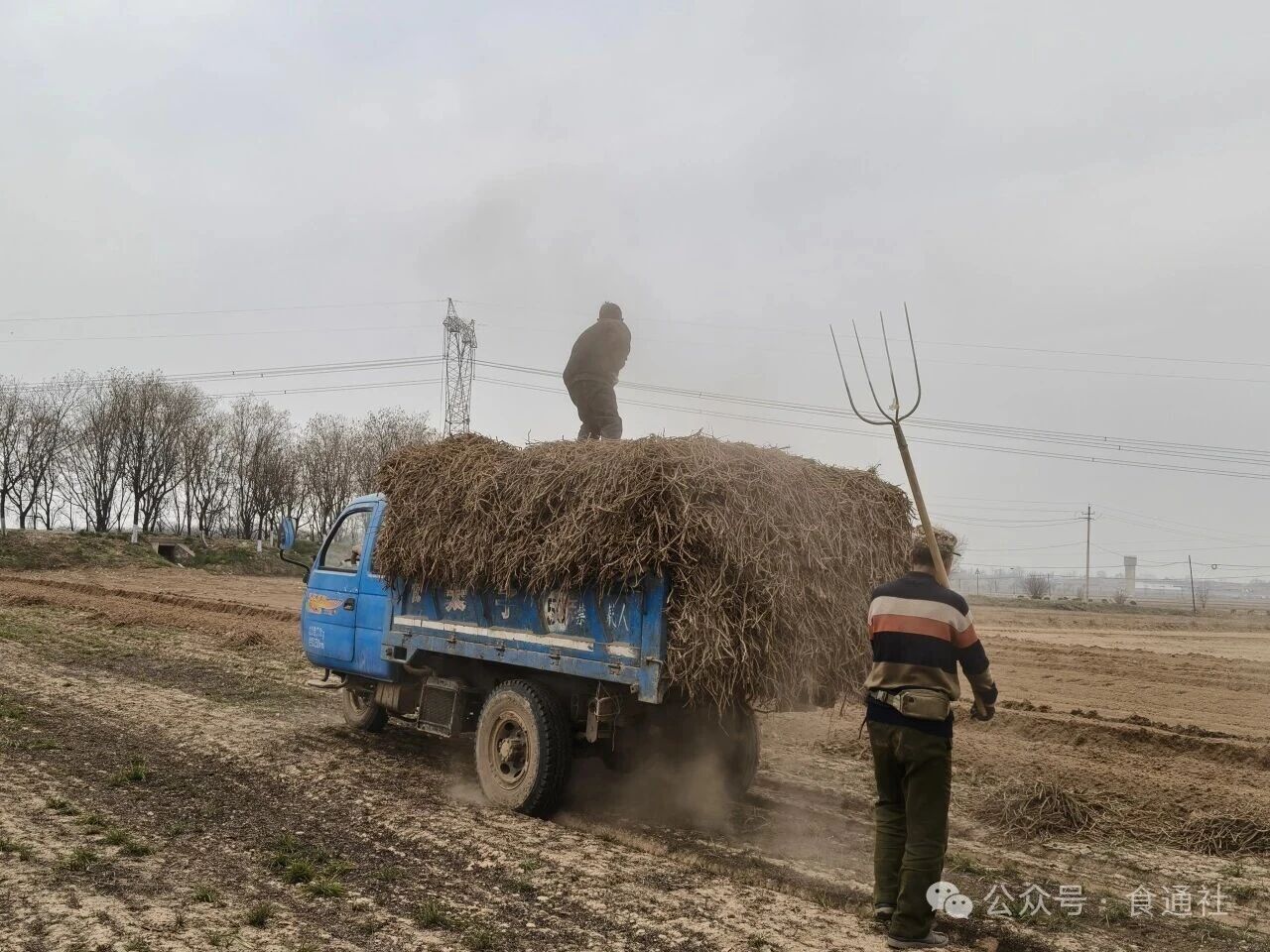
Once the rice harvest is complete, it is time to sow wheat. Red wheat seeds (note: these seeds are coated in pesticide to protect against soil-borne pests and bacteria that could hinder germination; the coating is typically red, giving the seeds their colour) are scattered across the fields. Cultivating rice is more labour-intensive than wheat, as it requires transplanting. This used to be done entirely by hand, with workers paid by the mu at an average rate of 220 yuan, inclusive of food and lodging. The introduction of mechanical transplanters later on significantly boosted efficiency, saving both time and physical exertion. However, these machines can only operate in shallow water, meaning deeper paddies and small, irregular plots still require manual labour.
In recent years, during the harvest rush, local government officials would still station themselves at highway toll booths to direct incoming harvesters. They guide the machine operators to fields in need of work and hand them a ‘cross-regional service kit’ containing towels, soap, bottled water, face masks, heatstroke prevention supplies, and clear operational guidelines. By offering this kind of advisory support and operational guidance, the authorities help alleviate local shortages of machinery. It ensures that operators arrive with work waiting and can depart without hassle.
The evolution of farm machinery has been woven into my memories of growing up. Technological progress has brought tremendous development to agriculture, and drying grain is no longer as cumbersome as it once was, thanks to grain suction machines, grain turning machines, and dryers. Earthen threshing floors have gradually given way to concrete. Stone rollers now sit under the eaves, as if quietly bearing out the proverb that constant dripping wears away the stone. Yet when the old roofs were demolished and new houses built without eaves, the stone rollers lost their place to rest.
Perhaps the trend towards smart agriculture will eventually reach every village. Agricultural drones working overhead and wind turbines standing in the fields will become the first impression of farming for children in remote areas: look, the turbines are turning against the sky, and the drones are flying over the fields.
III. New Energy or Diesel Tractors?
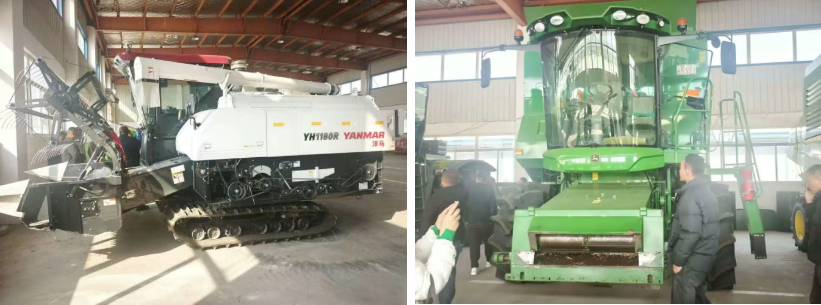
The cabs of these large harvesters are well-lit and fitted with air conditioning and Bluetooth. The most striking aspect is the autonomous harvester: requiring no operator, it can precisely track the field edges without overcutting a single metre or missing a single row. With just a mouse click from the control centre, a tractor several kilometres away is sent into the fields automatically. Once the work is complete, the field plots appear marked in green on the monitor, indicating they have been harvested.
In the second half of the agricultural machinery training, I also visited Wuhu Zoomlion. As a machinery manufacturer, the company produces and exports farm equipment and operates its own farms. The compound was lined with machines painted in green. A company representative explained: “These are the latest tractors, electric models. The harvester next to it is electric as well.”
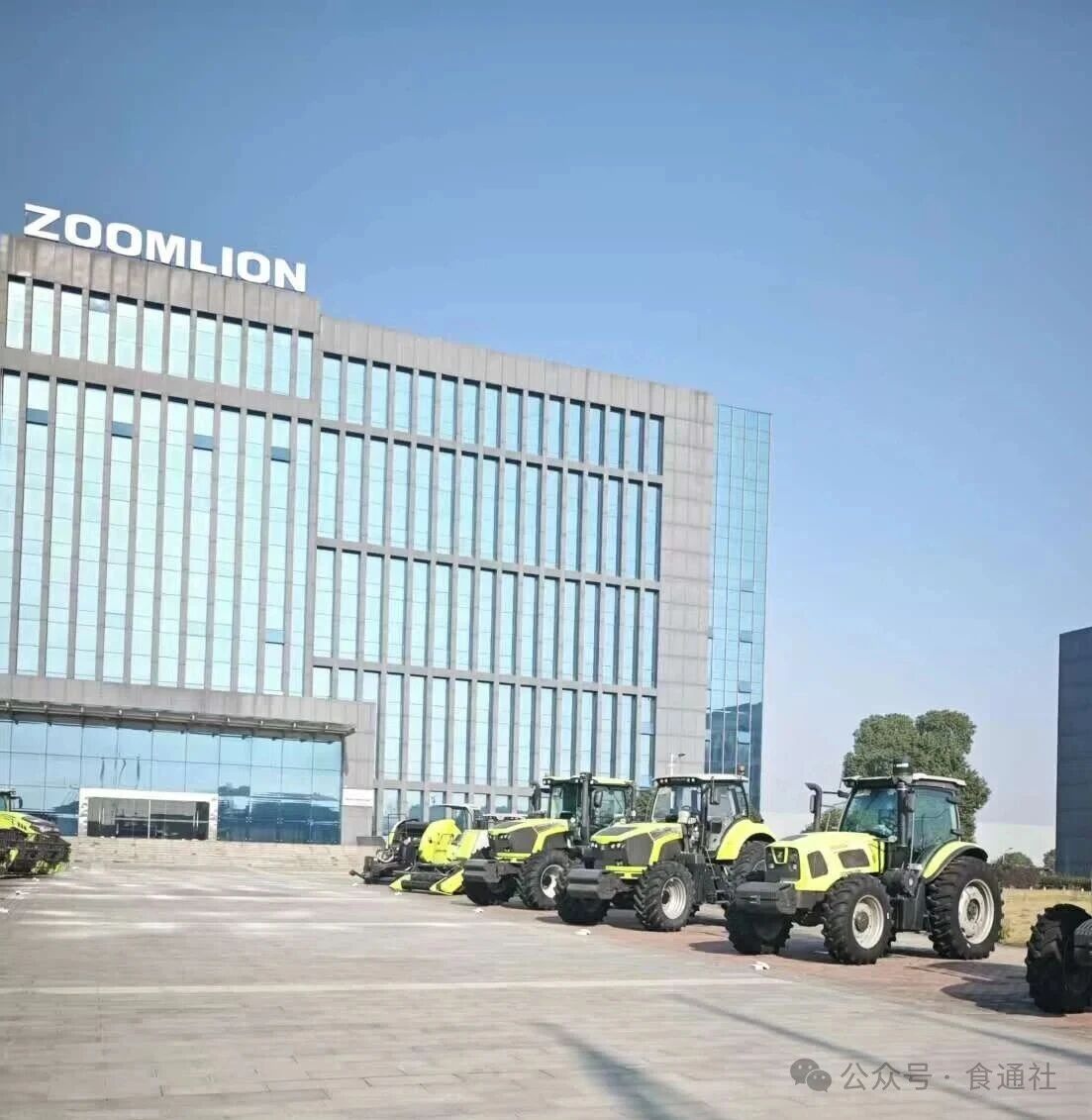
I know that in Fuyang, most farming families will still opt for diesel tractors—they’re cheaper, easier to repair, and, as locals put it, “filling stations are everywhere.”
Some would argue that larger farming operations and cooperative leaders, benefiting from advantages in capital, organisation, and access to information, have been the first to board the “fast track” of mechanisation. Meanwhile, small-scale farmers, constrained by limited funds and technical know-how, risk being left behind, thereby widening the income gap and limiting developmental opportunities within rural communities. Much like educational inequality, this is an objective reality.
Yet small-scale farmers are also making attempts to embrace mechanised production, moving away from a strict reliance on traditional methods. Take my own village as an example: of the over 9,000 mu of arable land, the majority has been contracted to family farms. The village hosts one agricultural machinery cooperative and roughly a dozen family-run operations. Just within my own residential sector (note: the village is extensive and divided into districts, much like urban neighbourhoods), there are already two combine harvesters, three tractors, and two agricultural drones. All of these were purchased by family farm operators managing plots of over 100 mu. Other farming households, tending to smaller plots, simply hire machinery operators who bring their own equipment for the harvest, settling the bill at around 68 yuan per mu.
In my village, the supply of harvesters, tractors, and agricultural drones actually exceeds local demand, prompting some operators to form teams and travel to other regions for cross-district work. However, you won’t find “smart” agricultural equipment here, such as autonomous combine harvesters or intelligent tractors. High-tech machinery comes with a steep price tag, making it “impractical” for smaller family farms and modest machinery cooperatives. The cost of a single smart machine could easily cover the purchase of two or three conventional ones.
Farmers also keep their own careful ledger when investing in equipment. In my village, the preference leans towards second-hand tractors, particularly the Dongfanghong brand, with budgets typically ranging from 40,000 to 60,000 yuan. For a brand-new tractor, the budget hovers around 100,000 yuan; with a government machinery subsidy of 10,000 yuan, the out-of-pocket cost comes to just over 90,000. Combine harvesters are more commonly bought new, with brands like Kubota being popular, alongside Lovol. Take the Kubota EX118MQ-s, for instance: equipped with a hydraulic chassis lift system that adjusts height on uneven terrain, it retails for 240,000 yuan. After a subsidy of 29,000 yuan, the final price is over 210,000. Most opt for new harvesters precisely because the subsidies make them more cost-effective; after a few seasons of use, they are sold on to fund the next upgrade.
Perhaps one day, smart agricultural machinery will become commonplace for all. But my generation seems destined to serve as the bridge between the last “craftsmen” of the soil and the first “commanders” of the fields.
Editor: Xiaodan