
Only in the corners beyond the reach of delivery can we truly eat well
Foodthink’s Take
The rural countryside is the backbone of the Chinese dining table, yet the tables within the villages themselves rarely receive any attention. We hope this article offers some inspiration to those heading to the countryside for the Qingming holiday, and we welcome you to share your own experiences and observations of rural dining.
I. Dining in the Village
On 8th February, we set off from Wenzhou. After a day of travel by plane and high-speed train, we finally reached the old family house in the village at 9 pm. My father-in-law brought out a large basin of pig’s ears and head meat, along with a bowl of “chilli sauce”. My daughter and I were so hungry we ate them directly with our hands.
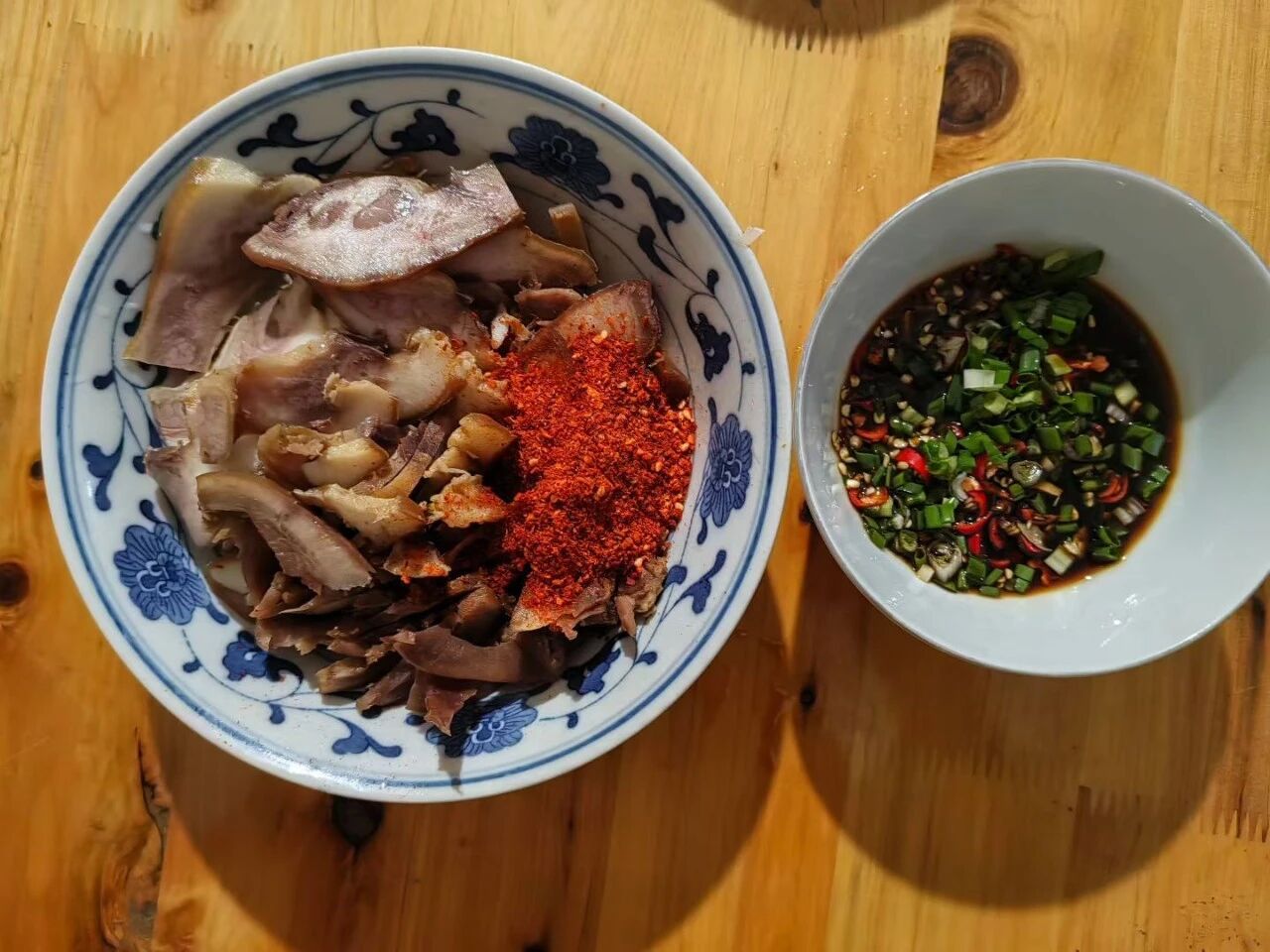
This is perhaps one of the few remaining places in China that has not been eroded by fast food, delivery apps, and ready-meals. Due to its extreme remoteness, home delivery is still unavailable. While apps like Didi or Dingdong Maicai show the location as Wannianfen, neither drivers nor delivery riders will accept orders there. Fortunately, aside from the children, no one craves Cola or fried chicken, so it doesn’t hinder the family’s dining experience.
I also enjoyed a brief escape from my caffeine dependency. As a heavy coffee addict in Wenzhou, I relied on low-quality lattes from convenience stores—7.9 yuan a cup, with milk nearing its expiry date and beans that smelled slightly rancid—just to keep me going. During the New Year, if I wanted a freshly ground coffee, I would have to walk 40 minutes along a mountain path, wait for a bus that ran once an hour, and travel another hour to the Wanda Plaza in Weiyuan County. A round trip took at least three and a half hours. If I missed the return bus, a taxi would cost at least 80 yuan.
Beyond coffee, obtaining other ingredients in the countryside is surprisingly difficult. The population of my parents-in-law’s village has been shrinking for five years; it is mostly elderly residents now, and the young people generally do not farm. The elders mainly eat vegetables and citrus grown in their own gardens; for other fruits or pork, they must go to the township market. The villagers also raise chickens and ducks, but these are only slaughtered to entertain guests during festivals. Eggs for their own consumption come from their chickens, but they only eat unfertilised eggs. If an egg is fertilised, the elders are loath to eat it and will instead take it to a poultry farm to exchange it for money.
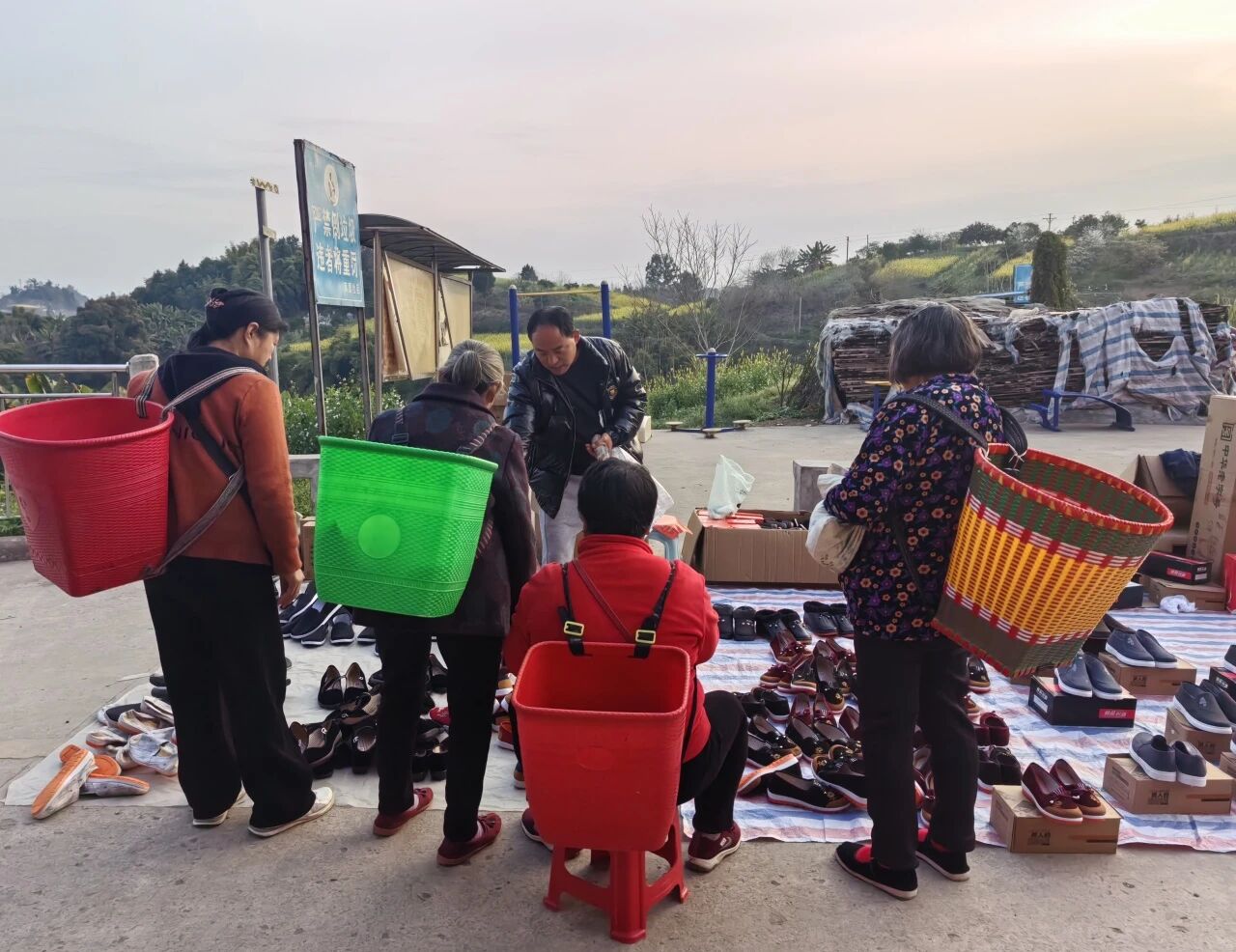
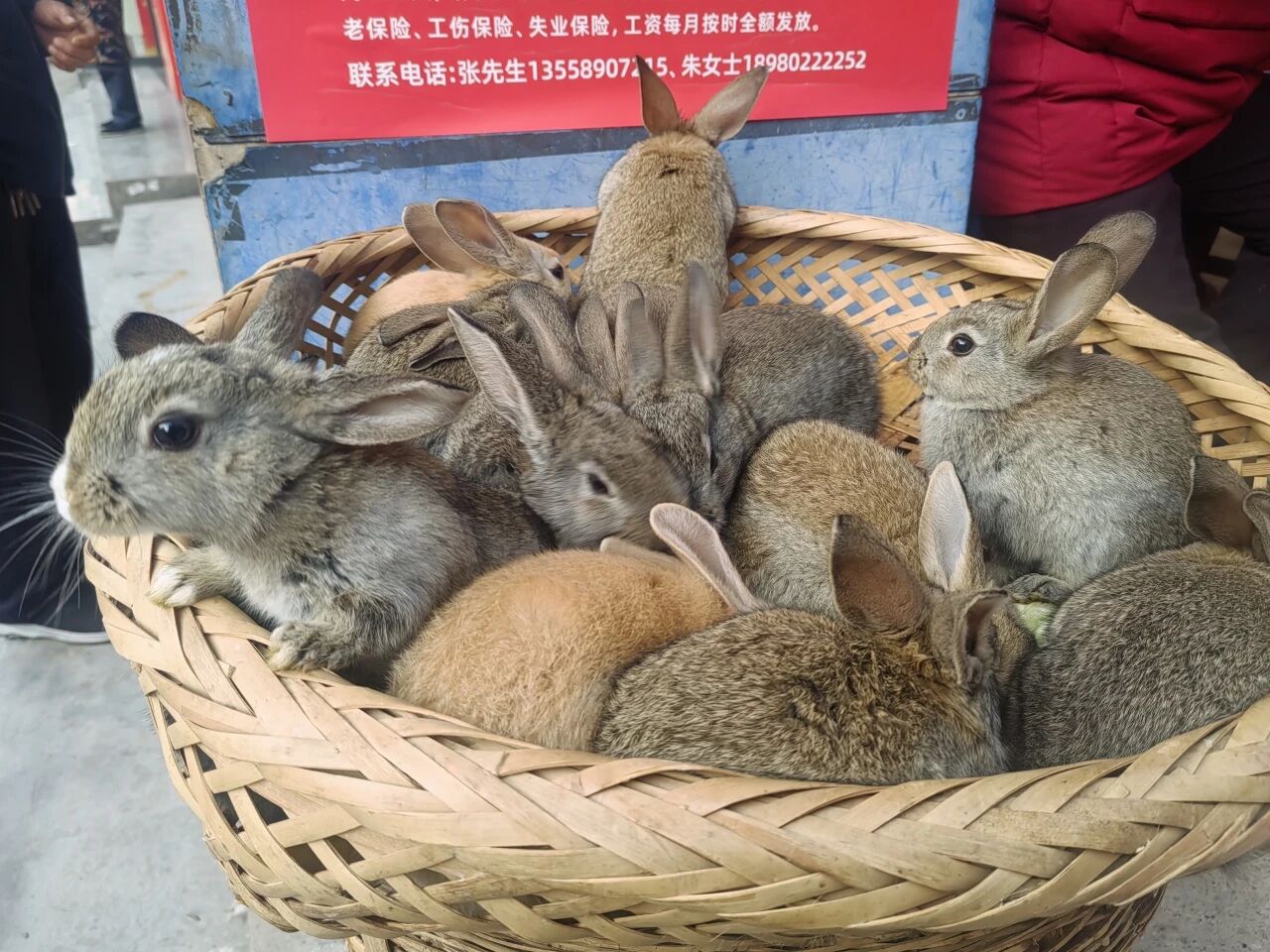
During my 18-day stay, we often tried to visit the township market, but we missed it several times because we woke up too late. The elderly generally head to town around 6 am, before dawn. By 10 am, the market has already dispersed. At the market stalls, one finds live chickens, ducks, and rabbits—sights rarely seen in city markets—and even live pig slaughtering. The elders at the market all carry bamboo baskets on their backs; the old women wear purple-red knitted hats and bright red floral cotton jackets, while the old men wear Lei Feng hats paired with army overcoats or navy-blue Zhongshan suits. The scene feels like a location scout for a Jia Zhangke film.
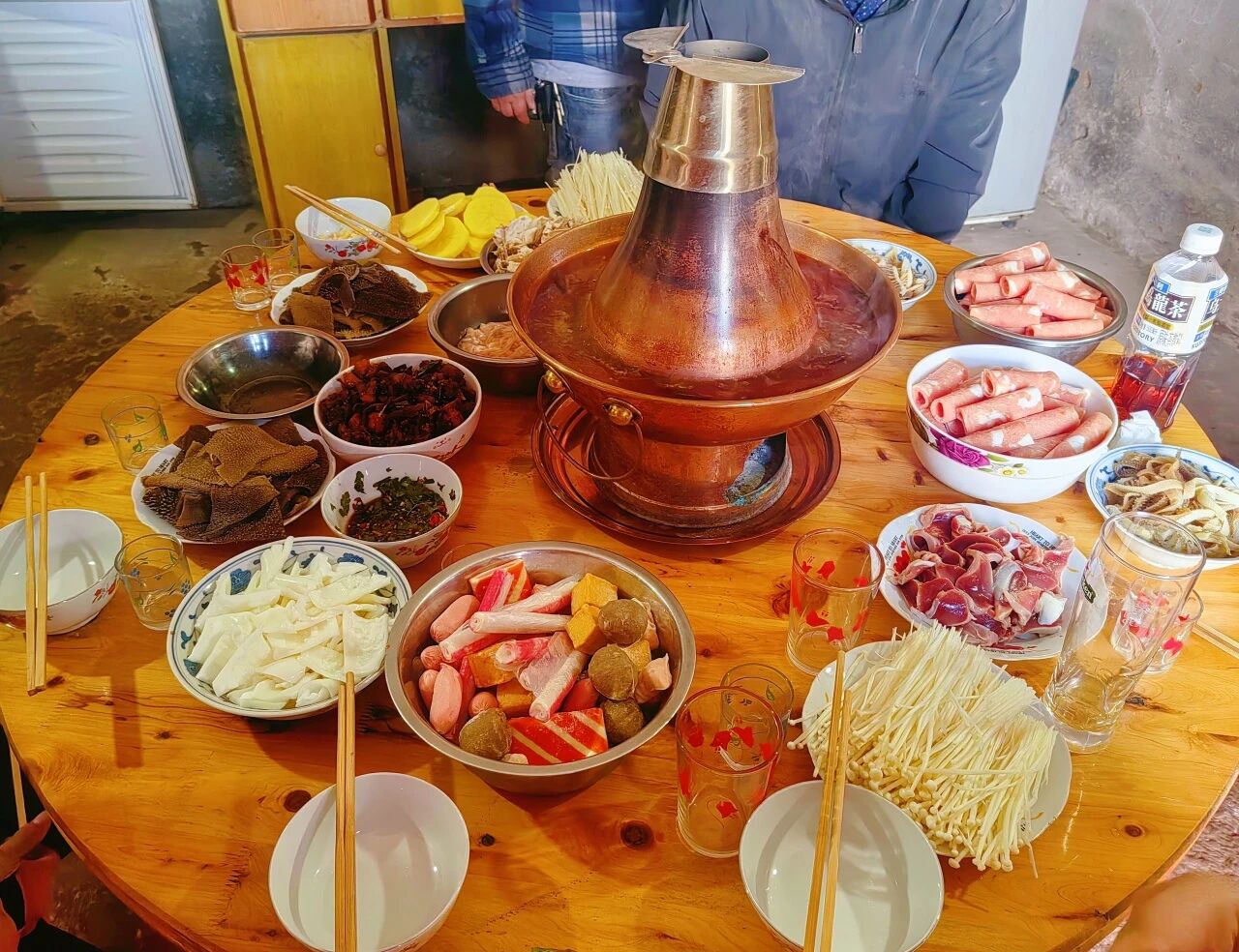
Some ingredients, however, must be bought at the city market. The most memorable meal of the half-month was a hotpot shared by three families. We drove for an hour, crossing mountains and valleys, to gather ingredients from the busiest old town market in Rongxian. Ingredients like mutton broth, mutton offal, hairy tripe, aorta, beef tripe, and sliced fatty lamb or beef are not sold in the township.
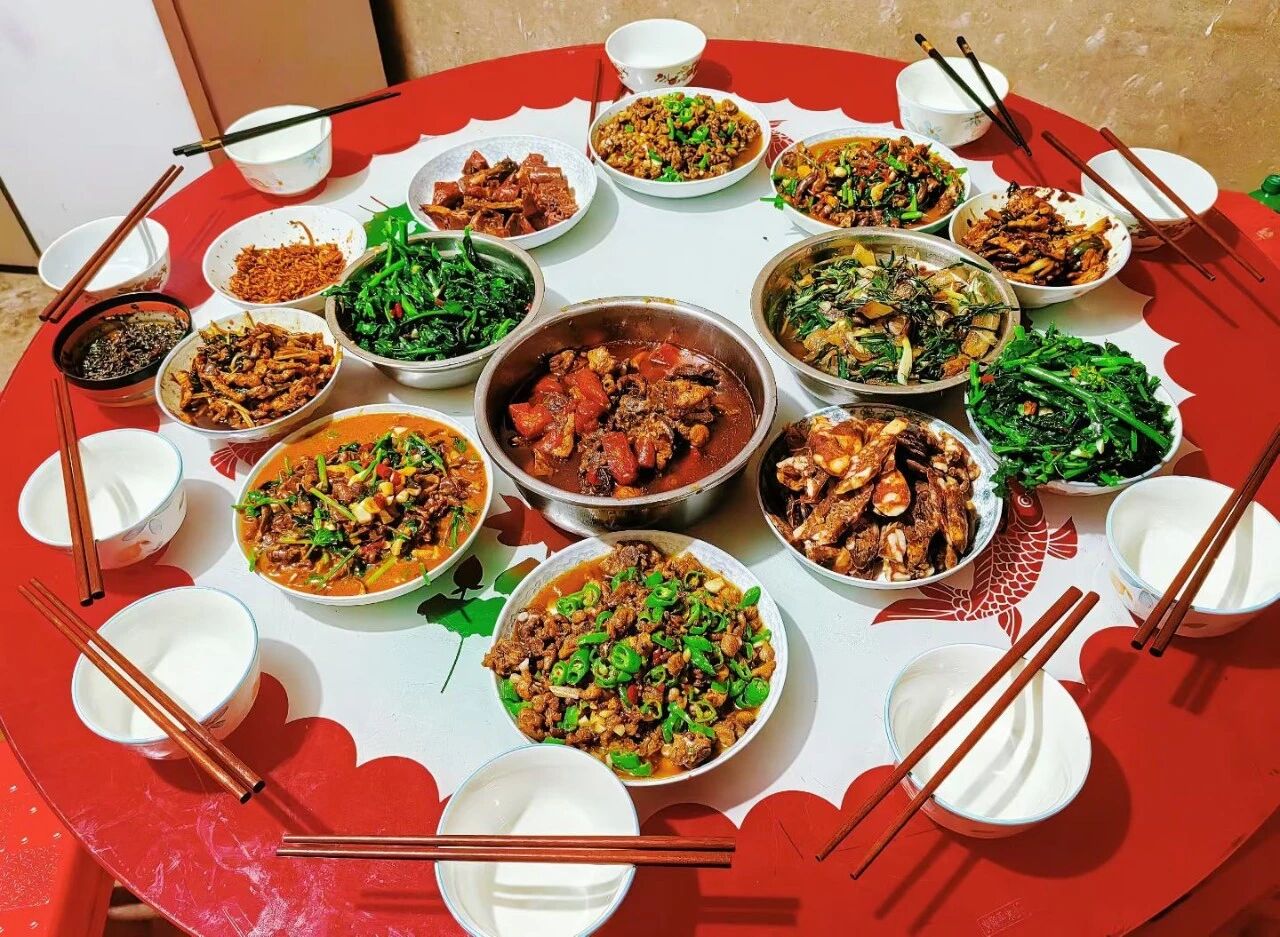
My second brother brought out the “family treasure”: a copper pot hotpot. Watching my niece use tongs to stuff coal into the mouth of the copper stove brought back a rush of nostalgia for the 1980s and 90s, when we used to burn coal at home to simmer fatty lamb. The hotpot base was a spicy beef tallow, into which a jin of mutton broth was poured. For the first time, I ate my fill of authentic hotpot ingredients like sheep tripe, sheep intestines, beef tripe, and aorta. My eldest brother also brought two bowls of chicken blood from a slaughtered chicken; having sat for a while, the blood had set into a purple-red jelly.
In Sichuan, vegetables are generally not poached in the hotpot because the leaves absorb too much oil. Even if they are eaten, they are saved for the end. As the hotpot feast neared its conclusion, we began to poach Chinese cabbage, lettuce, *niupicai*, and *wandoudian*. These vegetables were either grown by my father-in-law or picked from a neighbour’s field. In the village, it is perfectly acceptable for villagers to pick a few vegetables from each other’s gardens.
Aside from the hotpot, Fifth Aunt also cooked a stir-fry of rabbit stomach. I ate nearly half a plate of celery and screw chilli stir-fried rabbit stomach; it was so delicious I couldn’t stop my chopsticks. This dish requires a lot of effort. First, the rabbit stomach is cleaned and the gaminess removed using salt, vinegar, and vegetable oil, then sliced or cut into small pieces and blanched. Dried chillies, tender ginger, green chillies, bird’s eye chillies, pickled chillies, Sichuan peppercorns, and garlic are then cut into small sections. The rabbit stomach is flash-fried in vegetable oil, and the aforementioned seasonings and preferred vegetables are added. Salt and cooking wine are added as needed during the stir-frying. To fully mask the gaminess, a generous amount of pickled chilli is essential.
“Thanks to you all, the *Baoniang* and *Baobao* (Sichuan terms for aunts and uncles) get to have a proper treat and improve their diet, hehe,” my niece whispered to me while poaching the tripe.
II. From Fishing to a Finished Fish
Five years ago, every household in the village was connected to natural gas, yet my father-in-law still insists on using a wood-fired stove. First, the rice is washed and drained, then boiled until it is sixty or seventy percent cooked (if you prefer firmer rice, boil it to fifty or sixty percent). A steamer is placed inside a wooden bucket, lined with gauze, and the rice is poured in. Several holes are poked through the rice with chopsticks to keep it fluffy and breathable. The wood stove is lit, water is boiled in a large iron pot, and the wooden bucket is placed inside. Once the lid is on and steam begins to escape, it is steamed for another 15 minutes. The resulting rice is more fragrant and glutinous than that from an electric rice cooker. Even without Wuchang rice, the aroma is intoxicating.
The spicy local crucian carp cooked by the men is also superb. They will prepare twenty or thirty fish at a time, scaling them and gutting them while preserving the fish maw and roe. Each fish is first fried, and then a pot of chilli water seasoned with Pixian broad bean paste is prepared, adding ginger, garlic, chillies, and spices like star anise. The fried fish are simmered in the pot for a while, and finally, freshly picked tender coriander and spring onions are scattered on top before being poured into a basin. But to enjoy a single spicy local crucian carp, from the moment of fishing to the moment it reaches the table, takes five hours. Behind the sheer pleasure of the tender fish meat lies the necessity of immense, patient labour.
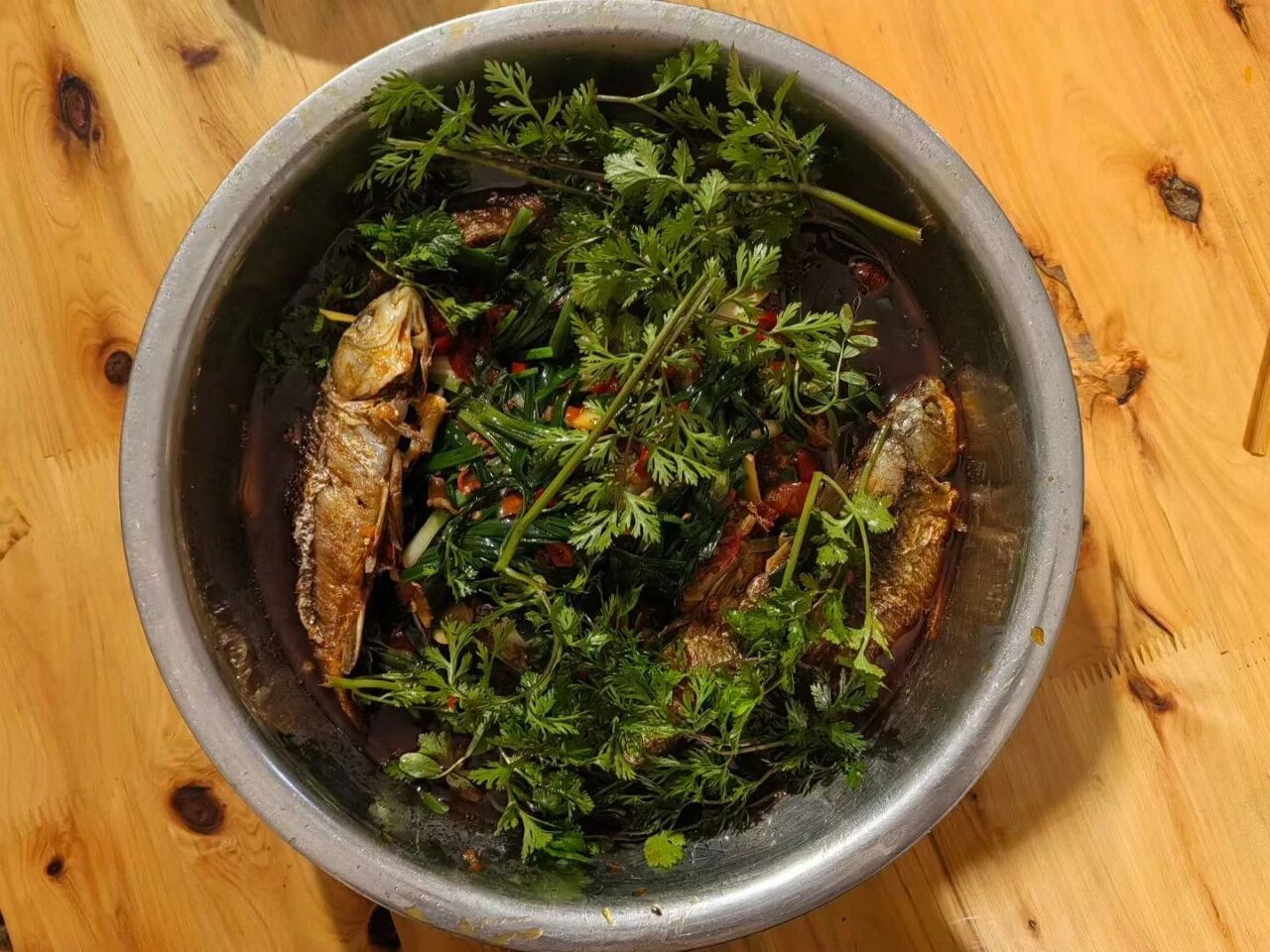
In truth, it is quite difficult to find fish in the townships of Sichuan; you can usually only buy crucian carp at the local markets during the Lunar New Year. Even ordinary crucian carp sell for over ten yuan a jin, nearly fifty per cent more expensive than at a market in Wenzhou. To get common river delicacies like fish, shrimp, or shellfish on a normal day, you have to travel to the county seat; if you want river crabs, your only real option is a hotel restaurant. Eating fish has become an act steeped in the ritual of the New Year.
During the holiday, the relatives love to spend time fishing in the ponds. My husband, his eldest brother, and his cousin form an “iron triangle” of New Year fishing. The three of them often spend three or four hours to catch forty or fifty fish. To be honest, I don’t see the appeal of fishing; I often think it would be far more efficient to simply drain the pond and scoop them all up in one go. But the men have the patience to sit on the field ridges by the pond until dark. They dig a few earthworms out of the soil for bait, cast their floats far into the water, and keep a keen eye on them; the moment a float bobs up and down, signalling a bite, they strike.
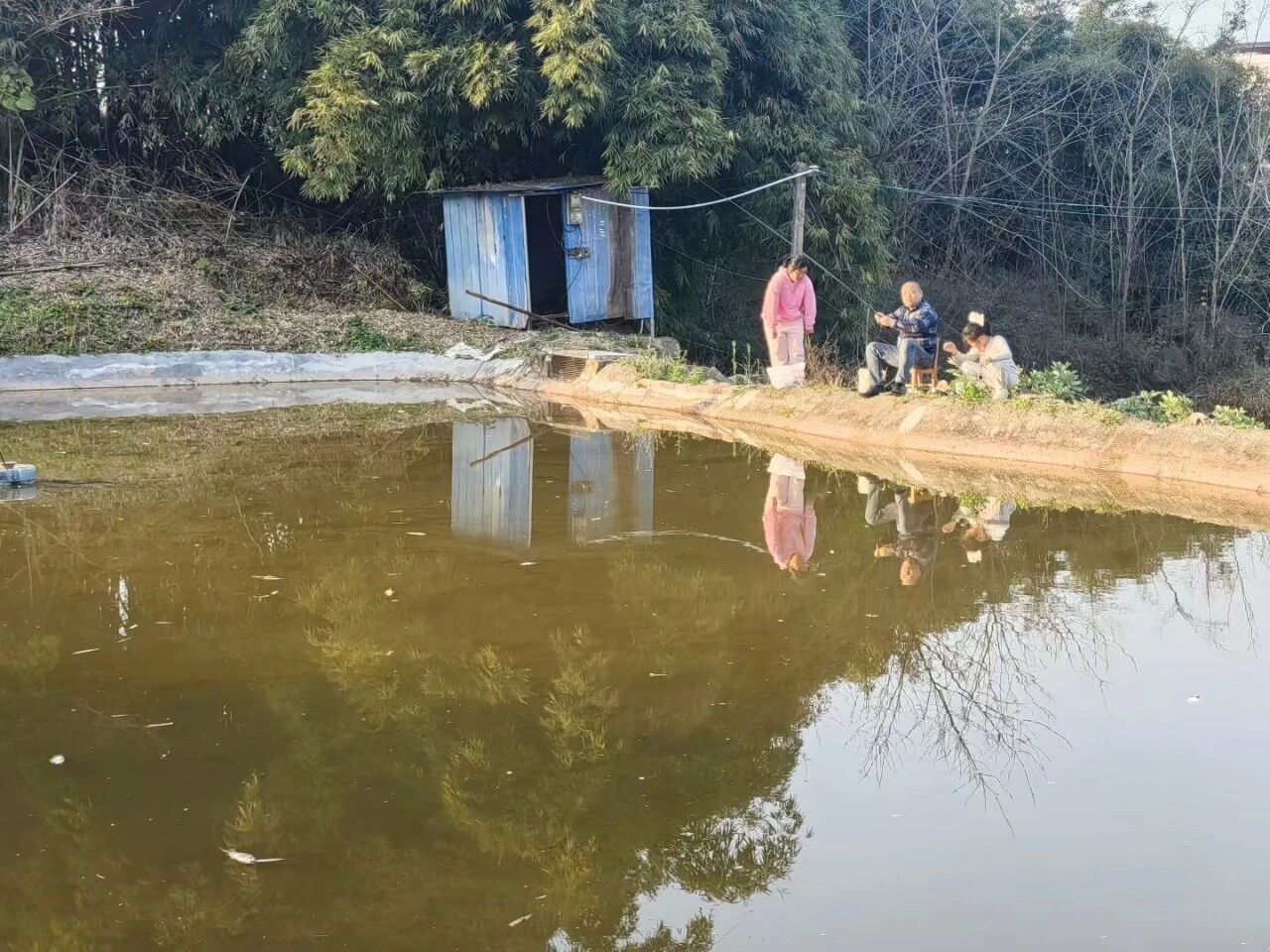
Ever since Fifth Uncle started his fish farm, villagers from two or three neighbouring villages have mostly come to his ponds for their daily fish. They keep an ear out for when Fifth Uncle is netting the fish, and then arrange a time to come and buy in groups. The fish aren’t fed commercial feed, but a mix of coarse grains like sweet potato and maize, which gives them a better texture. They are also cheaper than in the townships: while fish there usually sell for 12 to 15 yuan a jin, Fifth Uncle sells theirs for 10 yuan.
At the end of last year, Fifth Uncle and his wife both went to work as kitchen assistants in a restaurant in the county seat, and the pond was left neglected for nearly a month. This year has been a mild winter with significant temperature swings between day and night. Combined with a batch of damaged fingerlings Fifth Uncle had bought cheaply, many of the fish died in February.
When we first returned to the village, many small dead fish were floating belly-up in the pond. Unlike the black crucian carp found at Wenzhou fish stalls, the local Sichuan crucian carp are white. My husband scooped out all the dead fish, turned on the oxygen pump, and used a water pump to draw water from the low-lying areas of the pond to refresh the supply. Eventually, he managed to catch a few small crucian carp.
Now in his sixties, Fifth Uncle has no intention of working away from home again. This year, he is content to stay and tend to his land, vegetables, fish, and pigs.
In fact, Fifth Uncle and his wife only returned to the village at ten o’clock on the night before New Year’s Eve. After spending the first day of the Lunar New Year playing cards, Fifth Uncle was out early on the second day, pushing his wheelbarrow from house to house to collect precast slabs salvaged from demolished houses to repair the pond. He first mixed cement in the courtyard, cut the slabs to size, and coated them in cement before laying them around the inner edges of the pond. This prevents water loss caused by crawfish and eels burrowing into the bottom. Because the pond has been neglected for so long, the full renovation is expected to take six months. During the New Year period, Fifth Uncle laid about 50 metres of slabs, completing about 1/50th of the project.
By next New Year, Fifth Uncle will be able to don his waterproof overalls and knee-high rubber boots to wade in and net the fish, surely emerging with several lively silver and grass carp. And those of us returning home will be able to enjoy more sophisticated fish dishes, such as poached fish in hot oil or “boiling fish.”
III. Pea Shoots More Tender Than Any in the City
My sister-in-law is fond of them; under her technical guidance, we plucked nearly half a mu of the pea field bare. “It’s such a pleasure to eat—even my poo was green,” she joked. By late February, the shoots gradually toughened, and thin, flat pea pods began to form.
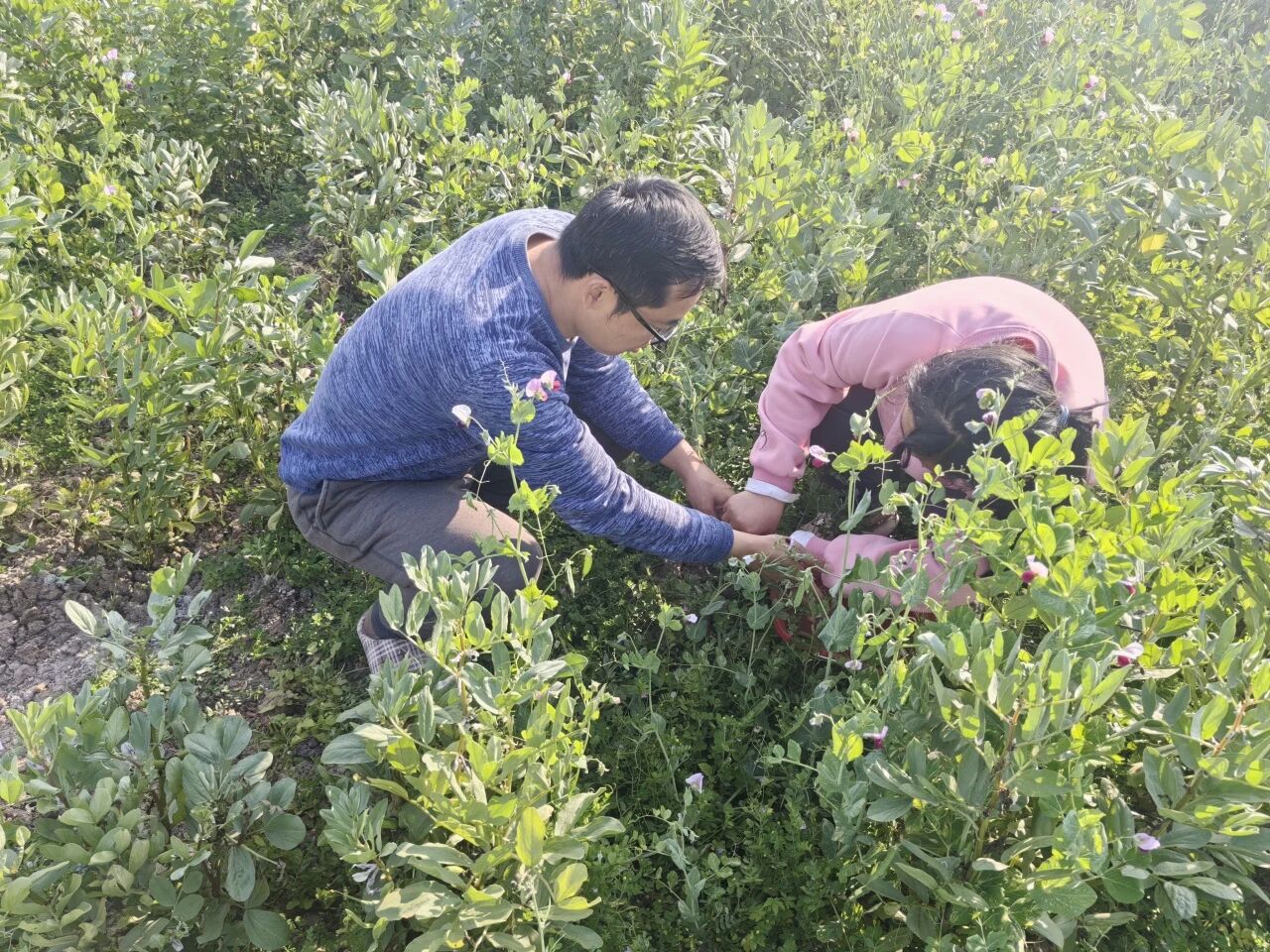
In recent years, pea shoots have become a highly sought-after “premium” vegetable across the internet. On the Dingdong Maicai app, the price for 200g consistently hovers around 10 yuan, and the shoots one receives are often quite old—too tough to chew for those with poor teeth. Usually, pea shoots at the county market sell for four or five yuan a jin, rising to ten during the New Year. This year, thanks to the village’s pea fields, we enjoyed the ultimate luxury of endless pea shoots.
I checked the official website of the Weiyuan County government, where news reports stated: “Wutong Village has planted over 600 mu of peas, with an output value of 3,000 to 4,000 yuan per mu. Pea shoot cultivation offers high returns and a short growth cycle, yet the harvesting period lasts from October through February of the following year, allowing for 8 to 10 harvests per season. Over 200 households in the village are growing peas. Currently, pea shoots harvested from Wutong Village are sold to cities like Beijing, Shanghai, and Chongqing at a price of 9 yuan per kilogram.”
In this village of fewer than 3,000 permanent residents, where each household has less than 2 mu of arable land, villagers are competing to grow peas. Many young people, recognising the high economic potential of pea shoots, have specifically returned home to lease seven or eight mu of land and become large-scale growers.
There are three “hard’ dishes for the New Year, each involving pork: Shaobai (Sichuan-style braised pork belly), meatball soup, and crispy pork soup. Yet, not one of them is complete without pea shoots.
For Shaobai, only the fattiest parts of the pork belly with skin are chosen. It is sliced open and stuffed with a filling of red beans and black sesame, the skin drizzled with dark soy sauce, and then steamed atop a bed of glutinous rice. A slice of “fatty liver” (Sichuan slang for a succulent slice of pork fat) is silky on the tongue—sweet but not greasy.
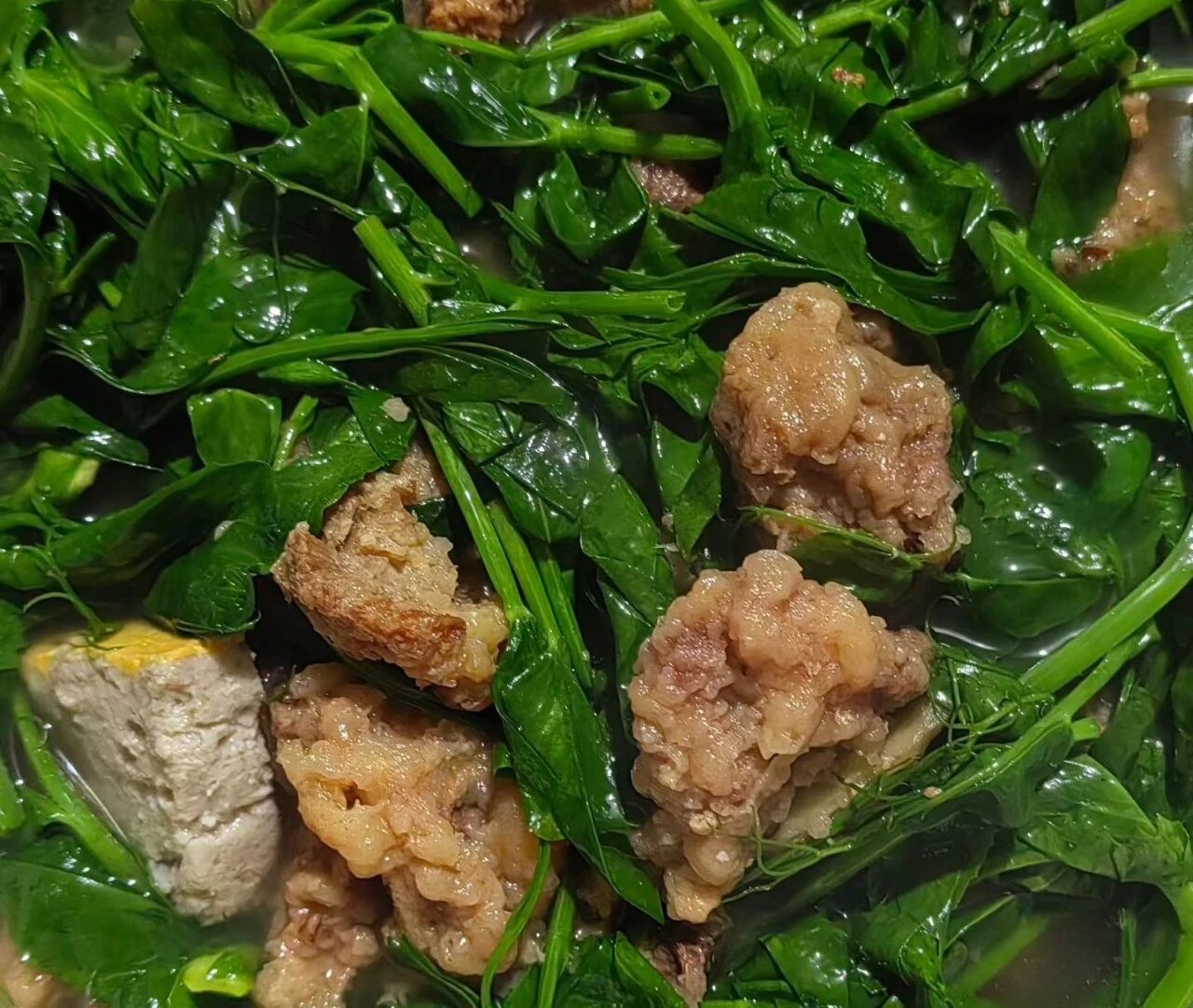
Meatball soup is light and tender. Pork—a ratio of thirty per cent fat to seventy per cent lean—is mixed with spring onion, ginger, salt, pepper, and light soy sauce, then minced and stirred constantly to remove any graininess. Sweet potato starch and egg white are folded in and mixed thoroughly. The meat is then poached into balls; cabbage and pea shoots are added to the soup and blanched for 30 seconds before serving. In the countryside, however, the “balls” are actually square—the meat mixture is frozen into a block and then sliced, making it easier to cook.
Crispy pork soup uses pork ribs or pork belly. The meat or ribs are marinated with salt, minced ginger, cooking wine, sugar, and crushed Sichuan peppercorns. A batter is made from sweet potato starch and eggs (mind you, no water must be added), and the meat is evenly coated. It is then fried in rapeseed oil until golden brown. Finally, the fried pork is simmered in a soup until tender, and cabbage and pea shoots are blanched in at the end—a step identical to the meatball soup.
IV. Eating Meat in the Countryside
Pork is the staple choice for local home cooking. Prices vary depending on the cut: the least desirable fat is 8 yuan per jin, pork belly 15, ribs 22, and marrow bones 30. Cold-tossed pig’s ears and head meat go for 25 yuan per jin. Not many households in our village raise pigs; if a family hosts a banquet for the New Year, they will hire a professional slaughterer to come to the house. Other villagers wait until their piglets reach about 300 jin before hauling them by tractor to a nearby pig farm. Although the pork eaten in the countryside is also bought, after boiling, the pork belly is springy and tender—far tastier than the hard, rubbery discounted belly pork found in city supermarkets.
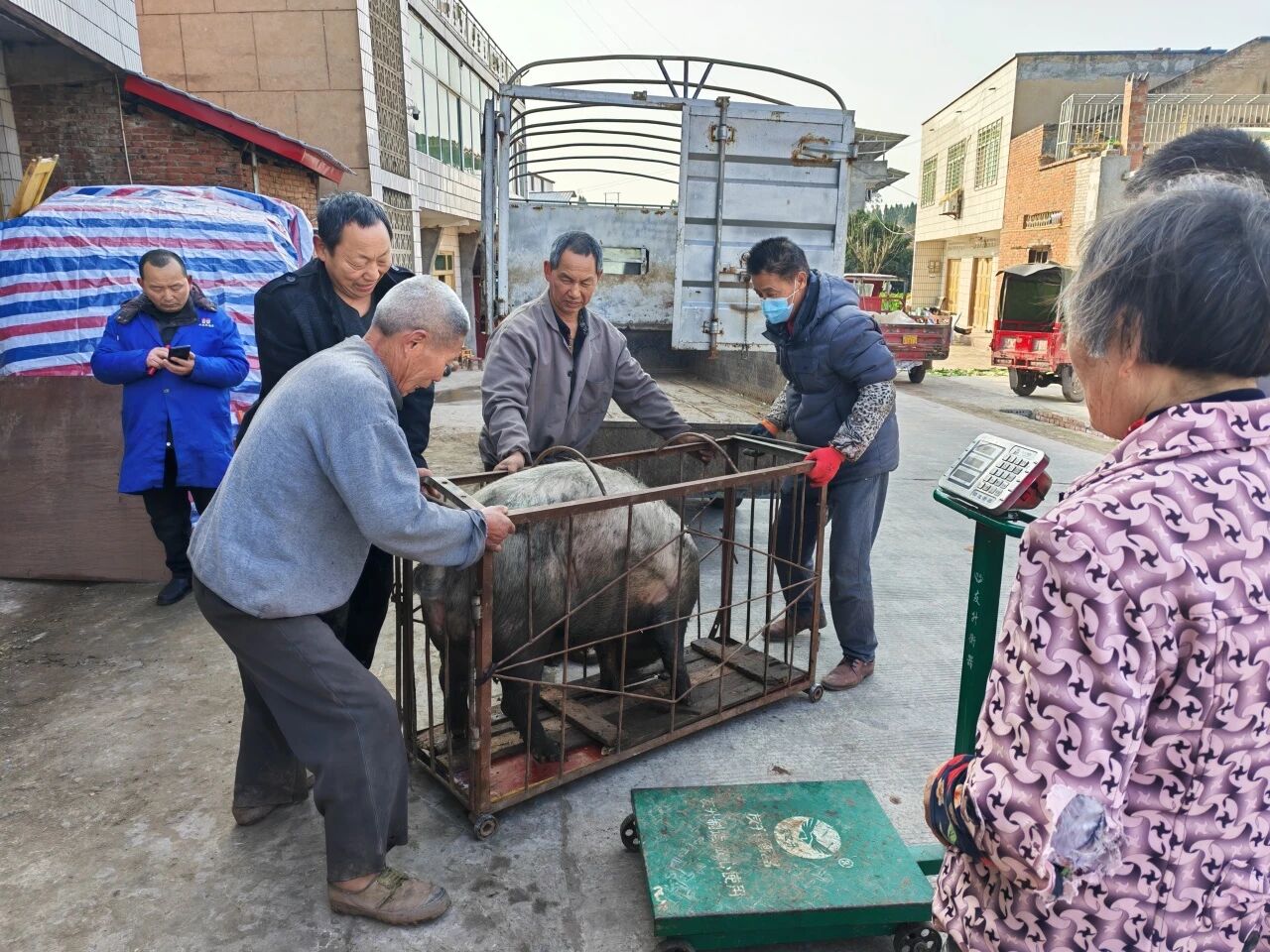
In the Sichuan countryside, the elders follow the traditional rural biological clock, rising and setting with the sun; the concept of time is very fluid here. Shu’er and I spent our days in leisure, wandering aimlessly through the fields. On the day we climbed the hill to visit Yao-die (my father-in-law’s youngest brother), I saw several men carrying a pig to be weighed before loading it into the back of a small lorry to be taken to the township butcher.
By my reckoning, we spent 20 days in the countryside from 8 February to 3 March. Between the three of us and various relatives, we ate roughly a tenth of a pig (including the ears, head, snout, and belly), dozens of white crucian carp, visited the township’s morning market 18 times, and spent 19 days admiring the rape blossoms. This trip back to the village cured Shu’er’s fear of dogs. She spent her days crouching by the chicken coop, waiting for the glossy black hens to lay, then retrieving fresh eggs still sticky with droppings, hoping her cousin from the county town would return to Grandfather’s old house to take her out to play.
It was a warm winter; by mid-February, the chirping and murmuring of swallows could be heard in the courtyard. There is a saying in the village that it is a good omen when swallows build their nests under one’s eaves. On the day the warmth returned, we left the courtyard quietly, for fear of disturbing them. The rape blossoms swayed in the wind, turning the hills and valleys a brilliant yellow. Until next year, then—to the rustic flavours of Sichuan.

All images in the text provided by the author
Editor: Xiao Dan