
Spring Lambing: What’s Worrying Ordos Herders?
Anthropologist Dr Wu Ri Han’s non-fiction work, *The Spring and Autumn of a Pastoral Veterinarian: Treating Settled Herds and Wandering Diseases*, records these developments in meticulous detail. It was awarded third prize in the 2022 Frontline Non-Fiction Writing Fellowship. The following is an excerpt from the piece.
Reproduced here with the permission of Frontline and the author. The WeChat original content tag is retained solely to protect copyright. Frontline was established by Matters Lab and the Renaissance Foundation to provide grants and editorial support for independent writers. You are welcome to subscribe to their official website at frontlinefellowship.io for the latest news on calls for submissions, events, and workshops. For enquiries, email: fellowship@matters.news.
The timing and duration of the lambing season are directly linked to breeding activities in the autumn. Skilled herders always plan several steps ahead. Meticulous care, feeding, and managed breeding of rams during the autumn months are essential to ensuring lamb survival and a smooth lambing period.
The livestock herds of Mongolian pastoralists are traditionally known as the ‘Five Livestock’, comprising cattle, sheep, goats, camels, and horses. Among these, sheep and goats are classified as small livestock (勃格玛拉, *bog mal*), while cattle, camels, and horses are regarded as large livestock (勃特玛拉, *bota mal*).
Herders in Ordos also refer to *bog mal* as ‘*gar mal*’, meaning ‘livestock grazed within arm’s reach’. This is because tending small livestock demands constant attention and care from herders, and their grazing grounds are never as remote as those used for cattle, horses, and camels.
I
Goats, by contrast, are lively and curious, easily distracted, and often wander far from the grazing ground as they follow the wind in search of forage. Yet their calls are loud enough to serve as a warning. Grazing the two species together allows their differing traits to balance each other out.
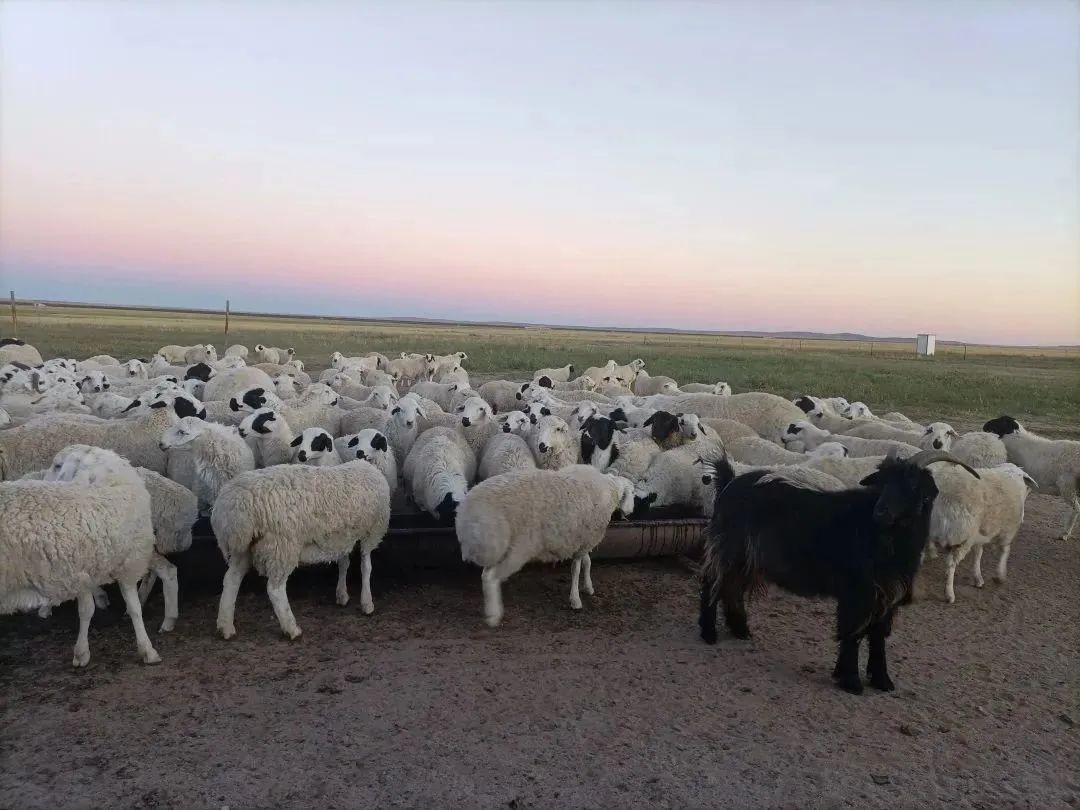
Jirimutu’s mother, now in her eighties, grazed a flock consisting mainly of goats in her youth. Since wire mesh fencing was installed, goats have frequently squeezed under the wire and strayed onto neighbouring pastures, leading to frequent disputes and arguments between neighbours. It is precisely because of the goat’s inherent temperament that local herders have gradually abandoned them.
In 1953, the central authorities and the Inner Mongolia Party Committee decided to optimise and improve local livestock breeds to enhance the quality and yield of animal products. Sheep breed improvement in S Banner began in 1957. By 1971, the introduction of fine-wool stud rams from Xinjiang had expanded from a few pilot people’s communes (now known as sumus and towns) to cover the entire banner.
The offspring of local ewes in S Banner crossed with Xinjiang fine-wool stud rams were named the ‘Ordos fine-wool sheep’. Compared with indigenous sheep, the Ordos fine-wool sheep produced finer fleece, commanding purchase prices of up to around 40 yuan per jin.
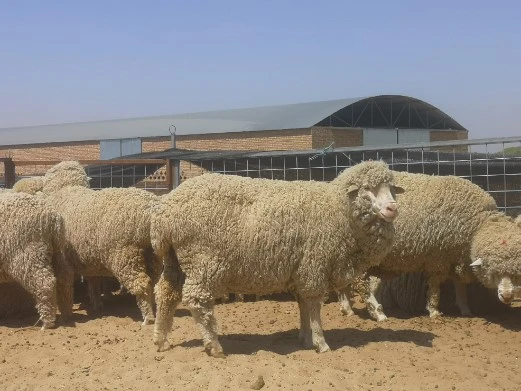
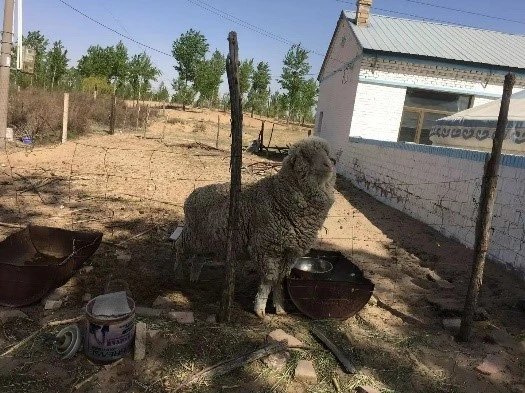
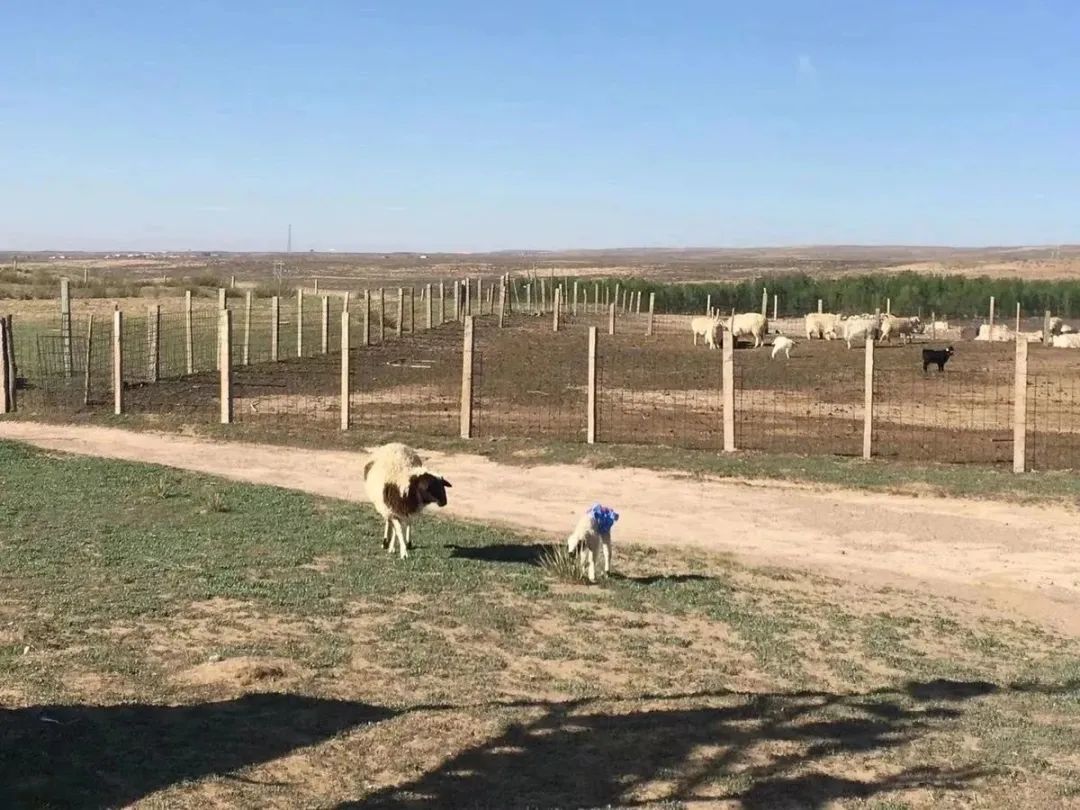
Before sheep breed improvement was introduced, S Banner herders’ small-stock flocks consisted of local sheep and goats. At that time, spring lambing and kidding focused mainly on goats, while sheep lambing was already completed before the arrival of spring. The indigenous sheep of S Banner belong to the fat-tailed Mongolian breed: they are sturdy, cold-hardy, and give birth to large lambs with high survival rates. Consequently, even with limited pastoral infrastructure, winter lambing would not adversely affect lamb survival.
II
Daytime rest is equally scarce. They must keep a steady watch on ewes that could give birth at any moment, while also checking whether newborn lambs are up on their feet, nursing on their own, and in need of being moved to a warmer shelter.
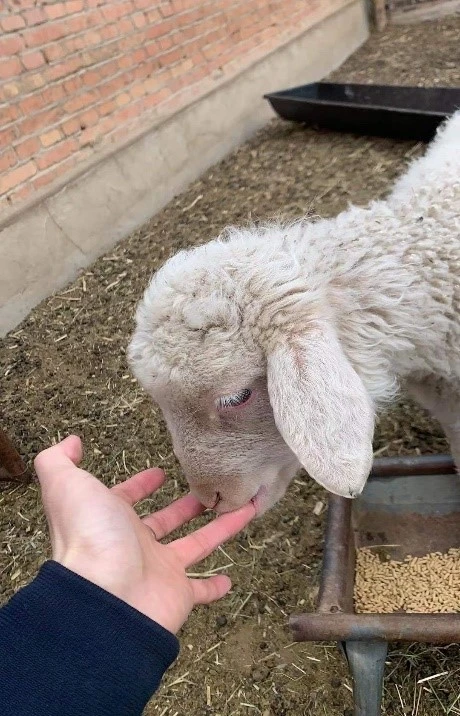
When the weather turns exceptionally cold, herders wrap the lamb’s back and belly in a worn cotton-padded jacket for warmth. During labour, if the ewe shows signs of a difficult birth, the children in the household would be called to assist.
They would feel for the lamb’s position and condition, then either correct the positioning or gently pull the lamb through under the adults’ direction. A sheep’s birth canal is narrow; an adult’s hand simply cannot manoeuvre inside it. But nowadays, during the lambing season the children are at school, and most board there, leaving them unavailable to help with the family’s work.
Three
Quenamu, a senior vet in L Sumu, S Banner, explained that over recent years, he and a few colleagues have averaged around 40 to 50 Caesarean sections daily during the spring lambing season, predominantly on sheep. Station Manager De, along with vets Qinggele and Dayang, routinely made emergency calls until two or three in the morning. After I left W Sumu, I heard that Dayang had fallen asleep at the wheel while driving to a call, causing his vehicle to roll into a roadside ditch.
One day in early March, Dayang received an urgent phone call from Shiri. One of Shiri’s ewes had been in labour since the previous day. After 24 hours without a successful delivery, the ewe was completely exhausted and had lost its appetite.
Upon arriving at Shiri’s home, Dayang asked Shiri’s wife, Udabala, to prepare a basin of warm water, some towels, and washing-up liquid. Meanwhile, he and Shiri worked together to carry the ewe out of the pen and lay it flat on a clean cardboard box on the brick yard in front of the house.
Dayang first shaved the wool from the ewe’s lower abdomen. He then scrubbed the belly with warm soapy water and dried it thoroughly with a towel. He took out his scalpel and made a crescent-shaped incision along the approximate line of the uterus. The abdominal wall slowly parted. Reaching inside with a blue rubber-gloved hand, Dayang probed the area and discovered that the uterus had twisted, causing the dystocia. Due to the prolonged delay, the lamb inside had stopped breathing.
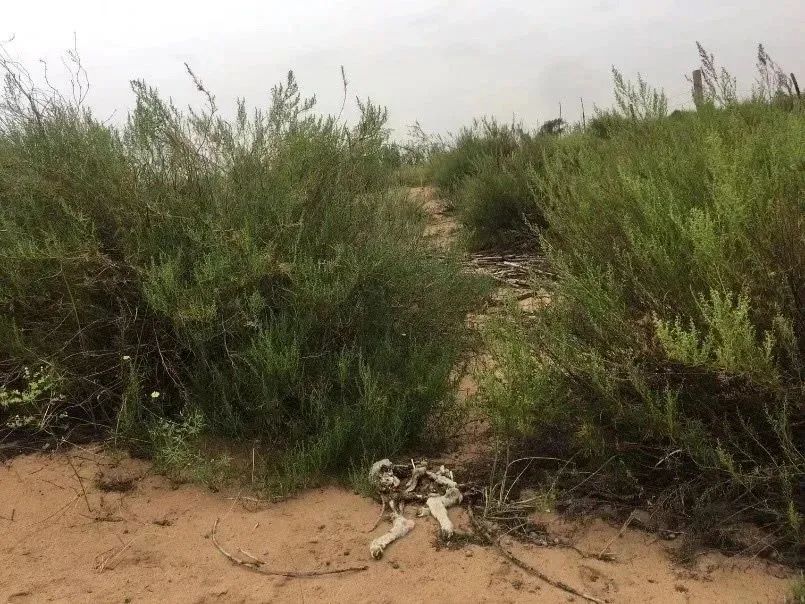
Dayang pulled the lamb’s carcass from the incised uterus. It was wrapped in a translucent membrane stained pink by blood. Shiri placed the carcass and placenta together into a white flour sack that had been prepared in advance, intending to bury them under an artemisia shrub later.
Ordos fine-wool sheep are remarkably docile. Even after such an intricate operation, no sedatives are required; two people are enough to hold the head and hindquarters in place. They only let out a few low, sharp bleats when the pain becomes unbearable.
IV
After nearly two hours of frantic work, we were invited indoors for tea. As I poured the second bowl, I heard Wudabala calling out to Dacang from outside. Seerji knelt down, resting the ewe’s head on his knee, and pulled back her eyelids: the whites were completely clear, without a trace of redness. Before the bottle of nutrient solution had even finished dripping, the ewe’s breathing grew steadily weaker, until all signs of life had faded.
Seerji regretted not calling Dacang sooner. As we prepared to leave, Seerji and Wudabala placed two hundred yuan on the low table, asking Dacang to accept it. “When the ewe cannot be saved, there is no fee,” Dacang replied. Hearing this, Seerji did not press the matter and saw us to the door.
Dacang was left with a tinge of guilt over failing to save the ewe. Seerji and Wudabala offered no words of reproach, though herders are quick to voice their bewilderment, and at times their anger. Some will attribute the ewe’s death to vaccination or the incompetence of the veterinarian.
Veterinarians maintain that dystocia in female livestock has nothing to do with vaccination, but rather stems from far more complex factors. In almost every case involving ewes, the underlying cause is “uterine torsion”.
V
When herders in A Gacha introduce new breeds, they typically source stud rams from outside the banner or even the city, while the breeding ewes remain Ordos fine-wool sheep. The imported rams are tall and heavily boned, creating a stark size mismatch with the local Ordos ewes. This disparity often leads to difficult births due to oversized foetuses.
S Banner has endured severe drought for three consecutive years. Following rainless summers and autumns, pasture vegetation grows increasingly sparse over winter and spring. The drought makes the cold months particularly arduous for herders. They either supplement natural forage with crops grown on feed plots or purchase large quantities of hay, silage, and commercial feed to sustain their livestock. In A Gacha, nearly every household spends between 50–80% of their annual income on fodder and feed alone. During lambing season, herders switch to compounded feed to boost the ewes’ colostrum production and safeguard the lambs’ health.

Whenever a herder walks into the pen carrying a plastic bucket of feed, the ewes scramble towards the trough. Packing shoulder to shoulder, they thrust their heads into the feeding slot, inevitably trampling and jostling one another. Veterinarians believe this frantic crowding and running during feeding is a likely trigger for uterine torsion.
Six
In A Gacha, aside from a handful of herders who amassed considerable wealth thanks to the surrounding coal mines, most supplement their income through seasonal labour, selling livestock products, or driving trucks for coal transport.
Yet, regardless of these side ventures, selling batches of spring-born lambs in late summer and early autumn remains the primary source of household income. Consequently, the ewes’ lambing success in spring and the healthy growth of the lambs directly determine autumn earnings. Moreover, the annual live-animal trading prices for these flocks are subject to fluctuations in the broader meat market.
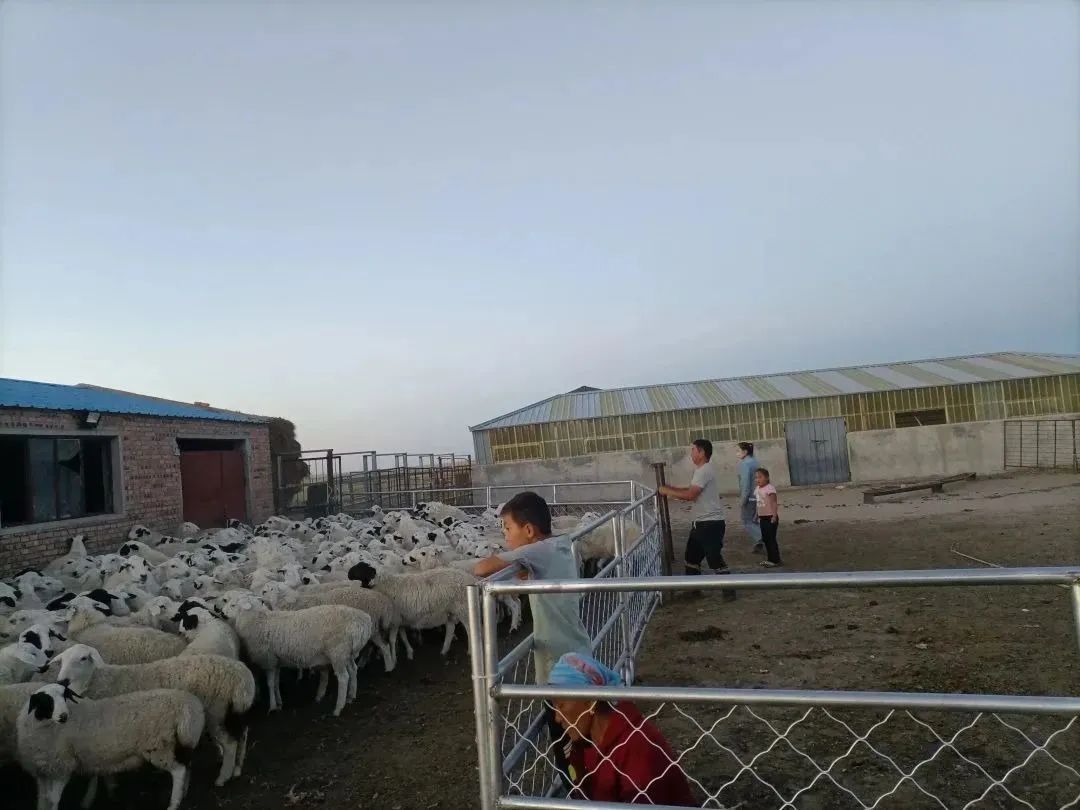
If Seriji had called a vet on the first day when the difficult labour began, both the lamb and the ewe might have survived. Da’yang shares this frustration.
Deciding when to bring in a vet is a delicate calculation for herders. On one hand, they hope to manage the illness through traditional remedies, folk techniques, or the animals’ own resilience. On the other, they wait for the right moment to justify a paid intervention.
However, if there appears to be no hope of saving the animal, herders will simply let it go. As a result, when vets are finally called, they often arrive a step too late.

Unless otherwise credited, all images in this article are by the author.
The layout has been slightly adjusted from the original.
Originally edited by: Gu Yuling / Zaichang