● Zhiliangtian Eco-Farm, situated on the edge of the Tengger Desert, is a partner farm for Foodthink’s Agroecology Internship Programme. If you wish to study agroecology and are interested in desert and nomadic cultures, click here to submit your internship application! Photography: HebaodanIn late 2021, I left Shanghai and the new media industry, where I had lived and worked for eight years, to embark on a gap year. I felt a freer force calling to me from deep within. I suppose it was a seed planted while reading The Omnivore’s Dilemma. Once, I was merely interested in gourmet food and cooking, but the book ignited a profound curiosity about food in me, opening doors to ecology, anthropology, political science, economics, agriculture, religion, and more. It was also while reading it that a seed took root in my mind: I must go to a farm, go to a farm, go to a farm. And then it all aligned: I came across Foodthink’s Lianhe Programme last year, I had four and a half months of free time, and I found Zhiliangtian Farm in Alxa, where I began my farm internship.
I. The Ecological Farm at the Desert’s Edge
● The desert-crossing road in the Tengger Desert. Photography: Hebaodan
Before I visited, my only prior knowledge of Alxa was that they grow plenty of saxaul trees there. It’s also common for people around me to remark: “So Alxa is actually in Inner Mongolia? I always thought it was in Xinjiang.”
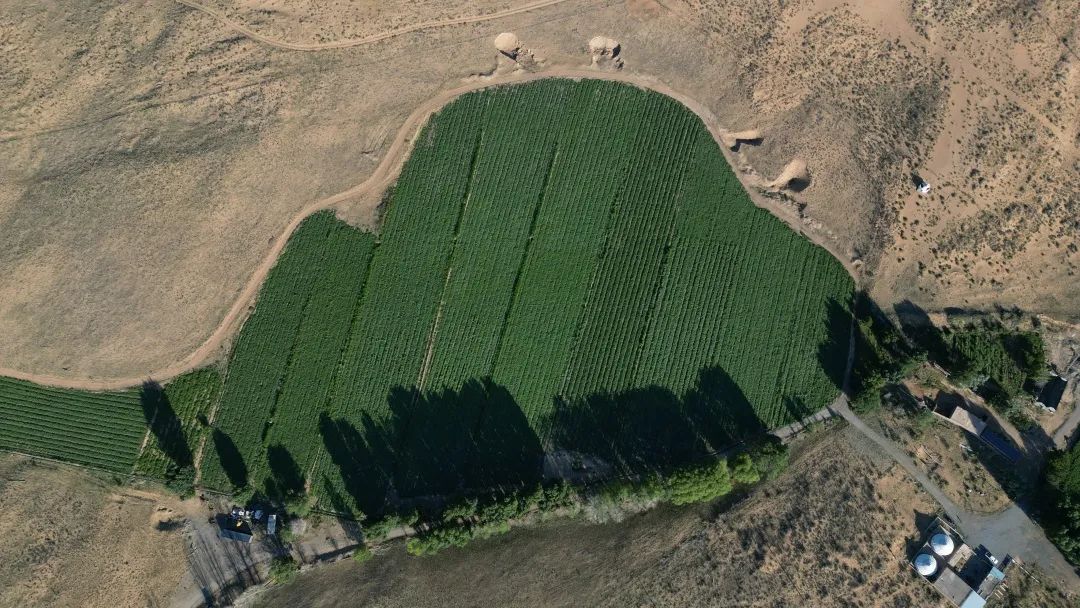
Situated in the far west of Inner Mongolia, Alxa covers 248,100 square kilometres—roughly fifteen times the size of Beijing—yet has a population of just over 200,000. Three of China’s eight major deserts—the Badain Jaran, Ulan Buh, and Tengger—encircle the region. In Mongolian, Alxa translates to “the land of five colours”. Zhiliangtian Farm is situated right on the edge of the Tengger Desert.
The region’s arid, rain-scarce climate has made it one of China’s most severely desertified areas. Consequently, Zhiliangtian Farm’s foremost mission is to restore gradually degraded farmland in desertified zones back to fertile land, rehabilitate the soil, conserve agricultural water, and ultimately inspire more farmers to transform more land.
“From Zhiliangtian’s very first year, we’ve consistently emphasised,” says farm founder Mr Ma Yanwei, “that producing healthy, safe food is merely an outcome. What truly demands our focus is the continuous rehabilitation of the soil and ensuring a more sustainable groundwater supply here.”
● An ecology graduate, Ma Yanwei joined the Alxa SEE Eco-Association in 2005. After leaving the organisation in 2015, he settled in Alxa and founded the Zhiliangtian Ecological Farm.Driven by my exploration of food, I began to delve into ecological agriculture, desertification, and nomadic culture, took hands-on part in environmental conservation, and came to truly grasp the meaning behind “the Alxa you simply cannot leave”.
II. Romance from the Fields
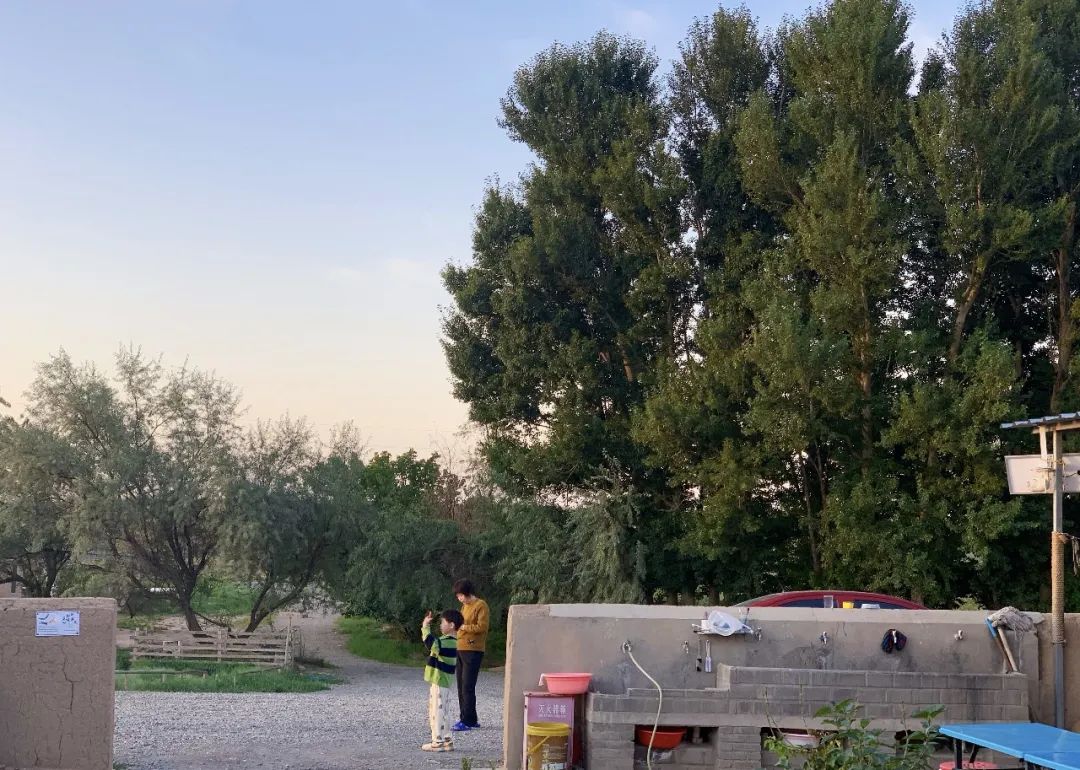
● The outdoor wash station.
In the farm’s courtyard sits an open-air wash station, reminiscent of an office break room or a village square, serving a vital social function. When the place is busy, a dozen or so people gather there each morning—sometimes farmhands, sometimes students and teachers from study tour groups. New faces keep joining in, catching the morning sun and chiming in with a “Good morning.”
“Morning,” “Good morning”—the greetings overlap in a cheerful chorus. This is my favourite time of day. Every day brings a fresh start, just like the sunrise and sunset. Each day deserves to be taken seriously; yesterday’s joys and sorrows are left firmly behind.
●农场的番茄红
●农场的西梅紫。
●农场的南瓜黄
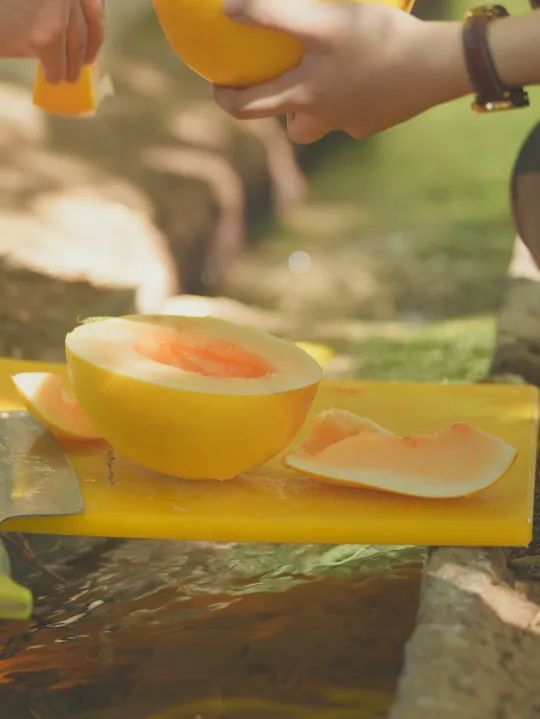
●农场的蜜瓜黄
I favour light-coloured clothes, make a habit of sitting on the ground, and often wander into the vegetable plots. Consequently, nearly every garment that’s seen the fields bears the stains of grass and vegetable juices. At first, I’d scrub them diligently; later, I simply let it be. Why not? What wonderful patterns—gifts from nature, after all. With tie-dye being so popular online these days, my garments are dyed with entirely natural pigments, worth cherishing.
Later, an artist arrived at the farm. One day, while I was simmering prune jam, he specifically asked me to save some of the juice for his painting. Think about it: our farm’s palette is wonderfully rich—prune purple, apricot yellow, tomato red, mint green… It reminds me of hues like young onion green, iris purple, and fallen chestnut brown from the book *Traditional Japanese Colours*. Truly, this is romance straight from the fields.
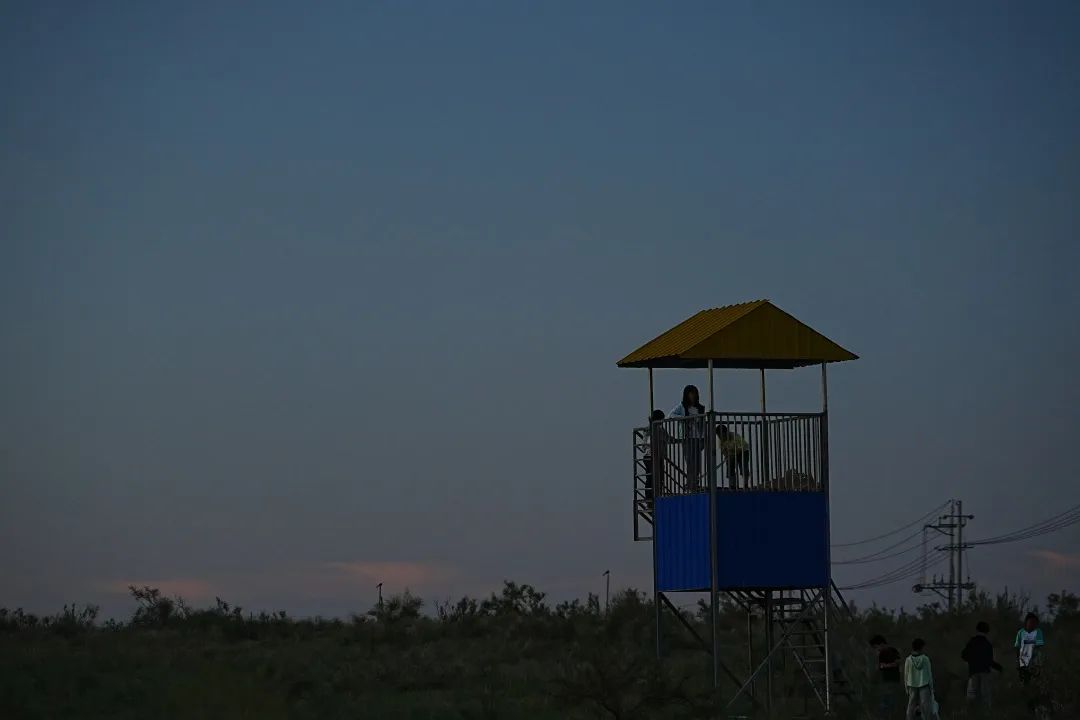
In the evening, while boiling apricot jam, I’m drawn by a purple sky and hurry to watch the sunset. At night, while washing up, I look up to see the stars twinkling and the Milky Way stretching out, then dash out into the courtyard with my toothbrush still in hand, just to stare into the distance. Sitting on the ground amidst the rolling sand dunes, flowing through a yoga sequence, I feel gently embraced by the world.
● At sunset, parents and children attending the farm’s study camp enjoy the view from the observation deck. Photograph by: Hebaodan
III. Wild Kids, Unafraid of the Rain
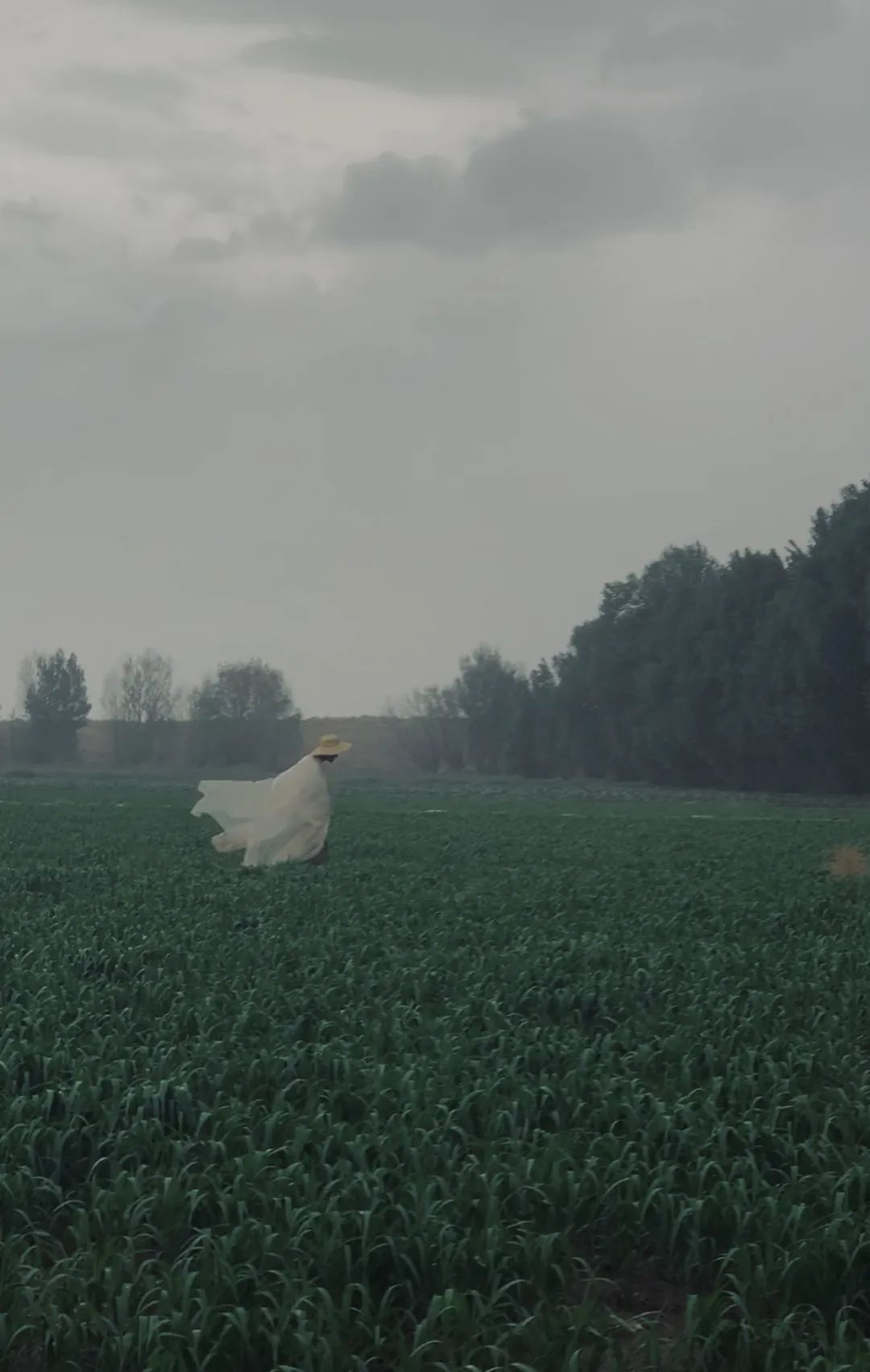
Alxa received its first rain of the year in mid-June last year. The moment the droplets touched the ground, I felt a jolt run through me, sparking a joy so fierce I nearly jumped for happiness – we were simply so parched! I first rushed to the sandy patches to check on the saxaul trees. After several severe sandstorms in spring, they could finally have a proper soak. Then I headed for the millet fields. Standing on the ridge and looking out, the thousands of acres were completely deserted. Heavy drops lashed against my face, making it nearly impossible to keep my eyes open. With little shelter in the open fields, the wind drove straight through me from front to back. The sky darkened, and the gale howled.
● Zhang Bin, an intern with the Lianhe Project, sprints through the rain wrapped in a plastic sheet.At first, fear set in, but excitement soon took the upper hand. Deciding that celebrating alone wasn’t quite enough, I hurried to the yard to fetch another intern, intern Zhang Bin, to join me in the fields for some photographs. We laughed and took pictures the entire way. To be wild children for a while brought us genuine joy. The sudden downpour washed away traces of my “pampered ways.” Accustomed to life within concrete-and-steel walls, I had convinced myself I simply couldn’t endure it. In truth, I proved far more resilient than I ever imagined. When confronted with uncontrollable shifts in the environment, resist the urge to doubt yourself or complain about your surroundings. Accept what comes, then find a way to venture out, for we are, after all, an intrinsic part of the natural world. This is the lesson Alashan has taught me.
IV. “Together with you, safeguarding the land and our tables.”
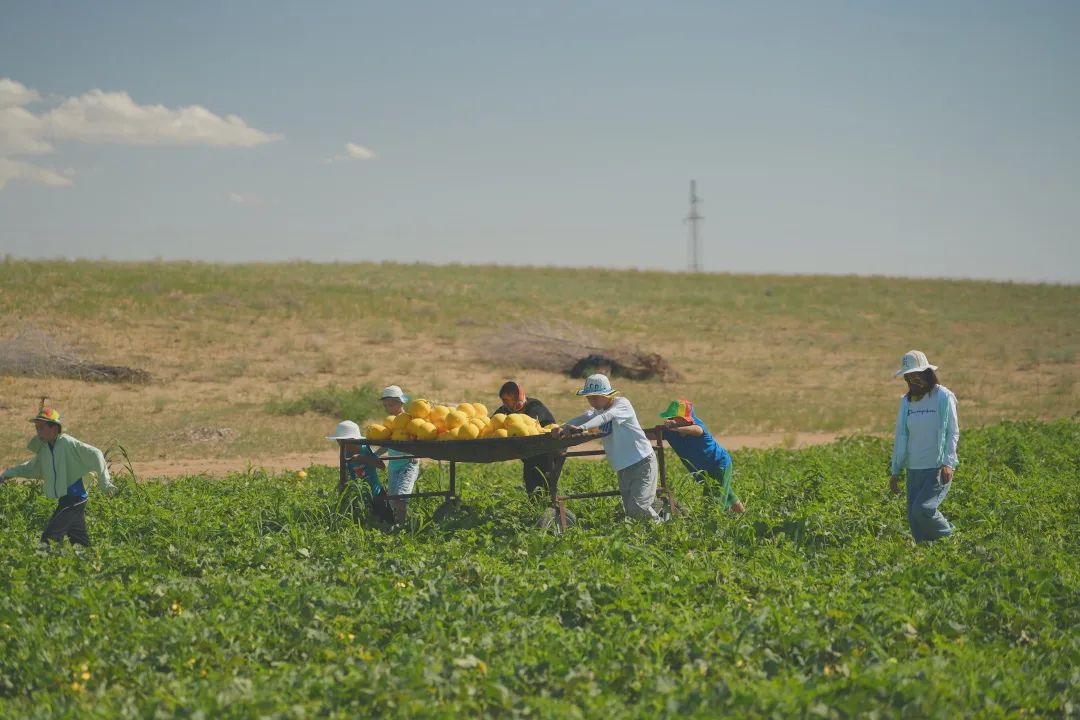
● Children from the educational camp harvesting melons together. Photography: Hebaodan
Desert melons are Zhiliangtian Farm’s main commercial crop. They ripen and reach the market in July and August each year, selling primarily through online channels to customers across the country.
Customers are frequently asked why our melons carry such a high price tag. To be fair, to the average shopper, they look much the same as others on the market, yet ours cost twice as much.
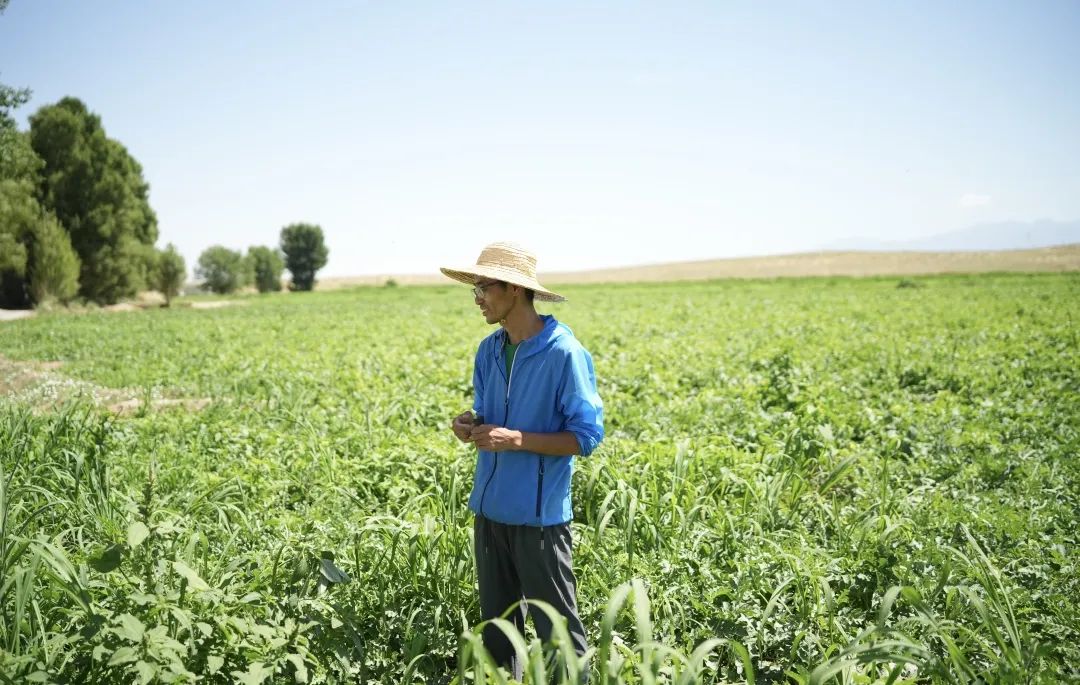
What remains unseen is the considerable labour and investment Zhiliangtian Farm dedicates to environmental protection and ecological restoration. The melons are fertilised with clean sheep manure from grazing areas and home-grown green manure. Weeding is carried out by hand three times a year, and each vine is carefully thinned to a single fruit. While other growers might harvest 4,000 to 5,000 jin per mu, we yield just 1,200.
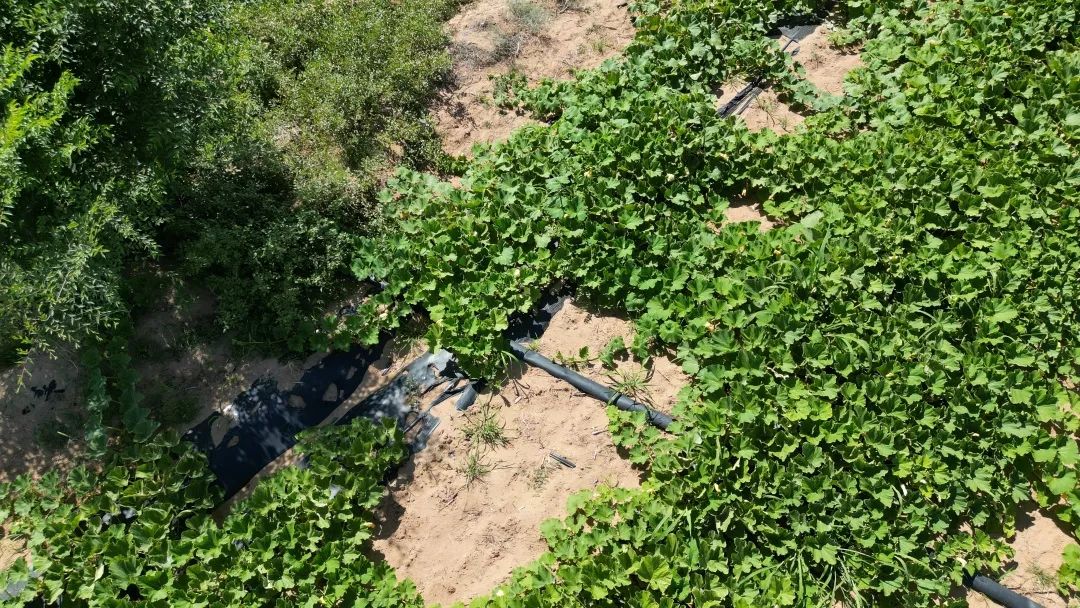
● Drip irrigation tapes on the farm. Unlike traditional furrow-irrigated beds, Zhiliangtian cultivates its melons using level-ground drip irrigation, significantly reducing water usage.Those 1,200 jin first undergo an “inspection” by magpies, followed by careful hand-picking. After surviving the rigours of delivery, the ones that finally reach the consumer in perfect condition are truly the finest specimens from each patch of land. Melons grown this way boast a richer flavour, are kinder to the environment, and better for our health. To eat is to participate in agriculture; every purchase casts a vote. We hope more consumers will come to appreciate the environmental and agricultural stories behind their food, and lend their support to genuinely ecological farmers.
V. Step outside; the answer lies along the way
In Alxa, I witnessed the majestic scene of “a solitary wisp of smoke rising straight from the desert, the long river beneath a round sunset,” and truly understood what it means to say, “where my heart finds peace, that is home.” When I first encountered these lines, they struck me as either beautiful or profound. But standing in these fields, they live in every breath—indelible and deeply felt. I am grateful to the food that led me here, and to every encounter along the way.
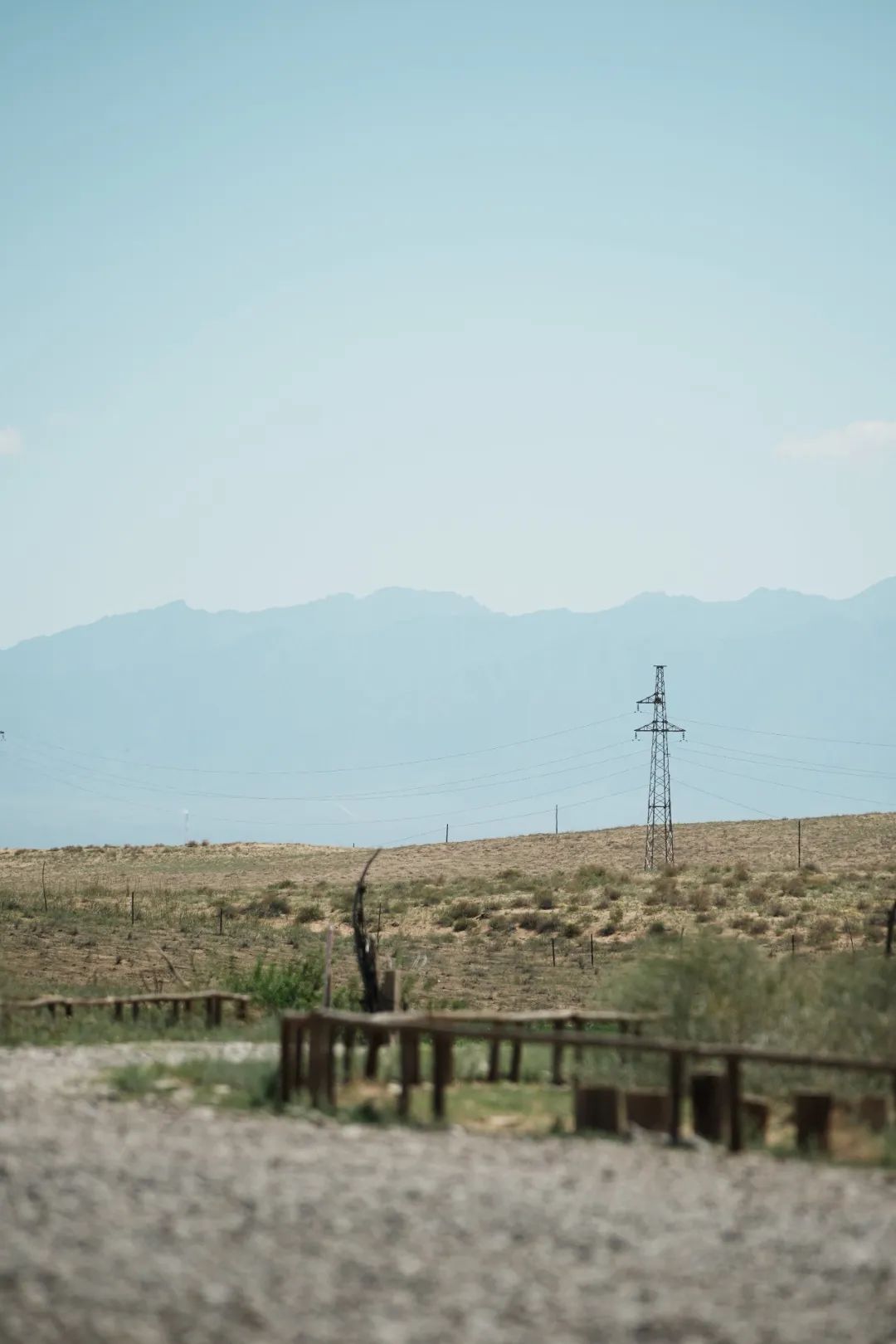
● On clear days, the Helan Mountains stand in sharp relief from the farm.
Foodthink Contributor | Tianshelao’eng
Advocate for the Slow Food movement and a life of wandering. There’s no better way to unwind than weeding the fields or cooking a meal. I write under the pen name Tianshelao’eng, ever hoping to become neighbours with the poet Su Shi.
About the Ecological Farm Internship Programme
Applications are now open for Foodthink’s second ecological agriculture internship programme, with a deadline in just two days! In 2022, 18 young people from diverse backgrounds took part in the inaugural cohort, heading to 12 ecological farms across the country to complete placements lasting from three months to a year. We encourage participating farms to document and share their invaluable expertise in farm management, agricultural techniques, and marketing, providing a practical reference for young people looking to return to rural life and pursue ecological farming. At the same time, our interns bring their own varied skill sets to contribute fresh energy to each farm, while keeping their own learning and trial-and-error costs low for future entrepreneurial ventures back home. If you too are hoping to return to rural life and build a career in ecological agriculture, don’t delay—submit your application today!
Unless otherwise stated, all images in this article were taken by the author.