
The 30-Minute Fresh Food Delivery Myth Starts With the Sorter’s 3 Minutes
Foodthink Says
Was the packer’s error merely an isolated incident? With fresh food e-commerce emerging as a key battleground for platform giants such as Meituan (Xiaoxiang), Alibaba (Hema), and JD.com (7Fresh) in the local services market, the delivery speed of couriers and the picking speed of packers have become vital to maintaining traffic and user retention. While working part-time at Xiaoxiang Supermarket, the author, Yakou, observed that packers on fresh food e-commerce platforms operate under relentless pressure driven by algorithms, data metrics, and piece-rate pay. In this environment, misplaced or omitted items are an inevitable structural issue. On one side lies alienated labour; on the other, unsafe food consumption. Rather than defaulting to a binary standoff between workers and consumers, we should first scrutinise the escalating culture of ‘speedism’ pervasive across fresh food e-commerce platforms.
‘They… eat after their shift ends. There’s no built-in time for dinner on part-time work anyway.’
In March, following the Lunar New Year, I took on a part-time role as a packer at a Xiaoxiang Supermarket in a tier-one city in Guangdong. The job primarily involved picking items once a customer’s order came through, packing them, and handing them over to delivery couriers.
I had initially intended to stay for at least two weeks, but by the third day, following six straight hours of gruelling labour, I developed a fever. It may have been the constant trips in and out of the cold store handling frozen goods, or simply the sheer volume of work. That day, had I not insisted on having an evening meal, the station manager had planned to keep me working from 4:30 p.m. until 10:30 p.m. without a single break.
My health simply couldn’t hold out, so I handed in my notice. Yet I knew that long after I left, a handful of full-time staff would still be there, pushing themselves to the limit: six days on, one day off; shifts of at least twelve hours; tens of thousands of steps a day hauling heavy loads; and only one meal break in the entire day.
With competition in the delivery sector growing fiercer and oversight tightening, Xiaoxiang Supermarket’s ability to tap into and fulfil the demand for online fresh groceries has emerged as Meituan’s new tool for sustaining its dominance in local commerce traffic. Yet this entire operation rests on efficiency and convenience driven by intensive labour, exacting a steep toll on the packers’ bodies and work, which are subjected to relentless control.
I. The Invisible Xiaoxiang Supermarket, The Invisible Packers
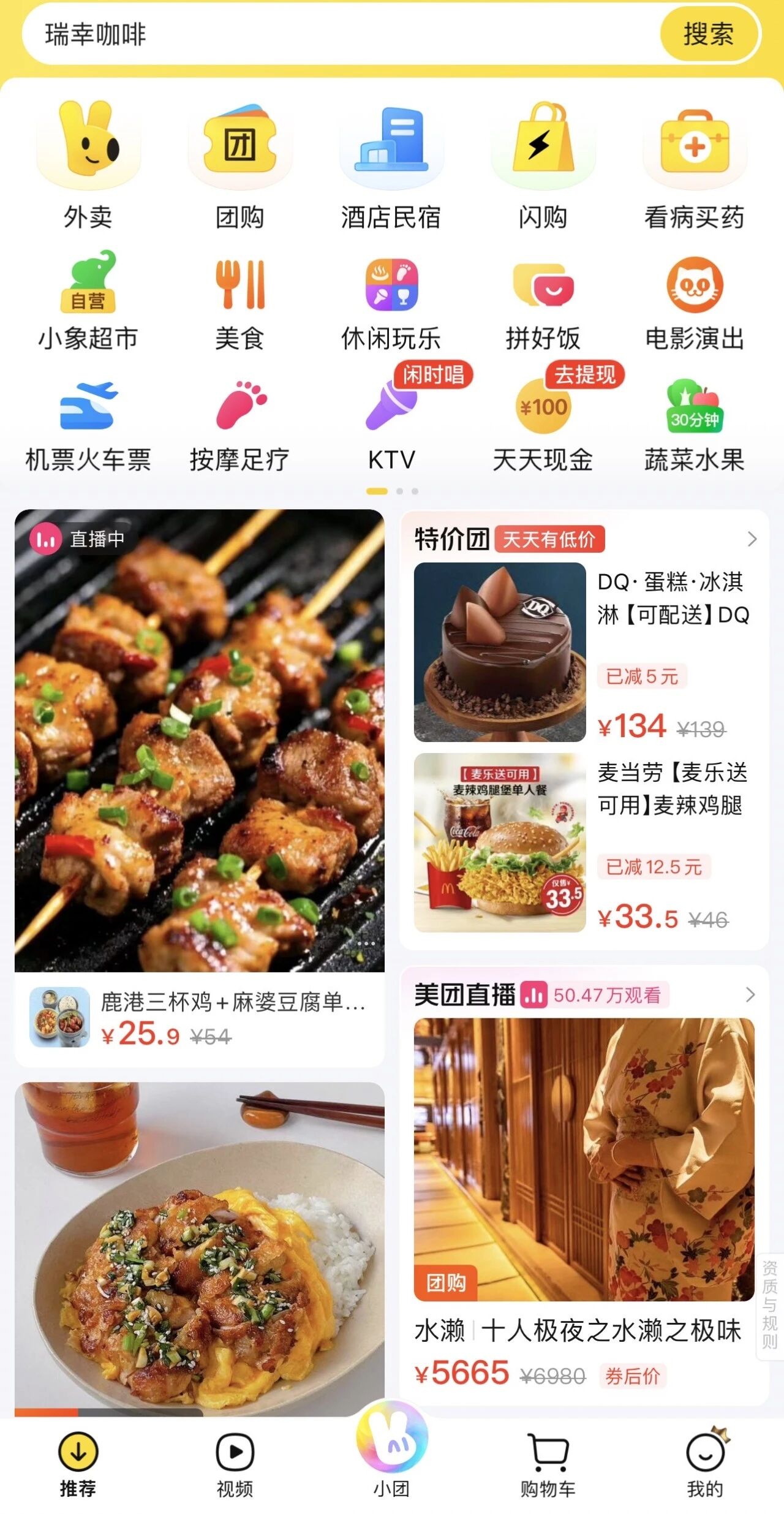
Yet in the physical world, Xiaoxiang Supermarket often slips unnoticed into residential compounds or narrow alleyways, easily overlooked even by those who pass them daily.
The day of the interview marked my first visit to one of their depots. Beneath a towering green sign displaying the logo, three delivery riders in matching green uniforms sat squatting, all appearing to be in their early twenties. One rested their head with eyes half-closed, dozing off, while the other two chatted. Out front, several more stood waiting for orders to come through. Venturing further down the alley alongside the depot, damp walls were marked “Riders Only”. A row of electric scooters lined the wall, where four or five riders were perched, scrolling through their phones.
Unlike Meituan’s couriers in yellow, these riders clad in green are dedicated exclusively to Xiaoxiang Supermarket orders. It is precisely their daily high-speed dash across the city streets that sustains the myth of Xiaoxiang Supermarket’s “30-minute lightning delivery”.

II. The Three-Minute Limit
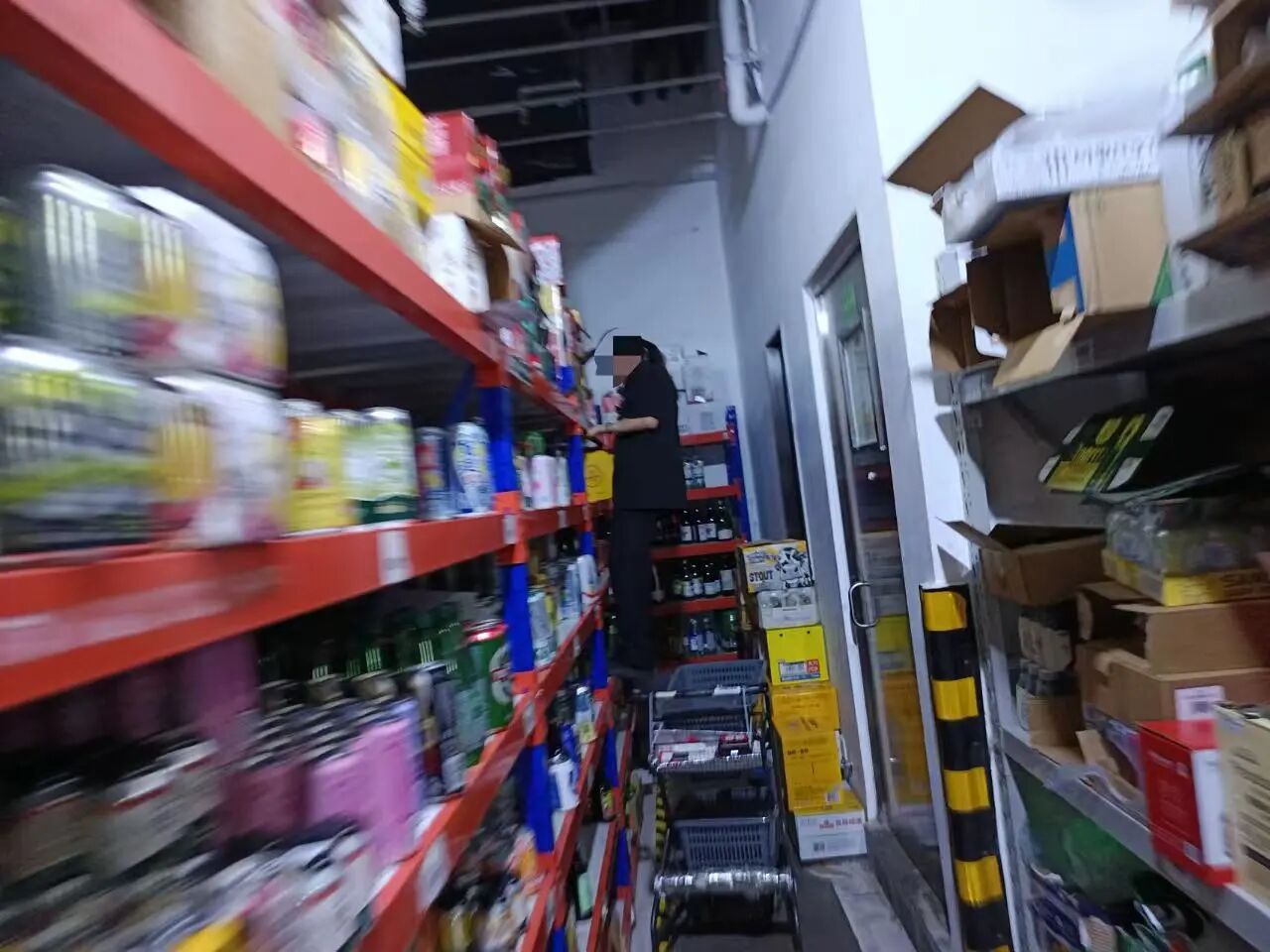
The entire site is a two-to-three-hundred-square-metre warehouse, dominated by shelving units densely packed with stock. Ambient, cool, chilled, and frozen: temperature divides the space into four zones. A sorter’s job begins when an order comes through on the PDA. They must weave back and forth between zones, swiftly gather every item on the list, and take it to the packing station—all in under three minutes. The moment one order is cleared, the next appears on the screen. A tap on “Accept” kicks off another sprint. And so the sorter cycles endlessly through this heart-pounding three-minute rush.
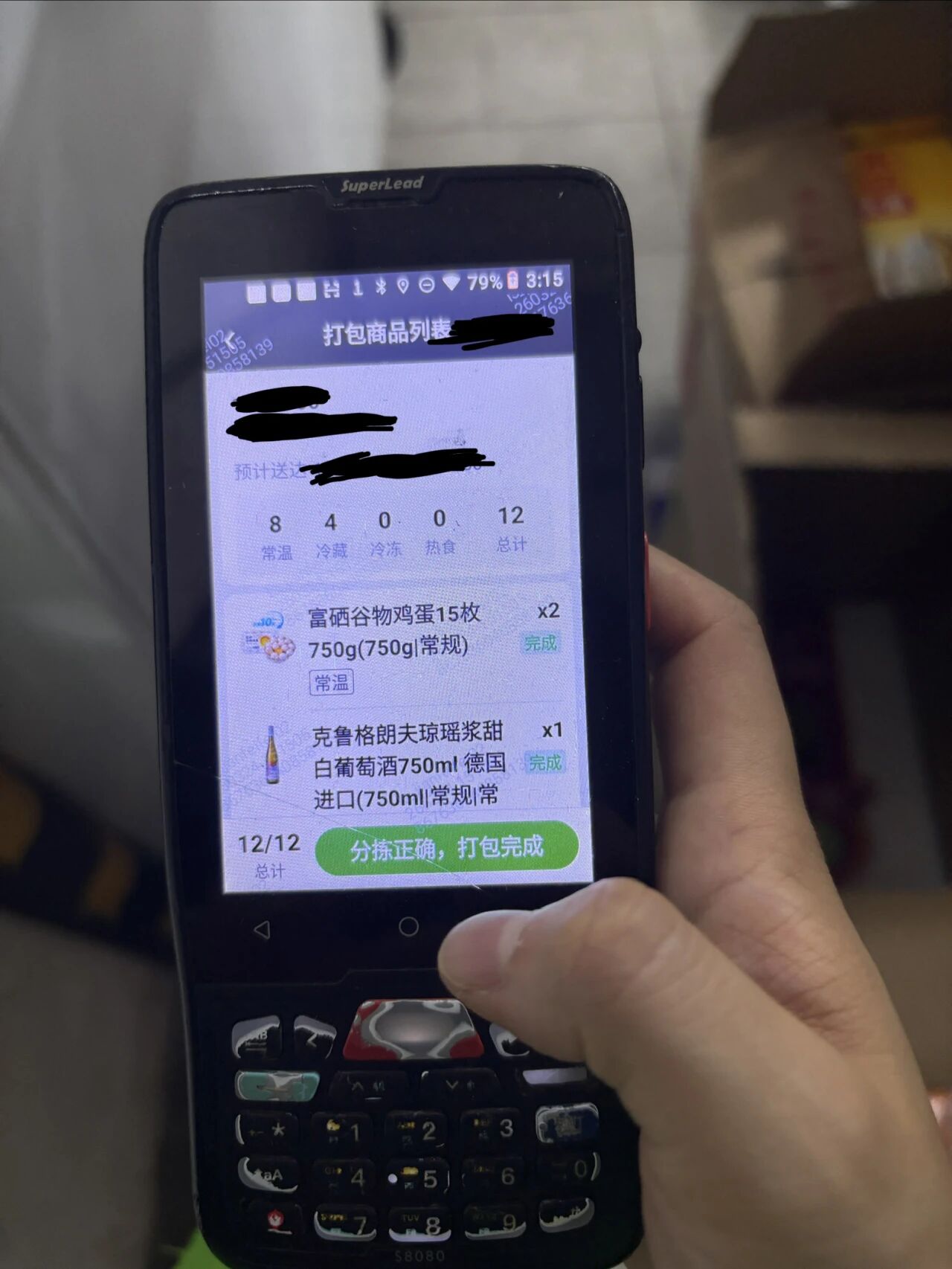
Let me use a single order I personally picked as an example to show what one person can accomplish in three minutes when pushed to their limits.
An order popped up on the PDA. Without knowing how many items it contained, I didn’t hesitate to tap “Accept Order”.
First item: Hami melon. Zone: mid-temp. Code: 03-02-02-01. This string of digits, paired with “mid-temp”, serves as the inventory code. In a warehouse of this scale, you can’t locate anything without one. Aisle three, bay two, shelf two, bin one. I found the melon, scanned the QR code on the rack with the PDA, and then scanned the one on the packaging. First item secured. The plastic bag slung over my forearm instantly felt heavier.
Second item: bird’s eye chilli. Zone: mid-temp. Code: 03-01-06-01. Shelf six is the top tier, out of my reach. The racks stand roughly 1.8 metres tall. Items on the highest level are usually stored in plastic crates, and when I stretch my arm up, I can only just graze the crate’s edge. Using a step stool would be sensible, but locating one, dragging it over, climbing up, grabbing the item, scanning it, and jumping back down—that entire sequence would eat up around 30 seconds. I couldn’t afford to spend a sixth of my total time on just one item.
In the end, I opted to climb the rack—stepping onto the second tier to reach up to the top shelf. I picked this trick up from other pickers my own height. It struck me as excessively risky at first, but everyone was doing it, and it genuinely saved time. Sometimes I’d even brace my feet against two adjacent racks simultaneously to keep my centre of gravity steady. Though a nagging fear of the rack tipping over lingered, I pushed through the anxiety to climb up and down swiftly, driven purely by the need to save every second.
Item three: blueberries, chilled, 07-02-04-03. Item four: ice cream, frozen, 02-03-01-06. I heaved a sigh. Time to head into the cold store. Heavy curtains hung at the doorway, glazed with layers of ice, while inside, over a dozen cooling fans laboured away. I tensed my neck, hunched my shoulders. If humans could roll forward, I would have instantly curled into a ball.
Spend more than a minute and a half in minus twenty degrees, and thoughts of death begin to surface. More than once, after frantically rummaging through cardboard boxes only to come up empty, I found myself wondering if I might freeze to death or pass out from the cold right there. In those moments, the instinct for survival battles the anxiety over looming deadlines in my head. To avoid frostbite, even knowing it would push the orders well past their limits, I’d choose to step outside for a moment before heading back in.
Item five: bread, ambient, 11-04-06-01. Top shelf again. I climbed the racking. Two minutes had already slipped by. The PDA in my hand chimed: ‘Order nearing its time limit.’ Just two items left. It seemed hopeless, but I started running anyway—just like every other sorter, dashing through every corner of the warehouse, running. I still remember my trial shift. I watched others rush past me, some power-walking, others jogging, while the ‘Order nearing its time limit’ alerts continued to echo from every direction. Now, I’m part of that current.
III.“Effective Working Hours”
A single city hosts numerous Small Elephant Supermarket stations, which constantly compete against one another on “on-time delivery” and “low customer complaint” metrics. When a station’s performance lags, it is ultimately the station manager who takes the steepest financial hit.
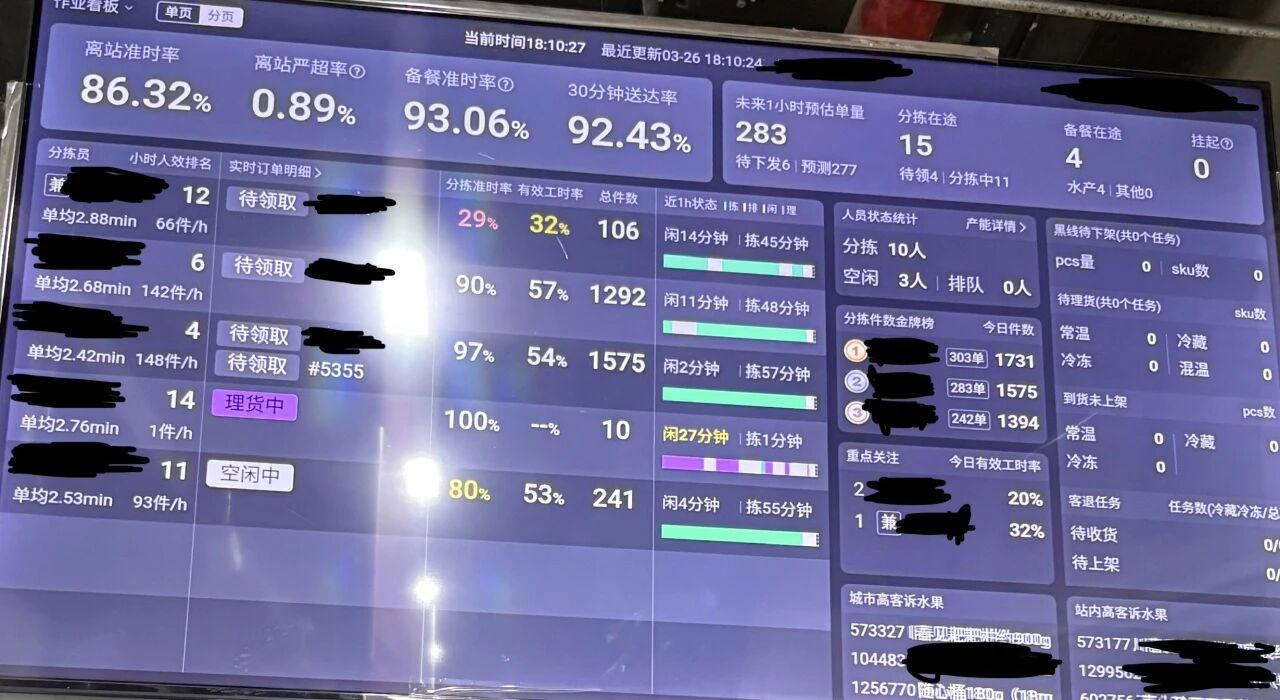
Yet the manager is never left to shoulder this anxiety and loss alone. A large display hangs overhead in the station, broadcasting the site’s overall on-time rate and 30-minute delivery rate in real time. In effect, every second of every worker’s day is held accountable to these numbers.
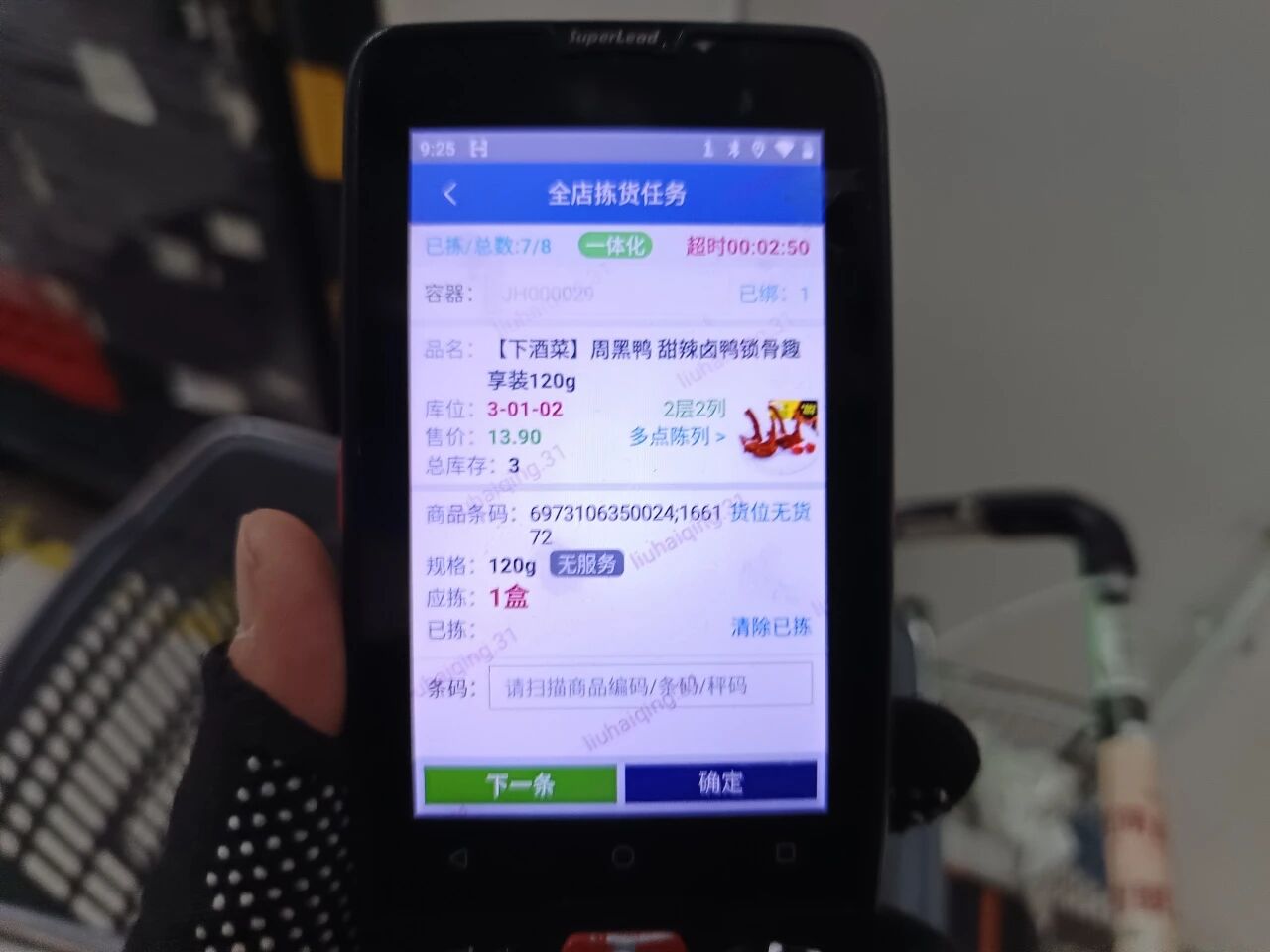
Beyond the aggregate figures, every individual’s real-time output is laid bare: average handling time per order, items processed per hour, live order breakdowns, picking on-time rates, effective working hours ratio… alongside live throughput leaderboards and a watchlist for underperformers. The pressure cascades down from the central platform, transmitted layer by layer through this relentless stream of data.
The recruitment app advertises a rate of 20 yuan an hour for part-timers, but this applies only if you work fast enough. Should I fail to pick 100 items in an hour, my pay drops to just 13 yuan an hour. Under this system, even without a boss cracking a whip, workers are driven to keep running simply to boost their wages.
On my first day, I found myself on the ‘flagged for attention’ list. Fortunately, being a newcomer, I escaped criticism from the station manager. On my screen, my ‘effective working time’ rate sat below 30%. The very notion of ‘effective working time’ left me utterly bewildered. We were plainly on the job, so why should our hours be arbitrarily split into effective and ineffective?
I later learned that if an order is marked as complete and you do not immediately accept the next one, the gap in between is logged by the system as ‘idle time’—that is, non-productive working hours. To avoid triggering timeouts, sorters typically press the ‘packing complete’ button before the item is actually boxed. The packing process itself takes a minute or two, and if fruit or vegetables require careful inspection, the ‘idle’ period stretches even longer. Yet, with no actual downtime, we were left with no choice but to keep moving: barely catching our breath before diving straight into the next order.
Within this relentless, efficiency-driven environment, I also began to feel a profound sense of isolation.
On one occasion, while picking items, I accidentally knocked over a box of mandarins, scattering more than a dozen across the floor. I hastily set down what I was holding to gather them up one by one, my haste leaving me rather flustered. There were two or three other sorters right beside me, yet not a single person offered a hand. Each was entirely absorbed in their own orders.
I asked myself whether, if one of the other sorters needed assistance, I would drop what I was doing to help. The moment I realised my answer was ‘I’m not sure’, I grasped the true, unsettling nature of this job. It fosters competition and chases efficiency, eroding mutual aid and amplifying isolation. It turns asking for help into a liability and offering assistance into a personal sacrifice.
IV. Who is making our ‘perfect’ lives possible?
With items like eggs, and fruits such as blueberries, strawberries, and grapes, where you can’t judge the condition at a glance, we are required to inspect each one individually for spoilage, damage, or scratches before packing. This alone often takes at least a minute.
The crux of the issue is that to minimise the risk of going over time, sorters frequently hit “Packing Complete” before the box is actually finished. The moment they do, the courier receives the dispatch notification to collect the order, and the ticking clock that’s disappeared from my workspace simply shifts onto their shoulders.
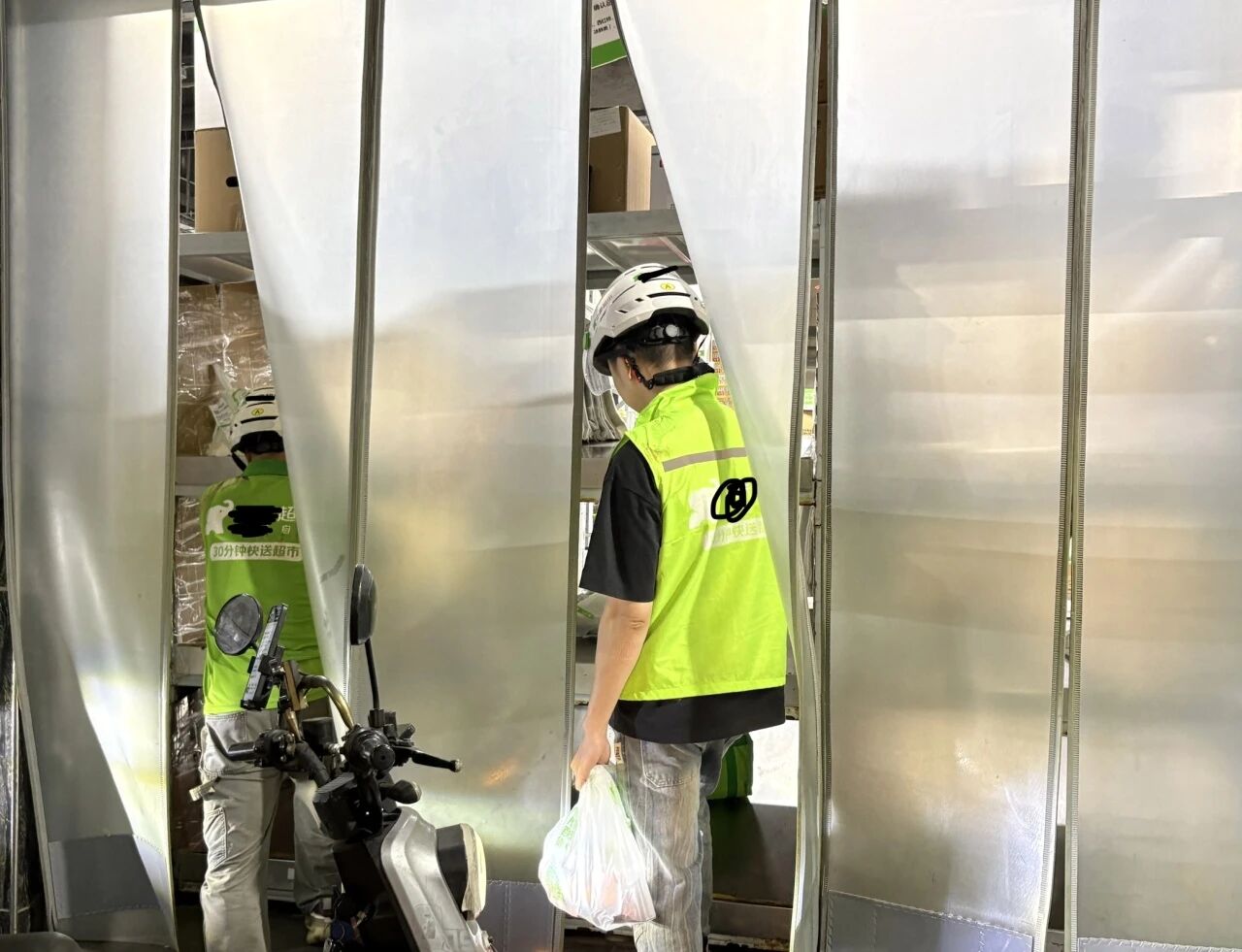
In that moment, my interests and the rider’s were completely at odds. If the sorter didn’t mark the order as packed early enough, the delivery would inevitably run late. But if the sorter marked it as packed too soon and the rider hadn’t yet collected it, the system would likely flag a pickup timeout. Lin reminded me: ‘Hurry up. If the rider waits more than a minute, they might lodge an appeal, and you’ll get docked five yuan for that order. If you’re running behind, just keep your tone sweet, alright? Say something polite and ask them to hold on.’
In most cases, riders don’t actually lodge appeals. At most, a rider would give a quick nudge or call out, while the sorters worked at lightning speed, responding with courteous words. Around fifteen sorters work at the depot each day, three-quarters of them women, whereas the riders who arrive to collect orders are almost entirely men. It struck me that what Lin was teaching me was a highly gendered survival strategy.
On my final day, I still received a customer complaint. Ten yuan was deducted from my pay, with no room for negotiation. Given an average of eight to ten items per order, a part-time sorter earns less than two yuan for each one completed. A single complaint effectively wipes out the pay for five orders.
Aside from the quality of the groceries, incorrect or missing items are frequent grounds for complaints. Once you pass the probation period, you move from processing one order at a time to two simultaneously. This means that while moving around the station, you have to keep track of which items belong to the first order and which to the second, placing them in the correct plastic bags. Given that speed is paramount, it’s all too easy to put an item in the wrong bag.
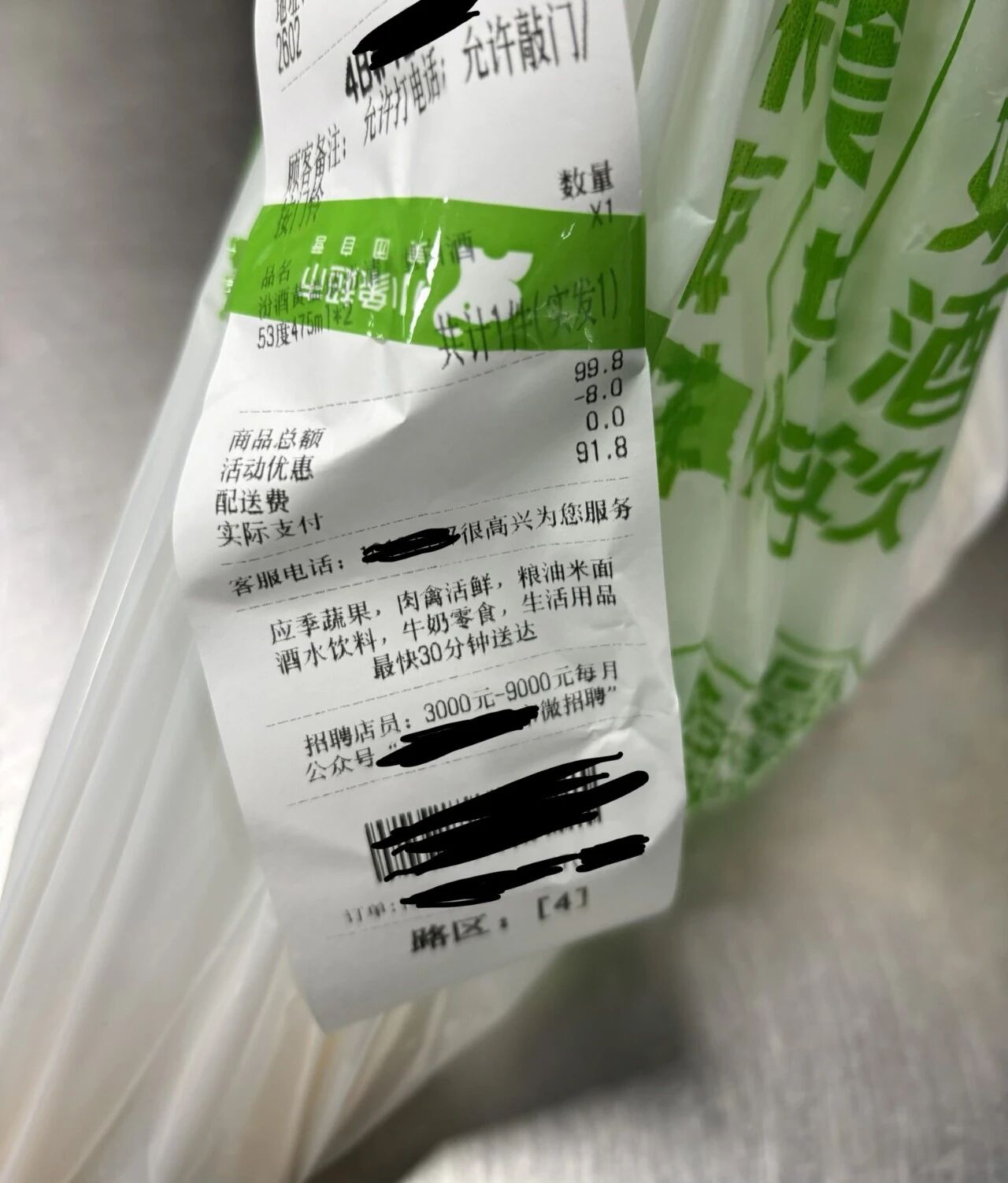
I suddenly remembered that I, too, once clicked “Complain” on the platform’s interface when I failed to receive an item I had ordered. But I never truly understood what lay behind the scenes, nor what my complaint actually meant. It only became clear when I no longer held the “power to punish” that platforms lend to consumers, but instead became the one subject to it.
In this day and age, people undeniably inhabit different spaces and settings. Such divisions, in an era defined by such convenience, have only grown more entrenched and obscured.
We crave “perfect” fruit and a “perfect” life, yet remain unaware of the countless hands that handle a single piece of fruit before it reaches our door. What must the growers, the storers, the drivers, and the sorters sacrifice? How must they reshape their bodies and lives to collectively engineer such “perfection”?
But is this kind of life truly perfect? Who gets to define perfection? Is a fruit without blemishes flawless? Is an efficient, convenient existence truly ideal?
At the very least, when we recognise that behind every item of food lies a multitude of workers—from delivery riders to sorters—labouring under tension and anxiety to uphold this version of perfection, we must revisit the question: what does a perfect life actually look like?

Unless otherwise stated, all images in this article are supplied by the author.
Edited by: Yu Yang