
The Wanderer’s Journey: Yoghurt, Reimagined!
I.
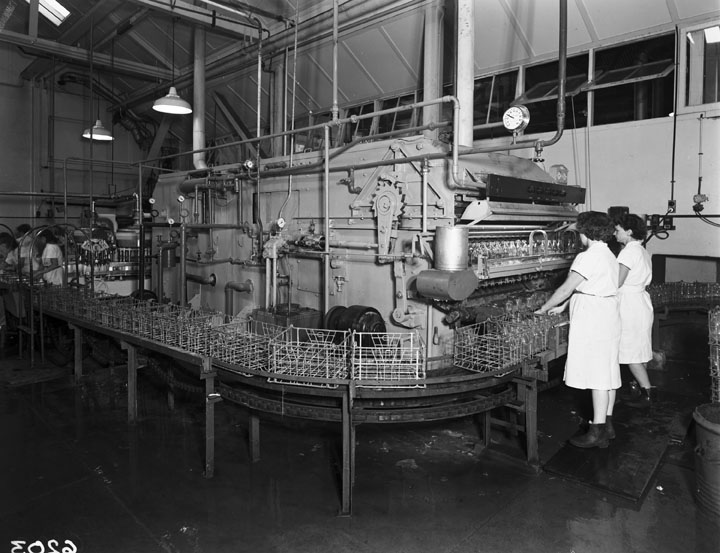
This curiosity drew my attention towards the fermentation of dairy products, and yoghurt in particular. In industrial-scale production, yoghurt typically employs a single strain of bacteria purified through laboratory freeze-drying (primarily *Streptococcus thermophilus* and *Lactobacillus bulgaricus*). While a single strain ensures food safety and a consistent taste during mass production, it also means the loss of the capacity for continued fermentation, which allows for long-term preservation.


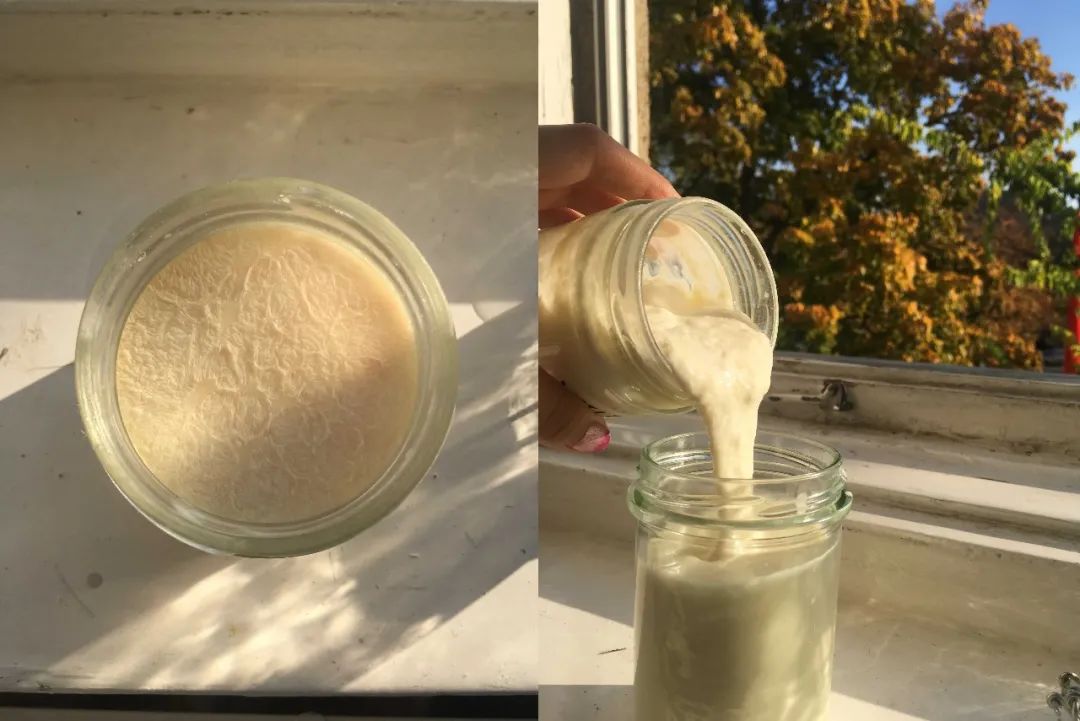
In contrast, there is naturally fermented yoghurt (sour milk) — a small amount of already fermented yoghurt (a starter culture) is added to fresh milk and left at room temperature. This provides the microorganisms in the starter with a suitable environment for growth and reproduction, as well as the necessary nutrients (the fats in the milk), allowing the milk to ferment into yoghurt.

To use a metaphor, the process is akin to an ancient army laying siege to a city and gradually assimilating its inhabitants. Different regions boast various types of yoghurt ‘crafted’ by different microorganisms; many fermentation enthusiasts take great pleasure in preserving or sharing ancient strains, yet the exact microbial composition of these cultures can no longer be precisely analysed.
Even yoghurt of the same variety and origin will see its colony types and activity levels affected by the different people, environments, and methods used to preserve it. Over time and through changing environments, these have evolved into resilient and inclusive little ecosystems, tirelessly preserving and evolving the flavours of the yoghurt.
Gradually, I began my own small journey of collecting strains, tending to our miniature microbial ‘pets’ alongside my colleagues at the studio. Throughout this process, I have realised that the joy of fermented foods lies far beyond the taste itself; it comes more from the exchanges and discussions shared with fellow fermentation enthusiasts.

II.
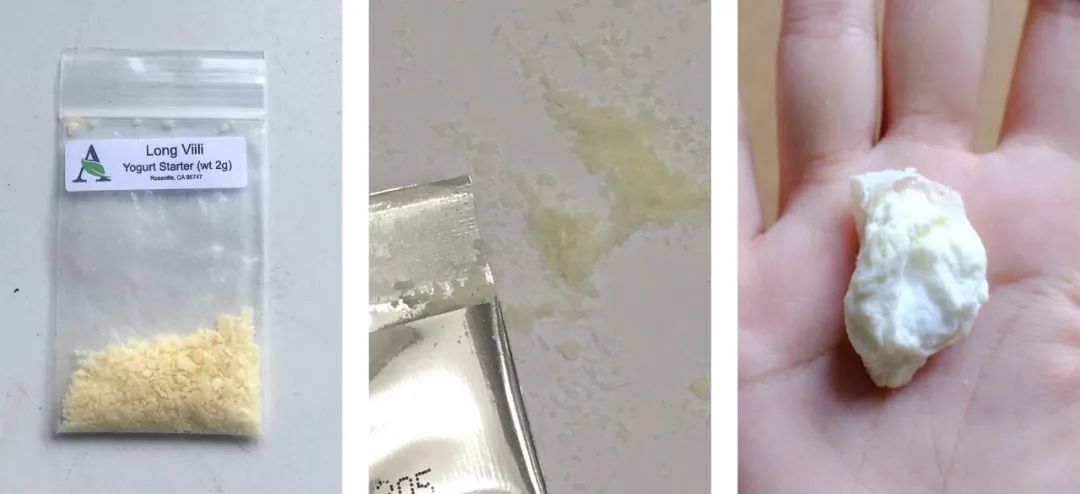
Interestingly, in my search for various starters, I encountered a variety of “culture containers” born of grassroots ingenuity: some soaked cotton wool in yoghurt and then dehydrated it, while others sent yoghurt flakes in small sachets… these tiny organisms seem always to find their own quiet corners to dwell in, existing within the crevices of human industrial civilisation.
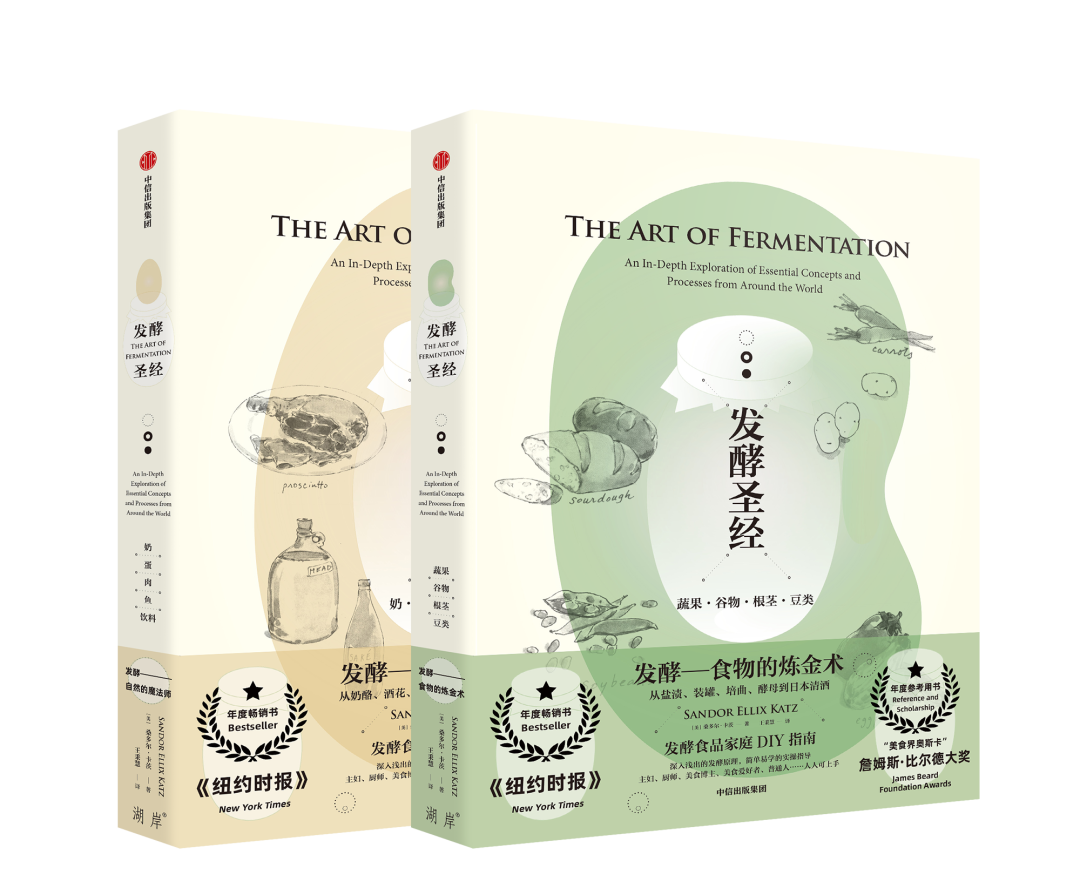
Author: Sandor Katz (USA)
Curated by: Lake Shore Culture
Publisher: CITIC Press Group
Translator: Wang Binghui
Published: 20 April 2020
III.
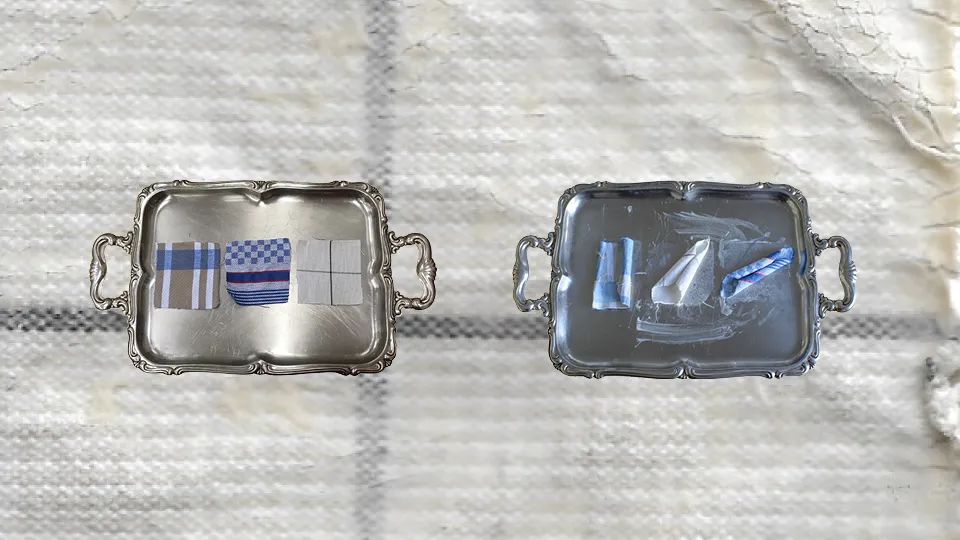
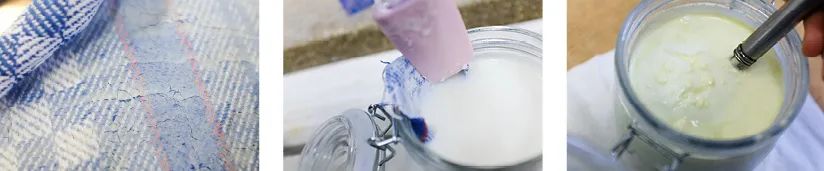
In Germanic and Romance languages, the word ‘culture’ refers both to the cultivation of civilisation and the cultivation of bacterial colonies.
When we think of fabric, we can typically identify its cultural origins through the visual style of the weaving techniques or the printing and dyeing methods used. In this regard, fabric serves as a medium for expressing ‘culture’ in the civilisational sense.
In the story of the Finnish immigrants, however, fabric became a vessel for ‘culture’ in the literal sense—as a bacterial colony. This linguistic duality is quite playful, and it led me to consider how I might use fabric to simultaneously convey these various meanings of the word ‘culture’.
If applying yogurt to fabric and allowing it to dry is a process of transforming the cloth into a ‘medium’ or ‘container’, then could the yogurt—the ‘content’—be presented within that container in a way that is regularised or aestheticised?
If fabric serves as a carrier for yogurt cultures, could it be repurposed once its role in transportation is complete? I turned my attention to the thick, snowy-white yogurt—could this semi-liquid substance be used as a pigment to depict the very microorganisms it contains?
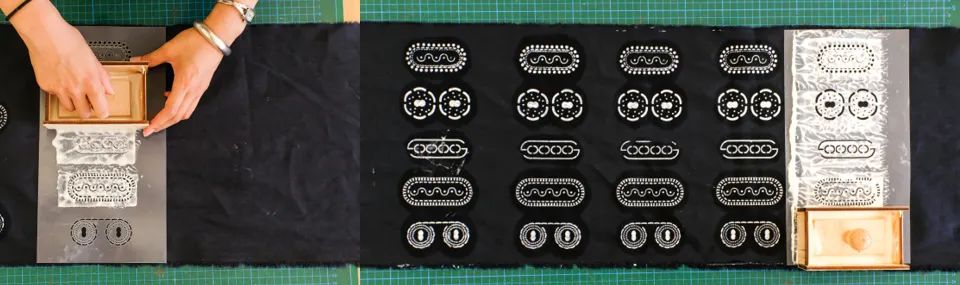
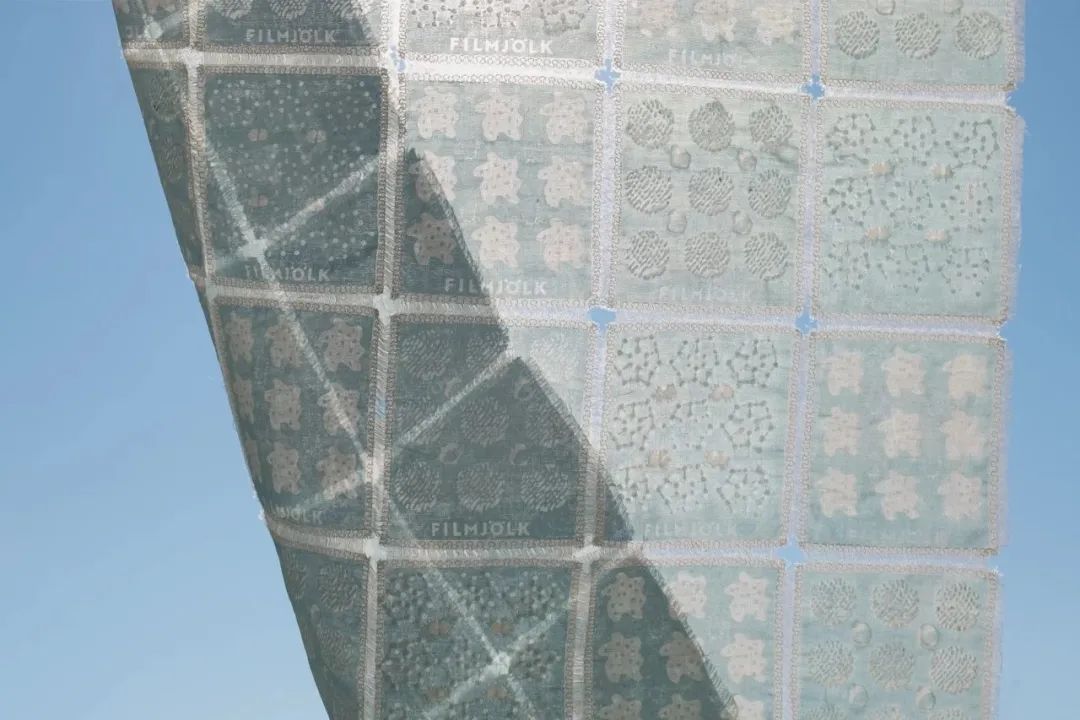
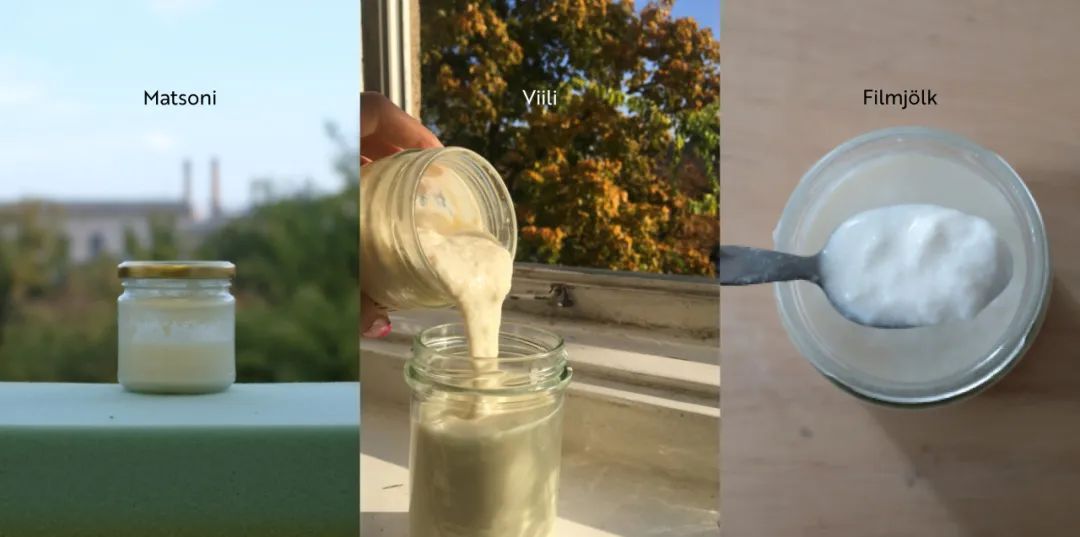
I selected three different yogurts from three distinct cultures: Viili from Finland, Matsoni from Georgia, and Filmjölk from Sweden. Each culture possesses striking textile traditions: Georgian geometric carpets, Finnish checked fabrics, Swedish Kurbits patterns…
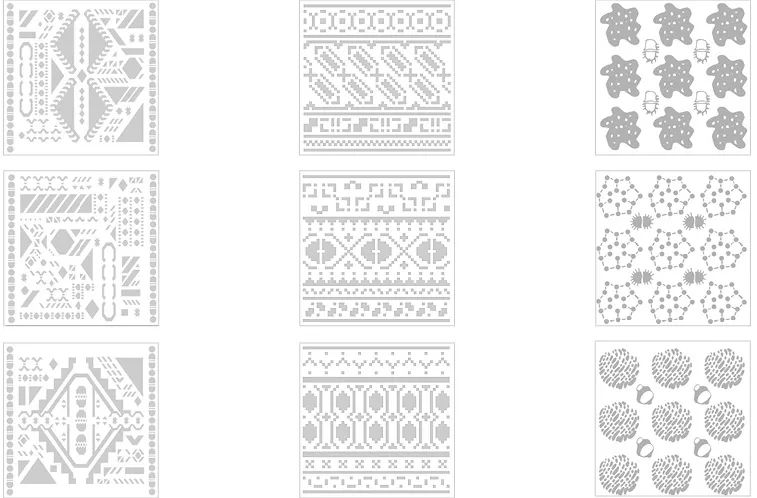
Extracting the most representative visual elements from each culture, I designed three sets of graphic patterns for each yogurt. The fabric, acting as the container, was divided into 10x10cm squares. Using food-grade pigments and screen printing, I printed the negative space of the pattern and the name of the respective yogurt onto each square. I then applied the corresponding yogurt to fill the positive space of the pattern and left it to dry.
The Process
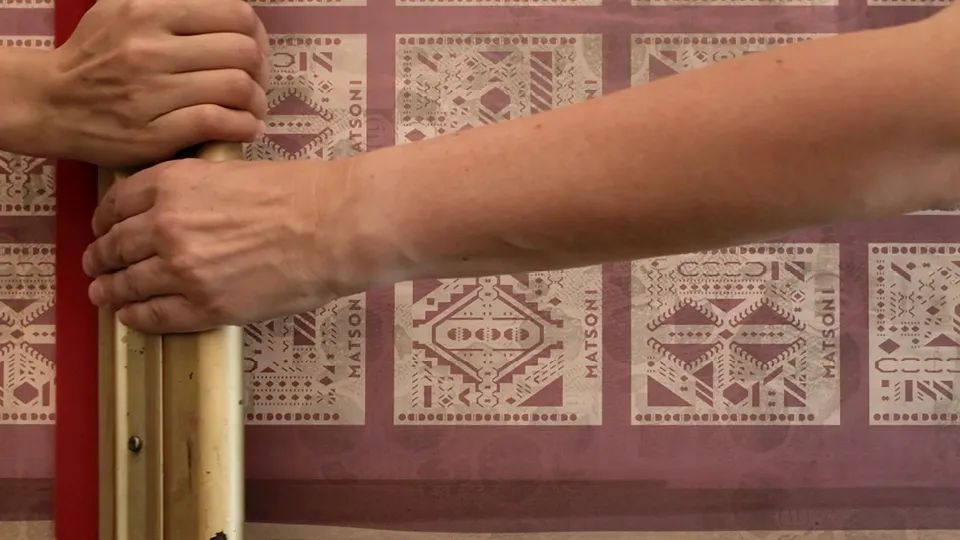
2. Sewing: overlocking the edges of the squares with a sewing machine, then carefully pulling out the threads between the stitches;

3. Applying the dairy products.
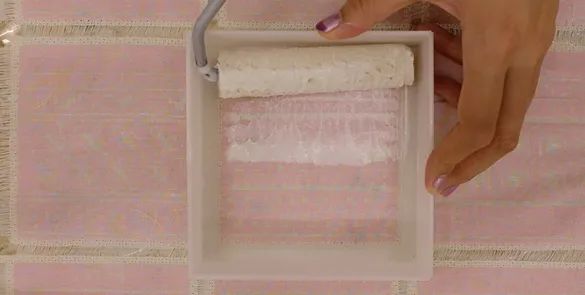
The way the textile was treated made it easy to cut the fabric used for the starter containers into small squares. Their lightness meant they could be tucked into any nearby corner; in this sense, the starter cultures possess an infinite potential for extension not only along the axis of time, but also across different spaces, wandering wherever people go.
I cut out these completed starter containers one by one to share with friends—some sent by post, others handed over in person. Supported by a piece of lightweight fabric, these tiny lactic acid bacteria completed their journey as wanderers.
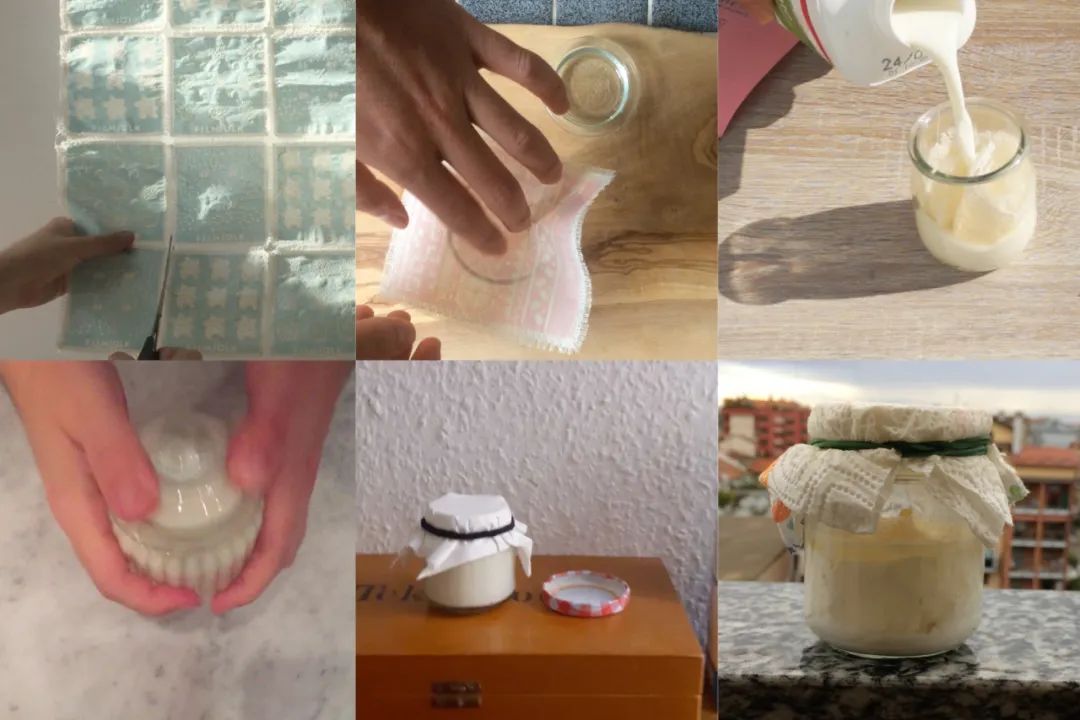
Feedback from friends suggests that natural fermentation remains inherently unpredictable, and not every little vessel yielded a perfect result. However, as one friend put it—”it was all great fun”—and I believe that is precisely where the joy lies: in cultivating and swapping cultures, and savouring fermented foods in the rhythms of daily life.

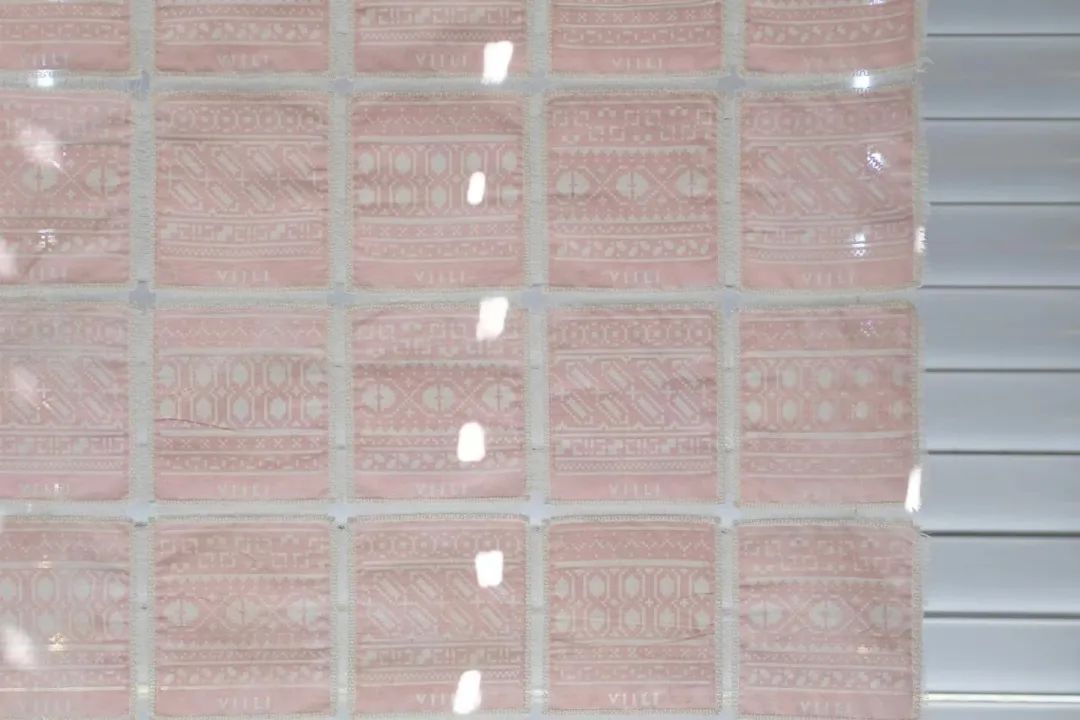
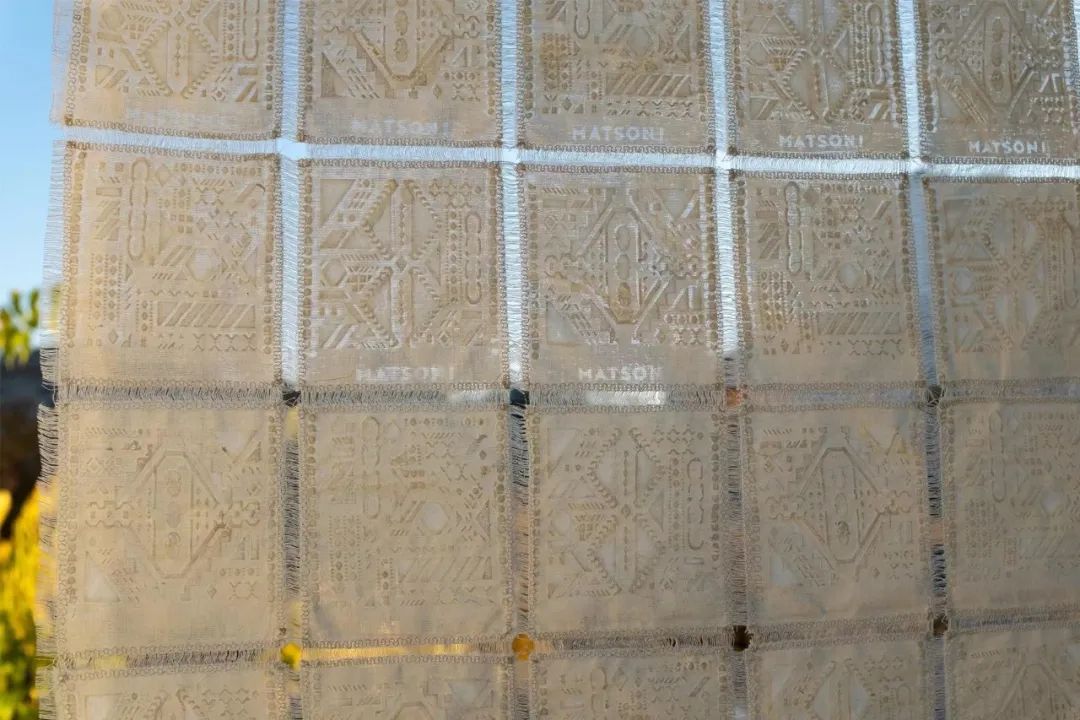
This article is reprinted with permission from the author’s blog