
The Zen Persistence Behind Food Freedom | Evil Valley’s Foodie Philosophy, Part 2
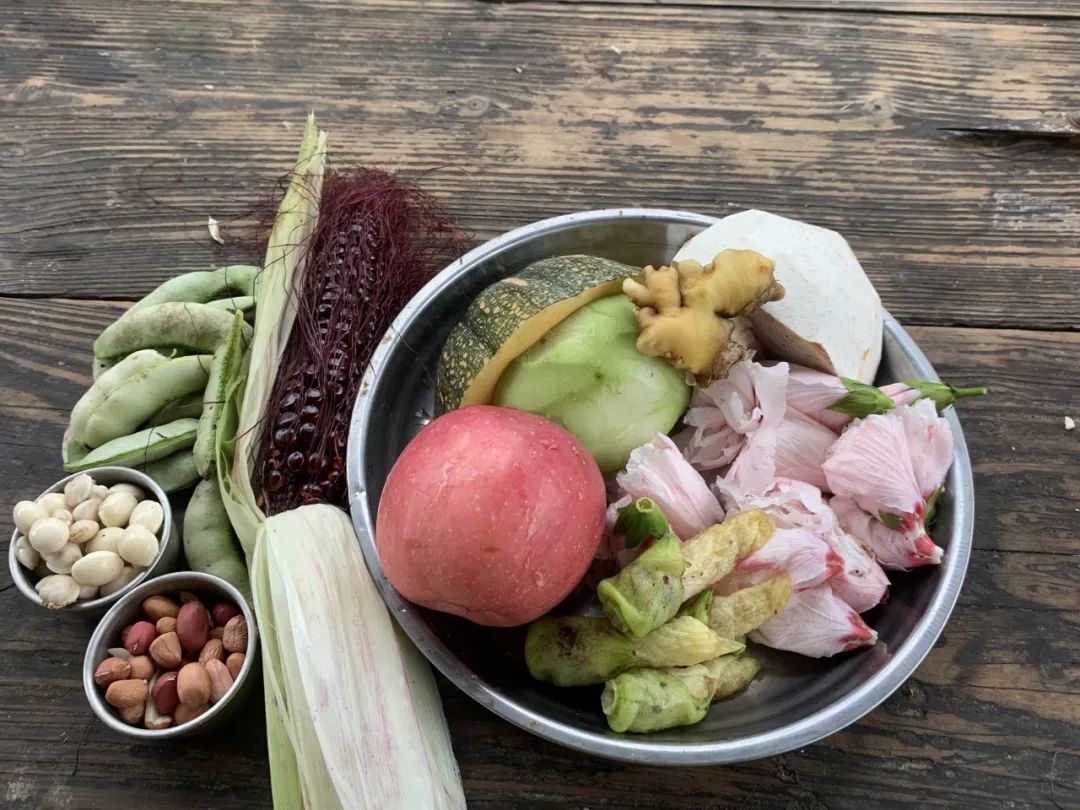
In the first instalment of the Foodie Philosophy of Villain’s Valley series, I mentioned that a single pot of White Dew soup requires ten ingredients, nine of which are home-grown. I viewed “self-sufficiency” as the ideal for life in Villain’s Valley; on the surface, the self-sufficiency rate reached a staggering 90%. However, one must remember the saying: the final stretch is often the hardest. A tiny apple had somehow become the stumbling block on the road to this ideal. If true self-sufficiency is unattainable, then the notion of “food freedom”—having whatever one desires—is mere self-deception.
In truth, a fruit and vegetable soup without apples is still cookable and edible. After all, I once spent an entire spring eating radish soup and found just as much contentment in it. However, without the apple, the soup loses its sweetness. And “deliciousness” holds a pivotal place within the Foodie Philosophy of Villain’s Valley.
Achieving the Villain’s Valley version of “food freedom” within this particular landscape has also mirrored the evolution of my relationship with the land.
I. Seasonal and Local Self-Sufficiency
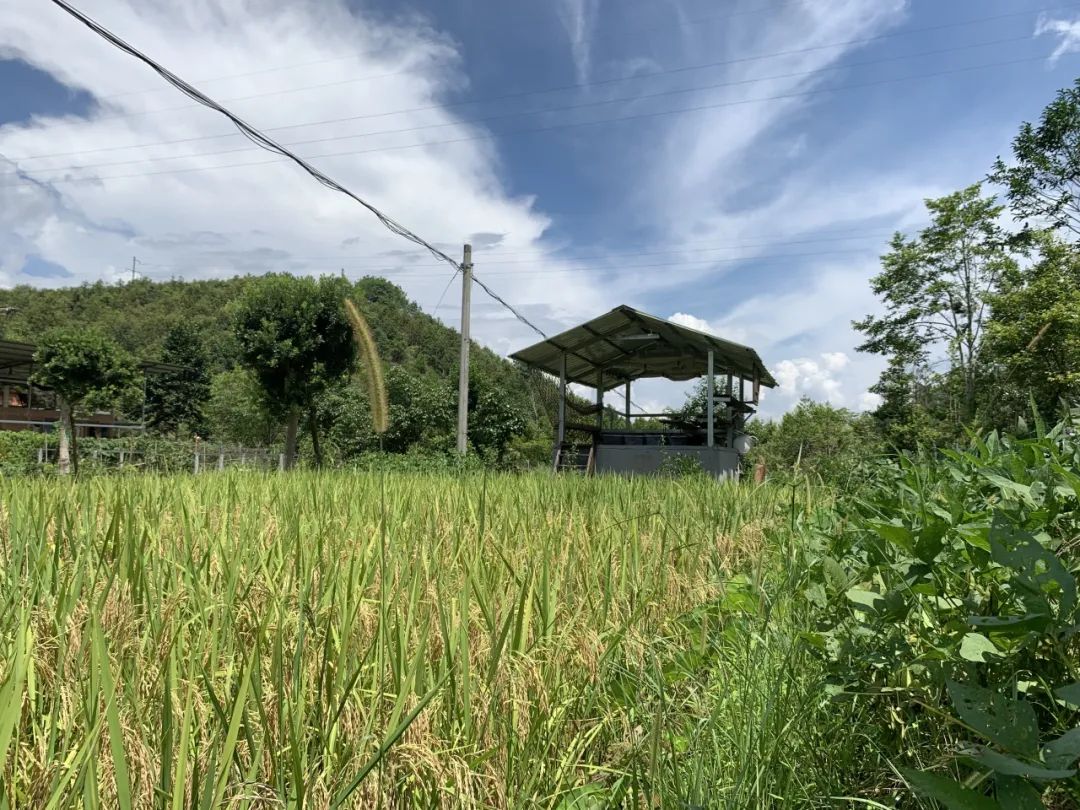
In 2021, my first year cast alone into the wilderness, I spent my days exhausted, scrambling to prepare the land. I planted whatever I could in every available gap; it was almost entirely a process of trial and error, learning costly lessons. Whatever managed to grow was cherished, eaten, and celebrated with great fanfare for all to know.
By the second year, continuing to refine the fields while farming, I finally reached a point where I no longer needed the market; I simply ate whatever the land provided. Everything grown in my own soil was a treasure. That spring, waking up every morning to a simple pot of clear radish soup brought a profound sense of contentment.
Upon arriving at Evil Valley, I treated the land as my canvas, mapping out a vision for ‘food freedom’. I began with an ‘ideal state’ and set it into motion. Unfortunately, my success rate was somewhat low—most of it turned out to be a costly exercise in naivety.
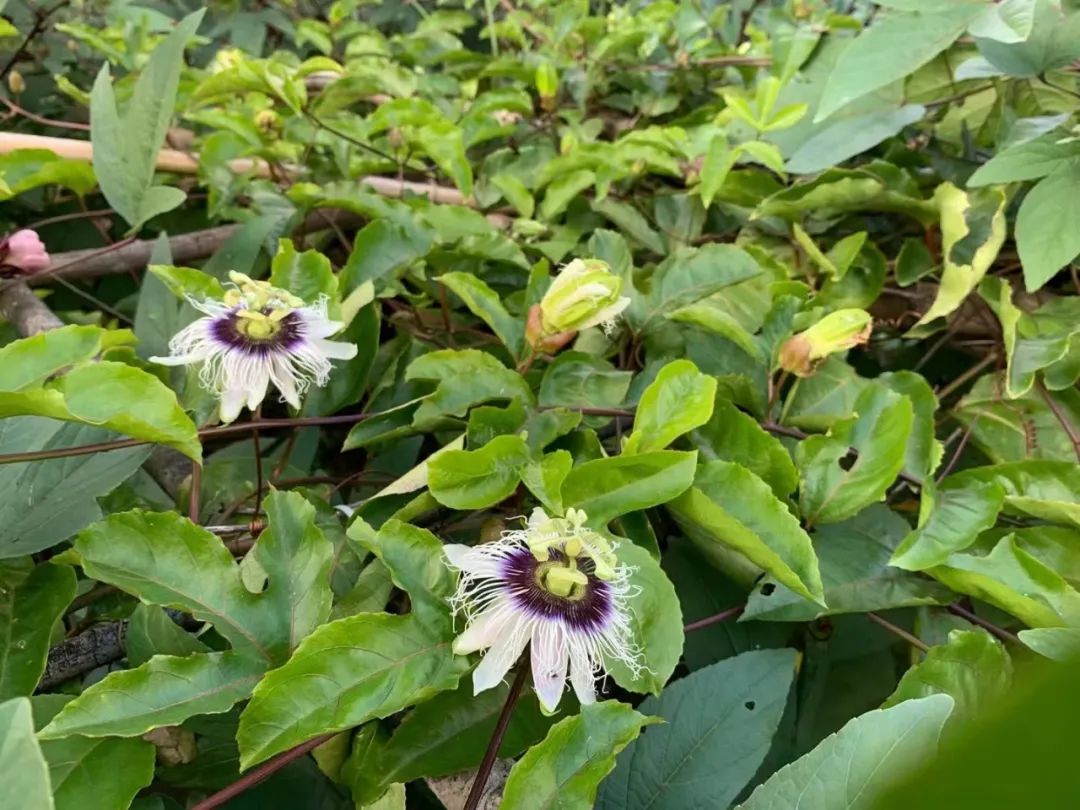
The local geography and climate became my first teachers. Over two years, I purchased countless saplings; of the fruit and nut trees, only two waxberries, two loquats, three chestnuts, four hibiscus plums, and five honey pears survived, along with a few mandarins, kumquats, kiwis, and passion fruit. However, they have merely survived; bearing fruit takes time. This year, the only home-grown fruit to produce a yield in its first year was the passion fruit. Even once the fruiting season arrives, most are seasonal, meaning year-round self-sufficiency remains elusive. Apples hold a permanent place in my food basket not only for their flavour but for their longevity, allowing them to be kept throughout the seasons.
II. Insects: Are there many? Not so many.
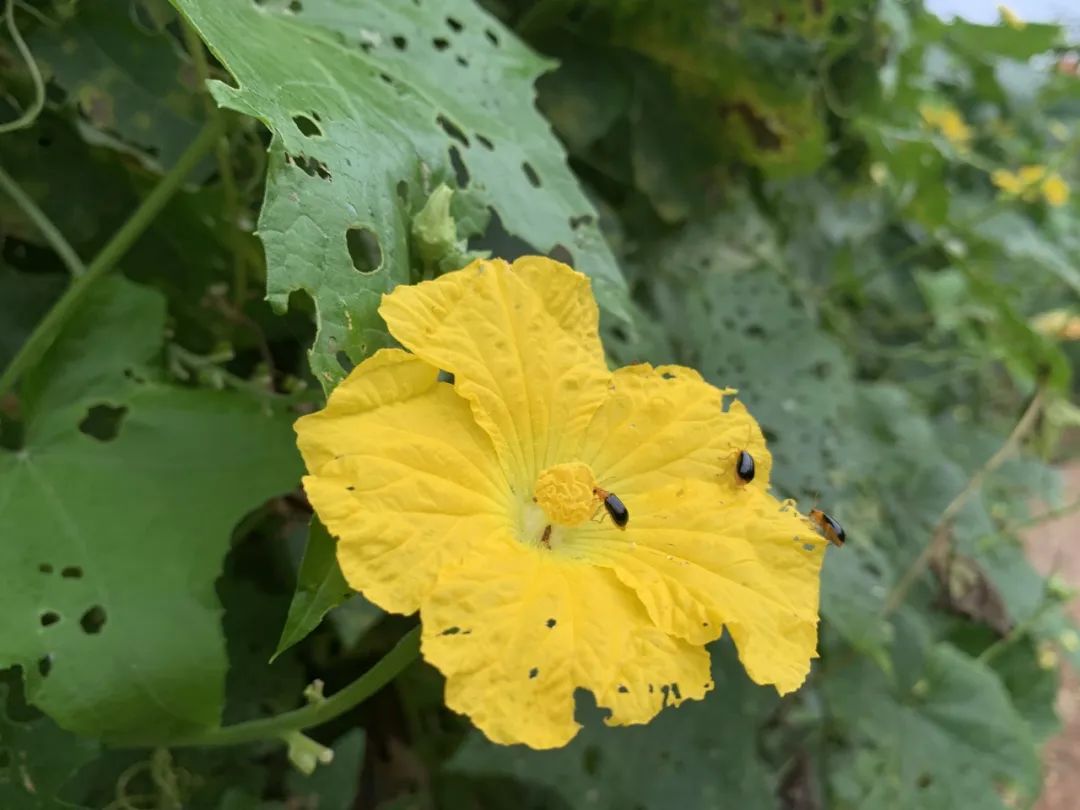
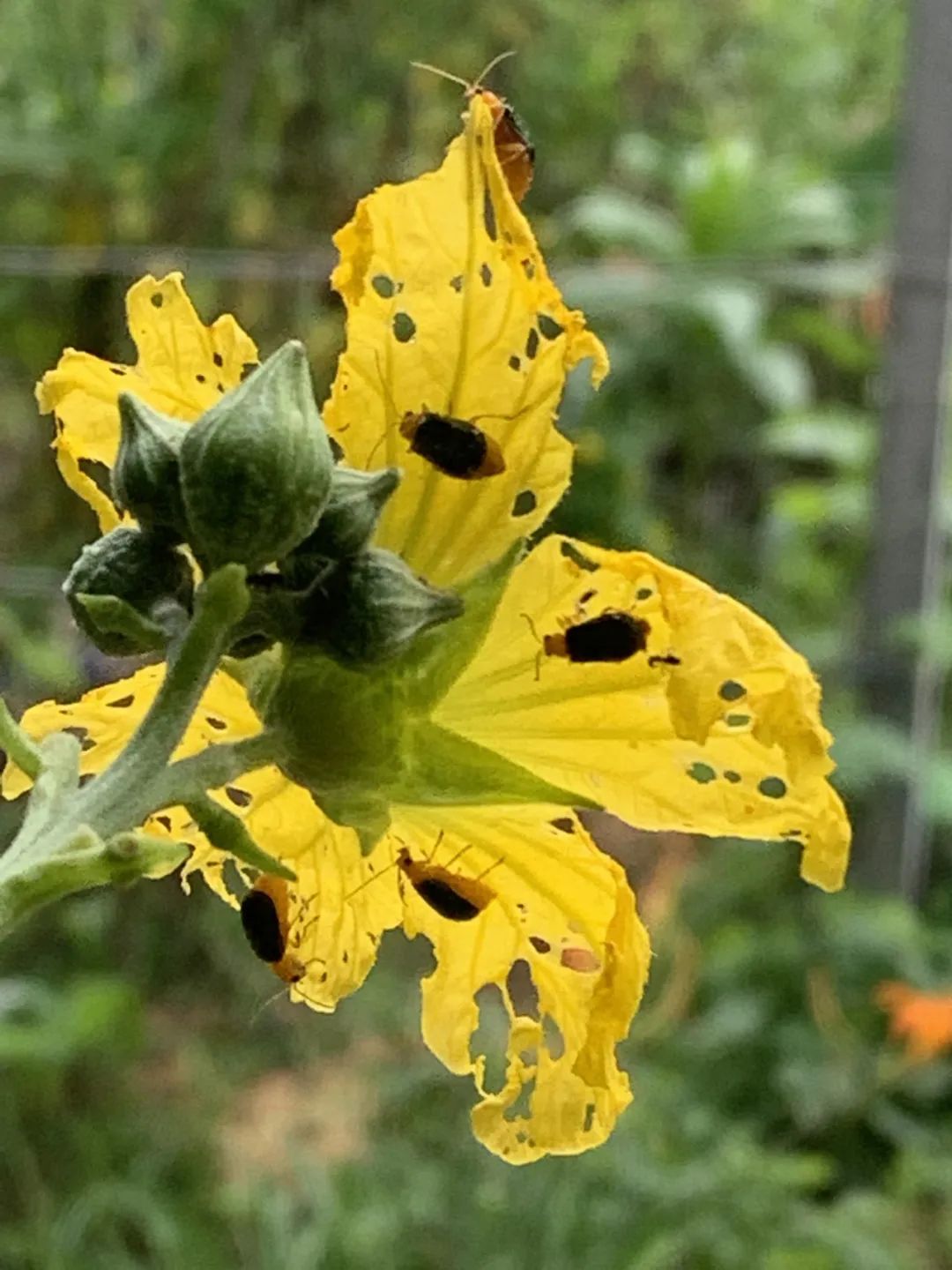
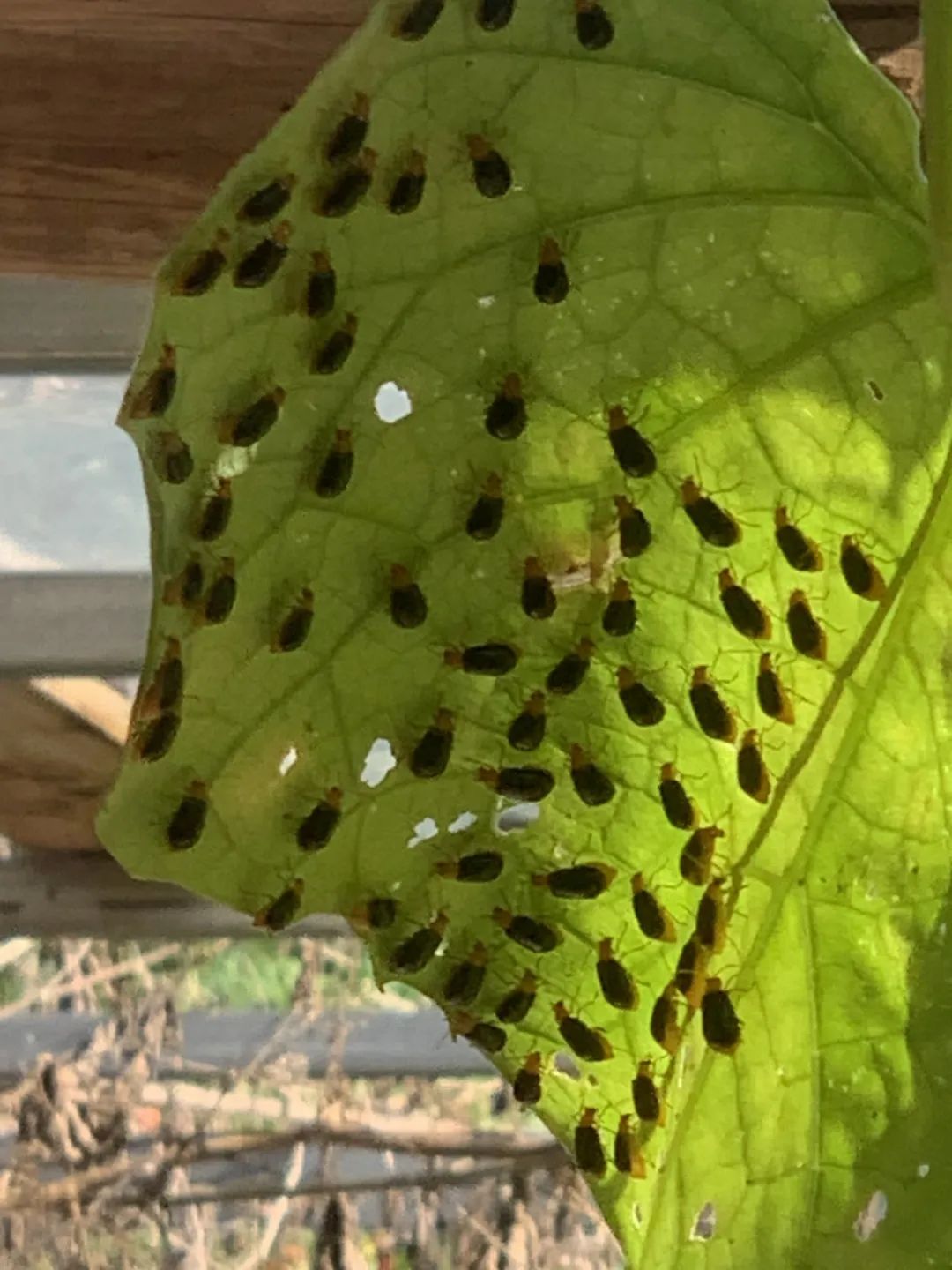
This year, I planted countless varieties of pumpkin. Around the time of Grain Rain, I sowed my gourds and beans. Across the whole of Evil Valley, I must have planted several hundred pumpkin seeds: some saved from last year, some northern varieties from my hometown, and some from the Jiangsu and Zhejiang regions gifted by friends. During the sprouting phase, the growth was so lush that I felt practically wealthier than a nation; I even reached a point of anxiety, worrying, ‘What if I can’t eat them all?’ and consequently bought specialised equipment to prepare for large-scale drying. However, I had not anticipated the rampant pests. There was a swarm of yellow flying insects with combat skills rivalled only by Wong Fei-hung, who specialised in attacking the tender shoots of various gourds. Winter melons and pumpkins were particularly favoured; dozens of winter melon seedlings were wiped out, and only about ten pumpkin seedlings managed to survive the onslaught.
Insects are my arch-nemesis here in Villain’s Valley—a bizarre assortment of creatures that crawl through the soil, fly through the air, and scuttle across the ground. When it comes to fighting them, I flatly refuse any chemical solutions but welcome every physical one. I’ve tried every trick in the book, from sound, light, and electrical bird deterrents by day to insect traps by night; I’ve certainly paid my fair share of the ‘stupidity tax’ on a few of them.
While the methods are numerous, they are merely stop-gap measures. Ultimately, I want to hold out until the day I can triumphantly reunite with the pests’ own natural predators. During my time in Taiwan, I heard a theory from fellow farmers that deeply resonated with me: every pest has a natural predator; nature has its own food chain. Like humans, every creature settles where the food is. As soon as a population becomes numerous enough to sustain the species above it in the food chain, their ‘natural enemies’ will inevitably arrive. This leads to a rather disheartening conclusion: if the pests have arrived but the predators haven’t, it’s simply because there aren’t enough pests yet.
The locals reckon that because I don’t use pesticides, only a few pests knew about it at first. But pests have their own kind of ‘internet’, and now that word has got around, more and more of them are on their way to Villain’s Valley. If I stick to my guns and refuse chemicals, there will be even more pests next year…
I wonder just how many more pests I’ll need before their natural enemies finally make an appearance. Given the situation, there are only two things I can do. First, plant in abundance. Pests may be numerous, but the seedlings must be more so; if I plant enough, a few are bound to slip through the cracks and survive. I planted a few hundred pumpkin seeds this year; next year, I’ll plant thousands. Second, physical protection. I’ve already bought 200 square metres of 40-mesh netting. Next spring, I’ll use it for protected cultivation during the seedling stage; once the plants have grown, I’ll lift the netting and let them enter another round of natural selection.

III. Zen Pumpkins
Fruit flies are light and nimble, looking somewhat like baby bees. They seem harmless, but they are actually lethal assassins of pumpkins, bitter melons, cucumbers, and luffas. The dozen or so bitter melons that sprouted this year were a total loss, all thanks to the fruit flies.
Fruit flies don’t just sting the gourds; they sting people too, loving to perch on the skin, likely to soak up the salt from sweat. At first, the flies on my body were treated with the same hostility as mosquitoes—I didn’t hesitate to slap my arms, legs, and cheeks. Now, however, I have reached a state of Zen where I can’t even be bothered to shoo them away. After all, they aren’t as filthy as houseflies, and since they can’t quite pierce the skin, they aren’t as itchy as mosquitoes. They are practically harmless to humans, so I let them be.
Swarming in the air, the fruit flies strike early when the pumpkins are tiny. The pumpkin buds, less than a centimetre in diameter, are already targeted. Most wither and drop before they can even bloom, ending their short lives before they’ve even begun. A resilient few manage to bloom and grow to the size of a quail egg or a chicken egg before they, too, wither and fall. Only a tiny minority with formidable vitality manage to grow into full pumpkins.

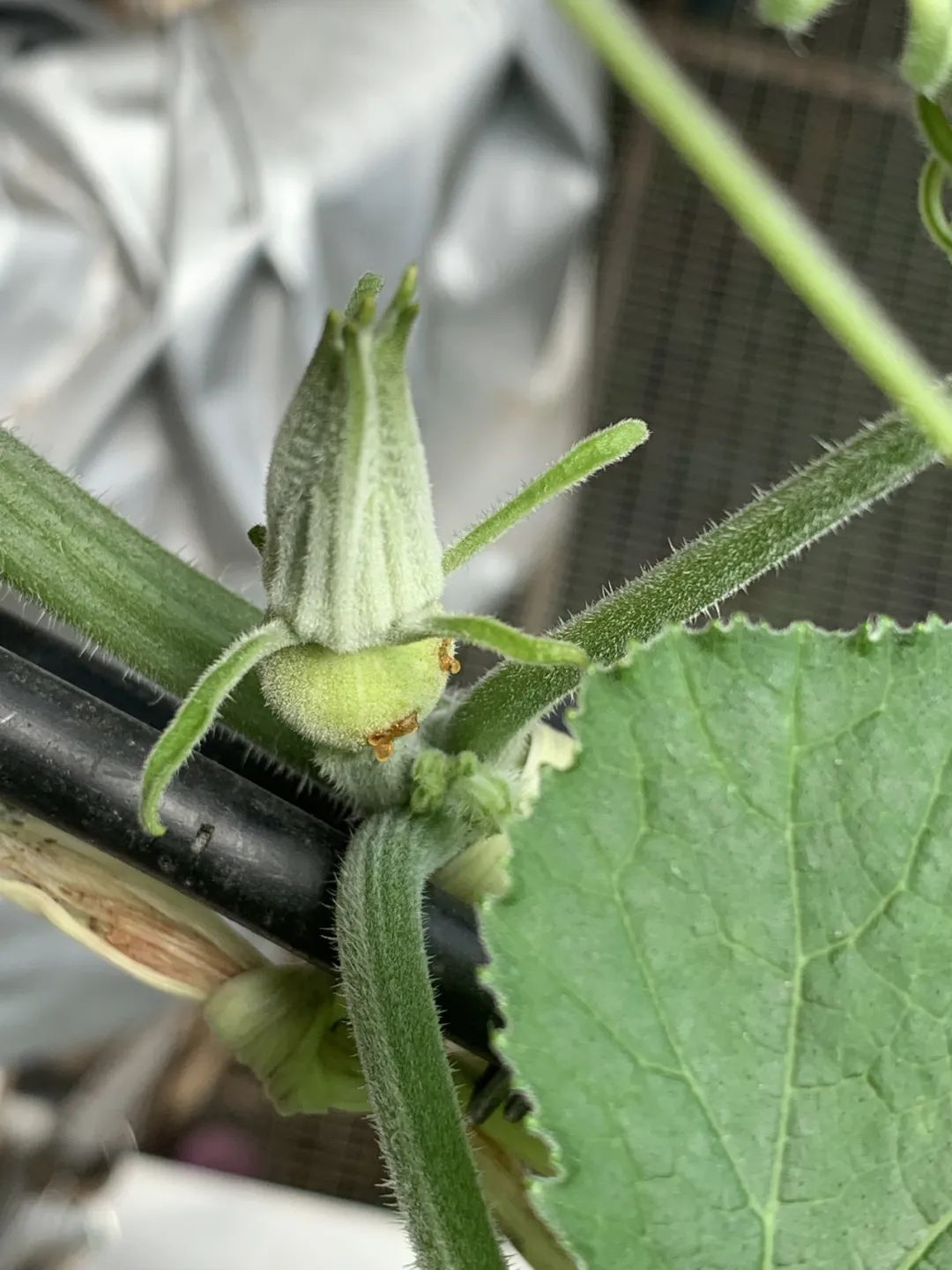
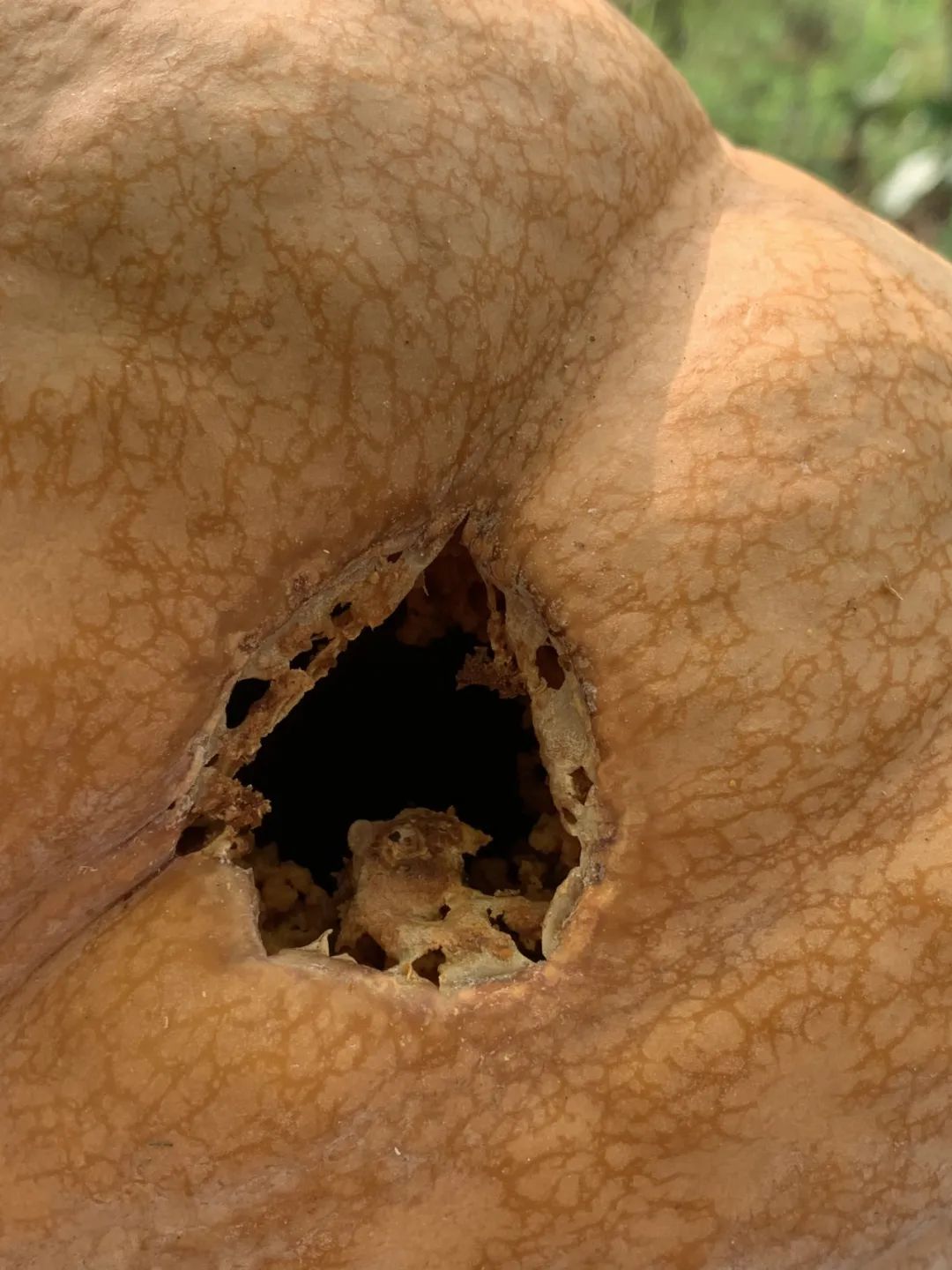
But for a pumpkin stung by fruit flies, growing large is not the same as passing the trial. As the gourd grows, the eggs laid by the flies turn into maggots within the core, growing larger and larger inside the pumpkin’s belly. Even a behemoth that reaches ten or twelve kilograms through sheer tenacity cannot escape rotting from the inside… these gourds can only be fed to the chickens. As the grower, I feel no grief, no strength, and no temper; my heart is as still as water.
I couldn’t have been so composed last year. Back then, I watched every female flower every morning with intense focus. For every single flower, I would use the stamen of a male flower for artificial pollination; I was meticulous to a fault. The fate of every tiny bud was etched into my mind and heart, leaving me anxious and preoccupied. Fortunately, the fruit flies weren’t as rampant then as they are this year. If it were like this now, ten of me would have been worried to death.
Under the heavy siege of the fruit flies, fewer than one in ten female flowers survive, and of those, fewer than one in ten actually grow. I do not know what mysterious fate or unpredictable forces are at play. These swarming yellow bugs have taught me to “do my best and leave the rest to fate”, and they have taught me how to cherish the pumpkins that do grow. Each one is precious because it is rare; every bite is a reminder to eat and cherish while we can.
This year, about a dozen pumpkins managed to overcome their eighty-one tribulations to reach fruition. The pear-shaped variety was the most common, and fortunately, it also happens to have the best flavour.
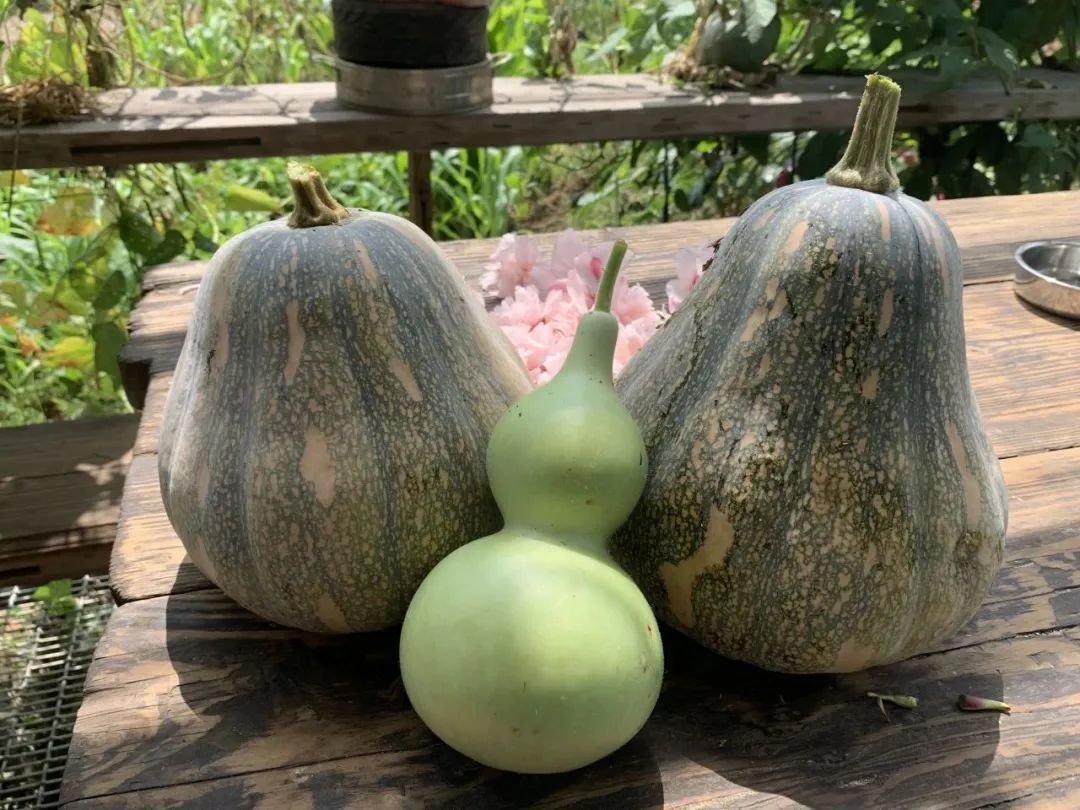
My primary criterion for evaluating a pumpkin is not sweetness, but starchiness. Some pumpkins may be sweet enough, but they are too “watery”; you have to be extremely careful with the heat when cooking them. Whether steamed or boiled, if you overdo it, they become soggy. This “Big Pear Pumpkin”, though not overly sweet, is naturally gifted and doesn’t fear the boil. Cut into chunks with the skin on and boiled vigorously, it remains fluffy and glutinous to the core, with a wonderful texture.
Zen in growing, grateful in eating. With every bite, I can’t help but feel thankful and marvel: indeed, nature provides even for the blind sparrow.
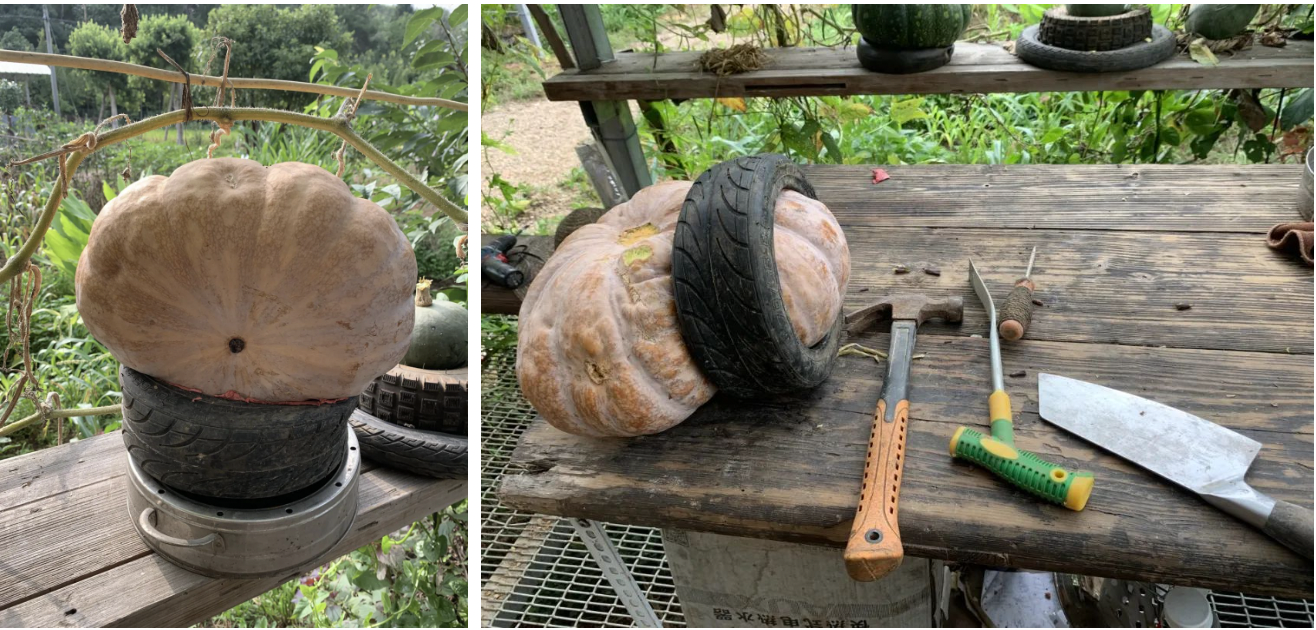
Finally, we have a pumpkin with a story. Despite being stung by fruit flies, it grew into a behemoth of over ten kilograms.
A tyre had been provided as a support to stop the pumpkin from falling, but the pumpkin actually changed its shape and grew stubbornly right into the tyre.
Even so, once fully grown, it was breached from the inside by the hatched fruit flies.
What a pity for the largest pumpkin of the year—I never even got to taste it.

All illustrations in this article are by the author
Editor: Tianle