
Where Delivery Can’t Reach, You Finally Eat Properly
Foodthink Says
The Chinese dining table is sustained by the countryside, yet the rural table itself rarely receives attention. We hope this article offers some inspiration for those heading to the countryside for the Qingming break. Please feel free to share your own experiences and observations of rural dining.
I. Dining in the Village
On 8 February, we set off from Wenzhou, flying and then chasing high-speed trains through a day of travel, finally arriving back at the old family house in the Sichuan village at 9 pm. My father-in-law brought out a large basin of pig’s ears and pork head meat, along with a bowl of “haijiao” chilli sauce. My daughter Shuer and I were so ravenous we ate straight from our hands.
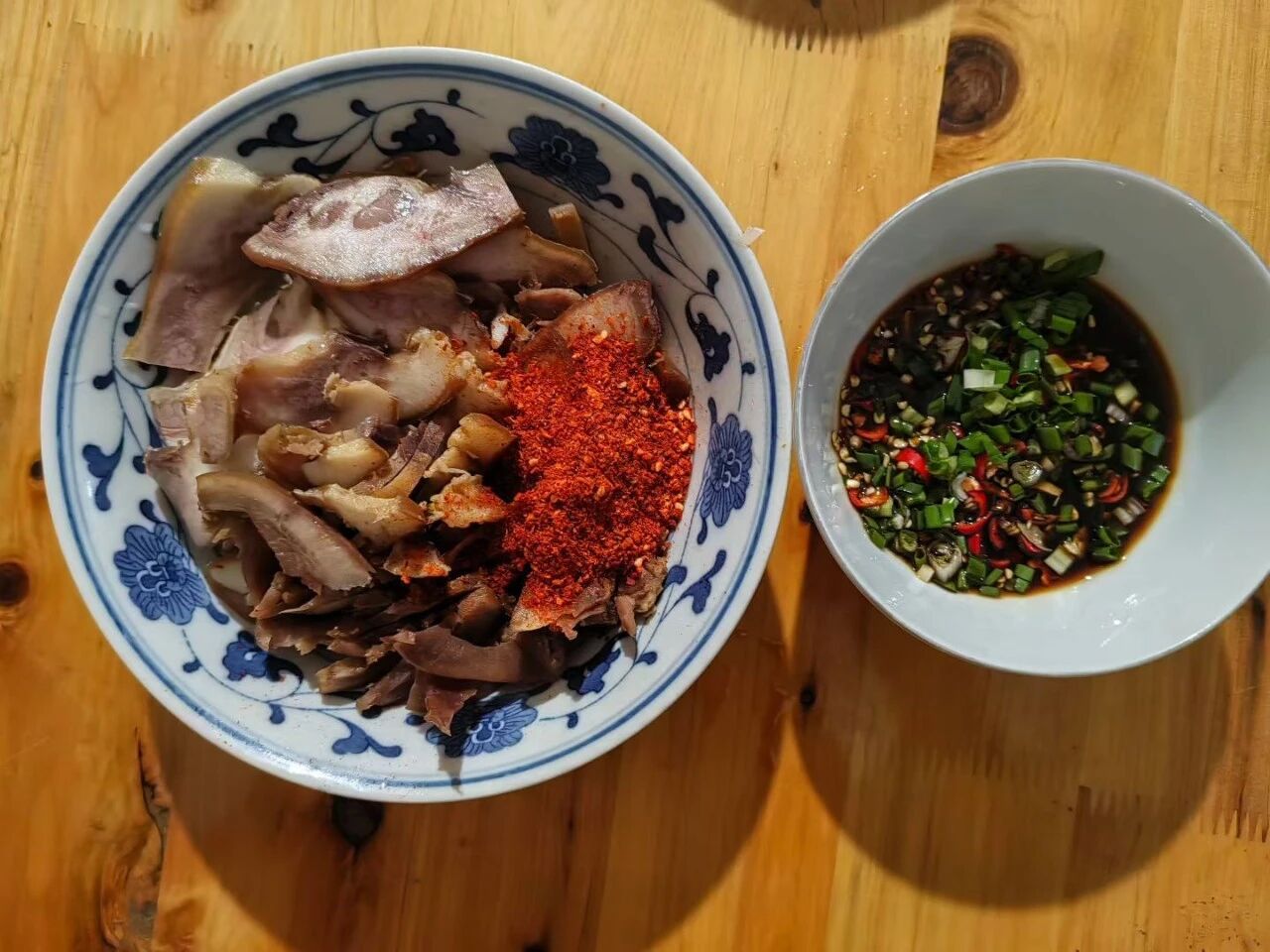
This is likely one of the few remaining places in China yet to be eroded by fast food, delivery services, and instant meals. Owing to its remote location, courier services still cannot deliver straight to the door. Ride-hailing apps like Didi and grocery delivery platforms like Dingdong register the location as Wannianfen, yet neither drivers nor delivery riders will accept orders there. Fortunately, apart from the children, no one here craves cola or fried chicken, so this limitation does not hinder the family’s daily meals in the slightest.
I also briefly broke free from my caffeine dependency. As a heavy coffee drinker, life in Wenzhou relied on a daily lifeline: a poorly made latte for 7.9 yuan from a convenience store, made with milk nearing its expiry date and beans that carried a faintly rancid, oily smell. During the New Year festivities, if I wanted a freshly ground cup of coffee, I would have to trek 40 minutes up a mountain path, catch a bus that only runs once an hour, and then take an hour’s ride to the Wanda Plaza in Weiyuan County. The round trip takes at least three and a half hours. Miss the return bus, and you’re looking at a minimum of 80 yuan for a taxi.
Aside from coffee, sourcing other ingredients in the countryside turned out to be unexpectedly difficult. The population of my in-laws’ village has been in negative growth for five years. The village is populated almost entirely by the elderly, as young people have largely abandoned farming. The older folks mainly subsist on vegetables and citrus fruits they grow themselves. To buy other fruits or pork, they must head to the township market on market days. Villagers also keep chickens and ducks, but only slaughter them during festivals or for guests. Eggs for the family table also come from their own flocks, though they only eat unfertilised eggs. If an egg is fertilised, the elders are loath to consume it and will instead take it to a poultry farm to exchange for cash.
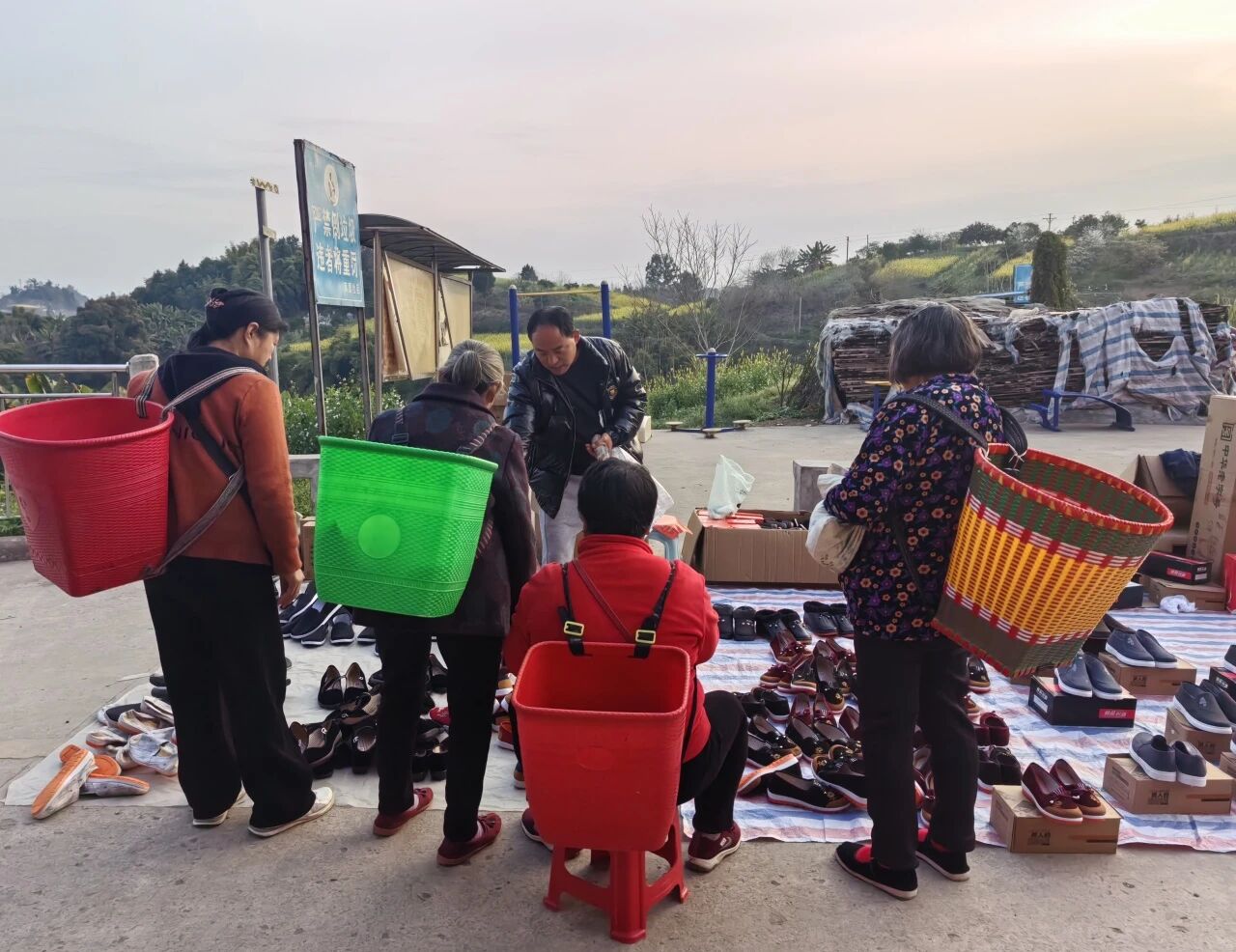
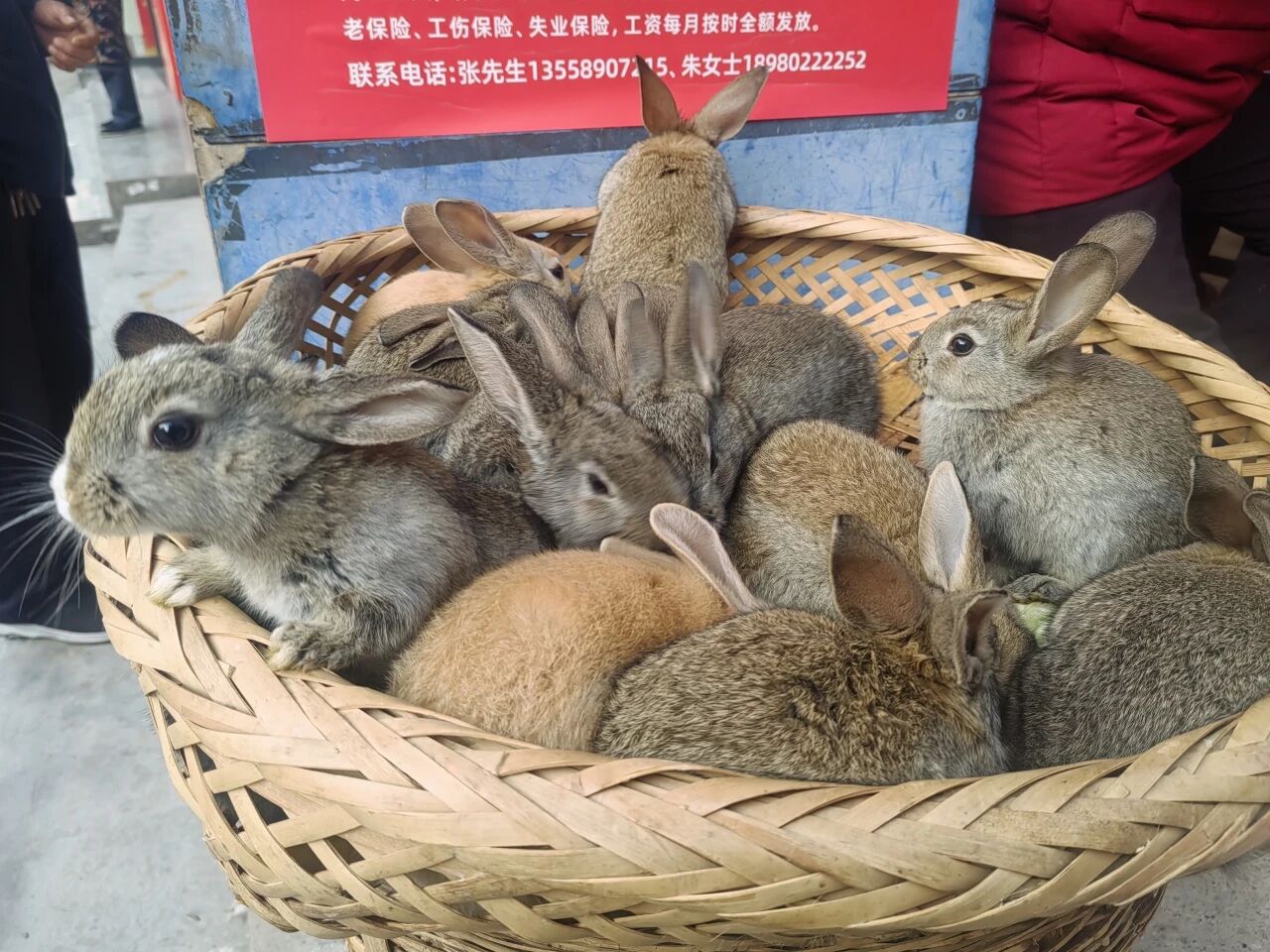
During our 18 days in the village, we often tried to visit the township market, but late risings cost us several opportunities. The elderly typically set off for the market at 6 am, well before dawn. By 10 am, the stalls are packing up. The market features live chickens, ducks, and rabbits—rare sights in urban markets—alongside live pig slaughter.Every elderly person heading to the market carries a bamboo basket on their back. The women wear purplish-red knitted caps and crimson floral-padded jackets, while the men sport 雷锋-style cotton caps and military-style greatcoats or navy-blue Zhongshan suits. The scene evokes the backdrop of a Jia Zhangke film.
Some ingredients required a trip to the city market. The most memorable meal during these past few weeks was a hotpot gathering with three families. Everyone spent an hour driving over the mountains to Rong County’s bustling old-town market to gather hotpot supplies. The township shops simply didn’t stock the necessary ingredients: mutton broth and offal, tripe, cow aorta, beef stomach linings, and sliced lamb and beef rolls.
My second brother-in-law brought out the family’s “household treasure”: a copper hotpot. Watching my niece use fire tongs to shove coal into the furnace mouth instantly evoked a wave of nostalgia for the 1980s and 90s, when we used to burn coal at home to boil lamb slices. The broth was a spicy beef tallow base, enriched with half a kilogram of mutton soup. It was my first time indulging so thoroughly in authentic hotpot staples like mutton stomach, intestine, beef tripe, and aorta. The eldest brother-in-law also served two bowls of chicken blood saved from slaughtering the poultry. Left to set, it had transformed into a deep purple-red jelly.
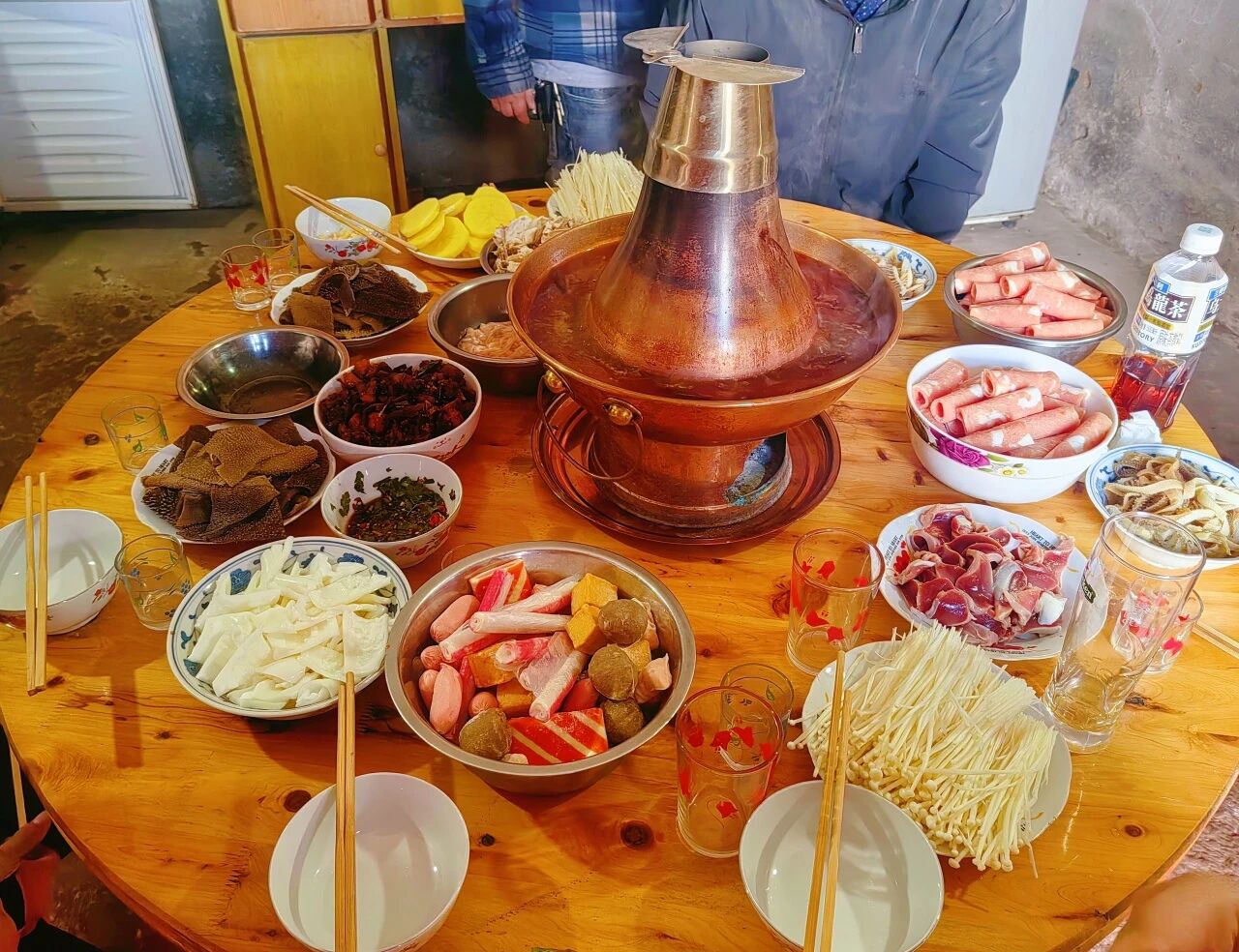
In Sichuan, vegetables are generally not poached in hotpot, as the leaves tend to soak up too much oil. If they are eaten at all, they are reserved for the end. Only as the hotpot feast winds down do people begin poaching leafy greens such as Chinese cabbage, celtuce leaves, chard, and pea shoots. These were either grown by my father-in-law or picked from a neighbour’s field. Out in the village, it is perfectly acceptable for neighbours to pop into each other’s fields and pick what they need.
Aside from the hotpot, Wu Niang took to the kitchen to stir-fry rabbit stomachs. I devoured nearly half a plate of the celery and screw-pepper rabbit stomach dish; it was so delicious I could not put down my chopsticks. This preparation requires considerable effort. First, the stomachs are scrubbed clean of any gamey odour using salt, vinegar, and rapeseed oil, then sliced into strips or small chunks and blanched. Prepare a mix of dried chillies, tender ginger, green peppers, millet peppers, preserved chillies, Sichuan peppercorns, and garlic, all cut into small segments. Heat rapeseed oil and stir-fry the stomachs until fragrant, then toss in the spices and vegetables of your choice. Season with salt and cooking wine while tossing. Crucially, a generous amount of preserved chillies must be used to ensure any gamey taste is completely masked.
“Bao niang and bao bao (Sichuan dialect for aunt and uncle) are so grateful; thanks to you lot, your visit back has given me a chance to feast and enjoy some better food, hehe,” my niece whispered as she swirled the tripe in the broth.
2. A Proper Fish Dish Begins with the Catch
Five years ago, natural gas had reached every household, yet my father-in-law still insisted on cooking over a wood-fired stove. First, the rice was rinsed clean, drained, and parboiled until about six or seven-tenths cooked (five or six-tenths for those who prefer it firmer). A steamer rack was set inside a wooden bucket, lined with muslin, and the parboiled grains poured on top. Chopsticks were used to poke several holes through the rice, ensuring steam could circulate and the grains stayed fluffy. The wood fire was lit, water boiled in a large iron wok, and the bucket lowered in. Once the lid was sealed and steam started to billow, it steamed for another fifteen minutes. The resulting rice was far more fragrant and tender than anything from a rice cooker. Even without premium Wuchang rice, it came out wonderfully aromatic.
The men’s spicy native crucian carp was equally masterful. They would prepare two or three dozen fish at a time, scaling them, slicing open the bellies, and gutting them, while carefully keeping the swim bladders and roe. Each fish was fried separately, while a pot of spicy broth infused with Pixian broad bean paste was brought to the boil, loaded with prepped ginger, garlic, chilli, and star anise. The fried fish were added to simmer briefly, then finished with tender coriander and spring onions freshly pulled from the field and cut into segments, before being poured into a serving basin. Yet, to enjoy a single dish of this spicy crucian carp, five hours of effort were required from the moment the fishing line was cast until it reached the table. Behind the quiet pleasure of savouring that tender fish lies a great deal of patient labour.
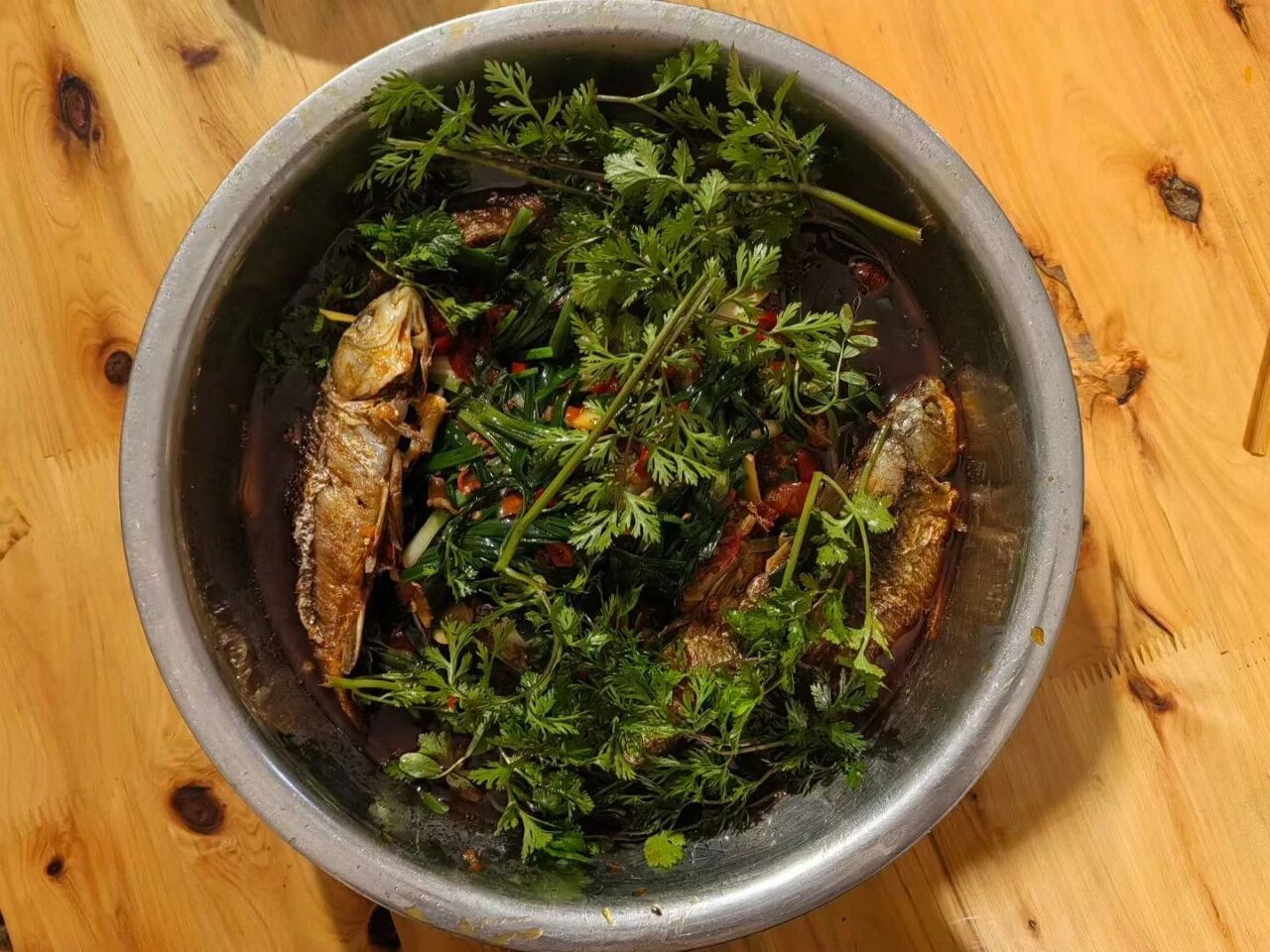
In truth, finding fresh fish is difficult in Sichuan’s rural market towns. Crucian carp only becomes available at the local market during the New Year. Even ordinary specimens cost over ten yuan a jin—almost fifty per cent more than you would pay in a Wenzhou market. On an ordinary day, if you want to eat everyday river delicacies such as fish, prawns, and shellfish, you have to travel to the county town. River crabs and freshwater prawns are practically only available at hotels. Eating fish has become an occasion steeped in New Year ritual.
Throughout the holiday period, the extended family are keen to head down to the fish ponds for a spot of angling. My husband, his elder brother, and his cousin form an unshakeable trio when it comes to holiday fishing. The three of them will regularly spend three or four hours on the bank, hauling in forty or fifty fish. Frankly, I never understood the appeal. My mind was always on how much easier it would be to simply pump the pond dry and haul them all in with a net. But the men possessed a patience I lacked, content to sit on the banks by the water and fish well into the evening. They’d unearth a few worms from the soil to serve as bait, cast their lines far out, and watch the floats intently. The moment a fish took the bait and the float bobbed, they’d reel it in without delay.

Ever since Fifth Uncle took up fish farming, villagers from two or three neighbouring villages have made their way to his pond for their everyday supplies. They’d inquire in advance about his harvesting schedule, coordinate a time and turn up in groups to make their purchases. Rather than commercial pellets, the fish are fed a mixture of grains and coarse staples like sweet potatoes and maize, which gives the flesh a noticeably better flavour. The price is also lower than in the town: where fish typically goes for 12 to 15 yuan a jin in the market, Fifth Uncle sells his for 10.
Towards the end of last year, Fifth Uncle and Fifth Aunt both left to work as kitchen hands at restaurants in the county town, leaving the pond untended for nearly a month. This winter was mild, with sharp swings between day and night temperatures. Compounding this, Fifth Uncle had purchased a batch of discount fry that bore scratches on their scales. By February, a significant number of fish in the pond had died.
When we first arrived back in the village, the pond surface was dotted with the bellies of many small dead fish. Unlike the dark crucian carp sold on stalls in Wenzhou, Sichuan’s native variety is pale. My husband scooped out all the dead fish, switched on an aerator, and set up a pump to draw water from the pond’s lowest point and flush it out. Slowly, he began landing a few small crucian carp on his line.
Now in his sixties, Fifth Uncle has no intention of working away from home again. He plans to stay put this year, tending to crops and vegetables, and looking after his fish and pigs.
In truth, it was not until ten o’clock on New Year’s Eve that Fifth Uncle and his wife made it back to the village. After spending the first day of the lunar new year playing cards, he was up at dawn on the second day, pushing a one-wheel barrow from door to door to gather prefabricated concrete slabs salvaged from demolished houses, all earmarked for the pond’s renovation. He mixed cement in the courtyard, cut the slabs to size, coated them with mortar and laid them along the inner embankments to seal off the tunnels crayfish and eels dig in the pond bed, which otherwise causes the water to leak away. Years of neglect mean the complete overhaul is expected to take six months. Over the festival period alone, Fifth Uncle managed to lay roughly fifty metres of slab, scraping just one fiftieth of the total job.
By next year’s Spring Festival, Fifth Uncle will be able to suit up in waterproof overalls and knee-high gumboots, wade into the water and haul out his catch, surely emerging with several thrashing silver and grass carp clutched to his chest. As for us returning travellers, we’ll finally be able to enjoy more elaborate dishes like water-boiled fish and Sichuan hot pot-style fish.
3. Pea Shoots Tenderer Than Any in the City
My sister-in-law is fond of them, and under her expert tutelage, we practically stripped half a mu of the pea field bare. “It’s such a satisfying meal—I even end up with green stools.” By late February, the shoots began to toughen and start setting thin, flat pods.
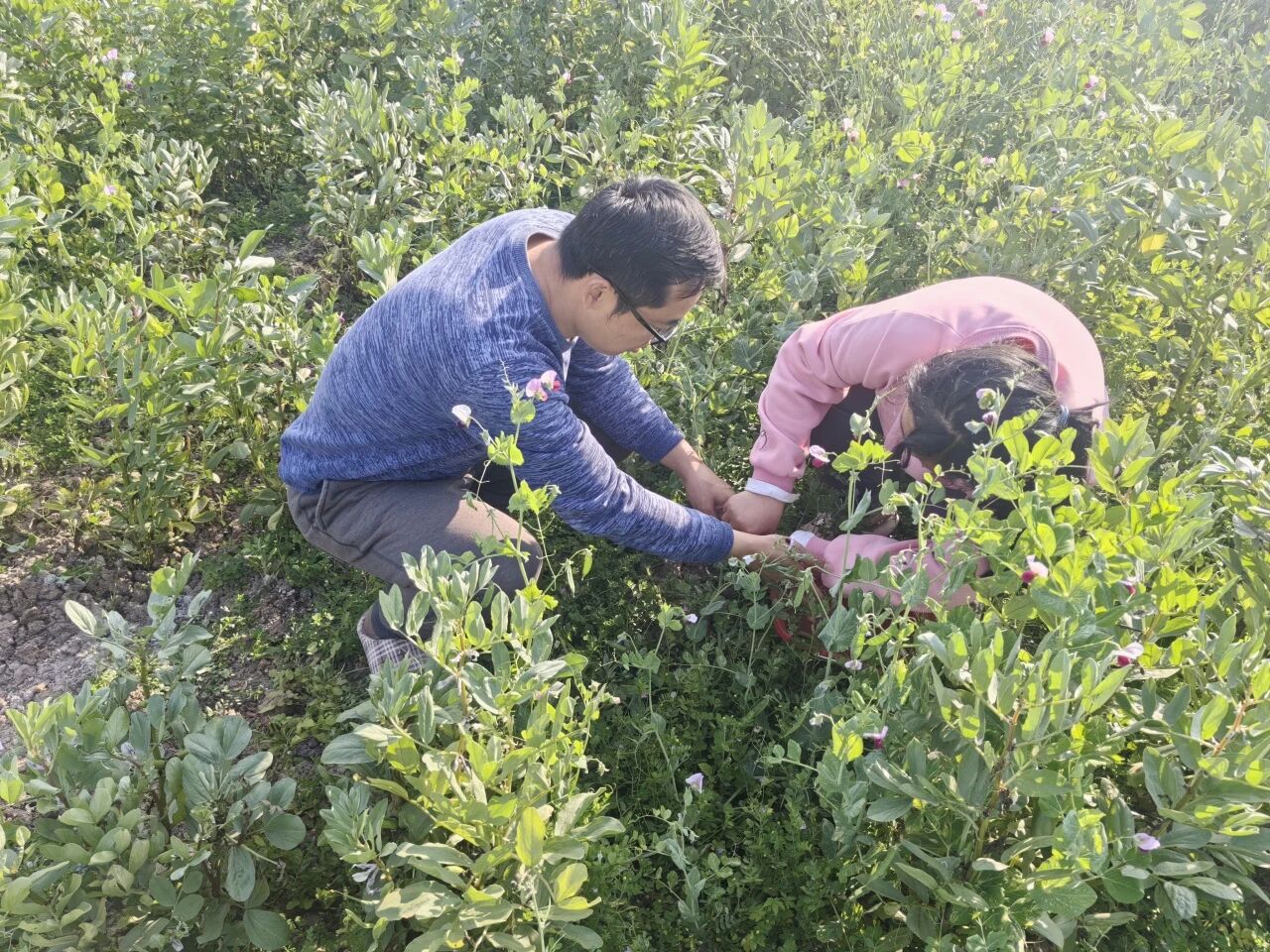
In recent years, pea shoots have become a premium vegetable highly coveted across the internet. On apps like Dingdong Maicai, they routinely sit at around ten yuan for 200 grammes, and what you end up with is often quite tough—nearly impossible to chew for those with weak teeth. In the county market, they normally go for four or five yuan a jin, but prices double to ten during the Spring Festival. This year, thanks to the village fields, we’ve finally achieved “pea shoot freedom”.
A quick search of the Weiyuan County government website turned up a news report stating: “Wutong Village cultivates over 600 mu of peas, generating an output value of 3,000 to 4,000 yuan per mu. Pea shoots are highly profitable and have a short growing cycle; the harvest window runs from October through to February of the following year, yielding eight to ten cuts per season. More than 200 households in the village grow peas. At present, the village’s pea shoots are shipped to cities such as Beijing, Shanghai and Chongqing at a price of nine yuan per kilogram.”
In a village where the permanent population is under 3,000 and arable land per household tops out at just two mu, locals are eager to cultivate peas. Keen to capitalise on the high returns from pea shoots, no few young people have returned home specifically to lease seven or eight mu and establish themselves as large-scale growers.
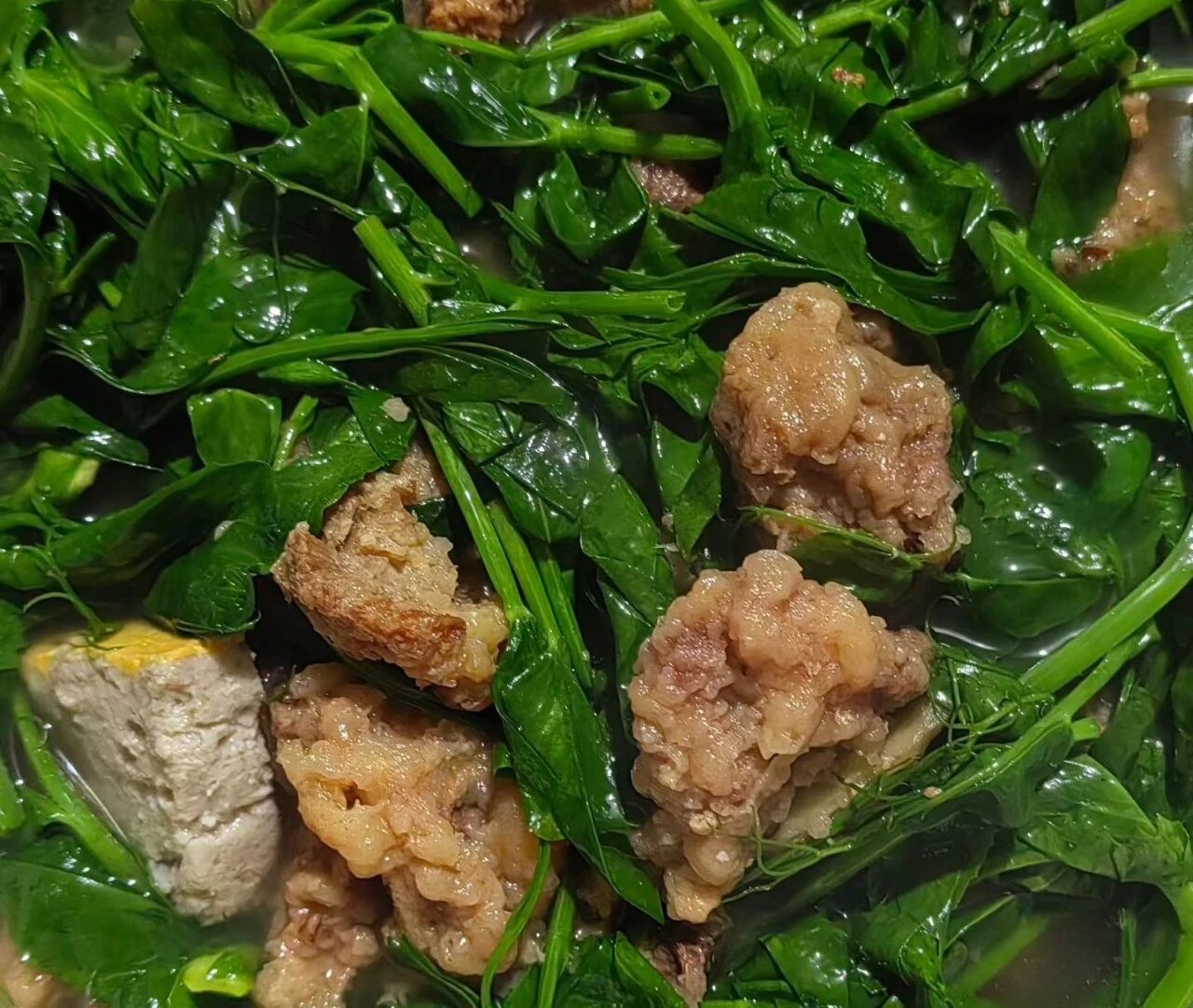
The Spring Festival table calls for three proper mains, all centred around pork: Shao Bai (Sichuan-style braised pork belly), meatball soup and crispy pork broth. Yet none of them would be complete without pea shoots.
For the steamed pork belly dish, only the fatty, skin-on layers are selected. Each slice is slit down the centre, packed with a filling of red beans and black sesame seeds, glazed on the skin side with dark soy sauce, and steamed atop a bed of glutinous rice. A slice of the local ‘fatty liver’ (a Sichuan dialect term for the richest cut of belly pork) melts on the tongue, sweet and luscious without ever feeling heavy.
The meatball soup is characterised by its light, silky texture. Pork with three parts fat to seven parts lean is chosen, mixed with spring onion, ginger, salt, pepper, and light soy sauce, then pounded into a mince and stirred continuously to completely erase any graininess. Sweet potato starch and egg white are folded in until smooth. The mixture is spooned into boiling water to poach the meatballs until cooked through. Chinese cabbage and pea shoots are added to the broth; after a mere thirty-second blanch, it is ready to serve. Yet in the countryside, the meatballs are actually square—the mince is frozen into blocks and then sliced, making it far easier to prepare.
Crispy pork rib soup calls for pork ribs or belly. The meat is marinated in salt, minced ginger, cooking wine, sugar, and crushed Sichuan peppercorns. A batter is made by combining sweet potato starch with eggs—water must not be added—and the meat is evenly coated before being deep-fried in rapeseed oil until golden. The fried pork is then simmered to make the soup, cooked until fork-tender, and finished with a quick blanch of Chinese cabbage and pea shoots, following the same final step as the meatball soup.
IV. Eating Meat in the Countryside
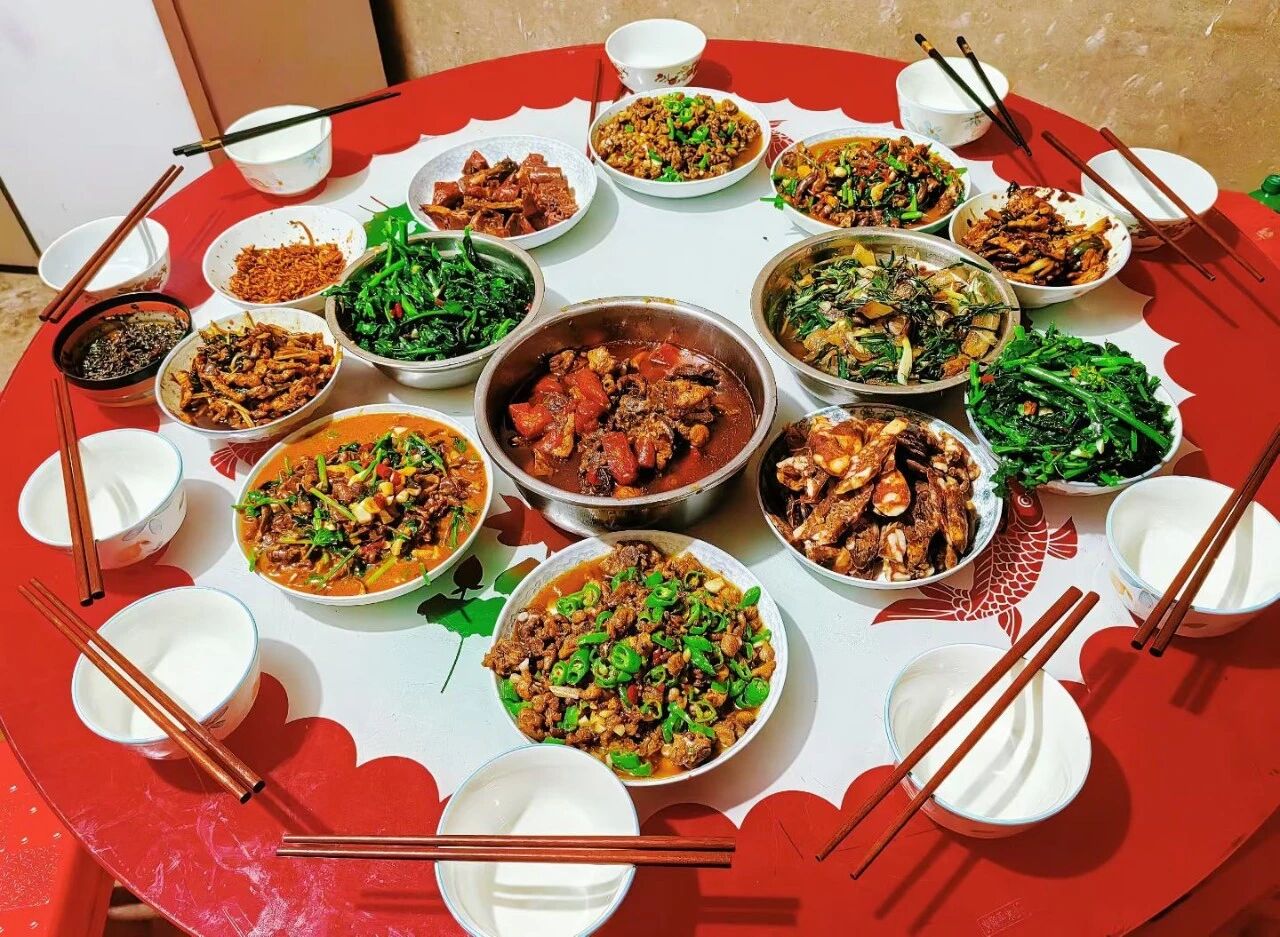
Pork, however, remains the staple for everyday home cooking. Prices vary depending on the cut: the least prized fatty pork goes for 8 yuan per 500g, streaky pork belly 15 yuan, pork ribs 22 yuan, and marrow bones 30 yuan. Cold-tossed pork ears and head meat are priced at 25 yuan per 500g. Few families in our village raise pigs themselves. When hosting a Lunar New Year banquet, they typically hire a local butcher to come and slaughter the animal. Others will raise their piglets until they weigh around 150kg, then hitch up a tractor to haul them to a neighbouring pig farm. Though the pork consumed in the village is also purchased, the streaky belly, when simmered, turns delightfully springy and tender. It is far superior in taste to the tough, discounted pork belly one might buy from a budget supermarket in the city.
Out in the Sichuan countryside, the elderly live by the traditional rural rhythm of rising with the sun and resting at dusk, rendering the strict concept of time somewhat fluid. Shuer and I spent our days in quiet leisure, wandering aimlessly through the fields and lanes. On the day we made the climb up the hill to visit my father-in-law’s youngest brother, I watched a group of men carry a pig onto scales, weigh it, and then her it into the back of a light truck, ready for the journey to the town butcher.
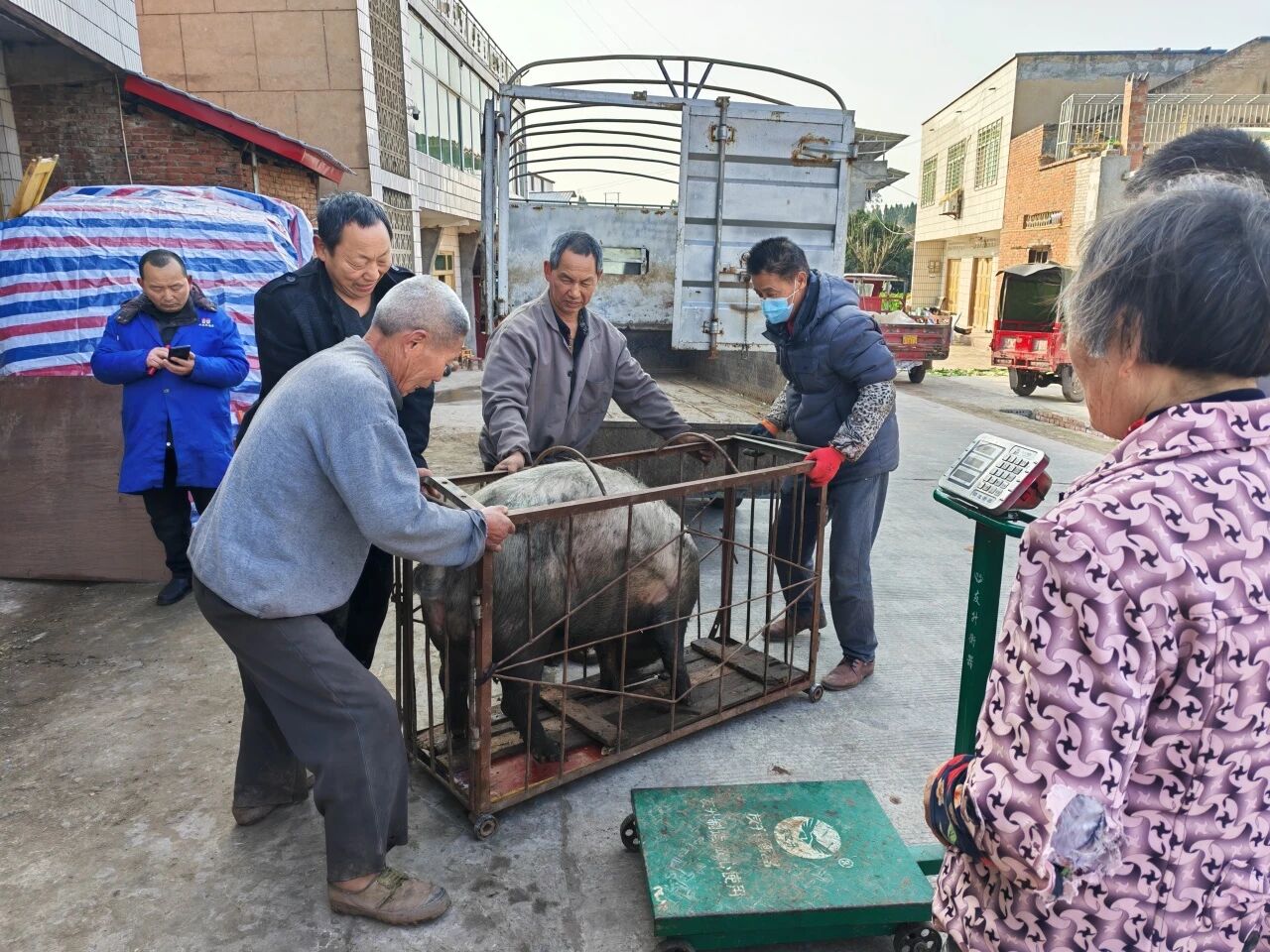
I did the maths: between 8 February and 3 March, we spent twenty days in the village. Our family of three, together with visiting relatives, consumed a tenth of a pig (including ears, head meat, snout, and streaky belly), several dozen white crucian carp, made eighteen trips to the town’s morning market, and spent nineteen days watching the rapeseed blossoms. The visit to the village also seemed to cure Shuer’s fear of dogs. She would spend her days squatting beside the chicken coop, waiting for the sleek black hens to lay their eggs, before carefully picking out the fresh eggs still dusted with droppings. All the while, she pined for her cousin from the county town to return to Grandfather’s old house and take her out for an adventure.
It was a mild winter this year; by mid-February, the soft murmur of swallows could already be heard in the courtyard. Locals say it is a fine omen when swallows choose to nest beneath one’s own eaves. On the day the warmth finally returned, we slipped away from the courtyard in silence, careful not to startle the birds. The rapeseed blossoms swayed gently in the breeze, painting the hills and valleys in brilliant gold. Until next year, rustic Sichuan flavour.

All images in this article are provided by the author.
Edited by: Xiao Dan