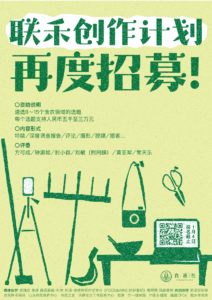
Compared to the 2024 Lianhe Creative Plan, the number of applications has nearly doubled, significantly increasing the difficulty of the selection and interview process. At the same time, we were delighted to find that more and more people are observing and documenting food and agricultural issues in diverse ways, and delving deeper into the underlying phenomena. From the applications, several clear shifts stand out this year: first, a growing number of works focus on the labourers behind our food, such as migrant workers, women and elderly people left behind in rural areas, and delivery riders. Second, the tension between places of origin and markets is being recognised by more people. For instance, the impact on origin regions and farmers’ livelihoods when “star agricultural products” rise to fame and then fade from popularity. Particularly in the fruit sector, the rapid iteration of varieties has become a focal point. Many applicants, observing shifts in varieties from the consumer end, seek to understand what forces are changing consumer tastes and demands. They then travel to production regions to grasp how these shifts in consumption impact the land and the farmers, thereby connecting a chain from the soil to the market and onto our plates. Furthermore, there has been an increase in works focusing on pastoral regions and herders. This may be linked to the research on “Imported Meat on Herders’ Tables” from the 2024 Lianhe Creative Plan. This year coincides with the UN’s International Year of Pastoralists and Rangelands. Whether concerning herders’ livelihoods or pastoral ecology, many crucial issues remain to be explored in greater depth.
Through these applications, we also feel more clearly that food and agriculture are not merely about traditional sectors like farming, forestry, animal husbandry, and fisheries; they are equally the product of labour, technology, capital, environment, and culture working in concert. A vast number of concrete, real-world issues still await attention, documentation, and action. Foodthink is not the sole actor or supporter. In fact, everyone can become an actor and supporter in their own unique way.
Finally, our thanks go to the nearly 200 applicants, as well as to the judging panel, co-creation partners, and media partners. We are also grateful to everyone who has ever paid attention to food and agricultural issues—even a fleeting glance is a form of care, a moment of inquiry. We would like to extend special thanks to the readers who have consistently followed Foodthink over the years. It is your clicks, reading, comments, shares, and discussions that allow these works to continue living and breathing.
Below are the selected works for the second edition of the Lianhe Creative Plan (listed in no particular order, categorised by theme):
Chasing Fruit in Southeast Asia
Yes, We Will Eventually Have No Bananas
Through writing about a group of Chinese banana industry workers in Vietnam, the author will trace the journey of bananas from Vietnamese soil into the Chinese market. This piece will examine how this system, which relies heavily on transnational production and a single market, affects people’s lives, the functioning of a city, and our very understanding of food.
Searching for the Next Durian Plantation in Laos
Starting with a durian constantly subjected to “forced ripening”, I will track how it departs from its natural growing context and, following the path charted by capital, is swept into a cross-border frenzy of cultivation and investment. As domestic demand continues to heat up, this crop—once reliant on specific climates and accumulated knowledge—is being reimagined as an opportunity to be replicated, expanded, and strategically deployed.When the Market Cools and Farmers Retreat
When the Aroma of Hemp Fades
In the south-western mountain village where I taught, the principal cash crop is green Sichuan peppercorn. When summer arrives, the hillsides are steeped in a pungent, numbing fragrance, and students frequently spend their holidays helping their families prune the pepper branches. Yet the local history of cultivating these trees is relatively brief. More than a decade ago, the crop was designated a priority project for poverty alleviation through industry, and was rapidly scaled across the surrounding region. A market price of around 50 yuan a jin at the time gave farmers a tangible sense of hope for prosperity. Today, the buying price has collapsed to just over 10 yuan. Stockpiles dating back two years have yet to clear from the market, and government-funded irrigation channels are being abandoned by many farmers, as water costs now exceed profits. As this ‘numbing fragrance’ recedes, what roles do policy, market forces, and grassroots communities play? When even this sliver of hope for agricultural prosperity is tested, what does it portend for the village’s students and their families?
Twenty Years Like a Dream: A Chronicle of Tree Speculation on the Guanzhong Plain
Set against the Bailu Plain near Xi’an in Shaanxi province, this project traces the two-decade rise and fall of the ‘white pine craze’, focusing on the ordinary farmers caught up in it and the subsequent shifts in their fortunes. From the initial prosperity myth that ‘plant today, prosper tomorrow’, to the market reversal that left the trees unwanted and destined only for firewood, the work examines how a single trend can relegate farmers to the very bottom of the value chain. It aims to look beyond the mere fluctuation of a timber economy to explore the fraying relationship between farmers and the land, the erosion of long-term expectations, and the widespread abandonment of fields driven by a deep-seated distrust of the soil. Through the documentation of real individuals and critical turning points, the project portrays a rural transformation underway and a profound demographic shift.
After the Cordyceps Boom
In the high-altitude pastures of Yushu in Qinghai province, cordyceps once acted as a high-value commodity that integrated herders into the market economy, briefly reshaping their daily lives and aspirations. Yet since 2024, plummeting prices and intensifying ecological pressure have begun to weaken this fragile lifeline. More families who previously left the grasslands are being forced back, but they return to a landscape no longer defined by stability. Following two or three herding households who have relocated back home, the director will employ long-term observational filmmaking to document the everyday processes of cordyceps foraging, pastoral work, and household decision-making, laying bare the choices and constraints imposed by resource volatility. The film poses a central question: when an economic route that draws people away from the land fails, how will the bonds between people, the land, livestock, and the market be reconfigured?Looking Beyond the Food
When Abalone Swims Back to the Table: The Overlooked Seaweed Workers
Along the Fujian coastline, a seaweed known as Longxucai underpins the entire abalone farming industry, yet its harvesting and processing are predominantly handled by coastal labourers who have long gone unrecognised. This project will follow the path of an abalone back to the dinner table to trace the hidden labour chain that supports it. Through field interviews and direct observation, the work will record the daily routines and survival strategies of these marine workers, illuminating how they are entrenched and eroded by industrial frameworks and gendered divisions of labour. It aims to provide a more granular, human-focused perspective for understanding the underlying logic of the marine economy.
I Want to Fetch a High Price for Peaches Too
In the peach orchards of Pinggu, Beijing, a single peach conceals a farmer’s most profound hopes and anxieties. As gift boxes of premium peaches make their way into the city, we see not only the joy of a bumper harvest but also the livelihood disparities within a single village, born from differing approaches to selling. What truly separates those who sell well from those who do not: technique, networks, or some invisible barrier? Against a backdrop of an ageing farming population and the relentless rise of e-commerce, how do the livelihoods of peach farmers with vastly different life stories diverge? Through research and narrative, we aim to bridge the divide between urban dining tables and rural orchards. We want consumers to truly see the growers’ sweat and aspirations, to hear the yearning behind the simple wish, “I’d like to sell my peaches at a fair price too,” and to reflect anew on our relationship with food and the land.
A Tale of Geese
This project focuses on the breeding of lion-head geese in the Chaozhou region and the evolution of the local braised goose industry. It seeks to shed light on the varied realities faced by breeders, alongside the untold stories behind braised goose preparation and its complex market supply chains.
Agency and Multispecies Perspectives in Yunnan Coffee Cultivation
As a coffee enthusiast, I relish experiencing the distinct flavours of different varietals and seek to understand the cultivation and consumer cultures that shape them. Over time, I have realised that the market’s pursuit of specific flavour profiles, alongside global trade dynamics and climate change, profoundly influences growing practices and techniques. In Yunnan, the agency of both commercial and specialty coffee farmers in selecting varietals and methods is increasingly compromised by uncertainties in consumer demand and environmental shifts. Does this stem from deliberate adaptation or passive endurance? I intend to immerse myself in these farms to explore the shifting relationships and connections between coffee, people, and non-human species.“Alternative” Cultivation
Growing Vegetables on Derelict Mine Sites: A Different Life After Resource Depletion
For over a century, relentless extraction in this coal city has left behind depleted resources, subsiding ground, and severe environmental degradation. By the end of the twentieth century, corporate restructuring triggered mass redundancies and the exodus of hundreds of thousands of residents. Today, with mine closures, ecological restoration, industrial transition, and clean energy spearheading urban renewal and economic growth, a surge in ‘urban agriculture’ has taken root. Across mining peripheries, derelict industrial sites, coal gangue hills, and ageing neighbourhoods, residents are spontaneously cultivating vegetables and root crops, erecting makeshift shelters from salvaged materials. Yet in public discourse, this practice is frequently dismissed as uncivilised. Within contemporary ecological governance frameworks, the community’s care for the land is overlooked, often clashing with official restoration initiatives. Who are these residents taking up farming, and why? How do they reclaim barren ground to make it cultivable? And how does this informal, patchwork urban agriculture persist—growing, vanishing, and reappearing—in the tightrope walk between mining governance and land re-capitalisation?
From Baicaoyuan to ____
This project centres on the agroecological practices at Baicaoyuan farm in Guangxi. By weaving together the farm owner’s personal history, the rhythms of daily life, and ties to broader national ecological networks, it examines how agroecology can become a viable path for an ordinary woman seeking an idealised life in modern China. The final work will merge an anthropologist’s field notes with a cartoonist’s visual storytelling to produce a zine. Through this accessible artistic format, we aim to shed light on the lived realities of China’s small-scale ecological farmers—particularly their intersection with urban-rural divides and gender dynamics. Our goal is to move ecological agriculture beyond an abstract, distant concept, portraying it instead as a grounded practice cultivated with both idealism and compassion.When Food is “Calculated”
The Calculated Life: How Digital Agriculture is Reshaping Our Understanding of Food, Labour and Ecology
Within the landscape of digital agriculture, life is being continuously monitored, calculated and optimised. Drawing on fieldwork in Zhejiang’s freshwater fisheries, this project will trace the journey of a single fish from pond to market, observing how people, fish, equipment and data interact in everyday practice. My focus extends beyond the technology itself to how it reconfigures the relationship between human and non-human life: how farmers navigate between sensor readings and lived experience when making decisions; how fish growth is translated into calculable metrics; and how markets and platforms intervene in the rhythms and valuation of life. By depicting concrete scenes such as breeding, harvesting, transport and trade, the work aims to portray a food production system shaped by the interplay of living beings, infrastructure and institutional frameworks. I hope to convey to readers that food is not merely a commodity, but a product of intricate relational networks. As life is incorporated into systems of calculation, our understanding of care, efficiency and cost is quietly shifting.
When a Night Market Has Three Stalls Selling the Same Fried Squid: Can We Still Find Truly Diverse Street Food?
Street food acts as a living embodiment of urban culture, the capillaries of the local economy, and a meeting point for personal memories and collective identity. Yet globalisation and commercial efficiency are eroding this vitality: street scenes once rich in local character are being replaced by standardised, homogenised stalls. In Changsha, a city repeatedly amplified by online traffic and branded as a ‘gastronomy IP’, how is street food being stripped of its cultural core and reduced to a fast-consumption symbol under the layered interventions of external capital, engagement-driven algorithms and regulatory standards? At the same time, how do individual stallholders maintain a vibrant, engaging and creative approach amidst this tide of homogenisation?气候与_____
“Northern Mushrooms, Southern Destination”: New Shifts in Yunnan’s Wild Mushroom Supply Chain
Yunnan has long been regarded as one of China’s richest sources of wild fungi, but recent climate anomalies are shifting this established ‘centre’. Starting from Kunming’s wild mushroom trading market, this project will follow distribution routes into Yunnan’s various growing regions, extending to sources outside the province, to track the emerging phenomenon of northern mushrooms being transported south. Through observation and interviews with foragers, traders and market operators, the work will illustrate how climate change concretely affects the growth cycles and supply structures of wild fungi, and how it further reshapes local food systems and supply chain dynamics. Through this project, I hope to bring the abstract issue of climate change back to earth, rooting it in tangible food and everyday experience. I aim to present a Yunnan in flux, offering a fresh perspective on contemporary food origins and regional relationships.
After the Tuanzhou Polder Breach: How Climate Risk is Reshaping Farmers’ Livelihoods
Weather disasters often attract intense short-term attention, yet the ongoing lives and livelihoods of affected villagers rarely receive follow-up coverage. In July 2024, the levee at Tuanzhou polder in Dongting Lake, Hunan, breached. Now that most villagers have been relocated, how are the farmers who left Tuanzhou going about securing land and rebuilding their sources of income? I wish to explore a broader question: as climate change brings more frequent and abrupt shifts between drought and flooding, becoming a long-term risk to manage, what structural changes have occurred in the livelihood systems of farmers around Dongting Lake? How should policymakers, local officials and villagers respond, and can we reach a shared understanding of the way forward?
Tea Farmers’ Lives Through the Lens of Climate Change
Tea is a climate-sensitive cash crop of significant economic importance, and also a vital source of income for many mountain farmers across China. Existing research shows that climate change affects tea production regions, yields, and quality, while tea farmers’ livelihoods face potential climate risks. I will go deep into Liubao Town, the core production area for Liubao tea in Wuzhou, Guangxi, and its surrounding villages, to explore the specific impacts of increasingly frequent extreme weather—such as droughts, torrential rain, and heatwaves—on local tea cultivation and farmers’ daily lives. By uncovering the climate stories of tea growers, I hope the resulting work will draw attention to this farming community and their efforts in building climate resilience.
When Melon Farming Becomes an ‘Adventure’: The Choices of Tianxingzhou’s Growers
Wuhan’s Tianxingzhou watermelons boast a century-long cultivation history. Known for their sweetness, superior quality, and premium price, they are a distinctive local agricultural product. Yet, fewer and fewer people now grow them. Following the catastrophic floods of 1998, Tianxingzhou was designated as a flood diversion zone. Residents were gradually relocated, the island’s ecological functions were prioritised, and agricultural production was steadily marginalised. This project aims to illustrate how, against the backdrop of climate change, shifting water levels, weather patterns, and policy frameworks have amplified production risks, passing the pressure down to the melon farmers. Confronted with steadily mounting uncertainty, how are they choosing, adapting, and responding? Invaders and the Invaded:
Wild Boars Turned ‘Savage’: A Tibetan Highland Village’s Tale of Conflict, Conservation, and Policy
“Could you write more about the wild boars?” This is the question I was repeatedly asked during my fieldwork, and it carries the weight of the villagers’ requests. At night, the valleys echo with the sound of gongs, firecrackers, barking dogs, and electronic loudspeakers blasting recorded pig-slaughtering noises. Yet by morning, villagers can only retrieve corn stalks stripped bare by boars. On their limited terraced fields, potatoes, corn, and other crops are devastated over large swathes of land, leaving locals with virtually no recourse. It is precisely within these everyday struggles that the wild boar has become the most immediate and complex concern for residents. This project will therefore examine the shifting legal status of the animal, the evolving relationship between villagers and boars, and the pressing question of who ultimately bears the cost of ecological conservation.
Who is Eating the Rubbish? The Multi-Species Health Dilemma in Tibetan Regions
The project will focus on the relationship between people, bears, and rubbish in the Yushu Tibetan Autonomous Prefecture. Human–bear conflict has been a major challenge in Tibetan regions over the past decade, with bears breaking into residential areas to scavenge through waste being a primary driver. Wildlife conservation groups have attempted to reinforce houses or implement waste management systems, but what puzzles me is: when did the rubbish first arrive here? Initial research reveals that the predecessors to this waste are often referred to by local Tibetans as “junk food,” a term used to describe the harm these heavily processed, plastic-wrapped products cause to the body. Through my collaboration with Foodthink, I hope to continue investigating and writing about how “rubbish” and “junk food” pose shared health threats to both humans and bears.Jointly supported by Cat Ally and FoodthinkAbout “Cat Ally”: Officially known as the Cat Ally Ecological Science Popularisation and Conservation Centre in Jiangbei District, Chongqing, it is a non-profit organisation dedicated to the conservation of China’s wild felids. Since 2008, the team has been deeply engaged in field surveys of wild cats; in 2017, the organisation was formally registered. Guided by the principles of science-based conservation, Cat Ally uses its focus on 12 native wild cat species as a focal point to safeguard the biodiversity of China’s terrestrial ecosystems. In response to the threats facing felids, Cat Ally actively conducts scientific research and conservation efforts targeting both these species and their prey.
Taking the conservation of China’s endemic North China leopard as an example, Cat Ally’s approach has continuously evolved to meet conservation needs. This has progressed from implementing ecological compensation for leopard attacks on livestock a decade ago, to advocating for key habitat protection and proposing the “bring the leopard home” ecological corridor vision. Today, in the region known as China’s premier county for North China leopards, the organisation has pioneered the “Leopard Township Farms” model, which weaves together community development and ecological restoration.
In Villages that Share Borders with Leopards, What Can a Single Plot of Farmland Change?
A group of wildlife conservationists heads into remote villages deep within the Taihang Mountains. Beyond animal protection, they rent farmland and cultivate it alongside local residents, seeking to weave ecological conservation into community livelihoods. The fields bridge the divergent logics of conservation and development, while also acting as a mirror that reflects how humans and animals learn to coexist across differences. To mark the fourth anniversary of the “Leopard Homeland Fields” project launched by the wildlife NGO Cat Alliance, I will be moving to the project site in Mafang Township, Heshun County, Jinzhong City, Shanxi Province, for an extended field study. Through writing and audio recording, I hope to document what this initiative has truly brought to an ageing, hollowed-out village.
Selected works will be rolled out throughout the year. Should any media platforms be interested in these selected projects and wish to host their publication, please get in touch with Foodthink. Once again, our sincere thanks to the judges, co-creation partners, and media partners who supported the 2025 Foodthink Lianhe Creative Project!
– Lianhe Creative Project Judges –

方可成
Associate Professor at the School of Journalism and Communication, Chinese University of Hong Kong, and Director of the Journalism Master’s Programme. He completed his undergraduate and master’s degrees at Peking University, and earned his PhD in Communication from the University of Pennsylvania in the United States. Before entering academia, he worked as a journalist at *Southern Weekly*. He is the founder of the News Lab and established the offline space ‘Filter Bubble Studio’ in Hong Kong.

钟淑如
Associate Professor at the School of Tourism, Sun Yat-sen University, and PhD in Anthropology from Texas A&M University. Her long-standing research focuses on wet market culture and sustainable food systems. She advocates for healthy dietary lifestyles and promotes the green, sustainable development of the food and agriculture sector. Since 2016, she has conducted in-depth fieldwork across more than 200 wet markets and ecological farms nationwide. She has published over 20 papers in high-ranking domestic and international journals. Her research has been featured by Foodthink, *YiXi*, *Chinese News Digest*, and *Southern Weekly*, amassing over a million reads and sparking widespread public discussion. She has published *Sustainable Food Consumption in China: Changing Foodscapes, Values, and Practices*, and is currently preparing *Chinese Wet Markets* for publication.

封小郡
Associate Professor at the College of Humanities and Development, China Agricultural University, specialising in labour sociology and agricultural sociology. In the field of labour, he has authored *The Making of Labour Precarity in China since 1949* (Cambridge University Press, 2026) and *The Labour Implications of Technological Upgrading in China* (ILO, 2020). His agricultural research primarily focuses on smallholder livelihoods, technology, and agricultural product distribution.

刘敏(熊阿姨)
Long-form reporter and editor, host of ‘Xiong Family Living Room’. She previously worked at *Sanlian Life Weekly*, *Intel GQ*, and *Mr Esquire* magazines, bringing over 12 years of media experience. She has won numerous domestic and international journalism awards. Her reporting consistently covers climate change, wildlife conservation, women’s rights, and internet innovation.

Huang Yajun
Director of the Shengeng Social Work Service Centre in Conghua District, Guangzhou. Huang has been engaged in rural community work since 2006, continuously exploring practical approaches such as cooperative development and urban-rural mutual aid. Through Shengeng Social Work, he has long worked on the front lines to chart pathways for rural sustainable development and foster dialogue between urban and rural communities.

Chang Tianle
Founding Editor of Foodthink; Convener of the Beijing Organic Farmers’ Market
– Co-creation Partners –
News Lab
Farmers’ Seed Network
Shanshui Conservation Centre
Friends of Nature
Shengeng Social Work Service Centre
Zhiyu
Heyi Green Academy
China Institute for Rural Reconstruction
Cat Alliance
Urban-Rural Harvest Festival
– Media Partners –
Jiesheng
Dan Du
Tencent News Science
Zaichang Non-Fiction Writing Scholarship
*Food & Wine: Eat Well, Drink Well*
Kan Li Xiang
Flavoursphere
Poster Design: Z X | Editor: Kai Rui