
Aged Sugar Cane Farmers Face Unsold Harvests: Unable to Sell, Yet Bound to Plant
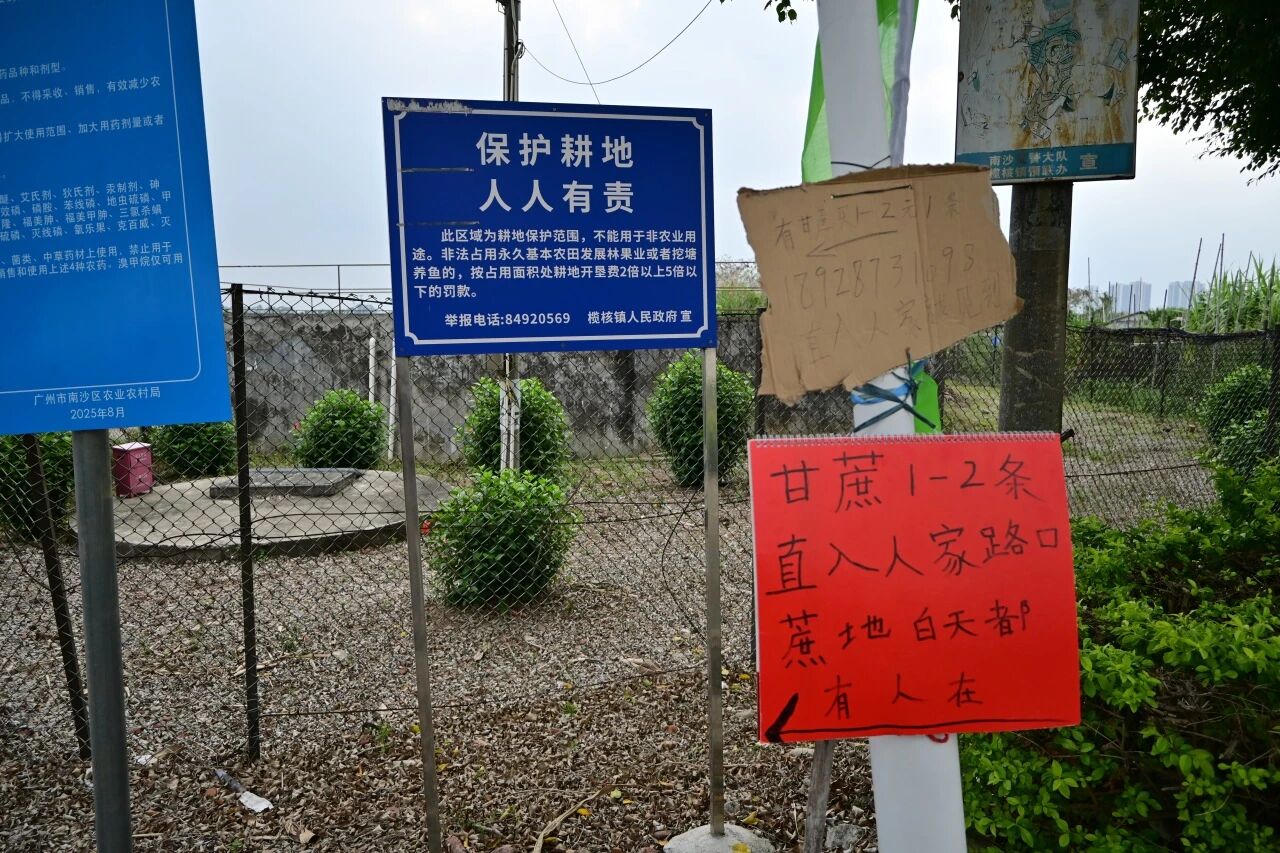
At around 7 a.m., 65-year-old Sister Zhen arrives at the sugarcane field. She clips her heavily scratched smartphone to a cane stalk, connects to her neighbour’s Wi-Fi, and opens Douyin. Under her breath, she runs through the steps: “Tap the plus sign, swipe left, go live.” The camera is pointed straight ahead. In the centre of the frame hang two pieces of cardboard tied to the cane, reading: “Sugarcane: 1–2 yuan per stalk. Shunhe Village, Lanhe Town. Host is an elderly person.” Her son taught her this routine just a week ago. By streaming all day without showing her face or saying a word, she hopes to draw in passing locals and clear the unsold crop.
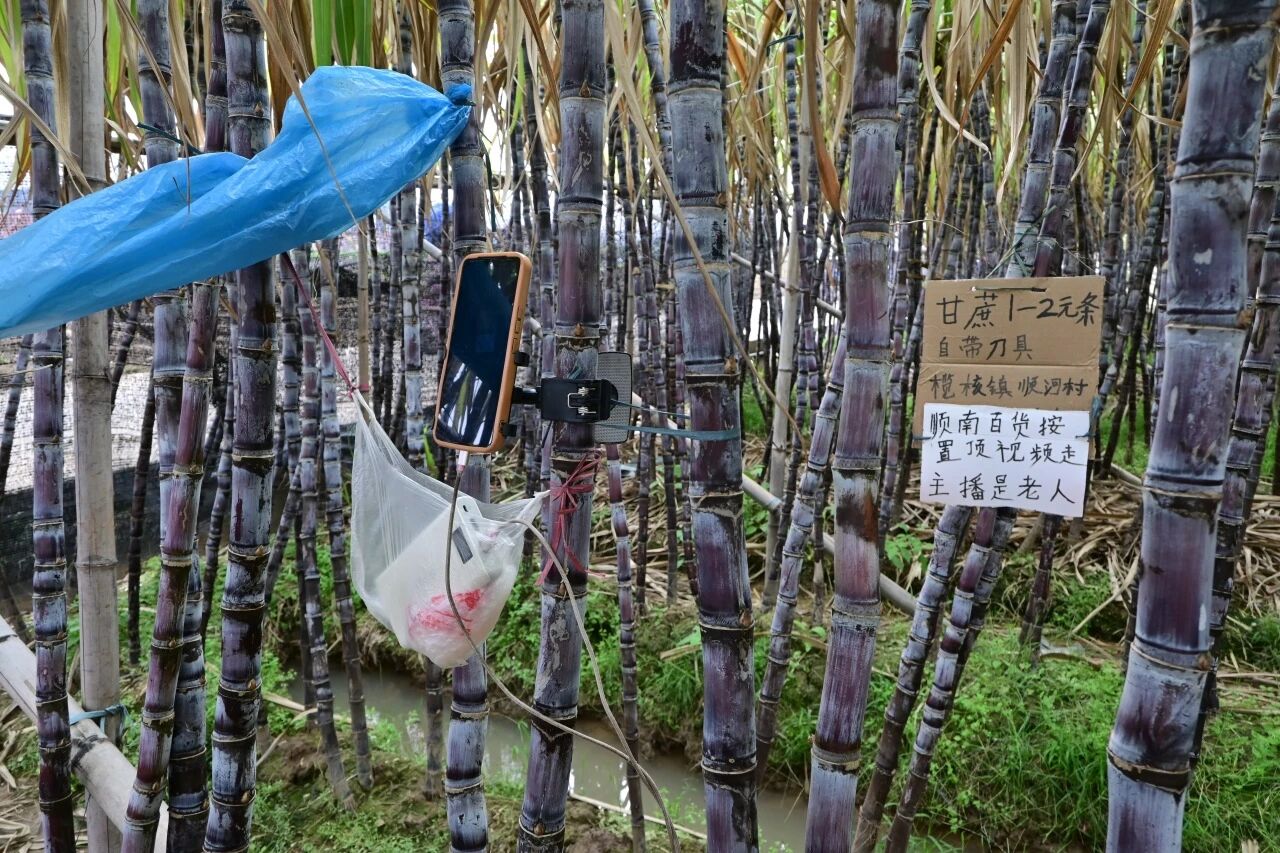
In Nansha, Guangzhou, late March brings spring showers that come and go, leaving the air growing muggy and heavy with the sweet scent of rotting cane leaves. Endless rows of black-skinned cane pierce the soil like needles, a sight that makes the heart ache. Dreading missing the spring planting window, farmers are handing their crop over to buyers for free, asking only that the fields be cleared quickly. Every acre given away at no cost translates to a loss of more than 6,000 yuan.
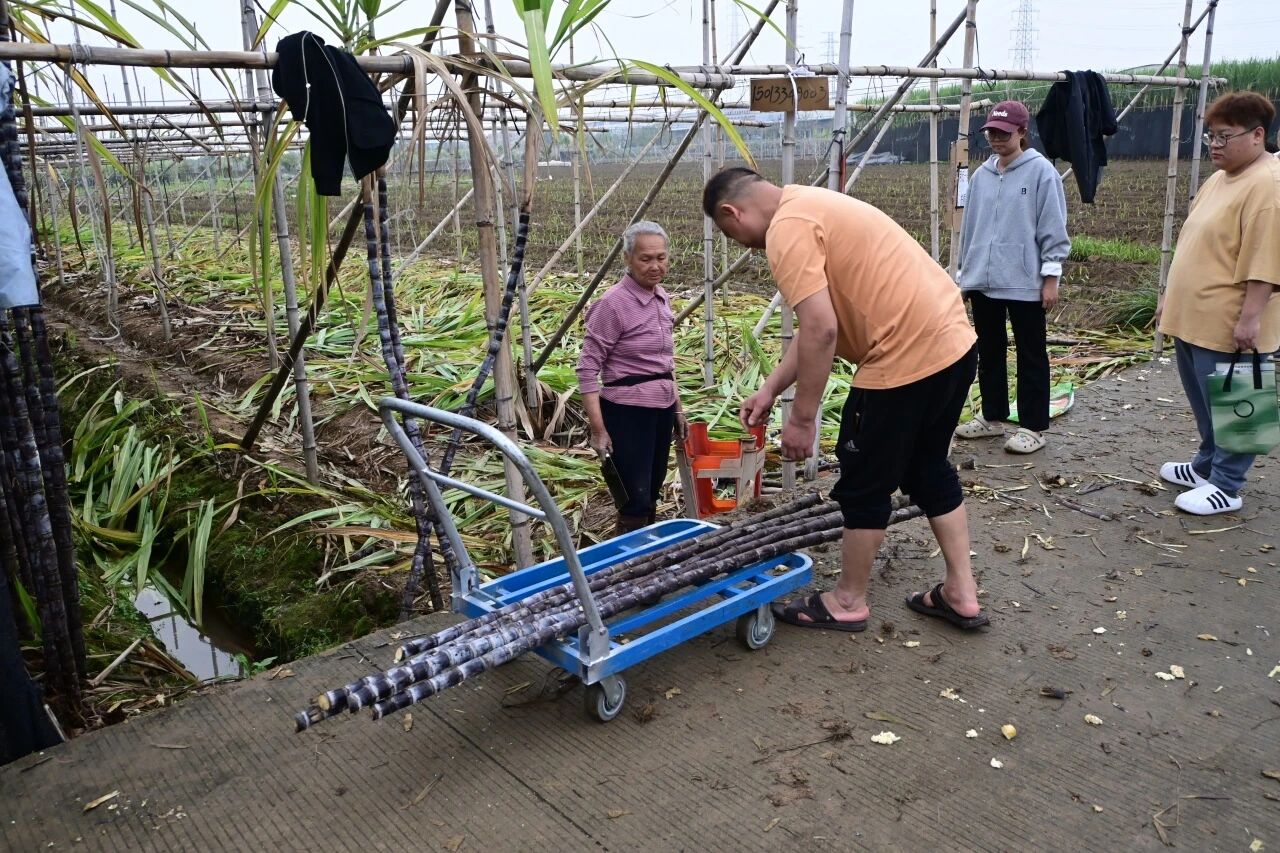
Most local cane growers are over fifty. Like Sister Zhen, many feel powerless against the surplus and can only hang signs reading “One yuan per stalk, support local farmers” at field entrances and junctions, waiting by the crops. News of the unsold cane in Nansha has attracted visitors keen to buy and harvest it themselves. At 1–2 yuan a stalk, an acre can bring in around 3,000 yuan, allowing growers to recoup nearly half their costs.
For many others, every day is spent cutting cane. Work begins at six in the morning and lasts until dark. With ageing bodies, they hoist over 50 kg of cane onto their shoulders, moving 2,000 kg in a single day. Earning just over 400 yuan, they must labour flat out for more than two weeks just to make up the loss on one acre.
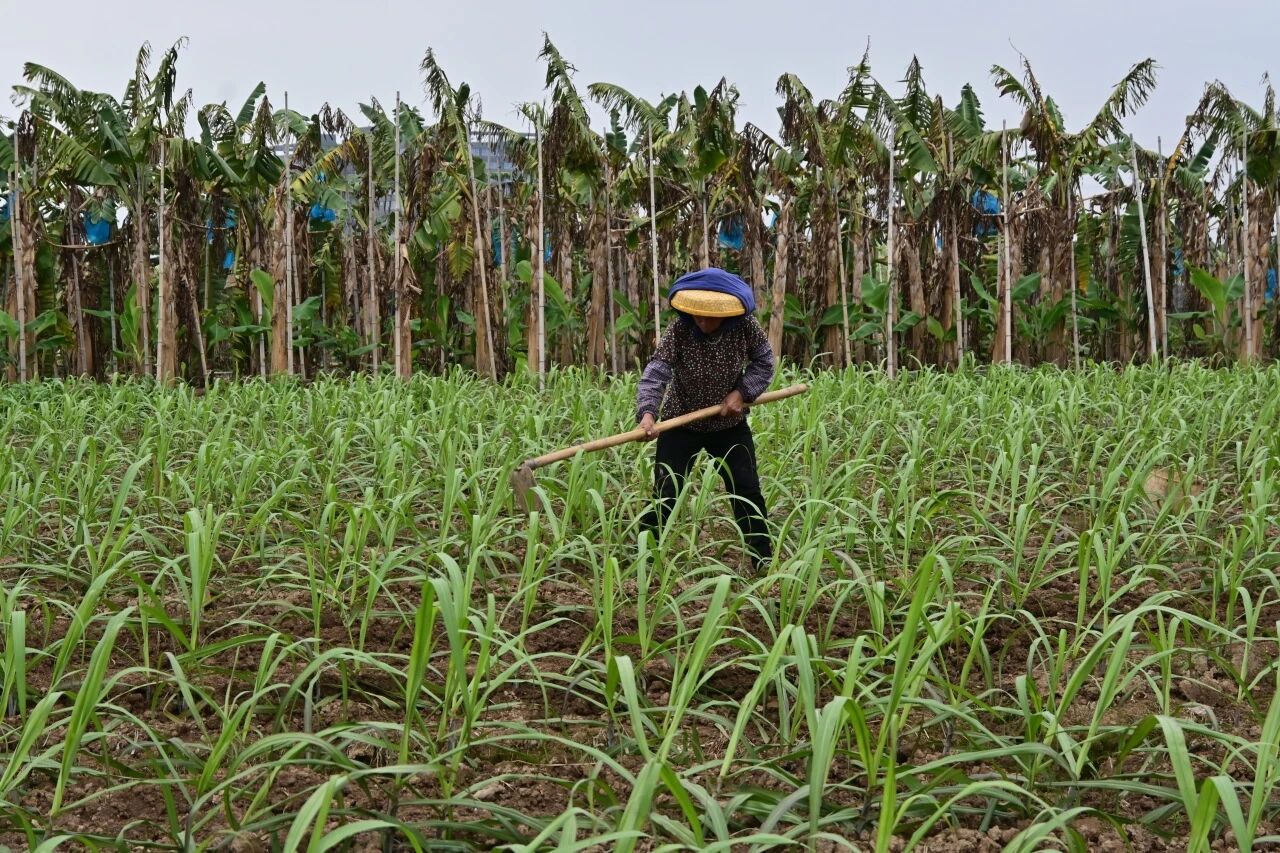
On the plots where spring planting has already begun, fresh green cane leaves are sprouting in thick stands. “What else could we plant?” the elderly growers have no real choice. “We’ll take the gamble again this year.”
I. Sugarcane Farmers Forced to Set Up Street Stalls
But this year’s market took everyone by surprise. After the final cold fronts of 2025, the black-skinned sugarcane in Nansha reached its prime for eating, yet few actually began harvesting. She waited from the Gregorian New Year through to the Lunar New Year, but during both festive periods, not a single buyer came asking for prices. How is the market faring? Zhen is in the dark. The majority of sugarcane growers are elderly, relying largely on word of mouth from local contacts to track prices. Without their own distribution channels, they have little choice but to wait. Yet well into March, much of the crop was still sitting unsold.
Zhen normally takes vegetables from her fields on a motorised tricycle to sell at nearby markets. Her vehicle is a battered trike, its seat nearly worn through. Since December last year, she has been cutting down the thinner stalks from her plot and hauling them to various spots across Nansha and Shunde to sell. Her face is deeply tanned, and she wears loose trousers, walking with her legs slightly apart and a pronounced sway. When enforcement officers come to clear her stall, she does not dare to argue. On occasions when her scales and stock are seized, she does not bother to claim them back, wary of the fines. Since sugarcane can be sold individually, she does not need a scale. A successful day at the stall could bring in a hundred yuan or more. Yet a single mu produces over 2,500 stalks. With no wholesale buyers in sight, she simply cannot shift the whole harvest, no matter how long she stands at her stall.
Zhenjie has a son and a daughter. Her son and daughter-in-law live and work in Tanzhou, Zhongshan, where they also care for the children. Her daughter lives with a mental health condition and is unable to work. At 20 yuan a load, the elderly woman would not only see a year’s hard labour go to waste, but also face losses exceeding 10,000 yuan. Living on a tight budget, her clothes are gifts from friends. The shoes on her feet were bought on Pinduoduo for just 8 yuan a pair; she bought two. The pair she was wearing had already developed holes, with both big toes poking through. The other pair, worn for six months, had heels ground completely flat, yet she refused to discard them. At this price, surviving on a meagre pension of just 600 to 700 yuan a month, they would not even be able to repay the debts incurred last year for pesticides and fertiliser. She turned down the only cane agent who had made an offer this year.
II. Without so much as a chance to discuss the price
Chen Shun initially held out, hoping the crop would improve slightly so he could command a better price. But by New Year’s Day, anxiety began to set in. He reached out to a familiar sugarcane middleman and eventually offloaded the two mu at 70 yuan a dan. Two years prior, sugarcane of this quality would fetch well over 100 yuan a dan. A fortnight later, another mu changed hands at 60 yuan a dan. Throughout the Spring Festival period, seven further mu were sold at 40 yuan a dan. Once land rent of 1,500 yuan per mu and labour costs were factored in, the return barely broke even.
Prices for black-skinned sugarcane had climbed sharply following last year’s Spring Festival. This year, however, middlemen’s offers have plummeted from 40 yuan a dan down to just 5 yuan. For crops of slightly poorer quality, there are no takers even if given away for free. Chen Shun’s final seven mu remained on his hands throughout March.
“There’s barely even a chance to sell large swathes of the crop,” a village official in Yansha Village, Lvanhe Town, explained. By late March, local farmers had registered more than 500 mu of unsold sugarcane, over 400 mu of which was black-skinned. Chen Jiao, a local grower in her sixties, cultivates more than a dozen mu of the variety. Widowed for several years, she relies on her children to help in the fields at the weekend whenever they are not working overtime. With rent payable for the land and hired labour required during peak seasons, costs exceed 7,000 yuan a mu. In the previous year, strong market conditions meant a hard twelve months’ work could yield 100,000 yuan. This season, however, her crop has been entirely overlooked. “Not a single buyer has even asked about the price.”
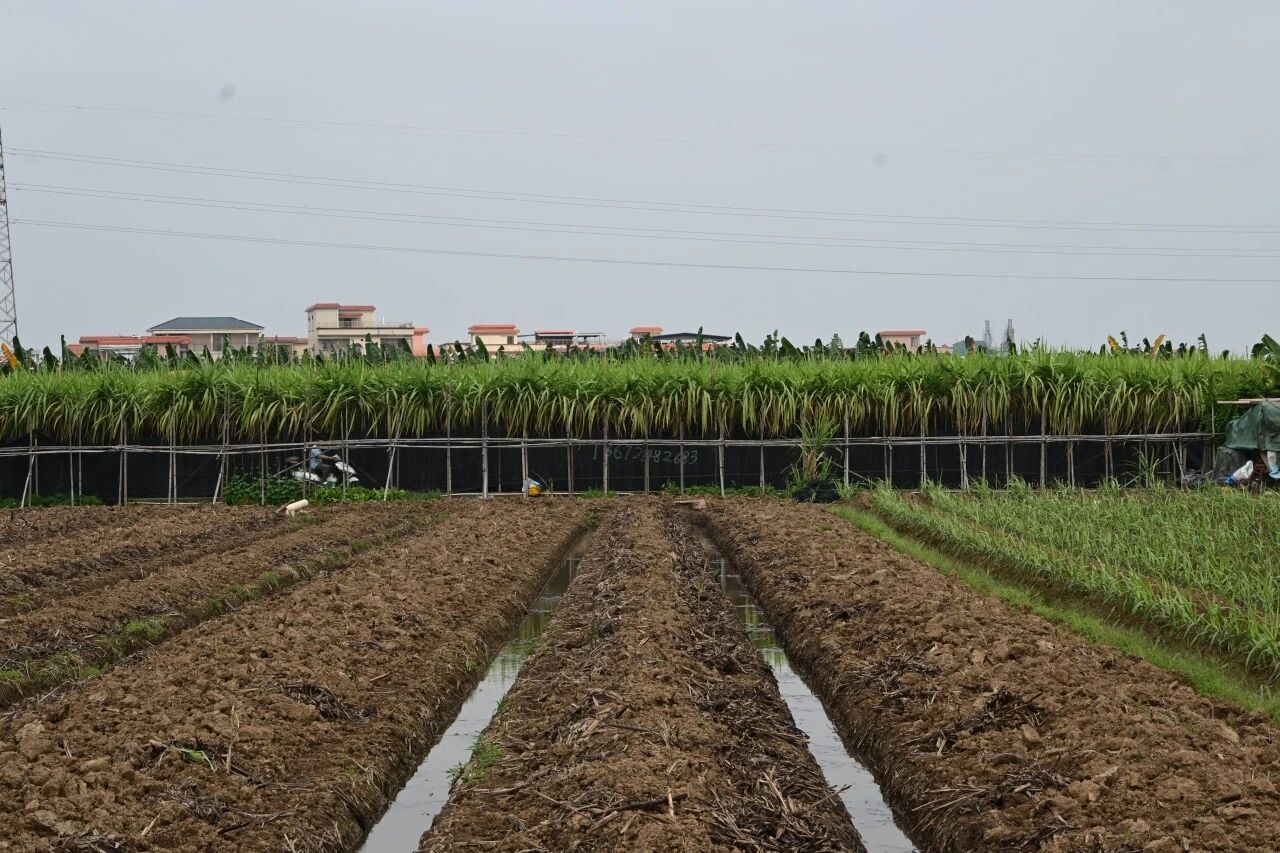
Across Nansha, every sugarcane plot is shrouded in black mesh. By the sixth lunar month, the stalks have grown tall and the summer sun turns fierce, so growers drape them to keep the shade on and prevent the stems from sun-burning. A premium black-skinned crop should have a deep, glossy finish. Farmers often paint their contact numbers on the mesh; after the Mid-Autumn Festival, middlemen or commercial buyers will ring up if the crop catches their eye, sometimes securing advance orders. Once a plot is taken, the farmer simply marks the covering with the characters for “sold”.
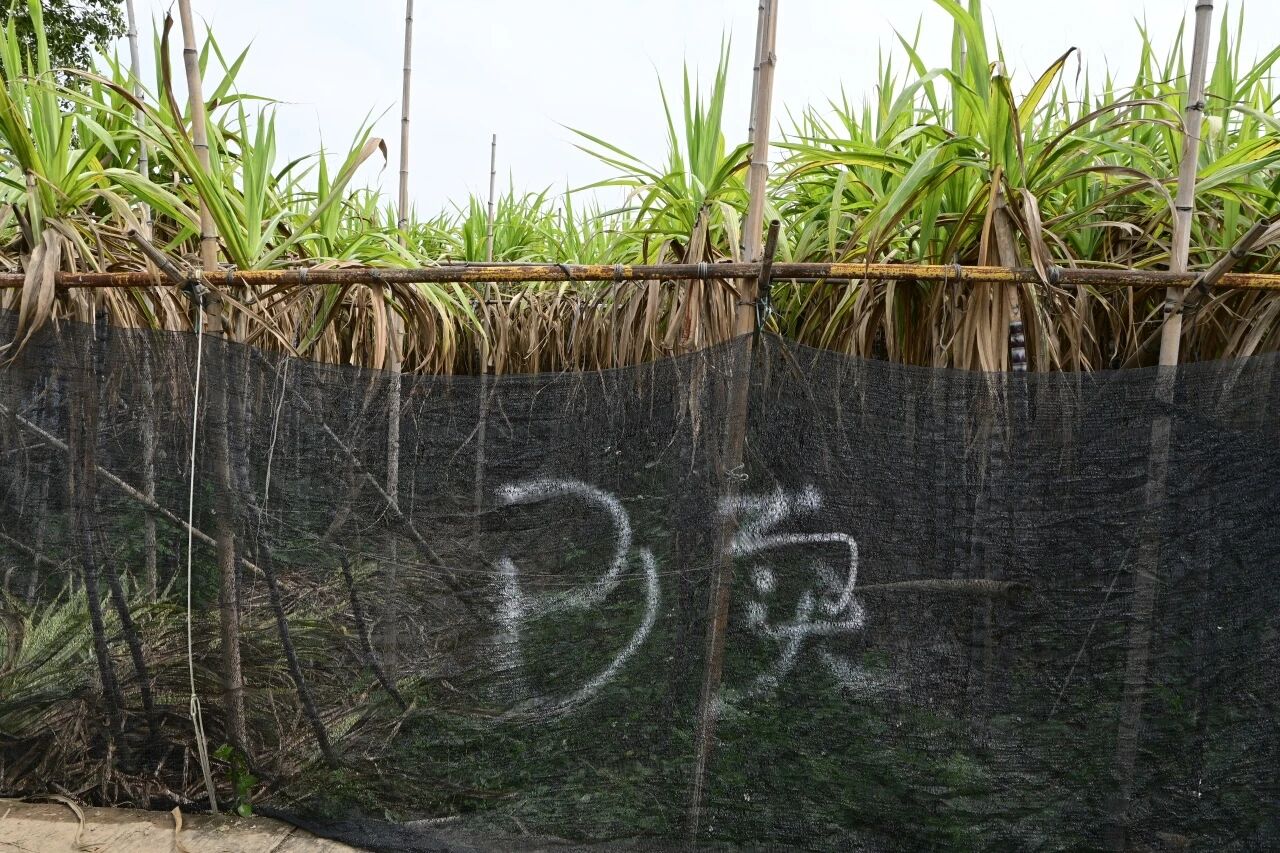
Chen Jiao painted her number on the mesh early on, but to this day, no buyer has rung up. The growing cycle for Nansha table sugarcane is roughly twelve months; for local growers, the “spring planting” phase effectively kicks off the previous winter. If the new crop of black-skinned sugarcane is to ripen in time for the year’s end, March is the absolute cut-off. To avoid missing the planting window, Chen Jiao handed over her earliest-sown stalks—those closest to going out of season—to middlemen at rock-bottom prices, or even gave them away outright, urging them to clear the fields swiftly. “Hold on any longer, and the ground won’t be ready for new planting.”
A local saying warns: “Sugarcane kept past Qingming is more poisonous than a snake.” As the Qingming period draws near, rising temperatures and humidity cause improperly stored sugarcane to turn red and mould, generating 3-nitropropionic acid, a dangerous neurotoxin.
“The quality of black-skinned sugarcane deteriorates quickly once it goes out of season,” the village official noted. While yellow-skinned varieties can be marketed year-round, it is the black-skinned crop that demands an urgent sale. In response, government bodies, schools, hospitals, and private citizens have stepped up to support the growers. Yet, according to feedback from local village committees, these well-meaning efforts have largely amounted to a drop in the ocean, falling far short of what commercial buyers could achieve: a single lorry belonging to a middleman can clear 35 tonnes of sugarcane from four mu, whereas thousands of visiting tourists might struggle to shift even one mu. Consequently, the local authorities have introduced a clearance subsidy: middlemen or neighbouring farmers who harvest and remove a mu of sugarcane will receive a bonus of several hundred yuan, with the scheme running until 5 April.
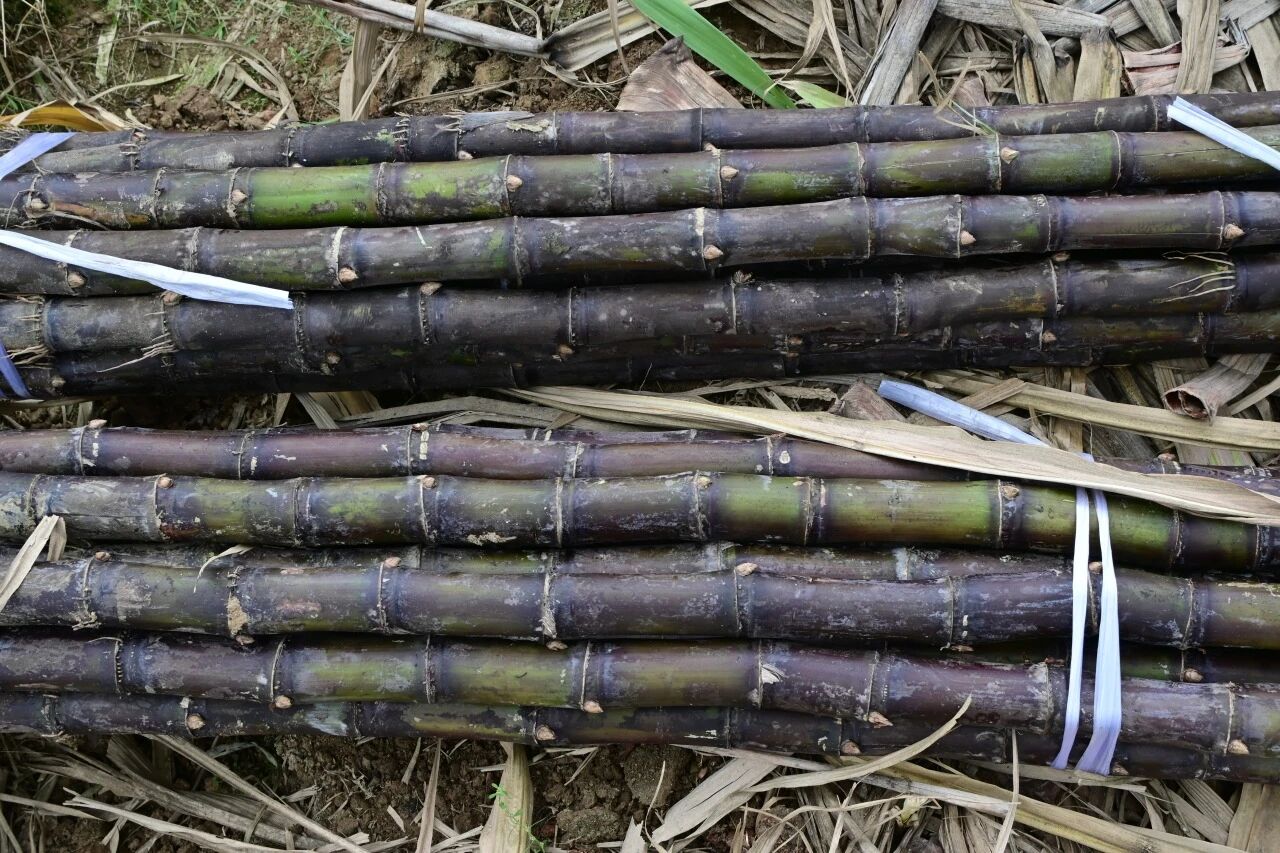
To clear the fields quickly, Chen Shun hired workers before mid-March to clear five mu of land, selling the standing crop at a mere 1,000 yuan per mu. “If I had to clear it out myself in the end, I’d still be out of pocket for labour costs.” With two mu remaining, his wife, Aunt Huang, stations herself by the fields every day, beckoning tourists to buy the sugarcane. The price started at 2 yuan per stalk, but has since dropped to 1 yuan.
Aunt Huang previously worked at a frozen meat processing plant. In 2025, alongside her 50th birthday came a dismissal letter from the factory. “Once you hit 50 on your ID card, the factory’s done with you.” Her income dried up just as her youngest daughter had entered senior high school and been placed in an advanced academic track. Driven by anxiety, she turned to sugarcane farming.
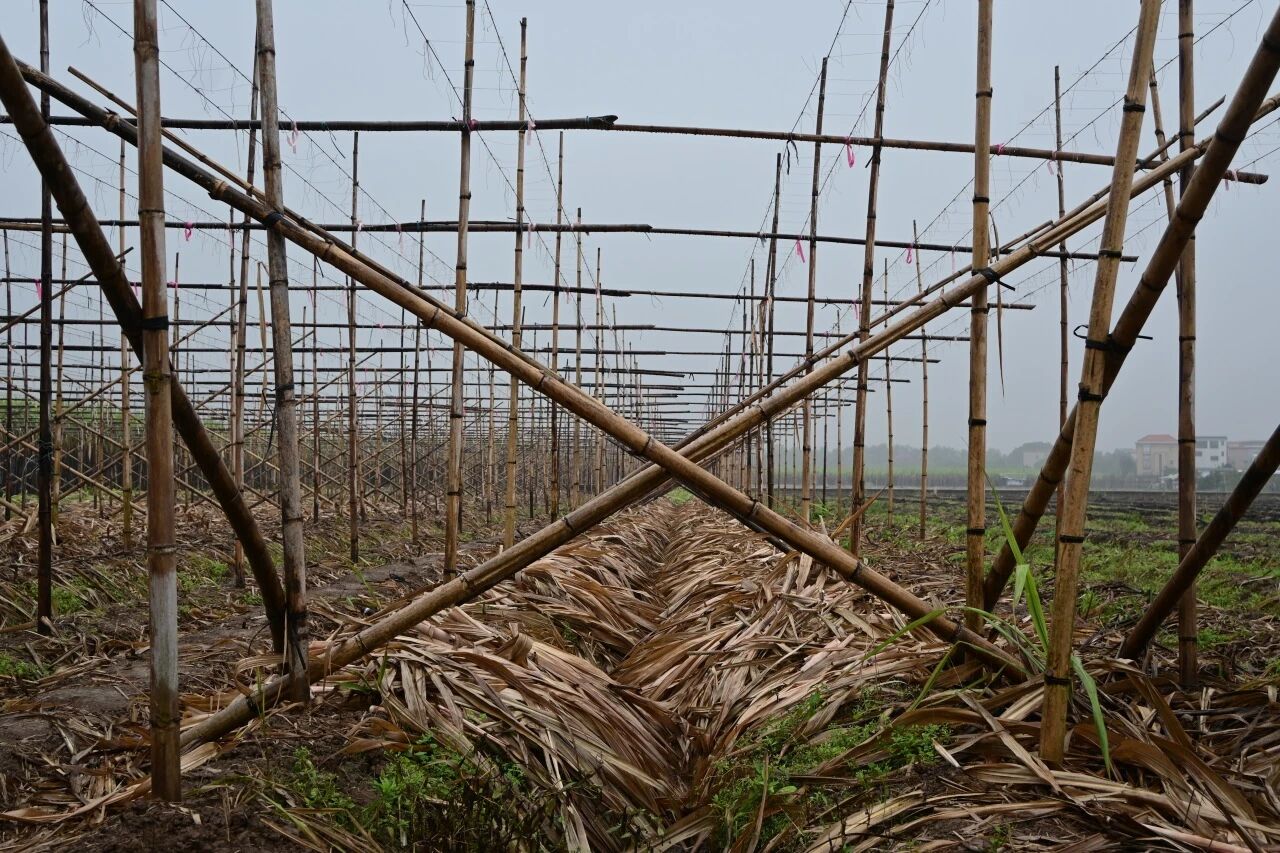
After a year of wrestling with the cane and the soil, she remarks: “Growing sugarcane is grueling at every stage.” Beyond laying plastic mulch, mounding soil, and frequent fertilising and spraying, cultivating fresh-eating sugarcane also requires building and raising support trellises.
If milling sugarcane grows crooked, it doesn’t affect the crushing process. But fresh-eating sugarcane only fetches a good price if it grows straight and evenly thick. Therefore, around the fifth month of the lunar calendar, as typhoon season approaches and the cane reaches a metre in height, farmers must erect bamboo frameworks in the fields.
Bamboo poles, roughly the width of a bowl, are driven half a metre into the ground. Several diagonal poles are added for bracing, connected horizontally at the top with thinner bamboo. Finally, ropes are strung up. Two thick ropes run along the ridges to frame a row of cane, which is then subdivided by thinner cords into square compartments. Each compartment cradles two stalks, guiding them to grow tall and straight and protecting them from being blown over. As the cane grows taller, the bottom five leaves must be stripped away, and the top bamboo frame along with the netting raised incrementally. Black-skinned sugarcane can reach four metres in height, requiring the trellis net to be lifted roughly six times.
III. The Sugarcane Cutters Are Elderly, Too
In years past, work for the cutters would begin after the Mid-Autumn Festival. Harvesting starts before dawn each day, with most men rising at four or five in the morning. Every cutting crew has a foreman who liaises with the local sugarcane collection centre regarding location, volume and price. In turn, the centre relies on these foremen to build long-standing working relationships with the cutting crews.
Each crew comprises around a dozen people, working with a clear division of labour. Those taking the lead each tackle a single row. Using a spade, they sever the base of the cane, lever it from the earth, and trim away the roots. The spades are custom-made, roughly a metre long, with a narrow, flat-tipped blade honed to a sharp edge. Once unearthed, the cane is usually propped back into the soil at a shallow angle. Since the trellis netting has not yet been taken down, ropes at the top keep the stalks upright and prevent them from toppling over.
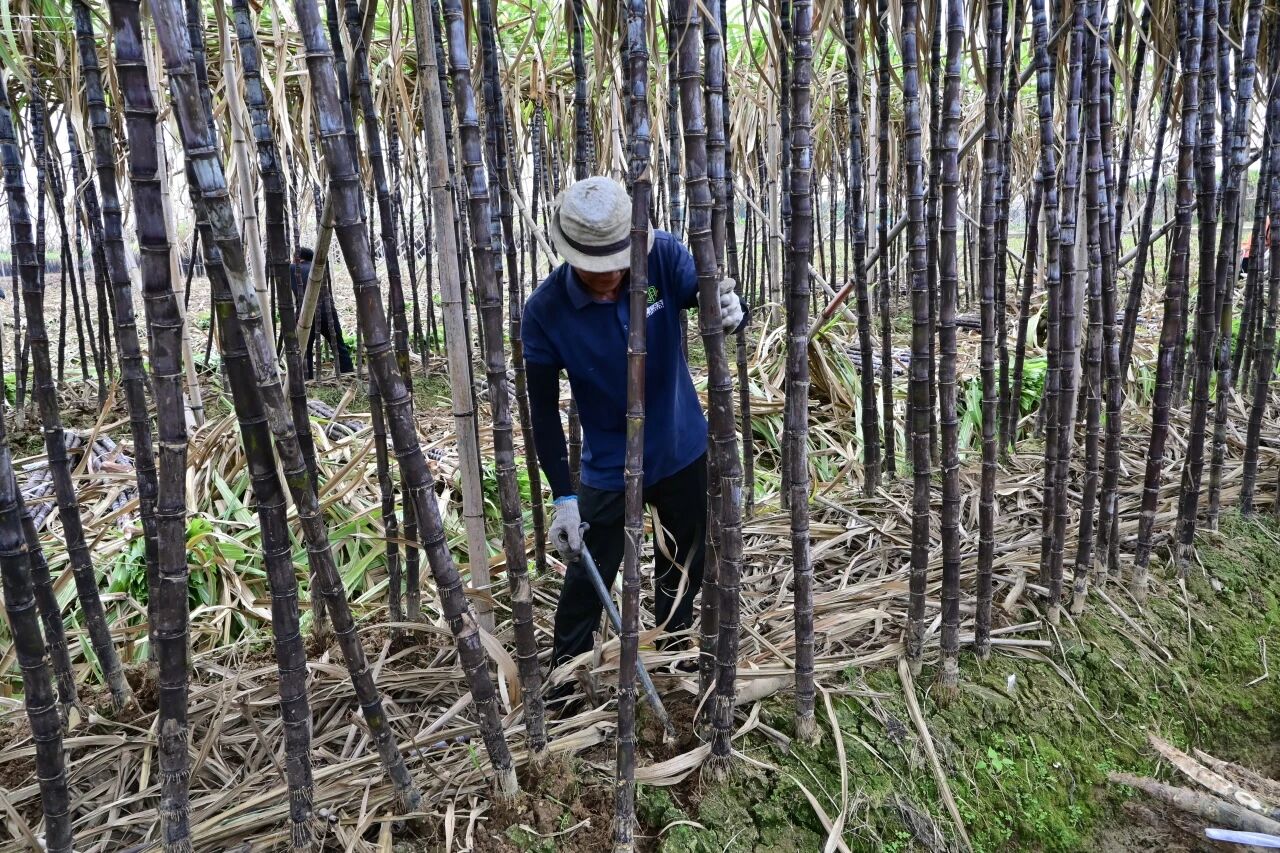
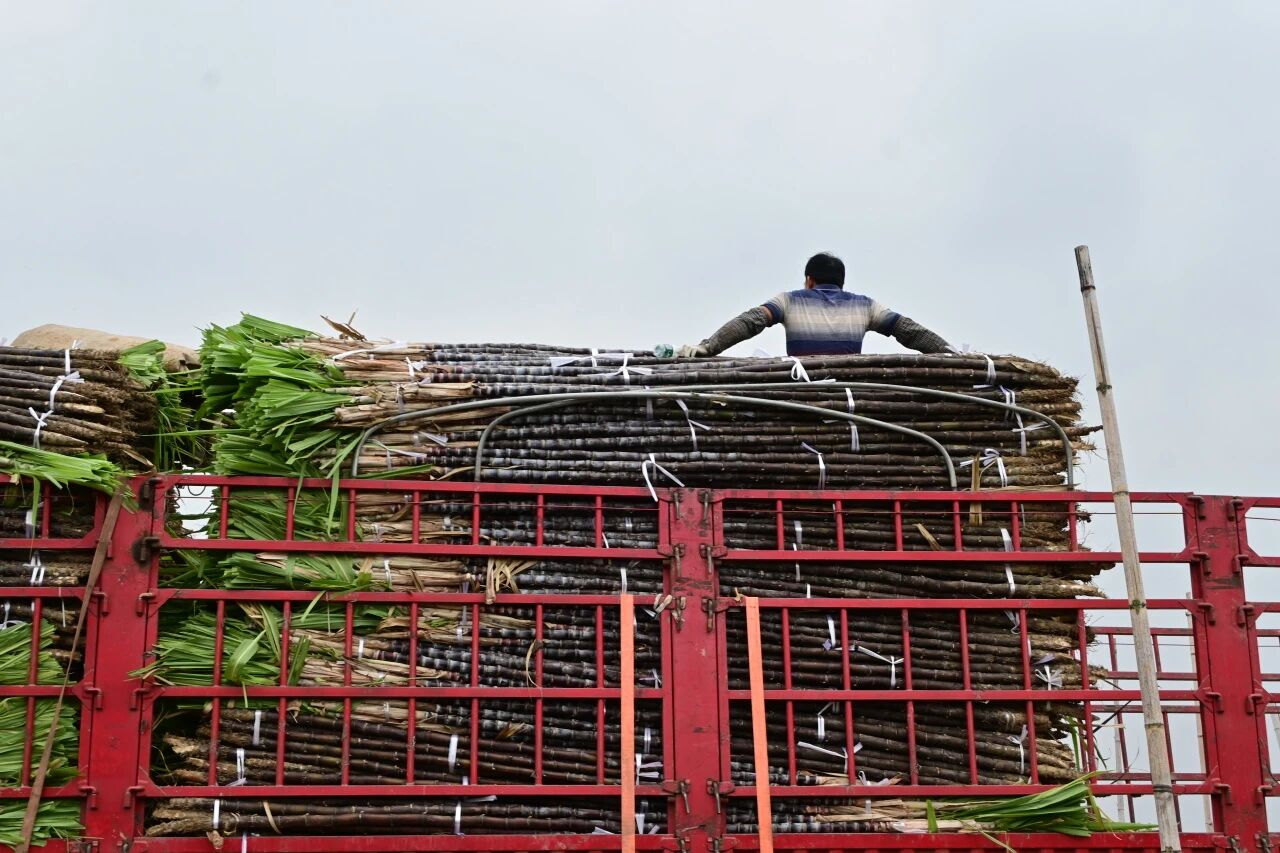
Once the cane is up, the entire crew moves with the rhythm of an assembly line. One group draws out the root-trimmed stalks and strips the leaves from either side near the top. Another group stands with inverted metal stools, slotting each cane into the trough formed by the legs. Bundles typically contain 12 to 14 stalks, tipping the scales at well over 50 kg. To secure a bundle, it must be tied at four points. Finally, half the lower leaves are chopped away. This style, known as harvesting the cane with its lower leaves intact, proves far more resilient and better suited to enduring long-haul transport.
The jagged edges of the sugarcane leaves are razor-sharp. Those who shun thick clothing to escape the heat quickly find their hands and necks scored with countless scratches. Though shallow enough not to draw blood, they quickly swell and redden. When dust, sweat, soil and sunlight seep into the cuts, they burn with a sharp, stinging pain.
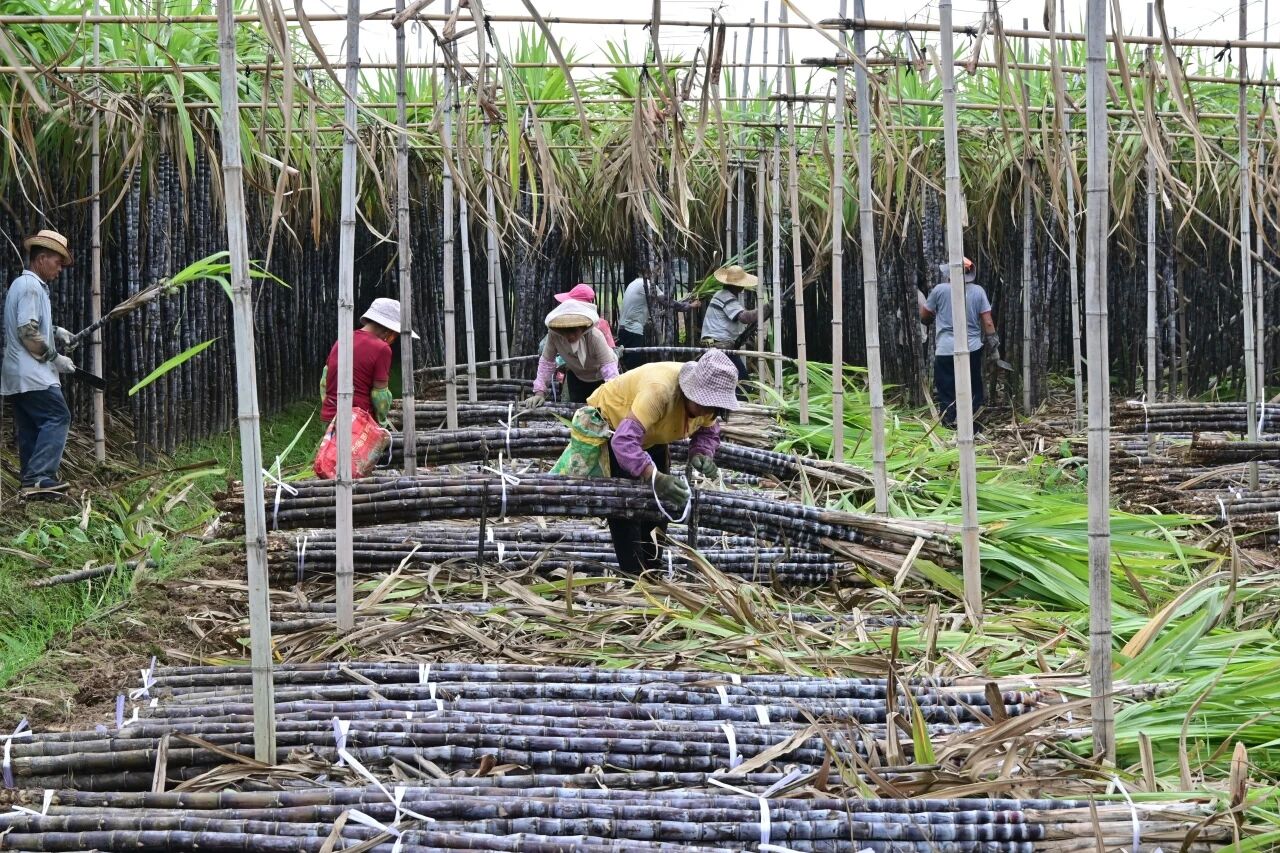
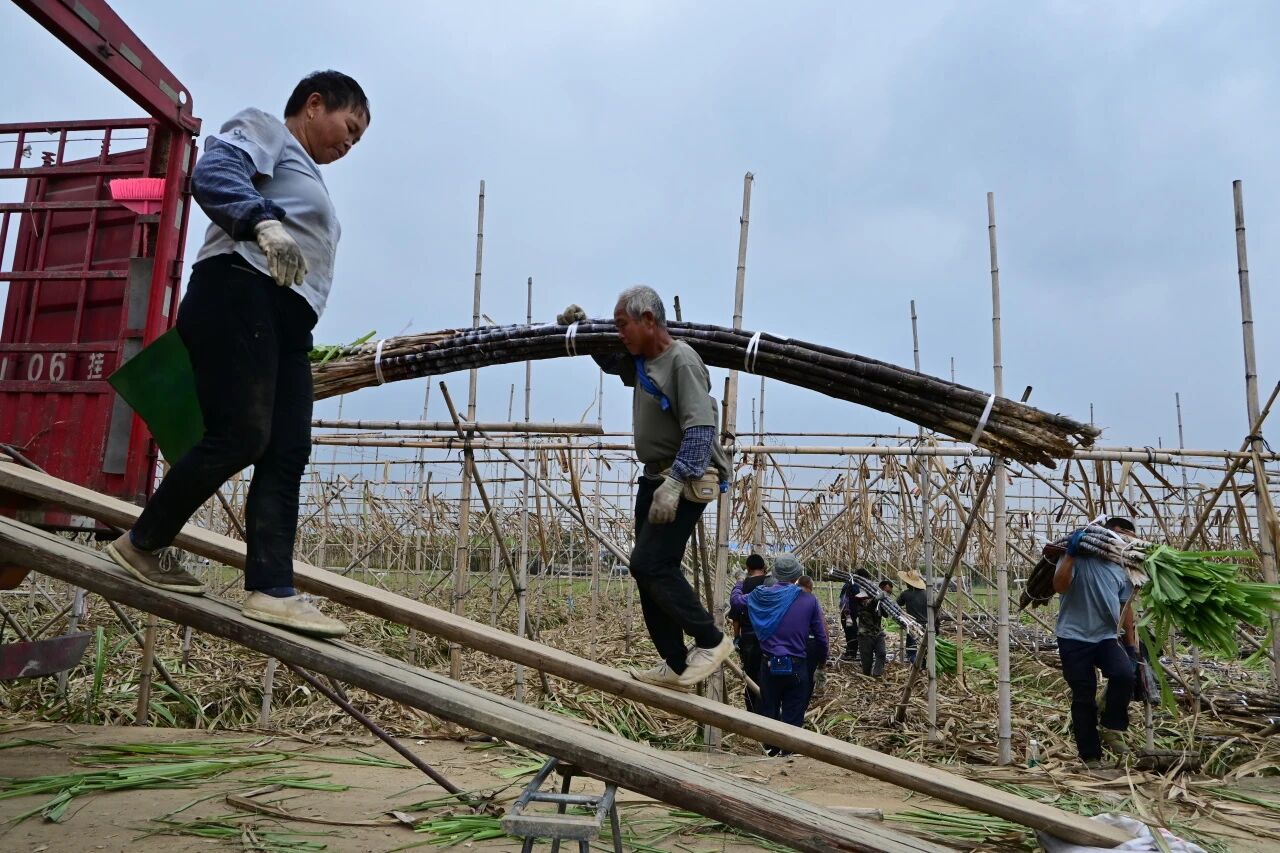
The most taxing task is hauling the bundles up onto the truck. A single bundle is far too heavy for one man to handle. Two workers lift it from either side while a third tilts their head and heaves it onto their shoulder. The cane is unforgivingly hard; pressing it directly against the shoulder causes brutal discomfort. To cushion the load, the men typically improvise with whatever they have hand: a length of cloth tied round, a folded woven sack, or even a torn sheet of cardboard.
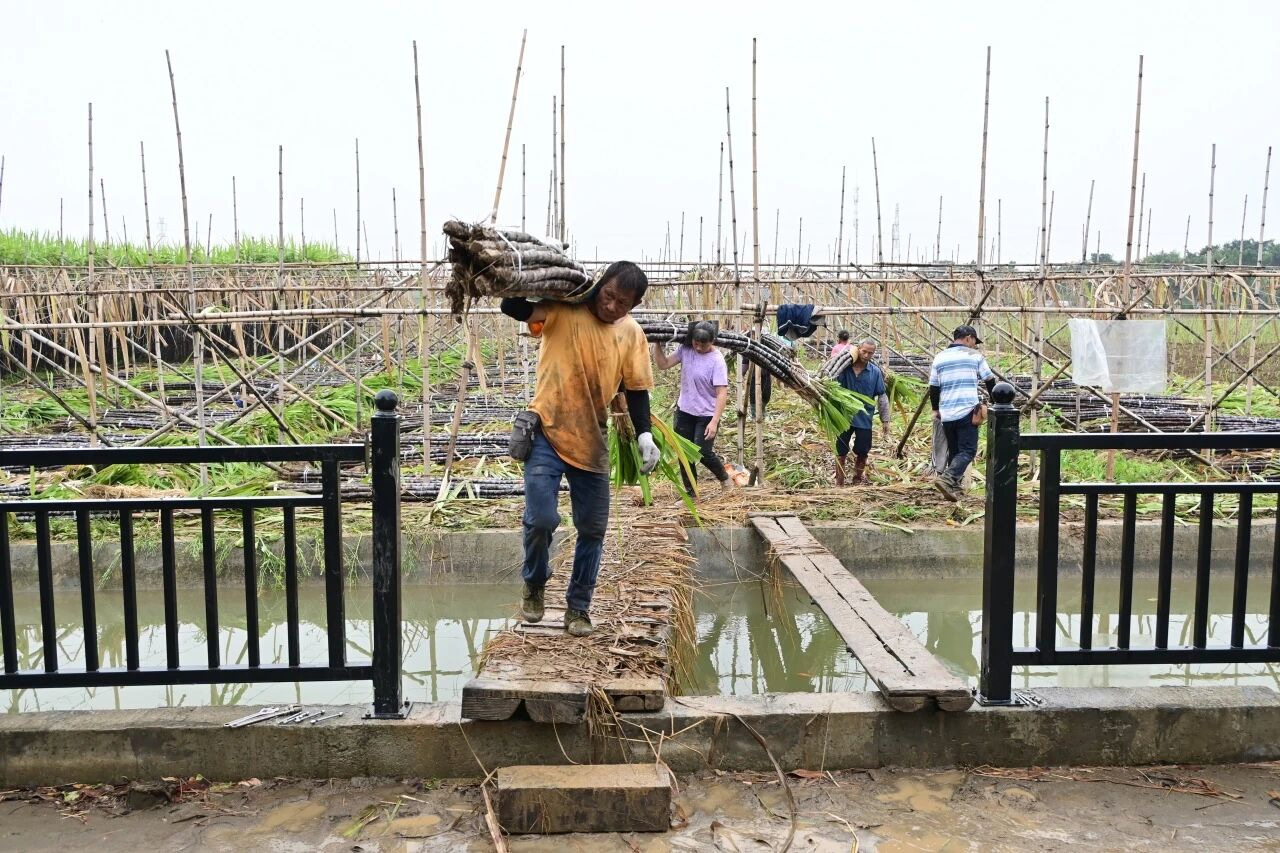
The fields are deeply uneven, demanding careful footing. Wooden plank bridges must be laid out to span the gaps from the fields to the roadside, and from the road up to the truck beds. Climbing onto these makeshift bridges is the most gruelling part. The long stalks bear down heavily on the weathered shoulders of the older men, weighing their faces into solemn, strained masks.
On 24 March, in Shajiao Village, Lanhe Town, a collection centre hired 17 cutters to clear roughly four *mu* (about 2.66 acres) of cane. A buyer from Anhui Province purchased the crop at 15 yuan per *dan* (50 kg). On top of that, the buyer must cover the fees for the collection centre (1.1 yuan per *dan*) and the cutters themselves (11 yuan per *dan*). At 47, Uncle Wang is the youngest in the crew. The average age tops 55, with the oldest man at 72. Wang notes that it is almost a yearly occurrence to see a cutter collapse at the edge of the field. Excessive hours, punishing physical demands and stifling heat can easily prove fatal.
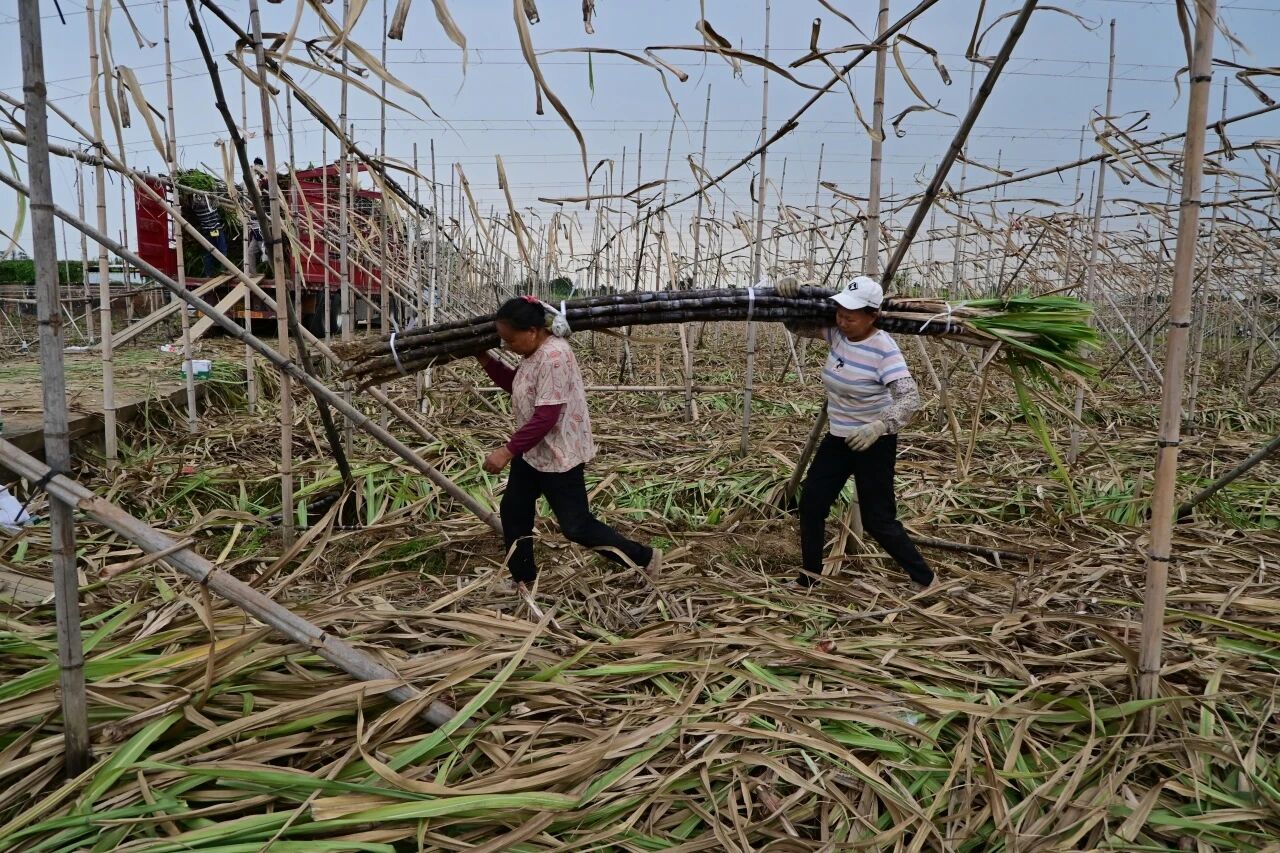
Rainy days pose the greatest danger. If work has already begun and the skies open, the collection centre will not call a halt, unwilling to risk missing delivery deadlines. The fields turn to mud, the roads grow slick, and crossing the rain-soaked plank bridges demands utmost caution.
A few years ago, Uncle Wang’s older brother slipped off a plank bridge while heaving a bundle onto a truck. The fall resulted in comminuted fractures to three toes on his right foot. Medical bills ran to 40,000 yuan, and he was left permanently unable to do heavy labour. It was only after Uncle Wang stepped in to negotiate with the collection centre that his brother secured a 20,000 yuan compensation payout. With permanent steel pins now fixed in his foot, his brother once asked Uncle Wang with quiet despair: “Does this mean I’ll never get to experience flying on a plane again?”
The cane-cutting crew arrange their own lunches, usually heading together to a local open-air eatery and splitting the bill. The women sit together sipping tea, while the men gather over Jiujiang Shuangzheng—a rice-fragrant baijiu sitting at just under 30% ABV. A few glasses down, furrowed brows relax, and the day’s fatigue seems to vanish.
The time they call it a day depends on the workload. At the earliest, they finish before dusk; on heavier days, they might work until eight o’clock or later. On Uncle Wang’s shift, the target was 35 tonnes, allowing them to wrap up before six in the evening. By the end of the day, the sugarcane cooperative takes ¥770, and each cutter walks away with ¥450. Aside from selling their own harvest, this is their most vital source of annual income.
IV. Thirty Years of Continuous Cropping
An official from Shangni Village explained that in past years, local sugarcane harvesters were exceptionally busy during the festival, whereas this year most have remained idle at home. The village’s sugarcane supply is limited; many pre-booked consignments have faced prolonged delays in harvesting. Some buyers have even asked for price reductions, and a few would rather pay breach-of-contract fees than take delivery of the crop.
The main reason behind this year’s glut of table sugarcane is overcapacity. Last year saw marked expansion and higher yields in Yunnan, Guangxi, Fujian, and several Guangdong areas including Qingyuan, Zengcheng, and Shaoguan. Multiple village officials pointed out that table cane from regions like Yunnan is of higher quality, and this year’s market has favoured yellow-skinned varieties, while Nansha mainly grows black-skinned cane. Faced with such intense competition, Nansha’s table cane has lost out.
Sister Zhen recalls that in the 40 years since she married into the village, she has only grown rice on this land for about a decade, sticking to black-skinned cane and bananas ever since. The elderly couple holds just over four mu of land, and the returns from rice and vegetables fall far short of those from bananas and cane.
“When the market is favourable, cultivating a single mu of bananas and sugarcane can bring in annual profits exceeding 10,000 yuan.” A village official from Lü Village in Lanhe Town noted that with a population of over 2,000 and just 1,500 mu of arable land, the average holding is under one mu per person. Those currently working these plots are mostly older residents aged 50 and above; among those drawing a pension, most receive only 600 to 700 yuan a month. Financial pressures leave farmers with no choice but to pin their hopes of boosting income on their small plots of land, which is why rice is invariably the first crop ruled out when deciding what to grow.
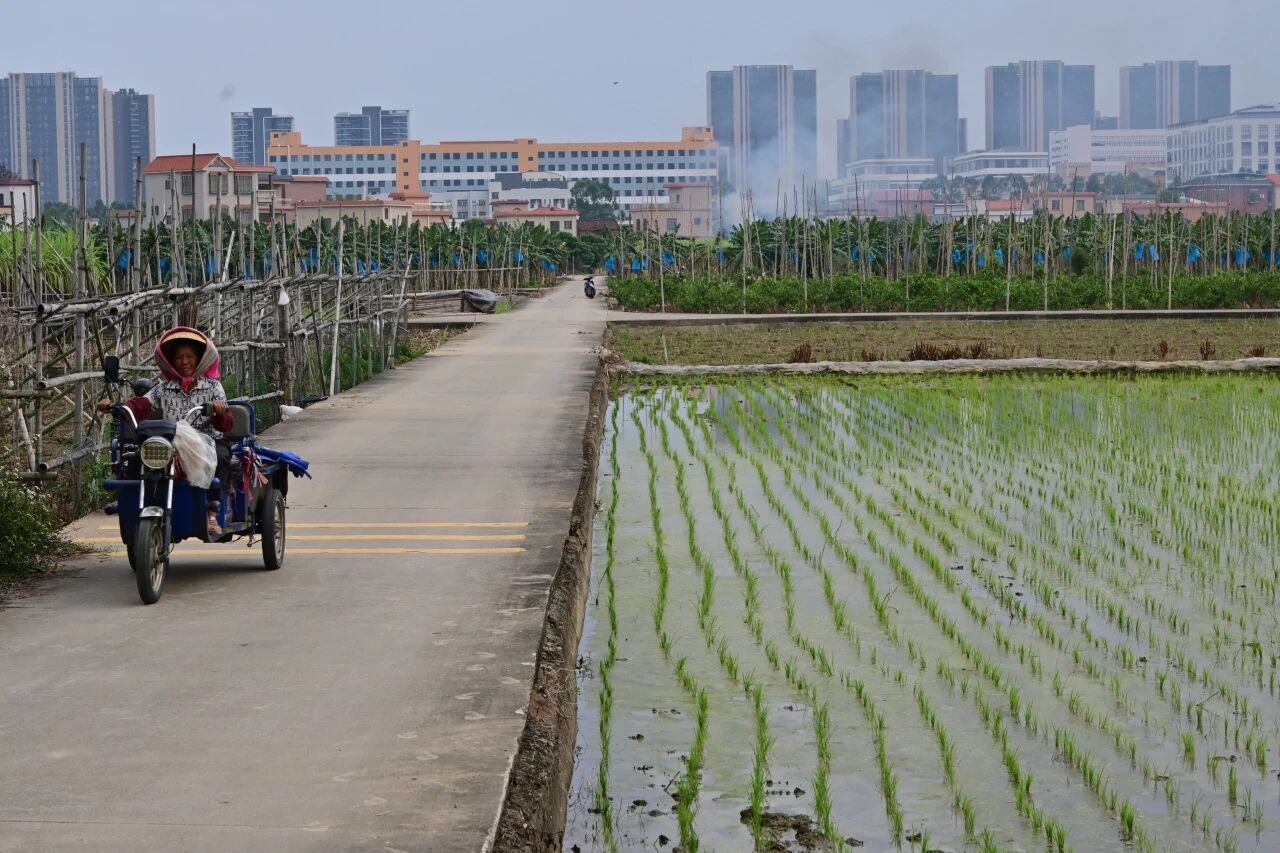
Repeatedly planting the same crops on the same land leads to soil degradation and a rise in diseases. Years of continuous sugarcane and banana cultivation have taken a toll on both quality and yield. A few years ago, many local banana plantations suffered severe crop loss or complete failure due to infection with yellow leaf disease. “The quality of the sugarcane has slipped too; the internodes are shorter, the canes are uneven in girth, and they simply don’t compare with the fresh plantings in regions like Yunnan and Fujian.”
Uncle Wang has been cultivating sugarcane in Shajiao Village for nearly two decades. He notes that a decade ago, applying four or five bags of fertiliser (each weighing 100 jin) to a mu of cane field was enough before harvest time arrived; today, you need at least ten bags. Yet over-reliance on chemical fertilisers degrades the soil further. “When you put on too much fertiliser, the cane actually stops growing.”
Over the past few years, the price of a single bag of fertiliser has climbed to more than 300 yuan, pushing fertiliser costs alone past 3,000 yuan per mu. To maintain crop quality and output, sugarcane growers are forced to continually apply the best fertilisers and pesticides. He estimates that when factoring in land rent, bamboo support poles, and labour, the total cost per mu tops 8,000 yuan. Even if they own the land and do the work themselves, the cost still comes to at least 6,000 yuan.
V. No Choice but Sugarcane
Nansha’s arable land covers roughly 90 square kilometres, with nearly two-thirds concentrated in the northern towns of Lanhe, Dongchong and Dagang. These are precisely the main growing areas for Nansha’s sugarcane and bananas. The *Special Plan for Arable Land Protection in Nansha District (2021–2035)* notes that the returns from growing grain are significantly lower than those from cash crops. With farmers lacking the incentive to sow cereals, the “non-grain” conversion of arable land remains a serious challenge.
A cadre from Yansha Village explained that regulations require arable land to be used for grain crops, alongside approved non-grain crops such as cotton, oilseeds, sugar crops and vegetables. Sugarcane falls under the sugar category and is permitted. However, cultivating higher-value fruits like bananas, papayas, guavas and citrus fruits is classified as “non-grain” use and is prohibited by policy.
In recent years, Nansha has intensified its efforts to rectify “non-grain” land use. A public report from late December 2022 revealed that in just under two months, Lanhe Town completed 86 rectification cases covering 237.41 mu, pushing the completion rate for “non-agricultural” and “non-grain” rectifications past 30%. With crops like bananas cleared out, sugarcane became the only viable option left for local farmers.
“Once the bananas were cleared, the sugarcane area expanded year on year,” revealed a village cadre from Yansha. In 2025, the village’s sugarcane cultivation exceeded 3,400 mu. Public figures show that in Lanhe Town alone, the area dedicated to table sugarcane rose from just 13,800 mu in 2022 to 17,000 mu in 2025. As the weight of “food security” was passed down to elderly farmers, they opted against planting rice, which offered the lowest returns, and instead turned to sugarcane, a crop featured on the government’s approved list.
Safeguarding food security cannot be left as the sole responsibility of farmers. A cadre from Lü Village recalled that the push to rectify “non-grain” land use met with widespread resistance from villagers across towns and villages. The authorities had also encouraged growers to cultivate other approved-list crops, such as vegetables. Yet vegetable farming yields modest profits and demands that farmers spend all their time in the fields.
Aside from three decades of planting habit, farmers stick with bananas and sugarcane because the crops leave them more free time to take on casual labour elsewhere. Once the sugarcane harvest is done, Uncle Wang travels to other provinces to help fellow growers put up temporary shelters. Chen Shun has paid rent for four mu of land but has no intention of cultivating it; after the spring sowing on his other plots, he heads back to construction sites. Sister Zhen and her husband, both of frail health, usually pick some vegetables to sell at a street stall.
Even with the poor sales this year, many have decided to keep planting. They need the crop to cover their losses and make ends meet.
As March draws to a close, livestreaming has certainly brought Sister Zhen a steady stream of orders. One buyer even drove all the way from Shunde to collect over a hundred stalks. Her husband helps cut the cane in the fields. Customers usually only want the mid-section of the stalk; he chops off the top 30 centimetres, leaves intact, to use as planting material for the next season.
They are planting sugarcane again this year. She has no wish to use virus-free seedlings; to her, that would be another substantial expense on top of an already tight budget. After all, she is already having to buy her fertiliser on credit this year.

Interviewees are referred to by pseudonyms.
Editor: Xiao Dan