
Fewer People, Less Water: Who Is Growing the Rice?
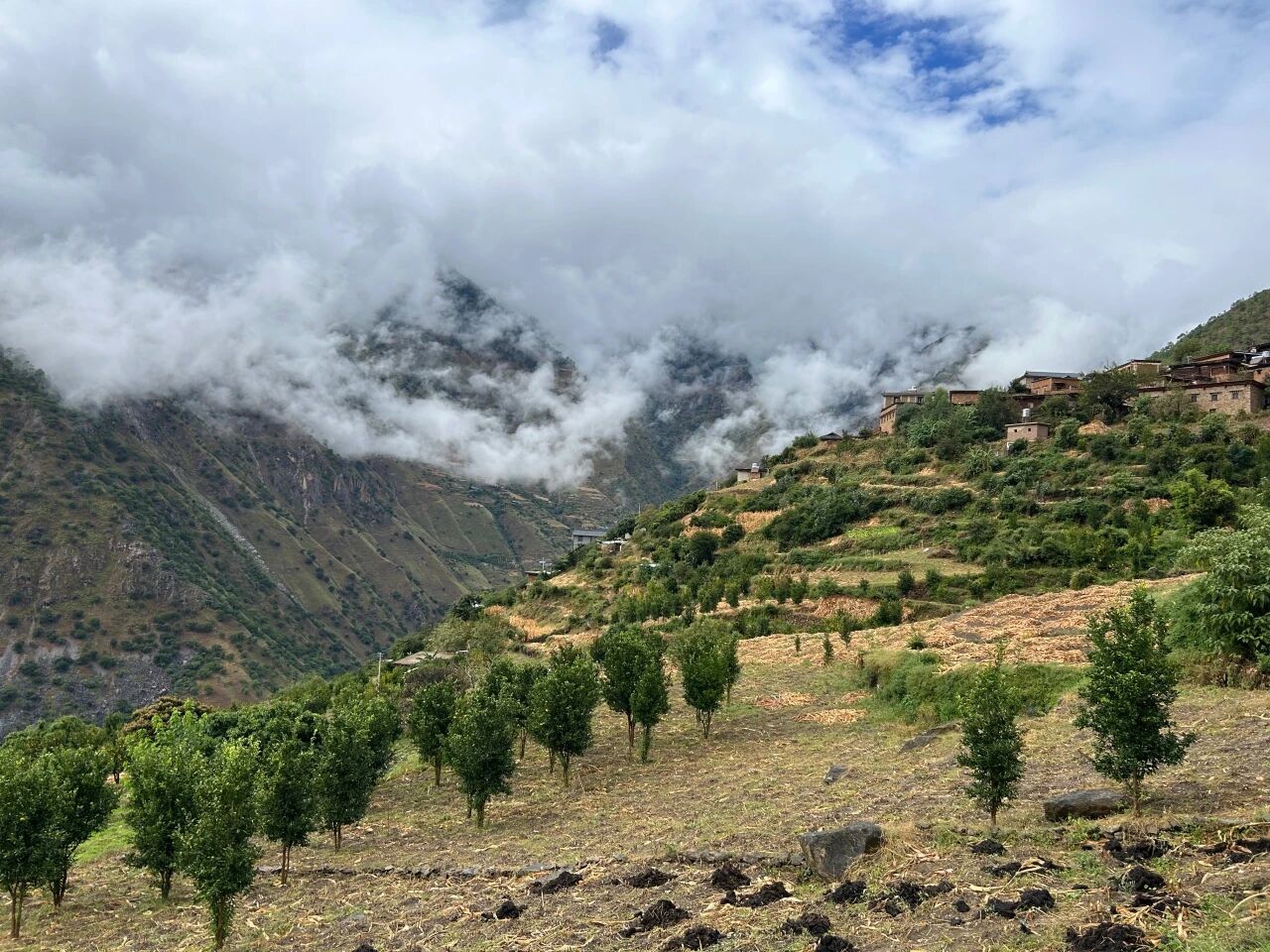
Last year, standing by a field edge in Yunnan’s hills, I saw rice for the first time sprouting directly from level soil, with no flooded paddies or irrigation ditches in sight.
For many, rice is inextricably linked to flooded paddies. Yet it can just as easily be cultivated on dry, sloping uplands, sparing farmers the need to flood their fields or invest in heavy tending. This upland rice method is now being picked up by villages with deep roots in traditional wet-rice farming.
Last spring, an older farmer I met in a village in eastern Sichuan began experimenting with upland rice in a small patch at the back of his house, prompted by back-to-back spring droughts.
Three months on, I came across the exact same variety in Youmi Village, tucked away in the deep mountains of north-west Yunnan. The first to adopt this upland method were the women who stayed behind. While most of their husbands work away from home, these women look after the elderly and children while tending the land. Last year, they trialled more than one variety across their fields.
For this Mosuo community nestled high in the mountains, rice is far more than a vital staple. It carries cultural weight, featuring in local rituals, brewed into everyday rice wine, and celebrated each harvest season with the New Rice Festival.
Beyond that, upland cultivation harks back to a far older slash-and-burn tradition practised by certain ethnic minorities in southern Yunnan. On these slopes, rice thrives on natural rainfall alone, with yields left to the mercy of the skies. One of the heritage upland rice varieties trialled in Youmi Village last year was sourced from Jino friends in Xishuangbanna.
I. Rice Stalks Emerge Once More in the Village
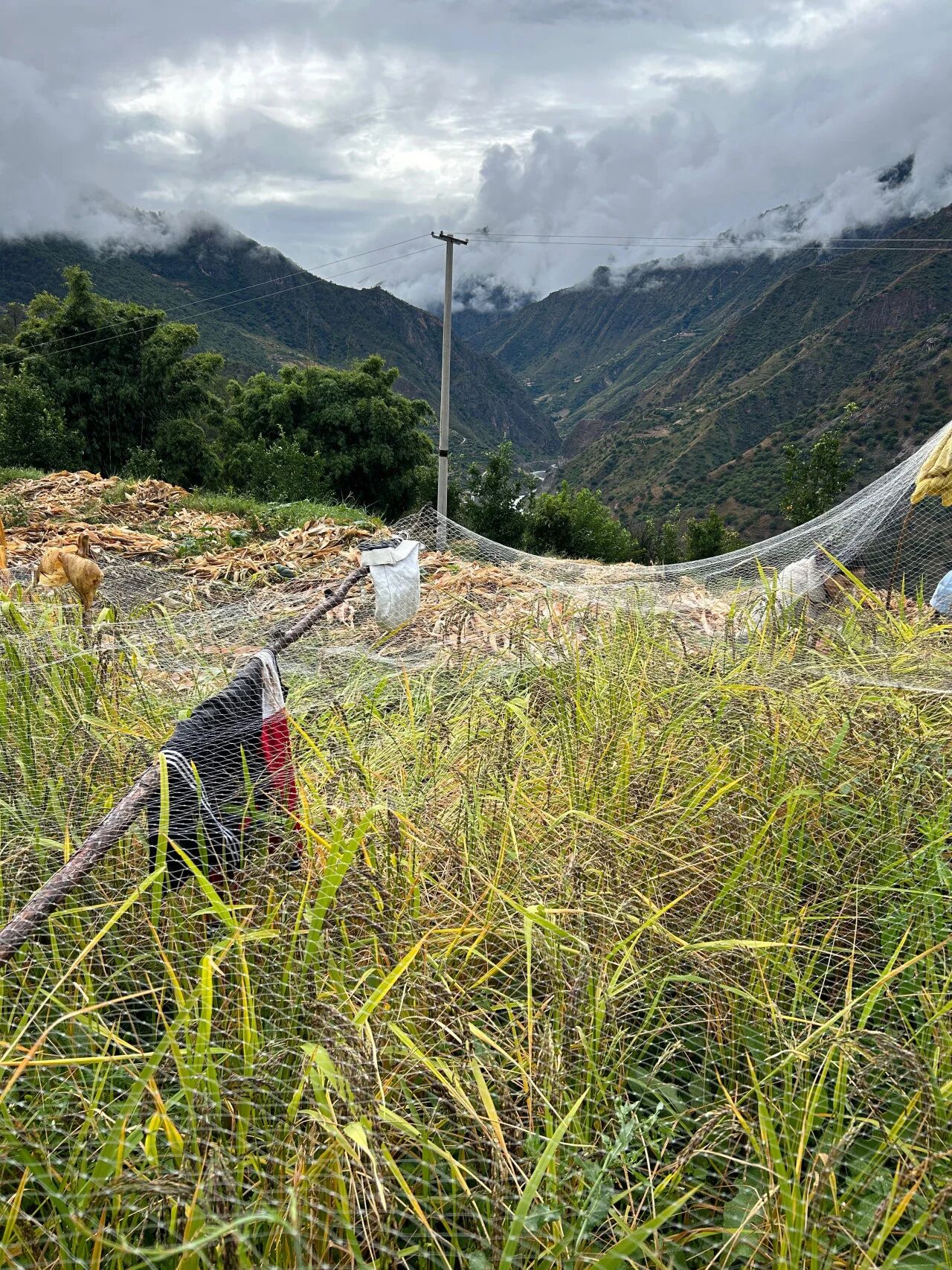
Situated at the junction of Sichuan and Yunnan provinces, Youmi Village is administratively part of Lijiang and lies across the river from Oya Village in Liangshan Prefecture. Locals often describe it as a settlement tucked inside the mountain’s belly, bounded by a river on one side and steep slopes on the other three.
Paddy rice was once the vital staple of this Mosuo village. However, since the 1990s, its labour-intensive demands and chronic water shortages have steadily reduced the planted area. By 2019, paddy rice cultivation had been abandoned entirely.
Most of the younger generation have departed for migrant work, and Sister Yuting’s husband is no exception. In their absence, the former paddy fields were largely converted to maize, a crop better suited to arid conditions and requiring far less labour.
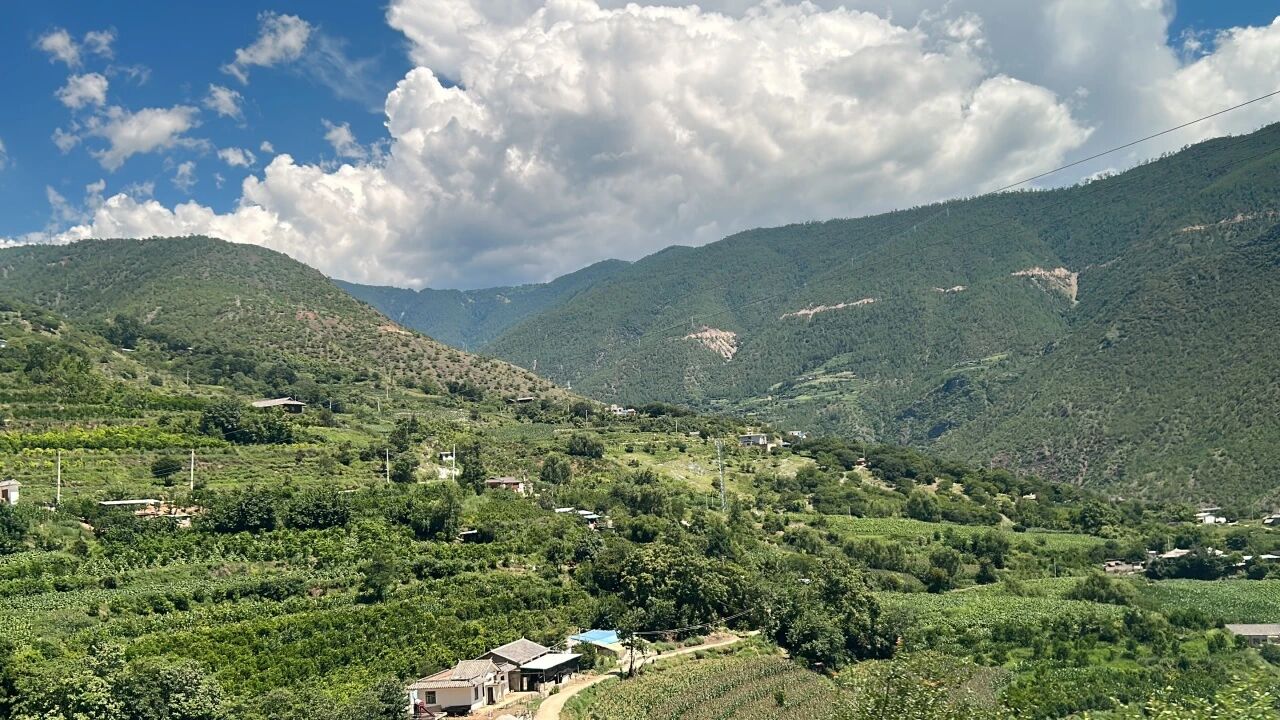
The climate presents another significant hurdle. Youmi lies within a dry-hot river valley, and in recent years, dwindling monsoon rains have made water supplies increasingly strained. Sister Yuting recalls how rice cultivation frequently sparked disputes in the past. During irrigation season, it was not uncommon for families to keep watch over their fields throughout the night, guarding against water theft.
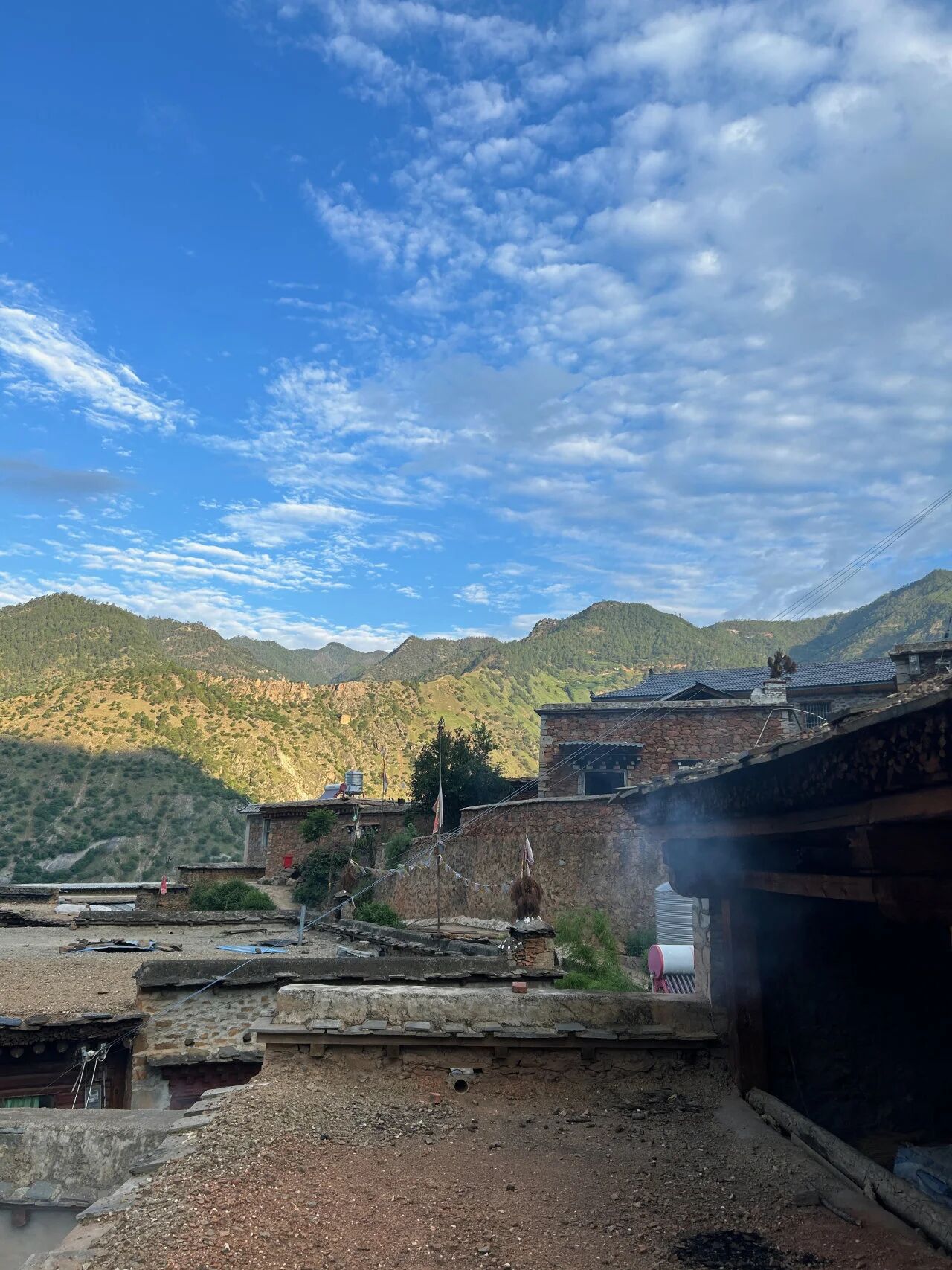
Since giving up rice cultivation, disputes have dwindled, and the rice in household jars has been replaced by grain from Northeast China.
*Guardians of the Dongba* records an old Dongba priest’s recollection of how rice cultivation gradually faded from the village: “When we used to grow our own rice, we had to hand over portions to the local chieftain or pay the state grain quota. We could only eat rice four times a year: once during the new rice tasting, once when slaughtering a pig, once for New Year, and once for Spring Festival… Now that we no longer grow rice, we can eat purchased rice every day.”
In recent years, after connecting with the non-profit organisation Farmers’ Seed Network, Yuting has begun to consider growing rice again. After all, it was once a deeply valued staple in the village. Rice-related traditions are still kept alive here. Every year, on the first day of the tenth lunar month when the rice harvest season begins, the people of Youmi still follow custom to eat the new rice.
Upon learning that rice could be cultivated without flooding the fields, Yuting asked the Farmers’ Seed Network to help her source some upland rice seeds. Of the six varieties they trialled last year, two were traditional strains from southern Yunnan suitable for seed saving—Mojiang purple rice and Banan sickle rice—while the other four were part of the Luchu series, bred by a research institute and supplied by Sili’s Ecological Alternatives Technology Centre in Yunnan.
By the end of July, I saw that upland rice plot in Youmi for the first time.
At that time, the upland rice had been in the ground for just three months. In a terraced plot of less than ten square metres, rice shoots and weeds grew tangled together, reaching just above knee height. Looking down from Yuting’s home, this small patch of rice field was completely overshadowed by the dense, towering maize crops surrounding it.
By the time I reached the field, the skies had cleared. The rice plants stood up to chest height, heavy with plump, mature grains. We harvested just over five kilograms that day. Stripping away the husks revealed deep purple kernels. It is a variety of glutinous dryland rice known as Mojiang purple rice.
Another heritage red rice variety, known as Liandao Gu (Sickle Grain), was growing in a terrace higher up the slope.
Gatu was testing this variety on a small plot bordering her orange grove. Unlike the Mojiang purple rice, whose plump grains hold fast to the panicle, the Sickle Grain was more prone to lodging and shedding.
Lijiang sits in north-west Yunnan, where limited sunlight and cooler temperatures have historically meant traditional paddy rice was the main crop. Yet when asked whether she was still growing it this year, Gatu replied without hesitation.
Dryland rice demands far less labour. Over the five-month growing cycle, Gatu only irrigated the plot twice: once after sowing the seeds directly, and once before harvest. Aside from a light scattering of pig manure and two or three rounds of weeding, the field was practically left to its own devices.
For the women bringing rice cultivation back to their fields, dryland rice offers a way to harvest their own grain with significantly less labour, even as the climate grows ever more arid. A fresh crop threshed at home eases the burden of buying food staples. Youmi remains a remote village; a road connecting it to the outside world was not completed until 2020. Even with that road, residents still need to travel to the nearby Jiaze village committee to shop for most daily necessities. The journey takes at least forty minutes by car.
Come the new year, Gatu and Yuting plan to trial a few more varieties, selecting those best suited to the local conditions. “If a crop proves reliable, we can save the seeds ourselves,” Yuting said.
II. Preserving a Heritage Variety for Childhood Memories
Southern Yunnan, where Xishuangbanna is located, is one of China’s main growing regions for upland rice and boasts a long tradition of cultivation. Today, some ethnic minorities living in the region, such as the Dai and Jinuo, continue to keep this upland rice-growing tradition alive. Although the number of heritage varieties is dwindling, they still circulate within small communities. At the market in Jinuo Township, which opens every other week, you can still find older farmers selling sickle grain from sacks on the street.
This is one of the traditional red upland rice varieties cultivated by the Jinuo people. The Farmers’ Seed Network acquired the seed through its member, Haimei.
Haimei runs a restaurant in Jinghong City called *Fengqing Jino* (Charming Jinuo), which specialises in traditional Jinuo cuisine. Since the restaurant opened, sickle grain has been its primary staple rice.
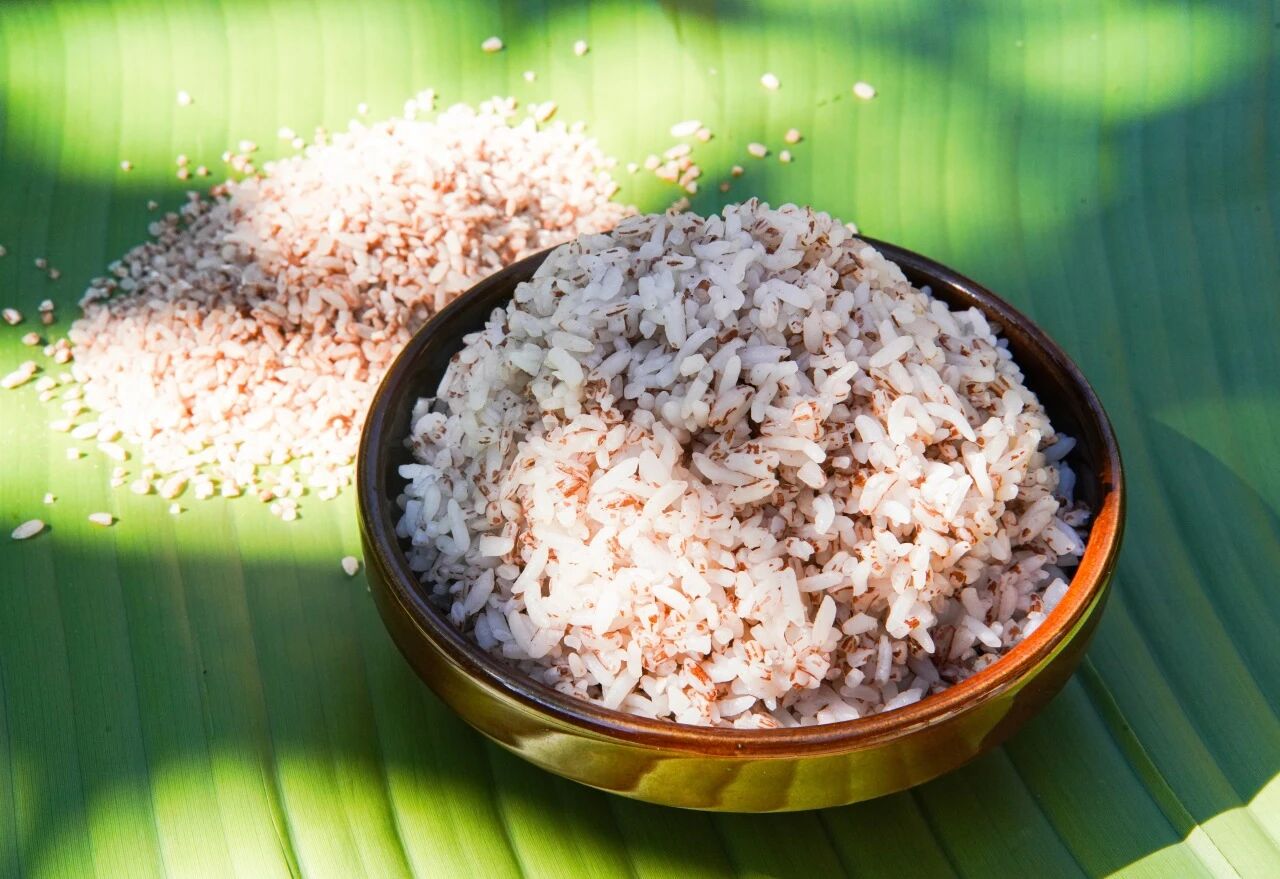
The science behind this is that upland rice generally contains a higher proportion of amylose than lowland paddy rice. This yields a greater sense of fullness and steadier blood sugar levels, though it does mean the grain is somewhat harder to digest. At her restaurant, Sister Haimai doesn’t serve the sickle rice on its own; she blends it with standard white rice to mellow the texture, making it softer and easier on the stomach.
For the Jino people, sickle rice is a crop chosen across generations for practical livelihood. Its firmer texture and long-lasting fullness align perfectly with the needs of a mountain-dwelling community labouring and surviving in the wilderness. Unlike paddy rice, it requires far less irrigation water and thrives on steep slopes and dry fields where farming is otherwise difficult.
Sister Haimai observes that fewer households in Xishuangbanna are now cultivating upland rice, and it is slowly fading into childhood memories for the Jino.
Her insistence on serving upland rice as a staple is driven largely by personal sentiment. Memories of climbing the hills as a child to plant upland rice with the elders remain vivid. Since opening her restaurant, she has frequently travelled to villages across Jino Township to track down locally preserved ingredients and heritage varieties.
By chance, she spotted upland rice at a market and soon became a regular buyer from that village. Today, all the sickle rice served in her restaurant comes from Baya Village, an hour’s drive from Jinghong city centre. Last year, she placed an order for two tonnes of the grain with local farmers there.
She occasionally encounters customers who ask about the rice; some want to buy the milled red grain to take home, while others inquire about the seeds. The restaurant’s storeroom keeps a dedicated stock of unhulled sickle rice, so that when visitors ask, she can freely gift them to those who share an appreciation for it.
Enquiries aren’t limited to the sickle rice. Customers also ask about the heritage varieties of small winter melons and pumpkins used in her signature Xishuangbanna-style chicken and winter melon stew. Located just a short distance from Xishuangbanna Gasa Airport, the restaurant has been transformed by her into a window for diners to explore Jino culture, as well as a small-scale hub for exchanging heritage seeds.
In the second half of last year, following a suggestion from the Farmers’ Seed Network, Sister Haimai began planning an in-house seed bank dedicated to displaying and swapping heritage varieties. The display cabinet is slated to sit behind the tea station outside the private dining rooms.
III.Cooking Jino Cuisine is Like Keeping a Cultural Diary
For much of her adult life, she lived in Jinuo Township. It was there she found close friends, respected elders, and opportunities to build her career.
Over the past two years, once she had trained capable chefs in her kitchen to take over the stove, Haimei began devoting more time to travelling, studying, and sharing Jinuo culture. Today, as the Xishuangbanna Prefecture-level inheritor of the Jinuo intangible cultural heritage dish “chicken stewed with winter melon”, she frequently represents the Jinuo at various events and is regularly invited to appear on food programmes broadcast by CCTV and regional media outlets.
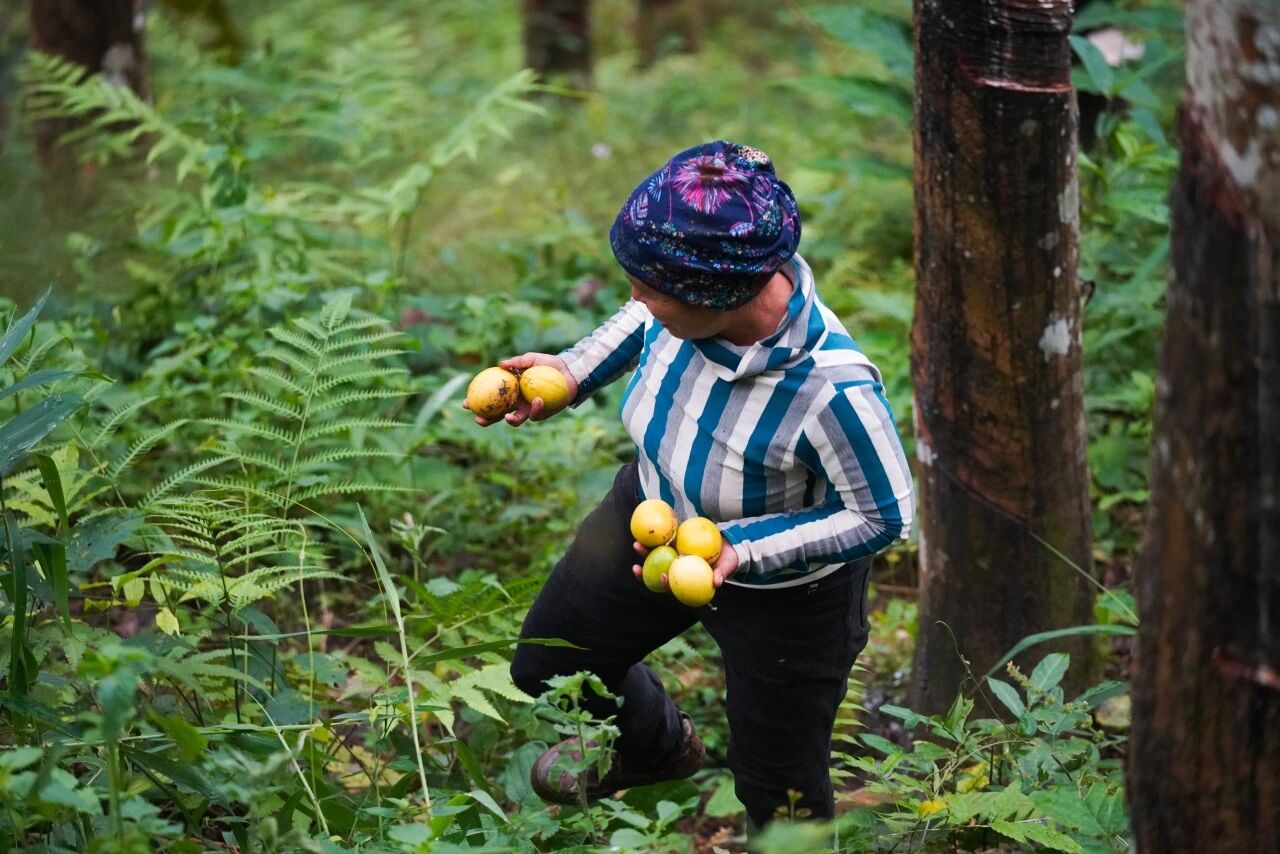
In November, she made a special trip with me to visit her mentor, Ziqie. According to Haimei, the former director of the Jinuo Township Cultural Station “has an exquisite palate and is an even better storyteller”. Now in his seventies, he could not be contained when the conversation turned to Jinuo culture, standing by his courtyard gate and speaking at length for over an hour.
Traditional Jinuo upland rice farming follows two primary systems: slash-and-burn cultivation with long fallow periods, and crop rotation. Because upland rice requires relatively little intervention during cultivation, it draws heavily on the soil’s natural fertility; consequently, a single plot cannot be cropped year after year. Under the fallow system, a field planted with upland rice in its first year is left to rest for thirteen years, allowing the forest ecosystem to regenerate before it is planted again.
The rotation system, by contrast, integrates upland rice with a succession of other crops. On a fresh plot with peak fertility, the community typically begins with glutinous upland rice varieties such as purple rice. The second year is reserved for “spear grain”, which Ziqie describes as an older variety of red rice with superior grain quality but modest yields. The third year brings fine red grain and other upland rice types. In the fourth year, nitrogen-fixing legumes like peanuts and soybeans are planted to restore the soil, followed by maize or paddy rice in the fifth year.
Once this five-year cycle is complete, the land must lie fallow for fifteen years before it can be cultivated once more.
“We once had countless varieties of upland rice,” the elder recalled, though many have since vanished. Upon learning that Haimei’s restaurant still serves sickle grain, he took her hand, his voice thick with emotion: “Sickle grain is the very lifeblood of the Jinuo!”
Ziqie’s excitement grew further when he learned the restaurant still serves Grain Soul Porridge, a thick congee simmered with chicken stock, pumpkin, and red rice.
Ziqie remembers that following the autumn harvest, once the grain was safely stored, the Jinuo would return to the fields carrying chickens, offerings, and provisions. They would perform the Grain Soul ceremony to pray for a bountiful harvest in the year ahead. Once the rites concluded, the community would prepare a feast by simmering the season’s fresh harvest with pumpkin and chicken broth. The resulting dish became known as Grain Soul Porridge.
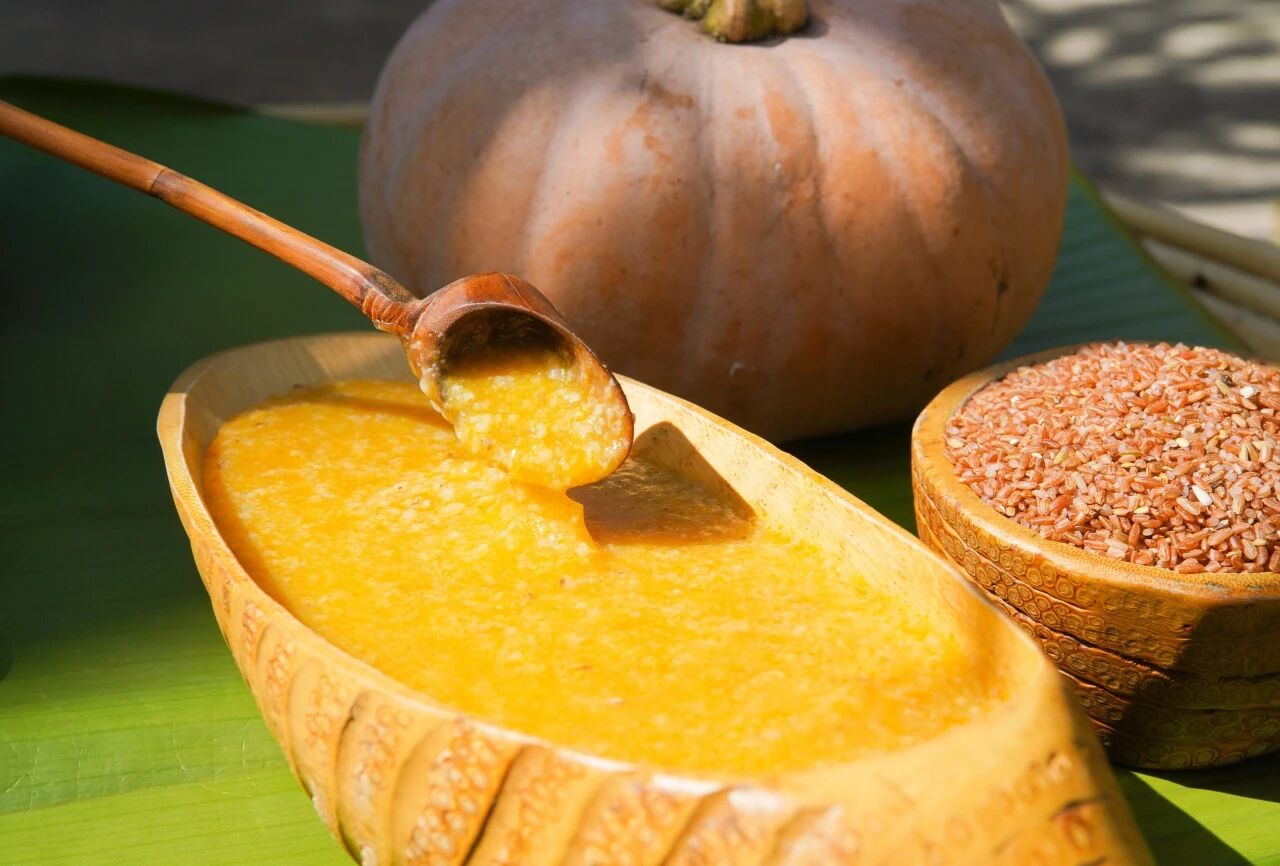
These ceremonies are rarely held in the village today. Yet, thanks to Haimei’s culinary instinct, Grain Soul Porridge has been preserved on the restaurant’s menu.
Last year, when Haimei attended the annual conference of the Farmers’ Seed Network, she deliberately brought samples of sickle grain with her. A woman in her seventies from Sichuan spotted it and immediately sought her out. “She took my hand and asked, ‘Could you please spare some seeds? We used to grow this variety more than thirty years ago, but we haven’t seen it since.’”
By late October of last year, once the new harvest was threshed, Haimei mailed five kilograms of seeds to the woman. Those five kilograms travelled like a precious gift, finding their way to numerous villages where rice cultivation had been abandoned due to drought or rural depopulation, ultimately resting in the hands of women left behind in the countryside.
For Yuting, who lives in Youmi, upland rice does not necessarily signal a full return to traditional paddy fields.
Yet, cultivating water- and labour-saving upland rice offers a practical way to ease household grain shortages, adapt to increasingly arid conditions, and keep traditional culture alive. Long before the 2026 new harvest is milled, Yuting and her neighbours have already begun planning how to prepare it. In addition to steaming rice, they intend to use the purple glutinous rice from this batch to recreate the yogurt and purple rice drink that has become popular in the city over recent years.
Behind this urban twist on a traditional bowl lies a cultivation practice that had all but vanished before being reclaimed: with less water and fewer hands, the women who remain in the mountains are slowly, patiently bringing the rice back.
Editor: Pei Dan