
Post-00s Women Learn Farm Machinery: “We Can Master This Big Machine, Too”
Foodthink Says
Yet even today, gender disparities persist within the agricultural sector. The contributions of women across the agri-food system are frequently overlooked or undervalued. To address this, the United Nations has declared 2026 the International Year of the Woman Farmer, aiming to raise public awareness, narrow the gender gap, and improve livelihoods for women globally.
With International Women’s Day approaching, we are pleased to recommend this piece by Wu Ting, a young woman from the post-2000s generation. Hailing from Anhui Province, she grew up watching her elders labour over the land. As agricultural mechanisation swept across the country, her father bought a combine harvester and became a machine operator, supporting the family through agricultural services. Driven by curiosity, Wu Ting recently returned to her hometown and enrolled in an agricultural machinery training course.
Through this training, she not only witnessed the urgent need for veteran operators to update their skills and keep pace with modern developments, but also keenly recognised the lingering constraints placed on women in agriculture. Below, Wu Ting shares her reflections on gender bias in the farming world.
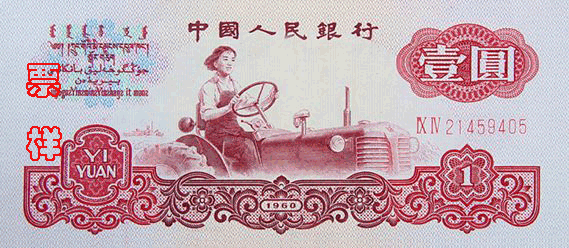
I. Taking the Agricultural Machinery Operator Exam
Thinking that acquiring another skill opens up another avenue, I immediately called the registration number. I wasn’t plotting a long-term career path; I simply wanted to get certified.
Today, most agricultural machinery operators work for themselves. They tend to be people who want to earn a decent living rather than work under an employer. Once the harvest rush in northern Anhui wraps up, many operators team up in small groups and travel to other provinces, ranging from as close as Shanghai to as far as Jiangxi or even Guangxi.
Farm machinery operation is how the older generation in my family put food on the table. In 2009, my dad stepped into the combine harvester operator trade. As a child, I often struggled to say goodbye when my parents left for work.
Their line of work also showed me how unforgiving life can be. One summer, when my parents were out for the harvest rush, temperatures regularly pushed past 40°C. Throughout that month, they frequently suffered heatstroke. By the time they came back, they were visibly changed—worn down and drawn. I only grasped the true weight of their toil in retrospect.
Accidents, too, are always a possibility. One operator they knew rolled his vehicle into a drainage ditch while harvesting rice, and the machine came down on top of him. His passing left the weight of the household on his wife and children, forcing the kids to leave school.
Compared to farm machinery operators, my own office background certainly felt “comfortable”—no exposure to the elements, no heavy physical labour in the fields, and far less exhausting. Yet that “respectable” salary barely covered my own upkeep, and spending every day cooped up in a cramped office often left me mentally stifled.
Machinery operators, on the other hand, work for themselves. They earn more and find greater fulfilment in their labour: perched on their machines overlooking fields of golden crops, they carry a profound joy in the harvest. But it is also a harder trade, one that carries inherent risks.
The nature of the work differs between generations, and so do the hardships. Neither path is without its struggles.
II. The Female Students’ Fear
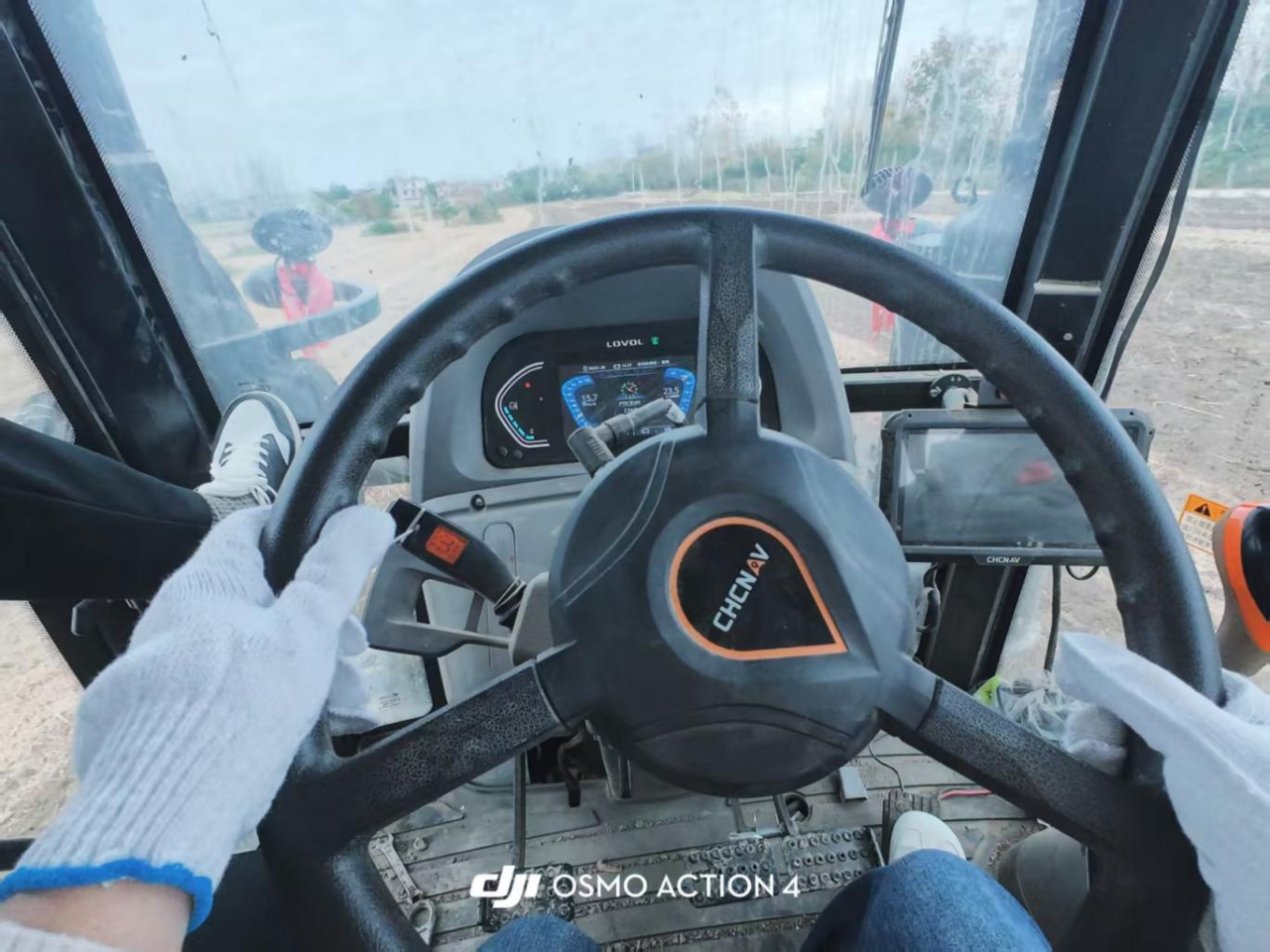
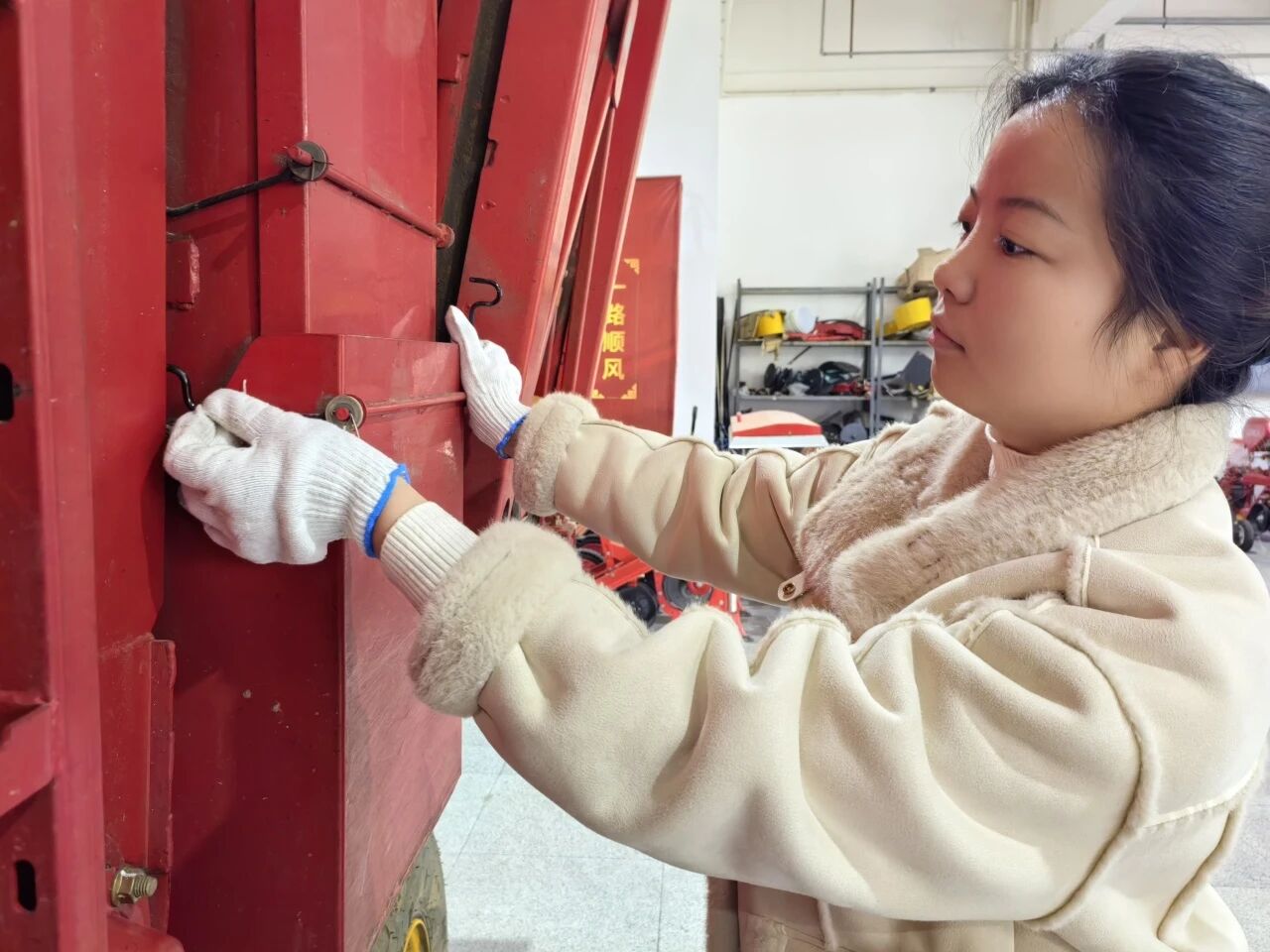
I much preferred the practical sessions to the theory classes. We began with the main group learning to drive tractors. Previously, I’d always watched these hulking machines from a distance, never dreaming I’d eventually find myself behind the wheel.
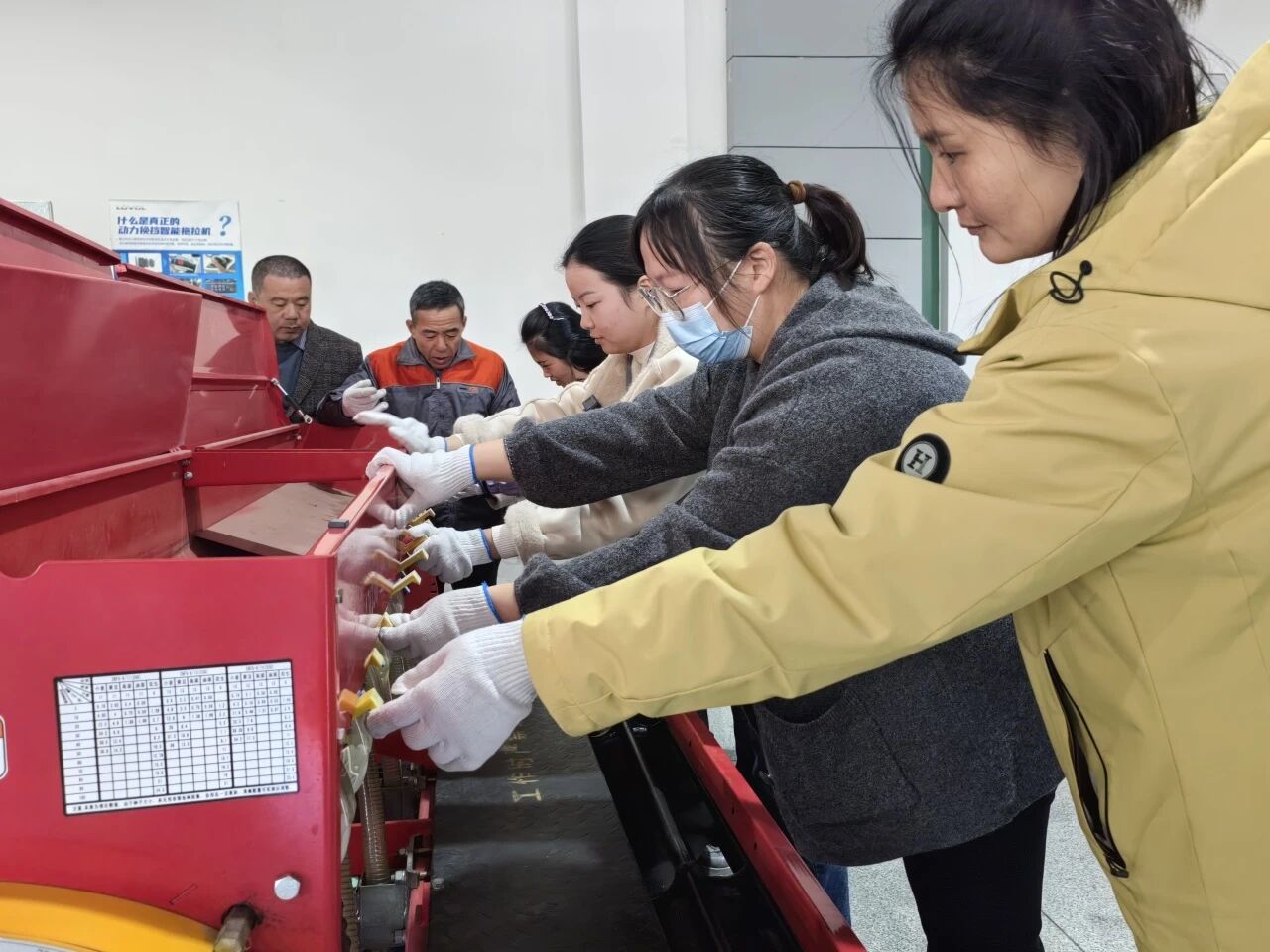
I also observed that women were scarce among the trainees. Of the 50 students in this batch, only seven were women; the majority were male veteran operators who had already driven tractors. Most were in their forties or fifties, farming in Fuyang’s three districts and five counties while doubling up as machinery operators. Tractors were their reliable ‘old mates’, yet they had little to no experience with drones. They’d come to learn this new craft to supplement their skills with the ‘old mates’, allowing them to spray pesticides on their own land more easily and earn some extra cash by offering the service to others.
The training was organised by the Fuyang Branch of the Central Agricultural Radio and Television School in Anhui Province, which everyone simply refers to as the ‘Nongguangxiao‘.
Within this government-provided free machinery training, the trainees—who already brought considerable farming experience to the table—could at least get to grips with the ins and outs of these newer agricultural machines. This meant they wouldn’t be at a disadvantage when visiting dealers, avoiding the risk of being misled due to a lack of trade knowledge.
Unlike the seasoned male students, the women were far more daunted when faced with the tractors. Just as the stigma surrounding “female drivers” endures to this day, a comparable bias prevails in the realm of agricultural machinery, with many people instinctively dismissing it as a “man’s world”.
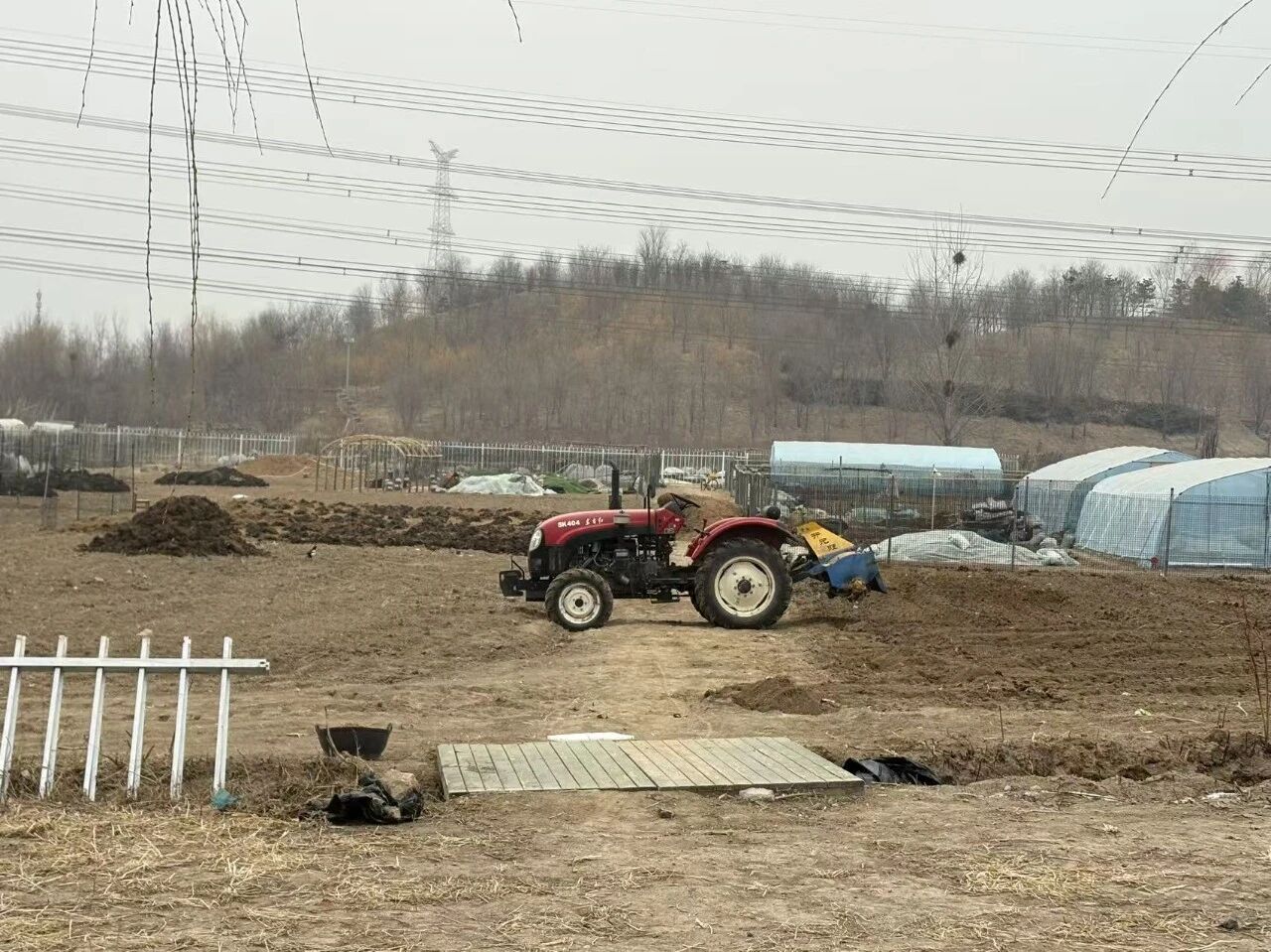
During the practical session, the other female trainees and I hesitated before we’d even touched the controls. We glanced at the old graves scattered in the field not far away, then back at the four tractors lined up before us. Fear flickered across everyone’s faces; we were worried that poor handling might lead to a collision and damage someone’s family grave. The safety officer quickly stepped in to reassure us. “Just leave it in first gear and take it slow. I’m right here on the tractor with you.”
Still, a wave of self-doubt swept through the group. “Men handle them better. They’ve got more experience, and we’re just not quite up to it yet,” said one of the older trainees.
Stung by the remark, I raised my hand to volunteer for the next turn. I then stepped over the earth ditch at the edge of the field and strode purposefully towards the tractor.
For all my bravado, however, I initially couldn’t even work out how to open the cab door. Once inside, the safety officer took the seat to my left and walked me through the procedure step by step: twist the key to the ignition position; to the left of the steering wheel is the forward-and-reverse lever—push it up to go forward, pull it down for reverse; to engage the gears, move the gear lever forward and to the left, then push it right into first gear. He then pointed out exactly where the brake, accelerator, and clutch pedals were.
My nerves got the better of me. My mind went blank, instructions slipping through my head as fast as they entered, and a cold sweat broke out on my palms. Just as I had managed to creep forward slowly, the tractor beside me suddenly lurched straight towards me. Without thinking, I slammed my foot onto the brake. It took that sudden fright to finally fix the layout of the brake, accelerator, and clutch in my mind.
I reached the end of the field and had to turn the tractor around. From the driver’s seat, I looked out over the open stretch of earth. In the adjacent plot, young wheat shoots were just breaking through the soil, and the machinery’s rumble filled the air. It wasn’t until this moment that I realised my hands were drenched in sweat. Thankfully, I was wearing gloves; otherwise, the steering wheel would have been slipping in my grip.
I forced my attention to stay on the task, gripping the steering wheel firmly, keeping my eyes fixed ahead, and mentally running through the safety officer’s instructions again and again. When the turn was finally complete, I let out a long, involuntary sigh of relief. Slowly, the sweat on my palms dried up.
III. We Can Master This Big Machine
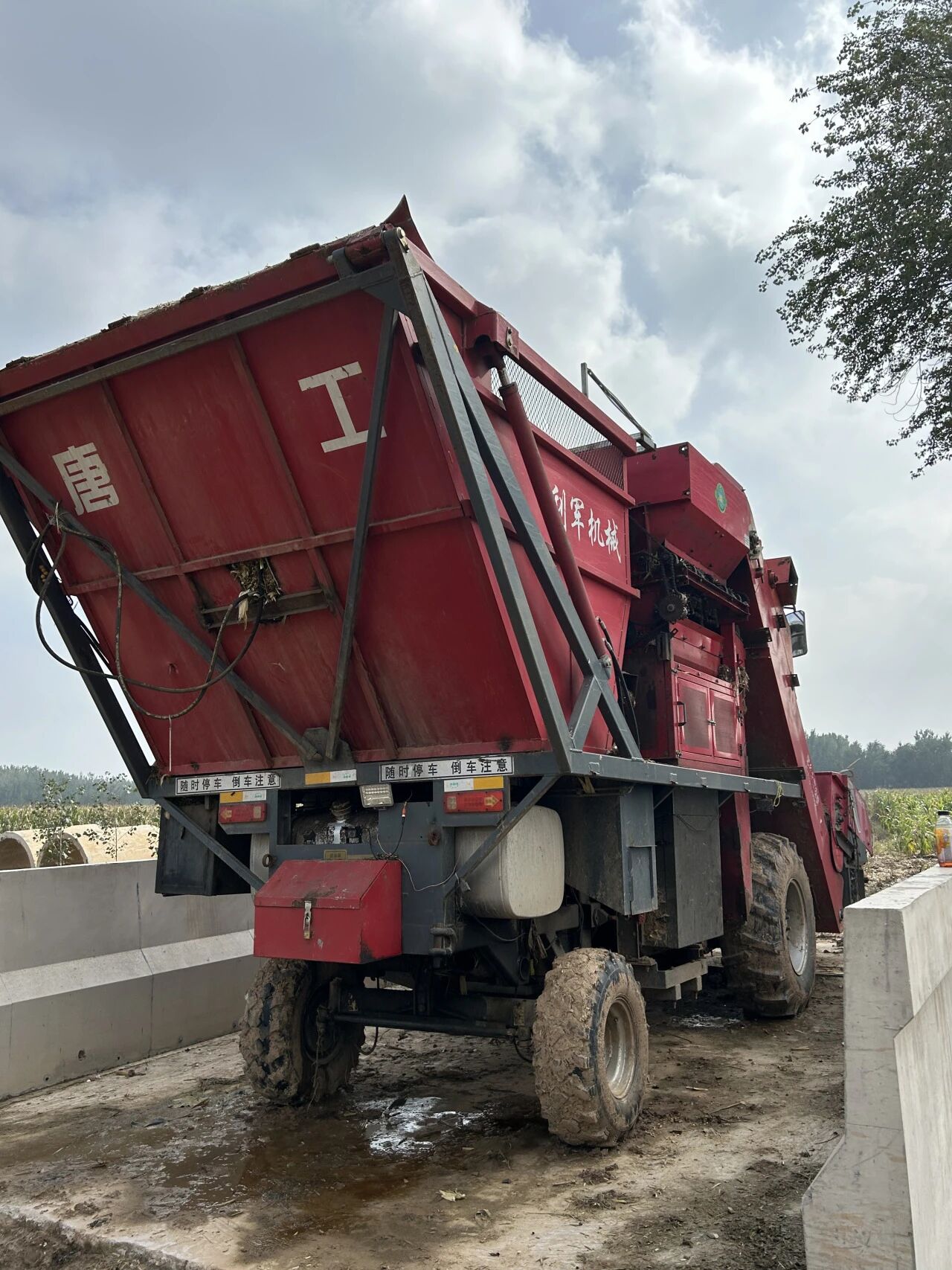
Driving a combine harvester is a completely different experience from driving a car. The harvester at the training centre has no steering wheel, and the cab is fitted with just a single seat. Directly ahead are two control levers, one on each side. Beside your feet is a broad brake pedal, but there’s no clutch. Slide in the key, press the red button, and the engine fires up. The machine moves entirely at the mercy of the two levers in your hands: push them forward, and it advances; leave them untouched, and it remains stationary.
At first, quite a few of the male trainees struggled to handle it, which left me even less confident. I found myself weighing up whether to give it a go at all. I even half-expected to have to talk others out of it: “It’s far too difficult. Let’s scrap it. We don’t want to tip it over. It’s such a beast of a machine, and if it rolls, we’d never be able to cover the costs.”
One of the women training alongside me added, “Even the seasoned male operators struggle with it. Look at all those men, and only a few dare to get in.” Another picked up the thread: “This kind of rig is meant for men. If they can’t handle it, we certainly won’t. Women just aren’t cut out for driving harvesters.”
In truth, the younger women were all privately bristling at this, though it felt awkward to flatly contradict it on the spot. Then, one of the male trainees nearly drove the harvester right onto the kerb, with its cutting header narrowly missing a tree.
Only this weighed even heavier on our hesitation. The woman sitting beside me murmured, “It’s not actually that huge a machine. Logically, it shouldn’t be that tricky. But I just don’t dare; I have no confidence… although a part of me still wants to try.”
She was a few years my senior, though still in her late twenties. Before coming, her family had actually encouraged her to attend. “My father-in-law said that if I learn how to use it, once the family buys a harvester, I’ll be the one behind the wheel, reaping our rice fields.”
Later, an instructor from the agricultural training centre asked, “Would any of the female trainees like to have a go?” Everyone shuffled around, each waiting for another to speak up. She hesitated for a moment, then suddenly stepped forward, beating another male trainee to it, and climbed into the harvester’s cab.
The safety officer first walked her through starting the engine and operating the levers. Before long, the harvester began to roll forward under her control, the chassis moving with remarkable stability.
I overheard one of the older women remark, “So the harvester doesn’t actually sway like that? I’d just been watching those men lurch it around and assumed it was supposed to be like that.”
I had been filming her the whole time. Watching her pilot it so smoothly, reversing into the marked bay without crossing a single line, and keeping a wide berth from both the kerb and the roadside trees, I suddenly felt a spark of confidence: maybe I could handle this too.
I realised that the belief we held—that only men could drive these machines—had nothing to do with innate differences. Within this unspoken assumption, women were more likely to doubt themselves and dismiss one another: the more we hesitated to get behind the wheel, the more it seemed to confirm that “we really aren’t suited for it,” allowing the stereotype to reinforce itself in an endless loop.
When it finally came to my turn, there was still a minor hiccup. The moment I climbed into the cab and the door clicked shut, my mind went completely blank, and I had to call the safety officer back in. The old machine was temperamental; as soon as I pressed the levers, it jerked and stuttered. A cold sweat broke out on my back, and I did end up crossing a line while reversing. Yet, the machine eventually rolled back to its starting point without clipping a tree or mounting the kerb.
Once the first was done, the second, third, and fourth quickly followed. Nearly every female trainee took a turn, and the older woman from earlier gave it a shot as well. Her handling was a little shaky, but she got through it safely. Stepping down, she looked at us in disbelief, her voice tinged with delight: “My legs were trembling just sitting up there, but I never imagined we could actually master such a big machine!”
IV. The Practical Assessment
I shifted into gear, released the clutch, and the tractor pulled away smoothly. Following my instructor’s advice, I kept a firm grip on the steering wheel and fixed my eyes on a distant field ridge to guide my path—a new technique I’d picked up during the course. As I drove, my father’s words from my childhood suddenly came back to me: “You can tell whether the ploughing is even just by listening to the engine. If the sound turns dull, you’re going too deep; if it sounds high and thin, you’re too shallow.”
Instinctively, I eased off the throttle and listened. Sure enough, the engine had sounded a bit heavy over the last stretch. I gently raised the control lever, and the noise steadied. In the rearview mirror, the turned earth lay a rich yellow, spread evenly in my wake. The damp, earthy scent drifted into the cab—that familiar smell of soil.
Once the assessment was over, I tossed my sweat-soaked gloves into the bin at the training centre. They had served their purpose, much like the stone roller in my memories. In the old days, we used the stone roller to flatten the earth and prepare the rice threshing floor. Then came grain vacuum pumps, grain turners, and dryers. The threshing floors gradually gave way to concrete, and the stone rollers were pushed under the eaves. Later still, the eaves were demolished as new houses without overhangs went up, leaving the stone rollers without a home.
On the coach back, I watched through the window as the sun set and a drone drifted over the wheat fields, scattering a fine, even mist of white spray. By the field ridge, an old man stood with his hands clasped behind his back, watching. His shadow stretched long across the ground, and the drone’s mist settled gently on the tender green shoots just beyond it.
Before we parted ways, I said to an older fellow trainee: “Have your father-in-law pick out a combine harvester. You can drive it yourself from now on. You’ll never need to hire someone else to harvest the rice again.”
Edited by: Xiao Dan