
The Zen Dedication Behind Food Freedom: Culinary Philosophy from the Valley of the Wicked, Part II
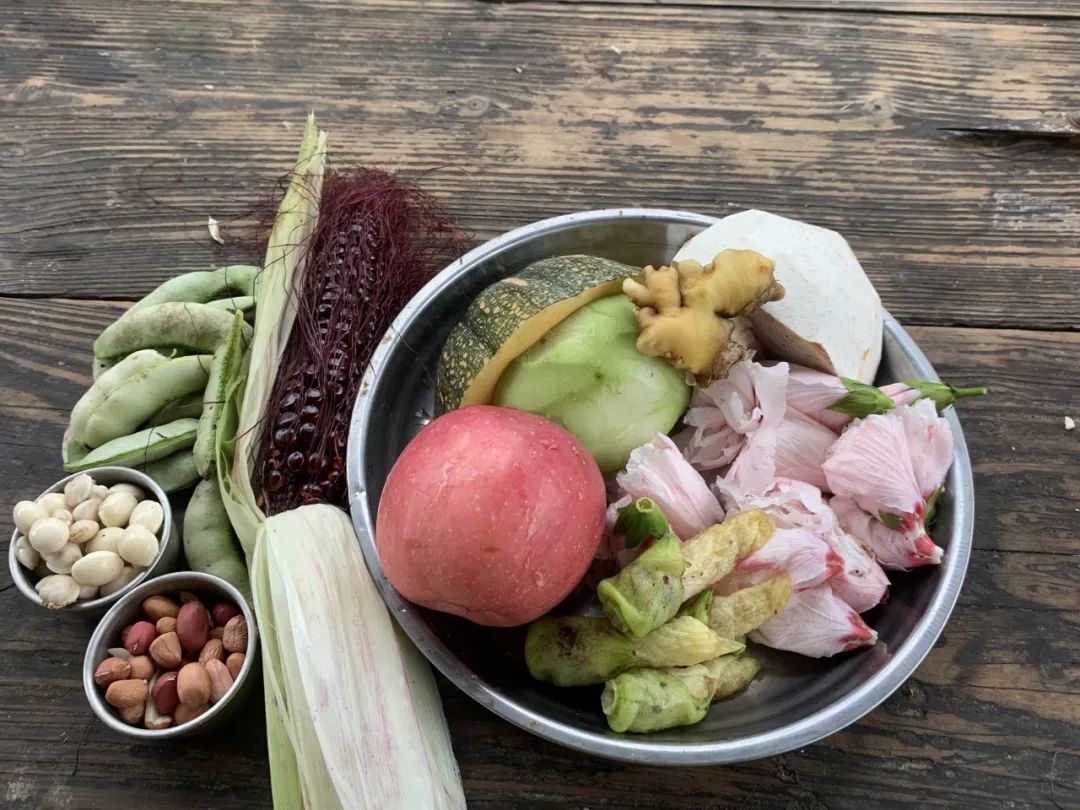
As noted in the first instalment of the *Woren Valley Food Philosophy* series, a single pot of soup for White Dew calls for ten ingredients, nine of which are homegrown. I champion “self-sufficiency” as the ideal for valley life. On paper, our self-sufficiency rate appears to sit at a lofty 90%, but one must not forget the old adage: the final stretch of a hundred-mile journey is only halfway to the finish. A humble apple has stubbornly become a roadblock on the path to this ideal. If we fall short of true self-sufficiency, then “food freedom”—the notion of having whatever we fancy at our disposal—is pure self-deception.
Truth be told, a fruit and vegetable soup can be cooked and savoured quite happily without apples. After all, I once drank radish soup for an entire spring and found it just as rewarding. Yet, omitting the apple robs the soup of its natural sweetness. And in the *Woren Valley Food Philosophy*, “deliciousness” occupies a position of strategic importance.
Realising the Woren Valley interpretation of “food freedom” within this patch of earth marks a shift in my own relationship with the land.
I. Self-Sufficiency: Seasonal and Local
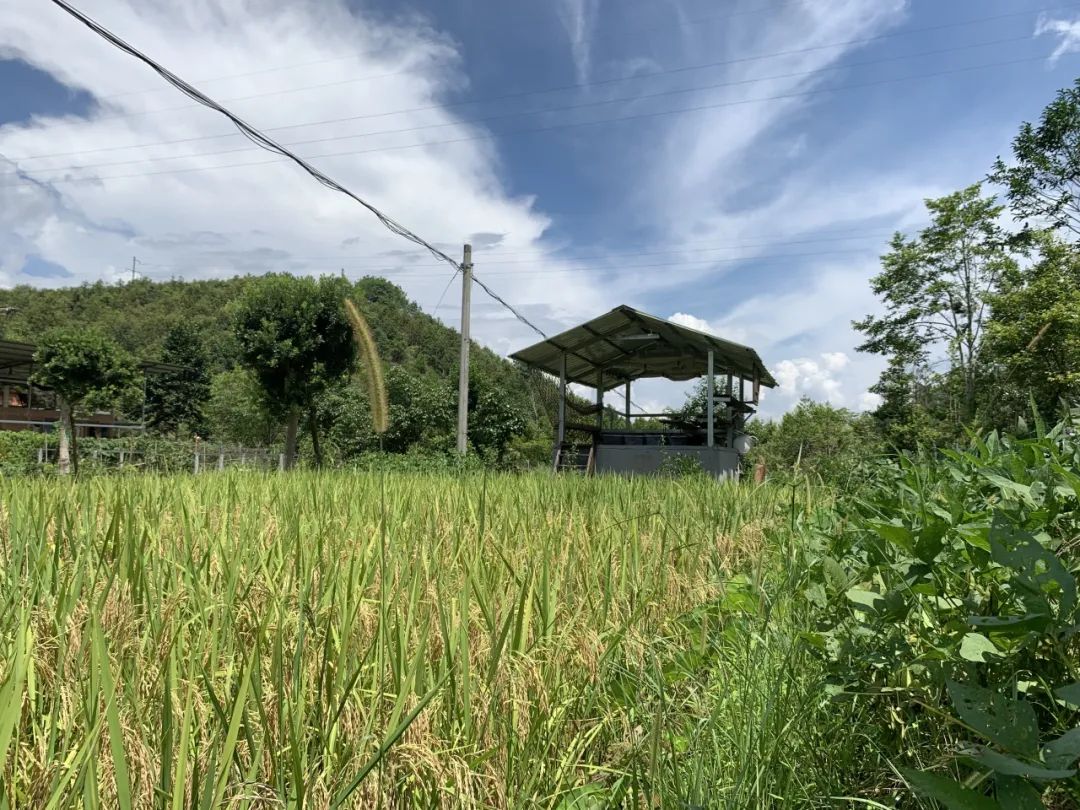
In 2021, my first year, I was effectively dropped alone onto a patch of wilderness. I ran myself ragged just to prepare the soil, planting seeds in every available gap. It was almost entirely a matter of paying tuition through trial and error. Anything that actually took root was treasured, eaten with gratitude, and celebrated as a triumph worthy of shouting from the rooftops.
By the second year, I was tending the soil and sowing seed simultaneously, finally managing to skip the market altogether and eat whatever the land provided. Everything that sprouted from my own plots felt like a treasure. Even that spring, waking early each day to simmer a simple pot of clear radish broth, left me profoundly content.
Upon arriving in Evil Valley, I treated the land like a blank canvas, carefully drafting a plan to realise my ideal of “food freedom.” I started with a clear vision in mind and set about putting it into practice. Alas, my success rate was somewhat modest; I found myself paying the so-called “stupidity tax” on nearly every venture.
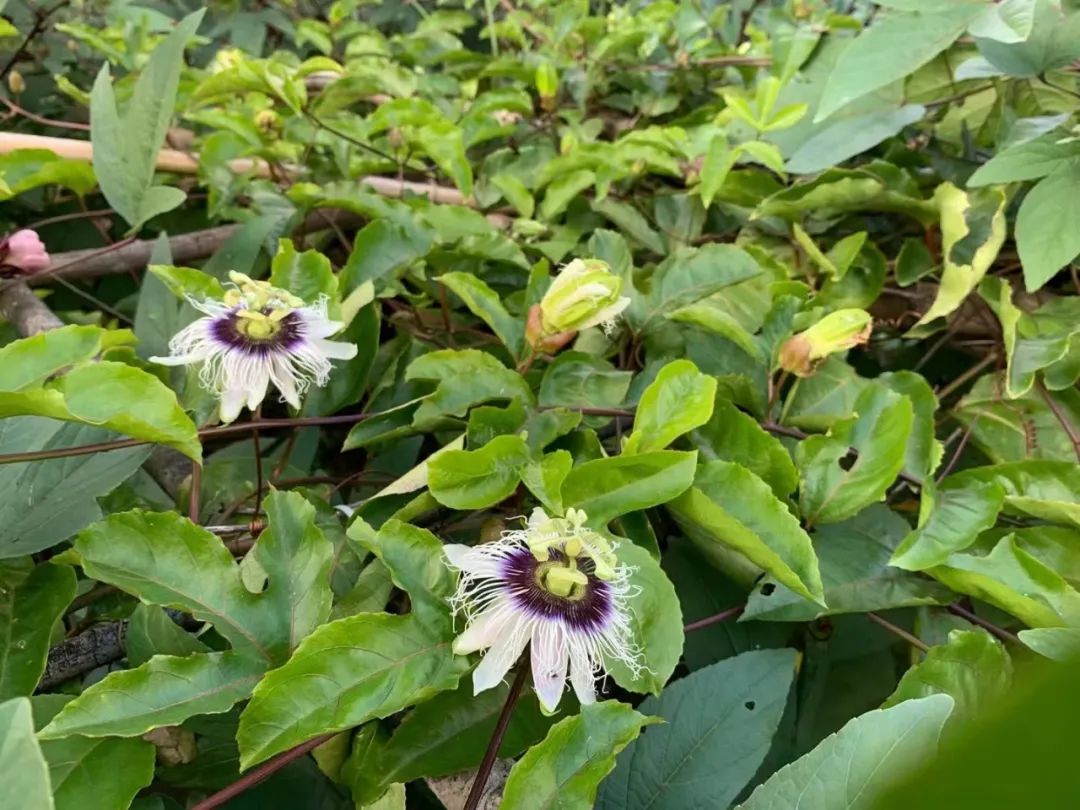
The local topography and climate proved to be my first teachers. Over two years, I purchased thousands of saplings. The fruit and nut specimens that actually survived include two yangmei, two loquats, three chestnuts, four plums, and five pears, alongside an assortment of mandarin, kumquat, kiwi, and passionfruit plants… yet they merely survived. It will still take years before they yield a proper crop. This year, the only homegrown fruit I managed was passionfruit, which can bear fruit in its first season. Even once the others reach maturity, they will mostly provide seasonal harvests, meaning true year-round self-sufficiency remains out of reach. This is precisely why apples hold a permanent place in my larder: not merely for their flavour, but for their exceptional keeping qualities, which allow them to be stored reliably through all four seasons.
II. Insects: Many? Not so.
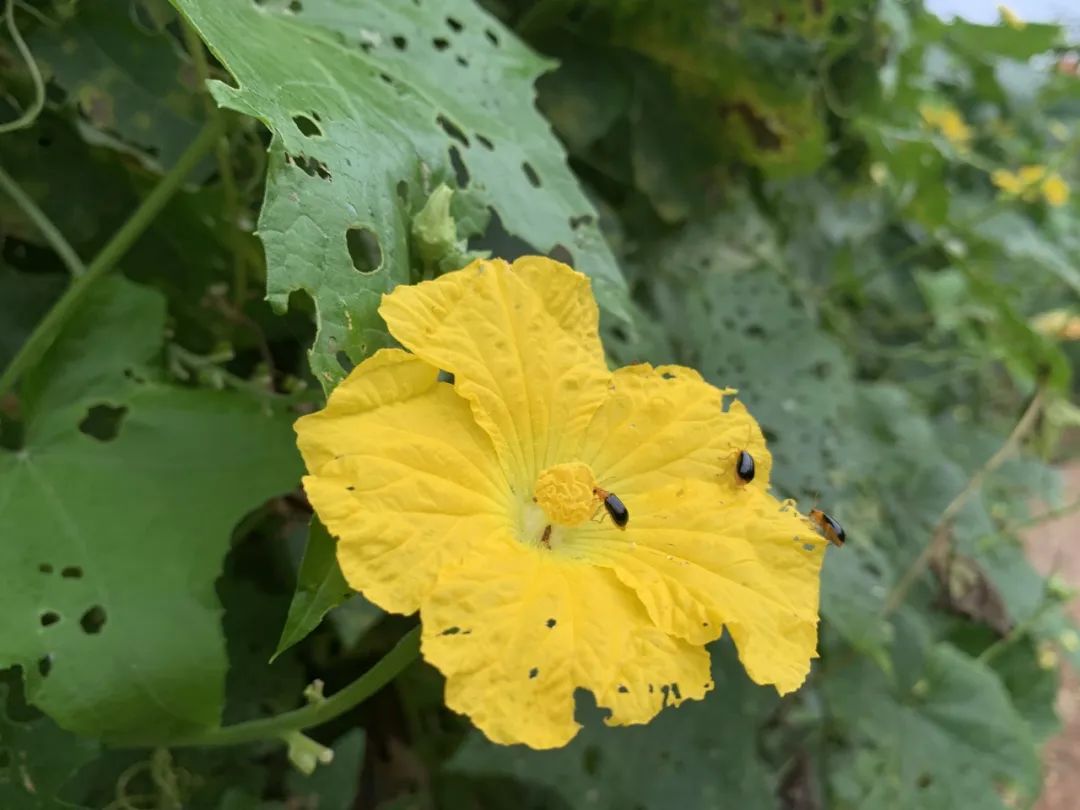
This year, I planted a vast assortment of pumpkin varieties. Following the traditional rhythm of sowing cucurbits and legumes around the Grain Rain solar term, I estimate I scattered several hundred pumpkin seeds across the valley. The batch included saved seeds from last year, northern cultivars brought from my hometown, and local Jiangzhe varieties kindly shared by friends. In the early sprouting stages, the lush growth made me feel as though I’d struck it rich. I even found myself fretting over what to do with a glut, so much so that I invested in specialised drying racks, fully prepared to cure mountainous quantities of pumpkin. However, an unforeseen pest outbreak quickly dashed those ambitions. A swarm of tiny yellow flying insects descended, attacking with the relentless efficiency of Wong Fei-hung himself. They singled out the tender shoots of all cucurbits, showing a particular preference for winter melons and pumpkins. The result was devastating: dozens of winter melon seedlings perished entirely, and only about ten pumpkin seedlings narrowly survived the onslaught.
Pests are my greatest adversaries in Evil Man Valley. They come in all shapes and sizes: burrowing through the soil, buzzing overhead, and skittering across the ground. When it comes to pest control, I draw a hard line at chemicals but remain open to every physical deterrent. I’ve tried every conceivable trap and barrier, from sonic, visual and electric bird scarers during the day to insect-killing lamps at night, and I’ve certainly parted with plenty of cash on gadgets that overpromised and underdelivered.
For all their variety, these methods are little more than stalling tactics. At heart, I am determined to hold out until the day nature’s own predators arrive to turn the tide in my favour. Back in Taiwan, a fellow grower once shared a perspective that resonated deeply with me: every pest has a natural predator, and nature maintains its own food web. Like humans, creatures follow the food supply. Once a population swells enough to sustain the species that prey upon it, those “natural enemies” will inevitably make their appearance. It leads to a rather harsh conclusion: if the pests have arrived but their predators haven’t, it simply means there aren’t enough pests yet.
As the locals put it, since I refuse to spray pesticides, few pests knew about the place at first. But pests have their own network. Word has got out, and an ever-growing host is now making its way to Evil Man Valley. If I stick to my chemical-free principles, the infestation will only worsen next year…
I have no idea how large the pest population must become before their predators finally show up. Faced with this, there are two pragmatic approaches. First, sow in greater numbers: even if pests are plentiful, outplanting them ensures that a few seedlings will slip through the net and survive. I sowed a few hundred pumpkin seeds this year; next year, I’ll aim for a thousand. Second, invest in physical barriers. I’ve already purchased two hundred square metres of forty-mesh netting. Next spring, I’ll use it for protected cropping during the seedling stage, and once the plants have grown strong, I’ll lift the cover to let the next round of natural selection take its course.

III. Zen Pumpkins
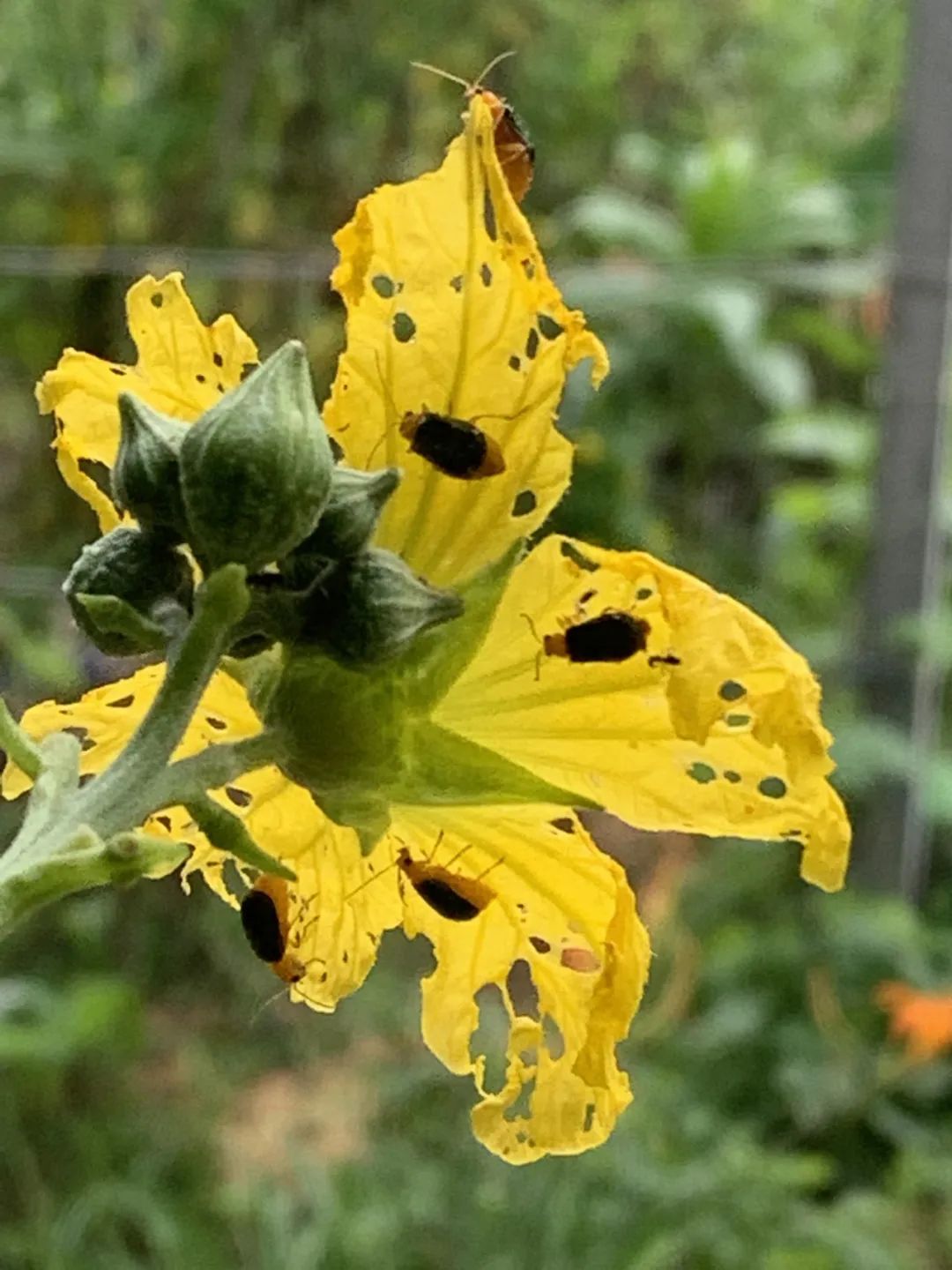
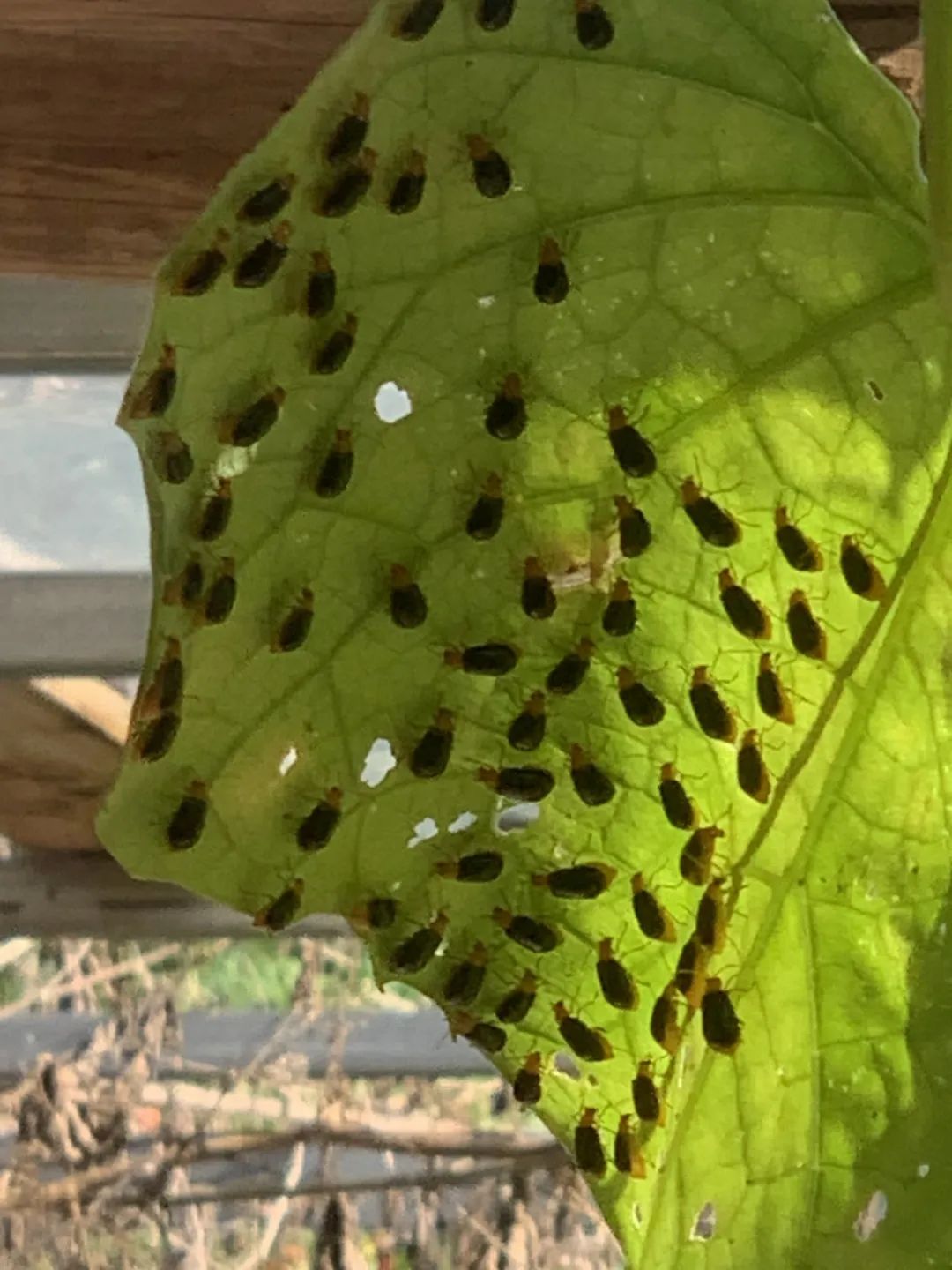
Graceful in appearance and vaguely reminiscent of baby bees, they look innocuous enough. In reality, however, they are ruthless predators of pumpkins, bitter gourds, cucumbers and ridged gourds. All the dozen or so bitter gourd plants that made it past the seedling stage this year yielded absolutely nothing – a fate owed entirely to these fruit flies.
These fruit flies aren’t content with just the crops; they take a liking to landing on people, likely drawn to the salt in our sweat. At first, I gave them the same treatment as mosquitoes, slapping my hands, legs, and cheeks to make them leave. These days, however, I’ve cultivated the patience to simply let them be. After all, they aren’t as filthy as houseflies, and their bites don’t leave the maddening itch of a mosquito. They’re practically harmless to us, so why bother?
Swarming through the air, the fruit flies strike first and hardest when the pumpkins are mere infants. Tiny pumpkin knobs, less than a centimetre across, are already stung. Most wilt and drop before they even get to flower, their short lives cut long before they can truly begin. A handful with stronger constitution manage to grow to the size of a quail’s or chicken’s egg after flowering, only to wilt and fall away later. Only the rare few with ironclad vitality manage to survive and mature into proper fruits.

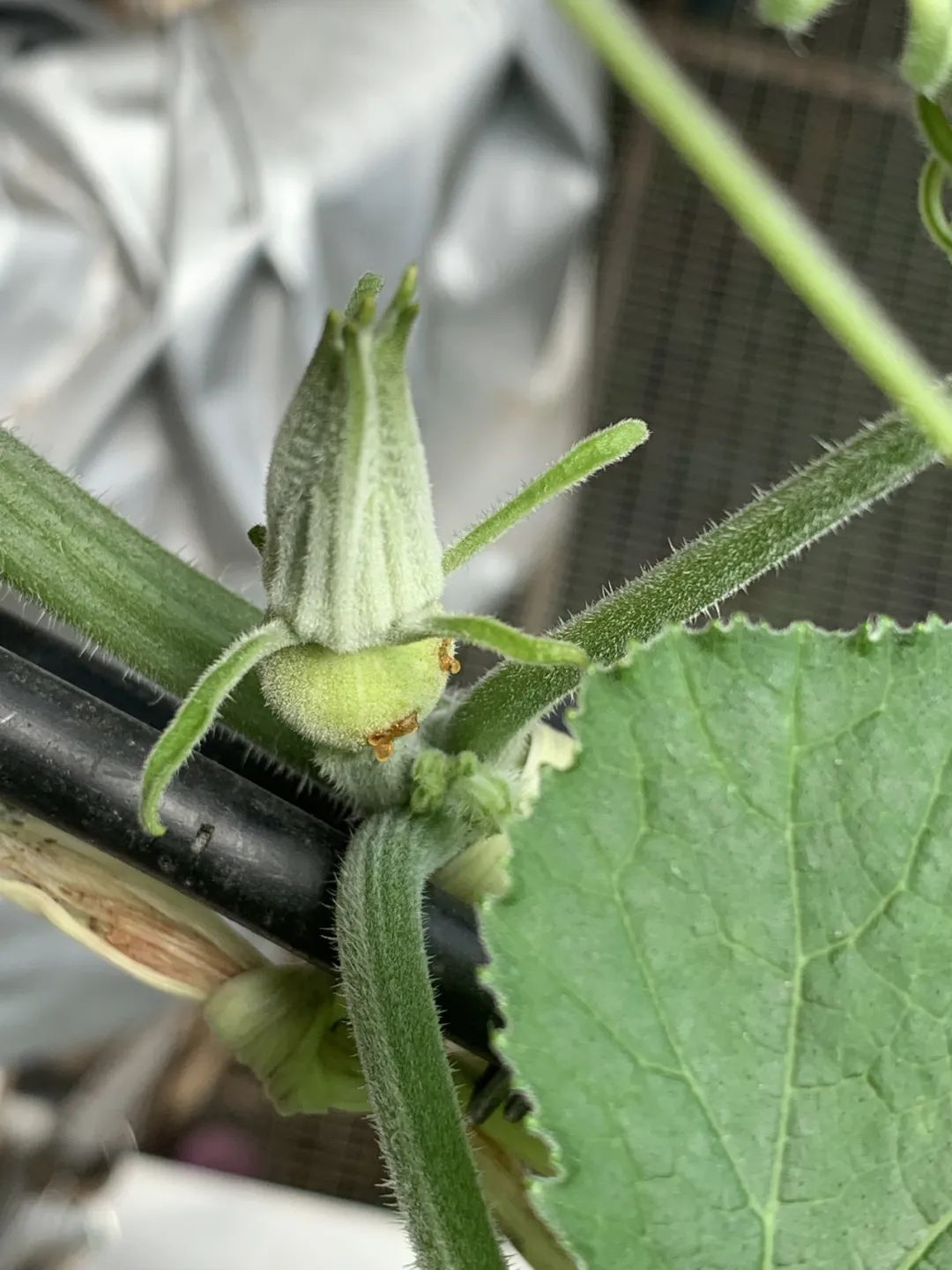
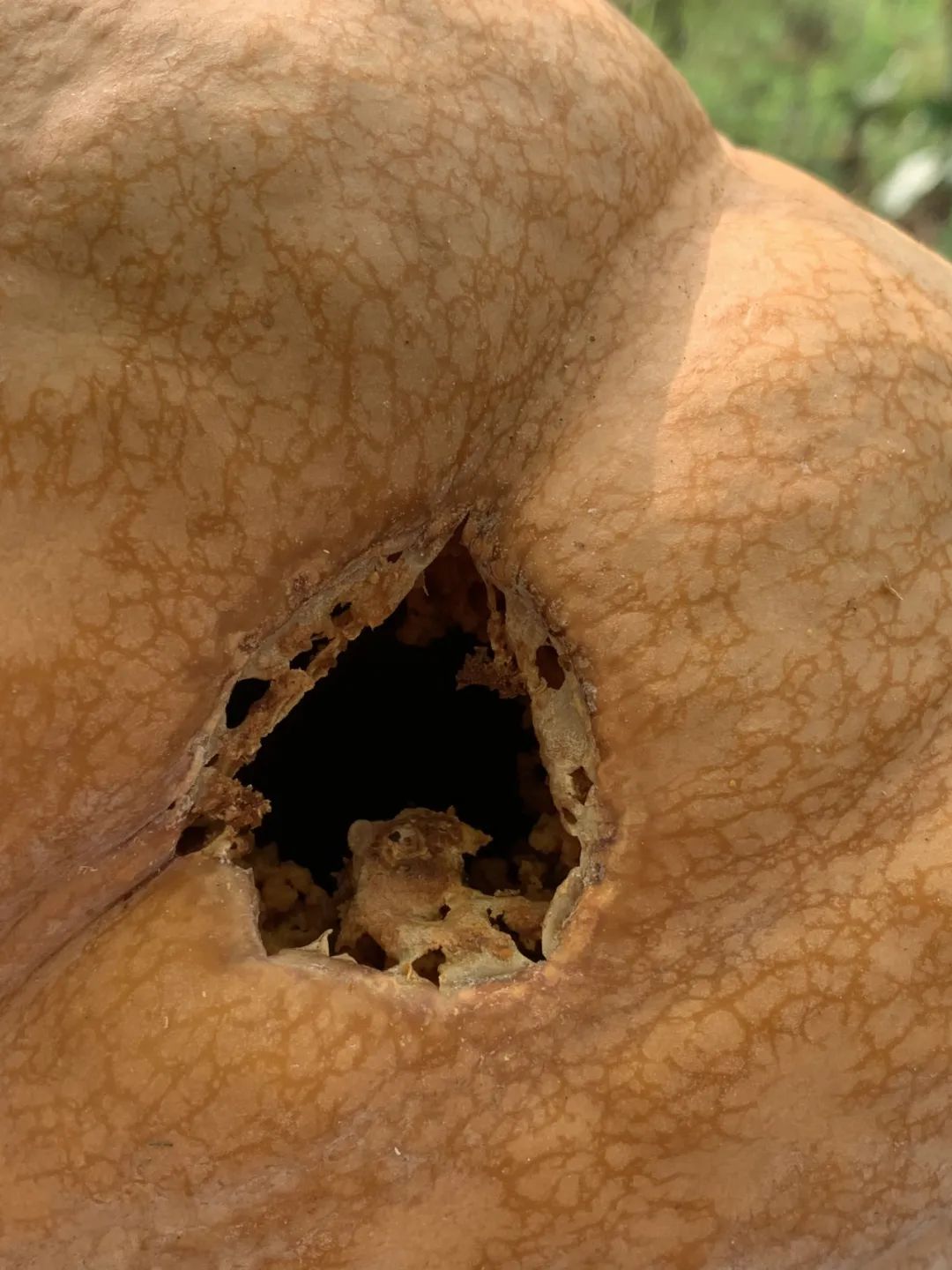
Yet, even those that manage to grow large cannot claim to have passed the test. As the pumpkin swells, the eggs left behind by the fruit flies hatch into maggots that multiply deep within its flesh. Even the exceptionally robust ones that swell to over twenty *jin* (ten kilograms) still cannot escape internal rot. Such pumpkins are destined for the chicken coop. We cultivators feel neither grief, nor outrage, nor the will to fight; our hearts are as still as a pond.
I could never have been this unfazed last year. Back then, I kept a hawk-eye on every female blossom each morning. I’d manually pollinate each one with male stamens, tending to them with painstaking care. The fate of every tiny pumpkin knob weighed on my mind and heart. Fortunately, the fruit flies weren’t anywhere near as rampant as they are now. If last year’s crop had faced this, ten versions of me would have been driven to despair.
Besieged as they are, fewer than one in ten female blossoms manage to survive, and of those, barely one in ten matures. I cannot fathom the workings of fate or chance. These swarming little yellow insects have taught me to “do my utmost and leave the rest to heaven.” They have also taught me how to cherish whatever pumpkins do make it to harvest. Each one is precious in its rarity; every bite is a reminder to savour what we are given.
This year, roughly a dozen pumpkins survived their own journey of eighty-one tribulations to finally bear fruit. The pear-shaped variety made up the majority, and fortuitously, it is also the best-tasting.
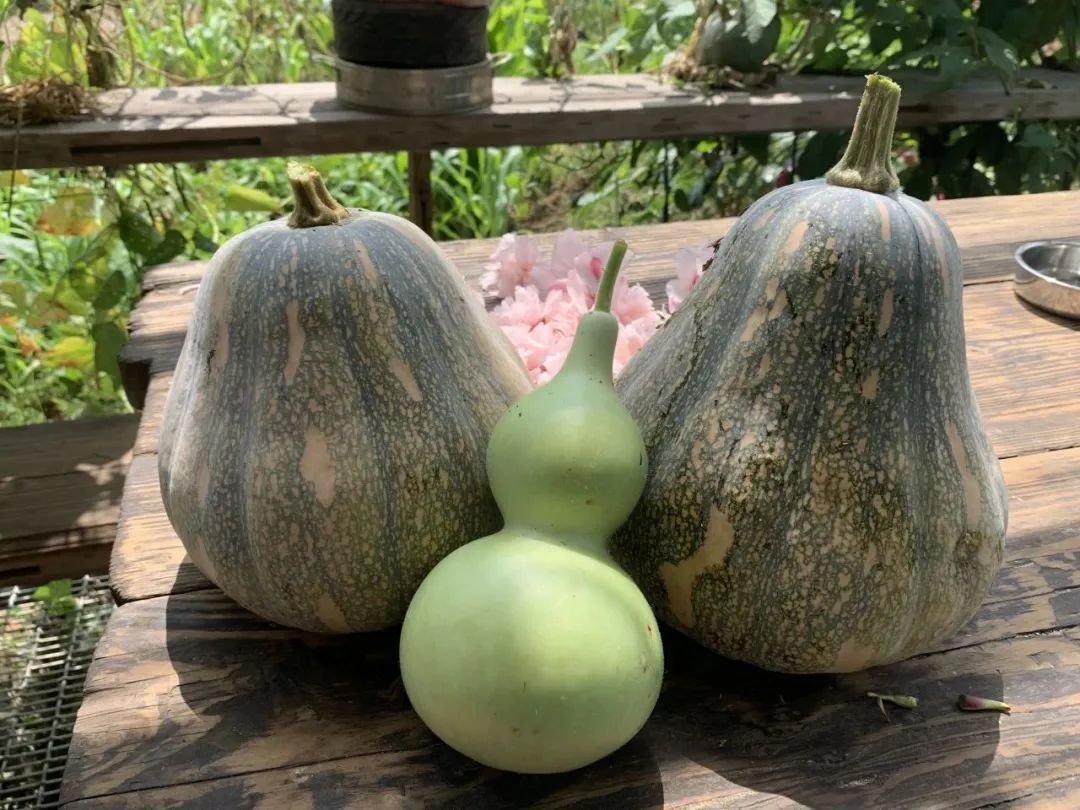
My primary criterion for judging a pumpkin isn’t sweetness, but texture – specifically, whether the flesh is floury and dry. Some varieties might be sweet enough, but they are too watery. Cooking them demands precise heat control; whether steamed or boiled, overcook them by a minute and they turn into a waterlogged mess. This particular “big pear” pumpkin isn’t particularly sweet, but it is naturally gifted and remarkably resilient to boiling. You can cut it into chunks skin-on and throw it straight into a pot. Boil it until tender, and it will retain its wonderfully floury, starchy texture. The mouthfeel is exquisite.
Cultivate with a Zen-like detachment; eat with gratitude. With every mouthful, we can’t help but give thanks: truly, heaven will not let even a blind sparrow go hungry.
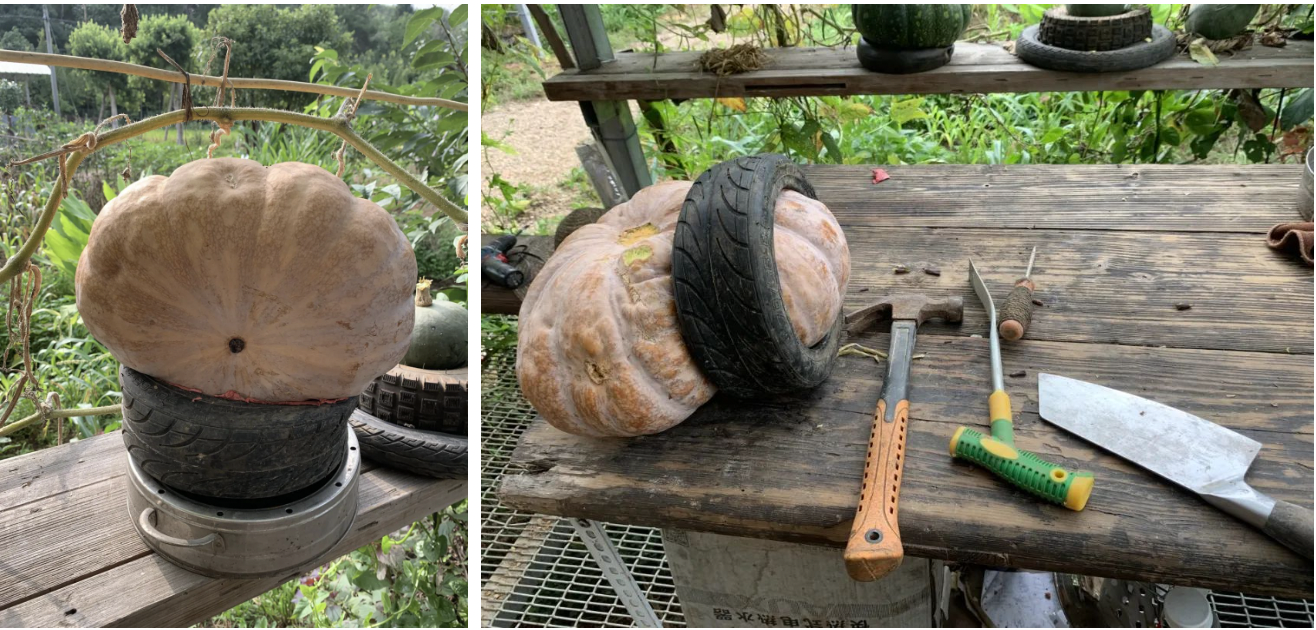
Lastly, we come to a pumpkin with a tale to tell. Despite being stung by fruit flies, it still managed to grow into a giant weighing over twenty *jin*.
A tyre had been placed underneath as a support to catch it in case it fell from the vine, but the pumpkin defied convention, reshaping itself and growing solidly into the tyre’s contours.
Even so, once fully grown, it was ultimately breached from within by the hatched larvae.
What a shame for the largest pumpkin of the year. It simply could not be eaten.

All accompanying images are courtesy of the author.
Editor: Tianle