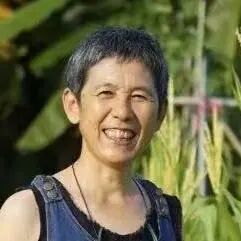
A Woman’s Countryside: From Impossible to Possible | Grandma Kouzi

I. Women’s Lives
Back in the 1990s, during my thirties, the cultural landscape was awash with end-of-the-century prophecies and apocalyptic fiction.
Whether in novels or films, the central figures in these stories of salvation or destruction were invariably men. Their grand, perilous quests loomed large, far beyond a mere woman’s capacity—or inclination—to follow.
As a woman and the mother of a young child, what drew my attention and lingered in my mind was the treacherous fate of women caught in the apocalyptic storm.
I have long since forgotten the titles of those most gripping novels, or even their protagonists’ names, yet the fates of three women remain vividly etched in my memory.
The leading man in an apocalyptic tale is invariably the saviour, a deity-like figure who rescues the world and battles demons, scarred but unbroken, growing stronger with every setback. In such stories, a god does not die.
In those fictional end-times epics, women, relegated to supporting roles beside the saviour, appear and fade in a revolving cycle, only to meet their demise.
The first to perish was the leading man’s wife. She never truly “appeared”; she had already died before the story began, a victim of cancer brought on by environmental pollution.
The second was his first love, who fell in the early chaos. Though famine accompanied the unrest, she did not starve; she died for the food itself. Perishing while defending a grain reserve, the very sustenance meant to save lives became her undoing.
The third was his idealised love, a scientist who had discovered the post-apocalyptic food source meant to save humanity. She fell victim to sexual violence at the hands of a rioting mob during the height of the chaos.
Men save the world; men destroy it. Women are simply destroyed within it. This is no mere apocalyptic allegory, but a stark reflection of women’s reality in this world: their fates and lives are merely woven into the fabric of men’s lives and men’s narratives.
II. Women’s Countryside
Is it possible for a woman on the land to live an independent, autonomous life of free choice? Or, to put it more bluntly: Can a woman live independently in the countryside?
In the primitive and agricultural ages, it was impossible, dictated by the level of productive forces.
As social animals, humans not only actively chose to form societies through natural selection but were also “made into social beings” by the necessity of survival. The lower the level of productivity, the larger the community needed to sustain life. Early humans could only survive by belonging to a clan, regardless of gender.
As productivity rose, the smallest unit of survival on the land shrank, from clans to extended families, and eventually to nuclear families. Occasionally, there are legends of isolated survival, such as *Robinson Crusoe*, but they remain just legends, with protagonists who are invariably male.
I love watching Laura *Little House on the Prairie*, which depicts the authentic lives of Americans during the westward expansion. The vast, sparsely populated, and resource-rich West was an ideal rural setting, where the basic unit of survival was the family, and every household functioned as a complete ecosystem. Men felled trees to build houses, farmed, and hunted; women fed cattle, milked cows, ground flour, baked bread, and made their own butter and soap. Every family had to maintain a complete chain of sustenance—food, clothing, shelter, and transport—to survive. Men could certainly do many “women’s tasks”; if one disregarded living standards, a solitary man could survive, but a woman could not. She needed to rely on at least a man, or a household.
“Wives and daughters carry baskets of food, children bear pots of water. They follow to send provisions to the fields, where able-bodied men labour on the southern hillside.” It is the same in China. “My old wife draws a chessboard on paper, my young boy hammers a needle into a fishing hook.” In Chinese pastoral narratives, women are equally relegated to auxiliary roles and supporting acts.
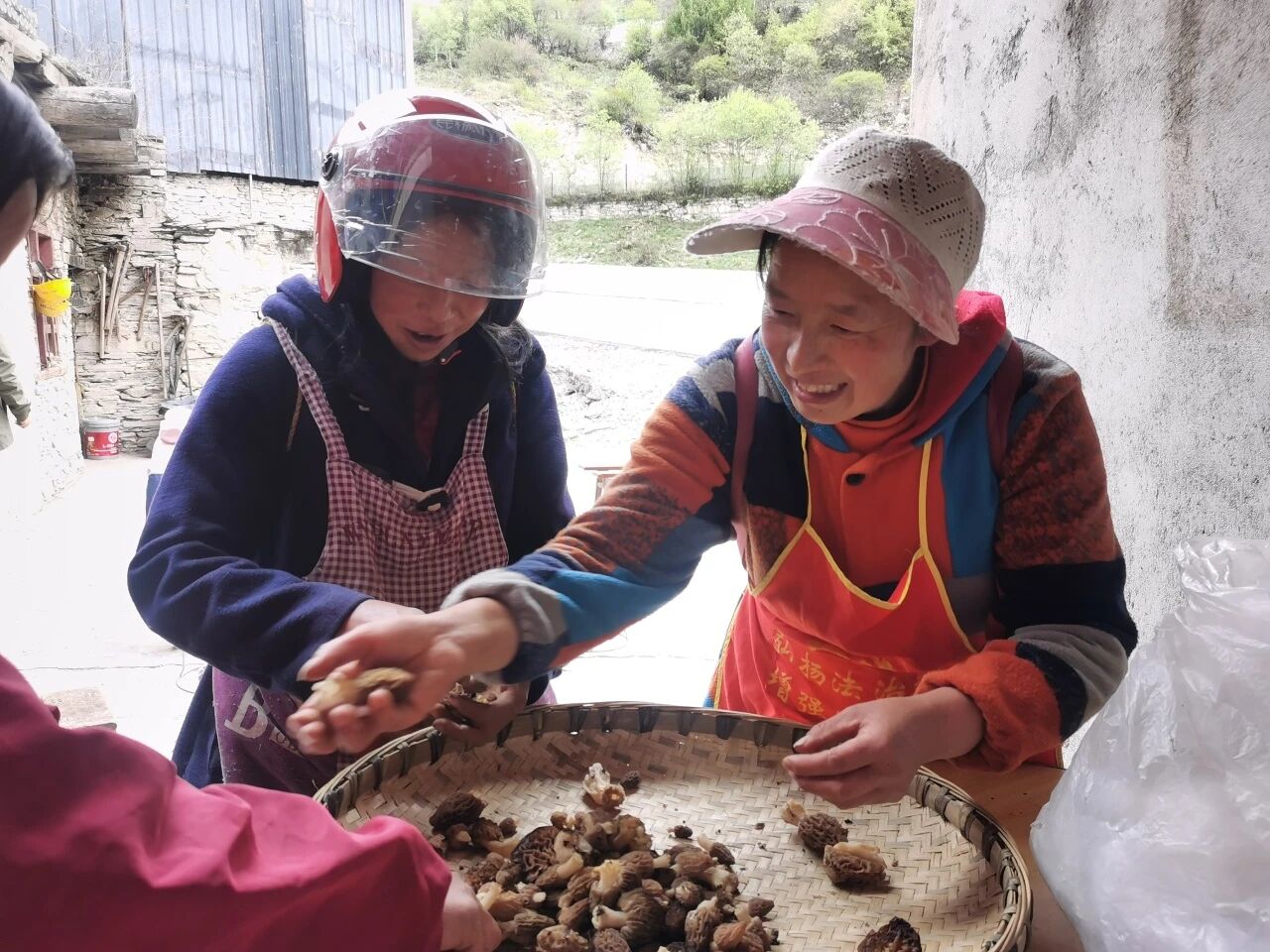
Over the three years of 2006, 2007, and 2008, I filmed a documentary in a small village called Chezhou, located in Zhongdian County (now known as Shangri-La) on the banks of the Jinsha River. Every household here possessed a complete subsistence system: riverside paddies yielded two crops a year of wheat and rice for human consumption; upland plots on the slopes grew mulberry, beans, and corn to feed cattle and pigs; and higher up, dozens of acres of forest provided firewood for heating and cooking, along with timber and stone for building houses.
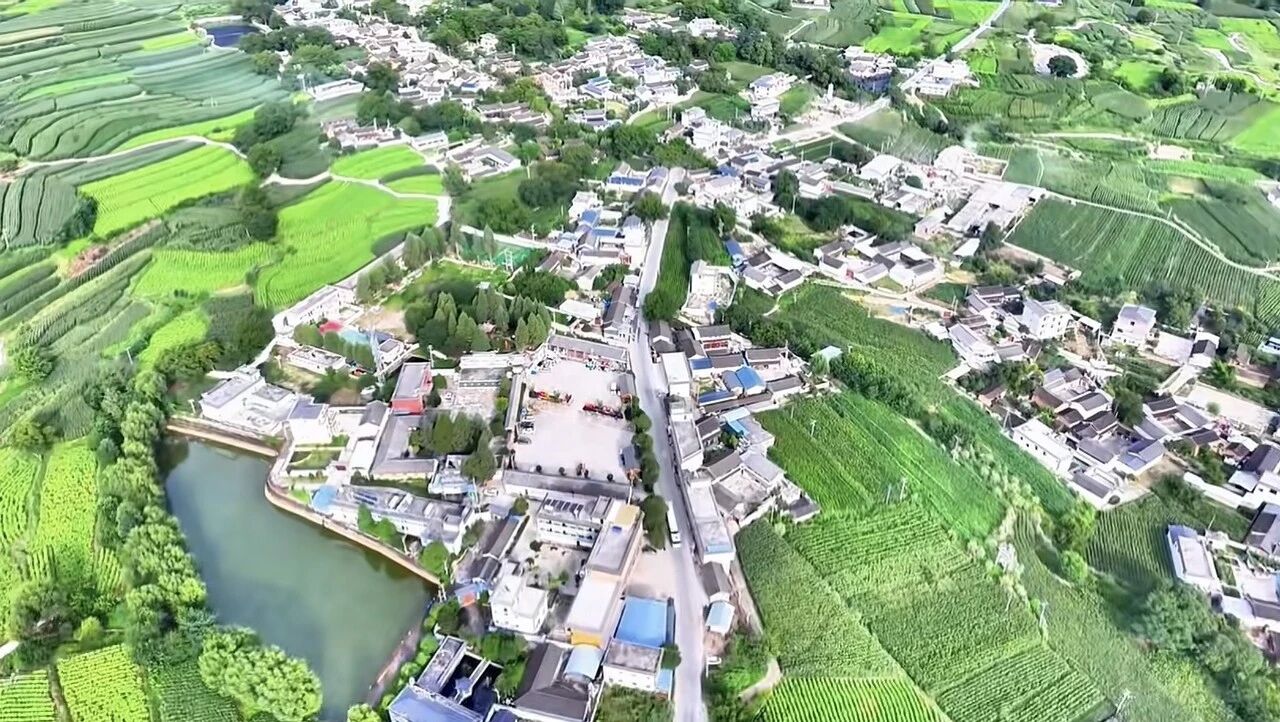
Half a century ago, the smallest unit of survival here was the extended family, because daily life encompassed everything from growing mulberry and rearing silkworms to boiling cocoons, reeling silk, spinning thread, weaving cloth, and embroidering garments—far more than a couple could manage alone. Since clothing no longer needed to be produced by hand, the extended family gave way to the nuclear family.
I loved that place, and I loved that way of life. Yet I also knew how superficial that admiration truly was, like Lord Ye’s fondness for dragons. I was perfectly clear that I lacked the ability to shoulder such a life. I assumed that a woman surviving independently in the countryside was a fool’s dream.
At the time, I had no idea that women could already carve out their own independent rural existence.
On another beautiful island, Taiwan, a real woman was turning her life towards the land—not for death, but for life. For vitality, for daily living, for an enduring dream belonging to women and the earth. Her name is Li Baolian, but we call her “A-Bao”.
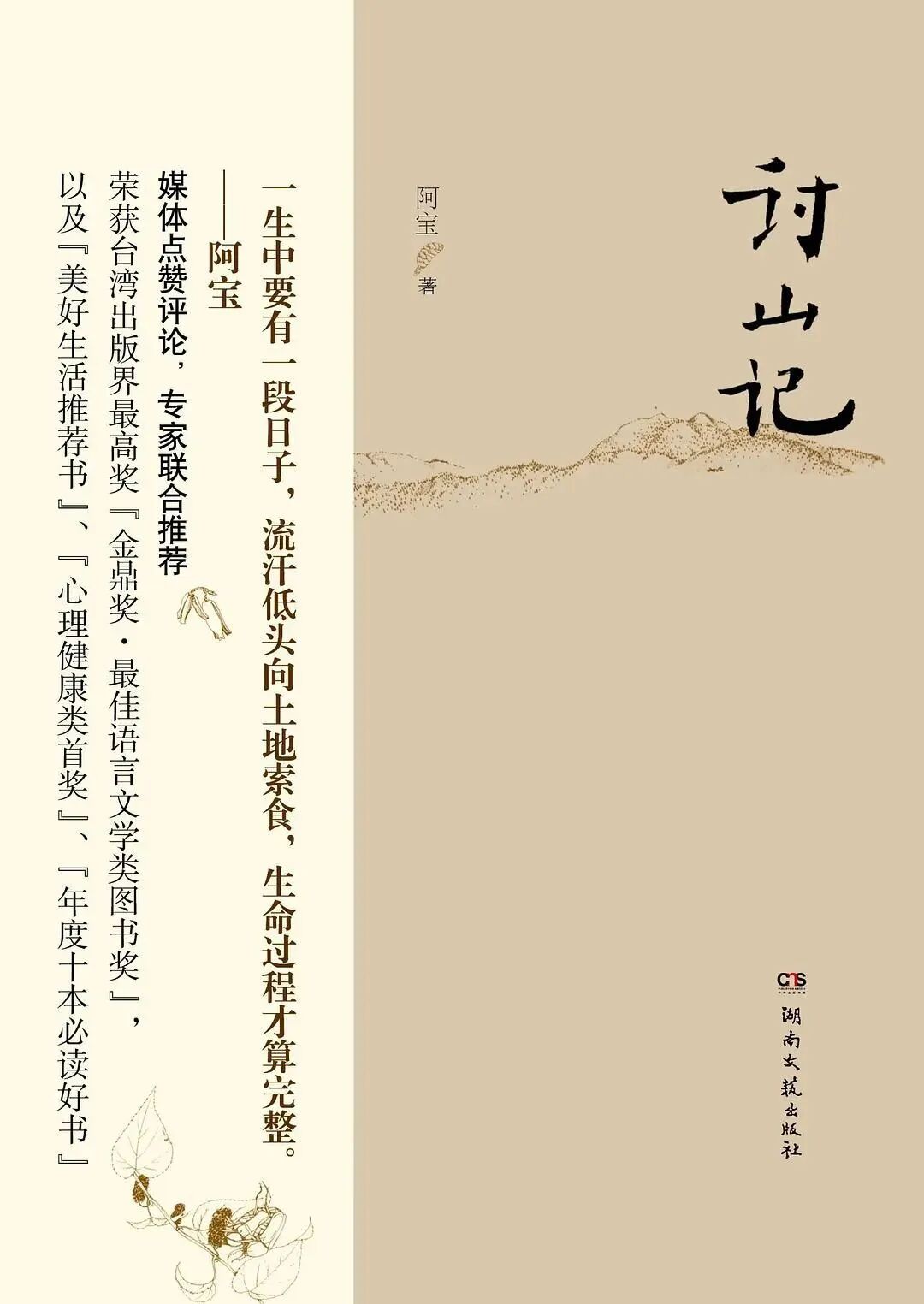
A-Bao has already chronicled her solitary life on the land in *Claiming the Mountain*, a work comparable to “China’s *Walden*”.
From a survival standpoint, *Walden* is merely a two-year performance art piece, heavy on philosophical reflection and light on practical subsistence. It is later nature writing classics, such as *Solitude in the Wilderness* and *Notes from Walnut Farm*, that depict long-term, self-sufficient solitary living. The protagonists of both are men, capable figures akin to “real-life male supermen”.
I have often quoted a Bosnian survivor of the Bosnian War, who said that those who survived the chaos had “turned into beasts”. Borrowing that phrasing, those who survive alone in the wild are rugged men, or they become men.
Environmental pollution, food safety crises, apocalyptic fears… these are challenges every modern person must face. Almost all of them place an additional burden on women. Perhaps women need a piece of land more than anyone, or rather, women need the direct sustenance of life that the land provides. At the same time, the realities of survival demand a higher level of capability from women in drawing that sustenance from the earth.
What I want to know is whether an ordinary person can choose their own life by relying on their individual labour and limited funds, particularly ordinary women. A-Bao’s story has given me inspiration.
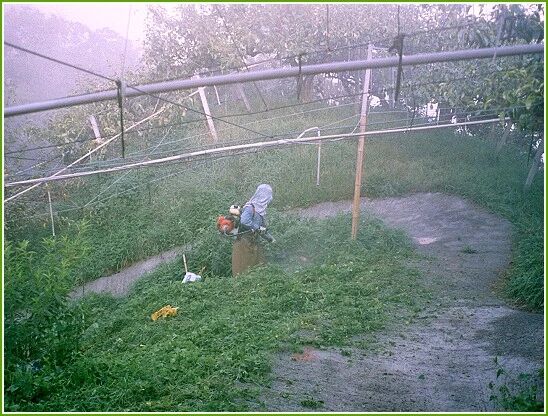
A-Bao was once a wandering artist, carrying a roll of canvas across rivers and mountains. She felt that a life should include a period of “facing the yellow earth, begging food from the land” to be truly complete. After turning thirty, this desire became particularly urgent. In 1999, heeding the call of the land, she moved to Lishan to learn fruit farming. For over two decades, A-Bao has consistently lived by her principles, putting them into practice.
III. Women’s Way of Living
The farmhouse I rented in Yilan during my farming years in 2018 and 2019 happened to be the very one A-Bao once lived in.
A-Bao now lives in Lishan full-time and plans to remain in the mountains. During her years of solitary mountain living, she cleared land to grow vegetables, learned carpentry for repairs, and single-handedly solved all sorts of plumbing and electrical problems. The last time I visited Lishan before leaving work, she was taking her wooden cabin apart piece by piece, aiming to install insulation and reinforce the structure before winter. Lishan sits at a high altitude, and heavy snow can block the roads for months in winter; she is literally warming up the cold months with her own hands.
The A-Bao who once couldn’t even grip a pair of pruning shears wrote about the embarrassment in her book. Though she has since developed a powerful grip, her hands remain slender. A painter and literary type at heart, even her work apron has an artistic flair, very much in a bohemian style. She remains that slender girl from the south, speaking softly and slowly. Living alone in the wilderness, she stands firm against the elements, yet she has not had to become a man.
A-Bao became the first to run a women’s solo farm in Lishan, largely thanks to Taiwan’s social service infrastructure. Though remote, Lishan has bus connections. Since the dawn of courier services in Taiwan, packages have been delivered straight to villages. Combined with widespread internet access, she can market her produce across the island without ever leaving home. Her fruit is renowned nationwide; free from sales worries, she simply keeps her orchard at a manageable size, entirely run by one person. Mechanisation and tools help break human limitations, particularly for women whose physical strength may be limited. A-Bao owns a tricycle and is quite the tool enthusiast. She has a rather impressive tool wall, decorated with an artistic, literary flair: she has drawn the outline of each tool in cartoon-like lines on the corresponding spot on the wall.
Those practising natural farming often hold deep reflections and critiques of modernity. Yet, modern human society also creates the possibility for ordinary people to live independently. Specifically, the women’s solo farm model relies on a stable social environment, a complete service system, the widespread availability of post-industrial machinery, and internet-based sales and delivery networks.
A-Bao has spent over two decades alone in Lishan. She has purchased the mountain land she has cultivated for years and intends to stay. She has not only redefined her own life on this land but also opened up a space of “possibility” for more women through practice. The better she does, the wider that space expands. Many have benefited, myself included. By the end of 2017, when I became a new farmer in Yilan, more than twenty women-run solo farms already existed there, ranging from full-time operations to a half-farmer, half-anything lifestyle.
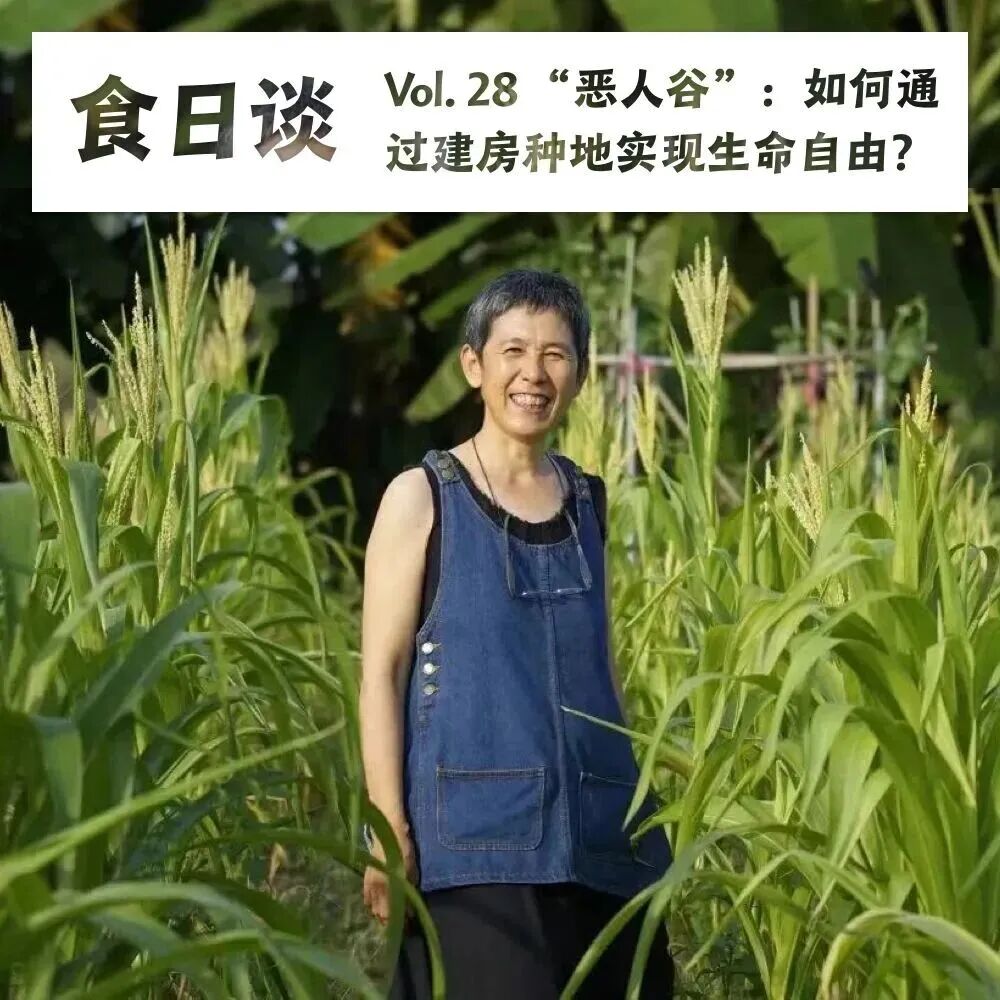
Though born in the same year as A-Bao, I started twenty years later, and by the time I finally found Eren Valley (literally “Villain Valley”), I was already approaching sixty. From the outset, this has been an experiment in modern rural life for a single woman with clear physical boundaries, aiming for a measured return to the land.
IV. Living Independently in the Countryside
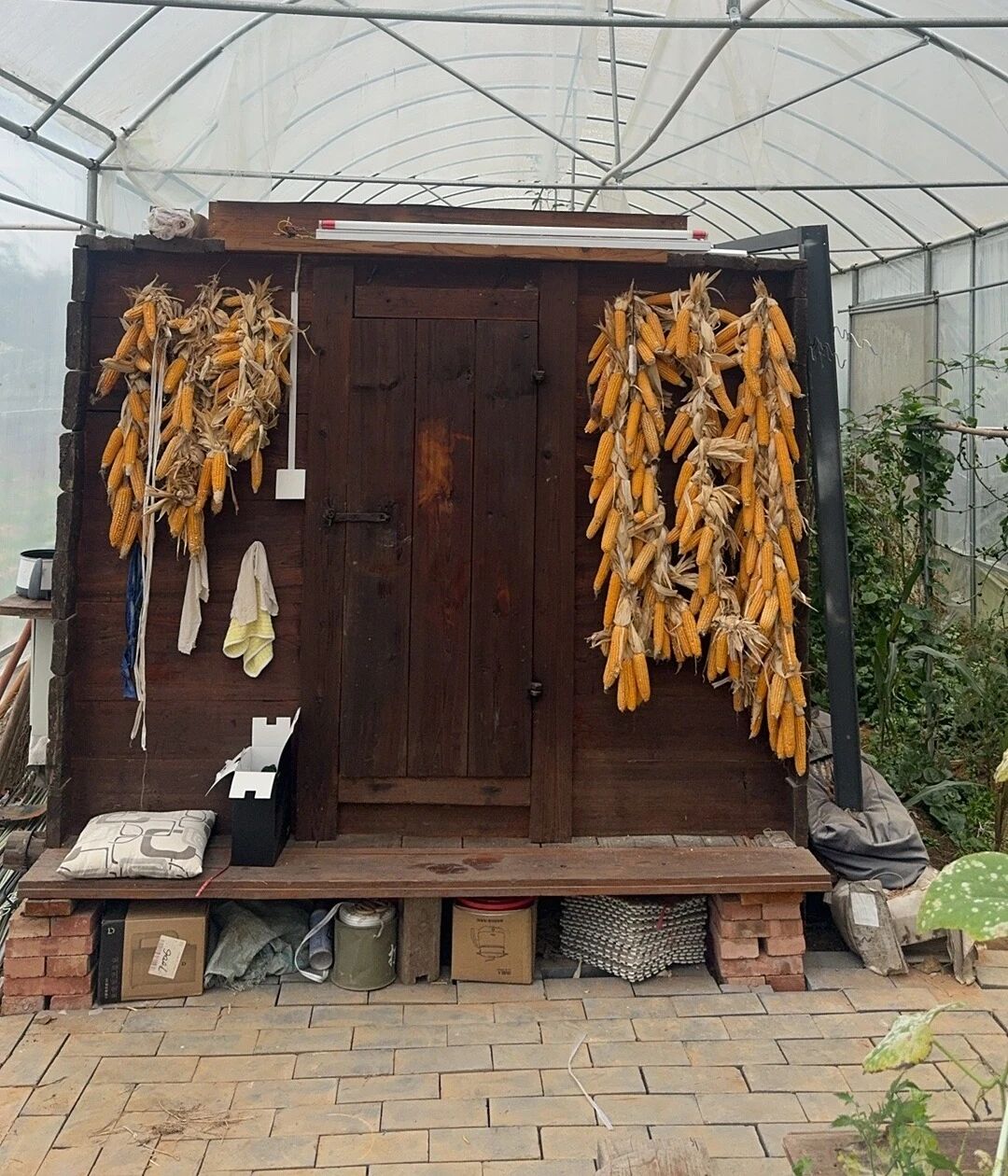
I practise lifestyle farming. I produce no commercial goods and do not expand my scale; I farm solely for my own three daily meals. Though Eren Valley is small, it is fully equipped. I grow whatever I wish to eat, aiming to achieve the highest possible quality of life.
Not daring to live in total wilderness, yet finding human proximity suffocating, I prefer a distance from the village that feels just right—”building a hut within the human realm” in a place where the town and swimming pool are both within cycling distance.
Knowing my own limits, I never managed to learn A-Bao’s carpentry skills. From the outset of developing Eren Valley, I pragmatically hired professionals to build the house, paying quite a few tuition fees along the way. Oh, if only there were such a thing as “if only” in this world! It would have saved me at least 200,000. But fear not, dear reader, you won’t need an “if only”, because I am here. I have already navigated the pitfalls ahead of you and written a guide to help you avoid them.
I spent 500,000. With my lessons, you could manage for 300,000. If you are not as wary of village life as I am and are willing to rent a room in a village, you could fully achieve self-sufficiency in southern China within five years for under 200,000.
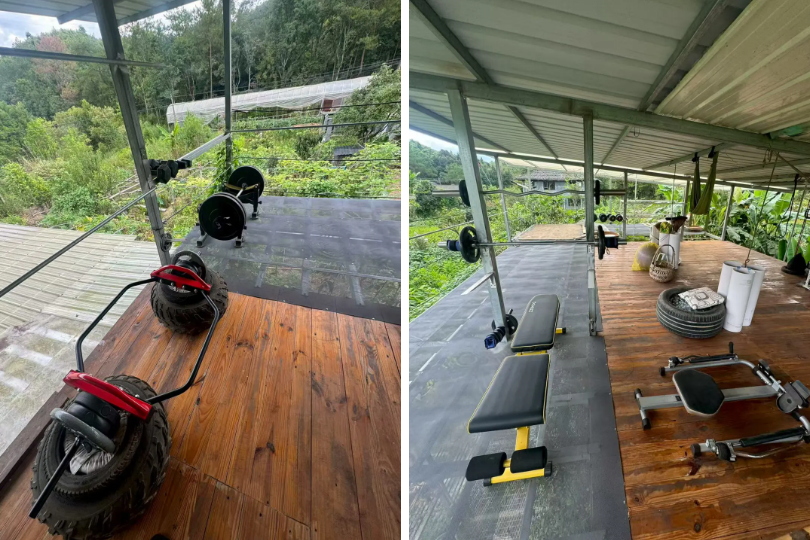
If, like me, you adhere to a strict “Three-No” approach (no chemical fertilisers, no pesticides, no herbicides), and if Meicuntou in Liancheng, Fujian, continues to welcome people like us with open arms and provide public services, the cost could be even lower. You could set up a women’s solo farm for just over 100,000.
From knowing nothing about agriculture and lacking confidence in my own labour to navigating Eren Valley with ease, from urban middle-aged sub-health to comprehensive improvement in my medical checkup results, I have already achieved the initial stage of “not eating a single bite of outside goods”. By the fifth year in Eren Valley, everything except salt was self-produced. That year, I harvested 40 to 50 jin (c. 500g) of rapeseed, over 100 jin of peanuts in their shells, over 100 jin of corn, over 100 jin of various grains, over 100 jin of various beans, and over 100 pumpkins. Most measurements are vaguely “over a hundred”, because once the harvest exceeds what is needed for survival, I stop weighing and counting, and simply send the surplus straight to feed the chickens and ducks.
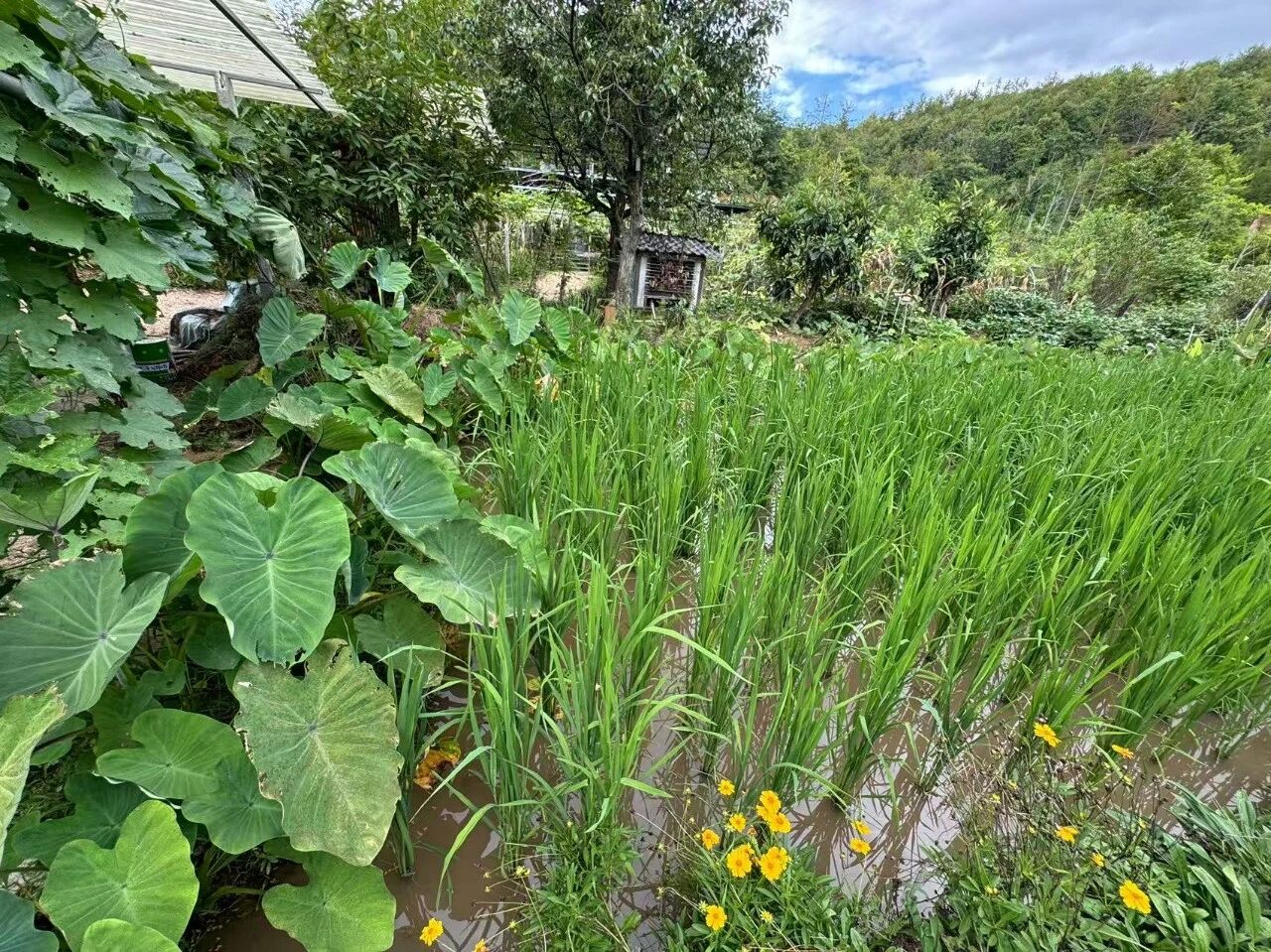
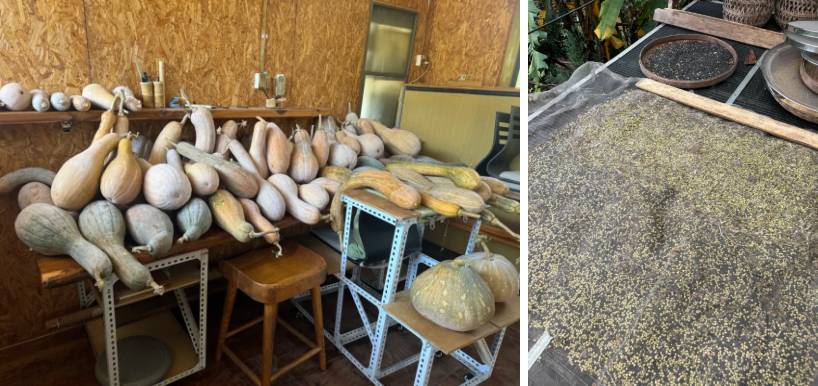
This is a life created by a woman in her sixties through her own labour and hands. What earlier generations of women once hoped for—autonomy and independence—has been realised through technological progress and the era’s advancements.
In 2025, I achieved a baseline level of fruit self-sufficiency, and have since begun raising fish. I am currently exploring “chicken-centric” design: building a sustainable, self-cycling planting and rearing system within half an acre, centred around the chickens’ needs. With the same egg output and flock size, I am confident I can cut feed consumption by half by 2027. I will also implement a “duck-centric” design, integrating chickens, ducks, and fish.
I aim to explore the ultimate state of “living self-sufficiently behind closed doors”, particularly the extreme version of a woman living independently in the countryside. By the time I turn seventy, I will have built a complete living system with self-sufficient water and electricity, finished all soil remediation, adopted full no-till farming, and established a food forest across the entire property, entering a state of permanence. This will not only allow me to eat better and live more comfortably here, but will also better match the physical capacities of an older woman and more effectively meet her daily needs.