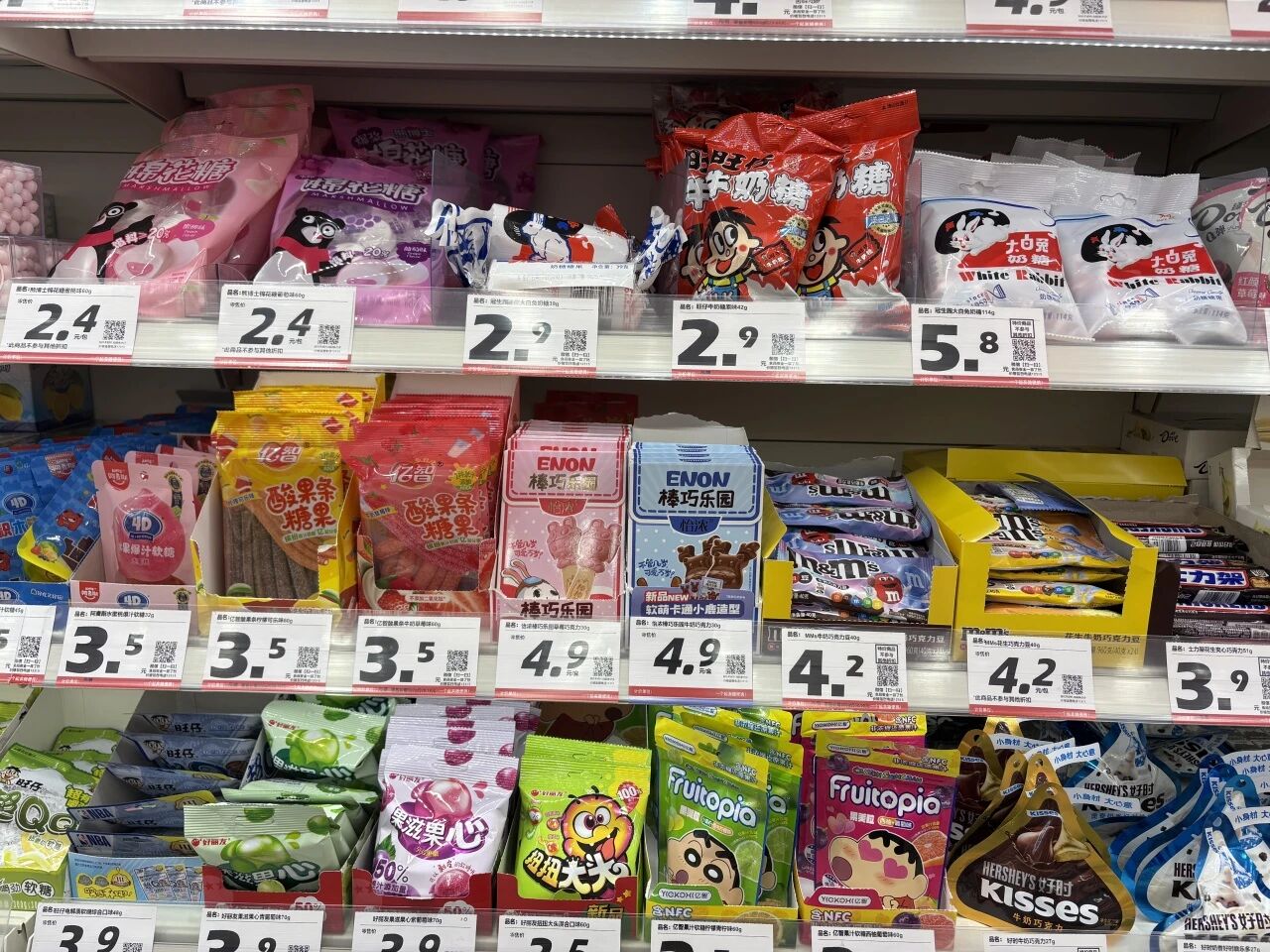
From Wiley’s 1902 recruitment of twelve men to prove the harm of formaldehyde and borax on their own bodies, to van Tulleken’s 28-day Ultra-processed Food experiment, food additive safety boundaries remain unsettled after a century—and cumulative effects of legal additives go unassessed.
Three heavy mealside-drama users range from hundred-rewatched classics to stress-relief short series, probing whether screen companionship truly eases loneliness – or leaves us swallowing the original flavour of food in a haze of digital compensation.
Oyster sauce, crisps and salad dressings all hide sugar – eighty per cent of supermarket shelves can’t do without it. Excess fructose converts to fat in the liver, driving the fatty liver → diabetes → heart disease chain; children are steeped in sugar from an early age.
Last century, the Sugar Association funded Harvard scholars to blame heart disease on fat; Ancel Keys’s Seven Countries Study cemented this with cherry-picked data. The first Dietary Guidelines for Americans ushered in half a century of low-fat wrong turns — only the 2026 edition finally rejects added sugars entirely.
Grandma Kouzi at Villain’s Valley in Fujian harvested over a hundred pumpkins and over a hundred jin of beans, grains and peanuts in 2025—full food self-sufficiency except salt. A single batch of air-fryer roasted pumpkin sustains a day’s staple food.
Food-history researcher Zhang Sirui traces milk’s path to globalisation: once a “barbaric drink” to the ancient Greeks, an everyday beverage in China for barely more than a century, its history interwoven with science, politics and global trade.
The melamine incident was not the fault of small dairy farmers, nor are large pastures necessarily safer at the production, distribution, and processing stages. With residents’ protein intake already adequate, the nutritional gap between the two types of milk is negligible.
Solvent extraction dissolves oil with n-hexane, then subjects it to two rounds of high-temperature decolourisation and deodorisation; solvent residues, trans fat and excess omega-6 are hard to avoid. Nuts, home-pressed oil and low-temperature cooking offer alternatives.
The bran sifted out during flour milling is toasted until fragrant, ground fine, and packaged as “wheat germ flour” to be sold back at a premium. Polished rice and refined flour, having undergone excessive extraction and addition, have become ultra-processed food.
In Britain’s world food system, class and race determined who could eat their fill, famine was “outsourced” to Ireland and India, and industrialised slaughter hid its violence at “the end of the earth”.