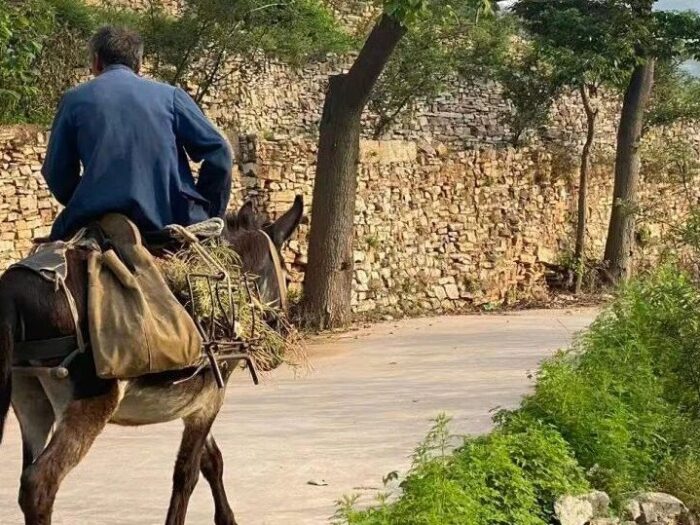
Through Foodthink’s internship programme, a young person came from Shanghai to Wang Jinzhuang, She County, Hebei — spending a month in a Taihang Mountains stone village, from coarse-grain meals to the seed bank, touching the daily rhythms and human warmth of an ancient dryland terraced village.
A month working Sister Yan Ping’s ecological farm, Baicao Garden, Guigang, Guangxi — a few metres from a chemical-fertiliser orchard — gradually set the body to the land’s rhythm: hoeing, carrying water, fire and mountain folk songs in a downpour. April’s heat sent the nature-yearning graduate back to the city.
Foodthink’s three-day co-learning camp (4–6 June, Yangqiao Village, Lianhua County, Pingxiang, Jiangxi), featuring two technical advisors with over twenty years in ecological agriculture, threads soil, plants and animals as theoretical lines through hands-on composting and liquid fertiliser, plus market discussion, for 20 small- and medium-scale ecological farmers.
Can’t do without food delivery, can’t put down the “digital side dish”, going to the market less and less, yet starting to try fermentation — young working people’s predicaments and little tips for eating well, gathered by Foodthink over two years of open calls.
Foodthink ends two weeks of silence as Grain Rain arrives, reintroducing itself to readers: a food and agriculture platform founded in 2017, focused on smallholder livelihoods and the conditions of food and farming workers. This year it turns its focus to women farmers, herders and climate resilience.
Extreme weather upends farmers’ planting rhythms, the food-delivery wars compress a meal into a 30-minute order, and imported meat reaches the highland pastoral areas directly – Foodthink’s 2025 field records hold on to the traces of the land and its labourers.
In a sixteenth-century manor in western France, a 1970s hippie couple sustains self-sufficiency through work-exchange volunteers. A month with a Colombian brother and sister—undocumented workers—picking strawberries, smashing walls, making cheese: the “return to the countryside” romantic imaginings shattered by day after day of unpaid manual labour.
Through Foodthink’s Ecological Agriculture Internship Programme, Jianing came to Yinlin Farm in Conghua. Among hens, goats, rain-thinned maize and old lychee trees planted by the older generation, she relearned to recognise the land and the farmers behind the food.
During three months pulling weeds, catching insects and raising seedlings at Xiqing Farm in Daxing, Beijing, Tianyi—participant in Foodthink’s Ecological Agriculture Internship Programme—came to realise that the moments when body and land are honestly joined are far more precious than the harvest itself.
Through Foodthink’s Ecological Agriculture Internship Programme, Chengzi took root for three months at Lexiangu Community Farm in Fengxian, Shanghai—growing vegetables, repairing roofs, leading goats and feeding ducks, running a market stall—and grew the courage to explore out of her uncertainty about the future.