
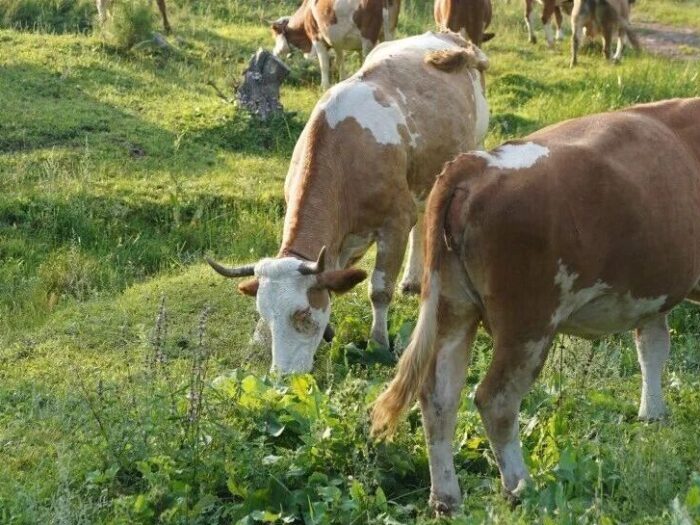
Cattle prices have fallen from thirty thousand to six or seven thousand yuan; cattle-keeping households in Leyi Village, Heshun County, have shrunk from over twenty to three. Gone with the empty cowsheds: hillside dǎo xiē dǎo xiē chatter, walkie-talkie calls, and a newborn calf’s promise.
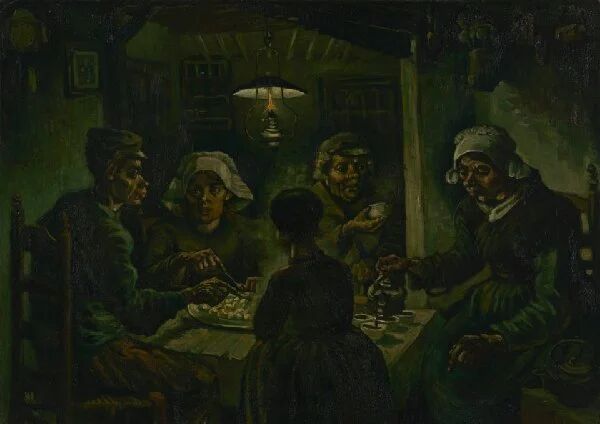
Mercosur and the EU formally signed their free trade agreement after nearly ten thousand farmers hurled potatoes at EU headquarters in Brussels. Grain-price trauma, double environmental standards and transition costs stack up—fairly, who bears the cost of green transition? China’s low-carbon agriculture faces the same question.
The last dish in Foodthink’s New Year recipe collection: Ujimqin sheep from Dulan’s family of Harigobi herders in East Ujimqin Banner, Inner Mongolia, raised through four-season transhumance—clear-simmered with salt alone until the meat is fall-apart tender.
Forty years after dual contracting of grassland and livestock, J village in Qinghe County still has only 92 grassland certificates while pastoral households exceed 200. They sow lucerne on their hay meadows, pay irrigation charges, and buy fodder from farming areas at twice their own harvest before winter.
Gail Borden’s canned condensed milk, Henri Nestlé’s infant milk powder and the transnational competition of the Anglo-Swiss Condensed Milk Company turned perishable fresh milk into an ocean-crossing industrial commodity in the nineteenth century.
A 2023 study by Feng Xiaojun and team at China Agricultural University in a major dairy-farming county in Shandong found family dairy farms surpass large-scale farms on income, import resilience, environment and dairy cow welfare. Smallholder exclusion by dairy processors stems from unequal bargaining power; policy and organisation must combine.
The melamine incident was not the fault of small dairy farmers, nor are large pastures necessarily safer at the production, distribution, and processing stages. With residents’ protein intake already adequate, the nutritional gap between the two types of milk is negligible.
Lamb prices have slumped for years and imported frozen meat has flooded the market, trapping generations of Qinghai Lake herders in revolving debt: some sold their yaks at a pittance to deliver food in town; others carry 200,000-yuan loans, hoping each year for sheep prices to rebound.
At the World Nomadic Film Festival in Jiagedaqi, young filmmakers including Aolunna, Jiao Xiaofang and Tong Cheng used angles such as the Camel Culture Festival, the imported meat market and the severing of Mongolian, revealing how the contract-like bond between people, livestock and the grassland is fraying.
In Britain’s world food system, class and race determined who could eat their fill, famine was “outsourced” to Ireland and India, and industrialised slaughter hid its violence at “the end of the earth”.


