Brazil’s smallholder farmers are breaking free from pesticides and chemical fertilisers, moving towards agroecology, while consumers drive change back to the production end. Experienced food and farming practitioner Bia Goll from São Paulo shares twenty-plus years of practice. Saturday, 12 September, afternoon – Beijing in-person + online livestream.

Heilongjiang permits orderly burning, yet Hebei farmers remain unaware: ‘Start a fire and they’ll detain you.’ After over a decade of straw return in Quzhou and Fengfeng Mining District, poor emergence, more pests, rising spray costs draw one shrug: “Not a big deal” — yet they’d far rather burn.
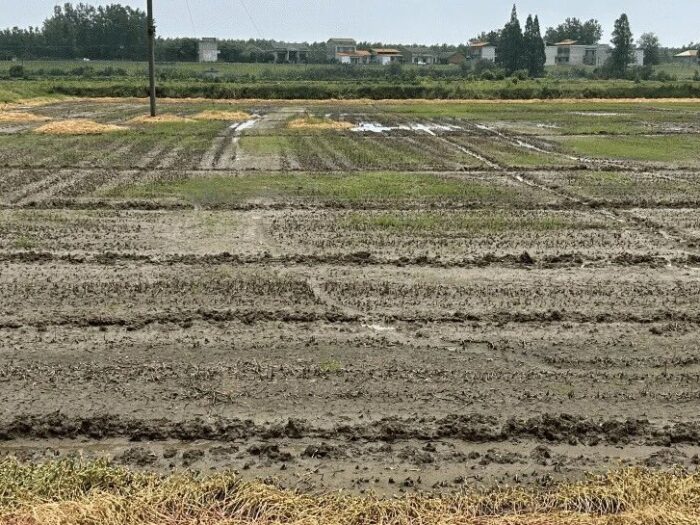
After the straw-burning ban, rice farmers in the Dongting Lake area of Hunan paid an extra 60–80 yuan per mu for straw shredding, rotary tillage and pesticide spraying — yet the rice stem borers overwintering in rice stubble have grown more numerous year on year.
Half-buried in frozen ground, plastic twine waits for spring; clear one layer of IV tubes and fragments and another surfaces, mixed with the soil, to be picked out one by one between fingertip and thumb. Harder to bear than farming is this land’s plastic that cannot be cleared.
Author of The Vanishing Bees, Professor Lü Chensheng of Southwest University, begins with Colony Collapse Disorder at a Foodthink talk, discussing the ecological and health risks of pesticides entering the food chain from seeds, and seed companies’ influence on agricultural policy. 31 May afternoon, Beijing + online.
Experiments by Harvard professor Chensheng Lu, beekeeper Kenneth Walhol and entomological toxicologist Richard Callahan confirmed that low doses of neonicotinoid insecticides enter soil, water and the food chain through seed coating, causing entire bee colonies to vanish and ultimately reaching human dinner tables.
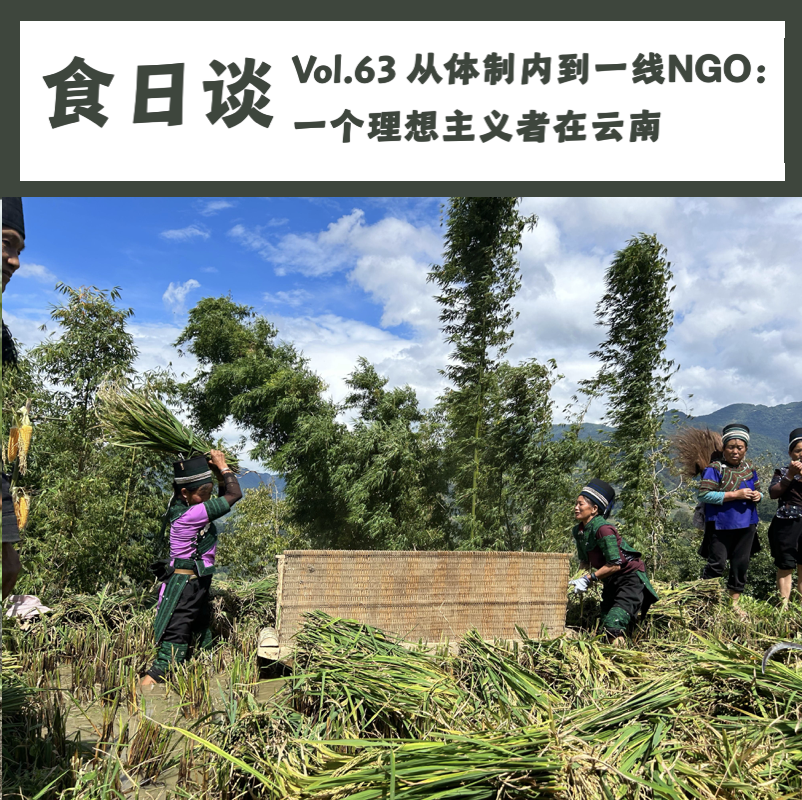
Leaving the public sector, Zuo Zhi, a post-1985 generation member, dove into Yunnan’s villages, teaching farmers to use fewer pesticides and grow heritage rice varieties, trading a cup of liquor for their trust, and building a bridge between government and the fields for climate-friendly agriculture.
Yu Jiangang and his wife Mei Yuhui made silk duvets in Zhenghebang for over a decade. An osmanthus silkworm poisoning in autumn 2024 led him to lease 14 mu of rice paddies – from seedling to Lidong harvest, four rounds of hand-weeding, a nearly 180-day life cycle complete.
The large-scale monoculture of the Plantationocene has dismantled ecosystems and rural communities, yet the traditions of care in the Qimin Yaoshu and Xu Guangqi’s Nongzheng Quanshu suggest that “non-plantation” farming can still become imaginable once more.
From Beijing to Yunnan, the practice of more than a dozen ecological farms across the country shows that weeds are not enemies to be conquered but partners in mending soil and building ecology; how weeds are managed reveals the fundamental difference in how farmers relate to nature.