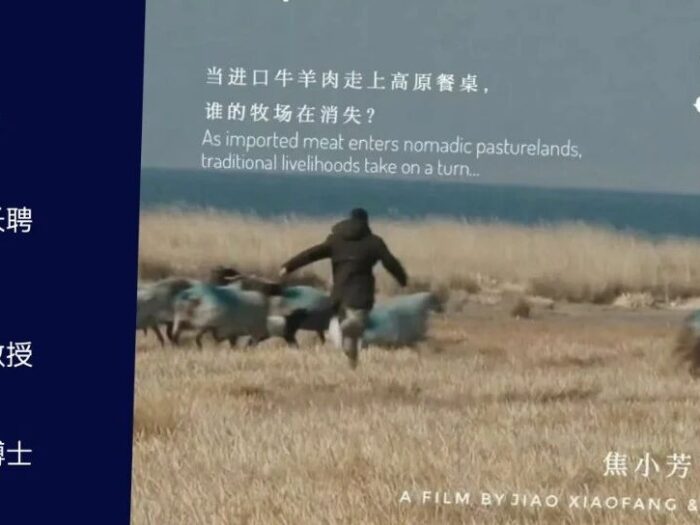
The award-winning documentary Whose Table, Whose Pasture documents the reality of plummeting cattle and sheep purchase prices and damaged livelihoods among herders after imported frozen meat flooded Qinghai’s markets. It will be screened at Zhejiang University on 12 June, followed by a discussion between food systems scholars and the audience.
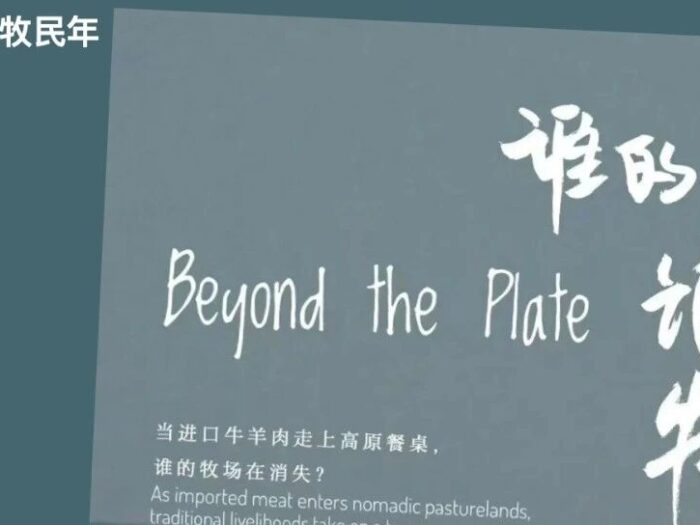
Foodthink will screen the documentary Whose Table, Whose Pasture in Ürümqi, documenting the livelihood impact on herders around Qinghai Lake after imported frozen meat flooded the market. After the screening, local Xinjiang organisations and guest speakers will discuss pastoral and herder issues.
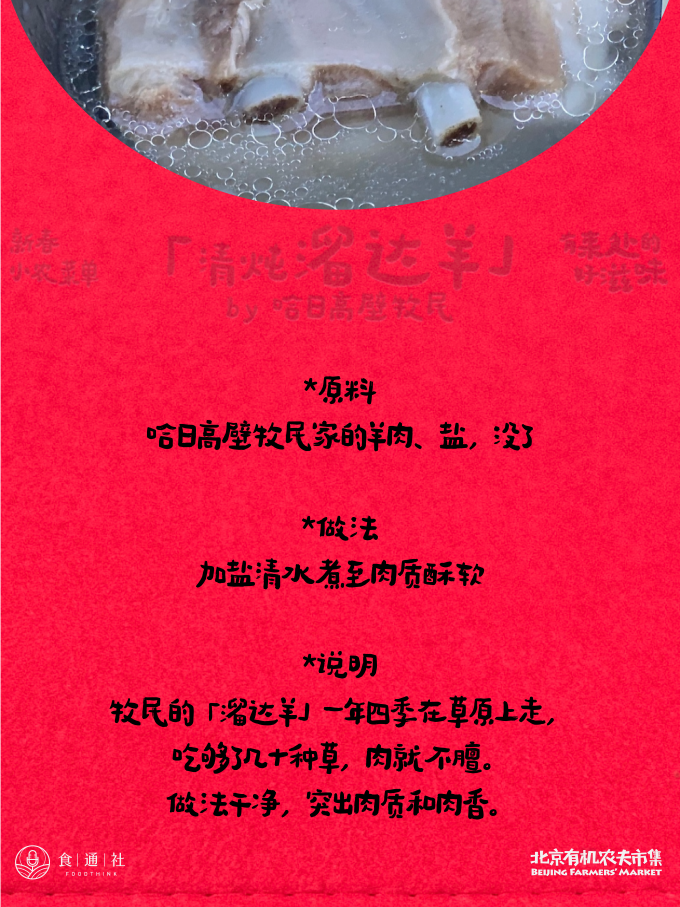
The last dish in Foodthink’s New Year recipe collection: Ujimqin sheep from Dulan’s family of Harigobi herders in East Ujimqin Banner, Inner Mongolia, raised through four-season transhumance—clear-simmered with salt alone until the meat is fall-apart tender.
Forty years after dual contracting of grassland and livestock, J village in Qinghe County still has only 92 grassland certificates while pastoral households exceed 200. They sow lucerne on their hay meadows, pay irrigation charges, and buy fodder from farming areas at twice their own harvest before winter.
Saturday 7 February: eight Foodthink members take over Jishi, the community veg shop at Sanyuanqiao, swapping writing for veg selling. Join us in person or online for a year-end report, food and agriculture sharing session, Chinese New Year live shopping, and a film screening with lamb soup dinner.
Lamb prices have slumped for years and imported frozen meat has flooded the market, trapping generations of Qinghai Lake herders in revolving debt: some sold their yaks at a pittance to deliver food in town; others carry 200,000-yuan loans, hoping each year for sheep prices to rebound.
At the World Nomadic Film Festival in Jiagedaqi, young filmmakers including Aolunna, Jiao Xiaofang and Tong Cheng used angles such as the Camel Culture Festival, the imported meat market and the severing of Mongolian, revealing how the contract-like bond between people, livestock and the grassland is fraying.
On World Rainforest Day, Foodthink has compiled over a hundred reader comments via Jieshengzhi on “Fake Meat” Drives Out the Real Thing: from “Brazil’s deforestation has nothing to do with us” to “Forest-burning concerns every creature”, laying bare the full consumer-side divide over imported beef’s environmental cost.
Gannan herders call imported grain-fed meat “fake meat,” yet with local yak prices steadily falling since 2020 — a single adult yak fetches just over 6,000 yuan — many are forced to buy “fake meat” themselves.
Research Fellow Wang Xiaoyi (Institute of Sociology, Chinese Academy of Social Sciences) unpacks the contradiction between pasture-fattened yaks that “can’t fetch a fair price” and local meat that herders “can’t afford”. After marketisation “disembedded” beef and mutton from pastoral life, he asks how to “re-embed” them into the community.