This Saturday: Join Us in Ürümqi for a Film | Screening Event
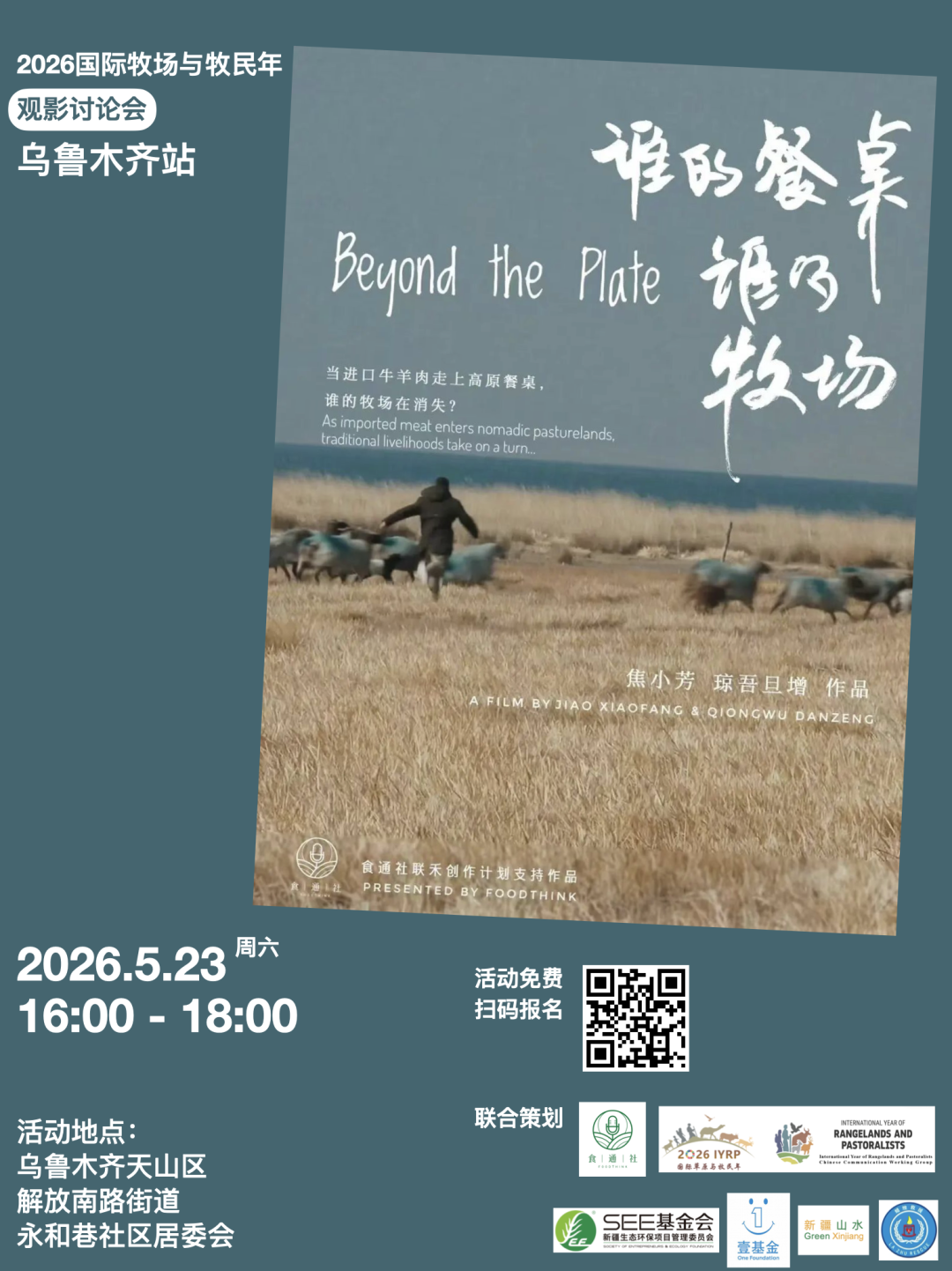
This year marks the United Nations’ International Year of Rangelands and Pastoralists. To help more people understand pastoral areas and the herders who live there, the field-research documentary Whose Table, Whose Pasture, supported by the Foodthink Lianhe Creative Programme, will be screened on the afternoon of 23 May in Ürümqi. Local Xinjiang organisations, institutions and guest speakers have been invited to share their insights and engage with the audience.
The documentary Whose Table, Whose Pasture grew out of field research in the pastoral areas around Qinghai Lake, documenting the impact on herders’ livelihoods and way of life as cattle and sheep prices fell persistently and imported frozen meat flooded the market. Are similar changes already under way in the pastoral areas of Xinjiang? As China’ s second-largest pastoral region, Xinjiang has long faced challenges of rangeland degradation, industrial transformation and other ecological and developmental pressures. Both are pastoral lands, both are home to herders – so how do the changes and challenges they each face compare?
A pastoral area is more than simply somewhere to graze animals – it is a nexus connecting grassland ecology, the local economy and the everyday lives of herders. When we talk about pastoral areas and herders, the difficulties faced in different places may not be identical, but all of them deserve to be seen and discussed. Foodthink hopes this will be an opportunity for us to turn our attention together towards our pastoral areas and herders.
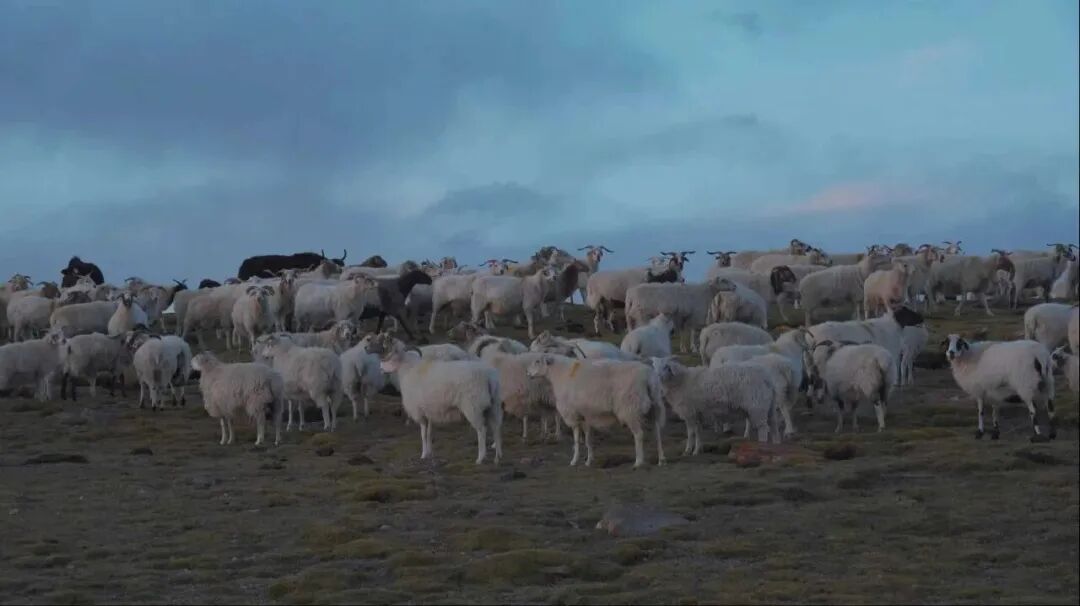
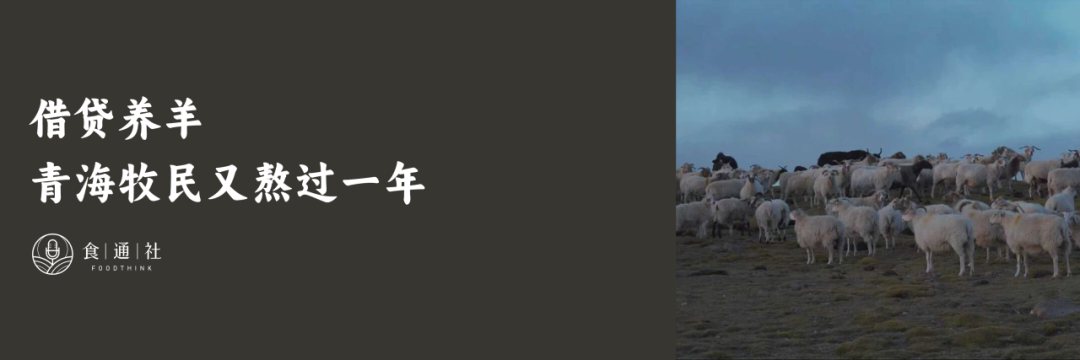
◉ The flock belonging to Niangejia, one of the protagonists in Whose Table, Whose Pasture. Photo: Jiao Xiaofang
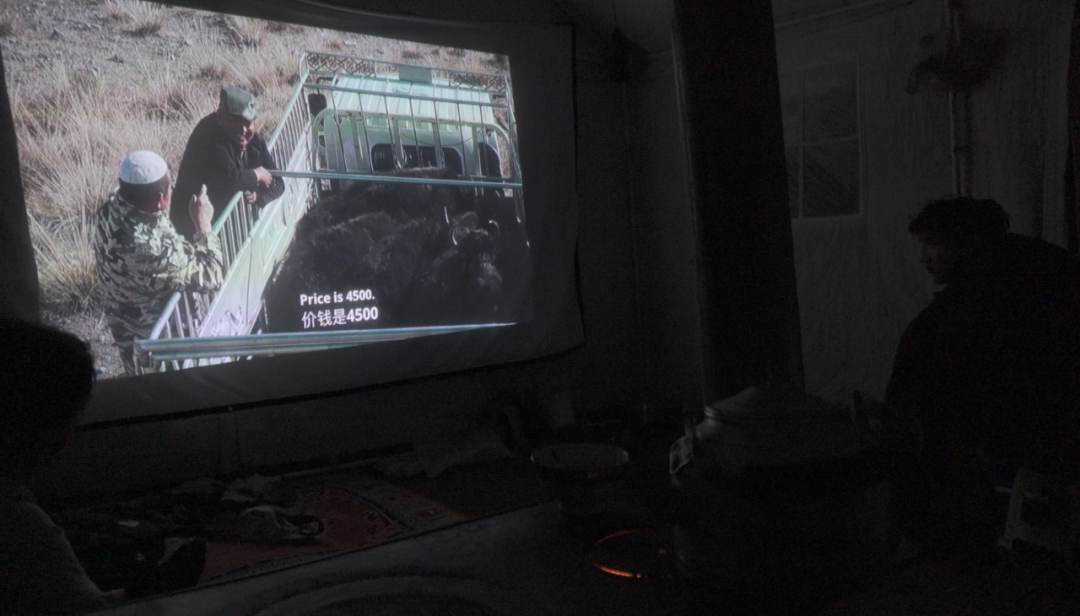
◉ Follow-up visits are an important part of community video work. In 2025, Jiao Xiaofang returned to the filming locations to screen Whose Table, Whose Pasture for the shepherds. Photo: Jiao Xiaofang
The questions Whose Table, Whose Pasture raises go beyond “Where does the meat come from?” or “Where does the meat on your plate come from?” When imported meat floods the market, who is truly bearing the pressure? Who is paying the price for this table?
This Saturday at 16:00 (23 May), Foodthink will bring the documentary Whose Table, Whose Pasture to a screening at Tianshan District, Ürümqi, Jiefang South Road Sub-district, Yonghe Lane Community, inviting local friends to join us in watching this film.
After the screening, local organisations and institutions, along with guest speakers and teachers familiar with pastoral and herder issues, will join us for a sharing session and discussion.
– Film Synopsis –
Whose Table, Whose Pasture is a field-research documentary. Supported by the Foodthink Lianhe Creative Programme, the director went deep into the pastoral areas around Qinghai Lake, documenting the impact of large quantities of imported frozen beef and mutton entering local markets.
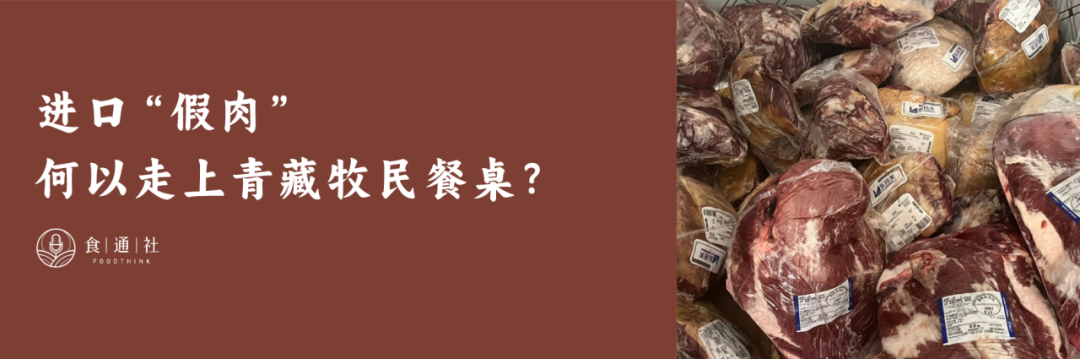
The film follows visits to frozen wholesale markets and cold-chain warehouses in Xining, and films local herder families, butcher shops and fattening farms, offering a frank portrayal of the shock that low-priced imported meat has inflicted on local beef and mutton. This has directly led to sharp drops in the prices herders receive for their cattle and sheep, reduced incomes, difficulty repaying loans, and razor-thin margins for local meat traders struggling to stay in business.
The camera delves into the imported beef and mutton markets around Qinghai Lake to confront a harsh reality: in the globalised meat supply chain, who enjoys the low prices, and who bears the cost?
– About the Directors –
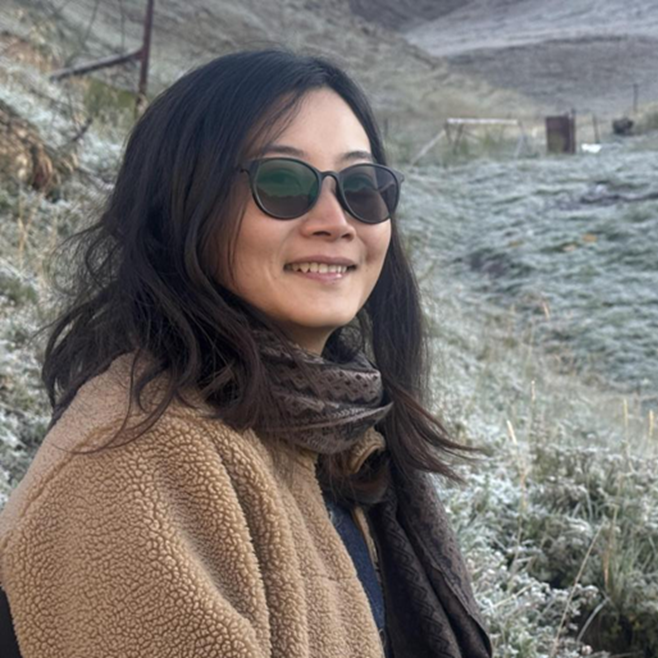
Jiao Xiaofang | Documentary filmmaker and researcher in visual anthropology, with a longstanding focus on local knowledge, ecological ethics and women’s experiences across western China and coastal Southeast Asia. Her work combines ethnographic observation with poetic expression, exploring the relationship between people and nature and the emotional landscapes of everyday life. The documentary Whose Table, Whose Pasture (2025) was selected for the fifth World Nomadic Film Festival and the sixth China Ethnographic Documentary Film Festival.
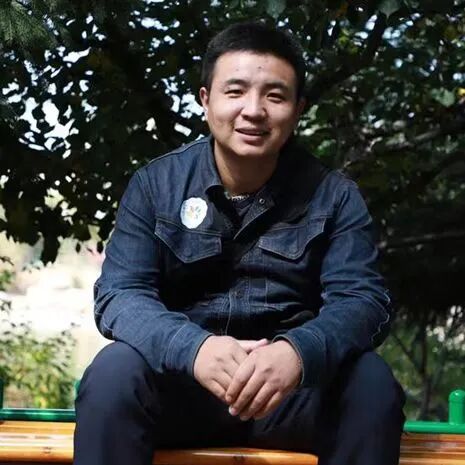
Qiongwu Tenzin | Tibetan documentarist and community activist, committed over many years to ecological conservation and audiovisual education on the Qinghai-Tibet Plateau. Former coordinator of the Tibetan-areas programme at Yunnan’s “Rural Eye” initiative and regional representative for the Alashan SEE Sanjiangyuan Project Centre, he currently heads the Human-bear conflict project at the Qinghai Xuejing Centre for Ecological Communication, Education and Research. Over the past decade he has promoted herder video training and community ecology projects in Yushu, Aba and other areas, empowering herders to document their own environment and culture through film. His work spans video, ecology and public education, building understanding and coexistence between people and the natural world.
– Organisers –
– How to Participate –
[Time]
Saturday 23 May 2026, 16:00–18:00
[Venue]
Jiefang South Road Sub-district, Tianshan District, Ürümqi
[Registration]
Scan the QR code on the poster to register
▼
Click the image to read related articles