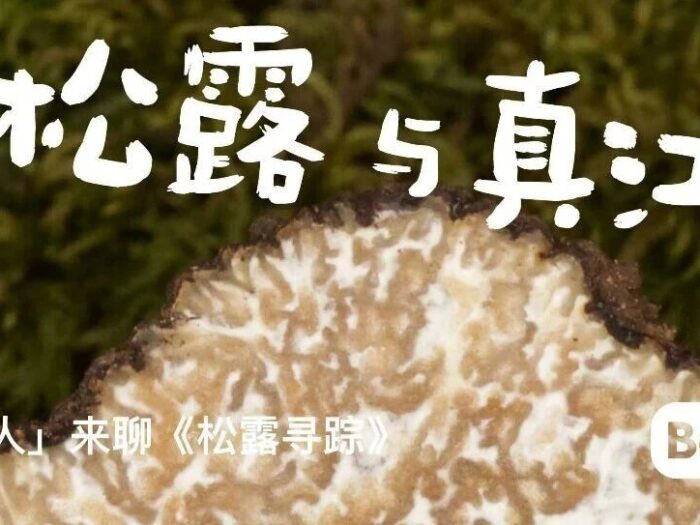
In 1998, Italian truffle giant Urbani Tartufi had 47 tonnes of Chinese truffles seized, having long blended them into black winter truffles for profit. On 29 September, Kunming Institute of Botany mycologist Yu Fuqiang and Yi returnee farmer Kang Li discuss online Chinese foragers’ plight under climate change.

Marius Korsnes (Ma Li) and his NTNU team investigate the salmon, dairy and live-pig industry chains across borders, arguing that China’s animal protein consumption follows a logic of construction distinct from the West—plant protein has not been displaced, while farming’s resource costs have been “outsourced” overseas.
How a pig is raised, why riders race against the clock – once you know, some people genuinely can’t bring themselves to buy it any more. We’d love to hear the inner conflict behind those “I don’t want to keep buying this” moments, and that little sense of “morality”.
From Wiley’s 1902 recruitment of twelve men to prove the harm of formaldehyde and borax on their own bodies, to van Tulleken’s 28-day Ultra-processed Food experiment, food additive safety boundaries remain unsettled after a century—and cumulative effects of legal additives go unassessed.
Author of The Vanishing Bees, Professor Lü Chensheng of Southwest University, begins with Colony Collapse Disorder at a Foodthink talk, discussing the ecological and health risks of pesticides entering the food chain from seeds, and seed companies’ influence on agricultural policy. 31 May afternoon, Beijing + online.
In 1922, eight tourists died from Clostridium botulinum in duck pâté at Loch Maree, Scotland, and panic spread. Microbiology and market forces converged: corporate advertising, hygiene certification and the Pure Food and Drug Act combined to push home fermentation, step by step, out of the kitchen.
Working part-time as a Picker at Xiaoxiang Supermarket: three minutes per order, pay based on “effective working hours”, and continuous sprinting between the sub-zero freezer and tall shelving units. Mis-picks and omitted items are inevitable structural problems under this speed regime.
Oyster sauce, crisps and salad dressings all hide sugar – eighty per cent of supermarket shelves can’t do without it. Excess fructose converts to fat in the liver, driving the fatty liver → diabetes → heart disease chain; children are steeped in sugar from an early age.
Saturday 7 February: eight Foodthink members take over Jishi, the community veg shop at Sanyuanqiao, swapping writing for veg selling. Join us in person or online for a year-end report, food and agriculture sharing session, Chinese New Year live shopping, and a film screening with lamb soup dinner.
Grandma Kouzi at Villain’s Valley in Fujian harvested over a hundred pumpkins and over a hundred jin of beans, grains and peanuts in 2025—full food self-sufficiency except salt. A single batch of air-fryer roasted pumpkin sustains a day’s staple food.