
How can young people eat well? | May Fourth Special
Happy Youth Day to all our young friends!
People often say that young people are the most proactive, dynamic, vibrant, and idealistic group. Yet in reality, most young people are simply wage earners hustling to make ends meet.
In this busy, ever-accelerating era, over the past two years, Foodthink has been engaging with young people through a call for stories on how to eat well. Many have shared their personal reflections and observations on the challenges of daily meals: some have analysed why their work routines make it so difficult to break free from delivery food; others have highlighted the inherent link between takeaways and digital side dishes (screen entertainment paired with meals); some have sought out community canteens and small eateries tucked away in city corners; others have discovered that fermented foods can help ease constipation; and some, confronted with meals wrapped in plastic, have reflected on how their own lifestyles intersect with the planet’s ecosystems…
How can young people eat well? What dilemmas do we face, and how might we bring about change? We have gathered these reflections and accounts here. While their focal points range from broad to specific, most resonate with the everyday realities and feelings commonly encountered in young people’s lives.
Moving forward, Foodthink will continue to follow young people’s eating habits. What other mealtime challenges do you think young people are grappling with? Or perhaps you have tips and advice to share on how to eat mindfully? We welcome your thoughts in the comments below. Wishing all our young readers the very best in nourishing themselves and living well.
Why is this generation of young people so reliant on food delivery?
With China’s food delivery platforms boasting up to 535 million users, young people form the backbone of this order volume. But why is it that when it comes to mealtimes, young people simply cannot do without delivery? Are you facing a similar predicament?
As an editorial team that steadfastly avoids ordering delivery, these submissions struck a deep chord with us. To the platforms, delivery is merely a business transaction; yet for ordinary young people navigating the complexities of modern life, it is inextricably woven into their daily routines. What resonated most strongly with young workers was the fact that a third of readers independently highlighted the direct link between ordering delivery and the pressures of work and life.
At the same time, there is a growing realisation that trapped within the system are not only riders’ rights, but also consumer health issues stemming from meals heavy in oil and salt. Coupled with this are the “anxiety”, “guilt”, “resentment”, and “an emptiness that food cannot fill” that often accompany ordering delivery. These are the quiet, often unspoken emotions of young people, carefully articulated and shared in this space.

◉Click the image to read the full discussion and everyone’s contributions.
A long-standing dilemma for young workers
How to eat without relying on delivery? This seems to be a question that has long plagued young workers, yet remains largely unexplored. Many admit that while they may occasionally tire of ordering in, factors like relentless work schedules, novice cooking skills, or basic kitchen setups mean that many young people still struggle to break free from delivery altogether.
Fortunately, the power of crowdsourced wisdom knows no bounds. Young people from all corners have enthusiastically shared their personal tips for eating mindfully, compiling them into a practical, efficient ‘dining playbook’. Some focus on small, individual adjustments: dining at community canteens and local eateries, designing simple recipes suited for weeknights, preparing homemade pre-made meals, or packing their own lunch. Others feel that ‘cooking alone is just too much hassle’, so they team up with a buddy to take turns in the kitchen. A few go straight to the source, growing their own vegetables to ensure they can nourish themselves properly.
How practical do you find these dining approaches?
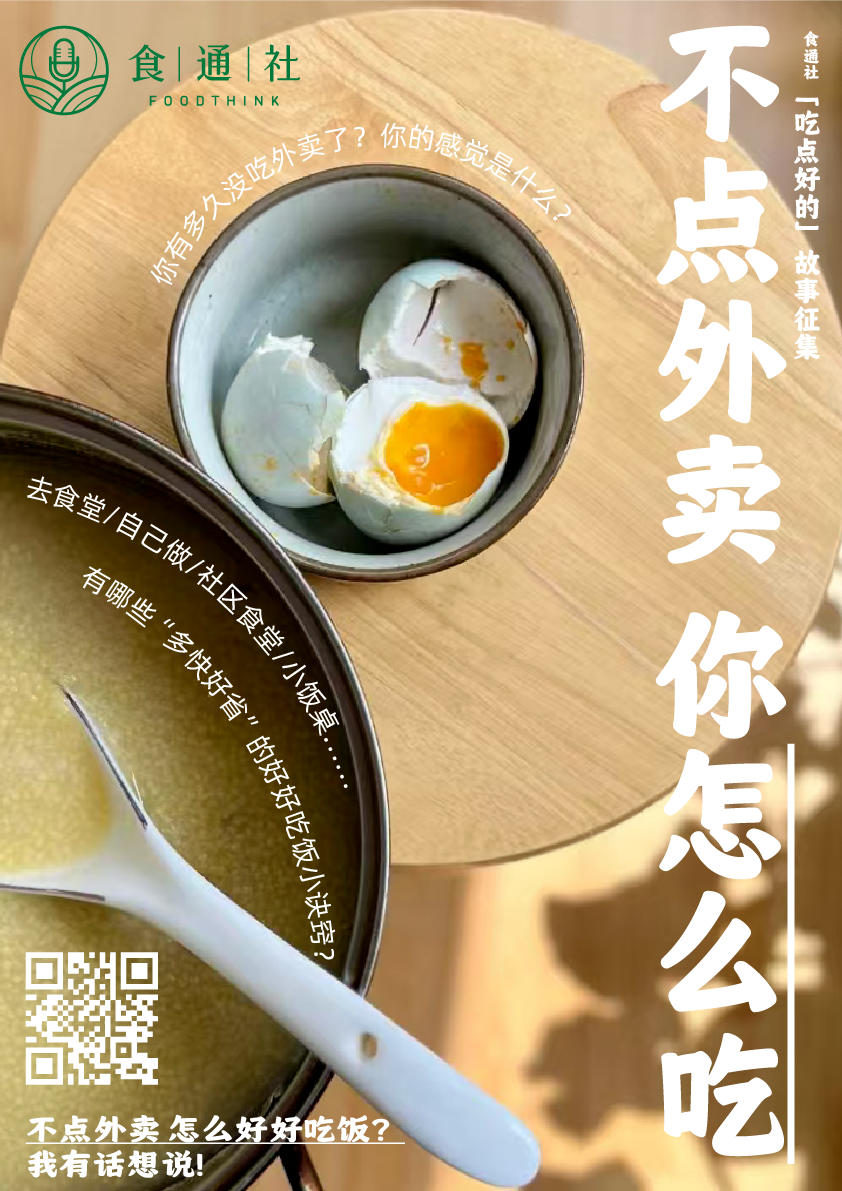
◉Click the image to view the detailed discussions and see what others are sharing.
Are digital side dishes the antidote to loneliness for young people?
Digital side dishes have become an indispensable part of contemporary young people’s diets. But why do we feel we need them?
Some readers suggest that it is precisely the desire to eat mindfully that drives them to turn to ‘digital side dishes’ to bring more flavour to a meal. Others, however, point out that they may not actually help dispel negative emotions, and can even cause people to overlook the true taste of their food.
Research has already shown that being glued to screens while eating can increase total calorie intake by 15%, and may also lead to digestive issues, indigestion, and nutritional imbalances. Perhaps we should now take the ‘digital side dishes’ phenomenon as a prompt for serious reflection: in a modern society where loneliness and constant acceleration coexist, what does it truly mean to eat well? And how can we actually achieve it?

◉Click the image to view the detailed discussions and shared contributions.
When Young People’s Food Is Trapped in Plastic Packaging
Young people’s everyday meals are saturated with excessive plastic packaging that clings to food and spreads unchecked. Faced with layers of plastic wrapping takeaways, vegetables, and pastries, alongside the packaging for all kinds of ultra-processed foods, many certainly complain, but most are left feeling baffled and at a loss for words: “I didn’t ask for all this extra plastic, so why is it still here?”
For years, our throwaway culture has locked humanity and plastic into a toxic yet inescapable relationship. Whether plastic packaging is tossed in the bin and ends up in landfills or incinerators, or scatters across mountains and oceans before circling back to our dinner tables through the food chain, it inflicts severe harm on both people and the natural world. Ultimately, the only real solution is to cut plastic consumption at the source.
What other examples of excessive plastic packaging have you come across? We’d also love to hear your tips and experiences on recycling or cutting down on plastic in the comments below.

◉Click the image to see everyone’s more detailed discussions and contributions.
How long has it been since you visited a local fresh market?
A local market offers far more than just fresh produce; it immerses you in a way of life woven together through food, making it one of the most vibrant and lively spaces around.
As a young person, do you still visit your local market regularly? Even in this fast-paced era, we continue to receive numerous reflections from young readers about their experiences there. Whether in major cities or smaller towns, at home or overseas, no matter how far afield, people’s lives remain intricately tied to the market in countless ways.
Some envision the market as the next hub for the “20-minute city theory” (the concept of accessing daily essentials within a short walk), while others still view it as a dirty, chaotic, and poorly maintained place. These overlapping perspectives, old and new, neither fully capture the complete experience of a local market. Meanwhile, the market quietly endures in a city corner, intertwined with the weight of daily livelihoods, breathing the steady rhythm of everyday life.
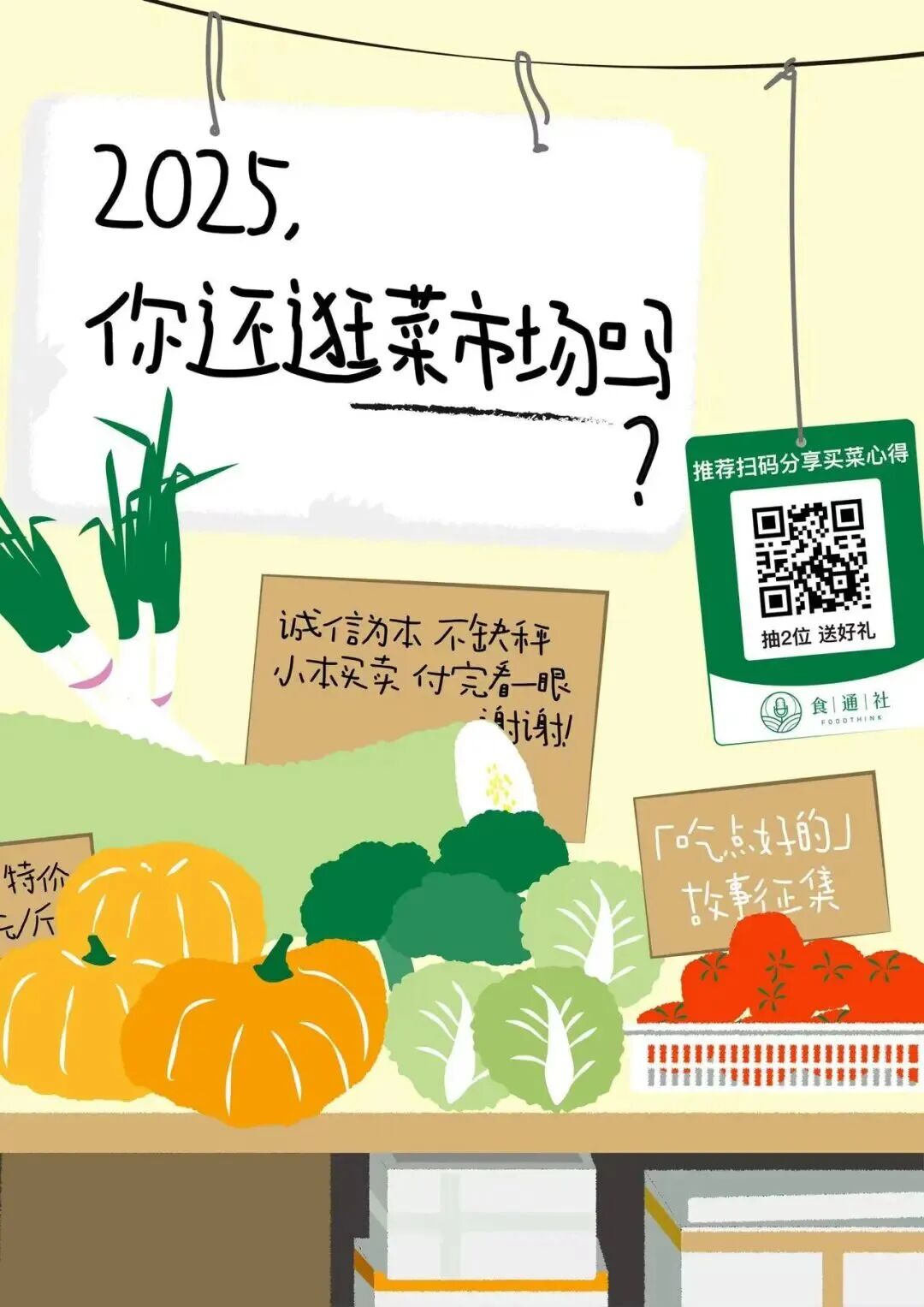
◉Click the image to view the detailed discussions and shared reflections.
When Young People Start Learning About Fermentation
While we wrestle with whether to cook for ourselves or head to the wet market, some young people have already begun experimenting with fermentation. At its core, fermentation is an interactive process driven by human intervention between microorganisms and their specific surroundings. Among various cooking methods, preparing fermented foods is particularly adept at sharpening our sensory awareness of both ingredients and the physical environment.
Fermentation is more than a culinary technique; it is a way of life. Many young people have embraced it as a new approach to eating properly while navigating city living, yet it remains deeply rooted in regional terroir and tradition. A jar of northeastern suāncài (fermented cabbage) might soothe an international student’s (liúzi) homesickness; sharing a kombucha starter culture keeps friendships alive; and just as pickling recipes are passed down through generations, so too is the brine itself.
Guizhou’s jǔqǔ (ferment starter) and suāntāng (sour soup), northeastern pine nut maltose sweets, Kunming’s eggplant zha, Shanxi’s tóunǎo (herbal broth), Jiangxi’s steamed rice cakes, Hunan’s chopped chilli… Have you tried any of these? If you have more fermented foods to recommend, please share them in the comments. Let’s work together to keep refining this *Guide to Fermented Foods Across China*.
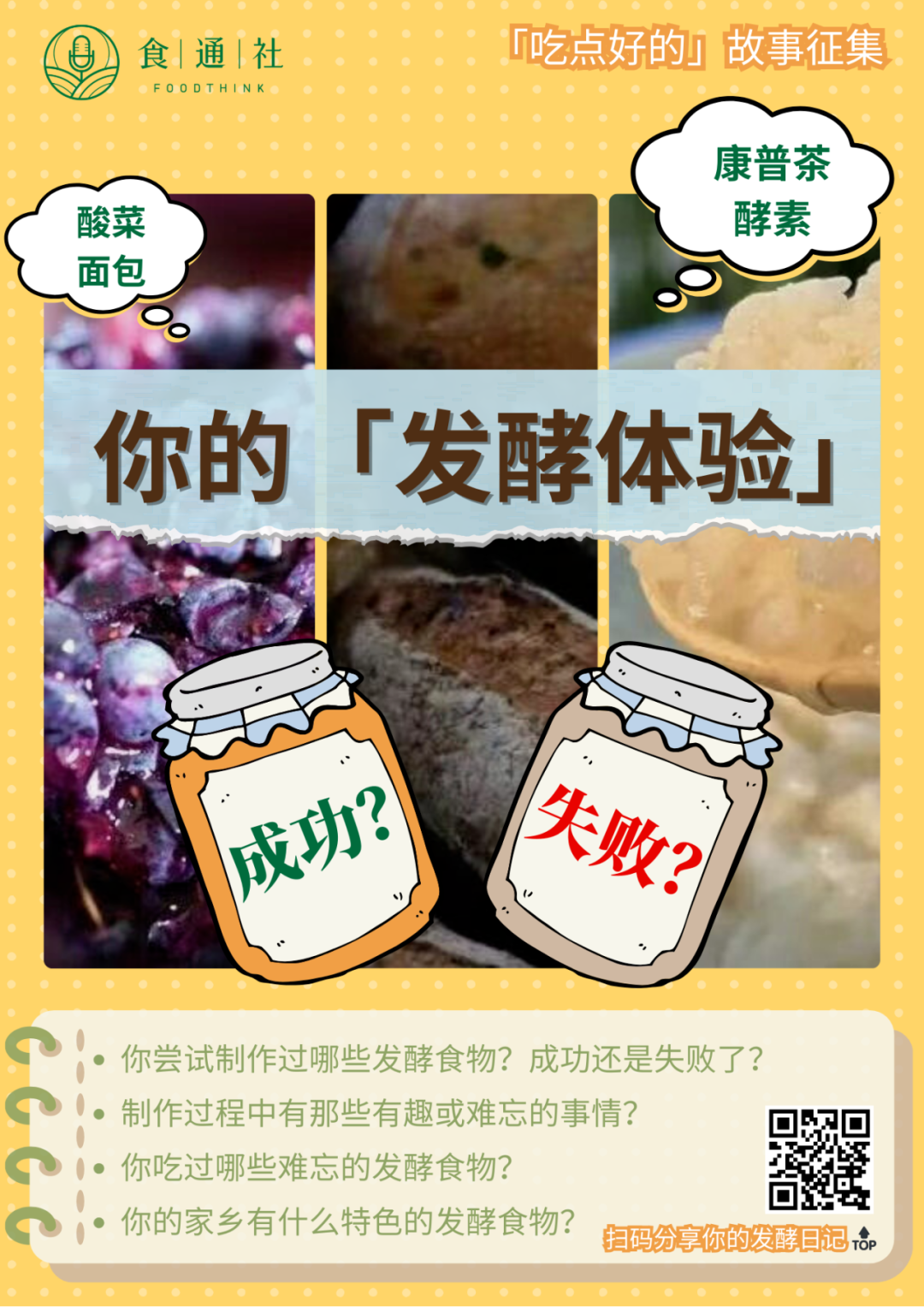
◉Click the image to view the detailed discussions and shares.
Compiled by: Yuyang
Poster design: Zhou Xuan, Li Ye, Kai Rui