
We Brought in 20k Selling Veg in a Day—Then Tearfully Ate 2k of It Ourselves…
On 7 February 2026, after a two-year hiatus, “Occupying the Collective Room” returned, successfully evolving into the Foodthink Annual Meeting. Over the course of 12 hours, we used selling vegetables as a hands-on way to immerse ourselves in the food and farming system. Eight Foodthink members traded their roles as consumers for shop floor experience, stepping into a real-life “vegetable shop simulator” and taking on the challenge of hitting 20,260 yuan in daily sales.
We also lined up a series of fitting activities for the day: the editorial team’s year-end wrap-up, a dialogue with sellers of ecological produce, Foodthink’s debut live-streaming sales session, and a lamb soup screening. Thank you to everyone who supported us in person and followed along online. If you missed out on the buzz, check out the event round-up and live stream replay below 👇



To pull off a successful “debut” on 7 February, we spent the past few months undergoing 48 hours of professional training. The occupation initiative has now wrapped up: did we meet the sales challenge? What hurdles did our members face, and what reflections did they take away? As the Year of the Snake winds down, come savour the vegetable-selling insights from these eight new and veteran trainees~
I. Sold 20,000, Ate 2,000
I never miss a chance to boast about professionally selling vegetables for ** years (nearly 16 this year!). Yet since I shifted my focus to Foodthink back in 2017, I’ve spent far less time on the front lines, whether at farmers’ markets or community shops. The only exception was during the pandemic years, when I’d sell a few times a week to facilitate collective buying and let our community members shop “contactless” (what a delightfully archaic phrase!). As a result, my trade has grown distinctly rusty. Each year, I rely on teaming up with Foodthink to “take over the community hall” and refresh my skills with a proper practice run.

I never miss a chance to boast about professionally selling vegetables for ** years (nearly 16 this year!). Yet since I shifted my focus to Foodthink back in 2017, I’ve spent far less time on the front lines, whether at farmers’ markets or community shops. The only exception was during the pandemic years, when I’d sell a few times a week to facilitate collective buying and let our community members shop “contactless” (what a delightfully archaic phrase!). As a result, my trade has grown distinctly rusty. Each year, I rely on teaming up with Foodthink to “take over the community hall” and refresh my skills with a proper practice run.
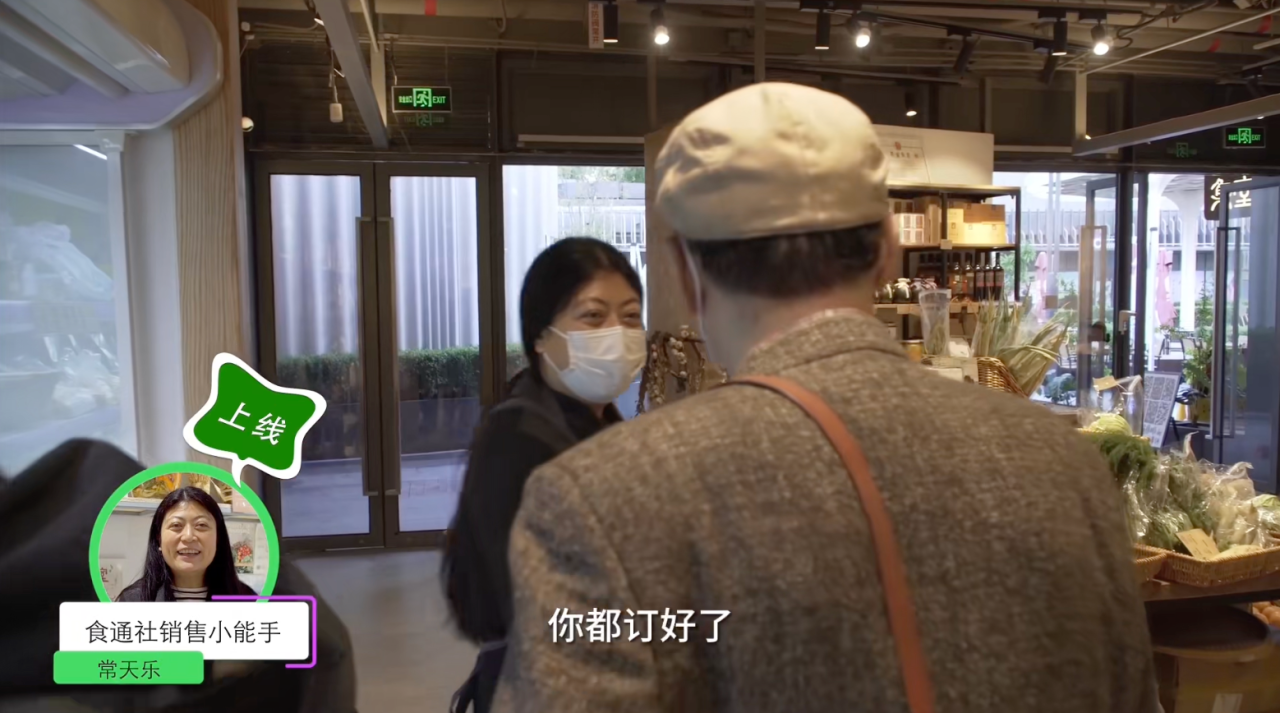
In 2025, Foodthink welcomed a batch of new colleagues. None of them really came with a strong food or agriculture background; indeed, when it came to cooking or shopping, they often couldn’t tell you which vegetables were in season. Even our only colleague with a few years’ experience as an agricultural journalist openly admitted to knowing very little about food. So, in the three months leading up to the “Community Room Takeover”, each team member began a series of staggered 48-hour “apprenticeships” in the space. I hoped everyone would use this experience to grow familiar with food, connect with more farming friends, serve customers directly, and see how an “alternative” vegetable shop actually runs. More importantly, they could mine ideas for commissioned writing and research projects from real-world encounters, rather than just sitting in an office, overthinking and tapping away at a keyboard.
When the day of the “Community Room Takeover” finally arrived, I was genuinely thrilled to see that our crew of amateur greengrocer trainees were surprisingly competent. Hiccups certainly arose, but we navigated every one without incident. We even managed to whip up two substantial meals, feeding ourselves while also hosting friends who dropped by to visit and attend our events. Most delightfully, just before closing, we realised we had not only shattered all previous sales records for the “Community Room Takeover”, but also smashed the modest revenue target we had set for ourselves: It’s 2026, after all, so we turned over more than 20,260 yuan! Yet a careful review of the accounts showed we had spent nearly 2,000 on food alone. Well, what can you do? We simply ate too well!
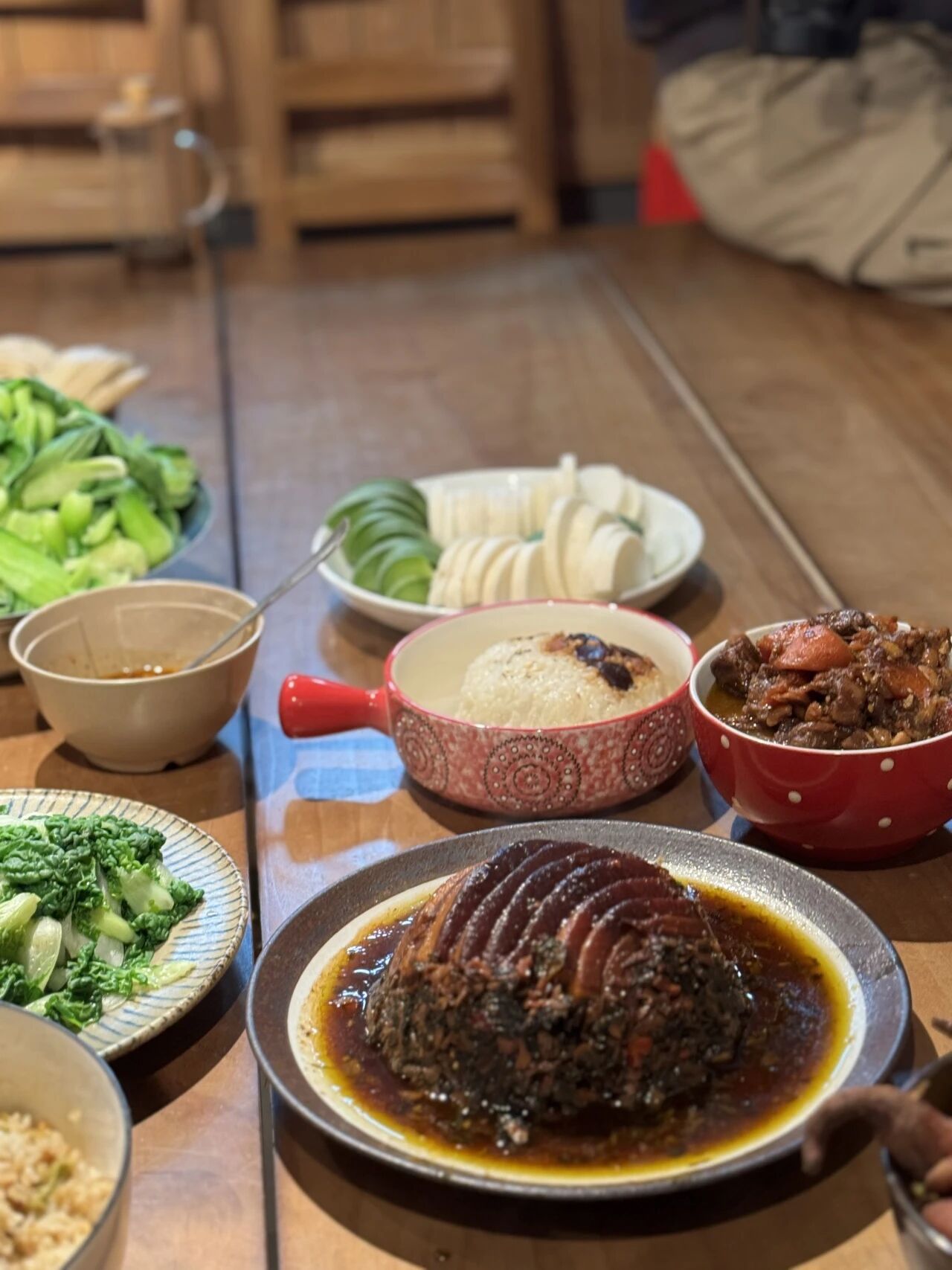
II. The Service Industry Is Truly Grueling!

I never anticipated that on this day of Occupying Jishi, the first hurdle I faced would turn out to be receiving stock.
Receiving stock involves logging the day’s fresh produce and other goods on an intake sheet, which the cashier then inputs into the system. I had assumed that with 48 hours of prior work experience under my belt, I would be quite adept at this routine.
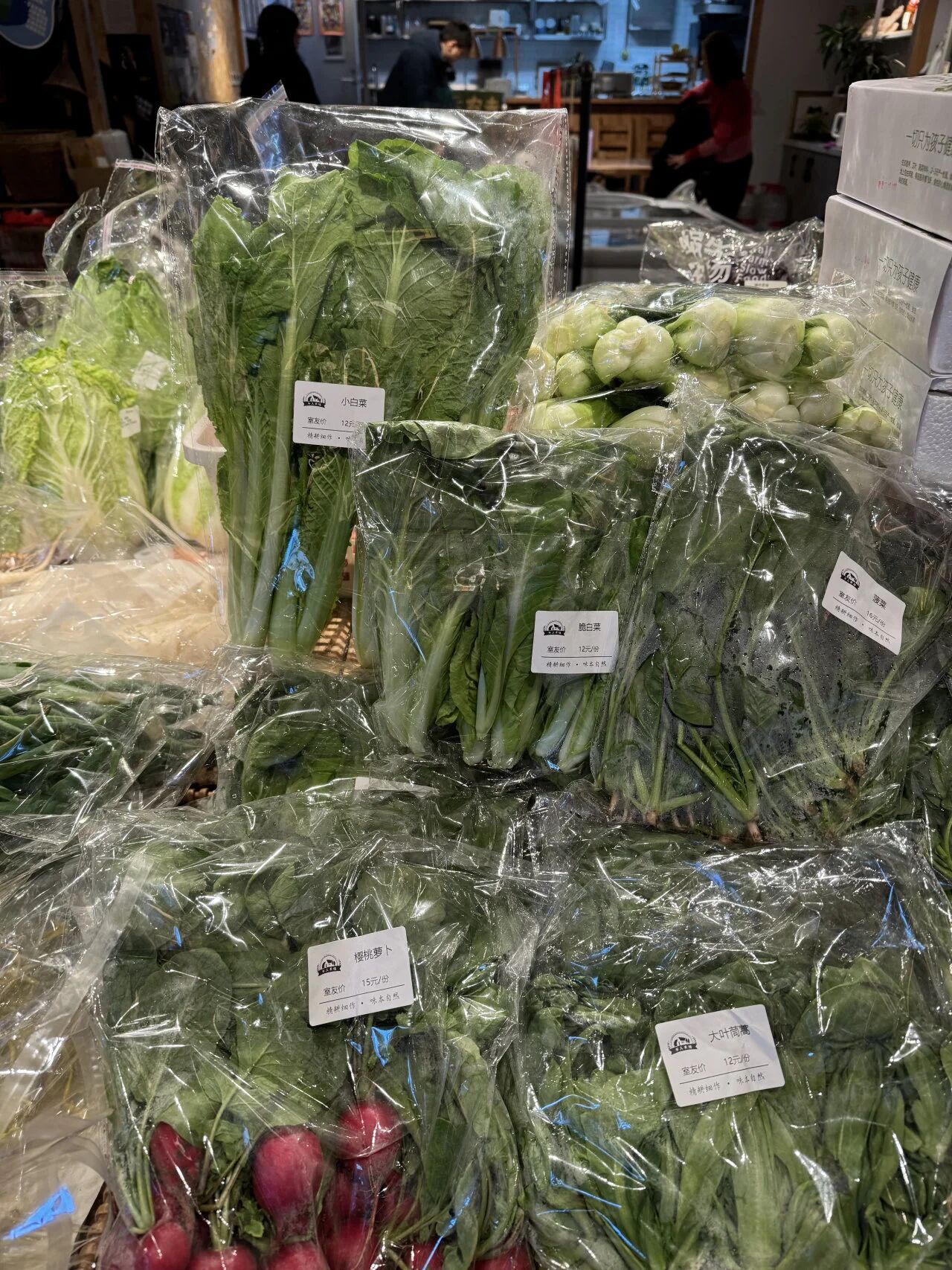
Yet, upon arriving at the store on 7 February, the vegetables from Xiaoliushu were already waiting. Those from the North tend to have an inherent disadvantage when it comes to leafy greens… Staring at the bags of produce, I was completely baffled. Was this spinach or komatsuna? Fortunately, I managed to pin down Sister Qi, Jishi’s official manager. In just two seconds, Sister Qi helped me identify every vegetable, smoothly resolving the dilemma.
When I used to work shifts here, customers would constantly ask us where the vegetables came from, what they tasted like, how to prepare them, and other similar questions. As the person at Foodthink with the least everyday life experience, I found these questions completely overwhelming and had to rely on the veteran staff to step in. Fortunately, on the day of the event, experienced hands kept turning up unexpectedly, and with colleagues covering for one another, we could barely keep up.
My previous 48-hour “shifts” at the space had always been a different kind of “rest” for me. Back then, I could go a full six hours without checking my phone or WeChat, focusing entirely on customer service, sorting, and tidying shelves. It was remarkably easy to slip into a flow state. But this day was entirely different. With the New Year approaching and four events scheduled back-to-back, the shop was bustling with shoppers buying vegetables and New Year goods, alongside readers coming for the events. I had hardly ever seen the place so crowded. And with each of us having to juggle sorting and packing online orders while also greeting walk-in customers… I really wished I could have hands everywhere.
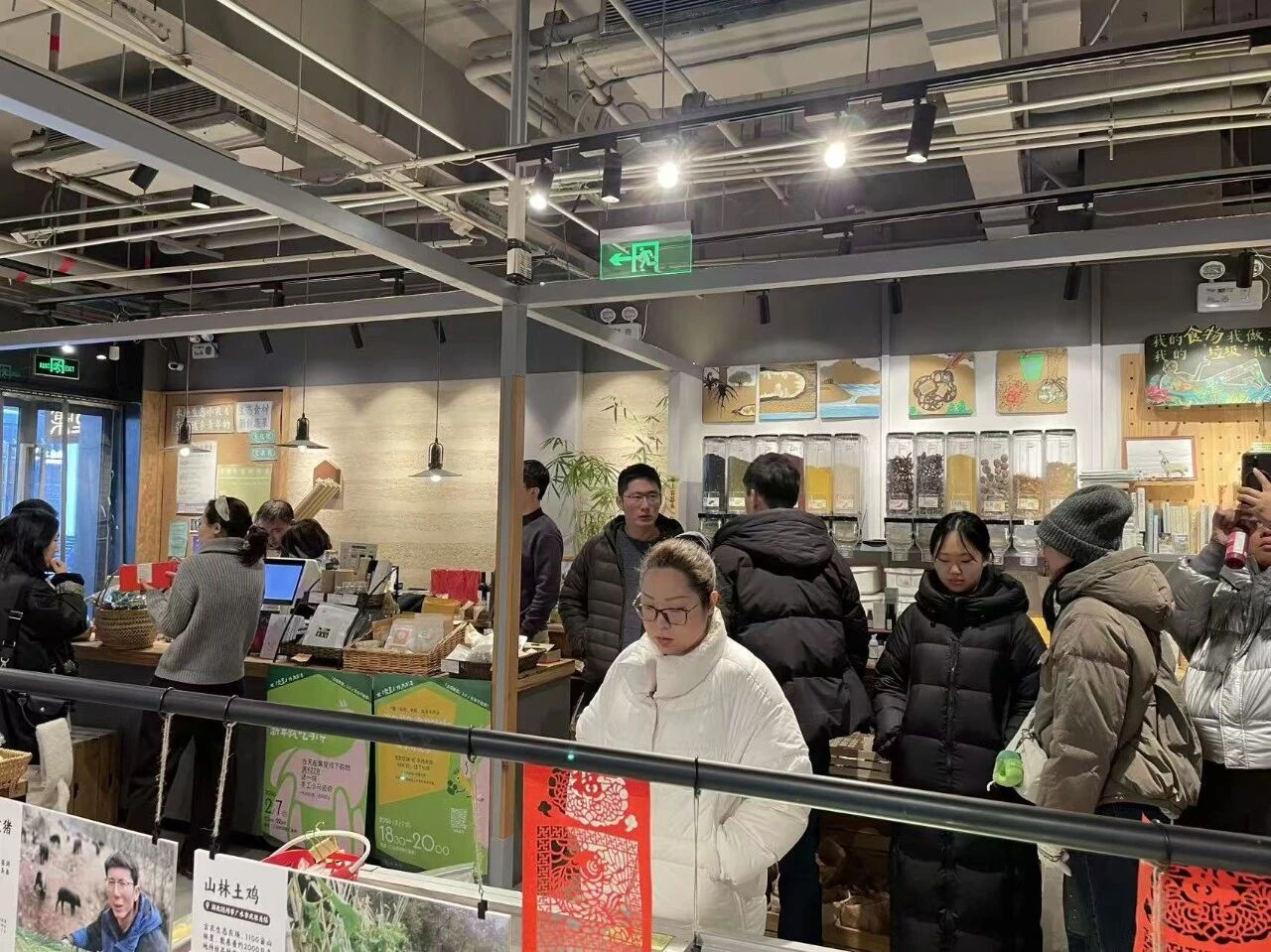
Then, when a customer actually asked me not to place his items on the floor, I really struggled to stop myself from rolling my eyes… Let me just apologise to this valued customer here and now. I always assumed I had a people-pleasing streak, but after a day like this, I’m going to have to rethink that. Working in the service industry is genuinely tough!
III. My First Live-Stream Shopping Experience

This marks my second time taking over the Jishi space. Where my first session sorting vegetables left me in a frantic scramble, this time… I’m still rather on edge—simply because it’s my very first live-stream shopping broadcast. While ‘live-stream shopping’ sounds fiercely ambitious, I probably didn’t actually shift that much stock in the end 😂. If you picked up anything on my recommendation, please raise your hands 🙋🏻♀️~
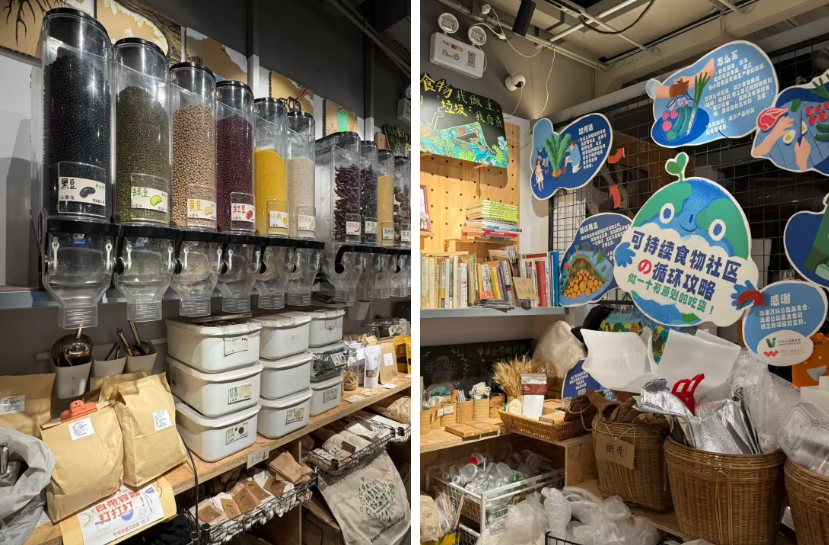
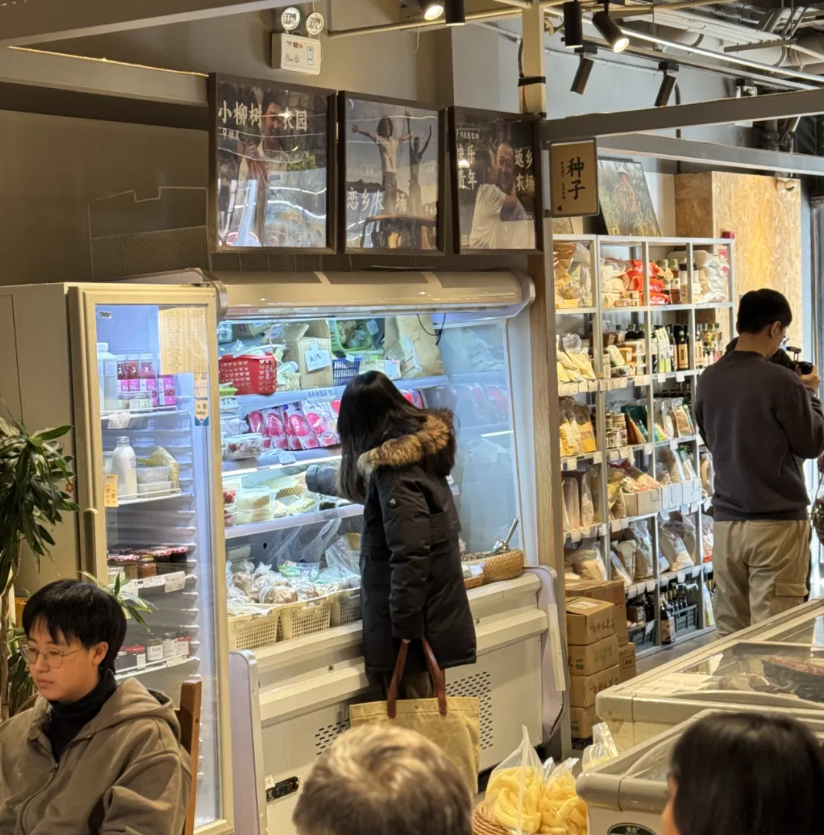
From start to finish, I couldn’t stop raving about the flower mushrooms from Fangxian in Hubei, Bule cheese, and my personal favourite: Jishi’s ‘Sustainable Corner’—home to bulk dry goods, reusable plastic containers brought in by customers, and a small bookshelf set up by Foodthink. Shoppers who normally drop by for their veg rarely venture that way, but it’s truly my treasure trove.
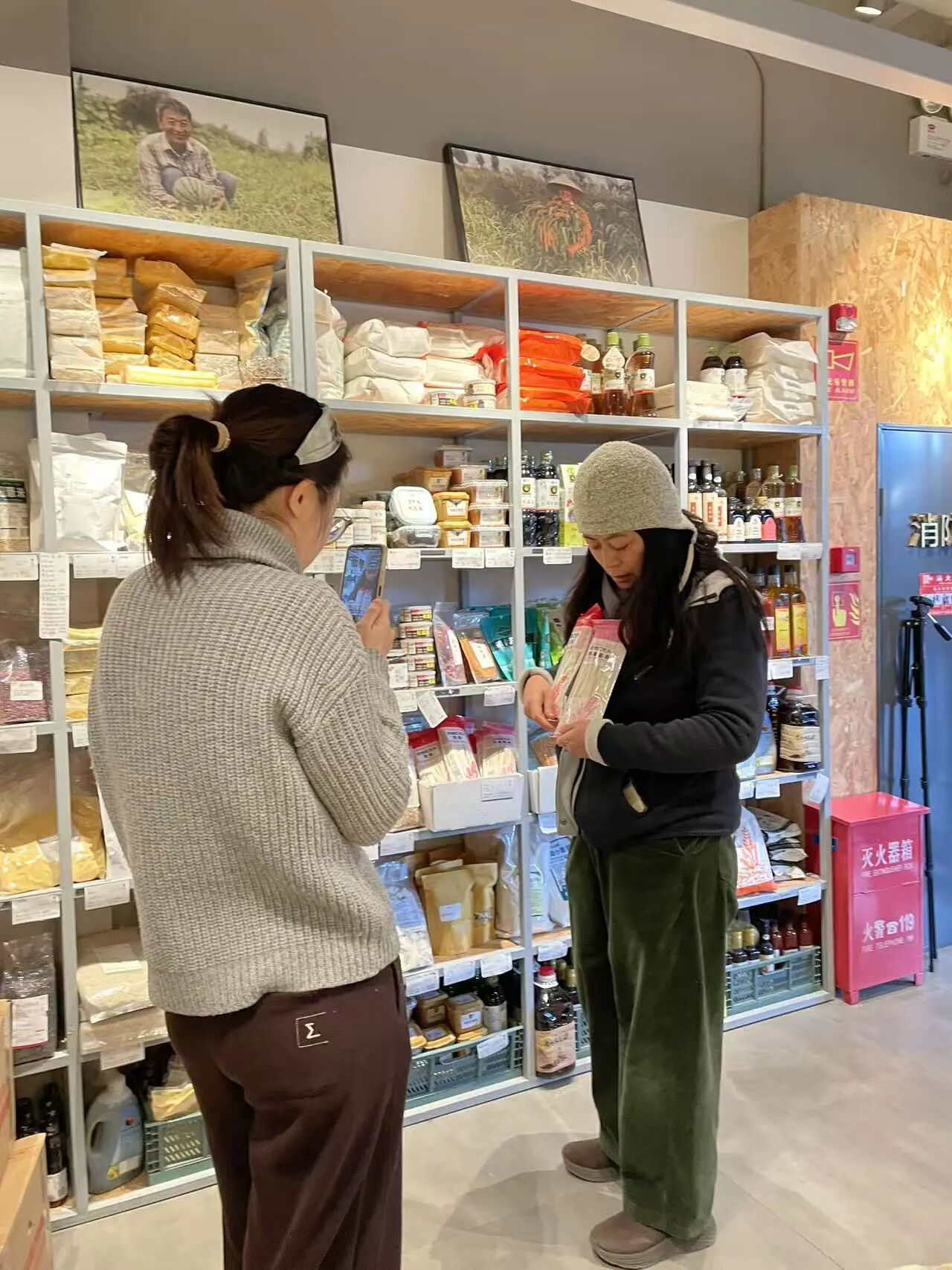
After years of watching livestreams, I finally gave hosting one a go. The on-the-ground feedback was better than expected, giving me a real boost of confidence. I might just do it again soon. I’d better hurry back and claim this space once more!
IV.A Day of Brutally Training the Prefrontal Cortex

It was hands down the busiest day we’ve ever had at the Ji Shi. For the previous 48 hours, my routine had settled into a familiar rhythm: receive an instruction via WeChat -> grab a basket and begin sorting -> rely on experience to decipher exactly what the customer on the other end means by “bigger versus smaller,” “more versus less,” “a bit starchy,” or “a bit softer” -> pack, box, seal, and ship out via Shansong courier. There’s a strange satisfaction in that single-threaded workflow, a quiet thrill in being transformed into a well-oiled machine or a diligent worker ant.
Just as I was settling into this rhythm, passersby began to study my mental state: “Pardon me, is this a ghost vegetable shop?” The more curious ones even pushed the door open, only to step back shaking their heads: “But it’s completely empty. What on earth are those staff members rushing about for?”
7 February was something else entirely. I had my head buried in drafting copy and prepping the livestream when I looked up to face a veritable “tsunami”! Even the shores of Hawaii wouldn’t be much more dramatic right now. Real, flesh-and-blood customers poured in, filling every nook and cranny of the shop and bringing every corner to life. It felt just like heading out for Spring Festival shopping as a kid, missing only the big bins of rice you’d bury your hands in. This year’s festive spirit hasn’t been strong enough to thaw out the Andy Lau and China Doll tracks on my playlist, but in this space, at least thirty percent of that nostalgia definitely melts away.
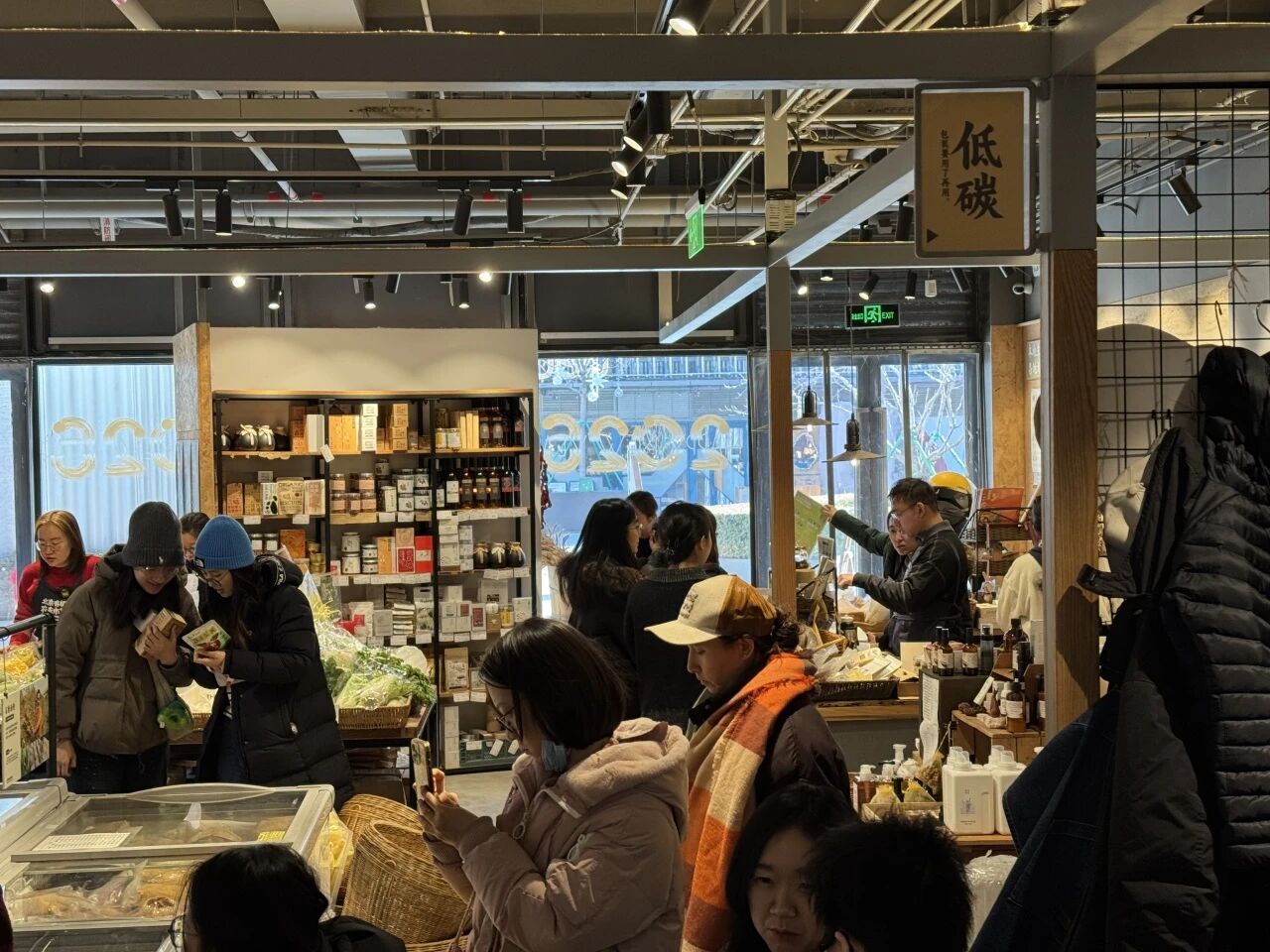
Another day of putting the prefrontal cortex through its paces. Today fell to the events team: twelve hours, four separate gatherings… I simply had to keep repeating, “Blink an eye, and the day will pass.” It’s a genuine privilege to meet the farmers and like-minded advocates of sustainable food systems face-to-face. In a way, this is the whole point of Foodthink’s public events: you keep running into people who share both your profession and your journey.
The biggest lesson from my first livestream sales attempt? Some profits are simply better left for others to pocket (just kidding).
Relying on a makeshift setup inevitably leads to frequent hiccups: constant buffering, intermittent audio dropouts, product links failing to load… Nevertheless, our “hosts” were remarkably dedicated and handled it with professionalism. We’ll certainly take the time to master proper livestreaming techniques next time and guarantee a stable connection (assuming there is a next time).
V.So Busy We Nearly Survived on Leftover Soup

We were issued a solemn briefing the night before: “Tomorrow will be gruelling. Pack layers, charge your power banks, and steel yourselves.” Four events in a single day, a constant stream of new and regular customers… It was exhausting, but watching everyone else pull just as heavy a load left me with absolutely no room for complaints.
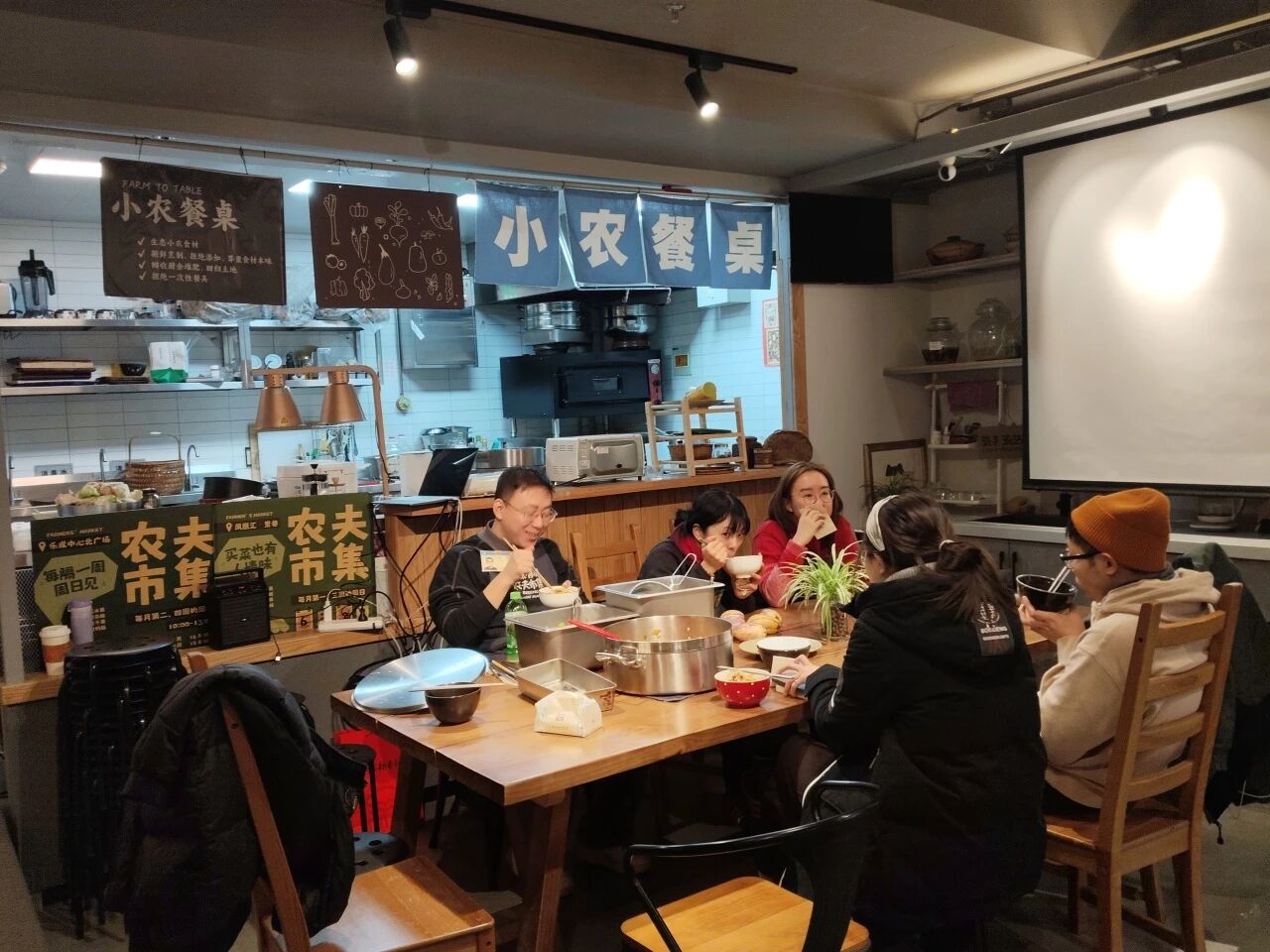
In the evening, we prepared a batch of lamb broth rice noodles for the ten friends who had signed up for the screening. The lamb was wonderfully rich, which unfortunately meant the washing-up would be particularly gruelling. Back at the Foodthink office, the unspoken rule is that whoever arrives last takes on the dishes. Editor Yu Yang, who had been running late that day, eagerly stepped up: “Leave it to me. It’s only right.” But by the time everyone had finished, the broth had gone cold, thick layers of congealed fat floating on the surface, with several bowls still holding stubborn clumps of noodles. Leaving Yu Yang to tackle that mountain of mess alone would have been rather unfair—it might even cross the line into workplace bullying.

The professional kit in the shared kitchen (a 3+1 sink setup) and Foodthink’s can-do attitude (jokingly) meant that these permanently hunched, desk-bound workers, who aren’t exactly forged for hard graft, successfully turned what should have been a solo headache into a team-building event for the whole lot. For the full scoop, see colleague ZX’s account next. The point is: when we look out for one another, tackling kitchen grease is a doddle – motor oil wouldn’t faze us.
Of course, to avoid telling an overly anthropocentric tale, we must also give a massive shout-out to camellia seed powder, unblocked drains, and an endless supply of hot water. Factoring in the effort, the mutton vermicelli at 68 yuan a bowl and the film were truly excellent value – every bite is money well spent!
In reality, however, supplies ran short, so Foodthink members missed out on the lamb soup. We all looked at each other, and even considered pooling the leftover bowls, reheating them to share – sparing us the heavy washing-up while still letting everyone taste the rich broth… In the end, we never got around to it. As a self-proclaimed tomato and egg fan, I seized the opportunity to volunteer and pitch my personal favourite to the group. I grabbed a box of eggs, six tomatoes, a packet of leftover bean sprouts, and some uncooked rice noodles from the shop, then tossed them in with a large bowl of shredded tofu and cabbage. In no time, I had a humble, no-fuss working meal ready to go. Served on stainless-steel crockery, it gave me a real taste of what it’s like to be the site canteen cook feeding hard-working builders.
VI. Spring Festival Feast Wash-Up Guide

The lamb and rice noodle soup is absolutely divine. 😋
Until you look into the sink and find a mountain of pots, bowls, and pans, all caked in lamb fat. 🥶
Hailing from Inner Mongolia’s Hari Gaobi Prairie, this grass-fed, free-range lamb enjoyed a life of ease—robust and well-fleshed, with fat as white as jade and a deeply aromatic scent. The resulting broth shimmers with a delicate film of oil, delivering a pure, authentic flavour that lingers delightfully on the palate.
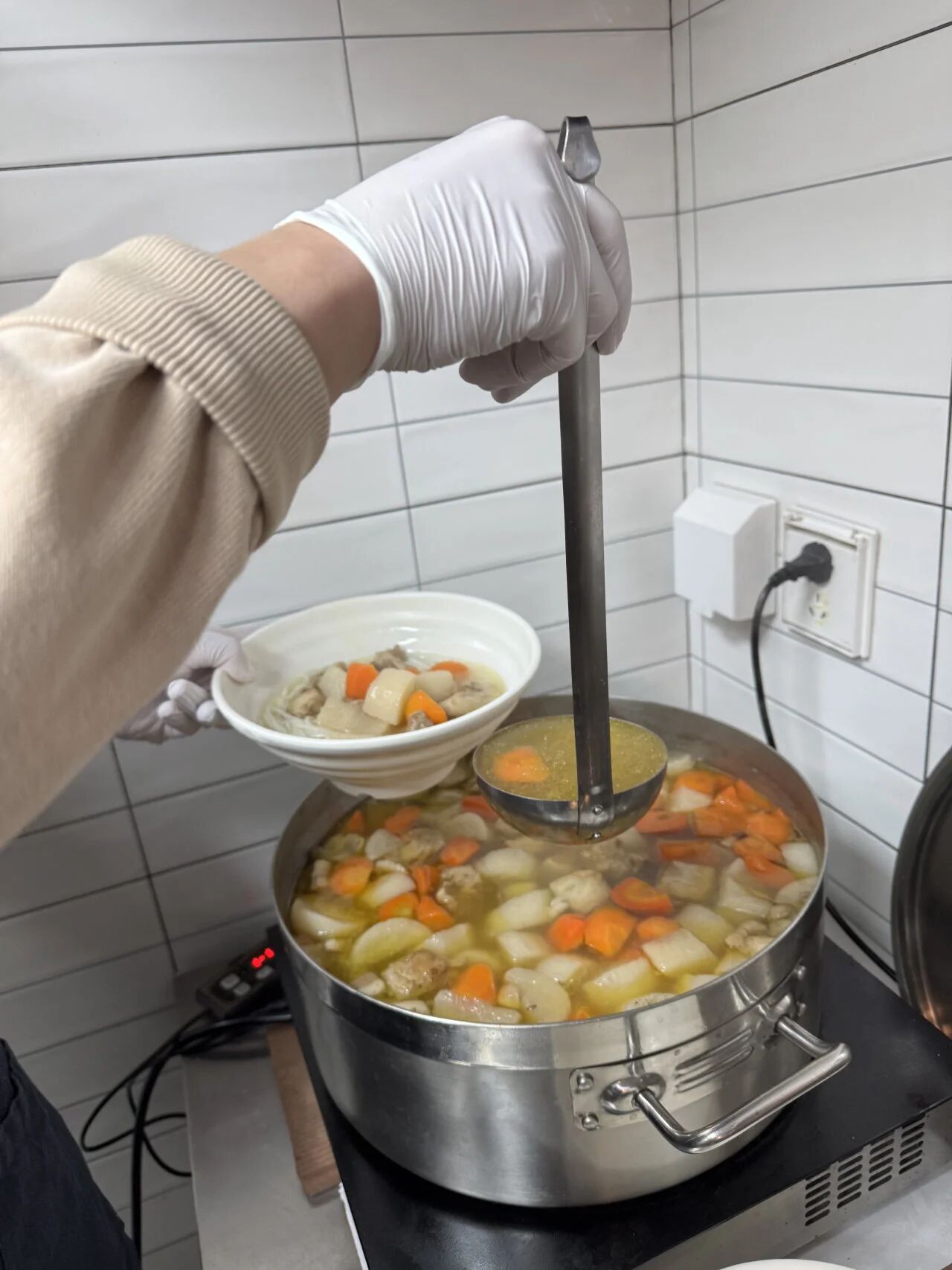
Hot in the bowl, it’s soup; let it cool, and it becomes a proper ordeal. As the diners depart and the broth cools, congealed mutton fat, vegetable skins, spice dregs, and snapped rice noodles cling to every bowl, plate, pot, chopstick, and spoon that saw action. They stubbornly refuse to be wiped or rinsed clean.
They say enjoying mutton and broth is a fleeting pleasure, but washing up is pure misery. We’re looking at roughly twenty people’s worth of crockery and cookware! Faced with these towering stacks, even the veterans from Foodthink’s now-defunct “Dishwashing Division” (a team that operated twice a week during service) found themselves sighing at the mountain of greasy wreckage.
A colleague volunteered to tackle a single bowl, only for both the washing-up cloth and their hands to become hopelessly caked in grease. Until the dishes are done, the shop stays open; and until the shop closes, we can’t head home. Gazing at the row of sinks in the back kitchen, an idea struck us. Relying on the strength of numbers, we decided to tackle the task using an assembly-line approach.
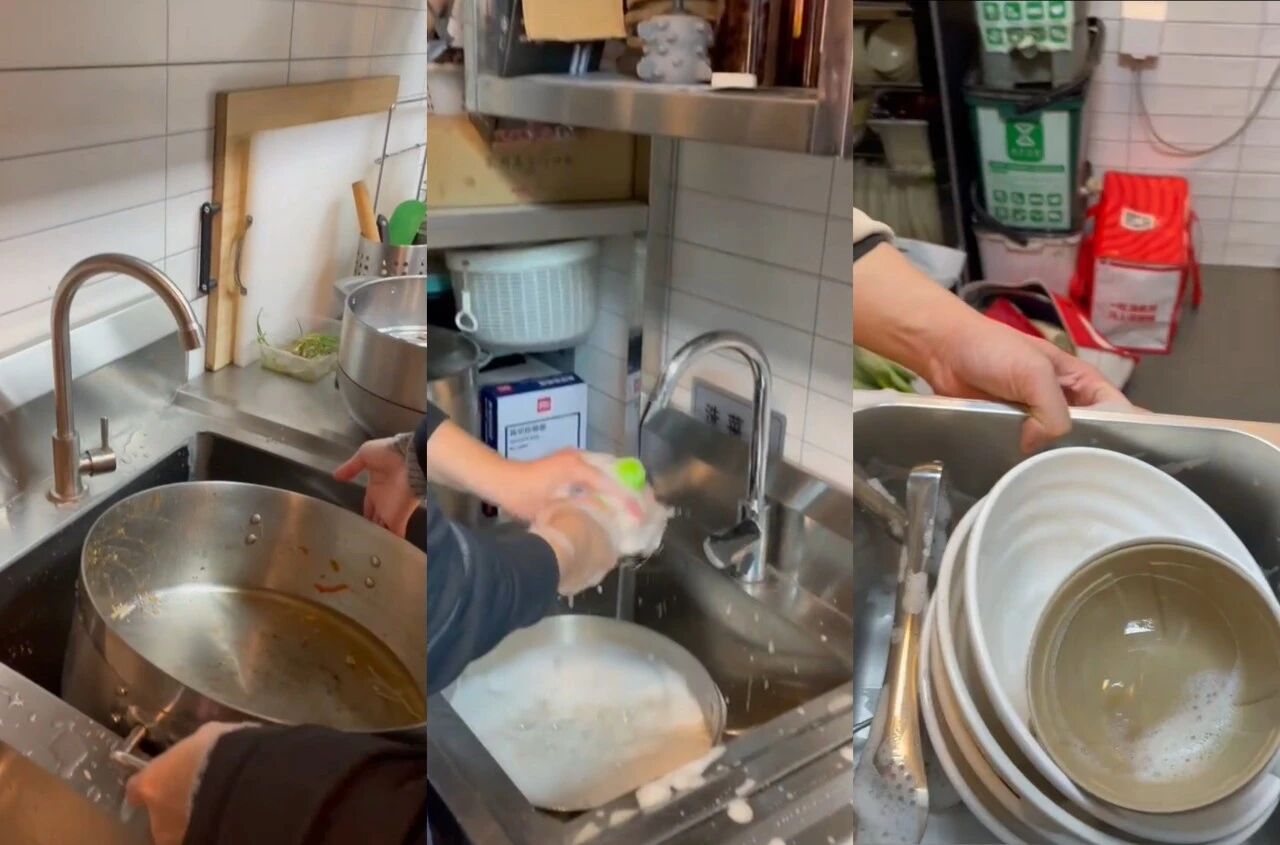
Steps:
1.Collect the soiled dishes and rinse away large food scraps such as vegetable leaves and rice noodles – 1 person;
2.For dishes with heavy grease, scrape off the bulk with kitchen roll – 1 person;
3.Scrub thoroughly with a mixture of hot water, tea seed powder, and washing-up liquid – 1 person;
4.Rinse clean with fresh water and inspect for quality – 1 person;
5.Drain, dry, and put away – 1 person;
In total, five stations for five people.
Key points to note:
– Start with the least soiled dishes;
– Fill a large pot or sink with hot water, adding both tea seed powder (to cut grease) and washing-up liquid (to neutralise odours) for the best results;
– If any dish isn’t properly cleaned, send it straight back to the previous step for re-washing;
– The inspection step should be done without gloves to feel for any remaining grease;
– After washing, use the hot solution from step 3 to clean the sink and flush the drain;
– Apply hand cream once finished.
Takeaway:
Unity is strength. It took just over half an hour, and the dishes came out spotless and gleaming. ✌️
VII.Climate Change is Even Felt When Selling Vegetables

After 60 hours working at the communal space, I’ve gained a deeper sense of the food and agriculture system’s many dimensions within the community.
From a climate change perspective, cold chains and refrigeration units are significant sources of (fossil) energy consumption in the food and agriculture system. However, running an eco-friendly organic food store requires responding to consumer demand. To ensure steady stock and availability at all times, our meat must be portioned, sealed, and frozen. Dairy storage similarly relies on freezing and refrigeration technology. Timeliness seems to be an inherent part of supply chain philosophy, yet the preservation of time is precisely what drives carbon emissions.
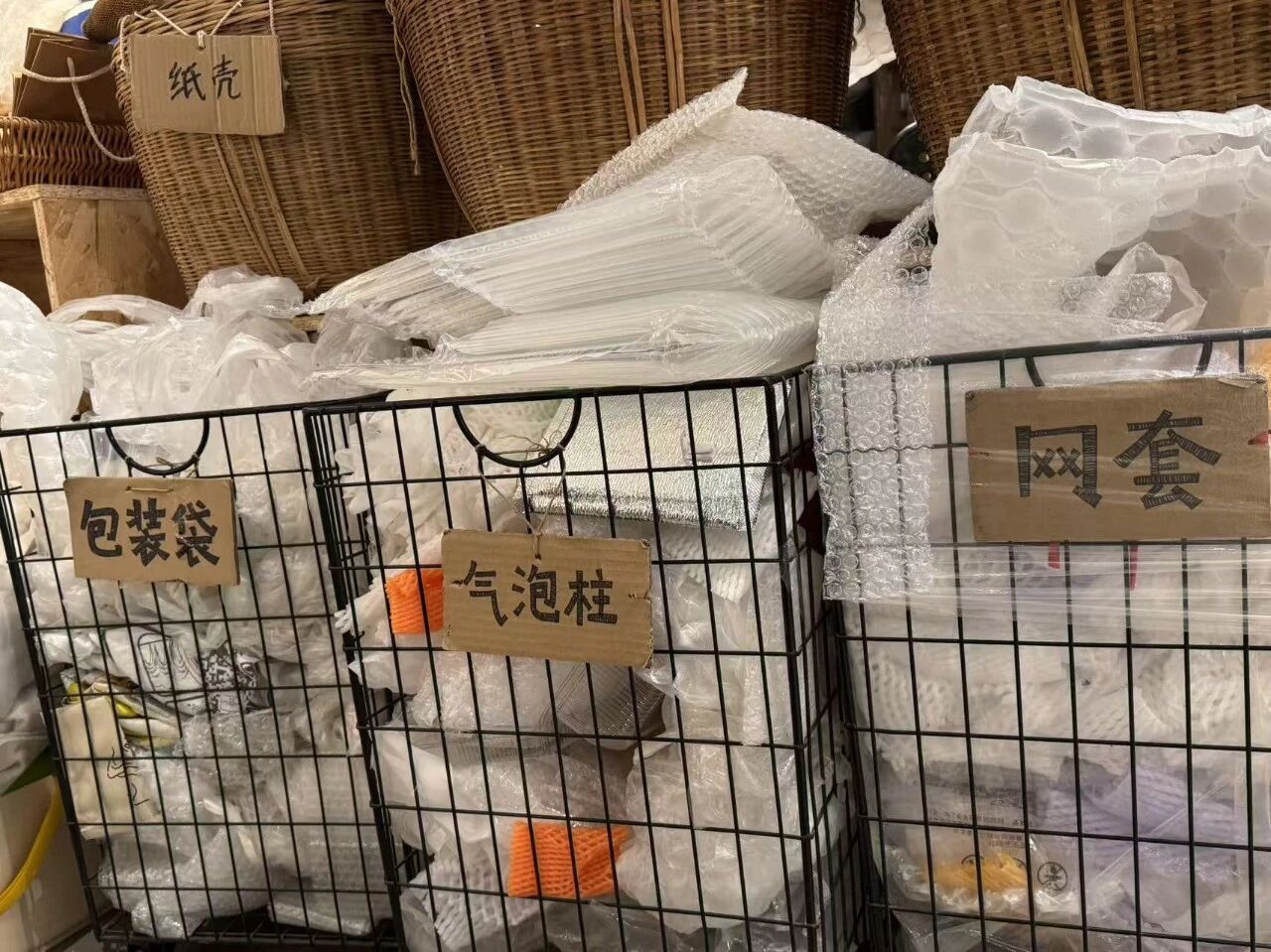
We must use plastic. This is a practical choice made with both efficiency and consumer expectations in mind. In Beijing, unless vegetables are portioned into plastic bags during transit and while awaiting sale, they quickly dry out, yellow, and lose moisture. Could we switch to greaseproof paper or newspaper? Consider that even instant delivery services insist on fully sealed packaging, and customers would never accept a courier’s hands touching the contents. Would anyone really tolerate such perceived “uncleanliness” and discomfort? Compared to traditional supermarkets and e-commerce platforms, we already use comparatively little plastic. We avoid over-packaging altogether, and even the bags we do use are upcycled from e-commerce and takeaway packaging brought in by customers.
I have also witnessed another scenario where both profitability and the environment lose out under the current commercial rental model: for over a decade, Jishi has stayed within the Sanyuanqiao area, yet has been forced to relocate three times. The shop’s current lease is signed year-on-year. Such instability means that an ecological, organic grocer like ours, operating with tight cash flow and slender profit margins, simply lacks the means or the incentive to invest in better-insulated double-glazed windows. (Anybody who has tackled a renovation will know roughly what windows in Beijing cost.)
Consequently, during the sixty hours I spent working at Jishi, particularly on blustery nights, my colleagues would often turn up the collar on their padded jackets, while several electric heaters worked overtime behind the till and out front near the kitchen pass. Even so, I ended up ill twice owing to my already fragile health. In summer, the heat was sometimes so oppressive I’d dash to the café next door just to catch my breath, mind racing with questions: is the refrigeration keeping up? Is the produce spoilage worsening? ——and all of this translates to higher energy consumption and a heavier carbon footprint.
Of course, from a purely financial standpoint, running those heaters is cheaper than paying for thermally broken aluminium double glazing, but the ledger looks very different when you factor in the environmental cost. Would these dilemmas be solved if the property manager provided such fixtures outright, or allowed us to secure a multi-year lease at a stable rate? Or, when a tenant is forced to leave, could improvements like this be negotiated with the landlord and the incoming occupier, rather than being subjected to a rigid, one-size-fits-all policy to “return the premises to their original condition”?
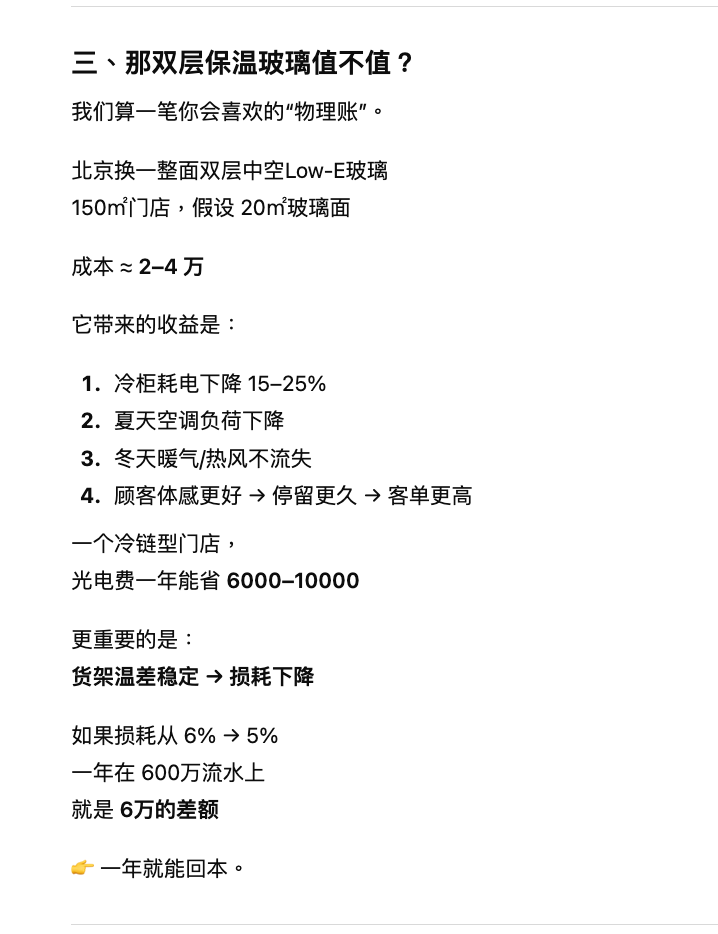
Jishi once opened its kitchen, but the initiative stalled after they failed to find suitable chefs willing to work with ecological ingredients. Customers would often peer in through the door: “Do you serve food here?” “You’re cooking your own meals, how lovely (can I have some?)!”
After sixty hours of work, the most profound takeaway was this: cooking is solid, tangible labour that must be recognised and seen. It is far more than an idealised, comforting aura of “hearth and home” that evokes reunion and inclusivity. It means the exhausting toil of preparing dough and pastries while bent over, stir-frying while breathing in PM2.5, and, beyond the daily routine of receiving stock, unboxing new supplies, and packing orders, there are the dishes and vegetables to wash and chop—all multiplied by the number of people you’re feeding, times N.
I once tried a similar open dining table service at “Tianshe”, an ecological agriculture community shop in Chengdu, but they used disposable tableware to make express deliveries more convenient. If Jishi were to relaunch its small dining table and manage to hire a chef, they would likely struggle to find a part-time dishwasher as well—yet another burden that comes with holding fast to one’s principles. It makes one wonder whether this added workload is also part of why finding chefs has proved so difficult.
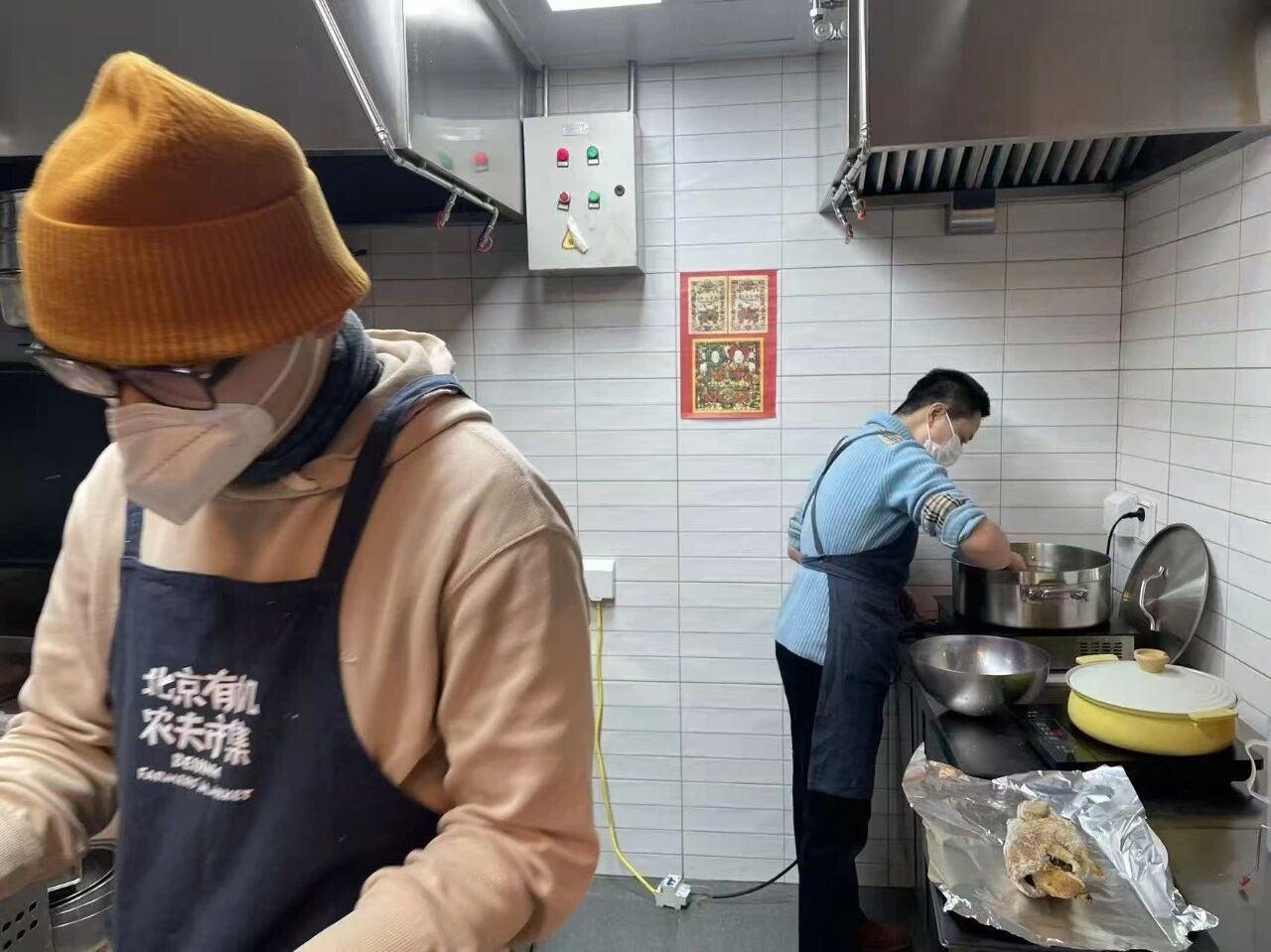
8.NPCs Connected by Labour
We meant every word when we said we were serious about selling vegetables. The “Occupying the Gathering Room” event has come to an end, and whether judged by sales figures or by our colleagues’ genuine experiences of working together, I feel we submitted a nearly flawless report card. At least we avoided the fatal flaw of sending orders to the wrong addresses, haha! (Those who know the old joke will appreciate it!)
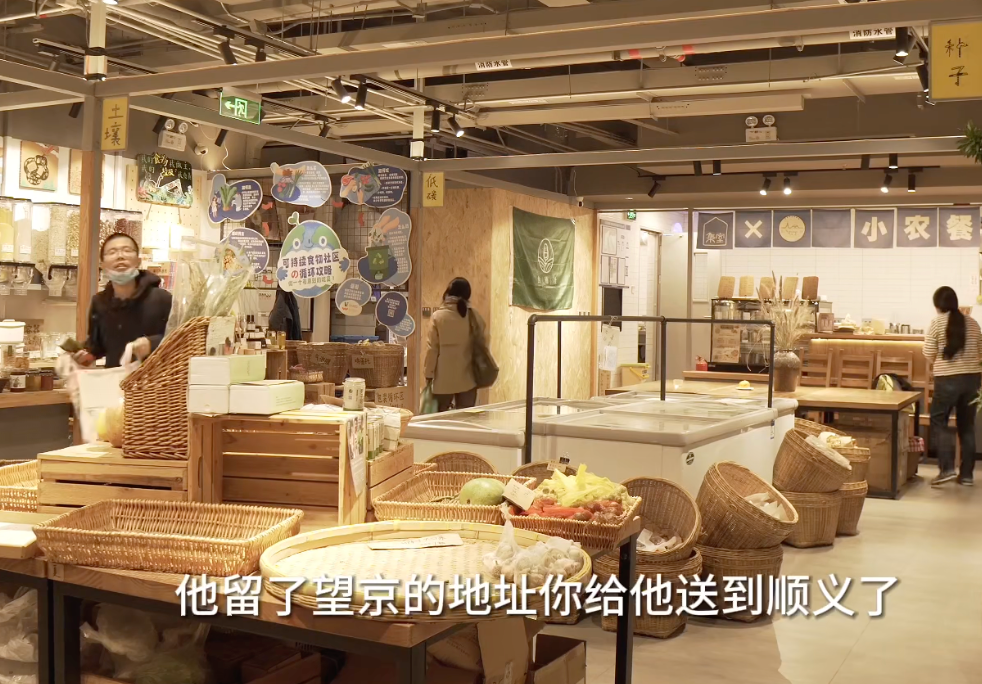
We are not professional vegetable vendors, nor do we earn our living this way, yet we still bore a full sense of responsibility. To outsiders, it may have looked more like performance art or a game. But I could feel that every single colleague was utterly earnest and sincere.So earnest, in fact, that even though it was essentially a game, we remained unwavering in sticking to our assigned roles, diligently sorting stock, receiving goods, listing new items, handling customer service, picking orders, and managing after-sales support. When things got tricky or tempers flared, we stayed true to our roles, processing and working through it carefully, never breaking character.
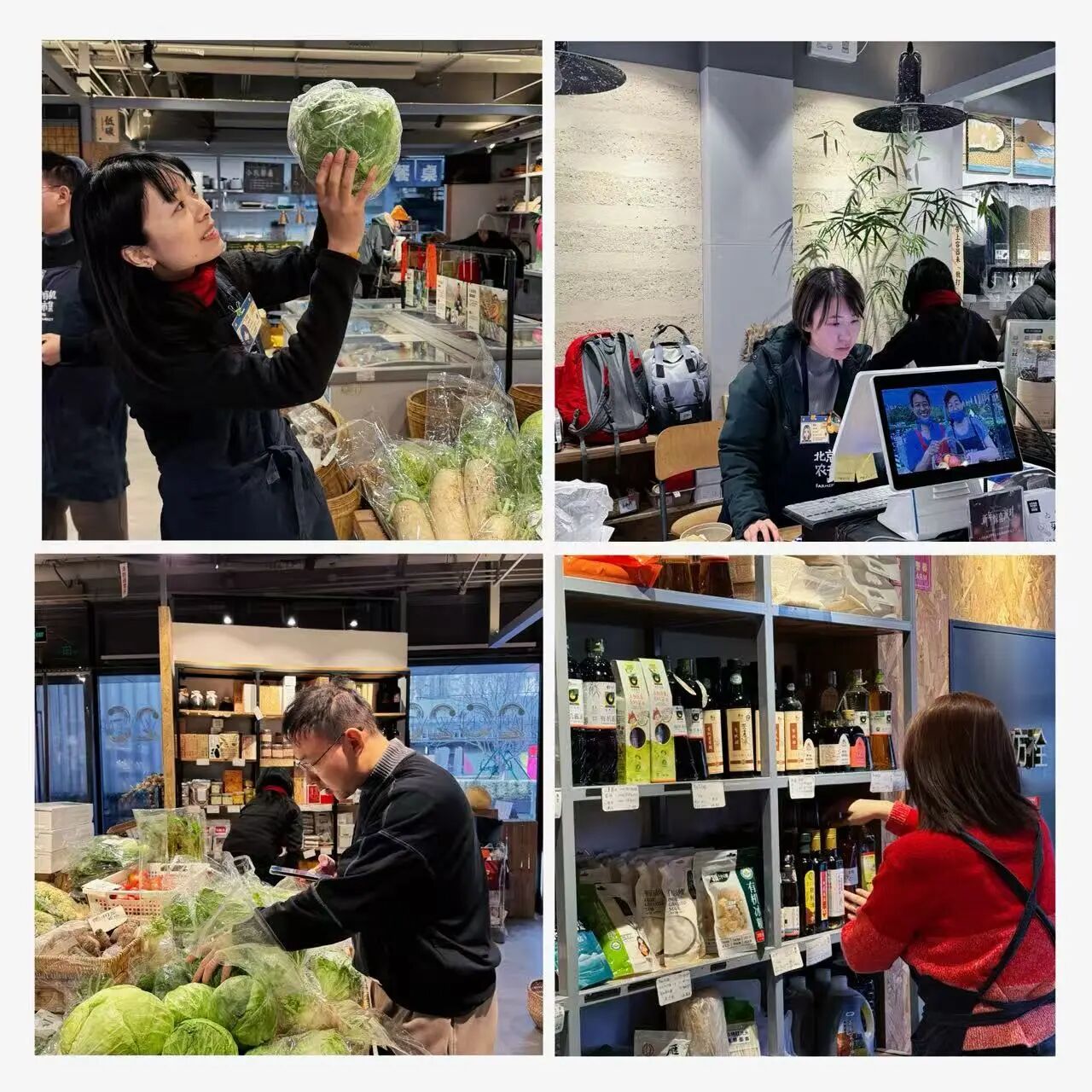
Of course, we would eventually have to return to our regular jobs and daily lives, but during that twelve-hour marathon of non-stop labour, we forged a bond and a resonance, one too personal to easily share with outsiders. Within the public space of the vegetable stall, customers came in a steady stream all day, creating a lively atmosphere where people connected with one another. Yet a different kind of connection ran far more subtly through our hurried footsteps and loud calls, embedding itself into the very physical rhythm of each of us.Perhaps on some future day, when I look back on this one, that resonance will still be the feeling I instinctively miss most: labour is the finest medium for bringing people together.
Editing: Tianle