Eat bamboo shoots now, or they’ll grow old

If bamboo is the spiritual totem of the Chinese people, then bamboo shoots are the very soul of Chinese food lovers. It is somewhat astonishing that, despite global bamboo forests covering a staggering 30.1 million hectares across Europe, Asia, and Africa, China accounts for a full seventy per cent of worldwide fresh bamboo shoot consumption. From the south-east to the south-west, regional cooking styles and preparations may vary, yet Chinese people everywhere share a deep affection for the delicate savouriness of shoots. What exactly is this natural flavour, so deeply rooted in the land and local life?
Bamboo Shoots and Pork in Jiangnan
When it comes to enjoying bamboo shoots, the most celebrated figure is undoubtedly Su Dongpo. Embracing the philosophy of “tasting the local fare wherever exile takes him”, Su Dongpo stands as a pioneering ambassador for the culinary journeys later celebrated in A Bite of China. Upon arriving in Huangzhou, he penned: “The Yangtze winds round the city, revealing the fish’s fine flavour; good bamboo climbs the hills, its shoots fragrant in the air.” Few scholars, perhaps, would dare confess that when they behold bamboo, their minds immediately wander to the shoots gracing their dinner plates.
His celebrated verse, “It matters not if there is no meat on the table, but one cannot live without bamboo”, takes on a rather different resonance here. Su Dongpo was not drawing a strict line between bamboo and pork; he was simply inviting us to think more freely about what we eat.
As a culinary genius of rare calibre, Su Dongpo possessed the patience to braise a slab of rich pork belly over a flame so low it barely flickers. “Let it cook at its own pace, do not hurry it; when the heat has done its work, it will reveal its finest quality.” This method gave us the crown jewel of Chinese gastronomy: Dongpo pork. Given such mastery, it is hardly surprising he also knew that simmering shoots alongside meat allows the pork’s rich, melting fat and the shoots’ clean, crisp freshness to elevate one another.
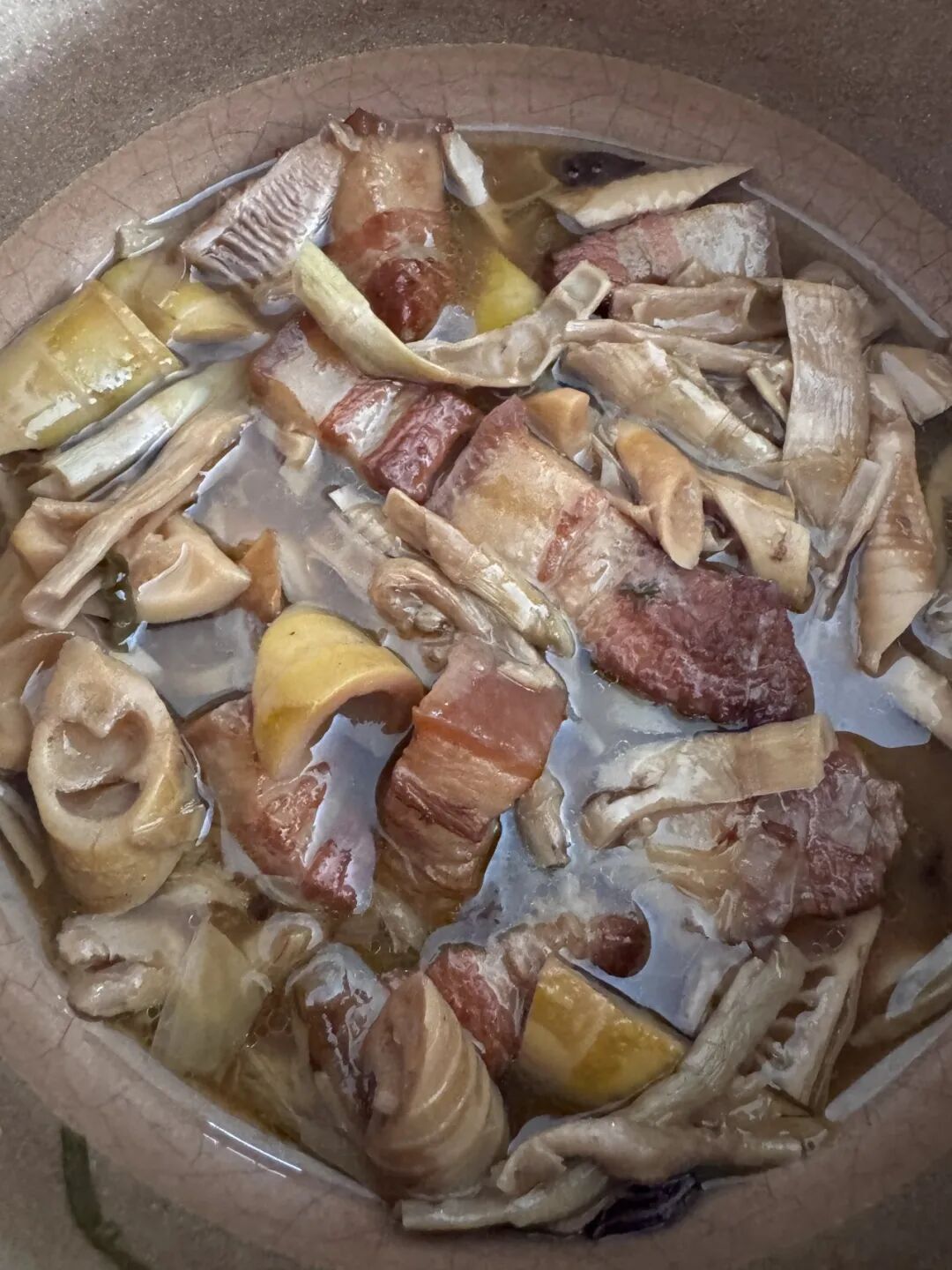
◉Braised pork with bamboo shoots.
This gives Su Dongpo’s famous line—”I can do without meat in my diet, but not without bamboo in my home”—a rather practical new spin: should there be no meat at the table, some stir-fried bamboo shoots will do just fine. All along, his habit of planting bamboo around his pavilion was a stroke of genius that served two purposes. A lifelong wanderer from Sichuan, Su Dongpo ultimately chose to spend his final years in Jiangnan. One suspects it was simply because this is where you find the finest bamboo shoots.
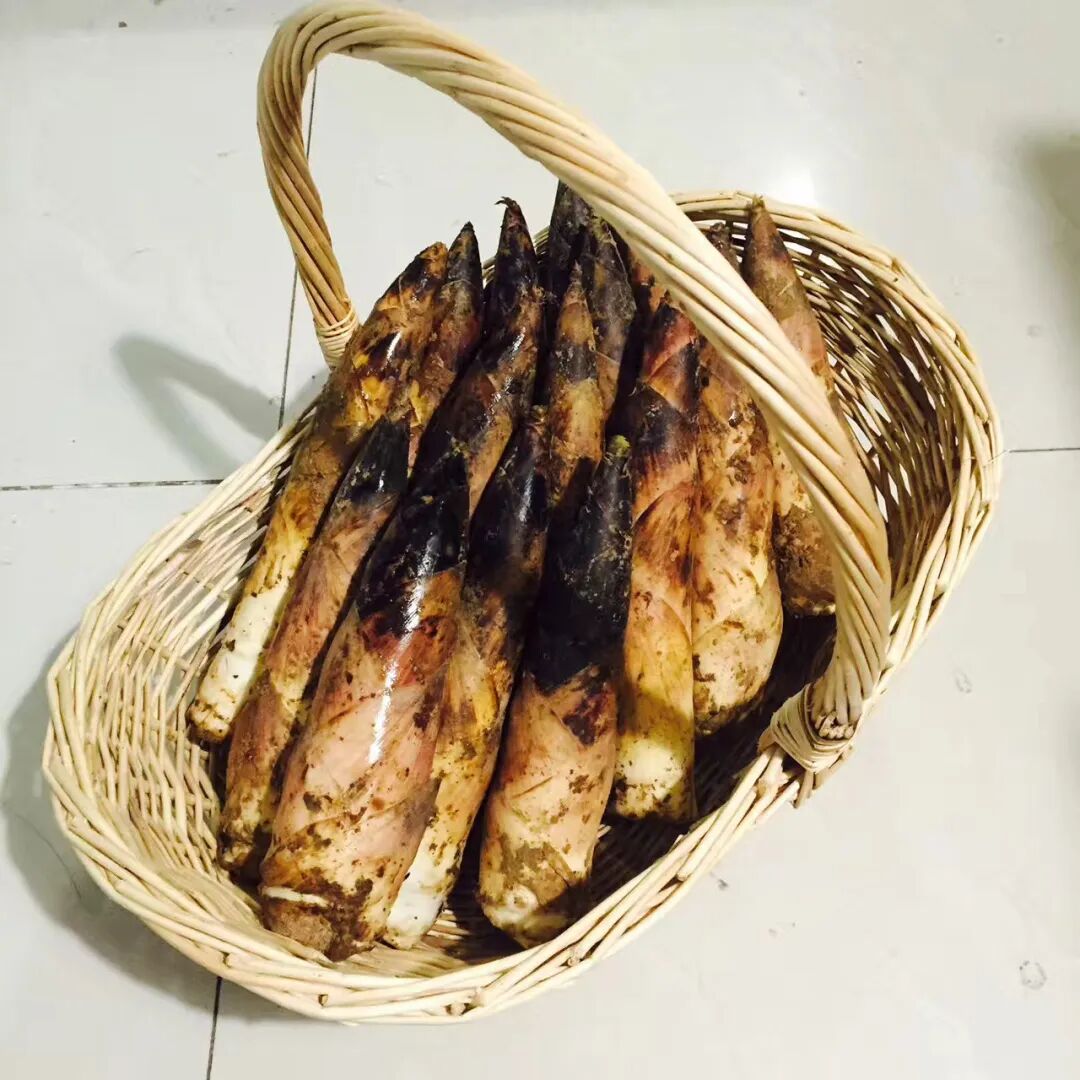
◉Hangzhou Leisun bamboo shoots sent by my friend Yi Fan.
Anyone who has lived in Jiangnan will find it hard to forget the bamboo shoots of that region. Take my mother-in-law, for instance: though her family moved north from Wuxi when she was quite young, the dishes she still favours most for a simple meal are braised bamboo shoots, Yan Du Xian (a classic Jiangnan soup of salt-cured pork and bamboo shoots), and vegetarian chicken.
When it comes to Yan Du Xian, I have a rather provincial misunderstanding of Jiangnan tastes, coloured by my Hunan background.
Once, while scrolling through my feed, I came across a post from a Shanghai acquaintance, Tianle, asking on her WeChat Moments if anyone had any salt-cured pork. I messaged her straight away to say I had a slab of smoke-cured pork at home, and it was plenty salty. She explained that smoke-cured and salt-cured pork are entirely different, and for Yan Du Xian, salt-cured pork was absolutely non-negotiable. I couldn’t quite grasp it then. After all, in a Hunan household, isn’t smoke-cured pork the natural match for bamboo shoots?
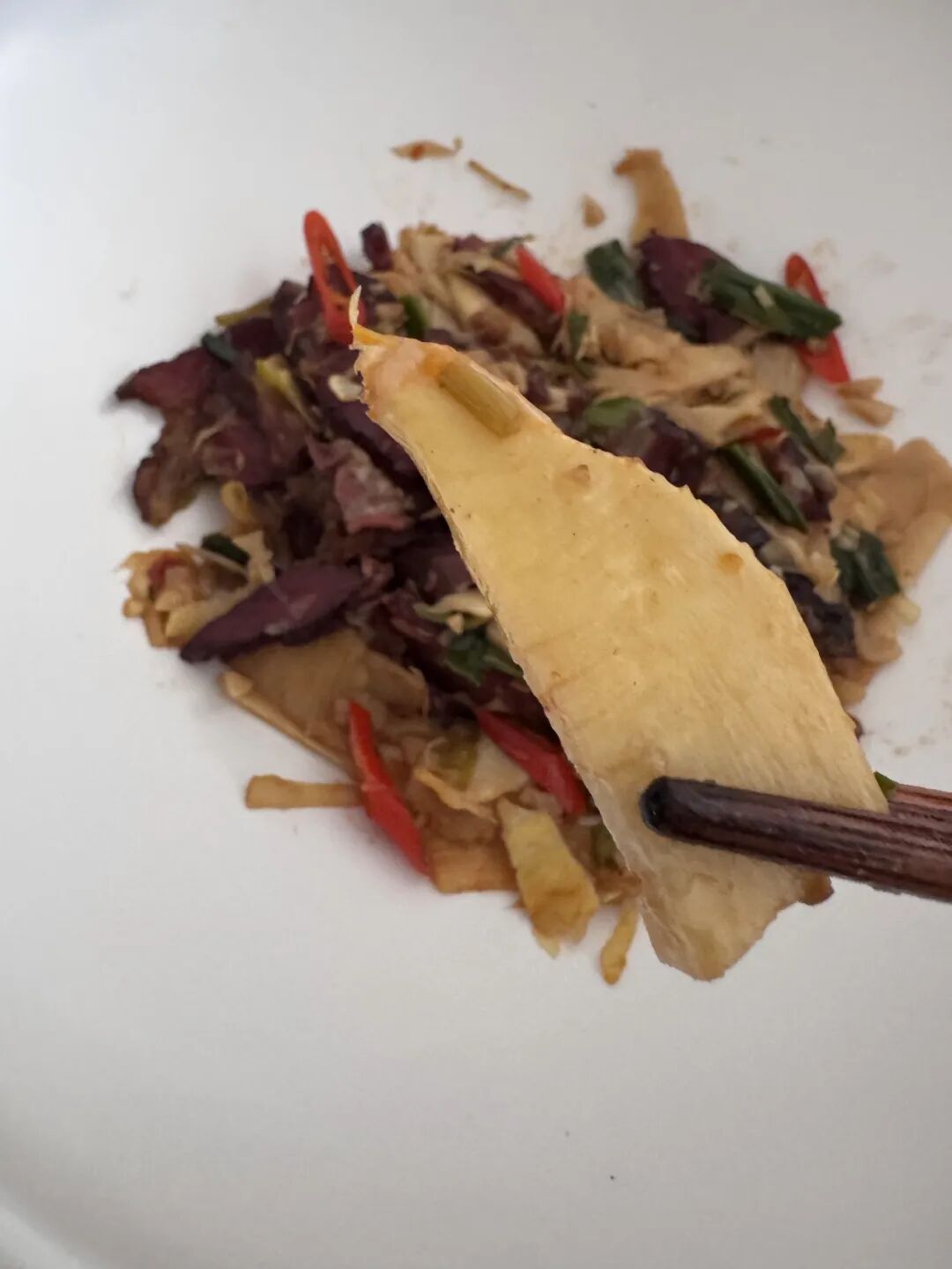
◉My stir-fried winter bamboo shoots with smoke-cured pork.
It wasn’t until my mother-in-law made a trip back to Wuxi during the Spring Festival one year, brought back salt-cured pork and cooked us a pot of Yan Du Xian, that I finally understood why Tianle had been so insistent back then.
Unlike smoke-cured pork, which requires at least one to two months of smoking, salt-cured pork can be prepared and enjoyed fresh. Rub a mix of salt and Sichuan peppercorns over pork belly, hang it by the window to air-dry, and it’s ready to eat in about a week. Keep it frozen until spring bamboo shoots come into season, then thaw, wash, and chop it before simmering with the shoots. Smoke-cured pork isn’t suited to prolonged cooking, whereas salt-cured pork only grows more fragrant the longer it simmers. My mother-in-law also adds salt-cured duck legs and celtuce to her Yan Du Xian. Even the tofu skin knots are tied by her own hands, crafted from paper-thin sheets of dried tofu she carried back from the markets in Wuxi.
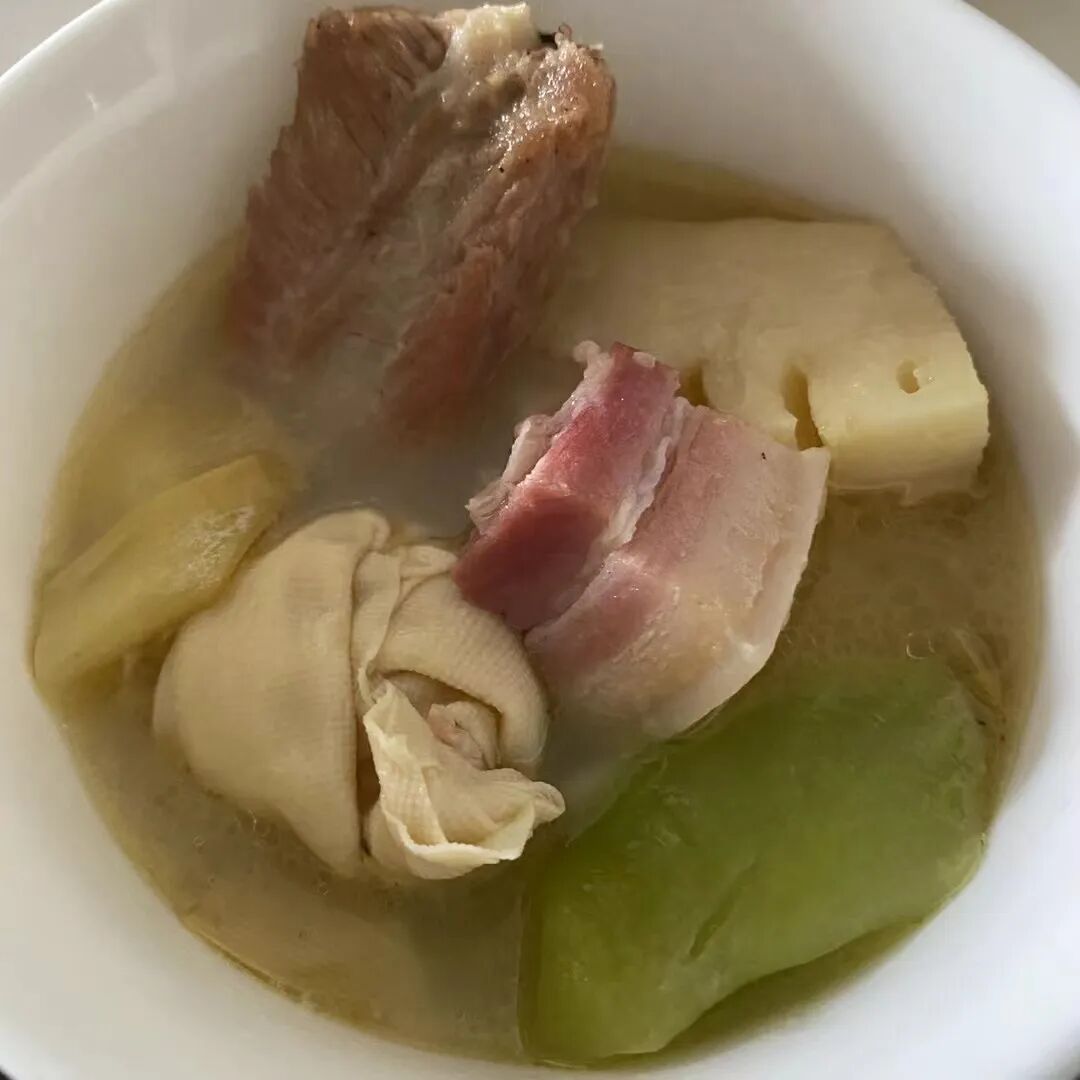
◉My mother-in-law also added celtuce to her Yan Du Xian.
Simmer these top-tier delicacies in a clay pot for two to three hours, until the salt-cured pork turns a pale pink and the broth-soaked bamboo shoots take centre stage, leaving the meat as a mere accompaniment. Just take care not to eat too hastily, or you’ll scald your tongue.
Dried bamboo shoots from Anji
My mother-in-law adores bamboo shoots but never indulges in them too freely. They are rich in insoluble dietary fibre, which can easily trigger old stomach ailments in those with a delicate digestion. So what’s to be done? Those in Jiangnan who share a passion for shoots have a neat trick of their own to get round it.
At Qingtao Restaurant, set beside Hupao Spring in Hangzhou, I once tasted a bamboo shoot dish said to be gentle on the stomach, simply called “Mao Sun Bao” (hairy bamboo shoot casserole). Fresh Anji hairy shoots are simmered with aged salt-cured pork and xue cai (pickled mustard greens) for five to six hours, until that thick layer of fat melts completely into the broth, gently coating every single fibre of the shoot. The result surprisingly carries the light, yielding texture of tender meat. I thought to myself: “These shoots must have had a soul-stealing spell cast on them; they”re bamboo shoot in body, but meat in spirit.’
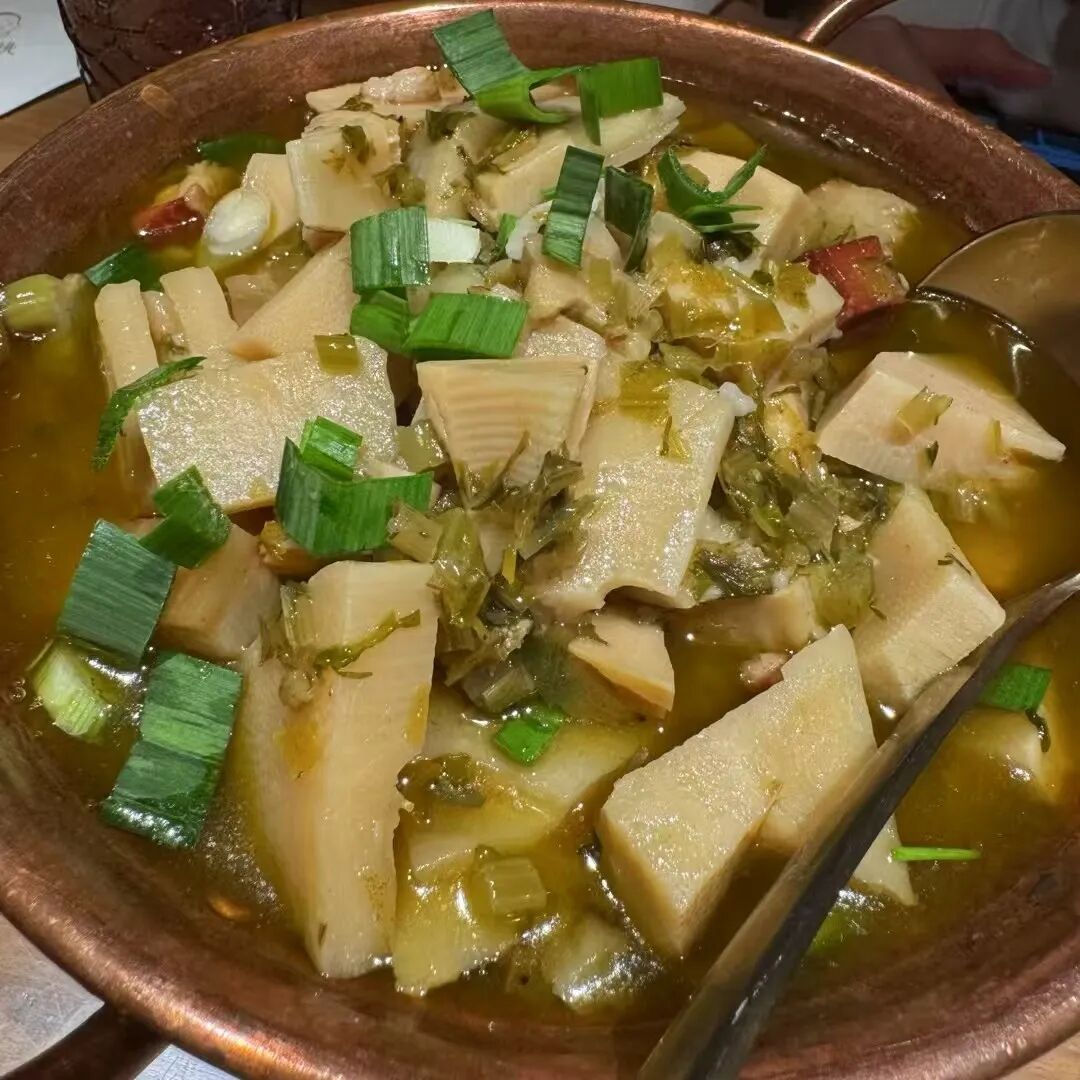
◉ Hairy bamboo shoot casserole at Qingtao Restaurant.
Situated in northern Zhejiang Province, Anji County is famed for its bamboo shoots—a regional landmark on par with Zhuji’s torreya nuts and Lin’an’s wild hazelnuts throughout the Jiangsu and Zhejiang belt.
Fresh bamboo shoots don’t keep well. Even refrigerated, they continue to grow and toughen, making drying them a practical necessity. While the process usually dims their flavour, Anji’s dried shoots belong to the rare few that actually surpass their fresh counterparts.
The dried shoots were sent by Xiaoya, who previously worked at an organic farmers’ market in Beijing. A rocker at heart, she spends her days helping fellow growers set up stalls and her nights slipping between underground gigs. Her writing, much like her life, is charged with a raw, electric intensity.
Seven years after returning from Beijing to her hometown in Anji, Zhejiang, bamboo shoots have featured on her table throughout the spring and early summer months. The hillsides yield an abundance of wild varieties: small water shoots with pale green sheaths, offering the most delicate texture; little stone shoots marked with dark spots, tender yet with a satisfying chew; and red bamboo shoots wrapped in purplish-red husks, firm and ideal for slow cooking.
In May 2019, she sent me a packet of wild pen-stalk dried bamboo shoots. It was my first time tasting them.
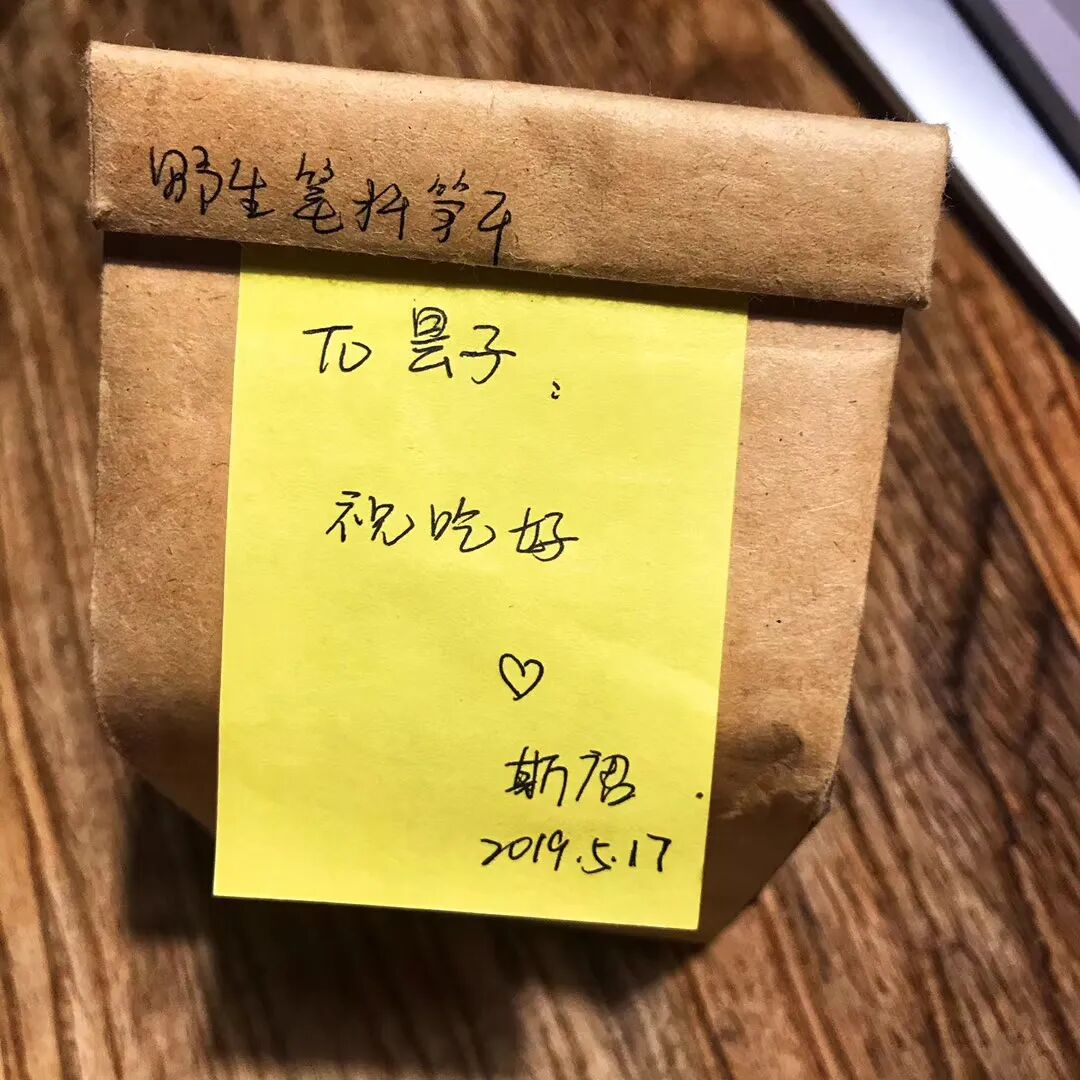
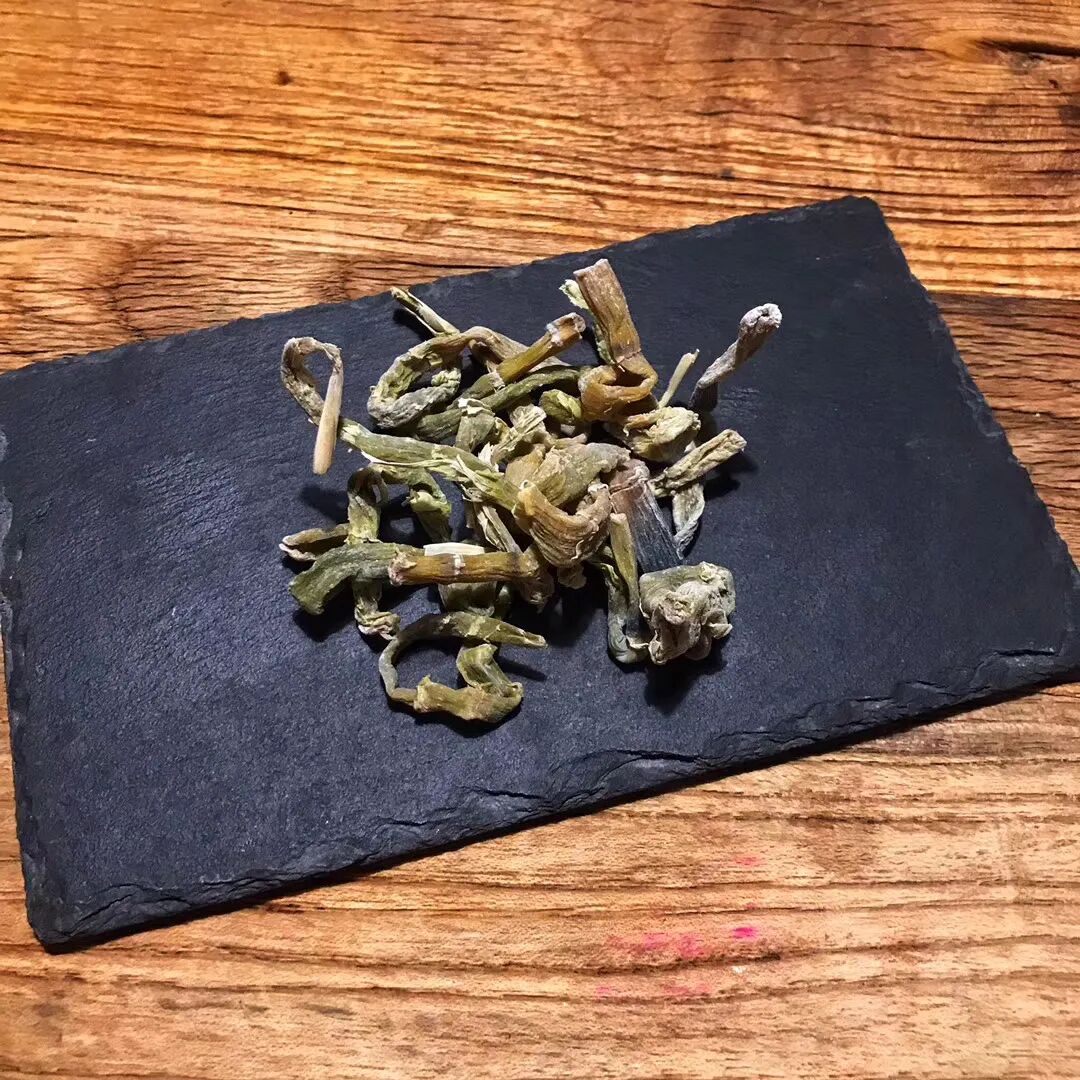
◉ Dried pen-stalk bamboo shoots sent by Xiaoya. The image on the right shows them before rehydrating.
These dried bamboo shoots are made from entire young shoots. They are peeled and boiled, then kneaded with salt to work out the moisture, much like tea leaves being rolled and wilted. Air-dried, kneaded once more, and dried again until salt crystallises on the surface, they curl into tight little bundles. Soak them in cold water for two hours, then finely chop or shred them; they work well stir-fried or stewed. But my absolute favourite way to enjoy them is simmered alongside braised pork.
Take rich pork belly cut to a seventy-to-thirty fat-to-lean ratio, slice it into chunks and render it gently with ginger until just lightly browned. Remove the meat, leaving the fat in the pan, then toss in garlic, red shallots, or spring onion whites. As soon as the fragrance peaks, fish them out.
The next step is what gives the braised pork its signature colour: caramelising sugar, known in the Jiangnan region as chao tang wu (or chao tang se in the north). Heat a touch of oil over a low flame, add rock sugar, and gently work it down until it melts into a syrup. Stir constantly until it turns a rich amber, then immediately add the pork, tossing it until every chunk is coated in a glossy golden layer.
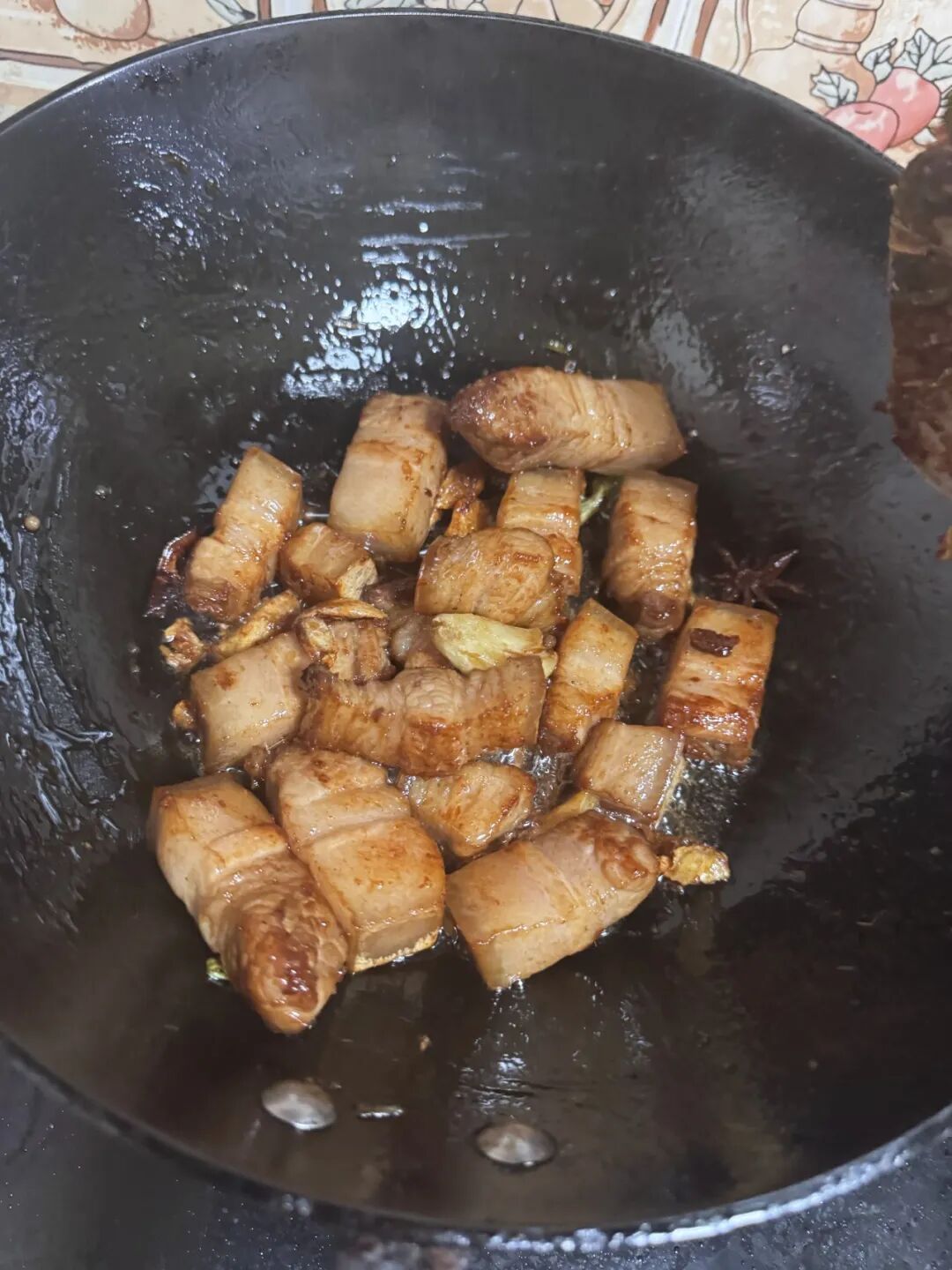
◉Caramelising sugar.
Add the dried bamboo shoots at this stage. Pour the rice wine and soy sauce along the hot edge of the wok to release a deep, aromatic scent. Add water and bring to a rolling boil, skim off the scum, then transfer the mixture to a clay pot to braise. Heeding Master Dongpo’s advice, do not lift the lid until it has simmered for a good three or four hours. The resulting braised pork with dried bamboo shoots is sublime: the pork belly melts in the mouth without being greasy, while the shoots have absorbed every ounce of the broth’s richness, emerging glossy and delightfully springy.
Digging for bamboo shoots in the bamboo groves of my hometown
As a return gift, I sent Xiaoya a parcel of dried peach-blossom bamboo shoots prepared by my father. It might sound fanciful, but for a long time I was convinced that bamboo shoots only grew in Hunan.
My hometown sits nestled within a vast sea of bamboo. Each year, around the Spring Festival, children would follow adults carrying hoes into the hills to dig for winter shoots. These treasures lie concealed beneath the soil, and without a seasoned eye, they are remarkably hard to locate; coming back empty-handed was only too common.
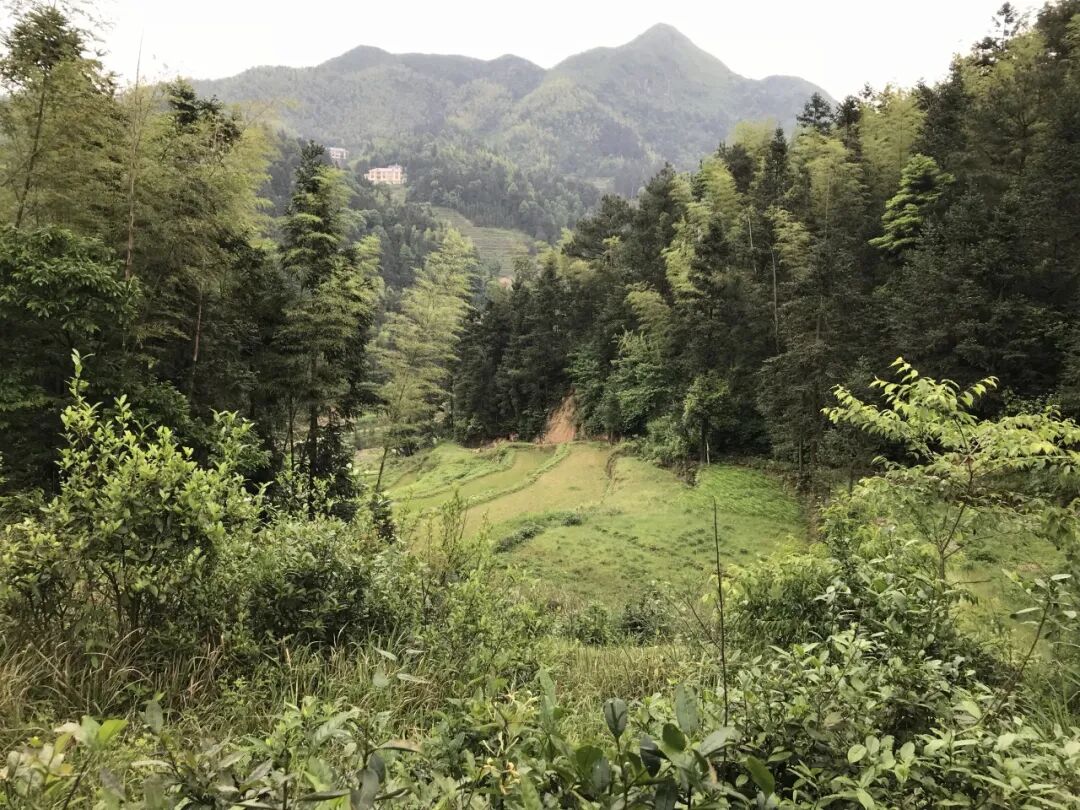
◉The bamboo forest in my hometown.
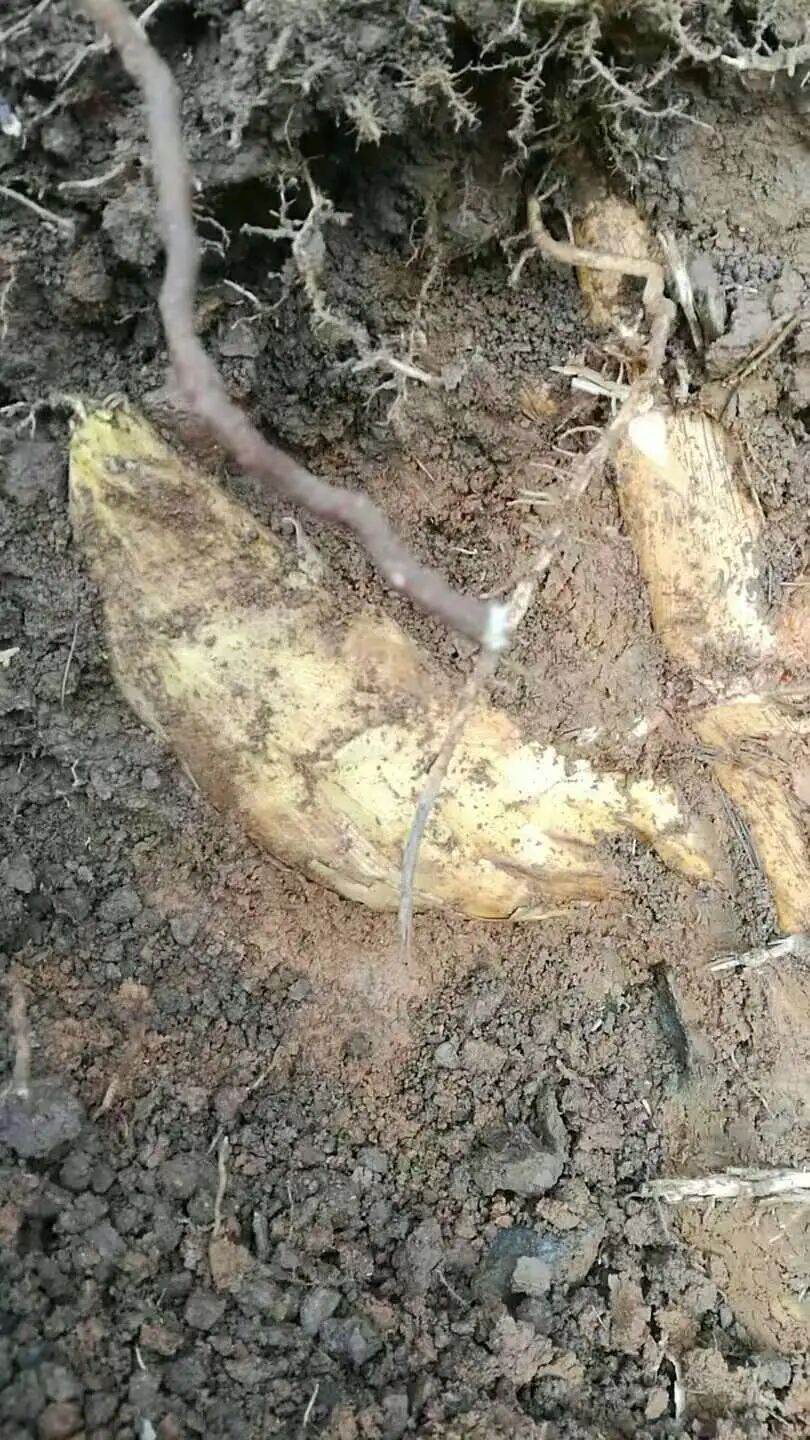
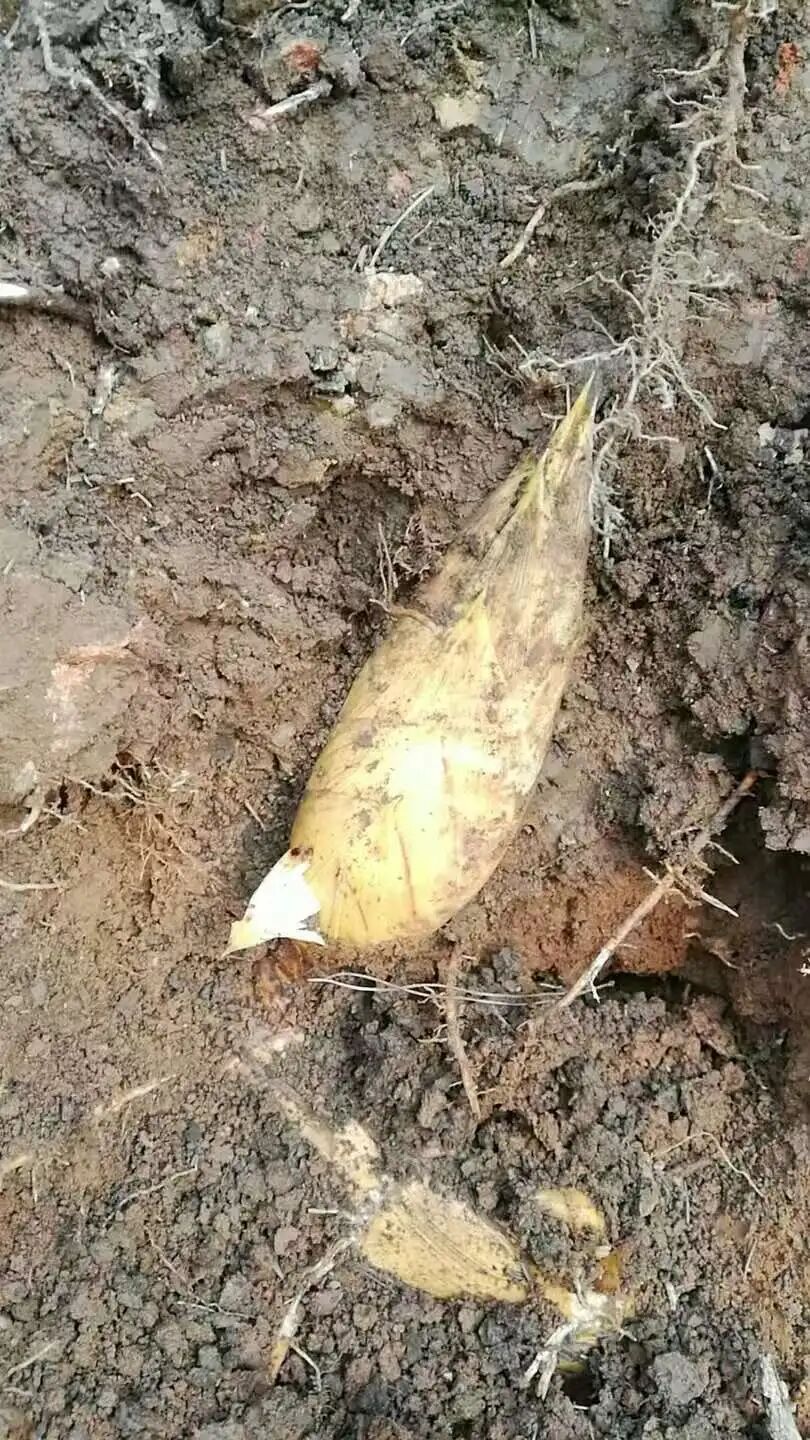
◉Carefully excavate the entire winter shoot before severing it. Photography: Luo Shunhua
My third uncle could tell which grove would yield the most shoots simply by the colour of the leaves and the thickness of the stalks. He would then study the curve of the soil mounds to trace the direction of the rhizomes, dig along that line, and never come up empty.
Winter bamboo shoots are small, their flesh impossibly tender, making them a real treat; to leave them in the hands of an unskilled cook would be a dreadful waste. Fortunately, my uncle was not only an expert forager but also a brilliant cook when it came to them. He would make a pot of five-spice skin-on pork belly. The winter shoots were peeled, keeping the tender inner husk, and sliced. Lard was heated in the wok, green garlic leaves and chopped chillies were added and stir-fried until fragrant, then the sliced pork was added to simmer alongside. The clear sweetness of the shoots perfectly complemented the rich, succulent meat, making it a table favourite that was always snapped up. The shoots invariably vanished before the pork did.
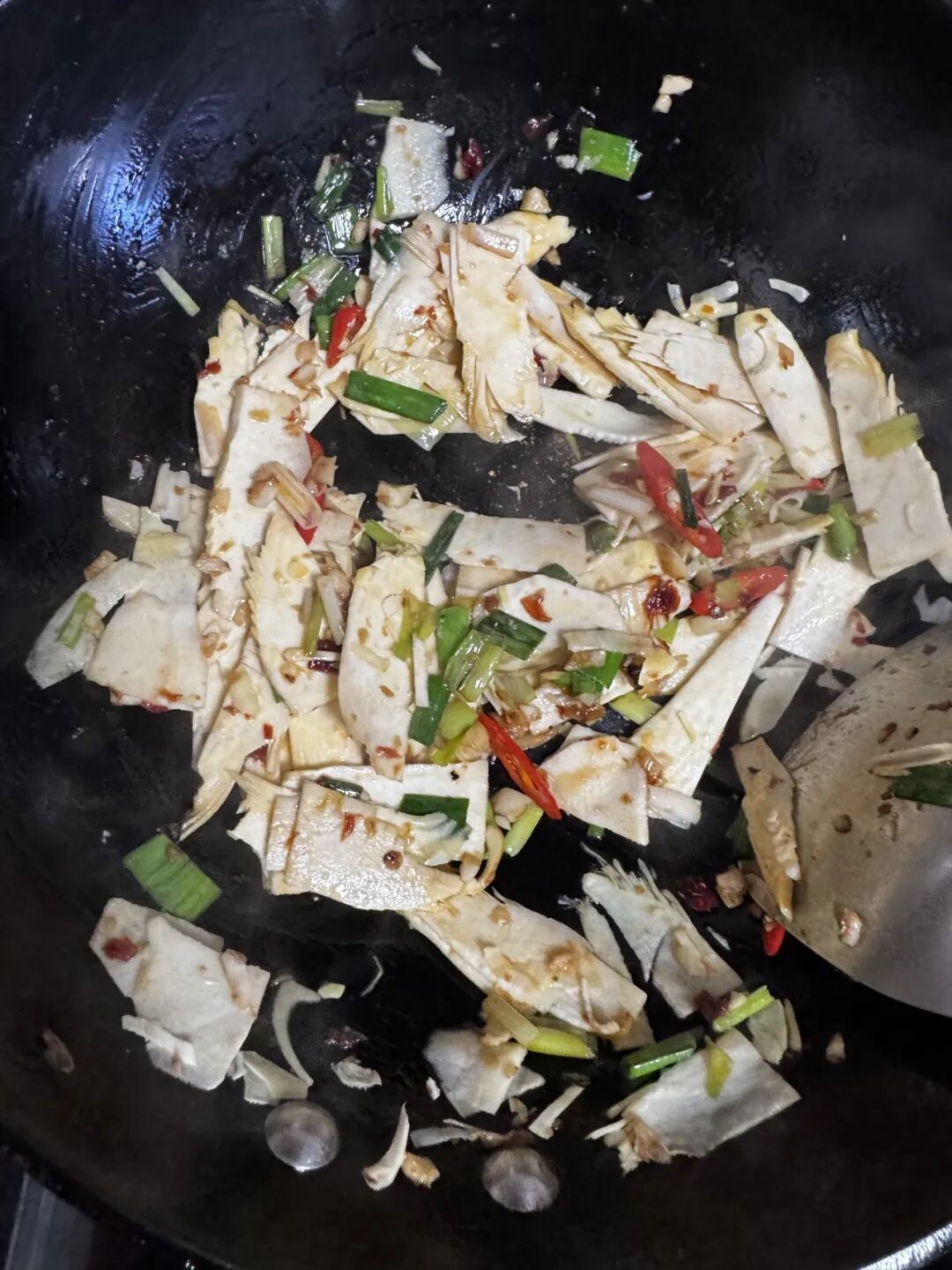
◉Stir-fried winter bamboo shoot slices.
Spring bamboo shoots that emerge around Jingzhe (Awakening of Insects, early March), just as the peach blossoms first open, are also known as “peach-blossom bamboo shoots” and are ideally suited for drying.
At this stage, though the shoots have poked through the soil, most of their length remains buried. A sharp-eyed forager can wedge a hoe beneath the earth and lever out a big, plump specimen. Carried down the mountain basket by basket, the women deftly strip the husks and slice them in half. A large pot of water is brought to the boil, and the pieces are tumbled in, churning up a thick layer of white foam. Once half-softened, the shoots are scooped out, spread on bamboo trays to dry in the shade, or hung over the kitchen fire to smoke.
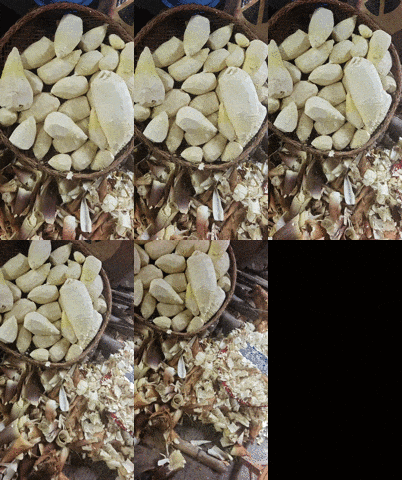
◉ Peeling bamboo shoots to make dried bamboo shoots.
If the dried bamboo shoots absorb moisture and soften, they are liable to mould; they must be steamed and sun-dried again, with the process repeated several times until the shoots have shrunk to one-seventh or even one-tenth of their original volume, becoming hard and dark brown like ancient fossils, and only then is the work complete.
The humid air in the south means dried bamboo shoots easily absorb moisture and mould. When fully dried, they weigh very little and cannot fetch a decent price. Shoots bought from the market inevitably involve some corner-cutting; smoking them, however, keeps them from going off. That is why the dried bamboo shoots our family eats are all made by my father.
In 2016, while I was selecting products for 无用真味, I mentioned to my father in passing that I’d like the team to try some dried bamboo shoots from back home. He ended up making around five kilograms of dried peach-blossom bamboo shoots and sending them to me. Fortunately, dried bamboo shoots keep well, but it still took me several years to eat through them. I even had to pack the remaining ones in every time I moved house.
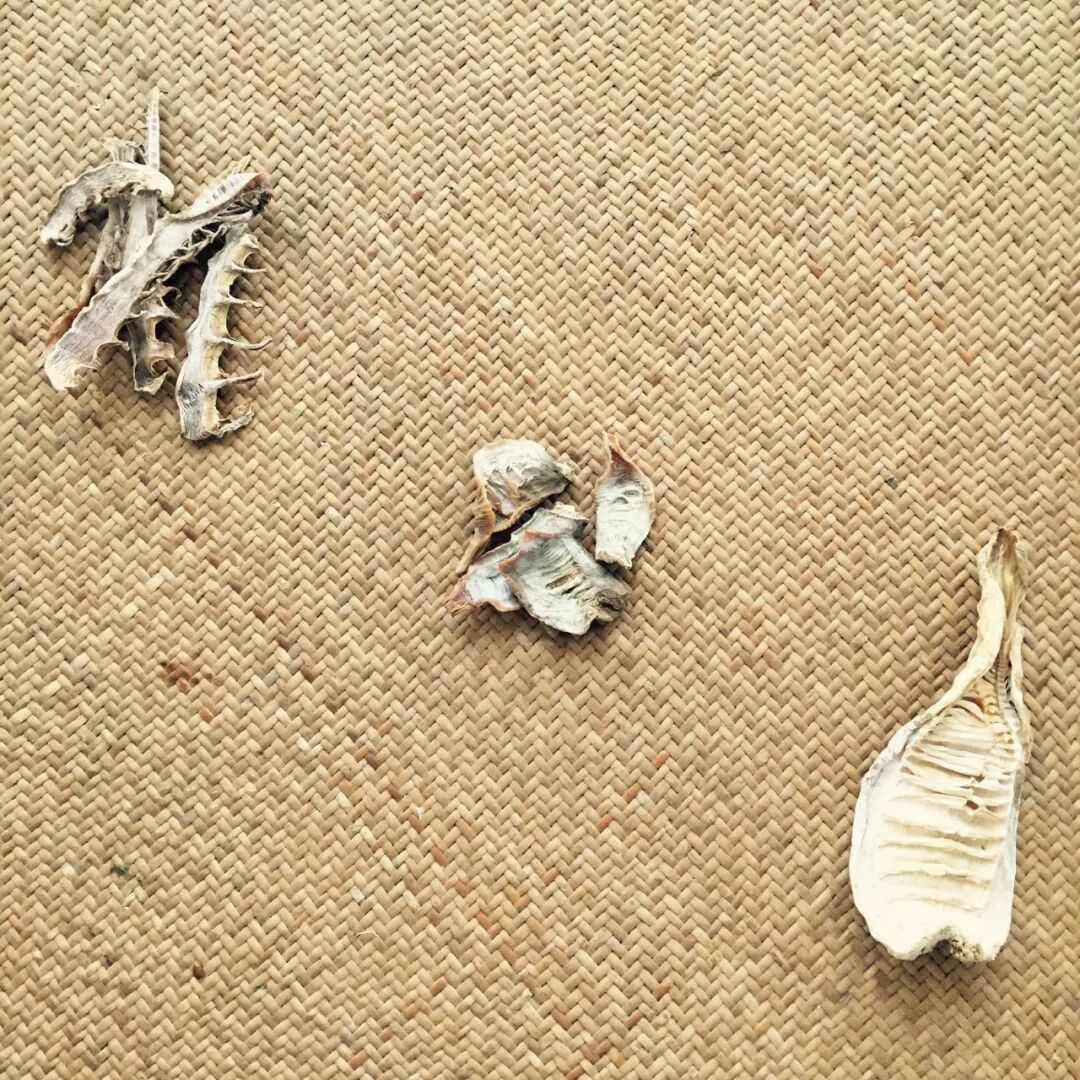
◉The small ones in the middle are the dried peach-blossom bamboo shoots my dad made.
These dried bamboo shoots require thorough rehydration. Following my father’s method, I soak them in water used to rinse rice for one or two days, changing it daily. I then pour both shoots and water into a pan and simmer for fifteen minutes. Once they have softened and regained their elasticity, I drain them. They can then be sliced for stir-frying or added to a soup.
Eat the Bamboo Shoots Now, Before They Grow Old
I have also tried a home-style, fire-dried bamboo shoot patty from my hometown. The shoots are boiled and finely chopped, mixed with chilli and salt, then pressed firmly into discs and slowly dried over a stove. To eat them, you steam them until fully cooked. They may not look particularly elegant, but they are a perfect accompaniment to rice. It was prepared by an elderly relative from my grandparents’ generation. Having only tasted it once or twice and never come across it in any local markets, I fear it may be a lost craft.
The fading of traditional flavours inevitably brings a wistful sigh to those who cherish the past, yet it also feels inescapable. As one well-known food documentary once observed: “To hand a tradition down is a blessing; to watch it fade is simply fate.”
The Anji bamboo shoot and peanut treat is much the same. When I first tasted the packet Xiaoya had sent, I was struck by a flavour I found hard to describe. The bamboo shoots had been utterly transformed into something quite different.
Tender shoots are boiled in salted water until soft, then cut into bite-sized pieces. They are simmered with peanuts, aged tangerine peel, spices, rock sugar and salt until the liquid reduces and the flavours have fully infused. Once left to air-dry in a breezy spot, the shoots and peanuts grow richer with every bite. The aged tangerine peel provides a palate-cleansing zest, while the sweet-and-salty profile makes it a snack that children cannot help but scoop up by the handful and stash in their pockets.
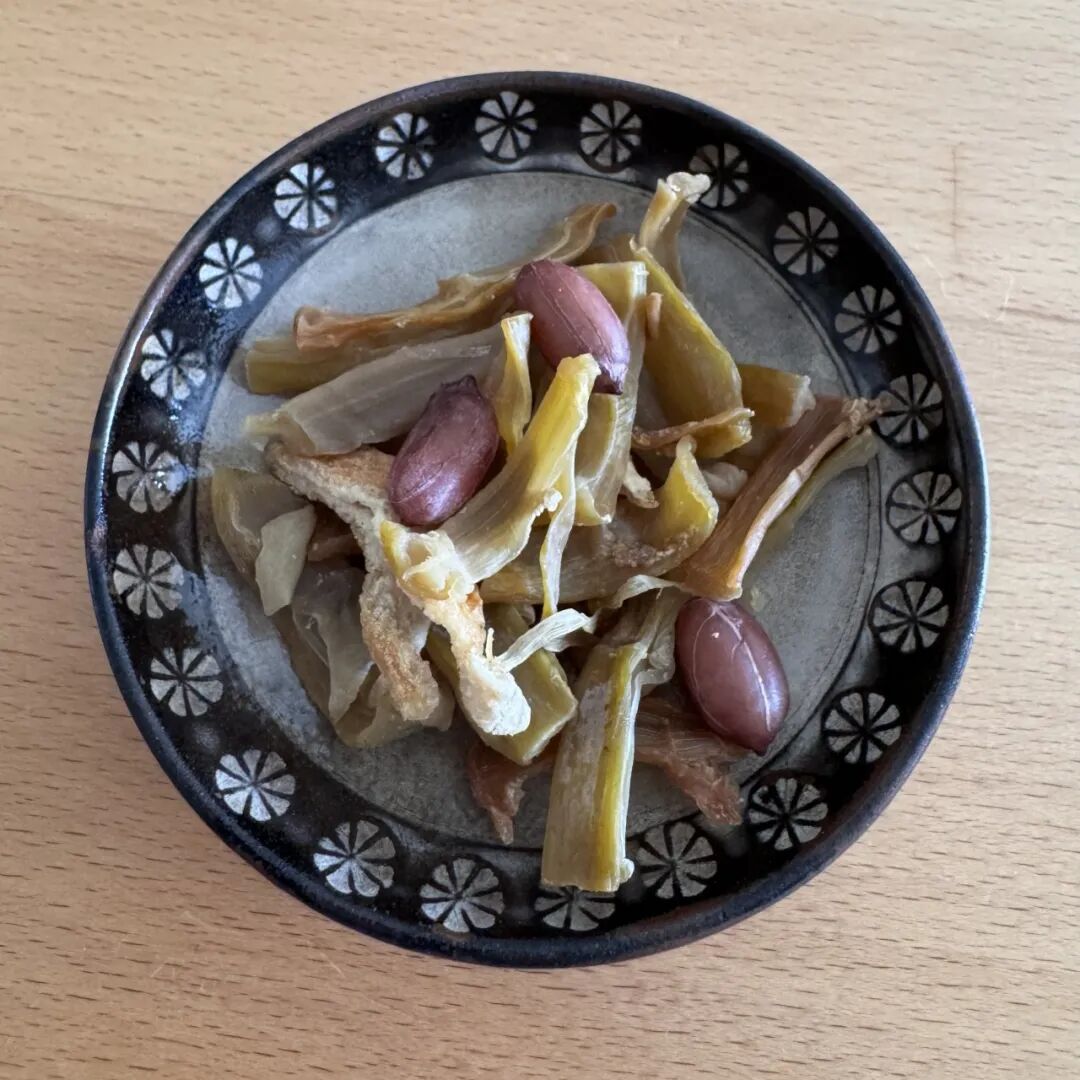
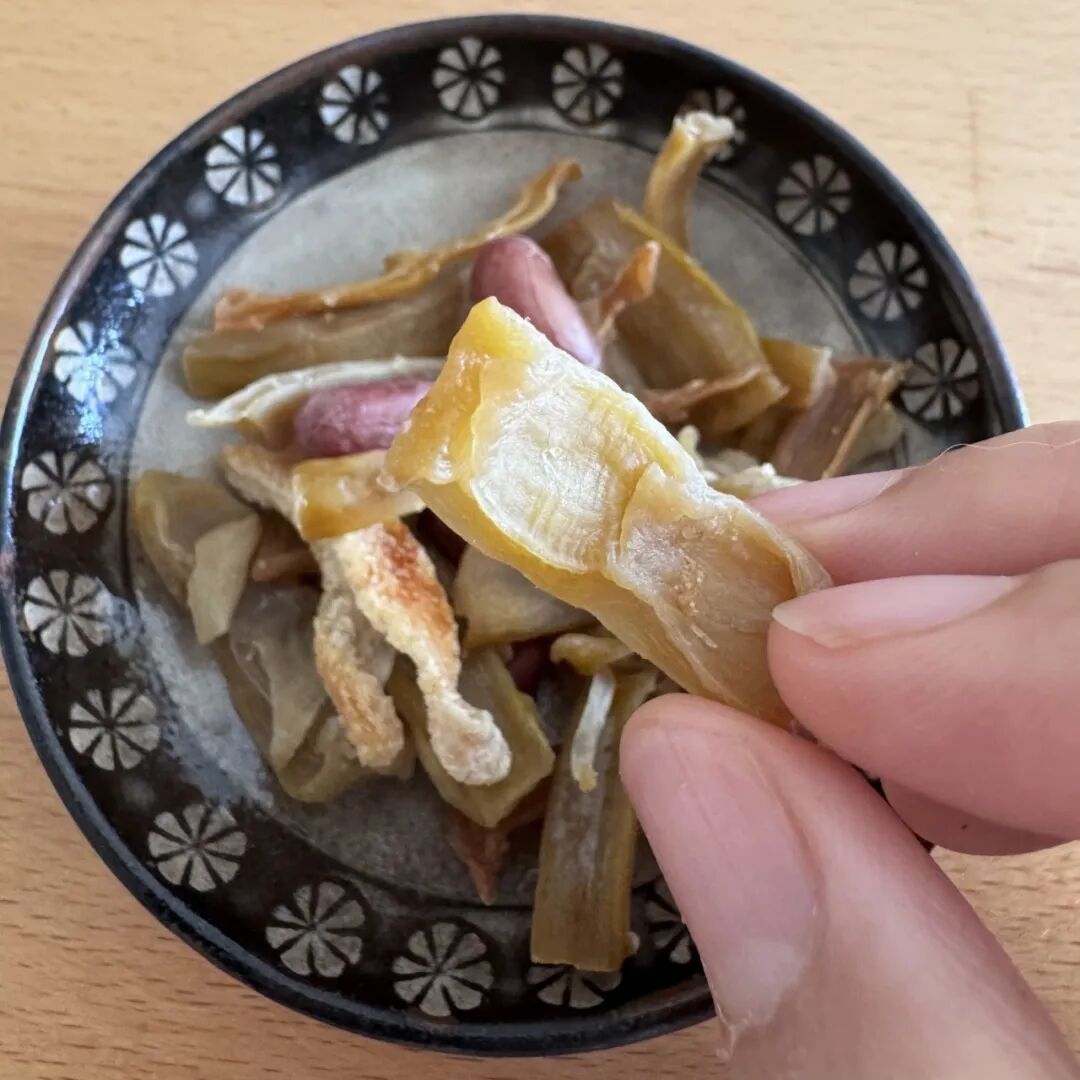
◉Anji bamboo shoot and peanut snack.
It sounds straightforward, but the preparation is quite labour-intensive. Xiaoya says only one elderly auntie in the village knows how to make it well. There used to be two flavours, but as she approaches eighty and finds it difficult to get the seasoning just right, she now only makes the sweet version.
Most people have likely long since lost interest in rustic local snacks. Yet for some, an unwavering devotion to the tastes of home endures—Xiaoya is one such person, as is my father.
After receiving the dried bamboo shoots my father sent, Xiaoya shared this reflection on WeChat Moments:
“Younger generations, do not dismiss local specialties. There is no reason to assume that anything air-dried or cured in the countryside is simply an unbranded, unregulated product, or that rustic produce is somehow unfit for a proper table. It is precisely these homegrown foods that allow our cultural traditions to be passed down through the generations, bringing the authentic flavours of the countryside to our dining tables in the most fitting of ways.
“While we chase international culinary trends and various nutritional theories, we would do well to look back at the preparation methods behind these traditional Chinese foods, and rediscover the flavours of natural ingredients hidden among the mountains and plains, market towns and villages—flavours that have been passed down through folk tradition for centuries.”
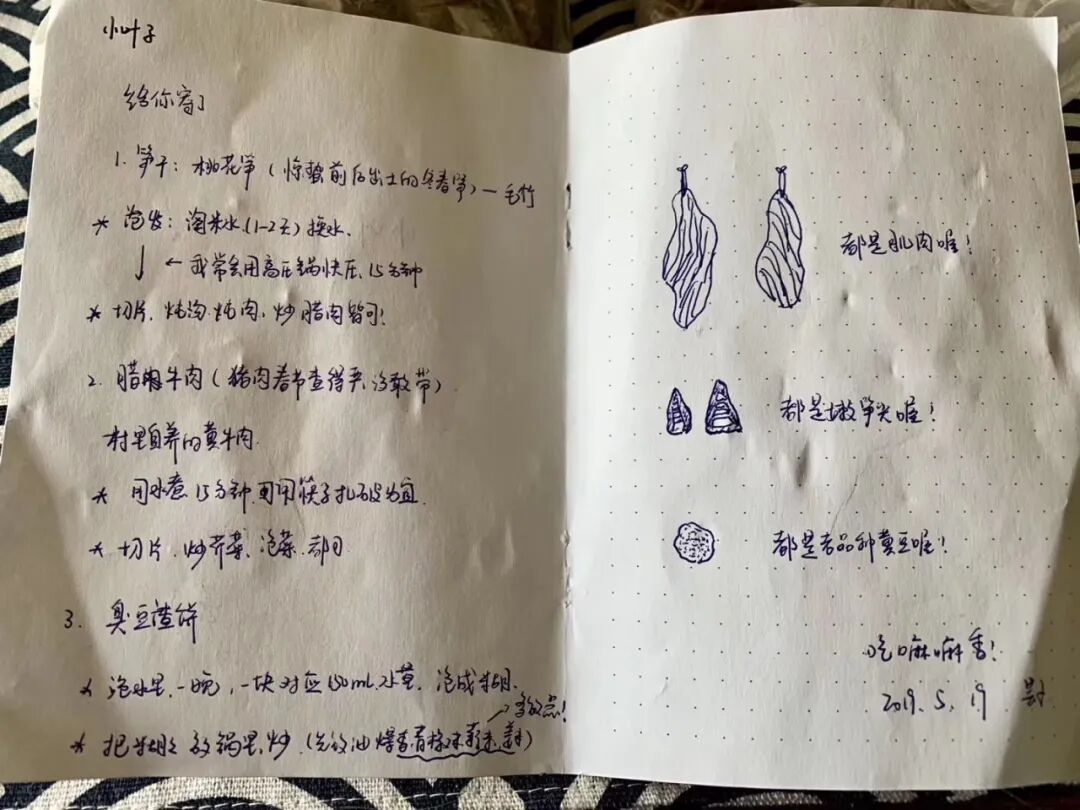
◉I included a note with the local produce I sent to Xiaoya, explaining how to prepare it.
Since last October, Dad has been in Beijing for treatment, and almost every day he talks of going home, saying the food here just doesn’t suit him. This February, a cousin from our hometown sent through a box of cured meats and winter bamboo shoots.
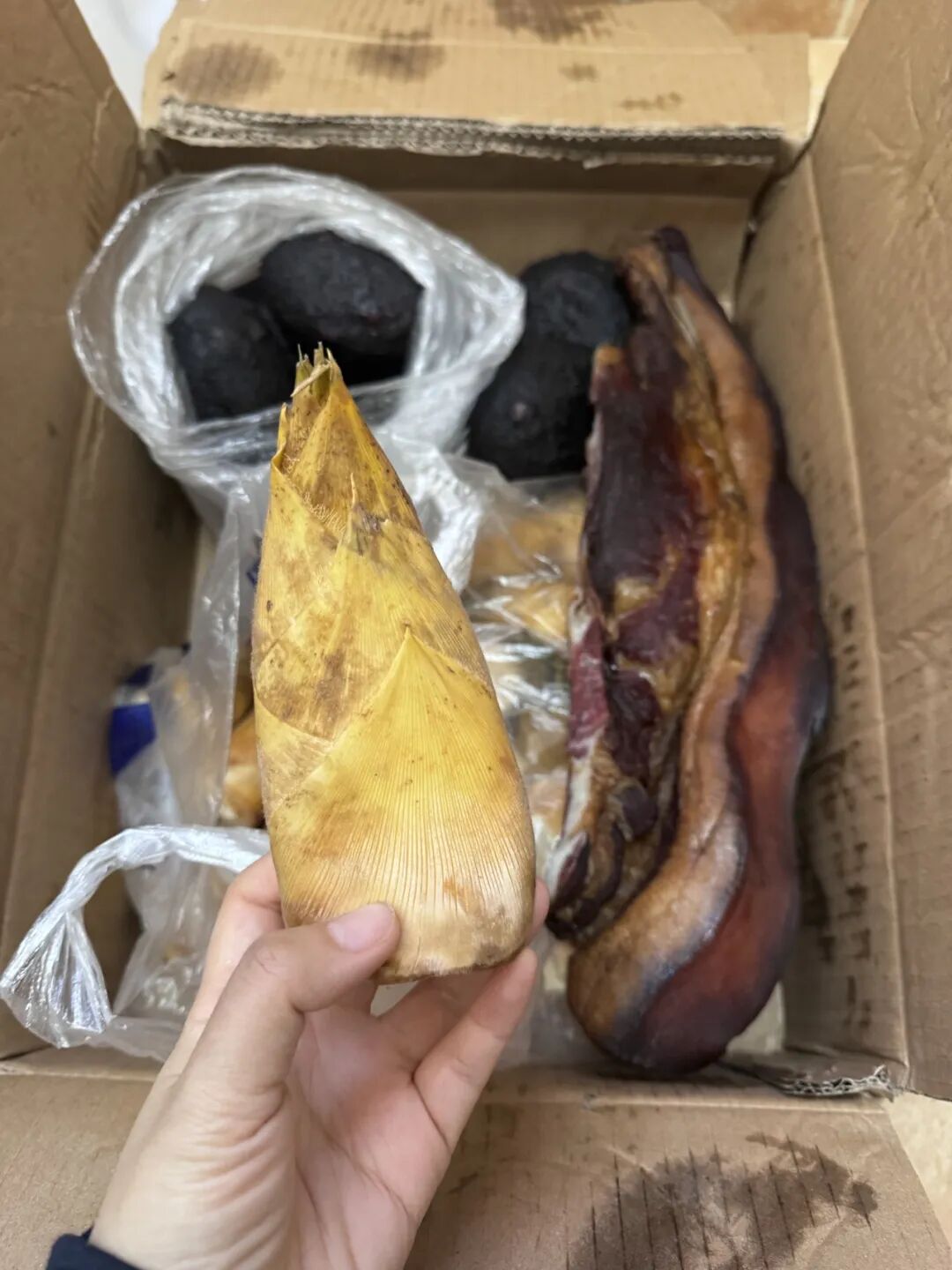
Seeing the shoots, Dad lit up as if he’d run into an old friend. He smiled to himself, slipping them into bags one by one while feeling their weight. A few days later, I spotted a row of brown shapes lined up on the radiator. On closer inspection, they turned out to be dried bamboo shoots.
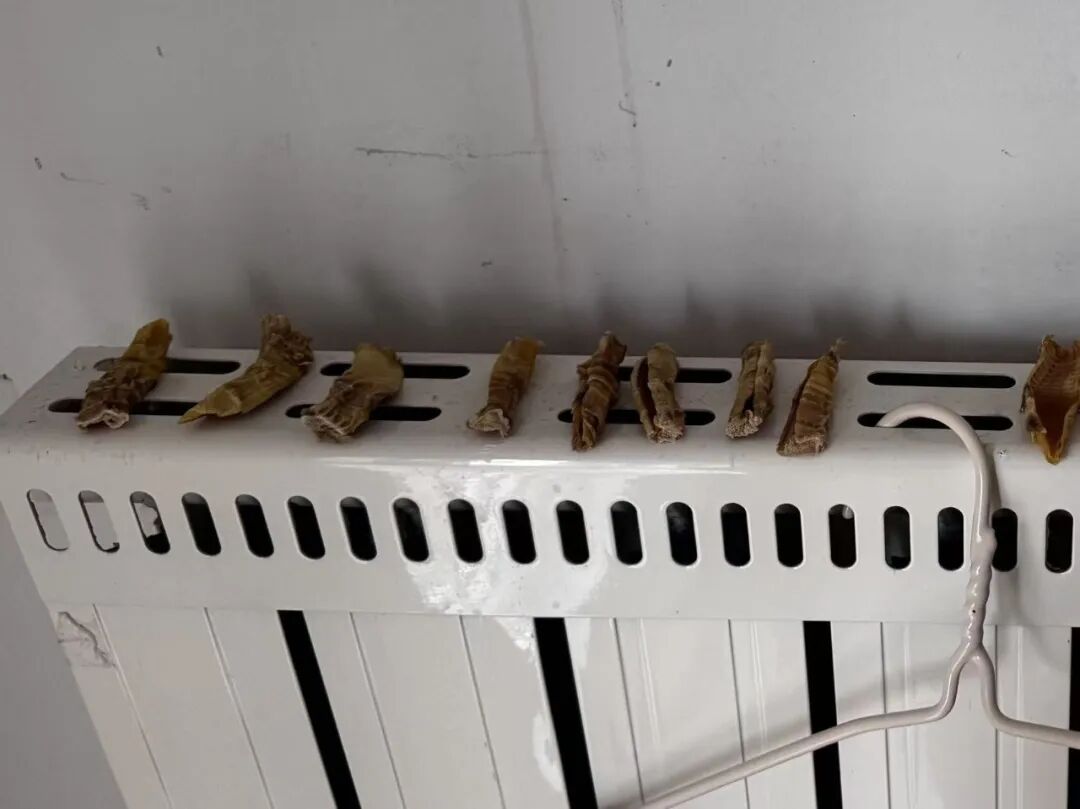
I was still staring when Dad came over, gave them a squeeze, and decided they were thoroughly dry. He gathered them into a bag; from that original large sack of winter shoots, all that remained was this small pouch of dried ones. He hefted it in his hand and said, “A little over 100g, made from a whole kilogram of shoots. Enough for two proper meals.”
I knew Dad was feeling homesick again. It wasn’t the flat in the county town he was missing, but that old wooden house ringed by bamboo groves, where his grandparents had lived and where he’d spent his own childhood.
From a shoot pushing through the earth to a twenty-metre-tall bamboo, it takes just sixty days. From a single stalk to a lush green forest covering the hillsides, it takes just six years. Now sixty-four, Dad’s happiest memories go back to when he was nine and out herding cattle. He’d climb to a high point on the ridge and gaze out over the distant bamboo groves: “It was so open and vast. When the wind blew, the bamboos swayed, and the silhouette of the hills seemed to shift right along with them.”
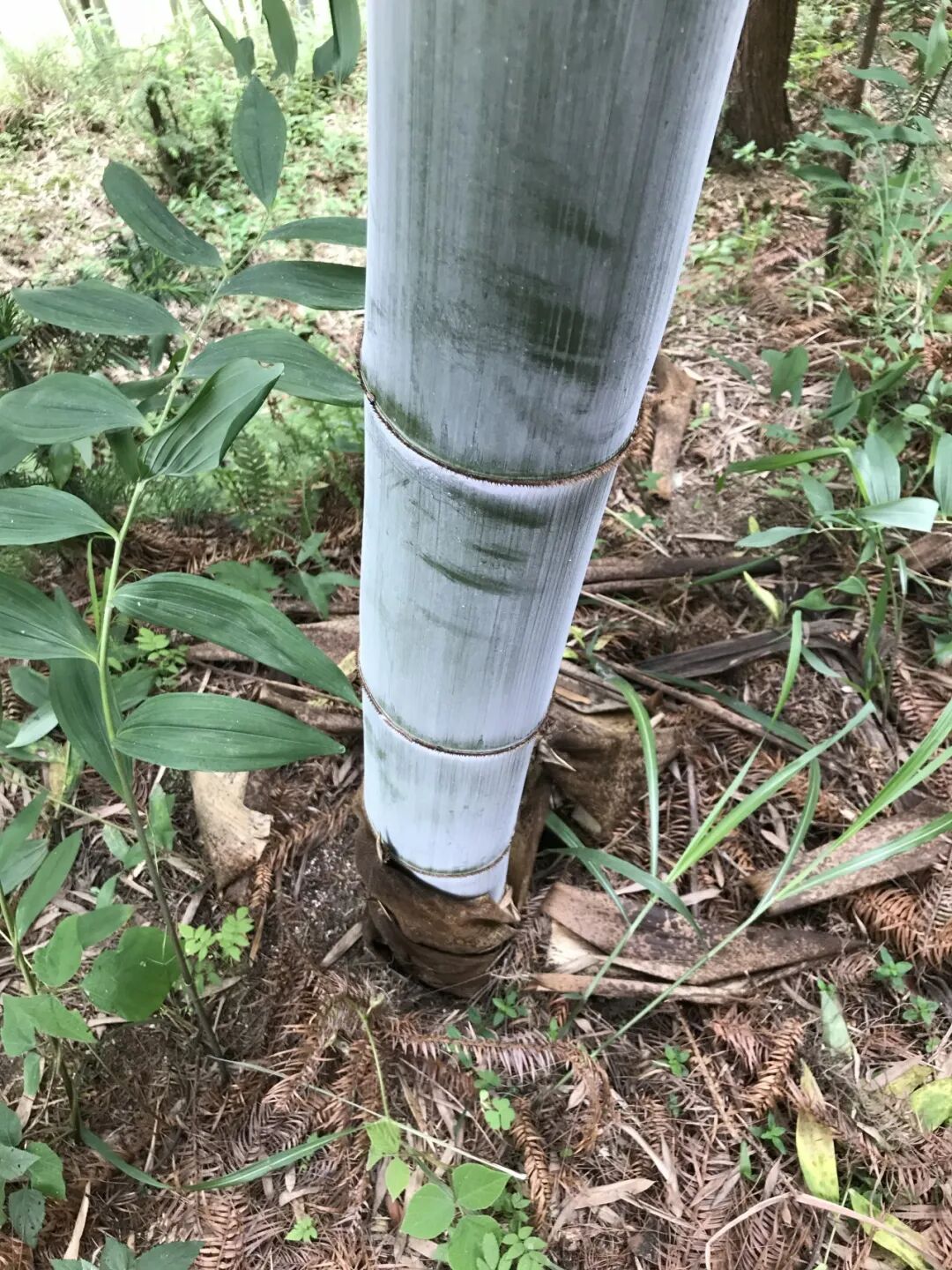
◉The new bamboo, still wearing its husk, has already grown as thick as a bowl.
Every year brings a new crop of bamboo shoots. There are those who live for that single bite of tender crispness, seeking to savour every pleasure fully, and those who preserve the fresh shoots as dried bamboo shoots, saving them to enjoy slowly over time. But whichever you are, you’d best eat them now – before they go tough, or before we do.
– This is Foodthink’s 811 th original article –

Foodthink
Author
昙子吃了我 (Tanzi Chi Wo Le)
A whimsical soul balancing the daily grind with a gaze fixed on the stars, with a quiet faith in the unadorned power of all things. Also shares occasional writing on the WeChat public account “昙子吃了我” (Tanzi Chi Wo Le).
Unless otherwise stated, all photographs are by the author.
Editor: Yuyang
Layout: Xiaoshu
Scan to tip and support original food writing
▼
Click the image to read related articles