Why I Suggest You Never Throw Away These Kitchen Favourites

Foodthink says
Is there a food-related item you have used for years that continues to be part of your daily life? Recently, Foodthink invited readers to share their takes on “long-termism in the kitchen”.
When an object is passed down through generations, it is no longer just a tool. In its clear signs of use, we see a family’s life and memories preserved.
Interestingly, essential modern appliances like kettles and rice cookers are conspicuously absent from our list. What is the reason for their collective absence?
By contrast, pots and knives have emerged as perennial favourites. Pots appear most frequently, with cast-iron vessels taking the lead. You may move home time and again, but the pot always goes with you. Judged purely on practicality and durability, cast-iron cookware truly embodies long-termism in the kitchen.
Naturally, we have saved the most remarkable example of “long-termism” from this collection for the very end. Do not miss it.
Through this call for submissions, we hoped to draw attention to the older items in readers’ homes. We also hoped that in this era of “replace-when-broken” consumption, these objects could be preserved and kept in use through mending, repair, and continued care. Thank you to every reader who contributed. You have shown us the quiet dedication behind everyday life and home cooking, and allowed us to glimpse the stories hidden within each household.
Pots
Yu Yang
I have a steaming pot at home that is at least ten years old. It is hard to pinpoint exactly when I started using it; in my memory, it simply seems to have always been in the kitchen. I know the scorch marks it has gathered over the years like the back of my hand, and I am confident that no matter where I saw it, I would recognise it instantly as our family’s pot.
This pot originally belonged to my mother, who used it for everyday cooking. When I graduated, got married, and moved out to live on my own, she passed it down to me. The base has been blackened by years of flame and smoke. I often wonder how many meals it must have produced to become quite so dark.
I have moved home several times with this pot, and the next move should be my last. Every time I use it to heat rice, boil soup, or steam corn and egg custard, it is quick and heats everything thoroughly. Compared with a wok, it always gives me a sense of ease. Once the prep work is finished, I can simply step back and wait patiently for the food to cook through.
Once, in a rush to get dinner on the table and with the wok occupied by another dish, I tried making ginger-duck in the steamer. It completely burned, haha. It just goes to show: a steamer is a steamer, and a wok is a wok. You cannot expect a steamer to double as a wok.
Its base is exceptionally thick and the handle is remarkably sturdy; I should be able to get many more years out of it. As long as this old piece remains usable, I’ll keep using it. Unless it actually breaks, I see no compelling reason to replace an old item just for the sake of it. It brings to mind the recent film *Her Story* (Chinese film), where the mother’s decision to discard her old possessions symbolises a clean break with the past, paving the way for personal growth. Growth is essential, but the ability to manage one’s belongings is a valuable quality that should not be cast aside. It reflects a person’s capacity to take responsibility for their possessions and their life. When progressivism envisions a progressive lifestyle, it ought to be grounded in the tangible details of everyday life rather than abstract ideals. Keeping an old item, conserving resources and protecting the environment—these are genuinely progressive acts, and we should take pride in them.
Shenlan
I’ve owned my cast-iron pan for more than ten years now, and since I started using it, no other pan has ever felt quite right. I bought the version with two handles; it’s generous in size, so even when I’m cooking larger quantities, tossing the ingredients is effortless. The heavy gauge means it retains heat beautifully once warmed up. From pan-frying and boiling to simmering and deep-frying, it responds exactly how I want it to. A quick stir-fry preserves the vegetables’ vivid green colour and fresh taste, while slow-cooking clay-pot rice produces a wonderfully crisp bottom crust.
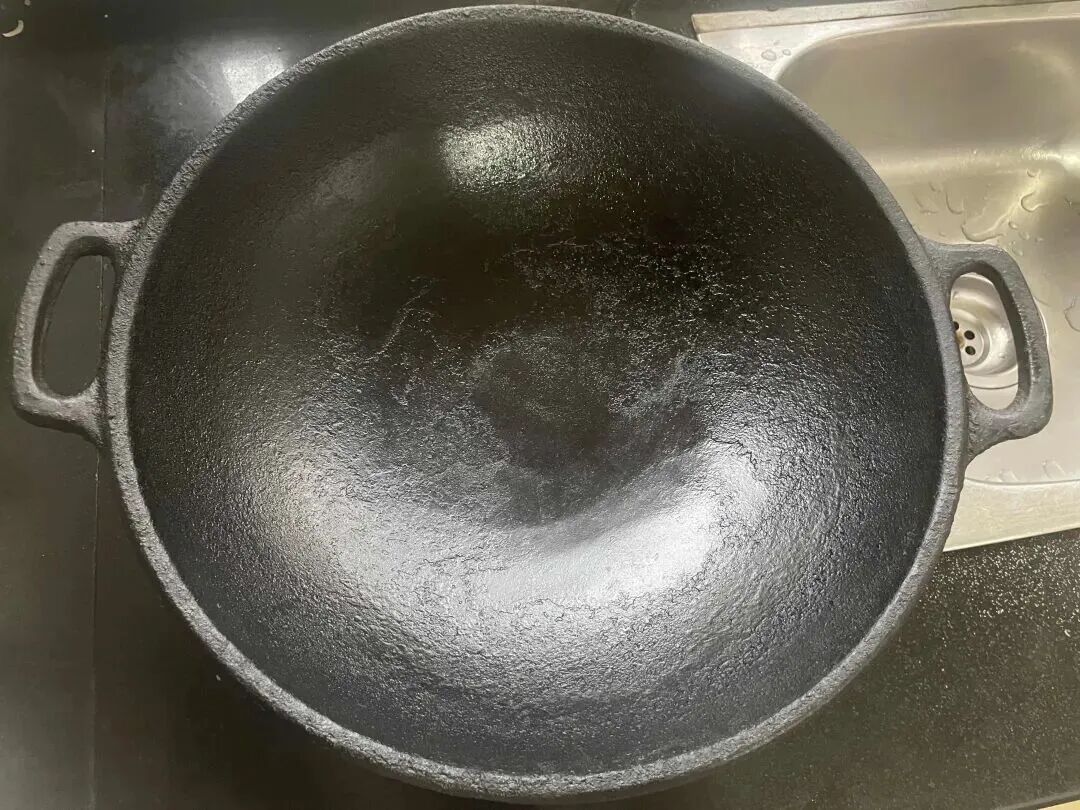
After over a decade of daily use, the pan’s surface has developed a deep, glossy, well-seasoned sheen. I joke with friends that if we ever had to flee a famine, we wouldn’t bother packing anything else—just sling the pan over our shoulder. We could scrape together a bowl of clean water anywhere, boil a broth, and it would taste rich and savoury. After years of daily cooking, the pan has absorbed the essence of countless ingredients and practically seasons food all on its own.

Yvette
I originally bought this cast-iron pan years ago because I was mad for steak. It cost around 500 yuan. I’ve packed it with me for every move since. I went from a complete novice who didn’t know how to properly season a pan to looking after it quite well now, and this piece of cookware has been a silent witness to my culinary progress. There was a stretch when I lived on takeaway, and it sat locked in a cupboard, unused for nearly a year. When I finally dragged it out and put it back to work last year, it felt just like catching up with an old friend.
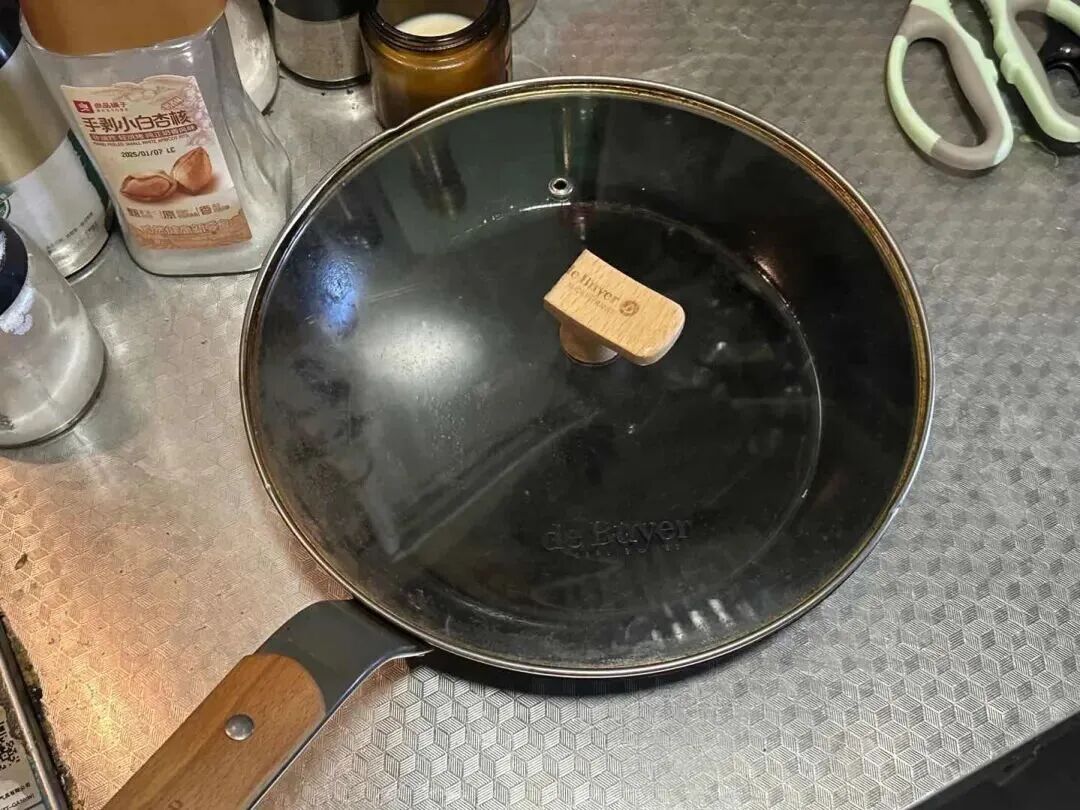
I’m also curious: which kitchen items simply don’t lend themselves to long-termism? I know non-stick pans are meant to be replaced, but what else? Which things should really be binned on a regular basis?
Zhu Yijuan
I checked my Taobao purchase history and found that I bought my cast-iron pan on 26 February 2013—thirteen years ago! It’s the kitchen tool I use most every day, for every meal, through every season. I actually bought two identical pans back then, when my daughter was still at secondary school. I kept one at home, and when she married, she took the other to her new place. Even now, whenever I visit her, I still insist on using my own pan.
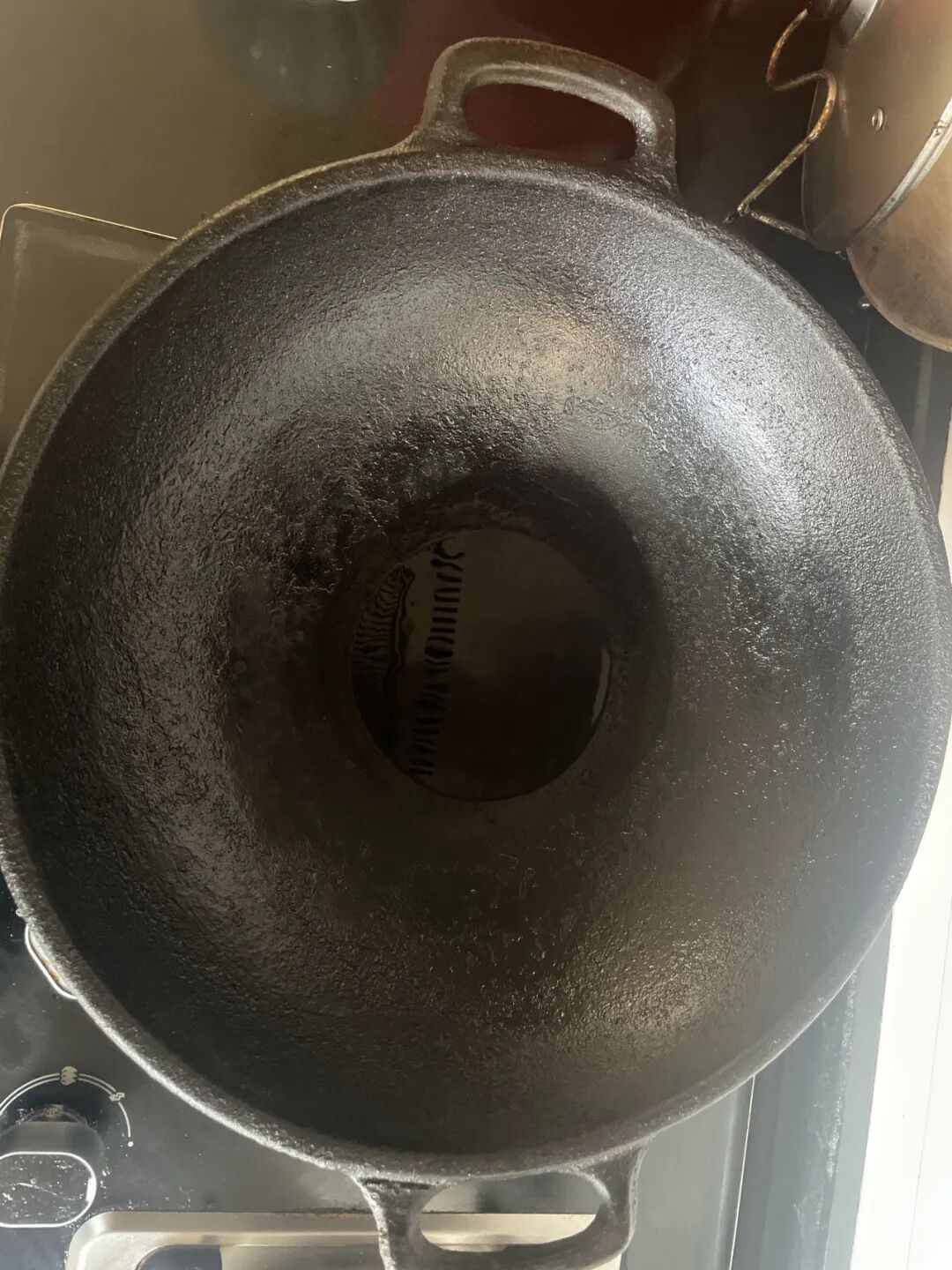
Que Yiyi
I own a Jianshui purple clay steam pot, which my mother probably bought when she visited Jianshui on holiday. She says it’s been over thirty years. I’ve moved house several times from childhood to now, and it’s come along with us every single time. Last year, my mother finally brought it over to Japan for me. It has never been replaced because steam-pot chicken can really only be made in this specific pot 😂
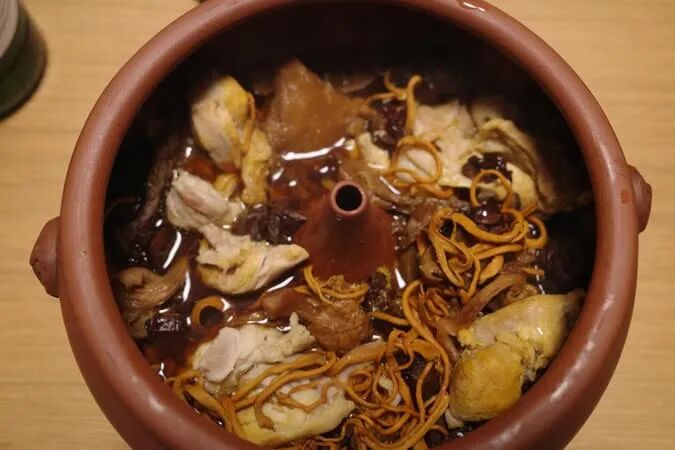
During the pandemic, I suddenly craved steam-pot chicken one day and mentioned it to my mum just once. When she and my dad came to visit afterwards, they brought this steam pot from home for me. Steam-pot chicken is a celebrated dish of southern Yunnan. It also appears in the writings of the late Wang Zengqi, who described eating it as a way to nourish one’s vital energy. It was also a guaranteed fixture at banquets throughout my childhood. With its tender chicken and rich broth, a steam pot in a Yunnan household is probably as commonplace as an octopus takoyaki grill in an Osaka home. Last summer, when my mum unpacked the pot from her suitcase, she told me it was likely around my age. I was taken aback to realise just how long it had been with us.
Anonymous
I have a soup pot that I stopped using for broths once I cut back on meat. Instead, I repurposed it for pickling: Chinese cabbage and green cabbage in the winter, and watermelon rind in the summer. It has served me well in this role for many years.
In truth, I rarely discard any of my kitchenware. The real secret lies in resisting the urge to buy appliances: I have no rice cooker, no microwave, no juicer, and no blender. I manage to prepare any dish I want using nothing but a single saucepan, a frying pan, and a mortar and pestle.
enamelware
Given the relative scarcity of goods and limited consumer choices at the time, enamelware became one of the most ubiquitous household items in Chinese homes by the late 1990s. Compared with other materials, these pieces are robust, long-lasting, and resistant to rust; they truly embody the old adage that a bit of mending and patching will see them through for another three years. In response to our recent call for submissions, numerous readers shared stories of the enamelware still in their homes. These objects are more than just shared memories of a bygone era; they reflect a profoundly different relationship with possessions, one defined by a reverence for things that stands in stark contrast to today’s consumer culture.
Heidi
This enamel basin has been in my family since I was a child, so it is likely around forty years old. It originally stayed with us in Shiyan, and we have since taken it with us to Wuhan.
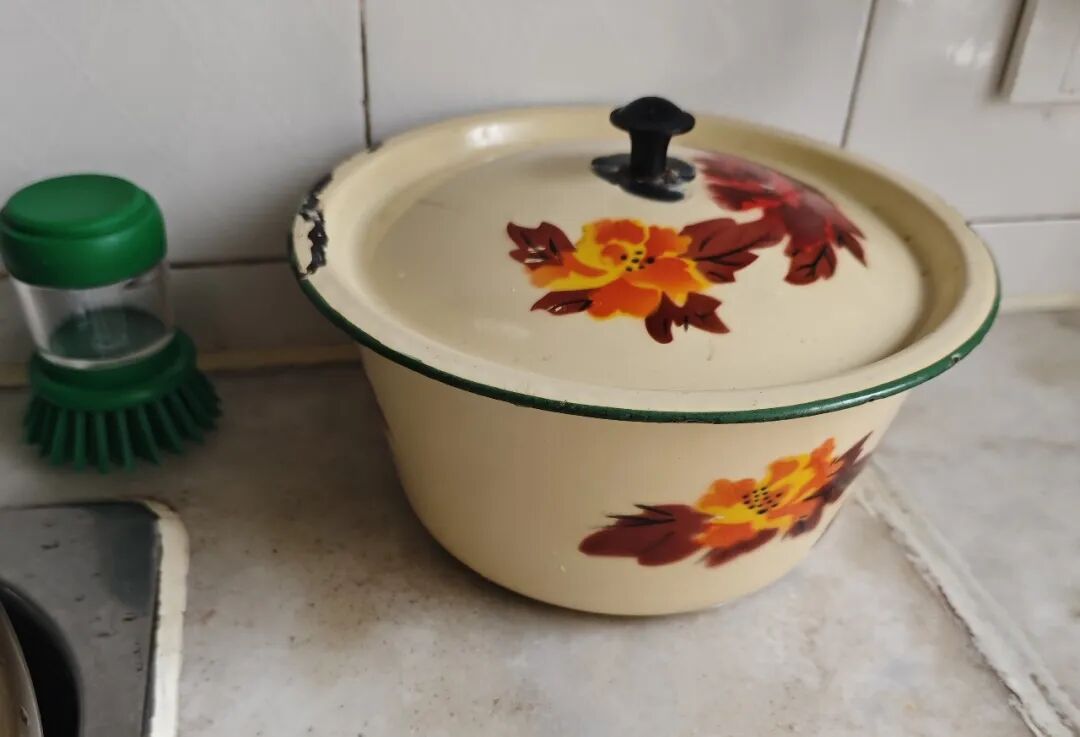
As far as I can recall, it was originally used for serving soup. After we moved to Wuhan, it sat unused for quite a while. We eventually repurposed it for storing water, but over time, a few small rust spots began to appear on the interior. It now collects the cloudy water from second washes, which we use to water the plants on the windowsill.
My feelings towards this pot have shifted over time. There was a period when I wanted to bin it because I found the pattern rather tacky, but gradually, the design has grown on me and started to look quite pleasing.
Shi Keke
I own an enamel grain bin manufactured in 1983. I picked it up on Xianyu for twelve yuan, and it has been in use for two years now. I have no idea how long it served its previous owner, nor how long it sat gathering dust. Since I acquired it, it has been reliably storing rice and keeping pests at bay. When we moved from Tianjin to Chengdu, this bin made the journey with us.
Previously, we had a persistent weevil problem; the pests kept migrating between different batches of grain, which was incredibly frustrating. After bringing this bin home and transferring all the rice into it, the infestation vanished completely. This lightweight enamel container has proven far more suited to my needs than any ceramic alternative.
My parents also own an identical enamel bin, originally brought over by my grandmother. For years, it was left in the courtyard over winter to store vegetables, but unfortunately, it was left behind during a recent house move. I often think of it and hope it has found another owner who will cherish it as much as we did.
The Flintstones
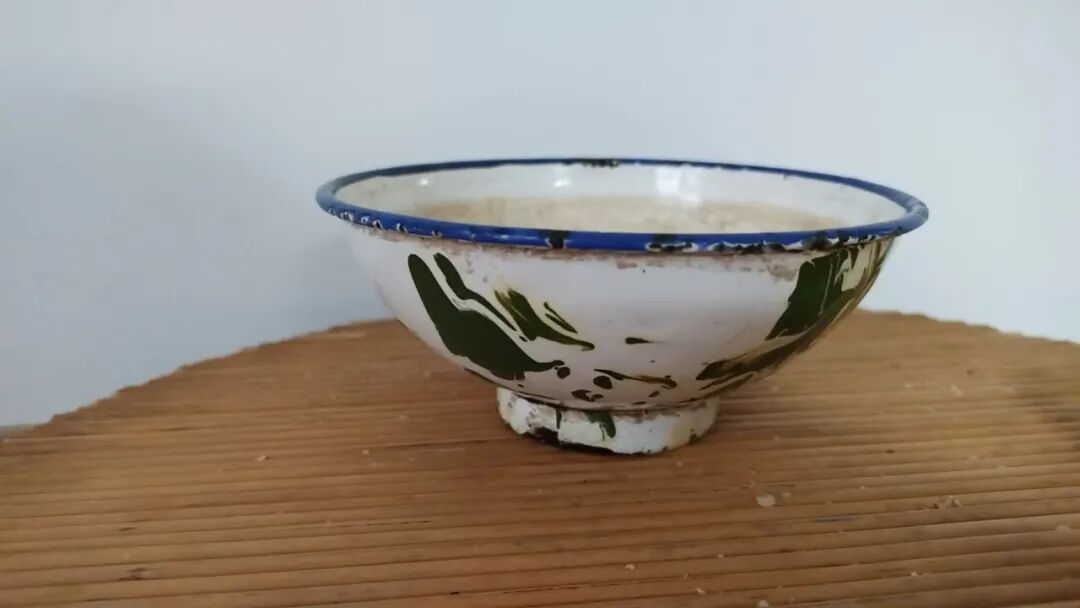
As far back as I can remember, there has been a blue-rimmed enamelware bowl in our home. It was supposedly set aside for me when I was little, specifically because I loved wearing bowls as hats and broke far too many. In my youth, I used it for my meals; as I grew older, it became my bowl for porridge. Later, once we acquired a microwave, it was reserved only for piping-hot porridge fresh from the stove; anything that had cooled would be transferred to glass bowls for heating. These days, it shares shelf space in the cupboard with a collection of “microwave glass cookware”, lingering in a state of semi-retirement. Even in my earliest memories, it was already well-worn; the scratches across its surface and the chips along the rim remain exactly as they were. The only detail I recall hazily is the motif on its side: sweeping curves that look like flowing water or drifting clouds. As a child, I used to picture them as the celestial mountains or the Milky Way from *Journey to the West*. I had always assumed the pattern was blue, yet glancing at it just now, I realised it was actually green. On closer inspection, I spotted a faint “a certain porcelain factory” mark on the base. Who would have thought an old kitchen staple could still hold surprises?
Liu Tongxue
The enamel cup handed out by the school during my primary school military training has been with me for 33 years. I used it for washing up and drinking water at the time. Most of my classmates tossed theirs as soon as training wrapped up, but I’ve kept it ever since. It’s wonderfully handy for soaking beans, serving soy milk, catching water, scooping rice, and handling flour. Even though similar enamel cups are sold online nowadays, none quite match its build or feel.
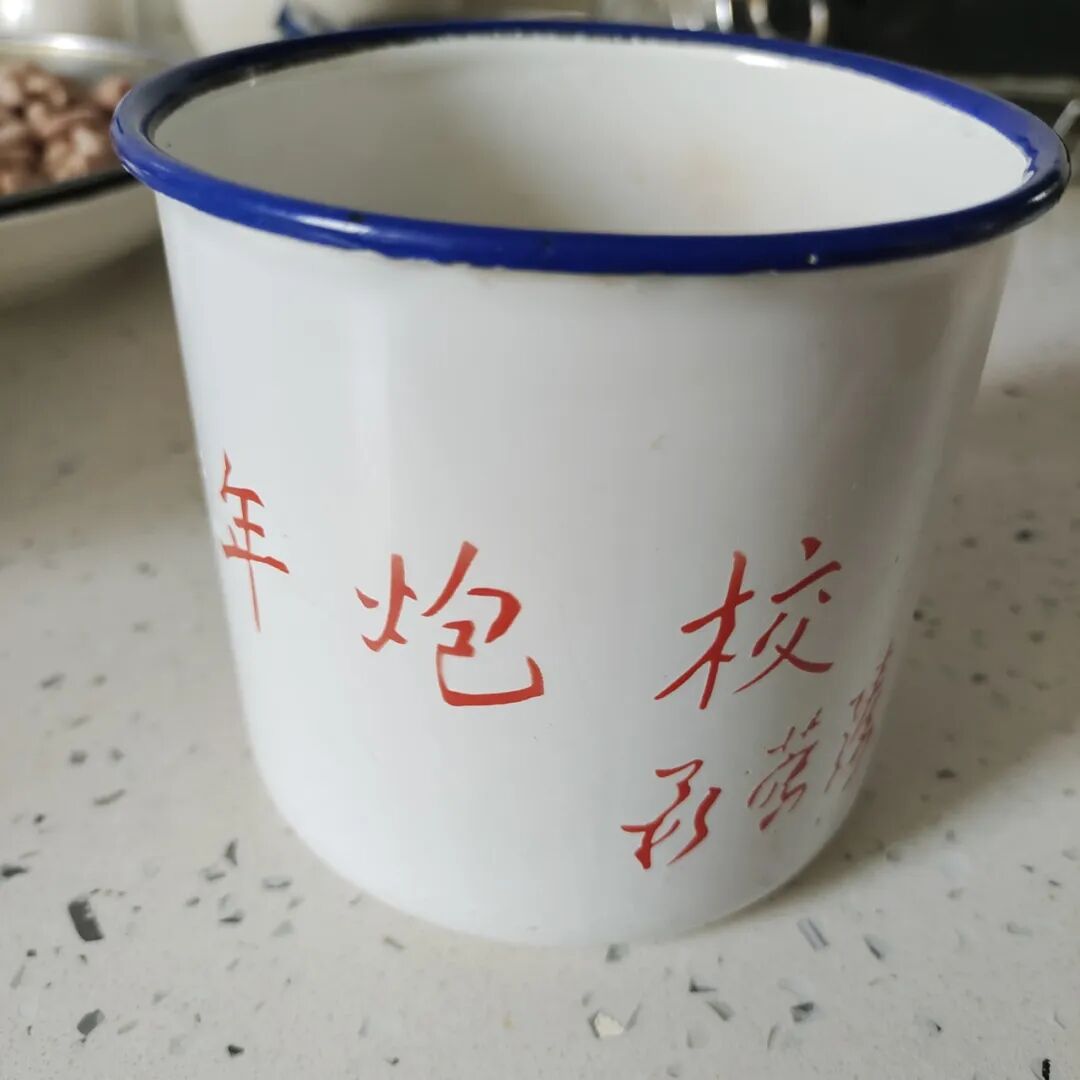
Once, while camping, all my friends packed premium gear that looked incredibly pricey. I just brought this cup with me. When the weather turned chilly, I’d pour a cup of hot tea, hold it in my hands, and it felt so comforting. 😍
Tanzi
When Xuan Lin left Beijing for the first time in 2016, she left me a fair few of her belongings, with the exception of one red enamel pot. She noticed how much I liked it and told me: “Tanzi, I can”t give this to you. It’s my favourite. I lugged it all the way back from Europe despite its weight. And it was quite expensive—I had to steel myself to buy it.’
Hearing that, I wasn’t disappointed in the slightest; I just felt my taste was impeccable.
When she returned to Beijing at the end of 2019, fate brought us back together as colleagues and friends. I laid eyes on that red enamel pot again. Every morning, a warm aroma would drift from the pantry as Xuan Lin brewed brown sugar and ginger tea.
Xuan Lin has her careless moments. One day, instead of a sweet scent, the smell of burning drifted from the pantry. She’d forgotten to turn off the stove and scorched the pot.
The brown sugar, ginger, and red dates… had now baked into a black crust stuck to the bottom. Xuan Lin soaked it and scrubbed with steel wool, but a layer of black residue remained. “Tanzi, this pot is beyond saving. I”ve scorched it empty a few times now, and it burns food easily. Why do I always do this?’
She was filled with remorse over her beloved pot, her frustration reaching a breaking point. I spoke up. “Stop scrubbing. Just give the pot to me. I”ll take it home and sort it out. I’m not fussy; it should still be usable.’
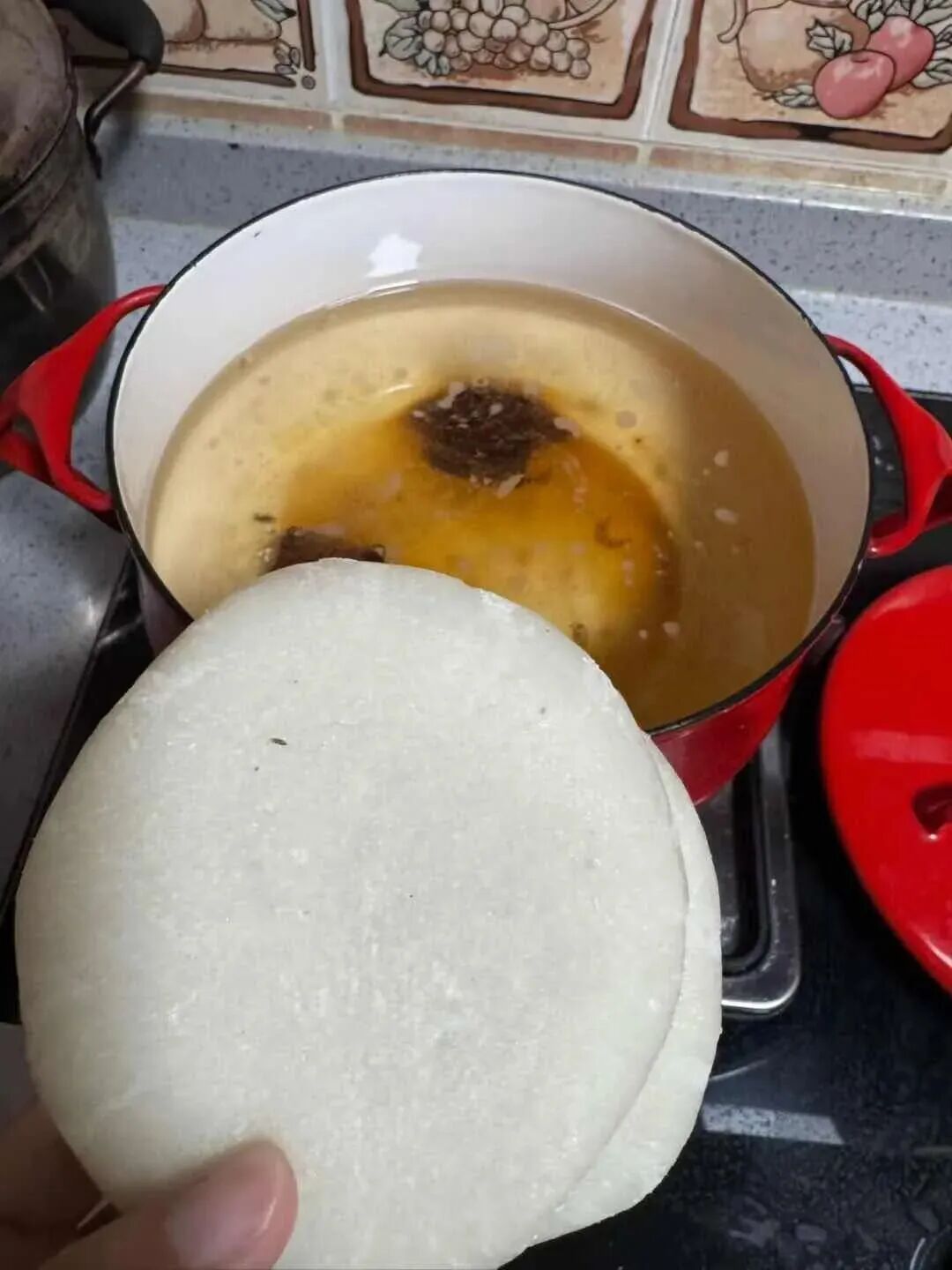
Xuan Lin turned to look at me and said, “Alright, Tanzi. Consider it an early birthday present from me.” I was delighted. That way, neither of us had to feel down about it. Nowadays, I use this pot every day to brew brown sugar and ginger tea,
It’s such a wonderful pot. Thank you, Xuan Lin. Thank you for giving me such a lovely gift.
Dao
Yanqian
I bought this chef’s knife from a market. It’s been nearly 30 years since I started using it when I was in primary school. The blade is light but sharp, perfect for slicing and mincing meat. I began cooking with it back in primary school, and it has accompanied me through countless dishes. It hasn’t changed hands, but it has moved with us home many times. I’ve always loved using it. It’s incredibly durable and has never needed repairing. These days, it’s rare to find cast-iron knives with a single-piece blade and handle like this, especially one so light. Most knives now have stainless-steel blades with plastic handles and feel quite heavy. It’s a rarity that my kitchen knife has barely rusted.
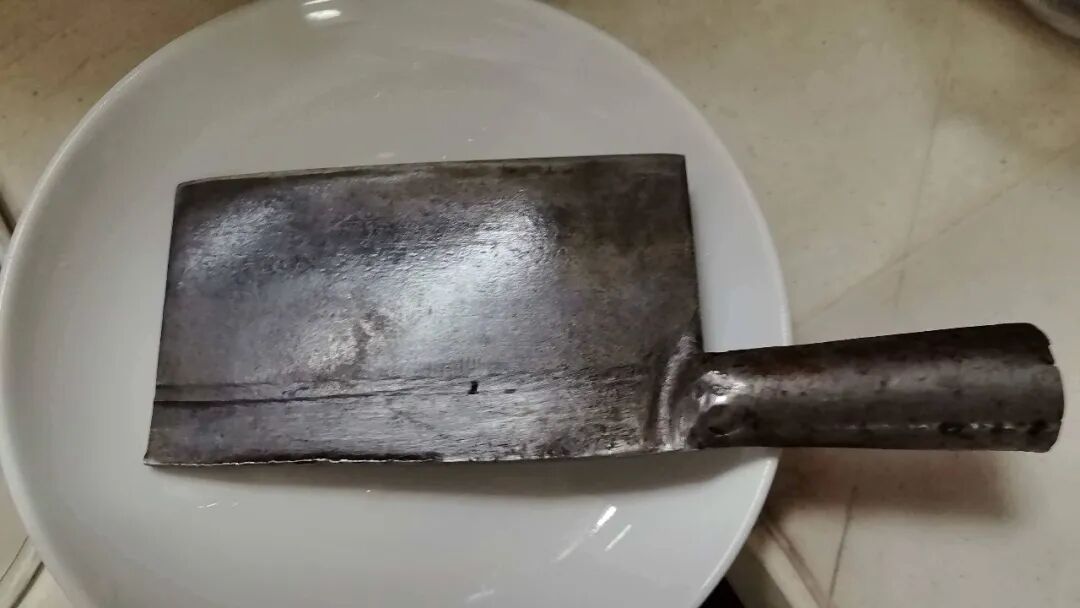
I remember being afraid of knives when I was little. I often hung around the kitchen to help out, and watching my dad slice vegetables with this knife looked so cool that I wanted to give it a try. Eventually, I just got used to it.
Small items, big impact
Chlorophyll
The oil jar at home has been in use for seven or eight years now; I bought it at a market. In my household, an oil jar is a necessary fixture rather than a specific object.
The oil jar isn’t for fresh oil, but for old. Around here, every household follows a custom of using up the old oil before the New Year, usually by frying crispy meatballs, alongside flour-coated carp pieces and strips of hairtail. The leftover clear oil can’t be finished in a couple of meals, especially given the tradition of keeping the stove off during the festival. Over the years, countless jars have been broken, yet they always seem to fill up halfway around year-end, only to be slowly emptied once more.
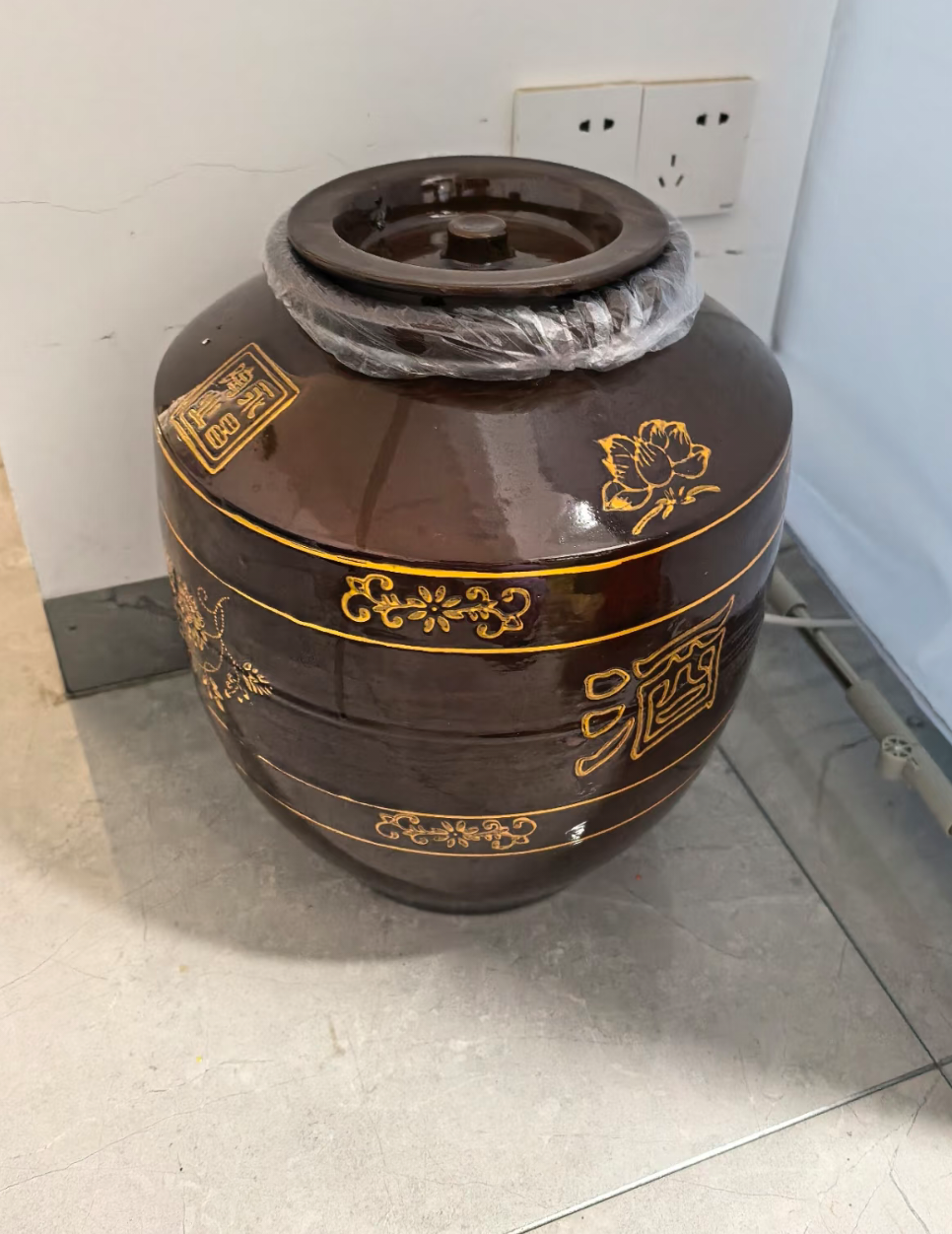
My garlic mortar is also tied to the Spring Festival, if only a little. Southerners tend to dip their dumplings in soy sauce, while northerners insist on a bowl of vinegar mingled with minced garlic and sesame oil. As each dumpling takes its turn in the mixture, before I know it, I’ve polished off thirty. The pestle keeps going missing, but the mortar itself is built to last.
Zhezeng
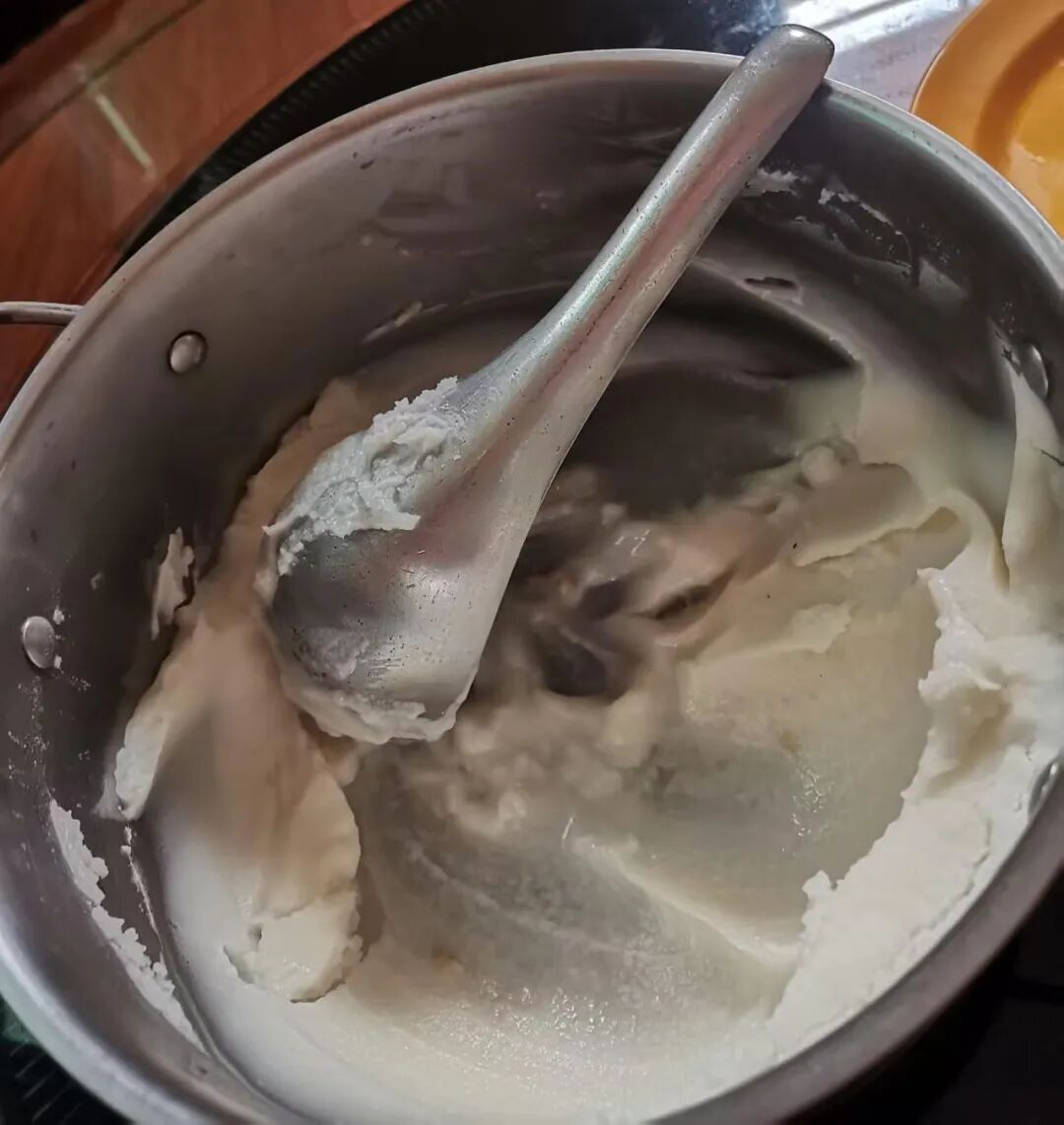
This ladle has been in use since my childhood and is now over 35 years old. It was allocated to our family when my father and uncle divided the household. The sight of it instantly brings back fragments of meals shared with family. It’s mostly used for lettuce soups, noodle broths, and various other stews. It ties together the taste of home, connects people with one another, and bridges us to our food. I truly hope to keep using and preserving it for years to come.
Chengzi
We have a little bone utensil for scooping dumpling filling, which I quickly looked up and learned is called an ox-bone dumpling spoon. Whenever it’s time to make dumplings, it’s sure to take its place on the table. It’s flat, tapering from a wide end to a narrow one. As a child, I was fascinated by it. When I heard it was made from ox bone, I assumed, like sheep knucklebones used for traditional games, that it was a naturally occurring shape. I even briefly believed that an ox grew a bone specifically designed like this. It wasn’t until later that I discovered it was actually carved and polished by hand.
It’s been in use since my grandmother’s day. She passed it down to my mother, who used it when she first learned to make dumplings, and it was the same tool I learned with. I’d guess it’s been around for nearly thirty years now.
I’m not entirely comfortable using it, so I only reach for it occasionally, yet it’s always present whenever we make dumplings. I find it far more practical than a regular spoon. Unlike a bowl-shaped spoon, this flat “spoon” doesn’t trap the filling as easily. It just goes to show that every shape has its purpose.
It “migrates” to wherever the dumpling-making is set up, making it one of the household’s essential members. We’ve grown accustomed to it, and it’s woven into many fond memories. It’s never needed a single repair, and I really hope it’ll stay with us for a long time to come.
Chen Ziyu
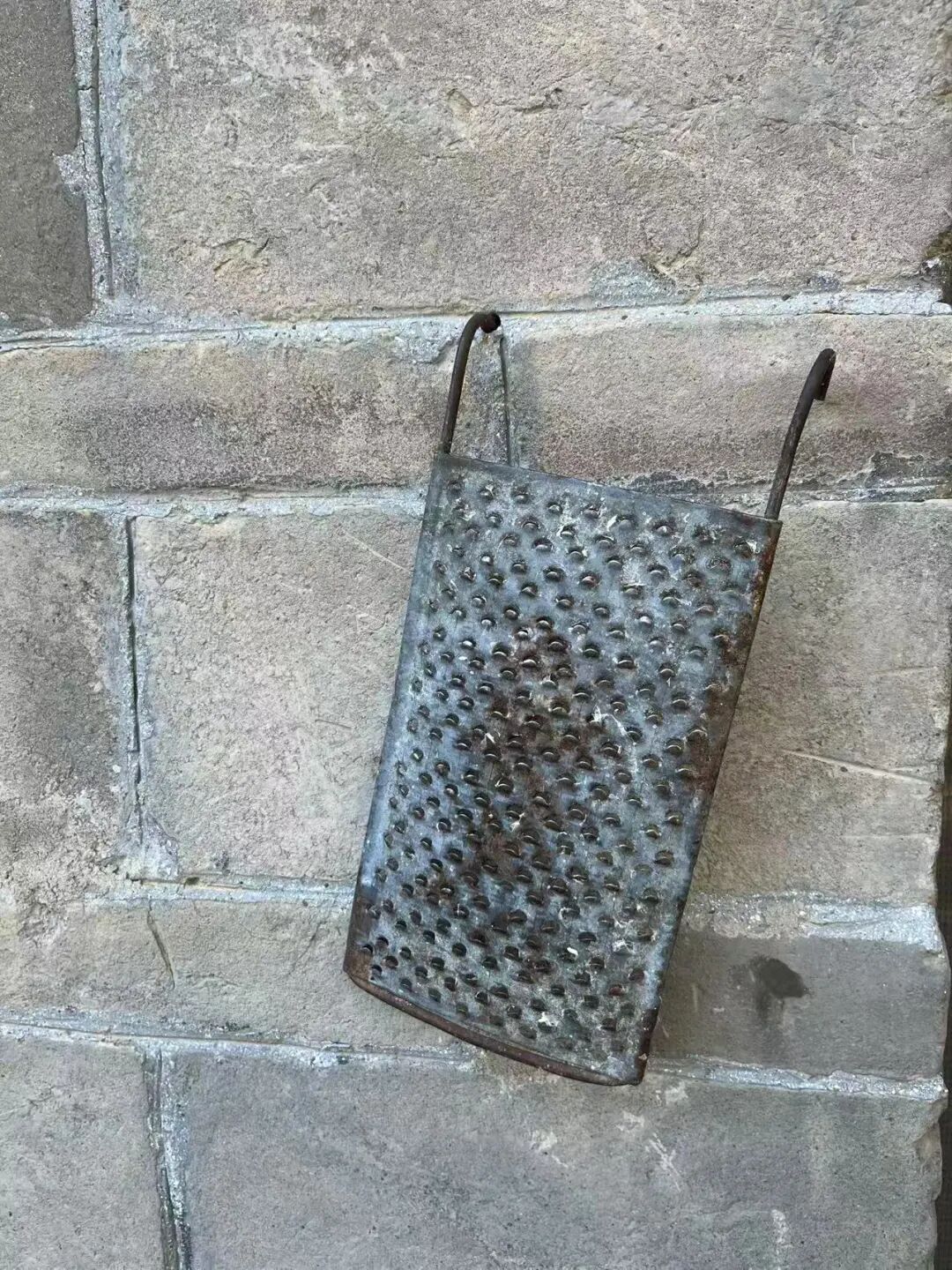
Does anyone still know what this is? We call it a vegetable scraper. It slices hard vegetables such as potatoes, radishes, and cucumbers into smooth, even strips or shreds. This scraper is at least thirty years old, having been in use since my grandmother’s time. Oddly enough, I always seem to nick my fingers and draw blood when using it, but the older generation never makes that kind of mistake. Even though there are scrapers made from plastic and 304 stainless steel these days, we still use this old one at home. It’s much like how, despite having modern scouring cloths, we still reach for dried luffa sponges to wash the dishes.
There are still plenty of old-fashioned items in rural homes. Take the basin used for kneading dough, for instance, or the wicker tray used every winter for wrapping dumplings. Crafted from sorghum stalks, it resembles a miniature raft, with freshly wrapped dumplings lined up in neat rows across its surface. Gathering a group to make dumplings always brings such lively cheer, and we still rely on it to this day.
Saoqie
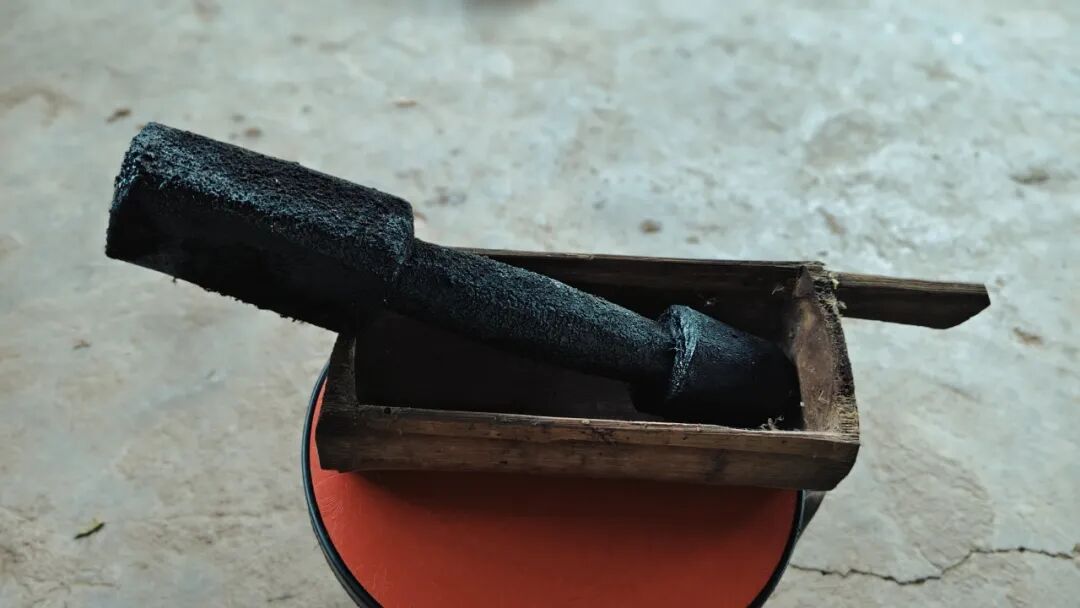
The first old piece is a pounding mortar, which is at least thirty years old. Among the Jino (Jinuo) ethnic group, practically anything can be pounded. You might pound nǎmí (a traditional fermented bean dip), eggplants, or cooked dishes. Meats and dried cured meats are always cooked before being pounded, whereas ingredients for cold salads are pounded raw.
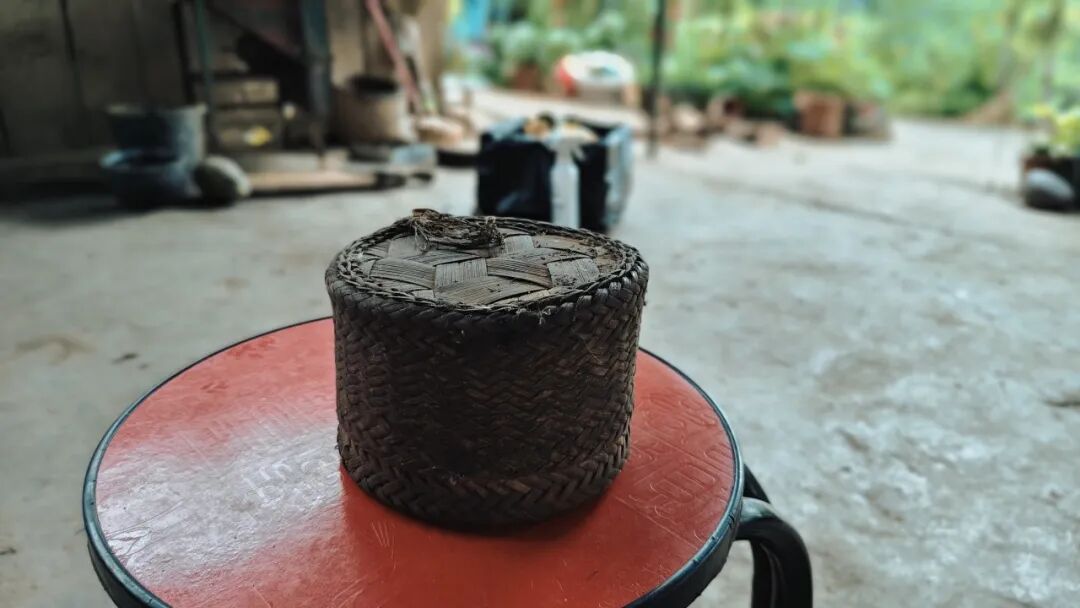
The second item is a bowl. We pack our rice in it when heading up the mountain to work. Woven from bamboo, it is light and highly breathable, so the rice stays fresh and rarely goes off.
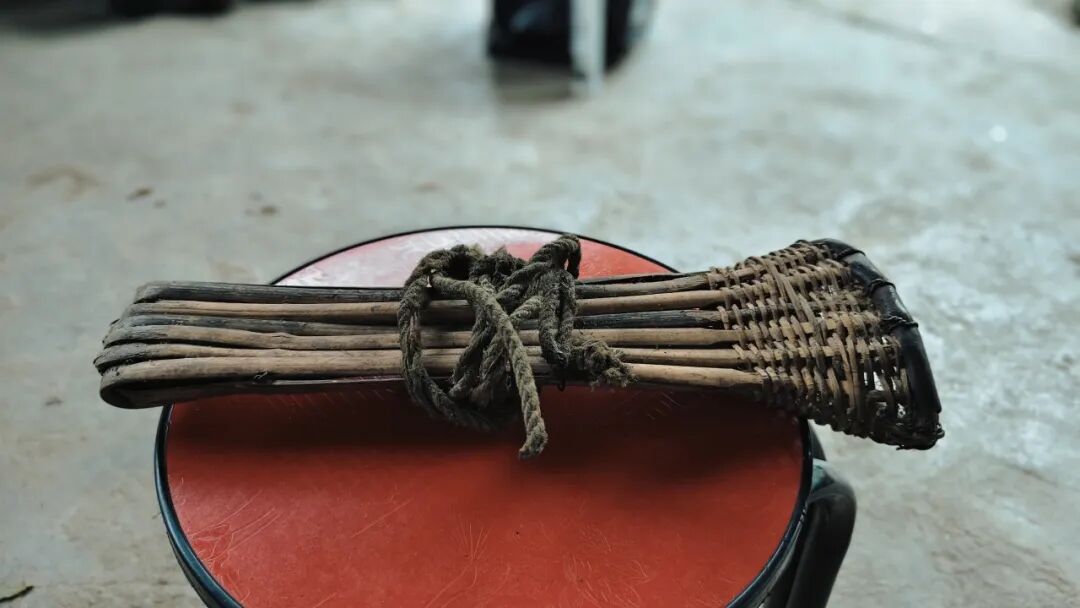
The third item is a knife sheath. It hasn’t seen as much use as the first two, but it’s an old reliable of mine; I’ve been using it for seven or eight years. Every time I head into the rainforest, I use it to tuck a metal knife into my waistband. Why count it as a kitchen item? Because up in the mountains, we use it to chop down banana trees and then cook with the leaves using bāoshāo (a Yunnan/Jino technique of wrapping food in banana leaves and cooking over fire)! My mantra is: in the rainforest, everything can be cooked this way! This method involves wrapping ingredients in freshly picked banana leaves and cooking them over a fire. You’ll find dishes like pork, eggplant, and small fish prepared this way. The leaves can be used for cooking, but on an outdoor picnic they also make handy tablecloths. The white tender core of the banana stalk tastes a bit astringent, yet it’s great for quenching thirst, while the banana blossoms are stir-fried with minced meat. So, although this metal knife and sheath might not look like they have much to do with cooking, they are undeniably part of a Jino kitchen.
Yu Yang
In rural Northeast China, there is a type of dining table known as a kàobiānzhàn (traditional Northeast Chinese folding table). Unlike the fixed dining tables popular today, it is completely foldable. It is only set up when needed and kept folded flat against the wall otherwise, taking up absolutely no space—which is how it got its name. What sets it apart from modern folding tables, however, is that it is built entirely from interlocking wooden joints, without a single nail or metal fastener. The tabletop is not supported by four legs arranged in crossing pairs, but by three: one is fixed, one serves as a central pivot, and the third is movable. Each time you set it up, the movable leg swings out around the pivot like a pair of compasses, until it drops into a slot beneath the tabletop and locks into place. And just like that, the table is ready. Looking back on it now, the entire process still carries an indescribable sense of elegance.
Many children from the north-east speak of the “kàobiānzhàn” with a sense of nostalgia and warmth, for whenever it was unfolded, it always marked a time for gathering, be it family meals, drinks, making dumplings, writing Spring Festival couplets, playing cards, or a few schoolchildren gathering after class to do homework. It would stand there obediently, so quiet, yet somehow alive, accompanying and listening to the daily lives of the family it belonged to. When set up, its golden-yellow tabletop seemed impossibly vast, holding so much: countless dishes, bowls of rice, glasses of wine, and words. Once, that golden surface felt to me like an eternal world. Until one day, I realised there was a larger, fluid world beyond my hometown. At that moment, the table, leaning against the wall and never to be unfolded again, seemed terribly small. Yet the enduring attachment it instilled in me, towards people and things, always makes me feel that even after we’ve left, it remains standing alone in this vast world, waiting for something.
Living “long-termism”
Tiepiya
The pickling mother brine from our hometown arrived in my Chengdu home ten years ago, after my mother carefully scooped it from our family’s old jar in Wushan, Chongqing, and bottled it. This brine has been in continuous use at our Wushan home for decades; conservatively, it is about thirty years old, but more likely, it has been carefully maintained and cycled since my grandmother’s time.
My earliest memories of the pickling mother brine come from our family home in the old town of Wushan during my childhood. When the Three Gorges reservoir began filling, the entire old town was submerged, the county seat relocated to higher ground, and the pickling jar was moved along with it. Eventually, my mother brought it from our hometown to Chengdu. She later shared the brine with a friend in Hangzhou, who nurtured it until it was thriving before passing it on to a friend in Shanghai. Later still, through pickling workshops held in cities across the country, the mother brine began to spread to homes nationwide.
It once faced a major crisis. I opened the lid to take out some pickles for stir-frying but forgot to put it back on, leaving the jar exposed to the air all day. By the time I noticed, a thick layer of white film had formed on the surface. I was absolutely horrified, but carefully skimmed off all the white film, added fresh vegetables, salt, and Chinese white liquor, and left the jar sealed for a month. When I finally opened it again, everything had returned to its original state. The mother brine’s vitality is as tenacious as the elders themselves.
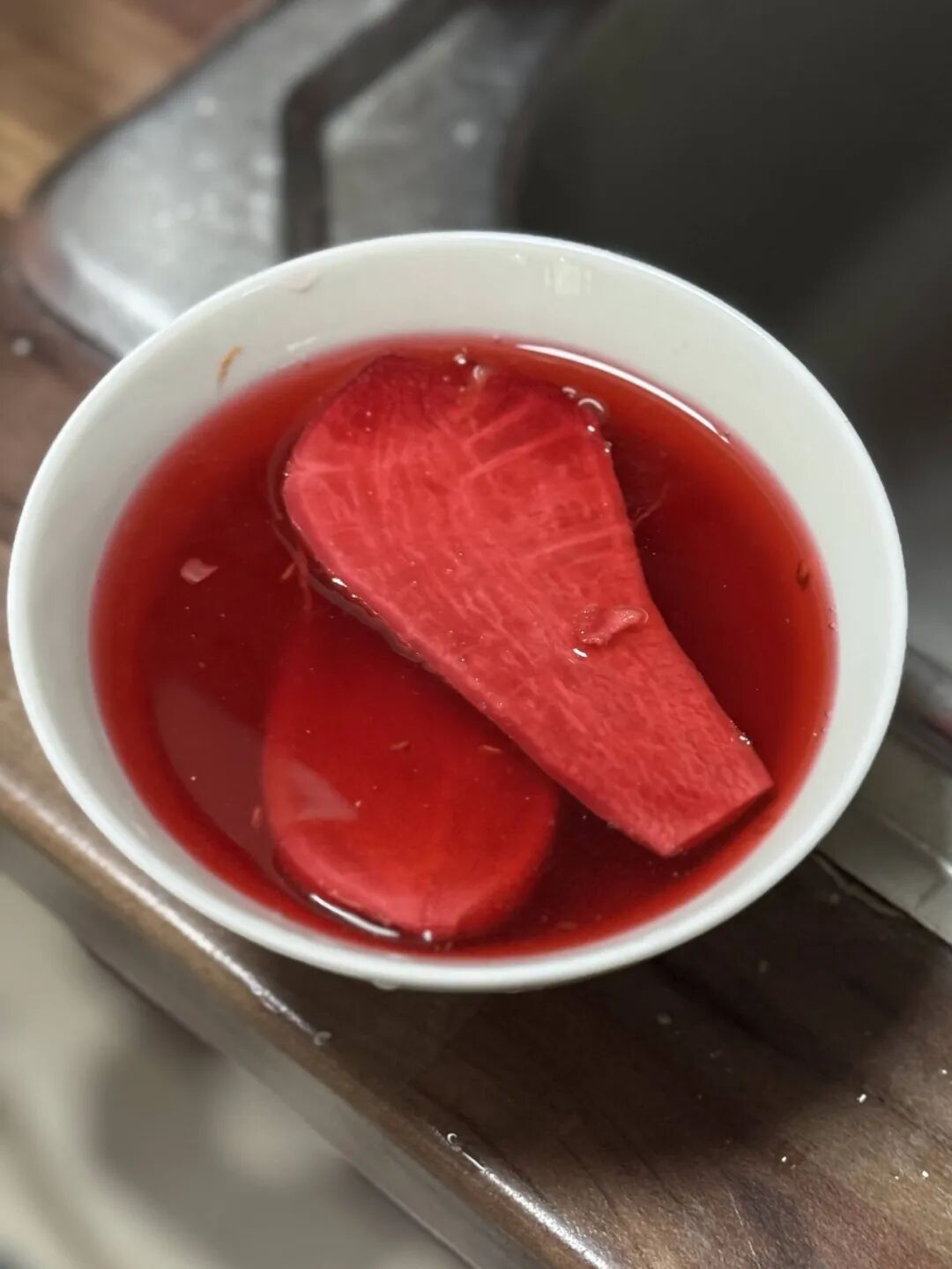
In many places across Sichuan and Chongqing, when preparing pickles, people generally just scoop the pickles out to eat. In our family, however, we have always used the pickling brine for cooking, sometimes in place of vinegar. A small dish my mother has made since I was a child is called numbing spicy roasted broad beans. Dry broad beans are gently dry-roasted in a pan, while ginger, garlic, and green Sichuan peppercorns are crushed in a stone mortar. Soy sauce and a spoonful of pickling brine are added to make a dressing. The fragrant, roasted beans are tossed in and soak up the liquid completely. Numbing, aromatic, tangy and refreshing, it is perfect for those summer days when you have lost your appetite. Only later did I learn it is a traditional Sichuan dish. I never found out where my mother learned it, nor why she so ingeniously swapped vinegar for pickling brine; it truly is a mysterious family recipe. When I went home for the Spring Festival last year and mentioned the dish, she made it again, and it tasted exactly as it did in my childhood.
Shayu
Sister Chicken hatched from an egg. No one remembers how old she is; years lose their meaning when applied to someone whose age has become impossible to pin down.
It’s said that Sister Chicken has lived in a plant nursery, a chicken farm, a working farm, an orchard, and then at the home of a friend of my parents whose surname I’ve long forgotten, followed by a stint in the car boot, before finally arriving at our home.
We often expect that behind the narrative of “long-termism” or similar life philosophies lies a romantic, or at least affectionate, story. Yet Jiejie’s enduring presence in our home simply came down to her mortgaging her lifespan for eggs—and that is just sad, or at least rather bleak., the protagonist of this memory was confined to a corner of the vegetable patch, her feet tied to the roots of an Osteomeles shrub (locally known as South African leaf tree)—she had a habit of rooting around, pecking at everything, and dropping droppings all over the garden, so my mum tethered her. Did it work? Clearly, it did. For most of the time, she was restricted to a circle of roughly 100 centimetres around the shrub; only on rare occasions would she break free to go dropping droppings everywhere once more, to the inevitable scolding of the humans. There was even one time when we went away for a while, and she flailed her legs, flapped wildly, and hung herself from a branch, struggling until her feet were swollen and bruised, with no one noticing for days.
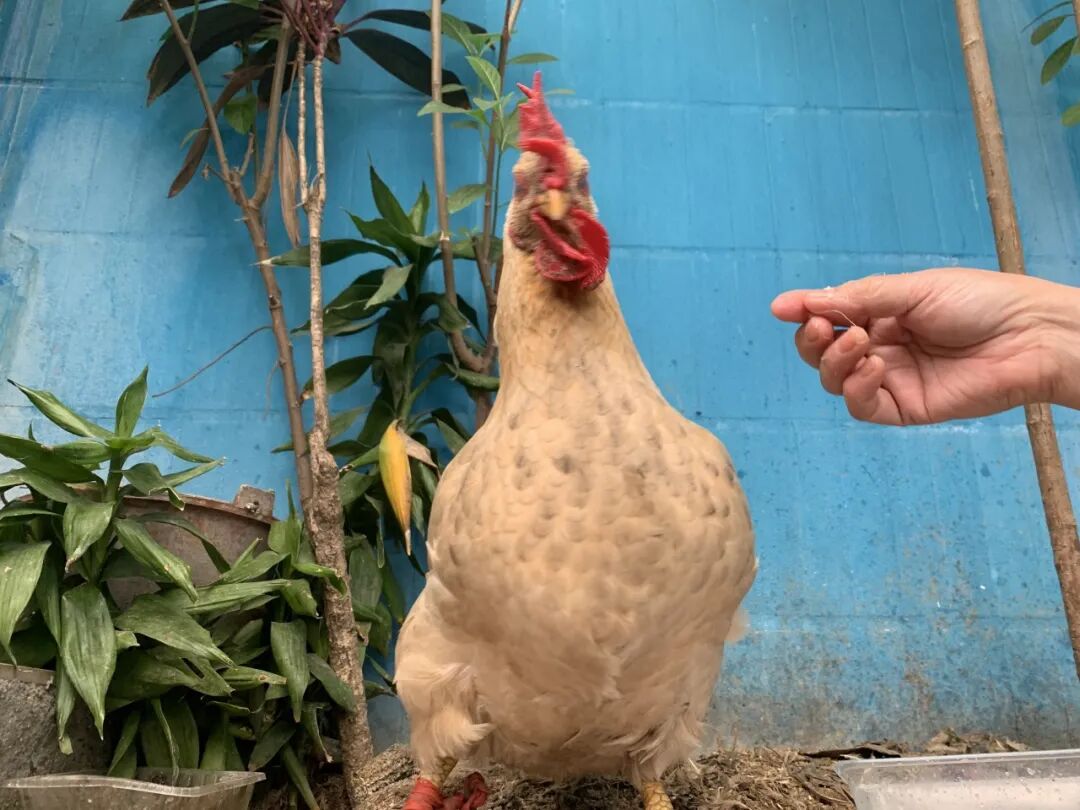
When the heat sets in, Sister Chicken’s hormones go haywire. She lays tiny eggs, breaks out in chicken pox, becomes a fussy eater, and eventually refuses food altogether. My mum mutters curses as she buys her fresh corn kernels every day, yet still won’t let her inside—she smells. She’s only brought indoors at night to sleep in a cardboard box by the door. One summer, perhaps the heat was simply too oppressive: the sun seemed to warp out of shape, and damp, overcast skies lingered for months. From then on, Sister Chicken fell into a deep depression. She’d stand dazed all day, neither struggling nor doing anything at all. We all knew something was wrong but did little more than refill her food and water; not one of us had the heart to put her down. Sometimes I’d crouch beside her, hovering, trying to rouse some reaction (a foolish jailer), but she remained as still as a wooden chicken. This long, slow torment frayed the nerves of everyone under that stifling Lingnan sky who had a tie to her yet stood by idle. This silent, unending violence haunted the dusk, swallowing the souls of all the creatures sharing the roof with her, sleeping in silence. Yet the memory that endures forever is anchored to a single sensation—a taste. After she caught a cold and passed away, we ate her.
The broth was sweet.
What other treasured old pieces do you keep in your kitchen?
Leave a comment and tell us your story with it.
Unless otherwise stated, all images were submitted by readers.
Compiled by Kerry
Layout by Minglin
▼
Click the image to read related articles.