The World Brims with Wonders – She Never Looks Around

As someone born after 1985, I rarely visited the market before my daughter, Shu’er, was born when I was thirty. I could never fathom why my mother insisted on pulling her little trolley to the market come rain or shine, why she would regale me with tales of all she saw and heard there, or why buying pork belly with just the right balance of fat and lean could make her as happy as a child over saving five yuan a jin (500 g).
Later, I became a full-time mum, cooped up at home. The market was one of the few places where I had any social interaction, so I always brought Shu’er along. Before she turned two, she was extraordinarily energetic and loved to bolt off; every time we went shopping, I carried her in my arms, terrified the surging crowds would swallow her up. By the age of four, she could carry bags for me at the market. She was born with astonishing arm strength—she could lug a 5-litre jug of Arawana blended cooking oil by three. Normally, few children visit the market, and even fewer help their parents carry things. Over the years, many stallholders came to recognise this bold little girl.
Shu’er was diagnosed with autism at the age of five, accompanied by a mild intellectual disability. It was only after that that I truly began to understand her. Now, I make a point of bringing her to the market. This is an essential place in her life that she simply cannot do without. Food shopping is also her means of maintaining normal social functioning and preventing regression.
Shu’er’s Growth
Because of her condition, her interests are extremely narrow. The market is a maze of stalls of every description, with vendors’ cries rising and falling all around her – “Watermelons! Authentic Yongjia Shatian melons – sweet or it’s free!” “Bargains here, bargains! Just-dug lotus roots, still covered in mud, 5 yuan a big bag!” – yet none of it stirs a flicker of interest in her. Pork is the only red meat she loves. She lights up whenever she spots the butcher slicing pork belly, chopping ribs, and splitting shank bones on the thick round chopping block, her little mouth repeating over and over, “Pork, eat meat!”
For some autistic people with sensory processing disorder and sensory overload, a trip to the market is far from easy. The harsh blasts from loudspeakers looping on repeat in front of the stalls, the jostling of strangers brushing shoulder to shoulder, the sudden whine of an electric scooter bearing up from behind, the fishy reek of seafood, chicken, and duck – all of it can plunge them into tension, disgust, a frozen stupor, or screaming panic that makes them want to flee.
From the age of two to twelve, Shu’er grew a little more with every trip to the market. For six long years she was terrified of cats and dogs. At the open-air market, stray cats and dogs were always darting between the stalls, and whenever a large, all-black stray dog appeared, she would grip my hand in a death-clench, stamping her feet in panic. Autistic people crave stability and find it very hard to adapt to unexpected changes. For a child who feared cats and dogs, the market was a place brimming with unseen dangers. She was like a living “cat-and-dog radar” – even when the animals made no sound and stayed well out of her way, she always sensed nearby threats before anyone else did. Last year I took her back to the family’s rural hometown for twenty days, where she spent every waking hour playing with Grandpa’s little village dog. Now the desensitisation can be counted as largely successful – at the very least, when we meet a dog on the street, she can walk past it calmly.
Right up until she started Year 1, Shu’er still had mild sensory processing disorder. When we pushed the trolley to the market, if she was in a hurry and the wheels would roll over a passerby’s feet, she wouldn’t know to stop and apologise – she simply swept on without a backward glance. Nor could she feel what the injured person felt: their anger, their pain. On weekends especially, she would push the trolley in a bumbling, jolting fashion, easily catching people or ramming into barriers. After starting primary school, through constant practice, she can now handle the trolley with ease, and if she bumps into someone, “Sorry!” comes naturally off her tongue.
The Stalls She Likes
At first, the only shop Shu’er liked at the market was the zongzi stall at the far end. She was partial to double egg-yolk pork zongzi, and buying them became her reason to visit the market. One zongzi costs 7 yuan; buy seven a week and that comes to 49 yuan – the only multiplication sum she has ever managed, and still the only one to this day. After starting primary school, she taught herself to rise early and set the gas stove timer so she could boil a zongzi herself, a habit she has kept for four years now. She eats only the salted egg yolk, never the meat: she bites into the pork, sucks out all the juices, and then spits it out. But a double egg-yolk zongzi with no meat in it would have none of that rich, fatty savour. “Your girl’s a proper foodie – she knows exactly how to eat a zongzi,” the stall owner told me.

◉ In Shu’er’s eyes there is no sense of the big picture – she notices the smallest details and is far more interested in objects than in people. Her drawings of the market are vivid, abstract, and granular. Pictured here is her drawing of the zongzi stall.
After years of visiting the market, Shu’er grew fond of a fish stall and a vegetable stall besides the zongzi shop. Her reason for liking both was simple: the proprietresses were pretty. “Pretty lady,” she announced at four, her words still a jumble of baby talk. Even then, she had a weakness for pretty faces.
The proprietress of the fish stall – when I first knew her, she was a girl as fresh and dewy as a scallion. It was the first stall at the market to offer a fish-filleting service for making boiled fish in chilli oil at home. “Scallion Girl”, as everyone called her, would slip on knee-high rubber boots, pull on rubber gloves and a rubber apron, and scale fish with her electric fish scaler. Because of her stall, many customers stopped ordering boiled fish in chilli oil or sizzling fish in chilli oil for delivery and chose to cook it at home instead. On weekend mornings, when trade was briskest, she worked alongside three male assistants. She was in charge of scooping out the fish, and when they were short of hands she would butcher them too, completely unaware of fish scales clinging to her hair. Every customer, on the way out, would also pick up a jin of mung bean sprouts and two cucumbers.
Shu’er only ever wanted yellow croaker, but no stall at the market sold it alive – every yellow croaker on display was iced-fresh. She had no interest in the live fish the stall carried. Only when a vendor occasionally opened the cold box and revealed a few line-caught sea fish laid out on the ice – a red grouper, a rockfish, a sea bream, those red-hued varieties – would she wander over for a peek. What she did love was squatting in front of the stall and watching the bulge-eyed, bouncing creatures in the net bags: frogs, bullfrogs, paddy frogs – and the softshell turtles and little tortoises swimming in a big red plastic basin.


◉ Left: Shu’er’s drawings of a sea bream and a red grouper. Right: paddy frogs in a net bag.
Sometimes there was no queue and she would stand aside, watching the assistants at the worktop carry out the whole routine of preparing a fish: slam it down to stun it – scrape off the scales – split the head and cut clean through lengthwise – pin half a fish on nails and shave the flesh into thin slices – peel off the skin – chop the backbone into segments. She watched the fish meet its “execution by a thousand cuts” with rapt fascination, just as she watched a bullfrog being skinned, or studied the way a cut-off hind leg gave a knee-jerk twitch. Every step of it held her spellbound.
The vegetable stall she loved was, in truth, one of those stalls with fewer varieties, produce that was not quite at its freshest, and slightly steep prices. But every time we went, the proprietress would fuss over Shu’er: “What a good girl, helping her mum buy groceries!” The little girl I used to carry in my arms had grown almost as tall as I was now. The proprietress also marvelled at how fast she was growing – the way the Wenzhou saying goes, “Shepherd’s purse grows fastest by the privy.”
The proprietress kept black and white rabbits, and they had bred such a large litter that both hutches were getting cramped. Every time Shu’er passed the vegetable stall, she would take the wilted leaves the owner had given her and go to tease the rabbits. “Where have the baby rabbits gone?” she always asked. She could not fathom that those soft, squishy, pink newborns – eyes still sealed shut, skin faintly translucent – would one day grow up.
Stubborn and Simple Shu’er
Most autistic children are fussy eaters, so striking a nutritional balance with them is far from simple. The range of foods they will accept is limited, and even for a single accepted food, the acceptable methods of cooking are limited too.
Take Shu’er, for instance: she will eat only the yolk from a soft-boiled egg. When she was little, getting her to eat vegetables – a girl who truly could not live without meat – took every ounce of ingenuity. I bought every vegetable the stalls carried, and after a year I confirmed that she could eat only napa cabbage, bok choy, water spinach and cauliflower – leaves and florets only, never the stems. “Mum, how many pieces?” “Five.” “Can it be three?” “Alright then.” Every time she ate leaves, she haggled with me. One piece eaten, one piece counted.
Shu’er has no instinct for choosing produce, and perhaps cannot tell which vegetables and fruits are fresh and which are wilted and limp. When I spot varieties and mushrooms rarely seen locally – basil leaves, chayote, king stropharia – I want to buy a bit and try something new. When picking tomatoes, I lift one to my nose: if I can smell that true tomato fragrance, I give it a squeeze, and if it yields just enough between firm and soft, I feel like I’ve struck gold.
Shu’er cannot feel curiosity about new foods, nor does she fixate on eating seasonal produce. All year round, when she visits the fruit stall, she wants only ponkan mandarins and watermelons. In summer she longs to clutch a three-jin Kirin watermelon home every single day. In winter and spring she eats nothing but ponkan. She is remarkably patient when peeling a ponkan: one segment at a time, then picking out the white pith, thread by thread, before a piece finally goes into her mouth. It can take her over ten minutes to finish one.
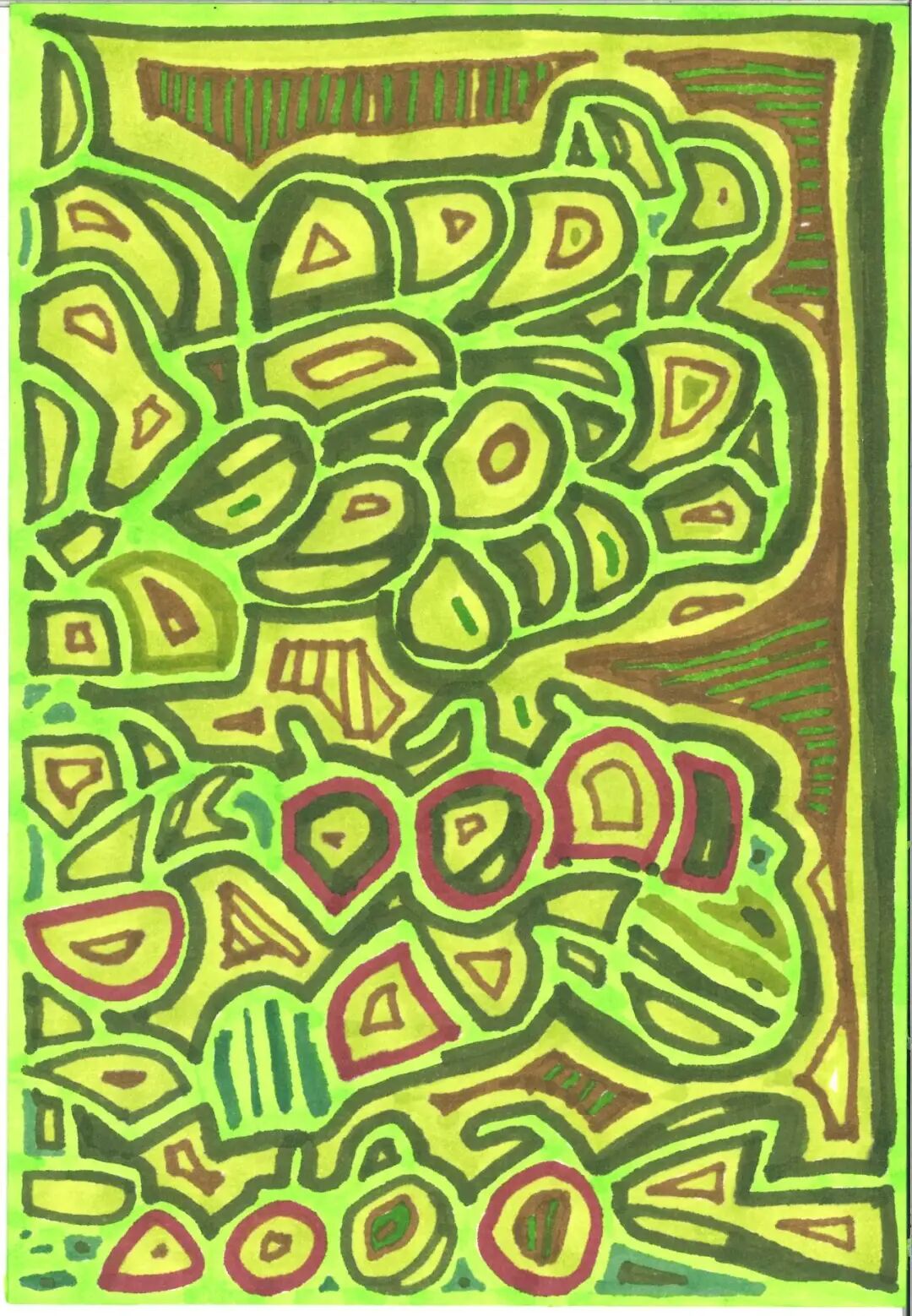
◉ Shu’er’s drawing of the watermelon stall.
For those who have shopped the market for years, there are days when the stalls are brimming with everything, yet you find yourself wondering what to buy, grumbling, “It’s always the same few things – grocery shopping is such a chore!” Then there are elderly customers who make a point of visiting every market in the city, learning the lay of the land, and taking the bus across town to a market far from home. Nowadays, most city markets have a supermarket set up inside, and the fresh-food section there is generally cheaper than the stalls. Older shoppers will not buy bagged rice – they buy only rice sold loose by weight, three to five jin at a time (any more is too heavy to carry), saving around two yuan a jin on the loose rice. My neighbour next door is a full-time mum born in the 1990s; a thrifty homemaker, she rides her electric scooter to three separate city markets to buy meat, vegetables and soy products respectively, always finding ingredients that are good value for money.
The narrow interests that come with autism are, in a sense, a form of single-mindedness, and they bring a certain convenience to Shu’er’s life. She may never learn the fine art of budget-conscious shopping; for her, a trip to the market is more like a targeted sweep. Before we even leave the house, her shopping list is set in her mind: pork belly, napa cabbage, zongzi and ponkan mandarins. At the market she goes straight to the stalls that carry her items, sticking to the same vendors she always uses – no wandering, no lingering, no distraction. She is a stubborn and simple customer. We are both scatterbrained by nature, yet she has never once forgotten to pick up her chosen produce after paying.
These days there are plenty of alternatives for sorting out meals: online fresh-grocery services, ordering takeaway, or eating out.
But I do not want Shu’er’s life to become too frictionless – a girl who does nothing but order malatang for delivery, never sets foot in a market, never cooks, never washes up. In the rain or in the blazing sun, pushing the trolley to the market, jostling through the crowd, listening to vendors shout their wares at the top of their lungs – that is what makes life feel properly grounded.
How to choose fresh, plump produce, how to clean and store it once you get it home, how to balance nutrition within a budget – there is real craft hidden in a trip to the market. Shu’er still has a great deal to learn about the art of shopping for food.
– This is Foodthink’s 832nd original piece –

Foodthink
Author
Sweet Potato Face
Full-time shopping and cooking, part-time writing. I love visiting the market – there is no bout of anger, melancholy, or anxiety that a good wander through the stalls cannot cure.
All images in this article are by Shu’er.
Editor: Xiao Dan
Layout: Xiao Shu
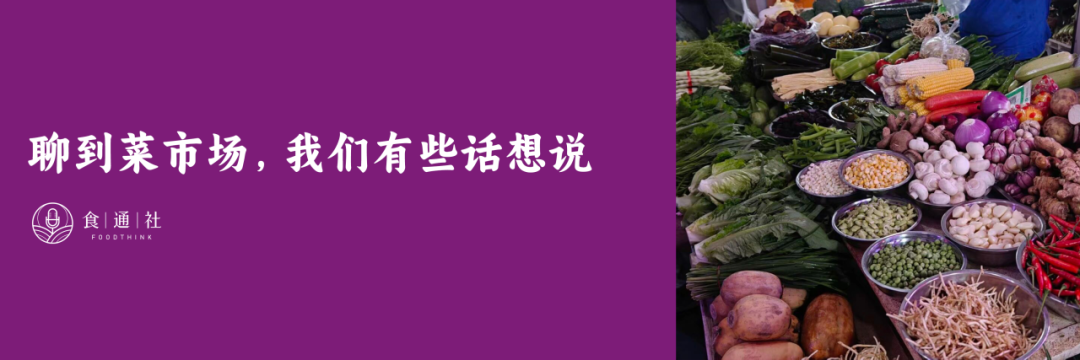
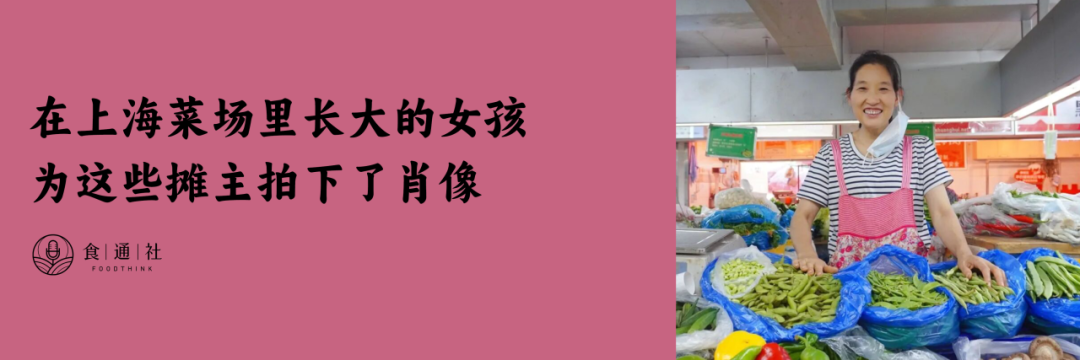
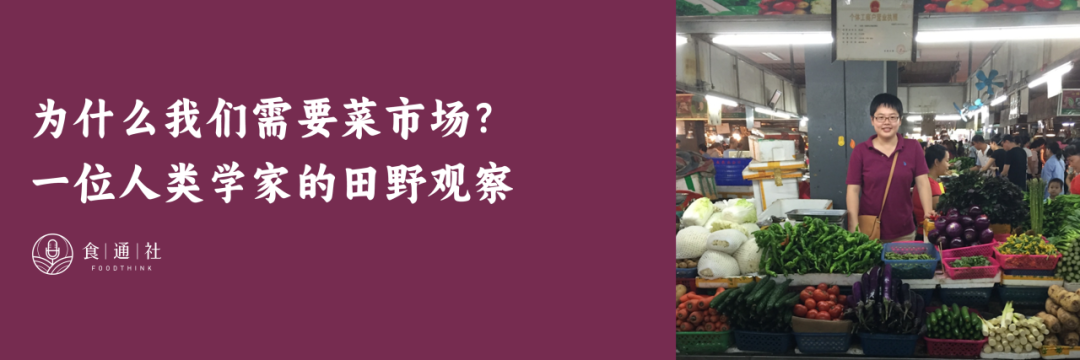
Why Do Chinese People Love the Wet Market So Much? Do Young People Still Visit the Market?
How Have China’s Wet Markets Withstood the Tide of the Supermarket Revolution?
What Social Structures and Everyday Wisdom Does the Market Connect?
Join us as Professor Zhong’s new book explores the resilience and vitality within China’s wet markets!
China’s Wet Markets
Author: Zhong Shuru
Guangqi Publishing | July 2026
Ten years, more than 50 cities, over 200 wet markets…
Drawing on panoramic observation and fieldwork conducted across urban wet markets,
the book explores their history, the community of stallholders, the supply chains behind the market, food-consumption culture, urban public management, and much more.
– Contents –
– About the Author –

– Event Announcement –
Scan the QR code to leave a tip and support original food wisdom
▼

▼
Click the image to read related articles
▼
Click a keyword to browse more article collections
Seeds | Farming Techniques | Policy | Fermentation | Nutrition | Fruit | Fisheries | Events | Jobs | Takeaway | Wet Markets | Livestock | Food Talk | Sharing Sessions | Reading Groups | Harvest Festival | Smallholder Stories | Climate Change | Rural Development | Cooperative Economics | Urban Farmers | Food Safety | Digital Technology | Biodiversity | Pandemics and Food | False Solutions | Agroecology Internship Programme
Beijing | Hebei | Shanghai | Guangdong | Guangxi | Henan | Sichuan | Jiangxi | Xinjiang | Shaanxi | Hong Kong | Chongqing | Zhejiang | Jiangsu | Guizhou | Taiwan | Inner Mongolia | Philippines | Canada | Russia | Mexico | Italy | United States | United Kingdom | Germany | Netherlands | Thailand | Sweden | Japan