An Anthropologist’s “Check-in Chronicle” at Shahe Fair | New Book Excerpt & Saturday Event

Editor’s Note
Markets in China today seem to be experiencing a curious “ restoration”. What was once merely the mundane errand of our elders heading out with a bag to pick up vegetables has become the kind of trending destination young people flock to, a window into a city’ s local character, and even a “ healing space” loaded with emotional value.
From “checking in” at Shahe Fair, where watermelons cost a mere 80 fen a jin and antiques from every dynasty await (authenticity not guaranteed), to reading the subtleties behind a stall’s hand-painted sign, just how many ways are there to “unlock” a market? As anthropologist Zhong Shuru puts it, a market is not just a spectacle to look at and browse, or a space to consume in, but an entry point for observing society, understanding a city, and practising how to live.
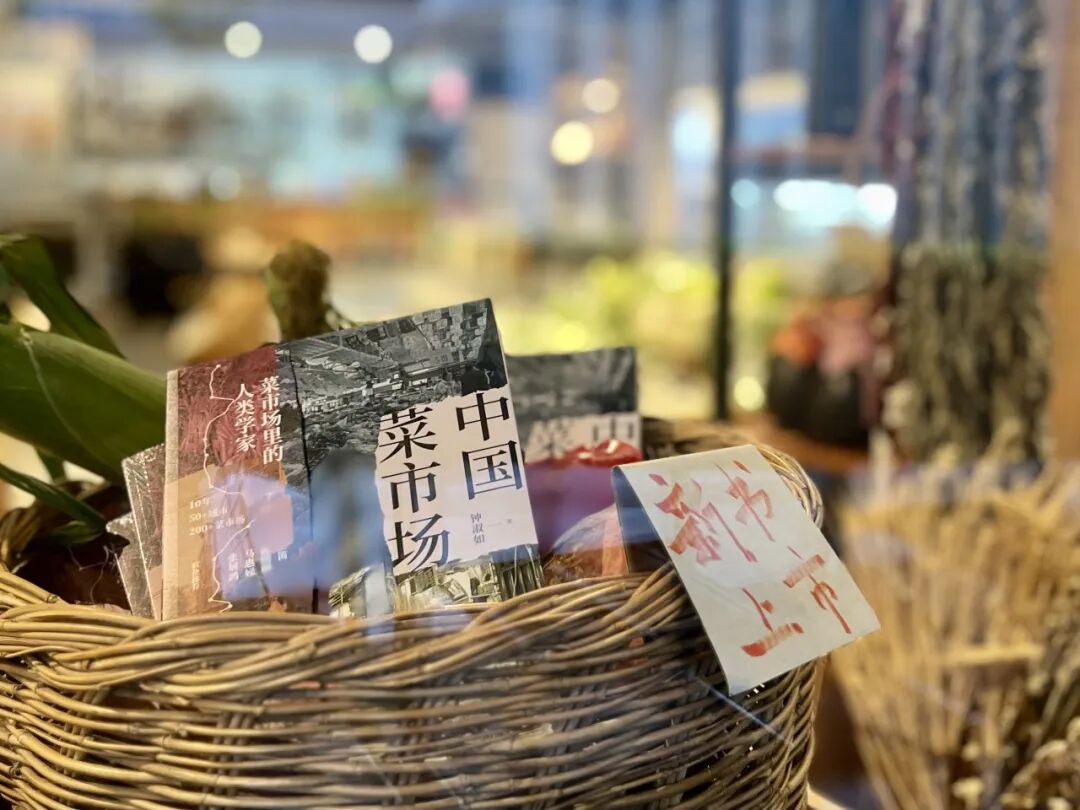
◉ Click the image to purchase.
Tomorrow (Saturday 22 August), Dr Zhong will also bring her new book, Chinese Markets, to Beijing — to visit a special market and talk about the book. (*For event registration and booking, please see the preview at the end of this article)
Before the event begins, let us follow her pen on an exploration of the market world —
*This article is an excerpt from the chapter “ Many Ways to Approach a Market” in Chinese Markets. Grateful thanks to Guangqi Publishing for granting permission.
Some people never set foot in the market on their doorstep, yet when they travel, they make a market their very first stop in a new city; others scroll through “fair-hopping” short videos, drawn in by the bustle, and plunge headlong into the smoke and whirl of everyday life. In recent years, markets have become windows into a city’s local character, and have built new imaginaries in the online world. But for me, a market is not simply a place to look at and browse — it is also an entry point for observing society, understanding a city, and practising how to live. During my fieldwork, I encountered the market’s many different ways of being “opened up”: Check-in — heading to a fair for a real, boisterous carnival of life; Youth Companions— using fieldwork methods to turn spectacle into insight; Family Learning Trips — treating the market as a “museum” you can touch, planting seeds of curiosity between food and people. The paths are many, but every one leads to a closer bond with place.
It came as a genuine surprise to me that checking in at a trendy market should become something of a craze. In recent years, markets have been turning into popular travel destinations — Zhuanxin Market in Kunming, Fengmen Cross Street in Suzhou, Kexiang Market in Nanjing, Bashi Market in Xiamen, and more. Markets are windows into local character and customs, and many travellers are drawn by the oft-quoted line, “If you want to understand a place, go to its market.” Compared with the same heritage towns and foodie high streets time after time, markets are indeed far more genuinely interesting.
In the online world, markets have developed a style quite unlike the rather waning reality they occupy. They grow ever more vibrant, with something almost of a “ restoration” about them. Many influencers now post guides and short videos on how to check in at markets. Some go viral across social platforms, racking up millions of views with ease. A typical video runs something like this: a well-groomed influencer, speaking for the ordinary urban young person, roams a market in search of novelty, local snacks and distinctive flavours, letting viewers experience regional specialities, customs, and seasonal produce.
Among all the market-related video categories, “ fair-hopping” stands out. A daji — a traditional rural market fair — is held on staggered days set by the lunar calendar, and across the region these fairs form an essential network for the exchange of goods in the countryside. Now the fairs at the edges of town and country have become the kind of spot young people flock to: Boli Fair in Qingdao, Shahe Fair in Changping, Puhe Fair in Shenyang… Among the crowds, young people mill about wide-eyed as if they had wandered into the Grand View Garden.
The thrill of roaming a fair is vividly described as “ hardcore”, “ mesmerisingly surreal”, “ earthy”, “ eye-opening”, “ so cheap it’ s practically free”, “ once you step in, you can never leave”, “ you want to buy everything you see”… I feel exactly the same.
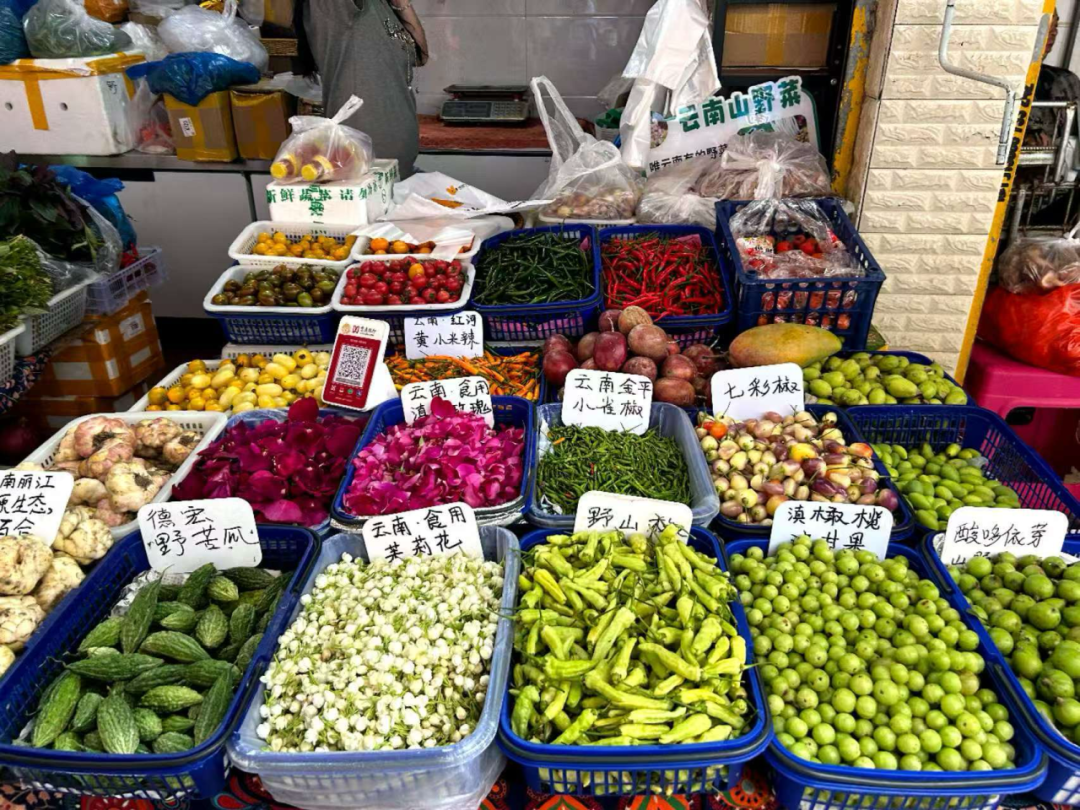
◉ Wild vegetables at Zhuanxin Market in Kunming in spring.
In late summer, at the cusp of autumn, I arrived at Shahe Fair, which sprawls over 50,000 square metres in Changping District, Beijing, and operates fully outdoors on every Wednesday, Friday, and Sunday. Even at the gate you are met by the fair’s surging energy. At eight or nine in the morning the crowds flow ceaselessly: a grandad ambles out clutching a bundle of spring onions, an auntie carries a potted plant in her arms, parents stroll with children of four or five, young people gather in twos and threes. All manner of transport threads and weaves between them — bicycles, little electric scooters, stand-on electric balance boards, and the folding trolley that is essential to any market outing.
Here, prices fall so far below my sense of what life should cost that the 100-yuan note in my hand has never felt so substantial. (And this is still Beijing!) Goods rarely come in fancy packaging — red and blue plastic bags are the finest colour palette — yet they come with their own units of measure: sold by the pile, bought by the bag. “ One-hundred-and-two-percent” home-grown vegetables from Yanjiao, two yuan a jin and you can pick any you like; sandy-fleshed tomatoes from Zhangjiakou, with the stall-holder breaking open a whole trayful for customers to try — you will know whether they taste of tomato at once; live fish and prawns sold by the bowl, all considerably cheaper than in town markets; the “ fruit freedom” that has become a middle-class benchmark is within easy reach here at the fair: fresh blueberries at 20 yuan a jin, Narcissus mangoes at 5 yuan a jin, Shine Muscat grapes at 10 yuan a jin, Kyoho grapes at 6 yuan a jin, seasonal Pinggu peaches at 3 yuan a jin, Qilin watermelons at 80 fen a jin — the watermelons are even sold in bags, ten yuan for a sack holding three or four.
But for every bargain find, there are goods that call for careful discernment. Taking in all these marvels that are impossible to authenticate, you broaden your horizons while marveling at the complexity of human nature. Dried beef at the entrance is priced at 30 yuan a jin — very likely pressed from duck meat. Durians that fetch 30 yuan a jin elsewhere sell for just 20 yuan here, but they are likely Ganyao durians, with their large pits, masquerading as Monthong. Camel milk from the Tianshan mountains, rare and precious, even said to cure the “three highs” — one sip and the taste of powdered creamer is unmistakable. Second-cut pork at 15 yuan for two jin, a price rarely seen even at the lowest point of the pig cycle, yet water is seeping from the surface of the meat and who knows how long it has been sitting in a cold store. A drinks stall with international flair, its bottles a riot of colour, is a feast for the eyes: for just ten yuan you can have Ukrainian-imported Mojito craft and blackcurrant craft — though simply rebottled in Foshan, with no equivalent to be found even on Taobao. You might also spot genuine Putian AJ and Nikes, every style available, the latest releases and rare discontinued models all within reach, laid out flat in thin plastic bags for you to browse at leisure — humble and honest.
Those who cherish the finer things in life can also pick up freshly dripping lotus flowers and seed pods here. The katydid stall throws in little bamboo cages, and a cluster of grandads gathers around. Children will not be disappointed either — there are stalls of toys, plus puppies, kittens, bunnies, and a whole parade of flowers, birds, fish, and insects fluttering on display. Various grades of tobacco leaf and pipes are available at the fair, with tobacco sold by weight so you can spend as little or as much as you please. There are premium brands like Zhonghua, Xuanhemen, and Huanghelou, alongside the more affordable Hongtashan and Golden Leaf. The stall-holder rolls cigarettes himself, live on the spot.
Dealers from Panjiayuan are regulars at Shahe too. The curio stalls span the whole of ancient Chinese history, every dynasty accounted for at thirty yuan an item: you can choose a Tang-dynasty Buddhist prayer bead bracelet, a Ming-dynasty snuff bottle, mixed-dynasty copper-coin strings — of course, authenticity not guaranteed. Next door, a second-hand stall protests modern consumerism: every scrap and oddity can be repaired or recycled, as though my grandfather’s attic had been tipped out and left open for all to browse. Several stalls sell wenwan walnuts — walnuts kept for handling rather than eating — each variety named with its own bold moniker: Coarse Vein, Eagle’s Beak, Heaven-and-Earth Lion Head. Buy some and you can polish them in your pocket as you browse, letting them soak up the fair’s atmosphere. There are also green walnuts still in their unpeeled husks, called Toad’s Head, which have won a wave of “aesthetic fans” thanks to their uncanny resemblance to the golden toad. Buying a fresh walnut feels as thrilling as a gamble on a rough-cut gemstone.
The fair feels like it is resolutely saying “no” to industrialisation. Bed sheets and duvet covers come in vintage floral patterns that look wonderfully festive. Walk a little further and there is someone cotton-fluffing by hand to make a quilt to order — pair it with a floral duvet cover and you can walk away with a quilt that exists nowhere else on earth. Leather-belt stalls lay out great sheets of hide in shades deep and light. All the customer has to do is stand still while the stall-holder measures the waist, then the man works at lightning speed to cut and punch the belt, genuine leather throughout. Belt buckles come in Western modern styles à la Chanel or CK, or in a courtly retro vein of Gold-inlaid jade with dragon motifs. Walking sticks in different materials are handcrafted, finely made, ranging from peachwood to ash-wood shafts, and can be bespoke. The young stall-owner whips out his crown jewel — a commanding dragon-headed staff of the She Taijun style, after the legendary warrior matriarch — straightens his back, and you half expect him to march off to war…
I wandered through the fair in a whirl and, glancing up at my watch, found that two hours had gone. Parting time now: I was carrying a plastic bag of Pinggu peaches and a block of hawthorn cake, a pair of little zodiac gourds in my trouser pocket — hunted out for me by a child I had met by chance — my belly brimmed with baked flatbreads and stewed offal, my brain flooded with dopamine. It was there that I understood at a deep level that your eyes can never keep up, yet all your troubles simply vanish — no wonder young people love roaming the fairs.
Roaming a fair offers such a fresh and extraordinary experience because, as something resolutely outside the everyday, the fair throws the routine of young people’s daily lives into sharp relief, carrying the exoticism of real life — even a faint whiff of carnival: stepping into an unfamiliar rhythm of life, an unknown liminality, drawn in by unvarnished authenticity, swept up in the erupting bustle, finding a moment’s indulgence and release from the weight of reality.
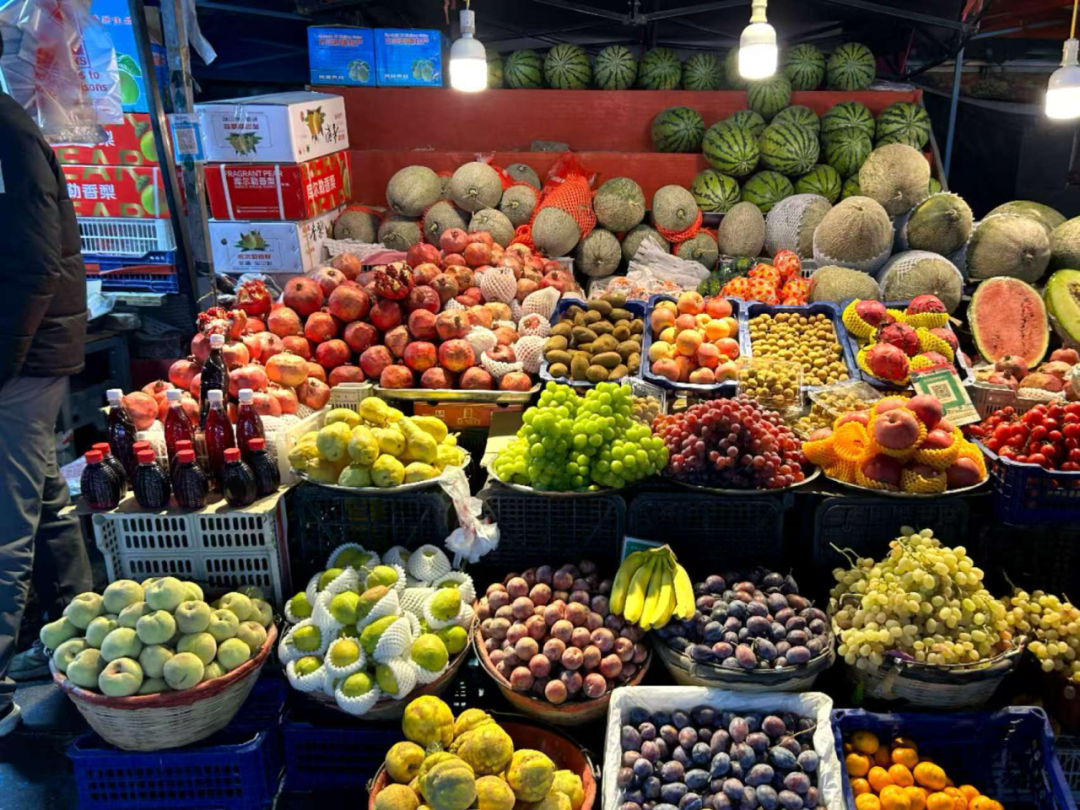
◉ Melons and fruit at Hotan Night Market in autumn.
***
Another way to approach a market is to shift from watching the spectacle to reading the craft. In recent years, more and more young people have begun to feel a genuine curiosity about the people, stories, and objects within a market. You can catch the smell of dampness mingled with freshness, spot the fine details in hand-painted signs and the patterns on plastic bags, and hear the stall-holders’ calls rising and falling across the aisles. I have led many market walks over the years and have watched how this curiosity turns into action.
In 2024, as a consultant, I co-launched a “ Market Research Group” together with Fengnianqing. It began with barely a dozen people; now over seventy companions share the group chat. Their motivations vary: one simply wants to have a chat with the stall-holders; another wants to photograph every plastic bag used to carry vegetables in a single market and find out how many varieties there actually are; one has become obsessed with the calligraphy and the turn of phrase on hand-written signs; another follows the traditional street-food stalls on the market’ s fringes in search of flavours; one is trying to master the art of sourcing ingredients that are “ high quality yet low priced”; yet another keeps an eye on “ the sharpest traders” in the market, eager to learn their secrets.
We organised several site visits, trying to cover as many facets of city and countryside as possible. Guangzhou’ s traditional markets and its “ trendy” ones, the rural market fairs on the edges of Foshan’ s town and country, Hong Kong’ s street markets — all were on our itineraries. As one member’ s parents work in wholesale at Shenzhen’ s Haijixing, we also followed vegetables upstream into the wholesale market, trying to understand how food flows through a city.
When leading a visit, I give a guided tour and share my own views. But as a scholar who has studied markets for years, I deliberately set aside the researcher’s “arrogance”: I am in no hurry to hand out answers, and would rather let members look for themselves, ask their own questions, run a hand over the dents in a chopping block, inhale the fishy dampness at the fish stall, and cup leafy greens to gauge their water content. On the ground at a market, the concrete sensations and knowledge you arrive at through your own practice are often worth more than a hundred lectures. In my view, a market is a public space open to learning, where young people can reflect on their own ways of living and consuming.
We try to let each participant’ s personal experience and initiative come to the fore. Take member Yiding, for instance: drawing on the archives of the newspaper he works for, he traced the historical threads running through Guangzhou’ s markets and led the group into a past that unfolded as we walked. That is how we learned part of Shayuan Market’ s story — specifically that of Yuanyang Market: in 1958 small commercial enterprises began appearing in Haizhu District, and with them the state-run housing compounds were born; Yuanyang Market was built by the Yuanyang Company to make daily life more convenient for residents of the family quarters. It remains closely intertwined with the trajectory of market reform; its ownership structure is still complex, and that complexity has made subsequent renovation and upgrading all the more difficult… Everyone listened raptly, coming to understand the market’ s present shape through its history.
To spark exploration, each outing has an enthusiastic member taking the lead, doing the groundwork in advance and setting small tasks for the group. After the walk we sit down together for a collective discussion. On one occasion the lead member asked everyone to draw a “ sensory map”: go to a designated spot inside the market and record “ what I smell / hear / touch / taste / see”; if that sensation had a shape, what would it be? What colour does it most resemble? What word does it call to mind? Photograph each spot, then annotate them on the map afterwards. An exercise like this brings an ineffable “ feel” down to shareable detail.
“ Finding the unique ‘ spirit’ of each market — you can only know it by being inside it,” one member put it. The observation at Xinhongfeng Market was especially vivid: shaped by the community of Hubei migrants who came together around the garment industry, the market radiates a “ Tianmen flavour”. The foam tags on the vegetable crates do not read “ local”, “ Conghua”, or “ Qingyuan” — they read “ Tianmen”: aubergines, potatoes, loofahs, and garlic shoots from Tianmen; even the salt is a product of Changzhou Company in Tianmen, Hubei.
After several visits one member said: “Once you’ve been to enough markets, you can feel your bodily understanding of food, culture, and the city slowly shifting.” “You start to feel you understand Guangzhou more and more.” Another moved from “I don’t like it” to “I can’t do without it”. Member Yiyezhou recalled that as a child she dreaded the market’s dim light, dampness, and noise: “When an adult dragged me along to buy vegetables, eight times out of ten I would slip away.” After moving abroad and learning to cook, she found that supermarkets could not supply many seasonal ingredients, so she turned to the market instead. Spotting Chinese toon and fresh coriander around the corner, she excitedly bought some and posted a photo online — only to be told she had mistaken Chinese celery for coriander. After that blunder she realised: if you want to eat well, you cannot stay trapped in the supermarket — you have to broaden your understanding of food.
Stepping into Shenzhen’s Haijixing wholesale market, one statistic struck us hard: roughly 85 per cent of the city’s vegetables come through here. That shock of “so it’s that simple” makes you realise that in a city of such high consumption levels, the difference in where supermarkets and restaurants source their vegetables is not as great as you might imagine. The felt experience of walking Haijixing is that one vast chain feeds a great many people, yet food here seems more like freight in transit. And so some members began to understand why they gravitated to online shopping, to e-commerce platforms or Hema, and began to ask: why are the “markets with soul” growing fewer and fewer — why do people treat them merely as commodities? Can we have more choice?
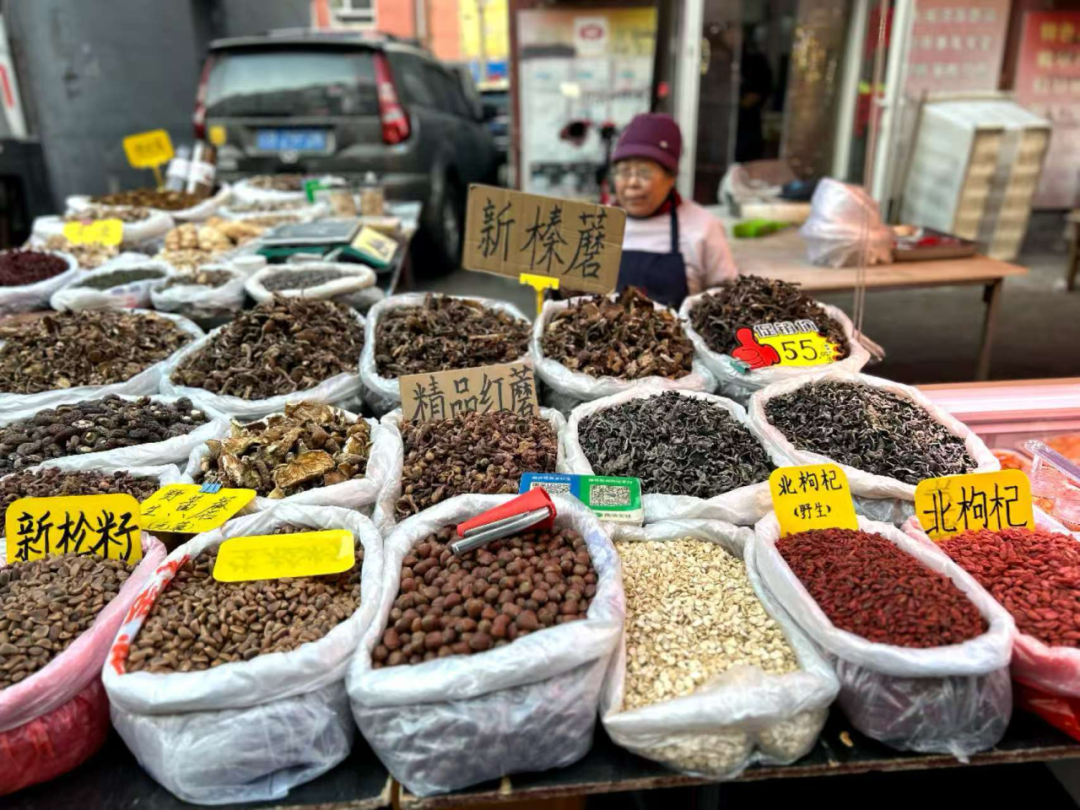
◉ Wild mountain produce at Yaming Market in Shenyang in winter.
Writing from the rural market fairs of Sanzhou in Foshan, Nanxiong in northern Guangdong, and Maoming in western Guangdong, Feilan noted: “ I see live chickens, ducks, and geese; bamboo-woven baskets and unfamiliar yet bountiful local produce; more handmade food; food producers who face consumers more directly — vegetable growers, poultry farmers, beekeepers… I see also a tighter bond between us and the countryside; I see the raw, untamed wildness of the soil; I see the full range of lives led by smallholders across the regions, and the flexibility, resilience, and ingenuity of those who work in food.”
These activities are hardly “ tight” in their organisation — most are driven by interest and enthusiasm — yet the group’ s fervour never flags. By 2025, members based outside Guangzhou had begun suggesting we run activities in their own hometowns, so we launched the “ Market Archive” project: an online exchange on “ how to walk a market”, sharing tips on interviews and observation, then putting them into practice in one’ s own locality.
The template for a market archive is simple:
I. Basic Information
Name, location, opening hours, nature of the market, date of visit, observer.
II. Spatial Observation
• A floor plan of the market (photograph any notice-board map on display, or sketch one yourself).
• Your feelings about the space (record the market and its surrounding neighbourhood in words and photographs, describing
your observations: these can be general impressions or specific ones — stall positions, layout, foot-traffic flow, facilities, and your thoughts on why things are arranged as they are. For observations of the surrounding community, start by asking who the market serves and what characterises the neighbourhood. If possible, it is best to look up some background material or do some light fieldwork nearby).
III. Food Observation
• Food-related notes and photographs. You can describe foods that catch your interest,
or the market’ s food landscape as a whole.
IV. People Observation
• Observe the different kinds of people in the market; personal stories are best.
V. Subjective Feelings and Reflection
• What unexpected discoveries did you make at the market? How would you describe your overall feeling about it? What points struck you as interesting?
VI. Market History
• Depending on your interest, choose whether or not to dig deeper.
At first I worried that, with such a bare-bones guide, everyone’s market archives would look the same. I soon realised I had been needlessly anxious. Each person had their own focus: some paid particular attention to visual presentation and noticed that certain markets write their slogans in extraordinary detail, down to instructions on how to cook the produce; others observed that the “services” a market provides carry different meanings from community to community —beyond selling vegetables, it is also an information hub where people post job notices, catch up on neighbourhood gossip, and arrange all manner of everyday services.
Looking back, my favourite moment is always the one after we break up. We set our bags down gently, gather in a circle, and tell each other about the different worlds we saw inside the very same market: who cared about the size and material of a plastic bag, who was transfixed by the hand-lettering on a stall sign, who fell suddenly silent over a taste of hometown food, who for the first time understood “why I used to hate markets”. I think that is why I keep bringing people along. The market is still the same noisy place, yet time after time it helps people think more clearly about food, about the city, about themselves.
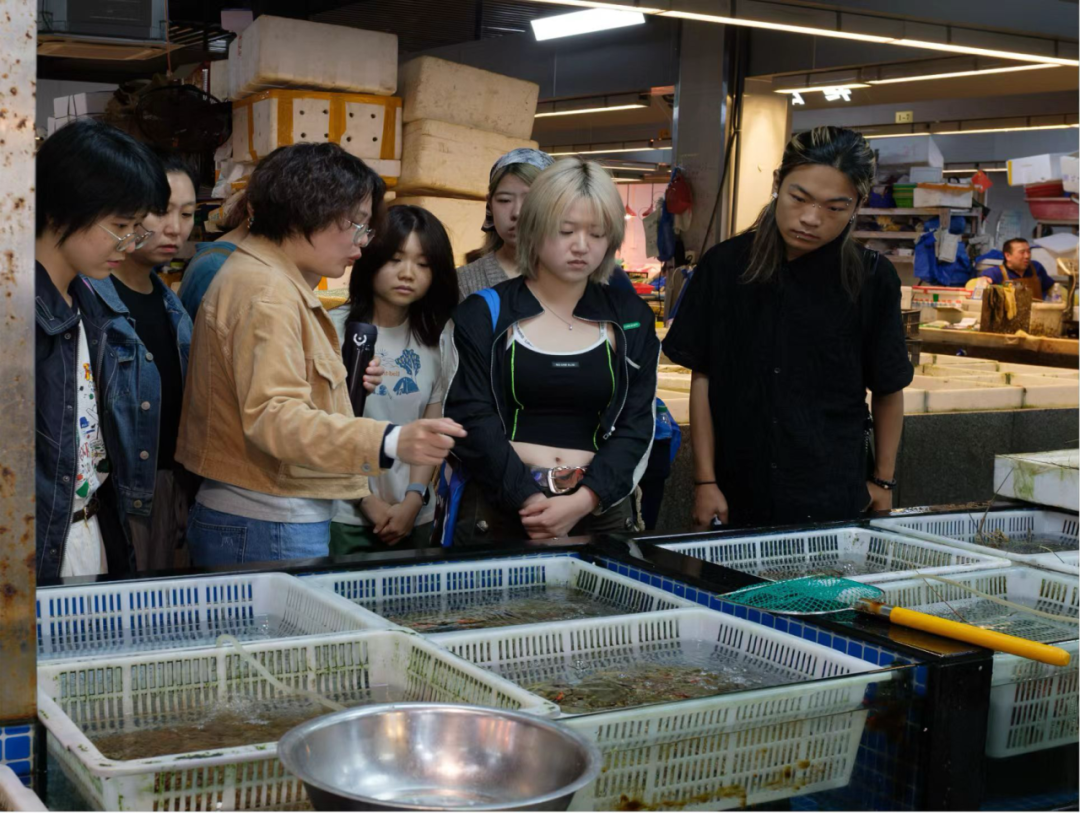
◉ How do young people walk a market? The author frequently joins outings where young people explore markets together, and co-founded the “ Market Research Group” with fellow members.
– About the Author –
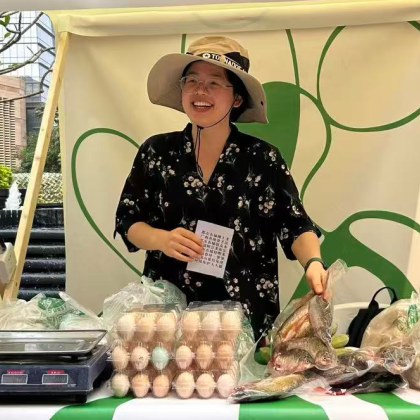
Zhong Shuru — Associate Professor at the School of Tourism, Sun Yat-sen University; PhD in Anthropology, Texas A&M University. Her long-standing research covers market culture, sustainable food systems, and gastronomic tourism, and in both scholarship and practice she continues to explore how food can serve as a medium to reconnect people with food, nature, society, and place.
From working behind a fish stall on a remote island to exploring how markets connect with sustainable living, Dr Zhong has shared many insights about markets in conversation with Foodthink — click here to read them.
– Event Preview –
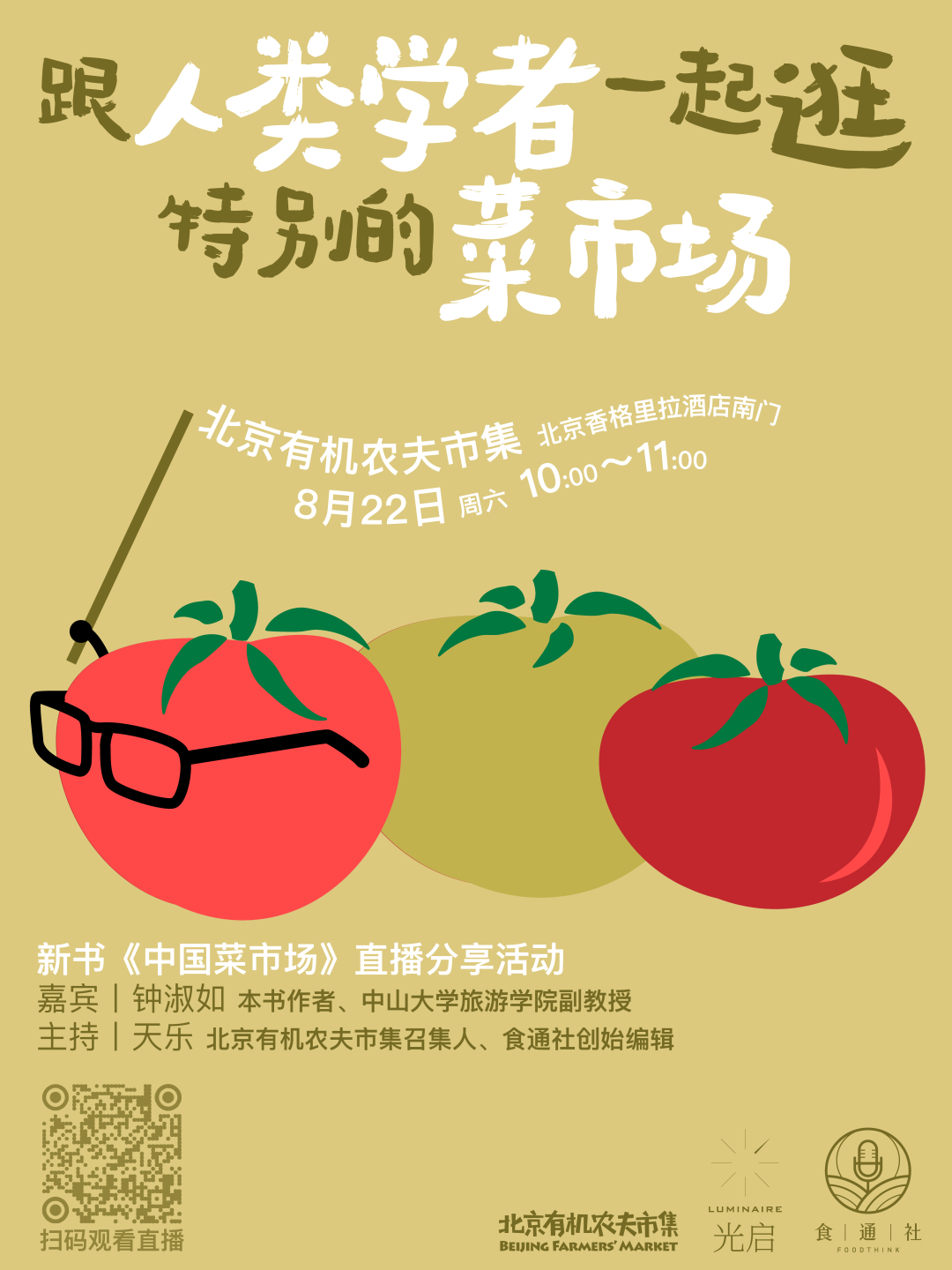
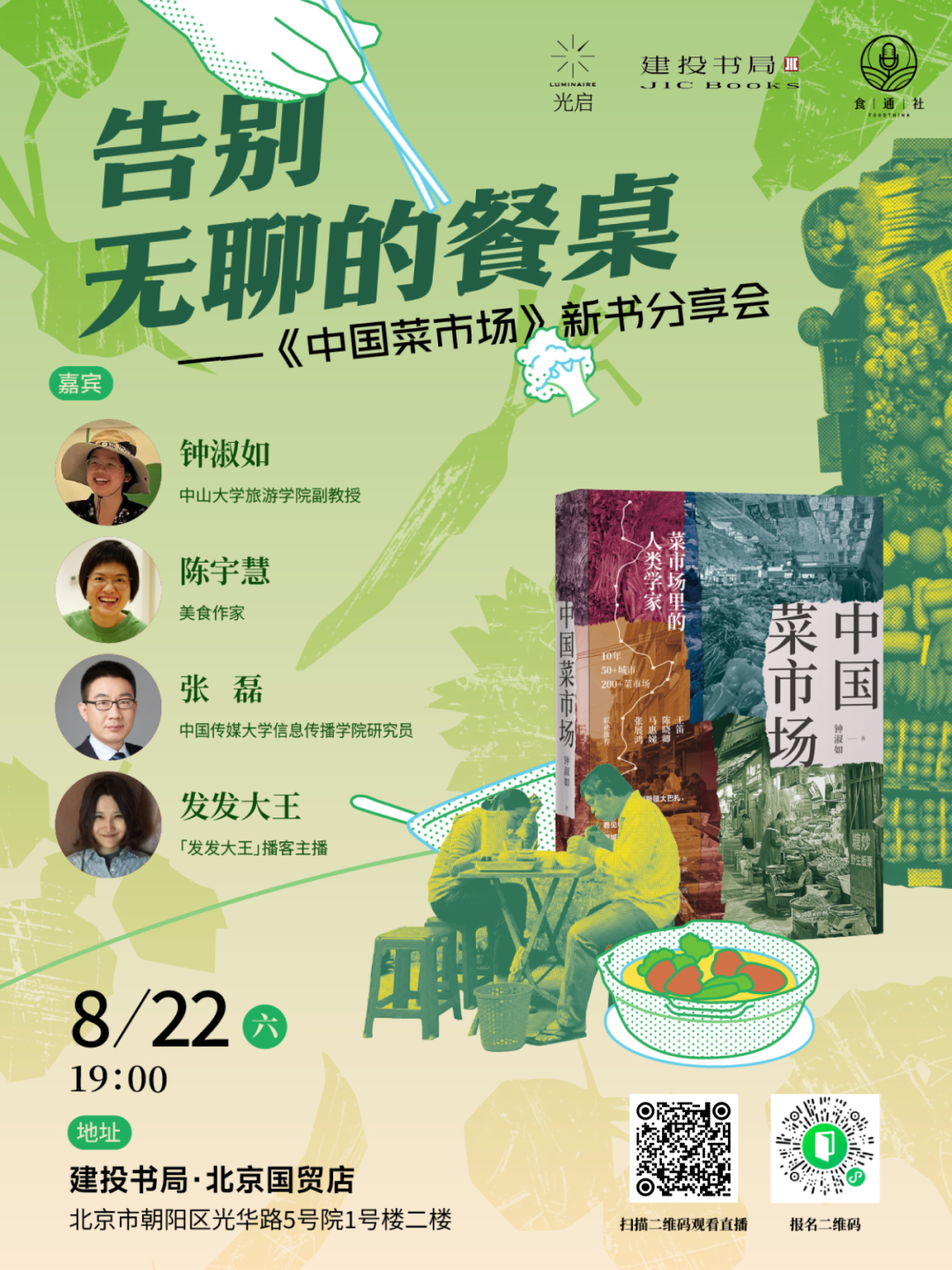
– New Book Details –
Chinese Markets
Author: Zhong Shuru
Guangqi Publishing | Published July 2026
Ten years, more than 50 cities, over 200 markets…
Based on panoramic observation and fieldwork at urban markets across the country,
the book explores the history of markets, the communities of stall vendors, the supply chains behind them, food-consumption culture, urban public management, and more.
– Contents –
All images in this article are illustrations from the book.
Layout: Xiaoshu
Scan the QR code to tip and support original food insights
▼

▼
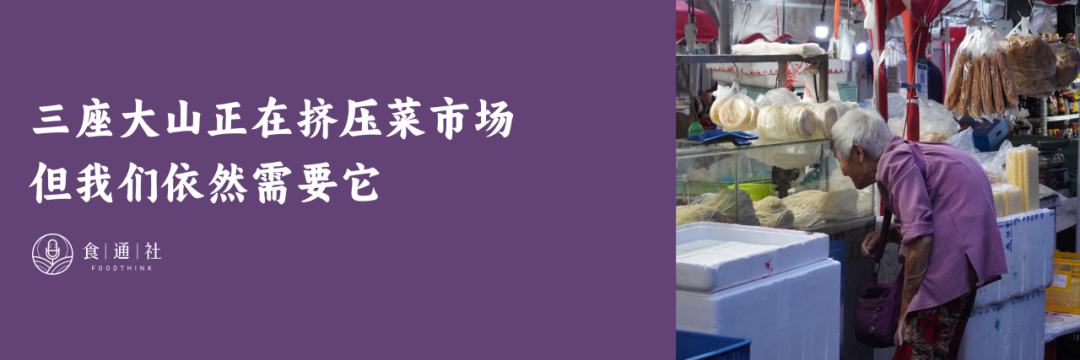
Click the image to read the related articles
▼
Click a keyword to browse more article collections
Seeds | Farming Techniques | Policy | Fermentation | Nutrition | Fruit | Fisheries | Events | Careers | Takeaway | Markets | Livestock | Food Talk | Sharing Sessions | Reading Club | Harvest Festival | Smallholder Stories | Climate Change | Rural Development | Cooperative Economy | Urban Farmers | Food Safety | Digital Technology | Biodiversity | Pandemic and Food | False Solutions | Agroecology Internship Programme
Beijing | Hebei | Shanghai | Guangdong | Guangxi | Henan | Sichuan | Jiangxi | Xinjiang | Shaanxi | Hong Kong | Chongqing | Zhejiang | Jiangsu | Guizhou | Taiwan | Inner Mongolia | Philippines | Canada | Russia | Mexico | Italy | United States | United Kingdom | Germany | Netherlands | Thailand | Sweden | Japan