Chinese Cabbage Dipped in Formaldehyde, Real People Taste a Hundred “Poisons” | Grandma Kouzi

Food safety news has once again surged back onto trending lists after a blogger reported that someone had been dipping Chinese cabbage in formaldehyde. On 22 August, the Kangbao County People’s Government in Zhangjiakou, Hebei issued a statement confirming that an initial investigation had substantiated the allegations: a produce buyer had illegally applied formaldehyde to the vegetables during loading to preserve their freshness for transport.
This sort of story resurfaces every so often, yet the practices behind it remain stubbornly uncurbed despite repeated bans. In an era before the very concept of food additives existed, all manner of chemicals were brazenly added to food for purposes such as preservation and freshness. But it took many years for people to recognise the harm these substances posed, and the fight to secure food safety was a long and hard-won one.
Agriculture Department Officials Test Poisons in Person
In 1902, Harvey W. Wiley, chief chemist at the Bureau of Chemistry, U.S. Department of Agriculture, recruited twelve young, robust men within the Department to form the “Poison Squad”. The aim was to use the human body as a test subject to demonstrate that food additives then in widespread use—formaldehyde, borax, salicylic acid, saccharin, sodium benzoate, among others—posed a hazard to health. The trials were conducted entirely in the open, under media scrutiny.
Every volunteer was young and robust. Wiley’s rationale was simple: if even vigorous young men could not endure these substances, their harmfulness would be self-evident.
During the trials, the men lived in the “Science Boarding House”, going about their daily lives and work as normal, but their diet was strictly monitored, with a dedicated chef preparing three meals a day. Wiley himself weighed the chemicals added to the food each day on a balance scale.
Test subjects and the control group were given precisely the same food and drink, differing only in the substance under trial. Before each meal, every volunteer was required to record his weight, body temperature and pulse. They also carried specimen jars for urine and faecal samples, which were promptly sent to chemists for analysis.
The first substance tested was borax, then in widespread use. Within days, the volunteers began losing weight. As doses increased, they developed loss of appetite, bloating, persistent headaches and abdominal pain. In the sodium benzoate trial, only three men saw it through to the end; the others fell seriously ill, suffering unbearable stomach pain, dizziness and weight loss. The formaldehyde trial brought down every single one of them.
In the end, Wiley proved beyond all doubt that these substances were harmful to health.
America’s Gilded Age was a period of industrialisation and urbanisation, of growth in the chemical and food-processing industries—and an era riddled with food-safety scandals. In the United States, swill milk killed more than 8,000 infants, directly or indirectly. In Europe, watered-down milk, alum-adulterated bread and lead-laced confectionery prompted Britain’s Adulteration of Food and Drink Act (1860). Yet efforts to pass food-safety legislation in the United States were repeatedly blocked by corporate power and never made it through Congress—which is precisely why the decision was taken to test poisons on living human beings.
At last, on 30 June 1906, the United States passed the Pure Food and Drug Act, also known as the Wiley Act after its drafter. Its historical significance can scarcely be overstated. The Act not only established a national regulatory framework for food, but also laid down the core principles of modern food safety at a professional level. It has been drawn upon by food-safety legislation in the vast majority of countries worldwide—including China’s Food Safety Law (2009), which likewise encompasses these fundamental food-safety principles.
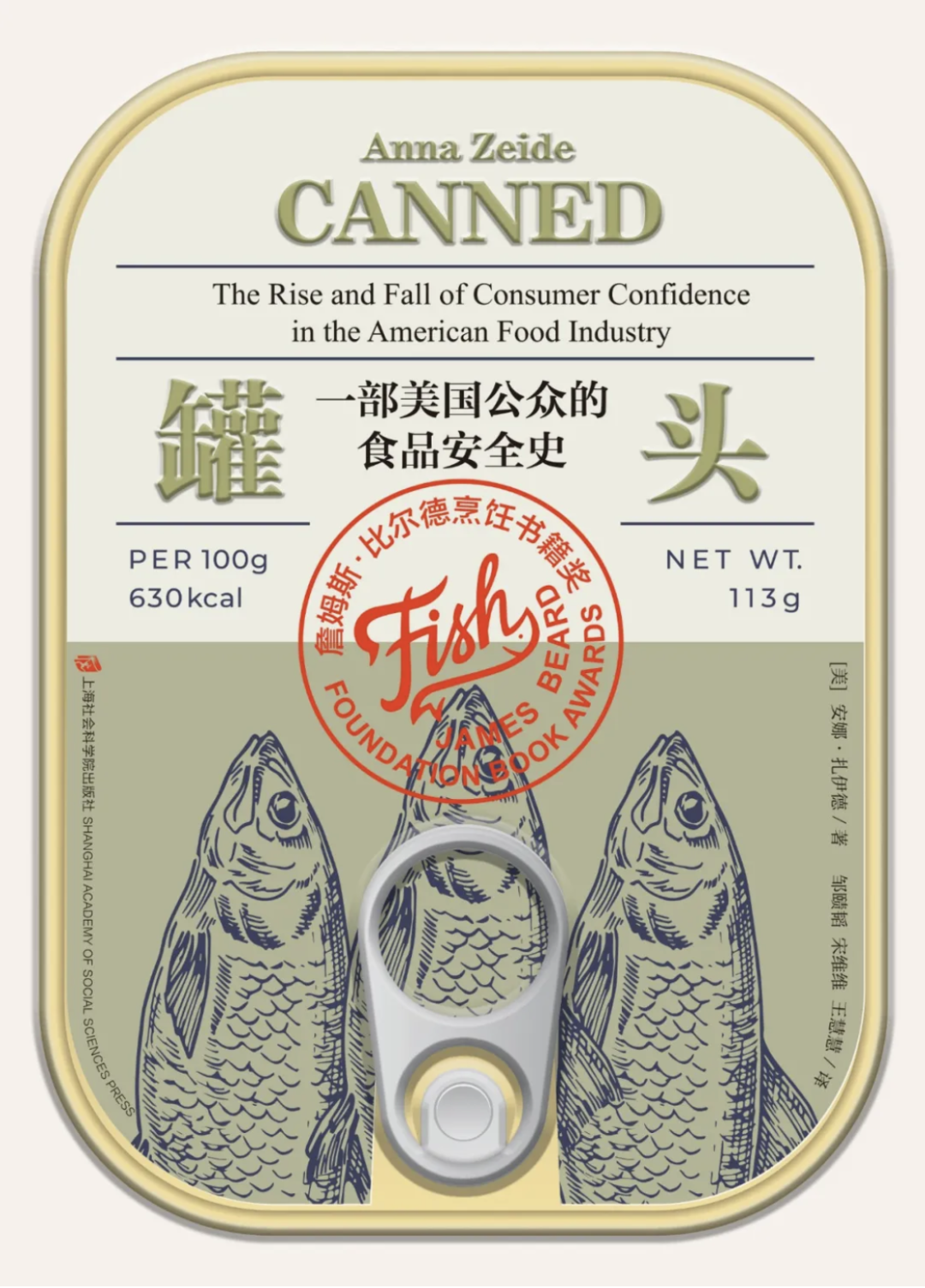
◉ American scholar Anna Zeide’s Canned: A History of the American Public’s Food Safety explores the relationship between the American public and food safety.
Illegal Adulteration That Defies Repeated Bans
Remember borax—the very first substance tested in Wiley’s in-person poison trials we looked at earlier? Borax is wonderfully versatile, cheap and easy to come by—it has no faults whatsoever, apart from being poisonous.
I just bought about 500 g online for barely a dozen yuan. Of course, I’m not going to sample poisons myself—rather, I’m going to “dish out the poison”: steam a small potato, mix it with equal weights of white sugar and borax, mash it all to a paste, and set it where the cockroaches come and go. The potato’s aroma and texture and the sweetness of the sugar will lure the cockroaches into calling all their friends for a feast. After a delightful free banquet, the borax will kill every last one of them. For the next several months, no more cockroach nuisance—and ants have dwindled quite a lot too.
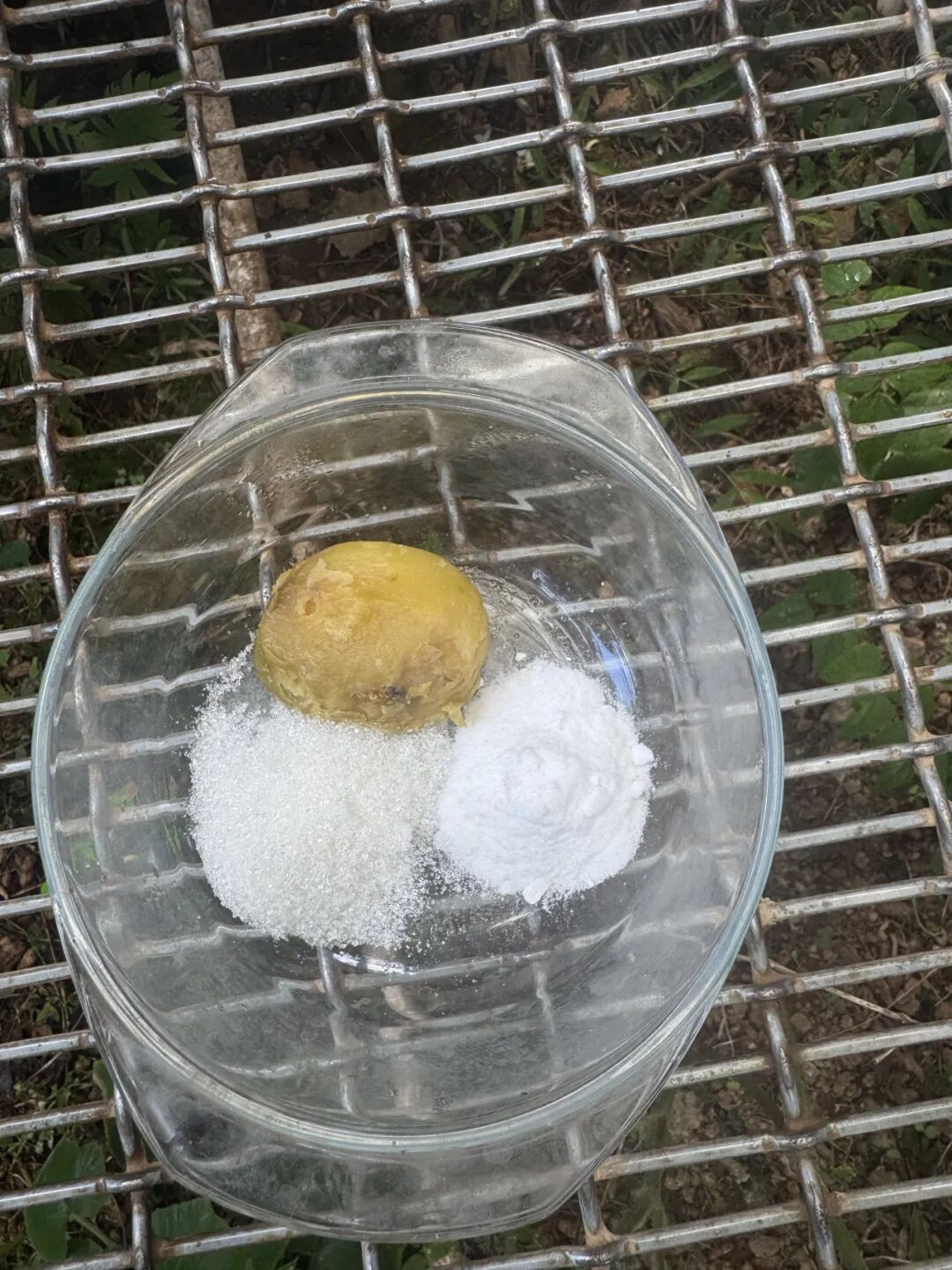
◉ Equal amounts of white sugar, borax and potato, combined into a homemade insecticide. Photo: Kouzi
Borax is toxic. In 1978, China first explicitly banned it as a food preservative, and in 2008 it was added to the List of Non-Edible Substances That May Be Illegally Added to Food. And yet, even here in 2026, illegal additions of borax to food are still occurring.
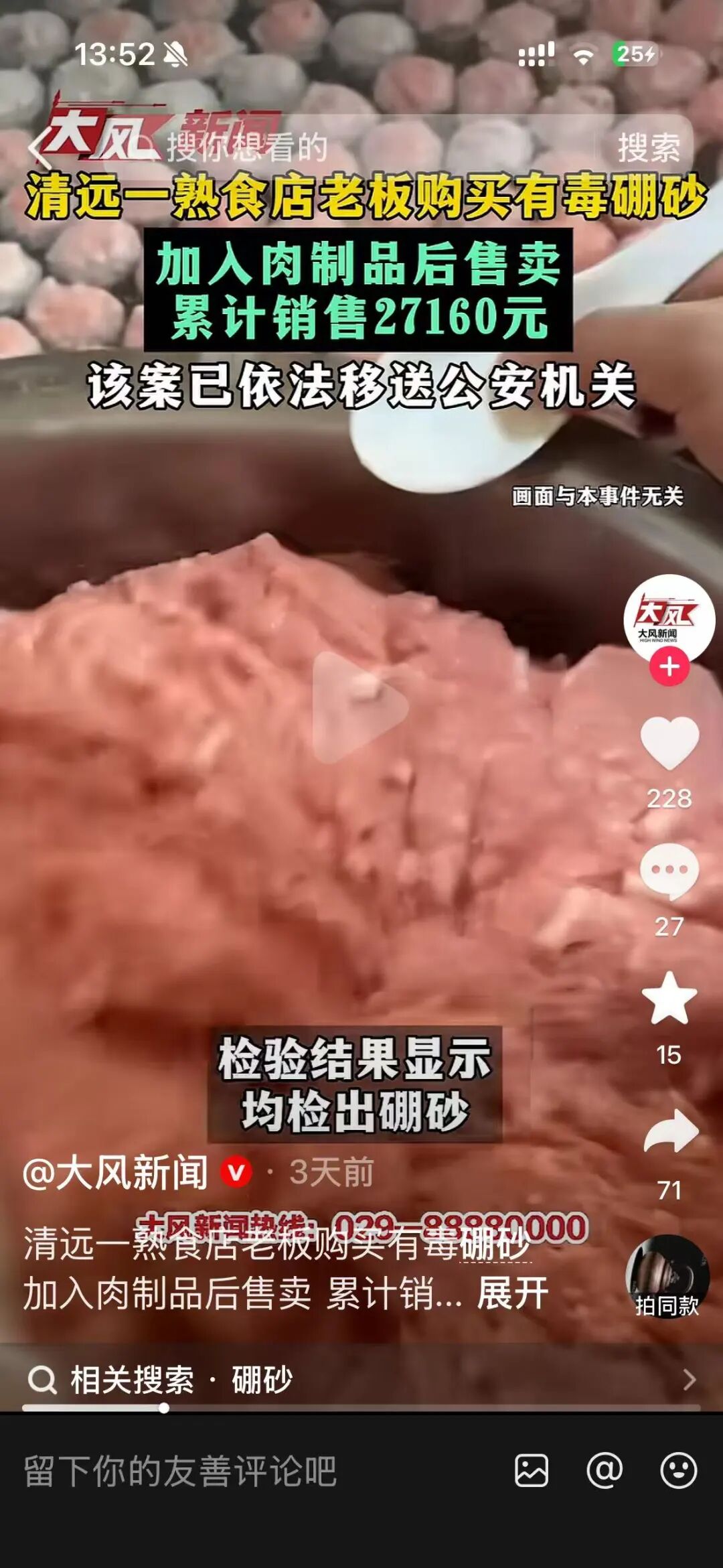
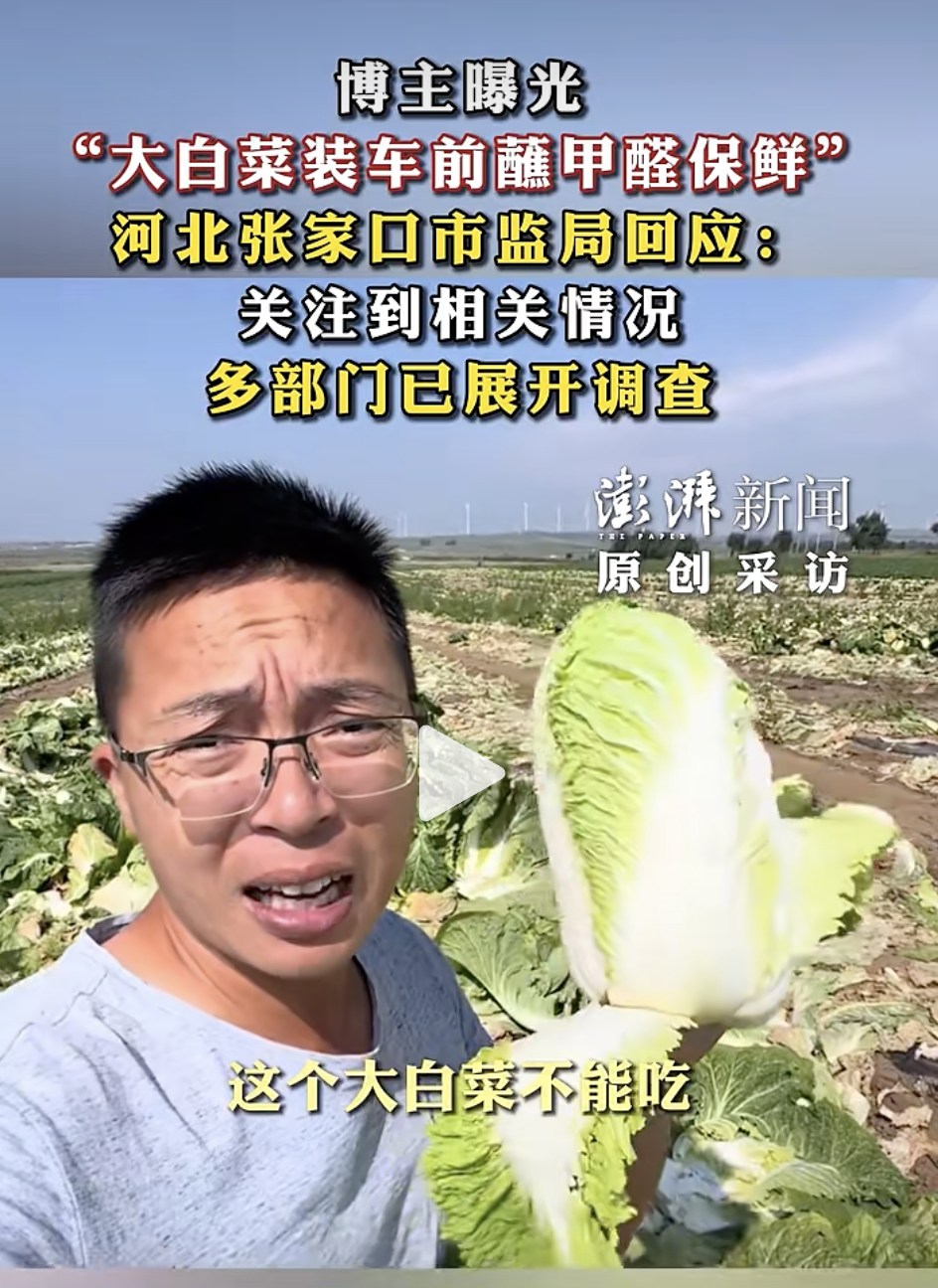
◉ This August, a deli in Qingyuan, Guangdong, was investigated for adding borax to its meat products. Image source: Douyin (left). Recently, a blogger reported suspicions that someone in Kangbao County, Zhangjiakou, Hebei, had been dipping Chinese cabbage in formaldehyde before loading it onto trucks bound for other provinces. Image source: The Paper (right)
Borax works its “magic of turning the mundane into the miraculous” in food, altering the protein structure of rice and wheat products, meat, and bean-based foods. Add it to liangpi (cold rice noodles) or hand-pulled noodles and they become silky, springy and resistant to breaking. Add it to meatballs or bean curd sheets and they turn bouncy and hold up well under prolonged cooking—an instant upgrade in texture.
Rice and wheat products are the worst hit by illegal borax additions. Zongzi (sticky rice dumplings), steamed rice noodle rolls, zongzi again, noodles, dumpling wrappers, wonton wrappers, frozen dumplings and wontons—any of them could be affected. Unscrupulous traders will even inject borax into pork to make the meat look brighter, feel smoother and stay fresh for longer.
Back in mid-August, a deli in Lianzhou, Qingyuan, Guangdong, was found to have been adding borax to its meatballs and bean curd meat rolls. In stories like these, the people who appear on television almost invariably look like earnest, hard-working small entrepreneurs, shop owners and street vendors—ordinary people we’d pass on the street or meet at the market every day.
Beyond borax, formaldehyde—which is likewise colourless, odourless and endlessly versatile—is a proven carcinogen, commonly used in frozen seafood, dried bean curd and other dried goods, bagged vegetables and mushrooms, fruit, and other perishable produce destined for short-haul transport. Equally, one must be wary of sulphur dioxide on rehydrated products such as tripe, aortic arch and snow fungus; industrial caustic soda and formalin used to reconstitute dried squid; malachite green and eugenol used to keep live fish alive during transport and storage; and nitrite used on bulk cooked meat and cured foods…
Manufacturers don’t always follow their ingredient lists faithfully, either. In a recent food-safety sampling inspection, the State Administration for Market Regulation tested 2,325 batches of samples and found 45 to be non-compliant. The most pressing issue was the improper use of additives, involving sweeteners, colouring agents, preservatives and bleaching agents among other categories. For instance, synthetic colouring agents Brilliant Blue FCF and tartrazine were detected in dried noodles; sulphur dioxide residues exceeded the permitted limit in spiced pickled mustard tuber, lotus root and star anise; and cyclamate—a substance explicitly banned by the state—was found in baijiu spirits. Microbial contamination and heavy-metal exceedances were also flagged.
Science and Sorcery
In the food industry, the use of additives is no longer content with simply achieving functions like preservation and freshness—”Science and Sorcery” can conjure “delicacies” out of thin air.
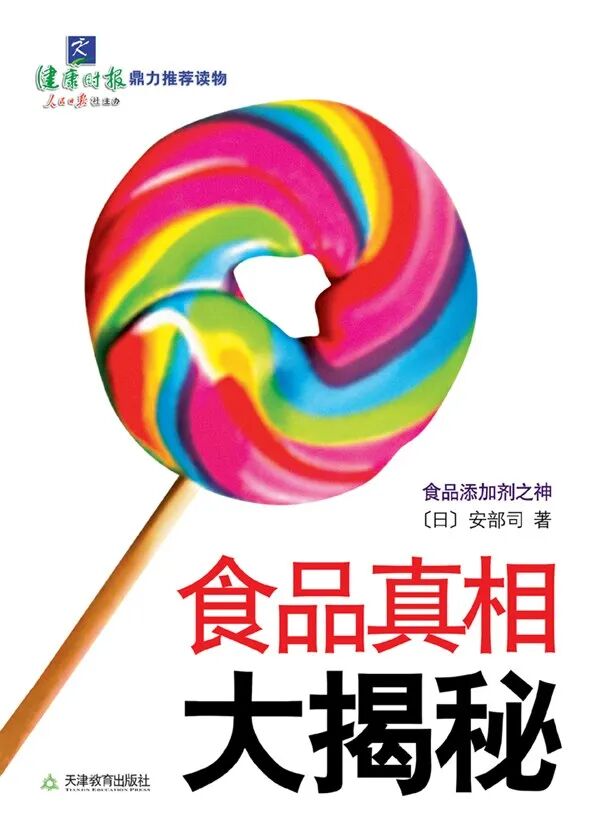
◉ Tsukasa Abe’s book exposing the secrets of food additives. Image source: Douban
Tsukasa Abe, who spent a decade at Japan’s largest food additive company and is hailed in the industry as the “God of Additives”, once recounted in The Truth About Food Revealed the “meatballs” he produced for food manufacturers. The main ingredients were gummy, soggy beef trimmings fit only for dog and cat food, spent hens too old to lay eggs (Abe’s own term: “waste birds”), and textured soy protein. First, beef flavouring and other seasonings established the “beef ball” taste; lard and starch added a smooth mouthfeel; binders and emulsifiers were added to ease mass production; colouring agents set the colour and antioxidants prevented fading; preservatives and acidity regulators extended the shelf life; then a splash of “tomato sauce” completed the illusion of the “meatballs” sitting on the supermarket shelf. Real tomato sauce costs too much, and this “tomato sauce” contains no tomato whatsoever—it is blended from diluted glacial acetic acid, caramel colouring, colouring agents, acidulants, thickeners and the like, indistinguishable from the genuine article in texture, colour and flavour. Only the price differs by worlds.
Against all odds, Tsukasa Abe performed the magic of turning the mundane into the miraculous from a pile of waste—not only crafting a flavour that children adore, but nailing the ideal texture so perfectly that a child could chew through it in two or three bites. Whoever tried it fell instantly in love. These “meatballs” also won over housewives: cheap, vacuum-packed, and ready to eat after a quick blast in the microwave—cooking was effortless.
Abe’s life took a turning point on his daughter’s third birthday. After years of working himself to the bone, he came home early one day to find the meatballs he had developed sitting on the dining table. Until that moment, he had always been proud of the product—turning discarded raw materials into food was both environmentally friendly and money-saving for housewives. But the instant he watched his own child eat them, he was overwhelmed by self-reproach. From then on, he resigned from the additive factory and began publicly exposing the inner workings of the food industry.
At talks, he would also put on live demonstrations: a mountain of small bottles containing “white powders” spread out before him, and, joking as he went, he would spoon the contents of dozens of bottles one by one, mix them together, and pour the blend into hot water. Not a single drop of pork bone stock was added, yet out came a tonkotsu ramen broth—Kyushu-style pork bone broth—that even a local would find familiar and delicious.
This phenomenon is far from unique to Japan. Some chicken bouillon powders and beef stock powders on the market need no chicken or beef content whatsoever. Quite a proportion of what now fills supermarket shelves, looked at closely via the ingredient list, is a veritable “compendium of additives” not far removed from Abe’s demonstrations.

◉ This is a Dutch-language print advertisement for Maggi stock cubes from the early twentieth century. The slogan reads: “…the real brand!” Like other industrial foods, Maggi’s stock cubes saved tired housewives precious cooking time—but that convenience came at the cost of nutrition and flavour. Image source: Popular Science Publishing House
Cumulative Effects
But don’t assume that legally approved food additives pose no threat to your health whatsoever.
The “meatballs” developed by Tsukasa Abe employed only legal, compliant additives—there was no illegal adulteration whatsoever; every additive was used within its permitted dosage—there was no overdose; and the meat raw materials were neither spoiled nor deteriorated, merely the trimmings and offcuts left over from processing other meat products.
Yet he knew full well that current permitted dosages are largely derived from animal studies on single additives in isolation—a “single metabolic safety line”—and take no account of the cumulative effects or synergistic reactions that arise when multiple additives enter the body at once. Children’s metabolic organs are still developing; ingesting several additives simultaneously not only exceeds their metabolic capacity, impairing growth and normal nutrient absorption, but may also interfere with neurological development and trigger allergic reactions.
Besides, what is legal today need not remain so. Food additives are typically adopted first by manufacturers to meet production and sales demands, only to be restricted or banned once problems surface. Different countries and regions set different rules: for instance, Chinese delicacies such as mooncakes cannot be exported to the EU, because sodium dehydroacetate—widely used in their production—is banned outright from food across the Union. China itself has now drastically narrowed the scope of its use and entered a countdown to prohibition.
There is a well-worn “rational, neutral, objective” maxim: “Discussing harm without considering the dose is sheer nonsense.” Every time a food-safety scare sparks public panic, some expert or academic steps forward to utter that very line, then piles up citations to argue that one would have to eat this much or that much before a particular organ could come to any harm. I instinctively bristle at the condescending professional superiority baked into that statement, and I long to turn the sentence structure on them: “Slicing apart the cumulative effects and synergistic reactions among multiple harmful substances, deliberately plucking out a single metabolic safety line to argue that no harm is being done—that is sheer nonsense.”
“The dose makes the poison” is a core principle of toxicology and, for manufacturers, a defence strategy that never fails when facing regulators or public opinion. People have largely embraced this notion and find it all too easy to generalise: assuming that other additives touching everyday life work the same way, and that provided the dosage is low enough, the harm can be dismissed as negligible.
Then there are endocrine disruptors, which are not added directly to food but are pervasive in food-contact containers and packaging, household cleaning and personal-care products, non-stick pan coatings, and more. Research has found that these substances can affect the human body at extraordinarily low concentrations, and are linked to reproductive damage, abnormal development in children, and elevated cancer risk. Depending on the specific substance and the route of exposure, the harm from low doses can in certain circumstances actually exceed that of high doses.
Pharmaceuticals must undergo rigorous testing and approval before reaching the market, and food-safety concerns are drawing ever more attention—yet in virtually every country, chemicals containing endocrine disruptors are not required to demonstrate safety before being sold. New products of every description keep flooding in: manufacturers adopt first and worry later, with restrictions or bans only following problems.
The Teflon coating developed by DuPont in 1938 first came into its own during the Second World War. After the war, its non-stick, heat-resistant properties saw it put to everyday use in consumer products—non-stick pans, kitchenware, and the like. Subsequent research, however, revealed that PFOA (perfluorooctanoic acid), a processing aid used in Teflon manufacturing, is a highly hazardous persistent organic pollutant. Only after the International Agency for Research on Cancer classified it as a carcinogen did various countries begin introducing controls one after another. In 2023, China added PFOA to the List of Toxic Chemicals Under Strict Regulation in China (2023 Edition). Today, PFOA has been phased out by the major manufacturers of non-stick cookware.
Examples of this kind are innumerable. In other words, through our consumption and our very lives, we are taking part in one large-scale human experiment after another—experiments that no one is watching.
28-Day Ultra-Processed Food Experiment
Just because something is sold everywhere does not make it safe, and just because everyone eats it does not make it harmless.
British doctor Dr Chris van Tulleken conducted his own “real-life taste-test of poisons” on BBC, using his own body as the subject. Unlike Wiley’s design—where poisons were weighed on scales and a control group was used—his experiment was simply “living an ordinary, normal life.” Core medical data, including pre- and post-trial blood tests and brain MRIs, were overseen throughout by specialists at University College London Hospital, with filming taking place under their supervision.
Chris was healthy, ate a sensible daily diet, and rarely consumed “Ultra-processed food.” Once the trial began, Chris swapped his homemade oat porridge for boxed supermarket cereal paired with a strawberry yoghurt drink. Lunch became a convenience-store sandwich or a microwaveable ready meal; dinner was a frozen pizza or chicken nuggets, with snack bars and diet cola for grazing in between. It sounds perfectly healthy—but that is precisely what is so terrifying about industrialised food. In puffed cereal, real oats are just one ingredient among many; in the strawberry yoghurt drink, milk is merely a supporting player, while flavourings and syrups steal the spotlight.
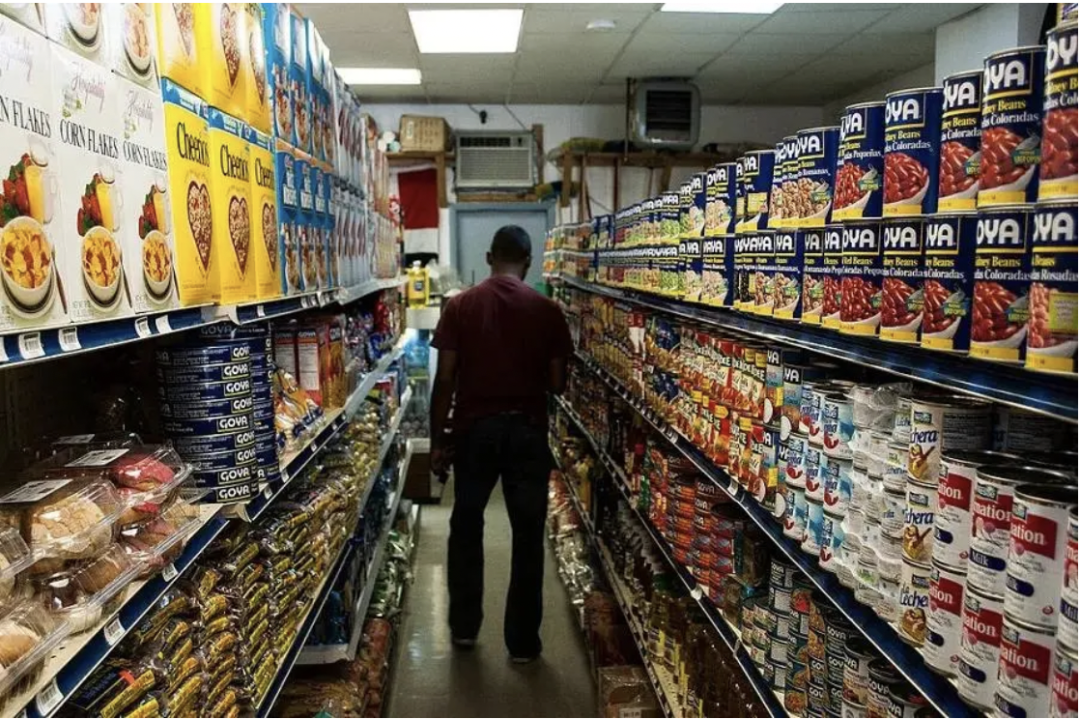
◉ Cans and packaged foods packed to the rafters on supermarket shelves in North America. Photo: Sun Shan
Chris first developed constipation, which quickly escalated into haemorrhoids—his new diet contained virtually no natural dietary fibre. Then came the heat flashes, excessive sweating, broken sleep, mounting anxiety and irritability, sluggish thinking, fading memory, a loss of patience with his children, a loss of passion for his work…
By the end of the 28-day trial, Chris had gained 6.5 kg and developed a fatty liver. Various additives had disrupted his gut, and the culprit could well be the cocktail of food additives themselves. Animal studies have shown that common emulsifiers—such as Soya lecithin, Mono- and diglycerides of fatty acids, Carrageenan, and polysorbate-80—act like the gut’s washing-up liquid, eroding the mucosal layer and making it easier for bacteria to reach the intestinal epithelial cells. Long-term consumption may trigger low-grade chronic inflammation, increased intestinal permeability (so-called “Leaky gut”), and has been linked to obesity and Metabolic syndrome.
The MRI scans also revealed that his brain had already begun to display addiction-like changes, almost identical to the patterns seen in the brains of addicts. The “Bliss Point” we have discussed before—a specific ratio of sugar, salt and fat calibrated by manufacturers to maximise eating pleasure, resist satiety, and even directly stimulate dopamine release—turns our appetite into a runaway car with the accelerator floored and the brake line cut: you cannot stop eating once you start, and you finish a meal still feeling you have not had enough.
After Chris returned to a healthy diet, his weight dropped and the unpleasant symptoms gradually receded. But the bad news is that his brain did not recover. In other words, even though he could will himself off unhealthy, high-sugar foods, the addiction patterns in his brain remained.
Can’t Trust the Ingredient List?
So Just Cut Out Additives Entirely
By now, many people know to check the ingredient list before buying anything. But every shield has its spear: ingredient lists, too, are quietly shifting.
“Clean label” is a wordplay game favoured by some manufacturers, exploiting the information gap to mislead consumers under the banner of health. “Non-fried,” for instance, means the product is first coated and soaked in oil, then baked at high temperature—it genuinely never entered a deep fryer, but that does not mean it is free of fat or Trans fat, and the harmful reactions of starch and oil at high temperatures are just as present. In some oven-baked non-fried crisps, the average Acrylamide content is even higher than in their fried counterparts.
Some “0 preservatives” claims are achieved simply by overloading the product with salt and sugar to do the preserving for them. “0 sugar” often means only “0 sucrose.” More and more people now know that sugar is bad for their health, so manufacturers split white sugar into multiple differently named ingredients—Glucose syrup, Crystalline fructose, fruit juice concentrate, and so on—so that no single one ranks high on the ingredient list. Yet the total proportion of added sugar has not fallen; indeed, in some products the combined sugar still appears near the top of the list.
When “apple juice concentrate” and “fructose syrup” appear in an ingredient list, many people assume “apple juice” must be the healthier option. In reality, juicing strips out virtually all the fibre from the fresh fruit, and after evaporation removes the water, the fructose and glucose content can reach 65–72 percent—little different from fructose syrup in practical terms. The same applies to other fruit-juice concentrates.
Some manufacturers exploit regulatory blind spots, using these wordplay tricks to manufacture the illusion of a “clean ingredient list,” and even to justify a premium price. The buyer can never outsmart the seller—so since every kind of additive is impossible to guard against, I simply stopped trying. No eating, no buying, no worries.
I have always held that no additives matters more than organic. When buying ready-made products from the supermarket, “organic” and the like can be ignored entirely. No matter how organic the raw ingredients, the moment Sodium stearoyl lactylate, Calcium propionate, Ascorbic acid, Mono- and diglycerides of fatty acids, or butylated hydroxytoluene (BHT) are added, our fragile little bodies are just as harmed. If organic ingredients are cooked with too much fat and salt, flavoured with artificial flavourings and MSG, and drowned in heavily additive-laden soy sauce, oyster sauce, and other seasoning blends, they are less reassuring than plain, simple boiled or steamed ordinary ingredients.
I would offer two simple, easy-to-remember tips:
One, choose whole, unprocessed foods and steer clear of processed products; if you cannot prepare whole ingredients directly, choose the closest thing to the original form. If you can buy flour and steam your own mantou at the weekend, don’t buy shop-bought steamed buns or bread. If you can buy prawns in their shells, don’t buy peeled prawns or prawn cakes. If you can buy a whole cut of meat, don’t buy meat patties or meatballs.
Two, avoid the “crispy, gummy, flavour-bomb” trap. Walnut shortbread and pineapple tarts are loaded with Shortening, sending Trans fat levels through the roof. Fruit and vegetable crisps and mushroom chips are mostly Low-temperature vacuum fried, with oil accounting for over 30 percent of the product—the fruit or vegetable is just a gimmick. The various gums and gel-formers in jellies and ice creams carry zero nutrition while adding to the gut’s workload, and children with delicate digestion should be especially cautious. Strawberry-flavoured yoghurt contains no strawberry; grape-flavoured drinks contain no grape—nearly all of it is blended from flavourings and colourings.
Key takeaway: choose whole foods; avoid the crispy, gummy, flavour-bomb.
No one wants to be a guinea pig for additive testing, and no one is keen to be a human test subject—yet putting it into practice is easier said than done. I spent five years running a rather timid experiment in a hostile environment: cutting out all additives.
Practice has shown me it can be done—and in truth, it can work for you too.
References
– This is Foodthink’s original article No. 833 –

Foodthink
Author
Kouzi
A steadfast farmer and village brewer. Full-time foodie, part-time farmer, amateur writer.
Editor: Xiao Dan
Layout: Ming Lin
Scan the QR code to tip—support original food-knowledge
▼

▼
Click the image to read related articles



▼
Click a keyword to access more article collections
Seeds | Farming Techniques | Policy | Fermentation | Nutrition | Fruit | Fisheries | Events | Careers | Takeaway | Markets | Livestock | Food Talk | Talks | Book Club | Harvest Festival | Smallholder Stories | Climate Change | Rural Development | Cooperative Economy | Urban Farmers | Food Safety | Digital Technology | Biodiversity | Pandemic & Food | False Solutions | Agroecology Internship Programme
Beijing | Hebei | Shanghai | Guangdong | Guangxi | Henan | Sichuan | Jiangxi | Xinjiang | Shaanxi | Hong Kong | Chongqing | Zhejiang | Jiangsu | Guizhou | Taiwan | Inner Mongolia | The Philippines | Canada | Russia | Mexico | Italy | The United States | The United Kingdom | Germany | The Netherlands | Thailand | Sweden | Japan