Stop Telling Me Flexible Employment Is a Benefit

Who Does Odd Jobs?
When Professor Zhang Dandan of Peking University said, “Flexibility is a benefit in itself”, I was deep in the remote old-growth forests of the Greater Khingan Range, trudging alongside several odd-job workers harvesting Korean pine cones. Their task was to carry nearly a hundred jin of gathered cones out along the mountain paths.
I cannot forget what one of the women said to me at the time: “Do you have any long-term, stable job you could recommend to me?”
She was from Honghe in Yunnan, born in 1995, and already a mother of two. Travelling all the way to the northeast to harvest Korean pine cones was just one of the many odd jobs she picked up through the year. She said it worked out well, as it allowed her and her husband to take turns looking after the young children at home.
I had gone to the Greater Khingan Range to interview these seasonal odd-job workers who leave home to harvest in the mountains, and our conversations along the way centred on the circumstances that compelled her to take on odd jobs. It had never occurred to me that, in truth, she did not want to be doing them at all.
That is why Professor Zhang’s words struck me as particularly grating.
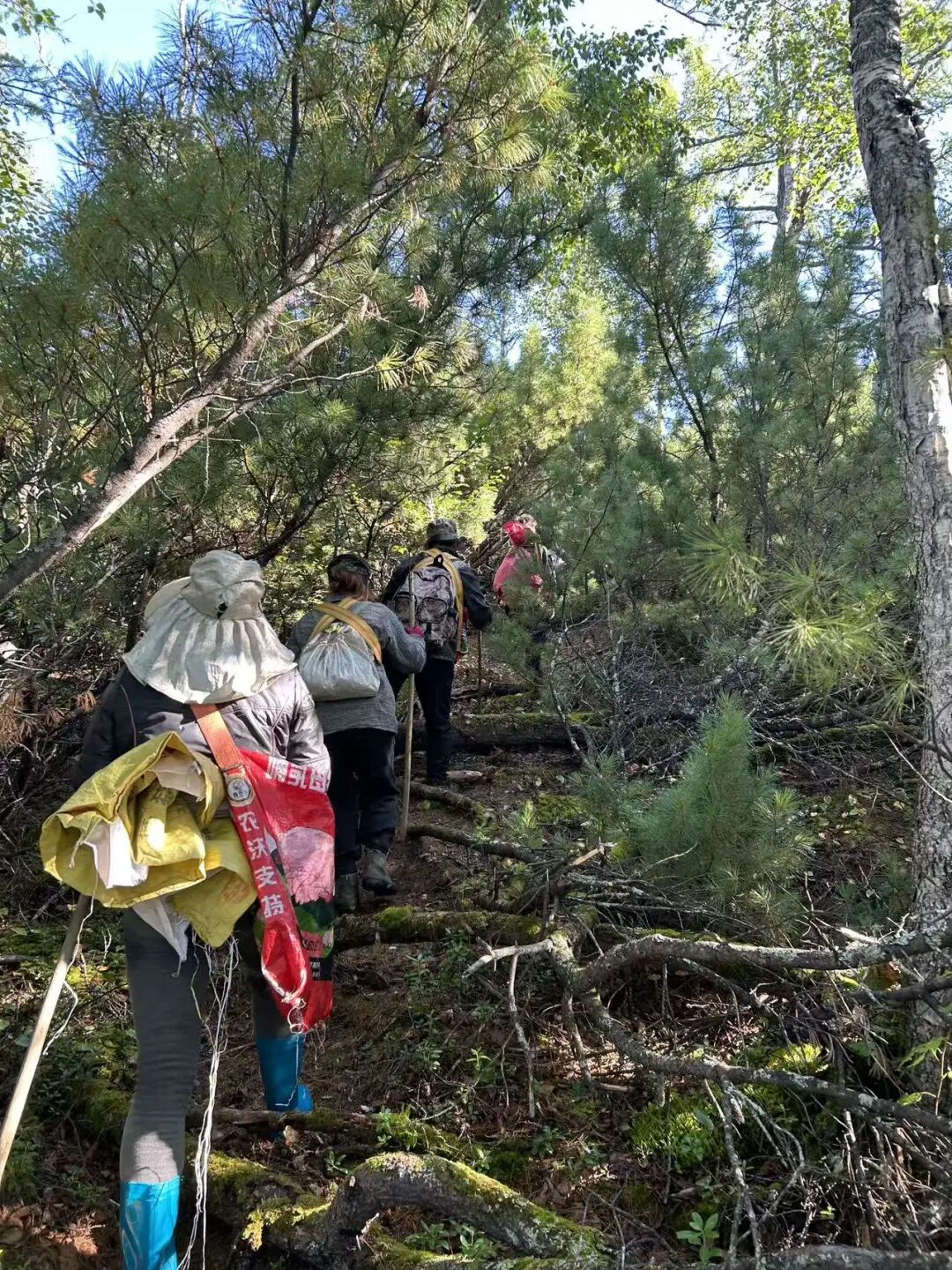
◉ Every August, large numbers of odd-job workers make the long journey from Sichuan, Yunnan and Guizhou to the Greater Khingan Range in the northeast to harvest Korean pine cones to make a living.
As someone who has long followed the lives of odd-job workers and who once ran food-delivery orders full-time, I of course know what Professor Zhang means by “benefit”.
Take a fellow worker I met at the time, for instance — a man in his fifties from the northeast. During the slack farming season in summer, he would come to Beijing to deliver food through the busy months, then head home in October for the autumn harvest. Once the deep-winter hibernation set in, he would come back to resume his deliveries.
For my part, that summer I had finally passed the entrance exam for a postgraduate programme at Peking University. In the months before enrolment, wanting to earn some money for living expenses, running food-delivery orders was the job with the lowest barrier to entry — one that would let me work for just a few months.

◉ I share my own experience as a food-delivery rider in this podcast episode. Click the image to go to the original article.
For me and that man from the northeast, flexibility really was a “benefit”: the gig economy allows a person to arrange their work and life freely, without being tied down by the constraints of a fixed job.
But it is precisely because I have run food-delivery orders myself that I cannot, as Professor Zhang does, so lightly call flexibility a benefit for workers. For most odd-job workers, their work is, just like Professor Zhang’s at Peking University, the means by which each person puts food on the table. Only, what odd-job workers face is a full-time job with long hours, many constraints, low hourly pay and few protections — and without the standing and affiliation of Peking University, they cannot pontificate to the media; even their right to be heard is surrendered to Professor Zhang.
Although Professor Zhang expresses a seemingly objective view in cautious academic language, underlying it lies a value judgement about what kind of work and life ordinary people truly want, and this is precisely the root of the heated debate her remarks have provoked. Scholars who fail to understand the actual labour and living conditions of odd-job workers, or who stand with businesses or from some grander vantage point rather than with the workers themselves, have no standing to speak on their behalf.
The Gig Economy: Progress or Regression?
In my view, before we debate whether gig workers are freer, the question truly worth pressing is: is gig work a livelihood that food-delivery riders, ride-hailing drivers and others in this field have actively chosen in pursuit of freedom, or is it an employment model deliberately designed by platforms to slash labour costs and shift risks onto workers?
Let us first turn to the story of 19th-century British dock workers. Although separated by more than a century, they bear a striking resemblance to today’s platform-based gig workers, trapped in unstable, high-risk labour relations.
At the time, goods from the colonies had to be shipped into Britain by sea, and the arrival and departure of vessels would generate a surge of uncertain labour demand at the docks in short bursts, requiring an ample workforce available on a real-time basis. Two-thirds of dock workers were then regarded as an informal industrial reserve army. But in the end, through a long and arduous struggle, the workers won the right to higher wages, overtime pay and guaranteed minimum working hours. By the late 1960s, every dock worker in Britain held a permanent contract.
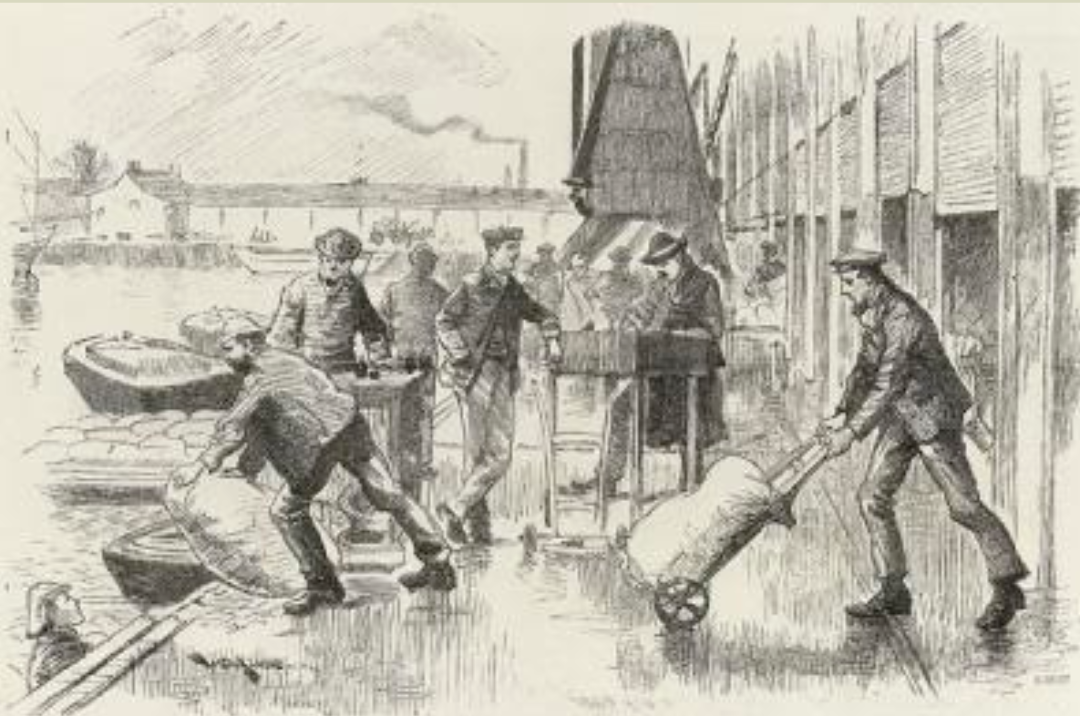
◉ The daily labour of British dock workers. Image source: old-merseytimes
The moment they chose to fight, there was no standard employment relationship — something we now take for granted — waiting for them. On the contrary, more reasonable and equitable labour relations were themselves a product forged by workers in the tug-of-war against capital’s control, and subsequently improved and safeguarded through legislation.
As a socialist country led by the working class, our country’s Labour Law, enacted in 1995 and amended twice since, has been steadily refining workers’ rights at the legal level. So any attempt to stoop and rummage for progressiveness in the gig economy strikes me as turning back the wheel of history. I sometimes wonder whether, in Britain more than a century ago, there was a labour economist named Dandan Zane who tried to tell those dock workers: ‘Whatever you do, don’t fight for permanent contracts! Flexibility is a benefit, because you are free to arrange your own time.’
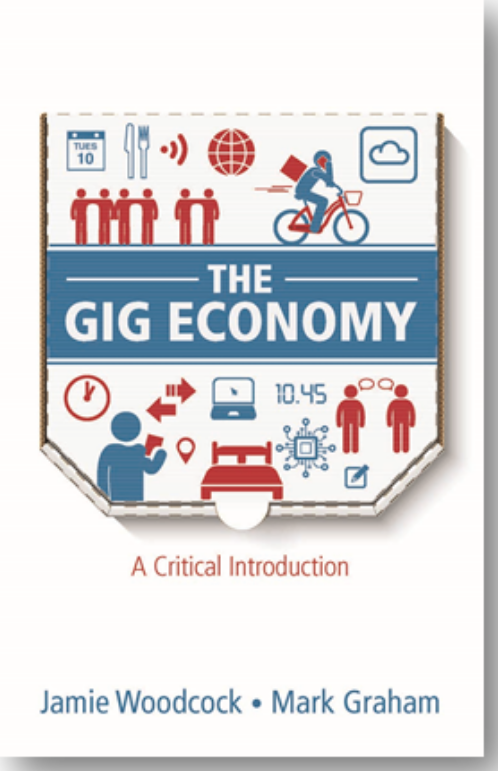
◉ In Gig Economy: A Critical Introduction, two British scholars trace how 19th-century British dock workers, through struggle, transformed gig work into permanent contract employment.
No One Can Speak on Behalf of Odd-Job Workers
Struggle is for a better life, for dignity and fairness — at its core, it is about rearranging power relations. Why did the British dock workers of a century ago feel compelled to make history and transform employment relations? Why could they not simply settle into the “benefit” of “flexibility” and “freedom” — a dock worker today, a match worker tomorrow, a fruit picker in the countryside the day after? Not only could they earn a living, but they could wander the world at will.
Perhaps Professor Zhang, who “lacks freedom” working at Peking University, really did yearn for such a life. But I also know that many odd-job workers in China today must surely have harboured the same hope — that one day they could stop scrambling through hurried, unprotected odd jobs and instead have work that brings dignity, growth, and a sense of belonging.
When I first started out, the mentor who showed me the ropes was a young man five years my junior. He dared not tell his family that he had taken to delivering food after graduating from university, yet he thought the odd job was perfectly all right. ‘A proper job is hard to come by these days, and it doesn’t pay well either.’ A year after I stopped delivering food, I ran into him again, and by then he had changed his tune. He “showed off” to me, boasting that he was being promoted to the station to take up a formal management role. He had a cigarette in hand, watching the food-delivery rider icons drift across the algorithm dashboard, and said with a certain carefree ease: ‘Even if you earn a little less, it’s still better than being out on the road, taking it in the wind and the rain, isn’t it?’ A year on, I ran into him once more — and he was back out on the road, delivering food. I cannot forget his look of embarrassment or the way his eyes darted away.
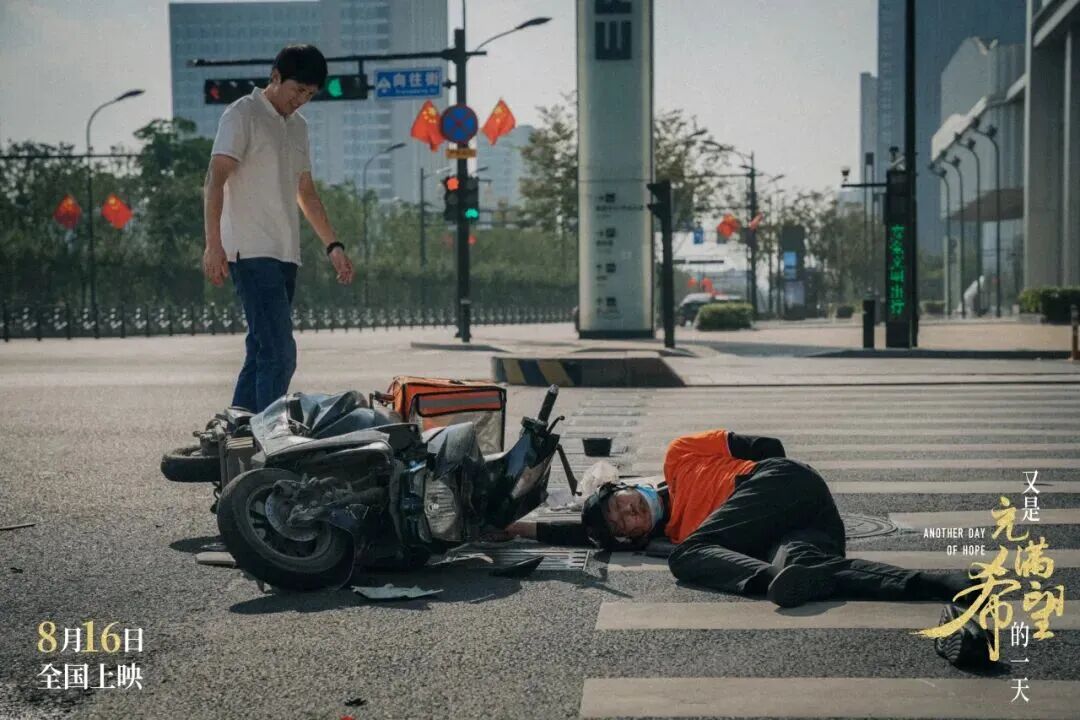
◉ Another Day Full of Hope, Best Small-to-Medium Budget Feature Film at the 2024 Golden Rooster Awards, vividly portrays the plight and suffering of riders. Their voices go unheard; perhaps only a traffic accident that costs a rider their life can prompt a moment’s reflection. Click the image to learn more of the director’s observations and reflections on the food-delivery industry. Image source: official film poster.
Clearly, even if the gig economy does grant workers greater freedom, this does not mean they welcome such a rootless, precarious existence. Rather than a “benefit” to be savoured, flexibility is at best a stopgap one can barely tolerate. Odd-job workers may quietly bear the status quo, or even find a kind of contentment in making do, but they will never praise it — and outsiders have even less standing to speak for them and call it a “benefit.”
Gig Work ≠ Freedom
If one were merely to call flexible employment a “benefit” from the standpoint of work cycles, there might still be room for debate. But when Professor Zhang Dandan says: “Our jobs come with protections like the five insurances and one fund, but those are something we trade our time and freedom for. What flexible workers want is precisely flexibility and self-management, so protections in terms of social insurance and the like will naturally be weaker” — that is far harder to defend.
Setting aside the fact that the total income of most flexible-employment workers, earned through gruelling overtime, may well fall below even the five insurances and one fund that a Peking University professor “trades” time and freedom for (to say nothing of Professor Zhang’s actual take-home cash or the other material wealth and cultural capital she accrues through a platform like Peking University), the very notion of defining a fragmented, piecemeal labour process as freedom and flexibility while ignoring the platforms’ mechanisms of control is untenable in itself.
Who, in their naivety, believes that the working hours of food-delivery riders and ride-hailing drivers depend solely on how much they want to earn? Chat with taxi and ride-hailing drivers more than once, and you will find that excessively long shifts are widespread among drivers in big cities. Even when they are utterly exhausted, they must log enough hours each day and stay online during peak periods, or the algorithm will reduce their order dispatch.
It is the same for food-delivery riders. Their delivery stations and squads have the authority to force them online during peak hours and in bad weather, with penalties if they refuse. Some stations even stipulate that if you fail to meet the required KPI, your per-order rate is slashed for the entire month. I remember clearly: during the 2021 Labour Day holiday, order volumes in Beijing were extremely low. One night at around ten o’clock, a rider was still out on the road waiting for an order, because he needed just one more to hit his KPI for the day. I passed one of my orders to him. He said to me: “Thank you — ride-home order.”
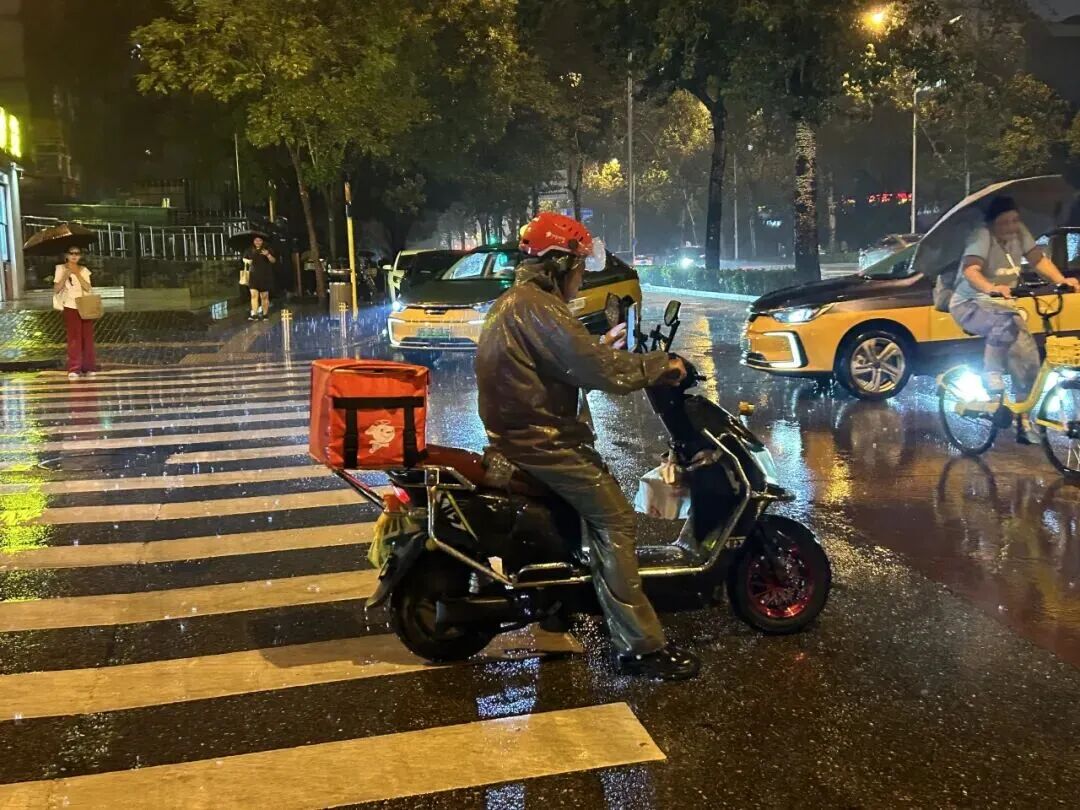
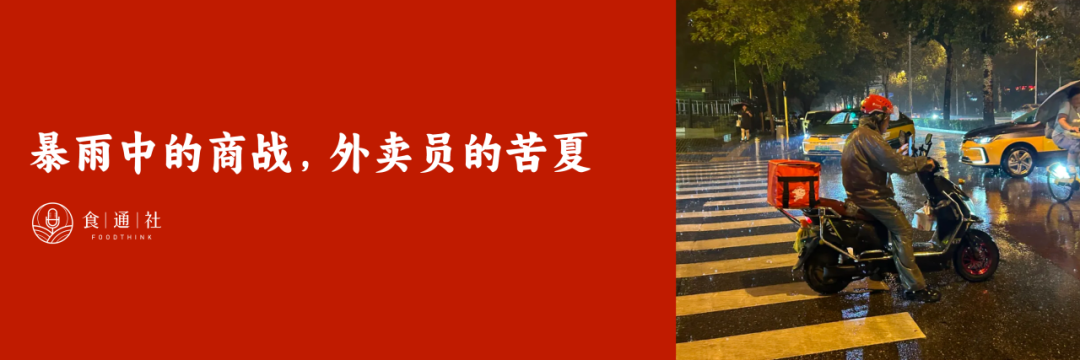
◉ Foodthink’s article The Business War in a Torrential Downpour, the Food-Delivery Riders’ Bitter Summer, published last year, depicts the plight of food-delivery riders in severe weather. Click the image to read the original article.
Compared with those in fixed nine-to-five jobs, food-delivery riders face no less control — indeed, if anything, more. Their working hours are longer, the intensity greater, and they shoulder even more risk.
Beyond food-delivery riders and ride-hailing drivers, emerging platform gig workers such as sorters in fresh-food supermarkets also have their labour processes governed by algorithms and the piece-rate system. To meet the platform’s 30-minute delivery requirement, they must complete the sorting for a single order within three minutes, earning only a few jiao per item sorted. Their work is intensely fragmented, yet the demands are extreme. Many sorters work six days a week with only one day off, spending at least twelve hours a day carrying heavy loads and walking tens of thousands of steps — and they get just one chance to eat a meal each day.
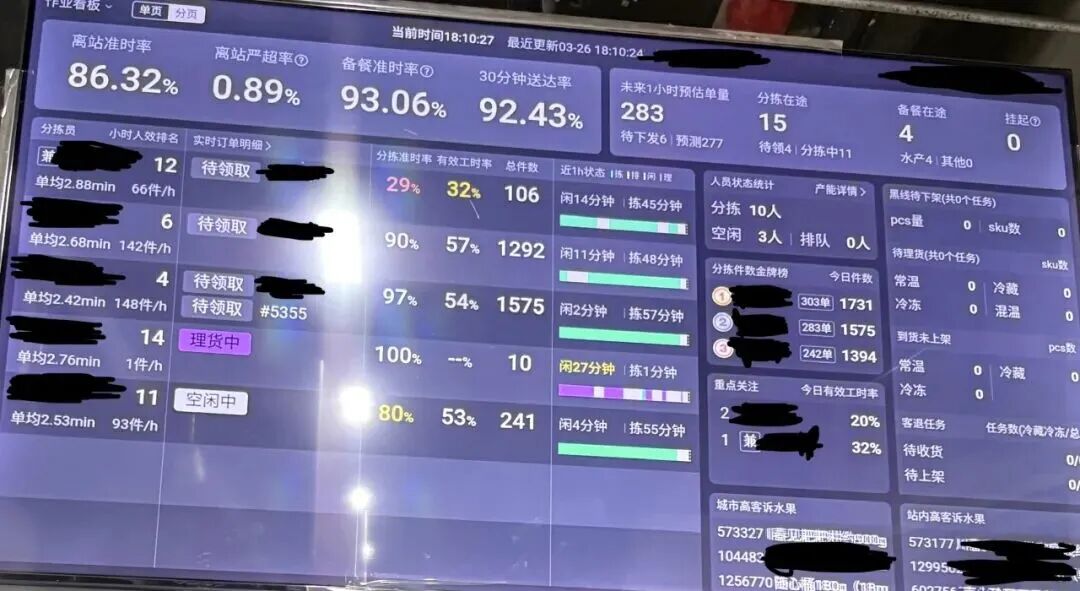
◉ On the large screen, data produced by every sorter running through the fresh-food warehouse is updated in real time, placing enormous pressure on workers. Click the image to learn the truth behind the sorters’ work. Image source: Yakou
Many people who feel trapped in fixed jobs find it easy to project their fantasy of freedom onto gig workers — and onto market-stall vendors, small shop owners and other small-scale producers alike. In particular, when someone has no real knowledge of how gig workers actually labour, they rely on their own imagination and casually assume that gig workers really do possess freedom. In truth, they are not free at all. Or rather, what they want is not the negative liberty of being able to slip away from work at any moment, but fairer working conditions and treatment.
Back to that earlier question, which is all too easy to muddy: Is gig work, for food-delivery riders, ride-hailing drivers and others, a livelihood they actively chose for the sake of freedom — or is it a model of employment platforms deliberately pursue to cut labour costs and shift risk?
In Professor Zhang Dandan’s view, both realities coexist and are inextricably bound together. But in my view, as the food-delivery war has intensified in recent years, driven by demands for delivery capacity and efficiency during peak hours, the platforms’ control over food-delivery riders has grown markedly stronger than before. Order dispatch is prioritised for the easier-to-manage dedicated, Le Pao, and Chang Pao riders, while crowdsourced riders with greater autonomy have been steadily marginalised.
Since the platforms themselves are actively narrowing riders’ freedom and tightening their assessment and control, the natural next step is to grant riders the social insurance they deserve, just as one would for full-time employees. Even if institutional obstacles persist in implementation, those are precisely the problems scholars should be working to solve — not continuing to live in their own imaginings and, out of step with the times, equating gig work with freedom and presuming to speak on behalf of odd-job workers by declaring that “flexibility is a benefit.”
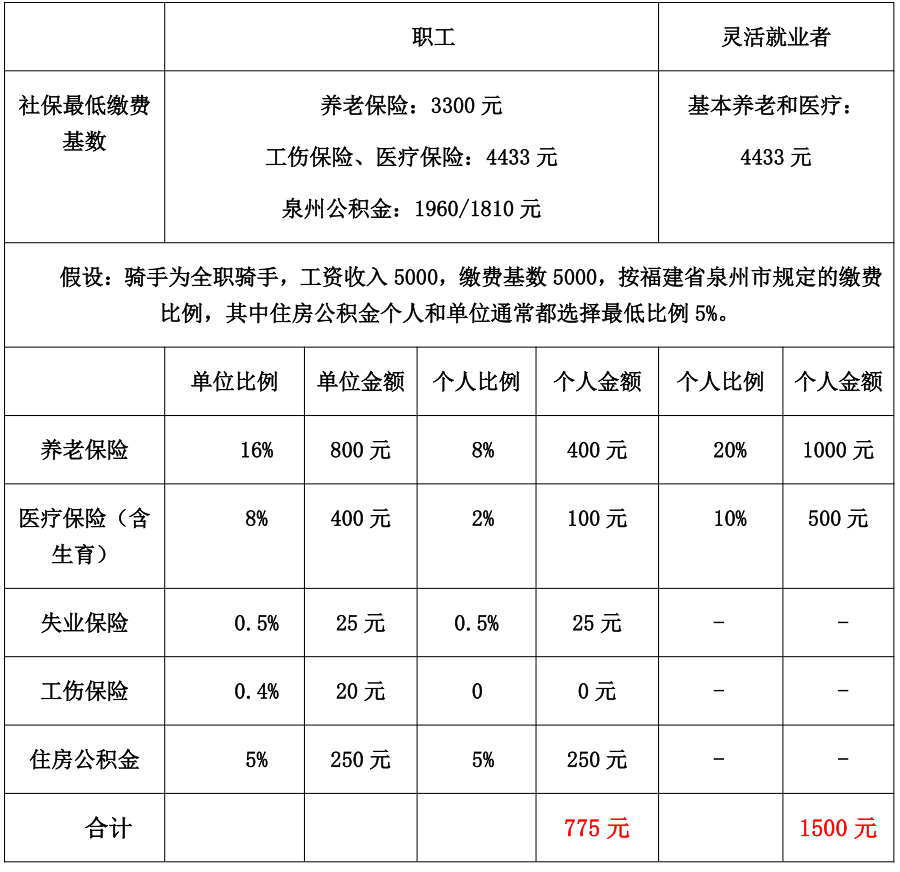
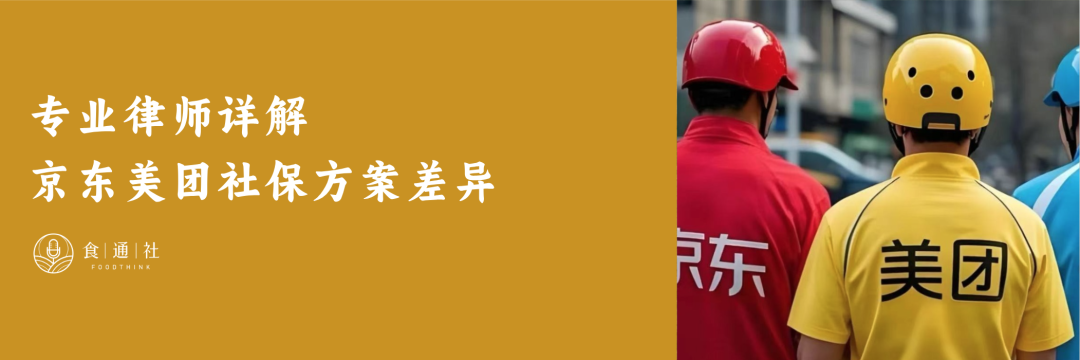
◉ How do social insurance schemes for flexible-employment workers differ from those for regular employees? See the article Specialist Lawyer Details the Differences Between JD and Meituan’s Social Insurance Schemes. Click the image to read the original article. Image source: Hao Zhengxin
The True Social Cost of the Gig Economy
On the question of social insurance, Professor Zhang Dandan noted in another context: “Some platforms have recently put forward proposals to further expand the coverage of the ‘five insurances and one fund’, disrupting the existing market landscape and putting pressure on labour costs. Rising labour costs may lead platforms to cut full-time positions, reduce gig workers’ wages, or even pass on the cost by raising delivery fees.”
This once again helped me understand her perspective as a labour economist: she is well accustomed to approaching the questions around platforms and gig workers from the angle of supply-and-demand matching across the entire labour market. But a scholar’s mind cannot hold nothing but abstract notions of labour and employment.
While extending social insurance coverage to food-delivery riders may lead to fewer positions, it would also, even as it strengthens riders’ protections, curb the platforms’ currently destructive cheap-delivery model: carving up the market by suppressing delivery fees, then siphoning hefty commissions from the restaurant trade for profit, squeezing small and medium-sized eateries’ livelihoods, driving merchants to cut ingredient costs, and ultimately producing unhealthy takeaways for consumers.
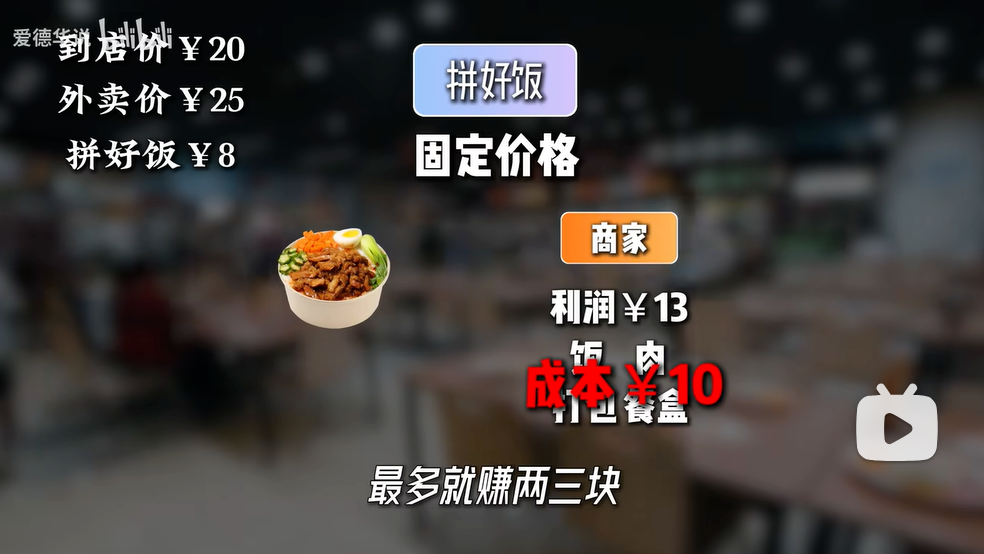
◉ For further analysis of Meituan’s cheap-delivery model, see the article ‘”Pinhaofan”: Who Actually Gets to Eat Good Food?’ Click the image to read the original article.
Earlier, Southern Weekly ran the numbers in a report: if Meituan were to pay social insurance for the 1.2 million riders who meet the definition of full-time employment, the cost would come to 21.6 billion yuan. Yet Meituan, Taobao and JD have burned through over 100 billion yuan in the recent food-delivery war. So while the rise in labour costs brought about by social insurance may squeeze small businesses’ room to survive, for these platform giants the additional expense is a mere fraction of the capital they have poured into fighting for market share.
What is even more ironic is that Meituan’s 2025 financial report reveals R&D spending on drones, autonomous delivery vehicles and AI as high as 26 billion yuan. In other words, the technology R&D a food-delivery platform has invested in trying to replace its riders could already cover the social insurance costs of its full-time riders.
Professor Zhang Dandan is also researching the impact of AI on employment and claims to wield policy influence. Her judgments about gig workers naturally prompt the concern that the same presumptuous errors could reappear in research on AI and labour relations, misleading both the public and policymakers.
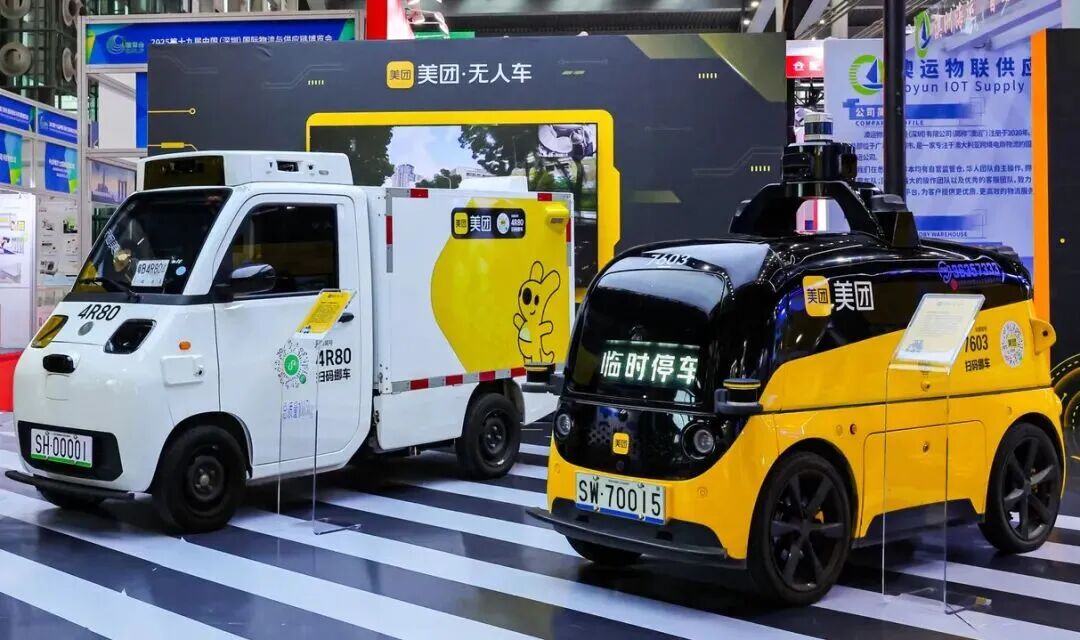
◉ Meituan’s autonomous delivery vehicle on display at an exhibition. For more analysis of AI and labour, see the article “In the AI Era, Who Is Power Shifting To?” Click the image to read the original article.
In short, when it comes to platforms, the gig economy, and the relationship between technology and workers, there is still much for us to think about. Employment is of course important, but it does not mean that whoever provides jobs should be unconditionally upheld by those who fill them. After all, as between platforms and workers — which is the skin and which the hair? — who depends on whom for survival still deserves a debate all its own. Even at the most charitable reading, no worker simply wants a job bestowed as a gift. We merely wish to achieve a better work and a better life through our own labour.
– This is Foodthink’s 835th Original Article –

Foodthink
Author
Zheng Yuyang
An INTP young person who grew up at Livestock Sub-Farm No. 2 in Bayan County, Heilongjiang Province, and now drifts through Beijing; once spent four months doing food deliveries in the city. Currently focused primarily on digital technology, agricultural technology, and sustainable development.
Editor: Tianle
Layout: Xiaoshu
Scan to tip · Support original food writing
▼

▼
Click the image to read related articles
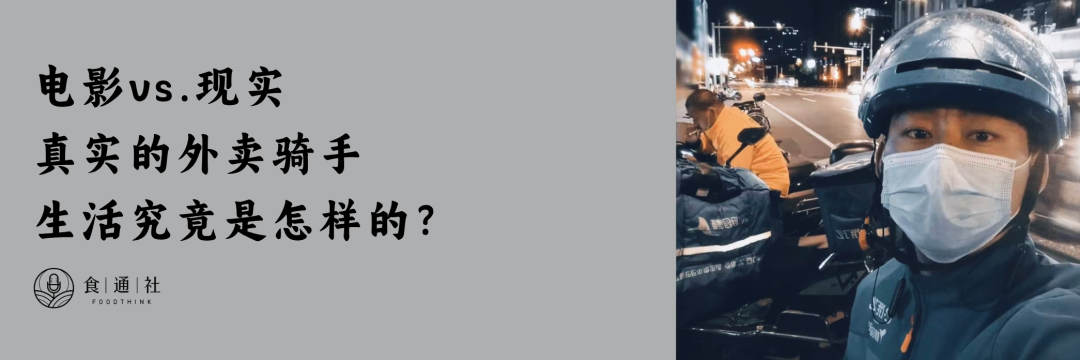
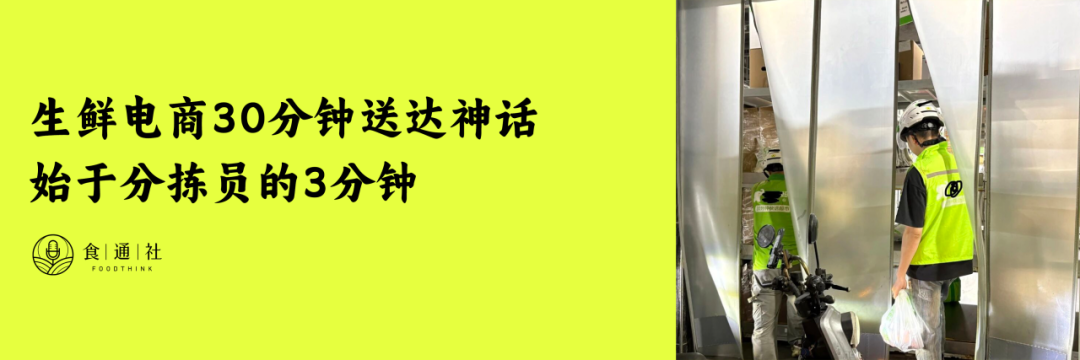
▼
Click the keywords to browse more article collections.
Seeds | Farming Techniques | Policy | Fermentation | Nutrition | Fruit | Fisheries | Events | Jobs | Food Delivery | Wet Markets | Livestock | Food Talk | Sharing Sessions | Book Club | Harvest Festival | Smallholder Stories | Climate Change | Rural Development | Cooperative Economy | Urban Farmers | Food Safety | Digital Technology | Biodiversity | Pandemic and Food | False Solutions | Agroecology Internship Programme
Beijing | Hebei | Shanghai | Guangdong | Guangxi | Henan | Sichuan | Jiangxi | Xinjiang | Shaanxi | Hong Kong | Chongqing | Zhejiang | Jiangsu | Guizhou | Taiwan | Inner Mongolia | Philippines | Canada | Russia | Mexico | Italy | United States | United Kingdom | Germany | Netherlands | Thailand | Sweden | Japan