A Person who Loves Cooking Decides to Stop “Eating Well”

I love cooking—I’d say I’m good at it—and I’m passionate about dinner gatherings at home, putting together a whole spread for my friends myself. After I left my job, I had all the time in the world. Each day I’d work out when my flatmate would finish work, get a pot of soup simmering and all the ingredients prepped in advance, then do a great big stir-fry the moment she got home.
To my friends, I was the very picture of “living well”, but only I knew that this lifestyle had gradually become a burden. Where some people suddenly fall in love with cooking, I decided to stop pouring so much mental and physical energy into meals and began looking for simpler ways to eat, hoping to achieve a more minimalist lifestyle.
A System Called “Cooking”
Ever since I was little, I loved tagging along after Mum to “help” in the kitchen. Calling it “helping” was generous, really—it was just curiosity making me wander about, poke at everything, mess with the dough, and sneak a bite of a freshly fried meatball when no one was watching. Once I was a bit older and my parents were happy to let me near the stove, my skills improved by leaps and bounds: I could julienne a potato into fine, even strips, and learned to drizzle a splash of vinegar around the edge of the wok just before turning off the heat to lift the aroma. My cooking was slowly starting to look the part.
Even after I moved away from home for work, I held eating well as a conviction. Three meals a day—whenever I could, I’d make them myself. Search the Xiaohongshu account and the most frequent query will always be “how to make XX”. The moment I tasted a dish I loved at a restaurant, my first thought was to try recreating it at home. I wanted to feed myself well—eat healthily, eat deliciously, and above all, eat joyfully.
The truth is, cooking is an enormous undertaking. It’s not just the cooking itself—sourcing ingredients in advance, deciding what to eat—every single step demands thought and effort.
Trimming vegetables, washing, cutting, getting them into the wok—the whole process could take even a quick-handed veteran thirty minutes. Just trimming and washing alone would have you working for a good while: some vegetables need peeling, some need their strings removed, leafy greens are prone to hiding insect eggs and pesticide residue and must be rinsed thoroughly. The fussier among us would even wash the rice several times, until the water ran clear, and soak it in the rice cooker beforehand.
Buying groceries is a craft in itself. You can’t buy too much—vegetables lose their nutrients sitting around, and the texture suffers. But you can’t buy too little, either, or you’ll find yourself with nothing to cook when it’s time to start. You need to plan the meals as you shop, balancing the main ingredients with the accompaniments, topping up oils, grains and seasonings before they run out, and picking up fruit and drinks as well. I’d do a full week’s shopping in one go: meat and seafood straight into the freezer, leafy greens and squashes eaten while fresh, and hardy root vegetables saved for later.
Even when I shopped on an online fresh-food platform, I’d spend over half an hour browsing new arrivals, checking use-by dates… By the time I’d finished, it felt like I’d fought a gruelling battle—head spinning, I’d collapse onto the sofa.
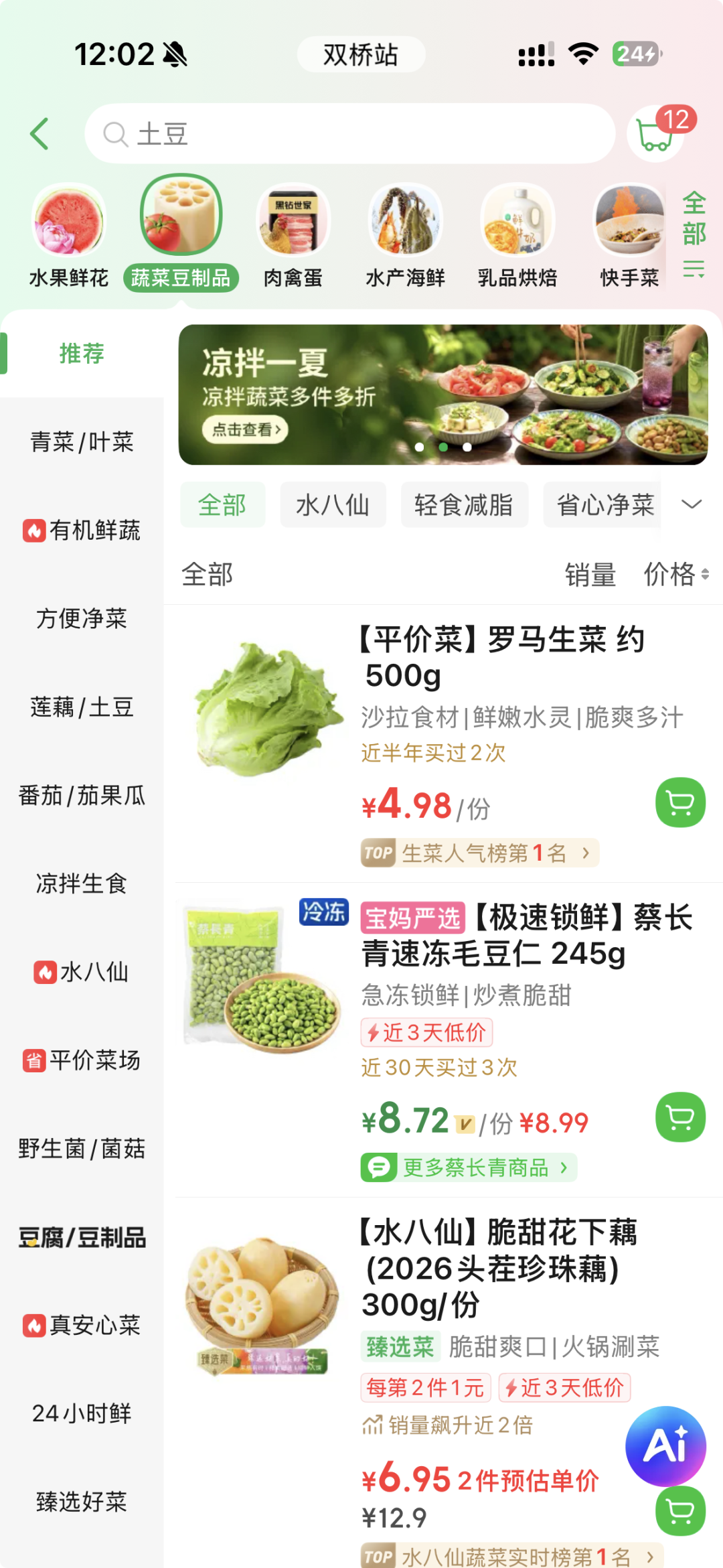
◉ Buying groceries from a fresh-food e-commerce platform is a labour-intensive job too. Image via Dingdong Maicai
Once the shopping arrived, large portions of meat had to be divided up and frozen. Vegetables and fruit each had their own storage requirements. Bread and pastries needed to be sealed and frozen too. Once everything was put away, the fridge door closed and the rubbish bags tidied up, only then was the shopping truly done.
I worked from home, my schedule was flexible, I was a confident cook, and my everyday meals were mostly set routines. Even so, figuring out three meals a day was enough to give me headaches.
Not everyone has the means to cook. In a first-tier city, renting a bedroom with no kitchen is par for the course, and trudging home after a long commute, completely spent, is the norm too. Ordering delivery or eating out seemed like the easier path—no cooking, no washing up. But finding a place that was tasty, healthy, and hygienic was far from easy. Choosing a delivery was labour in itself: every mealtime meant screening options and making decisions, not to mention bearing the cost of a disappointing meal and the risk to your health.
A younger colleague who’d only just started working and I used to joke that we ate “Guochao-style takeaway” every day. All the bags looked the same—trendy Chinese-style packaging—stuffed with greasy, heavily salted fried chicken, stir-fries, and rice bowls, topped off with a packet of black plastic cutlery. The staples of working people’s takeaway diet. Nothing wrong with it, really—just a mild risk of an upset stomach.
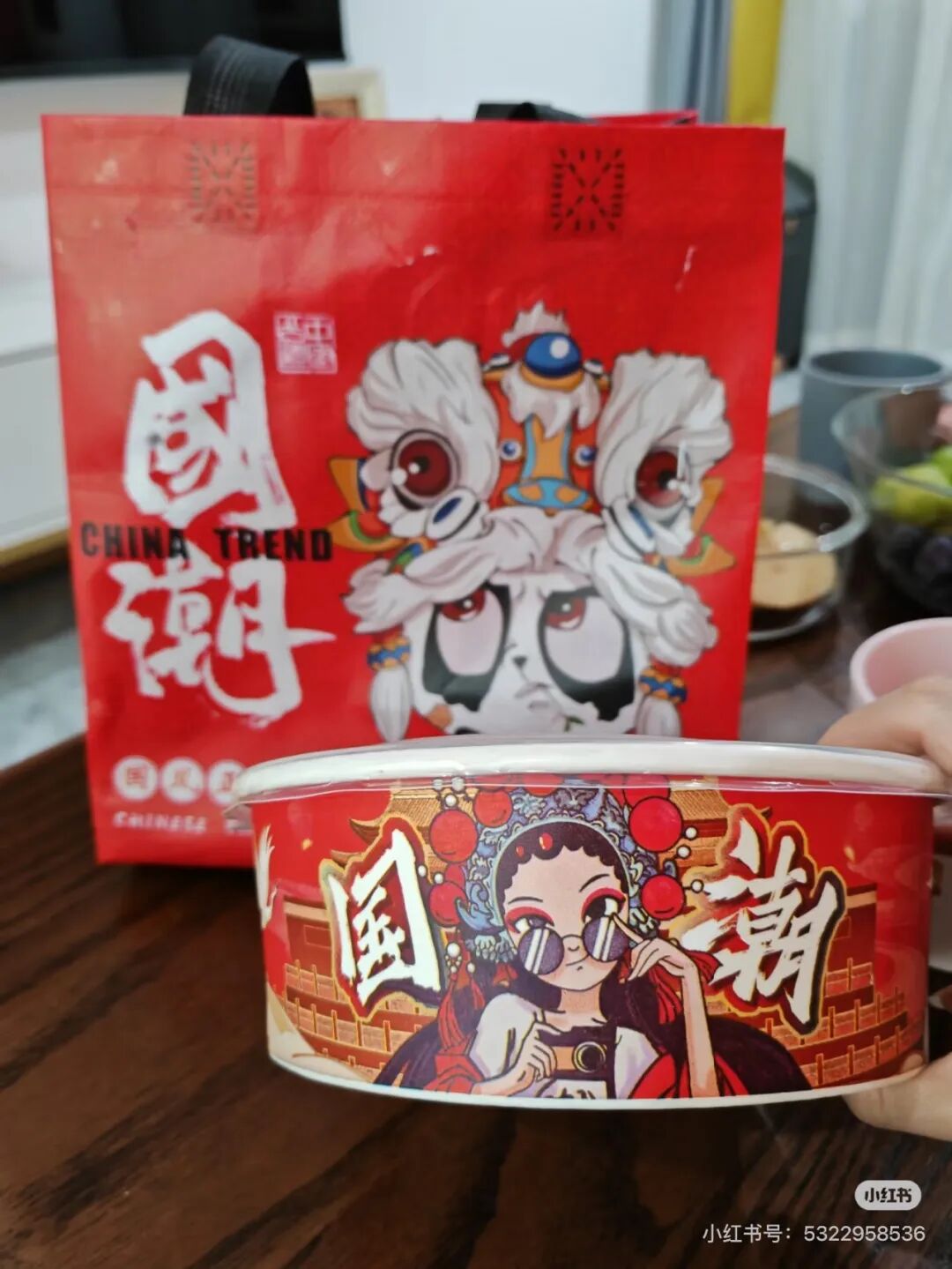
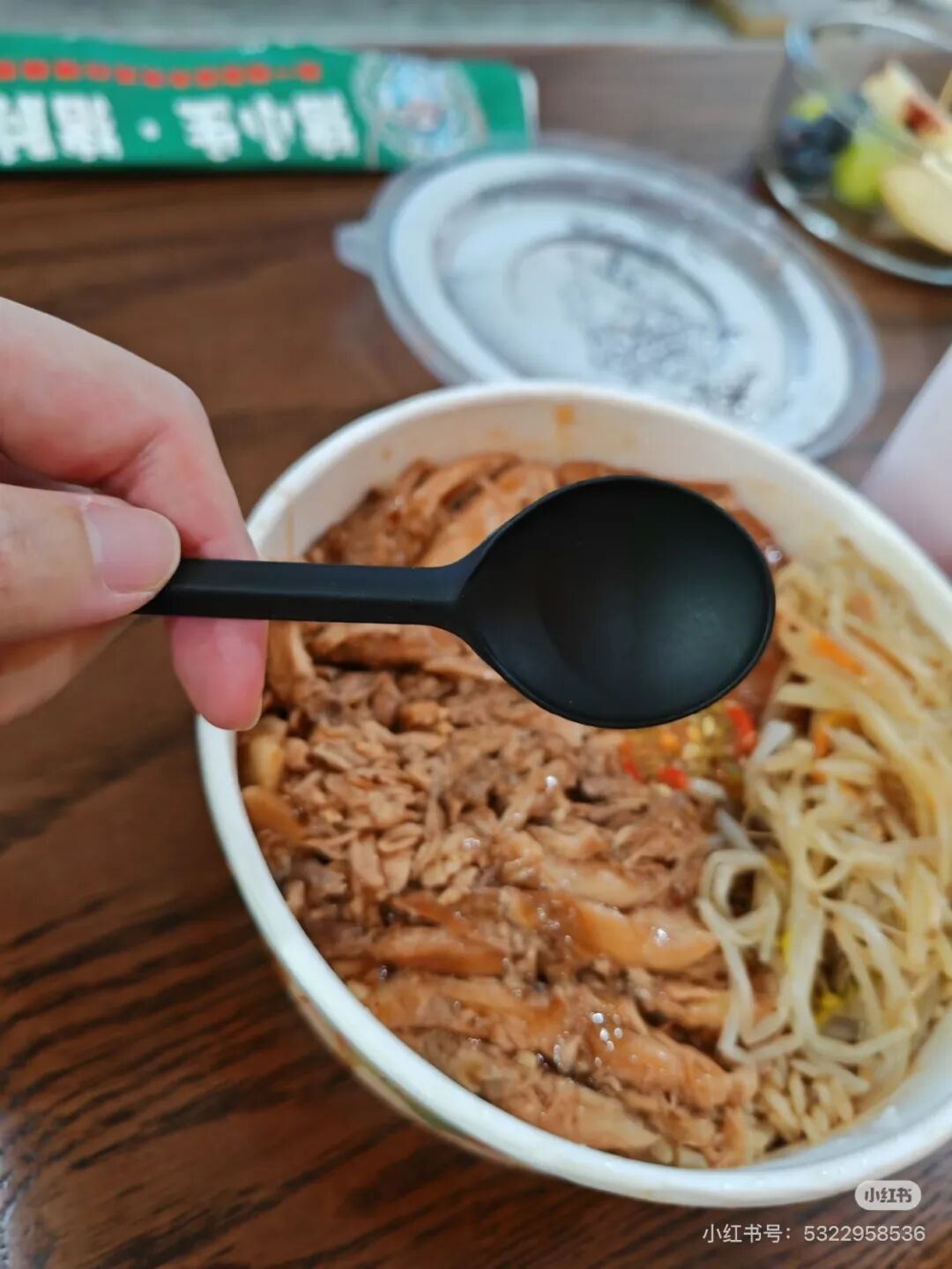
◉ Takeaway bags, black plastic spoons, and a greasy, heavily salted rice bowl—that’s the full formula for Guochao-style takeaway. Image via Xiaohongshu user Gahong
Many young people didn’t take eating that seriously either, simply slashing the time they spent on meals. Some skipped breakfast, others skipped lunch; some, in the thick of a busy stretch, ate just once a day. In a fast-paced metropolis, every hour outside the office was precious—reserved for socialising, entertainment, or self-improvement. Spending that time cooking and eating simply didn’t add up.
When “Eating Well” Becomes a Burden
I used to believe, with absolute conviction, that cooking was a barometer of your quality of life—or at least evidence that you were properly looking after yourself. Keeping up the habit of cooking for myself once I started working felt, in a way, like reclaiming some control over my life. I poured hours that others would spend on work or leisure into the kitchen, even though it brought no obvious returns.
The turning point came in the second half of last year. After I left my job, I had all the time in the world, yet found myself racking my brains over meals every single day. For a while, I’d work out when my flatmate would finish work, get a pot of soup simmering and the ingredients prepped in advance, then do a great big stir-fry the moment she got home. I felt rather like a housewife.
With my time now my own, I developed a complicated set of feelings about cooking. The daily grind of three meals, as non-negotiable as a pet that needed feeding on schedule, drained enormous amounts of energy and time. When two people eat together, there’s no muddling through and no settling for less—it’s both an external nudge and a quiet, invisible pressure. Over time, I began to fear I was slipping into the old “hands washed, soup on the stove” script—the age-old narrative of a woman tending a pot while she waits for someone to walk through the door.
My flatmate spotted the problem before I did. She worried that cooking every day was only piling on my burden and suggested more than once that we could just keep meals simple. But I always felt that now we had the time, every plate deserved to be a proper affair.
Towards the end of last year, I headed back from Shanghai to my hometown for nearly a month. With no work to fill my days, I had more time alone with my mum, and found myself watching, more deliberately now, the labour she poured into three meals a day.
My mum is a housewife. She gets up at six every morning to make breakfast, do the housework, and pop out to the market. After lunch she takes a short rest, then starts on dinner. The kitchen is enclosed; she’s in there more or less on her own, and from the doorway all you can make out is a moving shadow. There’s always a little wooden stool wedged in the corner. While cooking, she’ll perch on it for a spell, keeping one eye on the stove, multitasking with whatever else needs doing. She goes out for vegetables every day, comparing freshness and prices across the stalls, but her butcher’s shop is fixed—just one, because their meat is fresher and doesn’t release a pool of water when you fry it. She spends close to five hours a day preparing three meals for the family, washing up, and clearing the kitchen. Add in the occasional rest and a moment’s daydream, and cooking alone could fill an eight-hour working day.
On my recent visits home, I’ve made a point of getting into the kitchen more often, hoping she’d get more hours back for herself. I’ve suggested that the cooking could be simpler—make a bigger batch at once, freeze portions and cook them meal by meal, or just toss everything into one pot and throw together a slapdash dinner. Unsurprisingly, the idea fell flat. “That’s absolutely no way to do things—Chinese people eat freshly cooked food!” For her, spending half a day pulling together a whole spread for the family is the most ordinary part of the day.
I grew up watching her bustling about in the kitchen, and absorbed a certain conviction as my own: that eating well is one of the most ordinary things in life, and so is making three meals a day. Perhaps two generations, with such different lived experience, simply carry different philosophies about living, I thought. I shouldn’t let what I’d always taken for granted go on holding me hostage.
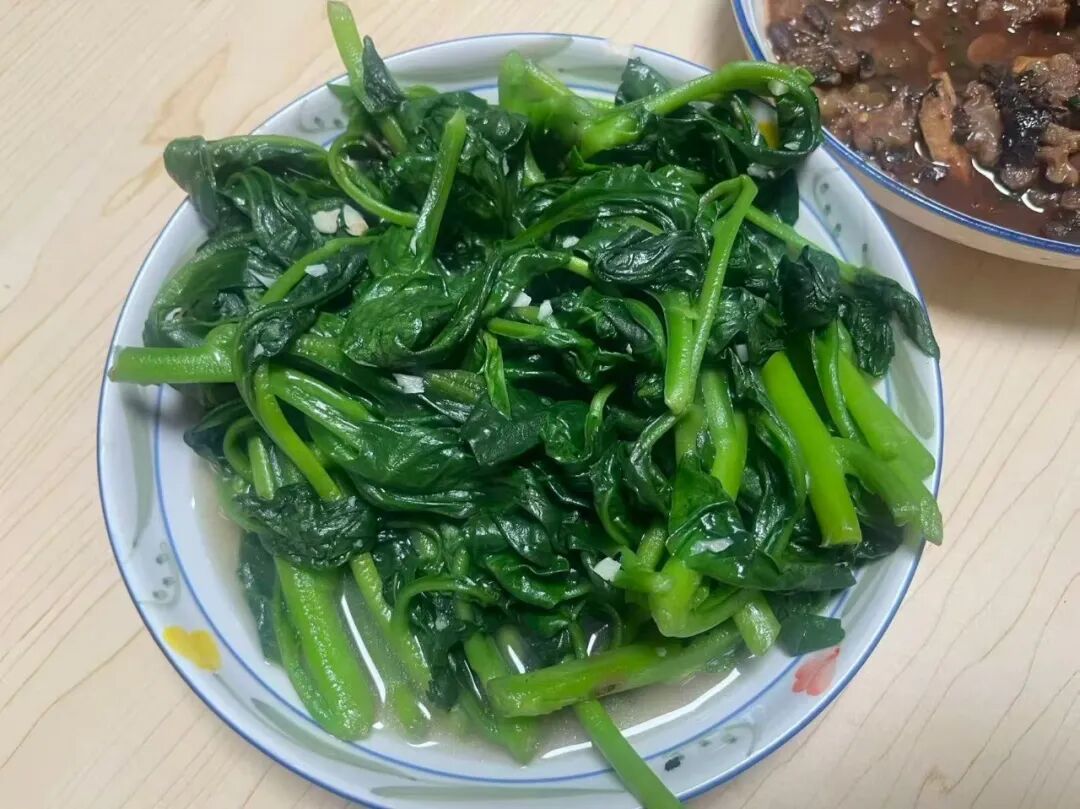
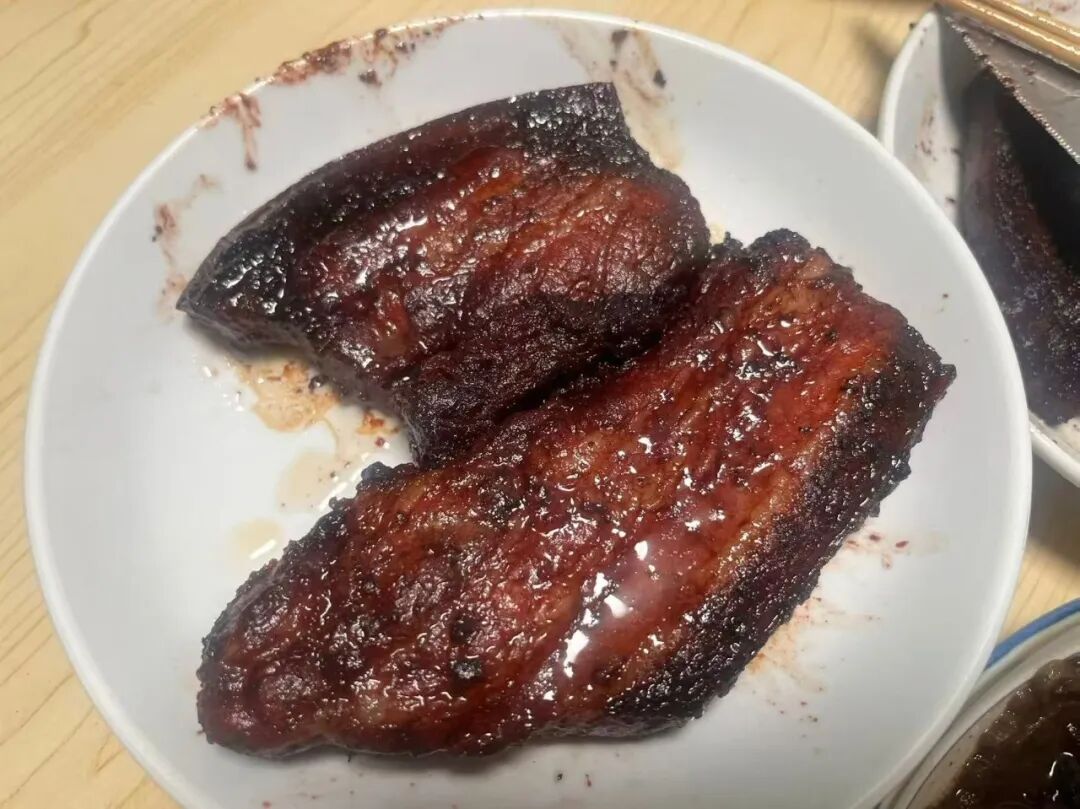
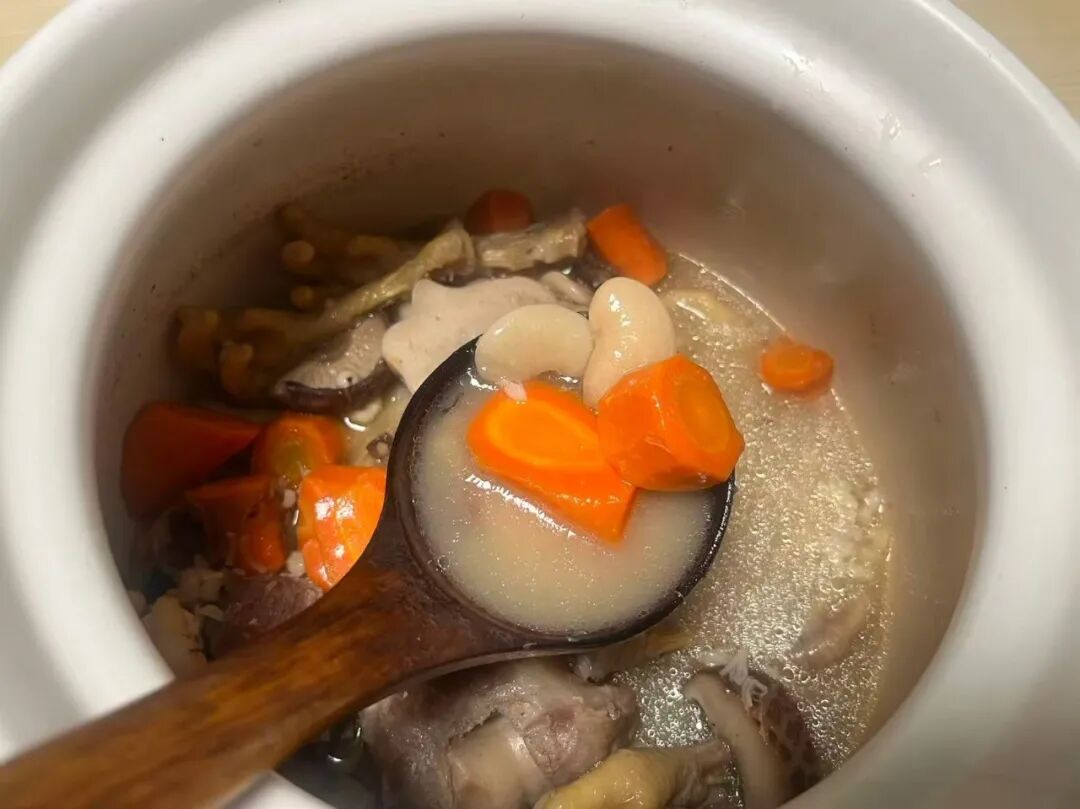
◉ At Foodthink, staff take turns cooking; preparing everyone’s lunch eats up several hours of one colleague’s work time each meal. Image via Foodthink
My “Slapdash Meals” Experiment
Back in Shanghai after my time at home, I finally came to three realisations: one, I genuinely didn’t want to keep spending so much time on meals; two, I needed a simpler way to eat; three, just get started and figure the rest out as I went.
There’s no shortage of easy options—delivery, eating out, prepared meals, or quick-cook meal kits with everything washed, cut, and pre-seasoned, ready to eat in five minutes. Each of these is convenient in its own way, yet each has its drawbacks, so none of them works as a steady, long-term solution. What they all share is outsourcing a portion of the work. Following that same logic, I could front-load most of the labour myself, so every meal would be quick, easy, healthy, and delicious at once.
As for the method, I chose to use steaming to make my own prepared meals. Steaming accommodates a wide range of ingredients: simply season them during prep, pop them in the freezer, and when you’re ready, cook them in the steamer—a wonderfully simple process.
I looked through steamed-dish recipes online and boiled them down to a formula: seasoned meat paired with root vegetables and mushrooms—steamed beef with taro, steamed pork ribs with pumpkin, the ever-popular Sauna Chicken, for example. The rule is to pick vegetables that freeze well and hold their shape after steaming. If you want bolder flavours, take a page from Hunan’s Liuyang steamed dishes and add cured meats and chopped chilli—steamed cured pork with dried radish, for instance.
To get these prepared meals sorted, I invested in new containers as well. In my ideal scenario, a container should be freezer-friendly and go straight onto the heat. Glass is too heavy, plastic can’t go in the steamer, goes brittle and cracks after freezing, and is a nightmare to scrub clean—plus round bowls and plates are awkward to stack. Stainless steel boxes turned out to be the best answer.
I started with steamed beef with taro and prawns with garlic and glass noodles. Slice the meat, season it, lay taro at the bottom of the box, then beef on top. Prawns are even simpler: spread soaked, well-drained glass noodles underneath, arrange the frozen peeled prawns on top, and spoon over a layer of chopped chilli sauce and minced garlic. Once everything’s prepped, snap the lid on tight and push it deep into the freezer.
The next day at lunchtime, I couldn’t wait to see if it worked. I pulled the frost-coated steel box from the freezer, cracked the lid, popped it into the steamer, and set the timer for ten minutes. Every few minutes I couldn’t resist lifting the lid, poking the ingredients with the tip of my chopsticks. Ten minutes in, the prawns and glass noodles had turned the pale pink of perfectly cooked food—but the beef and taro were still frozen solid, one hard lump the chopsticks wouldn’t pierce. It took a full twenty minutes before the taro was properly soft, yielding to the chopsticks the moment I pressed.
After a few rounds of testing, I had a rough sense of how long different dishes needed. If you’re not fussy about extra tenderness, twenty minutes is a safe blanket figure. Load the steel boxes into the steamer and you can walk right out of the kitchen. When the timer goes off twenty minutes later, come back, lift the lid, and dig in. No hovering over the heat, no oil splattering about—the only thing to watch is that the pot has enough water so it doesn’t boil dry.
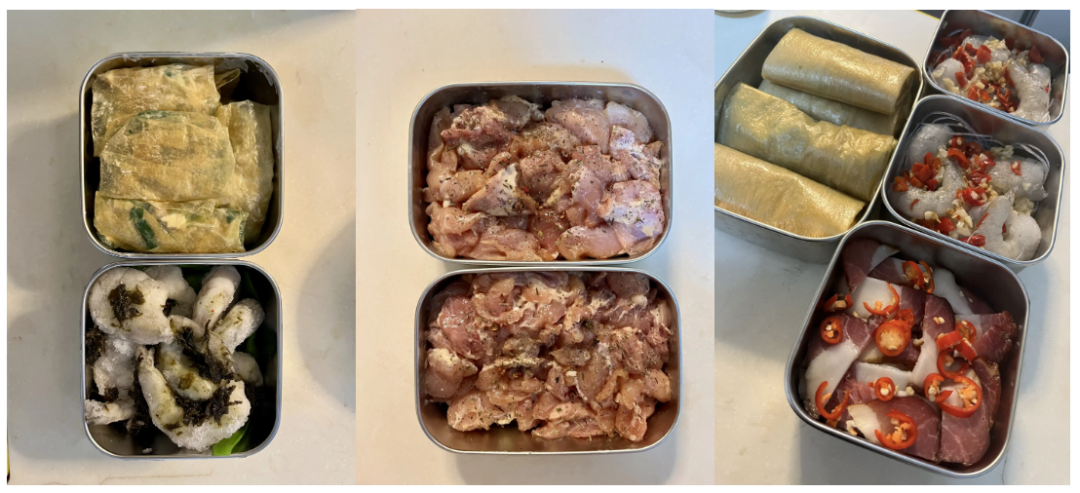
◉ Home-prepared steamed dishes aren’t exactly gourmet, but their convenience is unbeatable. Ingredient selection and seasoning matter most: the prawns in the left-hand photo are flavoured with olive vegetable, while the prawns with glass noodles on the right use chopped chilli and minced garlic. Images by Jiaxin
Compared with stir-frying, steaming is remarkably forgiving. Even if you leave things in too long, the food doesn’t go ‘tough and rubbery,’ and the seasoning doesn’t need to be precise—roughly right is close enough. It’s wonderfully beginner-friendly: regardless of your knife skills or technique, twenty minutes in the steamer and the food transforms from raw to cooked in a cloud of steam.
Beef and chicken thigh, once seasoned and worked through with a little cornflour, come out of the steamer silky and tender. The vegetables underneath soak up the meaty juices and aren’t the least bit bland. I also love adding chopped chilli sauce to my prawns with garlic and glass noodles, or stirring in Puning bean paste, fermented black beans, or minced ginger paste with the chicken and beef. Thanks to these flavour boosters, the steamed dishes aren’t nearly as one-note—they have real depth and complexity.
The one flaw is that this method makes leafy greens nearly impossible. Leafy vegetables are packed with water; freezing shatters their cell walls, and once thawed they simply turn to ‘mush.’ Frozen greens usually call for a tedious process: blanch first, plunge into cold water, dry them out, then portion and freeze. Online fresh-food platforms do sell frozen greens, but they cost more, and it’s hardly worth it compared to just preparing fresh ones when you need them. Unless you’re using them as a filling, leafy greens aren’t exactly steaming’s ideal partners.
Either way, I got what I was after. After hours of intense work, my brain is done making decisions and I’ve little energy left—I just want a hot meal to refuel, then proper rest. Now all I do is grab two boxes of food and a box of rice from the freezer, pop them in the steamer, and wait for my dinner to be ready. And there’s more: eating straight from the steel containers means my flatmate doesn’t have to wash two extra plates, and we’re both thoroughly freed from the kitchen.
Eating Well: No Standard Answer
A few days later, a new problem emerged.
Steamed dishes were undeniably efficient, but the texture after reheating simply couldn’t compare to something freshly stir-fried. That “Chinese stomach” Mum had raised since I was small began to stage a revolt after a week of nothing but steamed food, ceaselessly firing signals at my brain: Stir-fry! Stir-fry! Stir-fry!
I didn’t want to force myself to fight that instinct, nor did I see it as a failure of my homemade prepared meals. At weekends, or on days when we were both home, I’d still go all out to cook a proper meal—browsely searching for recipes on Xiaohongshu, heading to the supermarket, sitting by the sink trimming and rinsing vegetables, then frying, stir-frying, simmering, and braising at the stove.
On the surface, nothing looked any different from before, but I was no longer performing “living well”, nor standing over the stove “with hands washed, soup on the stove” for anyone’s benefit, nor treating three meals a day as some kind of personal examination. Now I float between several modes: when I fancy the wok hei of something freshly stir-fried, I make time to savour the joy of cooking; when I’m completely spent, I simply pop my prepared steamed dishes into the steamer.
Beyond that, I explored more ten-minute meal options. In my spare time, I braise a whole large piece of beef shank, slice it, portion it out, and freeze it; the braising liquid goes in the freezer too, in neat little blocks. When the craving hits, I bring a pot of water to the boil and toss in noodles, sliced meat, and a rock-hard, dark-brown frozen cube of braising liquid. Within moments, the frozen sauce melts slowly into the bubbling water, turning the clear broth a rich, deep brown, and the aroma rises with the steam. From the moment the water goes on to heat to the last mouthful of beef noodles—ten minutes, flat.
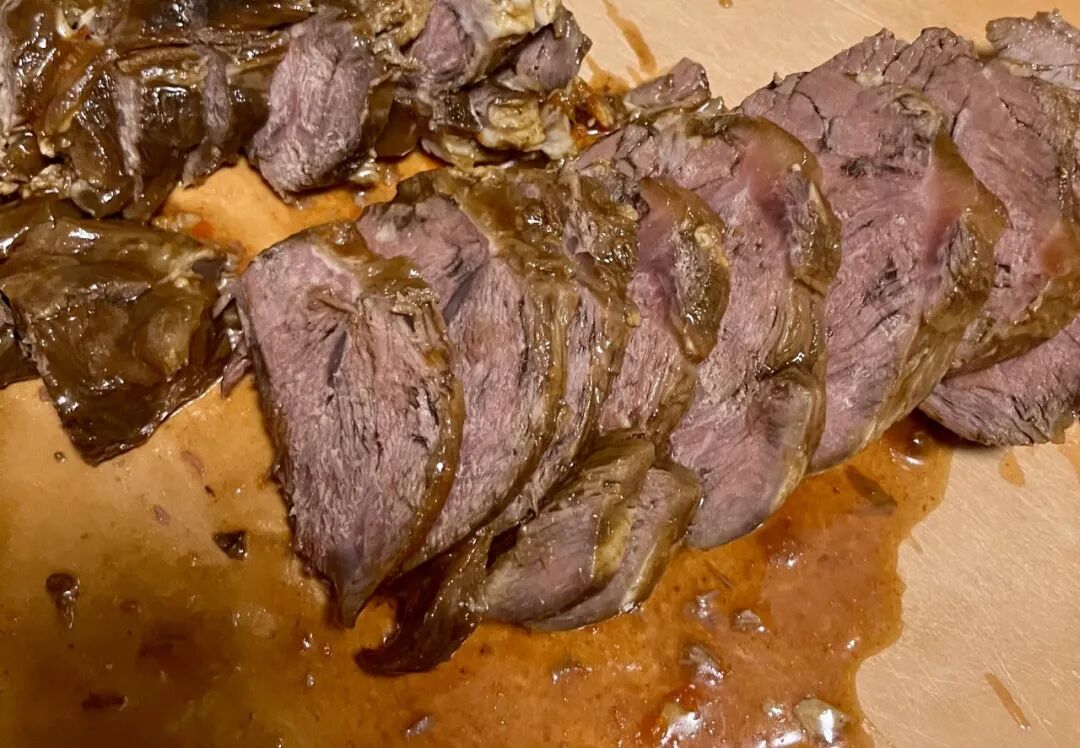
◉ Braising meat in an electric pressure cooker or a rice cooker is wonderfully fuss-free. Rinse two beef shanks to wash off the blood, drop them straight into the pot with spring onion, ginger, a braising spice pack (the ready-made packs sold in supermarkets work perfectly—add a few dried chillies if you like things spicy), and enough water to submerge the meat completely. In an electric pressure cooker, forty-five minutes gets the braising done; leave the pot to steep overnight, and the next day it’s perfect for slicing. Image by Jiaxin
I also fell for Guizhou red sour soup. Add a splash of the sour soup to boiling water, then toss in whatever you fancy—frozen peeled prawns, white mushrooms, greens, tofu skin, glass noodles—and let your appetite decide. No more than ten minutes later, a steaming bowl of sour soup mala tang—tangy, spicy, savoury, and refreshing—is on the table. In summer, when I can’t face a fire, cold-tossed vegetables or cold-tossed noodles are both great options.
I finally stopped agonising over what counts as “proper” eating. Whether it’s a prepared meal steamed to perfection in twenty minutes, a pot of red sour soup up to the boil in ten, or a takeaway that meets my dietary needs—as long as it fills me up, tops up my nutrients, and spares me a little mental and physical energy so I’m not totally exhausted by the end of the day, that is the most tender care I can give myself.
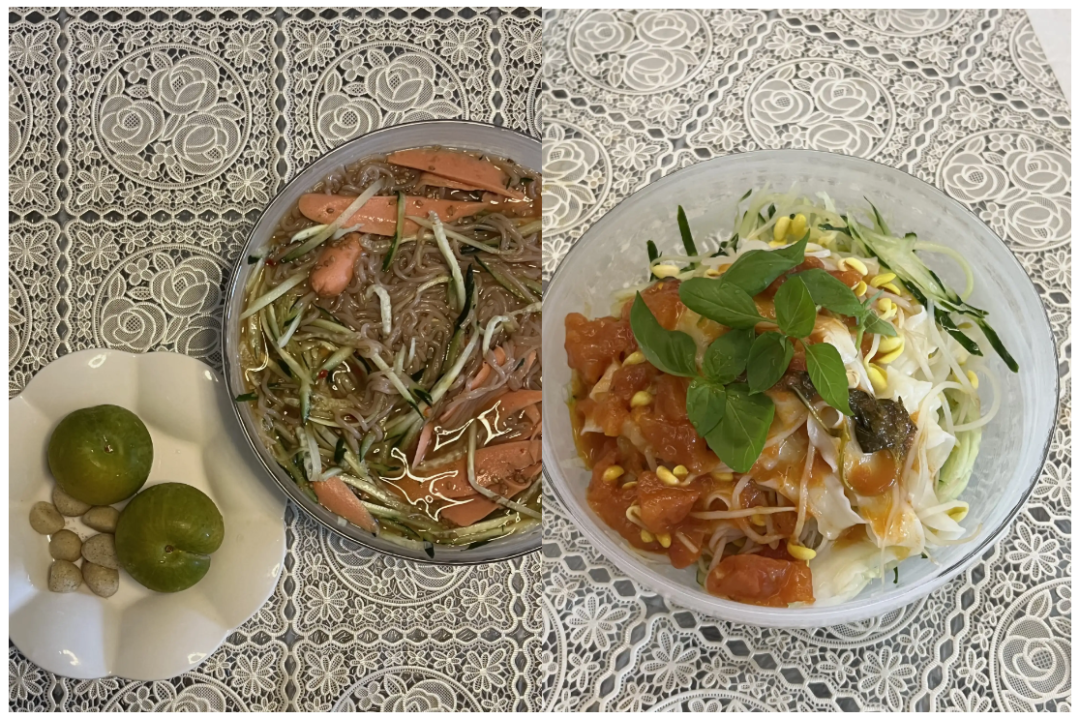
◉ Summer saps both my appetite and my will to face a kitchen, so I keep things to simple tossed noodles. Left: Korean cold noodles with matchstick cucumber and sliced sausage. Right: homemade knife-cut noodles in a tomato sauce dressing, seasoned with fresh basil. Images by Jiaxin
– This is Foodthink’s 836th original article –
Foodthink
Author:
Jiaxin
A freelance writer who loves cooking, eating, and endlessly optimising her way of life. Interested in the social history of food and the concrete problems of daily living. You’re welcome to come and eat at mine!
Editor: Xiaodan
Layout: Xiaoshu
Scan to tip and support original food writing
▼

▼
Click the image to read related articles


▼
Click a keyword to browse more article collections
Seeds | Farming Techniques | Policy | Fermentation | Nutrition | Fruit | Fisheries | Events | Jobs | Takeaway | Wet Market | Livestock | Food Talk | Talks | Book Club | Harvest Festival | Smallholder Stories | Climate Change | Rural Development | Cooperative Economy | Urban Farmers | Food Safety | Digital Technology | Biodiversity | Pandemic and Food | False Solutions | Ecological Agriculture Internship Programme
Beijing | Hebei | Shanghai | Guangdong | Guangxi | Henan | Sichuan | Jiangxi | Xinjiang | Shaanxi | Hong Kong | Chongqing | Zhejiang | Jiangsu | Guizhou | Taiwan | Inner Mongolia | Philippines | Canada | Russia | Mexico | Italy | United States | United Kingdom | Germany | Netherlands | Thailand | Sweden | Japan