People, Birds, Melons: 20 Years After the Wuhan Floods

From March to August this year, I made multiple trips to Tianxingzhou and Lüdao Residential Community in Wuhan. Tianxingzhou, on the outskirts of Hongshan District, is a river island surrounded by water on all sides. It has more than a century of melon-growing history and, for its abundant watermelons, earned the nickname “Guazhou” (Melon Island). Having been repeatedly struck by Yangtze floods, Tianxingzhou was designated in 1999 for flood discharge duty, and the government introduced the “single-retreat civilian polder” policy: people retreat, but farmland does not — when a major flood strikes, the land the villagers till must give way to the floodwaters. In non-flood seasons, however, villagers may continue to work and live on the island. Since then, public facilities such as schools and hospitals have been gradually relocated off the island. In 2002, most island residents moved to Lüdao Residential Community on the opposite bank, and only a handful of elderly people still live on the island. In Tianxingzhou’s Watermelons, Particularly Difficult to Ripen This Year, I documented this year’s abnormal melon season on Tianxingzhou and the people who are still growing melons.
I was curious about the older generation of melon farmers and their experience of growing crops. I also wanted to know how their livelihoods and daily lives had changed after moving into apartment buildings, and whether Tianxingzhou still held a certain place in people’s lives.
One old man waved me off and turned down the interview: “You just want to write that we’ve moved to the city and life is better now.” Another said, “Journalists keep asking about flooding, flooding — it gets really tiresome.” These refusals reminded me: if you start only from the flood, their experience is easily summarised as — flood strikes, leave the island, move to the city, life gets better. During my visits, Lüdao Residential Community was being demolished. A resident, Old Yu, said: “Come back next year and you won’t see this place anymore.”
Will life in the future be any better?
Giving Up Growing Melons
At the end of March, I visited Lüdao Residential Community for the first time and found Chen Lan, Zhou Xia, and Old Yu sitting in a circle, chatting downstairs from their building. They had all belonged to the same production brigade in Tianxing Township and were around sixty years old. Born on Tianxingzhou, they had followed their parents into the fields as children, learning to grow melons and vegetables through day after day of labour.
The white wall behind them was already weathered and mottled; black cables and white plastic rainwater pipes crisscrossed its surface. Beneath the buildings, polystyrene boxes and plastic buckets stood in neat rows, planted with spring onions, garlic, Chinese flowering cabbage, and chillies. In the stairwell, a rake, a spade, and a small hoe leaned against the wall. Beyond the community lay a construction site for OCT (Overseas Chinese Town).
Old Yu, who no longer grew melons, still remembered the days of getting up at three in the morning to plant them. “The moon hadn’t set, the stars hadn’t gone, and we were already out in the fields, picking out seedlings and sorting the shoots. We worked until we couldn’t see anymore, and it was often ten or twelve before we finally got to sleep.” “Terribly exhausting.”
Zhou Xia remembers. If a cold snap hit in early spring, they would guard the seedlings in the seedling nurseries every day as though it were a job. They stuck thermometers into the seedbeds and kept the temperature at around thirty-seven or thirty-eight degrees, which is what melon seedlings need to grow well. If the temperature dropped, they switched on the heating cables. If it got too hot, they turned them off and uncovered the seedbeds. At night, they draped quilts or straw mats over them for insulation.
While waiting for the seedlings to grow strong, Chen Lan prepared the soil, applied basal fertiliser, and laid down plastic mulch film. Once the seedlings were transplanted, she erected low tunnels for frost protection. As the vines grew, she removed the low tunnels and began vine training and lateral vine pruning. When the workload was heavy, neighbours helped one another out.
Back then, when Chen Lan and her husband went to work in the fields, they had to bring the children along. Once, she spread a burlap sack on the ground for the children to sit and play on. When she came back at midday to cook, she lifted the sack and found a snake coiled underneath. “Thank goodness that snake didn’t bite the children!” Zhou Xia said with a laugh.
Once the melons were grown, they had to find a way to get them off the island. The ripening season for watermelons coincided with the Yangtze’s high-water period. If a flood was coming, they had ten-odd days to prepare before the levee was breached for flood discharge.
The Tianxingzhou Yangtze River Bridge had not yet been built, and crossing the river was a race for speed and position. People had to scramble for ferry space alongside tractors, trucks, flatbed carts, and bicycles. Zhou Xia remembers how they would start queuing at four in the morning, the line stretching from the riverbank all the way up to the levee; some people stood there until midday. “We women had to go too,” Zhou Xia said. The ferry deck was packed front to back with flatbed carts loaded with watermelons.
If they missed the crossing, the unripe melons could only be left in the fields to be submerged, and they would rot. “Waist-deep in water, the melons in the field all floating on the surface — we waded in to fish them out, put the salvaged ones in dry tubs, and moved them to higher ground.” Zhou Xia recalled how everyone scrambled to save the melons and other household belongings. But after baking in the sun all day, the watermelons “started to froth” — and they rotted anyway.
Setting aside the fact that an investment of ten or twenty thousand yuan was gone, there was nowhere for them to go. Some stayed with relatives and friends in the city, while the government housed others collectively in schools. The waters usually took one or two months to recede. The longest time, they lived in the school from July all the way to September, only heading back once the new term started. As soon as the water dropped a little, they seized the chance to return to the island, check their belongings, and sow some cabbage seeds in the fields — so that when they eventually came back for good, there would be something to eat.
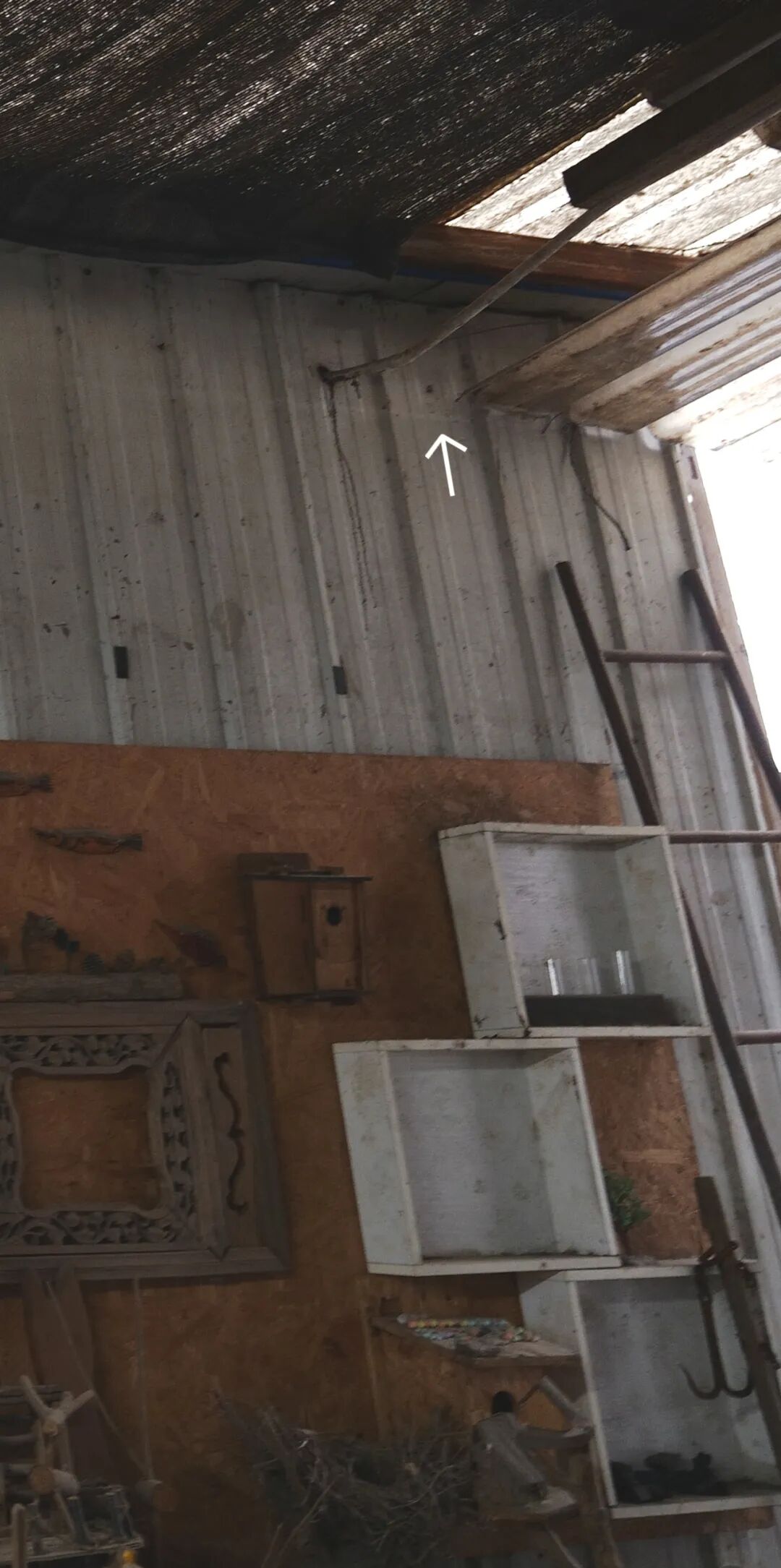
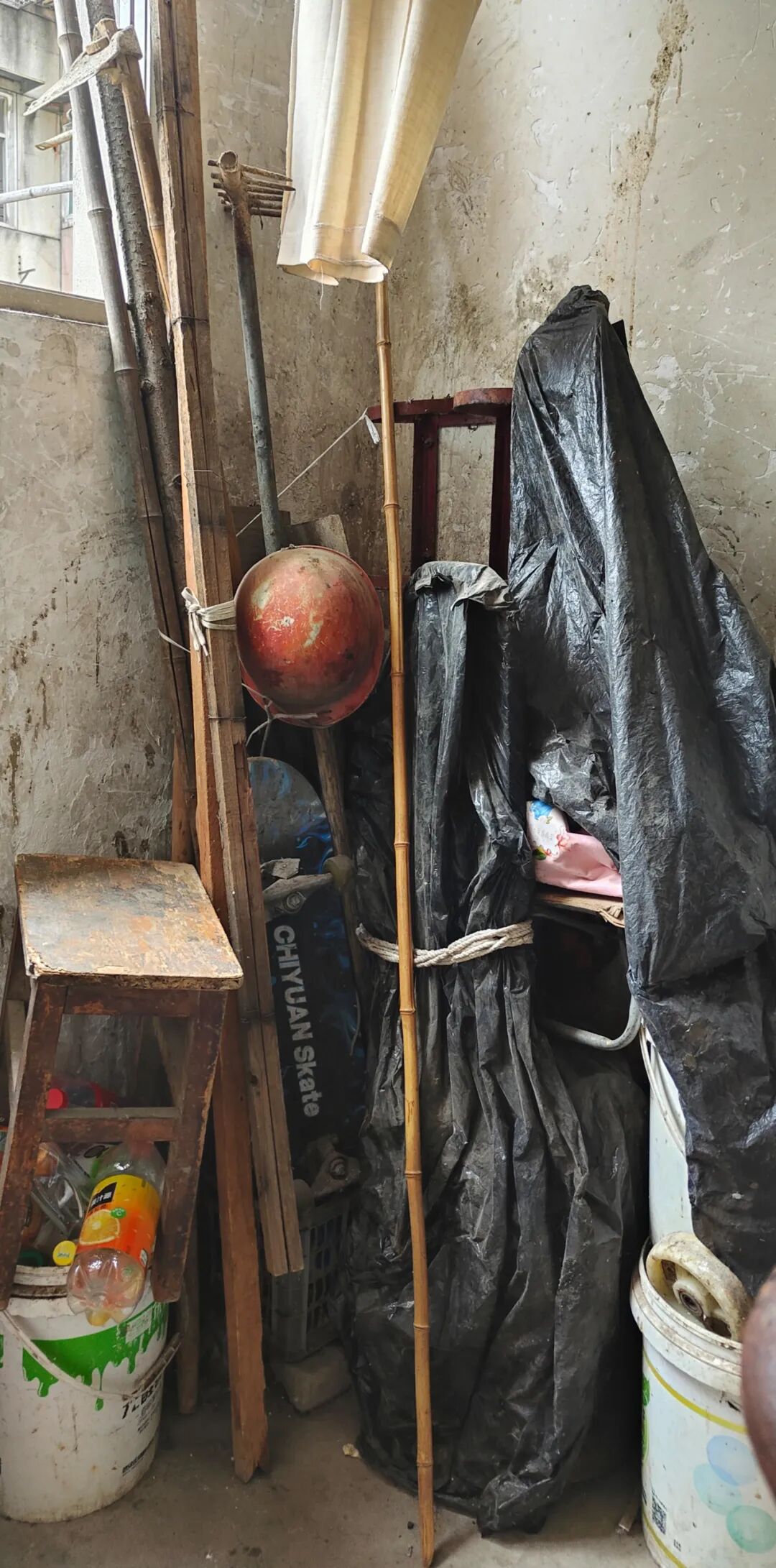
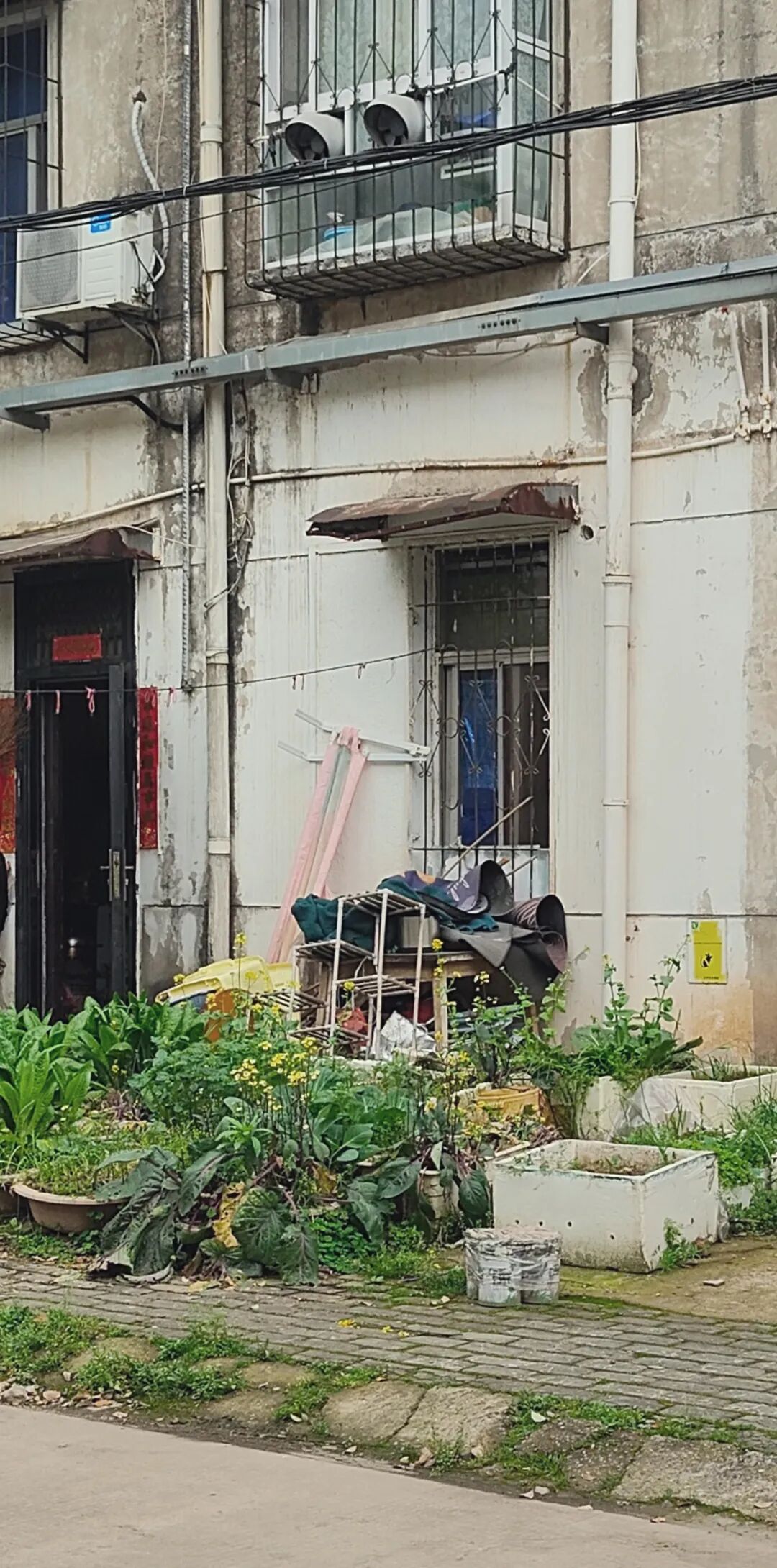
◉ Left to right: flood marks from the 2020 flood on a house on the island; farm tools in the stairwell; vegetables growing in containers beneath the building
For several years, the Chen Lan household combined migrant work with farming. Her husband earned money away from home, while she stayed on the island to tend the land, investing his remittances back into the soil. She remembered a basket of watermelons weighing a hundred or two hundred jin, and loading them onto the truck all by herself. In spring she grew melons, in autumn cotton, and she raised pigs and cattle besides. Once she’d saved enough, she started building their house, buying every brick, every sheet of film, every roll of roofing felt herself. One evening, a neighbour noticed she hadn’t come home for dinner and sent four people to find her. When they did, she had already been unconscious in the field for quite some time.
An old woman in the village once warned her: “Child, don’t work yourself so hard — push yourself like that and every part of your body will pay for it.” But she had a whole family to keep alive; she could only “ignore the elders’ advice.” A few years ago, Chen Lan had surgery on her lower back and lay bedridden at home for half a year. “Now we can’t do anything — all we can do is have surgery,” Zhou Xia joked.
After the “single-retreat civilian polder” policy took effect, schools, hospitals, and other infrastructure were relocated off Tianxingzhou. With children needing to attend school, they could no longer live on the island.
Yet for the dozen or so years after they moved, Chen Lan and Zhou Xia kept going back to Tianxingzhou, doing odd jobs while farming on the side. Then, in April 2024, Wuhan’s ferry service to Tianxingzhou was “suspended temporarily” — and has not yet resumed.
They had no choice but to give up returning to the island. For a while, Chen Lan cleared a patch of wasteland outside the community and grew watermelons — though her crop was even stolen. Now they spend their days cooking, doing housework, minding their grandchildren, and “growing a few vegetables just for fun” beneath the buildings.
“Have you been up to Tianxingzhou to see it? The rapeseed flowers are so tall now, aren’t they beautiful?” Zhou Xia asked me. Over ten mu of the rapeseed fields she mentioned belonged to her family; they had been contracted out to an agricultural company and each spring burst into a dazzling expanse of gold.
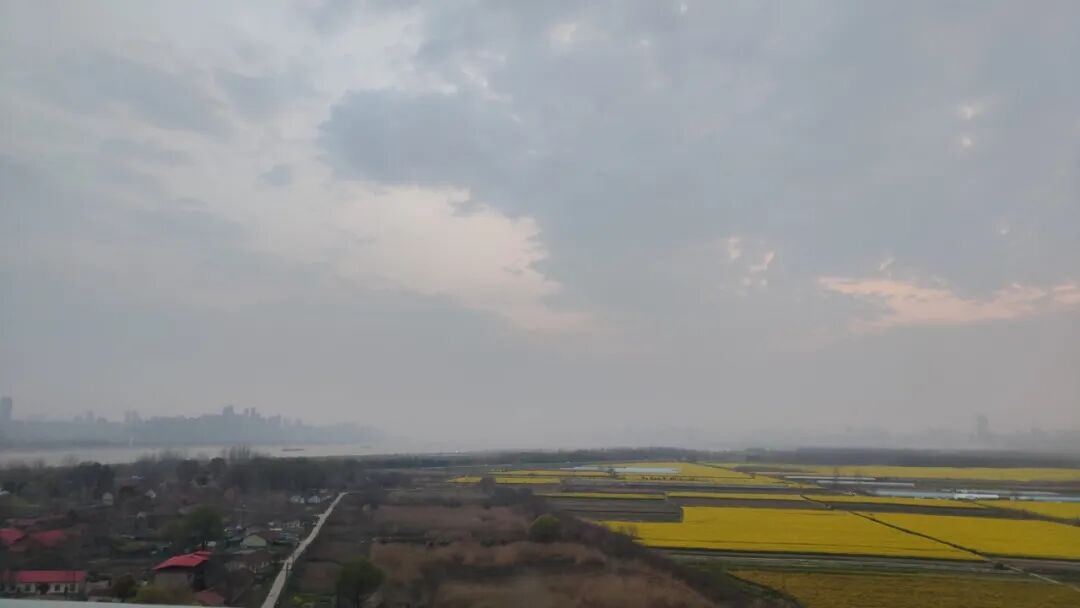
◉ In March, the rapeseed flowers bloomed on Tianxingzhou (photographed with a professional camera; click to view the full image)
The old melon farmers had been flooded out of everything they owned; some even said they would “have to go begging on the streets.” Yet after the floods, they still came back to grow melons. After 1999, the frequency of flooding decreased. Floods were not the only reason they stepped away from farming.
What truly changed them was a series of slow, ongoing structural shifts: schools, hospitals, and other infrastructure were relocated; the ferry was cancelled; they were growing older. The land-use designation for Tianxingzhou had never been settled, and agriculture received little support. Tianxingzhou could no longer sustain the long-term, basic lives of most of its local residents.
The family centre of gravity had shifted towards migrant work in the city and the education of the third generation. In the previous article, the Yuzhen household relied on odd jobs as a steadier income, returning to the island two or three times a week for farm work. Chen Lan’s children worked in the city, often too busy to come home for dinner; she estimated they had spent around 200,000 yuan on their granddaughter’s extracurricular classes. For families like these, farming had long ceased to be a primary livelihood. It had gradually become an everyday form of labour “to feel more at ease about where the food comes from,” providing supplementary income, maintaining social ties, and sustaining people’s bond with their homeland. Despite more than twenty years in Lüdao Residential Community, the older generation of melon farmers still considered themselves rural people. They returned to the island at Qingming to pay respects to their ancestors and occasionally brought the grandchildren to Tianxingzhou to ride all-terrain vehicles — but they no longer let them farm.
“The kids can’t grow melons anymore — the kids only know how to eat them,” Zhou Xia said.
People Left, Birds Came
Once, the driver who took me over to Tianxingzhou complained: “Are they building planes and cannons on this island? Why won’t they let anyone in?”
In 2009, the Tianxingzhou Yangtze River Bridge was completed and opened to traffic. Before that, the only way to reach the island was by boat.
And yet, over twenty years, Wuhan’s metro has grown from a single Line 1 to thirteen lines in total, and bus routes have expanded to 2.9 times their original number. Today, no regular public transport can reach the island. The Tianqing ferry route to Tianxingzhou was suspended on notice from the maritime authority; the Municipal Transport Bureau responded that the suspension was due to safety hazards on the ferry ramp.
A villager told me about a “demand-responsive bus service”, but the boarding and alighting points are not publicly disclosed. One of the original purposes of running this service was to let the former villagers come back and farm, yet the bus does not go directly to Lüdao Residential Community either — passengers must first take another bus to reach the boarding point. Some people also discovered that, for a period, residents from off the island were not allowed to board.
Behind the poor transport links lies the unresolved land-use planning for Tianxingzhou. A public reply from the district government dated 25 August 2026 confirmed the island’s development positioning as ecology-first, balancing agriculture, culture, tourism, and agricultural production, but the detailed plan is still under drafting and review.
Once, I hired a bicycle and rode along the embankment, where occasional side paths branched off towards the fields. Three middle-aged men were singing karaoke under an elevated bridge, while cars and trains crossed the Tianxingzhou Yangtze River Bridge from time to time.
This forgotten island-within-an-island once became a mecca for off-road enthusiasts. After the pandemic, over a thousand off-road vehicles flooded into the headland, and a collision with a pedestrian occurred. A reservation system was then introduced for island access. Vehicles in and out were capped at around three hundred per day, further restricting footfall.
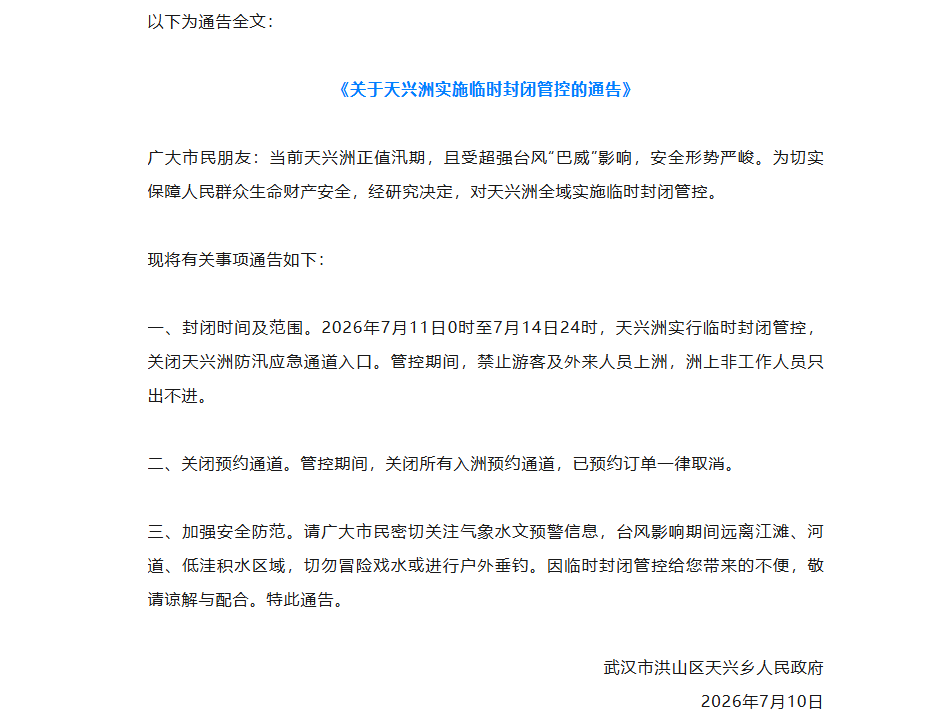
◉ Since 11 July 2026, Tianxingzhou has been under temporary closure and access control, with the flood-control emergency access road entrance shut; visitors and outsiders are not permitted onto the island. Source: Jimu News
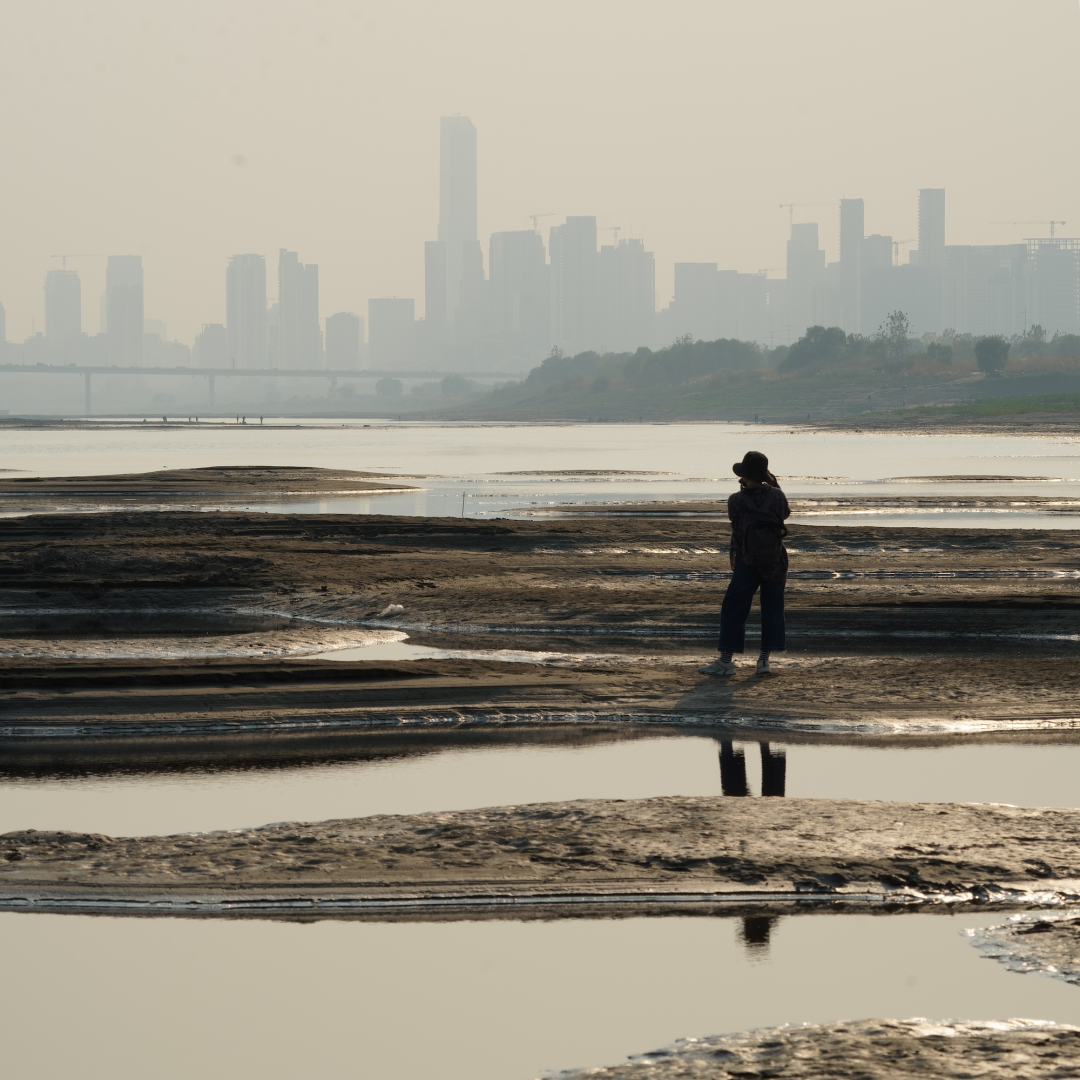
With human activity reduced, black storks — a national first-class protected species — have appeared on Tianxingzhou. A volunteer from the Wuhan Birdwatching Society told me that after the winter floodwaters recede, the sandbars are dotted with numerous shallow pools containing food, which become the black storks’ “canteen”. In 2025, 54 black storks were recorded on Tianxingzhou — nearly five times the number seen twelve years ago. More and more birdwatchers arrive on the island with binoculars and cameras, seeking species that favour sandbar habitats, and Tianxingzhou is appearing more frequently in birdwatching groups and WeChat accounts.
In early May, halfway along a gravel path stretching out towards the river at the headland, I found three Kentish plover eggs. The bare, open sandbars of Tianxingzhou are breeding grounds for the Little Tern and the Kentish plover, both summer visitors.
As with the farming here, the birds’ breeding is a race against the river. In previous years, by June, many chicks could already be seen on the sandbars; this year, heavier rainfall and a higher Yangtze water level mean the beaches at the headland and tail of the island have been submerged for longer. If the first breeding attempt fails, the birds will try again once the waters recede. But the window for the chicks to grow and practise flying before autumn migration is correspondingly shortened. In Wuhan, no other breeding sites for them have yet been found.
As the island’s agricultural value has diminished, its ecological and tourism value has been increasingly emphasised. In 2020, Hongshan District designated a restricted-access zone at the headland of Tianxingzhou. In March 2021, the Wuhan Bureau of Parks and Forestry brought the island’s wild bird habitats within its protected areas.
For the melon farmers, birds once meant losses. Zhou Xia says the fields attract all sorts — birds, hedgehogs, and rats all come to eat their melons. “The birds are clever. They know which melons are ripe. You cover them with straw, and they’ll pull it off, peck one hole in each, and they’re unsellable.” Yuzhen once tried using reflective bird-scaring tape to keep them away. At first it worked, but over time the birds stopped being afraid. “It’s not just the birds — the other day a villager spotted a wild boar,” she said.
Others hold a different view: “What the birds leave behind is what we should be eating,” says Xiao Cao, who hails from Henan.
Xiao Cao is thirty this year and came to Tianxingzhou three years ago to practice organic farming. He believes people should live in harmony with nature and maintain the balance of the ecosystem. The moment I stepped closer to his field, a flock of Oriental Greenfinches was startled into flight, their golden plumage flickering for a moment among the hedgerows at the field’s edge before settling back down.
Vehicle restrictions have reduced disturbance to bird habitats but have also limited the flow of visitors coming to pick fruit or spend money. Every weekend, some villagers still operate sand bikes on the headland, hoping to earn a little more from tourists. Birdwatching Society volunteers say the villagers are always pushing for the Society and the district government to ease up a little. “What matters more — the birds, or our way of life?” the villagers ask them.
Footfall remains sparse. On the sandbars of Tianxingzhou, overwintering black storks have found their “canteen”, while summer visitors — the Kentish plover and the Little Tern — breed here; and on the other side of the Yangtze, the old melon farmers who left the island face yet another relocation.
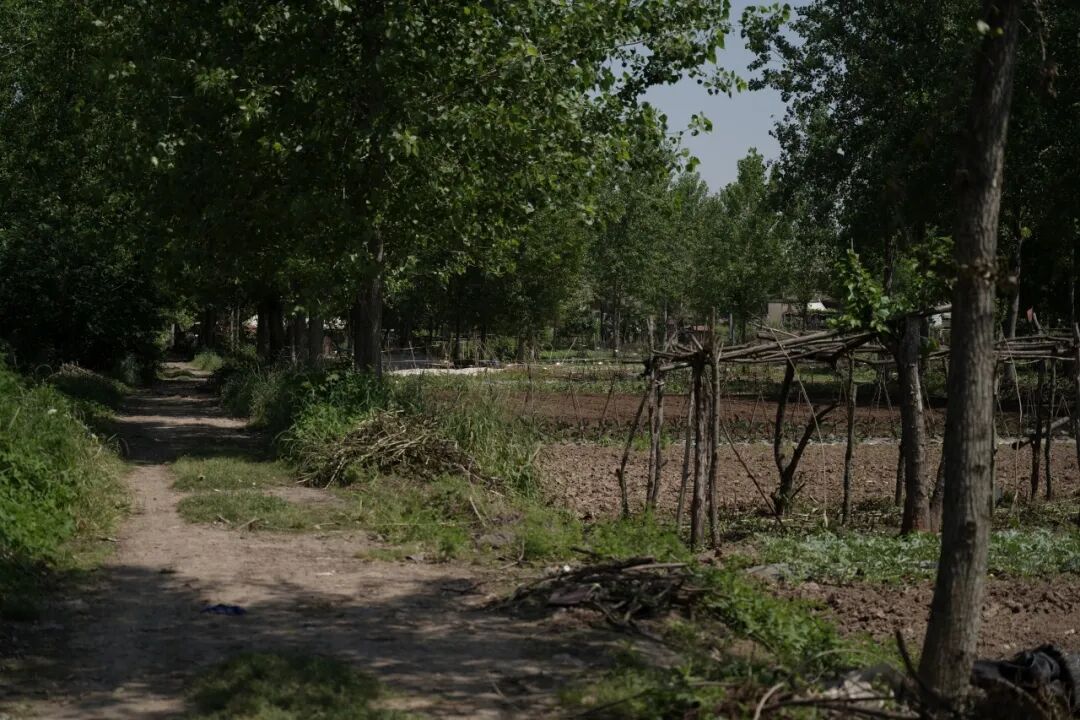
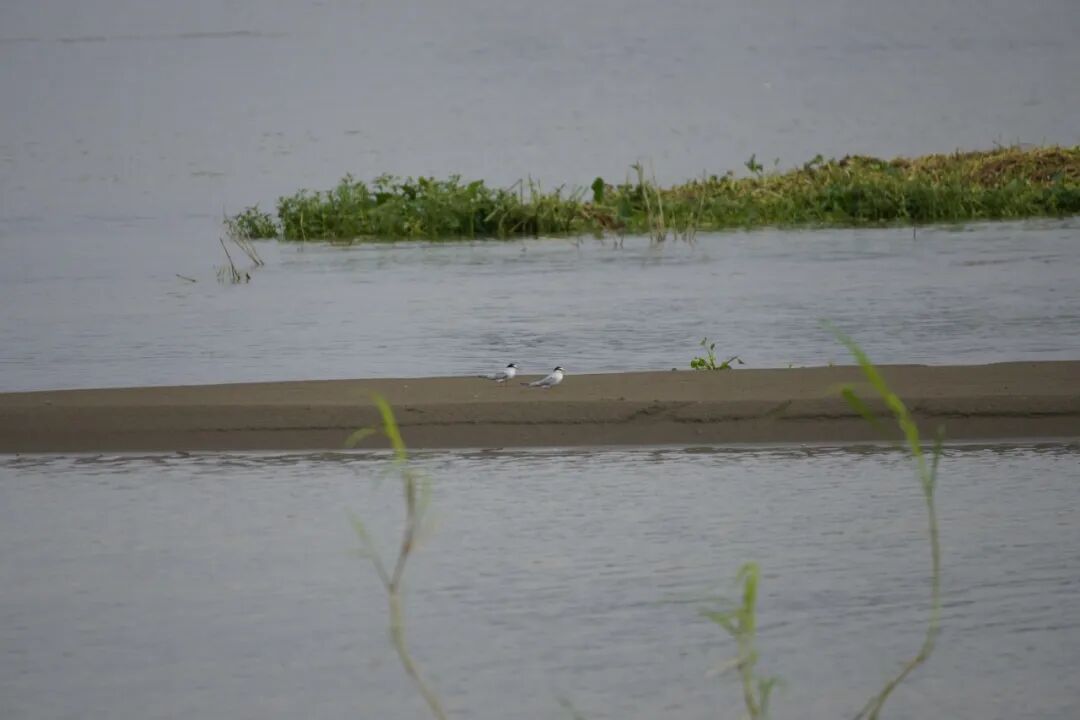

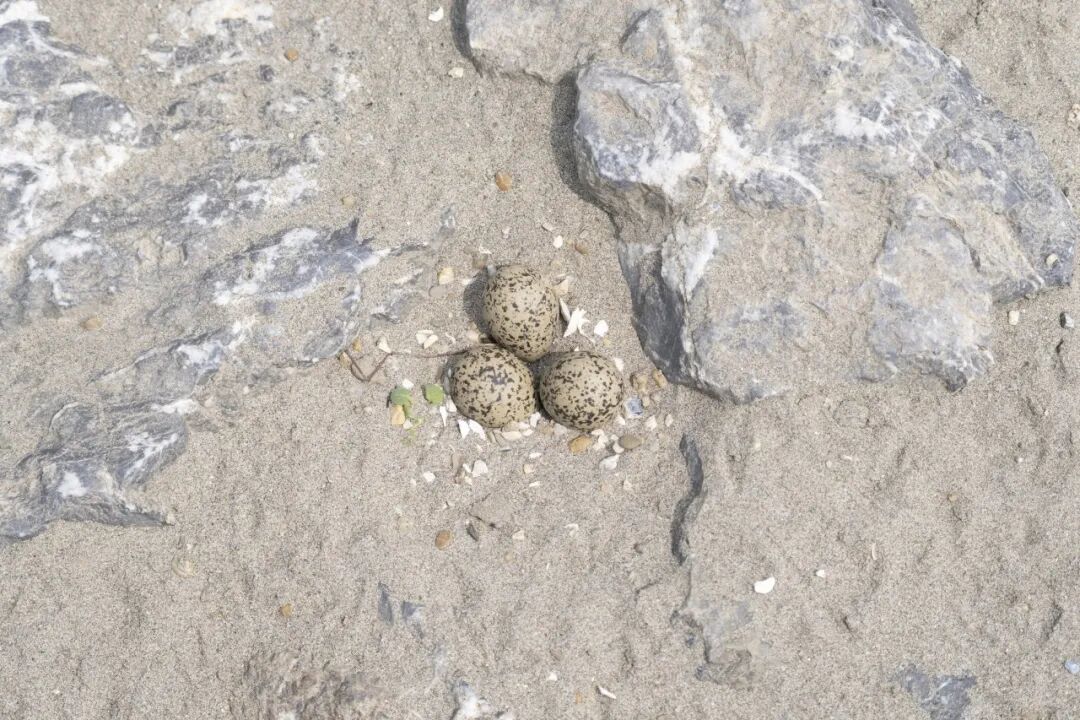
◉ Top left: bird-scaring tape in the fields; top right: a Little Tern surrounded by river water; bottom left: black stork footprints on the headland; bottom right: Kentish plover eggs on a gravel path (photographed with a professional camera; click to view the full image)
Second Relocation
At the end of May, I made my way to Lüdao Residential Community again. A large truck, loaded to the brim with rubble, rumbled out of the gates. I turned away from the dust cloud it churned up into the air. The uncles and aunts I expected to find chatting downstairs were nowhere to be seen. When I found Chen Lan, she was chatting at a neighbour’s flat — the family there was preparing to move out.
Once home, Chen Lan switched on the electric fan. “It’s stifling outside — I don’t want to sit outdoors,” she said. Several bags of medicine were piled on the dining table and the TV stand. Her hands were never idle: now peeling garlic, now trimming water spinach, now peeling a knob of ginger.
Zhou Xia, from downstairs, rang to tell her it was raining and to bring in the washing. Chen Lan set the garlic aside and went into the kitchen. There is no balcony in her flat; the washing hangs on bamboo poles jutting out from the kitchen window. She lifted the pole and drew each piece of laundry in one by one, then rose on tiptoe to hang the empty hangers back on the metal hooks along the wall.
Speaking of the first relocation twenty-four years ago, Chen Lan said she had struggled to settle when she first moved into Lüdao Residential Community. Everything in the city cost money, and she could not quite trust the vegetables bought there. Back on Tianxingzhou, everything she ate was grown in her own patch, and day to day she barely needed to spend a penny.
Over time, she gradually grew accustomed to it, though her ties to Tianxingzhou never quite severed. One day, on the ferry back across the river, the wind blew full in her face and she felt a sudden, deep “openness” settle over her. She no longer farmed herself, but neighbours still working the land on the island would bring her vegetables; in return, she would wrap zongzi for them.
Under the 2018 draft overall urban design for the Yangchun Lake Business District, the plot on which Lüdao Residential Community in Tianxing Township sits is now earmarked for high-end commercial development — a prospective landmark building for the area — and sits at a key node along the design axis, making it an unavoidable part of the future Yangchun Lake High-Speed Rail Business District. Residents of Lüdao Residential Community will be assigned to one of three completed resettlement communities, each just one or two bus stops from their current homes.
Outside the window, yellow excavators advanced through the estate, and the character for “demolish” was scrawled on wall after wall. The community’s health clinic had already been razed. Scrap trucks came and went, and from time to time came the shriek of an angle grinder cutting through air-conditioner bracket stands. Many residents complained to me about having to move yet again. “If Tianxingzhou hadn’t flooded, I never would have wanted to leave,” one said. Some elders had refused the demolition terms and had not signed. Meanwhile, a resident on the point of leaving said everyone she knew had already gone: “I can’t stay here on my own.”
Over twenty years ago, the islanders left Tianxingzhou and carried their melon-growing community into Lüdao Residential Community. Now what faces demolition is not merely houses; the bonds held together by shared labour, the exchange of food, and the quiet looking-in on one another may yet be scattered and pieced together again. Whether they can carry over to the next place of residence — that remains unanswered.
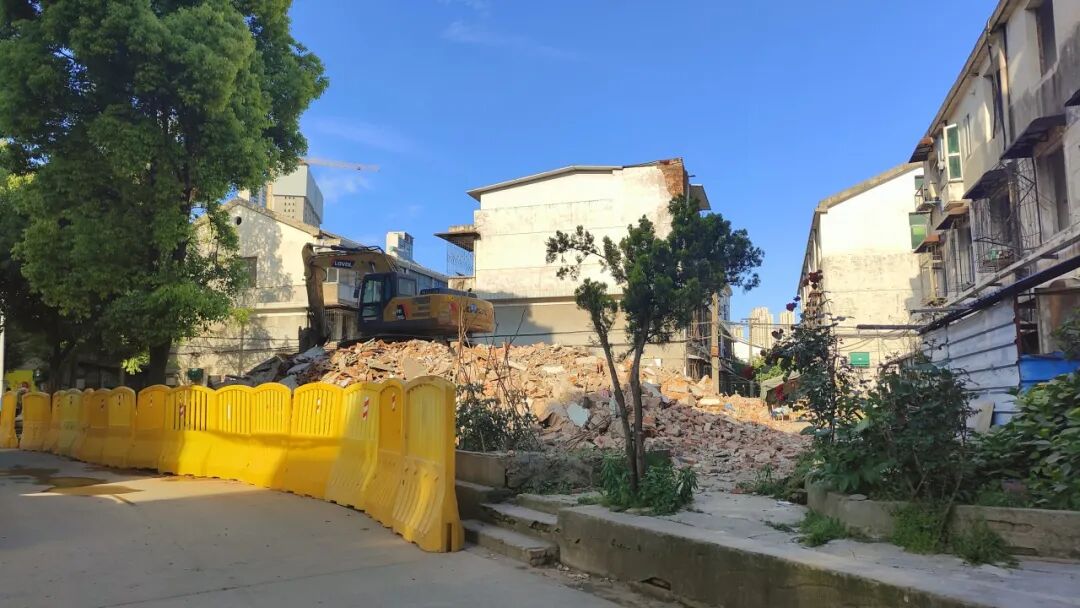
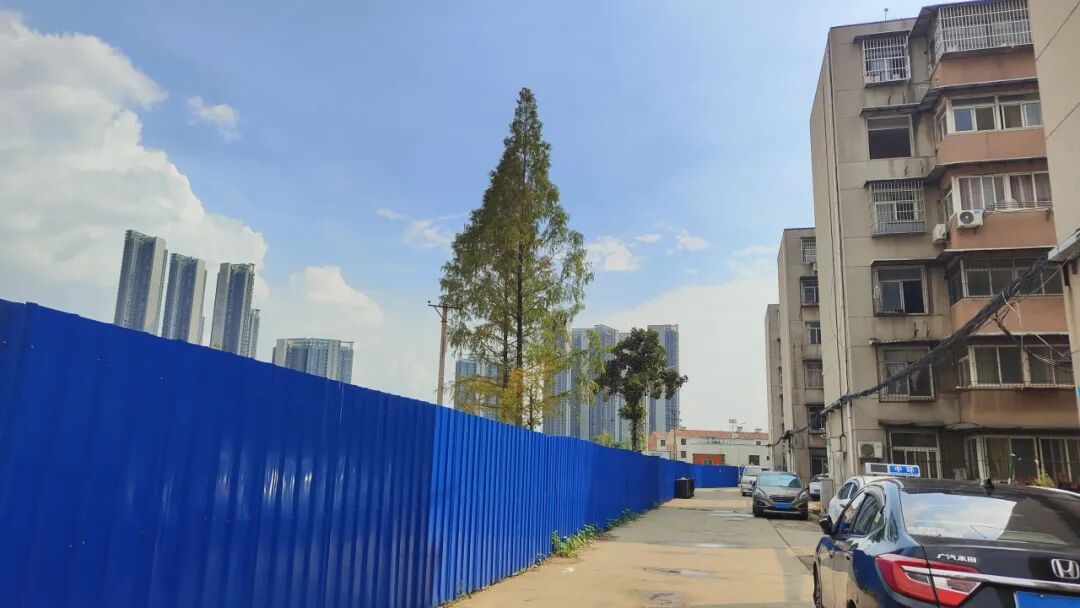
◉ Left: Lüdao Residential Community in early May; right: Lüdao Residential Community in August
Those Who Slow Down
As the older generation of melon farmers bowed out, large tracts of Tianxingzhou’s land were leased out to agricultural companies and growers from elsewhere. Fewer locals remained, but newcomers arrived. They set up more than a dozen pick-your-own farms, and many, like Xiao Cao, had come from Henan.
Xiao Cao had studied computer science and worked in Wuhan, but long hours at a desk and nights spent awake took their toll on his health; he even underwent a small operation. After leaving hospital, he tried his hand at various agriculture-related jobs. In the end, he chose Tianxingzhou, leased a plot, and turned to organic farming, growing strawberries, watermelons, tomatoes, and other fruit and vegetables. He had tilled the soil in the countryside as a child too, and he still reads agricultural research papers to keep learning. He scooped up a handful of his amended soil and showed it to me: “These are all individual crumb structure granules.” Crumb structure refers to the loose clumps that form when fine soil particles bind together. He says organic matter in the soil has increased, along with more earthworms and richer microbial communities, making the earth looser and better aerated.
“There are all kinds of lifestyles, and I’ve chosen the one best suited to my body,” Xiao Cao says. He no longer stays up late. Now he gets up at 4.30 every morning, and once it is light enough, he patrols the polytunnels, checks on the crops, and looks for pests and disease. Every day’s labour gets every muscle and joint moving.
But foul weather makes the work especially gruelling. He remembers one year in early spring when it snowed, and he did not sleep a wink all night. “I kept watch over the polytunnels on my own, poking the snow off all night long.” As he spoke, he raised his arm to mime the motion of poking snow off the roof. He worked his way from polytunnel to polytunnel in rotation — after a while, drenched in sweat, he would climb into the car to warm up, since some of the tunnels had no stove, only a few sticks of firewood to nudge the temperature up even a little. Once warm again, he would go straight back out; the car’s engine ran the entire night without being switched off.
Besides farming, Xiao Cao also promotes his plantation on social media and handles pre- and after-sales communication with customers. His operation is small; wholesale would not fetch a good price, so his sales rely entirely on regular customers buying in groups and on visitors who come to the island to pick their own. Next, he wants to learn to write better copy.
He still believes there is gold to be dug from the soil: “Genuinely quality-grown produce will only grow scarcer in the years ahead, and dearer, too.” But both the technology and the sales channels still need building up step by step.
Another uncle’s plot adjoins Xiao Cao’s. Before retiring, he worked at the Yangtze River Water Resources Design Institute. When I visited, he was pushing a walk-behind tiller, working the soil. Xiao Cao said his family came to Tianxingzhou to farm and keep chickens whenever they had spare time — like so many others, drawn here not entirely to earn money, but because they loved the pastoral life.
“This year, I don’t want to work myself into the ground — steady and slow is enough. If you try to rake in a fortune all at once, you’re staking your life on it, and there’s no need for that,” he said.
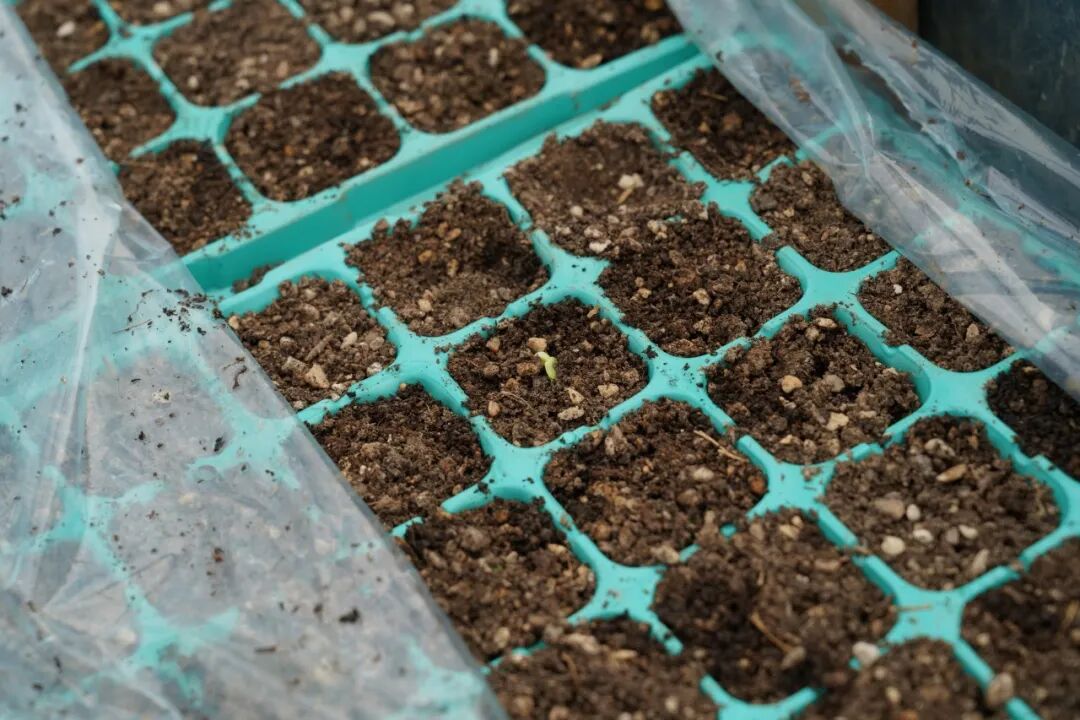
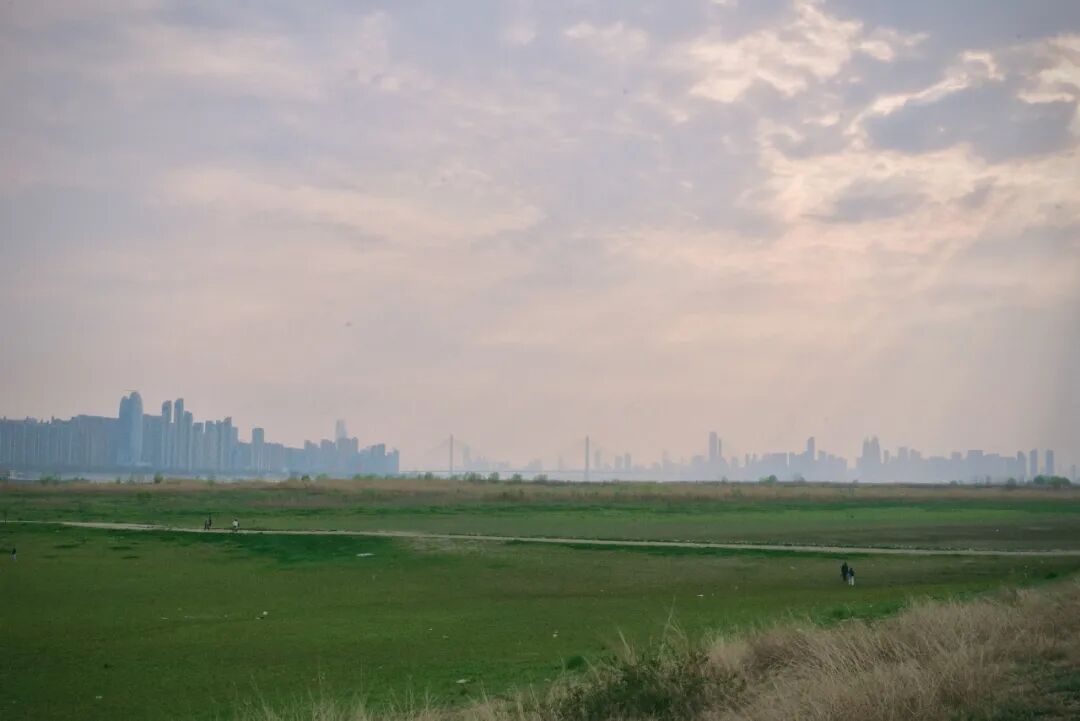
◉ Left: In March, Xiao Cao’s watermelon seeds have sprouted. Right: The headland of Tianxingzhou in March.
Guiying thinks the same way. “Anyway, don’t push yourself to the breaking point. Treat it as a kind of leisure and recreation, and live the plain life plainly.” As mentioned in the first part of this piece, Guiying, at sixty, is one of the few local farmers still growing melons on Tianxingzhou. She had lived in Lüdao Residential Community for more than a decade, running a small restaurant and doing cleaning work, but she never quite fitted into city life. Three years ago, she and her family returned to Tianxingzhou — raising chickens, ducks, and geese, keeping a dog, and growing vegetables.
Visitors, too, seem caught up in this unhurried rhythm. Once, the driver who had brought me to Tianxingzhou was in a fine stew over the fare — she had left the city limits and forfeited the ride-hailing platform’s morning rush-hour bonus. But the moment we reached the island, she gazed out the window: “This is perfect for camping — you could bring the kids here to play.”
The driver had also grown up in the countryside. When I paid a visit to a farming household, she got out of the car with me.
In the field, a hen led her chicks foraging while ducks soaked in a basin under the trees to cool off. The driver held up her phone and posted a video on WeChat: “Anyone want to buy some fresh veg?” Within ten minutes, she had filled two large bags with produce picked straight from the ground.
Although Guiying’s family has built up a customer base through livestreaming, restrictions on getting to the island mean the produce often goes unsold. “The hardest part of farming is selling,” she said. In front of Guiying’s house, a cluster of white butterflies settled on the soil; in the distance, the calls of common cuckoos and Indian Cuckoos alternated. “One day a butterfly even landed on me, and I couldn’t chase it away,” Guiying said.
Tianxingzhou’s “single-retreat civilian polder” policy has left space for flood discharge, while urban regeneration has converted the land beneath resettlement communities into higher-value commercial plots. The former residents of Tianxingzhou have repeatedly relinquished the spaces on which their livelihoods and daily lives depended, forced to renegotiate how they earn a living, go about their routines, and relate to the land they come from. Displacement driven by flood risk and urban renewal is by no means confined to this place. Tianxingzhou’s story leaves a question hanging: beyond housing, should resettlement also take account of original residents’ livelihoods and the long-nurtured bonds of community life?
On Tianxingzhou and in Lüdao Residential Community, I glimpsed a way of life unfamiliar to me: neighbours swapping labour at harvest time, sending each other the food they grew, looking in on one another’s daily needs. Their shared experiences and rhythms had formed a concrete, tangible sense of the neighbourhood right here. I hope this community can endure a while longer.
In Chen Lan’s vision of the future, Tianxingzhou has not yet become entirely a thing of the past. “I always dream of going back to Tianxingzhou. I’d grow a little veg just for ourselves — no selling, no selling. The vegetables there taste so much better,” she said.
– This is Foodthink’s 838th original article –
Foodthink
Author:
He Wu
Based by the water’s edge, documenting stories of climate change, birds, the city, and the people in it.
About the Lianhe Creative Programme
To understand the state of food and agriculture today, and to support more people in exploring the complexities behind food and farming, Foodthink joined forces with several charitable and media partners to launch the Lianhe Creative Programme in 2024 and 2025, supporting media creators and researchers in carrying out investigations in the food and agriculture field, and funding the completion of content created for a public audience.
After multiple rounds of interviews by the panel of judges, the Lianhe Creative Programme supported 18 creative projects in 2024 and supported 20 creative projects in 2025. Some of the works supported have now been completed and published:
“A-Mei the Cleaner Just Wants a Proper Meal | The Working Person’s Dinner Table”
“In Malaysia, Chinese Traders Only Want Grade-A Durian”
“‘Fake Meat’ Drives Out the Real Thing: Herders, the Dinner Table, and the Amazon”
“Watermelons Promise Sweetness, but Growing Them Promises Bitterness”
“Ma Lan in Shenzhen Has No Meal Buddy”
“Why Has the Sweetness of Childhood Disappeared?”
“Why Guizhou Can’t Live Without Sour Soup — and Sour Soup Can’t Live Without Guizhou?”
“Who Is Driving Out the Wet Markets?”
“Will Fresh-Food E-Commerce Make Wet Markets Disappear?”
“When Drones Become Farm Tools: Who Defines ‘Scientific Farming’?”
“A Braised Goose in a Qiaopi Letter, Worth 100,000 Yuan”
“‘The Boss Hasn’t Arrived Yet — Don’t Sell.'”
“Searching for Musang King: Malaysia’s Taste and Business”
“The Watermelons on Tianxingzhou Have Had an Especially Difficult Time Ripening This Year“
To protect interviewees’ privacy, Chen Lan, Zhou Xia, Lao Yu, Xiao Cao, and Guiying are all pseudonyms in this article.
Unless otherwise stated, all photographs were taken by the author.
Editor: Pei Dan
Layout: Xiao Cun
Scan the QR code to tip and support original food writing
▼

▼
Tap the image to read related articles
▼
Tap a keyword to explore more article collections
Seeds | Agricultural Technology | Policy | Fermentation | Nutrition | Fruits | Fisheries | Events | Recruitment | Food Delivery | Wet Markets | Animal Husbandry | Food Talk | Sharing Sessions | Reading Groups | Harvest Festival | Smallholder Stories | Climate Change | Rural Development | Cooperative Economy | Urban Farmers | Food Safety | Digital Technology | Biodiversity | Pandemic and Food | False Solutions | Ecological Agriculture Internship Programme
Beijing | Hebei | Shanghai | Guangdong | Guangxi | Henan | Sichuan | Jiangxi | Xinjiang | Shaanxi | Hong Kong | Chongqing | Zhejiang | Jiangsu | Guizhou | Northeast | Taiwan | Inner Mongolia | Philippines | Canada | Russia | Mexico | Italy | United States | United Kingdom | Germany | Netherlands | Thailand | Sweden | Japan