Local people, distant meat – why should we care? | Chengdu & Ningbo Screenings

· When herders on the Qinghai–Tibet Plateau are feeling the impact of agricultural products from faraway Brazil, Uruguay, Australia, and New Zealand, how should we think about the food on our tables?
· As everyday consumers, can we really make a difference at the other end of food production?
· If local beef and mutton are becoming harder and harder to sell, what will change on our tables?
· Why should we care about local pastoral areas and imported meat from far away?
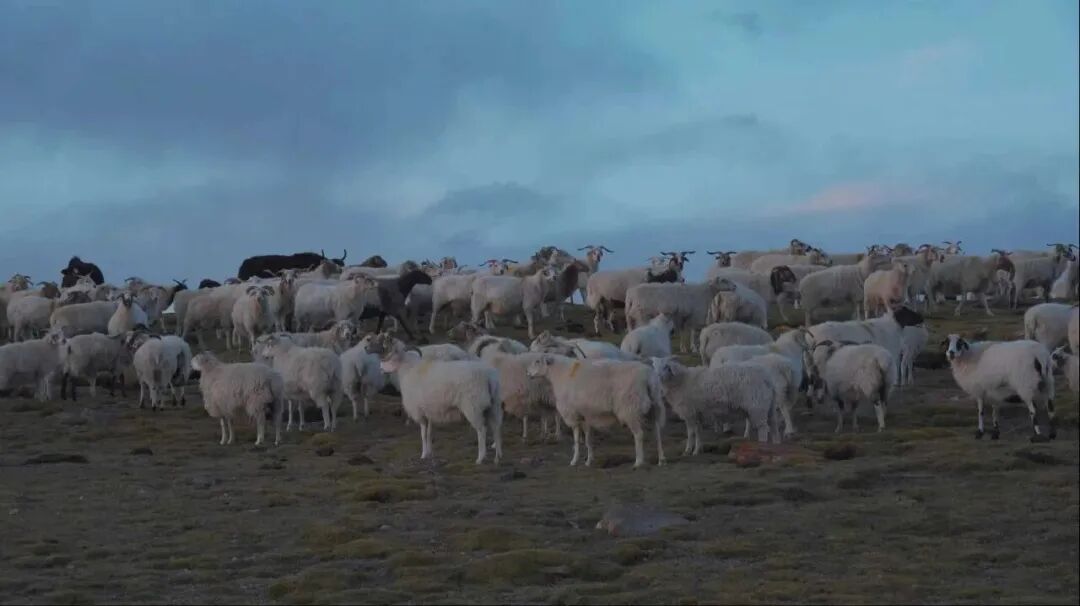
◉A flock of sheep at the home of Ni’egjia, one of the protagonists of “Whose Table, Whose Pasture.” Photo: Jiao Xiaofang
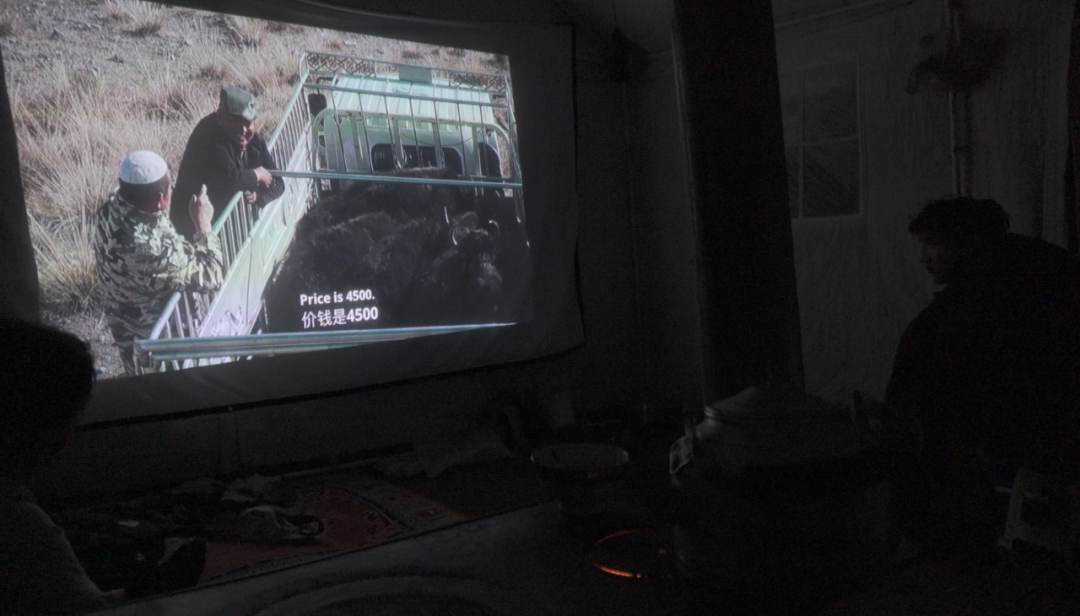
◉Follow-up visits are an important part of community video. In 2025, Jiao Xiaofang returned to the filming location to screen the documentary Whose Table, Whose Pasture for the herders. Photo: Jiao Xiaofang
This weekend, there are three screenings in total, across Chengdu and Ningbo. After each one, we’ve invited experts and scholars familiar with the issues to join us in discussion:
18 September (Friday) 19:00–21:00 Kongzhou Art Museum, Chengdu
19 September (Saturday) 14:00–16:00 Qinghe Life Market, Chengdu
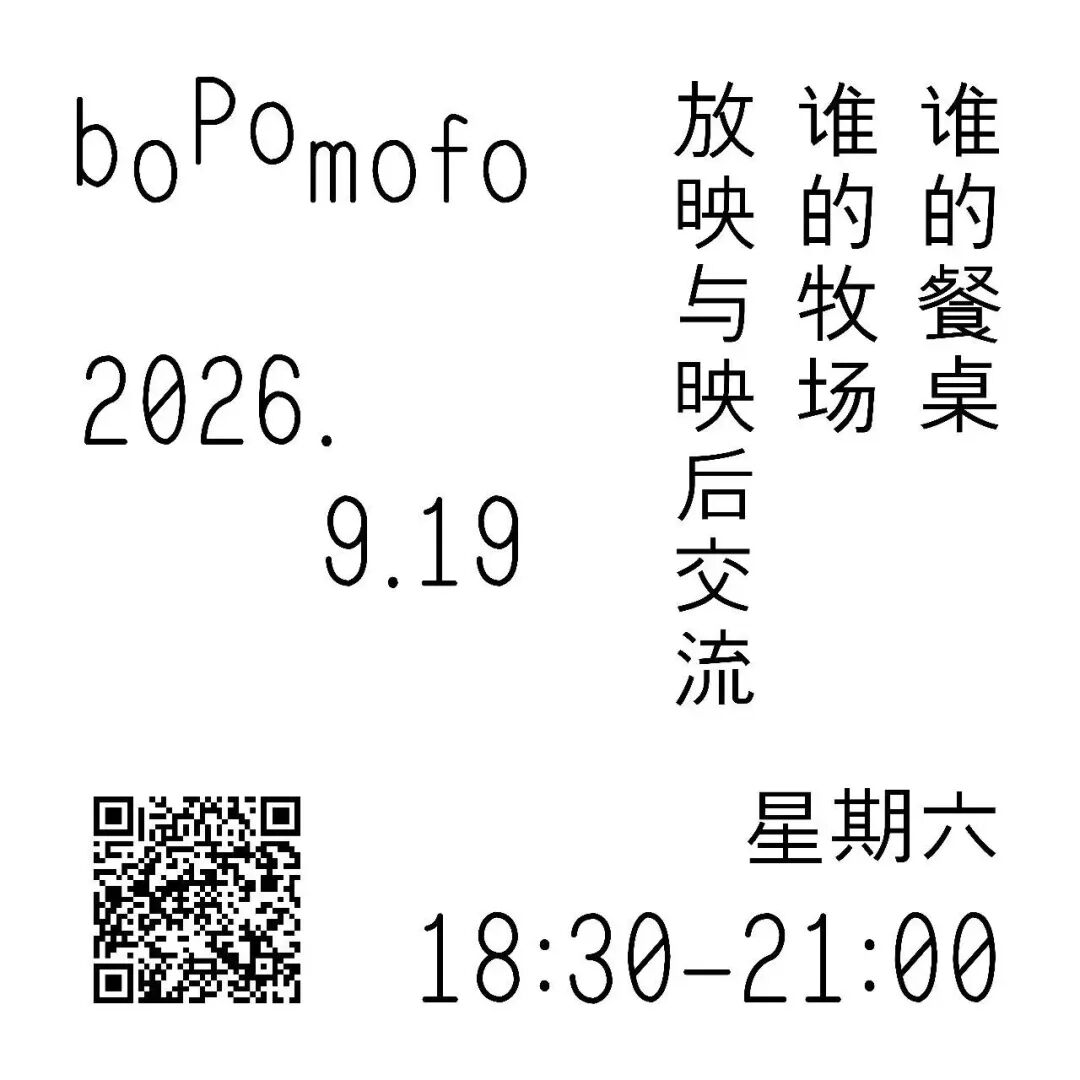
19 September (Saturday) 18:30–21:00 Ningbo boPOmofo爬坡没风
Scroll down for details and how to sign up 👇🏻
– Synopsis –
*Whose Table, Whose Pasture* is an investigative documentary. With support from Foodthink’s Lianhe Creative Fund, the director travelled deep into the pastoral regions surrounding Qinghai Lake, documenting the impact that mass imports of frozen beef and mutton have had on local markets.
Through visits to frozen wholesale markets and cold chain warehouses in Xining, and footage of local herding families, butchers’ shops and fattening farms, the film lays bare the impact of imported meat’s price advantage on local beef and mutton. The direct consequences are a sharp drop in the price herders receive for their cattle and sheep, reduced incomes, difficulty servicing loans, and razor-thin margins for local meat traders struggling to stay in business.
The camera pushes deep into the imported beef and mutton market around Qinghai Lake, probing a stark reality: in the globalised meat supply chain, who benefits from low prices, and who pays the price?
– About the Directors –
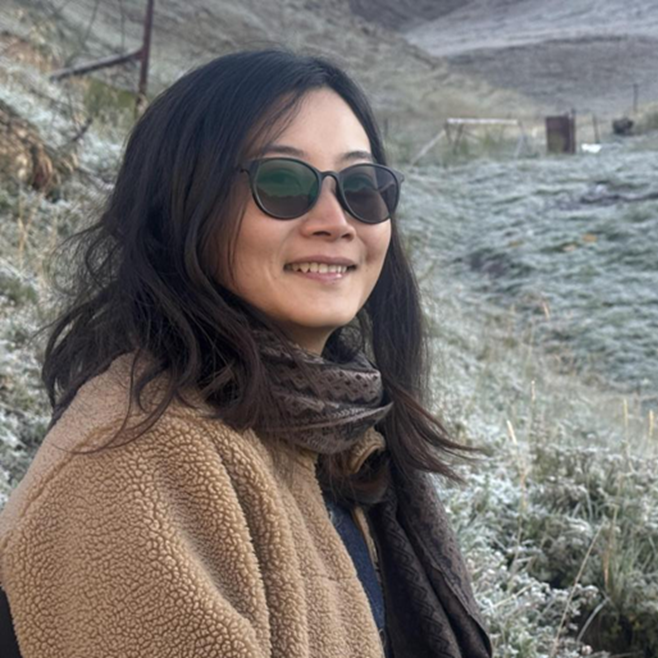
Jiao Xiaofang|Documentary filmmaker and visual anthropologist, with a long-standing focus on local knowledge, ecological ethics, and women’s experiences in western China and the coastal regions of Southeast Asia. Her work combines ethnographic observation with poetic expression, centring on the relationship between people and nature and the emotional landscapes of everyday life. Her documentary Whose Table, Whose Pasture (2025) was selected for the 5th World Nomadic Film Festival and the 6th Chinese Ethnographic Documentary Film Festival.
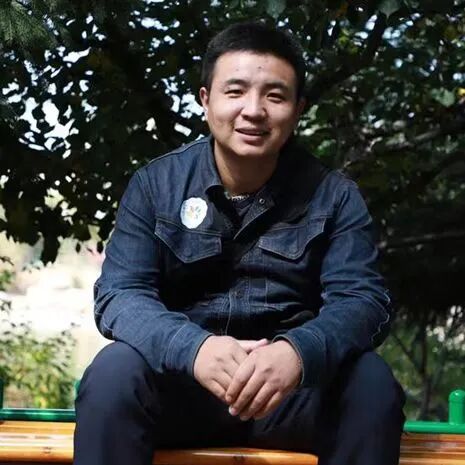
Qiong Wu · Dan Zeng|Tibetan community filmmaker and activist, long dedicated to ecological conservation and visual education in the Qinghai–Tibet Plateau region. He previously served as coordinator of the Rural Eyes Tibetan-region project in Yunnan and as central-region representative of the Alxa SEE Three Rivers Source project. He is currently head of the Human–Bear Conflict Project at the Qinghai Xuejing Eco-Education and Research Center. Over the past decade, he has promoted herder video training and community ecological projects in Yushu, Aba, and other areas, supporting herders in using video to document their own environments and cultures. His work spans film, ecology, and public education, dedicated to building understanding and coexistence between people and nature.
– Screening Information –
– Chengdu – Kongzhou Screening –
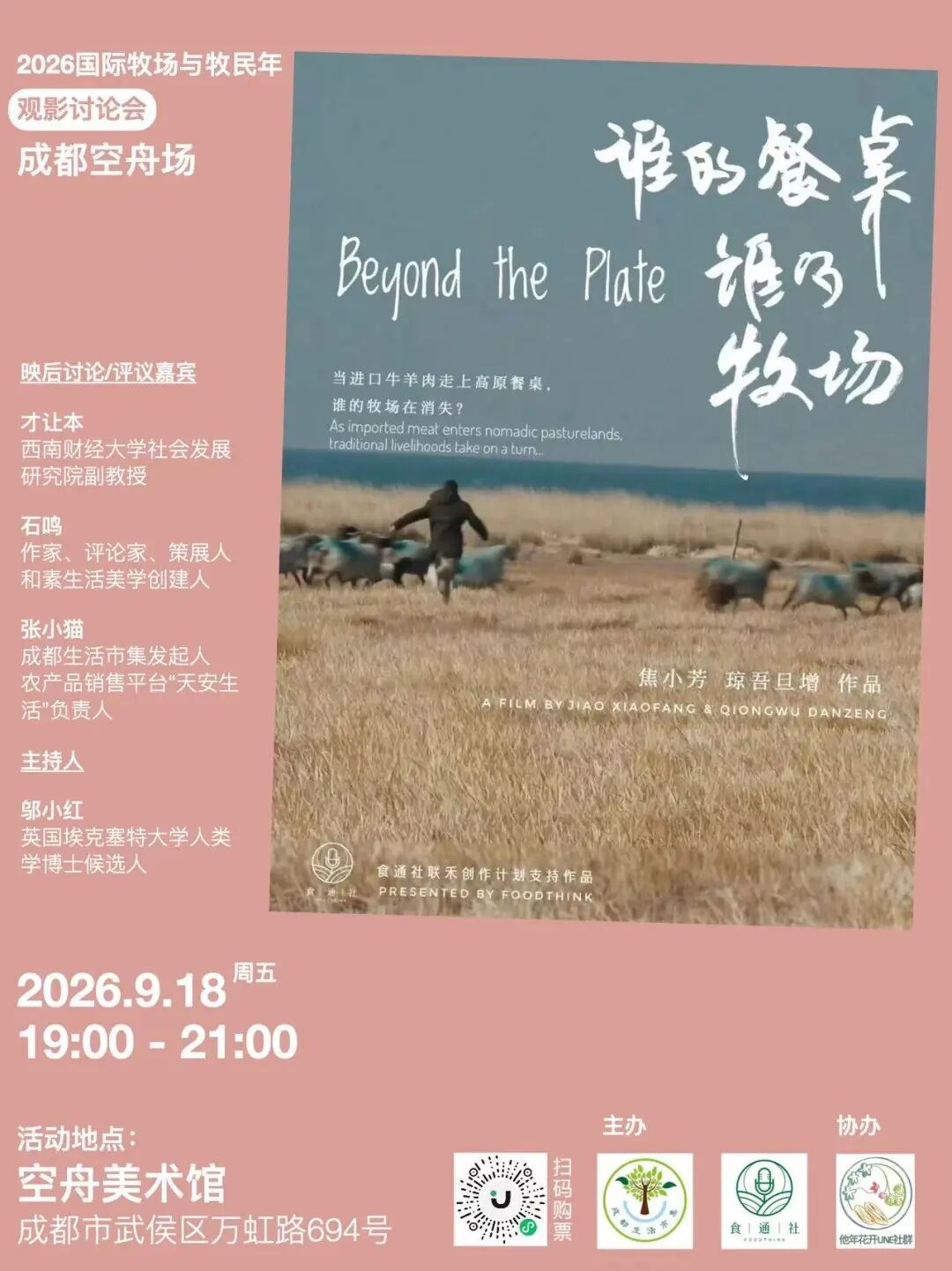
[Time]
18 September 2026 (Friday)
19:00–21:00
[Venue]
694 Wanhong Road, Wuhou District, Chengdu
Kongzhou Art Museum
[Discussion Panel]
Cairangben
Associate Professor at the Research Institute of Social Development, Southwestern University of Finance and Economics. Long-standing researcher in environmental anthropology, development anthropology, and multispecies ethnography.
Shi Ming
Writer, critic, curator, and founder of Hesu Life Aesthetics
Zhang Xiaomao
F ounder of the Chengdu Life Market, head of the agricultural products sales platform ‘Tian’an Life’
[Moderator]
Wu Xiaohong
PhD candidate in Anthropology at the University of Exeter, with long-standing involvement in farm animal welfare practice and research on human–animal relations
[How to register]
Please scan the QR code on the poster to register
– Chengdu – Qinghe –
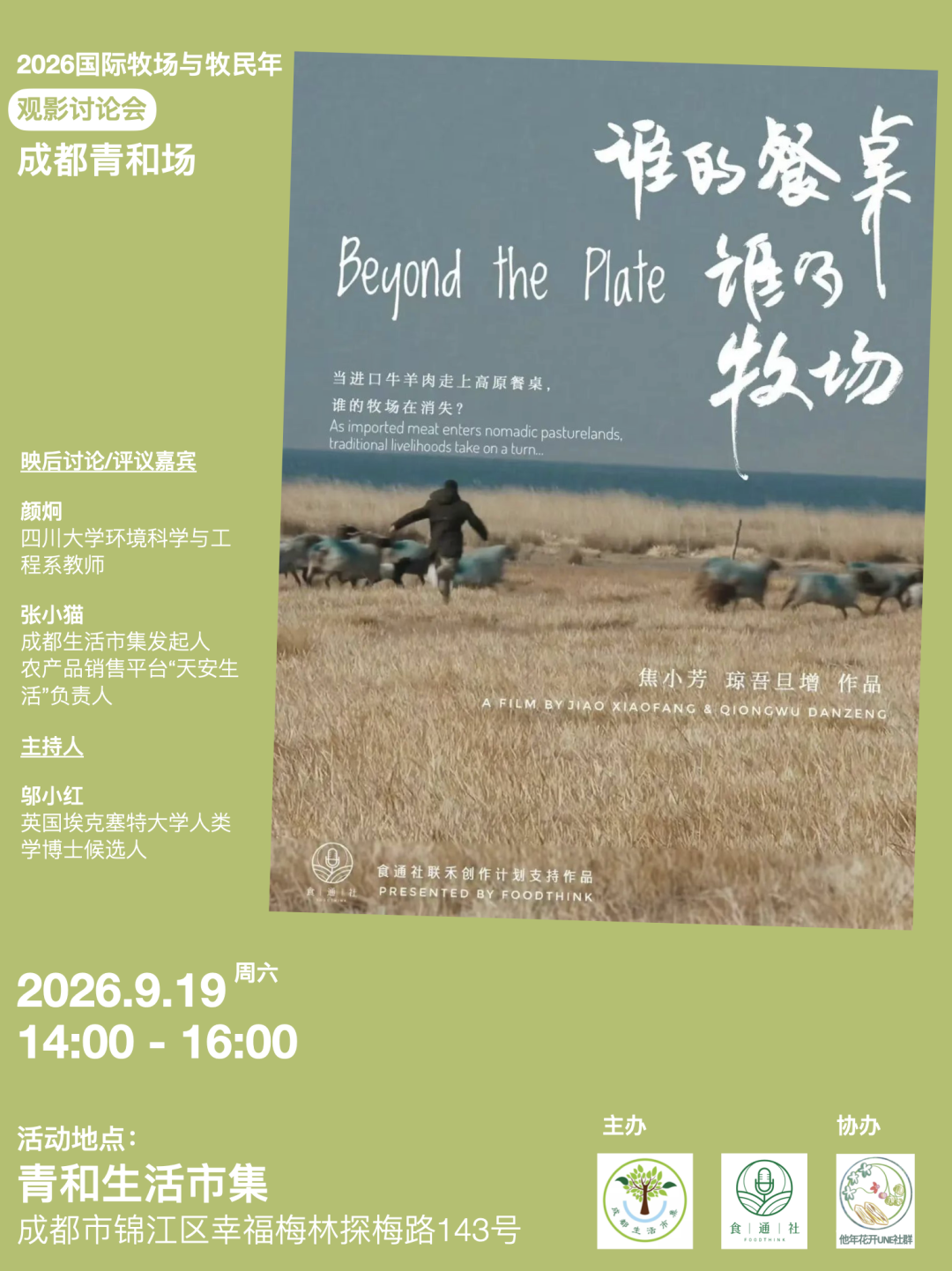
[Time]
19 September 2026 (Saturday) 14:00–16:00
[Location]
No. 143 Tanmei Road, Xingfu Meilin, Jinjiang District, Chengdu
Qinghe Life Market
[Commentator]
Yan Jiong
Lecturer in the Department of Environmental Science and Engineering at Sichuan University, with long-standing teaching in environment and sustainable development
Zhang Xiaomao
Founder of Chengdu Life Market, head of the agricultural products sales platform Tian’an Life
[Moderator]
Wu Xiaohong
PhD candidate in Anthropology at the University of Exeter, with long-standing involvement in farm animal welfare practice and research on human–animal relations.
[How to register]
Free event – just arrive before it starts
❗️We strongly recommend browsing Qinghe Life Market beforehand – it’ll make the film even more enjoyable afterwards ❗️
– Ningbo –
[Time]
19 September 2026 (Saturday) 18:30–21:00
18:30–19:15 Dinner
19:30–20:30 Screening
20:30–21:00 Post-screening discussion
[Location]
[Guest]
Tian Le
[How to register]
The screening is preceded by a talk and a shared meal – scan the QR code to book in advance
Food is limited; sales end when stock runs out
For more details, tap the poster
Scan to tip – support original food knowledge
▼

▼
Tap the image to read related articles
▼
Tap a keyword to browse more article collections
Seeds|Farming Techniques|Policy|Fermentation|Nutrition|Fruits|Fisheries|Events|Careers|Food Delivery|Wet Markets|Livestock|Food Talk|Sharing Sessions|Book Club|Harvest Festival|Smallholder Stories|Climate Change|Rural Development|Co-operative Economics|Urban Farmers|Food Safety|Digital Technology|Biodiversity|Pandemic and Food|False Solutions|Organic Farming Internship
Beijing|Hebei|Shanghai|Guangdong|Guangxi|Henan|Sichuan|Jiangxi|Xinjiang|Shaanxi|Hong Kong|Chongqing|Zhejiang|Jiangsu|Guizhou|Taiwan|Inner Mongolia|Philippines|Canada|Russia|Mexico|Italy|United States|United Kingdom|Germany|Netherlands|Thailand|Sweden|Japan