From Food, Reclaiming the Publicness of Writing

Editor’s Note
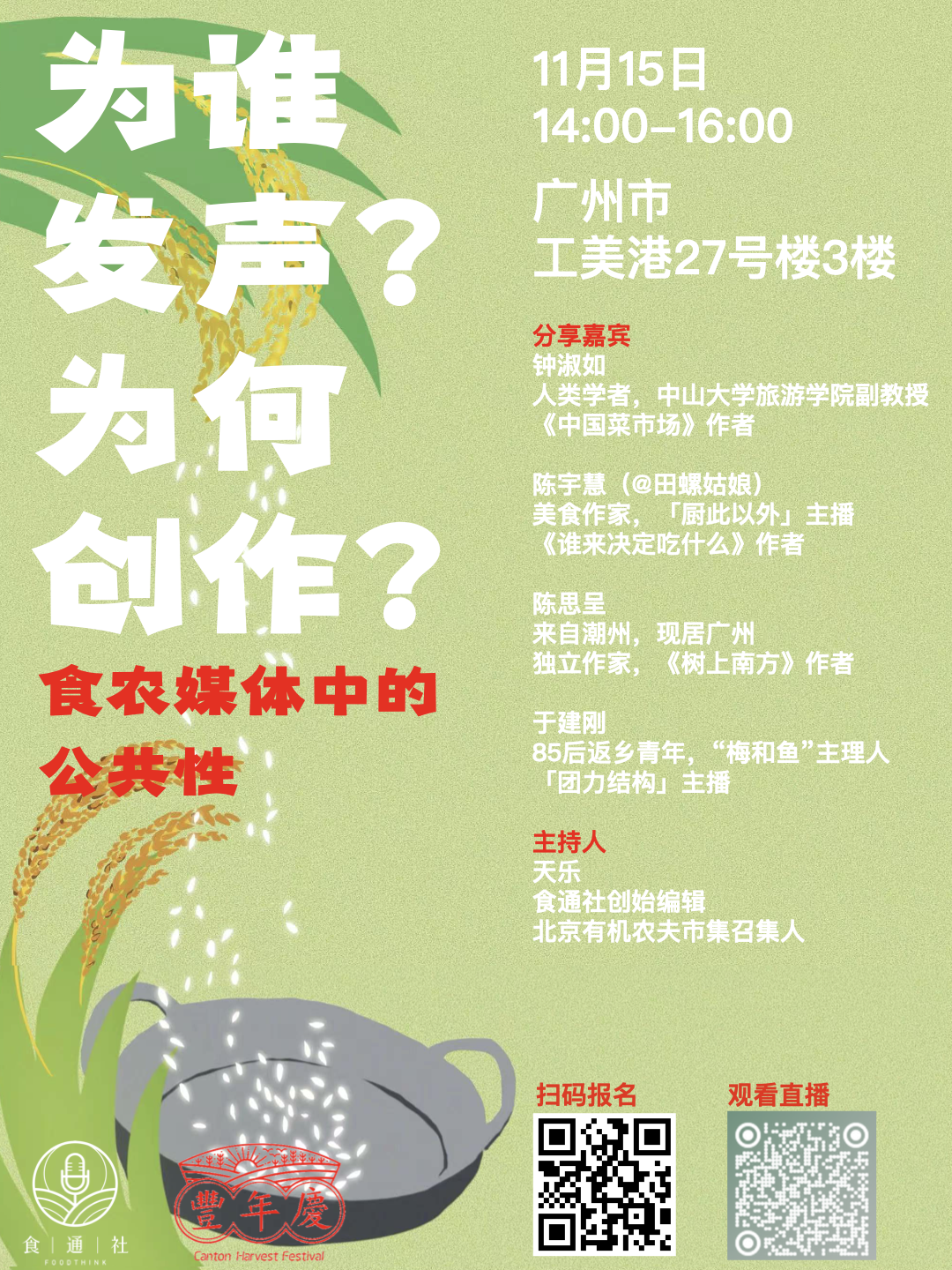
During the discussion, Tianle reviewed and summarised the adjustments to Foodthink’s editorial direction since 2017, which also prompted our thinking on the publicness of food and agriculture media, and ultimately led to a further conversation we will host this Sunday (15 November) at the Harvest Festival in Guangzhou, delving deeper into this topic. Everyone is welcome to scan the QR code on the poster to register for the in-person event or to book a place for the livestream.
Below are 25 key points drawn from Dabianlu’s synthesis of the 22 September discussion. The original order of speakers was Hu Fang, Chen Yuhui (@田螺姑娘), then Tianle; here we have reordered them to foreground the case for media publicness.
Transcript prepared by Chen Lihong.
In these practices, editorial consciousness lives not only in the design of food, in pedagogical choices, and in the forging of closer human connections, but also in the framing of a reportorial perspective – even in the arrangement of a menu or the wording of a recipe. These seemingly small decisions shape how a scene is presented and how it is perceived, and determine whether people can move from seeing to understanding, and from understanding to action.
To look at food again and understand cooking anew is also to rediscover our connections to the land, to labour, and to one another, and to reflect on how we manage, arrange, and organise our lives. Can we, in our everyday choices, keep alive an imagination of a better way of living?
These conversations also turned towards the practical conditions facing cultural work. To make culture more enduring and more vital demands far more than idealism: in an era of scarce attention and shrinking resources, how often content is produced, whether a sustainable balance can be struck between cost and commitment, and whether there are specific communities and local experiences underpinning the work – all of these determine how far a practice can go. And beyond that, in the broader domains of production, labour, and daily life, can we learn another way of sustaining action?
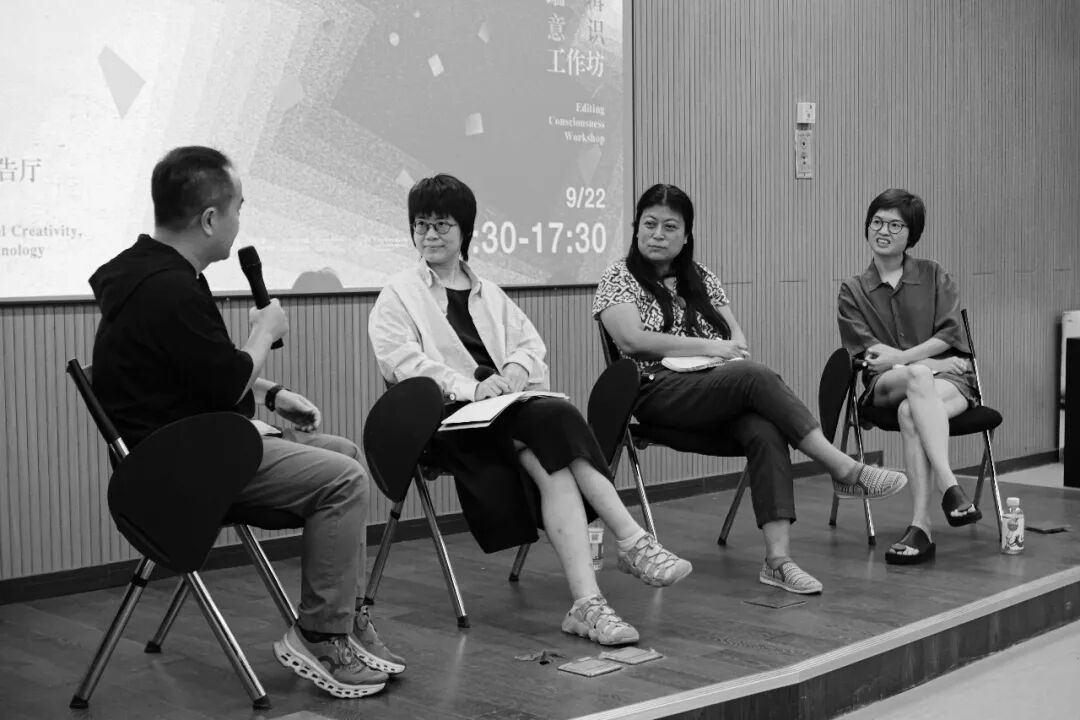
At the fourth session of the “Spring of Action: Editorial Consciousness Workshop”. Left to right: Zhong Gang, Hu Fang, Chang Tianle, Chen Yuhui
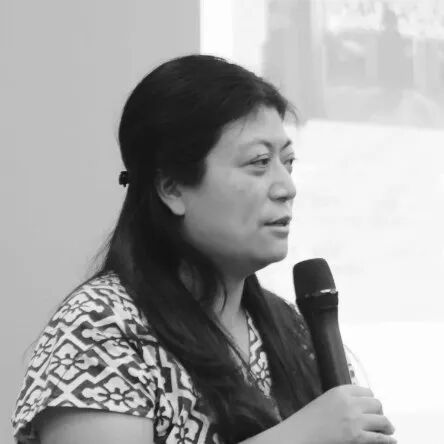
Chang Tianle
Convener of the Beijing Organic Farmers’ Market; founder of Foodthink
We Routinely Overlook the People Who Are Actually Doing the Work
As a platform for food and agriculture issues, Foodthink once dared to publish an art review of the Nanhai Earth Art Festival. One story from it goes like this: we came across a well-made piece about the local sericulture culture, and the woman looking after the installation had once been a silkworm farmer. She told us the industry no longer exists.
We have noticed that many contemporary art works give a feeling of dancing on a grave: something has disappeared, and people rush in to look back at it, mourning it through new artistic forms, yet remain oblivious to what happened to the people who were actually there, doing the work. That is what unsettled us, so we wrote an article – “Art May Not Revitalise the Countryside, but Guangdong Aunties Will Certainly Revitalise Art”.
At the festival, we met many local aunties who were exceptionally talented. During the guided tours, they put forward genuinely fascinating ideas, and some even reimagined the artworks through their own oral interpretations. It also made us feel that our work is not as far removed from art and design as we had thought.
If AI Can Summarise an Article This Effectively, Why Should We Still Write Five Thousand Words?
Our content is predominantly long-form. Roughly a year ago, people started asking Tencent Yuanbao to summarise our articles in the comments section. That put me on guard: If AI can summarise an article this effectively, why should we still write five thousand words and expect everyone to spend eight minutes reading them?
What exactly does our writing offer? Useful information, emotional resonance, or new knowledge? Whichever it is, where does the value of the written word truly lie? In an age when AI can help people absorb information more quickly, we who work with words perhaps need to treat language with even greater care.
We frequently collaborate with frontline practitioners in the food and agriculture sector, encouraging them to write and accepting their contributions. But we have also noticed that some aspiring amateur writers do not realise how much work lies behind a successful piece of non-fiction: the author’s investment in research, self-exploration, and writing itself, as well as the editorial experience and effort devoted to a single piece – all of that is immense. It is not as though someone simply sits down, tells a story, and the article naturally turns out well. Within all this, editing is really a form of design, even curation – it requires careful arrangement of the author’s material and painstaking refinement of the language.
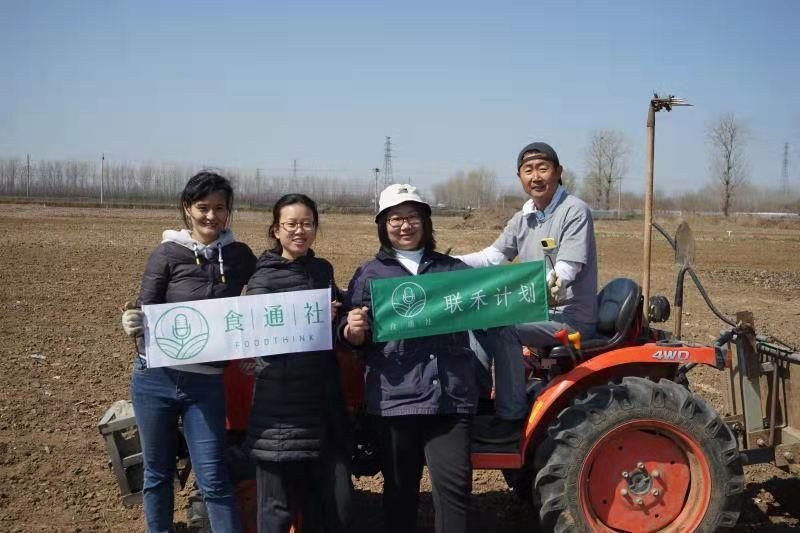
Since Its Inception, Foodthink Has Been Determined to Reach the Fields and Bring the Voices of Frontline Producers to the Fore
Facts Must Be Accurate; Emotions Must Be Genuine
Traditional hard-news training requires journalists to report events from a position of absolute objectivity. But from my own experience and observations at both state media and independent outlets, I have found that the way reporters, editors, and media organisations select facts – and choose how to present them in their coverage – carries a great deal of personal and ideological bias.
So when we founded Foodthink, I thought: if bias is unavoidable, then let us declare our stance openly. Who are we speaking for? What change do we hope to bring about? Our genuine feelings and opinions can be stated directly, without hiding behind a pretence of rational neutrality. Our standard for every article is this: facts accurate, emotions genuine.
The Networks Behind the Media Are More Fascinating
When it comes to editorial consciousness, one of Foodthink’s strategies is to influence the influential.
Within the platform economy, we have come to recognise that it is genuinely hard for a small platform to build a future by taking long-form writing seriously. Readership on our WeChat Official Account typically hovers around a few thousand, occasionally breaking ten thousand and, on rare occasions, surpassing 100,000+ reads. But we can influence the influential. Gradually, we discovered that Foodthink’s core readers are practitioners engaged with food and agriculture issues, everyday people, young scholars and their students, and media professionals. After working with many journalists, we found they were keenly interested in the networks behind us. Whenever a natural disaster strikes China, we receive a flood of WeChat enquiries from media professionals hoping we can introduce them to farmers willing to give interviews.
So we wondered: could we share our understanding of food and agriculture issues with media professionals in a systematic way through training sessions or workshops? We also invite journalists who have produced outstanding food and agriculture reporting to share their experience. To that end, we have run two rounds of media-training programmes and carried out two editions of the Lianhe Creative Programme, offering support to independent writers, young scholars, and media journalists as we accompany them in exploring food and agriculture topics we consider more cutting-edge.
There Is Inequality Between Foods
All these past two days we have been talking about food, as though the only food worth discussing is what ends up placed on the table, sent towards the mouth. But what I have always wanted to say – and what has been a starting point of our work – is that, in truth, foods are not equal to one another.
For instance, between conventionally grown produce raised with chemical fertilisers, pesticides, and herbicides, and ecologically grown produce raised in healthy soil; between cheap imported beef and expensive traditional local yellow-cattle or yak meat; between industrially ultra-processed vegan products and eggs, dairy, and meat from small-scale ecological animal husbandry – there are, in fact, enormous differences.
Industrial agriculture is the greatest problem facing today’s food system. Zhang Zhimin, a teacher at Tianfu Garden – one of the first organic farms in Beijing – once said, “Agriculture is an art of cooperation between humans and nature.” Yet in the pursuit of efficiency, everything is slowly being industrialised and standardised.
Take, for example, the big dairy corporations: through their advertising, they would have us believe that their cows roam freely across the grasslands. In reality, the milk comes from hundreds or even tens of thousands of cows crammed into a confined space, fed GM soybeans from Brazil and Argentina, lactating at least twice a day, milked by machines. And because the rearing conditions are poor, they are given prophylactic antibiotics and hormones – administered in advance, either orally or by injection. If you have ever been to a pastoral area, you will know that herders treat their dairy cows in a completely different way.
So there is genuine inequality between foods – different modes of production yield very different outcomes. These things may all be called food, yet whether you consider their impact on health, their impact on the environment, or the emotions they carry, the differences are vast.
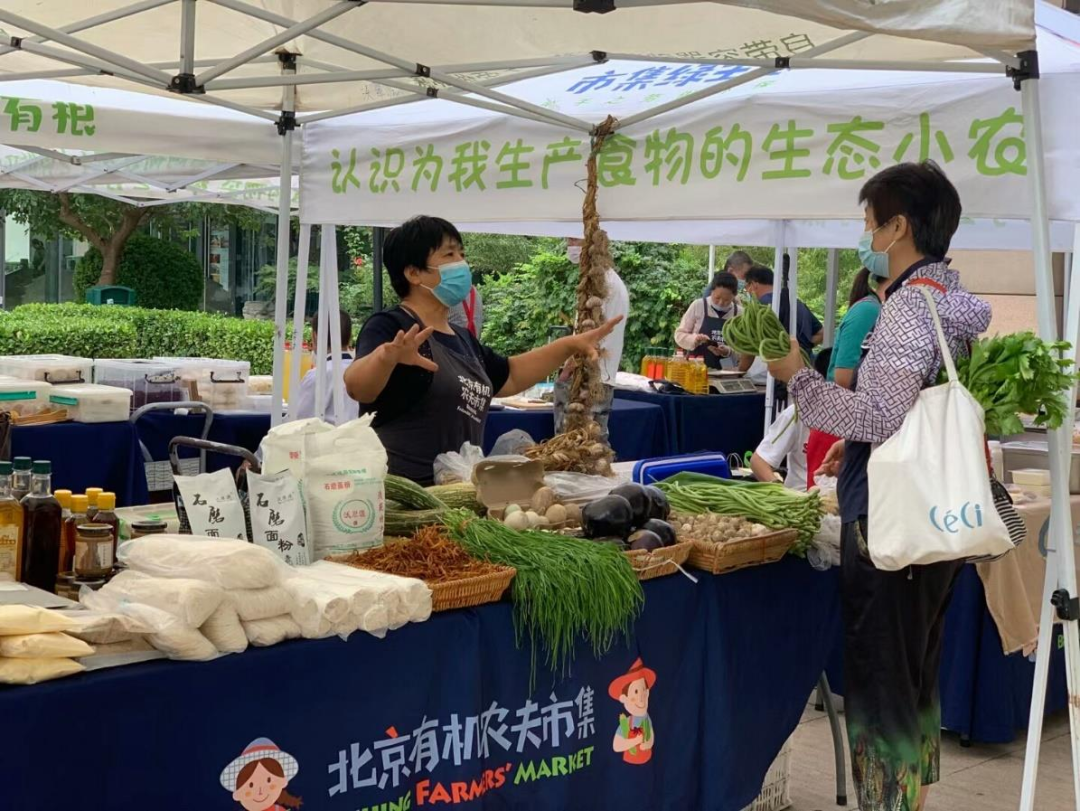
At the Beijing Organic Farmers’ Market, Consumers Can Interact and Trade Directly with Ecological Smallholders and Come to Understand the Deeper Value of Food
Do We Still Possess the Imagination and Will to Act?
How is value distributed along the production chain? Can workers’ rights be protected? My colleague at the farmers’ market, Xiaoyunsheng, once cited three questions proposed by the historian Tony Judt (Tony Judt ) – questions that can also be turned on a food system: What is a good society? Is it fair? Is it just? Is it right?
When we make our various decisions, if we have any room at all, we might pause and ask ourselves: is every one of my purchasing choices good enough? People these days often say they are too tired, too busy, or cannot afford to do better, and so they can only settle for second-best choices – or even less-than-adequate ones – unable to take responsibility for the environment or for others when they spend. But behind all that lies a sense of despair and powerlessness: we can no longer imagine a better world, and so we are unwilling to make even the smallest effort to make it better.
If we could imagine a better world, we would be willing to put in some effort, to bear some cost. But right now, do we still possess that imagination and that will to act?
Choices Have Not Increased – They Are Getting Fewer and Fewer
A very serious problem over these past two years has been the extreme concentration of markets. Yet in China, virtually any market survey in agriculture will tell you that our markets are too fragmented, that industry concentration is insufficient, that the big players are not large enough. But market concentration means a handful of people wield greater power, and for every participant along the chain – whether producer or consumer – choices have not grown; they have shrunk. This applies not only to what products are available to choose from, but also to what prices one can accept and what channels are available for buying.
The platform economy is accelerating this concentration ever faster. Twenty years ago, when I first entered this field, we were already warning that the spread of supermarkets was one major driver of market concentration. Today, many supermarkets in China can no longer stay open. The trend in recent years has been: fresh-food e-commerce platforms first drive supermarkets to the wall, then step in themselves to open offline stores. And behind all these internet platforms that have moved into the physical economy lie numerous environmental and labour-related problems.
The notion that “smallholders are inefficient while industrialised farming is more efficient” is really a myth – anyone who has watched Clarkson’s Farm will have some sense of that.
Against Food Porn
Returning to the act of eating itself, I often joke that I am someone opposed to food porn (food porn) – by which I mean the kind of presentation you see in some food documentaries or social-media posts, where every detail of the dish is shot with extreme prominence, combined with depth-of-field treatment to provoke an overwhelming sensory desire.
When photographing food, do we actually want to see clearly what we are eating, to make a record of it, or do we want to spend a long time plating, choosing the right dishware, then finding the perfect angle and lighting to produce a beautiful photograph? My own experience is that by the time all the latter fussing is done, the food is usually cold. Of course, this is also me making excuses for not taking photos seriously. Others see me shooting food as a matter of pressing the shutter once, without even checking the light, and that is it – which is itself a counter-trend gesture.
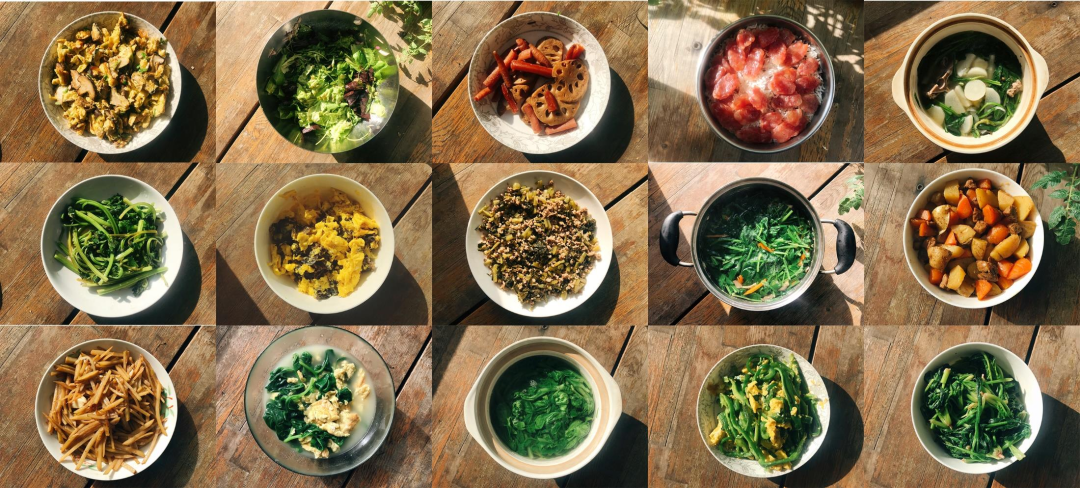
Every Meal at Foodthink Has a Name and a Provenance: Ingredients Come from Ecological Smallholders We Know Personally, and Colleagues Take Turns Cooking
A Great Deal of High-Quality Content Has Indeed Lost Its Audience
In the discussions of these past two days, we have rarely touched on media’s public role. Many art projects exist to satisfy an artist’s personal creativity or curiosity, but perhaps we need to do a little more. In particular, institutions that draw on public resources should be thinking hard about this issue. If you are spending your own money, then of course no one else’s business how you spend it. But if the funding comes from government or a university, or if we – as media practitioners, as arts institutions – feel we ought to embody publicness, then how should that publicness manifest in work that faces the public? What actions should we take?
I do not want to describe the relationship between traffic and quality in terms of “balance”, because having traffic does not necessarily mean a lack of quality. But the reality is that a great deal of high-quality content simply has no traffic, and that is genuinely dispiriting. What will the future hold?
A couple of days ago I saw a news report saying that products in the ByteDance ecosystem had, for the first time, surpassed those of the Tencent ecosystem to become the most-used products on Chinese people’s phones. In other words, the time people spend watching videos has now overtaken the time they spend on WeChat. And WeChat is not just Official Accounts – it has WeChat Channels, where you can even watch short dramas; it is also a crucial tool for connecting with others. Even so, it has been overtaken. This makes me feel that fragmented, low-quality content now accounts for the bulk of public media consumption. In this market environment, what should we do?
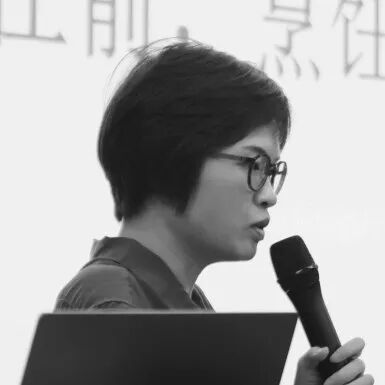
Chen Yuhui
What dishes should a restaurant owner present on the menu? Which ones do they want diners to order first? Which carry the highest profit margins, which best showcase the restaurant’s character, which are quicker to turn out and more popular, and which should be highlighted after the seasonal menu changes? Many of these choices and presentations are concealed in the fine details of a single menu – and there is genuinely a great deal to think about.
When I host a dinner at home and put together a menu myself, I also consider my guests’ appetites and whether the weather is hot or cold. If it is hot, should I plan a few more dishes with a tangy, refreshing edge? If it is cold, should I make more warming dishes – perhaps even opening with a bowl of restorative soup to settle the stomach?
I feel that all of these are things that need thinking through before the meal is presented, and there is no need for the guests to know about them. That state of quietly nourishing things so they never notice – that is the most perfect form of it.
What Matters Is Not What You Should Do, but What You Should Not
When I used to work as a product manager in the tech industry, I noticed a fascinating phenomenon: users rarely follow the app flow you designed. Instead, they go about things their own way – popping out midway, or performing an entirely unexpected action. I came to see that these were, in fact, the real use cases.
Take a steamed fish, for example. Most people assume the most likely reason it turns out underdone is that the timing was too short or the fish was too big. But what I encounter most often is actually the lid not fitting properly. In everyday practice, many people do not have a steamer that fits their setup, so they improvise with a wok instead. So when writing a recipe, what really matters is not telling people what they should do, but alerting them to what they should not overlook.
Social Media Narratives Cannot Be Used to Generalise Food Changes Across All of China
In the shifts in food culture between big cities and smaller ones, the voices from major cities are always more visible. Online, people often discuss how hard it is to find a good meal or how rampant ready-made meals have become, but these conversations are mostly centred on first-tier cities – especially Beijing, Shenzhen and Hangzhou – with complex cultural factors behind them. Yet in many second- and third-tier cities, the food situation is still perfectly good and there are plenty of choices. Ningbo, for instance, still has plenty of small restaurants that stir-fry to order, and competition among them is fierce. So, purely in terms of food and flavour, I feel things are far from that bleak.
We must not use the narratives currently trending on social media to generalise the changes in eating across the whole of China. When presenting and explaining the food of second-tier cities, I believe we should start from our own observations and understanding, and tell it as it truly is.
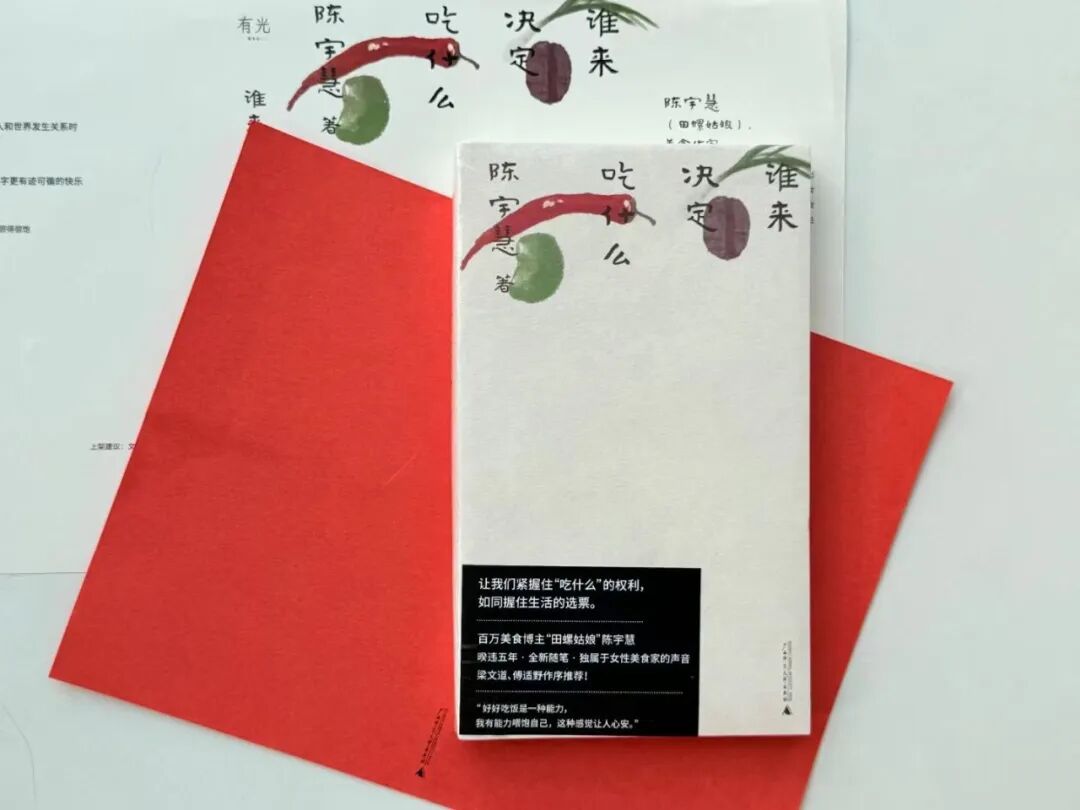
How a recipe should be presented actually depends, perhaps more importantly, on people’s habits, their tastes, and what is really going through their minds as they cook – it is closely tied to local food culture and to each person’s own needs.
“Cook over a high heat for five minutes” is a phrase that turns up constantly in recipes, but what counts as high heat? Every stove is different. So when I write about the correct state of the ingredients, I prefer to describe the doneness they should reach – the state they end up in – rather than specifying the process. That, too, is a form of editorial consciousness: what you distil is entirely different from what people are used to.
Combine Your Audience’s Pain Points with What You Want to Express – as Perfectly as Possible
My own understanding of “editorial consciousness” is about bringing together, as perfectly as possible, what people want to see and hear, the pain points you have identified in your audience, and what you yourself want to say. If you can do it without feeling awkward yourself, while also helping others – if people find it genuinely useful, and you even happen to catch a trend on top of it – isn’t that wonderful?
Take the “one-take” videos I make, for example. They are really a pushback against those three- or five-minute quick-and-easy recipe clips. What I am trying to recreate is the view I had as a child standing in the kitchen doorway, watching my mum cook. Things can go wrong along the way: you forget to add the garlic, the heat is too high, the dish burns – all sorts of things. And there are stretches when you simply have to wait, so I fill the silence with plenty of talking-to-camera. That is not really in keeping with the pace of social media today, and very few people do it.
But once they were out there, people said they could genuinely feel how a dish goes from nothing to something – unlike those polished food videos where it seems a filter has been slipped in halfway through, the dish suddenly looks gorgeous, but the viewer has no idea how it got that way. What matters more is this: if something goes wrong during the cooking, the viewer thinks, “So even food bloggers have moments like that – then I needn’t be so nervous.”
And beyond that: when I have already been saying on podcasts or in other content, time and again, that we should take food seriously and become friends with it – and people still do not know how to cook – what concrete solutions can I still offer? That was the original impulse behind this project, and it is where its greater significance lies.
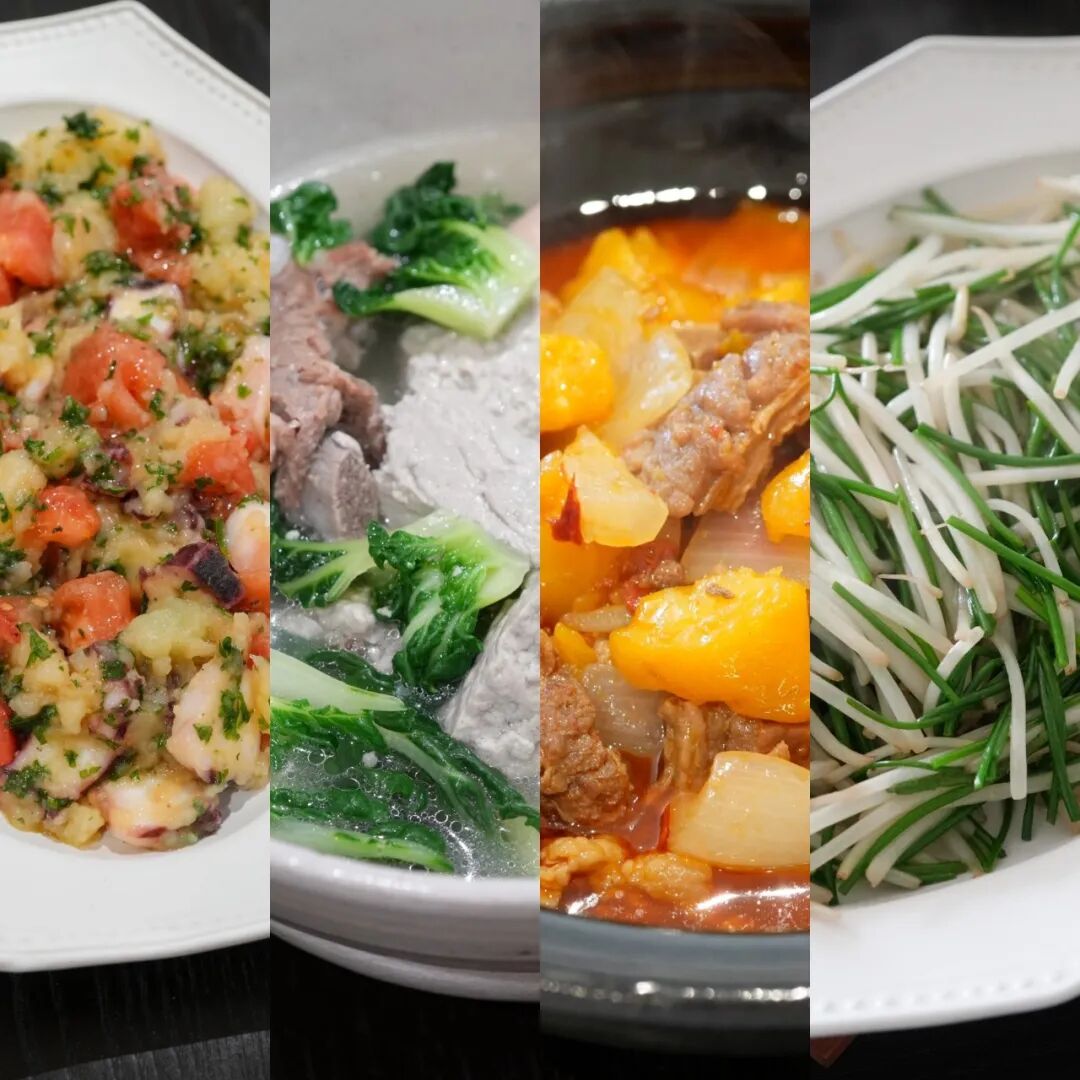
A Gobi cuisine menu designed by Chen Yuhui for this past summer
What matters is the content you ultimately want to present
Back in 2016 and 2017, the other food-focused WeChat accounts that launched around the same time as mine even had a job title called “layout manager”, someone dedicated purely to page layout. Set against my peers, my work looked terribly rough. Looking back after all these years, I think I actually completed a kind of user segmentation by then. The people who love polished, refined, filter-laden content were probably never your audience to begin with; those who are happy to accept a rough-hewn, natural presentation – they are the ones who belong.
So, when it comes to the relationship between design and food, I think we sometimes need not overcomplicate things. Whether you are editing content or doing the preliminary prep on ingredients, the work that needs to get done follows the same logic as figuring out what you ultimately want to present.
Making Culture Last Longer and Stay Alive Demands Thinking Far More Complex Than Idealism
When it comes to cultural work, please stop thinking only about sentiment and idealism. If you want to make it something more enduring, more truly alive, the questions you need to grapple with may be far more complex than anything idealism entails.
Take a rice noodle roll shop as an example. I observe what strengths and weaknesses its business model has. First, rice noodle rolls are eaten frequently enough – high consumption frequency. So could some of our cultural activities also use formats with lower implementation costs, maintaining a relatively high frequency of output and presence?
Second, the place where it operates has deep enough cultural roots to digest and absorb all of that. Cantonese people and Chaoshan people eat rice noodle rolls as part of daily life, so the dish can undergo all sorts of innovation – add lobster, add seaweed, even wildly unconventional pairings. It is precisely because the local food culture is rich enough that there is room to accommodate these variations.
But if you transplant rice noodle rolls to Beijing or Shanghai, they tend to get distorted. I have eaten at a few rice noodle roll shops in Beijing, and setting aside how they taste, the average spend per customer is almost always over thirty yuan. That is a case of being out of place: ingredient, labour and rent costs are all so high that the rice noodle roll becomes a “snack” that is not really a snack at all. The owner’s business may not be great either, and they might need to sell other categories alongside it just to stay afloat.
There are genuinely many parallels between situations like these and the running of cultural institutions. In the end, we probably can only choose a model that feels reasonably comfortable to us and one we can sustain over the long term.
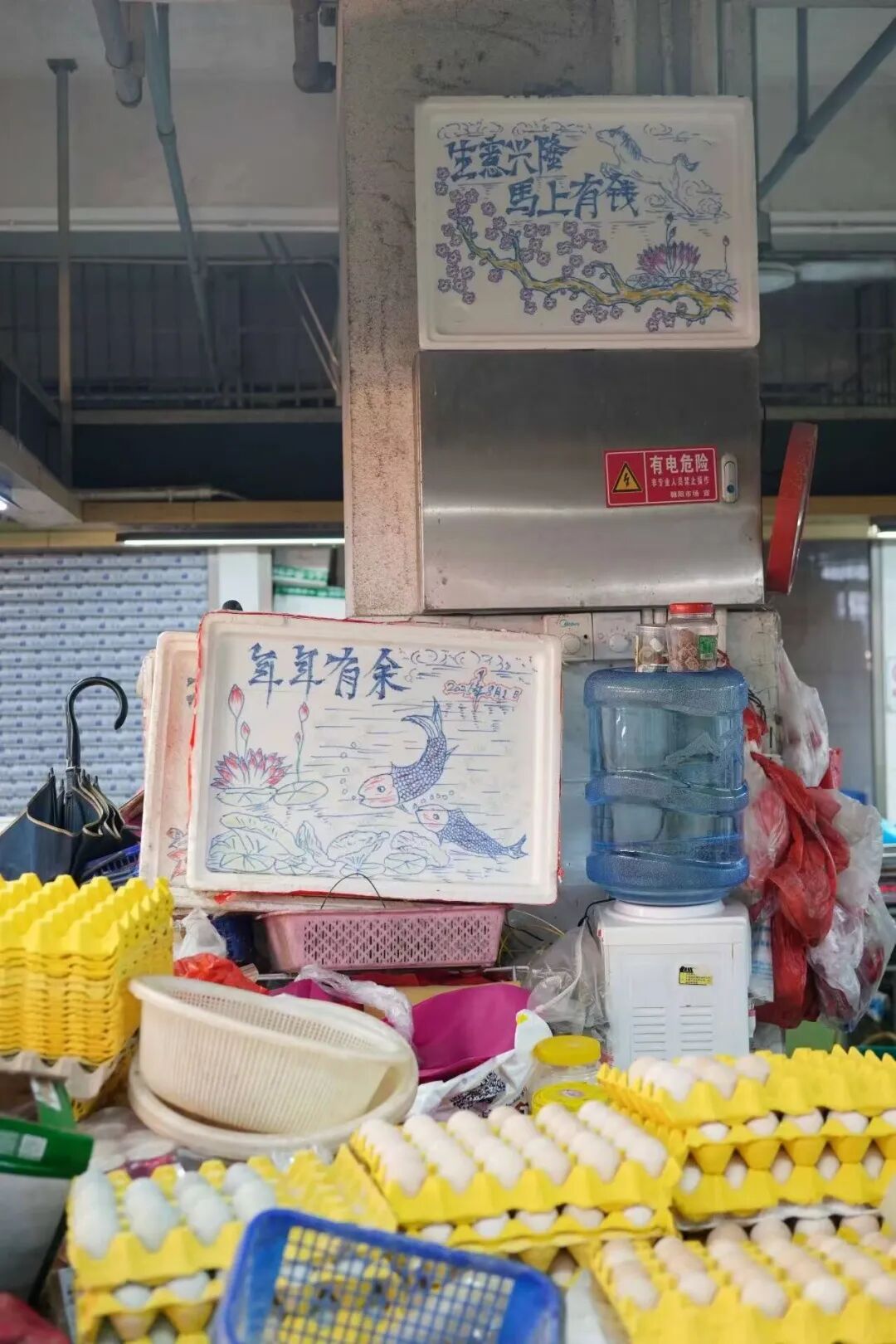
Zhuhai Chaoyang Market, mentioned in episode 101 of Beyond the Kitchen
The Moment You Are Willing to Break the Script, You Start Finding Your Audience
The trouble with social media is that it comes laden with filters and cultivates an atmosphere that tells you, “This is the only way it will work.” Take food-exploration posts, for instance – you are expected to plate the food so it looks spectacular and looks like a feast. From what I have observed, this kind of trending formula tends to start declining after roughly eighteen months to two years. Because once everyone is working from the same template, people grow tired of it.
Phrases like the Xiaohongshu trend “from banger to flop” are, like all those filters, just another formula. The moment you are willing to break the formula, you have found your own audience.
Accumulate Long-Tail Traffic
Running a self-media channel, publishing content on social platforms, is very different from putting together a magazine. Social media demands a relatively fast pace – long-term, sustained content output – whereas a magazine might have a production cycle of a month or two, or even longer. And individual pieces continue to draw readers over time, slowly building up long-tail traffic. So you just need to keep going.
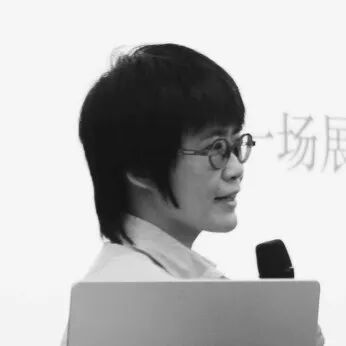
Hu Fang
Associate Professor at the China Academy of Art, founder of Atelier Fang Food Studio
Editing Is About Tending and Organising
I do not believe the pinnacle of food design lies in pursuing the heights of cooking technique. Good design, good capability, is hidden in management and coordination. Let me give you an example closer to home – my mother. When the whole family has been out all day and comes home exhausted, she can walk straight into the kitchen, see what is in the fridge, and within half an hour have a delicious meal on the table to settle everyone. That kind of ability – managing ingredients, managing time – anyone who has a loved one like that will understand the ease it brings to living together. It is unremarkable, but immeasurably precious.
The same applies to making and nurturing naturally leavened bread. What matters more is the rhythm of maintaining the starter and the timing of each proof. The recipe can be wonderfully simple, but the real challenge lies in aligning every fermentation interval with the rhythms of your own daily life – and that is genuinely difficult.
So in my world, “technique” is not necessarily the most important thing, or something worth chasing after. What matters more is how you tend to your life and everything around you – how you take care of yourself, how you look after the simple business of eating well. This capacity for managing and orchestrating is, in truth, a far more important skill.
The Proustian Effect
In 2016, invited by our university’s Bauhaus Research Institute, I hosted a “Bauhaus Lunch” for more than thirty professors from around the world who had come to campus for a research seminar. The event was inspired by recipes found in Paul Klee’s (Paul Klee) family letters, and used local Hangzhou ingredients to recreate the creative space that the Bauhaus had once been – at once a theatre, a restaurant, and a workshop. After it was over, a German expert in historical building restoration came to me visibly moved, eager to share what he had felt. He told me that his grandfather (grandpa) had been a contemporary of Paul Klee and had absolutely loved pork crackling. In that day’s food, he had tasted something connected to that elder. But here is the thing – pork crackling was not on our menu at all. What gave him that profound, instantaneous sense of being transported was a bowl of fried rice with bits of scrambled egg.
When he spoke to me about all this back then, I had no idea what the Proustian effect was. In In Search of Lost Time there is a passage where the protagonist tastes a madeleine dipped in tea and, in an instant, every memory of childhood at his aunt’s house comes flooding back. The Dutch food designer Marije Vogelzang once undertook a project using food to evoke older people’s memories of the Second World War – working with precisely the same principle.
In food design classes, we run tasting experiments. One of them explores how sound affects the experience of drinking. During a game involving water, sound, and drawing, a student once shared a moment that tied into this. As a child, he was often taken to the public bathhouse by his parents, and he would drink water while soaking. During our experiment, we played a recording of a rush of water. He said that in that instant, the mouthful of water he was holding suddenly pulled him straight back to the bathhouse of his childhood.
All these stories have to do with the magic of food – its power to shift a person’s entire state in a single moment, carrying them back to another time, another place. They have also helped me deeply understand why the sticky rice roll matters so much to me.
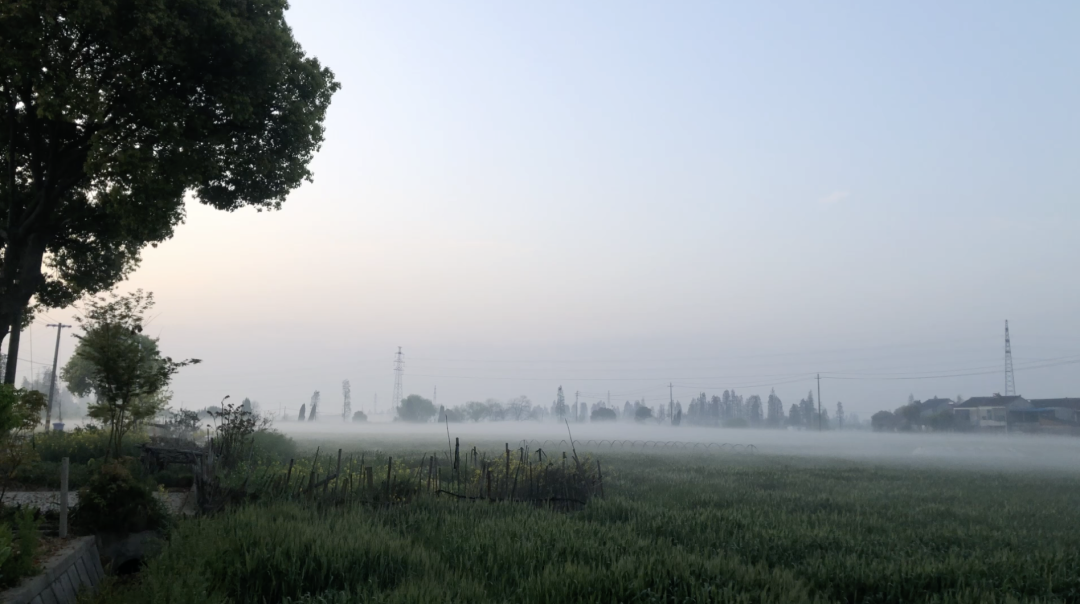
Shaping a naturally leavened loaf first thing in the morning, worried the cold fermentation might over-proof – and being greeted by a thick blanket of fog lying over the wheat fields. Yixing, 7 April 2022.
Food Design Is a Way of Awakening People’s Intuition and Sense of Agency
There are many explanations for why one might choose to design around food. When I first taught the elective, I would have students introduce themselves one by one – why they had come, what they hoped to gain. Everyone sat together, speaking in turn. But I came to see the limitations of this format: I spent the whole time listening and taking notes, yet while one person spoke, many others could only wait, and for quite a long stretch they were not truly participating. So I changed how the class was organised. Instead of an icebreaker, I grouped students by hometown and had them discuss and introduce the flavours of their home region to each other. This mode of equal participation can dissolve the barriers that unfamiliarity creates. It helps people build a steadier centre within themselves. And once that centre settles, people relax, and it becomes easier to open up their bodies and senses to the world around them.
In my view, food design is, in itself, a way of awakening people’s intuition and sense of agency through design.
Food Is a Medium for Nurturing the Bonds Between People
For food design, food is an excellent medium for bridging the gap between people. When you voice your opinion about food, taste itself carries no right or wrong – so it operates as an equalising medium.
If there is one thing in the world that can swiftly close the distance between two people and knit a social web, it must be food. Through cooking, humanity has transformed the natural world. The kitchen has become a bond. Whether it is a chef in a fine-dining restaurant or the home cook holding the ladle, the act of cooking places people in a singular position: one hand holds nature, the other holds human society. The cook stands, balanced and impartial, between nature and culture – translating, negotiating.
Through cooking we have transformed so much – and the food we eat ultimately becomes part of our bodies. Who we eat with shapes a vital part of the dining experience. Using food as a medium, people have long communicated and interacted through the simple act of eating.
Start Close to Home, and Do Something Not So “Useful”
The spring at the heart of the Spring of Action also lies in people beginning to do things that are not so “useful” – starting with what is close at hand. Yesterday at midday, I wandered around the school and noticed how many students were making use of the library spaces; some had even brought their own camping chairs and were sitting there studying. I also saw plenty of students standing in the corridors, resting their things on the steps. On top of that, the campus has a beautiful lake, complete with black swans, but the path around it has no shade, and where there is shade, there are no seats. I realised I could not find a single comfortable way to simply be in this environment.
If I were a student at the design school, could I not start with things like these, right around me? Through design, for instance, help students in the library make better use of their spaces, or enable people to sit down by the lake and simply be with their surroundings.
So food design is just one option among many. Even when I make tofu, I am not chasing some notion of “success”, or feeling I must prove it is useful for anything. It is simply that, in exploring and getting my hands dirty with these things, something within the process lifts my spirits.
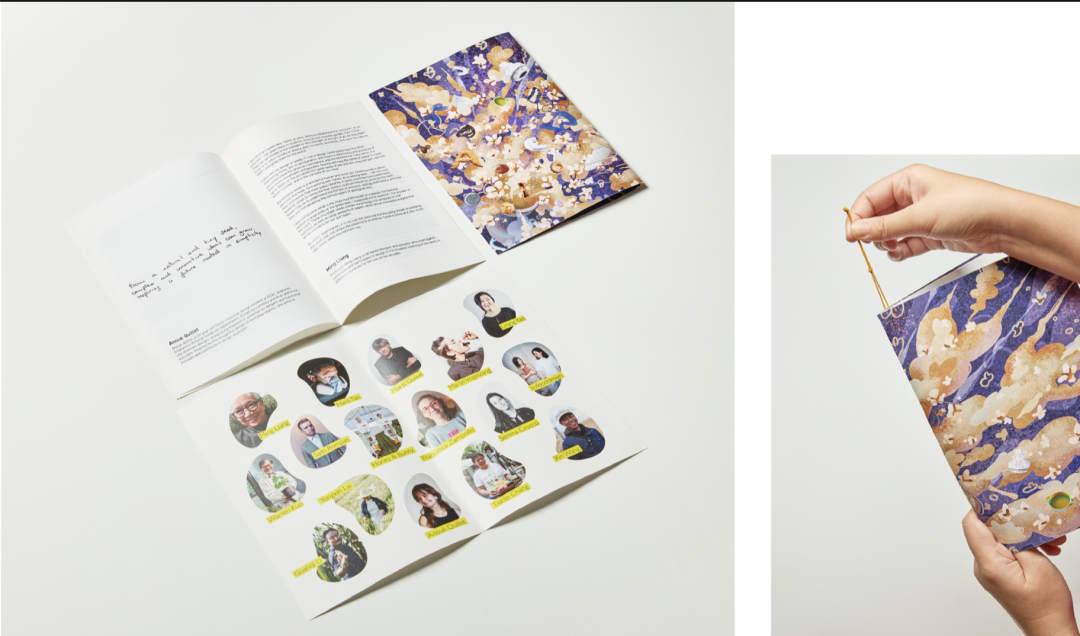
Seeds of Vision pamphlet, a sub-section of the Transformative Seeds Food Design Exhibition, National Design Centre, Singapore, 2024. Photography: Matthew Wong
Social Development Changes the Way We Cook
Michael Pollan (Michael Pollan) has a book called Cooked. In it, he writes that as society develops, the division of labour in cooking becomes ever more finely subdivided.
We can see the changes over the last few decades. In social surveys about how long Americans spend cooking, for example, many households consider opening a bag of lettuce, tipping it onto a plate, and drizzling a little dressing over it to count as “cooking”.
As the act of cooking is divided into ever finer tasks, handed off to different people or steps along the process, I believe the next generation will find yet new ways. We cannot possibly know how they will choose their food by then, but it will certainly be different from how we do it now.
From my own experience, the pace of life and the way I choose food in the countryside are completely different from what they became after I moved back into the city of Hangzhou. As our work and daily rhythms shift, so too does the way we choose food.
▼
Click the image to read the related article
▼
Click a keyword to browse more article collections
Seeds | Policy | Agronomy | Fermentation | Nutrition | Wild Edibles | Fisheries | Tea | Events | Careers | Markets | Wild Mushrooms | Livestock | Food Talk | Talks | Book Club | Harvest Festival | Smallholder Stories | Climate Change | Rural Development | Cooperative Economy | Urban Farmers | Biodiversity | Pandemic & Food | False Solutions | Ecological Agriculture Internship Programme
Beijing | Hebei | Shanghai | Guangdong | Guangxi | Yunnan | Henan | Sichuan | Jiangxi | Xinjiang | Shaanxi | Hong Kong | Chongqing | Zhejiang | Jiangsu | Guizhou | Taiwan | Inner Mongolia | The Philippines | Canada | Russia | Mexico | Italy | The United States | The United Kingdom | Germany | The Netherlands | Thailand | Sweden | Japan