
As Food Grows Fresher, What Have We Lost?

Where Does Our Idea of “Fresh” Come From?
As a writer who has long focused on the domestic fresh-food supply chain, I am constantly dealing with “freshness”.
In my earlier reporting, I mostly traced how retailers organised and presented “freshness”. In the language of retail, it was a word about efficiency. I had long taken it for granted as a fixed concept—one that usually meant food had survived a long journey and still looked succulent and unspoiled.
By a fortunate chance, I came across Susanne Freidberg’s Fresh: A Perishable History (hereafter simply Fresh), published in 2009 by Belknap Press, an imprint of Harvard University Press. Drawing on journals, advertisements, government reports and visits to growing regions, she traced how refrigeration and preservation technologies evolved from the early nineteenth century into the twenty-first, reshaping American society’s definition of “fresh” along the way.

◉Book cover. Source: Belknap Press
Reading through Fresh made me begin to realise that “fresh” is, in fact, a fluid concept.
As early as the mid-nineteenth century, when artificial ice had first appeared, chilling food with ice was far from popular in France. People were more accustomed to buying locally and preserving food over long periods through fermentation and other methods.
By the late twentieth century, with the growth of cold storage, refrigerated transport and the distribution industry as a whole, light, bagged salad leaves on supermarket shelves could stay fresh for as long as two weeks. Packaged under modified atmosphere, this produce was hugely popular in the American market at the time.
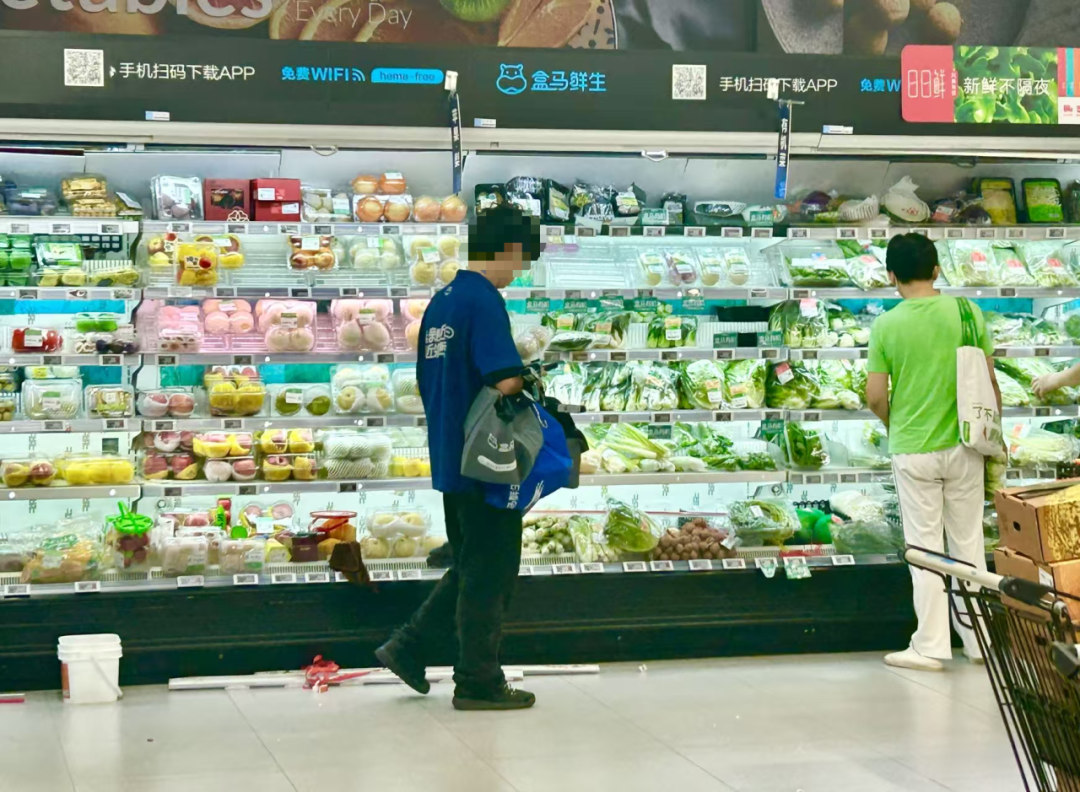
◉The refrigerated section at a Freshippo store. Photography: Yuyang
In this sense, the freshness of food depends less on time or distance than on the technological means used to preserve it. As the author writes in the book, “fresh” is not necessarily the same as natural.
But Freidberg does not attribute all these changes to technology alone. A denser railway network made long-distance transport possible, and shifts in lifestyles since the two world wars drove people to seek ever more convenient food. Commercial firms seized on the changing demand, reorganised production and distribution, and won orders at scale—gaining a far greater say over the terms.
By the late twentieth century, America’s urban middle classes had begun to rediscover locally grown, short-supply-chain food. Local produce came to be seen as a remedy for the long-standing ills of the global food industry. Yet even American farmers struggling to preserve local production relied on the very same modern distribution network, facing the scale and pricing advantages of large corporations. Consumer support, too, remained constrained by price and purchasing power.
The sequence of changes laid out in the book, and the local-food movement that has grown over more than half a century, resonate with the rapid shifts taking place here at home. Is it not, in its own way, a mirror of history?
Freshness: Date, Quality or Appearance?
Eggs were once a seasonal fresh food.
It was not until a health exhibition in New York in January 1923 that the home economist Anna Barrows cooked an omelette in front of the public with eggs that had been stored for nine months. Freidberg writes that onlookers were astonished to find the whites still clear and thick, and the yolks firm, yet some dared not take a bite and had to be coaxed into trying one.
People at the time began to feel uncertain about how to judge an egg’s freshness. They were unsure whether to look at when it had been laid or at its condition when offered for sale. Behind this doubt lay changes brought about by technology. Refrigeration had disrupted the egg’s traditional sales cycle: it made it possible for people to buy large quantities of spring-laid eggs even in winter, but it also bred growing concerns about quality.
In the nineteenth century, egg production in the United States still carried a pronounced seasonal character. Hens laid fewer eggs in autumn and winter, driving prices up. As cold storage developed and was upgraded, by the late nineteenth century merchants had begun buying eggs cheaply during the spring laying peak and storing them for high-priced winter sales. By then, more than thirty years had passed since commercial cold storage first went into operation in the United States; mechanical refrigeration had gradually replaced ice for cooling, and storage temperatures were easier to control than in the early days.
Yet storage techniques remained unreliable. In the cold stores at Quincy Market in Boston in 1900, eggs were found to carry a fruit flavour, most likely picked up from the fruit stored in the adjoining rooms. Consumers were uneasy about eggs kept in cold storage for long periods. The longer they were stored, the more impossible it became, from the shell alone, for a customer to tell when the egg had been laid or how well it had been preserved inside. At the same time, some merchants had already begun passing off well-stored eggs as freshly laid.
In the early 1910s, states such as California began requiring cold storage to be labelled, but it was still difficult to stop the practice of mislabelling. High-quality stored eggs were selected and sold as freshly laid, while the remaining inferior ones went out as “cold-stored”—a label that only further damaged the reputation of cold storage.
To tackle the problem of stored eggs being passed off as fresh, some states moved to sell eggs by grade. In 1925, the United States Department of Agriculture established egg grading standards based on quality rather than date, assessing the internal condition of each egg through candling and other methods. Yet the grading standards did nothing to change consumers’ preference for freshly laid eggs.
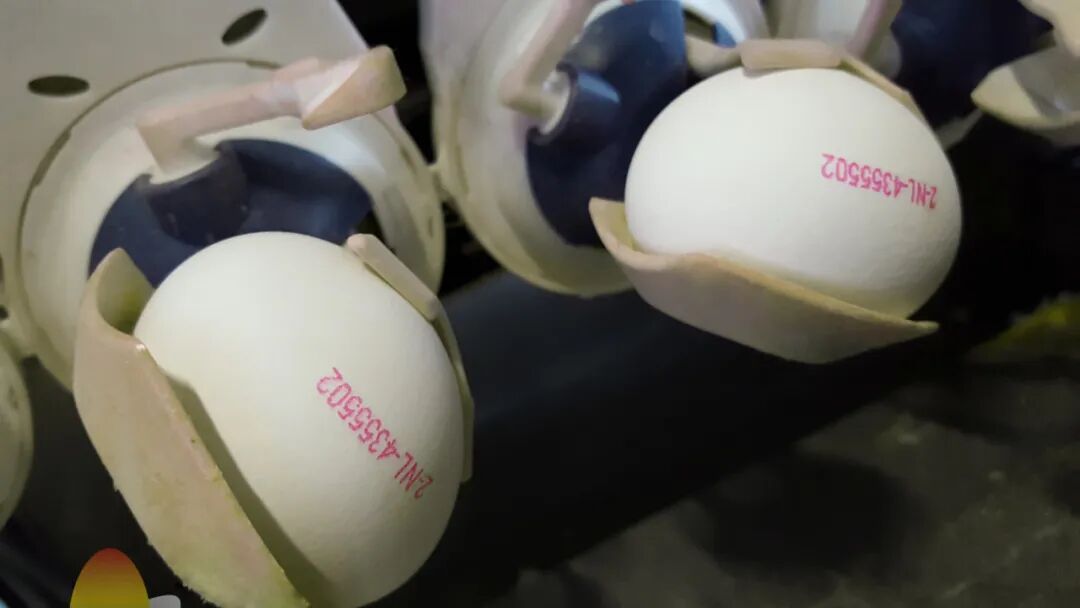
◉An egg-printing system supplied by a Swiss company. Source: nuovo.net
More producers began adjusting breeding, feeding and lighting regimes so that hens would lay more eggs in the off-season, fetching higher prices.
By 1941, January egg production in the United States was 80 per cent higher than it had been fifteen years earlier. With more fresh-laid eggs available in winter and prices falling, cross-season storage gradually lost its former profit margin. After the Second World War, large-scale mechanised farming drove costs down further, making the year-round supply of fresh-laid eggs ever more stable.
By then, household storage conditions had long since changed as well. By 1950, about four-fifths of American households owned a refrigerator. People no longer ate fresh eggs in spring and stored eggs in winter; buying fresh-laid eggs at any time of year had come to seem like the natural order of things.
Unlike eggs, in the fruit trade appearance gradually became the main way consumers judged freshness.
By the late nineteenth century, Californian fruit was travelling across the United States in refrigerated rail cars, taking roughly ten days to reach the East Coast. For customers thousands of kilometres from the orchards, there was little way to learn personally about the picking, storage and transport. A bright, plump appearance became a vital clue for judging how fresh the fruit was.
The California Fruit Growers Exchange, founded in 1893, launched Sunkist, a brand centred on oranges. From 1907, advertisements featuring beautiful oranges began to link that appearance in consumers’ minds with the brand. To ensure the actual fruit lived up to the advertising, the Exchange graded fruit by size, colour and defects, and inspected orchards, packing sheds and wooden crates alike. From pest and disease control to final selection before boxing, growers made a series of adjustments so that Sunkist oranges looked appealing and uniform.
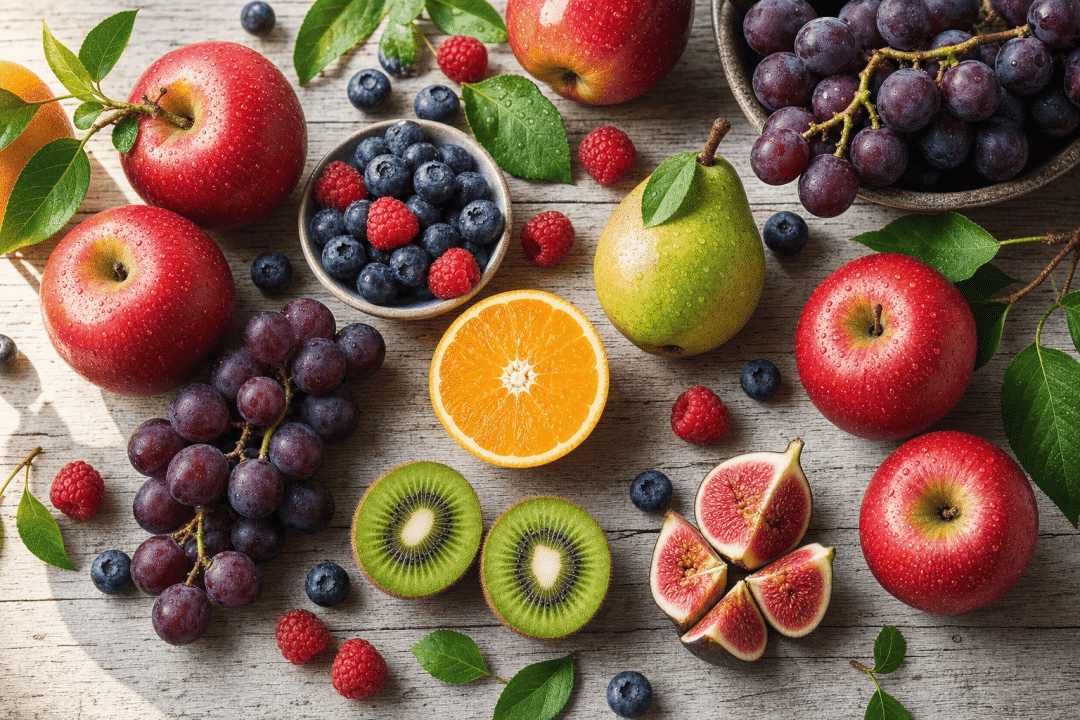
◉The author notes that as early as 1903, a form of “fruit photography” had already become widespread among growers in Montreuil, a city in north-central France.
As food crossed seasons and regions, consumers found it ever harder to judge quality through familiar producers and market traders, and turned instead to the tests, standards and brands offered by third parties. People’s trust in food shifted from the people they knew to the organisations that could provide those assurances.
Power Transfer in the Fresh Food Business
The French engineer Charles Tellier was among the first to attempt to apply mechanical refrigeration to ocean transport.
In 1860, he developed a system using ammonia as the refrigerant himself, and in 1876 organised a refrigerated ship to carry beef from Buenos Aires back to France. He dreamed of making fresh beef as reliably tradable as wheat. The beef kept on board for 105 days won local praise. But on the return voyage, equipment failure caused the South American beef to spoil, and the shareholders who took over the company had no intention of continuing the venture.
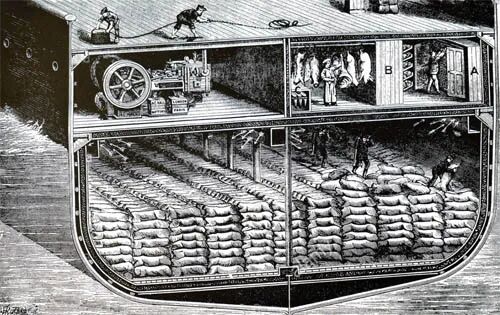
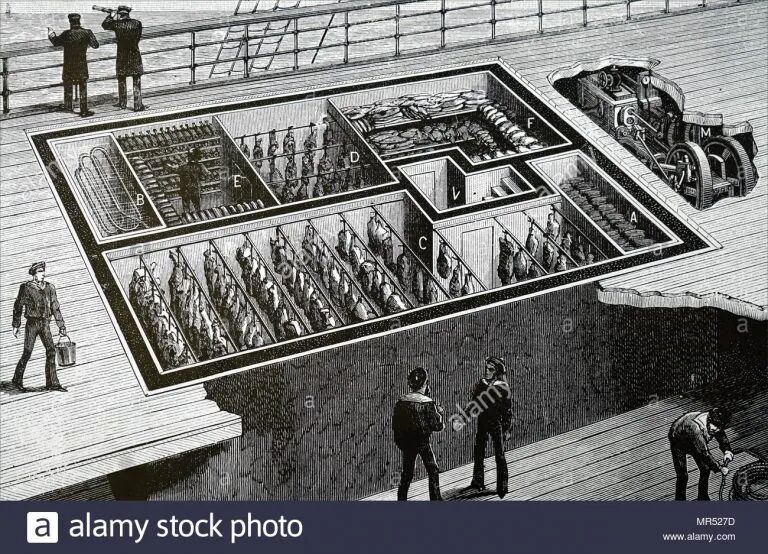
◉Tellier brought 25 tonnes of refrigerated beef from Argentina back to France aboard a converted cargo ship called Le Frigorifique. Source: Air Conditioning and Refrigeration World Portal
The French market at the time also lacked the ground to grow. French households, still largely rural in character, obtained food from their own farms or those of friends and relatives, and were unaccustomed to buying refrigerated meat shipped from across the ocean. Refrigeration facilities in France were scarce, and even fewer butchers were willing to handle imported meat. Worried about their livelihoods, farmers and butchers joined forces to push tariffs higher.
Britain and the United States became the other side of the story.
In the second half of the nineteenth century, growing urban populations meant more people relied on the market for their meat. As purchasing power rose, the mass market began to imitate upper-class eating habits, driving demand for fresh meat ever higher. Railways and refrigeration made continent-spanning supply across the United States possible, and processors seized on this mass market—reorganising sourcing, slaughter, transport and sales to cut costs and widen their reach.
Meat packer Gustavus Swift ultimately realised in America what Charles Tellier had once aspired to.
He sourced cattle centrally in Chicago, completed the slaughter there, and then supplied the eastern markets. At the time, refrigerated rail cars cooled unevenly, which easily caused the meat to discolour or spoil in transit. So Swift had an engineer place ice at the top of the car so that cold air would circulate more evenly. When the railway companies refused to build cars to his specifications, Swift borrowed money from bankers and contacts in the meat trade, built his own cars, assembled a fleet, and arranged for ice to be replenished at points along the route.
Centralised slaughter optimised costs in long-distance transport. Under the old model of shipping live cattle, animals had to be fed throughout the journey and could lose weight en route; by switching to slaughter first and transporting the dressed meat, Swift cut these losses. He also opened up sales channels for slaughter by-products such as offal, and the profits from these helped sustain continued low-price sales of fresh meat.
Swift’s business extended all the way to the selling end. Besides partnering with willing distributors in eastern towns, the company set up its own retail outlets in the cities where it sold. Once Swift had his own butchers’ shops, he required stores to display cuts at different price points to draw in customers, boost takings and speed up the turnover of fresh meat.
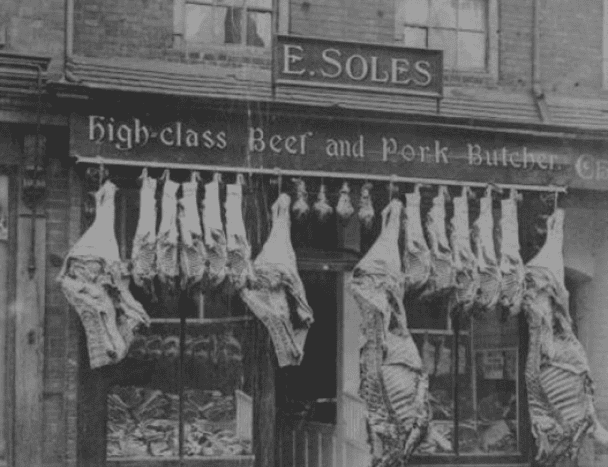
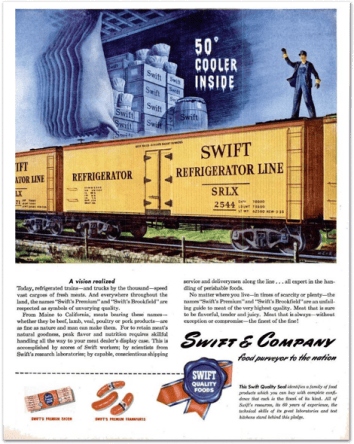
◉Swift & Company, founded by Gustavus Swift, advertised itself thus: “We have been slaughtering cattle since 1855. By 1878, refrigerated rail cars were already carrying meat to the eastern states via America’s railways.” Source: swiftmeats.com
Once Swift’s retail business had found its feet, it did raise prices, but still undercut local competitors. Area butchers were left with a stark choice: distribute Swift’s dressed and cut products, or withdraw from competition altogether.
Local butchers increasingly depended on processors for their supply. In the vegetable trade, the influence of purchasing and distribution channels reached all the way back to the growing regions. To win orders, growers began to take on more of the work that had previously been done by retail shops and households.
These changes were tied to the needs of household cooking. As more working women entered factories and offices, live-in household help became harder to find; meanwhile, middle-class women’s participation in public life squeezed the time left for meal preparation, yet the expectation of cooking for one’s family had not disappeared. They wanted food that was healthy and quick to prepare, and still wished to put a home-cooked meal on the table themselves.
Moreover, after the Second World War, supermarkets grew ever more popular and gained the clout to push demands upstream to the large vegetable shippers at the head of the supply chain. To secure orders, shippers were required to process and pack vegetables in advance—saving families time and making shop-floor selling easier—which opened a new avenue for growers to compete for those orders.
In 1961, Bud Antle, a grower in Salinas, California, introduced film-wrapped iceberg lettuce. He invested in large-scale field equipment, with one team of workers harvesting and another wrapping and sealing the produce on the line. Supermarkets welcomed the ready-to-shelve product, since it eliminated the need for staff to trim outer leaves in store; once consumers accepted it, other growers quickly followed suit.
The new packaging opened up sales, but it also raised the bar for supply: growers had to invest in equipment, reorganise field labour, and sort and pack to the new specifications. These requirements travelled down existing purchasing relationships to smallholders—in California’s lettuce industry, many small farmers had long since become upstream suppliers to large grow-and-distribute firms under contract; the latter, controlling access to the coastal market, influenced the varieties grown, the packaging, and even wage arrangements on the farm.
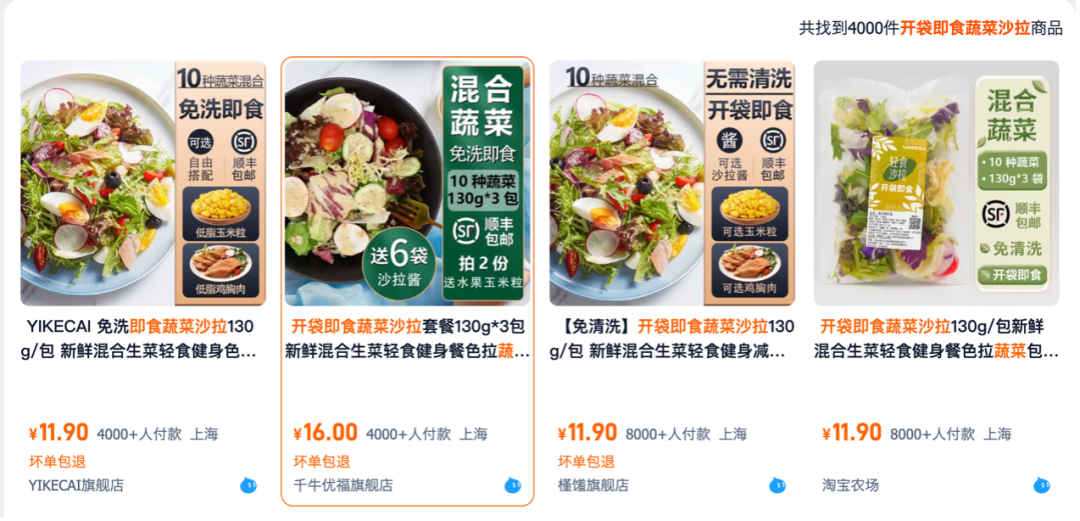
◉Bagged ready-to-eat salad greens of every kind are now easily available on Chinese e-commerce platforms. Source: Taobao
When markets expanded, producers could benefit from these transactions; but when demand fell, dependence on a handful of buyers left them on the back foot at every turn.
An earlier episode in Argentine beef had already laid bare this predicament. After American packers secured roughly two-thirds of the country’s fresh beef export trade, post-First World War demand slumped, and ranchers found they could barely influence the prices offered. In 1923, the government attempted to legislate cattle prices higher, but the packers simply stopped buying for three weeks, drawing on their stocks, until ranchers themselves called for the law to be repealed. The packers could pause purchases while sitting on inventory; ranchers, however, struggled to find alternative buyers to take their cattle.
Land and herds still belonged to the ranchers, but that was not enough to give them the upper hand in the trade.
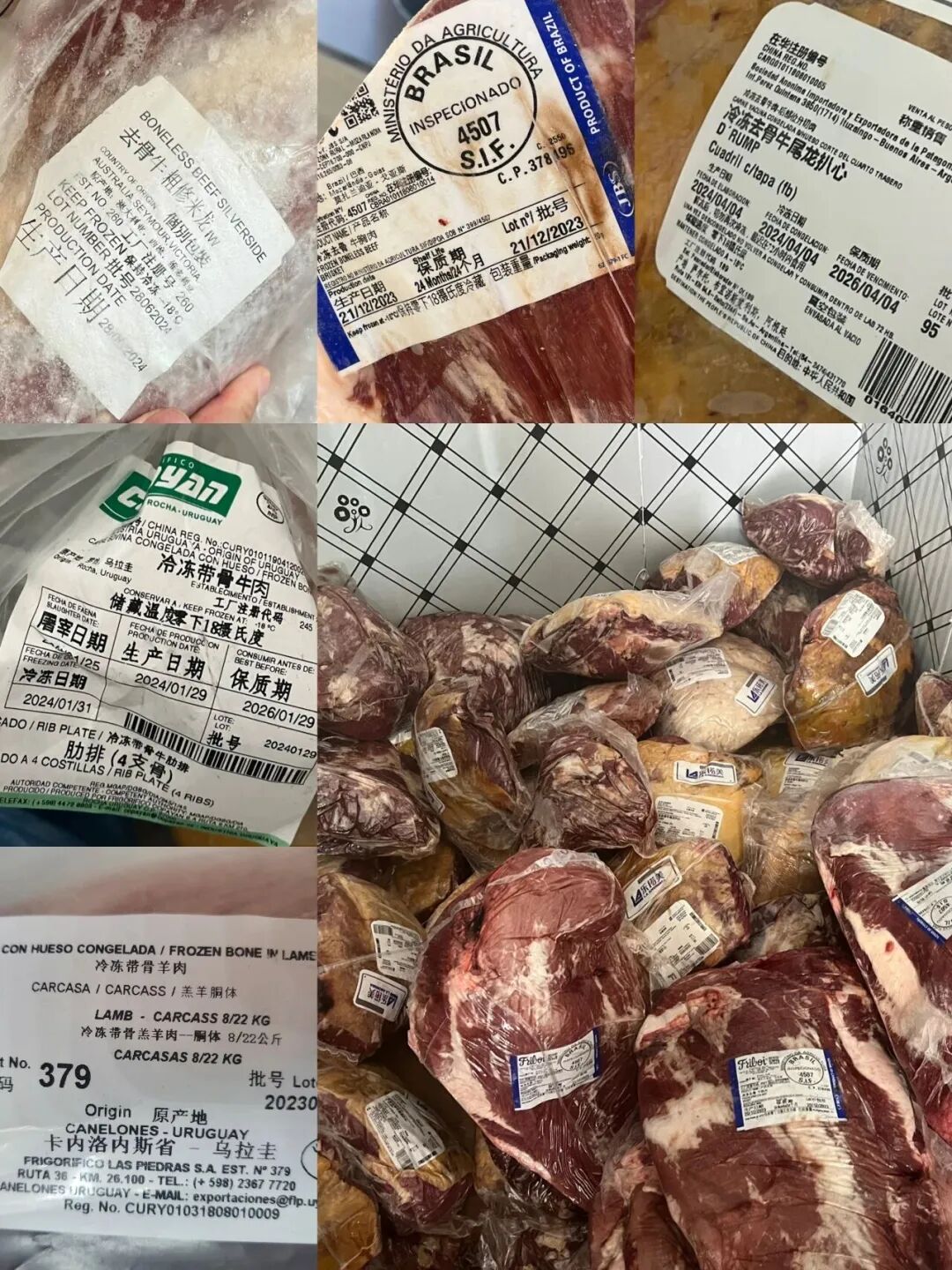
◉Imported beef from Brazil, Uruguay and New Zealand also once undercut the domestic beef cattle market in China.
Sustaining Local Production
As long-distance food supply became the norm, the processes of food production and distribution came under growing scrutiny. In the 1960s, in California, farm-worker movement leader Cesar Chavez led workers in strikes, marches and boycotts, drawing attention to the conditions of labour in the region’s fruit and vegetable production. What kind of life lay behind the abundant meals enjoyed by consumers was becoming a public issue.
The emergence of food safety and environmental concerns also cast doubt on long-distance supply chains. The BSE crisis of 1996 in Britain, which triggered a collapse of public trust, and the Foot-and-mouth disease outbreak of 2001 deepened public distrust of the food supply system. At the turn of the century, local food came to be seen as a way of addressing the many problems of the modern food industry. In the United States, farmers’ markets multiplied, and restaurants, school canteens and supermarkets began sourcing local produce. Consumers wanted to relearn where their food came from and to support nearby farms with their purchases.
But when Freidberg visited growing regions, she found that this wish sat in tension with producers’ practical need to make a living.
In the early twenty-first century, she met a local food advocate in Vermont, in the New England region. In the valley where he lived there were five dairy farms, yet he could hardly buy their milk. The local cooperative collected milk on a regular schedule and shipped it to cities out of state. For dairy farmers, the cooperative was indispensable: it took their entire output year-round. Cows need milking every day, and milk cannot be kept for long, so the cooperative’s steady orders were essential.
No amount of loyalty from local customers could promise these dairy farms that they would take the entire year’s milk.
Even with a reliable local market, the scale of local orders does not always generate sufficient income. In neighbouring New Hampshire, McNamara Farm faced falling milk prices and rising costs, and selling loose milk could no longer cover the cost of suburban land. To stay in farming, they began processing and bottling their own product, selling milk in returnable glass bottles, hosting school visits and running open days. The idyllic farm life that consumers treasure requires farmers to take on ever more processing, sales and hospitality work to sustain it.

◉McNamara Dairy Farm, established in the 1950s, is still in operation today. Source: Vermont Historical Society
Many workers who keep daily agricultural production going remain entirely invisible to consumers. In Vermont, numerous dairy farms rely on Mexican migrant workers to milk cows and clean barns, yet these workers, restricted by their immigration status, live permanently on the farm and rarely participate in local public life. Even when consumers see cattle grazing in the pastures, they remain unaware of the lives of those who tend them.
Local character became a selling point, yet visitors’ fantasies seldom matched the realities of life in the growing regions. In the early twentieth century, urban tourists travelled to northern New England in search of pastoral scenery and fresh food, but local farmers were already orienting much of their operation towards demand from cities such as Boston—expanding feed-crop cultivation, keeping cows milking through winter and supplying distant markets.
By the time Freidberg was writing, land prices in these New England pastoral idylls had long since been driven sky-high. Farmers faced the choice between selling their land or adding value through processing, while some lower-income residents could not afford food produced nearby.
Finding the path to local production within a modernised, large-scale food system always entails difficulties and contradictions. Freidberg’s research does not deny its value, but it deepened my understanding of the labour, public infrastructure and purchasing power on which local production depends. In the past, when I interviewed retailers in China, my focus was on how they organised their sourcing and brought far-flung ingredients to the store shelf or warehouse “fresh”. Yet the impact of those demands on the growing regions and the smallholders working them is often blurred along the supply chain.
As a consumer at the end of the supply chain, I moved from Beijing to Kunming three years ago, and these issues have become ever more intertwined with my own life. I now mostly cook at home, buy vegetables at the wet market rather than from online platforms, and occasionally go to market days on the urban fringe. The change in lifestyle has reconnected me with the local. I no longer need a supermarket’s “origin” label, and I have come to feel that the yardsticks for “fresh” can be far more flexible and varied.
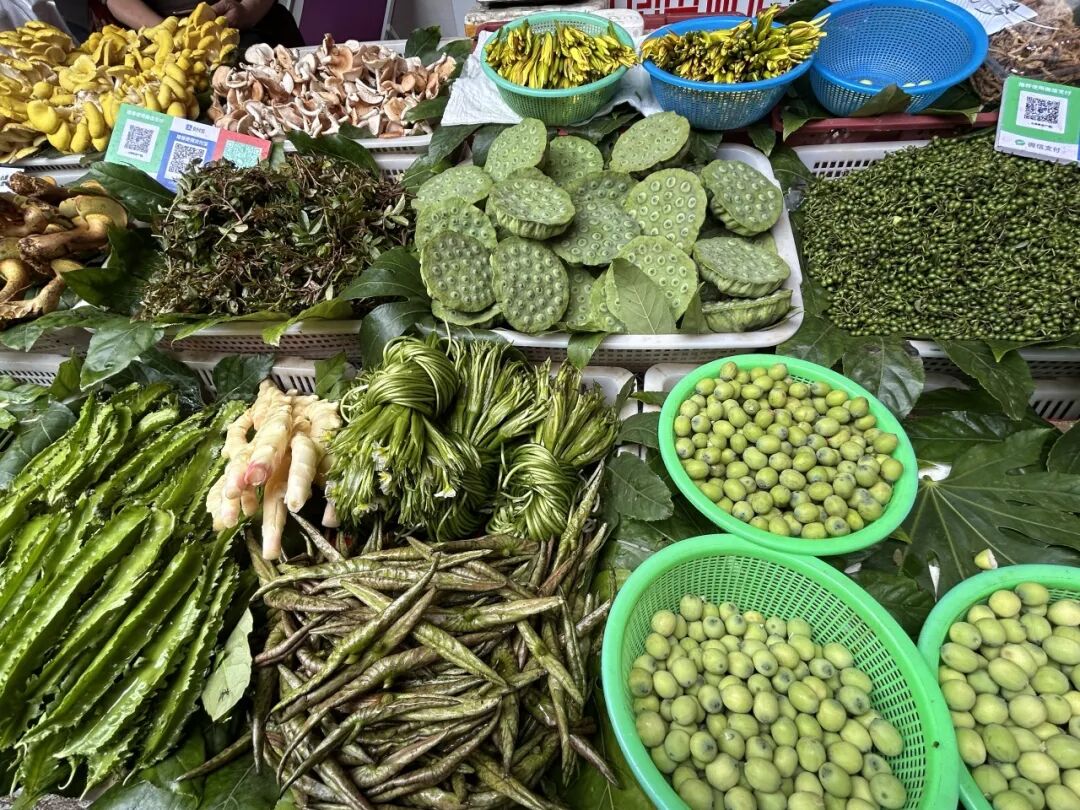
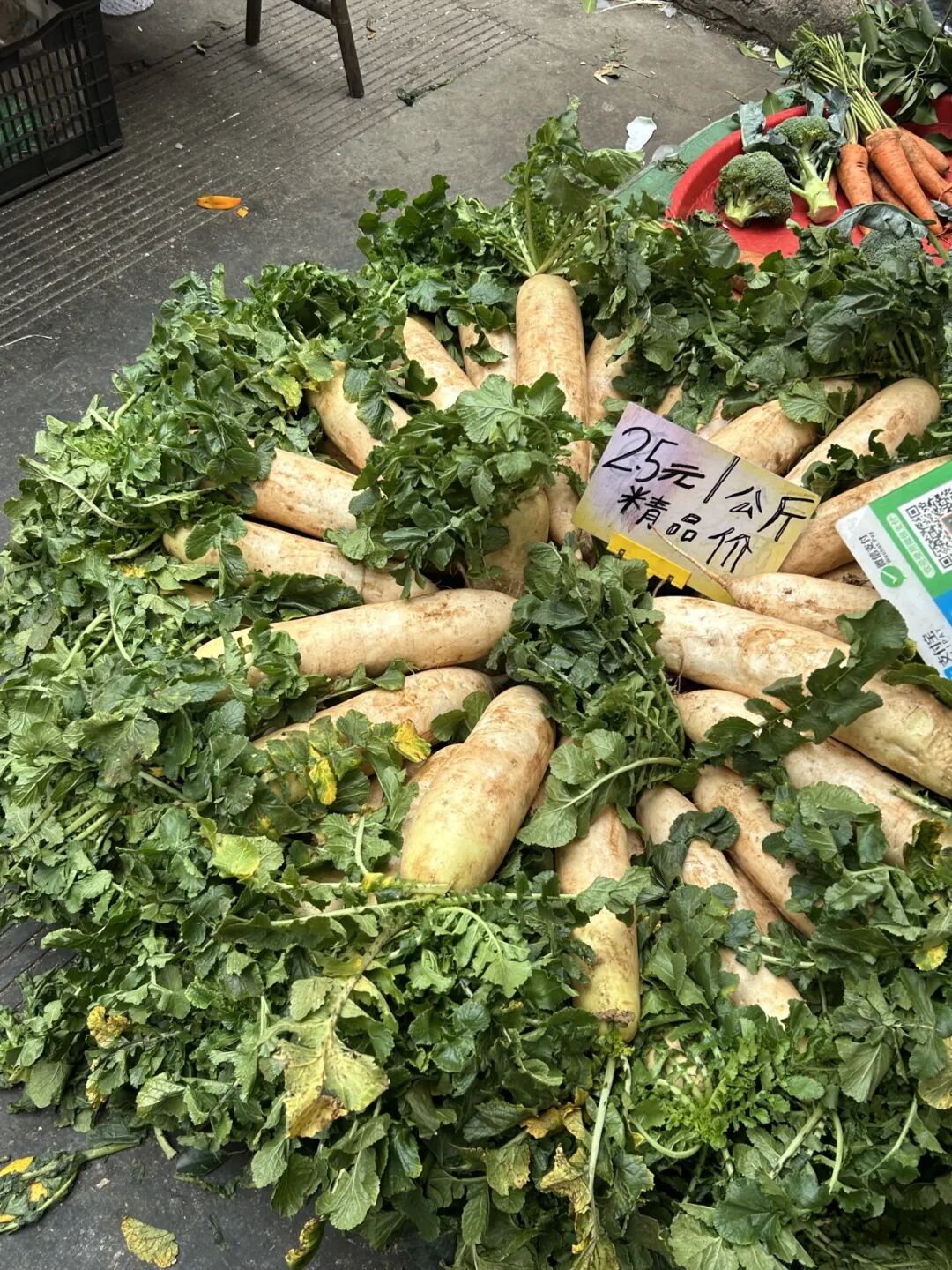
◉Vegetables from Kunming’s Zhuanxin Market and other local markets. Photography: Ruomiao
– This is Foodthink’s 857th original article –

Foodthink
Author:
Zhu Ruomiao
Interested in both commerce and agriculture; an enthusiast of the Mongolian Plateau and the horsehead fiddle.
Editor: Pei Dan
Layout: Xiao Shu
Scan the QR code to tip and support original food writing
▼

▼
Click the image to read related articles



▼
Click a keyword to explore more article collections
Seeds | Farming Techniques | Policy | Fermentation | Nutrition | Fruit | Fisheries | Events | Recruitment | Food Delivery | Wet Markets | Animal Husbandry | Food Talk | Sharing Sessions | Reading Groups | Harvest Festivals | Smallholder Stories | Climate Change | Rural Development | Cooperative Economy | Urban Farmers | Food Safety | Digital Technology | Biodiversity | Pandemic and Food | False Solutions | Ecological Agriculture Internship Programme
Beijing | Hebei | Shanghai | Guangdong | Guangxi | Henan | Sichuan | Jiangxi | Xinjiang | Shaanxi | Hong Kong | Chongqing | Zhejiang | Jiangsu | Guizhou | Taiwan | Inner Mongolia | the Philippines | Canada | Russia | Mexico | Italy | the US | the UK | Germany | the Netherlands | Thailand | Sweden | Japan