Why Have 2 Billion Bees Disappeared?

Foodthink says
In March this year, pesticide spraying in oilseed rape fields caused severe losses for beekeepers, briefly thrusting bee mortality into the public eye. Yet beyond the visible “deaths” lies a more insidious disappearance: rather than perishing in large numbers inside their hives, bees are abandoning their colonies en masse, leaving behind empty boxes with not a single carcass in sight. This phenomenon is known as Colony Collapse Disorder (CCD).
Research by Harvard University professor and *The Disappearing Bees* author Chen-Sheng Lu, alongside beekeeper Kenneth Wahl and insect toxicologist Richard Callahan, has found that continuous, low-dose exposure to neonicotinoid pesticides impairs mitochondrial health in bees, ultimately triggering CCD. With the widespread adoption of seed coating technology, systemic pesticides are absorbed by plants from the very seed stage, subsequently seeping into soil, water, and air. They disrupt insects across the food chain before ultimately ending up on human dinner plates and inside our bodies.
20 May marks World Bee Day. To mark the occasion, we have selected excerpts from *The Disappearing Bees*. Beginning with Professor Chen-Sheng Lu’s experiments and the empty hives left behind by vanished bees, these passages invite us to reconsider the relationship between modern agricultural technology and the ecosystem.
We thank Shanghai Translation Publishing House for authorising the use of this text.
With our field experiment complete—having confirmed that 15 colonies succumbed to CCD after ingesting trace amounts of neonicotinoid pesticides—we set about clearing the apiary site. The outcome was deeply sombre. Every upright, empty hive stood as a lifeless shell, stark as a tombstone. We sacrificed these 15 colonies to uncover the concealed toxicity of neonicotinoids, a truth we ought to have known but had been kept in the dark about.
Although our experimental hypothesis anticipated that low-dose neonicotinoid exposure would trigger the toxic effects of CCD in bee colonies, witnessing the tragedy firsthand was still deeply unsettling. Anyone unfamiliar with the experiment would likely feel intense confusion and dread when standing before these empty hives.
What is puzzling is why hives that were thriving before winter should stand completely empty once winter sets in? What is terrifying is whether humanity would vanish too, should the same forces causing the bees to disappear affect us?
But when I moved from a vibrant, buzzing hive (the control hive) to stand before a deathly silent, empty one just a metre away, I realised I was witnessing another *Silent Spring*. The hives that had succumbed to CCD over winter were, amidst all this springtime vitality, unnervingly quiet. That silence felt more suffocating than the calm before a storm.
Compared with the twentieth century’s *Silent Spring*, the twenty-first century’s version has swapped birds for bees as its central figure, and DDT for neonicotinoid pesticides as the principal culprit. Yet both point to a fresh ecological crisis triggered by pesticides. A concealed pesticide toxicity has brought about a springtime silence that ought never to be.
It has taken humanity over sixty years to traverse this *Silent Spring* time tunnel. As awareness of DDT’s toxicity and the need to protect wildlife grew, environmental consciousness took hold in more progressive nations, prompting the widespread establishment of government bodies akin to environmental protection agencies.
More than sixty years later, the widespread use of a different pesticide has seen humanity create another *Silent Spring*, as if the end of that twentieth-century journey of environmental protection were, paradoxically, the very starting point of the twenty-first. The ecological crisis wrought by these newer pesticides seems to have thrown us back to where we began sixty years ago, leaving us to watch helplessly as bees struggle and perish.
Opening the Pandora’s Box of Seed Coating
Based on the results of two CCD experiments at Harvard University, one might assume the primary culprit is bees ingesting minute doses of neonicotinoid pesticides—imidacloprid and thiamethoxam—from high-fructose corn syrup (HFCS). Yet it is the transgenerational mitochondrial DNA toxicity of these neonicotinoids that proves decisive. The generations of bees tasked with generating the most energy to survive winter in the hive suffer functional damage to their mitochondrial DNA. This leads to premature ageing and, ultimately, this unprecedented instance of CCD.
While there is no doubt that neonicotinoid pesticides are the cause of CCD in bees, the pathway through which they trigger the disorder remains a relatively obscure agricultural innovation: seed coating.
The shift from conventional pesticide spraying to seed coating has altered more than just the method of application. Intentionally or not, it has fundamentally changed how these systemic insecticides and fungicides impact the survival prospects of non-target organisms and the broader environmental biodiversity.
The pesticide industry hailed the integration of systemic pesticides with seed coating as a major milestone in late twentieth-century agricultural technology. They boasted that plant protection could finally achieve the same precision as human medicine, administering exact dosages where needed. Yet the global collapse of bee populations forced the European Union to indefinitely restrict the use of the three most widely used neonicotinoids, swiftly puncturing this grand claim.
The introduction of seed coating was, in fact, a strategic move by the pesticide industry. On the surface, it offered farmers a convenient, one-stop solution for purchasing both seed and pesticide. In reality, it served to dramatically boost the industry’s revenues.
Coated seeds are not limited to neonicotinoid pesticides; the outer layer can also contain systemic fungicides, plant growth regulators, nutrients, and more. Consequently, I suspect that even government regulatory authorities cannot determine exactly how many types and what quantities of neonicotinoid pesticides and systemic fungicides are applied to a single maize seed.
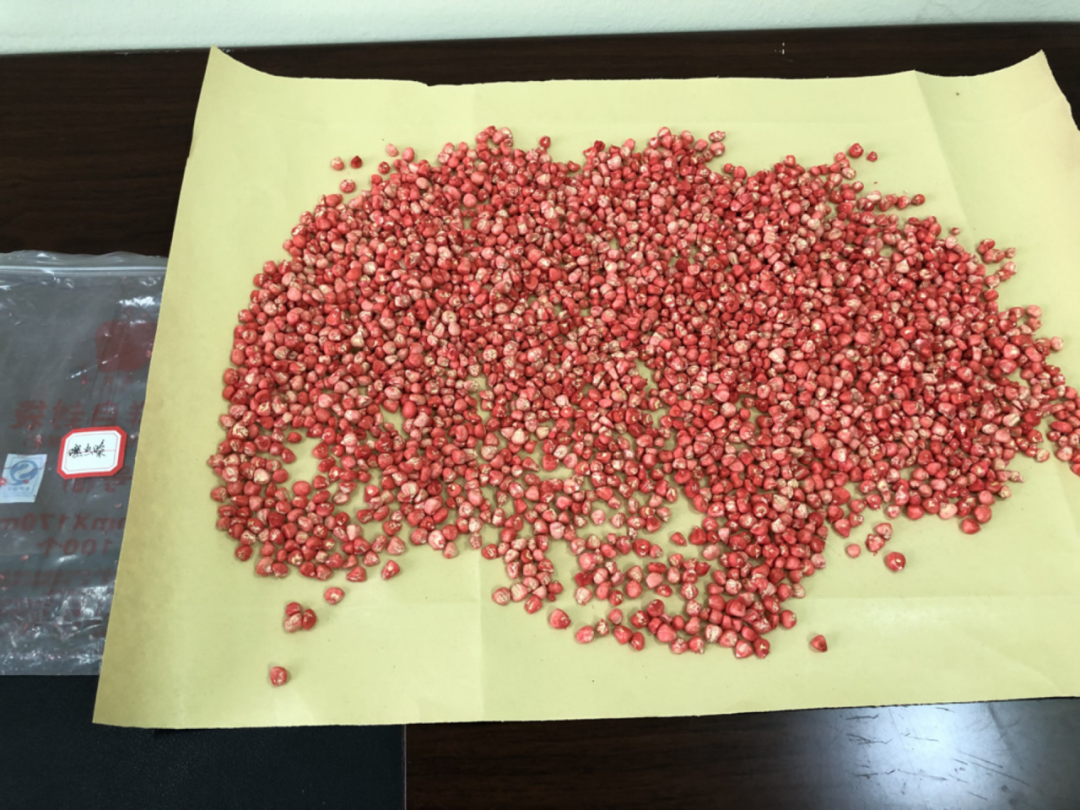
◉Maize seeds coated with neonicotinoid pesticides. Photo: Chen-Sheng Lu
However, having personally conducted the CCD experiments, witnessed the terrifying ecological crisis of the disappearing bees, and come to a deeper understanding of the transgenerational toxicological effects of mitochondrial DNA (mtDNA) damage caused by low-dose neonicotinoid ingestion, along with the environmental and ecological harm wrought by coated seeds, I feel compelled, as my career nears its end, to speak out against both the use of neonicotinoid pesticides and the legitimacy of seed coating treatments.
Neonicotinoids Have Reached Our Dinner Tables
A wealth of experimental evidence shows that a substantial proportion (80–98%) of the pesticides applied in seed coatings leach directly into the soil, subsequently contaminating surface water and groundwater. The remaining 2–20% is absorbed by the plant after germination. Owing to the hydrophilic nature of systemic pesticides, they are taken up and retained throughout the crop’s growth cycle, ultimately entering the human food chain once the produce is harvested.
Put simply, once seeds coated with neonicotinoid pesticides are sown, these chemicals become ubiquitous in both the environment and the food supply.
As these coated seeds contaminate the soil and surface water, a smaller fraction of the neonicotinoids is absorbed by the plant’s roots. It then translocates upwards into the plant’s vascular system, distributing throughout every part of the organism, including the pollen and nectar of its flowers, before eventually being released into the air.
Those hardest hit by this pollen-mediated route of exposure are undoubtedly pollinating insects, particularly bees, for whom pollen serves as a primary source of protein. Yet the impact of this exposure pathway extends far beyond these vital pollinators. Throughout the spring flowering season, whether we are out to admire the blossoms or simply going about our day, merely being outdoors means we will inevitably inhale pollen. While some individuals suffer severe allergic reactions and others remain unaffected, the widespread application of neonicotinoid pesticides across agriculture, urban landscaping, public parks, and domestic gardening means that the annual pollen season has become the peak period for human exposure to these chemicals. This is especially true for those who enjoy spring walks and flower viewing.
Owing to the hydrophilic nature of systemic pesticides, these brightly coloured neonicotinoid-treated seeds can, in theory, protect a plant from sowing all the way to harvest against both subterranean and above-ground pests, thereby safeguarding food production. From a plant protection perspective, therefore, coated seeds appear to play an indispensable role.
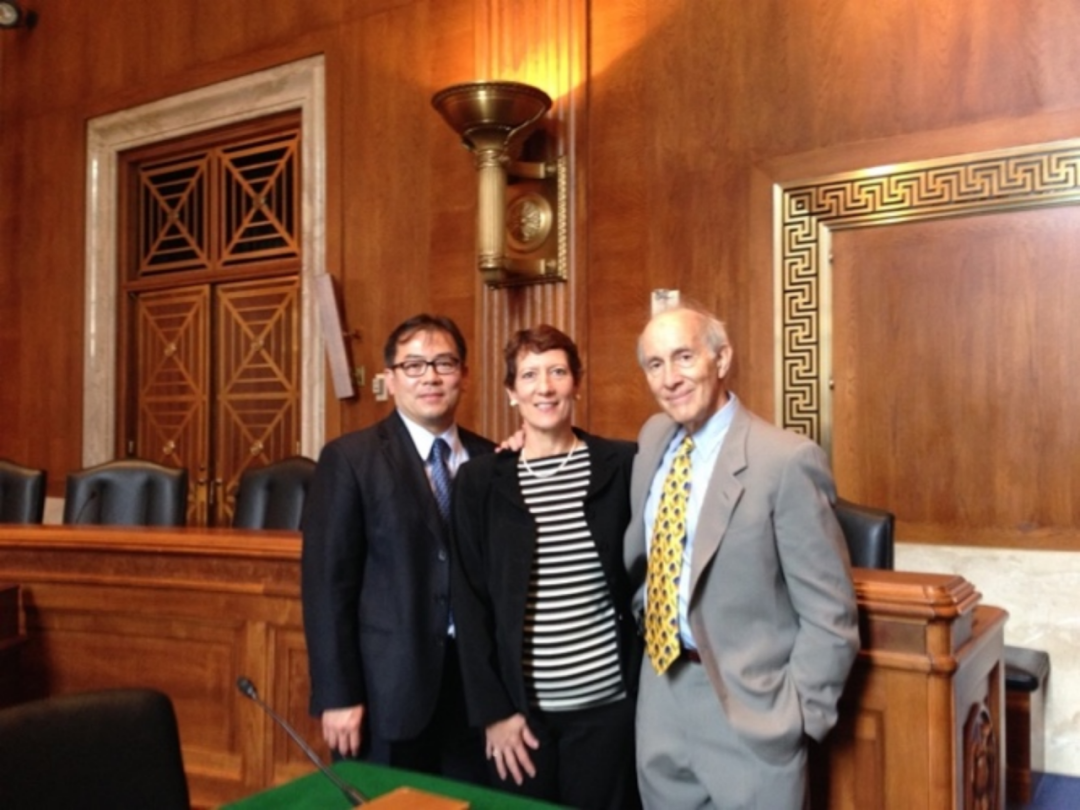
◉In September 2014, Professor Chen-Sheng Lu and two research colleagues were invited to attend a joint US Congressional hearing on “how to address the decline in bee colony populations”. From right to left: Dr Eric Chivian (Professor at Harvard Medical School, USA, and one of the 1985 Nobel Peace Prize laureates), Dr Melissa Perry (Professor at the School of Public Health, George Washington University, USA), and Dr Chen-Sheng Lu (Associate Professor at the Harvard School of Public Health).
However, agriculture cannot focus solely on crop growth and yields. After all, crops are part of the wider ecosystem; like all other living things, they rely on the same air, water, and soil resources that sustain human life. Agriculture should therefore be granted no special privileges, nor should it continually use the phrase ‘ensuring food security’ as a shield to act with impunity.
The history of pesticide use in human society teaches us that abuse only breeds resistance. Pumping millions of kilograms of insecticides into the soil year after year is a clear case of abuse: an irresponsible dumping of toxic chemicals, and a ruthless pursuit of agricultural production at any cost.
By the time we are left with no tools to combat agricultural pests, it will be far too late to look back and question whether seed coating is a sustainable method of crop protection. This is not an alarmist prediction; it is a certainty that will inevitably come to pass.
When a Beekeeper Can No Longer Keep Bees Successfully
Mr Wahl told me that 2023 would likely be his final year of beekeeping. He said: “If even I cannot keep bees, then everything being taught about beekeeping is a lie. There is an ever-growing array of threats in the environment that prevent entire hives from thriving.” The realisation left him feeling deeply saddened and powerless.
Mr Wahl said: “I tried marketing organic honey, since it commands two to three times the price of conventional honey. But every year, tests detect neonicotinoid residues in the crop, making it impossible.” Mr Wahl added: “The proliferation of neonicotinoid pesticides in the environment has been far faster and more widespread than I anticipated, catching me completely off guard. Continuing to keep bees has become a grinding struggle, entirely devoid of economic sense.”
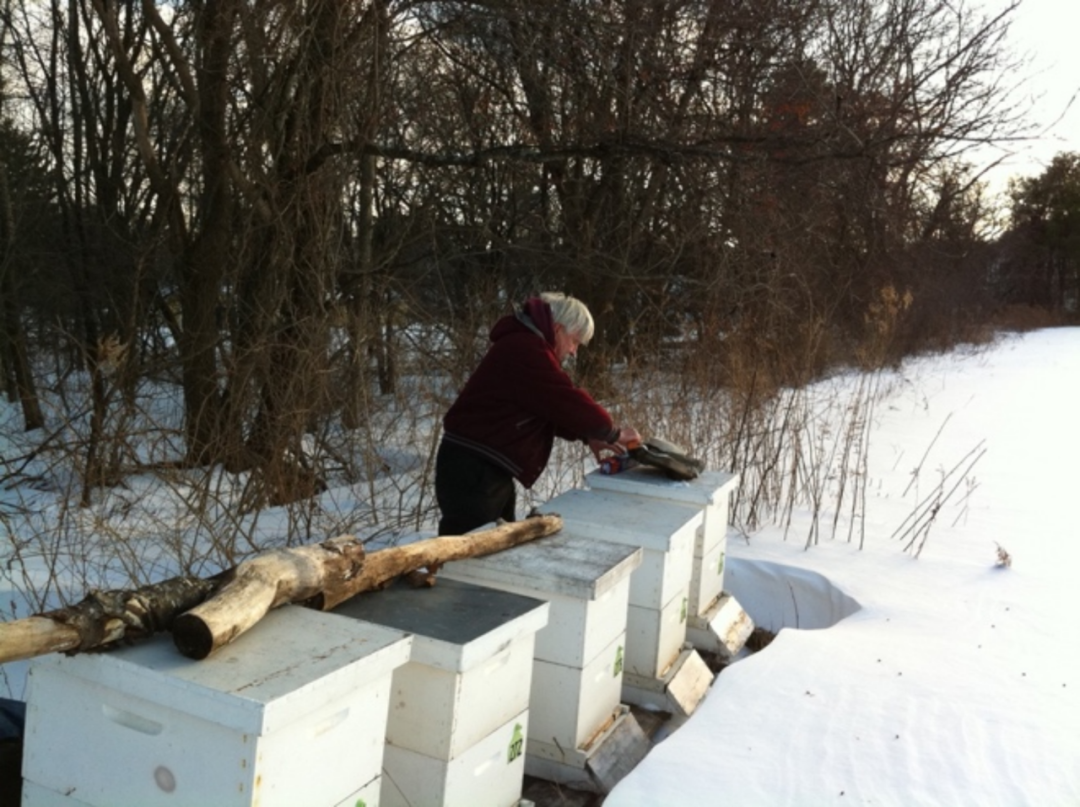
◉Inspecting experimental hives during overwintering. Photograph: Richard Callahan
Mr Wahl is not fear-mongering, nor is he seeking sympathy. In June 2023, the Associated Press (AP), a leading US news outlet, reported that “60% of US beekeepers lost a significant portion of their colonies in 2022, resulting in unsustainable income.”
The AP report says nothing about how exposure to neonicotinoid pesticides affects bee survival. It identifies climate factors as the primary driver behind colony losses linked to Varroa mites. Beekeepers of all scales, from backyard hobbyists to commercial operations, largely cite “severe weather” as the main cause of colony deaths. The AP presents extensive evidence showing that climate change has disrupted the synchronisation between bees and the flowers they pollinate, severely impacting both. Yet the AP neither does nor can link the threat of Varroa mites with the difficulties bees face in foraging for pollen and nectar as a result of climate change.
Cherish the Bees You Encounter
There is but a thin line between fear-mongering and stating the facts. Is the disappearance of bees mere fear-mongering? Is the importance of bees to humans and ecosystems mere fear-mongering? Are the irreversible health effects of mitochondrial toxicity mere fear-mongering? Is the environmental damage caused by neonicotinoids and seed coatings mere fear-mongering? To dismiss something as “fear-mongering” requires no accountability; it is the cheapest retort, a comforting platitude designed to bury the truth.
The causes and consequences of the bees’ disappearance are an undeniable scientific fact. Deliberately downplaying the ecological catastrophe wrought by neonicotinoids and seed coatings merely pushes human civilisation towards the abyss. The health impacts of mitochondrial toxicity across species and their descendants are equally a matter of scientific fact. We humans are now living through a vast, Earth-scale biological experiment to verify this truth.
By the time we secure enough scientific evidence to confirm that our current understanding of the mitochondrial toxicity of neonicotinoids and the environmental harm from seed coatings is accurate, it may already be too late, or the cost may have already been too high.
Whether 21st-century agriculture should continue to rely on chemical pesticides is a highly contentious issue. Since the introduction of DDT, no widely used pesticide has managed to remain unchallenged or escape eventual phase-out. Most have been banned due to their known toxicity and the development of environmental resistance.
We must think broadly and approach the ecological and health risks of pesticide use with caution. Until we strike a balance that safeguards agricultural output, protects the environment, and upholds public health, the question of whether to use pesticides is not the pressing issue. What we truly need are pesticides with the least possible impact on ecosystems and human health.
The disappearance of bees underscores the failure of our 21st-century reliance on neonicotinoid pesticides and seed coating technology. I believe we have a narrow window of time to remedy the mistakes we have made; it may well be our last chance. So cherish your next unexpected encounter with a bee, whether in the wild or a local park. Who is to say it might not be the last you see in your lifetime?
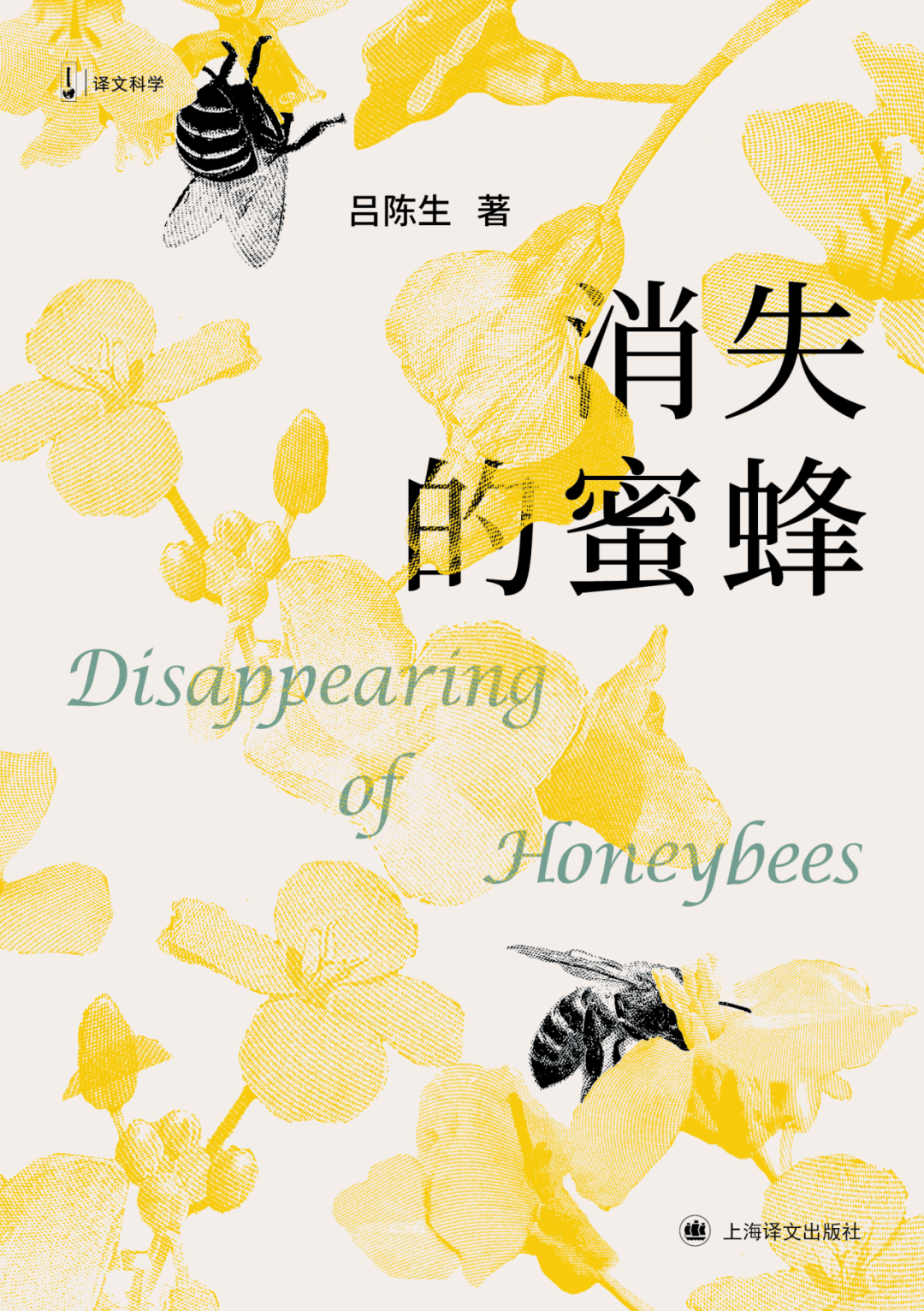
▼
Click the image to read related articles