The “Command Centre” Supporting Smallholder Sales

Like many people who follow international rural politics, I had long been aware of Brazil’s Landless Workers’ Movement (MST). The landless, land occupations, struggle, land reform — these keywords associated with MST were so vivid that I instinctively came to see the movement as one “rooted in rural settlements and defined by continuous struggle”. It was not until October 2025, when I stepped inside one of their agricultural produce warehouses in Brazil, that these entrenched impressions were thoroughly shattered.

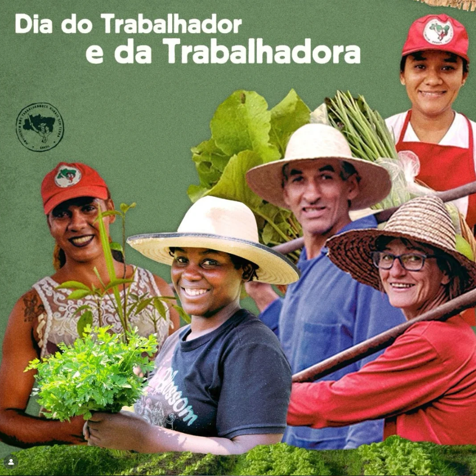
◉The logo and posters of Brazil’s Landless Workers’ Movement. Source: MST website
The warehouse was not particularly large — a little over 2,000 square metres — and was still under construction: in some areas the wall finishes had not yet been completed, but the functional zones were clearly defined — one side for dry goods, the other dedicated to fresh fruit and vegetables. A worker showed me a stock list running to more than a dozen pages, densely packed with three to four hundred items: coffee, chickpeas, grain flours, jams, vegetable sauces, spice sachets… In that moment it struck me with sudden clarity that MST is not solely focused on “fighting for land” — it is also doing something far more difficult and far easier to overlook: bringing dispersed smallholder produce to market at scale.
“Ecological produce is impossibly hard to sell” — this is a plain yet profound conclusion I have reached after years of dedicated research into ecological agriculture in China. But after in-depth exchanges with MST’s partners, I found that their sales model differs markedly from the various decentralised, piecemeal attempts made by their counterparts back home: MST neither relies on the occasional market stall nor on shout-outs on WeChat Moments. Instead, it has built a complete system encompassing warehousing, order matching, compliance certification, channel development and logistics, turning agricultural produce sales into a self-sustaining, cyclical operation. The warehouse before me was a crucial node in MST’s integration into Brazil’s urban food network.
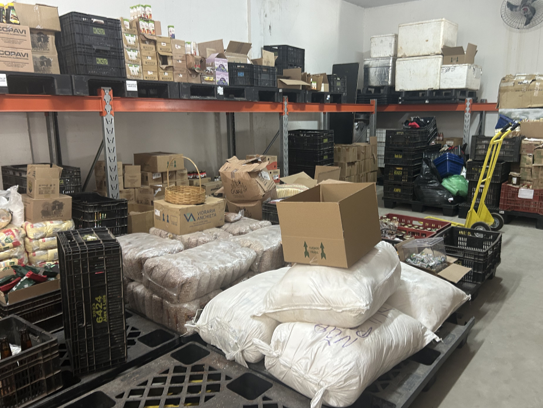
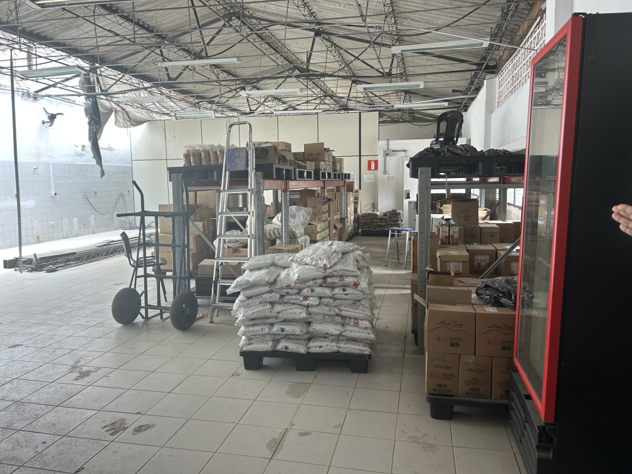
◉The warehouse, still under construction and seemingly unremarkable, is in fact a vital hub sustaining the MST movement.
I was eager to understand exactly how they had built this organised sales system — and eager, too, to explore something beyond: for us in China, still grappling with how smallholder farmers practising ecological agriculture can efficiently access the market, what transferable lessons might this Brazilian experience hold?
After Land Occupation
MST’s full Portuguese name is Movimento dos Trabalhadores Rurais Sem Terra, commonly rendered in English as the Brazilian Landless Workers’ Movement. In Chinese, the movement is known by two names — the Landless Workers’ Movement and the Landless Farmers’ Movement — with the latter being the more widely used.
Its emergence is deeply intertwined with Brazil’s social and historical roots: the plantation economy inherited from the colonial era created a pattern of extreme land inequality — 42.5% of Brazil’s land is held by less than 1% of the population, a reality that has directly left roughly 4.5 million people without land. To change this situation, in 1984, 92 peasant leaders convened in Cascavel, Paraná, and formally declared the founding of MST. Its goals were blunt and resolute: to advance land reform, to organise the landless, and to enable people to truly put down roots on the land — to produce on it, and to live on it.
Under Brazilian law, land must continuously serve a productive function; otherwise it may be classified as “ownerless.” MST has seized precisely on this provision to develop a step-by-step strategy of struggle: first, setting up camps or settlements on land they judge to be “idle and not fulfilling a social productive function” — often by taking up residence and putting down roots first — then organising production and collective life, after which comes the long, drawn-out legal and administrative process. Through lawsuits, policy advocacy, political negotiations and other means, they strive to win government recognition of the land’s newly restored “productive function,” only then becoming eligible for legal ownership. The journey is fraught with contestation and hardship — violent clashes, armed suppression and forced evictions are far from rare.
Today, MST has journeyed through more than four decades. Its struggles and activities now span 23 of Brazil’s 26 states, and the results are remarkable: it has helped 450,000 families gain land, founded 1,900 farmer associations, 185 cooperatives and 120 agricultural processing workshops.
MST’s wide-ranging influence has led most researchers to focus on its mobilisation methods, organisational structures, camp life and political strategies — all important dimensions in their own right. But viewed from the grounded reality of the everyday business of putting food on the table, a more critical question emerges: once you have occupied the land, how do you sustain a livelihood? Gaining land-use rights is not the same as securing a viable livelihood and a stable life.
For settlement residents, the survival challenges are particularly concrete. Some land is unsuitable for growing food, making self-sufficiency hard to achieve; even where the land is arable and ecological farming is practised — free of pesticides and chemical fertilisers — a stubborn dilemma persists: high quality that cannot command a fair price. Only by selling produce at a reasonable price, converting food into cash, can families cover daily expenses and keep household life running.
Within the mainstream food system, smallholders in the settlements are inherently disadvantaged — they lack market sales experience, and scattered produce simply cannot find a foothold against major retail channels such as supermarket chains. The core question has therefore narrowed to this: how can dispersed smallholder output be consolidated into organised supply, enabling stable, ongoing sales?
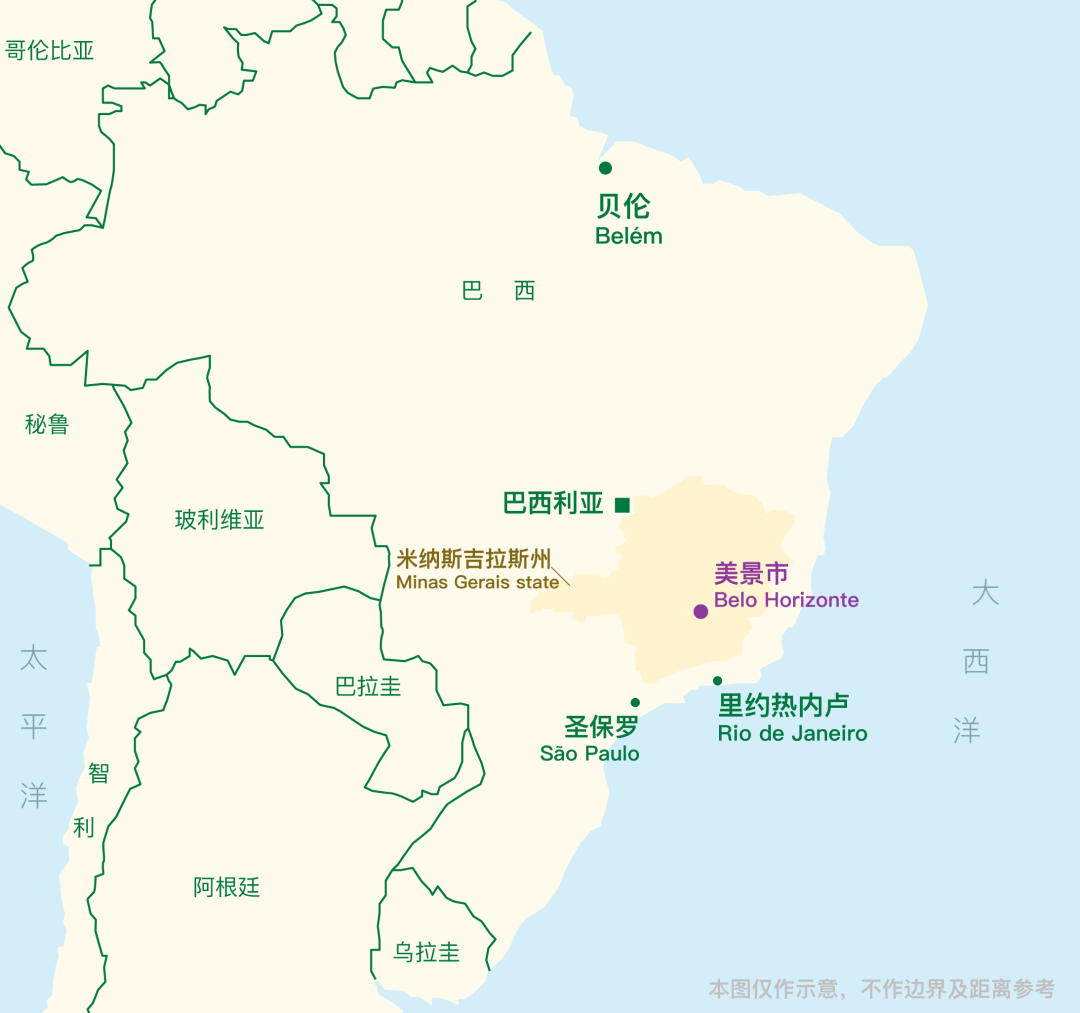
◉ This article draws on research into MST’s sales platform in Belo Horizonte, Brazil. Infographic by Foodthink.
The “Command Centre” Supporting Smallholder Sales
Our research was centred in Belo Horizonte, in southeastern Brazil — the capital of Minas Gerais state, with a population of roughly 2.5 million.
We were received by Concentra, a platform with a team of four or five staff members, all young — the eldest no more than about forty. Three of them sat down for a deep conversation with us, and what struck me about all three was a shared impression: an unwavering conviction, a deep belief that what they are doing is worthwhile and meaningful. Two of the three had grown up and worked in MST settlements — which are not merely places to live but come equipped with schools, basic healthcare facilities and shared public spaces. They had been raised in the settlements, immersed in MST’s values since childhood.
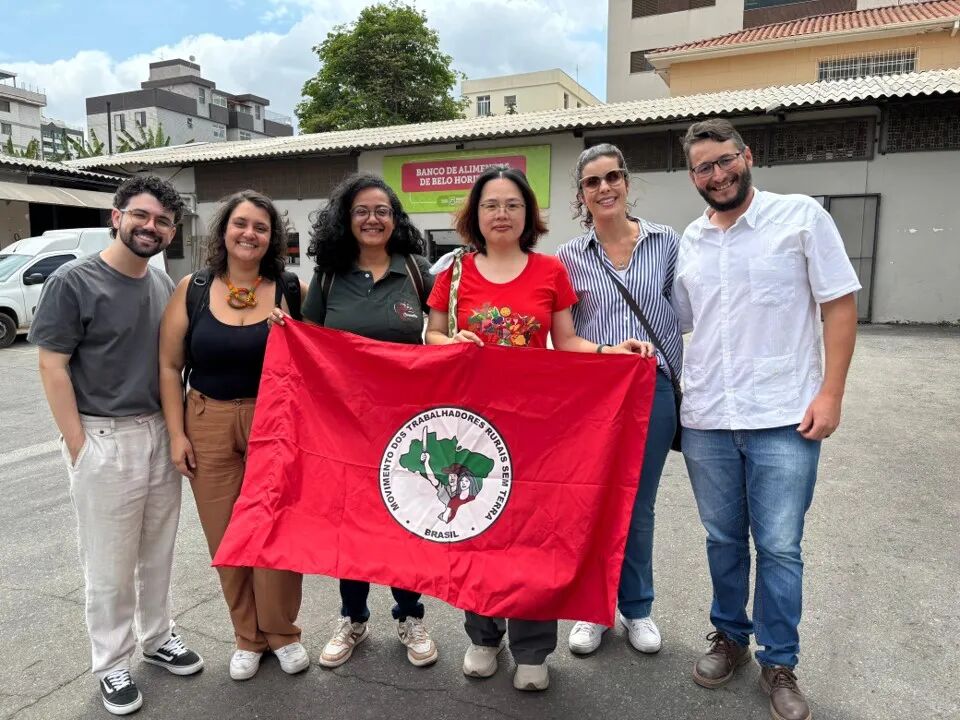
◉ The author (third from right) with the Concentra team and local guide Luiza in Belo Horizonte, Brazil.
MST’s value system is fairly complex, but at its core lie the “four pillars”: struggle for land, struggle to transform agriculture and land tenure, struggle for social transformation, and organisation and education. The collective life in the settlements, combined with structured education, instils in young people a powerful identification with this value system — and sustains a pipeline of committed members eager to take on organisational work.
One Concentra staff member, after graduating from university, joined a government rural service programme similar to China’s “Teach in the West” initiative, before ultimately choosing to return and work within the MST network. My local guide Luiza is a lecturer at the local university who has worked with MST for years. She remarked: “These people are exceptionally clever.” Clearly, over decades of activism, MST has built a solid talent reservoir, continuously attracting gifted individuals to join.
Concentra plays a dual role as both intermediary and coordination centre: upstream, it interfaces with seven cooperatives in Minas Gerais state while drawing in products from other MST cooperatives nationwide; downstream, it connects with government buyers, supermarkets, restaurants and other clients. The team receives orders and then matches demand to the most suitable cooperatives based on each one’s resources and production strengths, coordinating between them and effectively preventing cut-throat competition. When necessary, Concentra advances payment, providing smallholders with upfront capital for production.
Beyond that, warehousing, sorting, logistics and delivery, product-line development, processing coordination and the pursuit of compliance certification are all managed centrally by the platform. In essence, it absorbs the great deal of “market support work” that would otherwise weigh on individual smallholders, lowering the threshold for market participation through specialised division of labour.
A staff member told me the story behind a doyá fruit jam. The product began when a mining company approached them — its operations had caused ecological disaster to an MST settlement, and the company wanted to order 1,000 cases of jam as part of the compensation package. Concentra organised cooperative members to carry out the production, and when the company reported back that the flavour was outstanding, the team conceived the idea of turning it into a permanent retail product. But to bring an agricultural product into commercial circulation, a host of hurdles must be cleared: meeting food hygiene and safety standards, designing compliant packaging and labelling, and obtaining various registrations and permits. Fortunately, Concentra has its own in-house legal team, and in the end even political advocacy and lobbying were needed to get a government department to recognise the product’s compliance pathway before it could officially reach the market.
The staff were blunt: every product takes a long time to mature, and it can only survive if legal compliance, policy engagement, production organisation and sales channels work in concert. This ability to institutionalise a product, bring it into compliance and connect it to a larger distribution system is precisely the scarcest capability among smallholders — MST has not left it to any single farmer to figure out but has transformed it into a collective capacity of the entire network.
I also noticed they were incubating a new own-brand — Raízes do Campo, which roughly translates as “Roots of the Field”. Take one of their coffee products, for instance: the packaging clearly shows it was jointly produced by two cooperatives covering 604 farming households, and it bears Brazil’s official certification mark for family farming (agricultura familiar). Notably, the brand has deliberately omitted the MST logo. The reason is practical: in Brazil, MST is an unmistakably left-wing political symbol — celebrated in some circles, but a liability when trying to enter mainstream channels, especially major supermarket chains. So they created a “neutral brand” to pave the way for embedding in a broader sales network.
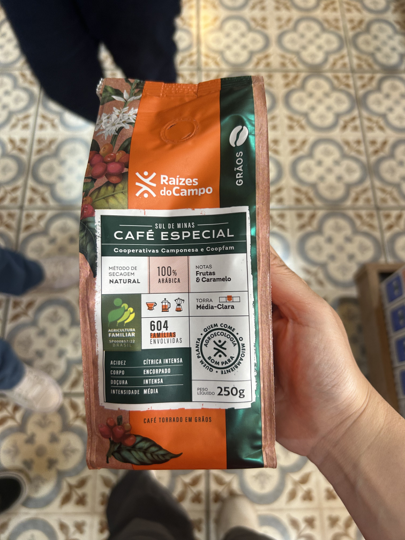
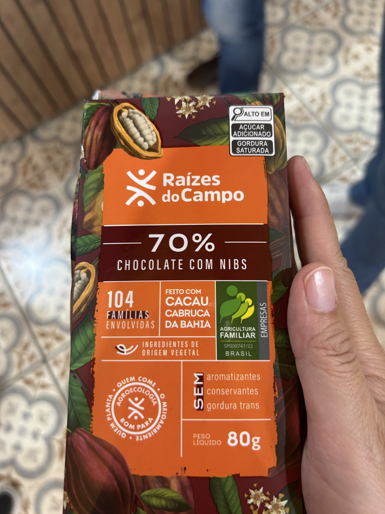
◉ Coffee and chocolate products from Raízes do Campo.
So far, Raízes do Campo has successfully entered a number of small community supermarkets. Staff acknowledge that working with major supermarket chains is extremely difficult — they impose stringent requirements and drive prices down sharply — but they have never stopped trying, and products from one cooperative have already made it onto Walmart shelves. This pragmatism left a strong impression on me: get the business started first, adjust strategy as you go, and keep the focus on scaling up and benefiting more farming families.
Production and Consumption
An Ecology of Two-Way Links
When we talk about ecological farming, we often harbour a romantic notion: that smallholders naturally gravitate towards ecological methods, are eager to cooperate and willingly take part in collective affairs. Reality is the exact opposite — in the early stages, mobilising farmers to join cooperative production and sales is enormously difficult; persuading them to switch to ecological farming is equally fraught with resistance. Outsiders tend to overestimate smallholders’ willingness to participate.
Staff revealed that in a settlement of 100 households, only around ten active members can typically be reliably mobilised at the outset. Their strategy is to “start small and let the example spread”: get a few people to try first and demonstrate that the model pays and that payments arrive reliably. Once other farmers see tangible returns and recognise that the model genuinely works, participation expands gradually. Guiding farmers towards ecological agriculture and achieving product standardisation, meanwhile, is an even more protracted, step-by-step process.
One regret of the research trip was that I did not get to visit a settlement and observe the full production process, or delve into the internal divisions of labour and mechanisms for distributing profits. Concentra did, however, state clearly that the bulk of product profits are returned to the producers and distributed autonomously within each cooperative. Market performance serves as the primary incentive driving farmers to participate in production.
MST’s agricultural products flow through three main channels, forming a diverse yet resilient distribution matrix.
The first is regional restaurants. We visited one run by someone from northern Minas Gerais — her family members live in an MST settlement, and she herself had once worked in the settlement kitchen. The restaurant specialises in seasonal dishes from her home region, sourcing most ingredients from family gardens or the settlement cooperatives.
We dined at lunchtime, and the restaurant was packed, doing brisk business. MST staff took the opportunity to bring produce from other cooperatives to promote, hoping the restaurant would both use the products and help sell them on. The meal we had was authentic local Brazilian fare: banana served with rice and beans, a tomato and vegetable salad, pumpkin, and a dish called Folofa — stir-fried cassava flour — all ingredients sourced from the settlements. This type of channel builds connections through emotional and cultural bonds; it grows slowly, but the foundation of trust is solid and partnerships are stable.
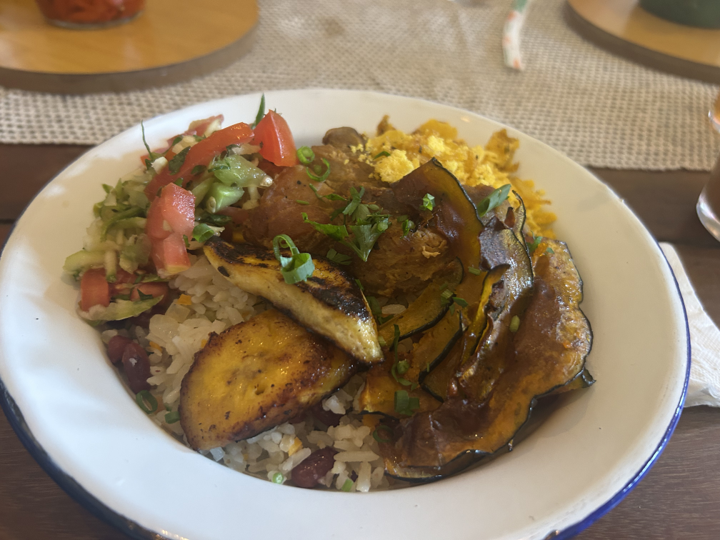
◉ The Brazilian dish we enjoyed at the restaurant, with every ingredient sourced from MST settlements.
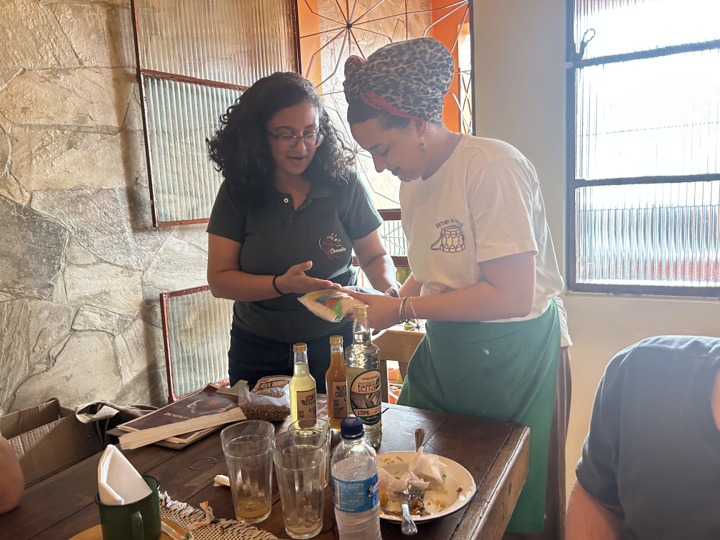
◉ MST members presenting cooperative products to a local restaurant.
The second channel is niche shops specialising in organic and ecological foods. One shop we visited was in a relatively “progressive” neighbourhood, where MST’s coffee beans, jams and vegetable sauces sat alongside other organic products with no dedicated shelf. To get into shops like this, products must be competitive on both price and quality — I compared prices on the spot and found that MST’s offerings were more favourably priced than comparable organic produce. In addition, the MST network operates about 20 directly run retail stores across the country and has set up an online sales platform, further broadening its retail reach.
The third channel surprised me most — local government. Staff explained that the warehouse in Belo Horizonte supplies fresh ingredients to community kitchens under the PAA (the government’s Food Procurement Programme). These kitchens primarily serve vulnerable urban groups such as waste pickers and can absorb around one tonne of produce every fifteen days. Another key partner is the PNAE (the National School Feeding Programme), which aims to improve the quality of school meals by encouraging the procurement of local family-farming products and increasing the proportion of fresh ingredients (Brazil, too, grapples with the flood of ultra-processed foods).
The core demands of these two national programmes align closely with the characteristics of MST’s produce, creating a stable foundation for partnership. But this space for cooperation is closely tied to the political environment: during Lula’s presidency, policies were relatively permissive, and MST received considerably more political recognition and support. Under Bolsonaro’s tenure, however, multiple joint projects were shelved, MST’s space for survival was squeezed, and the movement was even cast as a “hostile force”. The team, unsurprisingly, voiced concern that if Brazil’s right wing makes a comeback, their situation could become precarious again.

◉ MST actively participates in two major Brazilian government procurement programmes.
Can China Copy the Homework?
MST’s agricultural products network is, in essence, an outgrowth of its broader social movement. Decades of accumulated gains from the movement have provided this network with a solid foundation — encompassing a deep talent pool, a unified set of values, mature models of production organisation, an awakened consumer consciousness, and limited political recognition.
This is an interconnected system; without decades of struggle and educational groundwork, MST’s agricultural sales network would not exist. This body of practical experience carries distinctively Brazilian characteristics and resists direct replication. Put another way, MST’s agricultural network may look like “selling goods”, but it is in fact the outward manifestation of movement achievements: the movement builds infrastructure, and the network converts that infrastructure into tangible sources of livelihood and development.
◉ MST products are commonly found in Brazil’s specialty shops focused on organic and ecological foods.
Concentra’s operating model reveals MST’s open, pragmatic stance — it neither shuns engagement with mainstream systems nor retreats into an “insiders-only market”. Order-based production, a multi-brand strategy, and even the seemingly contradictory move of “omitting the MST logo” are all aimed at tapping into broader sales channels, scaling up and benefiting more farming households. At least for now, they have not fallen into the trap of “losing control once scale expands, turning around and exploiting workers themselves”; on the contrary, Concentra consistently emphasises that the platform should cede as much profit as possible to the production side, safeguarding smallholders’ rights.
Political support plays the role of a “stabiliser” here: the government offers low-cost warehouse leases, public procurement brings in steady orders, and policy programmes open institutional pathways. These supports give the agricultural network a firmer footing. With this assurance, sales expectations are clearer, payments more reliable, and farmers more motivated to participate — only then can the network expand on a healthy footing. In turn, however, this creates a dependency on the political climate: shift the wind, and room to grow can shrink with it.
MST’s experience cannot simply be transplanted to China. The social environment, political system and organisational space we face are fundamentally different. In China, many ecological smallholders are forced to become “do-it-all farmers”: they must master cultivation techniques and sales skills alike, understand logistics and navigate regulations in equal measure, build a brand while running community groups and expanding channels. Every step is an uphill struggle. During fieldwork in parts of rural Guangdong, I witnessed this predicament firsthand — these farming households do not lack effort; they are structurally forced to go it alone, without collective support.
The core lesson from MST’s practice may be this: for smallholders to gain a firm foothold in the market, the key lies not in continuing to pressure individual farmers to master every “selling skill”, but in organisationally integrating capabilities in sales, compliance, warehousing, processing and logistics — turning them into collective capacity, platform capacity — so that scattered supply becomes standardised, scalable supply that can connect with the market.
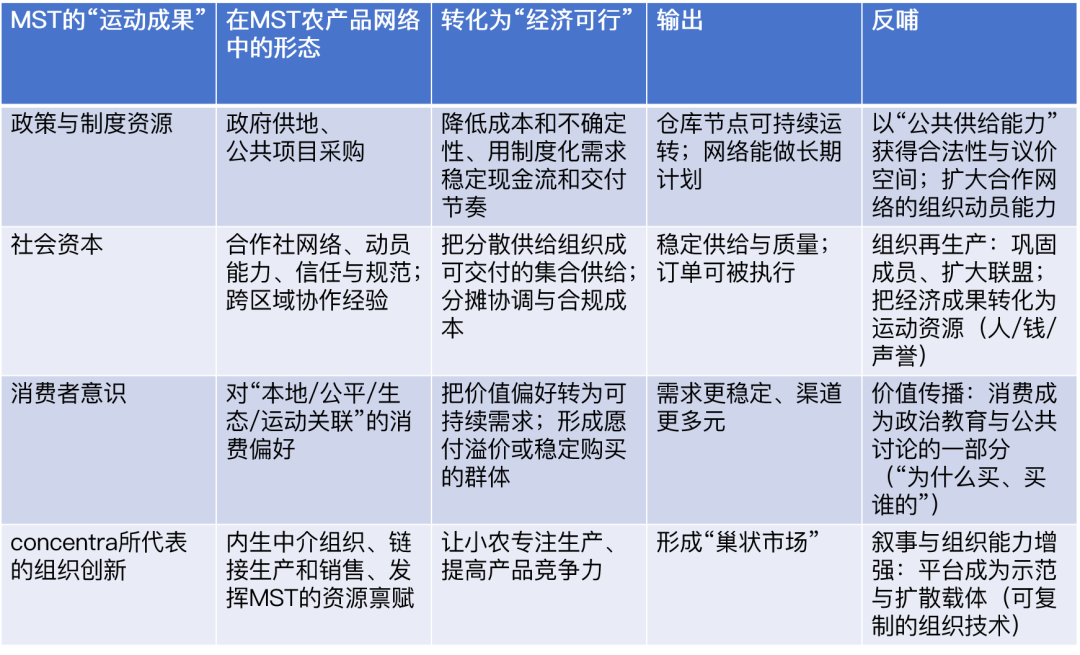
◉ MST makes full use of policy frameworks and social capital, mobilises consumers, and innovates boldly across its sales network, building a cycle of “production–distribution–resources–movement”.
At the end of the day, the distribution of ecological produce has never been purely a market question — it carries a public dimension. It requires policy support, infrastructure, organisational capacity and consumer awareness to work in concert. MST’s agricultural network has built a “production–distribution–resources–movement” cycle precisely through the layering of these conditions: when produce sells, the organisational roots of the settlements grow stronger; and as those roots deepen, MST’s values and mobilising capacity gain a source of sustainable momentum. Perhaps this is the most precious insight Brazil’s experience offers to ecological agriculture practitioners in China.
– This is Foodthink’s 804th original article –

Foodthink
Author
Zhong Shuru
Associate Professor at the School of Tourism, Sun Yat-sen University, and PhD in Anthropology from Texas A&M University. Her research focuses on wet market culture and sustainable food systems. Her monograph, The Chinese Wet Market, is forthcoming.
All images taken or created by the author unless otherwise noted
Editor: Tianle
Layout: Xiaoshu
▼
Click on images to read related articles