Lihu, Guangxi: Where All Things Go to Market

At eight o’clock on the morning of 19 April, I stood on the main street of Lihu Yao Ethnic Township in Nan’an County, Guangxi, feeling like a piece of scrap.
I had travelled from the county town to Lihu entirely on my own to visit the market. The term 圩 (xū), also written as 墟, is used across the Guangdong and Guangxi regions to describe a traditional market day. My friend Guan Qi once mentioned, market days in Lihu fall on dates ending in 3, 6, or 9. The fourth Nandan Music Festival had just concluded on the 18th, so today happened to be one, and I simply had to come and see it for myself. Yet after five consecutive days of relentless work as festival staff, I felt like a bowstring drawn too tight. I had slept for less than four hours the previous night; my vision was blurred, my mind adrift, my head shrouded in fog, and my steps felt unsteady.
I took a taxi specifically to catch the market opening. The driver sped along, and we covered the winding mountain road in half an hour. Nan’an County sits in a mountain basin along the upper reaches of the Hongshui River, while Lihu is nestled deep in the karst highlands straddling the Guangxi–Guizhou border. The twenty-odd kilometres of mountain road may not seem like much, but it swiftly leaves the cityscape behind, giving way to the rhythms and landscapes of a place where the Yao have lived for generations.
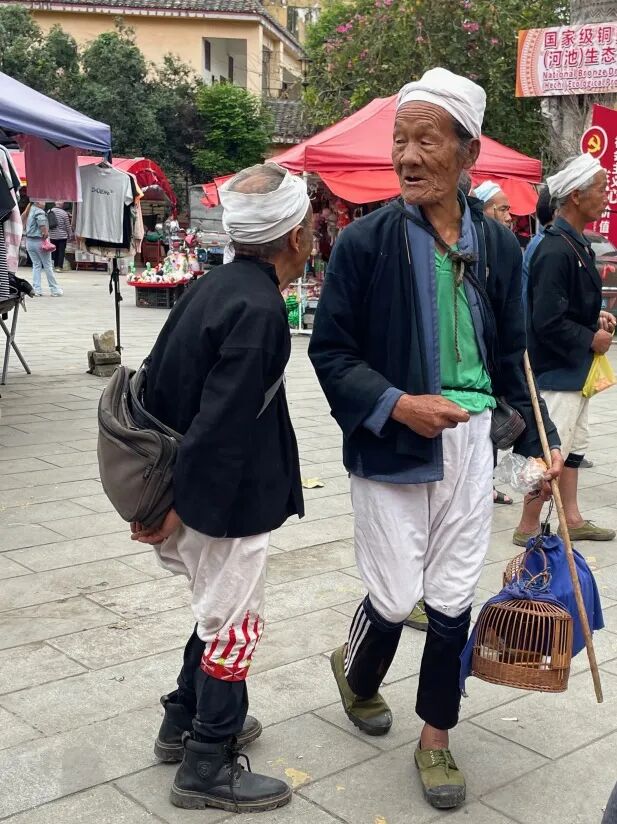
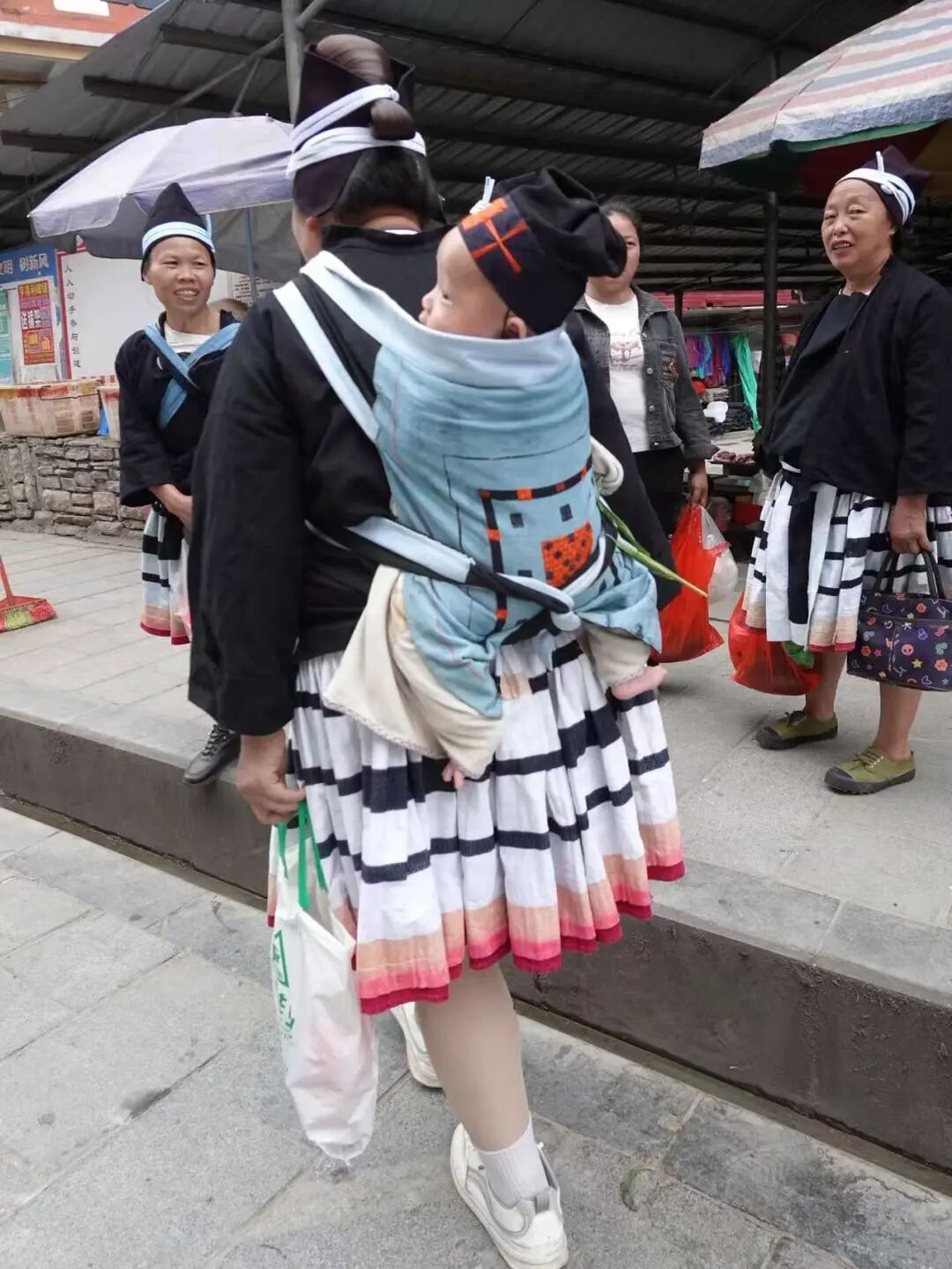
◉The Baili Yao (White-Pants Yao) take their name from the distinctive white trousers worn by men of the ethnic group. Right: locals wear traditional dress to visit the market.
This is one of the most densely populated settlements of the Baili Yao—a name derived from the white knee-length trousers worn by men in their traditional attire. There are approximately 50,000 Baili Yao across China, with more than 30,000 residing in Lihu and the neighbouring Baxu. As a distinct branch of the Yao people, they have retained a remarkably complete traditional culture and way of life. For locals, visiting the market is simply part of daily routine. The Lihu market serves as a vital hub for neighbouring villages to trade goods and meet with family and friends, and it is said to preserve a fairly traditional Yao market character. During major festivals, the crowds here swell to their peak.
As for me—a tourist who came on an impulse sparked by a friend’s casual remarks—I know almost nothing about the Baili Yao. Right now, I am carrying a rather absurd, somewhat unseemly, and perhaps even slightly intrusive thought: I want to see the locals heading to the market in full traditional dress, just as Guan Qi described. I want to observe their garments and adornments, as well as their food and everyday provisions.
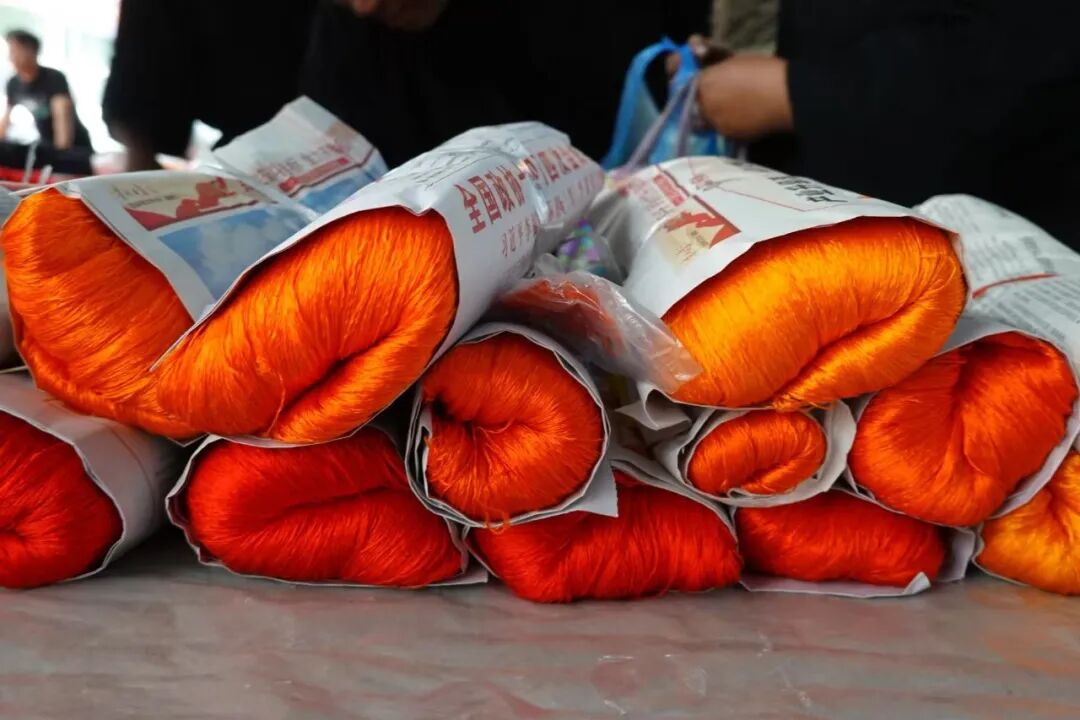
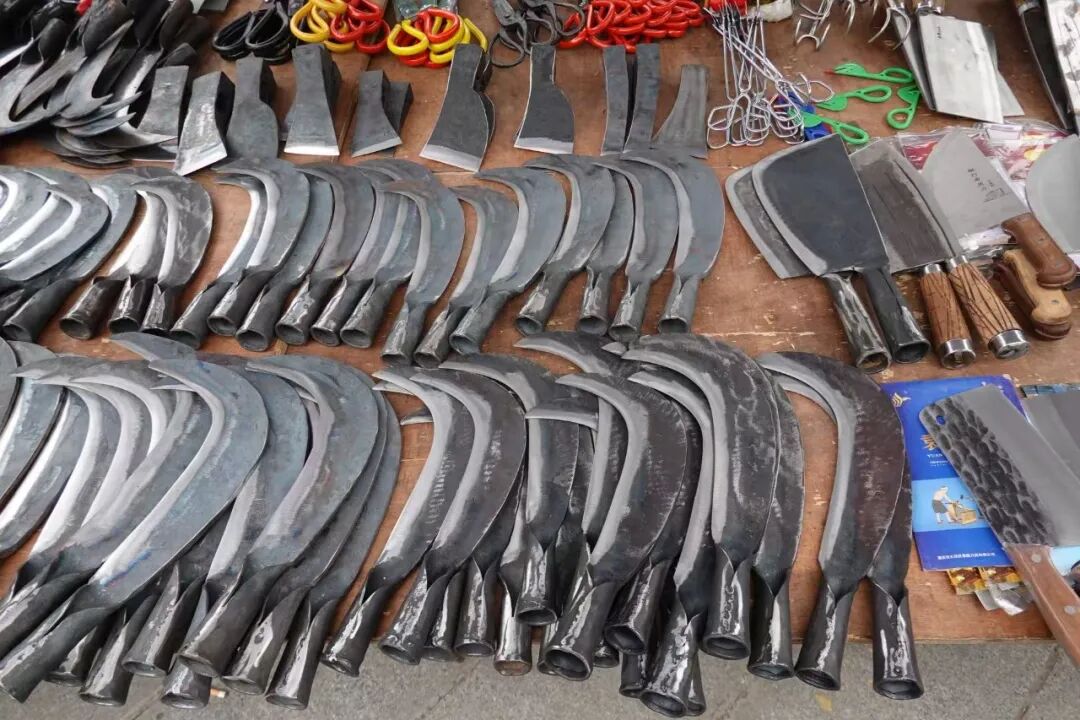
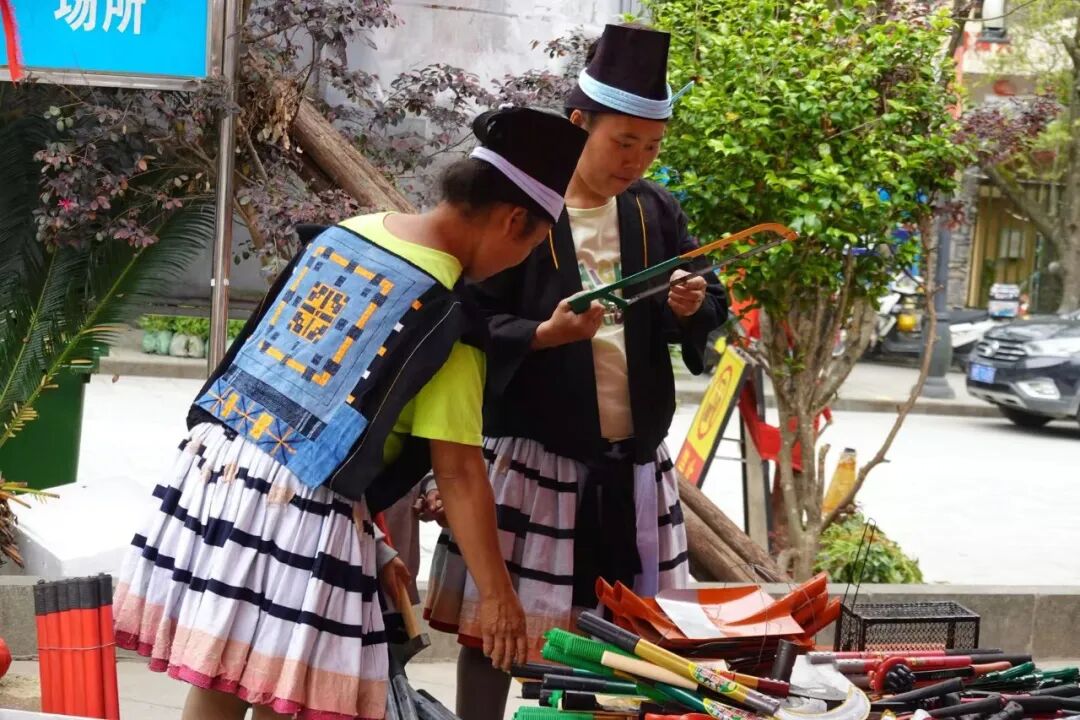
◉The market sells more than just ingredients; you can buy all sorts of everyday essentials here, from provisions and clothing to household goods.
Everything Finds Its Way to the Market
By eight in the morning, the stalls were already beginning to open. A few elderly locals sat chatting on the steps of the veterinary clinic, occasionally casting a sidelong glance at this weary-looking outsider. Opposite the clinic lay the main heart of the market: a semi-open-air agricultural market sheltered by a roof. From a slightly elevated vantage point, the whole market lay in view, clearly divided into sections: vegetables, fruit, meat, live poultry and pigs, textiles, sundries… Concrete stalls were arranged throughout the space, flanked by permanent shops, while makeshift stalls dotted the surrounding alleys.
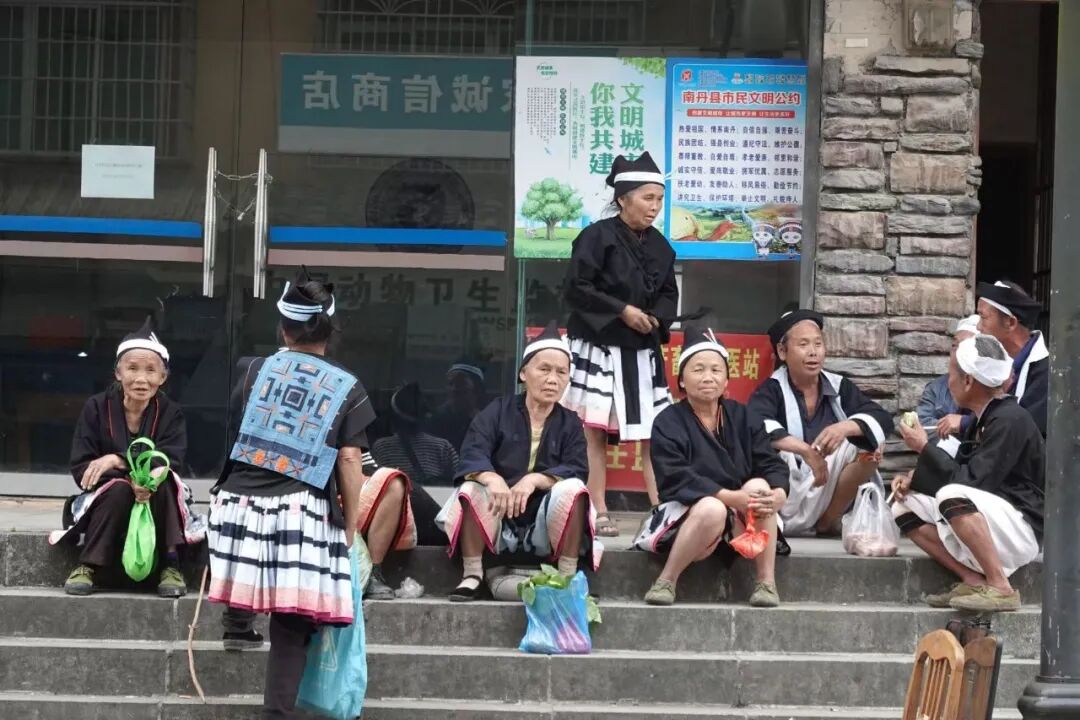
◉Early morning on the streets of Lihu: a “gaze” and a “counter-gaze”.
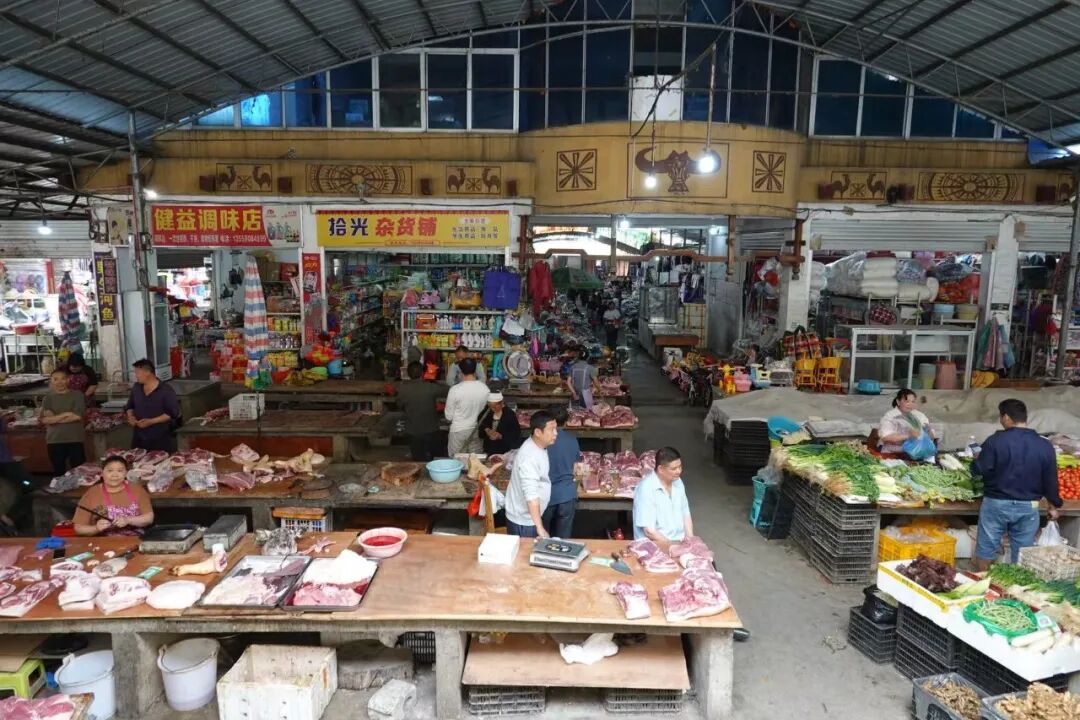
◉The main area of the Lihu market is little different from the local markets found across the rest of the country.
As far as the eye can see, everything finds its way to the market. When the eye doesn’t know where to settle, it naturally fixes on the most familiar sights first. There are only two or three permanent stalls for fruit and vegetables here: sweetcorn, chillies, runner beans, aubergines, cucumbers, celtuce, tomatoes, and various leafy greens – Chinese cabbage, pak choi, cabbage… Most are the sort of produce you’d also find in supermarkets back north.
Numerous stalls displayed clusters of vegetables with their roots wrapped in broad leaves. The leaves resembled lotus leaves, and the enclosed portions looked remarkably fresh, even standing upright on their own. I initially presumed this was a local technique for preserving freshness, but soon noticed that not every leafy vegetable was afforded such treatment. I attempted to ask a stallholder, but the thick local accent was beyond me, so I left it at that.
Pushing on, I came across bundles of sweet potato vines laid out on the ground. Unsure of their purpose, I asked quietly, “Is this for feeding pigs?” The stallholder looked at me with a wry half-smile. “This is for taking home to plant,” they replied. It wasn’t meant for eating at all. The mystery from earlier instantly fell into place: those “vegetables” with their roots so carefully wrapped (mostly chillies and aubergines) were, like the vines, purchased for planting. Wrapping the roots was simply to keep them moist.
The vegetables sold at the market are not just food, but also seeds and seedlings.
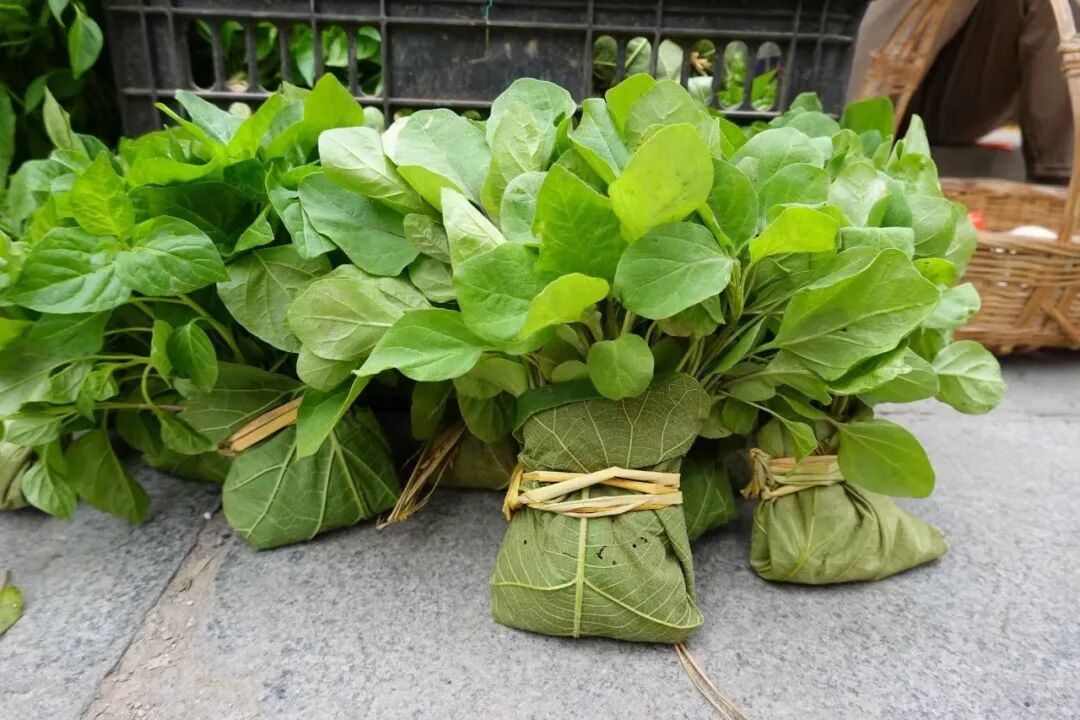
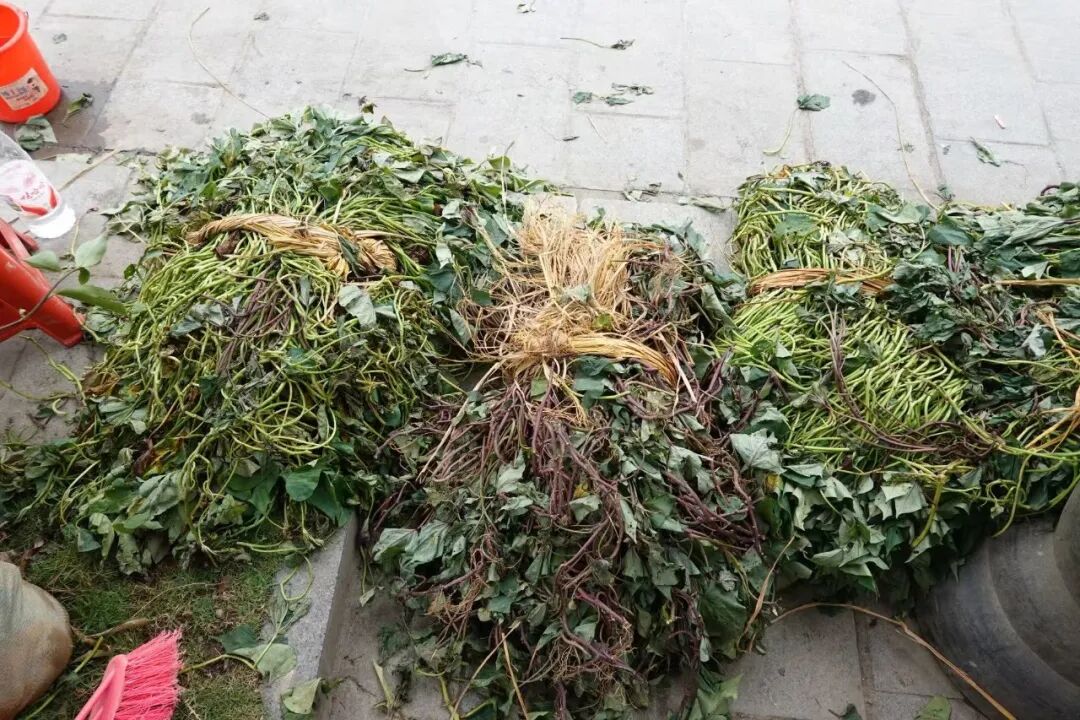
◉Those with their roots wrapped in leaves are vegetable seedlings that the local Yao people buy to plant.
Do you know this dyed cloth is quite expensive?
Live pigs and poultry have long vanished from Beijing’s markets, yet here they are lined up for trade: rows of local black piglets, chickens, free-range ducks, and even dogs, all kept in bamboo cages of varying shapes. Drawing on my earlier experience, I suspected the piglets were mostly intended for raising rather than immediate consumption—after all, there were butcher stalls right beside them, with large cuts of pork hanging for sale and weighed by the jin (approx. 500g). One meat stall also sold soy products, the vendor having set up a small grill to roast tofu. I was tempted to buy a piece to try, but surrounded by raw meat, I thought better of it.
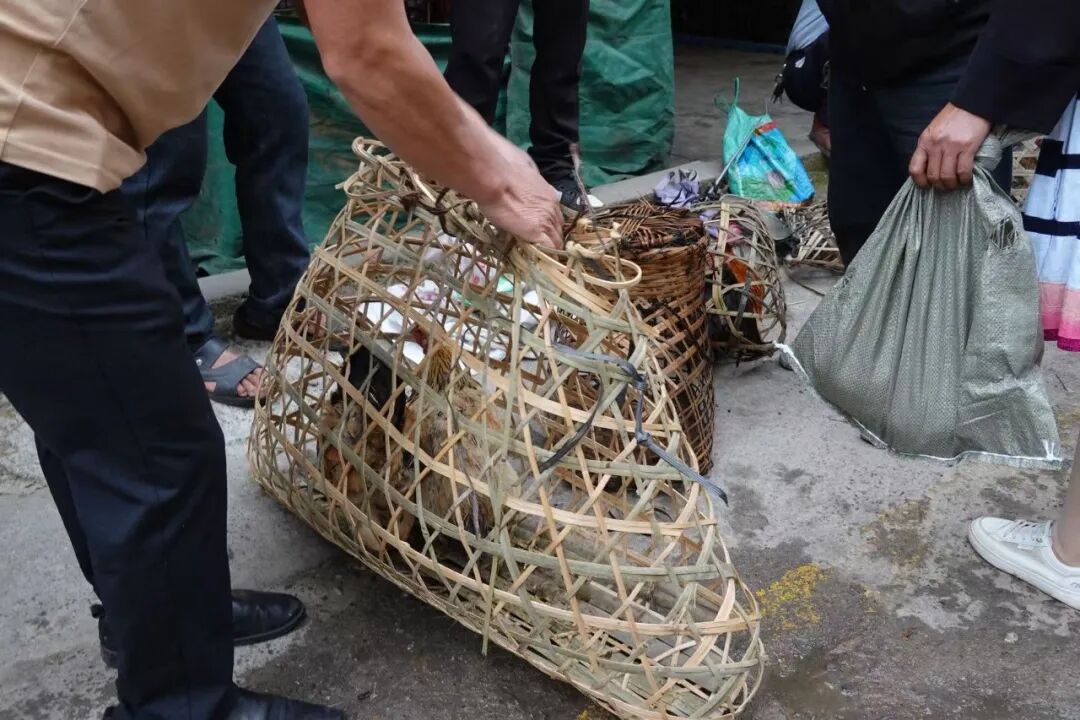
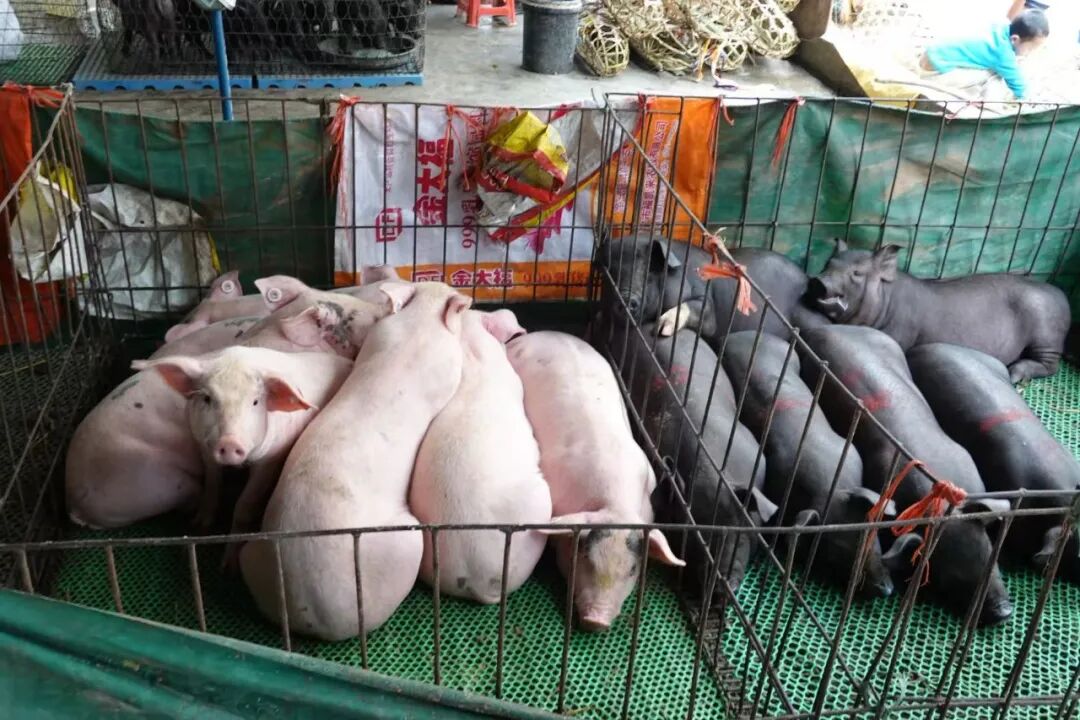
◉At the market, poultry and livestock such as chickens, pigs and dogs are each kept in their own cages.
There were also plenty of cloth stalls. The Baili Yao are a mountain-dwelling people whose livelihoods centre on farming and textile work, with weaving and dyeing playing a vital role in everyday life. I came across many fabric stalls, most displaying plain white unbleached cloth, alongside bundles of cotton and silk thread, plastic bags of white powder, small blue bottles, brushes, assorted beads… and gold and crimson silk threads plied together. The Baili Yao’s gold silk silkworms are highly regarded; it was common to see stalls offering golden silk cloth rolled up like rice paper—a plain-weave fabric made from the threads spun by these silkworms.
“This is it,” I thought to myself. Isn’t this exactly the Baili Yao silk-rearing culture Guan Qi had told me about?
Beside the stalls, Baili Yao women in striking traditional dress stood chatting and expertly selecting goods. I, on the other hand, wandered awkwardly between stacks of unbleached cloth and hanks of thread, unable to communicate and too shy to ask too many questions. When I finally came across a stall displaying dyed fabric sold by the bolt, I approached to ask the price. The young vendor paused for a beat. “This is quite expensive,” she said. “It’s all handmade and costs over a thousand.” Her words were gentle, but the implication was unmistakable: I was an outsider who didn’t understand the trade, and hardly the customer she had in mind.
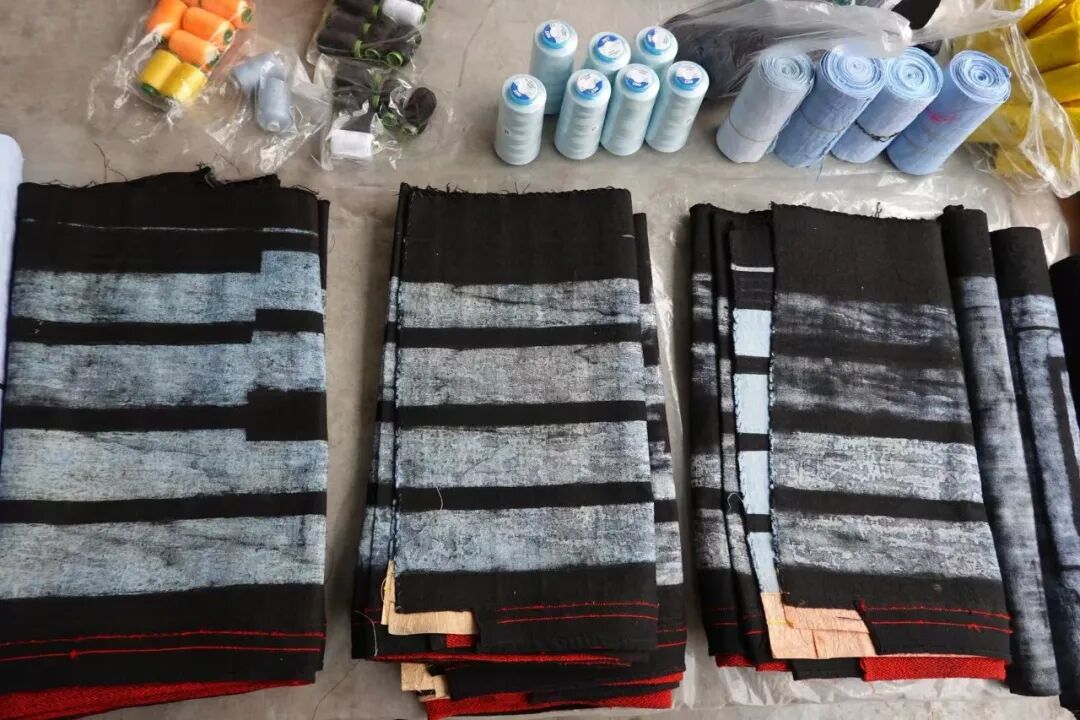
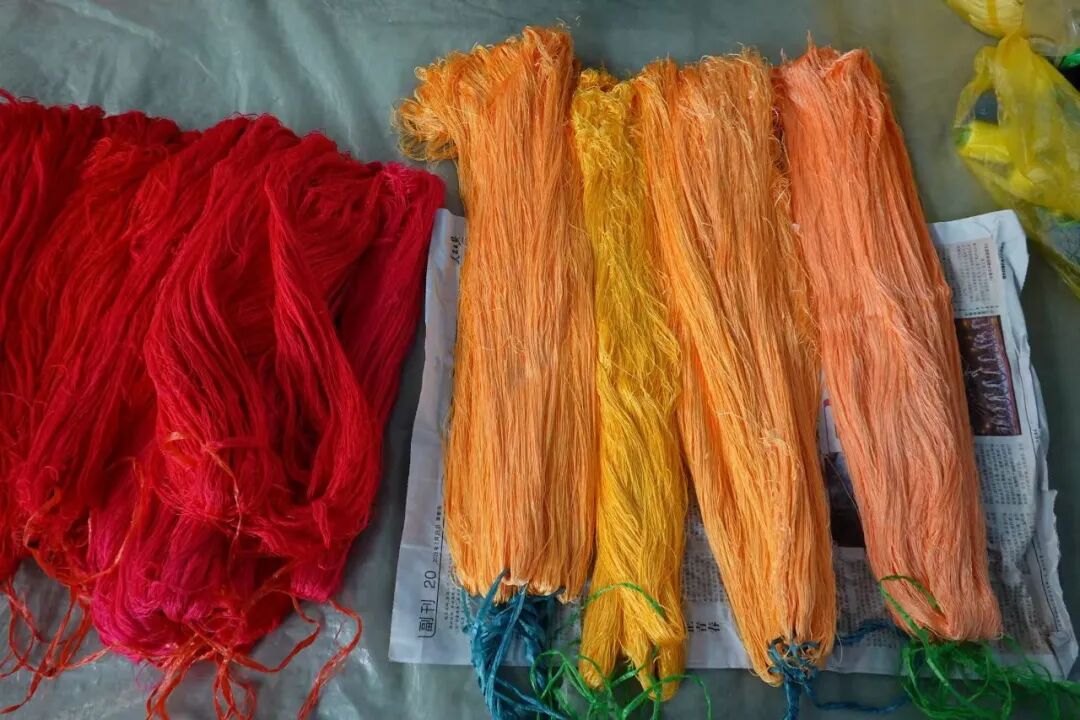
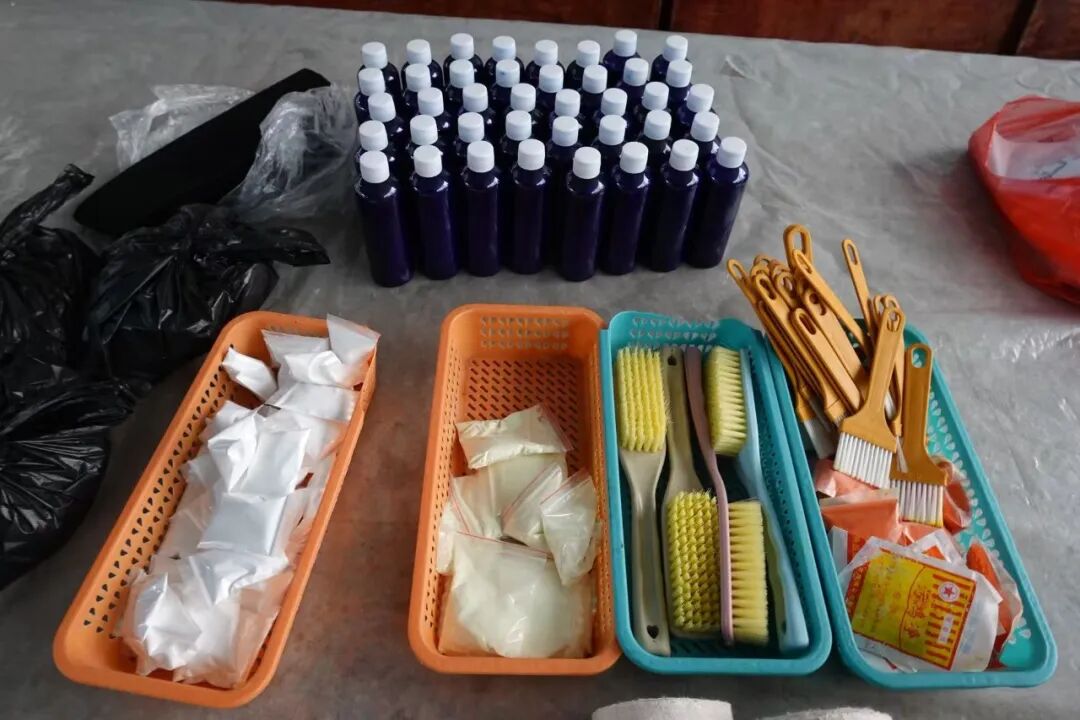
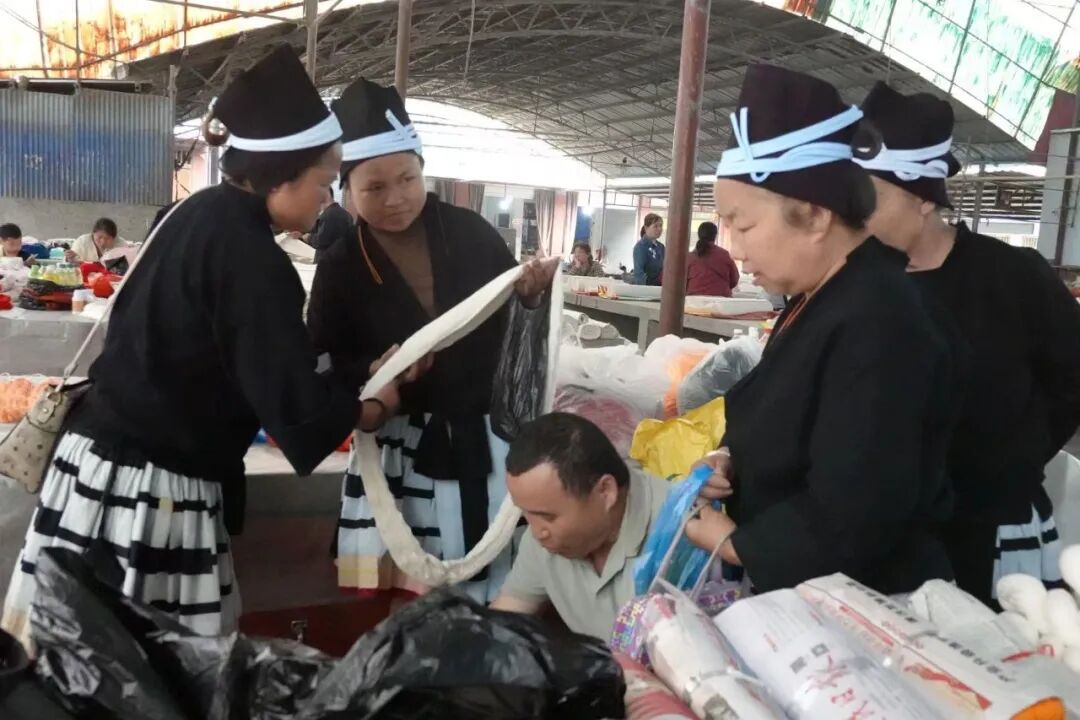
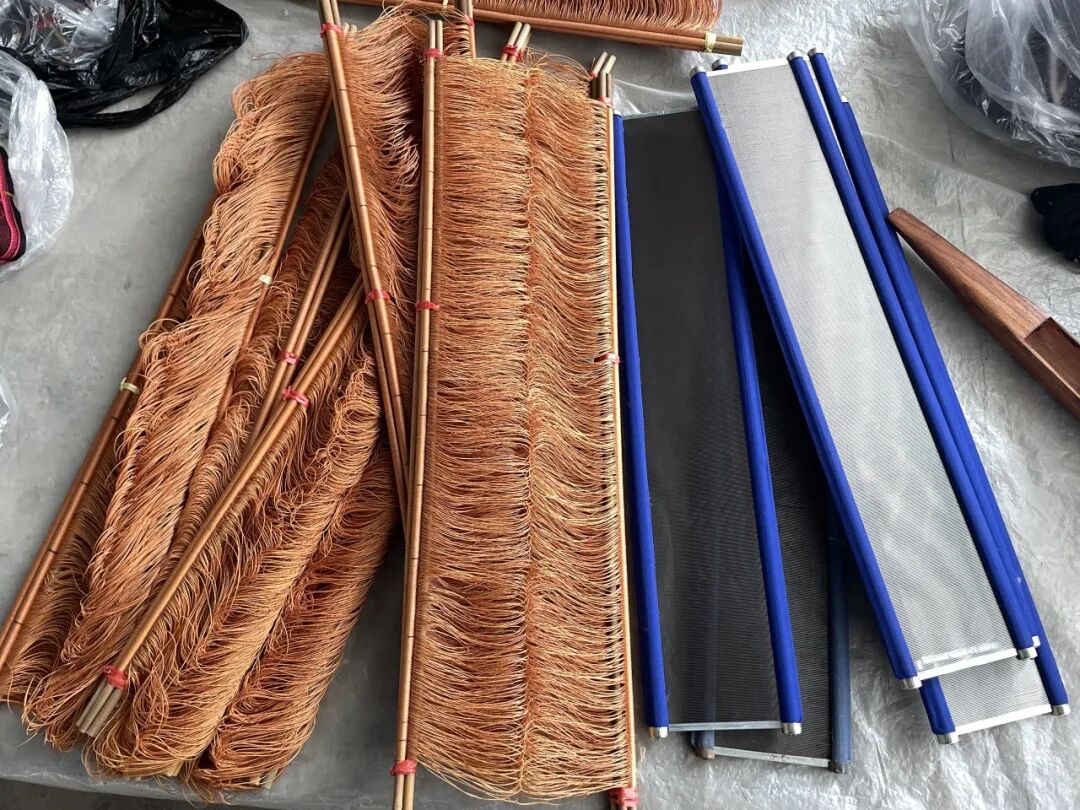
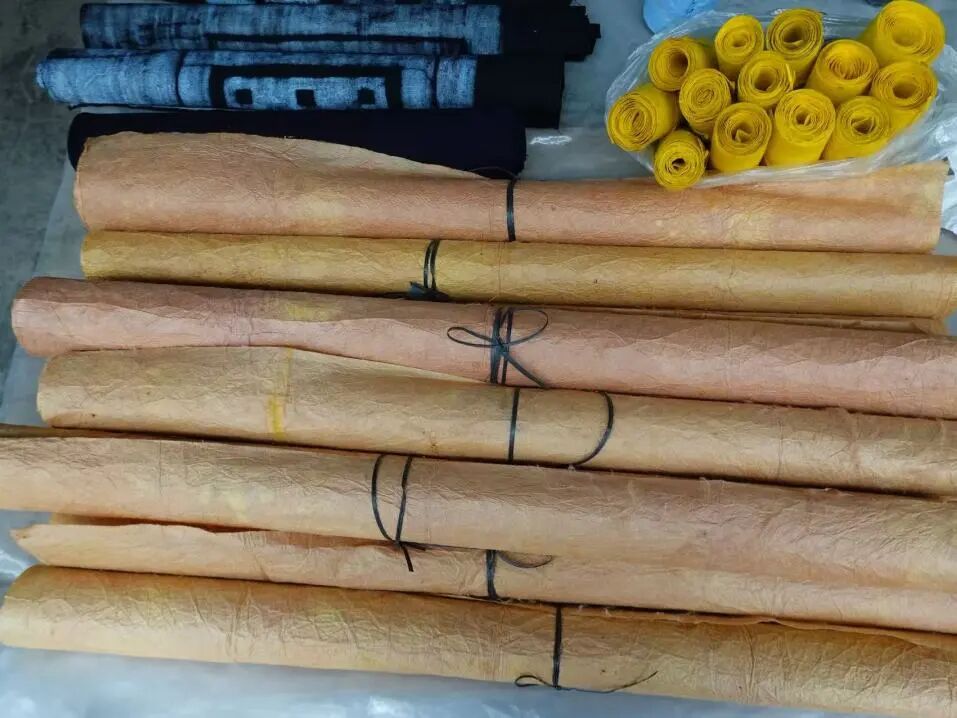
◉Various materials and supplies used by the Baili Yao for weaving and dyeing textiles. The final image shows flat silk cloth.
Beside some of the cloth stalls were plant roots and rhizomes I did not recognise. Indeed, staring at the 山勺 (a local wild plant whose starch is used to size yarn) and 薯莨 (a traditional root used for red textile dyeing) used for weaving and dyeing, I asked the laughably naive question: “Is this taro?”
I wandered through the market, surreptitiously observing and taking photos. Lacking any craft knowledge or local experience, I could hardly say what I was actually there to do. My curiosity was keen, yet unable to penetrate the surface, it left me with nothing but waves of mental friction.
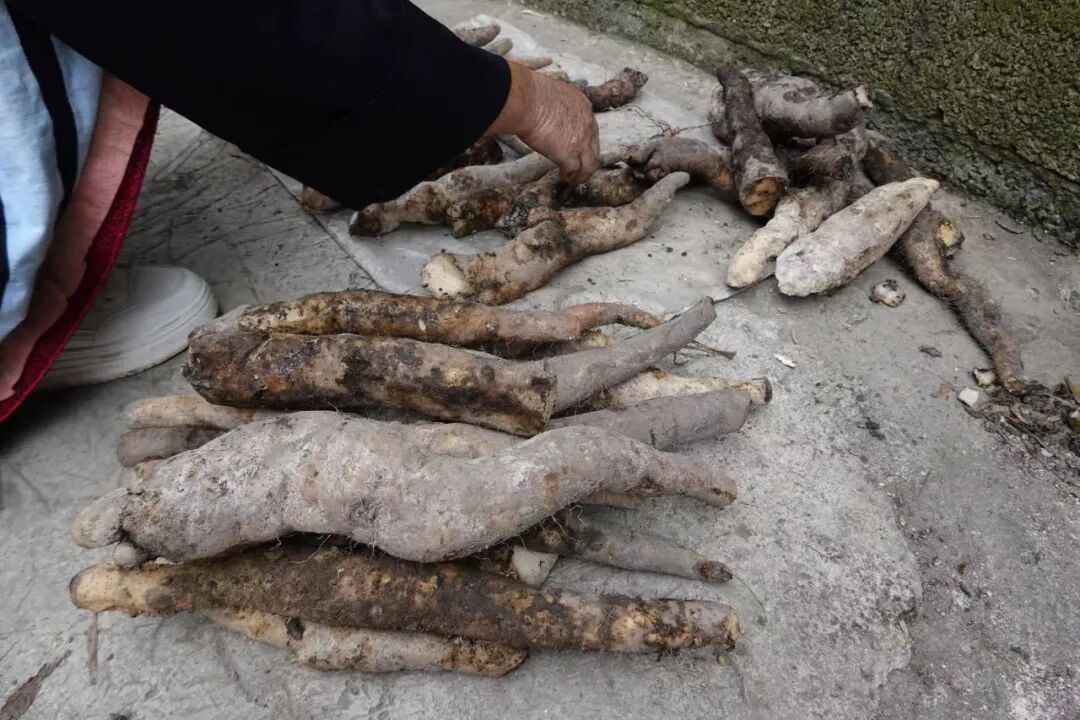
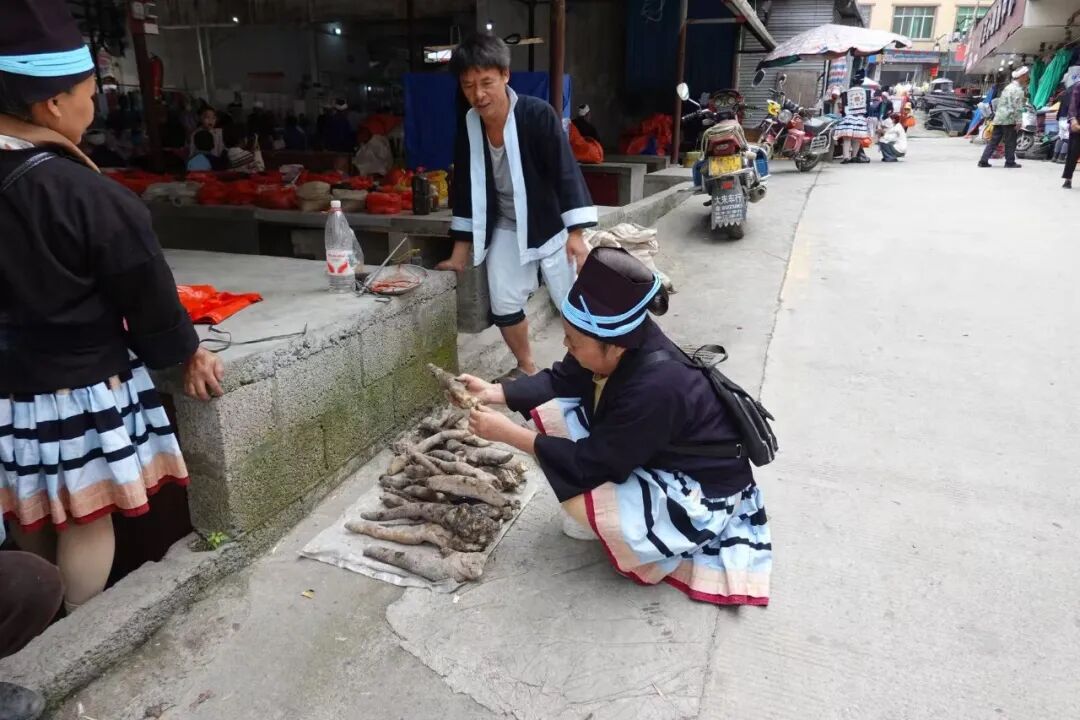
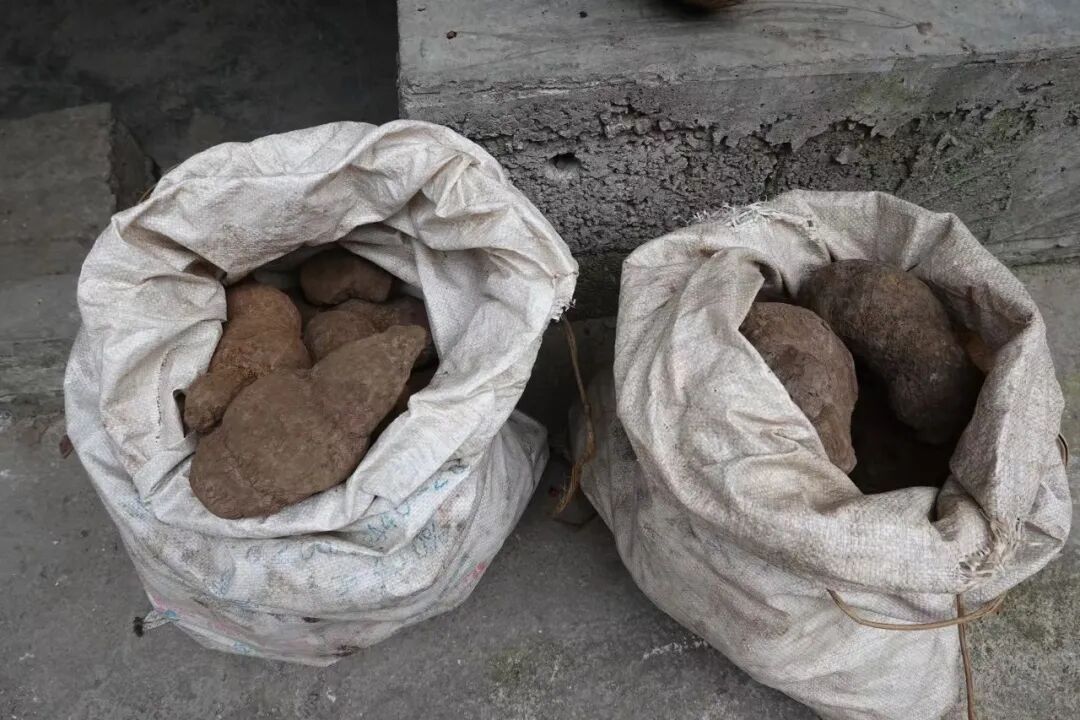
◉Top: shanshao (a wild medicinal plant), used for sizing yarn. Yarn boiled with shanshao becomes stronger and less prone to breaking; bottom: shuliang, used for dyeing fabric. Traditional Baili Yao textiles are black with a reddish undertone, and the “red” comes precisely from shuliang.
Shopping in the Maze
Suddenly, I heard someone calling my name from behind—it was Meng Fang, whom I had met at the music festival. ‘Come and join us for hemp-seed chicken hotpot!’
It turned out she had brought a group of friends to Lihu to visit the market. Meng Fang works for a social work agency in Guangxi and is a core volunteer for the Nanning Urban Farmers’ Market; she is also quite familiar with Lihu. They had come over from the music festival, planning to buy some provisions at the market before heading to the Baili Yao Ecomuseum to cook and eat. I had been planning to visit the museum myself, so it was a wonderful coincidence.
Having found my companions, the market visit instantly took on a new dimension. Following Meng Fang, my aimless wandering and that tension between gaze and counter-gaze disappeared. She navigated the market with speed, as if she already knew exactly where everything was.
She first stopped at an unassuming stall and pointed to a bag of grey-brown granules. ‘We need to pick up some hemp seeds,’ she said. The vendor scooped out a weighed portion into a bag using an old iron bowl. Hemp is a primary source of oil and food for the Baili Yao. Meng Fang told me that locals grind the seeds with water, strain out the pulp, and typically use the liquid to cook soups, while the leftover pulp serves as animal feed.
It reminded me of the Guangxi oil tea I had drunk a few days earlier in Nandan. Apparently, some varieties are made by stir-frying the tea with hemp seeds to infuse the flavour.
While the stall owner went off to grind the hemp seeds, Meng Fang casually picked up a bottle of ‘sour meat’ from the side. The clean meat packed inside was pinkish in colour, speckled with finely chopped yellow millet grains. She explained that this was another typical local preparation: raw pork is sealed and fermented with salt and millet. Left to rest, the meat gradually sours and effectively ‘cooks’ itself. Because sour meat keeps well, Baili Yao households often keep a supply on hand. It can simply be sliced and served, or steamed and stir-fried. Later, I tried a piece raw; it carried a distinctly refreshing, tangy aroma, entirely free of any gamey heaviness.
Winding through more narrow turns, we stopped at a stall lined with square plastic containers and glass bottles to pick up two bottles of locally brewed spirit. Because this local liquor is so often packaged in handy, rectangular plastic bottles, locals jokingly dub it the ‘Guangxi briefcase’. I had heard the name at the music festival, and now I was finally seeing it in its natural habitat at the market.
Finally, we circled back to the meat stall that had given me pause earlier. The proprietress was turning blocks of tofu on a grill. On closer inspection, I realised it was stuffed tofu with a meat filling sandwiched in the centre—no wonder the stall was set up right next to the butcher’s. Meng Fang bought a large bagful. As the woman used tongs to pack the fried tofu pieces into a bag, she chatted and laughed with her.
We headed out with our purchases, making for the next stop. At the time, I was simply tagging along with Meng Fang, buying what she did, without giving it much thought. It was not until I returned to Beijing and began drafting this piece that I gradually realised: hemp seeds, sour meat, and “briefcase” liquor all sit at the very heart of the Baili Yao’s everyday diet. The market in Lihu belongs to those who truly understand life here; only they can swiftly pinpoint their targets within the maze-like market.
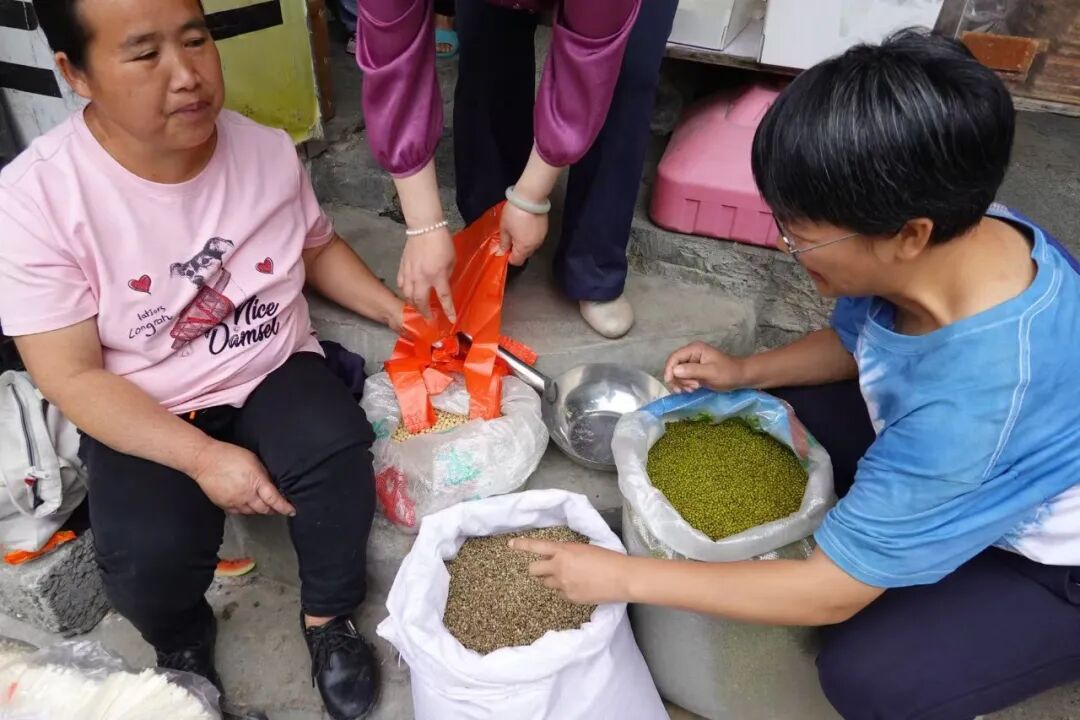
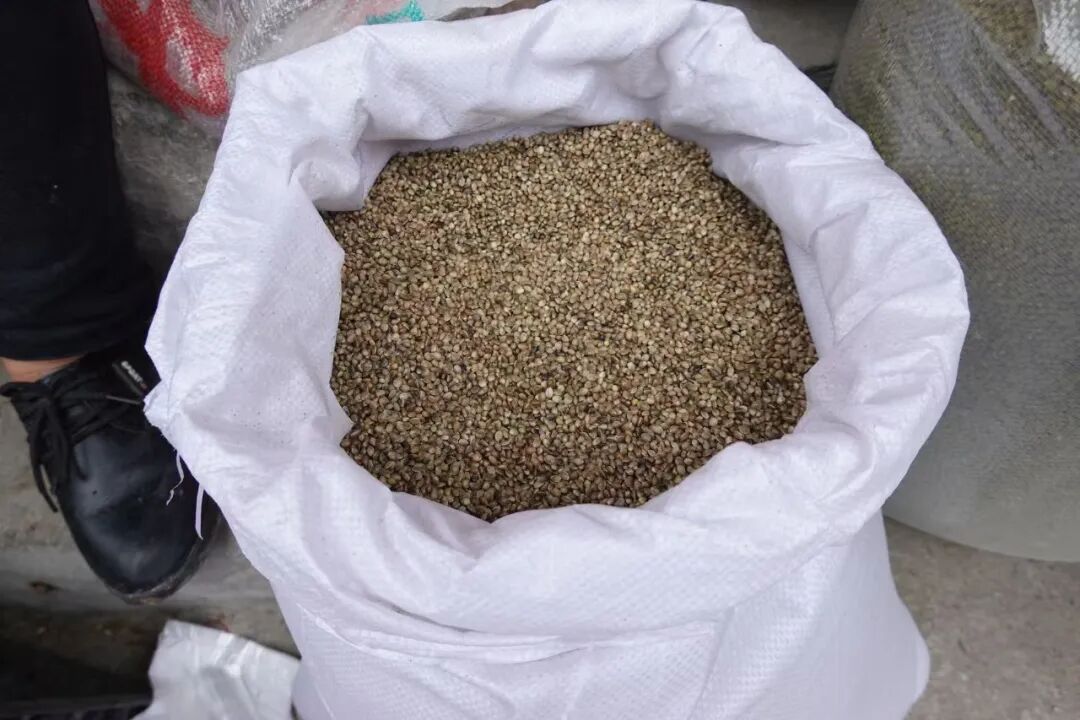
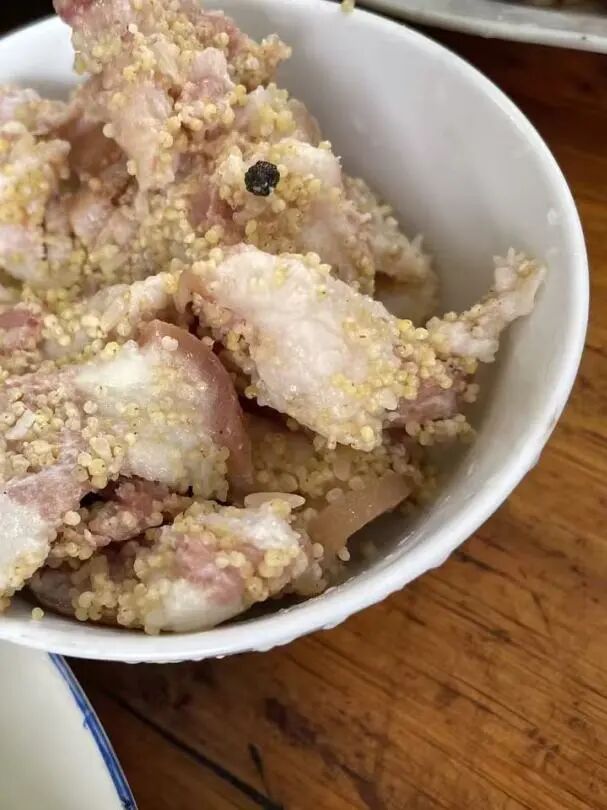
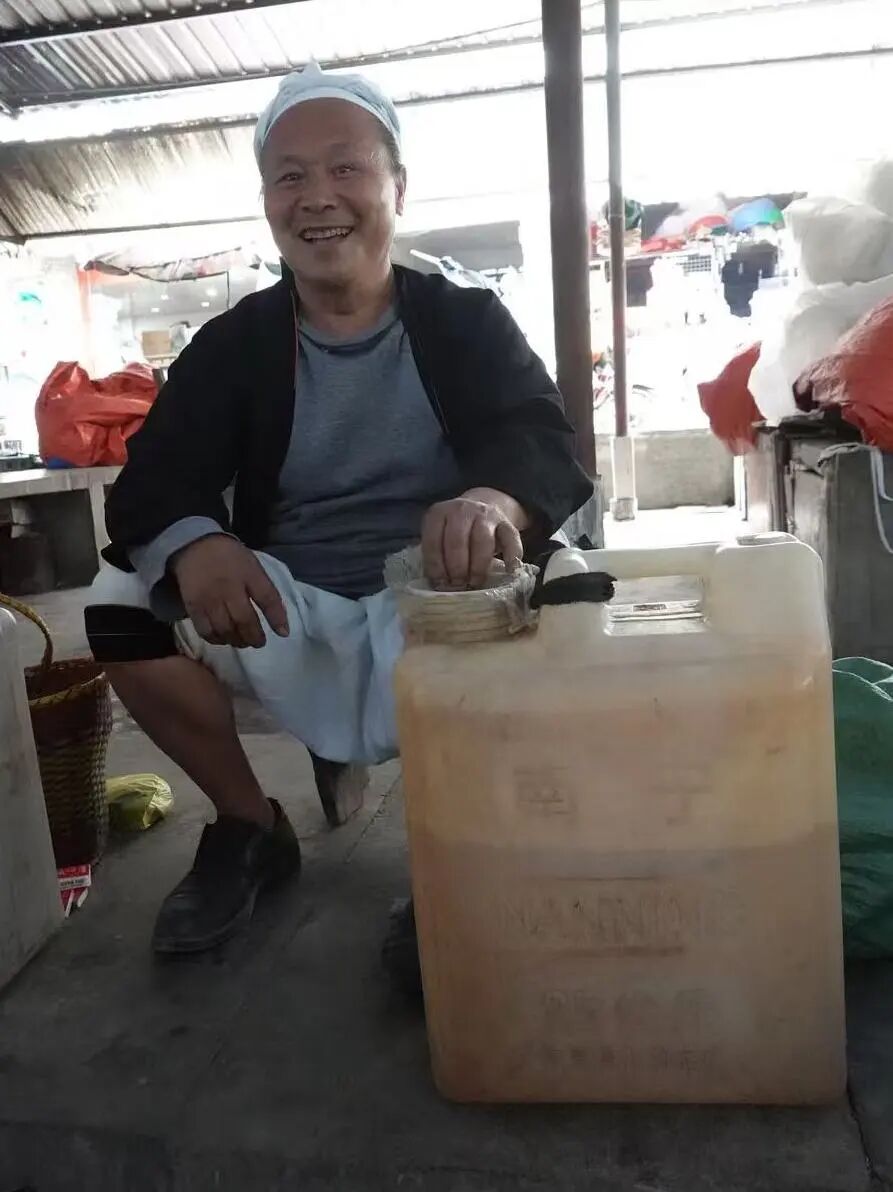
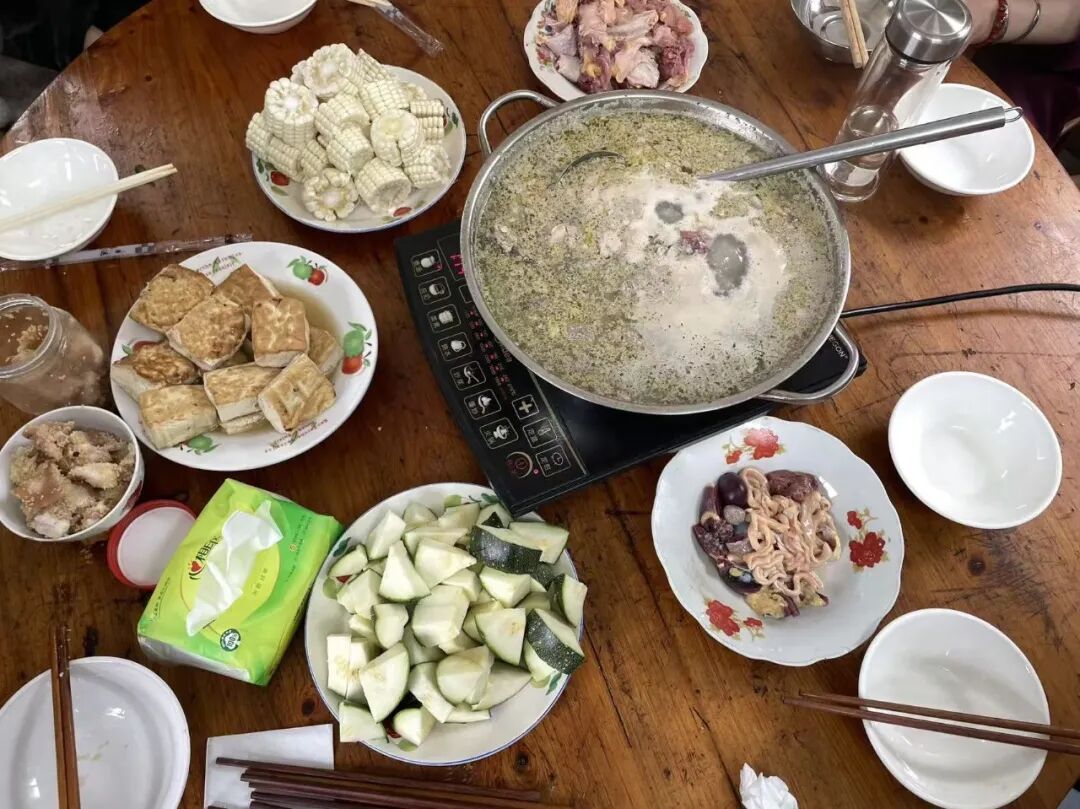
◉Meng Fang selecting hemp seeds, sour meat, ‘briefcase’ liquor, and a handcrafted feast at the museum.
A museum that isn’t really a museum
Carrying our market haul of ingredients, we took the bus up the mountain to the Baili Yao Ecomuseum, perched halfway up the slope.
I’d originally come to ‘catch up on my studies’—after all, who visits a museum without expecting to learn something? But as I followed the group down the mountain, the focus suddenly shifted to cooking and eating.
This is more than just an exhibition space; it extends into several surrounding Baili Yao villages. There are no hard boundaries here; display and daily life are seamlessly intertwined. The provisions we bought at the market were taken into the kitchen, washed, chopped, and cooked, swiftly turning into a feast. Sitting to the side and sharing the meal, I gradually realised that pinning down where a “visit” actually begins was rather elusive.
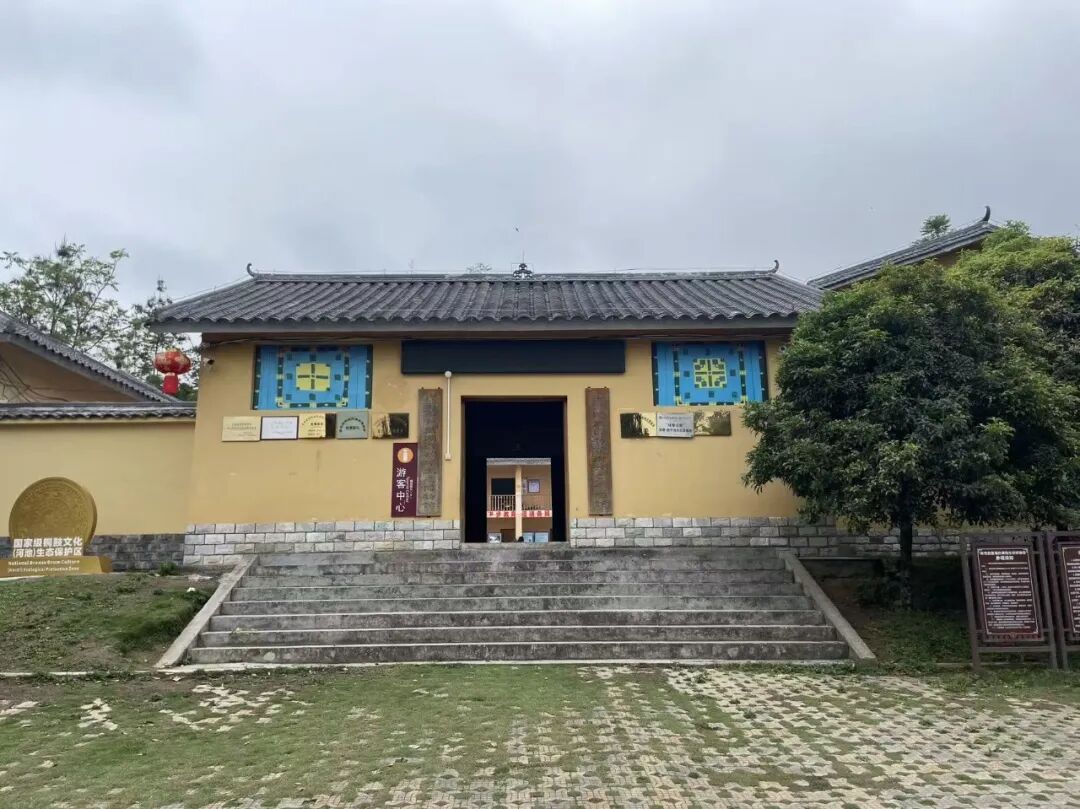
◉From the outside, the Baili Yao Ecomuseum looks entirely unassuming, yet step inside and you’ll discover a world of its own.
Beyond the kitchen, the open ground out front was just as busy.
A few wooden stakes are driven into the ground, cordoning off a square patch. Threads are stretched layer upon layer between the stakes, pulled remarkably taut. Three Baili Yao women stand at separate sides, each carrying a frame wound full of yarn. They move slowly along the perimeter. As the thread unspools from the frame, it runs alongside the existing layer and is drawn to the next corner. Reaching a corner, they pause briefly, rotate the frame in their hands, and the thread feeds through smoothly.
I stood by watching for a while before I realised they were doing what’s known as “running thread” – a traditional technique for tensioning and preparing the yarn.
The three women spoke little, yet their rhythm remained perfectly in sync. When one reached a corner, the others would follow and turn; if one slowed, the entire circle would ease to match her pace. Between them, that loop of thread gradually grew thicker and tighter.
I shifted forward a couple of steps to get a better look. The weaver murmured a quiet word, gesturing for me to keep my distance. I stood still.
Afterwards, Meng Fang explained that the Baili Yao observe certain taboos during yarn tensioning, such as never stepping directly over the threads, for fear of disrupting the yarn’s “fortune” and “qi”. This is likely a tacit understanding among the women: a smooth process with no tangles is taken as good fortune; should the work falter, they might simply feel that their own “luck” is at odds with the task.
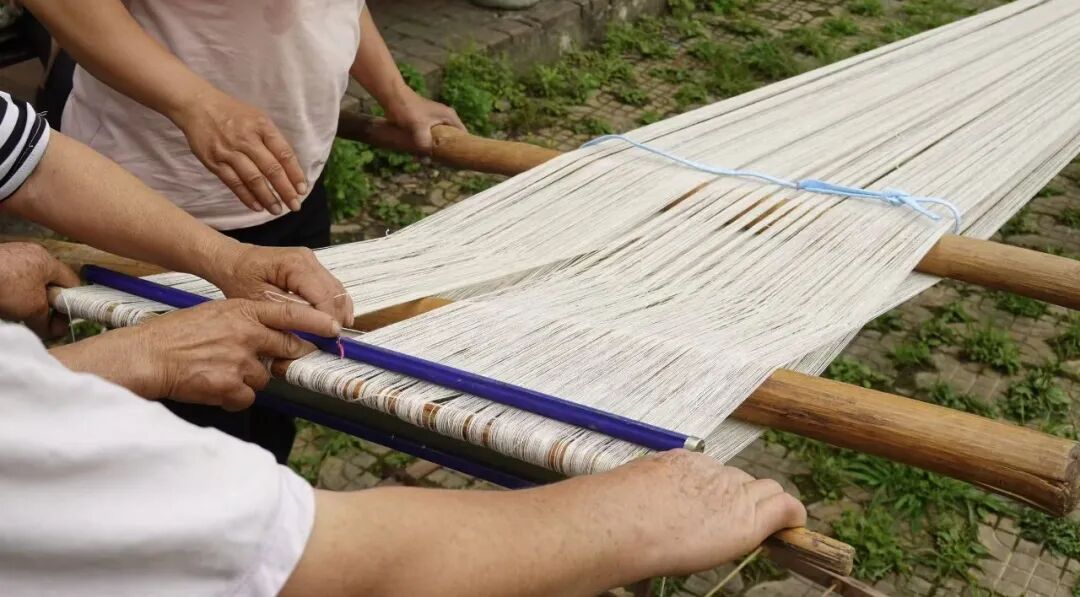
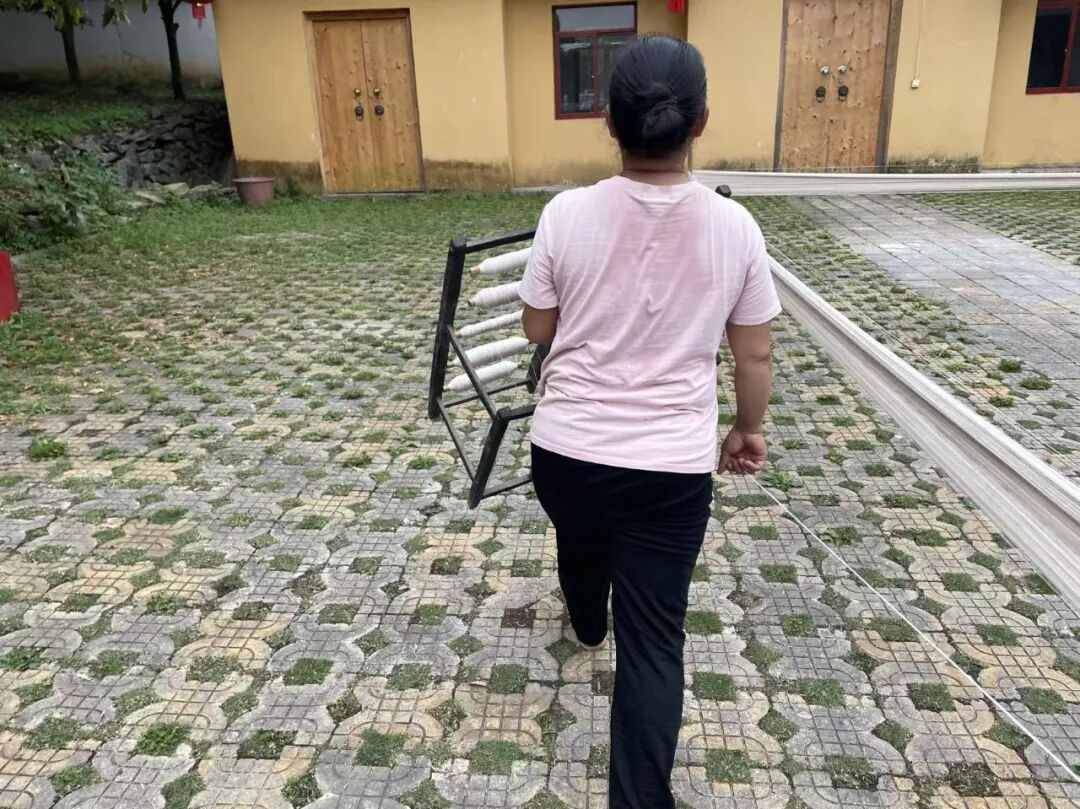
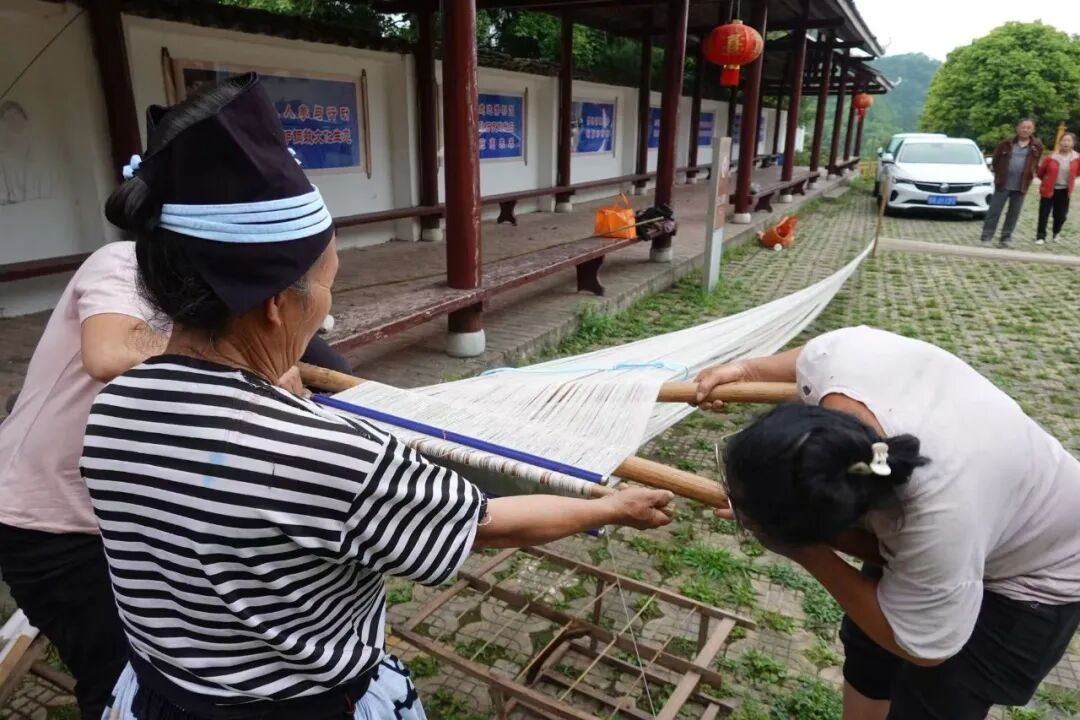
◉ The yarn tensioning process requires the participating artisans to coordinate closely and work together seamlessly.
Silkworms are reared on the upper floor of the museum.
A roomful of golden silkworms rests in shallow bamboo trays, quietly nibbling mulberry leaves. Across the room, some have already begun to spin. Rather than forming individual cocoons, they weave back and forth across wooden boards, gradually laying down a continuous sheet. Staff periodically rotate the boards, taking advantage of the silkworms’ instinct to avoid light during the spinning phase; turning the boards encourages them to change direction, which keeps the silk sheet flat and even. Spinning silkworms demand close attention, and staff sometimes keep vigil day and night, monitoring their health and promptly clearing away droppings to prevent them from being woven into the fabric and ruining the silk.
I thought of the paper-thin rolls of silk cloth I had seen at the market—now I knew exactly how they were made.
The dyed fabrics I saw at the stall, with that narrow strip of gold set into the edges, must be this precious silk cloth—ready-to-sew lengths of material used directly to craft the pleated skirts worn in everyday life by Baili Yao women. At the time, I hadn’t been able to see how they were connected. Now, having witnessed the intricate process with my own eyes, it all fell into place: the exorbitant price of the dyed cloth on the stall, and the young vendor’s hesitant, polite refusal.
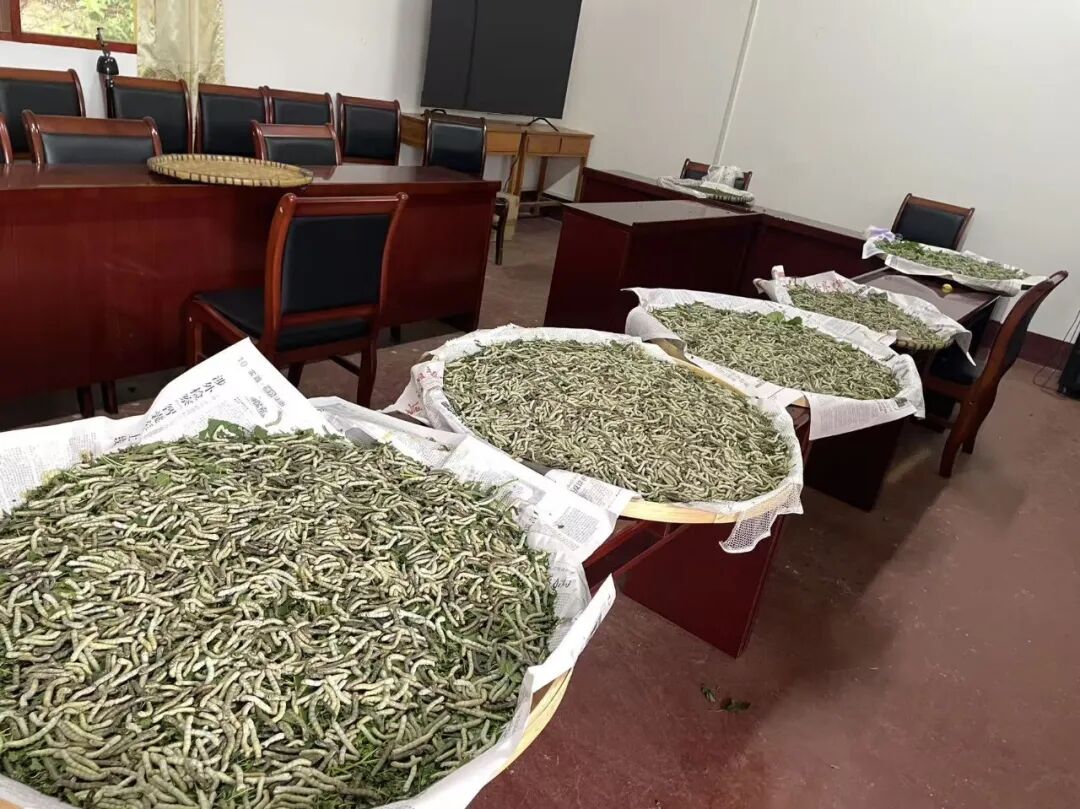
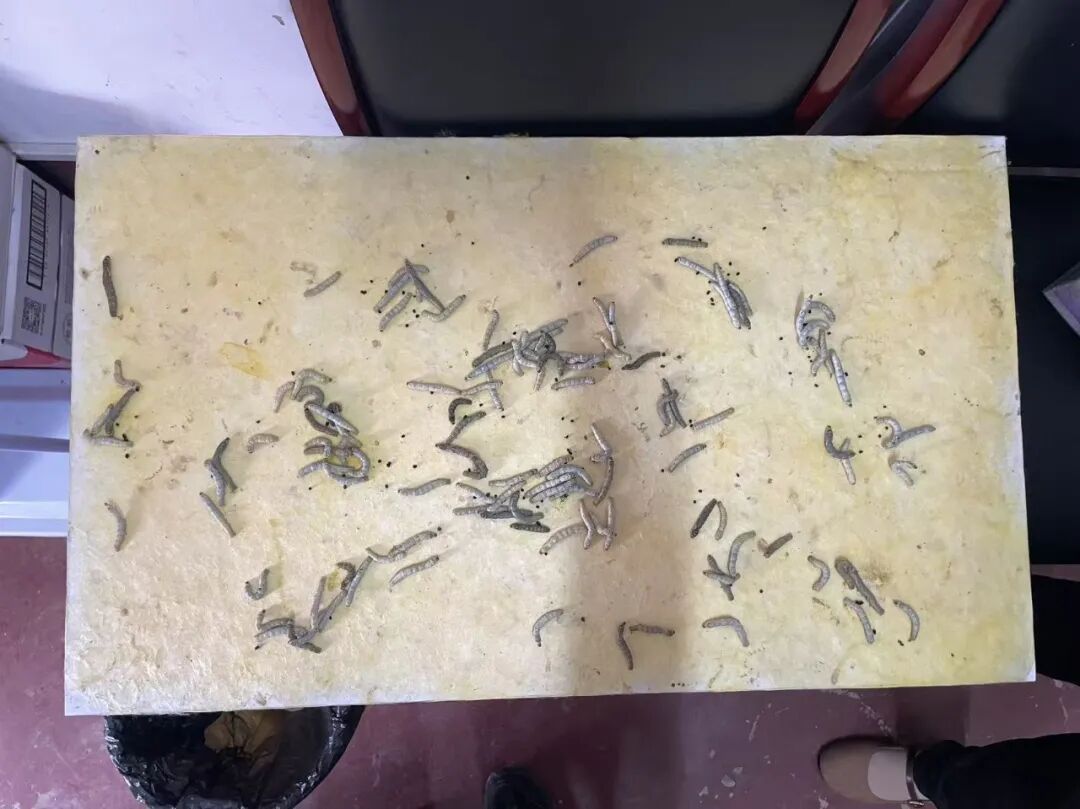
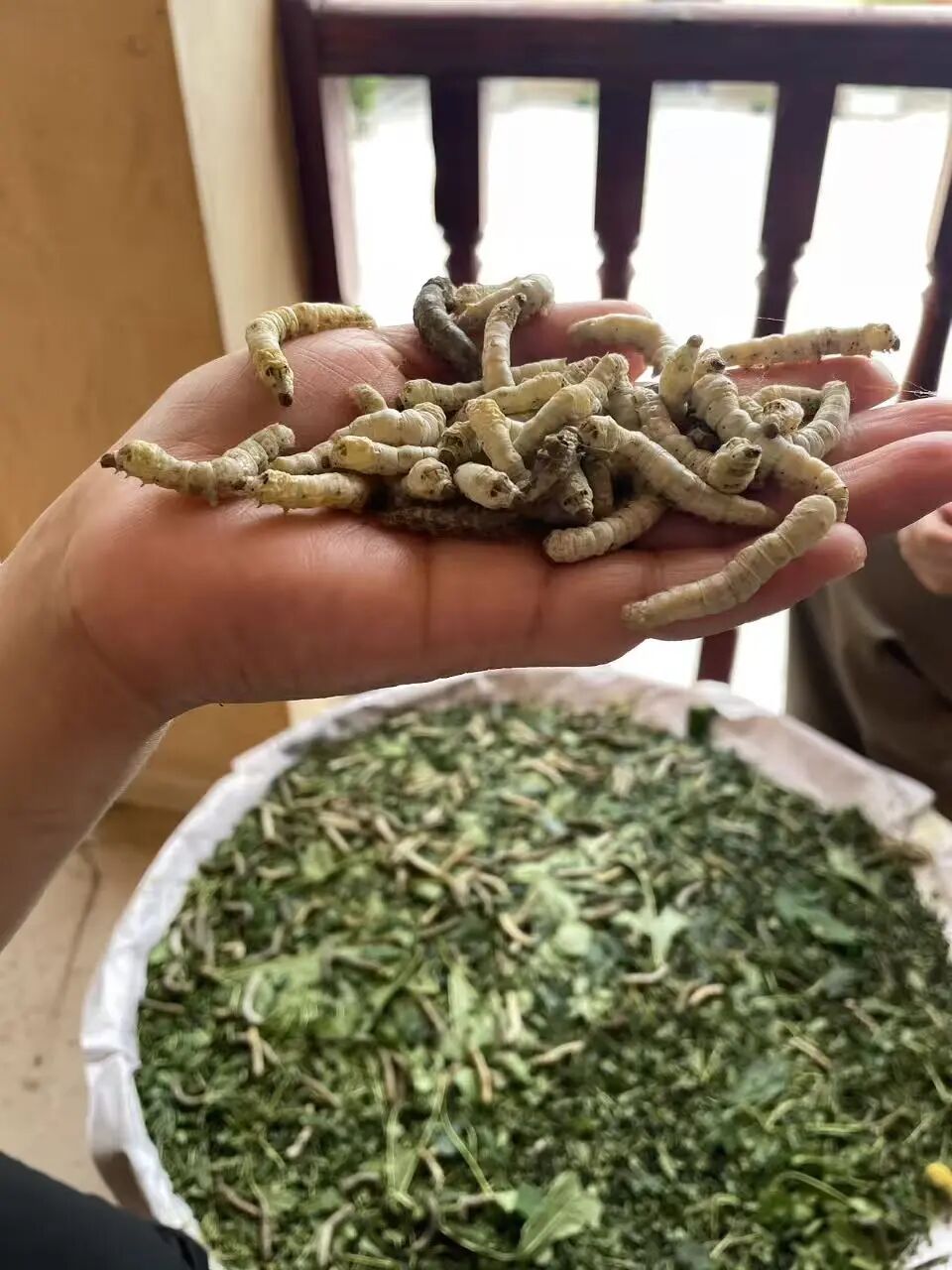
◉The second floor of the Baili Yao Ecomuseum houses a dedicated silkworm-rearing room, nurturing the local Yao silkworms that spin golden thread.
As I ate and wandered, it struck me that the Baili Yao Ecomuseum is far more than a conventional museum; it encompasses three neighbouring Yao hamlets: Manjiang, Huatu and Huaqiao. This is precisely what an ecomuseum is: an institution without walls, seamlessly woven into its surroundings to safeguard both the natural landscape and the community’s living environment. It makes no attempt to strip culture from daily life and preserve it behind glass. Here, static exhibits coexist with genuine agricultural work and domestic routines. To the locals, this is first and foremost their home. For an outsider like me, to step into such a space and briefly take part in its rhythms is a privilege in itself.
Ripples of the Market
If attending the market at the crack of dawn is like dropping a stone into a pond, the experiences that follow resemble the ever-widening ripples it leaves behind. The museum marked the first ripple. Stepping away from the museum’s main exhibition area, we set off towards the surrounding ecomuseum villages. The settlements themselves are small, but the tracks are intricate enough to need the guidance of a kind friend. Dense, vibrant southern foliage lined the route. Beneath trees or beside water sources stood several altars and shrines, quiet testaments to the Baili Yao’s animist traditions. Villagers hung out dyed fabrics, vests and skirt panels to dry in the sun.
The villages also bear the imprint of other influences. Government-funded pavilions and walkways, designed with a distinctly tourist-friendly aesthetic, stand alongside traditional granaries that, though no longer in use, have been preserved by policy. A few dry toilets have been installed too. Some see regular use, while others sit half-forgotten.
So far, the Baili Yao have struck me as both steadfast and conservative, yet possessing a remarkably gentle and quiet openness to outside influences. It brings to mind the concept of the “direct-transitioned nations” (a historical policy term for ethnic groups integrated directly into socialist systems), an idea that now demands careful reflection. Under this paradigm, history resembles a one-way road toward a single destination, with some walking ahead and others lagging behind. As I piece together the disparate scenes witnessed in Lihu, a fascinating pattern of evolution emerges. Within the same valley, things are not merely supplanting one another; instead, they interweave, merge, and settle in layered accumulations. In any case, it is decidedly non-linear.
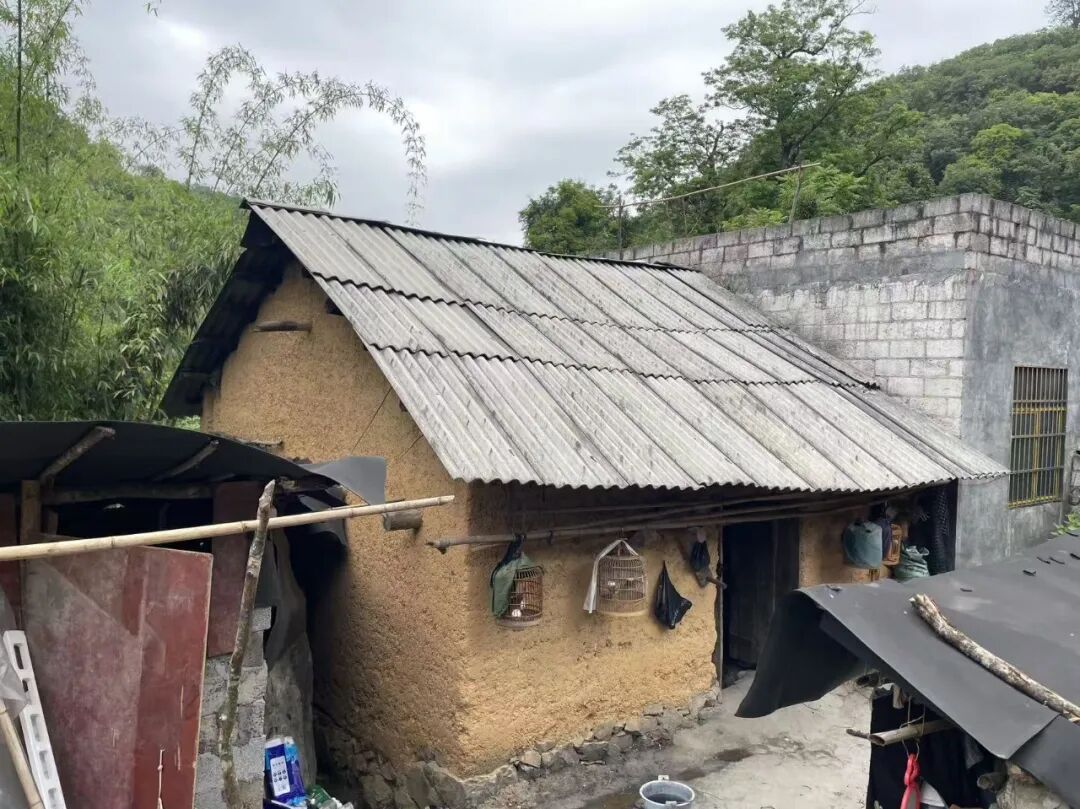
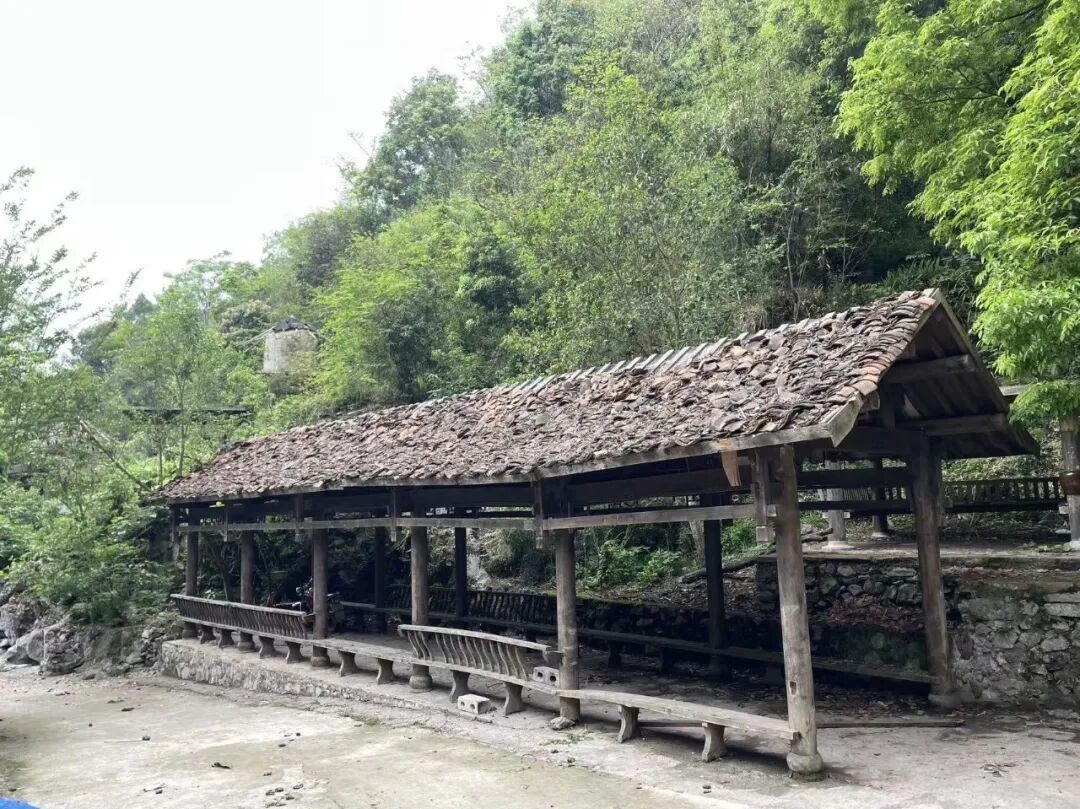
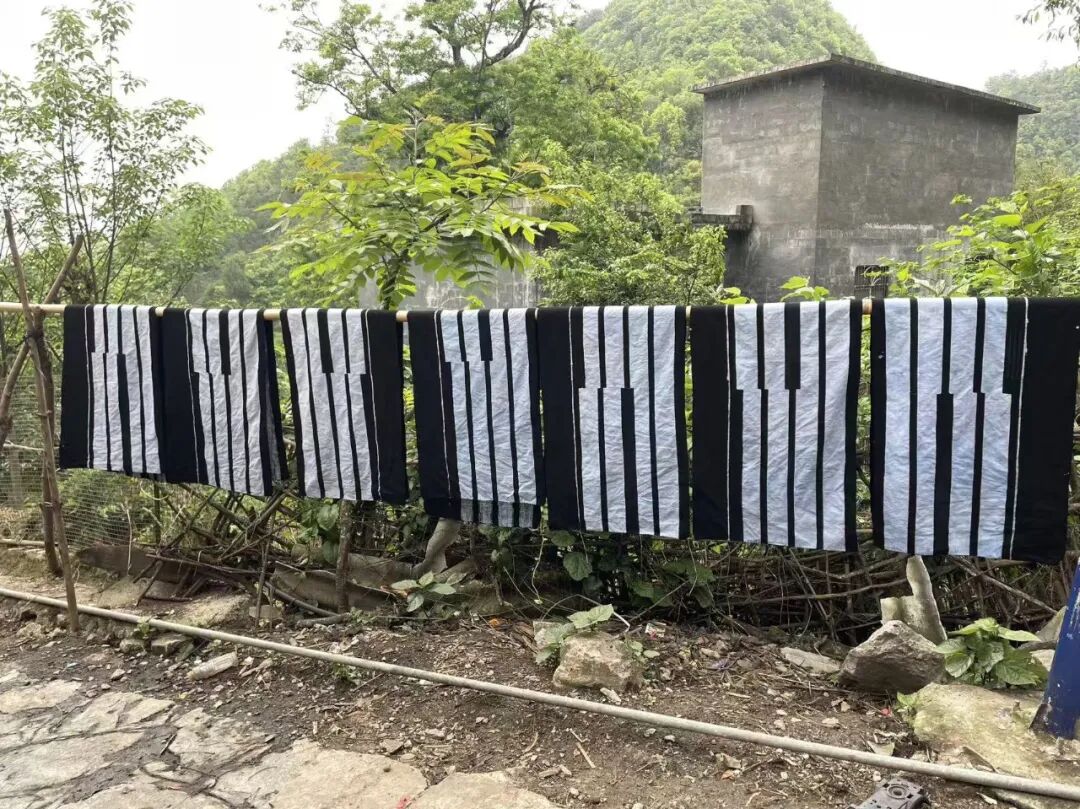
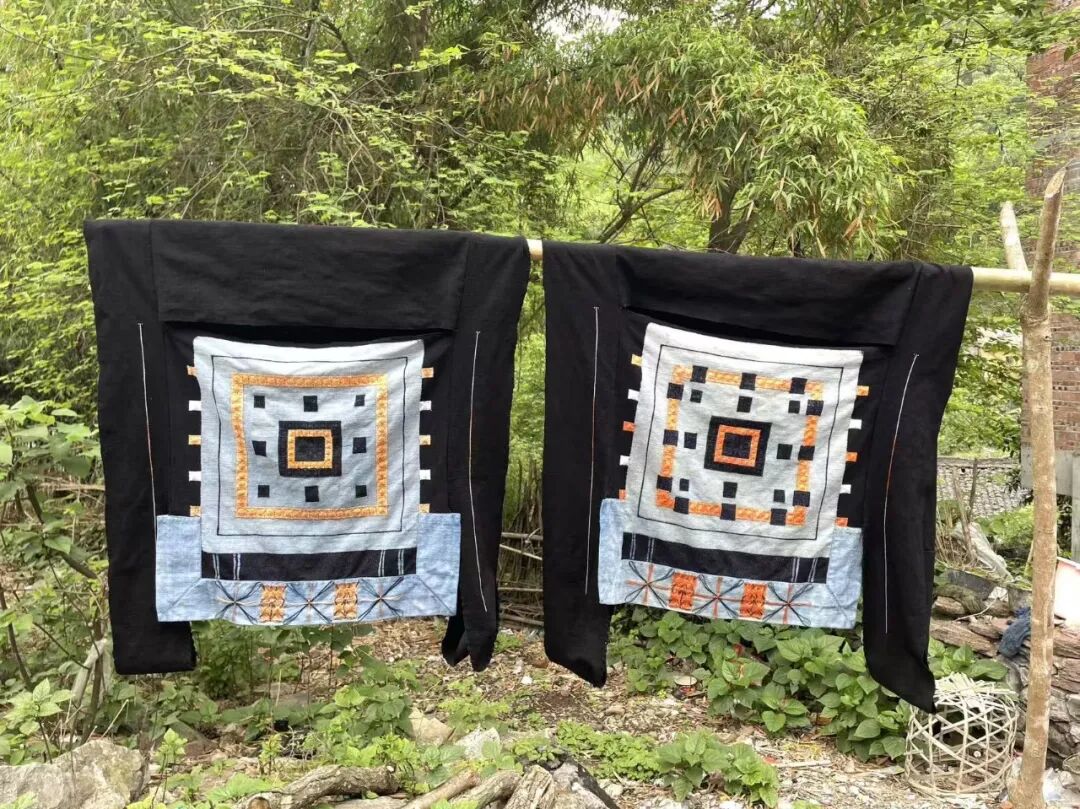
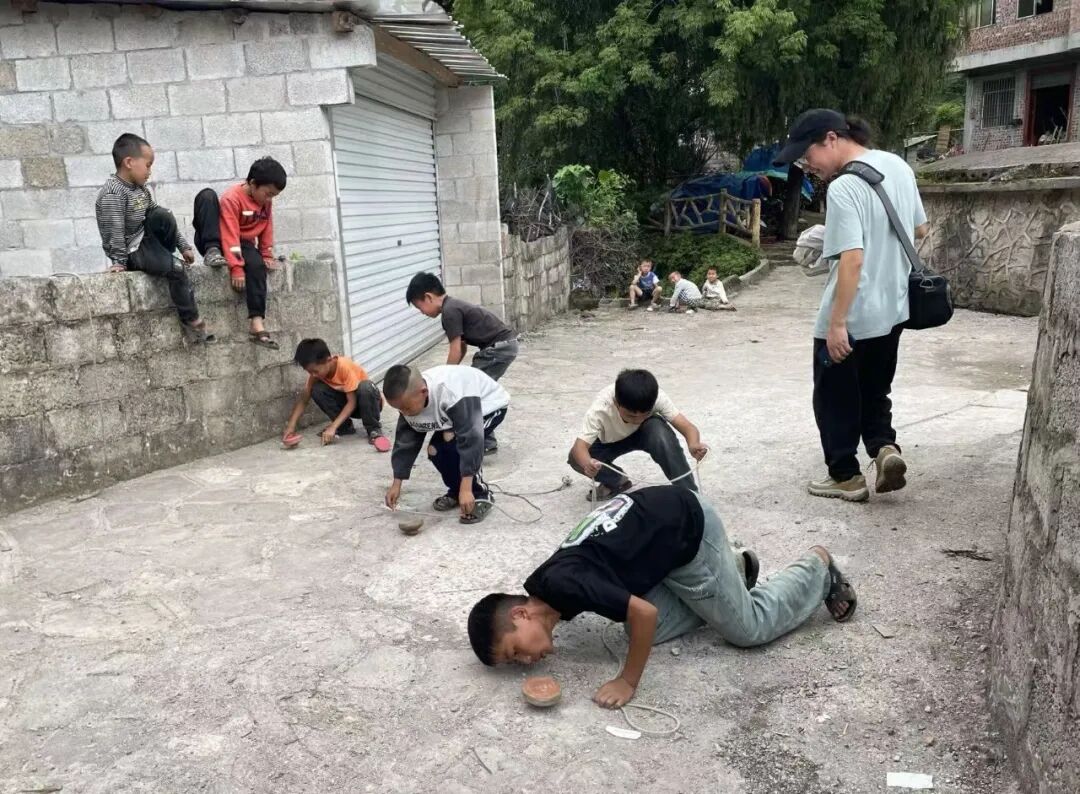
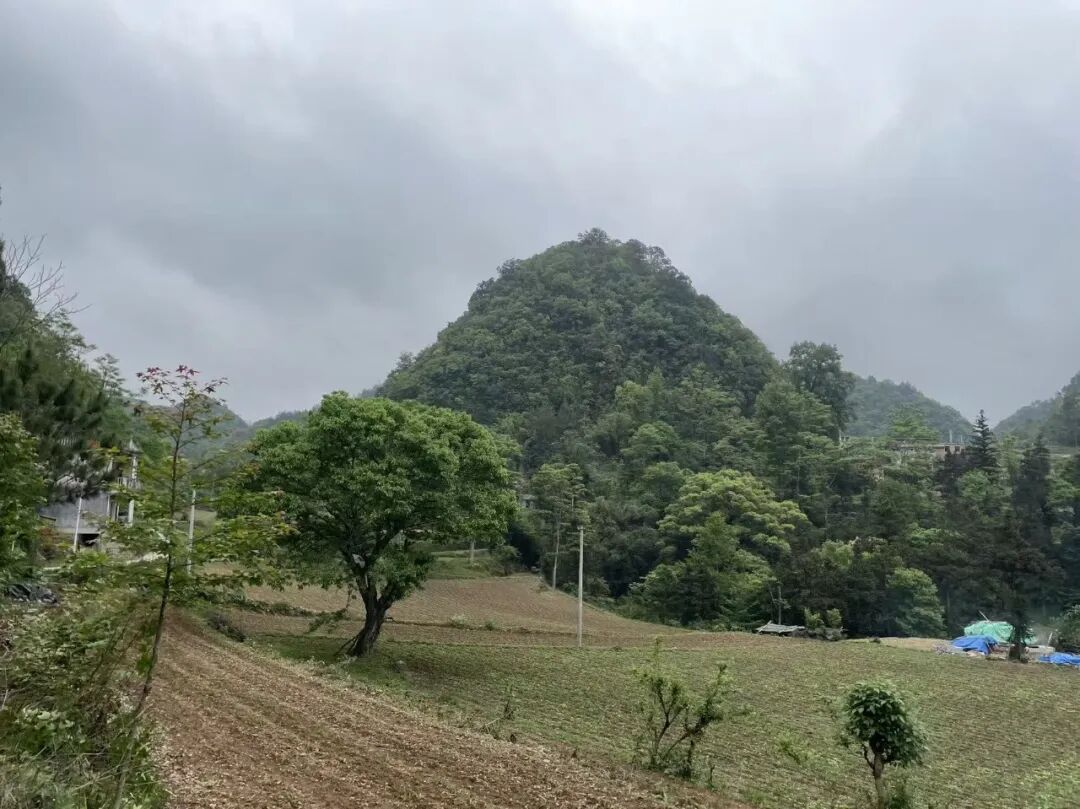
◉The Baili Yao Ecomuseum encompasses three surrounding villages: Manjiang, Hatu, and Huaqiao, where local Yao communities live and work.
The “ripples of the market” reach their final circuit, carrying us further out to Moling hamlet in Yaoli Village. There, I see wider tracts of farmland stretching across the valleys, along with an intercropping system that follows Baili Yao agricultural tradition—mixing crops such as maize and legumes. In early spring, as seedlings push through the soil and an evening breeze sweeps across the karst mountains, I am reminded of those roots wrapped in leaves at the market. They are now carrying damp earth, quietly taking root on some hillside. Descending from the field ridge, we also watch village women stripping the resin tree sap from the dyed cloth. It requires boiling and scrubbing in alkaline water, filtered through rice straw ash, to remove it entirely—a process that certainly looks more labour-intensive than yarn tensioning.
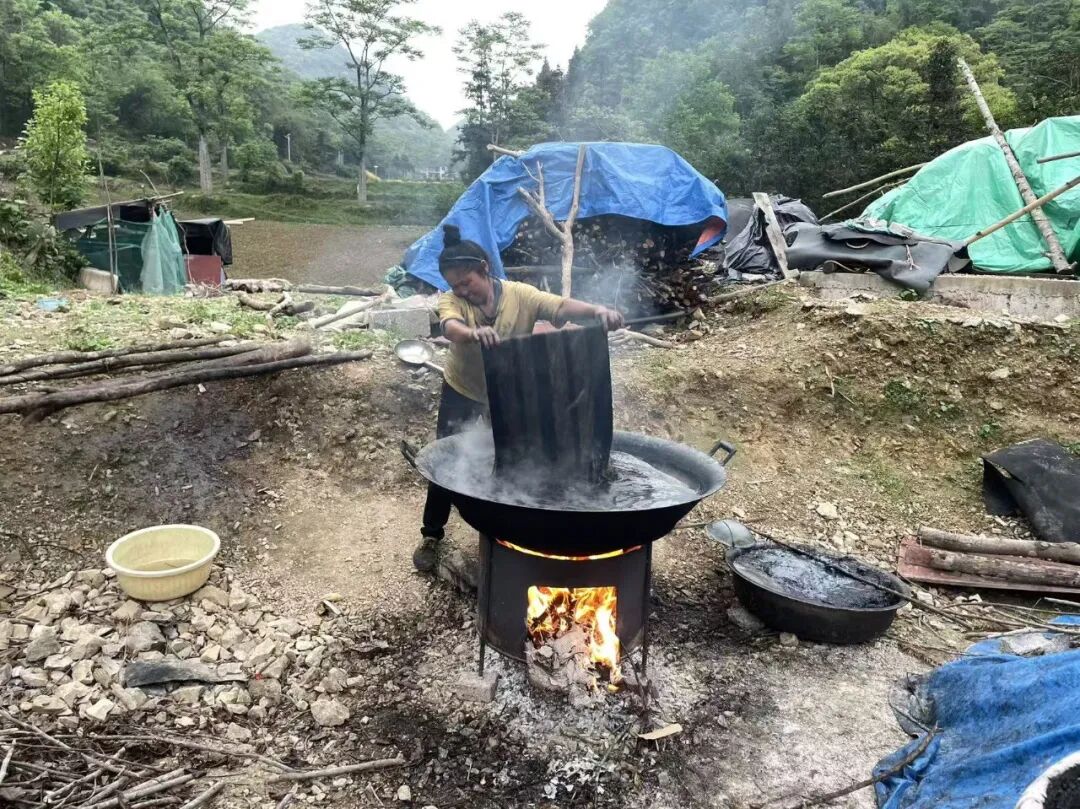
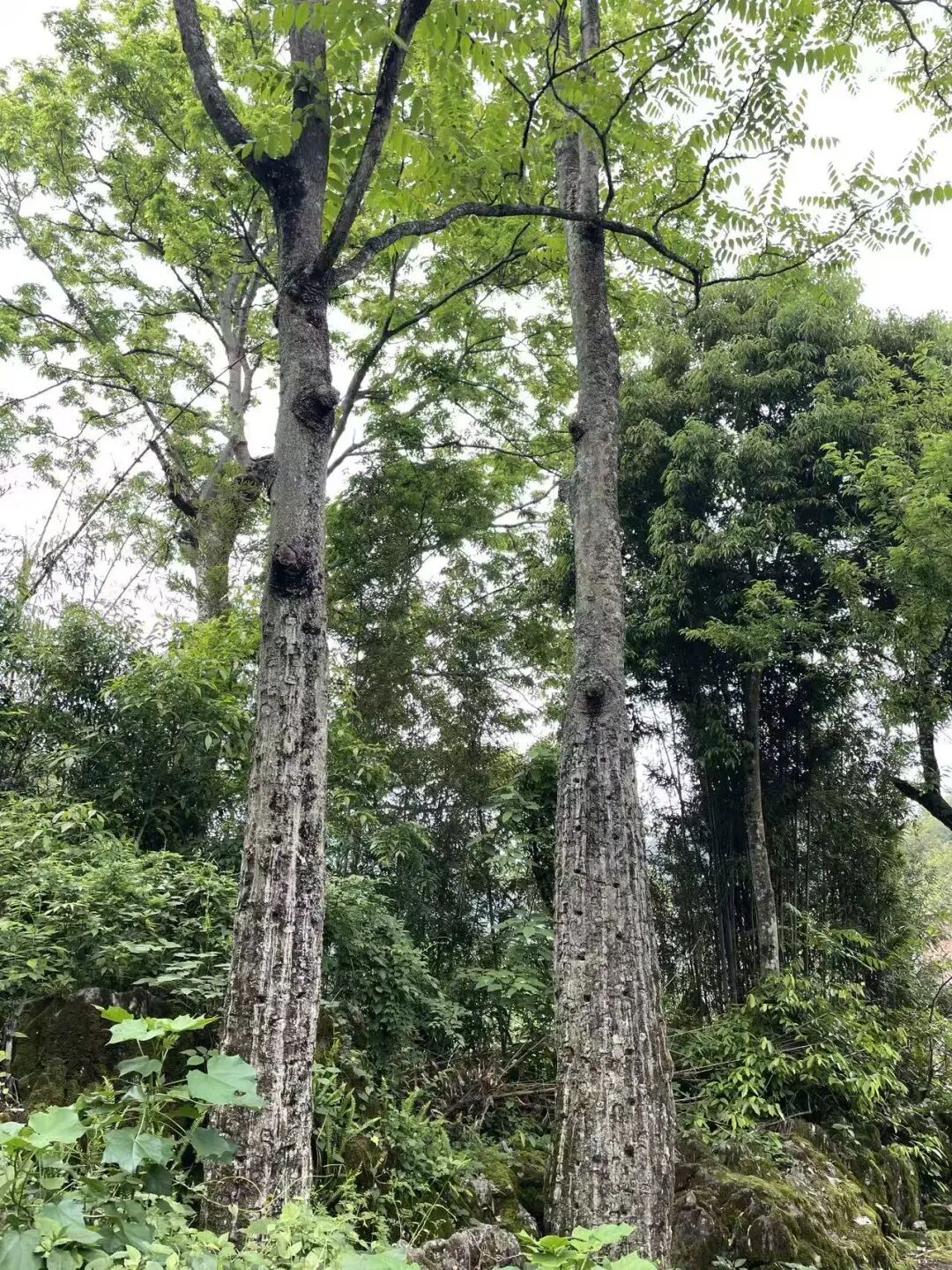
◉These towering resin trees in the valley are central to Baili Yao traditional dress: golden-yellow resin, tapped by slitting the trunk, is used for dyeing cloth and painting floral patterns. The method is sustainable—the trunk heals and grows thicker—so a single tree often accompanies a family across generations.
Leaving Yaoli at dusk, the fog-like haze that had clouded my mind since morning had completely lifted. I had set out trying to capture the “spectacles” with my camera, to size up the “oddities”, yet a day of visiting the market, cooking, and walking spoke plainly through the simplest hemp seed soup and cloth-dyeing scenes: there is no spectacle here, only Yao people living earnestly within nature’s rhythms.
I thought again of Guan Qi, who passed away suddenly not long ago and had also worked on this land. That was precisely why I wanted to come and see the places he had once busied himself in. Guan Qi, Meng Fang, and the other companions I met on this trip are all weaving themselves into Lihu’s daily life through their work. They are not safeguarding a couple of scenic spots or a static “tradition”, but enabling the people here to carry on their lives with dignity. By now, that detached, tourist-like sense of watching from afar had completely vanished, for I had truly realised that what is called a “place-based connection” cannot be gained through a few days of wandering and looking. It comes from long-term rooting, from sustained understanding, companionship, and shared responsibility. Those who truly transform a place are rarely mere visitors; they are those willing to genuinely anchor a portion of their time here.
* In preparing this piece, I received invaluable assistance from experts at the Baili Yao Ecomuseum and the Nanning Meinong Social Work Service Centre, and I am deeply grateful. I would also like to thank the 4th Nandan Music Festival, which gave me the opportunity to connect with Lihu.
– This is Foodthink’s 812th original article –

Foodthink
Author
Wang Chunhui
A former journalist and editor, I have also spent several years working with charities. I follow public policy, health, food and farming, and climate change, though my interests constantly stray beyond these fields. An over-curious middle-aged person of little practical use, I now make sense of the world by wandering, occasionally compiling books, writing, and taking on odd jobs.
Unless otherwise stated, all photographs are by the author.
Editor: Tianle
Layout: Xiaoshu
Scan to tip and support original food writing.
▼
Click the image to read related articles