A “Manure Yard” Manager Arrives in the Village

Foodthink says
At a Technology Courtyard run by China Agricultural University in Quzhou County, the daily routine of Xianzi, a postgraduate student born in the 2000s, bears little resemblance to clean lab benches, precision instruments, and reagent bottles. Instead, her days are spent amidst the scent of fermenting piles, handling chicken and cow manure.
Her studies taught her that organic fertiliser improves soil structure and conserves moisture and nutrients. Yet the reality behind the scenes is stark: livestock waste, which should be returned to the land, has become a burden to be disposed of. Breeders pay out of pocket to have the manure cleared, while this waste is transformed into high-priced products characterised by ‘carving flowers on manure’—adding premium additives to basic compost. The farmers who actually grow staple crops cannot afford them, nor can they source reliable organic fertiliser.
And so, she became the manager of a ‘manure yard’, partnering with a local villager to establish an organic fertiliser plant in hopes of restoring a broken crop-livestock circular farming system. Over a year of operations has brought mounting pressure. Xianzi has discovered that the true barrier is never technical, but financial. When it comes to the ‘input and output’ of raw materials, who will ultimately foot the bill?
The following is Xianzi’s account in her own words.
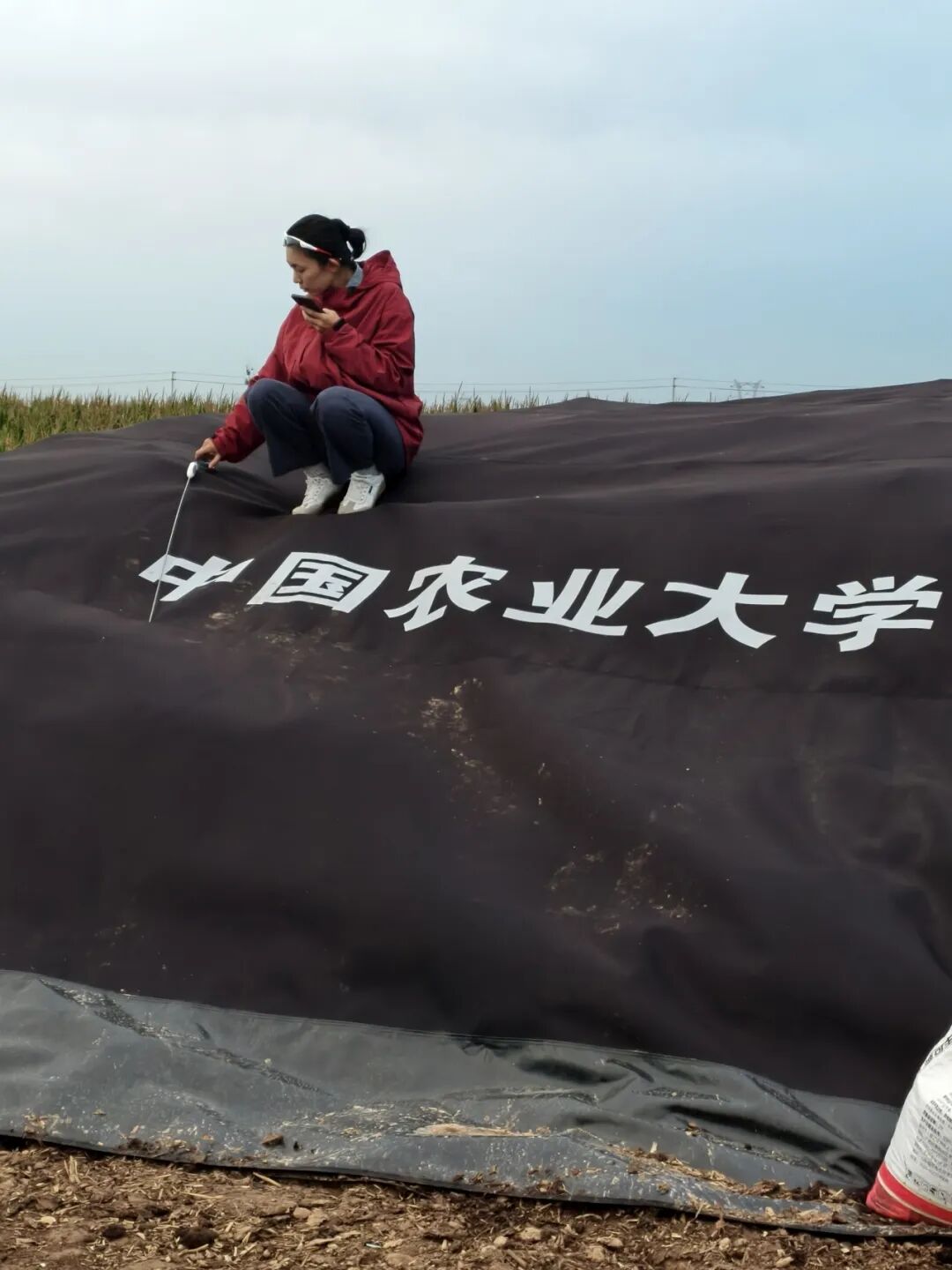
◉Xianzi, manager of the “manure yard”, is measuring the compost temperature.
‘Manure Yard’ Manager
My hometown is in Ili, Xinjiang, where the county’s agricultural and pastoral sectors operate in isolation. During my first-year winter break, I noticed that many large-scale cattle farmers struggled to dispose of their manure. They had to pay heavily to have it shovelled away and dumped elsewhere, with some even tipping it directly into rivers, causing severe pollution. Meanwhile, crop farmers needed organic fertiliser but had no idea where to source it. Some did haul in raw cow dung, but without full aerobic composting, it led to issues like burning the seedlings.
I read plant nutrition for my undergraduate degree at CAU, so I saw this disconnect as both an environmental pollutant and a squandered resource. In my third year, I took part in a biology competition under the supervision of Professor Feng Gu. He noted that Xinjiang was discarding vast quantities of slaughterhouse offal—hides, blood, and the like—which would actually serve as excellent raw materials for organic fertiliser. That’s when I first began to picture myself returning home to work in this field.
This is precisely why I joined the Technology Courtyard in Quzhou County, operated by CAU, for my master’s studies. The Technology Courtyard is an integrated model combining agricultural research, on-the-ground technical support, and practical training. There, students embed themselves within the farming community, living, eating, and working side by side with local growers.
My specialism is organic fertiliser. Unlike synthetic fertilisers, which simply replenish mineral nutrients like nitrogen, phosphorus, and potassium, the true value of organic fertiliser lies in its capacity to holistically improve soil health and ecological function.
Healthy soil can resolve a host of problems for farmers. Take last autumn: North China endured unusually heavy rains, with Quzhou seeing rain fall for a month straight. The maize rotted in the fields, and wheat sowing was delayed. To guarantee germination, farmers ended up sowing several extra jin of seed per mu (approx. 0.16 acres). Had the soil’s baseline condition been stronger, they wouldn’t have needed to over-seed. When extreme weather strikes, whether drought or deluge, crops fare significantly better when the soil retains moisture and nutrients effectively, outperforming conventional chemical fertiliser regimes. Ultimately, organic fertiliser helps growers cut costs and boost yields across the board—a kind of long-term return that’s simply impossible to quantify in the short term.
It was precisely through my time studying and living at the Technology Courtyard that I met my current business partner, a local grower I refer to as ‘Uncle’. It was one morning in March last year; I had stepped out for a run. ‘Uncle’ drove past in his car and asked if I needed a lift. I’d only made it to the edge of the village and was already flagging, so I got in.
‘Uncle’ asked what my background was. I told him I worked with organic fertiliser. His eyes lit up; he said he was keen to get into it himself. By trade, he runs a landscaping business, but profits had been thin over the past couple of years. ‘Uncle’ may not have a formal academic background, but he has a sharp, practical mind. Once he understood the basics of organic fertiliser production, he kept peppering me with technical questions.
We clicked straight away. Without delay, we went out to survey local poultry farms, open-air manure drying yards, and established organic fertiliser plants. By last year, we had kicked off our pilot trials, testing out production techniques while simultaneously scouting a viable business model.
We initially opted for film-covered composting. With the help of Professor Li Yangyang from CAU, we sourced an ePTFE (expanded polytetrafluoroethylene) selective-permeable cover film—often referred to in the industry as a molecular or nano-film. The main advantage of this membrane is its ability to selectively let water vapour and carbon dioxide escape into the atmosphere while trapping foul-smelling compounds like ammonia and hydrogen sulphide. The drawback, however, is the cost: the film alone runs to 50 yuan per square metre, and a single unit capable of processing 200 cubic metres of material costs around 70,000 yuan. Although the manufacturer claims an eight-year lifespan, my own observations tell a different story. After just one year of exposure to UV radiation and oxidation, the film begins to degrade significantly, and I doubt it will last anywhere near the promised duration.
We eventually switched to windrow composting. This method involves blending raw materials such as poultry and cattle manure with carbon-rich bulking agents like straw to achieve the optimal carbon-to-nitrogen (C: N) ratio and moisture content, before forming them into open, elongated piles. The piles are turned regularly to introduce oxygen, allowing aerobic microorganisms to break down the organic matter into stable humus. The most striking difference from film-covered composting is the absence of that ePTFE barrier, which means sacrificing the semi-enclosed system’s ability to regulate temperature, retain moisture, conserve nitrogen, and suppress odours. Admittedly, the windrows emit a potent, unmistakable odour during the decomposition process—a distinct drawback for those working the piles—but the trade-off is a dramatic reduction in both capital and operational costs.
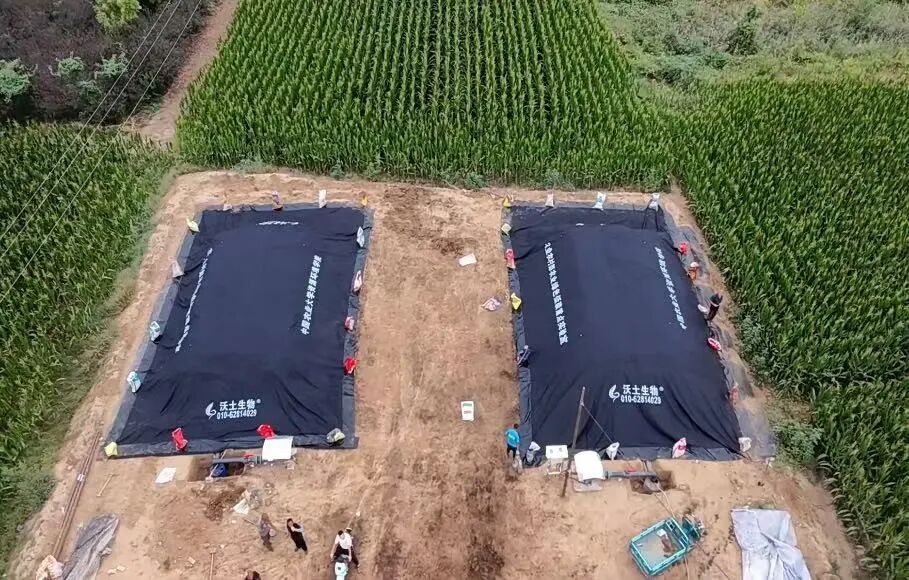
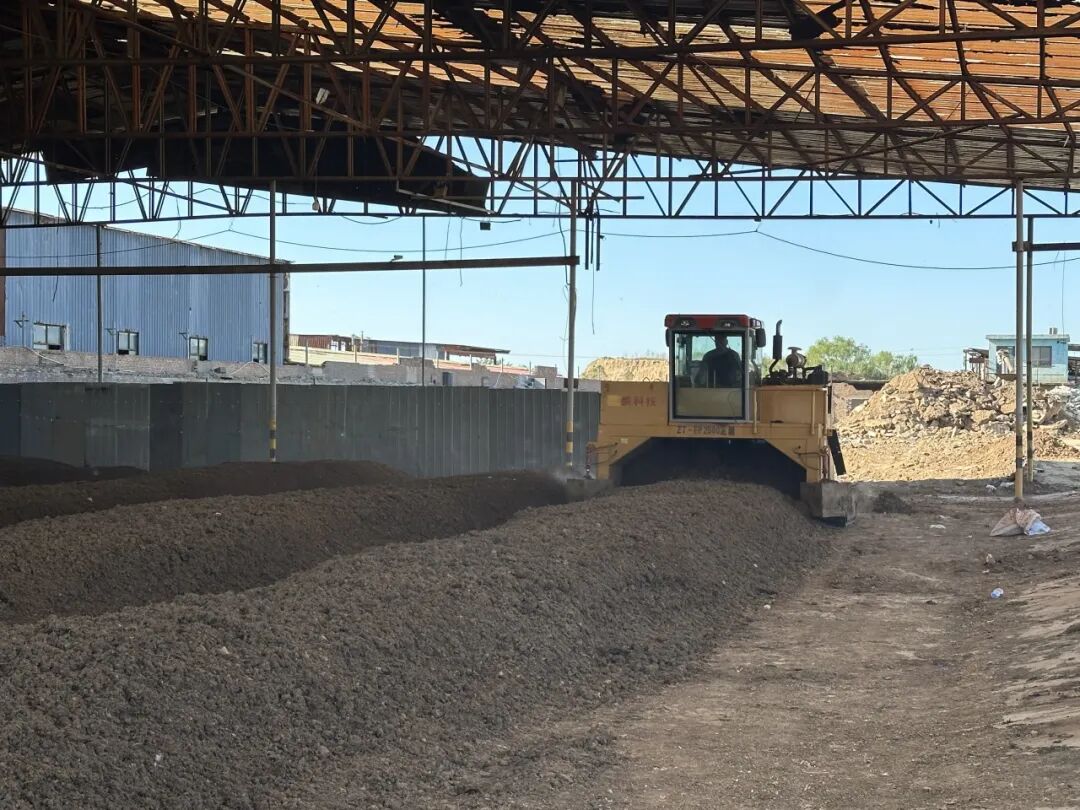
◉Expensive film-covered composting (above) and cheaper windrow composting (below).
We experimented with varying ratios of chicken and cow manure, alongside locally common agricultural residues such as straw, maize cobs and spent mushroom substrate. From summer through winter, we composted 800 tonnes of fertiliser, which allowed us to work out the technical specifics for ingredient ratios and fermentation methods.
There’s No Need to “Carve Flowers on Manure”
The organic fertiliser industry is currently in quite a mess. When ‘Uncle’ and I visited various sites, we realised it wasn’t just an issue in Quzhou County. Across the country, the organic fertiliser sector is rife with mixed operators, where substandard products routinely drive out quality ones. Many factories cut costs by loading their mix with all sorts of dubious fillers. For instance, some add industrial fly ash purely to pad the weight, ignoring the heavy metals it contains. Buyers might not spot it straight away; in fact, they often praise it for being finely ground and a rich, dark colour. But once it hits the soil, problems emerge, with young shoots sometimes dying back entirely.
When it comes to organic fertiliser, farmers know it’s beneficial, and they trust that our student-led batches are reliable. They struggle to source quality organic fertiliser elsewhere and often don’t know how to apply it properly. But the biggest deterrent remains straightforward: they simply think it’s too expensive.
Now, many organic fertiliser plants are pursuing a ‘carving flowers on manure’ approach. They start with basic manure and load it with humic acid, amino acids, functional microbial inoculants, biostimulants such as alginic acid/chitosan, secondary and trace elements, and novel materials like biochar. This upgrades the product into bio-organic fertilisers or soil conditioners boasting a host of combined benefits: soil remediation, growth promotion, stress resistance, and enhanced crop efficiency. But with all those additives piled on, a tonne costs over 500 yuan.
We want to streamline the process, ditch the gimmicks, and keep the price as low as possible. It’s as though they are marketing premium boutique goods, while we are selling everyday staples. Naturally, quality is non-negotiable—there must be absolutely no heavy metals or antibiotics.
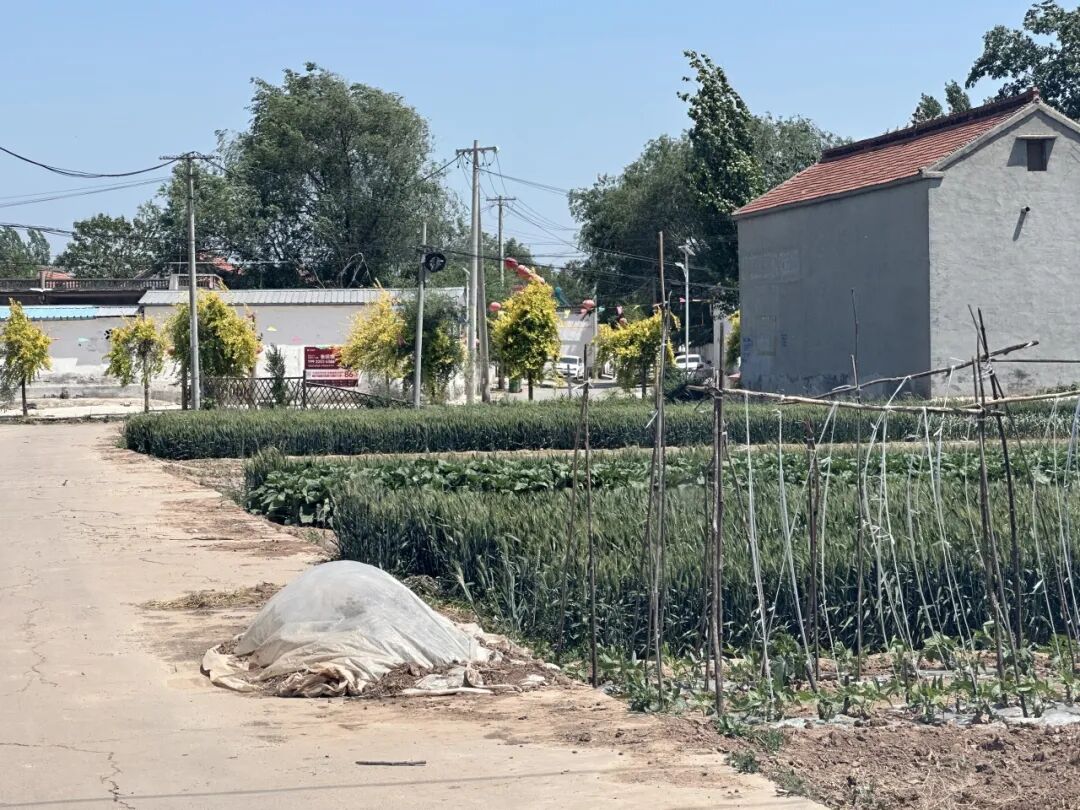
◉In Quzhou, it is common to see farmers maintaining simple compost piles by the fieldside. So long as the feedstock ratio and moisture levels are adjusted correctly, organic fertiliser is essentially a free resource readily at hand. Photography: Ling Yu
Actually, smallholder farmers used to be able to achieve crop-livestock circular farming at the household level. Back in the small county town where I grew up, there was a farmer growing quinoa. He would compost some cow dung himself and spread it across his own fields, resulting in a crop with both decent yields and good quality.
However, the widespread use of chemical fertilisers and the move towards large-scale livestock farming have broken this crop-livestock circular system. Quzhou is itself a major county for layer farming. Yet with so few organic fertilizer plants in the area, it cannot fully process the chicken manure generated across the county. Some farmers even dump it indiscriminately, causing odour and wastewater pollution.
In recent years, national policies have encouraged the use of agricultural waste for composting, fundamentally aiming to restore crop-livestock circular farming across a broader region.
But it wasn’t until I actually stepped into it that I realised why the organic fertiliser industry struggles to gain traction: it isn’t a technology problem. The technical barrier to entry for organic fertilisers is remarkably low. Rebuilding the crop-livestock circular system doesn’t hinge on fermenting manure and straw properly; the real challenge lies in the ‘input and output’ — input means raw materials, and output means sales.
Rebuilding crop-livestock circular farming
In March this year, we secured the site and began large-scale production. The pressure hit straight away.
The site was the first hurdle. We rented an abandoned poultry farm for 120,000 yuan a year to process waste from 400,000 chickens daily. The manure itself comes free, but we bought a lorry and hired a driver to collect it from nearby farms every day. We also brought on workers to turn the compost windrows and maintain the grounds. Toss in the water, electricity, microbial inoculants and all the other incidental costs, and every day you just watch the money drain away.
Manure has a high moisture content and straw takes up a vast amount of space; transporting them is essentially like hauling water and air. Gathering straw from the fields is also a chore, and it needs crushing beforehand. We now prefer to use corncobs and spent mushroom substrate instead. Even when we’re allowed to collect these raw materials for free, the transport and labour costs alone are a significant burden.
In reality, rebuilding crop-livestock circular farming cannot rely solely on organic fertilizer plants like ours. Last year, at an organic fertilizer conference, peers pointed out that these facilities shouldn’t really be viewed as profit-making enterprises. They are, in essence, government environmental initiatives, given that they process waste generated by the wider society.
If there were a macro-level policy designating organic fertiliser plants as agricultural waste treatment sites, so that waste is brought in for processing, it would effectively mean that farms or the government bear a share of the transport costs. That would make the operation viable.
We are looking to explore a county-level circular model, which remains rare nationwide. The organic fertiliser plants I have encountered typically produce bagged granular organic fertiliser to extend their distribution range; transport across provincial boundaries poses little difficulty. However, I intend to operate as satellite stations, serving livestock farms and fields within a 20-kilometre radius. Beyond that, transport costs become prohibitive.
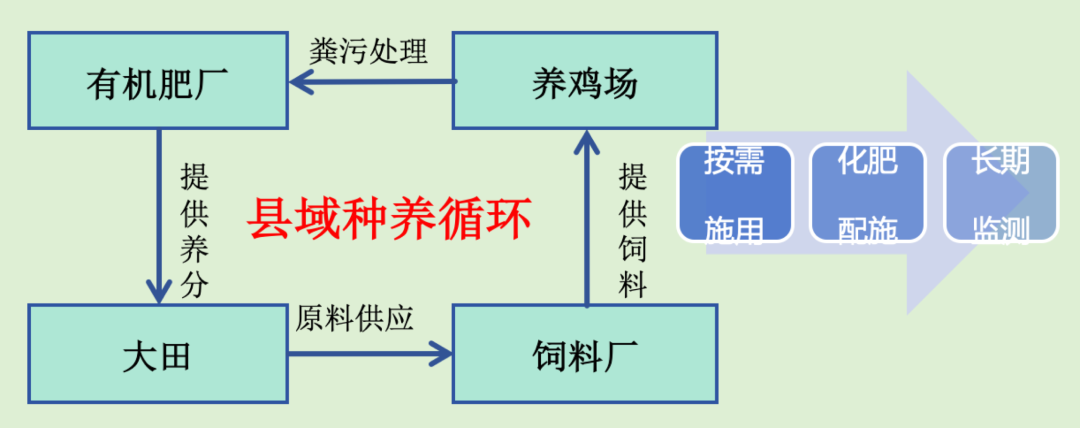
◉Diagram of the county-level circular model.
But the real question is whether we can secure both raw materials and a market within that 20 kilometre radius — will livestock farmers be willing to supply us with manure? Will crop farmers be willing to use the finished compost? Each household has their own priorities.
Making Organic Fertiliser Affordable for Staple Crops
Sales are still a worry for us.
The wheat harvest is just around the corner. Over the past few days, I’ve been busy promoting organic fertiliser to large-scale grain farmers. For just a little over 100 yuan, a farmer can purchase a tonne of organic fertiliser. That price even covers the spreading service — it’s practically being given away. Yet hardly anyone is keen to buy.
A batch of compost we produced last year came in at roughly 260 yuan a tonne. To break into the market, we priced it at 250 yuan a tonne for our outreach to farmers. Professor Zhang Weifeng from the university subsidised a further 150 yuan per tonne. That brought the cost down to just 100 yuan a tonne for farmers, and we included the field application service.
This year, our price for crop farmers is 240 to 260 yuan a tonne (charged according to distance), and Professor Zhang continues to subsidise half the cost, meaning farmers only need to pay a little over 100 yuan. This covers the application service: we not only spread the compost across the fields, but also provide advisory support — for example, assessing the soil conditions for the year, advising on fertiliser rates, and recommending how much organic fertiliser they can realistically afford within their budget.
But we cannot rely on this subsidy indefinitely. Once operations stabilise, I aim to bring the delivered cost of applying a tonne of organic fertiliser per mu down to 200 yuan.
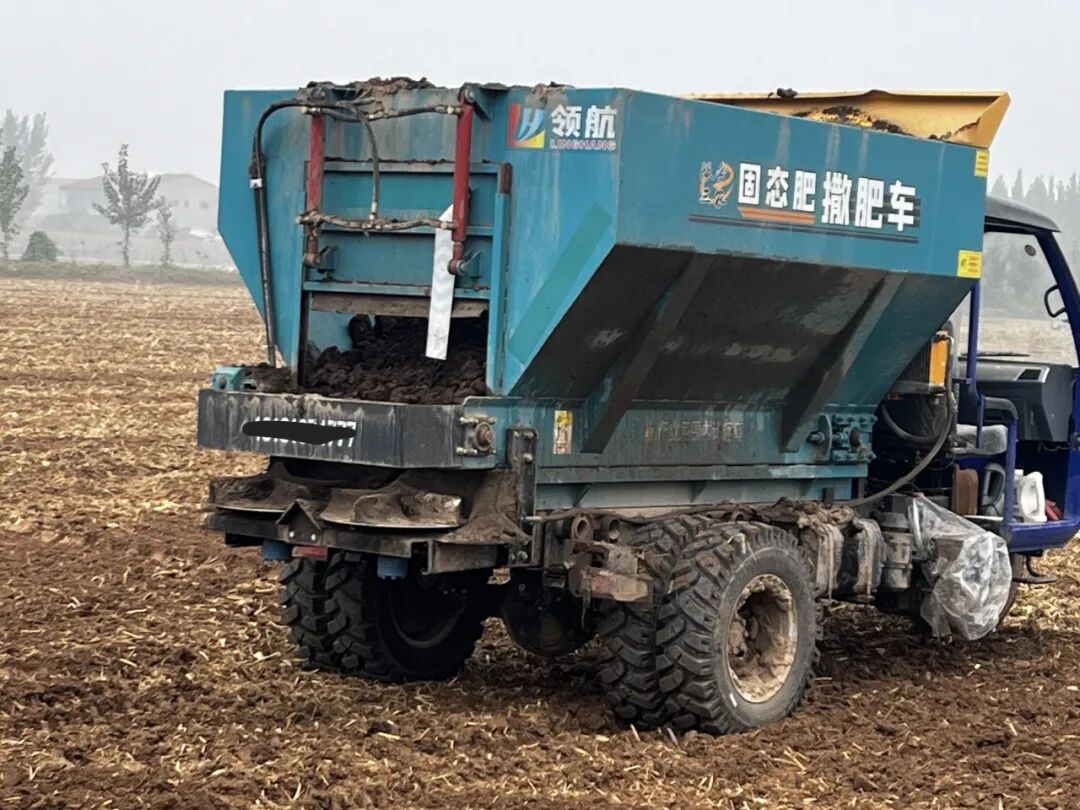
◉Xianzi’s “bulk retail-style” compost for staple-crop fields is designed for short-haul transport and broadcast by fertilizer spreaders.
In reality, it’s still rather expensive for farmers, particularly grain growers. Organic fertiliser is typically sold to vegetable and cash crop growers instead. Because these crops generate higher revenues and demand good soil fertility, growers are generally willing to invest in them.
Very few organic fertiliser plants target grain farmers as their customers. Using organic fertiliser in grain farming adds an extra step to agricultural operations and raises production costs accordingly, but the additional return from grain crops is relatively modest. Organic fertiliser does not deliver immediate results. In the first year, farmers’ net profit is typically very low and can even be negative. It is only as the soil steadily improves that earnings begin to grow.
I applied our self-produced organic fertiliser to nearly 400 mu of experimental plots. By early March, when the wheat entered its green-up phase, the fertilised crops were thriving. Diagnostics taken during this stage showed the wheat largely met the standard for first-class seedlings, with robust tillering, deep green foliage, and vigorous root activity. The farmers who bought the fertiliser ran their own comparative trials, noting that a quick scratch of the topsoil revealed the compaction had eased slightly, leaving the earth noticeably looser.
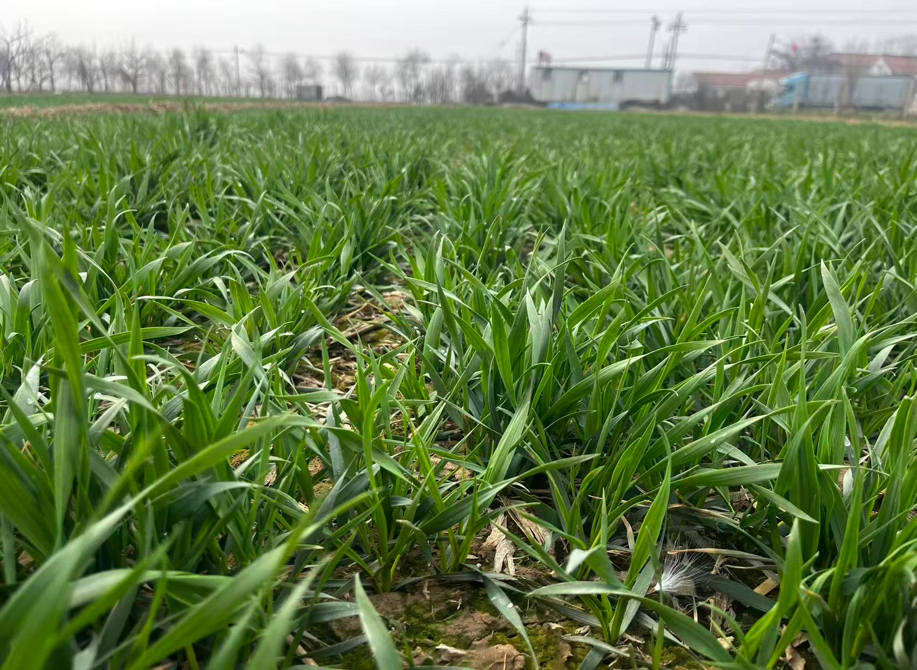
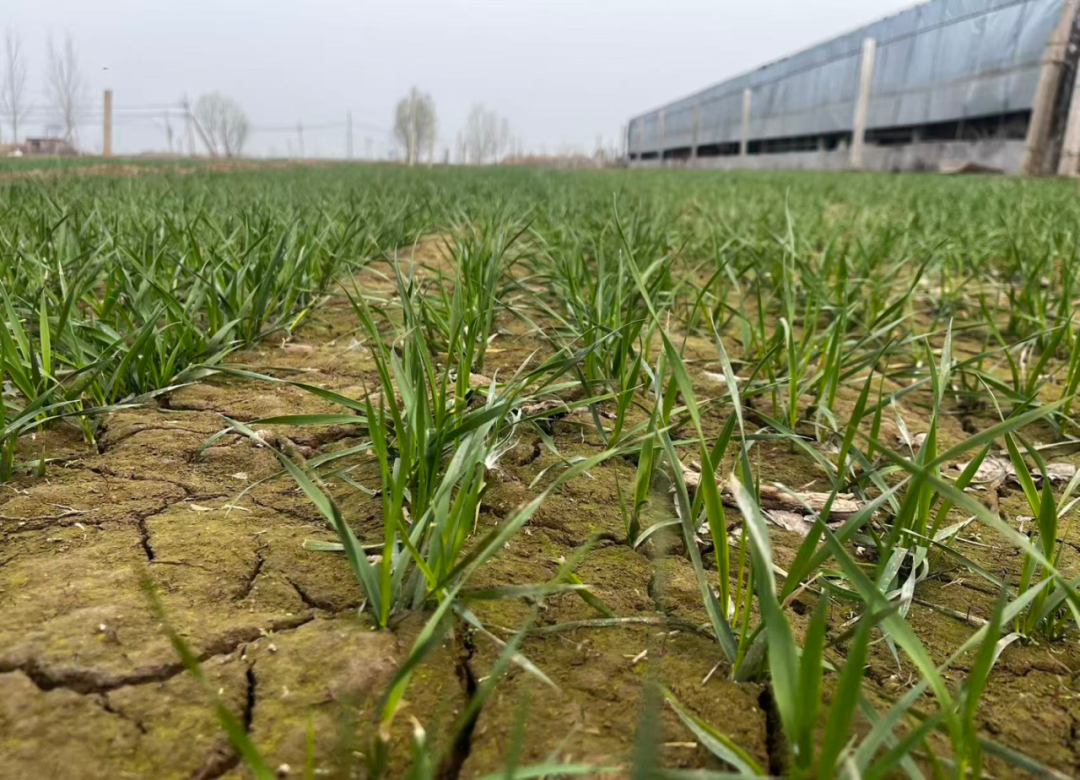
◉A comparative wheat field trial: organic fertiliser application (left image) versus chemical fertiliser only (right image).
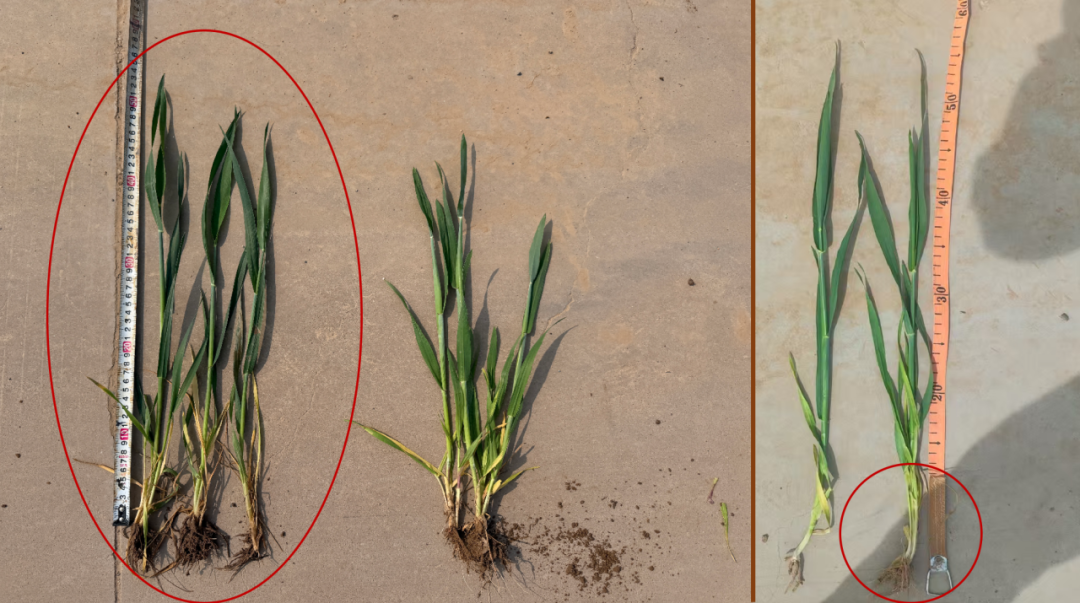
◉The trial found that applying organic fertiliser (as indicated by the red circle) promotes wheat growth and root development, thereby improving both yield and quality.
Farmers, particularly smallholders, are often reluctant to invest time and money in organic fertiliser, preferring to take the path of least resistance. Even the smallest-scale operators typically finish their planting before heading off for seasonal migrant work, as farming doesn’t provide their entire livelihood. For those who treat agriculture as a proper career, though, organic fertiliser is undoubtedly the better option.
Making soil restoration profitable
Farmers understand that organic fertiliser benefits both crops and soil; it’s largely a matter of limited means.
We’ve grown accustomed to recklessly exploiting the land. With the rise of land-lease markets, some operators now treat plots as disposable: plant once, leave it to whoever rents it next year, with little regard for soil conservation. Eventually, this strips the land bare, which is fundamentally unsustainable.
The northeast has already introduced policies to protect its black soil and ban its illegal resale. I believe maintaining soil health will eventually become a profitable venture, but more importantly, it will simply be an essential duty.
For now, our goal this year is simply to keep our heads above water and establish a workable operational routine for the site.
The facility has only been running for two months, so output is still relatively low at around 400 tonnes a month. We’ve accumulated close to 800 tonnes so far and plan to sell it to large-scale grain farmers once the wheat is harvested and it’s time to sow the next round of maize.
As the main cropping season approaches, we’ll shift to producing bulk fertiliser for arable fields. The composting process will be slightly more basic, as we’ll need to prioritise volume. Provided the quality holds up, it’ll be perfectly adequate for large-scale field crops.
I still plan to differentiate our product lines to suit different customer bases. In the off-season, we’ll produce fertiliser tailored for vegetable growers. We can incorporate premium additives like humic acid to enhance the quality and command a higher price.
Now that the organic fertiliser plant is up and running, the pressure on all of us is intense. We’ll soon need to pave and waterproof the site, finishing the ground works before the rainy season hits. That alone will cost another 400,000 yuan. I’m even considering applying for a student entrepreneurship loan, at least the interest rates are lower.
No matter how tough it gets, we’ll stick together and push forward. Uncle sends countless voice notes to our group chat every day, leading discussions, sharing insights, and forwarding technical articles he comes across.
I’m still unsure about the future and whether this venture will actually succeed. I could easily step back, wait for graduation, and leave it all behind. But now that I’m committed, I can’t simply strand Uncle in this and cut and run. That would be completely unfair to him.
– This is Foodthink’s 813th original article –

Foodthink
Author
Yang Ruoxianzi
A 2024 postgraduate student at China Agricultural University and native of Ili, Xinjiang, specialising in county-level crop-livestock circular farming and the functional regulation of organic fertilisers.
Unless otherwise stated, all images are provided by the author.
Narrated by: Xianzi
Compiled by: Ling Yu
Edited by: Xiao Dan
Layout by: Xiao Shu
▼
Click the image to read related articles