The Bayberry Scandal: Why I Still Eat Them Safely | Grandma Kouzi

This year’s bayberry scandal has thrust this highly seasonal, delicate fruit into the spotlight. Whether they’ve been soaked in preservatives, which chemicals are legal, whether they pose any health risks, or what counts as a safe threshold—I’m entirely indifferent.
It’s not that I don’t eat bayberries; it’s simply that I only eat the ones I’ve grown with my own hands.
The surprises bayberries have brought me
And the shocks
Two trees stand at the entrance to the Valley of Villains, my homestead. One is a bayberry tree. The other is also a bayberry tree.
When I first cleared the land, I planned from the outset to plant two large, dense-canopied trees at the entrance. A small farm can stand open to the world without walls or gates, but it simply must have two substantial trees. I dreamt that one day their canopies would stretch across the path and meet overhead, forming a living archway for the Valley of Villains.
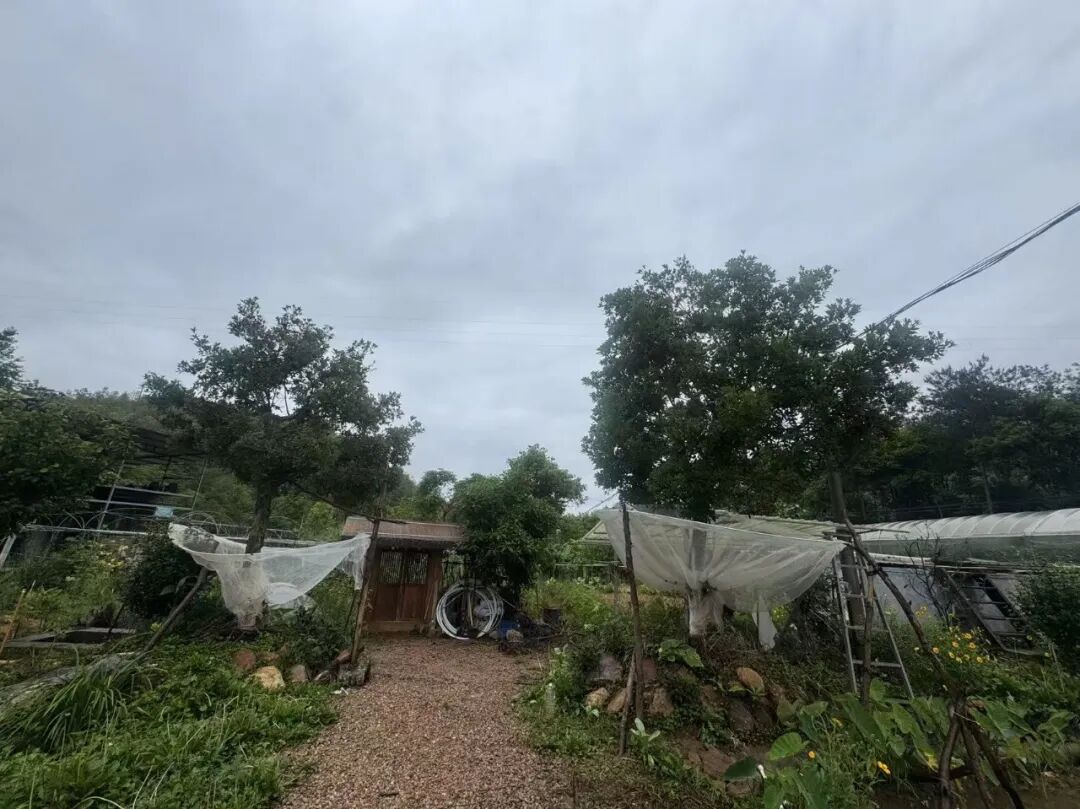
◉The two bayberry trees at the entrance.
I had long known that fruits, with their extended growing seasons and lengthy storage and transit times, were prime targets for chemical fertilisers and pesticides. Yet when I craved something truly delicious, those hardy, shelf-stable varieties simply fell flat. Eating them felt like ingesting toxins; going without felt like penance. Before achieving fruit self-sufficiency at Valley of Villains, and in my capacity as an avid food lover, I spared no effort to ensure I was eating safely. I steered clear of imported fruit, berries, and other delicate produce, deliberately opting for thick-skinned varieties that required peeling—bananas and citrus, for instance…
The dream at Valley of Villains, therefore, was to avoid both the toxins and the deprivation. For someone from the north, choosing to farm in the south is driven largely by one crucial advantage: the ability to cultivate fresh fruit throughout all four seasons.
Tailored to my requirements, a local friend working in horticulture recommended bayberry trees and even helped me source mature specimens. Having grown up in the north, I had very little concept of bayberries, and I certainly never expected fruit to grow on “thick, leathery foliage”.
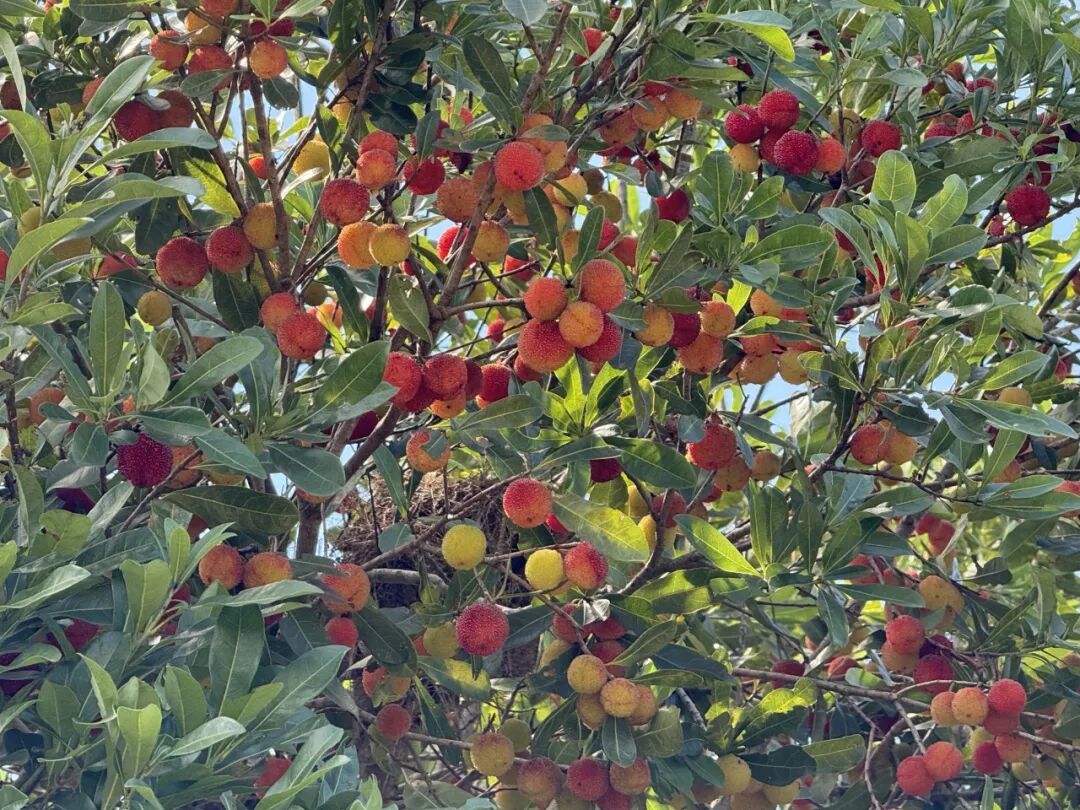
◉Bayberries heavy with fruit in 2025.
Transplanting mature trees is notoriously difficult. In the early days of establishing the Valley of Villains, we bought a fair number of established specimens. Alongside the two bayberry trees, we acquired three loquats, two crisp kumquats, a batch of honey pears, and a large quantity of figs. The outcome was stark: over twenty fig trees perished completely, five honey pears clung to life in a half-dead state, one loquat died, and the kumquats suffered a total wipeout. The two bayberry trees, however, proved remarkably resilient. It took them more than a year to adjust, but they eventually put down roots and survived in this completely new environment. To see them bear fruit for the first time in 2024 was a complete and delightful surprise.
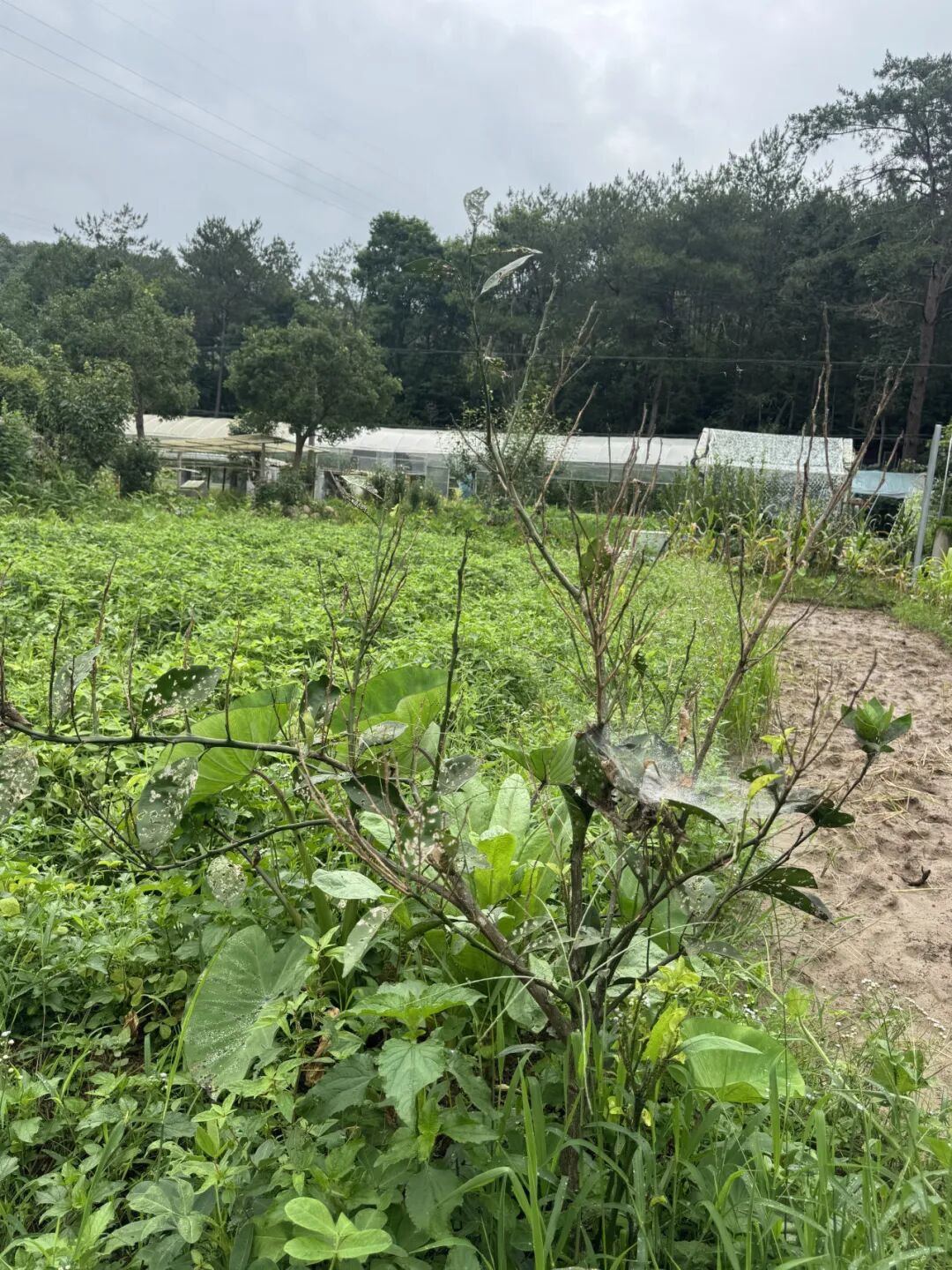
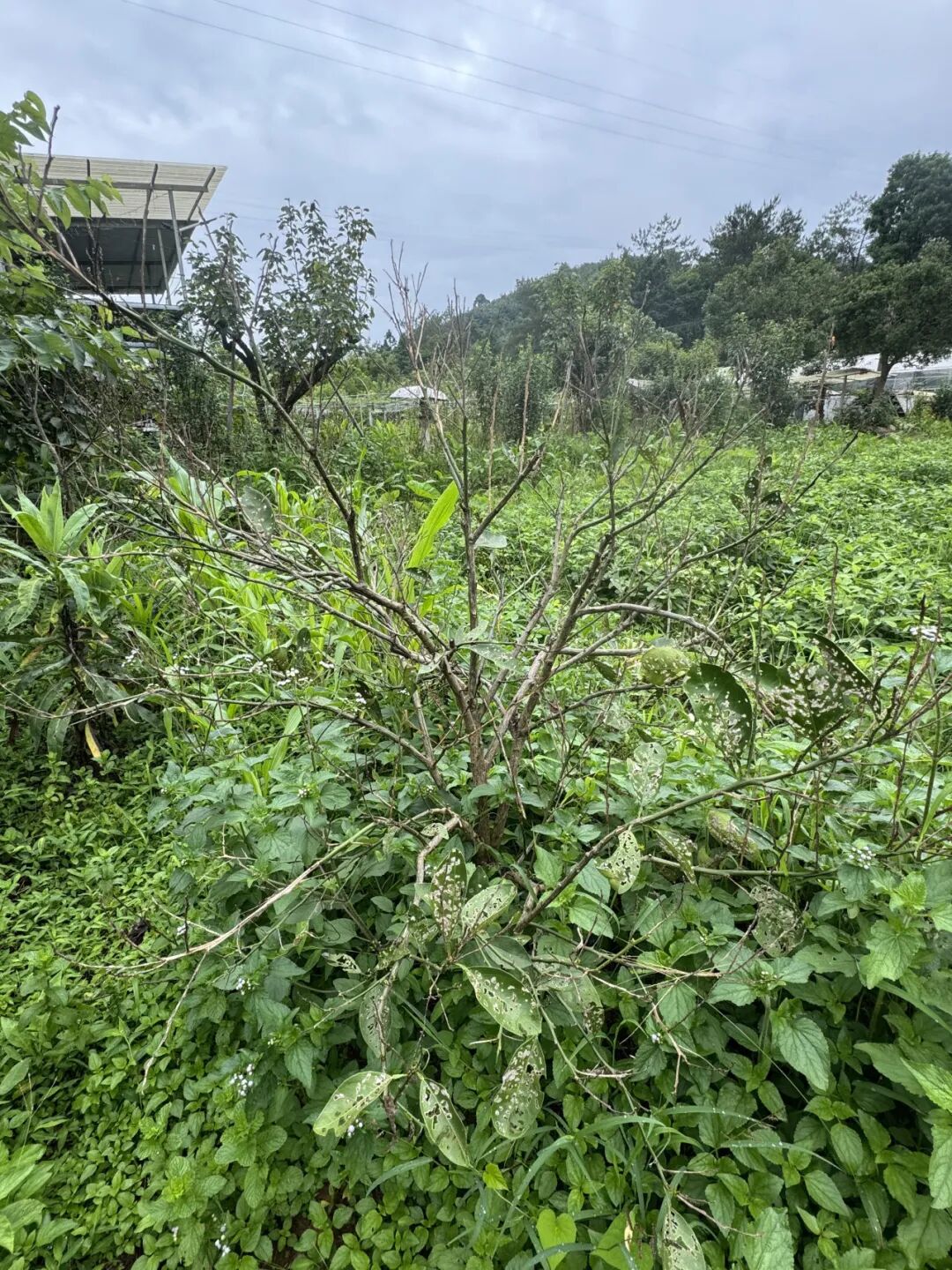
◉I planted more than twenty citrus trees—mandarins, jelly oranges, navel oranges, and various other types. In spring, the blossoms fill the garden with fragrance. But pests soon follow, stripping every citrus tree bare. I don’t use pesticides, so I simply have to tough it out, waiting for the insects to eat their fill, mate, lay eggs, and burrow underground to pupate. Only then do the stripped branches push out new shoots. The trees survive, but forget about harvesting fruit. That’s exactly why I’ve quit buying store-bought citrus.
By 2025, the bayberry trees had fully acclimatised to Valley of Villains and came into their own, branches bowing under a bumper crop. Little red lanterns covered every tree, ripening in relentless waves. After each night of wind and rain, I’d wonder how many had fallen. As a northerner, I had never encountered anything like it. Facing their frantic, almost self-destructive rush to ripeness, I spent the bayberry season wading through rivers of juice.
Yet the real shock of that year’s harvest had nothing to do with the juice-stained mess. It came from my son’s feedback. He told me the berries I’d sent were sour and small, no match for the large, sweet ones from the fruit shop downstairs. My daughter-in-law added that they were nearly off by the time they arrived, and if they wanted any, they’d be better off buying their own.
My trees bear authentic Dongkui bayberries, the largest and sweetest variety. They are planted with wide spacing and amply fed with farmyard manure—top-tier treatment reserved for the best specimens, and what I sent my son was the cream of the crop. Bayberries are notoriously fragile; a single bruise is a death sentence. I used a specialist shipping box with an individual compartment for each berry. From the branches at Valley of Villains to my son’s dining table, the journey took less than a day. Packed in Fujian at 6 p. m. one evening, they arrived in Shenzhen by the next afternoon. Supply chains for urban fruit shops are typically longer and slower. If anyone claims the berries arrive in perfect condition without special handling, believe them if you want.
This holds true for bayberries, and for every other fruit too.
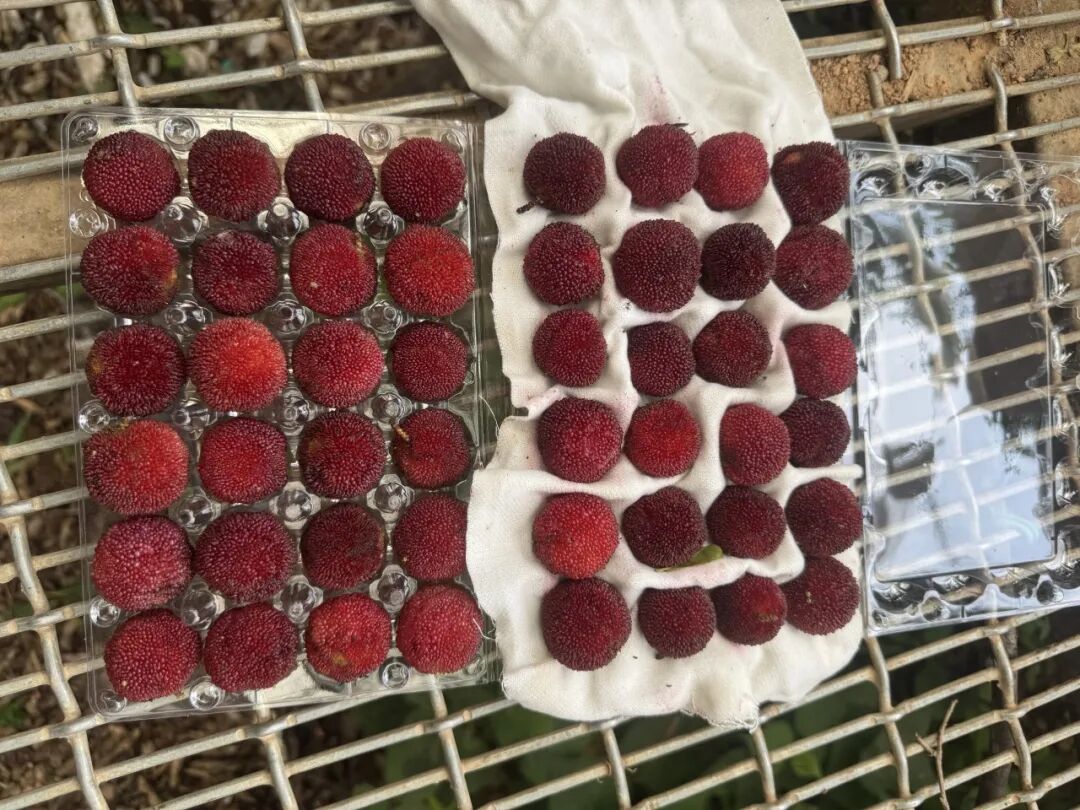
◉Even with the packaging I used, they were nearly rotten by the time they reached Beijing. Friends in the capital, just consider what your shop-bought bayberries have really been through.
Trials and Dilemmas
Since I started growing fruit myself, I’ve gained a clearer picture of the sheer number of pests and diseases they face, as well as the difficulties of storing and transporting them. Woody citrus trees bloom in spring and ripen in autumn or winter, while herbaceous bananas take a minimum of five months from flowering to harvest. Because I refuse to use sprays, insects have stripped my citrus trees bare, which obviously means there’s no question of a harvest. Given the strict no-pesticide rule, bananas can’t be planted densely either. I’ve only established five clumps across dozens of square metres, and I’m expecting a yield of just three bunches this year.
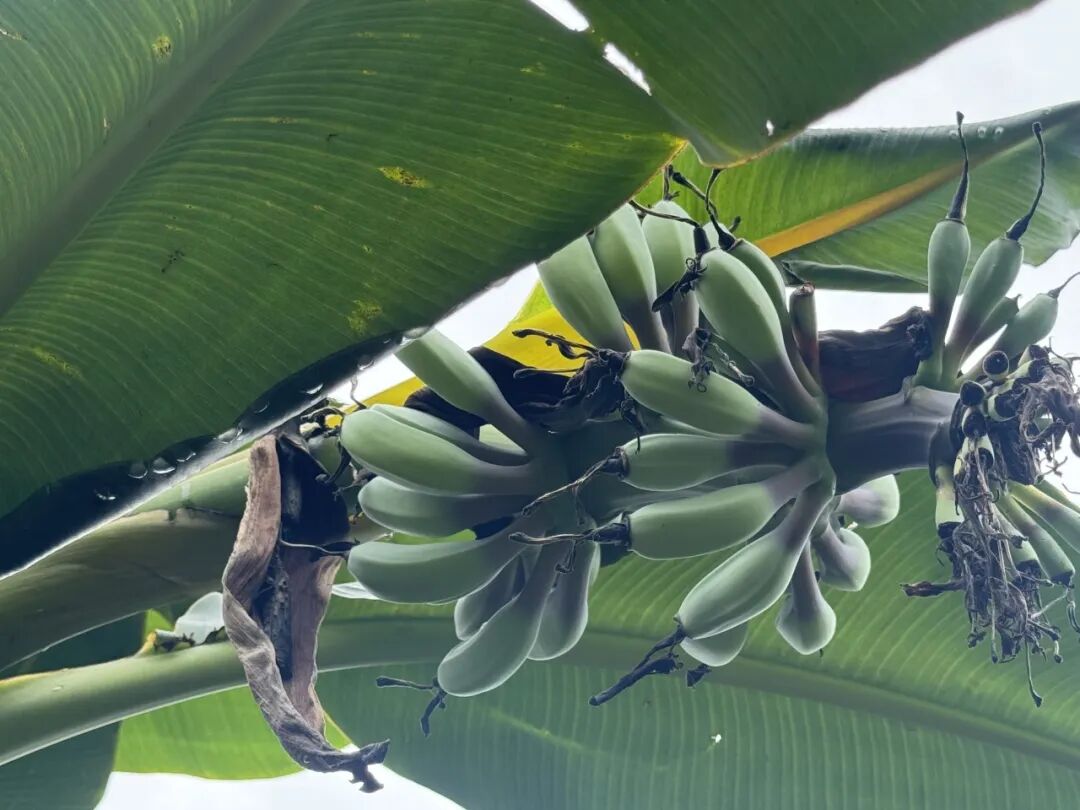
◉Naturally grown banana plants – a single plant yielded just this much.
By refusing to spray antimicrobial chemicals to preserve the fruit, my dozens of kiwifruit vines along a sixty-metre stretch of riverbank yielded just twenty-six fruits. I’ve also planted dozens of blueberry bushes across several varieties in the arid northern Taishan courtyard and the damp Valley of Villains, only for every single one to succumb to disease. If commercial growers were to farm in the same way, they would simply bankrupt themselves.
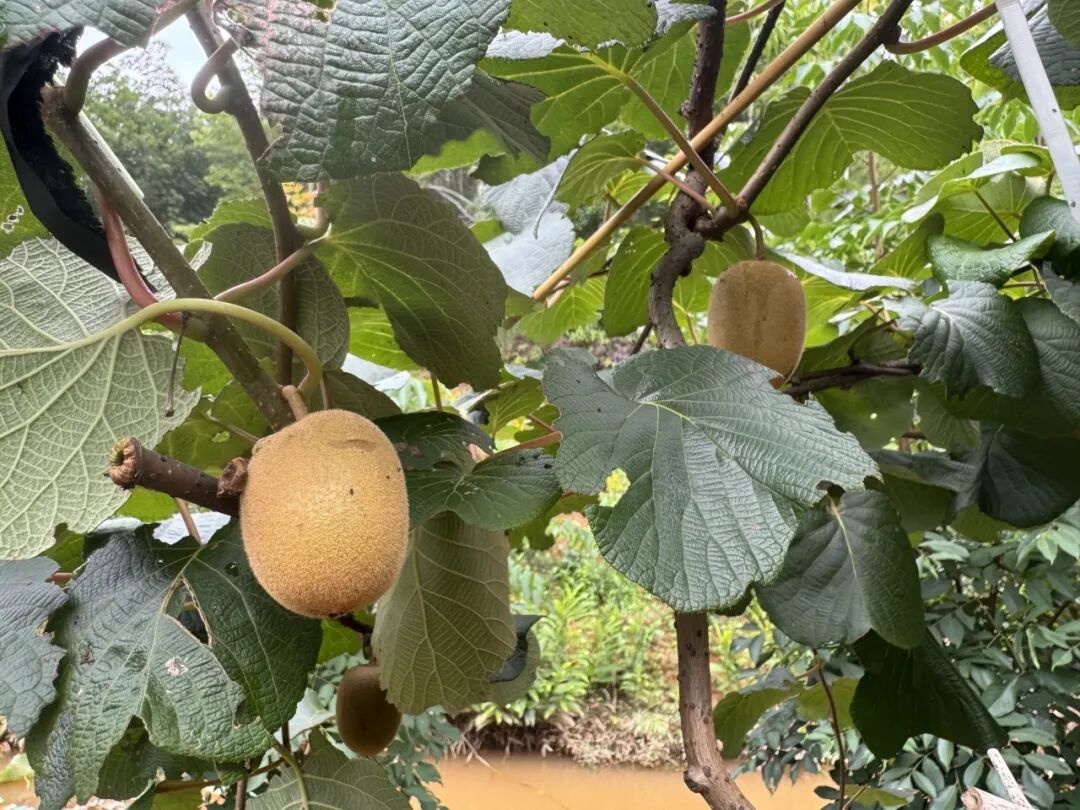
◉In spring, when the kiwi plants were in bloom, the number of female flowers was tens of thousands of times greater than the 26 fruits we have now.
After all the trials and tribulations, once the fruit finally ripens, another test immediately begins. Fruit is a living plant organism, and there is no fundamental difference between fruit still on the branch and fruit sitting on the dining table. Both continue to breathe and metabolise, progressing through the stages of ripening, ageing, and eventual decay. Indeed, once detached from the branch, a fruit’s natural instinct is to accelerate ripening to complete its life cycle.
To keep fruit in good condition until it reaches the market, the ripening process must be artificially halted. Common methods include cold storage, inert-gas packaging, and chemical treatments, often applied in combination. While the expense of refrigeration and sealed packaging is obvious, the most economical approach is chemical soaking. This is a terrible outcome for consumers but a highly profitable strategy for supply chain operators—right up until a scandal erupts and jeopardises the entire industry. The masterminds vanish without a trace. A few are caught red-handed, while the rest scatter to move on to other crops, leaving the farmers at the source utterly devastated.
Unless you are prepared to ignore both yield and expense as I am, everyone along the cultivation and distribution chain inevitably faces these challenges and dilemmas. I am not in a position to make decisions for others, so I have simply chosen to stop buying produce from outside. I, who once had an almost compulsive love for fruit, have abruptly cut myself off from it entirely.
Since I stopped buying fruit from outside, my approach to eating it has shifted.
Ahead of the 2026 bayberry season, to avoid rivers of fruit juice staining the ground, I planned ahead and fitted my two bayberry trees with protective white netting. Last year, 90% of the harvest fell to the ground; this year, it is being safely caught by the netting.
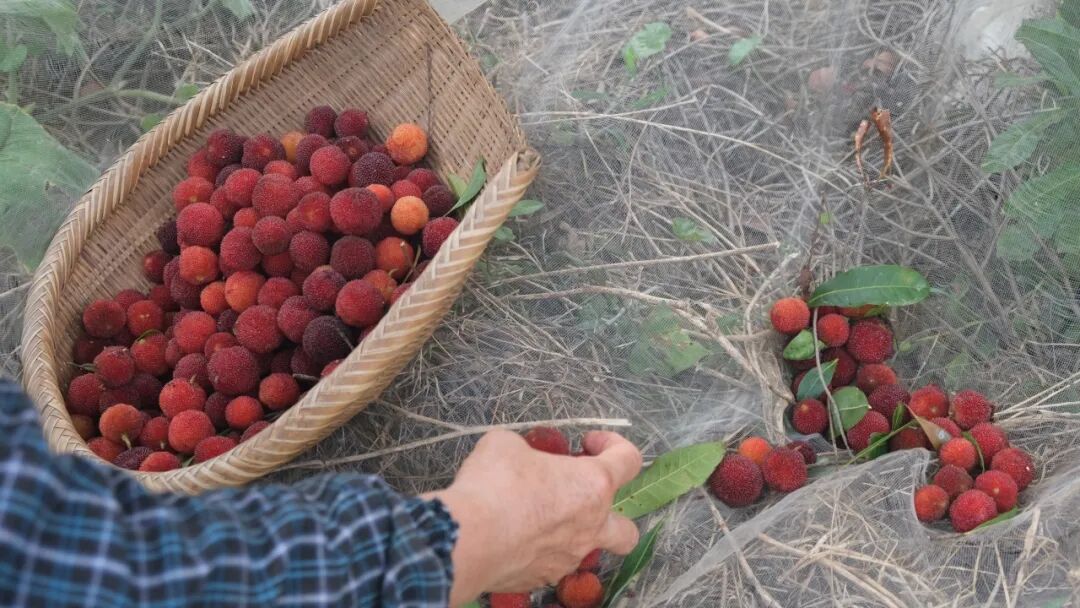
◉The bayberries in the protective white netting are in perfect condition.
Once the bayberries are ripe, I send the biggest and best to my son. The one “benefit” of this year’s bayberry scandal has been convincing him that shop-bought bayberries aren’t safe, so he’s finally started taking mine. I handle the rest myself. I pick out the ones that are so ripe they’ve turned slightly black and eat them straight away; fruit ripened on the tree is less acidic and won’t leave your teeth aching. For the remainder, I sort them by grade: the finest are blended with perilla leaves to make juice, the middle grade is fermented into wine with a 25% sugar syrup, and the rest go straight into the compost bin. Every fruit I’ve grown with my own hands is a treasure, and not a single one goes to waste.
There are many ways to preserve fruit. Beyond the refrigeration and dreaded chemicals standard in the global fruit supply chain, there are also drying, fermenting, preserving in sugar, salting, and steeping in alcohol. For in-season fruit, it is best to eat it fresh. Making just one glass of water-free shiso-bayberry juice can easily use up two kilograms of bayberries. The leftover shiso-bayberry pulp can be steeped in alcohol to create a cold macerated preserve, stored in the fridge for gradual enjoyment. This way, the tens of kilograms of harvest from my two bayberry trees will last me nearly six months.
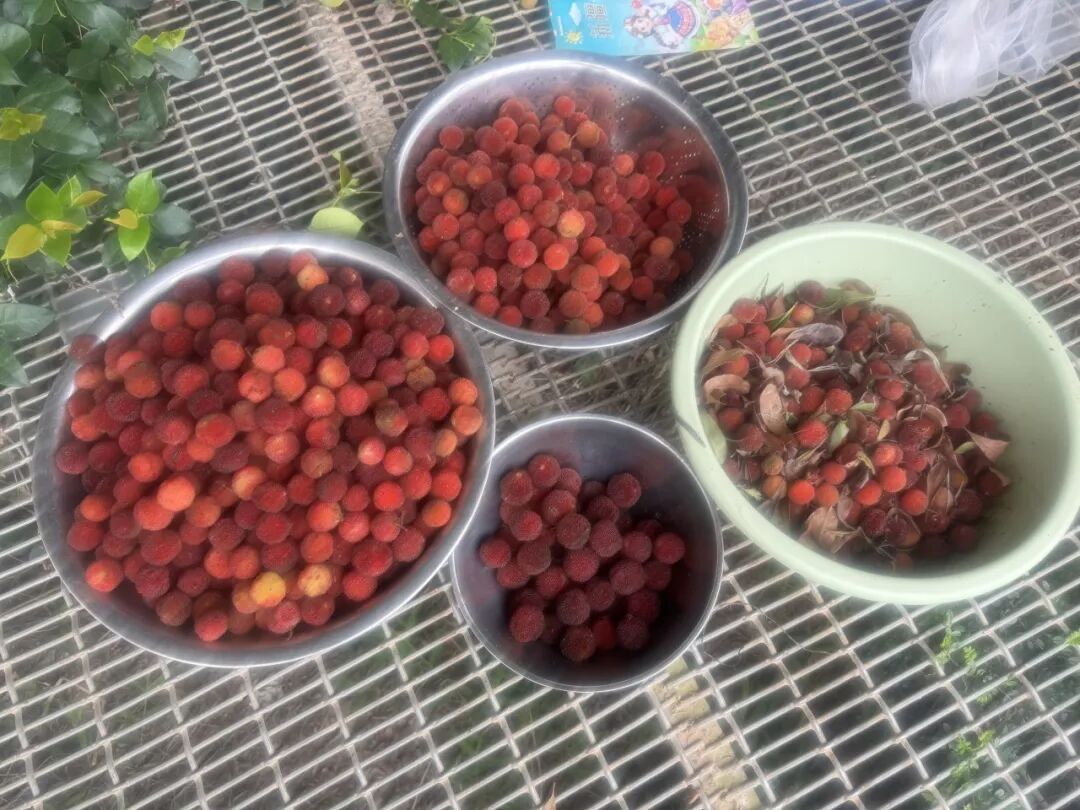
◉ The Valley of Villains bayberry grading system.
The Shock of Modern Fruit
The real reason this overly cautious food lover finally quit buying commercially grown fruit wasn’t the bayberry scandal. The transport issues exposed by this year’s controversy are merely the tip of the iceberg within the modern fruit production and distribution system. What I truly cannot stomach is that many varieties have long ceased to be what we traditionally call “fruit”.
Modern retail fruit is, in many respects, an industrial product. Look at the varieties that have captured the public’s attention in recent years: whether New Zealand kiwifruit, Chilean cherries, Shine Muscat grapes, or Blue Sapphire, every stage from breeding and cultivation to harvesting, storage, transport and marketing forms a link in the industrialised food supply chain. Multinational capital secures patents for premium cultivars through grower–seller club models, establishes exclusive end-to-end closed-loop management, and maintains scarcity-driven premiums. These so-called “fruits” operate not only on the distribution logic of industrial goods, but also follow an industrialised breeding methodology.
As technology advances, fruit breeding has become increasingly precise, effortlessly achieving genetic-level purging and suppression. Consider fruits packed with extremely high concentrations of vitamin C: their sharp, astringent bite can be so intense that some describe it as leaving “half my face sour and numb.” Top-tier antioxidants such as anthocyanins, proanthocyanidins and plant polyphenols invariably carry high tannin levels, yielding an intensely bitter taste that feels “like chewing wood.” Modern breeding techniques can precisely delete these unpalatable “junk codes” while deliberately boosting sweetness and improving storage and transport durability to withstand months in transnational cold-chain containers. Fruit developed in this manner has effectively become a manufactured industrial product—a microchip masquerading as fruit.
Capital’s chosen path has never been “the most nutritious”, but invariably “the most profitable”. Fruit with blemishes, unattractive appearances, or uneven sizes is culled, while varieties with poor keeping quality are rejected by distributors. Farmers have no choice but to fell their trees and replace millennia-old cultivars with seedlings that meet capital’s standards. With purchasing power alone, retail capital can drive a variety to extinction. When we buy such fruit, we are also voting with our purchases for capital, casting our vote for this entire chain of selection.
Fruits produced in this manner grow larger and sweeter, with increasingly uniform shapes and sizes, yet the levels of many beneficial nutrients fall rather than rise. This widespread decline in the micronutrient content of crops resulting from commercial breeding is known as the ‘nutrient dilution effect’. It aligns with the findings of American scholar Professor Donald Davis and his research team, who monitored 43 varieties of fruit and vegetables across the United States over the fifty years between 1950 and 1999.
Our generation has witnessed this transformation firsthand. In the 1960s and 70s, when I was a child, fruit choices were extremely limited, yet each variety had a distinct flavour. Among apples, there were the small Guo Guang, so tart they made your teeth ache, and the Red Five-Star, so mealy they practically choked you, alongside the large, sweet Yantai apples that lingered on the palate. Today, the intensely sweet Red Fuji dominates the fruit stalls. They are larger and sweeter than the apples of yesteryear, yet it seems the distinctive aroma of my childhood is gone for good. The nutritional content of those slightly tart, small apples our parents and grandparents picked from the hillsides fifty years ago would now require three or four large Red Fuji apples to match. But for what price? In the process, we are consuming far more fructose—a well-known health hazard for modern society…
Fruit as a Luxury Good
Triggered by the recent bayberry scandal, public concern has spread beyond bayberries to encompass other fruits. This has led some to ask: do we actually need to eat fruit at all?
Not at all. There are no nutrients essential to the human diet that are found exclusively in fruit.
People can obtain all the nutrition they need from vegetables and other foods, making fruit entirely optional. Modern fruit consumption is driven as much by simple cravings as by being swept up in fleeting fashion trends.
Most people know kiwifruit as the ‘king of vitamin C’ and blueberries as the ‘champion of anti-ageing anthocyanins’. In reality, however, neither vitamin C nor anthocyanins are exclusive to them; both are widely found across numerous natural fruits and vegetables. The true king of vitamin C in the fruit world is actually the thorny pear (a native Chinese fruit). This domestic variety, which closely resembles a wild fruit, contains dozens of times more vitamin C than kiwifruit. Thorny pears may not be particularly pleasant to eat, but the delicious winter jujube packs five times the vitamin C of a standard green-fleshed kiwifruit. If your sole aim is to boost your vitamin C intake, there is absolutely no need to turn to kiwis.
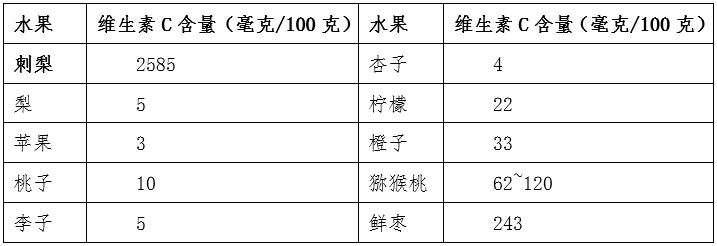
◉Data sourced from the *Chinese Food Composition Table* (6th Edition)
The reason the ‘king of vitamin C’ title has stuck is largely down to the formidable agricultural and marketing clout behind the fruit, backed by New Zealand and Zespri. Under this relentless marketing drive, kiwis were crowned the ‘king of vitamin C’, Chilean cherries were endowed with the social cachet of financial freedom, and blueberries were stamped with a label of refined self-discipline.
Many of the marketing premiums in the fruit world are also fashion taxes, precisely targeting “high-end consumers”. Sweet cherries are simply a type of large cherry; the premium of over a hundred yuan per 500g actually stems from ultra-long logistics chains and cold-chain storage lasting more than forty days. This middle-class privilege, boasting exceptionally high sweetness, is ultimately just a fashionable sugar pill fed to us by South American fresh produce giants. So many are effectively paying for the status-label markup that aligns with this protracted supply chain, and for the marketing brainwashing of trend culture.
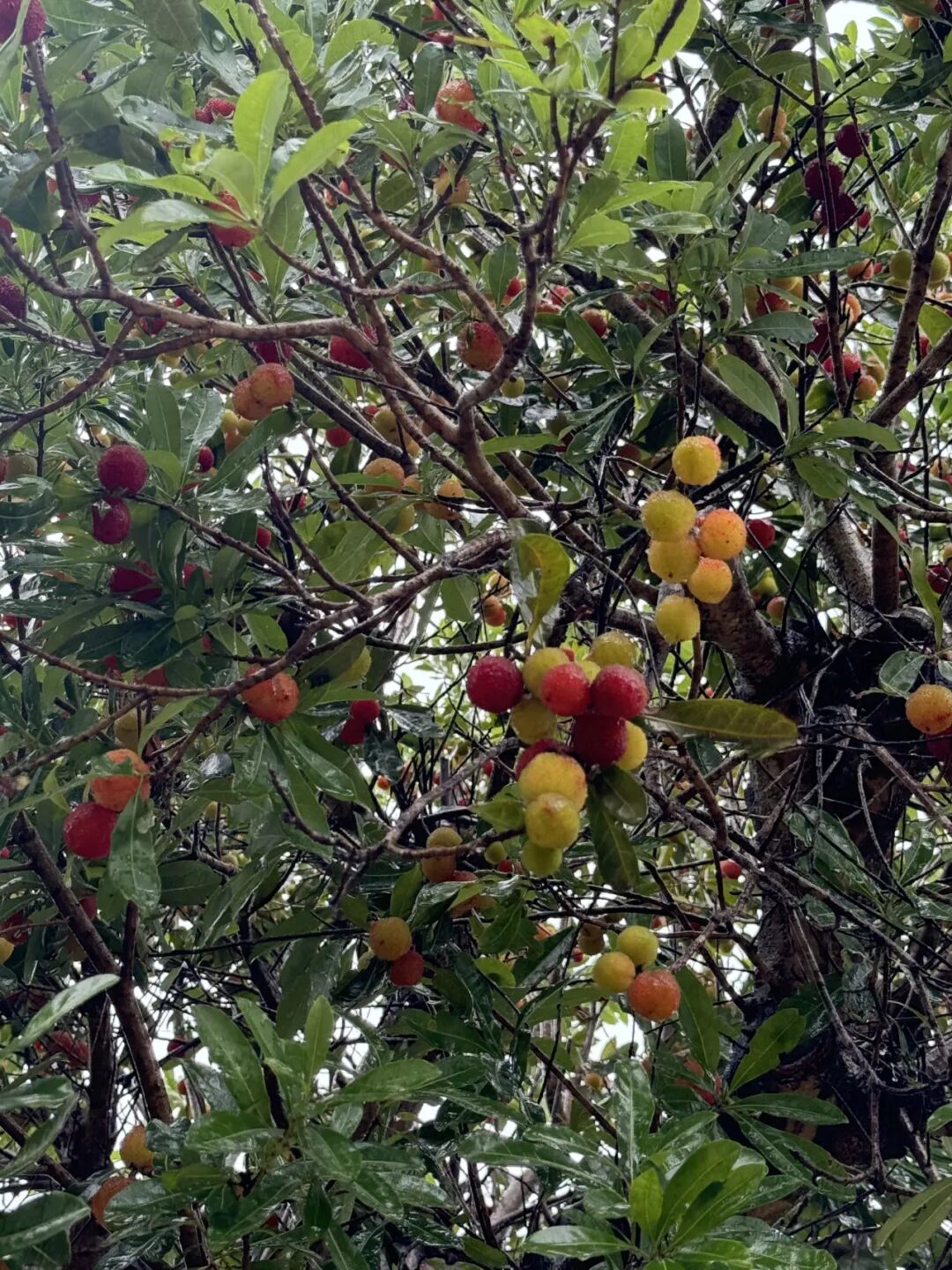
◉ Bayberries in 2025.
Returning to this year’s scandal over chemically soaked bayberries, as a foodie, I’ve kept my composure not merely because I grow my own and don’t need to buy them, but because I still have a faint memory of past events. Bayberry scandals are nothing new; it happened over a decade ago. Back in 2011, bayberries were also chemically treated, with pesticide residues once again exceeding safe limits. That time around, authorities quickly labelled the reports as ‘malicious hype and a coordinated boycott,’ and peace was restored, with life carrying on as usual. The world’s hot-button issues come and go in endless succession. Much like the swelled-belly baby scandal, toxic milk powder, gutter oil, and contaminated tanker trucks, this too will blow over. I have no doubt that well before the next bayberry season, consumers’ stirred-up anxieties over bayberries will settle back into calm.
I’m writing this piece because of bayberries, but my thoughts extend far beyond them. Are bayberries still safe to eat? I’ve eaten plenty, cultivated my own way. What about fruit in general? Nutritionally speaking, we don’t strictly need it. But given the pleasure it brings, there’s no harm in eating it. The point is, when we eat fruit, we should make conscious choices rather than having them made for us.
– This is Foodthink’s 814 th original article –

Foodthink
Author
Kouzi
A trekker turned farmer and a village master distiller. Full-time foodie, part-time farmer, and occasional writer.
Editor: Xiao Dan
Layout: Ming Lin
▼
Click the image to read related articles.