Food Giants Fined for Greenwashing: How Much Are Consumers Overpaying for Eco-Hype?

Over the past few years, a growing number of food companies have begun to publicise their emission reduction targets and environmental contributions, and food packaging has increasingly featured marketing terms such as ‘sustainable’, ‘recyclable’, ‘low-carbon’ and ‘climate-friendly’. These claims are designed to persuade consumers that simply purchasing the product will make a positive contribution to tackling climate change.
But what do these pledges actually amount to? Do products bearing these labels genuinely cut greenhouse gas emissions, or are they just marketing spin?
Two lawsuits against global meat giants reveal just how bluntly food companies can execute greenwashing. From ‘net-zero emissions’ to ‘climate-smart beef’, and from ‘environmentally friendly’ to ‘recyclable’ on packaging, these labels may well conceal yet another corporate ploy to mislead consumers.
When beef giants slap ‘climate-friendly’ labels on their products
In 2024, the New York State Attorney General’s Office and the Environmental Working Group (EWG), a non-profit organisation focused on public health and environmental issues, filed separate lawsuits against global beef giants JBS of Brazil and Tyson Foods of the US. The suits accused both companies of misleading consumers and engaging in greenwashing by marketing their beef as ‘climate-friendly’ and ‘climate-smart’.
Although both giants denied the allegations, the two cases were ultimately settled with the plaintiffs in 2025.
Tyson has agreed to retract its ‘net-zero emissions by 2050’ pledge. Until verified by an independent third party, the company will be barred from describing its beef as ‘climate-friendly’ or ‘climate-smart’, or using similar marketing language in the US market. Over the next five years, the firm must undergo independent third-party audits to verify that it is honouring its climate commitments.
JBS, meanwhile, has agreed to downgrade its ‘net-zero emissions by 2040’ pledge from a ‘commitment’ to a ‘target’ or ‘vision’. Any future promotion of its emissions reduction efforts will require it to outline specific actions. In addition, JBS will pay $1.1 million to support sustainable agriculture initiatives in New York State.
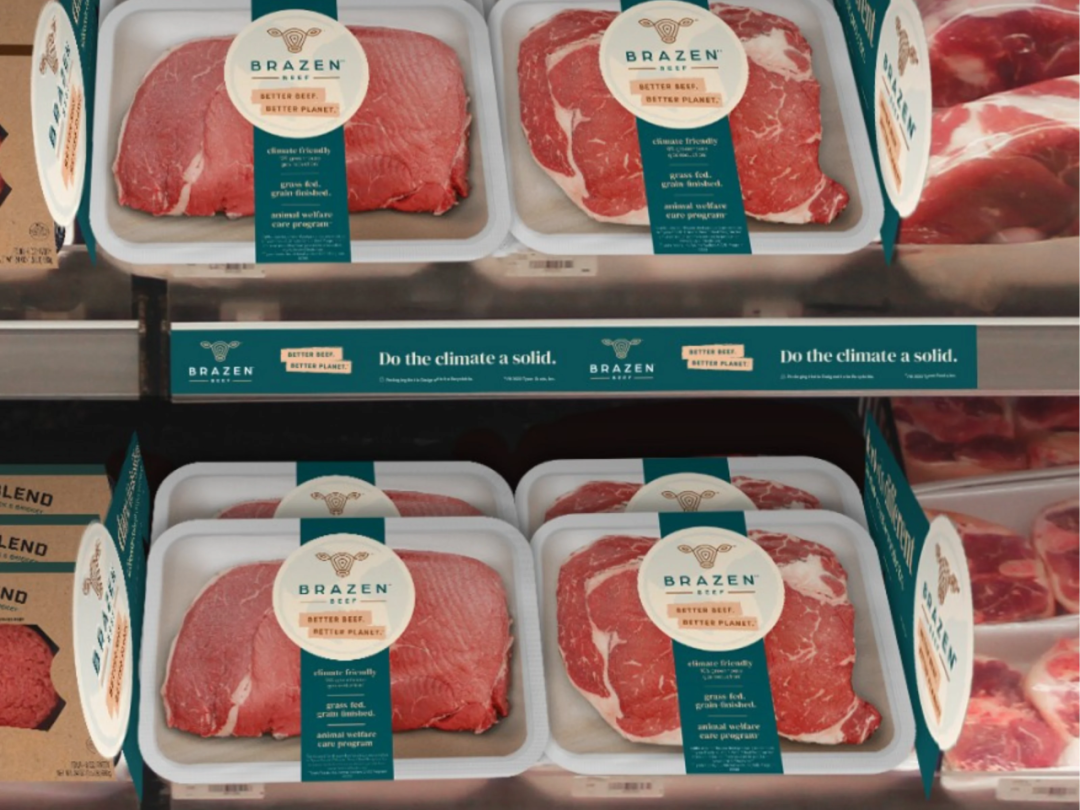
◉Tyson’s “climate-friendly” beef. Source: Tyson Foods
While many products boast of their green credentials, why is New York State specifically targeting these two beef giants? The primary reason is that beef is among the most greenhouse gas-intensive food categories. In particular, every stage of industrial cattle rearing and beef production generates substantial emissions.
Cattle release large amounts of methane during digestion, while manure and feed crop cultivation also generate methane and nitrous oxide. Deforestation to clear land for grazing and feed crops releases carbon stored in the soil and diminishes the land’s ability to sequester it. Consequently, every stage of industrial beef production—from feed cultivation and animal rearing to land use—involves substantial emissions. Beef produces roughly 2.5 times the greenhouse gas emissions of lamb, and nine times those of fish and chicken.
Together, JBS and Tyson produce roughly half of the beef in the United States. Tyson Foods alone emits more greenhouse gases than the entire countries of Austria or Greece, with around 85% of that total stemming from beef production.
It is precisely for this reason that, when Tyson claimed its beef was “climate-smart” and pledged to achieve net-zero emissions by 2050, environmental groups could hardly believe their ears.
In its lawsuit, the EWG stated that the methane and nitrous oxide emitted during Tyson’s intensive beef production cannot be entirely eliminated using current or foreseeable technology.
Meanwhile, Tyson prominently features the “climate-smart” label on its beef products, yet it has neither defined the specific criteria for “climate-smart beef” nor explained how its net-zero target will be achieved.
Consequently, such marketing claims of “net-zero emissions” and “climate-friendly beef” are misleading.
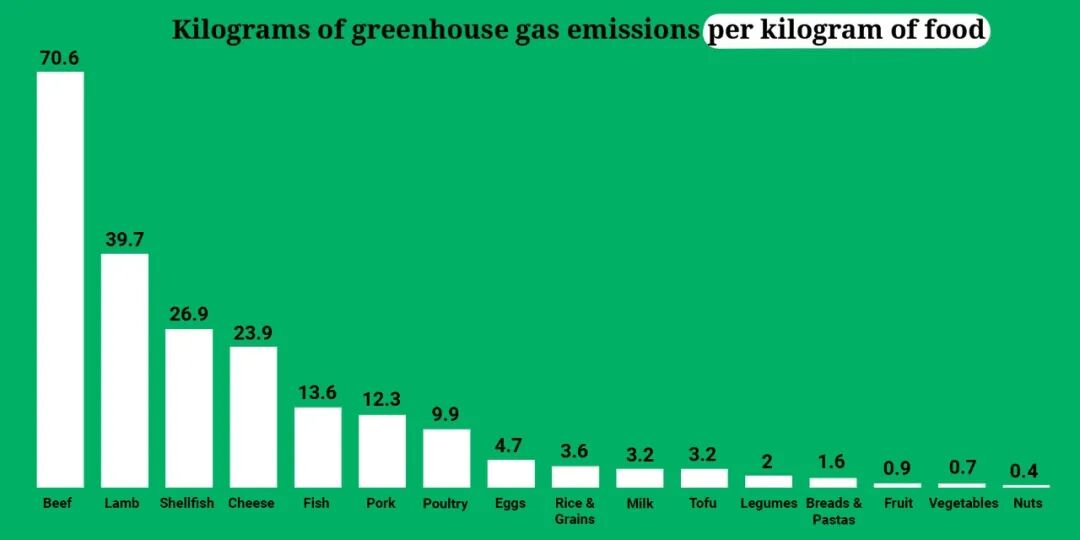
◉According to UN research, each kilogram of beef produces 70.6 kg of greenhouse gases, surpassing the emissions of lamb, pork and chicken. Source: UN
Carrie Apfel, the attorney handling the case, argues: ” “Climate-smart” simply does not apply to any industrially produced beef. Beef has the highest carbon emissions of any food; even with a 10% to 30% reduction, it still cannot be described as climate-friendly.” She adds, “This settlement ought to send a clear signal to consumers: be wary of beef producers marketing their products as “climate-smart”.”
She further pointed out: “Significant greenhouse gas emissions are generated at every stage of (industrial) beef production. To achieve meaningful emissions reductions at this industrial scale, companies must implement concrete, fundamental changes – something Tyson Foods has clearly failed to do.”
These two lawsuits aim not only to urge companies to change their business practices, but to challenge the misleading climate claims put forward by industrial agriculture. Leila Yow, climate programme lead at the Institute for Agriculture and Trade Policy (IATP), explained: “This settlement marks a major victory in tackling the climate misinformation spread by industrial farming.”
Do food giants really care about the environment and climate?
For beef producers, excessive greenhouse gas emissions have become an inescapable challenge.
Over the past decade, consumers across Europe and the US have become increasingly concerned about the environmental impact of food production, particularly whether meat farming drives deforestation, meets animal welfare standards, and how much greenhouse gas it emits.
Tyson also acknowledged in its climate risk report that “consumers are willing to pay a premium of at least 24% for more environmentally friendly and sustainable products… Growing numbers of consumers are prepared to buy beef and other foods that reduce greenhouse gas emissions.” Consequently, for food companies, failing to address public concerns over climate risks could ultimately impact product sales and market competitiveness.
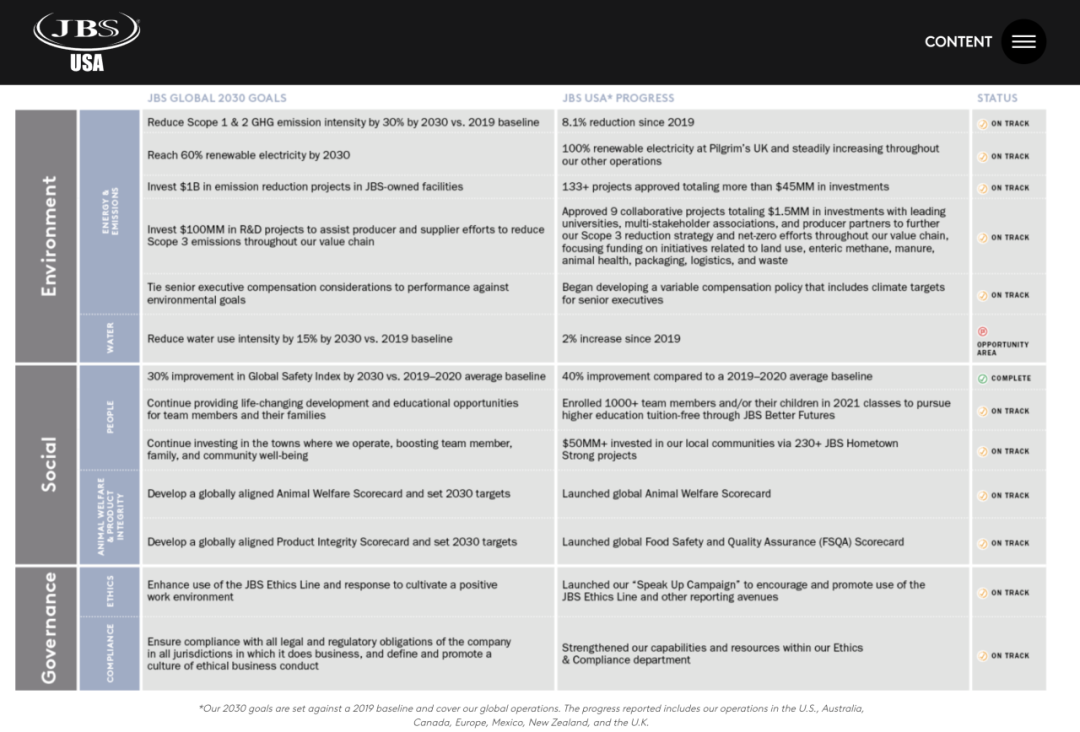
◉JBS’s 2030 sustainability targets set Phase 1 and Phase 2 greenhouse gas emission intensity goals, representing a 30% reduction across JBS globally by 2030 based on 2019 data. Source: JBS USA
Meanwhile, governments across Europe and North America have also begun tightening oversight of corporate environmental marketing.
In recent years, the European Union has introduced the Empowering Consumers for the Green Transition Directive and the Green Claims Directive, further cracking down on corporate greenwashing. Under the latter, companies making environmental claims—such as “environmentally friendly”, “sustainable”, or “climate-friendly”—must base them on scientific evidence and submit to independent third-party verification, paving the way for harmonised assessment standards.
While the US has not established a unified regulatory framework on par with the EU’s, it has likewise begun placing greater onus on companies to disclose climate risks. In 2024, the US Securities and Exchange Commission (SEC) introduced the Climate-Related Disclosures for Investors rule, requiring listed companies to report on climate risks, greenhouse gas emissions, and the financial repercussions of extreme weather. Though the rule was subsequently rescinded in 2025, the climate-related pressure facing corporations has not eased.
Buoyed by both consumer demand and regulatory pressure, an ever-growing number of food giants are vying to announce net-zero carbon emissions targets. For these companies, net-zero is rarely a genuine environmental pledge; rather, it is the master key to accessing international markets and a vital tool for satisfying investors and shaping brand image.
Yet, for food giants such as JBS and Tyson Foods, achieving net-zero emissions remains practically impossible.
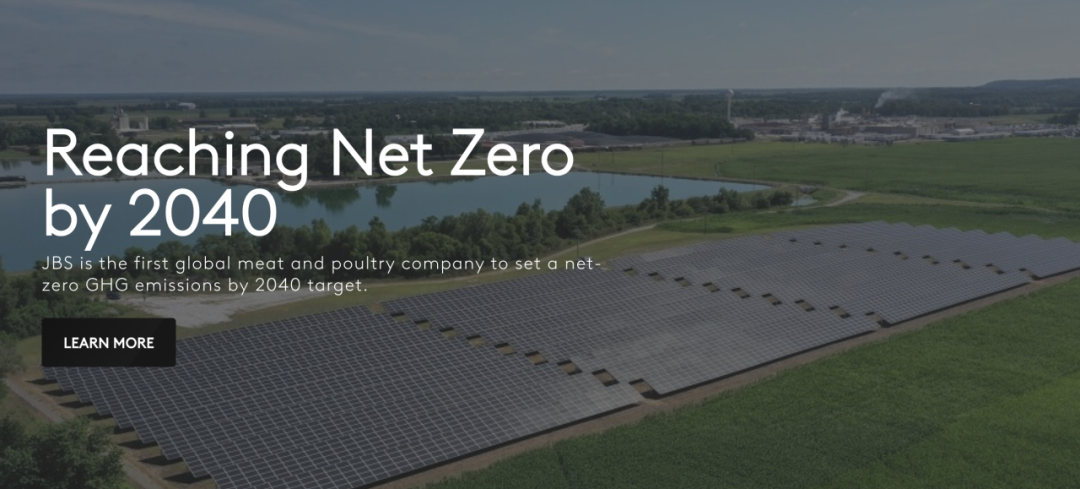
◉On JBS’s US website, the company claims to be the world’s first meat and poultry business to set a target of net-zero greenhouse gas emissions by 2040. Clicking the link to the 2040 net-zero emissions target currently shows that the page cannot be found. Source: JBS USA
For intensive beef farming, there is virtually no way to cut emissions at the source without reducing herd sizes. Shrinking the herd means lower yields and, consequently, slimmer profit margins – a scenario companies are clearly reluctant to entertain.
As a result, tweaking the marketing pitch is far easier than genuinely overhauling production methods.
To capitalise on growing consumer demand for sustainable products, Tyson has spent the past four-and-a-half years consistently promoting across its website, social media channels, and press releases that it will achieve “net-zero emissions” by 2050, marketing its beef as a “climate-friendly” product.
Yet, according to the lawsuit filings, Tyson has taken virtually no adequate measures to honour these commitments and has been unable to provide the corresponding evidence to back up its marketing claims.
The lawsuit notes that out of an annual revenue of approximately US$53 billion, Tyson allocates only around US$50 million to emissions-reduction measures – less than 0.1% of total income, with the majority going towards research. By comparison, the company’s annual advertising expenditure is roughly three times its emissions research budget.
This is precisely why a growing number of lawsuits targeting food companies for greenwashing are focusing on whether the businesses have actually taken concrete action, and are demanding they cease misleading environmental marketing and advertising.
What other common greenwashing tactics do food companies employ?
Beyond setting net-zero targets that amount to “all talk and no action”, another common greenwashing tactic among food companies is to mislead consumers using vague terms or concepts that lack standardised definitions.
For instance, terms such as “natural”, “eco-friendly” and “sustainable” frequently appear on food packaging, leading consumers to believe that these products are not only green and healthy, but that purchasing them also supports a more environmentally responsible and healthier production model.
But what do these terms actually mean?
In many jurisdictions, terms such as natural, eco-friendly and sustainable lack uniform, strict legal definitions. This grants companies considerable leeway in interpretation, turning them into a regulatory grey area ripe for greenwashing.
The United States has seen several related lawsuits. The snack brand Nature Valley, which markets itself on health benefits, has long used “Natural” and even “100% Natural” as key selling points. In reality, its products contain highly processed ingredients such as high-fructose corn syrup and maltodextrin. Consequently, Nature Valley has faced class-action lawsuits over alleged consumer deception.
This phenomenon bears some resemblance to a previous domestic controversy surrounding the “zero additives” trademark. For instance, Qianhe once registered “Qianhe 0” as a trademark and combined it with the word “additives” on product packaging, leading consumers to mistakenly believe the soy sauce was additive-free.
Is it illegal to register terms such as “zero additives” or “free-range pigs” as trademarks? The question has sparked considerable public debate. Many argue that food companies are exploiting loopholes in the trademark system, effectively playing word games to mislead consumers.
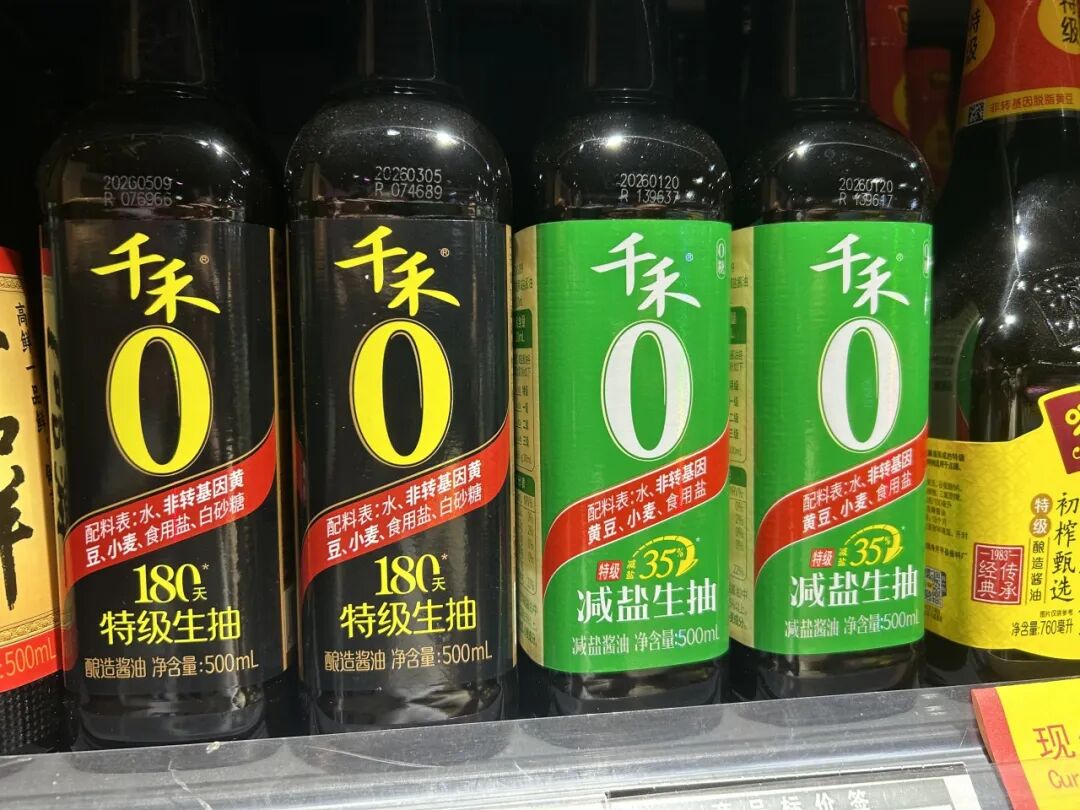
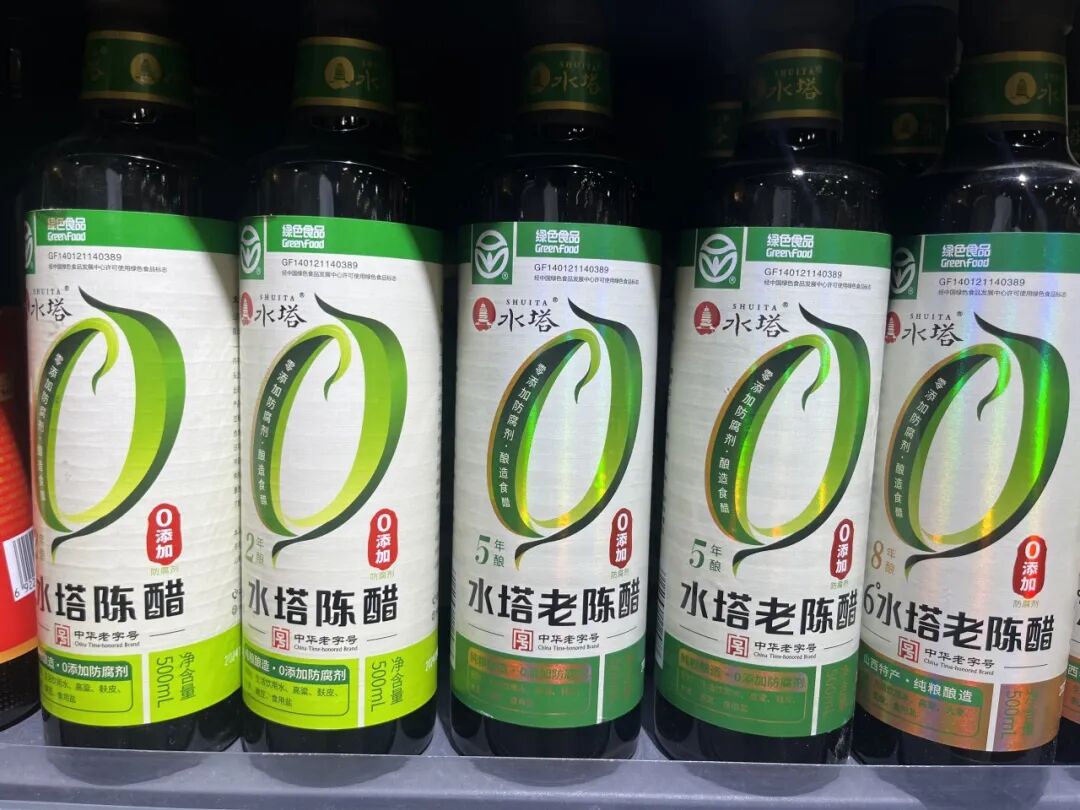
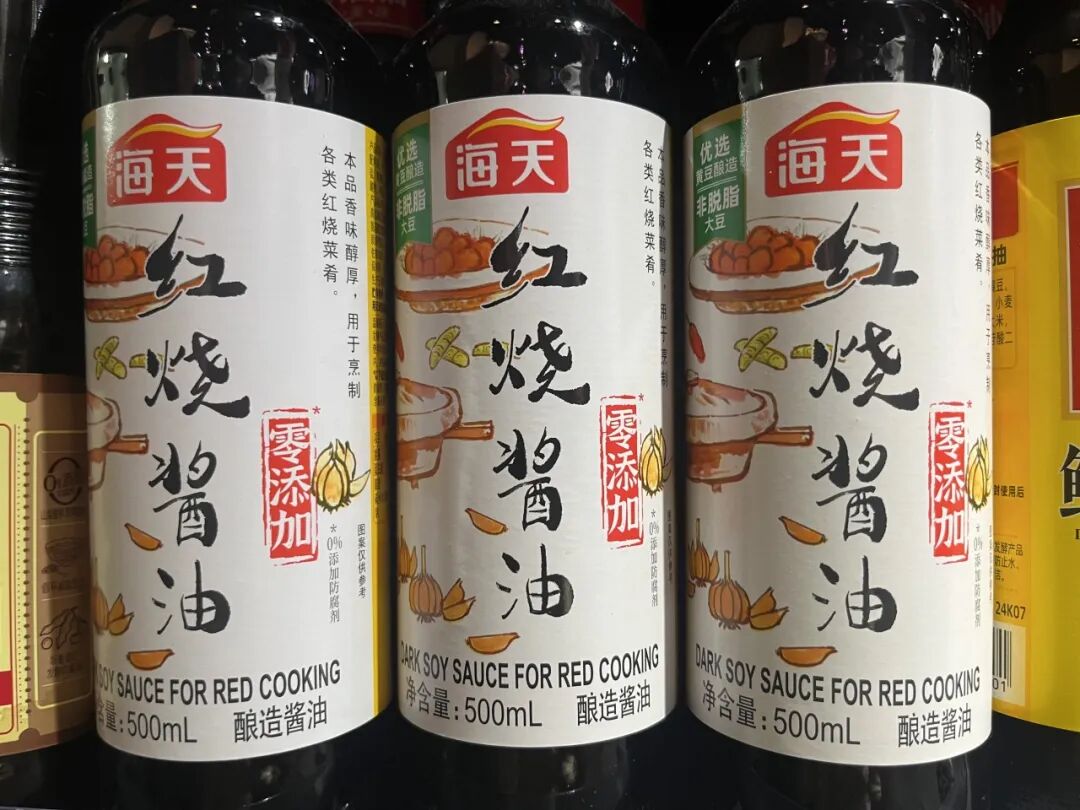
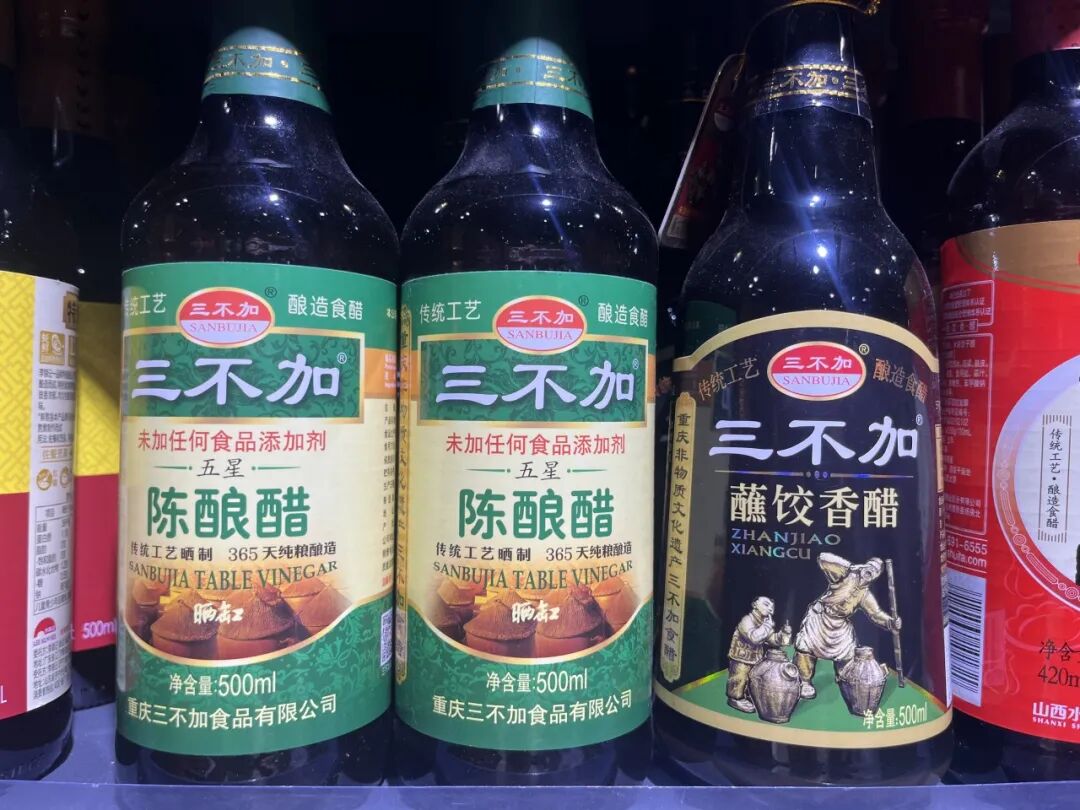
◉During a visit to a local community supermarket, Foodthink found that the packaging of several soy sauce brands on the shelves prominently featured “0” or “zero additives”. Some products appended fine-print disclaimers to claims such as “zero additives” or “0 additives”, while others relied directly on the registered trademark “Sanbujia” to emphasise their product attributes.
Furthermore, “recyclable” is one of the most common eco-labels used by food companies. When most consumers see “recyclable ” on packaging, they tend to assume it can be collected and reused, yet few consider what happens next: is it actually recyclable? Where should it be taken? And how will it be processed in the recycling stream?
US beverage and coffee brand Keurig subsequently faced a class-action lawsuit. Its coffee capsules were clearly labelled “recyclable”, but complaints highlighted that most local recycling facilities simply cannot process these multi-layer composite pods. Consequently, they either end up in landfill or contaminate other recyclable materials.
The court upheld this position and ordered Keurig to pay a $10 million settlement. Following the ruling, Keurig revised the packaging wording, replacing “recyclable” with: “Please check whether recycling is available locally – many areas cannot recycle these coffee capsules.”
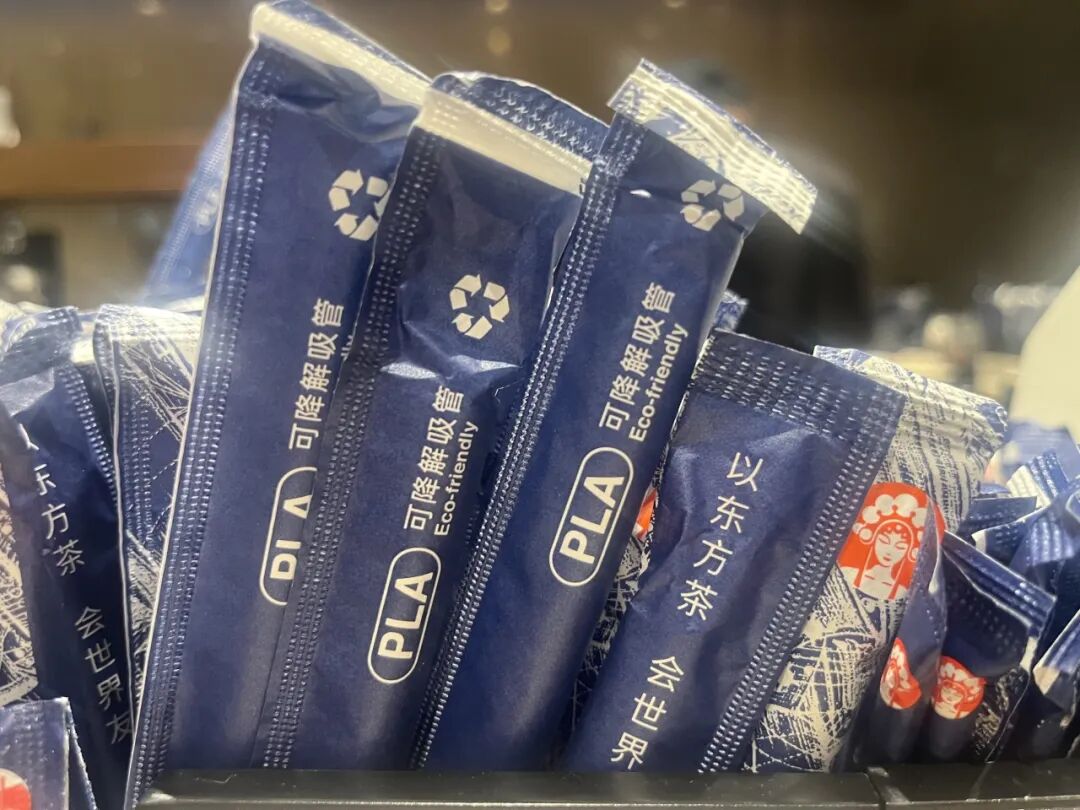
◉Take those biodegradable PLA straws commonly found here: do you know how they are recycled, or whether local facilities actually have the conditions needed to break them down?
These cases also serve as a reminder: when a company claims a product is “sustainable” or “recyclable”, consumers should, before paying for it, verify whether a complete, genuine and verifiable pathway exists behind the label, rather than being misled by corporate environmental claims.
Is climate-friendly agriculture really possible?
Of course, it is.
Although ‘climate-friendly’ and ‘climate-smart’ are not currently certifications backed by clear standards and third-party verification, that does not mean climate-friendly agriculture does not exist.
The production methods, emission sources, and mitigation pathways vary for different crops and food products. Consequently, genuine climate-friendly agriculture is rooted in specific crops, regions, and production conditions.
In fact, practitioners across different regions are already applying ‘climate-friendly’ agricultural practices, tailored to local climates, soils, and production conditions.
For instance, the Si Li Ecological Alternative Technology Centre in Yunnan (hereafter ‘Si Li’) has been continuously exploring climate-friendly methods for cultivating rice.
Rice cultivation is a significant source of agricultural methane emissions. At Si Li’s project sites, fields are prepared with raised beds and trenches to keep irrigation water primarily in the trenches. This removes the need for continuous heavy flooding, thereby reducing the likelihood of anaerobic conditions forming in the paddies and the subsequent production of methane.
Si Li is also trialling direct-seeding techniques for upland rice, growing traditional heritage varieties from different regions. This dryland farming approach requires no flooding, and the drought tolerance of these older varieties makes them well-adapted to Yunnan’s increasingly severe dry conditions. Both cultivation methods lower the potential for methane emissions from rice fields and are considered climate-friendly models of rice farming.
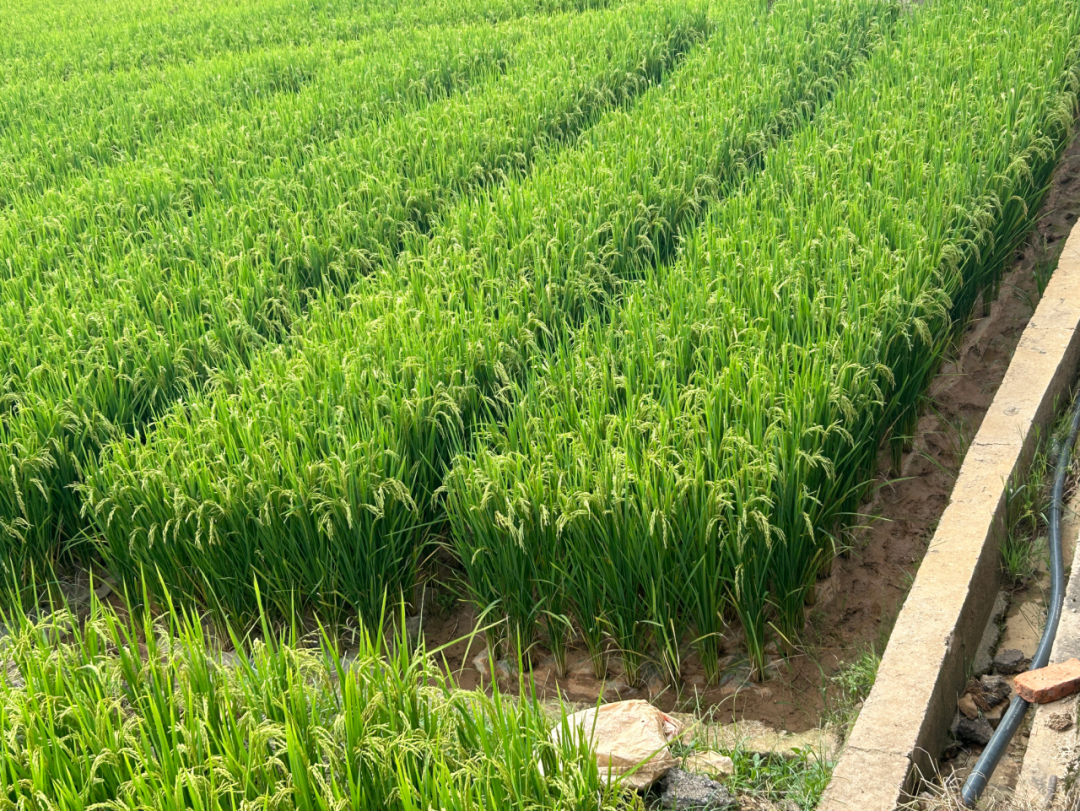
◉Climate-friendly rice paddy using ridge-and-furrow irrigation in the Si Li Wagong Community demonstration field. Photo: Ruo Miao.
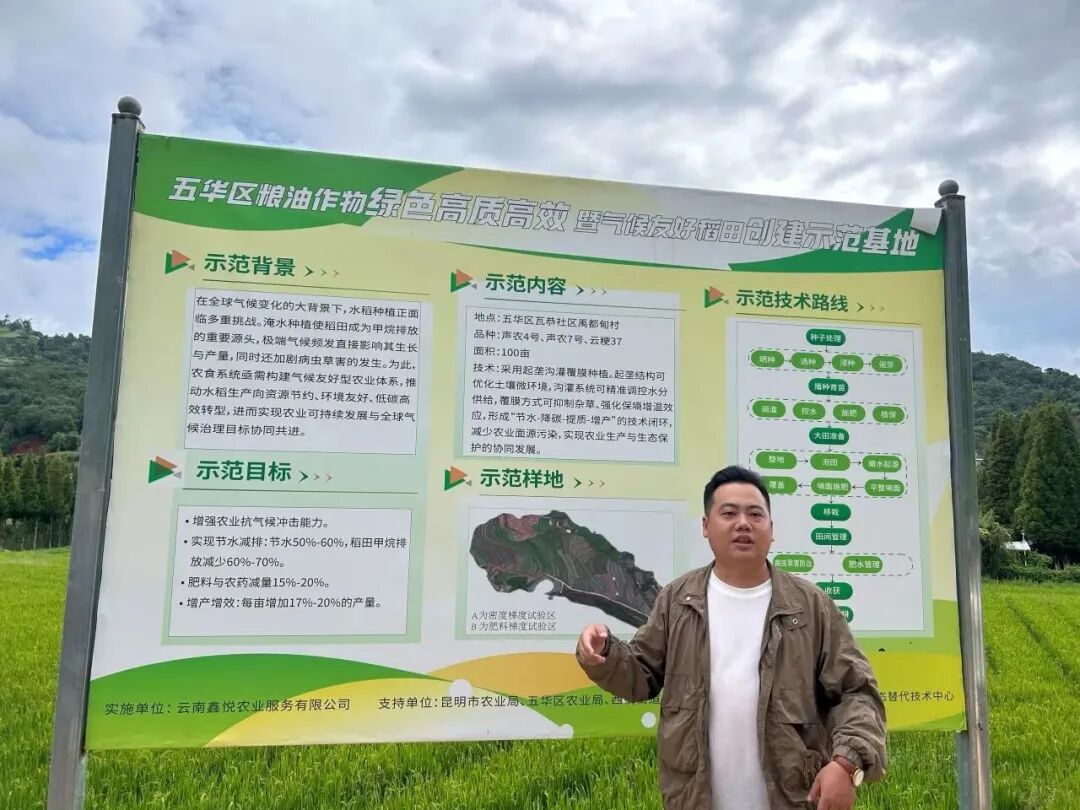
◉Zhao Hao, a staff member at the Si Li Centre, outlines the climate-friendly approach in Wuhua District, Kunming. Photo: Pei Dan.
Food companies can certainly make their products more climate-friendly by changing production methods, but this demands that businesses and producers deliver concrete approaches, reliable data, and verifiable results that drive genuine emission reductions. It should not simply be a matter of slapping on “climate-friendly” or “climate-smart” labels and then masking issues with unattainable targets.
In fact, truly climate-friendly food production extends far beyond the fields. Carbon emissions are generated at every stage—from transport and processing to consumption and end-of-life waste disposal—meaning each step also presents an opportunity to reduce them.
For everyday consumers looking to make their food choices more climate-friendly, it makes far more sense to buy produce from local ecological farmers than to take a gamble on supermarket shelves or online marketplaces where production methods are opaque. These fresh ingredients are grown without synthetic fertilisers or pesticides, inherently cutting a substantial amount of carbon emissions. Sourcing locally further reduces the emissions tied to transport and packaging.
Sometimes, trusting your own common sense is far more reliable than blindly accepting corporate marketing claims.
True climate-friendliness is not a label, nor a one-size-fits-all standard that can be applied across all food production. It is forged through continuous practice and verification on the ground. Next time you see “climate-friendly” on food packaging, ask yourself: how exactly is it achieved?
– This is Foodthink’s 825th original article –
Foodthink
Author
Kairui
Tropical islander, a north-south hybrid
Unless otherwise stated, images are by the author
Editor: Tianle
Layout: Minglin
Scan the code to tip and support original food content.
▼

▼
Click the image to read related articles
▼
Click on a keyword to explore more article collections
Seeds | Farming Techniques | Policy | Fermentation | Nutrition | Fruits | Fisheries | Events | Careers | Food Delivery | Farmers’ Markets | Livestock | Food Talk | Sharing Sessions | Book Clubs | Harvest Festival | Smallholder Stories | Climate Change | Rural Development | Co-operatives | Urban Farmers | Food Safety | Digital Technology | Biodiversity | Pandemics and Food | False Solutions | Agroecology Internship Programme
Beijing|Hebei|Shanghai|Guangdong|Guangxi|Henan|Sichuan|Jiangxi|Xinjiang|Shaanxi|Hong Kong|Chongqing|Zhejiang|Jiangsu|Guizhou|Taiwan|Inner Mongolia|Philippines|Canada|Russia|Mexico|Italy|United States|United Kingdom|Germany|Netherlands|Thailand|Sweden|Japan